SKITTLES
GRAPHING
Lesson plan created by: Christine Pope
Subject Area: Math
Grade Level: First
Length of Lesson: 60 minutes
Group Size: Individual work
Standards
M1D1: Students will create simple tables and graphs, and interpret them.
 Interpret tally marks, picture graphs, and bar graphs.
 Pose questions, collect, sort, organize and record data using objects, pictures, tally marks,
picture graphs, and bar graphs.
M1P5: Students will represent mathematics in multiple ways.
 Create and use representations to organize, record, and communicate mathematical ideas.
 Select, apply, and translate among mathematical representations to solve problems.
 Use representations to model and interpret physical, social, and mathematical phenomena.
Objectives
 Students will create simple tables and graphs and
interpret them (M1D1). Students will represent
mathematics in multiple ways (M1P5).
Materials
 54oz bag Skittles
 Condiment cups
 Crayons or colored pencils
 Smart-board or overhead
projector
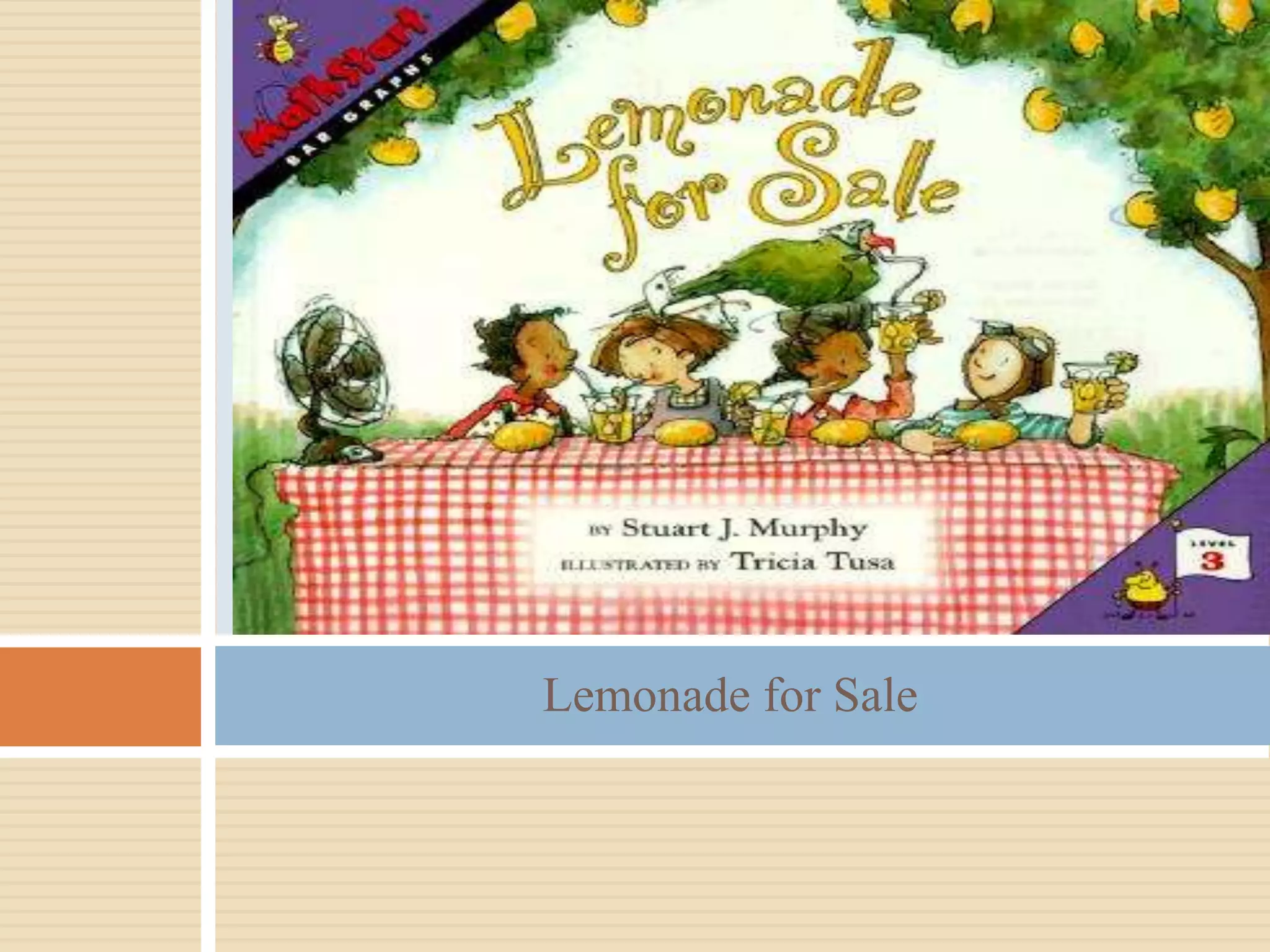
 Book by Stuart Murphy and
Tricia Tusa Lemonade for Sale
 Hand sanitizer
 Laminating sheets
 Colored paper
 Sorting mat
 Skittles graph worksheet
 Pencils
 3-digit skittles math worksheet
(addition)
Introduction (approx. 5 min)
Prior to the beginning of the lesson, have each
student sanitize their hands and their desk.
While passing out materials and leading into
Review encourage participation by asking a
series of questions such as:
• Has anyone in the class ever heard the term “graph”?
• Can anyone describe to me what a graph is?
• Can anyone tell to me what a graph looks like?
• Can anyone tell me what you think we use graphs for?
Review (approx. 10 minutes)
When finished passing out materials
read out loud to the class Lemonade for
Sale by Stuart Murphy and Tricia
Tusa. When finished reading,
transition students into their lesson
by viewing various types of graphs
(bar, picture, line) using the overhead
projector or smart-board.
Lemonade for Sale
Lesson Focus (approx. 20 min)
Part One:
Be sure that each student has the necessary materials at
his or her work station. For class demonstration, take 20
Skittles from the bag and sort them into groups by color
on the sorting mat. Count the number of Skittles in each
color group by using tally marks. Then create a bar graph
displaying the number of Skittles in each color. The color
of each bar in the graph will represent that same color
Skittle; a red bar represents red Skittles, a yellow bar
represents yellow Skittles, and soon. At this point,
answer any questions before allowing the students to
get started.
Continued on next slide…..
Lesson Focus cont.
Part Two:
Each student will sort his or her Skittles just as shown.
They will count the Skittles using tally marks. Once all of
the Skittles are tallied, the students can begin
constructing their bar graphs.
Part Three:
While the students are working, encourage participation
by asking questions such as…
• How did you know how tall to make the bars on the graph?
• How many more yellow Skittles did you have than purple?
• Which color Skittle is your favorite?
Concluding the focus, ask students to write one question that could be answered by looking at
their bar graph.
Conclusion (approx. 10 min)
The students will be given a
Skittles 3-Digit Addition Math
Sheet. They will total up
combinations of three different
colors of Skittles. This sheet
contains ten addition problems
using the data from the My
Skittles Graph. For every correct
answer the children will receive
an additional Skittle, afterwards
they can then eat their data.
Assessment (10-15min.)
Teacher will use overhead projector or
Smartboard to lay out Skittle candies.
Students are then given another graph
and are asked to graph the shown
Skittles silently and independently.
Students will used color pencils or
crayons to graph accordingly. As
students finish they raise their
hand and the teacher collects their
graph for evaluation.
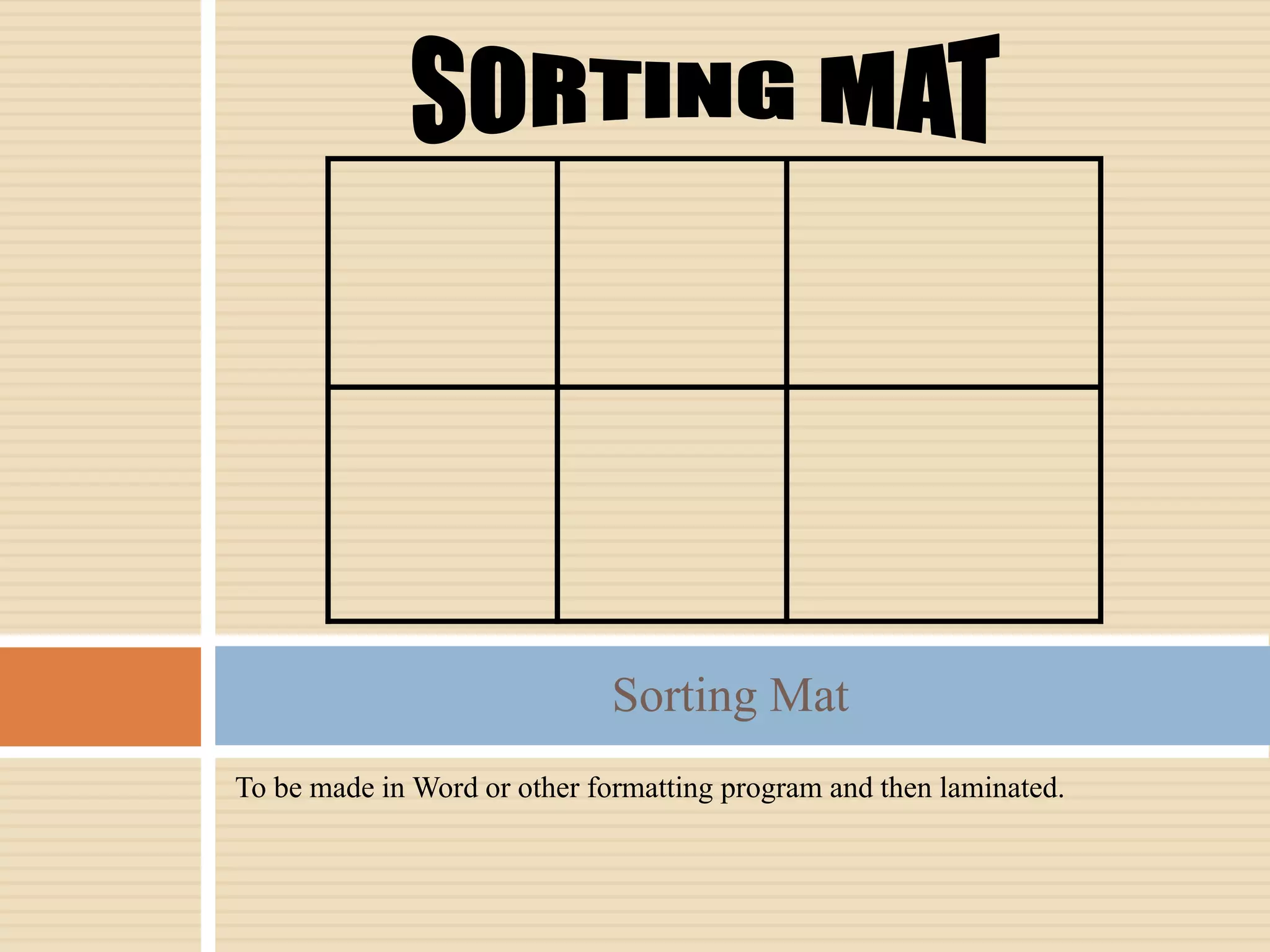
To be made in Word or other formatting program and then laminated.
Sorting Mat
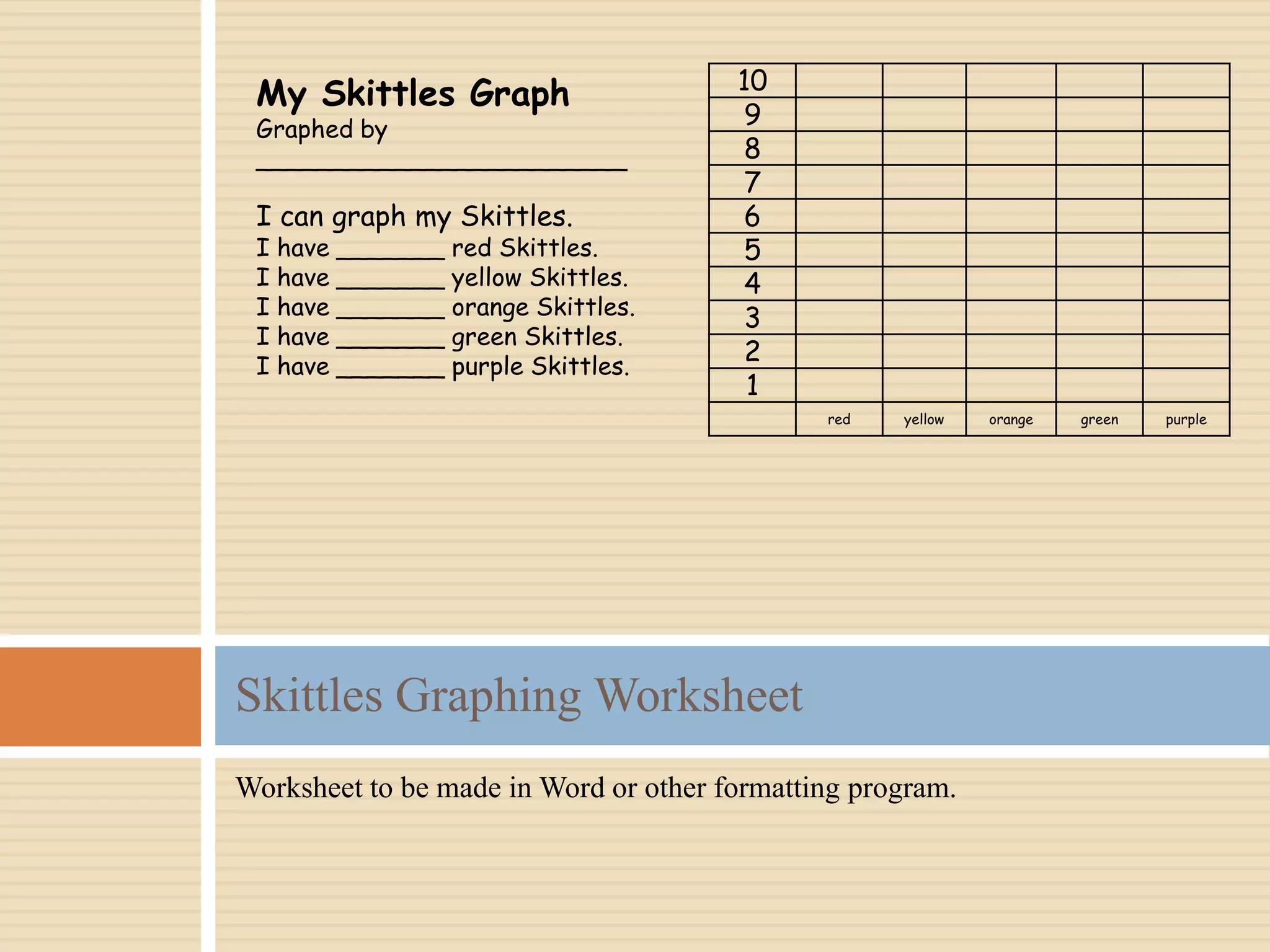
Worksheet to be made in Word or other formatting program.
Skittles Graphing Worksheet
10
9
8
7
6
5
4
3
2
1
red yellow orange green purple
My Skittles Graph
Graphed by
________________________
I can graph my Skittles.
I have _______ red Skittles.
I have _______ yellow Skittles.
I have _______ orange Skittles.
I have _______ green Skittles.
I have _______ purple Skittles.
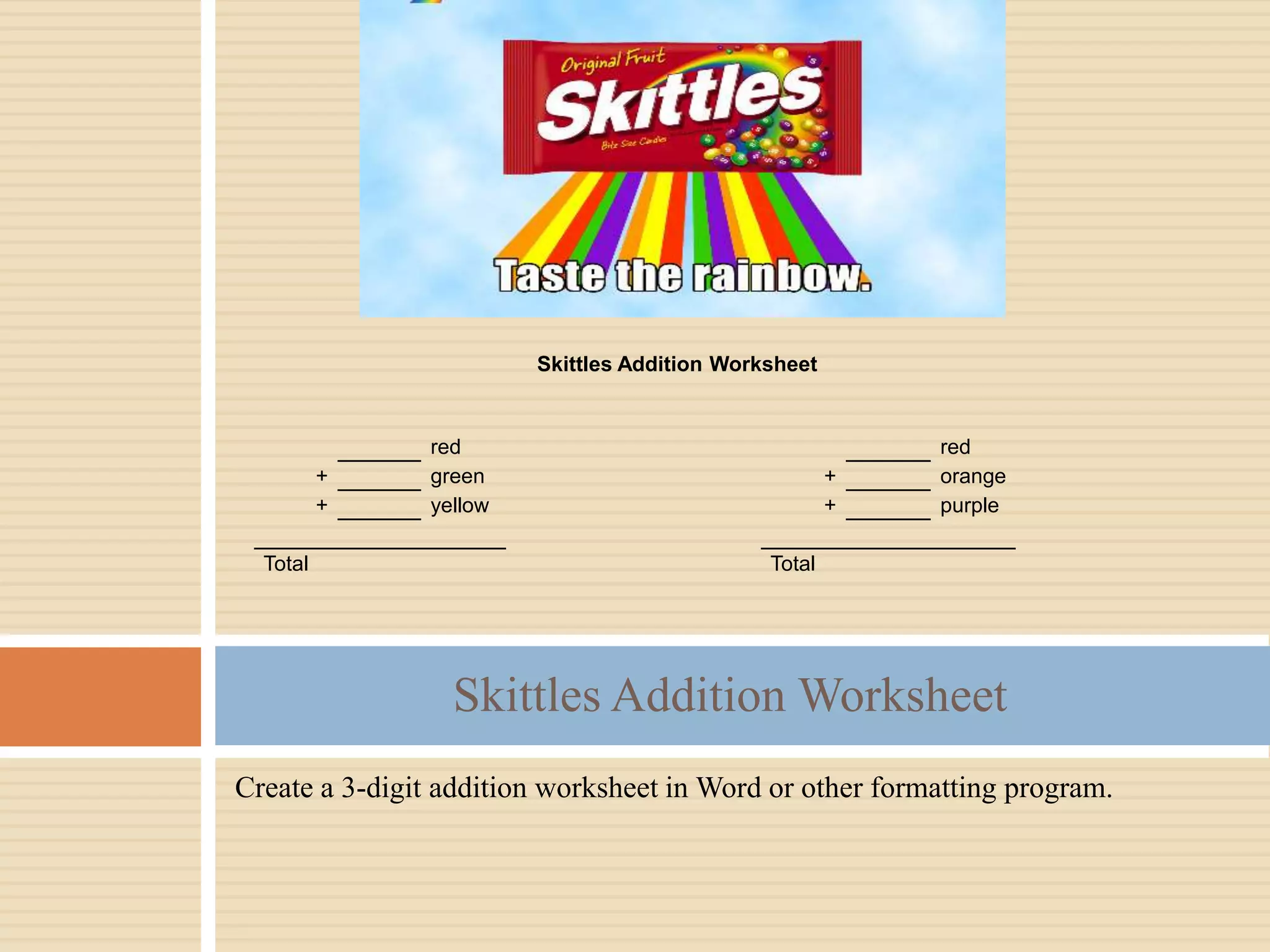
Create a 3-digit addition worksheet in Word or other formatting program.
Skittles Addition Worksheet
red red
+ green + orange
+ yellow + purple
Total Total

Technology recesso initiating activity

  • 1.
  • 2.
    Subject Area: Math GradeLevel: First Length of Lesson: 60 minutes Group Size: Individual work
  • 3.
    Standards M1D1: Students willcreate simple tables and graphs, and interpret them.  Interpret tally marks, picture graphs, and bar graphs.  Pose questions, collect, sort, organize and record data using objects, pictures, tally marks, picture graphs, and bar graphs. M1P5: Students will represent mathematics in multiple ways.  Create and use representations to organize, record, and communicate mathematical ideas.  Select, apply, and translate among mathematical representations to solve problems.  Use representations to model and interpret physical, social, and mathematical phenomena.
  • 4.
    Objectives  Students willcreate simple tables and graphs and interpret them (M1D1). Students will represent mathematics in multiple ways (M1P5).
  • 5.
    Materials  54oz bagSkittles  Condiment cups  Crayons or colored pencils  Smart-board or overhead projector  Book by Stuart Murphy and Tricia Tusa Lemonade for Sale  Hand sanitizer  Laminating sheets  Colored paper  Sorting mat  Skittles graph worksheet  Pencils  3-digit skittles math worksheet (addition)
  • 6.
    Introduction (approx. 5min) Prior to the beginning of the lesson, have each student sanitize their hands and their desk. While passing out materials and leading into Review encourage participation by asking a series of questions such as: • Has anyone in the class ever heard the term “graph”? • Can anyone describe to me what a graph is? • Can anyone tell to me what a graph looks like? • Can anyone tell me what you think we use graphs for?
  • 7.
    Review (approx. 10minutes) When finished passing out materials read out loud to the class Lemonade for Sale by Stuart Murphy and Tricia Tusa. When finished reading, transition students into their lesson by viewing various types of graphs (bar, picture, line) using the overhead projector or smart-board.
  • 8.
  • 9.
    Lesson Focus (approx.20 min) Part One: Be sure that each student has the necessary materials at his or her work station. For class demonstration, take 20 Skittles from the bag and sort them into groups by color on the sorting mat. Count the number of Skittles in each color group by using tally marks. Then create a bar graph displaying the number of Skittles in each color. The color of each bar in the graph will represent that same color Skittle; a red bar represents red Skittles, a yellow bar represents yellow Skittles, and soon. At this point, answer any questions before allowing the students to get started. Continued on next slide…..
  • 10.
    Lesson Focus cont. PartTwo: Each student will sort his or her Skittles just as shown. They will count the Skittles using tally marks. Once all of the Skittles are tallied, the students can begin constructing their bar graphs. Part Three: While the students are working, encourage participation by asking questions such as… • How did you know how tall to make the bars on the graph? • How many more yellow Skittles did you have than purple? • Which color Skittle is your favorite? Concluding the focus, ask students to write one question that could be answered by looking at their bar graph.
  • 11.
    Conclusion (approx. 10min) The students will be given a Skittles 3-Digit Addition Math Sheet. They will total up combinations of three different colors of Skittles. This sheet contains ten addition problems using the data from the My Skittles Graph. For every correct answer the children will receive an additional Skittle, afterwards they can then eat their data.
  • 12.
    Assessment (10-15min.) Teacher willuse overhead projector or Smartboard to lay out Skittle candies. Students are then given another graph and are asked to graph the shown Skittles silently and independently. Students will used color pencils or crayons to graph accordingly. As students finish they raise their hand and the teacher collects their graph for evaluation.
  • 13.
    To be madein Word or other formatting program and then laminated. Sorting Mat
  • 14.
    Worksheet to bemade in Word or other formatting program. Skittles Graphing Worksheet 10 9 8 7 6 5 4 3 2 1 red yellow orange green purple My Skittles Graph Graphed by ________________________ I can graph my Skittles. I have _______ red Skittles. I have _______ yellow Skittles. I have _______ orange Skittles. I have _______ green Skittles. I have _______ purple Skittles.
  • 15.
    Create a 3-digitaddition worksheet in Word or other formatting program. Skittles Addition Worksheet Skittles Addition Worksheet red red + green + orange + yellow + purple Total Total