TECHNICAL
VOCATIONAL
EDUCATION
Goals and Objectives of
Technical Education
▹ Development of basic technical skills,
knowledge and attitudes
▹ Development of understanding and interest
in the technological sector of society
▹ Development of trained manpower
▹ Enhancement of creativity, innovation,
productivity and entrepreneurial skills
▹ Development of new and appropriate
technology
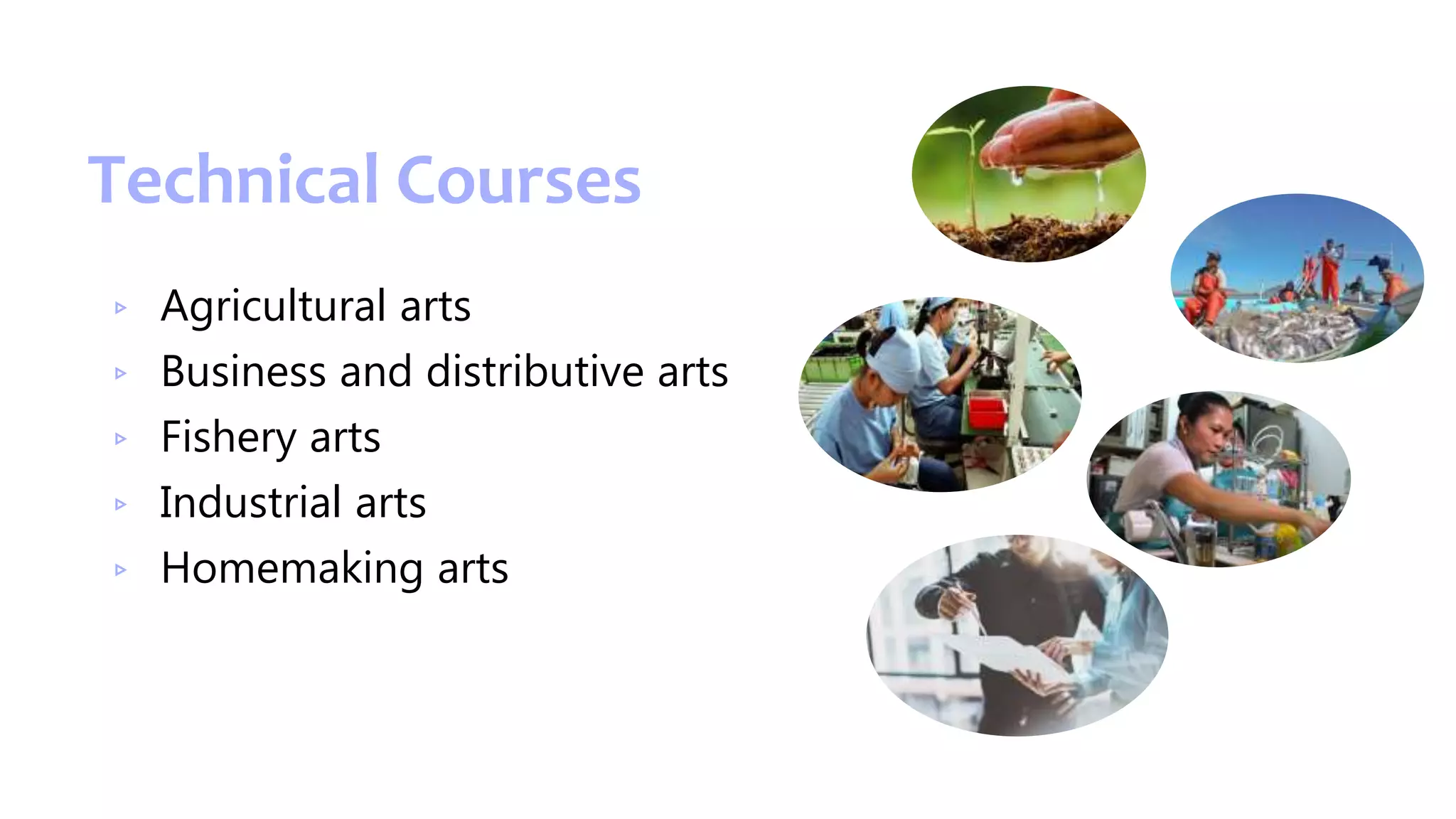
Technical Courses
▹ Agricultural arts
▹ Business and distributive arts
▹ Fishery arts
▹ Industrial arts
▹ Homemaking arts
Need for Technical
Education
▹ Preparation for the world of work
▹ Meeting the needs of Filipino youth and
adults
▹ Meeting manpower needs
▹ Solving unemployment and
underemployment
▹ Enhancing transfer of technology
TVET in the
Philippines 5Agricultural arts
At present, it provides education and
training opportunities to prepare students
and other clients for employment. arts
Fishery arts
Industrial arts
Homemaking arts
Technical Vocation
Education and
Training (TVET)
TVET
Clientele
 High school graduates, secondary school
leavers, college undergraduates and graduates
 Unemployed persons who are actively looking
for work
 Returning overseas Filipino workers
Homemaking arts
POTENTIAL
CLIENTELE OF TVET
Technical
Education and
Skills
Development
Authority
(TESDA)
Technical Education
and Skills
Development Authority
(TESDA)
▹ First Cycle National Technical Education and
Skills Development Plan (2000-2004) to
guide the development efforts in the whole
TVET sector.
▹ The assessment of the Plan implementation
showed major gains in the sector for the
past 5 years
courses
▹ First
▹ ACCESS
▹ RELEVANCE
▹ QUALITTY
▹ EQUITY
Technical Education
and Skills
Development Authority
(TESDA)
▹ To encourage the full participation of and
mobilize the industry, labor, local
government units and technical vocational
institutions in the skills development of the
country's human resources.
▹ Provides direction, policies, programs and
standards towards quality technical
education and skill development.
1
1
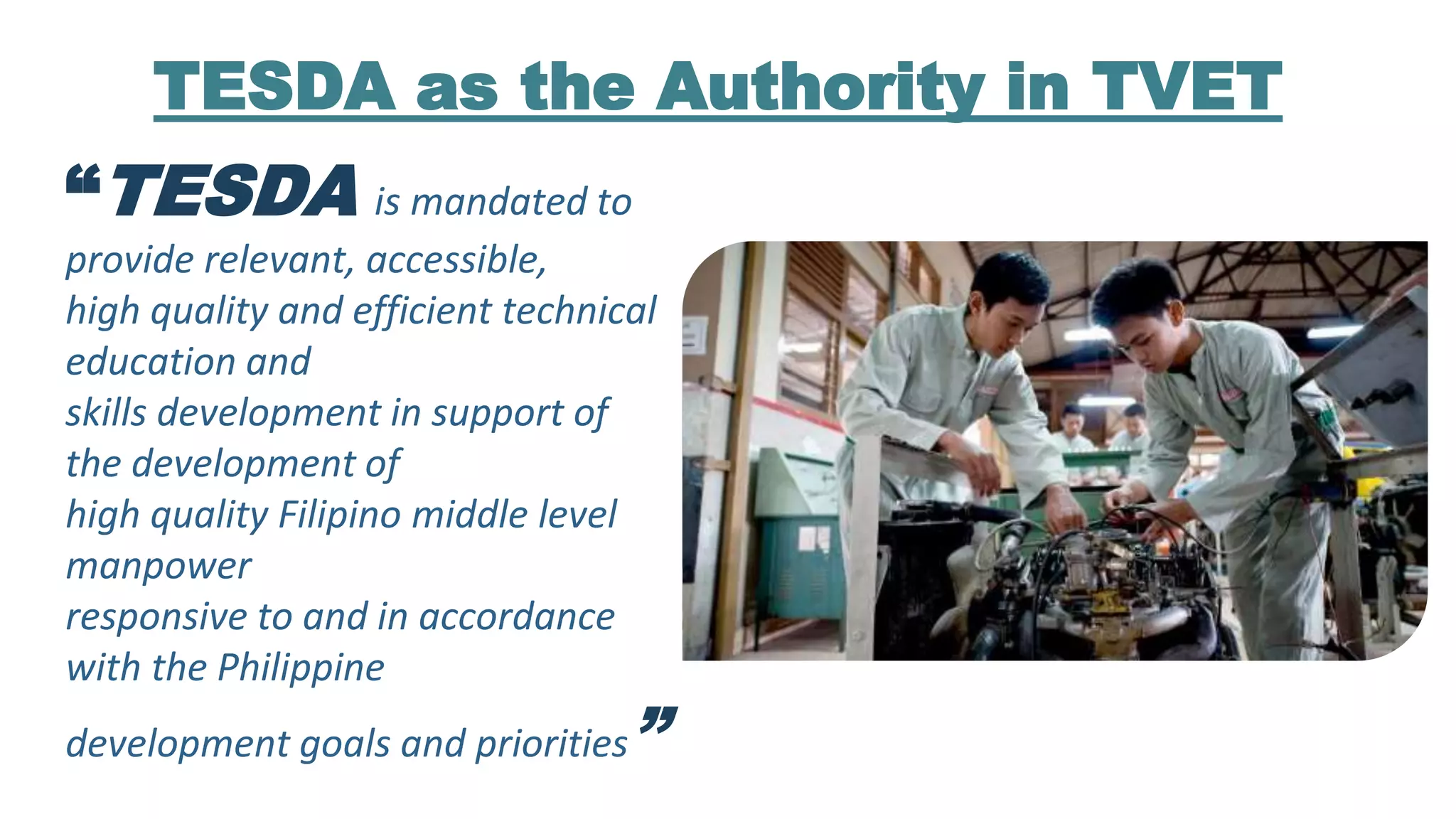
“TESDA is mandated to
provide relevant, accessible,
high quality and efficient technical
education and
skills development in support of
the development of
high quality Filipino middle level
manpower
responsive to and in accordance
with the Philippine
development goals and priorities”
TESDA as the Authority in TVET
Issues on Technical
Education
▹ Students commonly would prefer formal
education
▹ Ensuring adequate qualified technology teachers
▹ Upgrading of facilities/rapid increase of
technology
▹ Adequate and stable financial support budgetary
limitations of the government
▹ Competitiveness of the Filipino worker overseas
▹ Needs research and development
• Technical Education and Skills Development Authority
(TESDA)
East Service Road, South Luzon Expressway, Taguig City, Metro
Manila, Philippines, 1631
www.tesda.gov.ph, 63 02 816-3622/893-1966
• Ofreneo, R., Leogardo, V., & Baldemor, R. (1996). Human
resources development and major tech-voc issues and
concerns. TESDA study on ILO Convention 142 and
Recommendation 140. TESDA.
REFERENCES
1
4

Technical Vocational Education

  • 1.
  • 2.
    Goals and Objectivesof Technical Education ▹ Development of basic technical skills, knowledge and attitudes ▹ Development of understanding and interest in the technological sector of society ▹ Development of trained manpower ▹ Enhancement of creativity, innovation, productivity and entrepreneurial skills ▹ Development of new and appropriate technology
  • 3.
    Technical Courses ▹ Agriculturalarts ▹ Business and distributive arts ▹ Fishery arts ▹ Industrial arts ▹ Homemaking arts
  • 4.
    Need for Technical Education ▹Preparation for the world of work ▹ Meeting the needs of Filipino youth and adults ▹ Meeting manpower needs ▹ Solving unemployment and underemployment ▹ Enhancing transfer of technology
  • 5.
    TVET in the Philippines5Agricultural arts At present, it provides education and training opportunities to prepare students and other clients for employment. arts Fishery arts Industrial arts Homemaking arts Technical Vocation Education and Training (TVET)
  • 6.
    TVET Clientele  High schoolgraduates, secondary school leavers, college undergraduates and graduates  Unemployed persons who are actively looking for work  Returning overseas Filipino workers Homemaking arts POTENTIAL CLIENTELE OF TVET
  • 7.
  • 8.
    Technical Education and Skills DevelopmentAuthority (TESDA) ▹ First Cycle National Technical Education and Skills Development Plan (2000-2004) to guide the development efforts in the whole TVET sector. ▹ The assessment of the Plan implementation showed major gains in the sector for the past 5 years
  • 9.
  • 10.
    ▹ ACCESS ▹ RELEVANCE ▹QUALITTY ▹ EQUITY
  • 11.
    Technical Education and Skills DevelopmentAuthority (TESDA) ▹ To encourage the full participation of and mobilize the industry, labor, local government units and technical vocational institutions in the skills development of the country's human resources. ▹ Provides direction, policies, programs and standards towards quality technical education and skill development. 1 1
  • 12.
    “TESDA is mandatedto provide relevant, accessible, high quality and efficient technical education and skills development in support of the development of high quality Filipino middle level manpower responsive to and in accordance with the Philippine development goals and priorities” TESDA as the Authority in TVET
  • 13.
    Issues on Technical Education ▹Students commonly would prefer formal education ▹ Ensuring adequate qualified technology teachers ▹ Upgrading of facilities/rapid increase of technology ▹ Adequate and stable financial support budgetary limitations of the government ▹ Competitiveness of the Filipino worker overseas ▹ Needs research and development
  • 14.
    • Technical Educationand Skills Development Authority (TESDA) East Service Road, South Luzon Expressway, Taguig City, Metro Manila, Philippines, 1631 www.tesda.gov.ph, 63 02 816-3622/893-1966 • Ofreneo, R., Leogardo, V., & Baldemor, R. (1996). Human resources development and major tech-voc issues and concerns. TESDA study on ILO Convention 142 and Recommendation 140. TESDA. REFERENCES 1 4