   “Though we are many parts, we are one
    body in union with Christ, and we are all
    joined to each other as different parts of
    one body. So, we are to use our different
    gifts in accordance with the grace that God
    has given us. If our gift is to speak God’s
    message, we should do it according to the
    faith we have; if it is to serve, we should
    serve; if it is to teach, we should teach; if it
    is to encourage others, we should do so.”
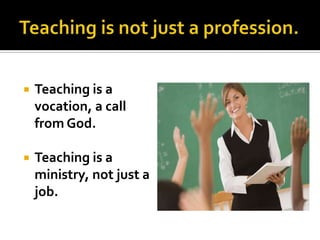
   Teaching is a
    vocation, a call
    from God.

   Teaching is a
    ministry, not just a
    job.
   To share in the teaching ministry of Jesus.
   To teach, not about good, but about values.
   To teach, not about information, but of
    Knowledge, and the Source of Knowledge.
   To teach, not just about truth, but the
    Source of Truth.
   So, you are not just a Teacher. You are a
    formation.
   You form not just the mind, by the whole
    person.
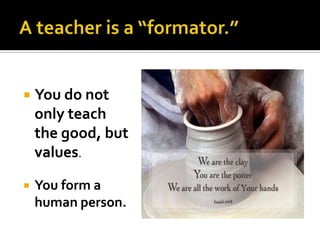
   You do not
    only teach
    the good, but
    values.

   You form a
    human person.
 Teaching is a “gift.”
 It is a gift, entrusted to you. It is not
  only for you but for the good of the
  community. You are just a steward.
 As a steward, your task is to develop
  your gift, make it grow and multiply,
  so that you can share it with others.
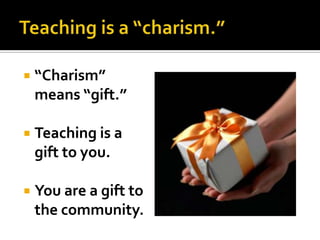
   “Charism”
    means “gift.”

   Teaching is a
    gift to you.

   You are a gift to
    the community.
 How do you know that teaching is
  your gift?
 A gift gives joy. You enjoy doing it.
 When a gift is shared, you become a
  gift to others. You give joy to your
  community.
Jesus spoke to the crowds and to his disciples…
  You must not be called “Teacher,” because you
  are all equal and have only one Teacher. And
  you must not call anyone here on earth
  “Father,” because you only have one Father in
  heaven. Nor should you be called “Leader,”
  because your one and only leader is the
  Messiah. The greatest among you must be
  your servant. Whoever makes himself great
  will be humbled, and whoever humbles himself
  will be made great.
 Teacher
 Father /Parent
 Leader
 All authority and all knowledge, come
  from God.
 We only share in the work of the Lord.
 We are only humble servants of the
  Lord.
   Everything that we have, everything
    that we can do, was only given to us
    by God.

   We can only give what we received
    from God.
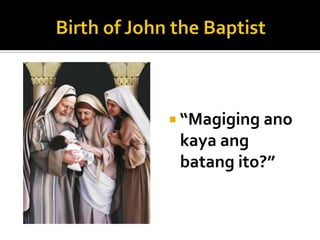
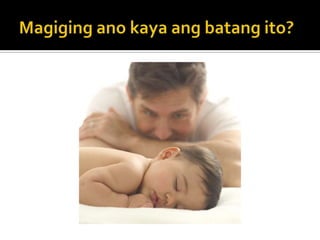
 “Magiging ano
 kaya ang
 batang ito?”
Dumating ang oras ng panganganak ni
Elisabet, at nagluwal siya ng isang sanggol
na lalaki. Nabalitaan ng kanyang mga
kapitbahay at mga kamag-anak na siya ay
pinagpala ng Panginoon, at nakigalak sila
sa kanya.
Nang ikawalong araw, dumalo sila sa
pagtutuli ng sanggol. Zacarias sana ang
ipangangalan sa kanya – gaya ng kanyang
. . . ama – ngunit sinabi ng kanyang ina,
“Hindi! Juan ang ipapangalan sa kanyang.”
“Subalit wala isa man sa iyong mga kamag-
anak ang may ganyang pangalan,” wika
nila. Kaya’t hinudyatan nila ang kanyang
ama at itinanong kung ano ang ibig niyang
itawag sa sanggol. Humingi siya ng
masusulatan at sumulat ng ganito: “Juan
ang kanyang pangalan.” At namangha
silang lahat.
Pagdaka ay nakapagsalita siya at nagpuri
sa Diyos. Natakot ang lahat ng kapitbahay,
anupat naging usap-usapan sa buong
kaburulan ng Judea ang mga bagay na ito.
Pinakaisip-isip ito ng lahat ng nakaalam at
ang kanilang tanong: “Magiging ano nga
kaya ang batang ito?” Sapagkat
maliwanag na sumasakanya ang
Panginoon.
   A child is like a treasure box just waiting to
    be opened.

   The child is like a hidden treasure just
    waiting to be revealed.

   The role of the teaching is to help the
    children discover their “giftedness.”
   According to child psychologists, grade
    school students listen to their school
    teachers more that their parents.

   You have a stronger influence to the
    children.

   Children can say no to their parents, but
    they will not say no to their teachers.

Teaching is a vocation

  • 2.
    “Though we are many parts, we are one body in union with Christ, and we are all joined to each other as different parts of one body. So, we are to use our different gifts in accordance with the grace that God has given us. If our gift is to speak God’s message, we should do it according to the faith we have; if it is to serve, we should serve; if it is to teach, we should teach; if it is to encourage others, we should do so.”
  • 3.
    Teaching is a vocation, a call from God.  Teaching is a ministry, not just a job.
  • 4.
    To share in the teaching ministry of Jesus.  To teach, not about good, but about values.  To teach, not about information, but of Knowledge, and the Source of Knowledge.  To teach, not just about truth, but the Source of Truth.  So, you are not just a Teacher. You are a formation.  You form not just the mind, by the whole person.
  • 5.
    You do not only teach the good, but values.  You form a human person.
  • 6.
     Teaching isa “gift.”  It is a gift, entrusted to you. It is not only for you but for the good of the community. You are just a steward.  As a steward, your task is to develop your gift, make it grow and multiply, so that you can share it with others.
  • 7.
    “Charism” means “gift.”  Teaching is a gift to you.  You are a gift to the community.
  • 8.
     How doyou know that teaching is your gift?  A gift gives joy. You enjoy doing it.  When a gift is shared, you become a gift to others. You give joy to your community.
  • 9.
    Jesus spoke tothe crowds and to his disciples… You must not be called “Teacher,” because you are all equal and have only one Teacher. And you must not call anyone here on earth “Father,” because you only have one Father in heaven. Nor should you be called “Leader,” because your one and only leader is the Messiah. The greatest among you must be your servant. Whoever makes himself great will be humbled, and whoever humbles himself will be made great.
  • 10.
     Teacher  Father/Parent  Leader  All authority and all knowledge, come from God.  We only share in the work of the Lord.  We are only humble servants of the Lord.
  • 11.
    Everything that we have, everything that we can do, was only given to us by God.  We can only give what we received from God.
  • 12.
     “Magiging ano kaya ang batang ito?”
  • 13.
    Dumating ang orasng panganganak ni Elisabet, at nagluwal siya ng isang sanggol na lalaki. Nabalitaan ng kanyang mga kapitbahay at mga kamag-anak na siya ay pinagpala ng Panginoon, at nakigalak sila sa kanya. Nang ikawalong araw, dumalo sila sa pagtutuli ng sanggol. Zacarias sana ang ipangangalan sa kanya – gaya ng kanyang
  • 14.
    . . .ama – ngunit sinabi ng kanyang ina, “Hindi! Juan ang ipapangalan sa kanyang.” “Subalit wala isa man sa iyong mga kamag- anak ang may ganyang pangalan,” wika nila. Kaya’t hinudyatan nila ang kanyang ama at itinanong kung ano ang ibig niyang itawag sa sanggol. Humingi siya ng masusulatan at sumulat ng ganito: “Juan ang kanyang pangalan.” At namangha silang lahat.
  • 15.
    Pagdaka ay nakapagsalitasiya at nagpuri sa Diyos. Natakot ang lahat ng kapitbahay, anupat naging usap-usapan sa buong kaburulan ng Judea ang mga bagay na ito. Pinakaisip-isip ito ng lahat ng nakaalam at ang kanilang tanong: “Magiging ano nga kaya ang batang ito?” Sapagkat maliwanag na sumasakanya ang Panginoon.
  • 18.
    A child is like a treasure box just waiting to be opened.  The child is like a hidden treasure just waiting to be revealed.  The role of the teaching is to help the children discover their “giftedness.”
  • 19.
    According to child psychologists, grade school students listen to their school teachers more that their parents.  You have a stronger influence to the children.  Children can say no to their parents, but they will not say no to their teachers.