Teacher–Student Communication
– Building meaningful, effective classroom
interactions
– Why communication matters in learning
1. Importance of Effective
Communication
– Improves understanding and clarity
– Builds trust between teacher and student
– Creates a positive learning environment
2. Active Listening Skills
– Teachers listening to student concerns
– Encouraging students to express ideas
– Avoiding interruption and showing empathy
3. Clear and Simple Explanations
– Avoid jargon when possible
– Use examples and analogies
– Check for understanding frequently
4. Encouraging Questions
– Create an open, safe space
– Value curiosity over correctness
– Use questions to deepen learning
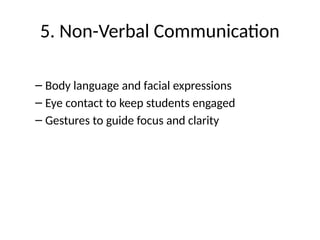
5. Non-Verbal Communication
– Body language and facial expressions
– Eye contact to keep students engaged
– Gestures to guide focus and clarity
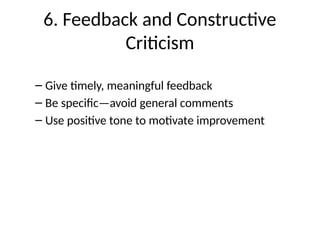
6. Feedback and Constructive
Criticism
– Give timely, meaningful feedback
– Be specific—avoid general comments
– Use positive tone to motivate improvement
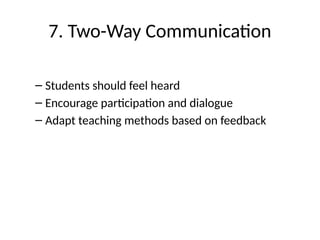
7. Two-Way Communication
– Students should feel heard
– Encourage participation and dialogue
– Adapt teaching methods based on feedback
8. Cultural Sensitivity
– Respect diverse backgrounds
– Adjust communication styles when needed
– Promote inclusivity in the classroom
9. Using Technology for
Communication
– Digital platforms to clarify doubts
– Announcements and reminders
– Interactive tools for engagement
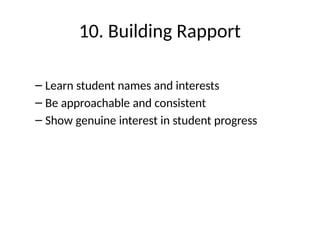
10. Building Rapport
– Learn student names and interests
– Be approachable and consistent
– Show genuine interest in student progress
Conclusion
– Communication is the foundation of good
teaching
– Stronger communication → better learning
outcomes
– Practice, patience, and empathy are key
teacher_student_communication explaining the communication dynamics

  • 1.
    Teacher–Student Communication – Buildingmeaningful, effective classroom interactions – Why communication matters in learning
  • 2.
    1. Importance ofEffective Communication – Improves understanding and clarity – Builds trust between teacher and student – Creates a positive learning environment
  • 3.
    2. Active ListeningSkills – Teachers listening to student concerns – Encouraging students to express ideas – Avoiding interruption and showing empathy
  • 4.
    3. Clear andSimple Explanations – Avoid jargon when possible – Use examples and analogies – Check for understanding frequently
  • 5.
    4. Encouraging Questions –Create an open, safe space – Value curiosity over correctness – Use questions to deepen learning
  • 6.
    5. Non-Verbal Communication –Body language and facial expressions – Eye contact to keep students engaged – Gestures to guide focus and clarity
  • 7.
    6. Feedback andConstructive Criticism – Give timely, meaningful feedback – Be specific—avoid general comments – Use positive tone to motivate improvement
  • 8.
    7. Two-Way Communication –Students should feel heard – Encourage participation and dialogue – Adapt teaching methods based on feedback
  • 9.
    8. Cultural Sensitivity –Respect diverse backgrounds – Adjust communication styles when needed – Promote inclusivity in the classroom
  • 10.
    9. Using Technologyfor Communication – Digital platforms to clarify doubts – Announcements and reminders – Interactive tools for engagement
  • 11.
    10. Building Rapport –Learn student names and interests – Be approachable and consistent – Show genuine interest in student progress
  • 12.
    Conclusion – Communication isthe foundation of good teaching – Stronger communication → better learning outcomes – Practice, patience, and empathy are key