Diagnosis and Treatment of
Traumatic Brain Injury
Angela Colantonio, PhD, OT Reg. (Ont.)
Carolyn Lemsky, PhD, C. Psych.
Catherine Wiseman Hakes, PhD Candidate, Reg. CASLPO
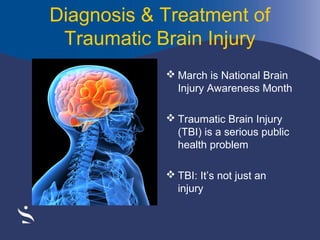
Diagnosis & Treatment of
Traumatic Brain Injury
 March is National Brain
Injury Awareness Month
 Traumatic Brain Injury
(TBI) is a serious public
health problem
 TBI: It’s not just an
injury
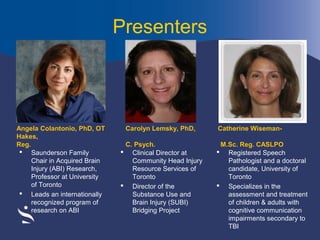
Presenters

Angela Colantonio, PhD, OT
Hakes,
Reg.
 Saunderson Family
Chair in Acquired Brain
Injury (ABI) Research,
Professor at University
of Toronto
 Leads an internationally
recognized program of
research on ABI

Carolyn Lemsky, PhD,
C. Psych.
 Clinical Director at
Community Head Injury
Resource Services of
Toronto
 Director of the
Substance Use and
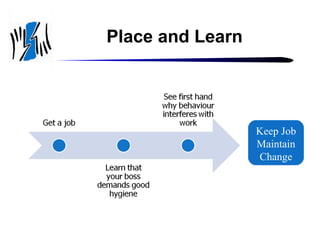
Brain Injury (SUBI)
Bridging Project

Catherine WisemanM.Sc. Reg. CASLPO
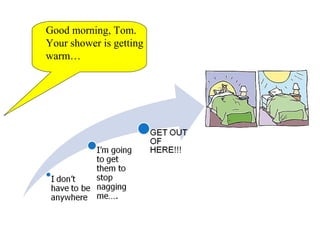
 Registered Speech
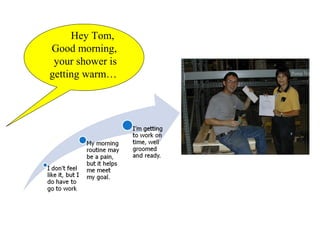
Pathologist and a doctoral
candidate, University of
Toronto
 Specializes in the
assessment and treatment
of children & adults with
cognitive communication
impairments secondary to
TBI
Goals of the Session
1. Prevalence and history of TBI among
the homeless population
2. Clinical manifestations of TBI
3. Screening tools for TBI
4. Treating TBI and co-morbidities (e.g.,
substance abuse)
5. Communicating with someone with TBI
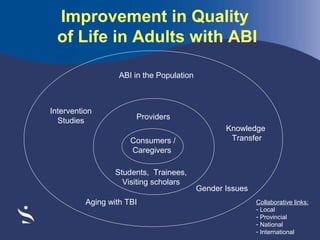
Improvement in Quality
of Life in Adults with ABI
ABI in the Population

Intervention
Studies

Providers
Consumers /
Caregivers
Students, Trainees,
Visiting scholars

Aging with TBI

Knowledge
Transfer

Gender Issues
Collaborative links:
- Local
- Provincial
- National
- International
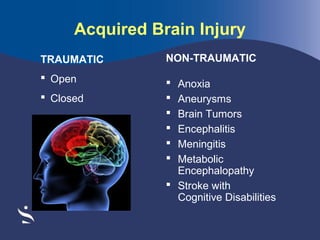
Acquired Brain Injury
TRAUMATIC

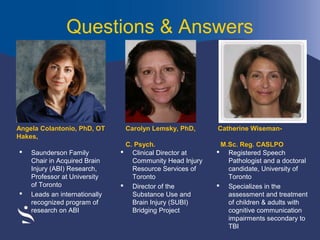
NON-TRAUMATIC

 Open








 Closed

Anoxia
Aneurysms
Brain Tumors
Encephalitis
Meningitis
Metabolic
Encephalopathy
 Stroke with
Cognitive Disabilities
Brain Injury isis the leading cause of death
Brain Injury a leading cause of death
and disability worldwide.
Injuries the brain are among most likely to
Injuries toto thebrain are among thethe most likely
result in death and permanent disability
to result in death and permanent disability
International Brain Injury
Association
International Brain Injury Association
Extent of TBI
TBI is more common than breast cancer,
spinal cord injury, HIV/AIDS and multiple
sclerosis combined
Estimated prevalence, 2% of population
Definition of TBI

An alteration in brain function, or other
evidence of brain pathology, caused by
an external force…”
Brain Injury Association of America
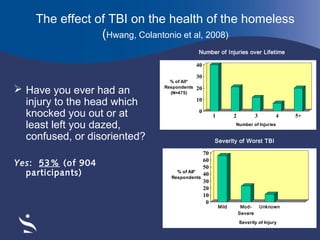
The effect of TBI on the health of the homeless
(Hwang, Colantonio et al, 2008)
Number of Injuries over Lifetime
40

 Have you ever had an
injury to the head which
knocked you out or at
least left you dazed,
confused, or disoriented?
Yes: 53% (of 904
participants)

% of All*
Respondents
(N=475)

30
20
10
0

1

2

3

4

Number of Injuries

Severity of Worst TBI

% of All*
Respondents

70
60
50
40
30
20
10
0

Mild

ModSevere

Unknown

Severity of Injury

5+
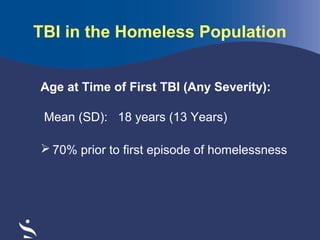
TBI in the Homeless Population
Age at Time of First TBI (Any Severity):
Mean (SD): 18 years (13 Years)
 70% prior to first episode of homelessness
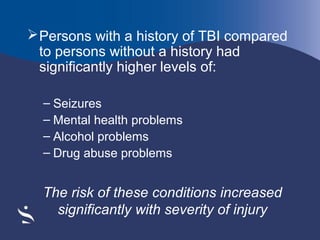
 Persons with a history of TBI compared
to persons without a history had
significantly higher levels of:
– Seizures
– Mental health problems
– Alcohol problems
– Drug abuse problems

The risk of these conditions increased
significantly with severity of injury
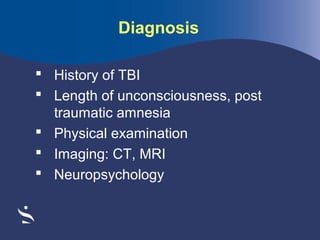
Diagnosis
 History of TBI
 Length of unconsciousness, post
traumatic amnesia
 Physical examination
 Imaging: CT, MRI
 Neuropsychology
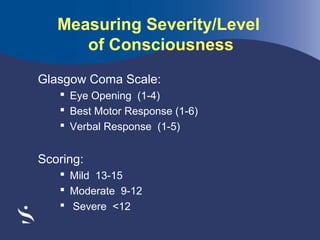
Measuring Severity/Level
of Consciousness
Glasgow Coma Scale:
 Eye Opening (1-4)
 Best Motor Response (1-6)
 Verbal Response (1-5)

Scoring:
 Mild 13-15
 Moderate 9-12
 Severe <12
American Congress of Rehabilitation
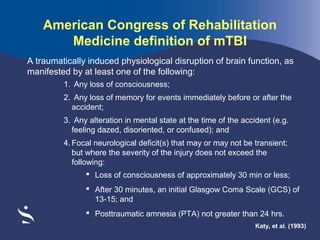
Medicine definition of mTBI
A traumatically induced physiological disruption of brain function, as
manifested by at least one of the following:
1. Any loss of consciousness;
2. Any loss of memory for events immediately before or after the
accident;
3. Any alteration in mental state at the time of the accident (e.g.
feeling dazed, disoriented, or confused); and
4. Focal neurological deficit(s) that may or may not be transient;
but where the severity of the injury does not exceed the
following:
 Loss of consciousness of approximately 30 min or less;
 After 30 minutes, an initial Glasgow Coma Scale (GCS) of
13-15; and
 Posttraumatic amnesia (PTA) not greater than 24 hrs.
Katy, et al. (1993)
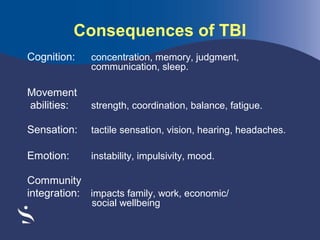
Consequences of TBI
Cognition:

concentration, memory, judgment,
communication, sleep.

Movement
abilities:

strength, coordination, balance, fatigue.

Sensation:

tactile sensation, vision, hearing, headaches.
Emotion:

instability, impulsivity, mood.

Community
integration: impacts family, work, economic/
social wellbeing
Clinical Sequelae





Highly variable presentation depending on
area of the brain affected
TBI survivors described like “snowflakes”
e.g., frontal lobe damage can affect social
behaviour
Occipital lobe damage may affect vision
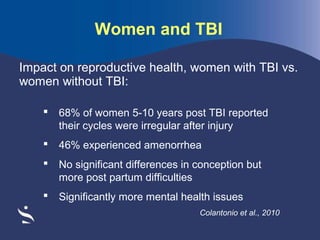
Women and TBI
Impact on reproductive health, women with TBI vs.
women without TBI:


68% of women 5-10 years post TBI reported
their cycles were irregular after injury



46% experienced amenorrhea



No significant differences in conception but
more post partum difficulties



Significantly more mental health issues
Colantonio et al., 2010
SCREENING TOOLS
Survey Questions to Identify
Traumatic Brain Injuries
Background of Surveys to
Identify TBI
Many surveys exist. Some examples are:
 Ohio State University TBI Identification
Method
 Brain Injury Screening Questionnaire
 HELPS Brain Injury Screening Tool
Ohio State University TBI
Identification Method (OSU TBI-ID)
Inter-rater reliability and predictive validity have
both proved acceptable when tested in a
substance abuse population:
– IR (r=0.849-0.951)
– Intra-class correlation coefficient all above
0.80, with 6/7 above 0.90
Bogner J, Corrigan JD. (2009). Reliability and predictive validity of the Ohio State University
TBI identification method with prisoners. J Head Trauma Rehabil, 24:279-291.
Corrigan JD, Bogner J. (2007). Initial reliability and validity of the Ohio State University TBI
identification method. J Head Trauma Rehabil, 22:318-329.
Definition of Brain Injury in Context
of the Survey
 Self-identification of an injury to the head
(Questions 1-5)
PLUS
 An Affirmative Answer to one of 6-8
 Confirmation of head injury and loss of
consciousness or episode of blacking out
Neuropsychological Evaluation



Typically involves many hours of testing
Repeatable Battery for Assessment of
Cognition (RBANS) is a short test
Treatment


Referral for further evaluation and
treatment



Multidisciplinary rehabilitation



Wide range of treatments with emerging
evidence



Follow up for disability support
services/payments
CMHA Kelowna and Brain Trust Canada
partnership: ABI Outreach Services


Aims to secure residential settlement



ABI Outreach Worker provides the knowledge
required to maintain a productive lifestyle, including
budgeting, dealing with mental health problems,
drug addiction and other physical issues.



ABI Tenant Support Worker assists in providing
access to non-emergency medical support, basic
needs such as nutritious food, and support with
coping skills, personal health practices, etc.
Research Based Theatre



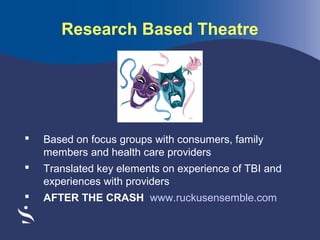
Based on focus groups with consumers, family
members and health care providers



Translated key elements on experience of TBI and
experiences with providers



AFTER THE CRASH www.ruckusensemble.com
Carolyn Lemsky, PhD, C. Psych.

Models of ABI Intervention
Overview
 Models of community-based care for ABI
 Cognitive compensation (adapting
substance use/mental health
interventions)
 Principles for working with people living
with acquired brain injury
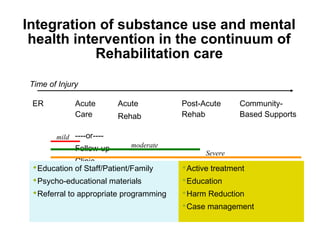
Integration of substance use and mental
health intervention in the continuum of
Rehabilitation care
Time of Injury
ER

Acute
Care

Acute
Rehab

Post-Acute
Rehab

CommunityBased Supports

mild ----or----

Follow-up

moderate

Clinic
Education of Staff/Patient/Family
Psycho-educational materials
Referral to appropriate programming

Severe

Active treatment
Education
Harm Reduction
Case management
Supporting people with ABI
in the community
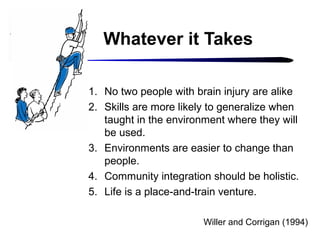
Whatever it Takes
1. No two people with brain injury are alike
2. Skills are more likely to generalize when
taught in the environment where they will
be used.
3. Environments are easier to change than
people.
4. Community integration should be holistic.
5. Life is a place-and-train venture.
Willer and Corrigan (1994)
…Cont’d

6. Natural supports last longer than
professionals.
7. Interventions must not do more harm
than good.
8. Service delivery systems present many
of the barriers to community integration
9. Respect for the individual is paramount.
10. Needs of the individuals last a lifetime,
so should their resources.
Case Example
Tom’s goal: Get a job
Problems Observed:





Poor hygiene
Limited compensation for memory
impairment
Socially inappropriate behaviour
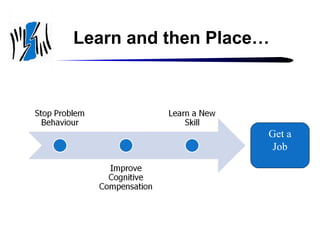
Learn and then Place…

Get a
Job
Place and Learn

Keep Job
Maintain
Change
Good morning, Tom.
Your shower is getting
warm…
Hey Tom,
Good morning,
your shower is
getting warm…
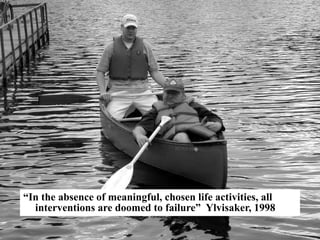
“In the absence of meaningful, chosen life activities, all
interventions are doomed to failure” Ylvisaker, 1998
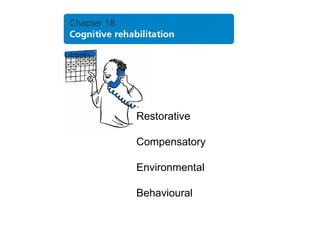
Restorative
Compensatory
Environmental
Behavioural
Restorative
Therapy activities designed to promote
return of function:



Attention training
Aphasia therapies
Compensatory
Learning a way to get around the existing
impairment:




Memory books, notes, alarms
Meta-cognitive strategies (planning)
Routines
Environmental


Reminder signs



Locks



Staff member provides a cue



Routine that is driven by others in the
environment
Behavioural
Using behavioural strategies to train a skill:





Modeling
Rehearsal
Chaining
Errorless learning
Program Modifications






Smaller sessions
Simplified materials
Flexible programming
(breaks/shortened sessions)
Integrating rehabilitation workers into
treatment
Why some clients don’t
compensate






Lack of awareness
Feeling that compensating means
‘giving up’ on progress
Stigma and shame
Impaired cognition
What does the literature say about
treatment of substance abuse
after ABI?
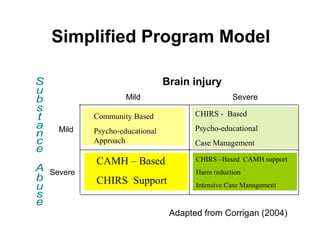
Simplified Program Model
Brain injury
Mild

Severe

Community Based
Mild

CHIRS - Based

Psycho-educational
Approach

Psycho-educational

CAMH – Based
Severe

CHIRS Support

Case Management
CHIRS –Based CAMH support
Harm reduction
Intensive Case Management

Adapted from Corrigan (2004)
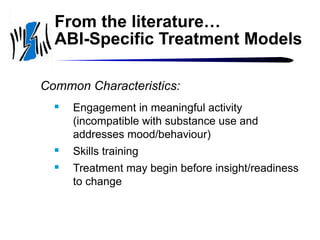
From the literature…
ABI-Specific Treatment Models
Common Characteristics:


Engagement in meaningful activity
(incompatible with substance use and
addresses mood/behaviour)



Skills training



Treatment may begin before insight/readiness
to change
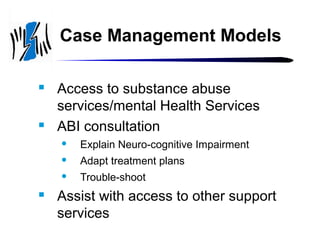
Case Management Models




Access to substance abuse
services/mental Health Services
ABI consultation



Adapt treatment plans





Explain Neuro-cognitive Impairment
Trouble-shoot

Assist with access to other support
services
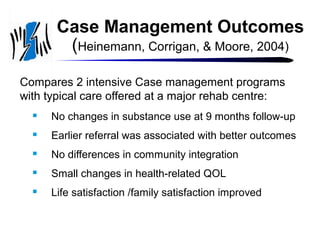
Case Management Outcomes
(Heinemann, Corrigan, & Moore, 2004)
Compares 2 intensive Case management programs
with typical care offered at a major rehab centre:


No changes in substance use at 9 months follow-up



Earlier referral was associated with better outcomes



No differences in community integration



Small changes in health-related QOL



Life satisfaction /family satisfaction improved
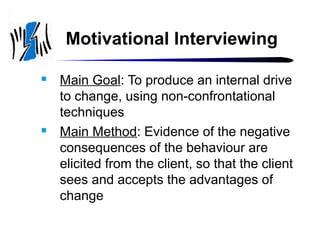
Motivational Interviewing




Main Goal: To produce an internal drive
to change, using non-confrontational
techniques
Main Method: Evidence of the negative
consequences of the behaviour are
elicited from the client, so that the client
sees and accepts the advantages of
change
Structured Motivational
Interviewing
Cox, Heinemann et al. (2003):
Outcome after 12 sessions of Motivational
Interviewing – follow-up (mean = 9 months)


Improved Motivational Structure



Reduced negative affect



Reduced substance use
Ohio Valley TBI Network Model

Consumer and professional education
 Intensive Case Management
 Consultation to Substance Abuse
Services


www.ohiovalley.org
Corrigan Review (2005)





Treatment is likely to be protracted
Successful programs will address
engagement in treatment
Early intervention is important
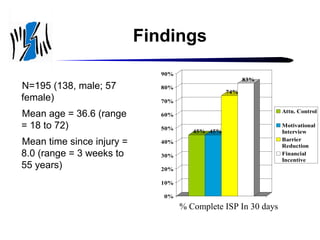
Findings
90%

N=195 (138, male; 57
female)
Mean age = 36.6 (range
= 18 to 72)
Mean time since injury =
8.0 (range = 3 weeks to
55 years)

83%

80%

74%

70%
Attn. Control

60%
50%

45% 45%

40%
30%
20%
10%
0%

% Complete ISP In 30 days

Motivational
Interview
Barrier
Reduction
Financial
Incentive
6-Month Follow-up Data






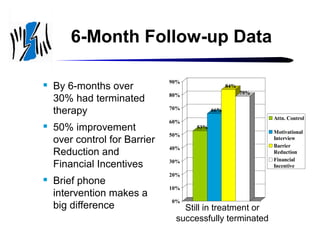
By 6-months over
30% had terminated
therapy

90%

50% improvement
over control for Barrier
Reduction and
Financial Incentives

60%

Brief phone
intervention makes a
big difference

84%
79%

80%
70%

66%
Attn. Control
53%

50%
40%
30%
20%
10%
0%

Still in treatment or
successfully terminated

Motivational
Interview
Barrier
Reduction
Financial
Incentive
Why did these interventions
work?







Financial incentive participants stated
that the reward was not what made a
difference in attending appointments
Reminders to address memory issues
Transportation support to address
planning/financial issues
Learning by ‘rule’ not by consequence
Barriers to Care


Behaviour resulting from the cognitive
impairment that appears uncooperative
or unmotivated



Difficulty recalling information learned



Difficulty generalizing



Difficulty predicting and managing
behaviour
5 Principles for Working
with ABI clients








Pace communications (one concept at a time)
Repeat important concepts
Illustrate using concrete examples
Memory Aids for use in session and outside
Environmental modifications (including the
involvement of caregivers)
Re-direction sometimes necessary to move
client to problem-solve or address tangential
speech
Communication Problems
Associated with
Traumatic Brain Injury
A Guide for Working with
Homeless Persons
Catherine Wiseman-Hakes
Ph.D. Candidate, Reg. CASLPO
Speech Language Pathologist
Communication After Brain Injury
• Communication difficulties are common
• Some more obvious, and some are not!
• Subtle (but highly debilitating)
communication issues can be
misconstrued by a communication partner
reflection of poor attitude, disinterest,
disrespect, or even substance use.
Communication:
Why all the Hype???
• What exactly is communication?
• We know when we’ve been involved in
a successful communication interaction
• AND we all know what it is like to be part
of an unsuccessful communication
interaction
• SO, what exactly is involved?
Components of Communication:
Expression
• Successful communication involves an exchange by
2 or more individuals where a message or intent by 1
person is expressed clearly, and received and
understood successfully by the communication
partner(s)
• This involves speech (or other non-verbal alternative
system) which is the motor act of forming sounds
• The content is the language
• This is augmented by the equally important non
verbal communication behaviours such as body
language, eye contact and tone of voice, known as
pragmatics
Pragmatic Communication
Personality changes following TBI
involving egocentric thinking with loss of
social sensitivity may result in a selfcentered style of communication that is
lacking empathic interaction with a
conversational partner.
Pragmatic Communication
• Personality changes following TBI involving
egocentric thinking with loss of social sensitivity
may result in a self-centered style of
communication that is lacking empathic interaction
with a conversational partner
• Behavioral changes may also affect
communication. Decreased initiation may
result in sparse, uninformative interactions
whereas impulsivity may result in verbose,
tangential communication that is marred by
inappropriate remarks.
Components of Communication:
Receiving the Message
• Successful communication involves an exchange
by 2 or more individuals where a message or intent
expressed by 1 person is received and understood
clearly
• This involves hearing, and understanding
(comprehension)
• Understanding is required at all of the levels of
expression; understanding the speech,
understanding the content, both explicit and
implied, and understanding the non verbal
communication behaviours.
Cognition and Communication
Underlying successful communication are a
number of key cognitive abilities. These include:
 Attention to the speaker,
 working memory,
 long term memory, and
 information processing (this involves the speed,
amount and complexity of the information being
presented).
Communication Problems Associated
with TBI
• Slow speed of information processing: this is a
hallmark of brain injury
• May have motor speech problems, called
dysarthria, difficulty forming the words
• May have hearing problems, and or problems
picking out speech from other background noise
• Often slow to initiate, slow to understand, difficulty
with implied messages, and difficulty thinking of
quick and coherent response
• Often have word finding difficulties.
Communication Problems
Associated with TBI
• Most people with brain injury dread  and shy away
from  multi-person conversations, noisy
environments, and conversations with people they
don’t know
• Many canNOT block out extraneous stimuli; attention
is effortful and hard to sustain over time
• Easily fatigued
• Easily overwhelmed by too much information (like
someone following a conversation in a language they
are just learning...just give up and tune out).
Communication Problems Associated
with TBI: Frontal Lobe Injuries
• May be impulsive in their responses, may be
emotionally labile; difficulty monitoring context
• In contrast, they may appear flat, disinterested
with reduced affect, limited facial and vocal
expression
• They may not hear you, they may not understand
(or they think they understand, but get it
completely wrong)
• Problems reading body language, tone of voice
and facial expression
• If they have motor speech problems they may
sound like they are under the influence of alcohol
or drugs.
Consequences of Communication
Problems after TBI
• The consequences of pragmatic communication
impairments in people with TBI can be devastating.
Social communication serves to connect people to
their families, friends, and coworkers
• Many people with TBI report reduced social contacts
and rate social isolation and loneliness as their most
frequent complaint.
MacLennan et al 2002: The prevalence of pragmatic communication impairments in traumatic brain injury.
http://www.premier-outlook.com/winter_2002/prevelance_pragmatic_communication.html
How to modify your communication to
facilitate a successful interaction
• If you are having trouble understanding their
speech, assure them you ARE interested in
what they have to say, ask them to repeat,
maybe use a pen and paper
• DON’T misinterpret a slow response and or
flat affect for lack of interest or disrespect
• Speak calmly and respectfully
• Whenever possible, have a conversation in
a quieter environment (make sure there is
no TV, radio playing etc….)
Screening Tools for
Communication Problems
• Latrobe Communication Questionnaire (Douglas, J.)
• Pragmatic Communication Scale (Erlich and Sipes)
• Pragmatic Rating Scale (MacLennan et. al.)

 
Thank You!
Questions & Answers

Angela Colantonio, PhD, OT
Hakes,




Saunderson Family
Chair in Acquired Brain
Injury (ABI) Research,
Professor at University
of Toronto
Leads an internationally
recognized program of
research on ABI

Carolyn Lemsky, PhD,
C. Psych.
 Clinical Director at
Community Head Injury
Resource Services of
Toronto
 Director of the
Substance Use and
Brain Injury (SUBI)
Bridging Project

Catherine WisemanM.Sc. Reg. CASLPO
 Registered Speech
Pathologist and a doctoral
candidate, University of
Toronto
 Specializes in the
assessment and treatment
of children & adults with
cognitive communication
impairments secondary to
TBI
http://www.abiebr.com/edumodules/edumodules.html
Thank you for your
participation!
• Upon exiting you will be prompted to
complete a short online survey. Please
take a minute to complete the survey to
evaluate this webinar production.

Tb ihomeless final

  • 1.
    Diagnosis and Treatmentof Traumatic Brain Injury Angela Colantonio, PhD, OT Reg. (Ont.) Carolyn Lemsky, PhD, C. Psych. Catherine Wiseman Hakes, PhD Candidate, Reg. CASLPO
  • 2.
    Diagnosis & Treatmentof Traumatic Brain Injury  March is National Brain Injury Awareness Month  Traumatic Brain Injury (TBI) is a serious public health problem  TBI: It’s not just an injury
  • 3.
    Presenters Angela Colantonio, PhD,OT Hakes, Reg.  Saunderson Family Chair in Acquired Brain Injury (ABI) Research, Professor at University of Toronto  Leads an internationally recognized program of research on ABI Carolyn Lemsky, PhD, C. Psych.  Clinical Director at Community Head Injury Resource Services of Toronto  Director of the Substance Use and Brain Injury (SUBI) Bridging Project Catherine WisemanM.Sc. Reg. CASLPO  Registered Speech Pathologist and a doctoral candidate, University of Toronto  Specializes in the assessment and treatment of children & adults with cognitive communication impairments secondary to TBI
  • 5.
    Goals of theSession 1. Prevalence and history of TBI among the homeless population 2. Clinical manifestations of TBI 3. Screening tools for TBI 4. Treating TBI and co-morbidities (e.g., substance abuse) 5. Communicating with someone with TBI
  • 6.
    Improvement in Quality ofLife in Adults with ABI ABI in the Population Intervention Studies Providers Consumers / Caregivers Students, Trainees, Visiting scholars Aging with TBI Knowledge Transfer Gender Issues Collaborative links: - Local - Provincial - National - International
  • 7.
    Acquired Brain Injury TRAUMATIC NON-TRAUMATIC Open        Closed Anoxia Aneurysms Brain Tumors Encephalitis Meningitis Metabolic Encephalopathy  Stroke with Cognitive Disabilities
  • 8.
    Brain Injury isisthe leading cause of death Brain Injury a leading cause of death and disability worldwide. and disability worldwide. Injuries the brain are among most likely to Injuries toto thebrain are among thethe most likely result in death and permanent disability to result in death and permanent disability International Brain Injury Association International Brain Injury Association
  • 9.
    Extent of TBI TBIis more common than breast cancer, spinal cord injury, HIV/AIDS and multiple sclerosis combined Estimated prevalence, 2% of population
  • 10.
    Definition of TBI Analteration in brain function, or other evidence of brain pathology, caused by an external force…” Brain Injury Association of America
  • 11.
    The effect ofTBI on the health of the homeless (Hwang, Colantonio et al, 2008) Number of Injuries over Lifetime 40  Have you ever had an injury to the head which knocked you out or at least left you dazed, confused, or disoriented? Yes: 53% (of 904 participants) % of All* Respondents (N=475) 30 20 10 0 1 2 3 4 Number of Injuries Severity of Worst TBI % of All* Respondents 70 60 50 40 30 20 10 0 Mild ModSevere Unknown Severity of Injury 5+
  • 12.
    TBI in theHomeless Population Age at Time of First TBI (Any Severity): Mean (SD): 18 years (13 Years)  70% prior to first episode of homelessness
  • 13.
     Persons witha history of TBI compared to persons without a history had significantly higher levels of: – Seizures – Mental health problems – Alcohol problems – Drug abuse problems The risk of these conditions increased significantly with severity of injury
  • 14.
    Diagnosis  History ofTBI  Length of unconsciousness, post traumatic amnesia  Physical examination  Imaging: CT, MRI  Neuropsychology
  • 15.
    Measuring Severity/Level of Consciousness GlasgowComa Scale:  Eye Opening (1-4)  Best Motor Response (1-6)  Verbal Response (1-5) Scoring:  Mild 13-15  Moderate 9-12  Severe <12
  • 16.
    American Congress ofRehabilitation Medicine definition of mTBI A traumatically induced physiological disruption of brain function, as manifested by at least one of the following: 1. Any loss of consciousness; 2. Any loss of memory for events immediately before or after the accident; 3. Any alteration in mental state at the time of the accident (e.g. feeling dazed, disoriented, or confused); and 4. Focal neurological deficit(s) that may or may not be transient; but where the severity of the injury does not exceed the following:  Loss of consciousness of approximately 30 min or less;  After 30 minutes, an initial Glasgow Coma Scale (GCS) of 13-15; and  Posttraumatic amnesia (PTA) not greater than 24 hrs. Katy, et al. (1993)
  • 17.
    Consequences of TBI Cognition: concentration,memory, judgment, communication, sleep. Movement abilities: strength, coordination, balance, fatigue. Sensation: tactile sensation, vision, hearing, headaches. Emotion: instability, impulsivity, mood. Community integration: impacts family, work, economic/ social wellbeing
  • 18.
    Clinical Sequelae     Highly variablepresentation depending on area of the brain affected TBI survivors described like “snowflakes” e.g., frontal lobe damage can affect social behaviour Occipital lobe damage may affect vision
  • 19.
    Women and TBI Impacton reproductive health, women with TBI vs. women without TBI:  68% of women 5-10 years post TBI reported their cycles were irregular after injury  46% experienced amenorrhea  No significant differences in conception but more post partum difficulties  Significantly more mental health issues Colantonio et al., 2010
  • 20.
    SCREENING TOOLS Survey Questionsto Identify Traumatic Brain Injuries
  • 21.
    Background of Surveysto Identify TBI Many surveys exist. Some examples are:  Ohio State University TBI Identification Method  Brain Injury Screening Questionnaire  HELPS Brain Injury Screening Tool
  • 22.
    Ohio State UniversityTBI Identification Method (OSU TBI-ID) Inter-rater reliability and predictive validity have both proved acceptable when tested in a substance abuse population: – IR (r=0.849-0.951) – Intra-class correlation coefficient all above 0.80, with 6/7 above 0.90 Bogner J, Corrigan JD. (2009). Reliability and predictive validity of the Ohio State University TBI identification method with prisoners. J Head Trauma Rehabil, 24:279-291. Corrigan JD, Bogner J. (2007). Initial reliability and validity of the Ohio State University TBI identification method. J Head Trauma Rehabil, 22:318-329.
  • 23.
    Definition of BrainInjury in Context of the Survey  Self-identification of an injury to the head (Questions 1-5) PLUS  An Affirmative Answer to one of 6-8  Confirmation of head injury and loss of consciousness or episode of blacking out
  • 24.
    Neuropsychological Evaluation   Typically involvesmany hours of testing Repeatable Battery for Assessment of Cognition (RBANS) is a short test
  • 25.
    Treatment  Referral for furtherevaluation and treatment  Multidisciplinary rehabilitation  Wide range of treatments with emerging evidence  Follow up for disability support services/payments
  • 26.
    CMHA Kelowna andBrain Trust Canada partnership: ABI Outreach Services  Aims to secure residential settlement  ABI Outreach Worker provides the knowledge required to maintain a productive lifestyle, including budgeting, dealing with mental health problems, drug addiction and other physical issues.  ABI Tenant Support Worker assists in providing access to non-emergency medical support, basic needs such as nutritious food, and support with coping skills, personal health practices, etc.
  • 27.
    Research Based Theatre  Basedon focus groups with consumers, family members and health care providers  Translated key elements on experience of TBI and experiences with providers  AFTER THE CRASH www.ruckusensemble.com
  • 28.
    Carolyn Lemsky, PhD,C. Psych. Models of ABI Intervention
  • 29.
    Overview  Models ofcommunity-based care for ABI  Cognitive compensation (adapting substance use/mental health interventions)  Principles for working with people living with acquired brain injury
  • 30.
    Integration of substanceuse and mental health intervention in the continuum of Rehabilitation care Time of Injury ER Acute Care Acute Rehab Post-Acute Rehab CommunityBased Supports mild ----or---- Follow-up moderate Clinic Education of Staff/Patient/Family Psycho-educational materials Referral to appropriate programming Severe Active treatment Education Harm Reduction Case management
  • 31.
    Supporting people withABI in the community
  • 32.
    Whatever it Takes 1.No two people with brain injury are alike 2. Skills are more likely to generalize when taught in the environment where they will be used. 3. Environments are easier to change than people. 4. Community integration should be holistic. 5. Life is a place-and-train venture. Willer and Corrigan (1994)
  • 33.
    …Cont’d 6. Natural supportslast longer than professionals. 7. Interventions must not do more harm than good. 8. Service delivery systems present many of the barriers to community integration 9. Respect for the individual is paramount. 10. Needs of the individuals last a lifetime, so should their resources.
  • 34.
    Case Example Tom’s goal:Get a job Problems Observed:    Poor hygiene Limited compensation for memory impairment Socially inappropriate behaviour
  • 35.
    Learn and thenPlace… Get a Job
  • 36.
    Place and Learn KeepJob Maintain Change
  • 37.
    Good morning, Tom. Yourshower is getting warm…
  • 38.
    Hey Tom, Good morning, yourshower is getting warm…
  • 39.
    “In the absenceof meaningful, chosen life activities, all interventions are doomed to failure” Ylvisaker, 1998
  • 40.
  • 41.
    Restorative Therapy activities designedto promote return of function:   Attention training Aphasia therapies
  • 42.
    Compensatory Learning a wayto get around the existing impairment:    Memory books, notes, alarms Meta-cognitive strategies (planning) Routines
  • 43.
    Environmental  Reminder signs  Locks  Staff memberprovides a cue  Routine that is driven by others in the environment
  • 44.
    Behavioural Using behavioural strategiesto train a skill:     Modeling Rehearsal Chaining Errorless learning
  • 45.
    Program Modifications     Smaller sessions Simplifiedmaterials Flexible programming (breaks/shortened sessions) Integrating rehabilitation workers into treatment
  • 46.
    Why some clientsdon’t compensate     Lack of awareness Feeling that compensating means ‘giving up’ on progress Stigma and shame Impaired cognition
  • 47.
    What does theliterature say about treatment of substance abuse after ABI?
  • 48.
    Simplified Program Model Braininjury Mild Severe Community Based Mild CHIRS - Based Psycho-educational Approach Psycho-educational CAMH – Based Severe CHIRS Support Case Management CHIRS –Based CAMH support Harm reduction Intensive Case Management Adapted from Corrigan (2004)
  • 49.
    From the literature… ABI-SpecificTreatment Models Common Characteristics:  Engagement in meaningful activity (incompatible with substance use and addresses mood/behaviour)  Skills training  Treatment may begin before insight/readiness to change
  • 50.
    Case Management Models   Accessto substance abuse services/mental Health Services ABI consultation   Adapt treatment plans   Explain Neuro-cognitive Impairment Trouble-shoot Assist with access to other support services
  • 51.
    Case Management Outcomes (Heinemann,Corrigan, & Moore, 2004) Compares 2 intensive Case management programs with typical care offered at a major rehab centre:  No changes in substance use at 9 months follow-up  Earlier referral was associated with better outcomes  No differences in community integration  Small changes in health-related QOL  Life satisfaction /family satisfaction improved
  • 52.
    Motivational Interviewing   Main Goal:To produce an internal drive to change, using non-confrontational techniques Main Method: Evidence of the negative consequences of the behaviour are elicited from the client, so that the client sees and accepts the advantages of change
  • 53.
    Structured Motivational Interviewing Cox, Heinemannet al. (2003): Outcome after 12 sessions of Motivational Interviewing – follow-up (mean = 9 months)  Improved Motivational Structure  Reduced negative affect  Reduced substance use
  • 54.
    Ohio Valley TBINetwork Model Consumer and professional education  Intensive Case Management  Consultation to Substance Abuse Services  www.ohiovalley.org
  • 55.
    Corrigan Review (2005)    Treatmentis likely to be protracted Successful programs will address engagement in treatment Early intervention is important
  • 56.
    Findings 90% N=195 (138, male;57 female) Mean age = 36.6 (range = 18 to 72) Mean time since injury = 8.0 (range = 3 weeks to 55 years) 83% 80% 74% 70% Attn. Control 60% 50% 45% 45% 40% 30% 20% 10% 0% % Complete ISP In 30 days Motivational Interview Barrier Reduction Financial Incentive
  • 57.
    6-Month Follow-up Data    By6-months over 30% had terminated therapy 90% 50% improvement over control for Barrier Reduction and Financial Incentives 60% Brief phone intervention makes a big difference 84% 79% 80% 70% 66% Attn. Control 53% 50% 40% 30% 20% 10% 0% Still in treatment or successfully terminated Motivational Interview Barrier Reduction Financial Incentive
  • 58.
    Why did theseinterventions work?     Financial incentive participants stated that the reward was not what made a difference in attending appointments Reminders to address memory issues Transportation support to address planning/financial issues Learning by ‘rule’ not by consequence
  • 59.
    Barriers to Care  Behaviourresulting from the cognitive impairment that appears uncooperative or unmotivated  Difficulty recalling information learned  Difficulty generalizing  Difficulty predicting and managing behaviour
  • 60.
    5 Principles forWorking with ABI clients       Pace communications (one concept at a time) Repeat important concepts Illustrate using concrete examples Memory Aids for use in session and outside Environmental modifications (including the involvement of caregivers) Re-direction sometimes necessary to move client to problem-solve or address tangential speech
  • 61.
    Communication Problems Associated with TraumaticBrain Injury A Guide for Working with Homeless Persons Catherine Wiseman-Hakes Ph.D. Candidate, Reg. CASLPO Speech Language Pathologist
  • 62.
    Communication After BrainInjury • Communication difficulties are common • Some more obvious, and some are not! • Subtle (but highly debilitating) communication issues can be misconstrued by a communication partner reflection of poor attitude, disinterest, disrespect, or even substance use.
  • 63.
    Communication: Why all theHype??? • What exactly is communication? • We know when we’ve been involved in a successful communication interaction • AND we all know what it is like to be part of an unsuccessful communication interaction • SO, what exactly is involved?
  • 64.
    Components of Communication: Expression •Successful communication involves an exchange by 2 or more individuals where a message or intent by 1 person is expressed clearly, and received and understood successfully by the communication partner(s) • This involves speech (or other non-verbal alternative system) which is the motor act of forming sounds • The content is the language • This is augmented by the equally important non verbal communication behaviours such as body language, eye contact and tone of voice, known as pragmatics
  • 65.
    Pragmatic Communication Personality changesfollowing TBI involving egocentric thinking with loss of social sensitivity may result in a selfcentered style of communication that is lacking empathic interaction with a conversational partner.
  • 66.
    Pragmatic Communication • Personalitychanges following TBI involving egocentric thinking with loss of social sensitivity may result in a self-centered style of communication that is lacking empathic interaction with a conversational partner • Behavioral changes may also affect communication. Decreased initiation may result in sparse, uninformative interactions whereas impulsivity may result in verbose, tangential communication that is marred by inappropriate remarks.
  • 67.
    Components of Communication: Receivingthe Message • Successful communication involves an exchange by 2 or more individuals where a message or intent expressed by 1 person is received and understood clearly • This involves hearing, and understanding (comprehension) • Understanding is required at all of the levels of expression; understanding the speech, understanding the content, both explicit and implied, and understanding the non verbal communication behaviours.
  • 68.
    Cognition and Communication Underlyingsuccessful communication are a number of key cognitive abilities. These include:  Attention to the speaker,  working memory,  long term memory, and  information processing (this involves the speed, amount and complexity of the information being presented).
  • 69.
    Communication Problems Associated withTBI • Slow speed of information processing: this is a hallmark of brain injury • May have motor speech problems, called dysarthria, difficulty forming the words • May have hearing problems, and or problems picking out speech from other background noise • Often slow to initiate, slow to understand, difficulty with implied messages, and difficulty thinking of quick and coherent response • Often have word finding difficulties.
  • 70.
    Communication Problems Associated withTBI • Most people with brain injury dread  and shy away from  multi-person conversations, noisy environments, and conversations with people they don’t know • Many canNOT block out extraneous stimuli; attention is effortful and hard to sustain over time • Easily fatigued • Easily overwhelmed by too much information (like someone following a conversation in a language they are just learning...just give up and tune out).
  • 71.
    Communication Problems Associated withTBI: Frontal Lobe Injuries • May be impulsive in their responses, may be emotionally labile; difficulty monitoring context • In contrast, they may appear flat, disinterested with reduced affect, limited facial and vocal expression • They may not hear you, they may not understand (or they think they understand, but get it completely wrong) • Problems reading body language, tone of voice and facial expression • If they have motor speech problems they may sound like they are under the influence of alcohol or drugs.
  • 72.
    Consequences of Communication Problemsafter TBI • The consequences of pragmatic communication impairments in people with TBI can be devastating. Social communication serves to connect people to their families, friends, and coworkers • Many people with TBI report reduced social contacts and rate social isolation and loneliness as their most frequent complaint. MacLennan et al 2002: The prevalence of pragmatic communication impairments in traumatic brain injury. http://www.premier-outlook.com/winter_2002/prevelance_pragmatic_communication.html
  • 73.
    How to modifyyour communication to facilitate a successful interaction • If you are having trouble understanding their speech, assure them you ARE interested in what they have to say, ask them to repeat, maybe use a pen and paper • DON’T misinterpret a slow response and or flat affect for lack of interest or disrespect • Speak calmly and respectfully • Whenever possible, have a conversation in a quieter environment (make sure there is no TV, radio playing etc….)
  • 74.
    Screening Tools for CommunicationProblems • Latrobe Communication Questionnaire (Douglas, J.) • Pragmatic Communication Scale (Erlich and Sipes) • Pragmatic Rating Scale (MacLennan et. al.)  
  • 75.
  • 76.
    Questions & Answers AngelaColantonio, PhD, OT Hakes,   Saunderson Family Chair in Acquired Brain Injury (ABI) Research, Professor at University of Toronto Leads an internationally recognized program of research on ABI Carolyn Lemsky, PhD, C. Psych.  Clinical Director at Community Head Injury Resource Services of Toronto  Director of the Substance Use and Brain Injury (SUBI) Bridging Project Catherine WisemanM.Sc. Reg. CASLPO  Registered Speech Pathologist and a doctoral candidate, University of Toronto  Specializes in the assessment and treatment of children & adults with cognitive communication impairments secondary to TBI
  • 77.
  • 78.
    Thank you foryour participation! • Upon exiting you will be prompted to complete a short online survey. Please take a minute to complete the survey to evaluate this webinar production.

Editor's Notes

  • #12 Headline: Click on current headline to add new headline Leave headlines white. You may increase the point size. If you do, make sure it is consistent throughout your presentation. Body Text: Click on box to add new body text. Leave text as the customized yellow found in your Font Colour menu. Bullet points should line up (on the left margin) with start of headline.
  • #13 Notes from Stephen Hwang: History of TBI was defined as answering “yes” to the question “Have you ever had an injury to the head which knocked you out or at least left you dazed, confused, or disoriented?” Mild TBI was defined as head injury resulting in no loss of consciousness or loss of consciousness ≤ 30 minutes Moderate/Severe TBI was defined as head injury resulting in loss of consciousness &amp;gt; 30 minutes.
  • #57 Financial incentive 22.8 days average to sign ISP 44.0 days average to sign ISP
  • #63 So, I’d like to begin by walking you through the types of communication problems we see, and how they manifest themselves in interactions with others.
  • #65 I realize that I may be stating the obvious….but in order to understand why communication breaks down, we need to understand the underlying components. There are 2 sides to communication; sending a message and receiving a message, and each has their own specific components
  • #69 Give examples of how these processes are used… It is easy to see how breakdowns occur, especially in individuals with brain injury