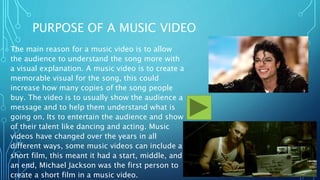
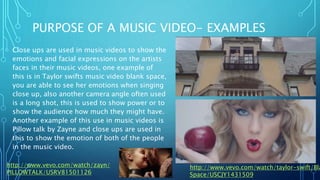
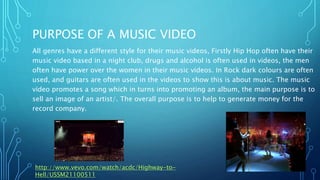
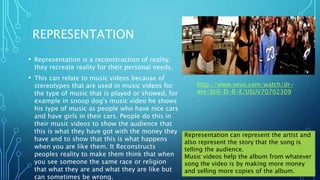
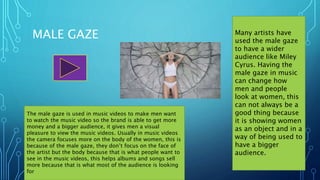
The document discusses the purposes of music videos, including allowing audiences to understand songs visually, creating memorable visuals to promote songs and albums, entertaining audiences, and promoting artists. It provides examples of camera techniques like close-ups and long shots used in music videos. Music videos can represent different genres through styles, symbols, and settings. They help promote songs, artists, albums, and record labels to generate revenue. Artists also use synergy across media to expand their audiences and brands. The male gaze is discussed as a technique to attract larger audiences, especially male viewers. Music videos have evolved since 1981 to become a standard part of the music marketing process, sometimes driving songs into the top charts through their popularity alone.