Top 10 NFPA 1500 Courses
BASED ON THE TOTAL NUMBER OF COMPLETIONS
Top 10 NFPA 1500 Courses
Bloodborne Pathogens Safety
Hazard Communication
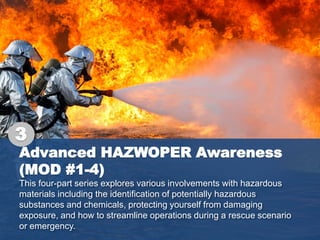
Advanced HAZWOPER Awareness (MOD #1-4)
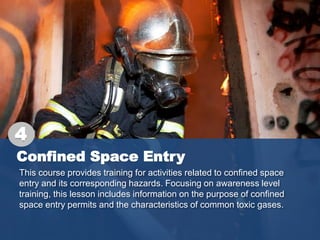
Confined Space Entry
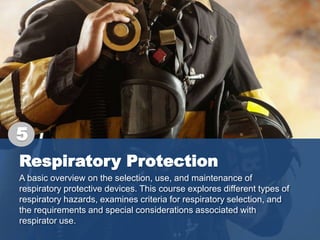
Respiratory Protection
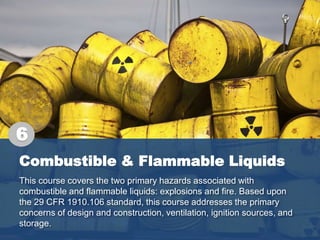
Combustible & Flammable Liquids
Driving Safety
Personal Protective Equipment
Compressed Gas Safety
HAZMAT Spill Prevention & Control
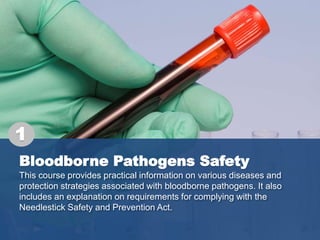
Bloodborne Pathogens Safety
This course provides practical information on various diseases and
protection strategies associated with bloodborne pathogens. It also
includes an explanation on requirements for complying with the
Needlestick Safety and Prevention Act.
1
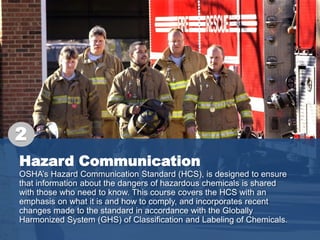
Hazard Communication
OSHA’s Hazard Communication Standard (HCS), is designed to ensure
that information about the dangers of hazardous chemicals is shared
with those who need to know. This course covers the HCS with an
emphasis on what it is and how to comply, and incorporates recent
changes made to the standard in accordance with the Globally
Harmonized System (GHS) of Classification and Labeling of Chemicals.
2
Advanced HAZWOPER Awareness
(MOD #1-4)
This four-part series explores various involvements with hazardous
materials including the identification of potentially hazardous
substances and chemicals, protecting yourself from damaging
exposure, and how to streamline operations during a rescue scenario
or emergency.
3
Confined Space Entry
This course provides training for activities related to confined space
entry and its corresponding hazards. Focusing on awareness level
training, this lesson includes information on the purpose of confined
space entry permits and the characteristics of common toxic gases.
4
Respiratory Protection
A basic overview on the selection, use, and maintenance of
respiratory protective devices. This course explores different types of
respiratory hazards, examines criteria for respiratory selection, and
the requirements and special considerations associated with
respirator use.
5
Combustible & Flammable Liquids
This course covers the two primary hazards associated with
combustible and flammable liquids: explosions and fire. Based upon
the 29 CFR 1910.106 standard, this course addresses the primary
concerns of design and construction, ventilation, ignition sources, and
storage.
6
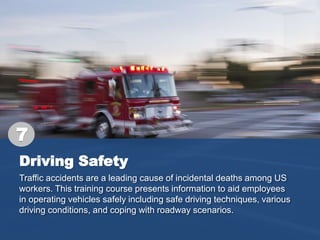
Driving Safety
Traffic accidents are a leading cause of incidental deaths among US
workers. This training course presents information to aid employees
in operating vehicles safely including safe driving techniques, various
driving conditions, and coping with roadway scenarios.
7
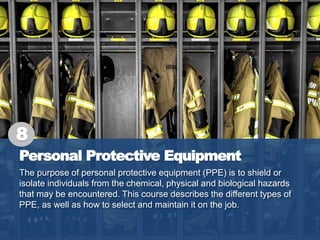
Personal Protective Equipment
The purpose of personal protective equipment (PPE) is to shield or
isolate individuals from the chemical, physical and biological hazards
that may be encountered. This course describes the different types of
PPE, as well as how to select and maintain it on the job.
8
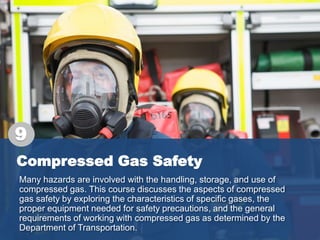
Compressed Gas Safety
Many hazards are involved with the handling, storage, and use of
compressed gas. This course discusses the aspects of compressed
gas safety by exploring the characteristics of specific gases, the
proper equipment needed for safety precautions, and the general
requirements of working with compressed gas as determined by the
Department of Transportation.
9
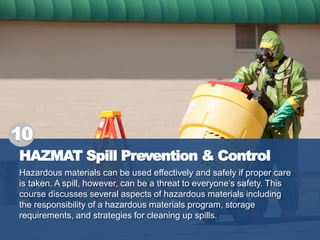
HAZMAT Spill Prevention & Control
Hazardous materials can be used effectively and safely if proper care
is taken. A spill, however, can be a threat to everyone’s safety. This
course discusses several aspects of hazardous materials including
the responsibility of a hazardous materials program, storage
requirements, and strategies for cleaning up spills.
10
Would You Like to Learn More
About TargetSolutions?
ContactUsToday!
800.840.8048

TargetSolutions' Top 10 NFPA 1500 Training Courses

  • 1.
    Top 10 NFPA1500 Courses BASED ON THE TOTAL NUMBER OF COMPLETIONS
  • 2.
    Top 10 NFPA1500 Courses Bloodborne Pathogens Safety Hazard Communication Advanced HAZWOPER Awareness (MOD #1-4) Confined Space Entry Respiratory Protection Combustible & Flammable Liquids Driving Safety Personal Protective Equipment Compressed Gas Safety HAZMAT Spill Prevention & Control
  • 3.
    Bloodborne Pathogens Safety Thiscourse provides practical information on various diseases and protection strategies associated with bloodborne pathogens. It also includes an explanation on requirements for complying with the Needlestick Safety and Prevention Act. 1
  • 4.
    Hazard Communication OSHA’s HazardCommunication Standard (HCS), is designed to ensure that information about the dangers of hazardous chemicals is shared with those who need to know. This course covers the HCS with an emphasis on what it is and how to comply, and incorporates recent changes made to the standard in accordance with the Globally Harmonized System (GHS) of Classification and Labeling of Chemicals. 2
  • 5.
    Advanced HAZWOPER Awareness (MOD#1-4) This four-part series explores various involvements with hazardous materials including the identification of potentially hazardous substances and chemicals, protecting yourself from damaging exposure, and how to streamline operations during a rescue scenario or emergency. 3
  • 6.
    Confined Space Entry Thiscourse provides training for activities related to confined space entry and its corresponding hazards. Focusing on awareness level training, this lesson includes information on the purpose of confined space entry permits and the characteristics of common toxic gases. 4
  • 7.
    Respiratory Protection A basicoverview on the selection, use, and maintenance of respiratory protective devices. This course explores different types of respiratory hazards, examines criteria for respiratory selection, and the requirements and special considerations associated with respirator use. 5
  • 8.
    Combustible & FlammableLiquids This course covers the two primary hazards associated with combustible and flammable liquids: explosions and fire. Based upon the 29 CFR 1910.106 standard, this course addresses the primary concerns of design and construction, ventilation, ignition sources, and storage. 6
  • 9.
    Driving Safety Traffic accidentsare a leading cause of incidental deaths among US workers. This training course presents information to aid employees in operating vehicles safely including safe driving techniques, various driving conditions, and coping with roadway scenarios. 7
  • 10.
    Personal Protective Equipment Thepurpose of personal protective equipment (PPE) is to shield or isolate individuals from the chemical, physical and biological hazards that may be encountered. This course describes the different types of PPE, as well as how to select and maintain it on the job. 8
  • 11.
    Compressed Gas Safety Manyhazards are involved with the handling, storage, and use of compressed gas. This course discusses the aspects of compressed gas safety by exploring the characteristics of specific gases, the proper equipment needed for safety precautions, and the general requirements of working with compressed gas as determined by the Department of Transportation. 9
  • 12.
    HAZMAT Spill Prevention& Control Hazardous materials can be used effectively and safely if proper care is taken. A spill, however, can be a threat to everyone’s safety. This course discusses several aspects of hazardous materials including the responsibility of a hazardous materials program, storage requirements, and strategies for cleaning up spills. 10
  • 13.
    Would You Liketo Learn More About TargetSolutions? ContactUsToday! 800.840.8048