Targeting & The Marketing
Mix
Jessica Eifert
Context of Advertising
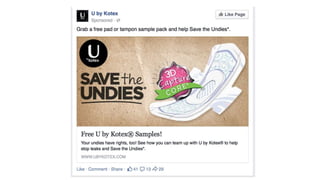
• Advertisers face the challenge of how best to present their products,
services, and ideas through media to audiences
• A company prospers only if it can attract and keep customers who are
willing to buy the firm's goods and services
The Marketing Segmentation Process
There are two steps to the segmentation process:
1. identifying groups of people with shared needs and
characteristics
2. Aggregating these groups into larger market segments
according to their interest
The two types of markets include: A) Consumer and B) Business
Consumer Market
• the people who buy the product for their own or someone else's
personal use
• advertisers must understand how people act and think
Business markets
• companies use business marketing to reach people who buy goods
and services for resale, for use in a business or organization, or for
manufacturing other products
The Next Step
• Once the market segmentation process is complete, a company can
proceed to the target marketing process
• The first step in this process is assessing which of the newly created segments
offer the greatest profit potential and which can be most successfully
penetrated
• The second step is to matching products to markets by creating a marketing
concept or marketing mix which involves
• price
• product
• distribution
• communication
Product Life Cylce
• The next step is to determine a products life cycle which will influence
the target market
• introduction
• growth
• maturity
• decline
Price Element
• the price element factor in the marketing mix influences the
customers perceptions of the brand
• companies that are more price competitive may regularly use sale
advertising, clearance advertising or loss-leader advertising
Distribution
• place or distribution must be decided
• it is important for marketers to understand that the method of
distribution must be consistent with the brand's image
Promotion
• The promotion or communication element includes all marketing
related communications between the seller and the buyer
• marketing communications refers to all the planned messages that
companies and organizations use to support their markteting
objectives and strategies
• the following factors are particularly important for advertising
success:
• strong primary demand trend
• potential for signifcant product differentiation
• hidden qualities highly important to consumers
• opportunity to use strong emotional appeal
• substantial funds available to support advertising
Perspective
• All of these are what make up to form a written marketing and
advertising plan

Targeting & Marketing Mix

  • 1.
    Targeting & TheMarketing Mix Jessica Eifert
  • 2.
    Context of Advertising •Advertisers face the challenge of how best to present their products, services, and ideas through media to audiences • A company prospers only if it can attract and keep customers who are willing to buy the firm's goods and services
  • 4.
    The Marketing SegmentationProcess There are two steps to the segmentation process: 1. identifying groups of people with shared needs and characteristics 2. Aggregating these groups into larger market segments according to their interest The two types of markets include: A) Consumer and B) Business
  • 5.
    Consumer Market • thepeople who buy the product for their own or someone else's personal use • advertisers must understand how people act and think
  • 6.
    Business markets • companiesuse business marketing to reach people who buy goods and services for resale, for use in a business or organization, or for manufacturing other products
  • 7.
    The Next Step •Once the market segmentation process is complete, a company can proceed to the target marketing process • The first step in this process is assessing which of the newly created segments offer the greatest profit potential and which can be most successfully penetrated • The second step is to matching products to markets by creating a marketing concept or marketing mix which involves • price • product • distribution • communication
  • 8.
    Product Life Cylce •The next step is to determine a products life cycle which will influence the target market • introduction • growth • maturity • decline
  • 9.
    Price Element • theprice element factor in the marketing mix influences the customers perceptions of the brand • companies that are more price competitive may regularly use sale advertising, clearance advertising or loss-leader advertising
  • 10.
    Distribution • place ordistribution must be decided • it is important for marketers to understand that the method of distribution must be consistent with the brand's image
  • 11.
    Promotion • The promotionor communication element includes all marketing related communications between the seller and the buyer • marketing communications refers to all the planned messages that companies and organizations use to support their markteting objectives and strategies • the following factors are particularly important for advertising success: • strong primary demand trend • potential for signifcant product differentiation • hidden qualities highly important to consumers • opportunity to use strong emotional appeal • substantial funds available to support advertising
  • 12.
    Perspective • All ofthese are what make up to form a written marketing and advertising plan