Target Group Analysis 
ZIBAT 
2014
What did we learn last time? 
• Remember attendance! 
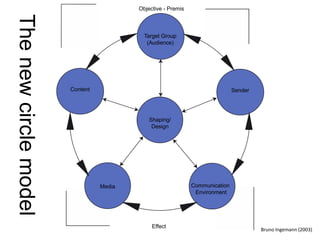
• Communication models
Bruno Ingemann (2003) 
The new circle model 
Objective - Premis 
Target Group 
(Audience) 
Content 
Media 
Sender 
Communication 
Environment 
Shaping/ 
Design 
Effect
Todays program 
• Target group analysis 
• What are target group analysis good for? 
– What is important to know? 
– Which methods should we use? 
• Pro’s and cons’
Learning goals 
You should be able to: 
• Collect and evaluate empirical data on 
audiences and use cases 
• Use methods and tools to describe a 
target group in relation to multimedia tasks 
Quote from the curriculum
”I ONLY TRUST IN STATISTICS 
THAT I DOCTORED MYSELF” 
Winston Churchill
What is a target group good for? 
• Exercise: Diskuss 2 and 2, why we work 
with target groups. 
• Give an example of a target group 
description (you must write your 
description on paper (readable) and it 
must be rather detailed) 
Available time: 15 min.
The target group description 
New assignment: 
• Exchange your target group description 
with your neighbour group. 
• Describe what you get of the other groups 
target group description. If you have the 
time: Make a sketch of the target group.
How do I get to know my 
target group
What is important?
New assignment 
• Discuss in groups: Which information do 
you need in relation to this fourthnights 
theme project? 
– Create a poster with your results 
Available time: 20 min.
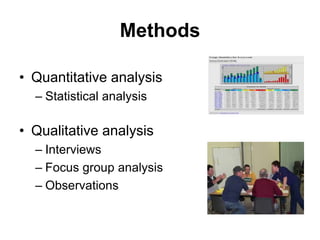
Methods 
• Quantitative analysis 
– Statistical analysis 
• Qualitative analysis 
– Interviews 
– Focus group analysis 
– Observations
Quantitative analysis 
Where do we use it? 
• Amounts 
• Sizes 
• Gauge 
• Quantity
Quantitative analysis 
Sources: 
• Is it a good ide to make your own 
questionnaire analysis? 
• What are the alternatives?
Qualitative analysis 
• Open questions 
• Seek for new maybe surprising knowledge 
• Based on an interest in the target group 
• Relation to product and sender
Qualitative analysis 
– Interviews 
– Focus group interviews 
– Observations
Kombination of methods 
• How can quantitative and qualitative 
analysis be kombined?
Assignment 
• Prepare a target group analysis for the two 
target groups in the theme project.

Target group analysis

  • 1.
  • 2.
    What did welearn last time? • Remember attendance! • Communication models
  • 3.
    Bruno Ingemann (2003) The new circle model Objective - Premis Target Group (Audience) Content Media Sender Communication Environment Shaping/ Design Effect
  • 4.
    Todays program •Target group analysis • What are target group analysis good for? – What is important to know? – Which methods should we use? • Pro’s and cons’
  • 5.
    Learning goals Youshould be able to: • Collect and evaluate empirical data on audiences and use cases • Use methods and tools to describe a target group in relation to multimedia tasks Quote from the curriculum
  • 6.
    ”I ONLY TRUSTIN STATISTICS THAT I DOCTORED MYSELF” Winston Churchill
  • 7.
    What is atarget group good for? • Exercise: Diskuss 2 and 2, why we work with target groups. • Give an example of a target group description (you must write your description on paper (readable) and it must be rather detailed) Available time: 15 min.
  • 8.
    The target groupdescription New assignment: • Exchange your target group description with your neighbour group. • Describe what you get of the other groups target group description. If you have the time: Make a sketch of the target group.
  • 9.
    How do Iget to know my target group
  • 10.
  • 11.
    New assignment •Discuss in groups: Which information do you need in relation to this fourthnights theme project? – Create a poster with your results Available time: 20 min.
  • 12.
    Methods • Quantitativeanalysis – Statistical analysis • Qualitative analysis – Interviews – Focus group analysis – Observations
  • 13.
    Quantitative analysis Wheredo we use it? • Amounts • Sizes • Gauge • Quantity
  • 14.
    Quantitative analysis Sources: • Is it a good ide to make your own questionnaire analysis? • What are the alternatives?
  • 15.
    Qualitative analysis •Open questions • Seek for new maybe surprising knowledge • Based on an interest in the target group • Relation to product and sender
  • 16.
    Qualitative analysis –Interviews – Focus group interviews – Observations
  • 17.
    Kombination of methods • How can quantitative and qualitative analysis be kombined?
  • 19.
    Assignment • Preparea target group analysis for the two target groups in the theme project.

Editor's Notes

  • #3 Her kommer jeg kort forbi Laswells kommunikationsmodel – som er bedst egnet med få involverede. Går derfra videre til bollemodellen, som er skræddersyet til mere kompleks kommunikation – hvor design og web fx indgår.
  • #8 Pædagogiske overvejelser: De studerende har typisk svært ved at forholde sig til målgruppe-begrebet Derfor første del af opgaven. Samtidig er forestillingen om beskrivelse af målgrupper meget forsimplet. Den typiske idé om målgruppebeskrivelse er alder, køn, socialklasse, geografisk data, job evt. Livsstil-defineret a la minerva. Næste skridt bliver diskussion af værdien af deres målgruppebeskrivelse.
  • #9 Formål: At sensibilisere de studerende i forhold til, hvilke oplysninger, man har brug for, når man skal indsamle målgruppe data. Min formodning er, at beskrivelserne af målgrupperne vil være meget upræcise og derfor svære for partnergruppen at stille noget op med.
  • #10 Oplæg til diskussion i klassen om, hvad man kan gøre for at lære sin målgruppe at kende.
  • #11 En anden vinkel, der skal lægge op til opgaven på næste slide…
  • #12 Målet med denne opgave er at arbejde videre ind i en forståelse af, hvad det er man gør, når man gennemfører en målgruppeanalyse. Det er vigtigt at gøre sig klart, hvad man har brug for at vide, før man går i gang med en målgruppe-analyse.
  • #14 Diskussion af, hvad vi kan bruge kvantitative data til i forhold til målgruppeanalyser. Skulle gerne føre hen til, at kvantitative data mest er egnet til segmentering – altså inddeling i forskellige delgrupper. Men den er ikke videre egnet til at forså, hvad der ligger bag målgruppens handlinger.
  • #15 Spørgsmålet om spørgeskema stilles for at gøre de studerende bevidste om metodiske problemstillinger med selv at lave spørgeskemaanalyser, når svarmængden typisk bliver forsvindende lille. Fokus skal rettes mod andre kilder med kvantitative data – som brancheanalyser, DS, andre analyser foretaget af analysebureauer, der styr på metoder, der kan generere valide data og som har værktøjerne til den matematiske side af statistikken.
  • #21 Hvis der er tid tilbage efter persona-oplægget, foreslår jeg, at du gør brug af denne opgave.