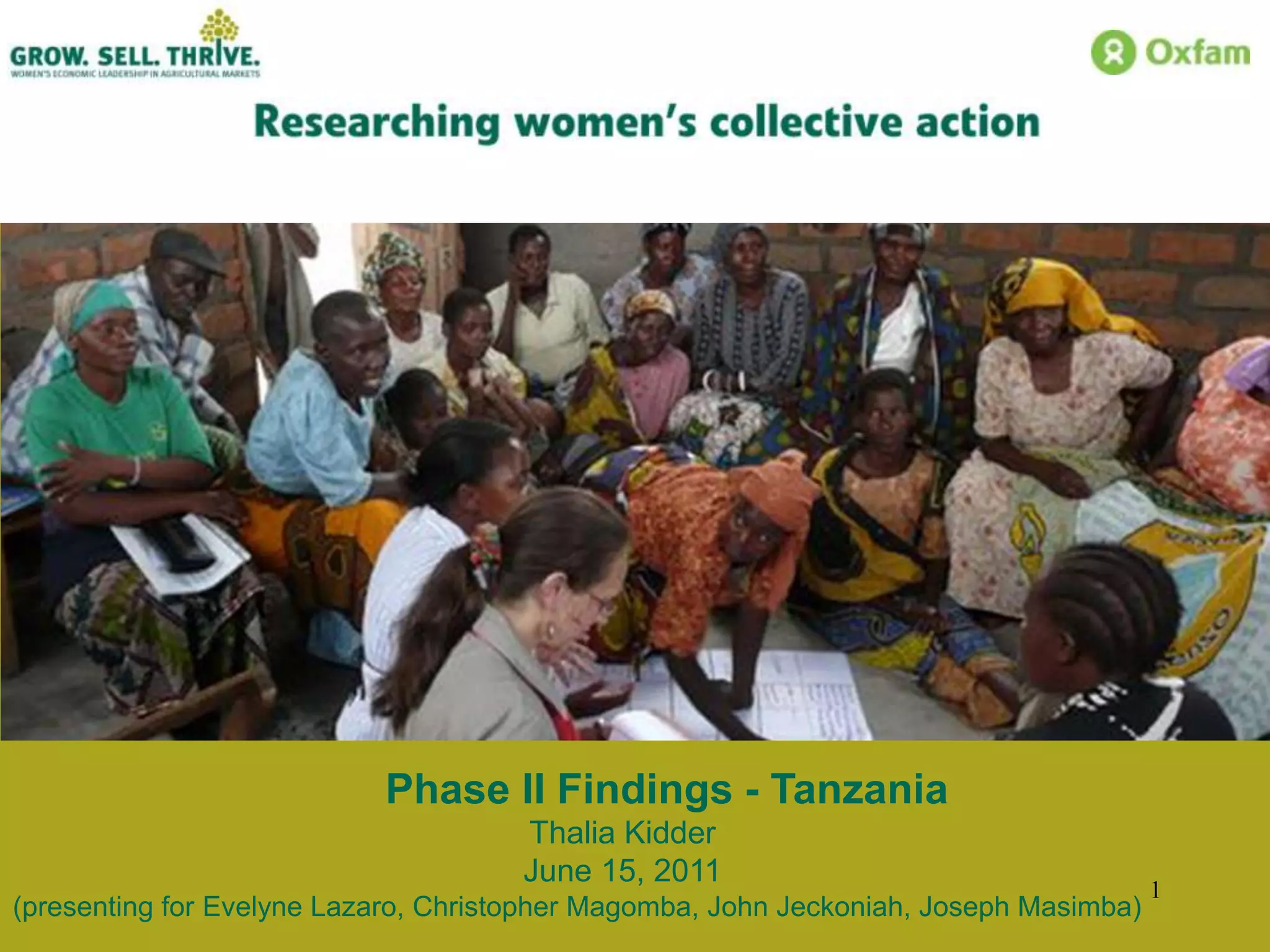
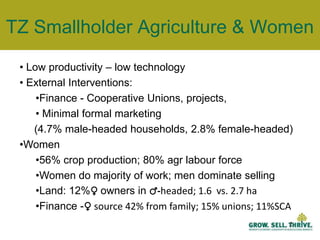
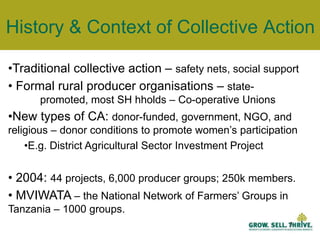
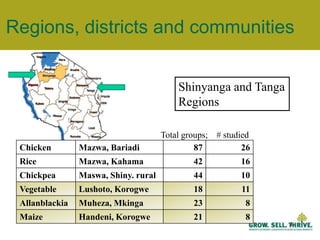
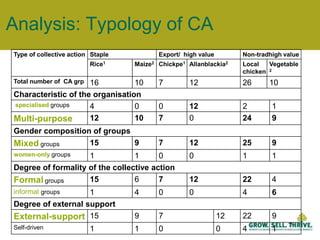
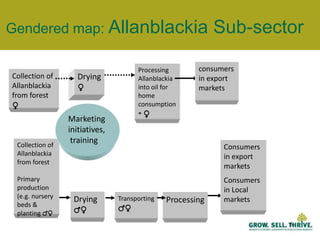
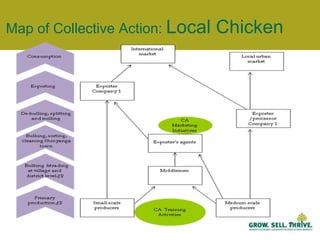
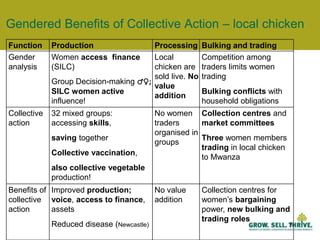
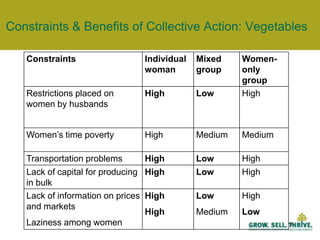
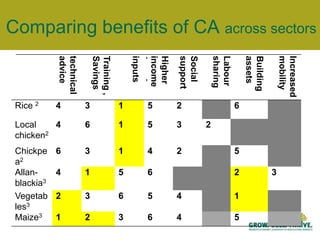
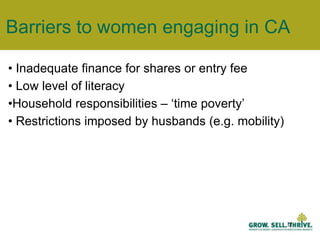
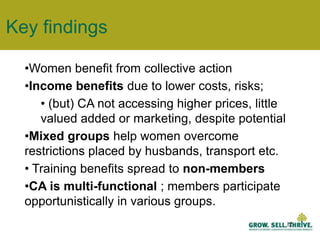
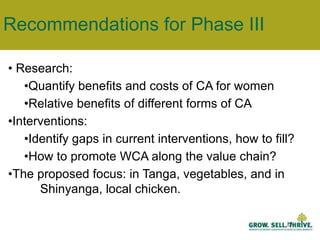
This document summarizes the findings of Phase II research in Tanzania on smallholder agriculture and women. It finds that while collective action provides some benefits to women, including lower costs and risks, it is not enabling them to access higher prices or engage in value addition and marketing. Collective action benefits women most when it helps overcome restrictions imposed by husbands. The recommendations are to further research the benefits and costs of different forms of collective action for women and identify gaps in current interventions to promote women's participation along entire value chains.