TAJIKISTAN
Tajikistan 
Tajikistan officially the Republic of Tajikistan, is a 
mountainous landloked country in Center Asia. 
Afganistan borders to the south, Uzbekistan to the west, 
Kyrgyzstan to the north, and People's Republic of China 
to the east. Tajikistan also lies adjacent to Pakistan but is 
separated by the narrow Wakhan Corridor. Most of 
Tajikistan's population belongs to the Tajik ethnic group, 
who share culture and history with the Iranian peoples 
and speak the Persian language.
Tajikistan
Etymology 
Tajikistan means the "Land of the Tajiks" in Persian. 
Some believe the name Tajik is a geographic reference 
to the crown (Taj) of the Pamir Knot, but this is a folk 
etymology. The word Tajik was used to differentiate 
Iranians from Turks in Central Asia, starting as early as 
the 10th century. According to some other sources, the 
name Tajik refers to a group of people who are believed 
to be one of the pure and close descendents of the 
ancient Aryans.
Etymology
Early history 
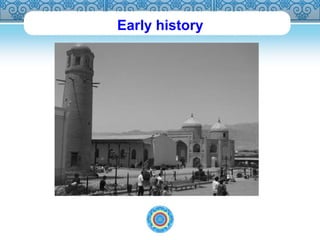
The territory of what is now Tajikistan has been inhabited 
continuously since 4000 before Christ. It has been under 
the rule of various empires throughout history, for the 
longest period being part of the Persian Empire. From 
the last quarter of fourth century before Christ until the 
first quarter of the second century before Christ, it was 
part of the Bactrian Empire, from whom it was passed on 
to Scythian Tukharas and hence became part of 
Tukharistan. Arabs brought Islam in the 7th century 
Common Era. The Samanid Empire Iranians supplanted 
the Arabs and built the cities of Samarkand and Bukhara, 
which became the cultural centers of Tajiks (both of 
which are now in Uzbekistan).
Early history
Russian presence 
In the 19th century, the Russian Empire began to spread into 
Central Asia during the Great Game. Between 1864 and 1885 
it gradually took control of the entire territory of Russian 
Turkestan from today's border with Kazakhstan in the north to 
the Caspian Sea. Tajikistan was eventually carved out of this 
territory, which historically had a large Tajik population. 
After the overthrow of Imperial Russia in 1917, guerrillas 
throughout Central Asia, known as basmachi waged a war 
against Bolshevik armies in a futile attempt to maintain 
independence. The Bolsheviks prevailed after a four-year war, 
in which mosques and villages were burned down and the 
population heavily suppressed. Soviet authorities started a 
campaign of secularization, practicing Muslims, Jews, and 
Christians were persecuted, and mosques, churches, and 
synagogues were closed.
Russian presence
Soviet 
Tajikistan 
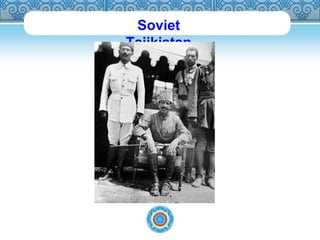
In 1924, the Tajik Autonomous Soviet Socialist Republic 
was created as a part of Uzbekistan, but in 1929 the 
Tajik Soviet Socialist Republic (Tajik SSR) was made a 
separate constituent republic. The predominantly ethnic 
Tajik cities of Samarkand and Bukhara remained in the 
Uzbek SSR. In terms of living conditions, education and 
industry Tajikistan was behind the other Soviet 
Republics. By the late 1980s Tajik nationalists were 
calling for increased rights. Real disturbances did not 
occur within the republic until 1990. The following year, 
the Soviet Union collapsed, and Tajikistan declared its 
independence.
Soviet 
Tajikistan
Post-Independence 
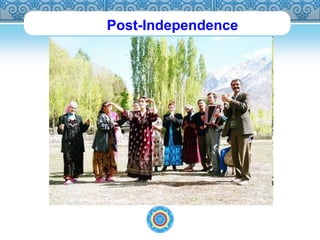
The nation almost immediately fell into a civil war that involved 
various factions fighting one another; these factions were 
often distinguished by clan loyalties. The non-Muslim 
population, particularly Russians and Jews, fled the country 
during this time because of persecution, increased poverty 
and better economic opportunities in the West or in other 
former Soviet republics. Emomali Rahmonov came to power in 
1992, and continues to rule to this day. However, he has been 
accused of ethnic cleansing against other ethnicities and 
groups during the Civil war in Tajikistan. In 1997, a ceasefire 
was reached between Rahmonov and opposition parties 
(United Tajik Opposition). Peaceful elections were held in 
1999, but they were reported by the opposition as unfair, and 
Rahmonov was re-elected by almost unanimous vote.
Post-Independence
Politics 
Almost immediately after independence, Tajikistan was 
plunged into a civil war that saw various factions, allegedly 
backed by Russia and Iran, fighting one another. All but 
25,000 of the more than 400,000 ethnic Russians, who were 
mostly employed in industry, fled to Russia. By 1997, the war 
had cooled down, and a central government began to take 
form, with peaceful elections in 1999. 
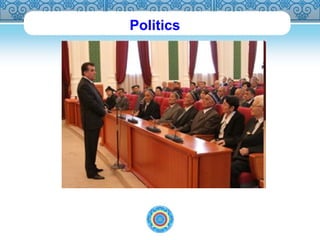
Tajikistan is officially a republic, and holds elections for the 
President and Parliament. The latest parliamentary elections 
occurred in 2005 (two rounds in February and March), and as 
all previous elections, international observers believe them to 
have been corrupt, arousing many accusations from 
opposition parties that President Emomali Rahmon 
manipulates the election process.
Politics
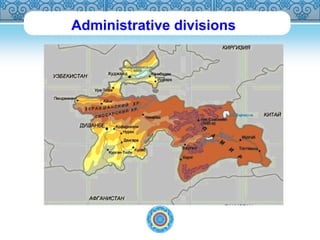
Administrative divisions 
Tajikistan consists of 4 administrative divisions. These 
are the provinces of Sughd and Khatlon, the autonomous 
province of Gorno-Badakhshan, and the Region of 
Republican Subordination. Each region is divided into 
several districts, which in turn are subdivided into 
jamoats (village-level self-governing units). As of 2006, 
there were 58 districts and 367 jamoats in Tajikistan.
Administrative divisions
Geography 
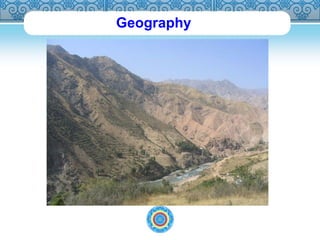
Tajikistan is landlocked, and is the smallest nation in 
Central Asia by area. It is covered by mountains of the 
Pamir range, and more than fifty percent of the country is 
over 3,000 meters (approx. 10,000 ft) above sea level. 
The only major areas of lower land are in the north (part 
of the Fergana Valley), and in the southern Kofarnihon 
and Vakhsh river valleys, which form the Amu Darya. 
Dushanbe is located on the southern slopes above the 
Kofarnihon valley.
Geography
Economy 
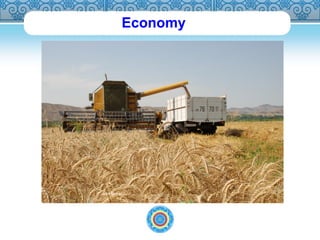
Tajikistan was the poorest country in Central Asia as well 
in the former Soviet Union following a civil war after it 
became independent in 1991. With foreign revenue 
precariously dependent upon exports of cotton and 
aluminium, the economy is highly vulnerable to external 
shocks. International assistance also was necessary to 
address the second year of severe drought that resulted 
in a continued shortfall of food production. On August 21, 
2001, the Red Cross announced that a famine was 
striking Tajikistan, and called for international aid for 
Tajikistan and Uzbekistan.
Economy
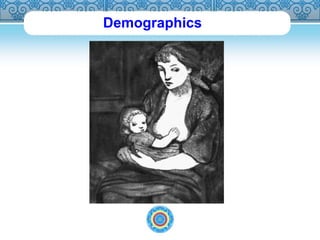
Demographics 
Tajikistan has a population of 7,215,700 (January 2008 
est.). Tajiks who speak the Tajik language (a variety of 
Persian) are the main ethnic group, although there is a 
sizable minority of Uzbeks and a small population of 
Russians, whose numbers are declining due to 
emigration. Pamiris of Badakhshan are considered to 
belong to larger group of Tajiks. Despite its poverty, 
Tajikistan has a high rate of literacy with an estimated 
98 % of the population having the ability to read and 
write. Most of the population follows Sunni Islam, 
although a sizable number of Ismailis are present as 
well.
Demographics
Culture 
The Culture of Tajikistan has developed over several 
thousand years. Historically, Tajiks and Persians come 
from very similar stock with a mutual language and are 
related as part of the larger group of Iranian peoples. 
Tajik culture can be divided into two areas, Metropolitan 
and Kuhiston(Highland). Ancient towns such as Bukhara, 
Samarkand, Herat, Balkh and Nishopur Khiva are no 
longer part of the country. More modern centres include 
Dushanbe (the capital), Khudjand, Kulob, Panjikent and 
Istarvshan.
Culture
Joker Hero of Tajikistan 
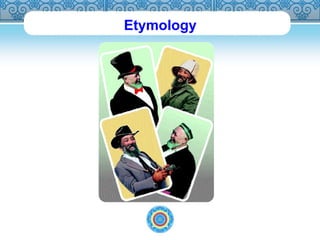
Nasreddin Afandi is a legendary Tajik satirical joker figure 
who lived during the Middle Ages (around 13th century). His 
name is spelled differently in various cultures and is often 
preceded or followed by titles "Hodja", "Mullah". Nasreddin 
was a populist philosopher and wise man, remembered for his 
funny stories and anecdotes. 
Much of Nasreddin's actions can be described as illogical yet 
logical, rational yet irrational, bizarre yet normal, foolish yet 
sharp, and simple yet profound. What adds even further to his 
uniqueness is the way he gets across his messages in 
unconventional yet very effective methods in a profound 
simplicity.
Joker Hero of Tajikistan 
Two sides of a river 
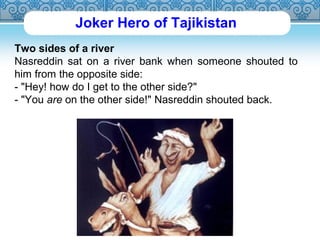
Nasreddin sat on a river bank when someone shouted to 
him from the opposite side: 
- "Hey! how do I get to the other side?" 
- "You are on the other side!" Nasreddin shouted back.

Tajikistan presentation (Compiled by: Abdusamad Sultonov Designed by: Erkin Kholmatov)

  • 1.
  • 2.
    Tajikistan Tajikistan officiallythe Republic of Tajikistan, is a mountainous landloked country in Center Asia. Afganistan borders to the south, Uzbekistan to the west, Kyrgyzstan to the north, and People's Republic of China to the east. Tajikistan also lies adjacent to Pakistan but is separated by the narrow Wakhan Corridor. Most of Tajikistan's population belongs to the Tajik ethnic group, who share culture and history with the Iranian peoples and speak the Persian language.
  • 3.
  • 4.
    Etymology Tajikistan meansthe "Land of the Tajiks" in Persian. Some believe the name Tajik is a geographic reference to the crown (Taj) of the Pamir Knot, but this is a folk etymology. The word Tajik was used to differentiate Iranians from Turks in Central Asia, starting as early as the 10th century. According to some other sources, the name Tajik refers to a group of people who are believed to be one of the pure and close descendents of the ancient Aryans.
  • 5.
  • 6.
    Early history Theterritory of what is now Tajikistan has been inhabited continuously since 4000 before Christ. It has been under the rule of various empires throughout history, for the longest period being part of the Persian Empire. From the last quarter of fourth century before Christ until the first quarter of the second century before Christ, it was part of the Bactrian Empire, from whom it was passed on to Scythian Tukharas and hence became part of Tukharistan. Arabs brought Islam in the 7th century Common Era. The Samanid Empire Iranians supplanted the Arabs and built the cities of Samarkand and Bukhara, which became the cultural centers of Tajiks (both of which are now in Uzbekistan).
  • 7.
  • 8.
    Russian presence Inthe 19th century, the Russian Empire began to spread into Central Asia during the Great Game. Between 1864 and 1885 it gradually took control of the entire territory of Russian Turkestan from today's border with Kazakhstan in the north to the Caspian Sea. Tajikistan was eventually carved out of this territory, which historically had a large Tajik population. After the overthrow of Imperial Russia in 1917, guerrillas throughout Central Asia, known as basmachi waged a war against Bolshevik armies in a futile attempt to maintain independence. The Bolsheviks prevailed after a four-year war, in which mosques and villages were burned down and the population heavily suppressed. Soviet authorities started a campaign of secularization, practicing Muslims, Jews, and Christians were persecuted, and mosques, churches, and synagogues were closed.
  • 9.
  • 10.
    Soviet Tajikistan In1924, the Tajik Autonomous Soviet Socialist Republic was created as a part of Uzbekistan, but in 1929 the Tajik Soviet Socialist Republic (Tajik SSR) was made a separate constituent republic. The predominantly ethnic Tajik cities of Samarkand and Bukhara remained in the Uzbek SSR. In terms of living conditions, education and industry Tajikistan was behind the other Soviet Republics. By the late 1980s Tajik nationalists were calling for increased rights. Real disturbances did not occur within the republic until 1990. The following year, the Soviet Union collapsed, and Tajikistan declared its independence.
  • 11.
  • 12.
    Post-Independence The nationalmost immediately fell into a civil war that involved various factions fighting one another; these factions were often distinguished by clan loyalties. The non-Muslim population, particularly Russians and Jews, fled the country during this time because of persecution, increased poverty and better economic opportunities in the West or in other former Soviet republics. Emomali Rahmonov came to power in 1992, and continues to rule to this day. However, he has been accused of ethnic cleansing against other ethnicities and groups during the Civil war in Tajikistan. In 1997, a ceasefire was reached between Rahmonov and opposition parties (United Tajik Opposition). Peaceful elections were held in 1999, but they were reported by the opposition as unfair, and Rahmonov was re-elected by almost unanimous vote.
  • 13.
  • 14.
    Politics Almost immediatelyafter independence, Tajikistan was plunged into a civil war that saw various factions, allegedly backed by Russia and Iran, fighting one another. All but 25,000 of the more than 400,000 ethnic Russians, who were mostly employed in industry, fled to Russia. By 1997, the war had cooled down, and a central government began to take form, with peaceful elections in 1999. Tajikistan is officially a republic, and holds elections for the President and Parliament. The latest parliamentary elections occurred in 2005 (two rounds in February and March), and as all previous elections, international observers believe them to have been corrupt, arousing many accusations from opposition parties that President Emomali Rahmon manipulates the election process.
  • 15.
  • 16.
    Administrative divisions Tajikistanconsists of 4 administrative divisions. These are the provinces of Sughd and Khatlon, the autonomous province of Gorno-Badakhshan, and the Region of Republican Subordination. Each region is divided into several districts, which in turn are subdivided into jamoats (village-level self-governing units). As of 2006, there were 58 districts and 367 jamoats in Tajikistan.
  • 17.
  • 18.
    Geography Tajikistan islandlocked, and is the smallest nation in Central Asia by area. It is covered by mountains of the Pamir range, and more than fifty percent of the country is over 3,000 meters (approx. 10,000 ft) above sea level. The only major areas of lower land are in the north (part of the Fergana Valley), and in the southern Kofarnihon and Vakhsh river valleys, which form the Amu Darya. Dushanbe is located on the southern slopes above the Kofarnihon valley.
  • 19.
  • 20.
    Economy Tajikistan wasthe poorest country in Central Asia as well in the former Soviet Union following a civil war after it became independent in 1991. With foreign revenue precariously dependent upon exports of cotton and aluminium, the economy is highly vulnerable to external shocks. International assistance also was necessary to address the second year of severe drought that resulted in a continued shortfall of food production. On August 21, 2001, the Red Cross announced that a famine was striking Tajikistan, and called for international aid for Tajikistan and Uzbekistan.
  • 21.
  • 22.
    Demographics Tajikistan hasa population of 7,215,700 (January 2008 est.). Tajiks who speak the Tajik language (a variety of Persian) are the main ethnic group, although there is a sizable minority of Uzbeks and a small population of Russians, whose numbers are declining due to emigration. Pamiris of Badakhshan are considered to belong to larger group of Tajiks. Despite its poverty, Tajikistan has a high rate of literacy with an estimated 98 % of the population having the ability to read and write. Most of the population follows Sunni Islam, although a sizable number of Ismailis are present as well.
  • 23.
  • 24.
    Culture The Cultureof Tajikistan has developed over several thousand years. Historically, Tajiks and Persians come from very similar stock with a mutual language and are related as part of the larger group of Iranian peoples. Tajik culture can be divided into two areas, Metropolitan and Kuhiston(Highland). Ancient towns such as Bukhara, Samarkand, Herat, Balkh and Nishopur Khiva are no longer part of the country. More modern centres include Dushanbe (the capital), Khudjand, Kulob, Panjikent and Istarvshan.
  • 25.
  • 26.
    Joker Hero ofTajikistan Nasreddin Afandi is a legendary Tajik satirical joker figure who lived during the Middle Ages (around 13th century). His name is spelled differently in various cultures and is often preceded or followed by titles "Hodja", "Mullah". Nasreddin was a populist philosopher and wise man, remembered for his funny stories and anecdotes. Much of Nasreddin's actions can be described as illogical yet logical, rational yet irrational, bizarre yet normal, foolish yet sharp, and simple yet profound. What adds even further to his uniqueness is the way he gets across his messages in unconventional yet very effective methods in a profound simplicity.
  • 27.
    Joker Hero ofTajikistan Two sides of a river Nasreddin sat on a river bank when someone shouted to him from the opposite side: - "Hey! how do I get to the other side?" - "You are on the other side!" Nasreddin shouted back.