 Acetaminophen is used to treat mild to
moderate and pain, to treat moderate to
severe pain in conjunction with opiates, or to
reduce fever.
 Common conditions that acetaminophen
treats include headache, muscle
aches, arthritis, backache, toothaches, colds,
and fevers.
 You should not use this medication if you
have severe liver disease.
 It is also known as Paracetamol
 nausea, upper stomach pain, itching,
loss of appetite;
 excessive sweating and severe
tiredness;
 dark urine, clay-colored stools;
or
 jaundice (yellowing of the skin or
eyes).
 Adderall contains a combination
of amphetamine and dextroamphetamine.
Amphetamine and dextroamphetamine are
central nervous system stimulants that affect
chemicals in the brain and nerves that
contribute to hyperactivity and impulse
control.
 Adderall is used to treat attention deficit
hyperactivity disorder (ADHD) and narcolepsy.
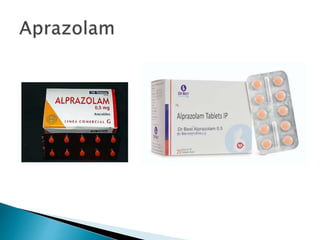
 Alprazolam is a benzodiazepine (ben-
zoe-dye-AZE-eh-peen).
 It is thought that alprazolam works by
enhancing the activity of certain
neurotransmitters in the brain.
 Alprazolam is used to treat anxiety
disorders, panic disorders, and
anxiety caused by depression.
 Drowsiness
 Tiredness
 Dizziness
 Sleep problems (insomnia)
 Memory problems
 Poor balance or coordination
 Slurred speech
 Trouble concentrating
 Irritability
 Diarrhea
 Constipation
 Increased sweating
 Headache
 Nausea
 Vomiting
 Upset stomach
 Blurred vision
 Appetite or weight changes
 Swelling in your hands or feet
 Muscle weakness
 Dry mouth
 Stuffy nose
 Loss of interest in sex
 Amitriptyline is a
tricyclic antidepressant.
Amitriptyline affects chemicals in
the brain that may be unbalanced
in people with depression.
 Amitriptyline is used to treat
symptoms of depression.
 unusual thoughts or behavior;
 a light-headed feeling, like you might pass out;
 chest pain or pressure, pain spreading to your
jaw or shoulder, nausea, sweating;
 pounding heartbeats or fluttering in your chest;
 confusion, hallucinations;
 a seizure (convulsions);
 painful or difficult urination;
 severe constipation;
 easy bruising, unusual bleeding; or
 sudden weakness or ill feeling, fever, chills, sore
throat, mouth sores, red or swollen gums,
trouble swallowing.
 Amlodipine is a calcium channel blocker that
dilates (widens) blood vessels and improves
blood flow.
 Amlodipine is used to treat chest
pain (angina) and other conditions caused
by coronary artery disease.
 Amlodipine is also used to treat high blood
pressure (hypertension).
 Lowering blood pressure may lower your risk
of a stroke or heart attack.
 Amlodipine is for use in adults and children
who are at least 6 years old.
 Difficult or labored breathing
 dizziness
 fast, irregular, pounding, or racing heartbeat
or pulse
 feeling of warmth
 redness of the face, neck, arms, and
occasionally, upper chest
 tightness in the chest
 bleeding gums
 blistering, peeling, or loosening of the skin
 blood in the urine or stools
 blurred vision
 Amoxicillin is a penicillin antibiotic that
fights bacteria.
 Amoxicillin is used to treat many different
types of infection caused by bacteria, such as
tonsillitis, bronchitis, pneumonia, and
infections of the ear, nose, throat, skin, or
urinary tract.
 Amoxicillin is also sometimes used together
with another antibiotic
called clarithromycin (Biaxin) to treat stomach
ulcers caused by Helicobacter pylori infection.
This combination is sometimes used with a
stomach acid reducer
called lansoprazole (Prevacid)

 Abdominal or stomach cramps or tenderness
 back, leg, or stomach pains
 black, tarry stools
 bleeding gums
 blistering, peeling, or loosening of the skin
 Bloating
 blood in the urine
 bloody nose
 chest pain
 chills
 clay-colored stools
 cough
 dark urine
 Diarrhea
 Rashes
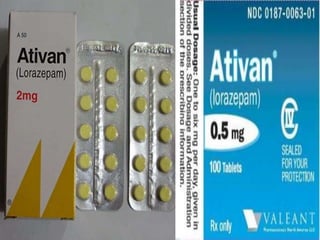
 Ativan (lorazepam) belongs to a group
of drugs called benzodiazepines. It is
thought that lorazepam works by
enhancing the activity of certain
neurotransmitters in the brain.
 Ativan is used to
treat anxiety disorders
and seizure disorders.
 Drowsiness
 relaxed and calm
 sleepiness
 oss of interest or pleasure
 loss of memory
 lower back or side pain
 muscle pain or cramps
 muscle trembling, jerking, or stiffness
 nausea or vomiting
 not breathing
 painful or difficult urination
 pale or blue lips, fingernails, or skin
 pinpoint red spots on the skin
 problems with memory
 Atorvastatin belongs to a group of drugs called
HMG CoA reductase inhibitors, or "statins."
 Atorvastatin is used together with diet to lower
blood levels of "bad" cholesterol (low-density
lipoprotein, or LDL), to increase levels of
"good" cholesterol (high-density lipoprotein, or
HDL), and to lower triglycerides (a type of fat in
the blood).
 Atorvastatin is used to treat high cholesterol,
and to lower the risk of stroke, heart attack, or
other heart complications in people with type 2
diabetes, coronary heart disease, or other risk
factors
 Cough
 difficulty with swallowing
 dizziness
 fast heartbeat
 fever
 hives
 itching
 muscle cramps, pain, stiffness, swelling, or
weakness
 puffiness or swelling of the eyelids or around the
eyes, face, lips, or tongue
 skin rash
 tightness in the chest
 unusual tiredness or weakness
 wheezing
 Azithromycin is an antibiotic that
fights bacteria.
 Azithromycin is used to treat many
different types of infections caused by
bacteria, such as respiratory
infections, skin infections, ear
infections, eye infections, and sexually
transmitted diseases.

 Abdominal or stomach pain
 blistering, peeling, or loosening of the skin
 bloody or cloudy urine
 bloody, black, or tarry stools
 body aches or pain
 burning while urinating
 chest pain
 chills
 congestion
 cough increased
 cough producing mucus
 dark urine
 difficult or labored breathing
 difficult or painful urination
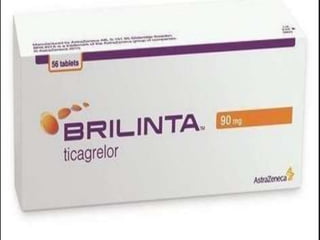
 Brilinta (ticagrelor) prevents platelets in your
blood from sticking together to form an
unwanted blood clot that could block an
artery.
 Brilinta is used together with aspirin to lower
your risk of having a stroke, serious heart
problems, or death after you've had a heart
attack or severe chest pain (angina).
 It is also used to prevent blood clots in
people that have had a stent placed in their
heart

 Blurred vision
 chest pain or discomfort
 confusion
 dizziness
 dizziness, faintness, or lightheadedness when
getting up suddenly from a lying or sitting position
 fainting
 fast or irregular heartbeat
 headache
 lightheadedness, dizziness, or fainting
 loss of consciousness
 nervousness
 pounding in the ears
 slow or fast heartbeat
 sweating
 unusual tiredness or weakness
 Ciprofloxacin is a fluoroquinolone (flor-o-
KWIN-o-lone) antibiotic that fights bacteria in
the body. It is used to treat different types of
bacterial infections, including skin infections,
bone and joint infections, respiratory or sinus
infections, urinary tract infections, and certain
types of diarrhea. It is also used to treat
gonorrhea.
 Ciprofloxacin is also used to treat people who
have been exposed to anthrax or certain types
of plague.
 Ciprofloxacin should be used only for infections
that cannot be treated with a safer antibiotic.
 Bloody or black, tarry stools
 burning, crawling, itching, numbness, prickling,
"pins and needles", or tingling feelings
 changes in skin color
 changes in urination
 chest pain or discomfort
 chest tightness or heaviness
 chills
 clumsiness or unsteadiness
 confusion
 continuing ringing or buzzing or other
unexplained noise in the ears
 coughing or spitting up blood
 Citalopram is
an antidepressant belonging to a
group of drugs called selective
serotonin reuptake inhibitors
(SSRIs).
 Citalopram is used to
treat depression
 Agitation
 blurred vision
 confusion
 fever
 increase in the frequency of urination or amount of
urine produced
 lack of emotion
 loss of memory
 menstrual changes
 skin rash or itching
 trouble breathing
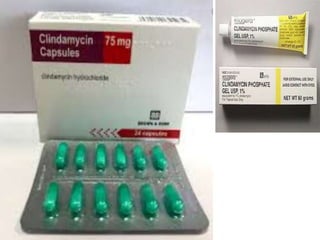
 Clindamycin is
an antibiotic that fights
bacteria in the body.
 Clindamycin is used to treat
serious infections caused by
bacteria.
 Cracks in the skin
 loss of heat from the body
 red, swollen skin scaly skin
 diarrhea
 diarrhea, watery and severe, which may also
be bloody
 difficulty with swallowing
 Clonazepam is a benzodiazepine. It is
thought that clonazepam works by
enhancing the activity of certain
neurotransmitters in the brain.
 Clonazepam, a type of anti-epileptic drug,
is used to treat certain seizure
disorders (including absence seizures or
Lennox-Gastaut syndrome) in adults and
children.
 Body aches or pain
 chills
 cough
 difficulty breathing
 discouragement
 dizziness
 ear congestion
 feeling sad or empty
 fever
 headache
 irritability
 lack of appetite
 loss of interest or pleasure
 loss of voice
 nasal congestion
 poor coordination
 runny nose
 Codeine is an opioid pain
medication, sometimes called
a narcotic.
 Codeine is used to treat mild
to moderately severe pain.
 Bloating
 blurred vision
 chills
 cold, clammy skin
 confusion
 constipation
 darkened urine
 difficult or troubled breathing
 dizziness
 dizziness, faintness, or lightheadednes
 Cyclobenzaprine is a muscle relaxant.
It works by blocking nerve impulses
(or pain sensations) that are sent to
your brain.
 Cyclobenzaprine is used together with
rest and physical therapy to
treat skeletal muscle conditions such
as pain or injury.
 Clumsiness or unsteadiness
 confusion
 fainting
 mental depression
 problems in urinating
 ringing or buzzing in the ears
 skin rash, hives, or itching occurring without
other symptoms of an allergic reaction listed
above
 unusual thoughts or dreams
 yellow eyes or skin
 Cymbalta (duloxetine) is a selective serotonin
and norepinephrine reuptake inhibitor
antidepressant (SSNRI). Duloxetine affects
chemicals in the brain that may be unbalanced
in people with depression.
 Cymbalta is used to treat major depressive
disorder in adults. It is also used to treat general
anxiety disorder in adults and children who are
at least 7 years old.
 Cymbalta is also used in adults to
treat fibromyalgia (a chronic pain disorder), or
chronic muscle or joint pain (such as low back
pain and osteoarthritis pain)
 Agitation
 diarrhea
 fever
 loss of bladder control
 muscle spasm or jerking of all extremities
 overactive reflexes
 poor coordination
 restlessness
 shivering
 sleepiness or unusual drowsiness
 sudden loss of consciousness
 sweating
 talking or acting with excitement you cannot control
 Doxycycline is a tetracycline antibiotic that fights
bacteria in the body.
 Doxycycline is used to treat many different
bacterial infections, such as acne, urinary tract
infections, intestinal infections, respiratory
infections, eye infections, gonorrhea, chlamydia,
syphilis, periodontitis (gum disease), and others.
 Doxycycline is also used to treat blemishes,
bumps, and acne-like lesions caused by rosacea.
It will not treat facial redness caused by rosacea.
 Some forms of doxycycline are used to prevent
malaria, to treat anthrax, or to treat infections
caused by mites, ticks, or lice.
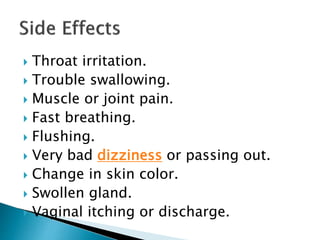
 Throat irritation.
 Trouble swallowing.
 Muscle or joint pain.
 Fast breathing.
 Flushing.
 Very bad dizziness or passing out.
 Change in skin color.
 Swollen gland.
 Vaginal itching or discharge.
 Dupixent (dupilumab) is used to treat
moderate-to-severe eczema (atopic
dermatitis) that cannot be controlled with
topical medicines (for use on the skin).
 Dupixent is also used together with other
medications to treat moderate-to-
severe asthma that is not controlled with other
asthma medicines.
 Dupixent is used for asthma or eczema in
adults and children at least 12 years old. Do
not use this medicine to treat an asthma
attack. Use a rescue inhaler.
 Blistering or crusting of the skin
 itchiness, redness of the eyes
 excessive tearing
 painful cold sores or blisters on the
lips, nose, eyes, or genitals
 reddening of the skin
 scaly patches on the skin
 sores or white patches on the lips,
mouth, or throat
 Entresto contains a combination
of sacubitril and valsartan.
 Sacubitril is a blood pressure
medicine. It works by increasing
the levels of certain proteins in
the body that can dilate (widen)
blood vessels.
 This helps lower blood pressure
by reducing sodium levels.
 Abdominal or stomach pain
 blurred vision
 confusion
 difficult breathing
 dizziness, faintness, or
lightheadedness when getting up
suddenly from a lying or sitting
position
 irregular heartbeat
 nausea or vomiting
 Entyvio (vedolizumab) reduces the
effects of a substance in the body that
can cause inflammation.
 Entyvio is used in adults with
moderate to severe ulcerative
colitis (UC), or moderate to
severe Crohn's disease.
 Entyvio treats active disease and may
help keep UC or Crohn's symptoms
under control long term
 Body aches or pain
 chills
 difficulty with breathing
 ear congestion
 fever
 headache
 loss of voice
 nasal congestion
 runny nose
 sneezing
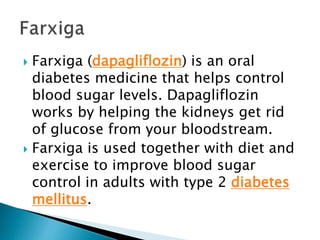
 Farxiga (dapagliflozin) is an oral
diabetes medicine that helps control
blood sugar levels. Dapagliflozin
works by helping the kidneys get rid
of glucose from your bloodstream.
 Farxiga is used together with diet and
exercise to improve blood sugar
control in adults with type 2 diabetes
mellitus.
 Anxiety
 bladder pain
 bloody or cloudy urine
 blurred vision
 chills
 cold sweats
 confusion
 cool, pale skin
 decreased frequency or amount of urine
 depression
 difficult, burning, or painful urination
 dizziness
 Gabapentin is an anti-epileptic drug, also
called an anticonvulsant. It affects
chemicals and nerves in the body that are
involved in the cause of seizures and some
types of pain.
 Gabapentin is used together with other
medicines to treat partial seizures in adults
and children at least 3 years old.
 Gabapentin is also used to
treat neuropathic pain (nerve pain) caused
by herpes virus or shingles (herpes
zoster) in adults
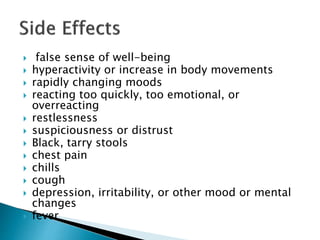
 false sense of well-being
 hyperactivity or increase in body movements
 rapidly changing moods
 reacting too quickly, too emotional, or
overreacting
 restlessness
 suspiciousness or distrust
 Black, tarry stools
 chest pain
 chills
 cough
 depression, irritability, or other mood or mental
changes
 fever
 Gilenya (fingolimod) is
an immunosuppressant. It works by
keeping immune cells trapped in your
lymph nodes so they can't reach the
central nervous system (brain and
spinal cord).
 Gilenya is used to treat
relapsing multiple sclerosis (MS) in
adults, and children and adolescents
aged 10 years and older.
 Blurred vision
 chills
 cough
 cough-producing mucus
 diarrhea
 difficult or labored breathing
 dizziness
 fever
 general feeling of discomfort or illness
 headache
 joint pain
 loss of appetite
 muscle aches and pains
 Humira (adalimumab) is a tumor necrosis
factor (TNF) blocker that reduces the effects
of a substance in the body that can cause
inflammation.
 Humira is used to treat many inflammatory
conditions in adults, such as ulcerative
colitis, rheumatoid arthritis, psoriatic
arthritis, ankylosing spondylitis, plaque
psoriasis, and a skin condition
called hidradenitis suppurativa.
 Body aches or pain
 cough
 ear congestion
 gas with abdominal or stomach pain
 hoarseness
 lightheadedness
 loss of voice
 lower back or side pain
 muscle aches and pains
 Hydrochlorothiazide is a thiazide
diuretic (water pill) that helps
prevent your body from absorbing
too much salt, which can cause
fluid retention.
 Hydrochlorothiazide is used to
treat high blood
pressure (hypertension).
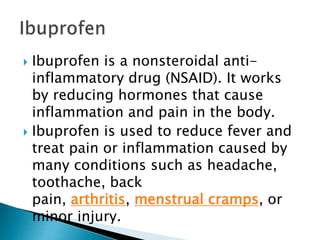
 Ibuprofen is a nonsteroidal anti-
inflammatory drug (NSAID). It works
by reducing hormones that cause
inflammation and pain in the body.
 Ibuprofen is used to reduce fever and
treat pain or inflammation caused by
many conditions such as headache,
toothache, back
pain, arthritis, menstrual cramps, or
minor injury.
 Imbruvica (ibrutinib) is a cancer medicine
that interferes with the growth and spread
of cancer cells in the body.
 Imbruvica is used to treat mantle cell
lymphoma, marginal zone lymphoma,
Waldenstrom's macroglobulinemia, chronic
lymphocytic leukemia, and
small lymphocytic lymphoma. This medicine
is also used to treat chronic graft-versus-
host disease.
 Invokana (canagliflozin) is an oral diabetes
medicine that helps control blood sugar
levels. Canagliflozin works by helping the
kidneys get rid of glucose from your
bloodstream.
 Invokana is used together with diet and
exercise to improve blood sugar control in
adults with type 2 diabetes mellitus.
 Invokana is used to reduce the risk of
cardiovascular events (including heart attack,
stroke or death) in adults with type 2 diabetes
and established cardiovascular disease.
 Urinary tract infections
 Increased urination
 Yeast infections
 Vaginal itching
 Thirst
 Constipation
 Nausea
 Fatigue
Tablets
Tablets

Tablets

  • 2.
     Acetaminophen isused to treat mild to moderate and pain, to treat moderate to severe pain in conjunction with opiates, or to reduce fever.  Common conditions that acetaminophen treats include headache, muscle aches, arthritis, backache, toothaches, colds, and fevers.  You should not use this medication if you have severe liver disease.  It is also known as Paracetamol
  • 4.
     nausea, upperstomach pain, itching, loss of appetite;  excessive sweating and severe tiredness;  dark urine, clay-colored stools; or  jaundice (yellowing of the skin or eyes).
  • 5.
     Adderall containsa combination of amphetamine and dextroamphetamine. Amphetamine and dextroamphetamine are central nervous system stimulants that affect chemicals in the brain and nerves that contribute to hyperactivity and impulse control.  Adderall is used to treat attention deficit hyperactivity disorder (ADHD) and narcolepsy.
  • 8.
     Alprazolam isa benzodiazepine (ben- zoe-dye-AZE-eh-peen).  It is thought that alprazolam works by enhancing the activity of certain neurotransmitters in the brain.  Alprazolam is used to treat anxiety disorders, panic disorders, and anxiety caused by depression.
  • 10.
     Drowsiness  Tiredness Dizziness  Sleep problems (insomnia)  Memory problems  Poor balance or coordination  Slurred speech  Trouble concentrating  Irritability  Diarrhea  Constipation  Increased sweating
  • 11.
     Headache  Nausea Vomiting  Upset stomach  Blurred vision  Appetite or weight changes  Swelling in your hands or feet  Muscle weakness  Dry mouth  Stuffy nose  Loss of interest in sex
  • 12.
     Amitriptyline isa tricyclic antidepressant. Amitriptyline affects chemicals in the brain that may be unbalanced in people with depression.  Amitriptyline is used to treat symptoms of depression.
  • 14.
     unusual thoughtsor behavior;  a light-headed feeling, like you might pass out;  chest pain or pressure, pain spreading to your jaw or shoulder, nausea, sweating;  pounding heartbeats or fluttering in your chest;  confusion, hallucinations;  a seizure (convulsions);  painful or difficult urination;  severe constipation;  easy bruising, unusual bleeding; or  sudden weakness or ill feeling, fever, chills, sore throat, mouth sores, red or swollen gums, trouble swallowing.
  • 15.
     Amlodipine isa calcium channel blocker that dilates (widens) blood vessels and improves blood flow.  Amlodipine is used to treat chest pain (angina) and other conditions caused by coronary artery disease.  Amlodipine is also used to treat high blood pressure (hypertension).  Lowering blood pressure may lower your risk of a stroke or heart attack.  Amlodipine is for use in adults and children who are at least 6 years old.
  • 17.
     Difficult orlabored breathing  dizziness  fast, irregular, pounding, or racing heartbeat or pulse  feeling of warmth  redness of the face, neck, arms, and occasionally, upper chest  tightness in the chest  bleeding gums  blistering, peeling, or loosening of the skin  blood in the urine or stools  blurred vision
  • 18.
     Amoxicillin isa penicillin antibiotic that fights bacteria.  Amoxicillin is used to treat many different types of infection caused by bacteria, such as tonsillitis, bronchitis, pneumonia, and infections of the ear, nose, throat, skin, or urinary tract.  Amoxicillin is also sometimes used together with another antibiotic called clarithromycin (Biaxin) to treat stomach ulcers caused by Helicobacter pylori infection. This combination is sometimes used with a stomach acid reducer called lansoprazole (Prevacid)
  • 21.
  • 22.
     Abdominal orstomach cramps or tenderness  back, leg, or stomach pains  black, tarry stools  bleeding gums  blistering, peeling, or loosening of the skin  Bloating  blood in the urine  bloody nose  chest pain  chills  clay-colored stools  cough  dark urine  Diarrhea  Rashes
  • 23.
     Ativan (lorazepam)belongs to a group of drugs called benzodiazepines. It is thought that lorazepam works by enhancing the activity of certain neurotransmitters in the brain.  Ativan is used to treat anxiety disorders and seizure disorders.
  • 26.
     Drowsiness  relaxedand calm  sleepiness  oss of interest or pleasure  loss of memory  lower back or side pain  muscle pain or cramps  muscle trembling, jerking, or stiffness  nausea or vomiting  not breathing  painful or difficult urination  pale or blue lips, fingernails, or skin  pinpoint red spots on the skin  problems with memory
  • 27.
     Atorvastatin belongsto a group of drugs called HMG CoA reductase inhibitors, or "statins."  Atorvastatin is used together with diet to lower blood levels of "bad" cholesterol (low-density lipoprotein, or LDL), to increase levels of "good" cholesterol (high-density lipoprotein, or HDL), and to lower triglycerides (a type of fat in the blood).  Atorvastatin is used to treat high cholesterol, and to lower the risk of stroke, heart attack, or other heart complications in people with type 2 diabetes, coronary heart disease, or other risk factors
  • 29.
     Cough  difficultywith swallowing  dizziness  fast heartbeat  fever  hives  itching  muscle cramps, pain, stiffness, swelling, or weakness  puffiness or swelling of the eyelids or around the eyes, face, lips, or tongue  skin rash  tightness in the chest  unusual tiredness or weakness  wheezing
  • 30.
     Azithromycin isan antibiotic that fights bacteria.  Azithromycin is used to treat many different types of infections caused by bacteria, such as respiratory infections, skin infections, ear infections, eye infections, and sexually transmitted diseases.
  • 32.
  • 33.
     Abdominal orstomach pain  blistering, peeling, or loosening of the skin  bloody or cloudy urine  bloody, black, or tarry stools  body aches or pain  burning while urinating  chest pain  chills  congestion  cough increased  cough producing mucus  dark urine  difficult or labored breathing  difficult or painful urination
  • 34.
     Brilinta (ticagrelor)prevents platelets in your blood from sticking together to form an unwanted blood clot that could block an artery.  Brilinta is used together with aspirin to lower your risk of having a stroke, serious heart problems, or death after you've had a heart attack or severe chest pain (angina).  It is also used to prevent blood clots in people that have had a stent placed in their heart
  • 36.
  • 37.
     Blurred vision chest pain or discomfort  confusion  dizziness  dizziness, faintness, or lightheadedness when getting up suddenly from a lying or sitting position  fainting  fast or irregular heartbeat  headache  lightheadedness, dizziness, or fainting  loss of consciousness  nervousness  pounding in the ears  slow or fast heartbeat  sweating  unusual tiredness or weakness
  • 38.
     Ciprofloxacin isa fluoroquinolone (flor-o- KWIN-o-lone) antibiotic that fights bacteria in the body. It is used to treat different types of bacterial infections, including skin infections, bone and joint infections, respiratory or sinus infections, urinary tract infections, and certain types of diarrhea. It is also used to treat gonorrhea.  Ciprofloxacin is also used to treat people who have been exposed to anthrax or certain types of plague.  Ciprofloxacin should be used only for infections that cannot be treated with a safer antibiotic.
  • 40.
     Bloody orblack, tarry stools  burning, crawling, itching, numbness, prickling, "pins and needles", or tingling feelings  changes in skin color  changes in urination  chest pain or discomfort  chest tightness or heaviness  chills  clumsiness or unsteadiness  confusion  continuing ringing or buzzing or other unexplained noise in the ears  coughing or spitting up blood
  • 41.
     Citalopram is anantidepressant belonging to a group of drugs called selective serotonin reuptake inhibitors (SSRIs).  Citalopram is used to treat depression
  • 43.
     Agitation  blurredvision  confusion  fever  increase in the frequency of urination or amount of urine produced  lack of emotion  loss of memory  menstrual changes  skin rash or itching  trouble breathing
  • 44.
     Clindamycin is anantibiotic that fights bacteria in the body.  Clindamycin is used to treat serious infections caused by bacteria.
  • 46.
     Cracks inthe skin  loss of heat from the body  red, swollen skin scaly skin  diarrhea  diarrhea, watery and severe, which may also be bloody  difficulty with swallowing
  • 47.
     Clonazepam isa benzodiazepine. It is thought that clonazepam works by enhancing the activity of certain neurotransmitters in the brain.  Clonazepam, a type of anti-epileptic drug, is used to treat certain seizure disorders (including absence seizures or Lennox-Gastaut syndrome) in adults and children.
  • 49.
     Body achesor pain  chills  cough  difficulty breathing  discouragement  dizziness  ear congestion  feeling sad or empty  fever  headache  irritability  lack of appetite  loss of interest or pleasure  loss of voice  nasal congestion  poor coordination  runny nose
  • 50.
     Codeine isan opioid pain medication, sometimes called a narcotic.  Codeine is used to treat mild to moderately severe pain.
  • 52.
     Bloating  blurredvision  chills  cold, clammy skin  confusion  constipation  darkened urine  difficult or troubled breathing  dizziness  dizziness, faintness, or lightheadednes
  • 54.
     Cyclobenzaprine isa muscle relaxant. It works by blocking nerve impulses (or pain sensations) that are sent to your brain.  Cyclobenzaprine is used together with rest and physical therapy to treat skeletal muscle conditions such as pain or injury.
  • 56.
     Clumsiness orunsteadiness  confusion  fainting  mental depression  problems in urinating  ringing or buzzing in the ears  skin rash, hives, or itching occurring without other symptoms of an allergic reaction listed above  unusual thoughts or dreams  yellow eyes or skin
  • 58.
     Cymbalta (duloxetine)is a selective serotonin and norepinephrine reuptake inhibitor antidepressant (SSNRI). Duloxetine affects chemicals in the brain that may be unbalanced in people with depression.  Cymbalta is used to treat major depressive disorder in adults. It is also used to treat general anxiety disorder in adults and children who are at least 7 years old.  Cymbalta is also used in adults to treat fibromyalgia (a chronic pain disorder), or chronic muscle or joint pain (such as low back pain and osteoarthritis pain)
  • 60.
     Agitation  diarrhea fever  loss of bladder control  muscle spasm or jerking of all extremities  overactive reflexes  poor coordination  restlessness  shivering  sleepiness or unusual drowsiness  sudden loss of consciousness  sweating  talking or acting with excitement you cannot control
  • 62.
     Doxycycline isa tetracycline antibiotic that fights bacteria in the body.  Doxycycline is used to treat many different bacterial infections, such as acne, urinary tract infections, intestinal infections, respiratory infections, eye infections, gonorrhea, chlamydia, syphilis, periodontitis (gum disease), and others.  Doxycycline is also used to treat blemishes, bumps, and acne-like lesions caused by rosacea. It will not treat facial redness caused by rosacea.  Some forms of doxycycline are used to prevent malaria, to treat anthrax, or to treat infections caused by mites, ticks, or lice.
  • 65.
     Throat irritation. Trouble swallowing.  Muscle or joint pain.  Fast breathing.  Flushing.  Very bad dizziness or passing out.  Change in skin color.  Swollen gland.  Vaginal itching or discharge.
  • 66.
     Dupixent (dupilumab)is used to treat moderate-to-severe eczema (atopic dermatitis) that cannot be controlled with topical medicines (for use on the skin).  Dupixent is also used together with other medications to treat moderate-to- severe asthma that is not controlled with other asthma medicines.  Dupixent is used for asthma or eczema in adults and children at least 12 years old. Do not use this medicine to treat an asthma attack. Use a rescue inhaler.
  • 68.
     Blistering orcrusting of the skin  itchiness, redness of the eyes  excessive tearing  painful cold sores or blisters on the lips, nose, eyes, or genitals  reddening of the skin  scaly patches on the skin  sores or white patches on the lips, mouth, or throat
  • 70.
     Entresto containsa combination of sacubitril and valsartan.  Sacubitril is a blood pressure medicine. It works by increasing the levels of certain proteins in the body that can dilate (widen) blood vessels.  This helps lower blood pressure by reducing sodium levels.
  • 72.
     Abdominal orstomach pain  blurred vision  confusion  difficult breathing  dizziness, faintness, or lightheadedness when getting up suddenly from a lying or sitting position  irregular heartbeat  nausea or vomiting
  • 74.
     Entyvio (vedolizumab)reduces the effects of a substance in the body that can cause inflammation.  Entyvio is used in adults with moderate to severe ulcerative colitis (UC), or moderate to severe Crohn's disease.  Entyvio treats active disease and may help keep UC or Crohn's symptoms under control long term
  • 76.
     Body achesor pain  chills  difficulty with breathing  ear congestion  fever  headache  loss of voice  nasal congestion  runny nose  sneezing
  • 77.
     Farxiga (dapagliflozin)is an oral diabetes medicine that helps control blood sugar levels. Dapagliflozin works by helping the kidneys get rid of glucose from your bloodstream.  Farxiga is used together with diet and exercise to improve blood sugar control in adults with type 2 diabetes mellitus.
  • 79.
     Anxiety  bladderpain  bloody or cloudy urine  blurred vision  chills  cold sweats  confusion  cool, pale skin  decreased frequency or amount of urine  depression  difficult, burning, or painful urination  dizziness
  • 80.
     Gabapentin isan anti-epileptic drug, also called an anticonvulsant. It affects chemicals and nerves in the body that are involved in the cause of seizures and some types of pain.  Gabapentin is used together with other medicines to treat partial seizures in adults and children at least 3 years old.  Gabapentin is also used to treat neuropathic pain (nerve pain) caused by herpes virus or shingles (herpes zoster) in adults
  • 82.
     false senseof well-being  hyperactivity or increase in body movements  rapidly changing moods  reacting too quickly, too emotional, or overreacting  restlessness  suspiciousness or distrust  Black, tarry stools  chest pain  chills  cough  depression, irritability, or other mood or mental changes  fever
  • 84.
     Gilenya (fingolimod)is an immunosuppressant. It works by keeping immune cells trapped in your lymph nodes so they can't reach the central nervous system (brain and spinal cord).  Gilenya is used to treat relapsing multiple sclerosis (MS) in adults, and children and adolescents aged 10 years and older.
  • 86.
     Blurred vision chills  cough  cough-producing mucus  diarrhea  difficult or labored breathing  dizziness  fever  general feeling of discomfort or illness  headache  joint pain  loss of appetite  muscle aches and pains
  • 88.
     Humira (adalimumab)is a tumor necrosis factor (TNF) blocker that reduces the effects of a substance in the body that can cause inflammation.  Humira is used to treat many inflammatory conditions in adults, such as ulcerative colitis, rheumatoid arthritis, psoriatic arthritis, ankylosing spondylitis, plaque psoriasis, and a skin condition called hidradenitis suppurativa.
  • 90.
     Body achesor pain  cough  ear congestion  gas with abdominal or stomach pain  hoarseness  lightheadedness  loss of voice  lower back or side pain  muscle aches and pains
  • 92.
     Hydrochlorothiazide isa thiazide diuretic (water pill) that helps prevent your body from absorbing too much salt, which can cause fluid retention.  Hydrochlorothiazide is used to treat high blood pressure (hypertension).
  • 95.
     Ibuprofen isa nonsteroidal anti- inflammatory drug (NSAID). It works by reducing hormones that cause inflammation and pain in the body.  Ibuprofen is used to reduce fever and treat pain or inflammation caused by many conditions such as headache, toothache, back pain, arthritis, menstrual cramps, or minor injury.
  • 98.
     Imbruvica (ibrutinib)is a cancer medicine that interferes with the growth and spread of cancer cells in the body.  Imbruvica is used to treat mantle cell lymphoma, marginal zone lymphoma, Waldenstrom's macroglobulinemia, chronic lymphocytic leukemia, and small lymphocytic lymphoma. This medicine is also used to treat chronic graft-versus- host disease.
  • 101.
     Invokana (canagliflozin)is an oral diabetes medicine that helps control blood sugar levels. Canagliflozin works by helping the kidneys get rid of glucose from your bloodstream.  Invokana is used together with diet and exercise to improve blood sugar control in adults with type 2 diabetes mellitus.  Invokana is used to reduce the risk of cardiovascular events (including heart attack, stroke or death) in adults with type 2 diabetes and established cardiovascular disease.
  • 104.
     Urinary tractinfections  Increased urination  Yeast infections  Vaginal itching  Thirst  Constipation  Nausea  Fatigue