SYSTEMIC
HYPERTENSION
DR.P.K.INYAVAN
INTRODUCTION
• 1%-6% of ED patients-SHT-In this nearly half with end organ damage
• RISK FACTORS-Obesity, cigarette smoking, old age
• CHRONIC HT- prehypertension, stage 1,stage 2
• HYPERTENSIVE EMERGENCY-BP->180/120mmHg,end organ damage(heart, brain, aorta,
kidneys, eyes)
cause-irregular treatment
• HYPERTENSIVE URGENCY->180/120 mmHg,no end organ damage
CLASSIFICATION OF HYPERTENSION
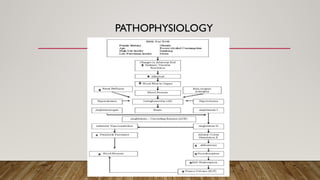
PATHOPHYSIOLOGY
CLINICAL FEATURES
• Measure BP in both arms quickly and consecutively while patient is resting
• Check bp several times before starting anti –HT
• Blood pressure difference-aortic dissection,coarctation,peripheral vascular disease,some
unilateral neurologic and musculosketal abnormalities.
• Difference of >10-20 mmHg is normal
• In BP difference-treat the higher blood pressure and make subsequent measures on the
same arm
HYPERTENSIVE EMERGENCIES
• Clinical features:
Chest pain and severe HT
Acute neurological symptoms and severe HT
Acute renal failure,peripheral edema and severe HT
Sympathetic crisis and severe HT
Asymptomatic patients with severe HT
• CHEST PAIN AND SEVERE HT:rapid diagnosis and treatment of rare aortic dissection or more common acute
coronary syndromes
Acute aortic dissection: abrupt,sudden onset of pain,usually in chest,tearing or ripping and radiating to inter scapular region
Half of them have neurological deficit or pulse deficits or diastolic murmur
Chest radiograph is abnormal and non specific,25% have classic widened mediastinum
CT chest is needed for diagnosis
ECG-non specific
• ACUTE NEUROLOGICAL SYMPTOMS AND SEVERE HT:
-elevated BP, headache and focal neurological deficits are associated with ischemic or hemorrhagic strokes
-Diagnosed by MRI (acute ischemic strokes) or CT head(cerebral hemorrhage)
-Hypertensive encephalopathy –altered mental status,headache,vomiting,seizures or visual disturbances,papilledema.MRI –
Reversible edema focused posteriorly-POSTERIOR REVERSIBLE ENCEPHALOPATHY SYNDROME
• ACUTE RENAL FAILURE,PERIPHERAL EDEMA &SEVERE HT
-
 New onset renal failure-peripheral edema,oliguria,loss of appetite,nausea,vomiting,orthostatic
changes,confusion,elevated S.creatinine levels
 Preeclamsia-Hypertension,peripheral edema,proteinuria,hemolysis,elevated liver enzymes,low platelet counts(HELLP
SYNDROME)
• SYMPATHETIC CRISIS AND SEVERE HT-Due to excess of catecholamines may todue to discontinuation
oforal or transdermal clonidine
Pheochromocytoma –Rare,5-20% malignant,life threatening hypertension
SIGNS-Headache,alternating normal and elevated BP,tachycardia,flushed skin.
Sympathomimetic drugs-Cocaine,amphetamines,PCP,LSD can precipitate HT emergencies with
tachycardia,diaphoresis,chest pain,cognitive changes
Autonomic dysfunction due to spinal cord injury or severe head injury,spina bifida
• ASYMPTOMATIC PATIENTS WITH SEVERE HT
-
TESTS-Basic metabolic panel,ECG,chest radiograph,urinanalysis,
Treated symptomatically and based on investigations taken
ACUTE AORTIC DISSECTION
• Signs and symptoms-chest pain,back pain,unequal BP(>20 mmHg difference in upper extremities)
• Investigations-abnormal CT angiogram of chest and abdomen/pelvis or transegophageal echocardiogramof aorta
• Therapeutic goals- reduce SBP to 100-120 mmHg or lower SBP to<140mmHg
Reduce PR to <60 bpm
• Treatment- Labetalol-iv continuous/Esmolol IV bolus then continuous infusion
Nicardipine-IV continuous(after beta blocker)
Nitroprusside-continuous infusion after beta blocker
• Adverse effects-Respiratory distress in COPD,asthma patients
Switch to ditiazem incase of Esmolol intolerant
ACUTE PULMONARY EDEMA
• Signs and symptoms-shortness of breath
• Diagnosis-interstitial edema on chest radiograph
• Treatment-reduce BP by 20-30%,diuresis through
vasodilatation,symptomatic relief
• Agents-Nitroglycerine SL,topical or IV continuous
infusion
EnalaprilatIV
Nicardipine IV continuous
Nitroprusside IV continuous
Nesiritide IV
• Risks-ACE inhibitor can worsen renal function
ACUTE MYOCARDIAL INFARCTION
• Signs and symptoms-Chest
pain,nausea,vomiting,diaphoresis
• Diagnosis-ECG changes or elevated cardiac
biomarkers
• Management-reduce ischemia
Nitroglycerine SL,topical,orIV cont
Metaprolol or labetalol IV bolus
• Risks-BP>180/110 mmHg contraindication of
thrombolytics
Nitrates C/I inPDE inhibitor patients
Beta blockers contraindicated in CHF,low
input states
ACUTE RENAL FAILURE
• Signs and symptoms-Systolic and diastolic
abdominal bruit
• Diagnosis-Elevated serum creatinine levels and
proteinuria
• Management-Reduce BP by 20%acutely
Nicardipine IV continuous
Clevidipine IV continuous
Fenodopam IV continuous
AVOID NITROPRUSSIDE(cause cyanide and
thiocyanate toxicity)
Avoid ACE inhibitors acutely
ACUTE CORONARY SYNDROME
• Signs and symptoms-Chest
pain,nausea,vomiting,diaphoresis
• Diagnosis-Clinical diagnosis,ECG
changes,,elevated cardiac markers
SEVERE PRE-ECLAMPSIA,HELLP
SYNDROME,ECLAMPSIA
• Signs and symptoms-Seizure
• Diagnosis-Proteinuria,hemolysis,elevated liver
enzymes,low platelet counts
HYPERTENSIVE RETINOPATHY
• Signs and symptoms-Blurred vision
• Diagnosis-Retinal hemorrhages and cotton-wool
spots,hard exudates,sausage shaped veins
ACUTE PERI OPERATIVE HYPERTENSION
• Signs and symptoms-Bleeding unresponsive to
direct pressure
• Clinical diagnosis
HYPERTENSIVE ENCEPHALOPATHY
• Signs and symptoms-Altered mental
status,nausea,vomiting
• Diagnosis-Papilledema,arteriolar
hemorrhage,exudates on fundosope
examination,cerebral edema
• Management-decrease MAP by 20-25% on first
hour
Nicardipine IV continuous
Labetalol IV continuous
Clevidipine IV continuous
Fenodopam IV continuous
SUBARACHNOID HEMORRHAGE
• Signs and symptoms-Headache,focal
neurological deficits
• Diagnosis-Abnormal CT Brain
RBC on lumbar puncture
• Management-SBP <160mmHg to prevent
rebleeding
Avoid hypotension to preserve cerebral
effusion
• Management-Nicardipine IV continuous
Labetalol IV bolus-10-20mg
IV or continuous
Esmolol IV bolus then cont
Clevidipine IV cotinuous
INTRA CRANIAL HEMORRHAGE
• Signs and symptoms-Head-ache,new neurological
deficits
• Diagnosis-Abnormal CT brain
• Management-
If SBP >200/MAP >150mmHg –aggressive IV
infusion
If SBP >180 or MAP >130 mmHg and possibly
elevated ICP use infusions or IV boluses while maintening
CPP>60mmHg
If SBP >180or MAP >130 mmHg,no elevated
ICP<goal MAP is 110mmHg
(160/90mmHg)
Labetalol IV bolus or cont
Nicardipine IV continuous
Esmolol IV bolus then continuous
SYMPATHETIC CRISIS
• Signs and symptoms-
Anxiety,palpitations,tachycardia,diaphoresis
• Diagnosis-Clinical diagnosis in
sympathomimetic drug usage(cocaine or
amphetamines) or pheochromocytoma(24 h
urine assay for catecholamines and metanephrine
or plasma fractionated metanephrines)
• Management-
Benzodiazepine IV bolus
Nitroglycerin Sl,topical or IV continuous
infusion
Phentolamine IV or IM
Nicardipine IV continuous infusion
ACUTE ISCHEMIC STROKE(<185/110mmHg)
• Signs and symptoms-New neurological deficits
• Diagnosis-Abnormal MRI or CT brain
• Management-
If fibrinolytic therapy is planned treat if BP
remains >185/110mmHg after 3 measurements
SBP goal -141 to 150mmHg
Labetalol 10-20 mg IV bolus,may repeat one
time
Nicardipine IV continuous 5 mg/h,titrate up by 2.5
mg/h every 5-15 min;max 15mg/h
Nitroprusside if BP not controlled or DBP >140
mmHg
EXCESS BP LOWERING MAY WORSEN
ISCHEMIA
ACUTE ISCHEMIC STROKE(>185/110mmHg)
if >220/120mmHg on third of 3 measurements
15 min apart
DRUGS:
Labetalol10 mg IV bolus followed by IV continuous 2-
8mg/h
Nicardipine 5 mg/h IV continuous,titrate upto 2.5mg/h
every 5-15 min:maximum 15 mg?h
INTRAVENOUS DRUGS FOR HYPERTENSIVE
EMERGENCIES
BETA BLOCKERS
• LABETALOL
DOSE: Bolus:10-20mg(0.25mg/kg for an 80 kg patient)IV
over 2 min,may administer 40-80 mg at 10 min interval upto 300 mg
total dose
Continuous infusion:initially 2mg/min titrate to response
upto 300mg total dose
Mechanism of action: Combined selective alpha 1 adrenergic
and non selective beta adrenergic receptor blocker with an alpha to
beta blocking ratio of 1:7.Effect seen in 2-5min,peaking by 15
min,dyration 2-4 h.Renal,cerebral,coronary blood flow
maintained;minimal placental transfer
Pregnancy category C
Contraindications-Bradycardia,first degree heart
block,uncompensated cardiac failure,active bronchospasm,liver
impairment, along with IV verapamil/IV diltiazem
• ESMOLOL
DOSE: Loading dose:250-500micrograms/kg over
1-3 min IV
Maintenance dose: 50 micrograms/kg/min IV over
4 min,if effect is not adequate
Repeat loading dose and increase infusion rate using
increments of 50 microgram/kg/min IV for 4 min.Regimen
cab repeated *4 bolus doses and to an infusion rate of 300
micrograms/kg/min
Mechanism of action: Ultra short
acting,cardioselective,beta adrenergic receptor blocker.onset
within 60 sec,duration 10-20 min,ideal use in patients at risk
for complications with beta blockers(like mild to moderate
severe LVD or PVD):Easily stopped
Pregnancy cat C
C/I: Bradycardia,heart block,cardiogenic
shock,decompensated cardiac failure,active
bronchospasm,along with IV verapamil/diltiazem
CALCIUM CHANNEL BLOCKERS
NICARDIPINE
Dose: Continuous infusion:start at 5 mg/h.if target
BP not achieved within 15 min,increase dose by 2.5mg/h
every 15 min until target pressure or max dose of 15
mg/h is reached
Mechanism of action: Second generation
dihydropyridine calcium channel blocker with vascular
selectivity for cerebral and coronary arteries.Onset of
action 5-10 min,duration is 1-4 hour
Pregnancy category C
C/I: advanced aortic stenosis,decompensated heart
failure,IV beta blockers
Side effects:headache, hypotension,vomiting,tachycardia
CLEVIDIPINE
Dose:Continuous infusion :initiate IV infusion
at 1-2mg/h
Dose titration:double dose at short(90-s)interval
initially.as bp approaches goal increase dose by
less than doubling and lengthen time between
dose adjustments to every 5-10 min
Mechanism of action:Very rapid onset,ultra
short acting.selective vasodilating action on
arteriolar resistant vessels but has no action on
venous capacitance vessels
Pregnancy category C
C/I:Severeaortic stenosis,egg and soy
hypersensitivity
VASODILATORS
NITOGLYCERIN
Dose:Sublingual 0.4 mg
Paste:1-2 inches
Continuous infusion:Start 5
micrograms/min,increase by 5 micrograms/min every
3-5 minuted to 20 micrograms/min,if no response
increase by 10 micro/min every 3-5 minutes upyo 200
micrograms/min
Mechanism of action:Potent venodilator.Onset
begins at 2 min,duration 10-20 min(paste duration 3-4
h unless removed)Reduce preload and cardiac
output,decrease coronary vasospasm and cardiac
workload.
Pregnancy category C
C/I:Compromised cerebral and renal
perfusion,concurrent use with PDE 5 inhibitors
NITROPRUSSIDE
Dose:Continuous infusion :0.5 microgram/kg/min IV
initial infusion increase in increments of
0.5microgram/kg/min
Rate of >2 micrograms/kg/min cause cyanide
toxicity.use lowest possible dose,for infusions of 4-
5micro/kg/min use thiosulfate infusion
Mechanism of action:Arterial and venous
vasodilator.Decreases pre and after load.onset of
action 1-2 minCerebral flow is
decreased ,intracranial pressure is increased
C/I:Renal or hepatic failure,arteriovenous
shunts,hereditary optic nerve atrophy or elevated
ICP
OTHER AGENTS
• PHENTOLAMINE
Bolus load:1-5 mg IV
Cont.infusion-0.2-0.5 mg/min
Mechanism of action-Alpha 1 and 2 adrenergic
blocking agent,effective for pheochromocytoma
and hypercatecholaminergic induced HT
Pregnancy category C
C/I:MI,cerebrovascular spasm,cerebrovascular
occlusion
• FENOLDOPAM
• Cont,infusion:start at 0.1 micro/kg/min,titrate to desired
effect every 15 min,range 0.1-1.6microgram/kg/min
• Mechanism of action:Dopamine 1 receptor
agonist,onset of action-5 min;peak effect 15
min;duration30-60 min;metabolized by liver without
P_450 system,improces creatinine clearance,urine flow
and sodium excretion
• Pregnancy cat B drug
• C/I:acetaminophen,increased IOP and increased
ICP,sulfite sensitivity
ENALAPRILAT
Dose:Bolus-1.25mg IV over 5 min every 4-6h,titrate at increments of
1.25 mg every 12-24h,with a max of 5 mg every 6h
Mechanism of action:Angiotensin converting enzyme inhibitor
C/I :Pregnancy,first dose hypotension is common
ORAL AGENTS FOR HYPERTENSIVE
URGENCIES
INDICATIONS FOR SPECIFIC ANTI-
HYPERTENSIVETHERAPY
ADVERSE EFFECTS OF ANTI-HT DRUGS
HYPERTENSIVE EMERGENCY IN CHILDREN
• Definition- systolic and/or diastolic BP exceeds 95th
percentile for the child’s age,weight and sex on 3 or more
occasions
• Neonates present with apnea,cyanosis,irritability,poor feeding
• Older children have headache,confusion,encephalopathy,focal neurological deficit,vision changes,shortness of
breath,peripheral edema,decreased renal output
• Management-immediate BP control,admission in ICU
First line drugs :labetalol-0.2 to 1 mg/kg/dose upto 40 mg/dose or infusion of0.25-3.0mg/kg/h
Nicardipine 0.5-3 microgram/kg/min infusion
Second line drugs:esmolol,clevidipine,hydralazine,phentolamine
THANK YOU

SYSTEMIC HYPERTENSION powerpoint presentation

  • 1.
  • 2.
    INTRODUCTION • 1%-6% ofED patients-SHT-In this nearly half with end organ damage • RISK FACTORS-Obesity, cigarette smoking, old age • CHRONIC HT- prehypertension, stage 1,stage 2 • HYPERTENSIVE EMERGENCY-BP->180/120mmHg,end organ damage(heart, brain, aorta, kidneys, eyes) cause-irregular treatment • HYPERTENSIVE URGENCY->180/120 mmHg,no end organ damage
  • 3.
  • 5.
  • 6.
    CLINICAL FEATURES • MeasureBP in both arms quickly and consecutively while patient is resting • Check bp several times before starting anti –HT • Blood pressure difference-aortic dissection,coarctation,peripheral vascular disease,some unilateral neurologic and musculosketal abnormalities. • Difference of >10-20 mmHg is normal • In BP difference-treat the higher blood pressure and make subsequent measures on the same arm
  • 7.
  • 8.
    • Clinical features: Chestpain and severe HT Acute neurological symptoms and severe HT Acute renal failure,peripheral edema and severe HT Sympathetic crisis and severe HT Asymptomatic patients with severe HT
  • 9.
    • CHEST PAINAND SEVERE HT:rapid diagnosis and treatment of rare aortic dissection or more common acute coronary syndromes Acute aortic dissection: abrupt,sudden onset of pain,usually in chest,tearing or ripping and radiating to inter scapular region Half of them have neurological deficit or pulse deficits or diastolic murmur Chest radiograph is abnormal and non specific,25% have classic widened mediastinum CT chest is needed for diagnosis ECG-non specific • ACUTE NEUROLOGICAL SYMPTOMS AND SEVERE HT: -elevated BP, headache and focal neurological deficits are associated with ischemic or hemorrhagic strokes -Diagnosed by MRI (acute ischemic strokes) or CT head(cerebral hemorrhage) -Hypertensive encephalopathy –altered mental status,headache,vomiting,seizures or visual disturbances,papilledema.MRI – Reversible edema focused posteriorly-POSTERIOR REVERSIBLE ENCEPHALOPATHY SYNDROME • ACUTE RENAL FAILURE,PERIPHERAL EDEMA &SEVERE HT -  New onset renal failure-peripheral edema,oliguria,loss of appetite,nausea,vomiting,orthostatic changes,confusion,elevated S.creatinine levels  Preeclamsia-Hypertension,peripheral edema,proteinuria,hemolysis,elevated liver enzymes,low platelet counts(HELLP SYNDROME)
  • 10.
    • SYMPATHETIC CRISISAND SEVERE HT-Due to excess of catecholamines may todue to discontinuation oforal or transdermal clonidine Pheochromocytoma –Rare,5-20% malignant,life threatening hypertension SIGNS-Headache,alternating normal and elevated BP,tachycardia,flushed skin. Sympathomimetic drugs-Cocaine,amphetamines,PCP,LSD can precipitate HT emergencies with tachycardia,diaphoresis,chest pain,cognitive changes Autonomic dysfunction due to spinal cord injury or severe head injury,spina bifida • ASYMPTOMATIC PATIENTS WITH SEVERE HT - TESTS-Basic metabolic panel,ECG,chest radiograph,urinanalysis, Treated symptomatically and based on investigations taken
  • 11.
    ACUTE AORTIC DISSECTION •Signs and symptoms-chest pain,back pain,unequal BP(>20 mmHg difference in upper extremities) • Investigations-abnormal CT angiogram of chest and abdomen/pelvis or transegophageal echocardiogramof aorta • Therapeutic goals- reduce SBP to 100-120 mmHg or lower SBP to<140mmHg Reduce PR to <60 bpm • Treatment- Labetalol-iv continuous/Esmolol IV bolus then continuous infusion Nicardipine-IV continuous(after beta blocker) Nitroprusside-continuous infusion after beta blocker • Adverse effects-Respiratory distress in COPD,asthma patients Switch to ditiazem incase of Esmolol intolerant
  • 12.
    ACUTE PULMONARY EDEMA •Signs and symptoms-shortness of breath • Diagnosis-interstitial edema on chest radiograph • Treatment-reduce BP by 20-30%,diuresis through vasodilatation,symptomatic relief • Agents-Nitroglycerine SL,topical or IV continuous infusion EnalaprilatIV Nicardipine IV continuous Nitroprusside IV continuous Nesiritide IV • Risks-ACE inhibitor can worsen renal function ACUTE MYOCARDIAL INFARCTION • Signs and symptoms-Chest pain,nausea,vomiting,diaphoresis • Diagnosis-ECG changes or elevated cardiac biomarkers • Management-reduce ischemia Nitroglycerine SL,topical,orIV cont Metaprolol or labetalol IV bolus • Risks-BP>180/110 mmHg contraindication of thrombolytics Nitrates C/I inPDE inhibitor patients Beta blockers contraindicated in CHF,low input states
  • 13.
    ACUTE RENAL FAILURE •Signs and symptoms-Systolic and diastolic abdominal bruit • Diagnosis-Elevated serum creatinine levels and proteinuria • Management-Reduce BP by 20%acutely Nicardipine IV continuous Clevidipine IV continuous Fenodopam IV continuous AVOID NITROPRUSSIDE(cause cyanide and thiocyanate toxicity) Avoid ACE inhibitors acutely ACUTE CORONARY SYNDROME • Signs and symptoms-Chest pain,nausea,vomiting,diaphoresis • Diagnosis-Clinical diagnosis,ECG changes,,elevated cardiac markers SEVERE PRE-ECLAMPSIA,HELLP SYNDROME,ECLAMPSIA • Signs and symptoms-Seizure • Diagnosis-Proteinuria,hemolysis,elevated liver enzymes,low platelet counts HYPERTENSIVE RETINOPATHY • Signs and symptoms-Blurred vision • Diagnosis-Retinal hemorrhages and cotton-wool spots,hard exudates,sausage shaped veins ACUTE PERI OPERATIVE HYPERTENSION • Signs and symptoms-Bleeding unresponsive to direct pressure • Clinical diagnosis
  • 14.
    HYPERTENSIVE ENCEPHALOPATHY • Signsand symptoms-Altered mental status,nausea,vomiting • Diagnosis-Papilledema,arteriolar hemorrhage,exudates on fundosope examination,cerebral edema • Management-decrease MAP by 20-25% on first hour Nicardipine IV continuous Labetalol IV continuous Clevidipine IV continuous Fenodopam IV continuous SUBARACHNOID HEMORRHAGE • Signs and symptoms-Headache,focal neurological deficits • Diagnosis-Abnormal CT Brain RBC on lumbar puncture • Management-SBP <160mmHg to prevent rebleeding Avoid hypotension to preserve cerebral effusion • Management-Nicardipine IV continuous Labetalol IV bolus-10-20mg IV or continuous Esmolol IV bolus then cont Clevidipine IV cotinuous
  • 15.
    INTRA CRANIAL HEMORRHAGE •Signs and symptoms-Head-ache,new neurological deficits • Diagnosis-Abnormal CT brain • Management- If SBP >200/MAP >150mmHg –aggressive IV infusion If SBP >180 or MAP >130 mmHg and possibly elevated ICP use infusions or IV boluses while maintening CPP>60mmHg If SBP >180or MAP >130 mmHg,no elevated ICP<goal MAP is 110mmHg (160/90mmHg) Labetalol IV bolus or cont Nicardipine IV continuous Esmolol IV bolus then continuous SYMPATHETIC CRISIS • Signs and symptoms- Anxiety,palpitations,tachycardia,diaphoresis • Diagnosis-Clinical diagnosis in sympathomimetic drug usage(cocaine or amphetamines) or pheochromocytoma(24 h urine assay for catecholamines and metanephrine or plasma fractionated metanephrines) • Management- Benzodiazepine IV bolus Nitroglycerin Sl,topical or IV continuous infusion Phentolamine IV or IM Nicardipine IV continuous infusion
  • 16.
    ACUTE ISCHEMIC STROKE(<185/110mmHg) •Signs and symptoms-New neurological deficits • Diagnosis-Abnormal MRI or CT brain • Management- If fibrinolytic therapy is planned treat if BP remains >185/110mmHg after 3 measurements SBP goal -141 to 150mmHg Labetalol 10-20 mg IV bolus,may repeat one time Nicardipine IV continuous 5 mg/h,titrate up by 2.5 mg/h every 5-15 min;max 15mg/h Nitroprusside if BP not controlled or DBP >140 mmHg EXCESS BP LOWERING MAY WORSEN ISCHEMIA ACUTE ISCHEMIC STROKE(>185/110mmHg) if >220/120mmHg on third of 3 measurements 15 min apart DRUGS: Labetalol10 mg IV bolus followed by IV continuous 2- 8mg/h Nicardipine 5 mg/h IV continuous,titrate upto 2.5mg/h every 5-15 min:maximum 15 mg?h
  • 17.
    INTRAVENOUS DRUGS FORHYPERTENSIVE EMERGENCIES
  • 18.
    BETA BLOCKERS • LABETALOL DOSE:Bolus:10-20mg(0.25mg/kg for an 80 kg patient)IV over 2 min,may administer 40-80 mg at 10 min interval upto 300 mg total dose Continuous infusion:initially 2mg/min titrate to response upto 300mg total dose Mechanism of action: Combined selective alpha 1 adrenergic and non selective beta adrenergic receptor blocker with an alpha to beta blocking ratio of 1:7.Effect seen in 2-5min,peaking by 15 min,dyration 2-4 h.Renal,cerebral,coronary blood flow maintained;minimal placental transfer Pregnancy category C Contraindications-Bradycardia,first degree heart block,uncompensated cardiac failure,active bronchospasm,liver impairment, along with IV verapamil/IV diltiazem • ESMOLOL DOSE: Loading dose:250-500micrograms/kg over 1-3 min IV Maintenance dose: 50 micrograms/kg/min IV over 4 min,if effect is not adequate Repeat loading dose and increase infusion rate using increments of 50 microgram/kg/min IV for 4 min.Regimen cab repeated *4 bolus doses and to an infusion rate of 300 micrograms/kg/min Mechanism of action: Ultra short acting,cardioselective,beta adrenergic receptor blocker.onset within 60 sec,duration 10-20 min,ideal use in patients at risk for complications with beta blockers(like mild to moderate severe LVD or PVD):Easily stopped Pregnancy cat C C/I: Bradycardia,heart block,cardiogenic shock,decompensated cardiac failure,active bronchospasm,along with IV verapamil/diltiazem
  • 19.
    CALCIUM CHANNEL BLOCKERS NICARDIPINE Dose:Continuous infusion:start at 5 mg/h.if target BP not achieved within 15 min,increase dose by 2.5mg/h every 15 min until target pressure or max dose of 15 mg/h is reached Mechanism of action: Second generation dihydropyridine calcium channel blocker with vascular selectivity for cerebral and coronary arteries.Onset of action 5-10 min,duration is 1-4 hour Pregnancy category C C/I: advanced aortic stenosis,decompensated heart failure,IV beta blockers Side effects:headache, hypotension,vomiting,tachycardia CLEVIDIPINE Dose:Continuous infusion :initiate IV infusion at 1-2mg/h Dose titration:double dose at short(90-s)interval initially.as bp approaches goal increase dose by less than doubling and lengthen time between dose adjustments to every 5-10 min Mechanism of action:Very rapid onset,ultra short acting.selective vasodilating action on arteriolar resistant vessels but has no action on venous capacitance vessels Pregnancy category C C/I:Severeaortic stenosis,egg and soy hypersensitivity
  • 20.
    VASODILATORS NITOGLYCERIN Dose:Sublingual 0.4 mg Paste:1-2inches Continuous infusion:Start 5 micrograms/min,increase by 5 micrograms/min every 3-5 minuted to 20 micrograms/min,if no response increase by 10 micro/min every 3-5 minutes upyo 200 micrograms/min Mechanism of action:Potent venodilator.Onset begins at 2 min,duration 10-20 min(paste duration 3-4 h unless removed)Reduce preload and cardiac output,decrease coronary vasospasm and cardiac workload. Pregnancy category C C/I:Compromised cerebral and renal perfusion,concurrent use with PDE 5 inhibitors NITROPRUSSIDE Dose:Continuous infusion :0.5 microgram/kg/min IV initial infusion increase in increments of 0.5microgram/kg/min Rate of >2 micrograms/kg/min cause cyanide toxicity.use lowest possible dose,for infusions of 4- 5micro/kg/min use thiosulfate infusion Mechanism of action:Arterial and venous vasodilator.Decreases pre and after load.onset of action 1-2 minCerebral flow is decreased ,intracranial pressure is increased C/I:Renal or hepatic failure,arteriovenous shunts,hereditary optic nerve atrophy or elevated ICP
  • 21.
    OTHER AGENTS • PHENTOLAMINE Bolusload:1-5 mg IV Cont.infusion-0.2-0.5 mg/min Mechanism of action-Alpha 1 and 2 adrenergic blocking agent,effective for pheochromocytoma and hypercatecholaminergic induced HT Pregnancy category C C/I:MI,cerebrovascular spasm,cerebrovascular occlusion • FENOLDOPAM • Cont,infusion:start at 0.1 micro/kg/min,titrate to desired effect every 15 min,range 0.1-1.6microgram/kg/min • Mechanism of action:Dopamine 1 receptor agonist,onset of action-5 min;peak effect 15 min;duration30-60 min;metabolized by liver without P_450 system,improces creatinine clearance,urine flow and sodium excretion • Pregnancy cat B drug • C/I:acetaminophen,increased IOP and increased ICP,sulfite sensitivity
  • 22.
    ENALAPRILAT Dose:Bolus-1.25mg IV over5 min every 4-6h,titrate at increments of 1.25 mg every 12-24h,with a max of 5 mg every 6h Mechanism of action:Angiotensin converting enzyme inhibitor C/I :Pregnancy,first dose hypotension is common
  • 23.
    ORAL AGENTS FORHYPERTENSIVE URGENCIES
  • 24.
    INDICATIONS FOR SPECIFICANTI- HYPERTENSIVETHERAPY
  • 25.
    ADVERSE EFFECTS OFANTI-HT DRUGS
  • 26.
    HYPERTENSIVE EMERGENCY INCHILDREN • Definition- systolic and/or diastolic BP exceeds 95th percentile for the child’s age,weight and sex on 3 or more occasions • Neonates present with apnea,cyanosis,irritability,poor feeding • Older children have headache,confusion,encephalopathy,focal neurological deficit,vision changes,shortness of breath,peripheral edema,decreased renal output • Management-immediate BP control,admission in ICU First line drugs :labetalol-0.2 to 1 mg/kg/dose upto 40 mg/dose or infusion of0.25-3.0mg/kg/h Nicardipine 0.5-3 microgram/kg/min infusion Second line drugs:esmolol,clevidipine,hydralazine,phentolamine
  • 27.