Systemic and
Pulmonary
Circulation
Group 4
Sashivaraman A/L Rajan
Muhamad Shah Ridzuan Bin Shafery
Siti Amirah Binti Ramli
Siti Hajar Binti Fadzil
Siti Norwahida binti Rosli
1. Explain the general characteristics of the circulatory system:
I. Systemic.
II. Pulmonary.
2. State the method of measuring blood pressure.
3. Describe the assessment of central venous pressure and JVP waveforms.
4. State the anatomy of pulmonary circulation.
5. Describe pulmonary blood flow and pulmonary pressure assessment.
6. State the normal range for intracardiac pressure in various chamber.
7. State the physiological adaptation of cardiovascular system during pregnancy
and other disease state.
8. State the other circulatory system :
I. Fetal.
II. Splanchnic portal.
Outcome
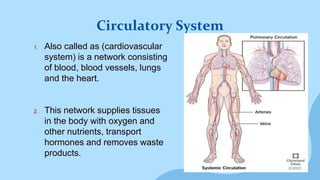
1. Also called as (cardiovascular
system) is a network consisting
of blood, blood vessels, lungs
and the heart.
2. This network supplies tissues
in the body with oxygen and
other nutrients, transport
hormones and removes waste
products.
Circulatory System
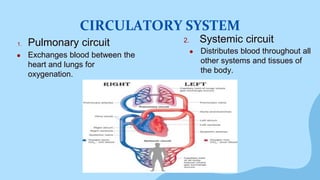
1. Pulmonary circuit
CIRCULATORY SYSTEM
● Exchanges blood between the
heart and lungs for
oxygenation.
2. Systemic circuit
● Distributes blood throughout all
other systems and tissues of
the body.
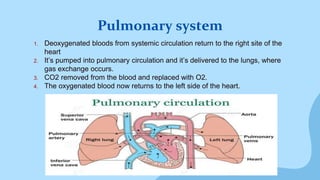
1. Deoxygenated bloods from systemic circulation return to the right site of the
heart
2. It’s pumped into pulmonary circulation and it’s delivered to the lungs, where
gas exchange occurs.
3. CO2 removed from the blood and replaced with O2.
4. The oxygenated blood now returns to the left side of the heart.
Pulmonary system
1. In the systemic circulation, blood travels out of the left ventricle
to the aorta, to every organ and tissue in the body and then
back to the right atrium.
2. It’s deliver oxygen and nutrients to the body’s cells and picks
up waste materials.
Systemic circulation
1.Blood pressure is the pressure of circulating blood against the
walls of blood vessels.
2.Most of the pressure from the heart pumping blood through the
circulatory systems.
METHODS OF MEASURING BLOOD
PRESSURE
1. Systolic pressure
(Depolarization)
The pressure of the blood in the
arteries when the heart pumps.
2. Diastolic
pressure(Repolarization)
The pressure of the blood in the
arteries when the heart is filling.
1. Non invasive
Using extremity via encircling cuffs
2. Invasive
By inserting a catheter into an artery and
transducing the arterial pressure tracing
Non invasive
invasive
Blood pressure in the vena cava near the right
atrium.
CENTRAL VENOUS PRESSURE
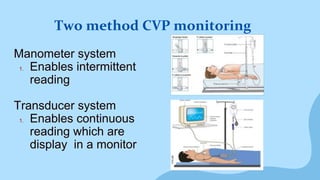
Manometer system
1. Enables intermittent
reading
Transducer system
1. Enables continuous
reading which are
display in a monitor
Two method CVP monitoring
1. Internal jugular vein
2. Subclavian vein
3. Femoral vein
Location
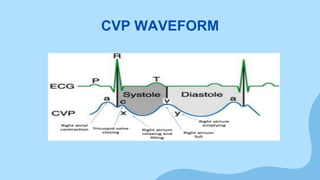
CVP WAVEFORM
1. Pneumothorax
2. Infection
3. Air embolism
4. Catheter occlusion
Complication
Jugular venous pressure waveform
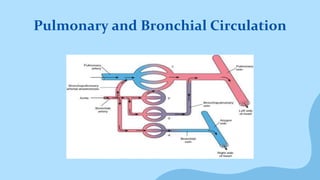
1. Bronchial Circulation
a. Supply nutrient, oxygen and carry waste product away
Pulmonary Blood Flow
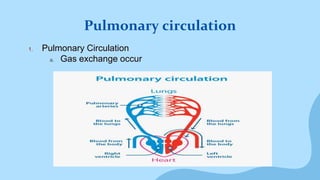
1. Pulmonary Circulation
a. Gas exchange occur
Pulmonary circulation
Pulmonary and Bronchial Circulation
1. Right heart catheterization
2. In mmHg
Intracardiac
Chambers
Pressure
Cardiovascular change
1. Blood pressure
2. Speed of conduction
3. Accelerated Cardiac Rhythm
4. Redistribution of blood from most active
to less active organs
Physiological responses to stress
CVS
FETAL
CIRCULATORY
SYSTEM
The fetal circulation system is distinctly different
from adult circulation.
• Allows the fetus to receive oxygenated
blood and nutrients from the placenta.
• Blood vessels in the placenta contains two
umbilical arteries and one umbilical vein
• Fetal circulation bypasses the lungs via
ductus arteriosus; the liver via the ductus
venosus and blood can travel from the
right atrium to the left atrium via the
foramen ovale.
INTRODUCTION
SPLANCHNIC
AND PORTAL
CIRCULATORY
SYSTEM
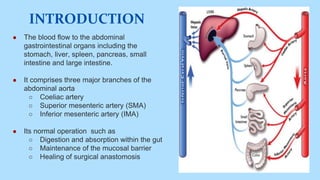
INTRODUCTION
● The blood flow to the abdominal
gastrointestinal organs including the
stomach, liver, spleen, pancreas, small
intestine and large intestine.
● It comprises three major branches of the
abdominal aorta
○ Coeliac artery
○ Superior mesenteric artery (SMA)
○ Inferior mesenteric artery (IMA)
● Its normal operation such as
○ Digestion and absorption within the gut
○ Maintenance of the mucosal barrier
○ Healing of surgical anastomosis
systemic and pulmonary circulation.pptx

systemic and pulmonary circulation.pptx

  • 1.
    Systemic and Pulmonary Circulation Group 4 SashivaramanA/L Rajan Muhamad Shah Ridzuan Bin Shafery Siti Amirah Binti Ramli Siti Hajar Binti Fadzil Siti Norwahida binti Rosli
  • 2.
    1. Explain thegeneral characteristics of the circulatory system: I. Systemic. II. Pulmonary. 2. State the method of measuring blood pressure. 3. Describe the assessment of central venous pressure and JVP waveforms. 4. State the anatomy of pulmonary circulation. 5. Describe pulmonary blood flow and pulmonary pressure assessment. 6. State the normal range for intracardiac pressure in various chamber. 7. State the physiological adaptation of cardiovascular system during pregnancy and other disease state. 8. State the other circulatory system : I. Fetal. II. Splanchnic portal. Outcome
  • 3.
    1. Also calledas (cardiovascular system) is a network consisting of blood, blood vessels, lungs and the heart. 2. This network supplies tissues in the body with oxygen and other nutrients, transport hormones and removes waste products. Circulatory System
  • 4.
    1. Pulmonary circuit CIRCULATORYSYSTEM ● Exchanges blood between the heart and lungs for oxygenation. 2. Systemic circuit ● Distributes blood throughout all other systems and tissues of the body.
  • 5.
    1. Deoxygenated bloodsfrom systemic circulation return to the right site of the heart 2. It’s pumped into pulmonary circulation and it’s delivered to the lungs, where gas exchange occurs. 3. CO2 removed from the blood and replaced with O2. 4. The oxygenated blood now returns to the left side of the heart. Pulmonary system
  • 6.
    1. In thesystemic circulation, blood travels out of the left ventricle to the aorta, to every organ and tissue in the body and then back to the right atrium. 2. It’s deliver oxygen and nutrients to the body’s cells and picks up waste materials. Systemic circulation
  • 7.
    1.Blood pressure isthe pressure of circulating blood against the walls of blood vessels. 2.Most of the pressure from the heart pumping blood through the circulatory systems. METHODS OF MEASURING BLOOD PRESSURE
  • 8.
    1. Systolic pressure (Depolarization) Thepressure of the blood in the arteries when the heart pumps. 2. Diastolic pressure(Repolarization) The pressure of the blood in the arteries when the heart is filling.
  • 9.
    1. Non invasive Usingextremity via encircling cuffs 2. Invasive By inserting a catheter into an artery and transducing the arterial pressure tracing
  • 10.
  • 11.
  • 12.
    Blood pressure inthe vena cava near the right atrium. CENTRAL VENOUS PRESSURE
  • 13.
    Manometer system 1. Enablesintermittent reading Transducer system 1. Enables continuous reading which are display in a monitor Two method CVP monitoring
  • 14.
    1. Internal jugularvein 2. Subclavian vein 3. Femoral vein Location
  • 15.
  • 16.
    1. Pneumothorax 2. Infection 3.Air embolism 4. Catheter occlusion Complication
  • 17.
  • 18.
    1. Bronchial Circulation a.Supply nutrient, oxygen and carry waste product away Pulmonary Blood Flow
  • 19.
    1. Pulmonary Circulation a.Gas exchange occur Pulmonary circulation
  • 20.
  • 21.
    1. Right heartcatheterization 2. In mmHg Intracardiac Chambers Pressure
  • 22.
  • 23.
    1. Blood pressure 2.Speed of conduction 3. Accelerated Cardiac Rhythm 4. Redistribution of blood from most active to less active organs Physiological responses to stress CVS
  • 24.
  • 25.
    The fetal circulationsystem is distinctly different from adult circulation. • Allows the fetus to receive oxygenated blood and nutrients from the placenta. • Blood vessels in the placenta contains two umbilical arteries and one umbilical vein • Fetal circulation bypasses the lungs via ductus arteriosus; the liver via the ductus venosus and blood can travel from the right atrium to the left atrium via the foramen ovale. INTRODUCTION
  • 26.
  • 27.
    INTRODUCTION ● The bloodflow to the abdominal gastrointestinal organs including the stomach, liver, spleen, pancreas, small intestine and large intestine. ● It comprises three major branches of the abdominal aorta ○ Coeliac artery ○ Superior mesenteric artery (SMA) ○ Inferior mesenteric artery (IMA) ● Its normal operation such as ○ Digestion and absorption within the gut ○ Maintenance of the mucosal barrier ○ Healing of surgical anastomosis