SynagogueS
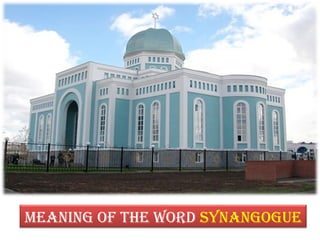
Meaning of the word Synangogue
A) Synagogue = Sunagogue= coming together.


B) Meeting point or prayer hall of Jewish people in antiquity


C)Synagogues were simply gathering that took place
  outdoors or in peoples houses or in courtyards.
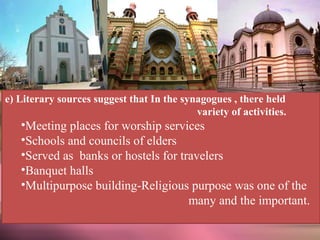
e) Literary sources suggest that In the synagogues , there held
                                           variety of activities.
   •Meeting places for worship services
   •Schools and councils of elders
   •Served as banks or hostels for travelers
   •Banquet halls
   •Multipurpose building-Religious purpose was one of the
                                     many and the important.
the origin and the hiStory
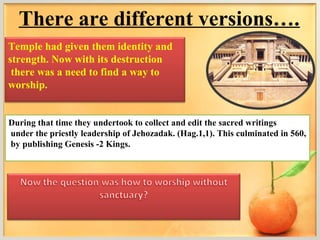
There are different versions….
Temple had given them identity and
strength. Now with its destruction
 there was a need to find a way to
worship.


During that time they undertook to collect and edit the sacred writings
under the priestly leadership of Jehozadak. (Hag.1,1). This culminated in 560,
by publishing Genesis -2 Kings.
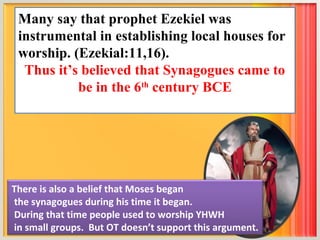
Many say that prophet Ezekiel was
 instrumental in establishing local houses for
 worship. (Ezekial:11,16).
  Thus it’s believed that Synagogues came to
           be in the 6th century BCE


There is also a belief that Moses began
the synagogues during his time it began.
During that time people used to worship YHWH
in small groups. But OT doesn’t support this argument.
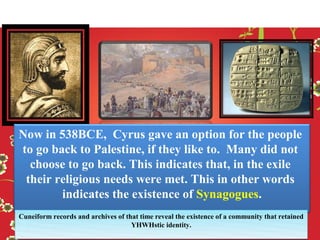
Now in 538BCE, Cyrus gave an option for the people
to go back to Palestine, if they like to. Many did not
  choose to go back. This indicates that, in the exile
 their religious needs were met. This in other words
        indicates the existence of Synagogues.
Cuneiform records and archives of that time reveal the existence of a community that retained
                                    YHWHstic identity.
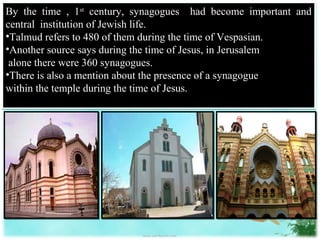
By the time , 1st century, synagogues had become important and
central institution of Jewish life.
•Talmud refers to 480 of them during the time of Vespasian.
•Another source says during the time of Jesus, in Jerusalem
 alone there were 360 synagogues.
•There is also a mention about the presence of a synagogue
within the temple during the time of Jesus.
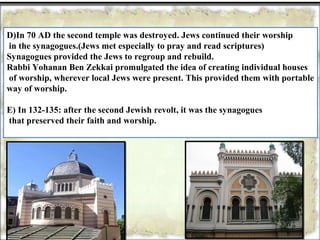
D)In 70 AD the second temple was destroyed. Jews continued their worship
in the synagogues.(Jews met especially to pray and read scriptures)
Synagogues provided the Jews to regroup and rebuild.
Rabbi Yohanan Ben Zekkai promulgated the idea of creating individual houses
of worship, wherever local Jews were present. This provided them with portable
way of worship.

E) In 132-135: after the second Jewish revolt, it was the synagogues
that preserved their faith and worship.
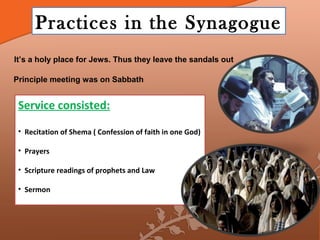
Practices in the Synagogue
It’s a holy place for Jews. Thus they leave the sandals out

Principle meeting was on Sabbath


 Service consisted:

 • Recitation of Shema ( Confession of faith in one God)

 • Prayers

 • Scripture readings of prophets and Law

 • Sermon
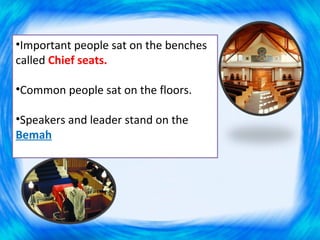
•Important people sat on the benches
called Chief seats.

•Common people sat on the floors.

•Speakers and leader stand on the
Bemah
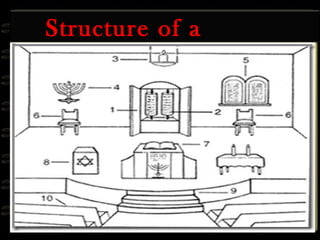
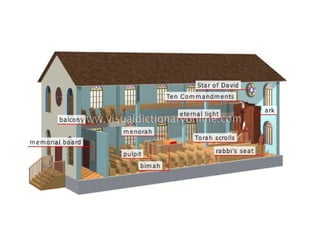
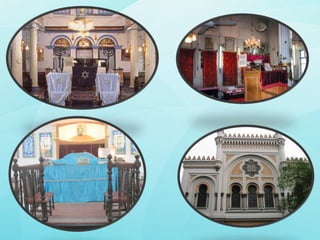
Structure of a
Synagogue
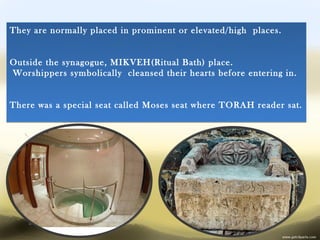
They are normally placed in prominent or elevated/high places.


Outside the synagogue, MIKVEH(Ritual Bath) place.
Worshippers symbolically cleansed their hearts before entering in.


There was a special seat called Moses seat where TORAH reader sat.
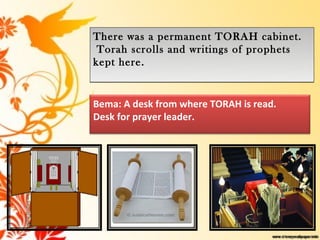
There was a permanent TORAH cabinet.
 Torah scrolls and writings of prophets
kept here.


Bema: A desk from where TORAH is read.
Desk for prayer leader.
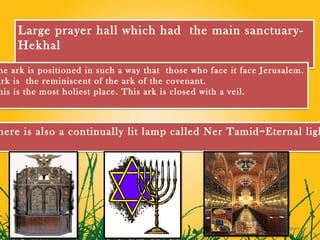
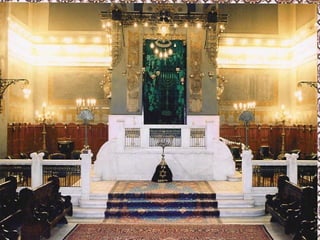
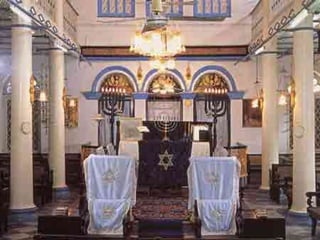
Large prayer hall which had the main sanctuary-
     Hekhal
 he ark is positioned in such a way that those who face it face Jerusalem.
Ark is the reminiscent of the ark of the covenant.
 his is the most holiest place. This ark is closed with a veil.


here is also a continually lit lamp called Ner Tamid=Eternal ligh
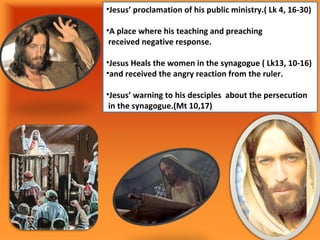
•Jesus’ proclamation of his public ministry.( Lk 4, 16-30)

•A place where his teaching and preaching
 received negative response.

•Jesus Heals the women in the synagogue ( Lk13, 10-16)
•and received the angry reaction from the ruler.

•Jesus’ warning to his desciples about the persecution
 in the synagogue.(Mt 10,17)
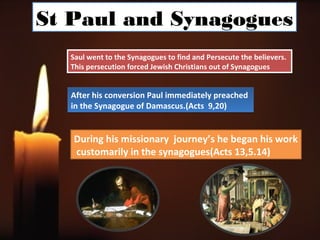
St Paul and Synagogues
  Saul went to the Synagogues to find and Persecute the believers.
  This persecution forced Jewish Christians out of Synagogues


  After his conversion Paul immediately preached
  in the Synagogue of Damascus.(Acts 9,20)


   During his missionary journey’s he began his work
   customarily in the synagogues(Acts 13,5.14)
Conclusion
Through Synagogues , Jewish faith and worship survived centuries of struggle.


              Jesus started & continued his work in the synagogues.


              Peter, St Paul and others preached Christianity in the Synagogues


              Thus Synagogues were the seedbeds of Christianity.


                        Let’s not forget the message of Synagogues:
                        “Where two or three, gathered in my name, there am I.”

Synagogues

  • 1.
  • 2.
    Meaning of theword Synangogue
  • 3.
    A) Synagogue =Sunagogue= coming together. B) Meeting point or prayer hall of Jewish people in antiquity C)Synagogues were simply gathering that took place outdoors or in peoples houses or in courtyards.
  • 4.
    e) Literary sourcessuggest that In the synagogues , there held variety of activities. •Meeting places for worship services •Schools and councils of elders •Served as banks or hostels for travelers •Banquet halls •Multipurpose building-Religious purpose was one of the many and the important.
  • 5.
    the origin andthe hiStory
  • 6.
    There are differentversions…. Temple had given them identity and strength. Now with its destruction there was a need to find a way to worship. During that time they undertook to collect and edit the sacred writings under the priestly leadership of Jehozadak. (Hag.1,1). This culminated in 560, by publishing Genesis -2 Kings.
  • 7.
    Many say thatprophet Ezekiel was instrumental in establishing local houses for worship. (Ezekial:11,16). Thus it’s believed that Synagogues came to be in the 6th century BCE There is also a belief that Moses began the synagogues during his time it began. During that time people used to worship YHWH in small groups. But OT doesn’t support this argument.
  • 8.
    Now in 538BCE,Cyrus gave an option for the people to go back to Palestine, if they like to. Many did not choose to go back. This indicates that, in the exile their religious needs were met. This in other words indicates the existence of Synagogues. Cuneiform records and archives of that time reveal the existence of a community that retained YHWHstic identity.
  • 9.
    By the time, 1st century, synagogues had become important and central institution of Jewish life. •Talmud refers to 480 of them during the time of Vespasian. •Another source says during the time of Jesus, in Jerusalem alone there were 360 synagogues. •There is also a mention about the presence of a synagogue within the temple during the time of Jesus.
  • 10.
    D)In 70 ADthe second temple was destroyed. Jews continued their worship in the synagogues.(Jews met especially to pray and read scriptures) Synagogues provided the Jews to regroup and rebuild. Rabbi Yohanan Ben Zekkai promulgated the idea of creating individual houses of worship, wherever local Jews were present. This provided them with portable way of worship. E) In 132-135: after the second Jewish revolt, it was the synagogues that preserved their faith and worship.
  • 11.
    Practices in theSynagogue It’s a holy place for Jews. Thus they leave the sandals out Principle meeting was on Sabbath Service consisted: • Recitation of Shema ( Confession of faith in one God) • Prayers • Scripture readings of prophets and Law • Sermon
  • 12.
    •Important people saton the benches called Chief seats. •Common people sat on the floors. •Speakers and leader stand on the Bemah
  • 13.
  • 14.
    They are normallyplaced in prominent or elevated/high places. Outside the synagogue, MIKVEH(Ritual Bath) place. Worshippers symbolically cleansed their hearts before entering in. There was a special seat called Moses seat where TORAH reader sat.
  • 15.
    There was apermanent TORAH cabinet. Torah scrolls and writings of prophets kept here. Bema: A desk from where TORAH is read. Desk for prayer leader.
  • 16.
    Large prayer hallwhich had the main sanctuary- Hekhal he ark is positioned in such a way that those who face it face Jerusalem. Ark is the reminiscent of the ark of the covenant. his is the most holiest place. This ark is closed with a veil. here is also a continually lit lamp called Ner Tamid=Eternal ligh
  • 22.
    •Jesus’ proclamation ofhis public ministry.( Lk 4, 16-30) •A place where his teaching and preaching received negative response. •Jesus Heals the women in the synagogue ( Lk13, 10-16) •and received the angry reaction from the ruler. •Jesus’ warning to his desciples about the persecution in the synagogue.(Mt 10,17)
  • 23.
    St Paul andSynagogues Saul went to the Synagogues to find and Persecute the believers. This persecution forced Jewish Christians out of Synagogues After his conversion Paul immediately preached in the Synagogue of Damascus.(Acts 9,20) During his missionary journey’s he began his work customarily in the synagogues(Acts 13,5.14)
  • 24.
    Conclusion Through Synagogues ,Jewish faith and worship survived centuries of struggle. Jesus started & continued his work in the synagogues. Peter, St Paul and others preached Christianity in the Synagogues Thus Synagogues were the seedbeds of Christianity. Let’s not forget the message of Synagogues: “Where two or three, gathered in my name, there am I.”