SWOT ANALYSIS: UNLEASHING YOUR BUSINESS'S POTENTIAL
GROUP MEMBERS
• ARSALAN ASLAM
• RAO MOHSIN
• SAAD AKBAR
• SAHAL SAJEED
• SAAD ISRAR
• HODAID KHAN
• Introduction to SWOT Analysis
• Identifying Strengths
• Recognizing Weaknesses
• Exploring Opportunities
• Assessing Threats
• Conclusion
INTRODUCTION TO
SWOT ANALYSIS
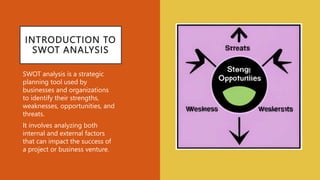
SWOT analysis is a strategic
planning tool used by
businesses and organizations
to identify their strengths,
weaknesses, opportunities, and
threats.
It involves analyzing both
internal and external factors
that can impact the success of
a project or business venture.
IDENTIFYING
STRENGTHS
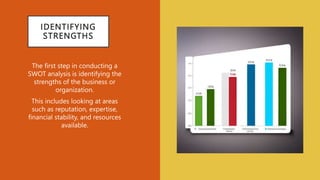
The first step in conducting a
SWOT analysis is identifying the
strengths of the business or
organization.
This includes looking at areas
such as reputation, expertise,
financial stability, and resources
available.
RECOGNIZING
WEAKNESSES
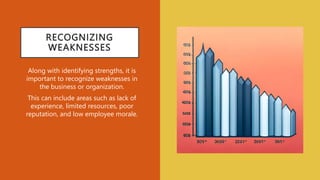
Along with identifying strengths, it is
important to recognize weaknesses in
the business or organization.
This can include areas such as lack of
experience, limited resources, poor
reputation, and low employee morale.
EXPLORING
OPPORTUNITIES
After identifying strengths and
weaknesses, the next step is to
explore potential opportunities for
growth and success.
This can include emerging markets,
new technologies, and partnerships
with other businesses or
organizations.
ASSESSING THREATS
Finally, it is important to assess
potential threats to the business or
organization.
This can include economic downturns,
changes in regulations, competition,
and natural disasters.
SWOT OF MICROSOFT
Overview
Founded: 1975 by Bill Gates, and his business
partner Paul Allen.
Microsoft is inevitably the world’s most renowned
American multinational technology company that
offers software and hardware products, operating
systems, apps and devices, Cloud computing, and
office software suites It’s been at the forefront of
technological advancement for over 40 years and
has significantly contributed to the technology
industry.
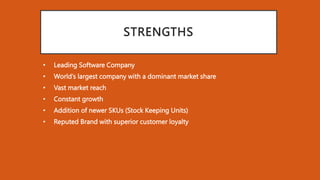
STRENGTHS
• Leading Software Company
• World’s largest company with a dominant market share
• Vast market reach
• Constant growth
• Addition of newer SKUs (Stock Keeping Units)
• Reputed Brand with superior customer loyalty
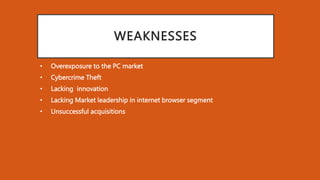
WEAKNESSES
• Overexposure to the PC market
• Cybercrime Theft
• Lacking innovation
• Lacking Market leadership in internet browser segment
• Unsuccessful acquisitions
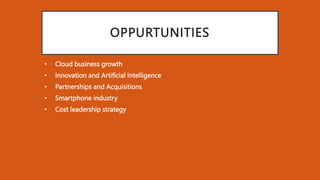
OPPURTUNITIES
• Cloud business growth
• Innovation and Artificial Intelligence
• Partnerships and Acquisitions
• Smartphone industry
• Cost leadership strategy
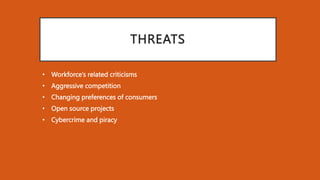
THREATS
• Workforce’s related criticisms
• Aggressive competition
• Changing preferences of consumers
• Open source projects
• Cybercrime and piracy
CONCLUSION
In conclusion, SWOT analysis is a
valuable tool for businesses and
organizations to identify their strengths,
weaknesses, opportunities, and threats.
By conducting a thorough analysis, they
can develop strategies to capitalize on
their strengths, address their
weaknesses, take advantage of
opportunities, and mitigate potential
threats.
REFERENCES
 https://www.mindtools.com/amtbj63/swot-analysis
 https://bstrategyhub.com/swot-analysis-of-microsoft/

SWOT Analysis updated[1].ppt SWOT Analysis updated[1].ppt

  • 1.
    SWOT ANALYSIS: UNLEASHINGYOUR BUSINESS'S POTENTIAL
  • 2.
    GROUP MEMBERS • ARSALANASLAM • RAO MOHSIN • SAAD AKBAR • SAHAL SAJEED • SAAD ISRAR • HODAID KHAN
  • 3.
    • Introduction toSWOT Analysis • Identifying Strengths • Recognizing Weaknesses • Exploring Opportunities • Assessing Threats • Conclusion
  • 4.
    INTRODUCTION TO SWOT ANALYSIS SWOTanalysis is a strategic planning tool used by businesses and organizations to identify their strengths, weaknesses, opportunities, and threats. It involves analyzing both internal and external factors that can impact the success of a project or business venture.
  • 5.
    IDENTIFYING STRENGTHS The first stepin conducting a SWOT analysis is identifying the strengths of the business or organization. This includes looking at areas such as reputation, expertise, financial stability, and resources available.
  • 6.
    RECOGNIZING WEAKNESSES Along with identifyingstrengths, it is important to recognize weaknesses in the business or organization. This can include areas such as lack of experience, limited resources, poor reputation, and low employee morale.
  • 7.
    EXPLORING OPPORTUNITIES After identifying strengthsand weaknesses, the next step is to explore potential opportunities for growth and success. This can include emerging markets, new technologies, and partnerships with other businesses or organizations.
  • 8.
    ASSESSING THREATS Finally, itis important to assess potential threats to the business or organization. This can include economic downturns, changes in regulations, competition, and natural disasters.
  • 9.
    SWOT OF MICROSOFT Overview Founded:1975 by Bill Gates, and his business partner Paul Allen. Microsoft is inevitably the world’s most renowned American multinational technology company that offers software and hardware products, operating systems, apps and devices, Cloud computing, and office software suites It’s been at the forefront of technological advancement for over 40 years and has significantly contributed to the technology industry.
  • 10.
    STRENGTHS • Leading SoftwareCompany • World’s largest company with a dominant market share • Vast market reach • Constant growth • Addition of newer SKUs (Stock Keeping Units) • Reputed Brand with superior customer loyalty
  • 11.
    WEAKNESSES • Overexposure tothe PC market • Cybercrime Theft • Lacking innovation • Lacking Market leadership in internet browser segment • Unsuccessful acquisitions
  • 12.
    OPPURTUNITIES • Cloud businessgrowth • Innovation and Artificial Intelligence • Partnerships and Acquisitions • Smartphone industry • Cost leadership strategy
  • 13.
    THREATS • Workforce’s relatedcriticisms • Aggressive competition • Changing preferences of consumers • Open source projects • Cybercrime and piracy
  • 14.
    CONCLUSION In conclusion, SWOTanalysis is a valuable tool for businesses and organizations to identify their strengths, weaknesses, opportunities, and threats. By conducting a thorough analysis, they can develop strategies to capitalize on their strengths, address their weaknesses, take advantage of opportunities, and mitigate potential threats.
  • 16.