University Supply Chain Workshop 2 July 2009
Survey results
Major purchases Stationery / office equipment / paper IT equipment / software Printing (external publications) Furniture / fittings Building services / construction Chemicals Recruitment / temp staff Travel
Use of sustainable criteria No / not really Yes - required in all tenders Energy star compliance (electrical equipment) Industry claims (eg. paper) Motor vehicle green guide Green buildings guide Judgement call by individuals
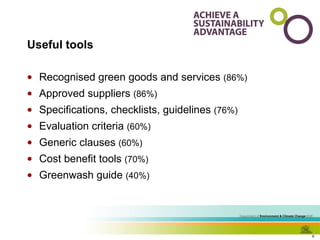
Useful tools Recognised green goods and services  (86%) Approved suppliers  (86%) Specifications, checklists, guidelines   (76%) Evaluation criteria  (60%) Generic clauses  (60%) Cost benefit tools  (70%) Greenwash guide  (40%)
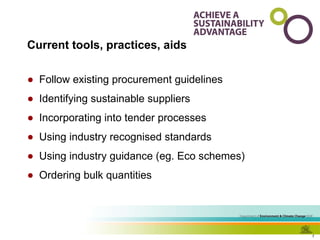
Current tools, practices, aids Follow existing procurement guidelines Identifying sustainable suppliers Incorporating into tender processes Using industry recognised standards Using industry guidance (eg. Eco schemes) Ordering bulk quantities
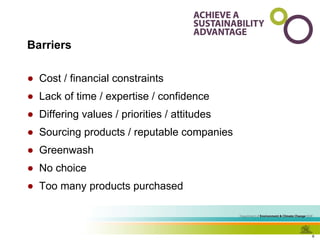
Barriers Cost / financial constraints Lack of time / expertise / confidence Differing values / priorities / attitudes Sourcing products / reputable companies Greenwash No choice Too many products purchased
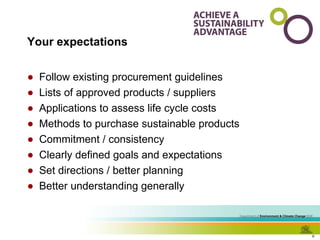
Your expectations Follow existing procurement guidelines Lists of approved products / suppliers Applications to assess life cycle costs Methods to purchase sustainable products Commitment / consistency Clearly defined goals and expectations Set directions / better planning Better understanding generally
Now what?
Purchasing policy Sustainability requirements Recyclable / remanufactured / reusable… Socially responsible / ethical / local Contain recycled content Energy / water efficient Less toxic
Purchasing policy Guideline purchasing actions Connect waste and purchasing Consider alternatives to purchasing Manage surplus effectively Use recognised standards Buy remanufactured goods Purchase low toxic goods
What now and how Focus on key goods and services  Incorporate sustainability principles into current operational policies / practices Engage and educate staff / suppliers
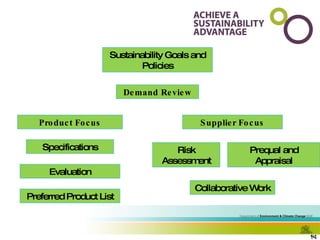
Demand Review Product   Focus Supplier Focus Risk Assessment Prequal and Appraisal Collaborative Work Specifications Evaluation Sustainability Goals and Policies Preferred Product List
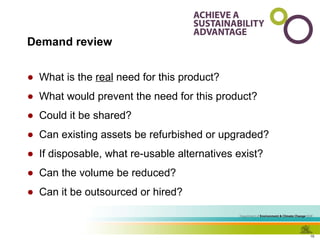
Demand review What is the  real  need for this product? What would prevent the need for this product? Could it be shared? Can existing assets be refurbished or upgraded? If disposable, what re-usable alternatives exist? Can the volume be reduced? Can it be outsourced or hired?
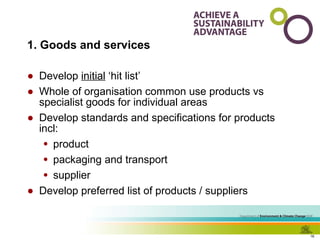
1. Goods and services Develop  initial  ‘hit list’ Whole of organisation common use products vs specialist goods for individual areas  Develop standards and specifications for products incl: product packaging and transport supplier Develop preferred list of products / suppliers
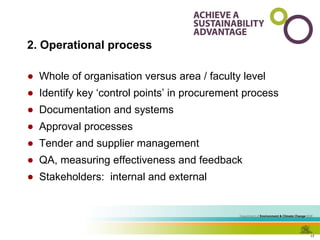
2. Operational process Whole of organisation versus area / faculty level Identify key ‘control points’ in procurement process Documentation and systems Approval processes Tender and supplier management QA, measuring effectiveness and feedback Stakeholders:  internal and external
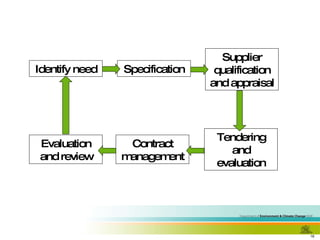
Identify need Specification Supplier qualification and appraisal Tendering and evaluation Evaluation and review Contract management
3. Suppliers / stakeholders Identify key suppliers Information on the performance of the company Commit supplier to environmental management processes as part of contract delivery Within Uni: who are the key influencers?  What do they need to know and do?

Sustainable Supply Chain workshop

  • 1.
  • 2.
    University Supply ChainWorkshop 2 July 2009
  • 3.
  • 4.
    Major purchases Stationery/ office equipment / paper IT equipment / software Printing (external publications) Furniture / fittings Building services / construction Chemicals Recruitment / temp staff Travel
  • 5.
    Use of sustainablecriteria No / not really Yes - required in all tenders Energy star compliance (electrical equipment) Industry claims (eg. paper) Motor vehicle green guide Green buildings guide Judgement call by individuals
  • 6.
    Useful tools Recognisedgreen goods and services (86%) Approved suppliers (86%) Specifications, checklists, guidelines (76%) Evaluation criteria (60%) Generic clauses (60%) Cost benefit tools (70%) Greenwash guide (40%)
  • 7.
    Current tools, practices,aids Follow existing procurement guidelines Identifying sustainable suppliers Incorporating into tender processes Using industry recognised standards Using industry guidance (eg. Eco schemes) Ordering bulk quantities
  • 8.
    Barriers Cost /financial constraints Lack of time / expertise / confidence Differing values / priorities / attitudes Sourcing products / reputable companies Greenwash No choice Too many products purchased
  • 9.
    Your expectations Followexisting procurement guidelines Lists of approved products / suppliers Applications to assess life cycle costs Methods to purchase sustainable products Commitment / consistency Clearly defined goals and expectations Set directions / better planning Better understanding generally
  • 10.
  • 11.
    Purchasing policy Sustainabilityrequirements Recyclable / remanufactured / reusable… Socially responsible / ethical / local Contain recycled content Energy / water efficient Less toxic
  • 12.
    Purchasing policy Guidelinepurchasing actions Connect waste and purchasing Consider alternatives to purchasing Manage surplus effectively Use recognised standards Buy remanufactured goods Purchase low toxic goods
  • 13.
    What now andhow Focus on key goods and services Incorporate sustainability principles into current operational policies / practices Engage and educate staff / suppliers
  • 14.
    Demand Review Product Focus Supplier Focus Risk Assessment Prequal and Appraisal Collaborative Work Specifications Evaluation Sustainability Goals and Policies Preferred Product List
  • 15.
    Demand review Whatis the real need for this product? What would prevent the need for this product? Could it be shared? Can existing assets be refurbished or upgraded? If disposable, what re-usable alternatives exist? Can the volume be reduced? Can it be outsourced or hired?
  • 16.
    1. Goods andservices Develop initial ‘hit list’ Whole of organisation common use products vs specialist goods for individual areas Develop standards and specifications for products incl: product packaging and transport supplier Develop preferred list of products / suppliers
  • 17.
    2. Operational processWhole of organisation versus area / faculty level Identify key ‘control points’ in procurement process Documentation and systems Approval processes Tender and supplier management QA, measuring effectiveness and feedback Stakeholders: internal and external
  • 18.
    Identify need SpecificationSupplier qualification and appraisal Tendering and evaluation Evaluation and review Contract management
  • 19.
    3. Suppliers /stakeholders Identify key suppliers Information on the performance of the company Commit supplier to environmental management processes as part of contract delivery Within Uni: who are the key influencers? What do they need to know and do?