 The study of the effects of natural and unnatural
processes, and of interactions of the physical
components of the planet on the environment.
 Continuous interaction between environment and
its other counterparts on the planet gives birth to
disharmony in the natural processes.
 Ability of systems and processes to flourish in a
natural conformity and at the same time remain
productive to mankind and other life forms.
 Maintaining this balance has become a challenge
due to advancement and progression of mankind.
 Awareness is the key to solving this problem.
 Sustainable environment is so vital because it will not
only affect us but our generations to come.
 In past human population was small and technology
and progression was also not so fast paced.
 Presently, our population growth rate is alarmingly
high .
 our avarice to make the most of what is available to
us is causing a major imbalance between provision
and consumption of resources.
 Defined as the natural assets of the earth such as
land, air, water, living organisms which provides the
basis of all human economic activity.
 Is responsible for supplying the raw materials to
mankind which enables them to survive and
improve their way of living.
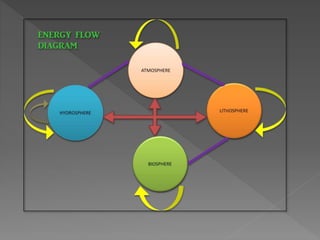
Planet Earth is roughly dived into four main spheres.
 Lithosphere- crust and upper mantle
 Hydrosphere- all water sources
 Atmosphere- gaseous envelop
 Biosphere-all living matter
 Global Warming and Greenhouse Effect
 Depletion of Ozone Layer (cfcs)
 Pollution (air, water, land)
 Reduction In Biodiversity
 Main objective of sustainability is to conserve the
environment and its various features to facilitate
human beings of present and future.
 This objective can be achieved by attaining
smaller goals which will individually help in resolving
the core issue of environmental sustenance
 Recycling Sustainability
 Natural Resource Sustainability
 Water Sustainability
 Energy Sustainability
 Waste Management

Sustainability & environmental science ppt1

  • 2.
     The studyof the effects of natural and unnatural processes, and of interactions of the physical components of the planet on the environment.  Continuous interaction between environment and its other counterparts on the planet gives birth to disharmony in the natural processes.
  • 3.
     Ability ofsystems and processes to flourish in a natural conformity and at the same time remain productive to mankind and other life forms.  Maintaining this balance has become a challenge due to advancement and progression of mankind.  Awareness is the key to solving this problem.
  • 4.
     Sustainable environmentis so vital because it will not only affect us but our generations to come.  In past human population was small and technology and progression was also not so fast paced.  Presently, our population growth rate is alarmingly high .  our avarice to make the most of what is available to us is causing a major imbalance between provision and consumption of resources.
  • 5.
     Defined asthe natural assets of the earth such as land, air, water, living organisms which provides the basis of all human economic activity.  Is responsible for supplying the raw materials to mankind which enables them to survive and improve their way of living.
  • 6.
    Planet Earth isroughly dived into four main spheres.  Lithosphere- crust and upper mantle  Hydrosphere- all water sources  Atmosphere- gaseous envelop  Biosphere-all living matter
  • 9.
     Global Warmingand Greenhouse Effect  Depletion of Ozone Layer (cfcs)  Pollution (air, water, land)  Reduction In Biodiversity
  • 11.
     Main objectiveof sustainability is to conserve the environment and its various features to facilitate human beings of present and future.  This objective can be achieved by attaining smaller goals which will individually help in resolving the core issue of environmental sustenance
  • 12.
     Recycling Sustainability Natural Resource Sustainability  Water Sustainability  Energy Sustainability  Waste Management