
‘-
1
Manuel R. Putong
CHAPTER 7 -
SUPPLY CHAIN
DESIGN
‘-
2
Supply Chain:
Network of organizations and business process of procuring materials, transforming
raw materials into the finished products and distributing the finished products to the
customers.
Supply Chain Management:
Integration of suppliers, distributors and customer logistics into one cohesive
process.
Supply Chain Management Process:
Information system that automate the flow information between a firm and its
suppliers in order to optimize the planning, sourcing, manufacturing and delivering
of products and services.
Definition Review
‘-
3
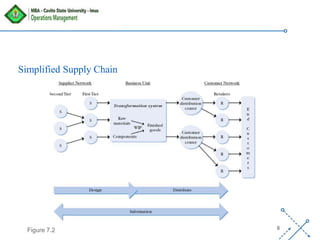
The supply chain consists of the network of
organizations that supply inputs to the business unit,
the business unit itself, and the customer network
Supplier network can include both internal and
external suppliers
A broad view of the process focuses management
attention on the entire process that creates value
rather than individual activities
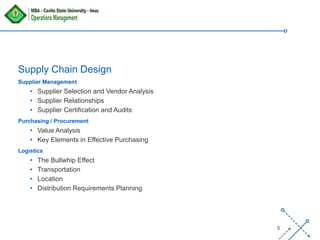
Supply Chain Design
‘-
4
‘-
5
Supplier Management
• Supplier Selection and Vendor Analysis
• Supplier Relationships
• Supplier Certification and Audits
Purchasing / Procurement
• Value Analysis
• Key Elements in Effective Purchasing
Logistics
• The Bullwhip Effect
• Transportation
• Location
• Distribution Requirements Planning
Supply Chain Design
‘-
6
Simplified Supply Chain
Figure 7.2
‘-
7
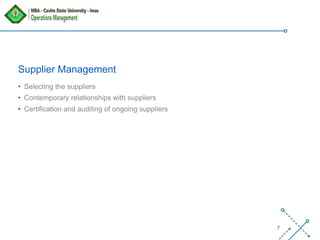
Supplier Management
• Selecting the suppliers
• Contemporary relationships with suppliers
• Certification and auditing of ongoing suppliers
‘-
8
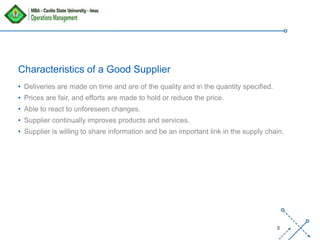
Characteristics of a Good Supplier
• Deliveries are made on time and are of the quality and in the quantity specified.
• Prices are fair, and efforts are made to hold or reduce the price.
• Able to react to unforeseen changes.
• Supplier continually improves products and services.
• Supplier is willing to share information and be an important link in the supply chain.
‘-
9
Supplier Relationships
• With intense global competition and SCM, the relationship between customers and
suppliers has changed significantly
• In the past, most customers purchased from the lowest bidders who could meet
their quality and delivery needs
• Customers are seeking a closer, more cooperative relationship with their suppliers
‘-
10
Supplier Certification and Audits
• Sole-sourcing arrangements are becoming virtual partnerships with the customer
• This means longer-term relationships
• Suppliers are being certified or qualified so that their shipments do not need to be
inspected by the customer
• Items go directly to the production line
‘-
11
Purchasing VS Procurement
JIT and Purchasing
Value Analysis
Key Elements in Effective Purchasing
Purchasing / Procurement
‘-
12
Purchasing
• Activities to reliably obtain materials by the time they are needed in the product
supply process
• Important considerations include price, quality, lead times, and reliability
• Manufacturing organizations spend an average of 55 percent of revenue for outside
materials and services.
• These same organizations spend only 6 percent on labor and 3 percent on
overhead
‘-
13
Purchasing Versus Procurement
• Purchasing implies a monetary transaction
• Procurement is simply the responsibility for acquiring the goods and services the
organization needs
• Procurement allows the consideration of environmental aspects of obtaining and
distributing products
‘-
14
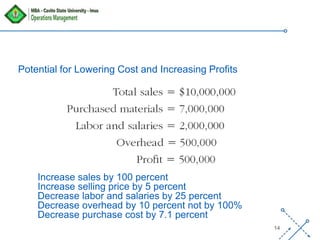
Potential for Lowering Cost and Increasing Profits
Increase sales by 100 percent
Increase selling price by 5 percent
Decrease labor and salaries by 25 percent
Decrease overhead by 10 percent not by 100%
Decrease purchase cost by 7.1 percent
‘-
16
JIT and Purchasing
• Widespread use of JIT has increased importance of purchasing and procurement
• Delays in the receipt of materials will stop a JIT program dead in its tracks
‘-
17
Value Analysis
• A special responsibility of purchasing, or purchasing working jointly with
engineering/design and operations is to regularly evaluate the function of
purchased items or services, especially those that are expensive or used in high
volumes
• The goal is to either reduce the cost of the item or improve its performance
‘-
18
Key Elements of Effective Purchasing
• They leverage their buying power
• They commit to a small number of dependable suppliers
• They work with and help their suppliers reduce total cost
‘-
19
The Bullwhip Effect
Transportation
Location
Distribution Requirements Planning
Logistics
‘-
20
• Planning and controlling efficient, effective flows of goods, services,
and information from one point to another
• Consists of inventories, distribution networks, storage and
warehousing, transportation, information processing, and even
production
• Logistic is taking on tremendous importance
Logistics
‘-
21
• Each segment further down the whip goes faster than the one
above it
• Same effect often observed in supply chains but in reverse order
• Results when the variability of demand increases from the
customer stage upstream to the factory stage
The Bullwhip Effect
‘-
24
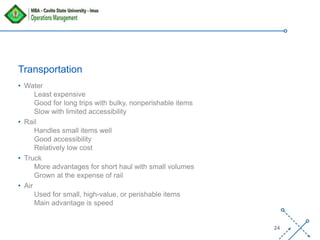
Transportation
• Water
Least expensive
Good for long trips with bulky, nonperishable items
Slow with limited accessibility
• Rail
Handles small items well
Good accessibility
Relatively low cost
• Truck
More advantages for short haul with small volumes
Grown at the expense of rail
• Air
Used for small, high-value, or perishable items
Main advantage is speed
‘-
25
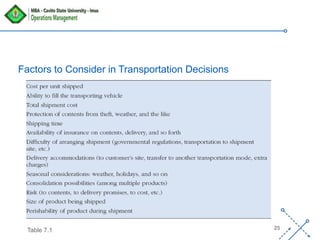
Factors to Consider in Transportation Decisions
Table 7.1
‘-
26
‘-
27
Note: neque digni
and in aliquet nisl
et a umis varius.
‘-
28
‘-
29
Location
• Besides transporting outputs to customers, if there is a facilitating good, service can
also locate where customers can easily obtain them
• Information and telecommunications technology advances have allowed some pure
service organizations to reach their recipients electronically
• Some pure service organizations do transport their services
‘-
30
Processing Natural Resources -
Organization Locate at Raw Materials
• Large loss in size or weight during processing
• High economies of scale exist for the product
• Raw material is perishable and cannot be shipped before being processed
‘-
31
Immobile Outputs
• The outputs of some organizations may be relatively immobile, such as dams,
roads, buildings, and bridges
• The organization locates itself at the construction site and transports all required
inputs to that location
‘-
32
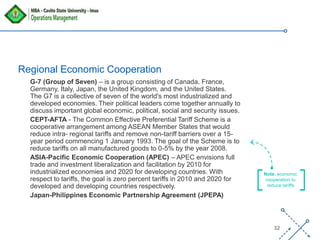
G-7 (Group of Seven) – is a group consisting of Canada, France,
Germany, Italy, Japan, the United Kingdom, and the United States.
The G7 is a collective of seven of the world's most industrialized and
developed economies. Their political leaders come together annually to
discuss important global economic, political, social and security issues.
CEPT-AFTA - The Common Effective Preferential Tariff Scheme is a
cooperative arrangement among ASEAN Member States that would
reduce intra- regional tariffs and remove non-tariff barriers over a 15-
year period commencing 1 January 1993. The goal of the Scheme is to
reduce tariffs on all manufactured goods to 0-5% by the year 2008.
ASIA-Pacific Economic Cooperation (APEC) – APEC envisions full
trade and investment liberalization and facilitation by 2010 for
industrialized economies and 2020 for developing countries. With
respect to tariffs, the goal is zero percent tariffs in 2010 and 2020 for
developed and developing countries respectively.
Japan-Philippines Economic Partnership Agreement (JPEPA)
Regional Economic Cooperation
Note: economic
cooperation to
reduce tariffs
‘-
33
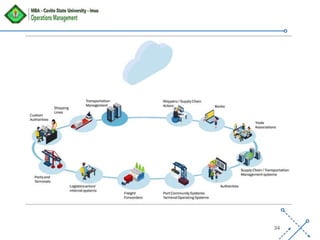
Connecting Supply Chain in One Flatform
• When it launches in 2018-pending regulatory approval-the new joint venture
company will connect all the different global supply chain participants in one secure,
digital platform where they can share and use information but also leverage the
data to develop products for their customers and the industry.
• "This new company marks a milestone in our strategic efforts to drive the
digitisation of global trade. The potential from offering a neutral, open digital
platform for safe and easy ways of exchanging information is huge, and all players
across the supply chain stand to benefit," said Vincent Clerc, Chief Commercial
Officer at A.P. Moller - Maersk and future Chairman of the Board of the new joint
venture.
• "By joining our deep knowledge of trade with IBM's capabilities in blockchain and
enterprise technology, we are confident this new company can make a real
difference in shaping the future of global trade."
‘-
34
‘-
35
Coca-Cola Supply Chain Management
‘-
36
Successful Supply Chain Management
• The basic requirements for successful SCM are trustworthy partners, good
communication, appropriate performance measures, and competent managers with
vision
• Innovation to suit the particular situation is particularly desirable
• In order to be competitive in the world market, many exporting companies have to
meet the challenges and demands posed by the current global trading environment.
• Globalization has restructured the business world and introduced the concept of a
global supply chain.
• To be successful in the global supply chain, excellent strategies for implementing
global supply chain practices are required.
‘-
38
Reference
• Operations Management for MBAs Third Edition
• Jack R. Meredith and Scott M. Shafer
‘-
39
Logistics Supervisor - May 1988 – October 1991 - Urban International Marketing
Corp.,Ayala Ave., Makati City
Logistics Manager - November 1991 – January 21, 1996 - Diamond StarAgro
Products, Inc., Multi-Purpose Bldg., FTI Complex, Taguig
Logistics Manager - January 1996 – December 1998 - Smith & Nephew FZE, Jebel
Ali Free Zone, Dubai
Chief Operating Officer - January 1999 – December 31, 2002 - Well Star Cargo
Corporation, RBAP Building,A. SorianoAve., Intramuros, Manila
Logistics Manager and Product Specialist - May 2003 - October 2013 -
GHLeonardo Marketing Corporation, Sta. Cruz, Manila
Supply and Distribution Manager - March 2015 – May 2017 Phoenix Builders Ltd.,
P.O. Box 590, NCD, Port Moresby, Papua New Guinea
Reporter’s Profile
Note: just an
excerpts from my
curriculum vitae
‘-
40
To request further information, please
email me at manu.putong@gmail.com
WhatsApp: 0927.002.5174
THANKS FOR
LISTENING!

Supply Chain Design

  • 1.
    ‘- 1 Manuel R. Putong CHAPTER7 - SUPPLY CHAIN DESIGN
  • 2.
    ‘- 2 Supply Chain: Network oforganizations and business process of procuring materials, transforming raw materials into the finished products and distributing the finished products to the customers. Supply Chain Management: Integration of suppliers, distributors and customer logistics into one cohesive process. Supply Chain Management Process: Information system that automate the flow information between a firm and its suppliers in order to optimize the planning, sourcing, manufacturing and delivering of products and services. Definition Review
  • 3.
    ‘- 3 The supply chainconsists of the network of organizations that supply inputs to the business unit, the business unit itself, and the customer network Supplier network can include both internal and external suppliers A broad view of the process focuses management attention on the entire process that creates value rather than individual activities Supply Chain Design
  • 4.
  • 5.
    ‘- 5 Supplier Management • SupplierSelection and Vendor Analysis • Supplier Relationships • Supplier Certification and Audits Purchasing / Procurement • Value Analysis • Key Elements in Effective Purchasing Logistics • The Bullwhip Effect • Transportation • Location • Distribution Requirements Planning Supply Chain Design
  • 6.
  • 7.
    ‘- 7 Supplier Management • Selectingthe suppliers • Contemporary relationships with suppliers • Certification and auditing of ongoing suppliers
  • 8.
    ‘- 8 Characteristics of aGood Supplier • Deliveries are made on time and are of the quality and in the quantity specified. • Prices are fair, and efforts are made to hold or reduce the price. • Able to react to unforeseen changes. • Supplier continually improves products and services. • Supplier is willing to share information and be an important link in the supply chain.
  • 9.
    ‘- 9 Supplier Relationships • Withintense global competition and SCM, the relationship between customers and suppliers has changed significantly • In the past, most customers purchased from the lowest bidders who could meet their quality and delivery needs • Customers are seeking a closer, more cooperative relationship with their suppliers
  • 10.
    ‘- 10 Supplier Certification andAudits • Sole-sourcing arrangements are becoming virtual partnerships with the customer • This means longer-term relationships • Suppliers are being certified or qualified so that their shipments do not need to be inspected by the customer • Items go directly to the production line
  • 11.
    ‘- 11 Purchasing VS Procurement JITand Purchasing Value Analysis Key Elements in Effective Purchasing Purchasing / Procurement
  • 12.
    ‘- 12 Purchasing • Activities toreliably obtain materials by the time they are needed in the product supply process • Important considerations include price, quality, lead times, and reliability • Manufacturing organizations spend an average of 55 percent of revenue for outside materials and services. • These same organizations spend only 6 percent on labor and 3 percent on overhead
  • 13.
    ‘- 13 Purchasing Versus Procurement •Purchasing implies a monetary transaction • Procurement is simply the responsibility for acquiring the goods and services the organization needs • Procurement allows the consideration of environmental aspects of obtaining and distributing products
  • 14.
    ‘- 14 Potential for LoweringCost and Increasing Profits Increase sales by 100 percent Increase selling price by 5 percent Decrease labor and salaries by 25 percent Decrease overhead by 10 percent not by 100% Decrease purchase cost by 7.1 percent
  • 15.
    ‘- 16 JIT and Purchasing •Widespread use of JIT has increased importance of purchasing and procurement • Delays in the receipt of materials will stop a JIT program dead in its tracks
  • 16.
    ‘- 17 Value Analysis • Aspecial responsibility of purchasing, or purchasing working jointly with engineering/design and operations is to regularly evaluate the function of purchased items or services, especially those that are expensive or used in high volumes • The goal is to either reduce the cost of the item or improve its performance
  • 17.
    ‘- 18 Key Elements ofEffective Purchasing • They leverage their buying power • They commit to a small number of dependable suppliers • They work with and help their suppliers reduce total cost
  • 18.
  • 19.
    ‘- 20 • Planning andcontrolling efficient, effective flows of goods, services, and information from one point to another • Consists of inventories, distribution networks, storage and warehousing, transportation, information processing, and even production • Logistic is taking on tremendous importance Logistics
  • 20.
    ‘- 21 • Each segmentfurther down the whip goes faster than the one above it • Same effect often observed in supply chains but in reverse order • Results when the variability of demand increases from the customer stage upstream to the factory stage The Bullwhip Effect
  • 21.
    ‘- 24 Transportation • Water Least expensive Goodfor long trips with bulky, nonperishable items Slow with limited accessibility • Rail Handles small items well Good accessibility Relatively low cost • Truck More advantages for short haul with small volumes Grown at the expense of rail • Air Used for small, high-value, or perishable items Main advantage is speed
  • 22.
    ‘- 25 Factors to Considerin Transportation Decisions Table 7.1
  • 23.
  • 24.
    ‘- 27 Note: neque digni andin aliquet nisl et a umis varius.
  • 25.
  • 26.
    ‘- 29 Location • Besides transportingoutputs to customers, if there is a facilitating good, service can also locate where customers can easily obtain them • Information and telecommunications technology advances have allowed some pure service organizations to reach their recipients electronically • Some pure service organizations do transport their services
  • 27.
    ‘- 30 Processing Natural Resources- Organization Locate at Raw Materials • Large loss in size or weight during processing • High economies of scale exist for the product • Raw material is perishable and cannot be shipped before being processed
  • 28.
    ‘- 31 Immobile Outputs • Theoutputs of some organizations may be relatively immobile, such as dams, roads, buildings, and bridges • The organization locates itself at the construction site and transports all required inputs to that location
  • 29.
    ‘- 32 G-7 (Group ofSeven) – is a group consisting of Canada, France, Germany, Italy, Japan, the United Kingdom, and the United States. The G7 is a collective of seven of the world's most industrialized and developed economies. Their political leaders come together annually to discuss important global economic, political, social and security issues. CEPT-AFTA - The Common Effective Preferential Tariff Scheme is a cooperative arrangement among ASEAN Member States that would reduce intra- regional tariffs and remove non-tariff barriers over a 15- year period commencing 1 January 1993. The goal of the Scheme is to reduce tariffs on all manufactured goods to 0-5% by the year 2008. ASIA-Pacific Economic Cooperation (APEC) – APEC envisions full trade and investment liberalization and facilitation by 2010 for industrialized economies and 2020 for developing countries. With respect to tariffs, the goal is zero percent tariffs in 2010 and 2020 for developed and developing countries respectively. Japan-Philippines Economic Partnership Agreement (JPEPA) Regional Economic Cooperation Note: economic cooperation to reduce tariffs
  • 30.
    ‘- 33 Connecting Supply Chainin One Flatform • When it launches in 2018-pending regulatory approval-the new joint venture company will connect all the different global supply chain participants in one secure, digital platform where they can share and use information but also leverage the data to develop products for their customers and the industry. • "This new company marks a milestone in our strategic efforts to drive the digitisation of global trade. The potential from offering a neutral, open digital platform for safe and easy ways of exchanging information is huge, and all players across the supply chain stand to benefit," said Vincent Clerc, Chief Commercial Officer at A.P. Moller - Maersk and future Chairman of the Board of the new joint venture. • "By joining our deep knowledge of trade with IBM's capabilities in blockchain and enterprise technology, we are confident this new company can make a real difference in shaping the future of global trade."
  • 31.
  • 32.
  • 33.
    ‘- 36 Successful Supply ChainManagement • The basic requirements for successful SCM are trustworthy partners, good communication, appropriate performance measures, and competent managers with vision • Innovation to suit the particular situation is particularly desirable • In order to be competitive in the world market, many exporting companies have to meet the challenges and demands posed by the current global trading environment. • Globalization has restructured the business world and introduced the concept of a global supply chain. • To be successful in the global supply chain, excellent strategies for implementing global supply chain practices are required.
  • 34.
    ‘- 38 Reference • Operations Managementfor MBAs Third Edition • Jack R. Meredith and Scott M. Shafer
  • 35.
    ‘- 39 Logistics Supervisor -May 1988 – October 1991 - Urban International Marketing Corp.,Ayala Ave., Makati City Logistics Manager - November 1991 – January 21, 1996 - Diamond StarAgro Products, Inc., Multi-Purpose Bldg., FTI Complex, Taguig Logistics Manager - January 1996 – December 1998 - Smith & Nephew FZE, Jebel Ali Free Zone, Dubai Chief Operating Officer - January 1999 – December 31, 2002 - Well Star Cargo Corporation, RBAP Building,A. SorianoAve., Intramuros, Manila Logistics Manager and Product Specialist - May 2003 - October 2013 - GHLeonardo Marketing Corporation, Sta. Cruz, Manila Supply and Distribution Manager - March 2015 – May 2017 Phoenix Builders Ltd., P.O. Box 590, NCD, Port Moresby, Papua New Guinea Reporter’s Profile Note: just an excerpts from my curriculum vitae
  • 36.
    ‘- 40 To request furtherinformation, please email me at manu.putong@gmail.com WhatsApp: 0927.002.5174 THANKS FOR LISTENING!

Editor's Notes

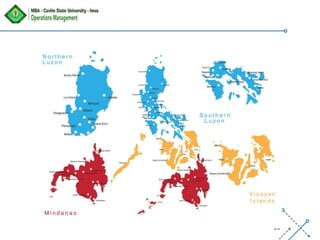
  • #27 Map of the Philippines
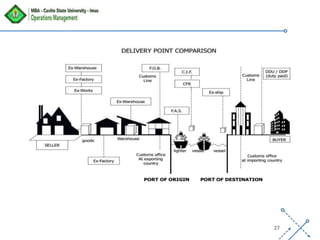
  • #28 Delivery Point Comparison
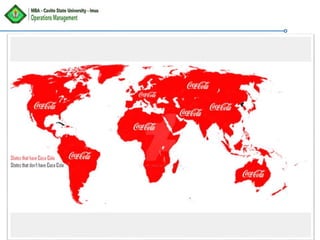
  • #29 Map of the World