Sun rise 12
‫‌كردنی‬‫ه‬‫ئاماد‬:‌‫عبدالعزیز‌هاشم‌میكائیل‬
‌‫مۆبایل‬:07504411840
1-grammar
2-readings
3-episode
4-vocabulary
5-sounds
‫‌لبژاردن‬‫ه‬‫‌و‌شیوازی‌پرسیاری‌ه‬‫ه‬‫‌و‬‫ه‬‫شیكردن‬
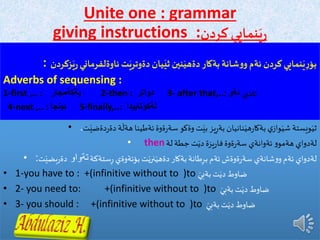
Unite one : grammar
giving instructions :‫كردن‬ ‫نمايي‬َ‫ي‬ِ‫ر‬
‫نمايي‬َ‫ي‬ِ‫ر‬‫بؤ‬‫زكردن‬َ‫ي‬‫ر‬‫ئاوةلفرماني‬ ‫ت‬َ‫دةوتري‬‫يان‬َ‫ثي‬ ‫نين‬َ‫دةهي‬‫بةكار‬‫شانة‬‫و‬‫و‬ ‫ئةم‬ ‫كردن‬:
Adverbs of sequensing :
1-first ,.. : ‫یةكةمجار‬ 2-then : ‫دواتر‬ 3- after that,..: ‫ي‬ ‫ثاش‬‫ئةو‬
4-next ,.. : ‫ئینجا‬ 5-finally,..: ‫لةكؤتاییدا‬
• ‫ت‬َ‫دةضي‬‫ر‬‫دة‬ ‫ة‬
َ
‫هةل‬ ‫ئةطينا‬‫ةوة‬‫ر‬‫سة‬ ‫وةكو‬ ‫ت‬َ‫بي‬ ‫يز‬ِ‫ر‬‫بة‬ ‫نانيان‬َ‫هي‬‫ر‬‫بةكا‬‫ي‬‫واز‬َ‫شي‬ ‫ويستة‬َ‫ثي‬.
• then ‫لةدواي‬‫ت‬َ‫دي‬‫يزة‬‫ر‬‫فا‬‫ةوة‬‫ر‬‫سة‬ ‫ئةوانةي‬ ‫و‬‫هةمو‬‫لة‬ ‫جطة‬
• ‫لةدواي‬‫ستةكة‬ِ‫ر‬ ‫بؤئةوةي‬‫ت‬َ‫نري‬َ‫دةهي‬ ‫بةكار‬ ‫طانة‬ِ‫بر‬ ‫ئةم‬‫ةوةش‬‫ر‬‫سة‬ ‫شانةي‬‫و‬‫و‬ ‫ئةم‬‌‫تةواو‬‫ت‬َ‫بضي‬‫ر‬‫دة‬:
• 1-you have to : +(infinitive without to )to َ‫بةبي‬ ‫ت‬َ‫دي‬ ‫ضاوط‬
• 2- you need to: +(infinitive without to )to َ‫بةبي‬ ‫ت‬َ‫دي‬ ‫ضاوط‬
• 3- you should : +(infinitive without to )to َ‫بةبي‬ ‫ت‬َ‫دي‬ ‫ضاوط‬
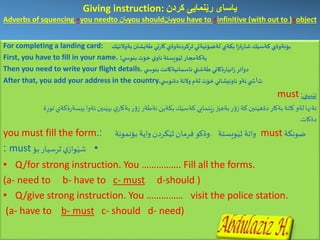
Giving instruction: ‫كردن‬ ‫رێنمایی‬ ‫یاسای‬
Adverbs of squencing +you needto ‫یان‬you should‫یان‬you have to +infinitive (with out to )+object
For completing a landing card: ‫بؤئةوةي‬‫ك‬َ‫بةوالتي‬‫طةيشتن‬ ‫تي‬‫ر‬‫كا‬‫كردنةوةي‬ِ‫ثر‬‫لةضؤنيةتي‬ ‫بكةي‬ ‫ا‬‫ز‬‫ة‬‫ر‬‫شا‬‫ك‬َ‫كةسي‬
First, you have to fill in your name. :‫ي‬ ‫بنوس‬ ‫خؤت‬ ‫ي‬‫ناو‬‫ويستة‬َ‫ثي‬‫يةكةمجار‬
Then you need to write your flight details. ‫ي‬ ‫بنوس‬ ‫ئاسمانيةكانت‬ ‫طةشتي‬‫ةكاني‬‫ر‬‫انيا‬‫ز‬‫دواتر‬
After that, you add your address in the country. ‫ث‬‫ا‬‫ي‬ ‫دةنوس‬ ‫وآلتة‬ ‫لةم‬ ‫خؤت‬‫ناونيشاني‬ ‫ئةو‬‫ي‬ ‫ش‬
must ‫بيني‬َ‫تي‬:
‫تةنها‬‫بكةين‬‫ك‬َ‫كةسي‬‫نمايي‬َ‫ي‬ِ‫ر‬‫ز‬َ‫بةهي‬‫ر‬‫ؤ‬‫ز‬‫كة‬‫نين‬َ‫دةهي‬‫بةكار‬‫كاتة‬ ‫لةو‬.‫ة‬ِ‫ر‬‫تو‬‫ةكةي‬‫ر‬‫بيسة‬‫ئةوا‬‫نين‬َ‫بهي‬‫ي‬‫بةكار‬‫ر‬‫ؤ‬‫ز‬ ‫ئةطةر‬
‫دةكات‬.
‫ضونكة‬must‫واتة‬‫ويستة‬َ‫ثي‬.‫واية‬‫كردن‬َ‫ثي‬‫فرمان‬‫وةكو‬‫بؤنمونة‬:you must fill the form.
•‫بؤ‬‫ثرسيار‬‫ي‬‫واز‬َ‫شي‬must:
• Q/for strong instruction. You ……………. Fill all the forms.
(a- need to b- have to c- must d-should )
• Q/give strong instruction. You …………… visit the police station.
(a- have to b- must c- should d- need)
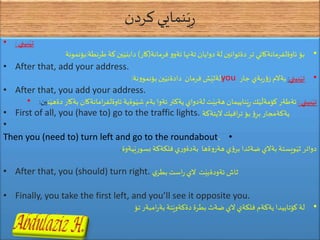
‫كردن‬‫نمايي‬َ‫ي‬ِ‫ر‬
• ‫بيني‬َ‫تي‬:
•‫فرمانة‬ ‫و‬‫ئةو‬ ‫تةنها‬ ‫دوايان‬ ‫لة‬‫دةتوانين‬ ‫تر‬ ‫ئاوةلفرمانةكاني‬ ‫بؤ‬(‫كار‬)‫كة‬‫ين‬َ‫دابني‬‫طرنطة‬:‫بؤنمونة‬
• After that, add your address.
•‫بيني‬َ‫تي‬:‫جار‬ ‫بةي‬‫ر‬‫ؤ‬‫ز‬ ‫بةالم‬you‫ش‬َ‫لةثي‬‫نة‬‫و‬‫بؤنمو‬‫ين‬َ‫دادةني‬ ‫فرمان‬:
• After that, you add your address.
• ‫بيني‬َ‫تي‬:‫دة‬ ‫بةكار‬ ‫امانةكان‬‫ر‬‫ئاوةلف‬ ‫وةية‬َ‫شي‬ ‫بةم‬ ‫ئةوا‬ ‫يةكتر‬ ‫لةدواي‬ ‫ت‬َ‫هةبي‬ ‫ناييمان‬َ‫ي‬ِ‫ر‬ ‫ك‬َ‫ي‬
َ
‫كؤمةل‬ ‫ئةطةر‬‫ن‬َ‫هي‬‫ين‬:
• First of all, you (have to) go to the traffic lights. ‫يةكةمجار‬‫ؤ‬ِ‫بر‬‫اليتةكة‬ ‫افيك‬‫ر‬‫ت‬ ‫بؤ‬
•
•Then you (need to) turn left and go to the roundabout.
‫ضةثدا‬ ‫بةالي‬ ‫ويستة‬َ‫ثي‬ ‫دواتر‬‫يةوة‬َ‫ي‬ِ‫ر‬‫بسو‬ ‫فلكةكة‬ ‫ي‬‫ر‬‫بةدةو‬ ‫ةها‬‫و‬‫هةر‬ ‫ي‬‫ؤ‬‫بر‬.
• After that, you (should) turn right. ‫ثاش‬‫ي‬‫بطر‬ ‫است‬‫ر‬ ‫الي‬ ‫ت‬َ‫ئةودةبي‬
• Finally, you take the first left, and you’ll see it opposite you.
•‫يةكةم‬ ‫كؤتاييدا‬ ‫لة‬‫فلكةي‬‫تؤ‬ ‫امبةر‬‫ر‬‫بة‬ ‫تة‬َ‫دةكةوي‬ ‫بطرة‬ ‫ضةث‬ ‫الي‬
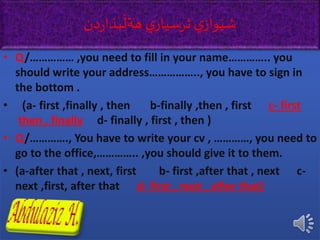
• Q/…………… ,you need to fill in your name………….. you
should write your address…………….., you have to sign in
the bottom .
• )a- first ,finally , then b-finally ,then , first c- first
,then , finally d- finally , first , then )
• Q/…………., You have to write your cv , …………, you need to
go to the office,………….. ,you should give it to them.
• (a-after that , next, first b- first ,after that , next c-
next ,first, after that d- first , next , after that)
‫ي‬‫ثرسيار‬ ‫ي‬‫واز‬َ‫شي‬‫دن‬‫ر‬‫بذا‬
َ
‫هةل‬
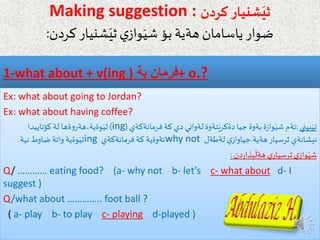
Making suggestion : ‫كردن‬ ‫شنيار‬َ‫ثي‬
‫كردن‬ ‫شنيار‬َ‫ثي‬‫ي‬‫واز‬َ‫شي‬ ‫بؤ‬ ‫هةية‬ ‫ياسامان‬ ‫ضوار‬:
1-what about + v(ing )‌‫+فرمان‌بة‬ o.?
Ex: what about going to Jordan?
Ex: what about having coffee?
‫بيني‬َ‫تي‬:‫فرمانةكةي‬ ‫كة‬ ‫دي‬ ‫لةواني‬‫تةوة‬َ‫دةكري‬ ‫جيا‬ ‫بةوة‬‫ة‬‫ز‬‫وا‬َ‫شي‬ ‫ئةم‬(ing)‫كؤتاييدا‬ ‫لة‬ ‫ةها‬‫و‬‫وةية،هةر‬َ‫ثي‬
‫هةية‬‫ثرسيار‬ ‫نيشانةي‬.‫لةطةل‬ ‫ي‬‫جياواز‬why not‫فرمانةكةي‬‫كة‬ ‫ئةوةية‬ing‫وةية‬َ‫ثي‬‫نية‬ ‫ضاوط‬ ‫واتة‬.
‫دن‬‫ر‬‫بذا‬
َ
‫هةل‬ ‫ي‬‫ثرسيار‬‫ي‬‫واز‬َ‫شي‬:
Q/ ………… eating food? (a- why not b- let's c- what about d- I
suggest )
Q/what about ………….. foot ball ?
( a- play b- to play c- playing d-played )
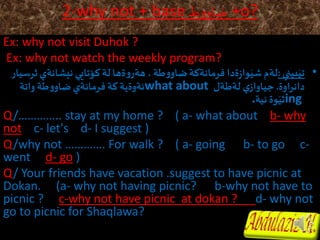
2-why not + base‫ط‬‫و‬‫ضاو‬ +o?
Ex: why not visit Duhok ?
Ex: why not watch the weekly program?
•‫بيني‬َ‫تي‬:‫نيشان‬‫كؤتايي‬‫لة‬‫ةها‬‫و‬‫هةر‬،‫طة‬‫و‬‫ضاو‬‫فرمانةكة‬ ‫ةدا‬‫ز‬‫وا‬َ‫شي‬‫لةم‬‫ثرسيار‬‫ةي‬
‫اوة‬‫ر‬‫دان‬.‫لةطةل‬ ‫ي‬‫جياواز‬what about‫واتة‬‫طة‬‫و‬‫ضاو‬‫فرمانةي‬‫كة‬‫ئةوةية‬
ing‫نية‬‫وة‬َ‫ثي‬.
Q/………….. stay at my home ? ( a- what about b- why
not c- let's d- I suggest )
Q/why not …………. For walk ? ( a- going b- to go c-
went d- go )
Q/ Your friends have vacation .suggest to have picnic at
Dokan. (a- why not having picnic? b-why not have to
picnic ? c-why not have picnic at dokan ? d- why not
go to picnic for Shaqlawa?
‫شنياركردن‬َ‫ثي‬
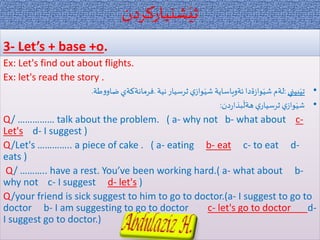
3- Let’s + base +o.
Ex: Let's find out about flights.
Ex: let's read the story .
•‫بيني‬َ‫تي‬:‫نية‬‫ثرسيار‬‫ي‬‫واز‬َ‫شي‬ ‫ئةوياساية‬‫ةدا‬‫ز‬‫وا‬َ‫شي‬ ‫لةم‬.‫طة‬‫و‬‫ضاو‬‫فرمانةكةي‬.
•‫دن‬‫ر‬‫بذا‬
َ
‫هةل‬ ‫ي‬‫ثرسيار‬‫ي‬‫واز‬َ‫شي‬:
Q/ …………… talk about the problem. ( a- why not b- what about c-
Let's d- I suggest )
Q/Let's ………….. a piece of cake . ( a- eating b- eat c- to eat d-
eats )
Q/ ……….. have a rest. You’ve been working hard.( a- what about b-
why not c- I suggest d- let's )
Q/your friend is sick suggest to him to go to doctor.(a- I suggest to go to
doctor b- I am suggesting to go to doctor c- let's go to doctor d-
I suggest go to doctor.)
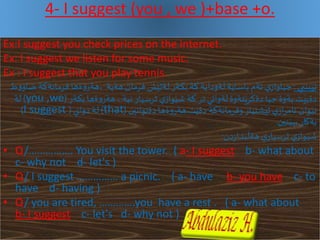
4- I suggest (you , we )+base +o.
Ex:I suggest you check prices on the internet.
Ex: I suggest we listen for some music.
Ex : I suggest that you play tennis.
‫بنيي‬َ‫تي‬:‫فرمان‬‫ةها‬‫و‬‫،هةر‬ ‫هةية‬ ‫فرمان‬ ‫ش‬َ‫لةثي‬ ‫بكةر‬ ‫كة‬‫لةوداية‬ ‫ياساية‬ ‫ئةم‬‫ي‬‫جياواز‬‫ط‬‫و‬‫ضاو‬ ‫ةكة‬
‫ت‬َ‫دةبي‬.‫بكةر‬ ‫ةها‬‫و‬‫هةر‬ ، ‫نية‬ ‫ثرسيار‬ ‫ي‬‫واز‬َ‫شي‬ ‫كة‬ ‫تر‬‫لةواني‬‫تةوة‬َ‫دةكري‬ ‫جيا‬‫بةوة‬(you ,we)‫لة‬
‫ت‬َ‫دةي‬ ‫وفرمانةكة‬ ‫شنيار‬َ‫ثي‬ ‫ي‬‫از‬‫ر‬‫ئام‬ ‫وان‬َ‫ني‬.‫دةتوانين‬‫ةها‬‫و‬‫هةر‬(that)‫دواي‬ ‫لة‬(I suggest)
‫نين‬َ‫بهي‬‫بةكار‬.
‫دن‬‫ر‬‫بذا‬
َ
‫هةل‬ ‫ي‬‫ثرسيار‬ ‫ي‬‫واز‬َ‫شي‬:
• Q/……………. You visit the tower. ( a- I suggest b- what about
c- why not d- let's )
• Q/ I suggest …………… a picnic. ( a- have b- you have c- to
have d- having )
• Q/ you are tired, ………….you have a rest . ( a- what about
b- I suggest c- let's d- why not )
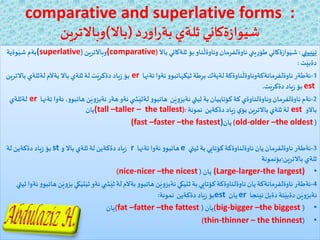
comparative and superlative forms :
‫د‬‫ر‬‫او‬‫ر‬‫بة‬‫ثلةي‬ ‫ةكاني‬‫ز‬‫وا‬َ‫شي‬(‫باال‬)‫وباالترين‬
‫بيني‬َ‫تي‬:‫باآل‬‫ثلةكاني‬‫بؤ‬‫ناو‬
ً
‫وئاوةل‬‫ئاوةلفرمان‬‫يني‬ِ‫ر‬‫طؤ‬‫ةكاني‬‫ز‬‫وا‬َ‫شي‬((comparative‫وباآلترين‬((superlative‫وةية‬َ‫شي‬ ‫بةم‬
‫ت‬َ‫دةبي‬:
1-‫ئةطةر‬‫تةنها‬ ‫ئةوا‬‫و‬‫كهاتبو‬َ‫ثي‬‫طة‬ِ‫بر‬‫لةيةك‬‫ناوةكة‬
َ
‫ئاوةلفرمانةكةوئاوةل‬er‫باالتر‬‫لةثلةي‬ ‫بةآلم‬‫باال‬ ‫ثلةي‬‫لة‬ ‫ت‬َ‫دةكري‬ ‫ياد‬‫ز‬ ‫بؤ‬‫ين‬
est‫ت‬َ‫دةكري‬ ‫ياد‬‫ز‬‫بؤ‬.
2-‫ئةم‬،‫و‬‫هاتبو‬‫ن‬َ‫ي‬‫و‬‫نةبز‬‫هةر‬‫ئةو‬‫ي‬ ‫ش‬َ‫لةثي‬‫و‬‫هاتبو‬ ‫ن‬َ‫ي‬‫و‬‫نةبز‬‫ثيتي‬‫بة‬‫كؤتاييان‬‫كة‬‫وئاوةلناوةي‬‫ئاوةلفرمان‬‫تةنها‬ ‫ئةوا‬er‫لةثلةي‬
‫باالو‬est‫نمونة‬ ‫دةكةين‬ ‫ياد‬‫ز‬‫ي‬‫بؤ‬ ‫باالترين‬ ‫ثلةي‬‫لة‬(:(tall –taller – the tallest‫يان‬
(old-older –the oldest)‫يان‬(fast –faster –the fastest)
3-‫ئةطةر‬‫ثيتي‬ ‫بة‬‫كؤتايي‬‫ئاوةلناوةكة‬‫يان‬‫ئاوةلفرمان‬e‫تةنها‬ ‫ئةوا‬‫و‬‫هاتبو‬r‫و‬‫باال‬ ‫ثلةي‬‫لة‬‫دةكةين‬ ‫ياد‬‫ز‬st‫لة‬ ‫دةكةين‬ ‫ياد‬‫ز‬ ‫بؤ‬
‫باالترين‬ ‫ثلةي‬:‫بؤنمونة‬
•(Large-larger-the largest)‫يان‬(nice-nicer –the nicest)
4-‫ئةطةر‬َ‫تي‬َ‫ثي‬‫ئةو‬ ‫ي‬ ‫ش‬َ‫ثي‬‫لة‬‫بةآلم‬‫و‬‫هاتبو‬‫ن‬َ‫ي‬‫و‬‫نةبز‬‫كي‬َ‫ثتي‬ ‫بة‬‫كؤتايي‬‫ئاوةلناوةكة‬‫يان‬‫ئاوةلفرمانةكة‬‫ثيتي‬ ‫ئةوا‬‫و‬‫هاتبو‬‫ن‬َ‫ي‬‫و‬‫بز‬‫كي‬
‫ئينجا‬ َ‫دةبل‬ ‫تة‬َ‫دةبي‬‫ن‬َ‫ي‬‫و‬‫نةبز‬er‫يان‬est‫نمونة‬ ‫دةكةين‬ ‫ياد‬‫ز‬ ‫بؤ‬:
•(big-bigger –the biggest)‫يان‬(fat –fatter –the fattest)‫يان‬
•(thin-thinner – the thinnest)
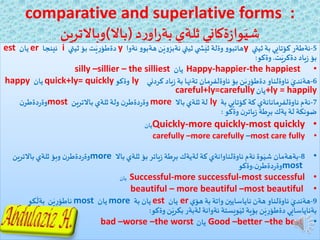
comparative and superlative forms :
‫د‬‫ر‬‫او‬‫ر‬‫بة‬‫ثلةي‬ ‫ةكاني‬‫ز‬‫وا‬َ‫شي‬(‫باال‬)‫وباالترين‬
5-‫ثيتي‬ ‫بة‬ ‫كؤتايي‬ ‫ئةطةر‬y‫ئةوا‬ ‫و‬‫هةبو‬‫ن‬َ‫ي‬‫و‬‫نةبز‬‫ثيتي‬ ‫ي‬ ‫ش‬َ‫ثي‬ ‫وةلة‬ ‫و‬‫هاتبو‬y‫ثيتي‬ ‫بؤ‬ ‫ت‬َ‫ي‬ِ‫ر‬‫دةطؤ‬i‫ئينجا‬er‫يان‬est
‫ت‬َ‫دةكري‬ ‫ياد‬‫ز‬ ‫بؤ‬.‫وةكو‬:
•Happy-happier-the happiest‫يان‬silly –sillier – the silliest
6-‫كردني‬ ‫ياد‬‫ز‬ ‫بة‬ ‫تةنها‬ ‫ئاوةلفرمان‬ ‫بؤ‬ ‫ن‬َ‫ي‬ِ‫ر‬‫دةطؤ‬ ‫ئاوةلناو‬ َ‫هةندي‬ly‫وةكو‬quick+ly= quickly‫يان‬happy
+ly = happily‫يان‬careful+ly=carefully
7-‫بة‬ ‫كؤتايي‬ ‫كة‬ ‫ئاوةلفرمانانةي‬ ‫ئةم‬ly‫باال‬ ‫ثلةي‬ ‫لة‬more‫ن‬‫دةطر‬‫ر‬‫وة‬‫باالترين‬ ‫ثلةي‬ ‫ولة‬most‫ن‬‫دةطر‬‫ر‬‫وة‬
‫وةكو‬ ‫ن‬‫ياتر‬‫ز‬ ‫طة‬ِ‫بر‬ ‫يةك‬ ‫لة‬ ‫ضونكة‬:
•Quickly-more quickly-most quickly‫يان‬
•carefully –more carefully –most care fully
•8-‫بةهةمان‬‫باال‬ ‫ثلةي‬ ‫بؤ‬ ‫ياتر‬‫ز‬ ‫طة‬ِ‫بر‬ ‫لةيةك‬ ‫كة‬ ‫ئاوةلناوانةي‬ ‫ئةم‬ ‫وة‬َ‫شي‬more‫باالترين‬ ‫ثلةي‬ ‫وبؤ‬ ‫ن‬‫دةطر‬‫ر‬‫وة‬
most‫ن‬‫دةطر‬‫ر‬‫وة‬.‫وةكو‬
•Successful-more successful-most successful‫يان‬
•beautiful – more beautiful –most beautiful
9-‫ي‬‫هؤ‬ ‫بة‬ ‫واتة‬ ‫ناياسايين‬ ‫هةن‬ ‫ئاوةلناو‬ َ‫هةندي‬er‫يان‬est‫بة‬ ‫يان‬more‫يان‬most‫كو‬
َ
‫بةل‬ ‫ن‬َ‫ي‬ِ‫ر‬‫ناطؤ‬
‫وةكو‬ ‫ن‬َ‫بكري‬ ‫لةبةر‬ ‫ئةوانة‬ ‫ويستة‬َ‫ثي‬ ‫بؤية‬ ‫ن‬َ‫ي‬ِ‫ر‬‫دةطؤ‬ ‫بةناياسايي‬:
•Good –better –the best‫يان‬bad –worse –the worst
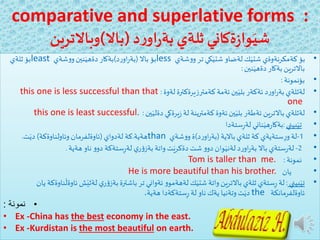
comparative and superlative forms :
‫د‬‫ر‬‫او‬‫ر‬‫بة‬ ‫ثلةي‬ ‫ةكاني‬‫ز‬‫وا‬َ‫شي‬(‫باال‬)‫وباالترين‬
•‫شةي‬‫و‬‫و‬ ‫تر‬ ‫كي‬َ‫شتي‬ ‫لةضاو‬ ‫ك‬َ‫شتي‬ ‫كةمكرنةوةي‬ ‫بؤ‬less‫باال‬ ‫بؤ‬(‫د‬‫ر‬‫او‬‫ر‬‫بة‬)‫شةي‬‫و‬‫و‬‫نين‬َ‫دةهي‬ ‫بةكار‬least‫ثلةي‬ ‫بؤ‬
‫نين‬َ‫دةهي‬ ‫بةكار‬ ‫باالترين‬:
•‫بؤنمونة‬:
•‫لةوة‬ ‫كةمترزيرةكترة‬ ‫ئةمة‬‫ين‬َ‫بلي‬ ‫ئةكةر‬ ‫د‬‫ر‬‫او‬‫ر‬‫بة‬ ‫لةثلةي‬:this one is less successful than that
one
•‫ين‬َ‫دةلي‬ ‫يرةكي‬‫ز‬ ‫لة‬ ‫كةمترينة‬ ‫ئةوة‬‫ين‬َ‫بلي‬ ‫ئةطةر‬ ‫باالترين‬ ‫لةثلةي‬:this one is least successful.
•‫بيني‬َ‫تي‬:‫ستةدا‬ِ‫ر‬‫لة‬ ‫ناني‬َ‫هي‬‫ر‬‫بةكا‬
•1-‫باالية‬ ‫ثلةي‬ ‫كة‬ ‫ستةيةي‬ِ‫ر‬‫و‬ ‫لة‬(‫د‬‫ر‬‫او‬‫ر‬‫بة‬)‫شةي‬‫و‬‫و‬ ‫ة‬than‫هةية‬.‫لةدواي‬ ‫كة‬(‫وئاولناوةكة‬ ‫ئاوةلفرمان‬)‫ت‬َ‫دي‬.
•2-‫هةية‬ ‫ناو‬ ‫و‬‫دو‬ ‫ستةكة‬ِ‫ر‬‫لة‬ ‫ي‬‫ر‬‫ؤ‬‫بةز‬ ‫واتة‬ ‫ت‬َ‫دةكري‬ ‫شت‬ ‫و‬‫دو‬ ‫وان‬َ‫لةني‬ ‫د‬‫ر‬‫او‬‫ر‬‫بة‬ ‫باال‬ ‫ستةي‬‫ر‬‫لة‬.
•‫نمونة‬:Tom is taller than me.
•‫يان‬He is more beautiful than his brother.
•‫بيني‬َ‫تي‬:‫ئ‬ ‫ش‬َ‫لةثي‬ ‫ي‬‫ر‬‫ؤ‬‫بةز‬‫باشترة‬ ‫تر‬ ‫ئةواني‬ ‫و‬‫لةهةمو‬ ‫ك‬َ‫شتي‬ ‫واتة‬ ‫باالترين‬ ‫ثلةي‬ ‫ستةي‬ِ‫ر‬ ‫لة‬‫يان‬ ‫ناوةكة‬
َ
‫اوةل‬
‫ئاوةلفرمانكة‬the‫هةية‬ ‫ستةكةدا‬ِ‫ر‬ ‫لة‬ ‫ناو‬ ‫يةك‬ ‫وتةنيا‬‫ت‬َ‫دي‬.
•‌‫نمونة‬:
• Ex -China has the best economy in the east.
• Ex -Kurdistan is the most beautiful on earth.
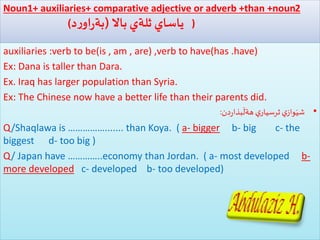
Noun1+ auxiliaries+ comparative adjective or adverb +than +noun2
‫باال‬ ‫ثلةي‬ ‫ياساي‬(‫د‬‫ر‬‫او‬‫ر‬‫بة‬) )
auxiliaries :verb to be(is , am , are) ,verb to have(has .have)
Ex: Dana is taller than Dara.
Ex. Iraq has larger population than Syria.
Ex: The Chinese now have a better life than their parents did.
•‫دن‬‫ر‬‫بذا‬
َ
‫هةل‬ ‫ي‬‫ثرسيار‬‫ي‬‫واز‬َ‫شي‬:
Q/Shaqlawa is ……………....... than Koya. ( a- bigger b- big c- the
biggest d- too big )
Q/ Japan have …………..economy than Jordan. ( a- most developed b-
more developed c- developed b- too developed)
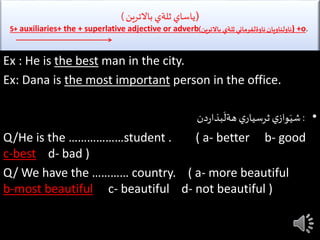
(‫باالترين‬ ‫ثلةي‬ ‫ياساي‬)
S+ auxiliaries+ the + superlative adjective or adverb ‫باالترين‬ ‫ثلةي‬‫ئاوةلفرماني‬‫ئاولناويان‬) ) +o.
Ex : He is the best man in the city.
Ex: Dana is the most important person in the office.
•:‫ي‬‫ثرسيار‬ ‫ي‬‫واز‬َ‫شي‬‫دن‬‫ر‬‫بذا‬
َ
‫هةل‬
Q/He is the ………………student . ( a- better b- good
c-best d- bad )
Q/ We have the ………… country. ( a- more beautiful
b-most beautiful c- beautiful d- not beautiful )
past simple and past perfect tenses: ‫تةواوةكان‬ ‫ة‬‫و‬‫ابردو‬ِ‫ر‬‫و‬ ‫سادة‬ ‫ي‬‫و‬‫ابردو‬ِ‫ر‬
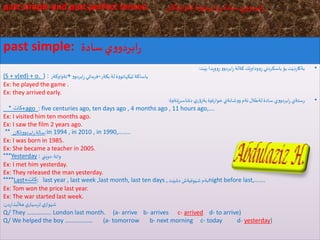
past simple: ‫سادة‬‫ي‬‫و‬‫ابردو‬‫ر‬
•‫ت‬َ‫بي‬ ‫وويدا‬ِ‫ر‬‫ابردوو‬ِ‫ر‬‫كةلة‬ ‫ك‬َ‫ووداوي‬ِ‫ر‬‫باسكردني‬ ‫بؤ‬‫ت‬َ‫بةكاردي‬:
(S + v(ed) + o. ‫ياساكة‬‫بكةر‬‫لة‬ ‫كهاتووة‬َ‫ثي‬+‫ابردوو‬ِ‫ر‬‫فرماني‬+‫تةواوكةر‬:(
Ex: he played the game .
Ex: they arrived early.
•‫تةوة‬َ‫دةناسري‬ ‫ي‬‫بةزؤر‬ ‫خوارةوة‬ ‫ووشانةي‬‫ئةم‬‫لةطةل‬‫سادة‬ ‫ابردووي‬ِ‫ر‬ ‫رستةي‬:
‌‫كات‬* +ago : five centuries ago, ten days ago , 4 months ago , 11 hours ago,….
Ex: I visited him ten months ago.
Ex: I saw the film 2 years ago.
‫ابردووةكان‬ِ‫ر‬‫سالة‬** :in 1994 , in 2010 , in 1990,……..
Ex: I was born in 1985.
Ex: She became a teacher in 2005.
***Yesterday : ‫واتة‬:‫ني‬َ‫دوي‬
Ex: I met him yesterday.
Ex: They released the man yesterday.
****Last+‫:كات‬ last year , last week ,last month, last ten days ,‫ت‬َ‫دةبي‬ ‫وةيةش‬َ‫شي‬ ‫بةم‬night before last,…….
Ex: Tom won the price last year.
Ex: The war started last week.
‫بذاردن‬
َ
‫هةل‬ ‫ي‬‫ثرسيار‬ ‫ي‬‫واز‬َ‫شي‬:
Q/ They ……………. London last month. (a- arrive b- arrives c- arrived d- to arrive)
Q/ We helped the boy ……………… (a- tomorrow b- next morning c- today d- yesterday)
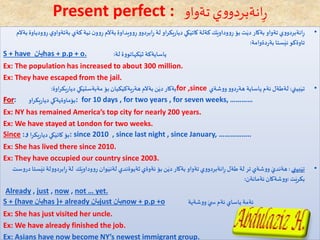
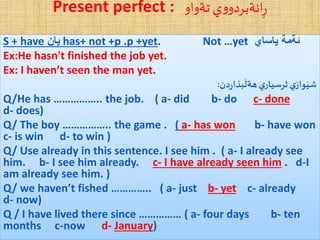
Present perfect : ‫تةواو‬ ‫ي‬‫و‬‫انةبردو‬ِ‫ر‬
•‫بة‬ ‫كةي‬ ‫نية‬‫ن‬‫وو‬ِ‫ر‬ ‫بةآلم‬‫وويداوة‬ِ‫ر‬‫ابردوو‬ِ‫ر‬ ‫لة‬ ‫يكراو‬‫ر‬‫ديا‬ ‫كي‬َ‫كاتي‬‫كةلة‬‫ك‬َ‫ووداوي‬ِ‫ر‬ ‫بؤ‬ ‫ت‬َ‫دي‬ ‫بةكار‬ ‫تةواو‬‫انةبردووي‬ِ‫ر‬‫ب‬‫وودياوة‬ِ‫ر‬ ‫ي‬‫تةواو‬‫ةآلم‬
‫دةوامة‬‫ر‬‫بة‬ ‫ستا‬َ‫ئي‬‫تاوةكو‬:
S + have ‌‫یان‬has + p.p + o. ‫لة‬ ‫كهاتووة‬َ‫ثي‬ ‫ياسايةكة‬:
Ex: The population has increased to about 300 million.
Ex: They have escaped from the jail.
•‫بيني‬َ‫تي‬:‫ووشةي‬‫دوو‬‫ر‬‫هة‬ ‫ياساية‬ ‫ئةم‬ ‫لةطةل‬for ,since‫اوة‬‫ر‬‫يك‬‫ر‬‫ديا‬ ‫كي‬َ‫مةبةستي‬ ‫بؤ‬‫كيان‬َ‫يةكي‬‫ر‬‫هة‬ ‫بةآلم‬ ‫ن‬َ‫دي‬‫بةكار‬:
For: ‫او‬‫ر‬‫يك‬‫ر‬‫ديا‬ ‫:بؤماوةيةكي‬ for 10 days , for two years , for seven weeks, …………
Ex: NY has remained America’s top city for nearly 200 years.
Ex: We have stayed at London for two weeks.
Since :‫و‬ ‫بؤ‬‫ا‬‫ر‬‫يك‬‫ر‬‫ديا‬ ‫كي‬َ‫كاتي‬ : since 2010 , since last night , since January, ……………..
Ex: She has lived there since 2010.
Ex: They have occupied our country since 2003.
•‫بيني‬َ‫تي‬:‫ابر‬ِ‫ر‬‫لة‬ ‫ك‬َ‫ووداوي‬ِ‫ر‬ ‫وان‬َ‫لةني‬ ‫ثةيوةندي‬‫ئةوةي‬ ‫بؤ‬ ‫ن‬َ‫دي‬ ‫بةكار‬ ‫تةواو‬‫انةبردووي‬ِ‫ر‬ ‫طةل‬ ‫لة‬ ‫تر‬‫ووشةي‬ َ‫هةندي‬‫دروست‬ ‫ستا‬َ‫ئي‬‫دوولة‬
‫ت‬َ‫بكري‬:‫ئةمانةن‬ ‫ووشةكان‬:
Already , just , now , not … yet.
S + (have ‫یان‬has )+ already ‫یان‬just ‫یان‬now + p.p +o ‫ووشةية‬ َ‫ي‬ ‫س‬ ‫ئةم‬ ‫ياساي‬ ‫ئةمة‬
Ex: She has just visited her uncle.
Ex: We have already finished the job.
Ex: Asians have now become NY’s newest immigrant group.
Present perfect : ‫تةواو‬ ‫ي‬‫و‬‫انةبردو‬ِ‫ر‬
S + have‌‫یان‬ has+ not +p .p +yet. Not …yet ‌‫ئةمة‌یاساي‬
Ex:He hasn't finished the job yet.
Ex: I haven’t seen the man yet.
‫دن‬‫ر‬‫بذا‬
َ
‫هةل‬‫ي‬‫ثرسيار‬‫ي‬‫واز‬َ‫شي‬:
Q/He has …………….. the job. ( a- did b- do c- done
d- does)
Q/ The boy …………….. the game . ( a- has won b- have won
c- is win d- to win )
Q/ Use already in this sentence. I see him . ( a- I already see
him. b- I see him already. c- I have already seen him . d-I
am already see him. )
Q/ we haven’t fished ………….. ( a- just b- yet c- already
d- now)
Q / I have lived there since …………… ( a- four days b- ten
months c-now d- January)
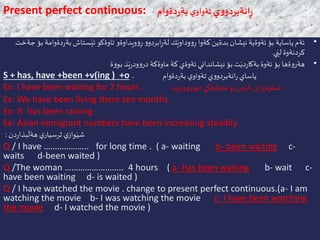
Present perfect continuous: ‫ي‬‫و‬‫انةبردو‬ٍ‫ر‬‫ي‬‫تةواو‬‫دةوام‬‫ر‬‫بة‬
•‫د‬‫ر‬‫بة‬ ‫ستاش‬َ‫ئي‬ ‫تاوةكو‬ ‫ويداوةو‬‫و‬ِ‫ر‬ ‫و‬‫ابردو‬ِ‫ر‬‫لة‬ ‫ك‬َ‫وداوي‬‫و‬ِ‫ر‬ ‫كةوا‬‫بدةين‬ ‫نيشان‬ ‫ئةوةية‬ ‫بؤ‬ ‫ياساية‬ ‫ئةم‬‫جةخت‬ ‫بؤ‬ ‫ةوامة‬
‫ي‬َ‫لي‬ ‫كردنةوة‬.
•‫ة‬‫و‬‫بو‬ ‫ذ‬َ‫ي‬‫ر‬‫ود‬‫و‬‫در‬ ‫ماوةكة‬ ‫كة‬ ‫ئةوةي‬ ‫نيشانداني‬ ‫بؤ‬ ‫ت‬َ‫دي‬‫ر‬‫بةكا‬ ‫ئةوة‬ ‫بؤ‬ ‫ةها‬‫و‬‫هةر‬
S + has, have +been +v(ing ) +o . ‫دةوام‬‫ر‬‫بة‬ ‫ي‬‫تةواو‬ ‫ي‬‫و‬‫انةبردو‬‫ر‬ ‫ياساي‬
Ex: I have been waiting for 2 hours . ‫ذ‬َ‫ي‬‫ر‬‫ود‬‫و‬‫ر‬‫و‬‫دو‬ ‫ماوةيةكي‬ ‫بؤ‬ ‫كردن‬ ‫ان‬‫و‬ِ‫ضاوةر‬
Ex: We have been living there ten months.
Ex: It has been raining .
Ex: Asian immigrant numbers have been increasing steadily.
‫دن‬‫ر‬‫بذا‬
َ
‫هةل‬ ‫ي‬‫ثرسيار‬ ‫ي‬‫واز‬َ‫شي‬:
Q / I have ……………….. for long time . ( a- waiting b- been waiting c-
waits d-been waited )
Q /The woman …………………….. 4 hours. ( a- has been waiting b- wait c-
have been waiting d- is waited )
Q / I have watched the movie . change to present perfect continuous.(a- I am
watching the movie b- I was watching the movie c- I have been watching
the movie d- I watched the movie )
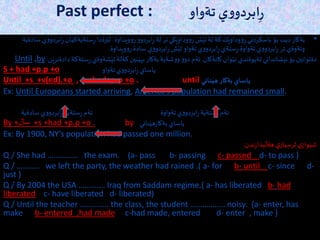
Past perfect : ‫ي‬‫و‬‫ابردو‬ِ‫ر‬‫ت‬‫ةواو‬
•‫ويداوة‬‫و‬ِ‫ر‬‫و‬‫ابردو‬ِ‫ر‬ ‫لة‬‫تر‬‫كي‬َ‫وداوي‬‫و‬ِ‫ر‬ ‫ش‬َ‫ثي‬‫لة‬‫كة‬‫ك‬َ‫وداوي‬‫و‬ِ‫ر‬ ‫باسكردني‬‫بؤ‬ ‫ت‬َ‫دي‬‫بةكار‬.‫ستةية‬ِ‫ر‬ ‫رةدا‬َ‫لي‬‫سادةية‬‫ي‬‫و‬‫ابردو‬ِ‫ر‬‫كيان‬
‫تةواوة‬‫ي‬‫و‬‫ابردو‬ِ‫ر‬ ‫تر‬‫وئةوةي‬.‫ويداوة‬‫و‬ِ‫ر‬ ‫سادة‬ ‫ي‬‫و‬‫ابردو‬ِ‫ر‬ ‫ش‬َ‫ثي‬‫تةواو‬‫ي‬‫و‬‫ابردو‬ِ‫ر‬‫ستةي‬ِ‫ر‬.
‫د‬‫ستةكة‬ِ‫ر‬‫شةوةي‬َ‫ثي‬‫كةلة‬‫نين‬َ‫بهي‬‫بةكار‬‫شةية‬‫و‬‫و‬‫و‬‫دو‬‫ئةم‬ ‫كاتةكان‬ ‫وان‬َ‫ني‬ ‫ثةيوةندي‬‫نيشانداني‬‫بؤ‬ ‫دةتوانين‬‫ن‬َ‫ادةنري‬:Until ,by
S + had +p.p +o ‫تةواو‬‫ي‬‫و‬‫ابردو‬ِ‫ر‬ ‫ياساي‬
Until +s +v(ed).+o , s +had+p.p +o . until ‫ناني‬َ‫هي‬‫بةكار‬‫ياساي‬
Ex: Until Europeans started arriving, America’s population had remained small.
‫سادةية‬‫ي‬‫و‬‫ابردو‬ِ‫ر‬‫ستةية‬ِ‫ر‬ ‫ئةم‬ ‫ئةم‬‫ستةية‬ِ‫ر‬‫تةواوة‬‫ي‬‫و‬‫ابردو‬ِ‫ر‬
By +َ‫سال‬ +s +had +p.p +o . by ‫ناني‬َ‫هي‬‫ر‬‫بةكا‬‫ياساي‬
Ex: By 1900, NY’s population had passed one million.
‫ندن‬‫ر‬‫بذا‬
َ
‫هةل‬‫ي‬‫ثرسيار‬‫ي‬‫واز‬َ‫شي‬:
Q / She had …………… the exam. (a- pass b- passing c- passed d- to pass )
Q / ……….. we left the party, the weather had rained .( a- for b- until c- since d-
just )
Q / By 2004 the USA …………. Iraq from Saddam regime.( a- has liberated b- had
liberated c- have liberated d- liberated)
Q / Until the teacher ………….. the class, the student …………….. noisy. (a- enter, has
make b- entered ,had made c-had made, entered d- enter , make )
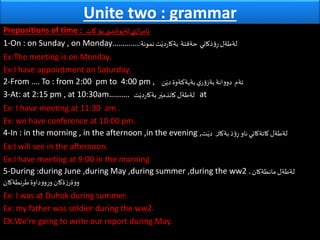
Unite two : grammar
Prepositions of time : ‫كات‬ ‫بؤ‬ ‫ثةيوةندي‬ ‫ي‬‫ئامراز‬
1-On : on Sunday , on Monday…………. ‫ذكاني‬‫ؤ‬ِ‫ر‬‫لةطةل‬‫حةفتة‬‫نمونة‬‫ت‬َ‫دي‬‫ر‬‫بةكا‬:
Ex:The meeting is on Monday.
Ex:I have appointment on Saturday.
2-From …. To : from 2:00 pm to 4:00 pm , ‫ئةم‬‫بةيةكةوة‬‫ي‬‫ر‬‫ؤ‬‫بةز‬‫انة‬‫و‬‫دو‬‫ن‬َ‫دي‬
3-At: at 2:15 pm , at 10:30am………. ‫ت‬َ‫دي‬‫ر‬‫بةكا‬‫ر‬َ‫كاتذمي‬‫لةطةل‬ at
Ex: I have meeting at 11:30 am .
Ex: we have conference at 10:00 pm.
4-In : in the morning , in the afternoon ,in the evening , ‫بةكا‬‫ذ‬‫ؤ‬ِ‫ر‬‫ناو‬‫كاتةكاني‬‫لةطةل‬‌‫ر‬‫ت‬َ‫دي‬
Ex:I will see in the afternoon.
Ex:I have meeting at 9:00 in the morning
5-During :during June ,during May ,during summer ,during the ww2 .‫مانطةكان‬‫لةطةل‬
‫طرنطةكان‬‫داوة‬‫و‬‫و‬ِ‫ر‬‫و‬‫ةكان‬‫ز‬‫ةر‬‫و‬‫و‬
Ex: I was at Duhok during summer.
Ex: my father was soldier during the ww2.
EX:We’re going to write our report during May.
Prepositions of time
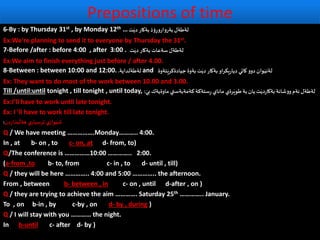
6-By : by Thursday 31st , by Monday 12th …‫ت‬َ‫دي‬ ‫بةكار‬‫ؤذ‬ِ‫بةروارور‬ ‫لةطةل‬
Ex:We’re planning to send it to everyone by Thursday the 31st.
7-Before /after : before 4:00 , after 3:00 . ‫ت‬َ‫دي‬ ‫بةكار‬ ‫سةعات‬ َ‫لةطةل‬
Ex:We aim to finish everything just before / after 4.00.
8-Between : between 10:00 and 12:00. ‫لةطةلداية‬. and ‫ـتةوة‬َ‫جيادةكري‬ ‫بةوة‬ ‫ت‬َ‫دي‬ ‫بةكار‬ ‫او‬‫ر‬‫يك‬‫ر‬‫ديا‬ ‫كاتي‬‫دوو‬ ‫وان‬َ‫لةني‬
Ex: They want to do most of the work between 10.00 and 3.00.
Till /until:until tonight , till tonight , until today, َ‫بي‬ ‫ماوةيةك‬ ‫كةمةبةستي‬ ‫ستةكة‬ِ‫ر‬ ‫ماناي‬ ‫رةي‬َ‫طوي‬‫بة‬ ‫يان‬ ‫ت‬َ‫دي‬‫ر‬‫بةكا‬ ‫ووشانة‬‫ئةم‬ ‫لةطةل‬:
Ex:I’ll have to work until late tonight.
Ex: I 'll have to work till late tonight.
‫دن‬‫ر‬‫بذا‬
َ
‫هةل‬ ‫ي‬‫ثرسيار‬ ‫ي‬‫واز‬َ‫شي‬:
Q / We have meeting …………….Monday……….. 4:00.
In , at b- on , to c- on, at d- from, to)
Q/The conference is ……………10:00 ………….. 2:00.
(a-from ,to b- to, from c- in , to d- until , till)
Q / they will be here ………….. 4:00 and 5:00 ………….. the afternoon.
From , between b- between , in c- on , until d-after , on )
Q / they are trying to achieve the aim …………. Saturday 25th ………….. January.
To , on b-in , by c-by , on d- by , during )
Q / I will stay with you ………… the night.
In b-until c- after d- by )
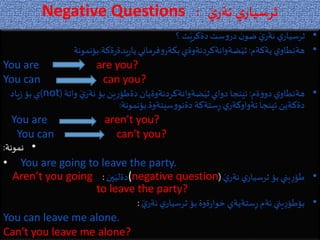
Negative Questions َ‫ي‬‫نةر‬ ‫ي‬‫ثرسيار‬:
•‫؟‬ ‫ت‬َ‫دةكري‬‫ست‬‫و‬‫در‬ ‫ن‬‫ضو‬ َ‫ي‬‫نةر‬ ‫ي‬‫ثرسيار‬
•‫يةكةم‬‫ي‬‫هةنطاو‬:‫ةكة‬‫ر‬‫يدة‬‫ر‬‫يا‬‫فرماني‬‫و‬‫بكةر‬‫ضةوانةكردنةوةي‬َ‫ثي‬.‫بؤنمونة‬
You are are you?
You can can you?
•‫ةم‬‫و‬‫دو‬‫ي‬‫هةنطاو‬:‫واتة‬ َ‫ي‬‫نةر‬ ‫بؤ‬‫ين‬ِ‫ر‬‫دةطؤ‬‫ضةوانةكردنةوةيان‬َ‫ثي‬‫دواي‬ ‫ئينجا‬(not)‫ياد‬‫ز‬ ‫بؤ‬ ‫ي‬
‫سينةوة‬‫و‬‫دةنو‬ ‫ستةكة‬ِ‫ر‬‫ي‬‫تةواوكةر‬ ‫ئينجا‬ ‫دةكةين‬.‫بؤنمونة‬:
You are aren't you?
You can can't you?
•‫نمونة‬:
• You are going to leave the party.
•َ‫ي‬‫نةر‬ ‫ي‬‫ثرسيار‬ ‫بؤ‬‫يني‬ِ‫ر‬‫طؤ‬((negative question‫ين‬َ‫دةلي‬:Aren’t you going
to leave the party?
•َ‫ي‬‫نةر‬ ‫ي‬‫ثرسيار‬ ‫بؤ‬‫ةوة‬‫ر‬‫خوا‬ ‫ستةيةي‬ِ‫ر‬‫ئةم‬ ‫يني‬ِ‫ر‬‫بؤطؤ‬:
You can leave me alone.
Can't you leave me alone?
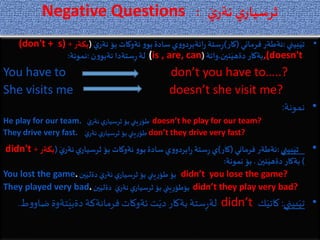
Negative Questions َ‫ي‬‫نةر‬ ‫ي‬‫ثرسيار‬:
•‫بيني‬َ‫تي‬:‫فرماني‬‫ئةطةر‬(‫كار‬)َ‫ي‬‫نةر‬‫بؤ‬ ‫ئةوكات‬ ‫و‬‫بو‬‫سادة‬‫ي‬‫و‬‫انةبردو‬‫ر‬ ‫ستة‬ِ‫ر‬(‫بكةر‬+(don't + s)
,(doesn't‫نين‬َ‫دةهي‬‫بةكار‬.‫واتة‬((is , are, can‫ن‬‫و‬‫نةبو‬ ‫ستةدا‬ِ‫ر‬‫لة‬:‫نمونة‬:
You have to don’t you have to…..?
She visits me doesn’t she visit me?
•‫نمونة‬:
He play for our team. َ‫ي‬‫نةر‬‫ي‬‫ثرسيار‬‫بؤ‬‫يني‬ِ‫ر‬‫طؤ‬ doesn’t he play for our team?
They drive very fast. َ‫ي‬‫نةر‬ ‫ي‬‫ثرسيار‬‫بؤ‬‫يني‬ِ‫ر‬‫طؤ‬ don’t they drive very fast?
•‫بيني‬َ‫تي‬:‫فرماني‬ ‫ئةطةر‬(‫كار‬)َ‫ي‬‫نةر‬‫ي‬‫ثرسيار‬‫بؤ‬ ‫ئةوكات‬ ‫و‬‫بو‬‫سادة‬‫ي‬‫و‬‫ابردو‬ِ‫ر‬‫ستة‬ِ‫ر‬‫ي‬(‫بكةر‬+didn't
)‫نين‬َ‫دةهي‬ ‫بةكار‬.‫نمونة‬‫بؤ‬:
You lost the game. ‫ين‬َ‫دةلي‬ َ‫ي‬‫نةر‬ ‫ي‬‫ثرسيار‬ ‫بؤ‬ ‫يني‬ِ‫ر‬‫طؤ‬ ‫بؤ‬ didn’t you lose the game?
They played very bad. ‫ين‬َ‫دةلي‬ َ‫ي‬‫نةر‬ ‫ي‬‫ثرسيار‬ ‫بؤ‬ ‫يني‬ِ‫ر‬‫بؤطؤ‬ didn’t they play very bad?
•‫بيني‬َ‫تي‬:‫ك‬َ‫كاتي‬didn’t‫ض‬‫تةوة‬َ‫دةبي‬ ‫فرمانةكة‬‫ئةوكات‬ ‫ت‬َ‫دي‬ ‫بةكار‬‫ستة‬ِ‫ر‬‫لة‬‫ط‬‫و‬‫او‬.
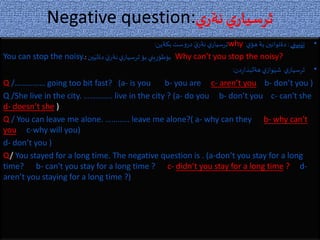
Negative question:‫ي‬‫نةر‬‫ي‬‫ثرسيار‬
•‫بيني‬َ‫تي‬:‫ي‬‫هؤ‬‫بة‬ ‫دةتوانين‬why‫بكةين‬‫ست‬‫و‬‫در‬ َ‫ي‬‫نةر‬‫ي‬‫ثرسيار‬:
You can stop the noisy. ‫ين‬َ‫دةلي‬ َ‫ي‬‫نةر‬‫ي‬‫ثرسيار‬ ‫بؤ‬‫يني‬ِ‫ر‬‫بؤطؤ‬: Why can't you stop the noisy?
•‫دن‬‫ر‬‫هةلبذا‬‫ي‬‫واز‬َ‫شي‬ ‫ي‬‫ثرسيار‬:
Q /…………… going too bit fast? (a- is you b- you are c- aren’t you b- don’t you )
Q /She live in the city. ………….. live in the city ? (a- do you b- don’t you c- can't she
d- doesn’t she )
Q / You can leave me alone. ………… leave me alone?( a- why can they b- why can't
you c-why will you)
d- don’t you )
Q/ You stayed for a long time. The negative question is . (a-don’t you stay for a long
time? b- can't you stay for a long time ? c- didn’t you stay for a long time ? d-
aren’t you staying for a long time ?)
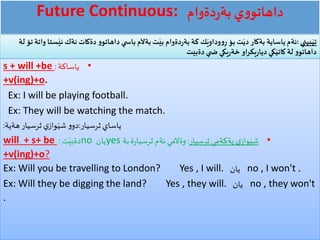
Future Continuous: ‫دةوام‬‫ر‬‫بة‬ ‫ي‬‫و‬‫داهاتو‬
‫بيني‬َ‫تي‬:‫وات‬ ‫ستا‬َ‫ئي‬ ‫نةك‬ ‫دةكات‬ ‫و‬‫داهاتو‬ ‫ي‬ ‫باس‬ ‫بةآلم‬‫ت‬َ‫بي‬ ‫دةوام‬‫ر‬‫بة‬ ‫كة‬ ‫ك‬َ‫وداوي‬‫و‬ِ‫ر‬ ‫بؤ‬ ‫ت‬َ‫دي‬ ‫بةكار‬ ‫ياساية‬ ‫ئةم‬‫لة‬ ‫تؤ‬ ‫ة‬
‫دةبيت‬ ‫ي‬ ‫ض‬ ‫يكي‬‫ر‬‫خة‬ ‫يكراو‬‫ر‬‫ديا‬ ‫كي‬َ‫كاتي‬ ‫لة‬ ‫و‬‫داهاتو‬
• . •‫ياساكة‬:s + will +be
+v(ing)+o.
Ex: I will be playing football.
Ex: They will be watching the match.
‫ثرسيار‬‫ياساي‬:‫هةية‬‫ثرسيار‬ ‫ي‬‫واز‬َ‫شي‬ ‫و‬‫دو‬:
•‫ثرسيار‬ ‫يةكةمي‬‫ي‬‫واز‬َ‫شي‬:‫بة‬‫ة‬‫ر‬‫ثرسيا‬ ‫ئةم‬‫وةالمي‬yes‫يان‬no‫ت‬َ‫دةبي‬:will + s+ be
+v(ing)+o?
Ex: Will you be travelling to London? Yes , I will. ‫يان‬ no , I won't .
Ex: Will they be digging the land? Yes , they will. ‫يان‬ no , they won't
.
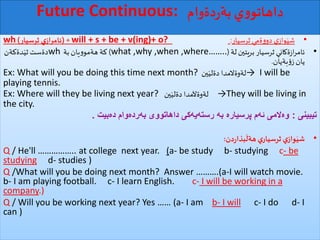
Future Continuous: ‫دةوام‬‫ر‬‫بة‬ ‫ي‬‫و‬‫داهاتو‬
•‫ثرسيار‬ ‫ةمي‬‫و‬‫دو‬ ‫ي‬‫واز‬َ‫شي‬:will + s + be + v(ing)+ o?( +‫ثرسيار‬ ‫ي‬‫ئامراز‬)wh
•‫لة‬‫بريتين‬ ‫ثرسيار‬ ‫ةكاني‬‫ز‬‫ا‬‫ر‬‫ئام‬(what ,why ,when ,where……..)‫بة‬ ‫يان‬‫و‬‫هةمو‬ ‫كة‬wh‫دةكةن‬َ‫ثي‬‫دةست‬
‫بةيان‬‫ؤ‬‫ز‬ ‫يان‬.
Ex: What will you be doing this time next month? ‫ين‬َ‫دةلي‬ ‫→لةوةالمدا‬ I will be
playing tennis.
Ex: Where will they be living next year? ‫ين‬َ‫دةلي‬ ‫لةوةآلمدا‬ →They will be living in
the city.
‌‫تیبینی‬:‌‫‌بیت‬‫ه‬‫‌وام‌د‬‫ه‬‫‌رد‬‫ه‬‫‌كی‌داهاتووی‌ب‬‫ه‬‫‌ی‬‫ه‬‫‌‌رست‬‫ه‬‫‌‌ب‬‫ه‬‫‌م‌پرسیار‬‫ه‬‫‌المی‌ئ‬‫ه‬‫و‬.
•‫دن‬‫ر‬‫بذا‬
َ
‫هةل‬ ‫ي‬‫ثرسيار‬ ‫ي‬‫واز‬َ‫شي‬:
Q / He'll …………….. at college next year. (a- be study b- studying c- be
studying d- studies )
Q /What will you be doing next month? Answer ……….(a-I will watch movie.
b- I am playing football. c- I learn English. c- I will be working in a
company.)
Q / Will you be working next year? Yes …… (a- I am b- I will c- I do d- I
can )
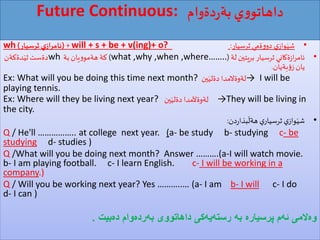
Future Continuous: ‫دةوام‬‫ر‬‫بة‬ ‫ي‬‫و‬‫داهاتو‬
•‫ثرسيار‬ ‫ةمي‬‫و‬‫دو‬ ‫ي‬‫واز‬َ‫شي‬:will + s + be + v(ing)+ o?( +‫ثرسيار‬ ‫ي‬‫ئامراز‬)wh
•‫لة‬‫بريتين‬ ‫ثرسيار‬ ‫ةكاني‬‫ز‬‫ا‬‫ر‬‫ئام‬(what ,why ,when ,where……..)‫بة‬ ‫يان‬‫و‬‫هةمو‬ ‫كة‬wh‫دةست‬‫دةكةن‬َ‫ثي‬
‫بةيان‬‫ؤ‬‫ز‬ ‫يان‬.
Ex: What will you be doing this time next month? ‫ين‬َ‫دةلي‬ ‫→لةوةالمدا‬ I will be
playing tennis.
Ex: Where will they be living next year? ‫ين‬َ‫دةلي‬ ‫لةوةآلمدا‬ →They will be living in
the city.
•‫دن‬‫ر‬‫بذا‬
َ
‫هةل‬ ‫ي‬‫ثرسيار‬ ‫ي‬‫واز‬َ‫شي‬:
Q / He'll …………….. at college next year. (a- be study b- studying c- be
studying d- studies )
Q /What will you be doing next month? Answer ……….(a-I will watch movie.
b- I am playing football. c- I learn English. c- I will be working in a
company.)
Q / Will you be working next year? Yes ………..… (a- I am b- I will c- I do
d- I can )
‌‫‌بیت‬‫ه‬‫‌وام‌د‬‫ه‬‫‌رد‬‫ه‬‫‌كی‌داهاتووی‌ب‬‫ه‬‫‌ی‬‫ه‬‫‌‌رست‬‫ه‬‫‌‌ب‬‫ه‬‫‌م‌پرسیار‬‫ه‬‫‌المی‌ئ‬‫ه‬‫و‬.
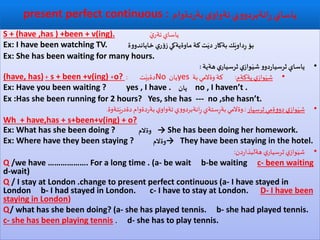
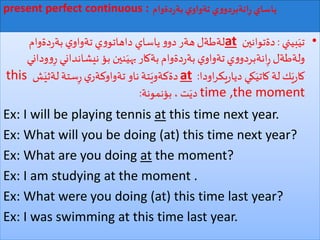
‫دةوام‬‫ر‬‫بة‬ ‫ي‬‫تةواو‬ ‫ي‬‫و‬‫انةبردو‬ِ‫ر‬ ‫ياساي‬present perfect continuous :
S + (have ,has ) +been + v(ing). َ‫ي‬‫ئةر‬‫ياساي‬
Ex: I have been watching TV. ‫ة‬‫و‬‫خاياندو‬‫ي‬‫ر‬‫ؤ‬‫ز‬‫ماوةيةكي‬‫كة‬ ‫ت‬َ‫دي‬‫بةكار‬‫ك‬َ‫داوي‬ِ‫ر‬ ‫بؤ‬
Ex: She has been waiting for many hours.
•‫هةية‬‫ي‬‫ثرسيار‬‫ي‬‫واز‬َ‫شي‬‫و‬‫دو‬‫ر‬‫ثرسيا‬‫ياساي‬:
•‫يةكةم‬‫ي‬‫واز‬َ‫شي‬:‫بة‬‫وةالمي‬‫كة‬yes‫يان‬No‫ت‬َ‫دةبي‬:o?+s + been +v(ing)+(have, has)
Ex: Have you been waiting ? yes , I have . ‫يان‬ no , I haven’t .
Ex :Has she been running for 2 hours? Yes, she has --- no ,she hasn’t.
•‫ثرسيار‬‫ةمي‬‫و‬‫دو‬ ‫ي‬‫واز‬َ‫شي‬.:‫تةوة‬َ‫ي‬‫ر‬‫دةد‬‫دةوام‬‫ر‬‫بة‬‫ي‬‫تةواو‬‫ي‬‫و‬‫انةبردو‬ِ‫ر‬‫ستةي‬ِ‫ر‬‫بة‬‫وةالمي‬.
Wh + have,has + s+been+v(ing) + o?
Ex: What has she been doing ? ‫وةالم‬ → She has been doing her homework.
Ex: Where have they been staying ? ‫→وةالم‬ They have been staying in the hotel.
•‫دن‬‫ر‬‫هةلبذا‬‫ي‬‫ثرسيار‬‫ي‬‫واز‬َ‫شي‬:
Q /we have ………………. For a long time . (a- be wait b-be waiting c- been waiting
d-wait)
Q / I stay at London .change to present perfect continuous (a- I have stayed in
London b- I had stayed in London. c- I have to stay at London. D- I have been
staying in London)
Q/ what has she been doing? (a- she has played tennis. b- she had played tennis.
c- she has been playing tennis . d- she has to play tennis.
‫دةوام‬‫ر‬‫بة‬ ‫ي‬‫تةواو‬ ‫ي‬‫و‬‫انةبردو‬ِ‫ر‬ ‫ياساي‬present perfect continuous :
•‫بيني‬َ‫تي‬:‫دةتوانين‬at‫دةوام‬‫ر‬‫بة‬ ‫ي‬‫تةواو‬ ‫ي‬‫و‬‫داهاتو‬ ‫ياساي‬‫و‬‫دو‬ ‫هةر‬‫لةطةل‬
‫نيشانداني‬ ‫بؤ‬ ‫نين‬َ‫بهي‬‫بةكار‬‫دةوام‬‫ر‬‫بة‬ ‫ي‬‫تةواو‬‫ي‬‫و‬‫انةبردو‬ِ‫ر‬ ‫ولةطةل‬‫وداني‬‫و‬ِ‫ر‬
‫اودا‬‫ر‬‫يك‬‫ر‬‫ديا‬ ‫كي‬َ‫كاتي‬ ‫لة‬‫ك‬َ‫ي‬‫ر‬‫كا‬:at‫ش‬َ‫لةثي‬ ‫ستة‬ِ‫ر‬ ‫ي‬‫تةواوكةر‬ ‫ناو‬‫تة‬َ‫دةكةوي‬this
time ,the moment‫بؤنمونة‬ ،‫ت‬َ‫دي‬:
Ex: I will be playing tennis at this time next year.
Ex: What will you be doing (at) this time next year?
Ex: What are you doing at the moment?
Ex: I am studying at the moment .
Ex: What were you doing (at) this time last year?
Ex: I was swimming at this time last year.
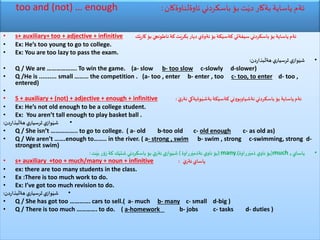
too and (not) … enough ‫ئاوةلناوةكان‬ ‫باسكردني‬ ‫بؤ‬ ‫ت‬َ‫دي‬ ‫بةكار‬ ‫ياساية‬ ‫ئةم‬:
• s+ auxiliary+ too + adjective + infinitive ‫ك‬َ‫كاري‬ ‫بؤ‬ َ‫ناطونجي‬ ‫كة‬‫ت‬َ‫بكري‬‫ديار‬ ‫ئةوةي‬ ‫بؤ‬‫كة‬َ‫كةسي‬ ‫سيفةتي‬‫باسكردني‬ ‫بؤ‬ ‫ياساية‬ ‫ئةم‬
• Ex: He’s too young to go to college.
• Ex: You are too lazy to pass the exam.
•‫بذاردن‬
َ
‫هةل‬ ‫ي‬‫ثرسيار‬ ‫ي‬‫واز‬َ‫شي‬:
• Q / We are ………………. To win the game. (a- slow b- too slow c-slowly d-slower)
• Q /He is .......... small ……… the competition . (a- too , enter b- enter , too c- too, to enter d- too ,
entered)
•
• S + auxiliary + (not) + adjective + enough + infinitive َ‫ي‬‫نةر‬ ‫وةيةكي‬َ‫بةشي‬‫كة‬َ‫كةسي‬ ‫نةشياوبووني‬‫باسكردني‬ ‫بؤ‬ ‫ياساية‬‫ئةم‬:
• Ex: He’s not old enough to be a college student.
• Ex: You aren’t tall enough to play basket ball .
•‫بذاردن‬
َ
‫هةل‬ ‫ي‬‫ثرسيار‬ ‫ي‬‫واز‬َ‫شي‬:
• Q / She isn’t …………….. to go to college. ( a- old b-too old c- old enough c- as old as)
• Q / We aren’t …….enough to…….. in the river. ( a- strong , swim b- swim , strong c-swimming, strong d-
strongest swim)
•‫ياساي‬much ,(‫رراوة‬َ‫ذمي‬ ‫ي‬‫ناو‬‫بؤ‬),many(‫رراوة‬َ‫نةذمي‬ ‫ي‬‫ناو‬‫بؤ‬)‫ت‬َ‫بي‬ ‫زؤر‬ ‫كة‬‫ك‬َ‫شتي‬‫باسكردني‬ ‫بؤ‬ َ‫ي‬‫ئةر‬ ‫ي‬‫واز‬َ‫شي‬:
• s+ auxiliary +too + much/many + noun + infinitive َ‫ي‬‫ئةر‬‫ياساي‬:
• ex: there are too many students in the class.
• Ex :There is too much work to do.
• Ex: I’ve got too much revision to do.
•‫بذاردن‬
َ
‫هةل‬ ‫ي‬‫ثرسيار‬ ‫ي‬‫واز‬َ‫شي‬:
• Q / She has got too …………. cars to sell.( a- much b- many c- small d-big )
• Q / There is too much …………. to do. ( a-homework b- jobs c- tasks d- duties )
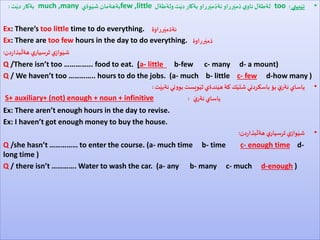
•‫بيني‬َ‫تي‬:too‫ولةطةل‬ ‫ت‬َ‫دي‬ ‫بةكار‬ ‫رراو‬َ‫نةذمي‬ ‫رراو‬َ‫ذمي‬ ‫ي‬‫ناو‬ ‫لةطةل‬few ,little‫وةي‬َ‫شي‬ ‫بةهةمان‬much ,many‫ت‬َ‫دي‬ ‫بةكار‬:
Ex: There’s too little time to do everything. ‫رراوة‬َ‫نةذمي‬
Ex: There are too few hours in the day to do everything. ‫رراوة‬َ‫ذمي‬
‫دن‬‫ر‬‫بذا‬
َ
‫هةل‬ ‫ي‬‫ثرسيار‬ ‫ي‬‫واز‬َ‫شي‬:
Q /There isn’t too …………... food to eat. (a- little b-few c- many d- a mount)
Q / We haven’t too ………….. hours to do the jobs. (a- much b- little c- few d-how many )
•‫ت‬َ‫نةبي‬‫بووني‬‫ويست‬َ‫ثي‬ ‫ندةي‬َ‫هي‬‫كة‬ ‫ك‬َ‫شتي‬ ‫باسكردني‬ ‫بؤ‬ َ‫ي‬‫نةر‬ ‫ياساي‬:
S+ auxiliary+ (not) enough + noun + infinitive َ‫ي‬‫نةر‬ ‫ياساي‬:
Ex: There aren’t enough hours in the day to revise.
Ex: I haven’t got enough money to buy the house.
•‫دن‬‫ر‬‫بذا‬
َ
‫هةل‬ ‫ي‬‫ثرسيار‬ ‫ي‬‫واز‬َ‫شي‬:
Q /she hasn’t …………… to enter the course. (a- much time b- time c- enough time d-
long time )
Q / there isn’t …………. Water to wash the car. (a- any b- many c- much d-enough )
Unit three: grammar
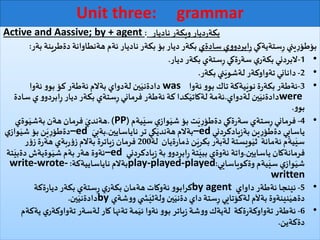
Active and Aassive; by + agent ‫ناديار‬ ‫وبكةر‬ ‫ديار‬‫ر‬‫بكة‬:
‫ستةيةكي‬ِ‫ر‬ ‫يني‬ِ‫ر‬‫بؤطؤ‬‫سادةي‬ ‫ي‬‫و‬‫ابردو‬ِ‫ر‬‫دةطر‬ ‫هةنطاوانة‬ ‫ئةم‬ ‫ناديار‬ ‫بكةر‬ ‫بؤ‬ ‫ديار‬ ‫بكةر‬‫بةر‬ ‫ينة‬:
•1-‫البردني‬‫ديار‬ ‫بكةر‬ ‫ستةي‬ِ‫ر‬ ‫ةكي‬‫ر‬‫سة‬ ‫ي‬‫بكةر‬.
•2-‫بكةر‬ ‫ني‬َ‫لةشوي‬ ‫تةواوكةر‬ ‫داناني‬.
•3-‫ئةوا‬ ‫و‬‫بو‬ ‫تاك‬ ‫يةكة‬َ‫نوي‬ ‫ة‬‫ر‬‫بكة‬ ‫ئةطةر‬was‫ئةوا‬ ‫و‬‫بو‬ ‫كؤ‬ ‫ئةطةر‬ ‫بةالم‬ ‫لةدواي‬ ‫ين‬َ‫دادةني‬
were‫لةدواي‬ ‫ين‬َ‫دادةني‬.‫ابر‬ِ‫ر‬ ‫ديار‬ ‫بكةر‬ ‫ستةي‬ِ‫ر‬‫فرماني‬ ‫ئةطةر‬ ‫كة‬ ‫كدا‬َ‫لةكاتي‬ ‫ئةمة‬‫سادة‬ ‫ي‬ ‫و‬‫دو‬
‫و‬‫بو‬.
•4-‫يةم‬َ‫سي‬ ‫ي‬‫واز‬َ‫شي‬ ‫بؤ‬ ‫ت‬َ‫ي‬ِ‫ر‬‫دةطؤ‬ ‫ةكي‬‫ر‬‫سة‬ ‫ستةي‬ِ‫ر‬‫فرماني‬(PP.)‫وةي‬َ‫بةشي‬ ‫هةن‬ ‫فرمان‬ َ‫هةندي‬
‫يادكردني‬‫ز‬‫بة‬ ‫ين‬ِ‫ر‬‫دةطؤ‬ ‫ياسايي‬–ed‫ناياسايين‬ ‫تر‬ ‫كي‬َ‫هةندي‬ ‫بةالم‬.َ‫بةبي‬–ed‫ي‬‫واز‬َ‫شي‬ ‫بؤ‬ ‫ن‬َ‫ي‬ِ‫ر‬‫دةطؤ‬
‫لة‬ ‫ةيان‬‫ر‬‫ذما‬ ‫ن‬َ‫بكري‬ ‫لةبةر‬ ‫ويستة‬َ‫ثي‬ ‫ئةمانة‬ ‫يةم‬َ‫سي‬200‫ر‬‫ؤ‬‫ز‬ ‫ة‬‫ر‬‫هة‬ ‫بةي‬‫ر‬‫ؤ‬‫ز‬ ‫بةالم‬ ‫ياترة‬‫ز‬ ‫فرمان‬
‫ياسايين‬ ‫فرمانةكان‬.‫يادكردني‬‫ز‬ ‫بة‬ ‫و‬‫ابردو‬ِ‫ر‬ ‫تة‬َ‫ببي‬ ‫ئةوةي‬ ‫واتة‬–ed‫تة‬َ‫دةبي‬ ‫وةيةش‬َ‫شي‬ ‫بةم‬‫هةر‬ ‫ئةوة‬
‫وةكوياسايي‬ ‫يةم‬َ‫سي‬ ‫ي‬‫واز‬َ‫شي‬:play-played-played‫ناياساييةكة‬ ‫بةالم‬:write-wrote-
written
•5-‫داواي‬ ‫ئةطةر‬ ‫ئينجا‬by agent‫ةكة‬‫ر‬‫ديا‬ ‫بكةر‬ ‫ستةي‬ِ‫ر‬ ‫ي‬‫بكةر‬ ‫هةمان‬ ‫ئةوكات‬‫و‬‫كرابو‬
‫شةي‬‫و‬‫و‬ ‫ي‬ ‫ش‬َ‫ولةثي‬ ‫ين‬َ‫دةني‬ ‫داي‬‫ستة‬ِ‫ر‬ ‫لةكؤتايي‬ ‫بةآلم‬ ‫نينةوة‬َ‫دةهي‬by‫ين‬َ‫دادةني‬.
•6-‫ي‬ ‫ي‬‫تةواوكةر‬ ‫لةسةر‬ ‫كار‬ ‫تةنها‬ ‫مة‬َ‫ئي‬ ‫ئةوا‬ ‫و‬‫بو‬ ‫ياتر‬‫ز‬ ‫شة‬‫و‬‫و‬ ‫لةيةك‬ ‫ةكة‬‫ر‬‫تةواوكة‬ ‫ئةطةر‬‫ةكةم‬
‫دةكةين‬.
Active and passive :‫‌ر‌نادیار‬‫ه‬‫‌ر‌دیار‌وبك‬‫ه‬‫بك‬
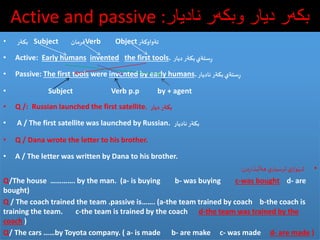
• ‫بكةر‬ Subject ‫فرمان‬Verb Object‫تةواوكةر‬
• Active: Early humans invented the first tools. ‫ديار‬ ‫بكةر‬‫ستةي‬ِ‫ر‬
• Passive: The first tools were invented by early humans.‫ناديار‬ ‫بكةر‬‫ستةي‬ِ‫ر‬
• Subject Verb p.p by + agent
• Q /: Russian launched the first satellite. ‫ديار‬ ‫بكةر‬
• A / The first satellite was launched by Russian. ‫ناديار‬‫بكةر‬
• Q / Dana wrote the letter to his brother.
• A / The letter was written by Dana to his brother.
•‫دن‬‫ر‬‫بذا‬
َ
‫هةل‬ ‫ي‬‫ثرسيار‬ ‫ي‬‫واز‬َ‫شي‬:
Q/The house …………. by the man. (a- is buying b- was buying c-was bought d- are
bought)
Q / The coach trained the team .passive is……. (a-the team trained by coach b-the coach is
training the team. c-the team is trained by the coach d-the team was trained by the
coach )
Q/ The cars ……by Toyota company. ( a- is made b- are make c- was made d- are made )
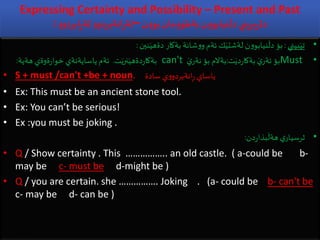
Expressing Certainty and Possibility – Present and Past
: ‫ن‬‫و‬‫بو‬ ‫مان‬‫و‬‫بةطو‬‫ن‬‫و‬‫نيابو‬
َ
‫دل‬ ‫بريني‬‫ر‬‫دة‬–‫و‬‫ابردو‬ِ‫ر‬‫لة‬ ‫و‬‫انةبردو‬ِ‫ر‬‫لة‬
•‫بيني‬َ‫تي‬:‫نين‬َ‫دةهي‬ ‫بةكار‬ ‫شانة‬‫و‬‫و‬ ‫ئةم‬ ‫ك‬َ‫لةشتي‬ ‫ن‬‫و‬‫نيابو‬
َ
‫دل‬ ‫بؤ‬:
•Must‫ت‬َ‫دي‬‫ر‬‫بةكا‬ َ‫ي‬‫ئةر‬ ‫بؤ‬:َ‫ي‬‫نةر‬ ‫بؤ‬ ‫بةالم‬can't‫ت‬َ‫نري‬َ‫دةهي‬‫ر‬‫بةكا‬.‫هةية‬ ‫ةوةي‬‫ر‬‫خوا‬ ‫ياسايةنةي‬ ‫ئةم‬:
• S + must /can't +be + noun. ‫سادة‬ ‫ي‬‫و‬‫انةبردو‬ِ‫ر‬ ‫ياساي‬
• Ex: This must be an ancient stone tool.
• Ex: You can’t be serious!
• Ex :you must be joking .
•‫دن‬‫ر‬‫بذا‬
َ
‫هةل‬ ‫ي‬‫ثرسيار‬:
• Q / Show certainty . This …………….. an old castle. ( a-could be b-
may be c- must be d-might be )
• Q / you are certain. she ……………. Joking . (a- could be b- can't be
c- may be d- can be )
Expressing Certainty and Possibility – Present and Past
: ‫ن‬‫و‬‫بو‬ ‫مان‬‫و‬‫بةطو‬‫ن‬‫و‬‫نيابو‬
َ
‫دل‬ ‫بريني‬‫ر‬‫دة‬–‫و‬‫ابردو‬ِ‫ر‬‫لة‬ ‫و‬‫انةبردو‬ِ‫ر‬‫لة‬
• S + must /can't +be +v(ing )+noun.‫دةوام‬‫ر‬‫بة‬‫ي‬‫و‬‫انةبردو‬ِ‫ر‬ ‫ياساي‬
• Ex: We must be standing on an ancient site.
• Ex: They can't be living in the cave.
•‫دن‬‫ر‬‫بذا‬
َ
‫هةل‬ ‫ي‬‫ثرسيار‬:
• Q /They …………. for oil. (a-must be b- can't be c- must
be searching d- may )
• S + must /can't +have +been +noun/adjective. ‫تةواو‬ ‫ي‬‫و‬‫انةبردو‬ِ‫ر‬ ‫ياساي‬
• Ex: There must have been early humans in this area.
•‫دن‬‫ر‬‫هةلبذا‬ ‫ي‬‫ثرسيار‬:
• Q / certainty in present perfect. (a- there must be
prehistoric. b- there must have been prehistoric.
• c- there must being prehistoric. d- There can't be
prehistoric.)
Expressing Certainty and Possibility – Present and Past
: ‫ن‬‫و‬‫بو‬ ‫مان‬‫و‬‫بةطو‬‫ن‬‫و‬‫نيابو‬
َ
‫دل‬ ‫بريني‬‫ر‬‫دة‬–‫و‬‫ابردو‬ِ‫ر‬‫لة‬ ‫و‬‫انةبردو‬ِ‫ر‬‫لة‬
• S + must / can't +have +p .p+ noun/ adjective . ‫و‬‫ابردو‬‫ر‬ ‫ياساي‬
• Ex: Early humans must have lived here long ago.
•‫ي‬‫ثرسيار‬‫دن‬‫ر‬‫بذا‬
َ
‫هةل‬:
Q / pre historic …………… lived there .
(a- must be b- can't be c-must have d-could be )
•‫بيني‬َ‫تي‬:‫نين‬َ‫دةهي‬ ‫بةكار‬ ‫شانة‬‫و‬‫و‬ ‫ئةم‬ ‫ك‬َ‫لةشتي‬ ‫ن‬‫و‬‫بو‬ ‫مان‬‫و‬‫بةطو‬ ‫يان‬ ‫ن‬‫و‬‫نةبو‬ ‫دلنيا‬ ‫بؤ‬:may be ,might
be ,could be
•‫هةية‬ ‫ةوةي‬‫ر‬‫خوا‬ ‫ياسايانةي‬ ‫ئةم‬:
S + could /may/might +be + noun /adjective. ‫سادة‬ ‫ي‬‫و‬‫انةبردو‬ِ‫ر‬ ‫ياساي‬
Ex: This ancient tool could be a knife.
Ex: The cave may be empty, but there might be something in it.
•‫دن‬‫ر‬‫هةلبذا‬ ‫ي‬‫ثرسيار‬:
Q/ It can't fly ,but have four legs and can walk .It ……… a fox or cow.
(a- must be b- may be c-can't d-will be)
Expressing Certainty and Possibility – Present and Past
: ‫ن‬‫و‬‫بو‬ ‫مان‬‫و‬‫بةطو‬‫ن‬‫و‬‫نيابو‬
َ
‫دل‬ ‫بريني‬‫ر‬‫دة‬–‫و‬‫ابردو‬ِ‫ر‬‫لة‬ ‫و‬‫انةبردو‬ِ‫ر‬‫لة‬
• S +could/may/might+be+v(ing)+o. ‫دةوام‬‫ر‬‫بة‬ ‫ي‬‫و‬‫انةبردو‬ِ‫ر‬‫ياساي‬
• Ex: Other ancient remains may be lying all around us.
•‫دن‬‫ر‬‫هةلبذا‬ ‫ي‬‫ثرسيار‬:
• Q / very ancient heritage may ……………. under the castle. (a- be laid
b- be lying c- been lay b- lays )
S + could /may /might +have +been/p.p +noun/adjective. ‌‫ابردوو‬ ِ‫یاساي‌ر‬
Ex: There could have been people here 70,000 years ago.
•‫دن‬‫ر‬‫بذا‬
َ
‫هةل‬ ‫ي‬‫ثرسيار‬:
• Q/ There …………… people there 2000 years ago. (a- will be b- may
have c- may been d- might have been)
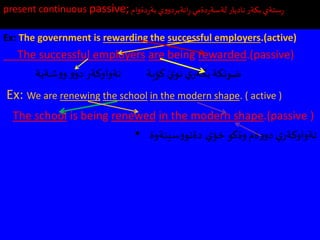
present continuous passive; ‫دةوام‬‫ر‬‫بة‬ ‫ي‬‫و‬‫انةبردو‬ِ‫ر‬ ‫دةمي‬‫ر‬‫لةسة‬ ‫ناديار‬ ‫بكةر‬‫ستةي‬ِ‫ر‬
•‫ناديار‬ ‫بكةر‬‫بؤ‬ ‫ين‬ِ‫ر‬‫دةيطؤ‬ ‫ن‬‫ضؤ‬ ‫و‬‫بو‬ ‫دةوام‬‫ر‬‫بة‬ ‫ي‬‫و‬‫انةبردو‬ِ‫ر‬ ‫ستةيةك‬ِ‫ر‬ ‫ئةطةر‬:
•‫لة‬‫ة‬‫و‬‫كهاتو‬َ‫ثي‬‫ديار‬‫بكةر‬‫دةوام‬‫ر‬‫بة‬‫ي‬‫و‬‫انةبردو‬‫ر‬‫ستةي‬ِ‫ر‬‫كةوا‬ ‫انين‬‫ز‬‫ب‬‫ئةوة‬‫ةتا‬‫ر‬‫سة‬:S +( am,is,are)+v(ing)+o
• Ex: He is building the house.
• S be v(ing ) o.
• o + be + being +p.p. ‫دةوام‬‫ر‬‫بة‬ ‫ي‬‫و‬‫انةبردو‬ِ‫ر‬ ‫ستةي‬ِ‫ر‬ ‫بؤ‬ ‫ة‬‫ر‬‫ناديا‬ ‫بكةر‬ ‫ياساي‬ ‫ئةمة‬:
Ex :He is building the house. )‫ة‬‫ر‬‫ديا‬ ‫بكةر‬( active)
The house is being built. )‫بكةر‬‫ة‬‫ر‬‫ناديا‬ passive)
•‫لة‬ ‫بريتين‬ ‫ناديار‬ ‫بكةر‬ ‫بؤ‬ ‫دةوام‬‫ر‬‫بة‬ ‫ي‬‫و‬‫انةبردو‬ِ‫ر‬‫لة‬ ‫ديار‬ ‫بكةر‬ ‫يني‬ِ‫ر‬‫طؤ‬ ‫هةنطاوةكاني‬ ‫كةواتة‬:
•‫ئةو‬ ‫طاي‬َ‫لةجي‬ ‫تةواوكةر‬ ‫داناني‬ ‫ستةو‬ِ‫ر‬ ‫ي‬‫بكةر‬ ‫البردني‬.
•‫ئةوا‬ ‫و‬‫كؤبو‬ ‫يةكة‬َ‫نوي‬ ‫ة‬‫ر‬‫بكة‬ ‫ئةطةر‬are‫ئةوا‬ ‫و‬‫بو‬ ‫تاك‬ ‫ئةطةر‬ ‫بةآلم‬‫ين‬َ‫دادةني‬is‫لةدواي‬‫ين‬َ‫دادةني‬.
•‫شةي‬‫و‬‫و‬ ‫دواتر‬being‫ين‬َ‫دادةني‬.
•‫يةم‬َ‫سي‬ ‫ي‬‫واز‬َ‫شي‬ ‫بؤ‬ ‫ين‬ِ‫ر‬‫دةطؤ‬ ‫ستةكة‬ِ‫ر‬ ‫فرماني‬ ‫ئينجا‬(p.p.)
•‫لةكؤت‬ ‫ةم‬‫و‬‫دو‬ ‫ئةوةي‬ ‫يةكةمة‬ ‫ي‬‫تةواوكةر‬ ‫لةطةل‬ ‫مة‬َ‫ئي‬ ‫ي‬ ‫ئيش‬ ‫ئةوا‬ ‫و‬‫هةبو‬ ‫ستةدا‬ِ‫ر‬‫لة‬ ‫تةواوكةر‬ ‫و‬‫دو‬ ‫ئةطةر‬‫ستة‬ِ‫ر‬ ‫ايي‬
‫دةنوسينةوة‬ ‫ي‬‫خؤ‬ ‫وةكو‬.‫دةك‬ ‫جيا‬ ‫لةيةكتريان‬ ‫هةية‬ ‫شةيةكي‬‫و‬‫و‬ ‫ةم‬‫و‬‫ودو‬ ‫يةكةم‬ ‫ي‬‫تةواوكةر‬‫وان‬َ‫لةني‬ ‫ي‬‫ر‬‫ؤ‬‫بةز‬‫اتةوة‬
‫وةكو‬(in,on,for.)
present continuous passive;‫دةوام‬‫ر‬‫بة‬ ‫ي‬‫و‬‫انةبردو‬ِ‫ر‬ ‫دةمي‬‫ر‬‫لةسة‬ ‫ناديار‬ ‫بكةر‬ ‫ستةي‬ِ‫ر‬
Ex: The government is rewarding the successful employers.(active)
The successful employers are being rewarded.(passive)
‫شةية‬‫و‬‫و‬ ‫و‬‫دو‬‫تةواوكةر‬ ‫كؤية‬ َ‫ي‬‫نو‬‫ي‬‫بكةر‬‫ضونكة‬
Ex: We are renewing the school in the modern shape. ( active )
The school is being renewed in the modern shape.(passive )
• ‫سينةوة‬‫و‬‫دةنو‬ ‫وةكو‬‫ةم‬‫و‬‫دو‬ ‫ي‬‫تةواوكةر‬‫ي‬‫خؤ‬
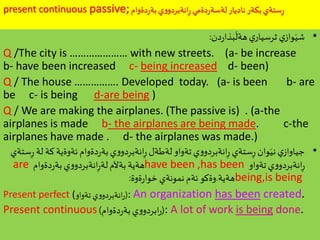
present continuous passive;‫دةوام‬‫ر‬‫بة‬ ‫ي‬‫و‬‫انةبردو‬ِ‫ر‬ ‫دةمي‬‫ر‬‫لةسة‬ ‫ناديار‬ ‫بكةر‬ ‫ستةي‬ِ‫ر‬
•‫دن‬‫ر‬‫بذا‬
َ
‫هةل‬ ‫ي‬‫ثرسيار‬ ‫ي‬‫واز‬َ‫شي‬:
Q /The city is ………………… with new streets. (a- be increase
b- have been increased c- being increased d- been)
Q / The house ……………. Developed today. (a- is been b- are
be c- is being d-are being )
Q / We are making the airplanes. (The passive is) . (a-the
airplanes is made b- the airplanes are being made. c-the
airplanes have made . d- the airplanes was made.)
•‫كة‬‫ئةوةية‬‫دةوام‬‫ر‬‫بة‬‫ي‬‫و‬‫انةبردو‬ِ‫ر‬ ‫لةطةل‬‫تةواو‬‫ي‬‫و‬‫انةبردو‬ِ‫ر‬ ‫ستةي‬ِ‫ر‬ ‫وان‬َ‫ني‬‫ي‬‫جياواز‬‫ستةي‬ِ‫ر‬ ‫لة‬
‫تةواو‬‫ي‬‫و‬‫انةبردو‬ِ‫ر‬have been ,has been‫دةوام‬‫ر‬‫بة‬‫ي‬‫و‬‫انةبردو‬ِ‫ر‬‫لة‬ ‫بةآلم‬ ‫هةية‬are
being,is being‫هةية‬.‫ةوة‬‫ر‬‫خوا‬ ‫نمونةي‬ ‫ئةم‬‫وةكو‬:
Present perfect ( (‫تةواو‬ ‫ي‬‫و‬‫انةبردو‬‫ر‬ : An organization has been created.
Present continuous (‫دةوام‬‫ر‬‫بة‬‫ي‬‫و‬‫ابردو‬‫ر‬) : A lot of work is being done.
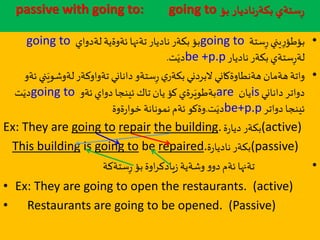
passive with going to: going to ‫بؤ‬ ‫ناديار‬‫ر‬‫بكة‬ ‫ستةي‬ِ‫ر‬
•‫ستة‬ِ‫ر‬‫يني‬ِ‫ر‬‫بؤطؤ‬going to‫لةدواي‬‫ئةوةية‬ ‫تةنها‬‫ناديار‬‫بكةر‬ ‫بؤ‬going to
‫ناديار‬‫بكةر‬‫ستةي‬ِ‫ر‬‫لة‬be +p.p‫ت‬َ‫دي‬.
•َ‫لةوشوي‬‫تةواوكةر‬ ‫داناني‬‫ستةو‬ِ‫ر‬‫ي‬‫بكةر‬‫البردني‬ ‫هةنطاوةكاني‬ ‫هةمان‬‫واتة‬‫ئةو‬ ‫ني‬
‫داناني‬‫دواتر‬is‫يان‬are‫ئةو‬‫دواي‬ ‫ئينجا‬ ‫تاك‬‫يان‬ ‫كؤ‬ ‫رةي‬َ‫بةطوي‬going to‫ت‬َ‫دي‬
‫دواتر‬ ‫ئينجا‬be+p.p‫ت‬َ‫دي‬.‫ةوة‬‫ر‬‫خوا‬ ‫نمونانة‬ ‫ئةم‬ ‫وةكو‬
Ex: They are going to repair the building.‫ة‬‫ر‬‫ديا‬ ‫(بكةر‬active)
This building is going to be repaired.‫ة‬‫ر‬‫ناديا‬ ‫(بكةر‬passive)
•‫تةنها‬‫ستةكة‬ِ‫ر‬ ‫بؤ‬‫اوة‬‫ر‬‫يادك‬‫ز‬ ‫وشةية‬‫و‬‫دو‬‫ئةم‬
• Ex: They are going to open the restaurants. (active)
• Restaurants are going to be opened. (Passive)
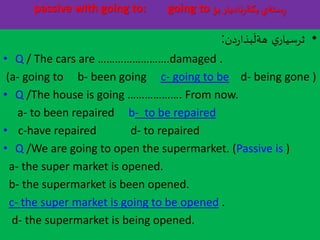
passive with going to: going to ‫بؤ‬‫ناديار‬‫ر‬‫بكة‬‫ستةي‬ِ‫ر‬
•‫ي‬‫ثرسيار‬‫دن‬‫ر‬‫بذا‬
َ
‫هةل‬:
• Q / The cars are …………………….damaged .
(a- going to b- been going c- going to be d- being gone )
• Q /The house is going ………………. From now.
a- to been repaired b- to be repaired
• c-have repaired d- to repaired
• Q /We are going to open the supermarket. (Passive is )
a- the super market is opened.
b- the supermarket is been opened.
c- the super market is going to be opened .
d- the supermarket is being opened.
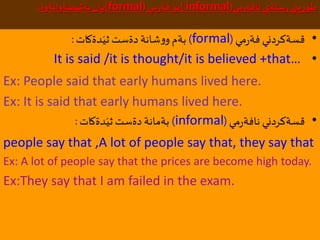
‫مي‬‫ر‬‫نافة‬ ‫ستةي‬ِ‫ر‬ ‫يني‬ِ‫ر‬‫طؤ‬(informal)‫مي‬‫ر‬‫فة‬ ‫بؤ‬(formal)‫ضةوانةوة‬َ‫بةثي‬ ‫يان‬:
•‫مي‬‫ر‬‫فة‬ ‫قسةكردني‬(formal)‫دةكات‬َ‫ثي‬ ‫دةست‬‫شانة‬‫و‬‫و‬ ‫بةم‬:
•It is said /it is thought/it is believed +that…
Ex: People said that early humans lived here.
Ex: It is said that early humans lived here.
•‫مي‬‫ر‬‫نافة‬ ‫قسةكردني‬(informal)‫دةكات‬َ‫ثي‬‫دةست‬‫بةمانة‬:
people say that ,A lot of people say that, they say that
Ex: A lot of people say that the prices are become high today.
Ex:They say that I am failed in the exam.
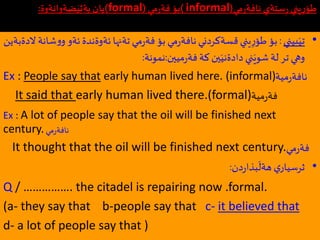
‫مي‬‫ر‬‫نافة‬ ‫ستةي‬ِ‫ر‬ ‫يني‬ِ‫ر‬‫طؤ‬(informal)‫مي‬‫ر‬‫فة‬ ‫بؤ‬(formal)‫ضةوانةوة‬َ‫بةثي‬ ‫يان‬:
•‫بيني‬َ‫تي‬:‫ئة‬‫ئةوةندة‬‫تةنها‬ ‫مي‬‫ر‬‫فة‬‫بؤ‬ ‫مي‬‫ر‬‫نافة‬‫قسةكردني‬‫يني‬ِ‫ر‬‫طؤ‬‫بؤ‬‫الدةبةين‬ ‫شانة‬‫و‬‫و‬ ‫و‬
‫ميين‬‫ر‬‫فة‬‫كة‬‫ين‬َ‫دادةني‬ ‫ني‬َ‫شوي‬‫لة‬ ‫تر‬ ‫وهي‬:‫نمونة‬:
Ex : People say that early human lived here. (informal)‫مية‬‫ر‬‫نافة‬
It said that early human lived there.(formal)‫مية‬‫ر‬‫فة‬
Ex : A lot of people say that the oil will be finished next
century.‫مي‬‫ر‬‫نافة‬
It thought that the oil will be finished next century.‫مي‬‫ر‬‫فة‬
•‫دن‬‫ر‬‫بذا‬
َ
‫هةل‬ ‫ي‬‫ثرسيار‬:
Q / ……………. the citadel is repairing now .formal.
(a- they say that b-people say that c- it believed that
d- a lot of people say that )
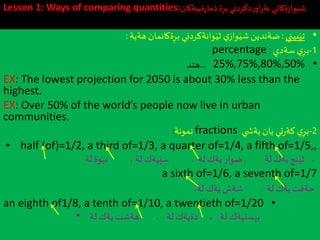
Lesson 1: Ways of comparing quantities: ‫ة‬ِ‫بر‬‫دكردني‬‫ر‬‫او‬‫ر‬‫بة‬ ‫ةكاني‬‫ز‬‫وا‬َ‫شي‬‫ةييةكان‬‫ر‬‫ذما‬
•‫بيني‬َ‫تي‬:‫هةية‬‫ةكانمان‬ِ‫بر‬ ‫وانةكردني‬َ‫ثي‬ ‫ي‬‫واز‬َ‫شي‬ ‫ضةندين‬:
1-‫ي‬ِ‫بر‬‫سةدي‬:percentage
•25%,75%,80%,50%...‫هتد‬
EX: The lowest projection for 2050 is about 30% less than the
highest.
EX: Over 50% of the world’s people now live in urban
communities.
2-‫ي‬ِ‫بر‬‫ي‬ ‫بةش‬ ‫يان‬ ‫تي‬‫ر‬‫كة‬fractions‫نمونة‬:
• half (of)=1/2, a third of=1/3, a quarter of=1/4, a fifth of=1/5,,
،‫نج‬َ‫ثي‬‫يةك‬‫لة‬,‫ضوار‬، ‫لة‬ ‫يةك‬‫يةك‬َ‫سي‬‫لة‬،‫نيوة‬‫لة‬
a sixth of=1/6, a seventh of=1/7
، ‫لة‬ ‫يةك‬ ‫حةفت‬‫شةش‬‫يةك‬،‫لة‬
•an eighth of1/8, a tenth of=1/10, a twentieth of=1/20
• ‫بيستيةك‬، ‫لة‬، ‫لة‬‫دةيةك‬‫لة‬ ‫يةك‬ ‫هةشت‬
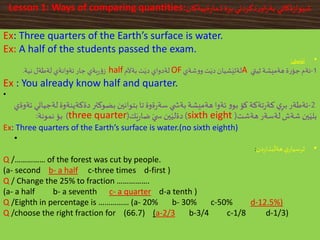
Lesson 1: Ways of comparing quantities:‫ةييةكان‬‫ر‬‫ذما‬‫ة‬ِ‫بر‬‫دكردني‬‫ر‬‫او‬‫ر‬‫بة‬ ‫ةكاني‬‫ز‬‫وا‬َ‫شي‬
Ex: Three quarters of the Earth’s surface is water.
Ex: A half of the students passed the exam.
•‫بيني‬َ‫تي‬:
1-‫ئةم‬‫ثيتي‬ ‫هةميشة‬ ‫ة‬‫ر‬‫جؤ‬A‫شةي‬‫و‬‫و‬‫ت‬َ‫دي‬‫شيان‬َ‫لةثي‬OF‫بةآلم‬‫ت‬َ‫دي‬ ‫لةدواي‬half‫نية‬ ‫لةطةل‬ ‫ئةوانةي‬ ‫جار‬ ‫بةي‬‫ر‬‫ؤ‬‫ز‬.
Ex : You already know half and quarter.
•
2-‫لة‬‫دةكةينةوة‬ ‫بضوكتر‬ ‫بتوانين‬‫تا‬‫ةوة‬‫ر‬‫سة‬ ‫ي‬ ‫بةش‬‫هةميشة‬ ‫ئةوا‬ ‫و‬‫بو‬ ‫كؤ‬ ‫تةكة‬‫ر‬‫كة‬ ‫ي‬ِ‫بر‬ ‫ئةطةر‬‫ئةوةي‬ ‫جياتي‬
‫هةشت‬ ‫لةسةر‬‫شةش‬ ‫ين‬َ‫بلي‬(sixth eight)‫ك‬َ‫ي‬‫ر‬‫ضا‬ َ‫ي‬ ‫س‬‫ين‬َ‫دةلي‬(three quarter)‫نمونة‬‫بؤ‬:
Ex: Three quarters of the Earth’s surface is water.(no sixth eighth)
•
•‫ي‬‫ثرسيار‬‫دن‬‫ر‬‫بذا‬
َ
‫هةل‬:
Q /…………… of the forest was cut by people.
(a- second b- a half c-three times d-first )
Q / Change the 25% to fraction …………….
(a- a half b- a seventh c- a quarter d-a tenth )
Q /Eighth in percentage is …………… (a- 20% b- 30% c-50% d-12.5%)
Q /choose the right fraction for (66.7) (a-2/3 b-3/4 c-1/8 d-1/3)
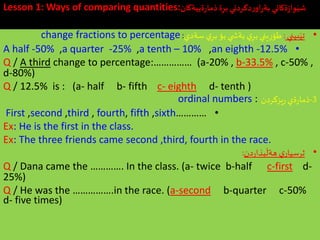
Lesson 1: Ways of comparing quantities:‫ةييةكان‬‫ر‬‫ذما‬‫ة‬ِ‫بر‬‫دكردني‬‫ر‬‫او‬‫ر‬‫بة‬ ‫ةكاني‬‫ز‬‫وا‬َ‫شي‬
•‫بيني‬َ‫تي‬:‫سةدي‬‫ي‬ِ‫بر‬ ‫بؤ‬‫ي‬ ‫بةش‬ ‫ي‬ِ‫بر‬‫يني‬ِ‫ر‬‫طؤ‬:change fractions to percentage
•A half -50% ,a quarter -25% ,a tenth – 10% ,an eighth -12.5%
Q / A third change to percentage:…………… (a-20% , b-33.5% , c-50% ,
d-80%)
Q / 12.5% is : (a- half b- fifth c- eighth d- tenth )
3-‫ةي‬‫ر‬‫ذما‬‫يزكردن‬‫ر‬ordinal numbers :
•First ,second ,third , fourth, fifth ,sixth…………
Ex: He is the first in the class.
Ex: The three friends came second ,third, fourth in the race.
•‫دن‬‫ر‬‫بذا‬
َ
‫هةل‬ ‫ي‬‫ثرسيار‬:
Q / Dana came the …………. In the class. (a- twice b-half c-first d-
25%)
Q / He was the …………….in the race. (a-second b-quarter c-50%
d- five times)
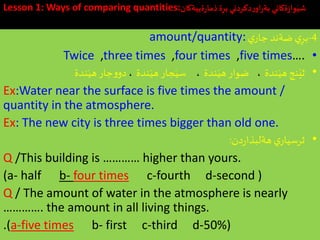
Lesson 1: Ways of comparing quantities:‫ةييةكان‬‫ر‬‫ذما‬‫ة‬ِ‫بر‬‫دكردني‬‫ر‬‫او‬‫ر‬‫بة‬ ‫ةكاني‬‫ز‬‫وا‬َ‫شي‬
4-‫ي‬ِ‫بر‬‫ي‬‫جار‬ ‫ضةند‬amount/quantity:
•Twice ,three times ,four times ,five times….
•‫ندة‬َ‫هي‬ ‫نج‬َ‫ثي‬،‫ندة‬َ‫هي‬ ‫ضوار‬،‫ندة‬َ‫هي‬ ‫جار‬َ‫سي‬،‫ندة‬َ‫هي‬‫جار‬‫و‬‫دو‬
Ex:Water near the surface is five times the amount /
quantity in the atmosphere.
Ex: The new city is three times bigger than old one.
•‫دن‬‫ر‬‫هةلبذا‬ ‫ي‬‫ثرسيار‬:
Q /This building is ………… higher than yours.
(a- half b- four times c-fourth d-second )
Q / The amount of water in the atmosphere is nearly
…………. the amount in all living things.
.(a-five times b- first c-third d-50%)
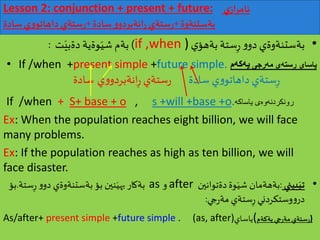
Lesson 2: conjunction + present + future: ‫ي‬‫از‬‫ر‬‫ئام‬
‫بةستنةوة‬+‫سادة‬ ‫و‬‫انةبردو‬‫ر‬ ‫ستةي‬‫ر‬+‫سادة‬ ‫ي‬‫و‬‫داهاتو‬‫ستةي‬‫ر‬
•‫ي‬‫بةهؤ‬ ‫ستة‬ِ‫ر‬‫و‬‫دو‬ ‫بةستنةوةي‬if ,when ))‫ت‬َ‫دةبي‬ ‫وةية‬َ‫شي‬‫بةم‬:
• If /when +present simple +future simple. ‌‫یاسای‬‌‫‌رجی‬‫ه‬‫‌ی‌م‬‫ه‬‫رست‬‫‌م‬‫ه‬‫‌ك‬‫ه‬‫ی‬
‫سادة‬ ‫ستةي‬ِ‫ر‬‫سادة‬ ‫ي‬‫و‬‫داهاتو‬‫ستةي‬‫ر‬‫ي‬‫و‬‫انةبردو‬ِ‫ر‬
If /when + S+ base + o , s +will +base +o.‌‫ه‬‫‌ی‌یاساك‬‫ه‬‫‌و‬‫ه‬‫رونكردن‬
Ex: When the population reaches eight billion, we will face
many problems.
Ex: If the population reaches as high as ten billion, we will
face disaster.
•‫بيني‬َ‫تي‬:‫دةتوانين‬‫وة‬َ‫شي‬ ‫بةهةمان‬after‫و‬as‫ست‬ِ‫ر‬ ‫و‬‫دو‬ ‫بةستنةوةي‬ ‫بؤ‬ ‫نين‬َ‫بهي‬‫بةكار‬‫ة‬.‫بؤ‬
‫جي‬‫ر‬‫مة‬ ‫ستةي‬ِ‫ر‬ ‫وستكردني‬‫و‬‫در‬:
As/after+ present simple +future simple . (as, after)‫ياساي‬( ‫ست‬‫ر‬‫يةكةم‬‫جي‬‫ر‬‫مة‬‫ةي‬ )
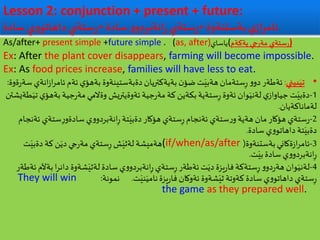
Lesson 2: conjunction + present + future:
‫بةستنةوة‬ ‫ي‬‫ئامراز‬+‫سادة‬ ‫و‬‫انةبردو‬‫ر‬ ‫ستةي‬‫ر‬+‫سادة‬‫ي‬‫و‬‫داهاتو‬ ‫ستةي‬‫ر‬
As/after+ present simple +future simple . (as, after)‫(ياساي‬ ‫ست‬‫ر‬‫يةكةم‬ ‫جي‬‫ر‬‫مة‬ ‫ةي‬ )
Ex: After the plant cover disappears, farming will become impossible.
Ex: As food prices increase, families will have less to eat.
•‫بيني‬َ‫تي‬:‫ئ‬ ‫ئةم‬ ‫ي‬‫بةهؤ‬ ‫دةبةستينةوة‬ ‫بةيةكتريان‬ ‫ن‬‫ضؤ‬ ‫ت‬َ‫هةبي‬‫ستةمان‬ِ‫ر‬ ‫و‬‫دو‬ ‫ئةطةر‬‫ةوة‬‫ر‬‫سة‬‫انةي‬‫ز‬‫ا‬‫ر‬‫ام‬:
1-‫ت‬َ‫دةبي‬‫بة‬‫جية‬‫ر‬‫مة‬ ‫وةالمي‬ ‫ئةوةيتريش‬‫جية‬‫ر‬‫مة‬ ‫كة‬‫بكةين‬‫ستةية‬ِ‫ر‬ ‫ئةوة‬‫وان‬َ‫لةني‬ ‫ي‬‫جياواز‬‫طةيشتن‬َ‫تي‬ ‫ي‬‫هؤ‬
‫لةماناكةيان‬.
2-‫ستةي‬‫ر‬‫ستة‬ِ‫ر‬‫سادةو‬‫ي‬‫و‬‫انةبردو‬ِ‫ر‬ ‫تة‬َ‫دةبي‬‫هؤكار‬ ‫ستةي‬ِ‫ر‬ ‫ئةنجام‬ ‫ستةي‬‫ر‬‫و‬‫هةية‬ ‫مان‬‫هؤكار‬‫ئةنجام‬ ‫ي‬
‫سادة‬‫ي‬‫و‬‫داهاتو‬ ‫تة‬َ‫دةبي‬.
3-‫ةكاني‬‫ز‬‫ا‬‫ر‬‫ئام‬‫بةستنةوة‬((if/when/as/after‫ت‬َ‫دةبي‬ ‫كة‬‫ن‬َ‫دي‬ ‫جي‬‫ر‬‫مة‬ ‫ستةي‬ِ‫ر‬ ‫ش‬َ‫لةثي‬ ‫هةميشة‬
‫ت‬َ‫بي‬ ‫سادة‬‫ي‬‫و‬‫انةبردو‬ِ‫ر‬.
4-‫وان‬َ‫لةني‬‫دان‬ ‫شةوة‬َ‫لةثي‬ ‫سادة‬‫ي‬‫و‬‫انةبردو‬ِ‫ر‬ ‫ستةي‬ِ‫ر‬ ‫ئةطةر‬‫ت‬َ‫دي‬ ‫يزة‬‫ر‬‫فا‬‫ستةكة‬ِ‫ر‬ ‫و‬‫دو‬‫ر‬‫هة‬‫ئةطةر‬‫بةآلم‬ ‫ا‬‫ر‬
‫ت‬َ‫ني‬َ‫نامي‬‫يزة‬‫ر‬‫فا‬‫ئةوكان‬ ‫شةوة‬َ‫ثي‬ ‫كةوتة‬ ‫سادة‬‫ي‬‫و‬‫داهاتو‬ ‫ستةي‬ِ‫ر‬.‫نمونة‬:They will win
the game as they prepared well.
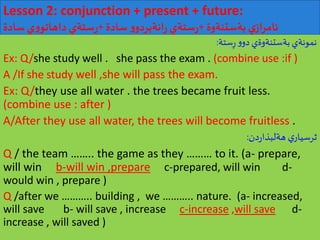
Lesson 2: conjunction + present + future:
‫بةستنةوة‬ ‫ي‬‫ئامراز‬+‫سادة‬ ‫و‬‫انةبردو‬‫ر‬ ‫ستةي‬‫ر‬+‫سادة‬‫ي‬‫و‬‫داهاتو‬ ‫ستةي‬‫ر‬
‫ستة‬ِ‫ر‬‫و‬‫دو‬ ‫بةستنةوةي‬ ‫نمونةي‬:
Ex: Q/she study well . she pass the exam . (combine use :if )
A /If she study well ,she will pass the exam.
Ex: Q/they use all water . the trees became fruit less.
(combine use : after )
A/After they use all water, the trees will become fruitless .
‫دن‬‫ر‬‫هةلبذا‬ ‫ي‬‫ثرسيار‬:
Q / the team …….. the game as they ……… to it. (a- prepare,
will win b-will win ,prepare c-prepared, will win d-
would win , prepare )
Q /after we ……….. building , we ……….. nature. (a- increased,
will save b- will save , increase c-increase ,will save d-
increase , will saved )
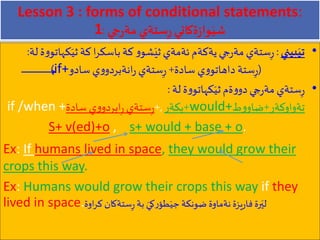
Lesson 3 : forms of conditional statements:
1 ‫جي‬‫ر‬‫مة‬ ‫ستةي‬ِ‫ر‬‫ةكاني‬‫ز‬‫وا‬َ‫شي‬:
•‫بيني‬َ‫تي‬:َ‫ثي‬ ‫كة‬ ‫ا‬‫ر‬‫باسك‬‫كة‬ ‫و‬‫شو‬َ‫ثي‬ ‫ئةمةي‬‫يةكةم‬‫جي‬‫ر‬‫مة‬ ‫ستةي‬ِ‫ر‬‫لة‬ ‫ة‬‫و‬‫كهاتو‬:
(‫سادة‬ ‫ي‬‫و‬‫داهاتو‬ ‫ستة‬ِ‫ر‬+‫سادو‬‫ي‬‫و‬‫انةبردو‬‫ر‬ ‫ستةي‬ِ‫ر‬if+)
•‫لة‬ ‫ة‬‫و‬‫كهاتو‬َ‫ثي‬‫ةم‬‫و‬‫دو‬‫جي‬‫ر‬‫مة‬ ‫ستةي‬ِ‫ر‬:
‫تةواوكةر‬+‫ط‬‫و‬‫ضاو‬would++‫بكةر‬,+‫سادة‬‫ي‬‫و‬‫ابردو‬ِ‫ر‬ ‫ستةي‬ِ‫ر‬if /when +
S+ v(ed)+o , s+ would + base + o.
Ex: If humans lived in space, they would grow their
crops this way.
Ex: Humans would grow their crops this way if they
lived in space.‫اوة‬‫ر‬‫ك‬‫ستةكان‬ِ‫ر‬ ‫بة‬ َ‫كي‬‫ر‬‫طؤ‬َ‫جي‬ ‫ضونكة‬ ‫نةماوة‬ ‫يزة‬‫ر‬‫فا‬ ‫رة‬َ‫لي‬
Lesson 3 : forms of conditional statements:
1 ‫جي‬‫ر‬‫مة‬ ‫ستةي‬ِ‫ر‬‫ةكاني‬‫ز‬‫وا‬َ‫شي‬:
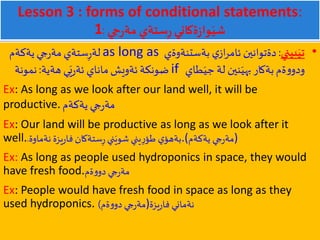
•‫بيني‬َ‫تي‬:‫بةستنةوةي‬ ‫ي‬‫از‬‫ر‬‫ئام‬ ‫دةتوانين‬as long as‫يةكةم‬‫جي‬‫ر‬‫مة‬‫ستةي‬ِ‫ر‬‫لة‬
‫طاي‬َ‫جي‬ ‫لة‬ ‫نين‬َ‫بهي‬‫بةكار‬‫ةم‬‫و‬‫ودو‬if‫هةية‬ ‫ي‬َ‫ي‬‫ر‬‫ئة‬ ‫ماناي‬‫ئةويش‬‫ضونكة‬:‫نمونة‬
Ex: As long as we look after our land well, it will be
productive. ‫يةكةم‬ ‫جي‬‫ر‬‫مة‬
Ex: Our land will be productive as long as we look after it
well. ‫ي‬‫بةهؤ‬‫ستةكان‬ِ‫ر‬ ‫ني‬َ‫شوي‬ ‫يني‬ِ‫ر‬‫طؤ‬‫نةماوة‬ ‫يزة‬‫ر‬‫فا‬. .(‫يةكةم‬ ‫جي‬‫ر‬‫)مة‬
Ex: As long as people used hydroponics in space, they would
have fresh food.‫ةم‬‫و‬‫دو‬ ‫جي‬‫ر‬‫مة‬
Ex: People would have fresh food in space as long as they
used hydroponics. ‫ةم‬‫و‬‫دو‬ ‫جي‬‫ر‬‫مة‬) )‫يزة‬‫ر‬‫فا‬ ‫نةماني‬
Lesson 3 : forms of conditional statements:
1 ‫جي‬‫ر‬‫مة‬ ‫ستةي‬ِ‫ر‬‫ةكاني‬‫ز‬‫وا‬َ‫شي‬:
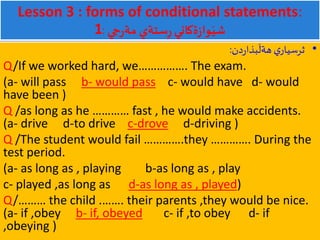
•‫دن‬‫ر‬‫بذا‬
َ
‫هةل‬ ‫ي‬‫ثرسيار‬:
Q/If we worked hard, we……………. The exam.
(a- will pass b- would pass c- would have d- would
have been )
Q /as long as he ………… fast , he would make accidents.
(a- drive d-to drive c-drove d-driving )
Q /The student would fail ………….they …………. During the
test period.
(a- as long as , playing b-as long as , play
c- played ,as long as d-as long as , played)
Q/……… the child .……. their parents ,they would be nice.
(a- if ,obey b- if, obeyed c- if ,to obey d- if
,obeying )
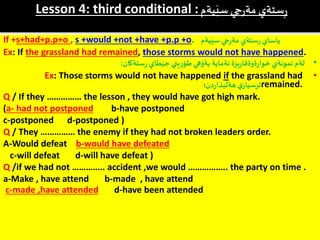
Lesson 4: third conditional :‫يةم‬َ‫سي‬ ‫جي‬‫ر‬‫مة‬ ‫ستةي‬ِ‫ر‬
If +s+had+p.p+o , s +would +not +have +p.p +o. ‫يةم‬َ‫سي‬ ‫جي‬‫ر‬‫مة‬ ‫ستةي‬‫ر‬ ‫ياساي‬
Ex: If the grassland had remained, those storms would not have happened.
•‫يزة‬‫ر‬‫ةوةفا‬‫ر‬‫خوا‬ ‫نمونةي‬ ‫لةم‬‫طاي‬َ‫جي‬ ‫يني‬ِ‫ر‬‫طؤ‬ ‫بةؤهي‬ ‫نةماية‬‫ستةكان‬ِ‫ر‬:
•Ex: Those storms would not have happened if the grassland had
remained.‫ي‬‫ثرسيار‬‫دن‬‫ر‬‫بذا‬
َ
‫هةل‬:
Q / If they …………… the lesson , they would have got high mark.
(a- had not postponed b-have postponed
c-postponed d-postponed )
Q / They …………… the enemy if they had not broken leaders order.
A-Would defeat b-would have defeated
c-will defeat d-will have defeat )
Q /if we had not ………….. accident ,we would …………….. the party on time .
a-Make , have attend b-made , have attend
c-made ,have attended d-have been attended
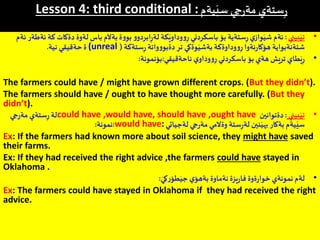
Lesson 4: third conditional :‫يةم‬َ‫سي‬ ‫جي‬‫ر‬‫مة‬ ‫ستةي‬ِ‫ر‬
•‫بيني‬َ‫تي‬:‫د‬ ‫لةوة‬ ‫باس‬ ‫بةآلم‬ ‫ة‬‫و‬‫بو‬ ‫و‬‫ابردو‬ِ‫ر‬‫لة‬ ‫كة‬َ‫وداوي‬‫و‬ِ‫ر‬ ‫باسكردني‬ ‫بؤ‬ ‫ستةية‬ِ‫ر‬‫ي‬‫واز‬َ‫شي‬ ‫ئةم‬‫ئةم‬ ‫ئةطةر‬ ‫كة‬ ‫ةكات‬
‫ستةكة‬ِ‫ر‬ ‫واتة‬‫و‬‫دةبو‬‫تر‬ ‫وةكي‬َ‫بةشي‬ ‫وداوةكة‬‫و‬ِ‫ر‬ ‫ئةوا‬‫ر‬‫هؤكا‬ ‫شتةنةبواية‬((unreal‫نية‬ ‫حةقيقي‬ ‫ة‬.
•‫ناحةقيقي‬ ‫ي‬‫وداو‬‫و‬ِ‫ر‬ ‫باسكردني‬ ‫بؤ‬ ‫هةي‬ ‫تريش‬ ‫طاي‬َ‫ي‬ِ‫ر‬:‫بؤنمونة‬:
The farmers could have / might have grown different crops. (But they didn’t).
The farmers should have / ought to have thought more carefully. (But they
didn’t).
•‫بيني‬َ‫تي‬:‫دةتوانين‬could have ,would have, should have ,ought have‫جي‬‫ر‬‫مة‬ ‫ستةي‬ِ‫ر‬ ‫لة‬
‫لةجياتي‬ ‫جي‬‫ر‬‫مة‬ ‫وةالمي‬ ‫ستة‬ِ‫ر‬‫لة‬ ‫نين‬َ‫بهي‬ ‫بةكار‬ ‫يةم‬َ‫سي‬would have::‫نمونة‬:
Ex: If the farmers had known more about soil science, they might have saved
their farms.
Ex: If they had received the right advice ,the farmers could have stayed in
Oklahoma .
•‫يزة‬‫ر‬‫فا‬ ‫ةوة‬‫ر‬‫خوا‬ ‫نمونةي‬ ‫لةم‬‫ي‬‫بةهؤ‬ ‫نةماوة‬َ‫كي‬‫ر‬‫طؤ‬َ‫جي‬:
Ex: The farmers could have stayed in Oklahoma if they had received the right
advice.
Lesson 4: third conditional :‫يةم‬َ‫سي‬ ‫جي‬‫ر‬‫مة‬ ‫ستةي‬ِ‫ر‬
•‫دن‬‫ر‬‫بذا‬
َ
‫هةل‬ ‫ثرسيار‬:
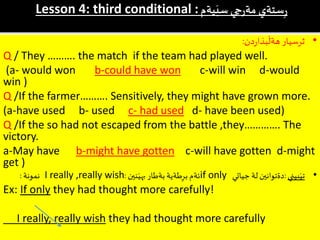
Q / They ………. the match if the team had played well.
(a- would won b-could have won c-will win d-would
win )
Q /If the farmer………. Sensitively, they might have grown more.
(a-have used b- used c- had used d- have been used)
Q /If the so had not escaped from the battle ,they…………. The
victory.
a-May have b-might have gotten c-will have gotten d-might
get )
•‫بيني‬َ‫تي‬:‫جياتي‬ ‫لة‬ ‫دةتوانين‬if only‫نين‬َ‫بهي‬ ‫بةطار‬ ‫طةية‬ِ‫بر‬ ‫ئةم‬:I really ,really wish‫نمونة‬:
Ex: If only they had thought more carefully!
I really, really wish they had thought more carefully
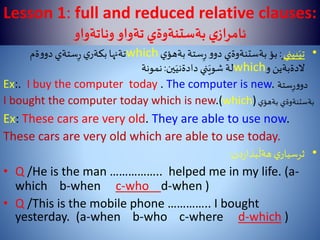
Lesson 1: full and reduced relative clauses:
‫ي‬‫ئامراز‬‫تةواو‬ ‫بةستنةوةي‬‫وناتةواو‬
•‫بني‬َ‫تي‬:‫ئةمانةن‬ ‫كة‬‫دةكةين‬‫باس‬‫رةدا‬َ‫لي‬ ‫بةستنةوةي‬ ‫ي‬‫از‬‫ر‬‫ئام‬‫و‬‫دو‬:
•1-who:‫و‬‫بو‬‫ظ‬‫ؤ‬‫مر‬ ‫يةكةم‬‫ستةي‬ِ‫ر‬‫ي‬‫بكةر‬‫ئةطةر‬ ‫ت‬َ‫دي‬ ‫بةكار‬.
•2-which:‫و‬‫نةبو‬ ‫ظ‬‫ؤ‬‫مر‬‫يةكةم‬‫ستةي‬ِ‫ر‬‫ي‬‫بكةر‬‫ئةطةر‬ ‫ت‬َ‫دي‬ ‫بةكار‬.
•‫كيان‬‫و‬‫دو‬‫ر‬‫هة‬ ‫لةجياتي‬ ‫دةتوانين‬that‫نين‬َ‫بهي‬ ‫بةكار‬.
•‫لة‬‫ك‬َ‫يةكي‬‫ر‬‫هة‬who ,which‫ةم‬‫و‬‫دو‬‫ستةي‬ِ‫ر‬‫ئةطةر‬‫بكةر‬‫دةبنة‬‫جار‬ َ‫هةندي‬
‫نمونةية‬ ‫لةم‬ ‫،وةكو‬‫و‬‫نةبو‬‫ي‬‫بكةر‬:
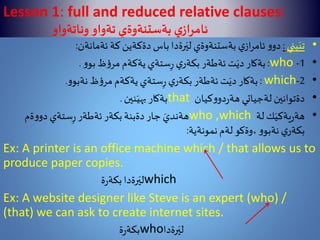
Ex: A printer is an office machine which / that allows us to
produce paper copies.
‫ة‬‫ر‬‫بكة‬‫رةدا‬َ‫لي‬which
Ex: A website designer like Steve is an expert (who) /
(that) we can ask to create internet sites.
‫ة‬‫ر‬‫بكة‬who‫رةدا‬َ‫لي‬
Lesson 1: full and reduced relative clauses:
‫وناتةواو‬‫تةواو‬ ‫بةستنةوةي‬‫ي‬‫ئامراز‬
•‫بيني‬َ‫تي‬:‫ث‬ ‫ي‬‫انيار‬‫ز‬ ‫يان‬ ، ‫دةكةن‬ ‫تةواو‬ ‫ستةكة‬ِ‫ر‬ ‫ماناي‬ ‫بةستنةوة‬ ‫ي‬‫از‬‫ر‬‫ئام‬ ‫ةوة‬‫ر‬‫سة‬ ‫ستانةي‬ِ‫ر‬ ‫ة‬‫ر‬‫جؤ‬ ‫لةم‬‫ةي‬‫ر‬‫با‬‫ر‬‫دة‬ ‫ويست‬َ‫ي‬
‫دةدةن‬ َ‫ثي‬ ‫شتةكةمان‬ ‫يان‬ ‫كةسةكة‬.
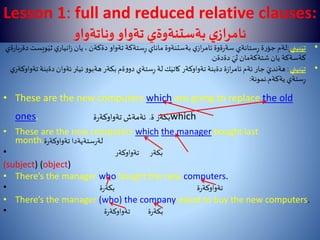
•‫بيني‬َ‫تي‬:‫ئةوان‬‫ئيتر‬ ‫و‬‫هةبو‬ ‫بكةر‬ ‫ةم‬‫و‬‫دو‬ ‫ستةي‬ِ‫ر‬ ‫لة‬ ‫ك‬َ‫كاتي‬ ‫تةواوكةر‬‫دةبنة‬ ‫ة‬‫ز‬‫ا‬‫ر‬‫ئام‬ ‫ئةم‬ ‫جار‬ َ‫هةندي‬‫ي‬‫تةواوكةر‬ ‫دةبنة‬
‫يةكةم‬ ‫ستةي‬ِ‫ر‬.‫نمونة‬:
• These are the new computers which are going to replace the old
ones. ‫ة‬ ‫بكةر‬.‫ة‬‫ر‬‫تةواوكة‬ ‫ئةمةش‬ which
• These are the new computers which the manager bought last
month.‫ة‬‫ر‬‫تةواوكة‬ ‫ستةيةدا‬‫ر‬‫لة‬
• ‫تةواوكةر‬ ‫بكةر‬
(subject) (object)
• There’s the manager who bought the new computers.
• ‫ة‬‫ر‬‫بكة‬ ‫ة‬‫ر‬‫تةواوكة‬
• There’s the manager (who) the company asked to buy the new computers.
• ‫ة‬‫ر‬‫تةواوكة‬ ‫ة‬‫ر‬‫بكة‬
Lesson 1: full and reduced relative clauses:
‫وناتةواو‬‫تةواو‬ ‫بةستنةوةي‬‫ي‬‫ئامراز‬
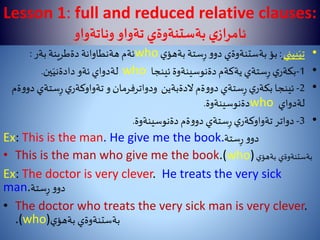
•‫بيني‬َ‫تي‬:‫ي‬‫بةهؤ‬‫ستة‬ِ‫ر‬‫و‬‫دو‬ ‫بةستنةوةي‬‫بؤ‬who‫بةر‬‫دةطرينة‬ ‫هةنطاوانة‬ ‫ئةم‬:
•1-‫ئينجا‬ ‫دةنوسينةوة‬‫يةكةم‬‫ستةي‬ِ‫ر‬‫ي‬‫بكةر‬who‫ين‬َ‫دادةني‬‫ئةو‬‫لةدواي‬.
•2-‫ستة‬ِ‫ر‬‫ي‬‫تةواوكةر‬‫و‬‫ودواترفرمان‬ ‫الدةبةين‬‫ةم‬‫و‬‫دو‬ ‫ستةي‬ِ‫ر‬‫ي‬‫بكةر‬ ‫ئينجا‬‫ةم‬‫و‬‫دو‬ ‫ي‬
‫لةدواي‬who‫دةنوسينةوة‬.
•3-‫دةنوسينةوة‬‫ةم‬‫و‬‫دو‬‫ستةي‬ِ‫ر‬‫ي‬‫تةواوكةر‬‫دواتر‬.
Ex: This is the man. He give me the book.‫ستة‬ِ‫ر‬‫و‬‫دو‬
• This is the man who give me the book.(who) ‫بةستنةوةي‬‫ي‬‫بةهؤ‬
Ex: The doctor is very clever. He treats the very sick
man.‫ستة‬ِ‫ر‬‫و‬‫دو‬
• The doctor who treats the very sick man is very clever.
.(who)‫ي‬‫بةهؤ‬ ‫بةستنةوةي‬
Lesson 1: full and reduced relative clauses:
‫وناتةواو‬‫تةواو‬ ‫بةستنةوةي‬‫ي‬‫ئامراز‬
•‫بيني‬َ‫تي‬:‫ي‬‫بةهؤ‬‫ستة‬ِ‫ر‬‫و‬‫دو‬ ‫بةستنةوةي‬‫بؤ‬which‫ةم‬‫و‬‫دو‬‫ستةي‬ِ‫ر‬ ‫ي‬‫بكةر‬‫تةنها‬
‫و‬ ‫الدةبةين‬which‫ين‬َ‫دادةني‬ ‫ني‬َ‫شوي‬‫لة‬:‫نمونة‬
Ex:. I buy the computer today . The computer is new. ‫ستة‬ِ‫ر‬‫و‬‫دو‬
I bought the computer today which is new.(which) ‫بةستنةوةي‬‫ي‬‫بةهؤ‬
Ex: These cars are very old. They are able to use now.
These cars are very old which are able to use today.
•‫دن‬‫ر‬‫بذا‬
َ
‫هةل‬ ‫ي‬‫ثرسيار‬:
• Q /He is the man …………….. helped me in my life. (a-
which b-when c-who d-when )
• Q /This is the mobile phone ………….. I bought
yesterday. (a-when b-who c-where d-which )
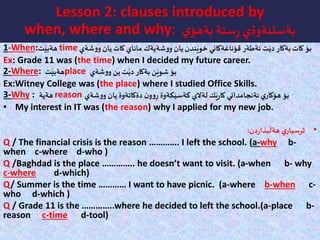
Lesson 2: clauses introduced by
when, where and why: ‫ي‬‫بةهؤ‬ ‫ستة‬ِ‫ر‬ ‫بةستنةوةي‬
1-When:‫ت‬َ‫هةبي‬ time ‫بؤ‬‫ماناي‬ ‫شةيةك‬‫و‬‫و‬ ‫يان‬ ‫ندن‬َ‫خوي‬ ‫قؤناغةكاني‬ ‫ئةطةر‬ ‫ت‬َ‫دي‬ ‫بةكار‬ ‫كات‬‫شةي‬‫و‬‫و‬ ‫يان‬ ‫كات‬
Ex: Grade 11 was (the time) when I decided my future career.
2-Where: ‫ت‬َ‫هةبي‬place ‫شةي‬‫و‬‫و‬ ‫ين‬ ‫ت‬َ‫دي‬ ‫بةكار‬ ‫ن‬َ‫شوي‬ ‫بؤ‬
Ex:Witney College was (the place) where I studied Office Skills.
3-Why : ‫هةية‬ reason ‫شةي‬‫و‬‫و‬ ‫يان‬ ‫دةكاتةوة‬ ‫ن‬‫و‬‫و‬ِ‫ر‬ ‫كةوة‬َ‫كةسي‬ ‫لةالي‬ ‫ك‬َ‫ي‬‫ر‬‫كا‬ ‫ئةنجامداني‬ ‫ي‬‫هؤكار‬ ‫بؤ‬
• My interest in IT was (the reason) why I applied for my new job.
•‫دن‬‫ر‬‫بذا‬
َ
‫هةل‬ ‫ي‬‫ثرسيار‬:
Q / The financial crisis is the reason …………. I left the school. (a-why b-
when c-where d-who )
Q /Baghdad is the place ………….. he doesn’t want to visit. (a-when b- why
c-where d-which)
Q/ Summer is the time ………… I want to have picnic. (a-where b-when c-
who d-which )
Q / Grade 11 is the …………..where he decided to left the school.(a-place b-
reason c-time d-tool)
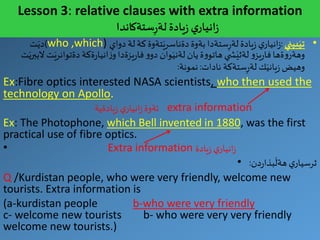
Lesson 3: relative clauses with extra information
‫ي‬‫انيار‬‫ز‬‫يادة‬‫ز‬‫ستةكاندا‬ِ‫ر‬‫لة‬
•‫بيني‬َ‫تي‬:‫دواي‬ ‫لة‬ ‫كة‬‫تةوة‬َ‫دةناسري‬‫بةوة‬ ‫ستةدا‬ِ‫ر‬‫لة‬ ‫يادة‬‫ز‬ ‫ي‬‫انيار‬‫ز‬who ,which))‫ت‬َ‫دي‬
َ‫دةتوانري‬ ‫ةكة‬‫ر‬‫انيا‬‫ز‬‫و‬‫يزةدا‬‫ر‬‫فا‬‫و‬‫دو‬ ‫وان‬َ‫لةني‬ ‫يان‬‫ة‬‫و‬‫هاتو‬ ‫ي‬ ‫ش‬َ‫لةثي‬ ‫و‬‫يز‬‫ر‬‫فا‬‫ةها‬‫و‬‫وهةر‬‫ت‬َ‫الببري‬‫ت‬
‫نادات‬ ‫ستةكة‬ِ‫ر‬‫لة‬ ‫ك‬َ‫ياني‬‫ز‬‫وهيض‬:‫نمونة‬:
Ex:Fibre optics interested NASA scientists, who then used the
technology on Apollo.
‫ي‬‫انيار‬‫ز‬‫ئةوة‬‫يادةية‬‫ز‬ extra information
Ex: The Photophone, which Bell invented in 1880, was the first
practical use of fibre optics.
• Extra information ‫يادة‬‫ز‬ ‫ي‬‫انيار‬‫ز‬
• ‫دن‬‫ر‬‫بذا‬
َ
‫هةل‬ ‫ي‬‫ثرسيار‬:
Q /Kurdistan people, who were very friendly, welcome new
tourists. Extra information is
(a-kurdistan people b-who were very friendly
c- welcome new tourists b- who were very very friendly
welcome new tourists.)
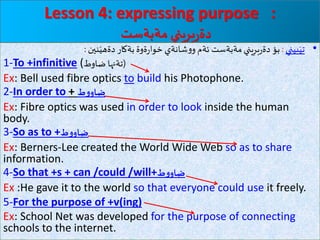
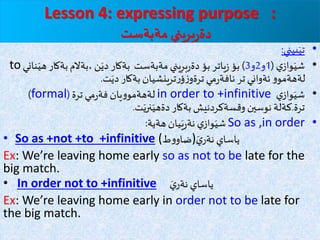
Lesson 4: expressing purpose :
‫مةبةست‬ ‫يني‬ِ‫بر‬‫ر‬‫دة‬
•‫بيني‬َ‫تي‬:‫نين‬َ‫دةهي‬ ‫بةكار‬‫ةوة‬‫ر‬‫خوا‬‫شانةي‬‫و‬‫و‬ ‫ئةم‬ ‫مةبةست‬‫يني‬ِ‫بر‬‫ر‬‫دة‬ ‫بؤ‬:
1-To +infinitive ( (‫ضاوط‬ ‫تةنها‬
Ex: Bell used fibre optics to build his Photophone.
2-In order to + ‫ط‬‫و‬‫ضاو‬
Ex: Fibre optics was used in order to look inside the human
body.
3-So as to +‫ط‬‫و‬‫ضاو‬
Ex: Berners-Lee created the World Wide Web so as to share
information.
4-So that +s + can /could /will+‫ط‬‫و‬‫ضاو‬
Ex :He gave it to the world so that everyone could use it freely.
5-For the purpose of +v(ing)
Ex: School Net was developed for the purpose of connecting
schools to the internet.
Lesson 4: expressing purpose :
‫مةبةست‬ ‫يني‬ِ‫بر‬‫ر‬‫دة‬
•‫بيني‬َ‫تي‬:
•‫ي‬‫واز‬َ‫شي‬(1‫و‬2‫و‬3)‫بةكار‬‫،بةالم‬‫ن‬َ‫دي‬ ‫بةكار‬ ‫مةبةست‬‫يني‬ِ‫بر‬‫ر‬‫دة‬ ‫بؤ‬‫ياتر‬‫ز‬ ‫بؤ‬‫ناني‬َ‫هي‬to
‫ت‬َ‫دي‬ ‫بةكار‬‫ترينشيان‬‫ر‬‫ؤ‬‫ز‬‫ترةو‬ ‫مي‬‫ر‬‫نافة‬ ‫تر‬‫ئةواني‬‫و‬‫لةهةمو‬.
•‫ي‬‫واز‬َ‫شي‬in order to +infinitive‫ترة‬ ‫مي‬‫ر‬‫فة‬‫يان‬‫و‬‫لةهةمو‬(formal)
‫ترة‬.‫ت‬َ‫نري‬َ‫دةهي‬ ‫بةكار‬‫وقسةكردنيش‬ ‫نوسين‬‫كةلة‬.
•So as ,in order‫هةية‬‫يان‬َ‫ي‬‫ر‬‫نة‬ ‫ي‬‫واز‬َ‫شي‬:
• So as +not +to +infinitive (‫ط‬‫و‬‫)ضاو‬ َ‫ي‬‫نةر‬ ‫ياساي‬
Ex: We’re leaving home early so as not to be late for the
big match.
• In order not to +infinitive َ‫ي‬‫نةر‬ ‫ياساي‬
Ex: We’re leaving home early in order not to be late for
the big match.
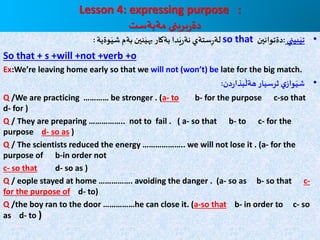
Lesson 4: expressing purpose :
‫مةبةست‬ ‫يني‬ِ‫بر‬‫ر‬‫دة‬
•‫بيني‬َ‫تي‬:‫دةتوانين‬so that‫وةية‬َ‫شي‬‫بةم‬‫نين‬َ‫بهي‬ ‫بةكار‬ ‫دا‬َ‫ي‬‫ر‬‫نة‬ ‫ستةي‬ِ‫ر‬‫لة‬:
So that + s +will +not +verb +o
Ex:We’re leaving home early so that we will not (won’t) be late for the big match.
•‫دن‬‫ر‬‫بذا‬
َ
‫هةل‬‫ثرسيار‬‫ي‬‫واز‬َ‫شي‬:
Q /We are practicing ………… be stronger . (a- to b- for the purpose c-so that
d- for )
Q / They are preparing …………….. not to fail . ( a- so that b- to c- for the
purpose d- so as )
Q / The scientists reduced the energy ……………….. we will not lose it . (a- for the
purpose of b-in order not
c- so that d- so as )
Q / eople stayed at home ……………. avoiding the danger . (a- so as b- so that c-
for the purpose of d- to)
Q /the boy ran to the door ……………he can close it. (a-so that b- in order to c- so
as d- to )
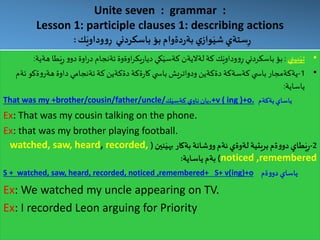
Unite seven : grammar :
Lesson 1: participle clauses 1: describing actions
‫ك‬َ‫وداوي‬‫و‬ِ‫ر‬ ‫باسكردني‬ ‫بؤ‬ ‫دةوام‬‫ر‬‫بة‬ ‫ي‬‫واز‬َ‫شي‬ ‫ستةي‬ِ‫ر‬:
•‫بيني‬َ‫تي‬:ِ‫ر‬ ‫و‬‫دو‬‫اوة‬‫ر‬‫د‬ ‫ئةنجام‬ ‫اوةوة‬‫ر‬‫يك‬‫ر‬‫ديا‬ ‫كي‬َ‫كةسي‬ ‫لةاليةن‬‫كة‬ ‫ك‬َ‫وداوي‬‫و‬ِ‫ر‬ ‫باسكردني‬ ‫بؤ‬‫هةية‬ ‫طا‬َ‫ي‬:
•1-‫ئ‬ ‫ةكو‬‫و‬‫هةر‬ ‫داوة‬ ‫ئةنجامي‬‫كة‬ ‫دةكةين‬ ‫ةكة‬‫ر‬‫كا‬ ‫ي‬ ‫باس‬ ‫ودواتريش‬ ‫دةكةين‬ ‫كةسةكة‬ ‫ي‬ ‫باس‬ ‫يةكةمجار‬‫ةم‬
‫ياساية‬:
That was my +brother/cousin/father/uncle/ ‫ي‬‫ناو‬‫يان‬‫ك‬َ‫كةسي‬ .+v ( ing )+o. ‫يةكةم‬‫ياساي‬
Ex: That was my cousin talking on the phone.
Ex: that was my brother playing football.
2-‫طاي‬َ‫ي‬ِ‫ر‬‫نين‬َ‫بهي‬ ‫بةكار‬ ‫شانة‬‫و‬‫و‬‫ئةم‬ ‫لةوةي‬ ‫بريتية‬‫ةم‬‫و‬‫دو‬(watched, saw, heard, recorded,
noticed ,remembered)‫ياساية‬ ‫بةم‬:
S + watched, saw, heard, recorded, noticed ,remembered+ S+ v(ing)+o ‫ةم‬‫و‬‫دو‬ ‫ياساي‬
Ex: We watched my uncle appearing on TV.
Ex: I recorded Leon arguing for Priority
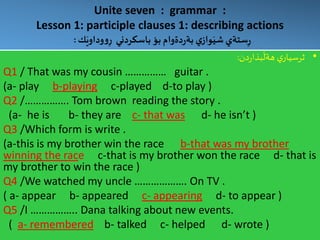
Unite seven : grammar :
Lesson 1: participle clauses 1: describing actions
‫ك‬َ‫وداوي‬‫و‬ِ‫ر‬ ‫باسكردني‬ ‫بؤ‬ ‫دةوام‬‫ر‬‫بة‬ ‫ي‬‫واز‬َ‫شي‬ ‫ستةي‬ِ‫ر‬:
•‫دن‬‫ر‬‫بذا‬
َ
‫هةل‬ ‫ي‬‫ثرسيار‬:
Q1 / That was my cousin …………… guitar .
(a- play b-playing c-played d-to play )
Q2 /……………. Tom brown reading the story .
(a- he is b- they are c- that was d- he isn’t )
Q3 /Which form is write .
(a-this is my brother win the race b-that was my brother
winning the race c-that is my brother won the race d- that is
my brother to win the race )
Q4 /We watched my uncle ………………. On TV .
( a- appear b- appeared c- appearing d- to appear )
Q5 /I …………….. Dana talking about new events.
( a- remembered b- talked c- helped d- wrote )
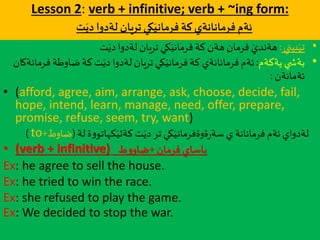
Lesson 2: verb + infinitive; verb + ~ing form:
‫كة‬‫فرمانانةي‬ ‫ئةم‬‫كي‬َ‫فرماني‬‫ت‬َ‫دي‬ ‫لةدوا‬ ‫تريان‬
•‫بيني‬َ‫تي‬:‫ت‬َ‫دي‬‫لةدوا‬ ‫تريان‬ ‫كي‬َ‫فرماني‬‫كة‬ ‫هةن‬ ‫فرمان‬ َ‫هةندي‬
•‫يةكةم‬ ‫ي‬ ‫بةش‬:‫ف‬‫ضاوطة‬‫كة‬‫ت‬َ‫دي‬‫لةدوا‬ ‫تريان‬ ‫كي‬َ‫فرماني‬‫كة‬ ‫فرمانانةي‬‫ئةم‬‫رمانةكان‬
‫ئةمانةن‬:
• (afford, agree, aim, arrange, ask, choose, decide, fail,
hope, intend, learn, manage, need, offer, prepare,
promise, refuse, seem, try, want)
‫لة‬‫ة‬‫و‬‫كهاتو‬َ‫كةثي‬ ‫ت‬َ‫دي‬‫تر‬ ‫كي‬َ‫ةوةفرماني‬‫ر‬‫سة‬ ‫ي‬ ‫فرمانانة‬‫ئةم‬‫لةدواي‬(‫ضاو‬‫ط‬+to)
• (verb + infinitive) ‫فرمان‬ ‫ياساي‬+‫ط‬‫و‬‫ضاو‬
Ex: he agree to sell the house.
Ex: he tried to win the race.
Ex: she refused to play the game.
Ex: We decided to stop the war.
Lesson 2: verb + infinitive; verb + ~ing form:
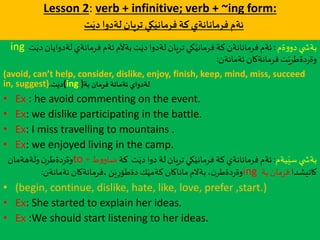
‫ت‬َ‫دي‬ ‫لةدوا‬‫تريان‬‫كي‬َ‫فرماني‬ ‫كة‬‫فرمانانةي‬ ‫ئةم‬
‫ةم‬‫و‬‫دو‬ ‫ي‬ ‫بةش‬:‫لةدواي‬‫فرمانةي‬‫ئةم‬‫بةآلم‬‫ت‬َ‫دي‬‫لةدوا‬‫تريان‬‫كي‬َ‫فرماني‬ ‫كة‬‫فرمانانةن‬‫ئةم‬‫ت‬َ‫دي‬‫ان‬ing
‫ئةمانةن‬ ‫فرمانةكان‬‫ت‬َ‫دةطري‬‫ر‬‫وة‬:
(avoid, can’t help, consider, dislike, enjoy, finish, keep, mind, miss, succeed
in, suggest) ‫ت‬َ‫دي‬. (ing )‫بة‬ ‫فرمان‬ ‫ئةمانة‬ ‫لةدواي‬
• Ex : he avoid commenting on the event.
• Ex: we dislike participating in the battle.
• Ex: I miss travelling to mountains .
• Ex: we enjoyed living in the camp.
‫يةم‬َ‫سي‬ ‫ي‬ ‫بةش‬:‫كة‬ ‫ت‬َ‫دي‬‫دوا‬ ‫لة‬‫تريان‬‫كي‬َ‫فرماني‬ ‫كة‬‫فرمانانةي‬‫ئةم‬‫ط‬‫و‬‫ضاو‬+to‫ولةهةمان‬‫ن‬‫دةطر‬‫ر‬‫وة‬
‫كاتيشدا‬‫بة‬‫فرمان‬ing‫ئةمانةن‬ ‫،فرمانةكان‬‫ن‬َ‫ي‬ِ‫ر‬‫دةطؤ‬ ‫ك‬َ‫كةمي‬ ‫ماناكان‬‫بةالم‬،‫ن‬‫دةطر‬‫ر‬‫وة‬:
• (begin, continue, dislike, hate, like, love, prefer ,start.)
• Ex: She started to explain her ideas.
• Ex :We should start listening to her ideas.
Lesson 2: verb + infinitive; verb + ~ing form:
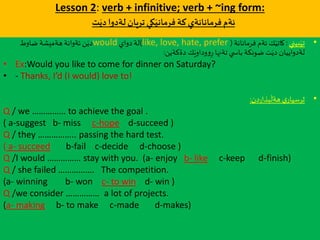
‫ت‬َ‫دي‬‫لةدوا‬‫تريان‬‫كي‬َ‫فرماني‬‫كة‬‫فرمانانةي‬‫ئةم‬
•‫بيني‬َ‫تي‬:‫فرمانانة‬ ‫ئةم‬ ‫ك‬َ‫كاتي‬(like, love, hate, prefer)‫دواي‬ ‫لة‬would‫ضاوط‬ ‫هةميشة‬ ‫ئةوانة‬‫ن‬َ‫دي‬
‫دةكةين‬ ‫ك‬َ‫وداوي‬‫و‬ِ‫ر‬ ‫تةنها‬ ‫ي‬ ‫باس‬ ‫ضونكة‬‫ت‬َ‫دي‬ ‫لةدواييان‬:
• Ex:Would you like to come for dinner on Saturday?
• - Thanks, I’d (I would) love to!
•‫دن‬‫ر‬‫بذا‬
َ
‫هةل‬ ‫ي‬‫ثرسيار‬:
Q / we …………… to achieve the goal .
( a-suggest b- miss c-hope d-succeed )
Q / they …………….. passing the hard test.
( a- succeed b-fail c-decide d-choose )
Q /I would …………… stay with you. (a- enjoy b- like c-keep d-finish)
Q / she failed ……………. The competition.
(a- winning b- won c- to win d- win )
Q /we consider …………… a lot of projects.
(a- making b- to make c-made d-makes)
Lesson 2: verb + infinitive; verb + ~ing form:
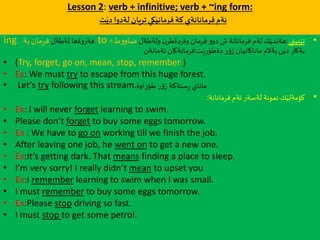
‫ت‬َ‫دي‬‫لةدوا‬ ‫تريان‬‫كي‬َ‫فرماني‬ ‫كة‬ ‫فرمانانةي‬ ‫ئةم‬
•‫بيني‬َ‫تي‬:‫ولةطةل‬ ‫ن‬‫دةطر‬‫ر‬‫وة‬ ‫فرمان‬ ‫و‬‫دو‬ ‫ش‬ ‫فرمانانة‬ ‫لةم‬ ‫ك‬َ‫هةندي‬‫ط‬‫و‬‫ضاو‬+to‫لةطةل‬ ‫ةها‬‫و‬‫هةر‬‫بة‬‫فرمان‬ing
‫ت‬َ‫ي‬ِ‫ر‬‫دةطؤ‬ ‫ر‬‫ؤ‬‫ز‬ ‫ماناكانيان‬ ‫بةالم‬‫ن‬َ‫دي‬ ‫بةكار‬:‫ئةمانةن‬ ‫فرمانةكان‬
• (Try, forget, go on, mean, stop, remember )
• Ex: We must try to escape from this huge forest.
• Let’s try following this stream.‫اوة‬ِ‫ر‬‫طؤ‬ ‫ر‬‫ؤ‬‫ز‬ ‫ستةكة‬ِ‫ر‬ ‫ماناي‬
•‫فرمانانة‬ ‫ئةم‬ ‫لةسةر‬ ‫نمونة‬ ‫ك‬َ‫كؤمةلي‬:
• Ex: I will never forget learning to swim.
• Please don’t forget to buy some eggs tomorrow.
• Ex : We have to go on working till we finish the job.
• After leaving one job, he went on to get a new one.
• Ex:It’s getting dark. That means finding a place to sleep.
• I’m very sorry! I really didn’t mean to upset you
• Ex:I remember learning to swim when I was small.
• I must remember to buy some eggs tomorrow.
• Ex:Please stop driving so fast.
• I must stop to get some petrol.
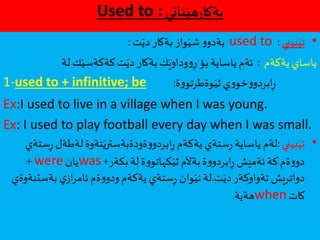
Used to : ‫ناني‬َ‫هي‬‫ر‬‫بةكا‬
•‫بيني‬َ‫تي‬:used to‫ت‬َ‫دي‬ ‫بةكار‬ ‫واز‬َ‫شي‬‫و‬‫بةدو‬:
‫يةكةم‬ ‫ياساي‬:‫لة‬ ‫ك‬َ‫كةكةسي‬‫ت‬َ‫دي‬ ‫بةكار‬‫ك‬َ‫وداوي‬‫و‬ِ‫ر‬ ‫بؤ‬ ‫ياساية‬ ‫ئةم‬
1-used to + infinitive; be ‫ة‬‫و‬‫وةطرتو‬َ‫ثي‬‫ي‬‫و‬‫خو‬‫و‬‫ابردو‬ِ‫ر‬:
Ex:I used to live in a village when I was young.
Ex: I used to play football every day when I was small.
•‫بيني‬َ‫تي‬:‫ل‬ ‫تةوة‬َ‫ةودةبةستري‬‫و‬‫ابردو‬ِ‫ر‬‫يةكةم‬ ‫ستةي‬ِ‫ر‬ ‫ياساية‬ ‫لةم‬‫ستةي‬ِ‫ر‬‫ةطةل‬
‫ة‬‫و‬‫كهاتو‬َ‫ثي‬ ‫بةآلم‬‫ة‬‫و‬‫ابردو‬ِ‫ر‬ ‫ئةميش‬ ‫كة‬‫ةم‬‫و‬‫دو‬‫بكةر‬ ‫لة‬+was‫يان‬were+
‫دواتريش‬‫ت‬َ‫دي‬‫تةواوكةر‬.‫بةس‬ ‫ي‬‫از‬‫ر‬‫ئام‬‫ةم‬‫و‬‫ودو‬‫يةكةم‬ ‫ستةي‬ِ‫ر‬ ‫وان‬َ‫ني‬‫لة‬‫تنةوةي‬
‫كات‬when‫هةية‬.
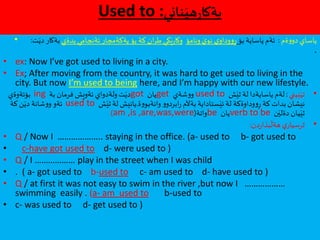
Used to :‫ناني‬َ‫هي‬‫ر‬‫بةكا‬
• ‫ةم‬‫و‬‫دو‬ ‫ياساي‬:‫بؤ‬ ‫ياساية‬ ‫ئةم‬‫ونامؤ‬ َ‫ي‬‫نو‬ ‫ي‬‫وداو‬‫و‬ِ‫ر‬‫بدةي‬ ‫ئةنجامي‬ ‫يةكةمجار‬ ‫بؤ‬ ‫كة‬ ‫ان‬‫ر‬‫ط‬ ‫كي‬َ‫ي‬‫ر‬‫وكا‬‫ت‬َ‫دي‬ ‫بةكار‬:
.
• ex: Now I’ve got used to living in a city.
• Ex; After moving from the country, it was hard to get used to living in the
city. But now I’m used to being here, and I’m happy with our new lifestyle.
•‫بيني‬َ‫تي‬:‫ش‬َ‫ثي‬ ‫لة‬ ‫ياسايةدا‬ ‫لةم‬used to‫شةي‬‫و‬‫و‬get‫يان‬got‫بة‬ ‫فرمان‬ ‫ئةويش‬ ‫ولةدواي‬‫ت‬َ‫دي‬ing‫بؤئةوةي‬
‫ة‬‫و‬‫وانةبو‬ ‫و‬‫ابردو‬‫ر‬ ‫بةآلم‬ ‫ستاداية‬َ‫ئي‬ ‫لة‬ ‫وداوةكة‬‫و‬ِ‫ر‬ ‫كة‬ ‫بدات‬ ‫نيشان‬.‫ش‬َ‫ثي‬ ‫لة‬ ‫يانيش‬used to‫كة‬‫ن‬َ‫دي‬ ‫شانة‬‫و‬‫و‬ ‫ئةو‬
‫ن‬َ‫دةلي‬ ‫يان‬َ‫ثي‬verb to be‫يان‬be‫واتة‬(am ,is ,are,was,were)
•‫دن‬‫ر‬‫بذا‬
َ
‫هةل‬ ‫ي‬‫ثرسيار‬:
• Q / Now I ……………….. staying in the office. (a- used to b- got used to
• c-have got used to d- were used to )
• Q / I ……………… play in the street when I was child
• . ( a- got used to b-used to c- am used to d- have used to )
• Q / at first it was not easy to swim in the river ,but now I ………………
swimming easily . (a- am used to b-used to
• c- was used to d- get used to )
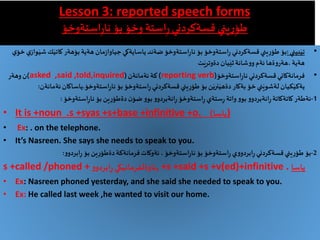
Lesson 3: reported speech forms
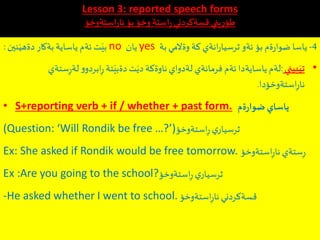
‫يني‬ِ‫ر‬ِ‫طؤ‬‫بؤ‬ ‫وخؤ‬ ‫استة‬ِ‫ر‬‫قسةكردني‬‫استةوخؤ‬ِ‫ر‬‫نا‬
•‫بيني‬َ‫تي‬:‫كا‬ ‫بؤهةر‬‫هةية‬‫مان‬‫ز‬‫جياوا‬‫ياسايةكي‬‫ضةند‬‫استةوخؤ‬ِ‫ر‬‫نا‬‫بؤ‬‫استةوخؤ‬ِ‫ر‬‫قسةكردني‬‫يني‬ِ‫ر‬‫طؤ‬ ‫بؤ‬‫ي‬‫خؤ‬‫ي‬‫واز‬َ‫شي‬‫ك‬َ‫تي‬
‫ت‬َ‫دةوتري‬‫يان‬َ‫ثي‬‫شانة‬‫و‬‫و‬‫ئةم‬‫ةها‬‫و‬‫،هةر‬‫هةية‬
•‫استةوخؤ‬ِ‫ر‬‫نا‬‫قسةكردني‬‫فرمانةكاني‬(reporting verb)‫ئةمانةن‬ ‫كة‬(asked ,said ,told,inquired)‫وهةر‬‫ن‬
‫استةوخؤ‬ِ‫ر‬‫نا‬ ‫بؤ‬‫استةوخؤ‬ِ‫ر‬‫قسةكردني‬‫يني‬ِ‫ر‬‫طؤ‬ ‫بؤ‬ ‫ن‬َ‫نري‬َ‫دةهي‬‫بةكار‬‫خؤ‬‫ني‬َ‫لةشوي‬‫كيان‬َ‫يةكي‬.‫ياساك‬‫ئةمانةن‬‫ان‬:
1-‫ئةطةر‬‫استةوخؤ‬ِ‫ر‬‫نا‬ ‫بؤ‬‫ين‬ِ‫ر‬‫دةطؤ‬‫ن‬‫ضؤ‬‫و‬‫بو‬‫و‬‫انةبردو‬ِ‫ر‬‫استةوخؤ‬ِ‫ر‬‫ستةي‬ِ‫ر‬ ‫واتة‬‫و‬‫بو‬ ‫و‬‫انةبردو‬ِ‫ر‬‫كاتةكاتة‬:
• It is +noun .s +syas +s+base +infinitive +o. ‫ياسا‬) )
• Ex: . on the telephone.
• It’s Nasreen. She says she needs to speak to you.
2-‫بؤ‬‫و‬‫ابردو‬ِ‫ر‬ ‫بؤ‬‫ين‬ِ‫ر‬‫دةطؤ‬‫فرمانةكة‬‫ئةوكات‬،‫استةوخؤ‬ِ‫ر‬‫نا‬‫بؤ‬ ‫استةوخؤ‬ِ‫ر‬ ‫ي‬‫و‬‫ابردو‬ِ‫ر‬‫قسةكردني‬‫يني‬ِ‫ر‬‫طؤ‬:
s +called /phoned +‫و‬‫ابردو‬ِ‫ر‬‫كي‬َ‫,ئاوةلفرماني‬ +s +said +s +v(ed)+infinitive . ‫ياسا‬
• Ex: Nasreen phoned yesterday, and she said she needed to speak to you.
• Ex: He called last week ,he wanted to visit our home.
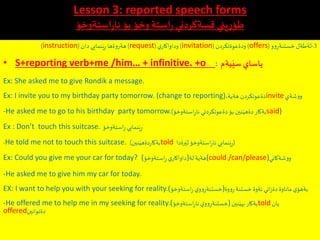
Lesson 3: reported speech forms
‫استةوخؤ‬ِ‫ر‬‫نا‬ ‫بؤ‬ ‫وخؤ‬‫استة‬ِ‫ر‬‫قسةكردني‬ ‫يني‬ِ‫ر‬ِ‫طؤ‬
3-‫لةطةل‬‫وو‬ِ‫خستنةر‬(offers)‫ودةعوةتكردن‬(invitation)‫ي‬‫وداواكار‬(request)‫دان‬‫نمايي‬َ‫ي‬ِ‫ر‬ ‫هةروةها‬(instruction)
• S+reporting verb+me /him… + infinitive. +o ‫يةم‬َ‫سي‬‫ياساي‬:
Ex: She asked me to give Rondik a message.
Ex: I invite you to my birthday party tomorrow. (change to reporting)،‫هةية‬ ‫دةعوتكردن‬invite‫ووشةي‬
-He asked me to go to his birthday party tomorrow. ‫استةوخؤ‬ِ‫ر‬‫نا‬ ‫دةعوتكردني‬‫بؤ‬ ‫نين‬َ‫دةهي‬ ‫بةكار‬) said)
Ex : Don’t touch this suitcase. ‫استةوخؤ‬ِ‫ر‬‫نمايي‬َ‫ي‬ِ‫ر‬
-He told me not to touch this suitcase. ‫نين‬َ‫دةهي‬‫ر‬‫بةكا‬) told (‫رةدا‬َ‫لي‬‫استةوخؤ‬ِ‫ر‬‫نا‬ ‫نمايي‬َ‫ي‬ِ‫ر‬
Ex: Could you give me your car for today? (‫استةوخؤ‬ِ‫ر‬ ‫ي‬‫لة)داواكار‬ ‫(هةية‬could /can/please)‫ووشةكاني‬
-He asked me to give him my car for today.
EX: I want to help you with your seeking for reality.(‫استةوخؤ‬ِ‫ر‬‫ي‬‫وو‬ِ‫وة)خستنةر‬‫و‬ِ‫ر‬‫خستنة‬‫ئةوة‬ ‫اني‬‫ز‬‫دة‬ ‫ماناوة‬‫ي‬‫بةهؤ‬
-He offered me to help me in my seeking for reality.(‫استةوخؤ‬ِ‫ر‬‫نا‬‫ي‬‫وو‬ِ‫)خستنةر‬‫نين‬َ‫بهي‬ ‫بةكار‬told‫يان‬
offered‫دةتوانين‬
Lesson 3: reported speech forms
‫استةوخؤ‬ِ‫ر‬‫نا‬‫بؤ‬‫وخؤ‬‫استة‬ِ‫ر‬‫قسةكردني‬ ‫يني‬ِ‫ر‬ِ‫طؤ‬
4-‫بة‬‫وةالمي‬ ‫كة‬ ‫انةي‬‫ر‬‫ثرسيا‬ ‫ئةو‬ ‫بؤ‬ ‫ةم‬‫ر‬‫ضوا‬ ‫ياسا‬yes‫يان‬no‫نين‬َ‫دةهي‬ ‫بةكار‬ ‫ياساية‬ ‫ئةم‬ ‫ت‬َ‫بي‬:
•‫بيني‬َ‫تي‬:ِ‫ر‬‫لة‬‫و‬‫ابردو‬ِ‫ر‬ ‫تة‬َ‫دةبي‬‫ت‬َ‫دي‬ ‫ناوةكة‬‫لةدواي‬ ‫فرمانةي‬ ‫ئةم‬ ‫ياسايةدا‬ ‫لةم‬‫ستةي‬
‫استةوخؤدا‬ِ‫ر‬‫نا‬.
• S+reporting verb + if / whether + past form. ‫ةم‬‫ر‬‫ضوا‬‫ياساي‬
(Question: ‘Will Rondik be free …?’)‫استةوخؤ‬ِ‫ر‬ ‫ي‬‫ثرسيار‬
Ex: She asked if Rondik would be free tomorrow. ‫استةوخؤ‬ِ‫ر‬‫نا‬ ‫ستةي‬ِ‫ر‬
Ex :Are you going to the school?‫استةوخؤ‬ِ‫ر‬‫ي‬‫ثرسيار‬
-He asked whether I went to school. ‫استةوخؤ‬ِ‫ر‬‫نا‬‫قسةكردني‬
Lesson 3: reported speech forms
‫استةوخؤ‬ِ‫ر‬‫نا‬ ‫بؤ‬ ‫وخؤ‬‫استة‬ِ‫ر‬‫قسةكردني‬ ‫يني‬ِ‫ر‬ِ‫طؤ‬
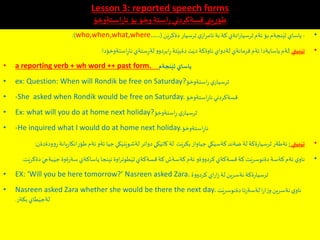
•-‫ن‬َ‫دةكري‬ ‫ثرسيار‬‫ي‬‫از‬‫ر‬‫ئام‬‫بة‬‫كة‬‫انةي‬‫ر‬‫ثرسيا‬‫ئةم‬‫بؤ‬‫نجةم‬َ‫ثي‬ ‫ياساي‬(who,when,what,where…..:)
•‫بيني‬َ‫تي‬:‫استةوخؤدا‬ِ‫ر‬‫نا‬‫ستةي‬ِ‫ر‬‫لة‬ ‫ابردوو‬ِ‫ر‬‫تة‬َ‫دةبي‬‫ت‬َ‫دي‬‫ناوةكة‬‫لةدواي‬ ‫فرمانةي‬‫ئةم‬‫ياسايةدا‬‫لةم‬.
• a reporting verb + wh word ++ past form. ‫نجةم‬َ‫ثي‬ ‫ياساي‬
• ex: Question: When will Rondik be free on Saturday?‫استةوخؤ‬‫ر‬ ‫ي‬‫ثرسيار‬
• -She asked when Rondik would be free on Saturday.‫استةوخؤ‬ِ‫ر‬‫نا‬‫قسةكردني‬
• Ex: what will you do at home next holiday?‫استةوخؤ‬ِ‫ر‬ ‫ي‬‫ثرسيار‬
• -He inquired what I would do at home next holiday.‫استةوخؤ‬ِ‫ر‬‫نا‬
•‫بيني‬َ‫تي‬:‫ان‬ِ‫طؤر‬‫ئةم‬‫ئةو‬ ‫جيا‬‫كي‬َ‫ني‬َ‫لةشوي‬ ‫دواتر‬ ‫كي‬َ‫كاتي‬‫لة‬ ‫ت‬َ‫بكري‬ ‫جياواز‬‫كي‬َ‫كةسي‬‫ضةند‬‫لة‬ ‫ةكة‬‫ر‬‫ثرسيا‬‫ئةطةر‬‫وودةدةن‬ِ‫ر‬‫يانة‬‫ر‬‫كا‬:
•‫د‬ َ‫بةجي‬َ‫جي‬ ‫ةوة‬‫ر‬‫سة‬‫ياساكةي‬‫ئينجا‬‫اوة‬‫ر‬‫طوت‬َ‫ثي‬‫قسةكةي‬‫كة‬‫كةسةش‬‫ئةم‬ ‫كردووةو‬‫قسةكةي‬‫كة‬ ‫ت‬َ‫دةنوسري‬‫كةسة‬‫ئةم‬‫ي‬‫ناو‬‫ت‬َ‫ةكري‬.
• EX: ‘Will you be here tomorrow?’ Nasreen asked Zara. ‫كردووة‬‫اي‬‫ر‬‫ا‬‫ز‬‫لة‬‫نةسرين‬‫ةكة‬‫ر‬‫ثرسيا‬
• Nasreen asked Zara whether she would be there the next day. ‫ت‬َ‫دةنوسري‬‫تا‬‫ر‬‫لةسة‬‫ا‬‫ر‬‫ا‬‫ز‬‫و‬‫نةسرين‬‫ي‬‫ناو‬
‫بكةر‬‫طاي‬َ‫لةجي‬.
Lesson 3: reported speech forms
‫استةوخؤ‬ِ‫ر‬‫نا‬ ‫بؤ‬ ‫وخؤ‬ ‫استة‬ِ‫ر‬‫قسةكردني‬ ‫يني‬ِ‫ر‬ِ‫طؤ‬
•‫دن‬‫ر‬‫بذا‬
َ
‫هةل‬ ‫ي‬‫ثرسيار‬:
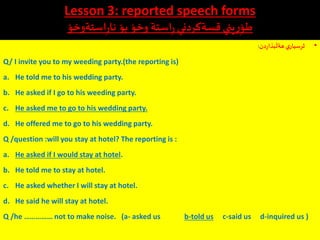
Q/ I invite you to my weeding party.(the reporting is)
a. He told me to his wedding party.
b. He asked if I go to his weeding party.
c. He asked me to go to his wedding party.
d. He offered me to go to his wedding party.
Q /question :will you stay at hotel? The reporting is :
a. He asked if I would stay at hotel.
b. He told me to stay at hotel.
c. He asked whether I will stay at hotel.
d. He said he will stay at hotel.
Q /he …………… not to make noise. (a- asked us b-told us c-said us d-inquired us )
Lesson 4: participle clauses 2: with conjunctions
‫رستة‌بةردةوامةكان‌لةطةل‌ئامرازي‌بةستنةوة‬
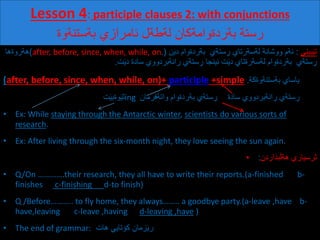
‫بیني‬َ‫ی‬‫ت‬:‌‫ن‬َ‫ی‬‫ستةي‌‌بةردةوام‌د‬ ِ‫ئةم‌ووشانة‌لةسةرتاي‌ر‬(after, before, since, when, while, on.)‌‫هةروةها‬
‌‫ستةي‌‌بةردةوام‌لةسةرةتاي‬ ِ‫ر‬‌‫ت‬َ‫ی‬‫د‬‫ت‬َ‫ی‬‫انةبردووي‌سادة‌د‬ ِ‫ستةي‌ر‬ ِ‫ئینجا‌ر‬.
(after, before, since, when, while, on)+ participle +simple . ‌‫یاساي‬‫بةستنةوةكة‬
‌‌‌‌‌‌‌‌‌‌‌‌‌‌‌‌‌‌‌‌‌‌‌‌‌‌‌‌‌‌‌‌‌‌‌‌‌‌‌‌‌‫ت‬َ‫ی‬‫وةب‬َ‫ی‬‫ث‬ing ‌‫ستةي‌بةردةوام‌واتةفرمان‬ ِ‫ر‬ ‌‫انةبردووي‬ ِ‫ستةي‌ر‬ ِ‫ر‬‫سادة‬
• Ex: While staying through the Antarctic winter, scientists do various sorts of
research.
• Ex: After living through the six-month night, they love seeing the sun again.
• ‫بذاردن‬َ‫ل‬‫ثرسیاري‌هة‬:
• Q/On ………….their research, they all have to write their reports.(a-finished b-
finishes c-finishing d-to finish)
• Q /Before……….. to fly home, they always…….. a goodbye party.(a-leave ,have b-
have,leaving c-leave ,having d-leaving ,have )
• The end of grammar:‌‌‫زمان‌كؤتایي‌هات‬َ‫ی‬‫ر‬

Sunrice 12

  • 1.
  • 2.
    Unite one :grammar giving instructions :‫كردن‬ ‫نمايي‬َ‫ي‬ِ‫ر‬ ‫نمايي‬َ‫ي‬ِ‫ر‬‫بؤ‬‫زكردن‬َ‫ي‬‫ر‬‫ئاوةلفرماني‬ ‫ت‬َ‫دةوتري‬‫يان‬َ‫ثي‬ ‫نين‬َ‫دةهي‬‫بةكار‬‫شانة‬‫و‬‫و‬ ‫ئةم‬ ‫كردن‬: Adverbs of sequensing : 1-first ,.. : ‫یةكةمجار‬ 2-then : ‫دواتر‬ 3- after that,..: ‫ي‬ ‫ثاش‬‫ئةو‬ 4-next ,.. : ‫ئینجا‬ 5-finally,..: ‫لةكؤتاییدا‬ • ‫ت‬َ‫دةضي‬‫ر‬‫دة‬ ‫ة‬ َ ‫هةل‬ ‫ئةطينا‬‫ةوة‬‫ر‬‫سة‬ ‫وةكو‬ ‫ت‬َ‫بي‬ ‫يز‬ِ‫ر‬‫بة‬ ‫نانيان‬َ‫هي‬‫ر‬‫بةكا‬‫ي‬‫واز‬َ‫شي‬ ‫ويستة‬َ‫ثي‬. • then ‫لةدواي‬‫ت‬َ‫دي‬‫يزة‬‫ر‬‫فا‬‫ةوة‬‫ر‬‫سة‬ ‫ئةوانةي‬ ‫و‬‫هةمو‬‫لة‬ ‫جطة‬ • ‫لةدواي‬‫ستةكة‬ِ‫ر‬ ‫بؤئةوةي‬‫ت‬َ‫نري‬َ‫دةهي‬ ‫بةكار‬ ‫طانة‬ِ‫بر‬ ‫ئةم‬‫ةوةش‬‫ر‬‫سة‬ ‫شانةي‬‫و‬‫و‬ ‫ئةم‬‌‫تةواو‬‫ت‬َ‫بضي‬‫ر‬‫دة‬: • 1-you have to : +(infinitive without to )to َ‫بةبي‬ ‫ت‬َ‫دي‬ ‫ضاوط‬ • 2- you need to: +(infinitive without to )to َ‫بةبي‬ ‫ت‬َ‫دي‬ ‫ضاوط‬ • 3- you should : +(infinitive without to )to َ‫بةبي‬ ‫ت‬َ‫دي‬ ‫ضاوط‬
  • 3.
    Giving instruction: ‫كردن‬‫رێنمایی‬ ‫یاسای‬ Adverbs of squencing +you needto ‫یان‬you should‫یان‬you have to +infinitive (with out to )+object For completing a landing card: ‫بؤئةوةي‬‫ك‬َ‫بةوالتي‬‫طةيشتن‬ ‫تي‬‫ر‬‫كا‬‫كردنةوةي‬ِ‫ثر‬‫لةضؤنيةتي‬ ‫بكةي‬ ‫ا‬‫ز‬‫ة‬‫ر‬‫شا‬‫ك‬َ‫كةسي‬ First, you have to fill in your name. :‫ي‬ ‫بنوس‬ ‫خؤت‬ ‫ي‬‫ناو‬‫ويستة‬َ‫ثي‬‫يةكةمجار‬ Then you need to write your flight details. ‫ي‬ ‫بنوس‬ ‫ئاسمانيةكانت‬ ‫طةشتي‬‫ةكاني‬‫ر‬‫انيا‬‫ز‬‫دواتر‬ After that, you add your address in the country. ‫ث‬‫ا‬‫ي‬ ‫دةنوس‬ ‫وآلتة‬ ‫لةم‬ ‫خؤت‬‫ناونيشاني‬ ‫ئةو‬‫ي‬ ‫ش‬ must ‫بيني‬َ‫تي‬: ‫تةنها‬‫بكةين‬‫ك‬َ‫كةسي‬‫نمايي‬َ‫ي‬ِ‫ر‬‫ز‬َ‫بةهي‬‫ر‬‫ؤ‬‫ز‬‫كة‬‫نين‬َ‫دةهي‬‫بةكار‬‫كاتة‬ ‫لةو‬.‫ة‬ِ‫ر‬‫تو‬‫ةكةي‬‫ر‬‫بيسة‬‫ئةوا‬‫نين‬َ‫بهي‬‫ي‬‫بةكار‬‫ر‬‫ؤ‬‫ز‬ ‫ئةطةر‬ ‫دةكات‬. ‫ضونكة‬must‫واتة‬‫ويستة‬َ‫ثي‬.‫واية‬‫كردن‬َ‫ثي‬‫فرمان‬‫وةكو‬‫بؤنمونة‬:you must fill the form. •‫بؤ‬‫ثرسيار‬‫ي‬‫واز‬َ‫شي‬must: • Q/for strong instruction. You ……………. Fill all the forms. (a- need to b- have to c- must d-should ) • Q/give strong instruction. You …………… visit the police station. (a- have to b- must c- should d- need)
  • 4.
    ‫كردن‬‫نمايي‬َ‫ي‬ِ‫ر‬ • ‫بيني‬َ‫تي‬: •‫فرمانة‬ ‫و‬‫ئةو‬‫تةنها‬ ‫دوايان‬ ‫لة‬‫دةتوانين‬ ‫تر‬ ‫ئاوةلفرمانةكاني‬ ‫بؤ‬(‫كار‬)‫كة‬‫ين‬َ‫دابني‬‫طرنطة‬:‫بؤنمونة‬ • After that, add your address. •‫بيني‬َ‫تي‬:‫جار‬ ‫بةي‬‫ر‬‫ؤ‬‫ز‬ ‫بةالم‬you‫ش‬َ‫لةثي‬‫نة‬‫و‬‫بؤنمو‬‫ين‬َ‫دادةني‬ ‫فرمان‬: • After that, you add your address. • ‫بيني‬َ‫تي‬:‫دة‬ ‫بةكار‬ ‫امانةكان‬‫ر‬‫ئاوةلف‬ ‫وةية‬َ‫شي‬ ‫بةم‬ ‫ئةوا‬ ‫يةكتر‬ ‫لةدواي‬ ‫ت‬َ‫هةبي‬ ‫ناييمان‬َ‫ي‬ِ‫ر‬ ‫ك‬َ‫ي‬ َ ‫كؤمةل‬ ‫ئةطةر‬‫ن‬َ‫هي‬‫ين‬: • First of all, you (have to) go to the traffic lights. ‫يةكةمجار‬‫ؤ‬ِ‫بر‬‫اليتةكة‬ ‫افيك‬‫ر‬‫ت‬ ‫بؤ‬ • •Then you (need to) turn left and go to the roundabout. ‫ضةثدا‬ ‫بةالي‬ ‫ويستة‬َ‫ثي‬ ‫دواتر‬‫يةوة‬َ‫ي‬ِ‫ر‬‫بسو‬ ‫فلكةكة‬ ‫ي‬‫ر‬‫بةدةو‬ ‫ةها‬‫و‬‫هةر‬ ‫ي‬‫ؤ‬‫بر‬. • After that, you (should) turn right. ‫ثاش‬‫ي‬‫بطر‬ ‫است‬‫ر‬ ‫الي‬ ‫ت‬َ‫ئةودةبي‬ • Finally, you take the first left, and you’ll see it opposite you. •‫يةكةم‬ ‫كؤتاييدا‬ ‫لة‬‫فلكةي‬‫تؤ‬ ‫امبةر‬‫ر‬‫بة‬ ‫تة‬َ‫دةكةوي‬ ‫بطرة‬ ‫ضةث‬ ‫الي‬
  • 5.
    • Q/…………… ,youneed to fill in your name………….. you should write your address…………….., you have to sign in the bottom . • )a- first ,finally , then b-finally ,then , first c- first ,then , finally d- finally , first , then ) • Q/…………., You have to write your cv , …………, you need to go to the office,………….. ,you should give it to them. • (a-after that , next, first b- first ,after that , next c- next ,first, after that d- first , next , after that) ‫ي‬‫ثرسيار‬ ‫ي‬‫واز‬َ‫شي‬‫دن‬‫ر‬‫بذا‬ َ ‫هةل‬
  • 6.
    Making suggestion :‫كردن‬ ‫شنيار‬َ‫ثي‬ ‫كردن‬ ‫شنيار‬َ‫ثي‬‫ي‬‫واز‬َ‫شي‬ ‫بؤ‬ ‫هةية‬ ‫ياسامان‬ ‫ضوار‬: 1-what about + v(ing )‌‫+فرمان‌بة‬ o.? Ex: what about going to Jordan? Ex: what about having coffee? ‫بيني‬َ‫تي‬:‫فرمانةكةي‬ ‫كة‬ ‫دي‬ ‫لةواني‬‫تةوة‬َ‫دةكري‬ ‫جيا‬ ‫بةوة‬‫ة‬‫ز‬‫وا‬َ‫شي‬ ‫ئةم‬(ing)‫كؤتاييدا‬ ‫لة‬ ‫ةها‬‫و‬‫وةية،هةر‬َ‫ثي‬ ‫هةية‬‫ثرسيار‬ ‫نيشانةي‬.‫لةطةل‬ ‫ي‬‫جياواز‬why not‫فرمانةكةي‬‫كة‬ ‫ئةوةية‬ing‫وةية‬َ‫ثي‬‫نية‬ ‫ضاوط‬ ‫واتة‬. ‫دن‬‫ر‬‫بذا‬ َ ‫هةل‬ ‫ي‬‫ثرسيار‬‫ي‬‫واز‬َ‫شي‬: Q/ ………… eating food? (a- why not b- let's c- what about d- I suggest ) Q/what about ………….. foot ball ? ( a- play b- to play c- playing d-played )
  • 7.
    2-why not +base‫ط‬‫و‬‫ضاو‬ +o? Ex: why not visit Duhok ? Ex: why not watch the weekly program? •‫بيني‬َ‫تي‬:‫نيشان‬‫كؤتايي‬‫لة‬‫ةها‬‫و‬‫هةر‬،‫طة‬‫و‬‫ضاو‬‫فرمانةكة‬ ‫ةدا‬‫ز‬‫وا‬َ‫شي‬‫لةم‬‫ثرسيار‬‫ةي‬ ‫اوة‬‫ر‬‫دان‬.‫لةطةل‬ ‫ي‬‫جياواز‬what about‫واتة‬‫طة‬‫و‬‫ضاو‬‫فرمانةي‬‫كة‬‫ئةوةية‬ ing‫نية‬‫وة‬َ‫ثي‬. Q/………….. stay at my home ? ( a- what about b- why not c- let's d- I suggest ) Q/why not …………. For walk ? ( a- going b- to go c- went d- go ) Q/ Your friends have vacation .suggest to have picnic at Dokan. (a- why not having picnic? b-why not have to picnic ? c-why not have picnic at dokan ? d- why not go to picnic for Shaqlawa?
  • 8.
    ‫شنياركردن‬َ‫ثي‬ 3- Let’s +base +o. Ex: Let's find out about flights. Ex: let's read the story . •‫بيني‬َ‫تي‬:‫نية‬‫ثرسيار‬‫ي‬‫واز‬َ‫شي‬ ‫ئةوياساية‬‫ةدا‬‫ز‬‫وا‬َ‫شي‬ ‫لةم‬.‫طة‬‫و‬‫ضاو‬‫فرمانةكةي‬. •‫دن‬‫ر‬‫بذا‬ َ ‫هةل‬ ‫ي‬‫ثرسيار‬‫ي‬‫واز‬َ‫شي‬: Q/ …………… talk about the problem. ( a- why not b- what about c- Let's d- I suggest ) Q/Let's ………….. a piece of cake . ( a- eating b- eat c- to eat d- eats ) Q/ ……….. have a rest. You’ve been working hard.( a- what about b- why not c- I suggest d- let's ) Q/your friend is sick suggest to him to go to doctor.(a- I suggest to go to doctor b- I am suggesting to go to doctor c- let's go to doctor d- I suggest go to doctor.)
  • 9.
    4- I suggest(you , we )+base +o. Ex:I suggest you check prices on the internet. Ex: I suggest we listen for some music. Ex : I suggest that you play tennis. ‫بنيي‬َ‫تي‬:‫فرمان‬‫ةها‬‫و‬‫،هةر‬ ‫هةية‬ ‫فرمان‬ ‫ش‬َ‫لةثي‬ ‫بكةر‬ ‫كة‬‫لةوداية‬ ‫ياساية‬ ‫ئةم‬‫ي‬‫جياواز‬‫ط‬‫و‬‫ضاو‬ ‫ةكة‬ ‫ت‬َ‫دةبي‬.‫بكةر‬ ‫ةها‬‫و‬‫هةر‬ ، ‫نية‬ ‫ثرسيار‬ ‫ي‬‫واز‬َ‫شي‬ ‫كة‬ ‫تر‬‫لةواني‬‫تةوة‬َ‫دةكري‬ ‫جيا‬‫بةوة‬(you ,we)‫لة‬ ‫ت‬َ‫دةي‬ ‫وفرمانةكة‬ ‫شنيار‬َ‫ثي‬ ‫ي‬‫از‬‫ر‬‫ئام‬ ‫وان‬َ‫ني‬.‫دةتوانين‬‫ةها‬‫و‬‫هةر‬(that)‫دواي‬ ‫لة‬(I suggest) ‫نين‬َ‫بهي‬‫بةكار‬. ‫دن‬‫ر‬‫بذا‬ َ ‫هةل‬ ‫ي‬‫ثرسيار‬ ‫ي‬‫واز‬َ‫شي‬: • Q/……………. You visit the tower. ( a- I suggest b- what about c- why not d- let's ) • Q/ I suggest …………… a picnic. ( a- have b- you have c- to have d- having ) • Q/ you are tired, ………….you have a rest . ( a- what about b- I suggest c- let's d- why not )
  • 10.
    comparative and superlativeforms : ‫د‬‫ر‬‫او‬‫ر‬‫بة‬‫ثلةي‬ ‫ةكاني‬‫ز‬‫وا‬َ‫شي‬(‫باال‬)‫وباالترين‬ ‫بيني‬َ‫تي‬:‫باآل‬‫ثلةكاني‬‫بؤ‬‫ناو‬ ً ‫وئاوةل‬‫ئاوةلفرمان‬‫يني‬ِ‫ر‬‫طؤ‬‫ةكاني‬‫ز‬‫وا‬َ‫شي‬((comparative‫وباآلترين‬((superlative‫وةية‬َ‫شي‬ ‫بةم‬ ‫ت‬َ‫دةبي‬: 1-‫ئةطةر‬‫تةنها‬ ‫ئةوا‬‫و‬‫كهاتبو‬َ‫ثي‬‫طة‬ِ‫بر‬‫لةيةك‬‫ناوةكة‬ َ ‫ئاوةلفرمانةكةوئاوةل‬er‫باالتر‬‫لةثلةي‬ ‫بةآلم‬‫باال‬ ‫ثلةي‬‫لة‬ ‫ت‬َ‫دةكري‬ ‫ياد‬‫ز‬ ‫بؤ‬‫ين‬ est‫ت‬َ‫دةكري‬ ‫ياد‬‫ز‬‫بؤ‬. 2-‫ئةم‬،‫و‬‫هاتبو‬‫ن‬َ‫ي‬‫و‬‫نةبز‬‫هةر‬‫ئةو‬‫ي‬ ‫ش‬َ‫لةثي‬‫و‬‫هاتبو‬ ‫ن‬َ‫ي‬‫و‬‫نةبز‬‫ثيتي‬‫بة‬‫كؤتاييان‬‫كة‬‫وئاوةلناوةي‬‫ئاوةلفرمان‬‫تةنها‬ ‫ئةوا‬er‫لةثلةي‬ ‫باالو‬est‫نمونة‬ ‫دةكةين‬ ‫ياد‬‫ز‬‫ي‬‫بؤ‬ ‫باالترين‬ ‫ثلةي‬‫لة‬(:(tall –taller – the tallest‫يان‬ (old-older –the oldest)‫يان‬(fast –faster –the fastest) 3-‫ئةطةر‬‫ثيتي‬ ‫بة‬‫كؤتايي‬‫ئاوةلناوةكة‬‫يان‬‫ئاوةلفرمان‬e‫تةنها‬ ‫ئةوا‬‫و‬‫هاتبو‬r‫و‬‫باال‬ ‫ثلةي‬‫لة‬‫دةكةين‬ ‫ياد‬‫ز‬st‫لة‬ ‫دةكةين‬ ‫ياد‬‫ز‬ ‫بؤ‬ ‫باالترين‬ ‫ثلةي‬:‫بؤنمونة‬ •(Large-larger-the largest)‫يان‬(nice-nicer –the nicest) 4-‫ئةطةر‬َ‫تي‬َ‫ثي‬‫ئةو‬ ‫ي‬ ‫ش‬َ‫ثي‬‫لة‬‫بةآلم‬‫و‬‫هاتبو‬‫ن‬َ‫ي‬‫و‬‫نةبز‬‫كي‬َ‫ثتي‬ ‫بة‬‫كؤتايي‬‫ئاوةلناوةكة‬‫يان‬‫ئاوةلفرمانةكة‬‫ثيتي‬ ‫ئةوا‬‫و‬‫هاتبو‬‫ن‬َ‫ي‬‫و‬‫بز‬‫كي‬ ‫ئينجا‬ َ‫دةبل‬ ‫تة‬َ‫دةبي‬‫ن‬َ‫ي‬‫و‬‫نةبز‬er‫يان‬est‫نمونة‬ ‫دةكةين‬ ‫ياد‬‫ز‬ ‫بؤ‬: •(big-bigger –the biggest)‫يان‬(fat –fatter –the fattest)‫يان‬ •(thin-thinner – the thinnest)
  • 11.
    comparative and superlativeforms : ‫د‬‫ر‬‫او‬‫ر‬‫بة‬‫ثلةي‬ ‫ةكاني‬‫ز‬‫وا‬َ‫شي‬(‫باال‬)‫وباالترين‬ 5-‫ثيتي‬ ‫بة‬ ‫كؤتايي‬ ‫ئةطةر‬y‫ئةوا‬ ‫و‬‫هةبو‬‫ن‬َ‫ي‬‫و‬‫نةبز‬‫ثيتي‬ ‫ي‬ ‫ش‬َ‫ثي‬ ‫وةلة‬ ‫و‬‫هاتبو‬y‫ثيتي‬ ‫بؤ‬ ‫ت‬َ‫ي‬ِ‫ر‬‫دةطؤ‬i‫ئينجا‬er‫يان‬est ‫ت‬َ‫دةكري‬ ‫ياد‬‫ز‬ ‫بؤ‬.‫وةكو‬: •Happy-happier-the happiest‫يان‬silly –sillier – the silliest 6-‫كردني‬ ‫ياد‬‫ز‬ ‫بة‬ ‫تةنها‬ ‫ئاوةلفرمان‬ ‫بؤ‬ ‫ن‬َ‫ي‬ِ‫ر‬‫دةطؤ‬ ‫ئاوةلناو‬ َ‫هةندي‬ly‫وةكو‬quick+ly= quickly‫يان‬happy +ly = happily‫يان‬careful+ly=carefully 7-‫بة‬ ‫كؤتايي‬ ‫كة‬ ‫ئاوةلفرمانانةي‬ ‫ئةم‬ly‫باال‬ ‫ثلةي‬ ‫لة‬more‫ن‬‫دةطر‬‫ر‬‫وة‬‫باالترين‬ ‫ثلةي‬ ‫ولة‬most‫ن‬‫دةطر‬‫ر‬‫وة‬ ‫وةكو‬ ‫ن‬‫ياتر‬‫ز‬ ‫طة‬ِ‫بر‬ ‫يةك‬ ‫لة‬ ‫ضونكة‬: •Quickly-more quickly-most quickly‫يان‬ •carefully –more carefully –most care fully •8-‫بةهةمان‬‫باال‬ ‫ثلةي‬ ‫بؤ‬ ‫ياتر‬‫ز‬ ‫طة‬ِ‫بر‬ ‫لةيةك‬ ‫كة‬ ‫ئاوةلناوانةي‬ ‫ئةم‬ ‫وة‬َ‫شي‬more‫باالترين‬ ‫ثلةي‬ ‫وبؤ‬ ‫ن‬‫دةطر‬‫ر‬‫وة‬ most‫ن‬‫دةطر‬‫ر‬‫وة‬.‫وةكو‬ •Successful-more successful-most successful‫يان‬ •beautiful – more beautiful –most beautiful 9-‫ي‬‫هؤ‬ ‫بة‬ ‫واتة‬ ‫ناياسايين‬ ‫هةن‬ ‫ئاوةلناو‬ َ‫هةندي‬er‫يان‬est‫بة‬ ‫يان‬more‫يان‬most‫كو‬ َ ‫بةل‬ ‫ن‬َ‫ي‬ِ‫ر‬‫ناطؤ‬ ‫وةكو‬ ‫ن‬َ‫بكري‬ ‫لةبةر‬ ‫ئةوانة‬ ‫ويستة‬َ‫ثي‬ ‫بؤية‬ ‫ن‬َ‫ي‬ِ‫ر‬‫دةطؤ‬ ‫بةناياسايي‬: •Good –better –the best‫يان‬bad –worse –the worst
  • 12.
    comparative and superlativeforms : ‫د‬‫ر‬‫او‬‫ر‬‫بة‬ ‫ثلةي‬ ‫ةكاني‬‫ز‬‫وا‬َ‫شي‬(‫باال‬)‫وباالترين‬ •‫شةي‬‫و‬‫و‬ ‫تر‬ ‫كي‬َ‫شتي‬ ‫لةضاو‬ ‫ك‬َ‫شتي‬ ‫كةمكرنةوةي‬ ‫بؤ‬less‫باال‬ ‫بؤ‬(‫د‬‫ر‬‫او‬‫ر‬‫بة‬)‫شةي‬‫و‬‫و‬‫نين‬َ‫دةهي‬ ‫بةكار‬least‫ثلةي‬ ‫بؤ‬ ‫نين‬َ‫دةهي‬ ‫بةكار‬ ‫باالترين‬: •‫بؤنمونة‬: •‫لةوة‬ ‫كةمترزيرةكترة‬ ‫ئةمة‬‫ين‬َ‫بلي‬ ‫ئةكةر‬ ‫د‬‫ر‬‫او‬‫ر‬‫بة‬ ‫لةثلةي‬:this one is less successful than that one •‫ين‬َ‫دةلي‬ ‫يرةكي‬‫ز‬ ‫لة‬ ‫كةمترينة‬ ‫ئةوة‬‫ين‬َ‫بلي‬ ‫ئةطةر‬ ‫باالترين‬ ‫لةثلةي‬:this one is least successful. •‫بيني‬َ‫تي‬:‫ستةدا‬ِ‫ر‬‫لة‬ ‫ناني‬َ‫هي‬‫ر‬‫بةكا‬ •1-‫باالية‬ ‫ثلةي‬ ‫كة‬ ‫ستةيةي‬ِ‫ر‬‫و‬ ‫لة‬(‫د‬‫ر‬‫او‬‫ر‬‫بة‬)‫شةي‬‫و‬‫و‬ ‫ة‬than‫هةية‬.‫لةدواي‬ ‫كة‬(‫وئاولناوةكة‬ ‫ئاوةلفرمان‬)‫ت‬َ‫دي‬. •2-‫هةية‬ ‫ناو‬ ‫و‬‫دو‬ ‫ستةكة‬ِ‫ر‬‫لة‬ ‫ي‬‫ر‬‫ؤ‬‫بةز‬ ‫واتة‬ ‫ت‬َ‫دةكري‬ ‫شت‬ ‫و‬‫دو‬ ‫وان‬َ‫لةني‬ ‫د‬‫ر‬‫او‬‫ر‬‫بة‬ ‫باال‬ ‫ستةي‬‫ر‬‫لة‬. •‫نمونة‬:Tom is taller than me. •‫يان‬He is more beautiful than his brother. •‫بيني‬َ‫تي‬:‫ئ‬ ‫ش‬َ‫لةثي‬ ‫ي‬‫ر‬‫ؤ‬‫بةز‬‫باشترة‬ ‫تر‬ ‫ئةواني‬ ‫و‬‫لةهةمو‬ ‫ك‬َ‫شتي‬ ‫واتة‬ ‫باالترين‬ ‫ثلةي‬ ‫ستةي‬ِ‫ر‬ ‫لة‬‫يان‬ ‫ناوةكة‬ َ ‫اوةل‬ ‫ئاوةلفرمانكة‬the‫هةية‬ ‫ستةكةدا‬ِ‫ر‬ ‫لة‬ ‫ناو‬ ‫يةك‬ ‫وتةنيا‬‫ت‬َ‫دي‬. •‌‫نمونة‬: • Ex -China has the best economy in the east. • Ex -Kurdistan is the most beautiful on earth.
  • 13.
    Noun1+ auxiliaries+ comparativeadjective or adverb +than +noun2 ‫باال‬ ‫ثلةي‬ ‫ياساي‬(‫د‬‫ر‬‫او‬‫ر‬‫بة‬) ) auxiliaries :verb to be(is , am , are) ,verb to have(has .have) Ex: Dana is taller than Dara. Ex. Iraq has larger population than Syria. Ex: The Chinese now have a better life than their parents did. •‫دن‬‫ر‬‫بذا‬ َ ‫هةل‬ ‫ي‬‫ثرسيار‬‫ي‬‫واز‬َ‫شي‬: Q/Shaqlawa is ……………....... than Koya. ( a- bigger b- big c- the biggest d- too big ) Q/ Japan have …………..economy than Jordan. ( a- most developed b- more developed c- developed b- too developed)
  • 14.
    (‫باالترين‬ ‫ثلةي‬ ‫ياساي‬) S+auxiliaries+ the + superlative adjective or adverb ‫باالترين‬ ‫ثلةي‬‫ئاوةلفرماني‬‫ئاولناويان‬) ) +o. Ex : He is the best man in the city. Ex: Dana is the most important person in the office. •:‫ي‬‫ثرسيار‬ ‫ي‬‫واز‬َ‫شي‬‫دن‬‫ر‬‫بذا‬ َ ‫هةل‬ Q/He is the ………………student . ( a- better b- good c-best d- bad ) Q/ We have the ………… country. ( a- more beautiful b-most beautiful c- beautiful d- not beautiful )
  • 15.
    past simple andpast perfect tenses: ‫تةواوةكان‬ ‫ة‬‫و‬‫ابردو‬ِ‫ر‬‫و‬ ‫سادة‬ ‫ي‬‫و‬‫ابردو‬ِ‫ر‬ past simple: ‫سادة‬‫ي‬‫و‬‫ابردو‬‫ر‬ •‫ت‬َ‫بي‬ ‫وويدا‬ِ‫ر‬‫ابردوو‬ِ‫ر‬‫كةلة‬ ‫ك‬َ‫ووداوي‬ِ‫ر‬‫باسكردني‬ ‫بؤ‬‫ت‬َ‫بةكاردي‬: (S + v(ed) + o. ‫ياساكة‬‫بكةر‬‫لة‬ ‫كهاتووة‬َ‫ثي‬+‫ابردوو‬ِ‫ر‬‫فرماني‬+‫تةواوكةر‬:( Ex: he played the game . Ex: they arrived early. •‫تةوة‬َ‫دةناسري‬ ‫ي‬‫بةزؤر‬ ‫خوارةوة‬ ‫ووشانةي‬‫ئةم‬‫لةطةل‬‫سادة‬ ‫ابردووي‬ِ‫ر‬ ‫رستةي‬: ‌‫كات‬* +ago : five centuries ago, ten days ago , 4 months ago , 11 hours ago,…. Ex: I visited him ten months ago. Ex: I saw the film 2 years ago. ‫ابردووةكان‬ِ‫ر‬‫سالة‬** :in 1994 , in 2010 , in 1990,…….. Ex: I was born in 1985. Ex: She became a teacher in 2005. ***Yesterday : ‫واتة‬:‫ني‬َ‫دوي‬ Ex: I met him yesterday. Ex: They released the man yesterday. ****Last+‫:كات‬ last year , last week ,last month, last ten days ,‫ت‬َ‫دةبي‬ ‫وةيةش‬َ‫شي‬ ‫بةم‬night before last,……. Ex: Tom won the price last year. Ex: The war started last week. ‫بذاردن‬ َ ‫هةل‬ ‫ي‬‫ثرسيار‬ ‫ي‬‫واز‬َ‫شي‬: Q/ They ……………. London last month. (a- arrive b- arrives c- arrived d- to arrive) Q/ We helped the boy ……………… (a- tomorrow b- next morning c- today d- yesterday)
  • 16.
    Present perfect :‫تةواو‬ ‫ي‬‫و‬‫انةبردو‬ِ‫ر‬ •‫بة‬ ‫كةي‬ ‫نية‬‫ن‬‫وو‬ِ‫ر‬ ‫بةآلم‬‫وويداوة‬ِ‫ر‬‫ابردوو‬ِ‫ر‬ ‫لة‬ ‫يكراو‬‫ر‬‫ديا‬ ‫كي‬َ‫كاتي‬‫كةلة‬‫ك‬َ‫ووداوي‬ِ‫ر‬ ‫بؤ‬ ‫ت‬َ‫دي‬ ‫بةكار‬ ‫تةواو‬‫انةبردووي‬ِ‫ر‬‫ب‬‫وودياوة‬ِ‫ر‬ ‫ي‬‫تةواو‬‫ةآلم‬ ‫دةوامة‬‫ر‬‫بة‬ ‫ستا‬َ‫ئي‬‫تاوةكو‬: S + have ‌‫یان‬has + p.p + o. ‫لة‬ ‫كهاتووة‬َ‫ثي‬ ‫ياسايةكة‬: Ex: The population has increased to about 300 million. Ex: They have escaped from the jail. •‫بيني‬َ‫تي‬:‫ووشةي‬‫دوو‬‫ر‬‫هة‬ ‫ياساية‬ ‫ئةم‬ ‫لةطةل‬for ,since‫اوة‬‫ر‬‫يك‬‫ر‬‫ديا‬ ‫كي‬َ‫مةبةستي‬ ‫بؤ‬‫كيان‬َ‫يةكي‬‫ر‬‫هة‬ ‫بةآلم‬ ‫ن‬َ‫دي‬‫بةكار‬: For: ‫او‬‫ر‬‫يك‬‫ر‬‫ديا‬ ‫:بؤماوةيةكي‬ for 10 days , for two years , for seven weeks, ………… Ex: NY has remained America’s top city for nearly 200 years. Ex: We have stayed at London for two weeks. Since :‫و‬ ‫بؤ‬‫ا‬‫ر‬‫يك‬‫ر‬‫ديا‬ ‫كي‬َ‫كاتي‬ : since 2010 , since last night , since January, …………….. Ex: She has lived there since 2010. Ex: They have occupied our country since 2003. •‫بيني‬َ‫تي‬:‫ابر‬ِ‫ر‬‫لة‬ ‫ك‬َ‫ووداوي‬ِ‫ر‬ ‫وان‬َ‫لةني‬ ‫ثةيوةندي‬‫ئةوةي‬ ‫بؤ‬ ‫ن‬َ‫دي‬ ‫بةكار‬ ‫تةواو‬‫انةبردووي‬ِ‫ر‬ ‫طةل‬ ‫لة‬ ‫تر‬‫ووشةي‬ َ‫هةندي‬‫دروست‬ ‫ستا‬َ‫ئي‬‫دوولة‬ ‫ت‬َ‫بكري‬:‫ئةمانةن‬ ‫ووشةكان‬: Already , just , now , not … yet. S + (have ‫یان‬has )+ already ‫یان‬just ‫یان‬now + p.p +o ‫ووشةية‬ َ‫ي‬ ‫س‬ ‫ئةم‬ ‫ياساي‬ ‫ئةمة‬ Ex: She has just visited her uncle. Ex: We have already finished the job. Ex: Asians have now become NY’s newest immigrant group.
  • 17.
    Present perfect :‫تةواو‬ ‫ي‬‫و‬‫انةبردو‬ِ‫ر‬ S + have‌‫یان‬ has+ not +p .p +yet. Not …yet ‌‫ئةمة‌یاساي‬ Ex:He hasn't finished the job yet. Ex: I haven’t seen the man yet. ‫دن‬‫ر‬‫بذا‬ َ ‫هةل‬‫ي‬‫ثرسيار‬‫ي‬‫واز‬َ‫شي‬: Q/He has …………….. the job. ( a- did b- do c- done d- does) Q/ The boy …………….. the game . ( a- has won b- have won c- is win d- to win ) Q/ Use already in this sentence. I see him . ( a- I already see him. b- I see him already. c- I have already seen him . d-I am already see him. ) Q/ we haven’t fished ………….. ( a- just b- yet c- already d- now) Q / I have lived there since …………… ( a- four days b- ten months c-now d- January)
  • 18.
    Present perfect continuous:‫ي‬‫و‬‫انةبردو‬ٍ‫ر‬‫ي‬‫تةواو‬‫دةوام‬‫ر‬‫بة‬ •‫د‬‫ر‬‫بة‬ ‫ستاش‬َ‫ئي‬ ‫تاوةكو‬ ‫ويداوةو‬‫و‬ِ‫ر‬ ‫و‬‫ابردو‬ِ‫ر‬‫لة‬ ‫ك‬َ‫وداوي‬‫و‬ِ‫ر‬ ‫كةوا‬‫بدةين‬ ‫نيشان‬ ‫ئةوةية‬ ‫بؤ‬ ‫ياساية‬ ‫ئةم‬‫جةخت‬ ‫بؤ‬ ‫ةوامة‬ ‫ي‬َ‫لي‬ ‫كردنةوة‬. •‫ة‬‫و‬‫بو‬ ‫ذ‬َ‫ي‬‫ر‬‫ود‬‫و‬‫در‬ ‫ماوةكة‬ ‫كة‬ ‫ئةوةي‬ ‫نيشانداني‬ ‫بؤ‬ ‫ت‬َ‫دي‬‫ر‬‫بةكا‬ ‫ئةوة‬ ‫بؤ‬ ‫ةها‬‫و‬‫هةر‬ S + has, have +been +v(ing ) +o . ‫دةوام‬‫ر‬‫بة‬ ‫ي‬‫تةواو‬ ‫ي‬‫و‬‫انةبردو‬‫ر‬ ‫ياساي‬ Ex: I have been waiting for 2 hours . ‫ذ‬َ‫ي‬‫ر‬‫ود‬‫و‬‫ر‬‫و‬‫دو‬ ‫ماوةيةكي‬ ‫بؤ‬ ‫كردن‬ ‫ان‬‫و‬ِ‫ضاوةر‬ Ex: We have been living there ten months. Ex: It has been raining . Ex: Asian immigrant numbers have been increasing steadily. ‫دن‬‫ر‬‫بذا‬ َ ‫هةل‬ ‫ي‬‫ثرسيار‬ ‫ي‬‫واز‬َ‫شي‬: Q / I have ……………….. for long time . ( a- waiting b- been waiting c- waits d-been waited ) Q /The woman …………………….. 4 hours. ( a- has been waiting b- wait c- have been waiting d- is waited ) Q / I have watched the movie . change to present perfect continuous.(a- I am watching the movie b- I was watching the movie c- I have been watching the movie d- I watched the movie )
  • 19.
    Past perfect :‫ي‬‫و‬‫ابردو‬ِ‫ر‬‫ت‬‫ةواو‬ •‫ويداوة‬‫و‬ِ‫ر‬‫و‬‫ابردو‬ِ‫ر‬ ‫لة‬‫تر‬‫كي‬َ‫وداوي‬‫و‬ِ‫ر‬ ‫ش‬َ‫ثي‬‫لة‬‫كة‬‫ك‬َ‫وداوي‬‫و‬ِ‫ر‬ ‫باسكردني‬‫بؤ‬ ‫ت‬َ‫دي‬‫بةكار‬.‫ستةية‬ِ‫ر‬ ‫رةدا‬َ‫لي‬‫سادةية‬‫ي‬‫و‬‫ابردو‬ِ‫ر‬‫كيان‬ ‫تةواوة‬‫ي‬‫و‬‫ابردو‬ِ‫ر‬ ‫تر‬‫وئةوةي‬.‫ويداوة‬‫و‬ِ‫ر‬ ‫سادة‬ ‫ي‬‫و‬‫ابردو‬ِ‫ر‬ ‫ش‬َ‫ثي‬‫تةواو‬‫ي‬‫و‬‫ابردو‬ِ‫ر‬‫ستةي‬ِ‫ر‬. ‫د‬‫ستةكة‬ِ‫ر‬‫شةوةي‬َ‫ثي‬‫كةلة‬‫نين‬َ‫بهي‬‫بةكار‬‫شةية‬‫و‬‫و‬‫و‬‫دو‬‫ئةم‬ ‫كاتةكان‬ ‫وان‬َ‫ني‬ ‫ثةيوةندي‬‫نيشانداني‬‫بؤ‬ ‫دةتوانين‬‫ن‬َ‫ادةنري‬:Until ,by S + had +p.p +o ‫تةواو‬‫ي‬‫و‬‫ابردو‬ِ‫ر‬ ‫ياساي‬ Until +s +v(ed).+o , s +had+p.p +o . until ‫ناني‬َ‫هي‬‫بةكار‬‫ياساي‬ Ex: Until Europeans started arriving, America’s population had remained small. ‫سادةية‬‫ي‬‫و‬‫ابردو‬ِ‫ر‬‫ستةية‬ِ‫ر‬ ‫ئةم‬ ‫ئةم‬‫ستةية‬ِ‫ر‬‫تةواوة‬‫ي‬‫و‬‫ابردو‬ِ‫ر‬ By +َ‫سال‬ +s +had +p.p +o . by ‫ناني‬َ‫هي‬‫ر‬‫بةكا‬‫ياساي‬ Ex: By 1900, NY’s population had passed one million. ‫ندن‬‫ر‬‫بذا‬ َ ‫هةل‬‫ي‬‫ثرسيار‬‫ي‬‫واز‬َ‫شي‬: Q / She had …………… the exam. (a- pass b- passing c- passed d- to pass ) Q / ……….. we left the party, the weather had rained .( a- for b- until c- since d- just ) Q / By 2004 the USA …………. Iraq from Saddam regime.( a- has liberated b- had liberated c- have liberated d- liberated) Q / Until the teacher ………….. the class, the student …………….. noisy. (a- enter, has make b- entered ,had made c-had made, entered d- enter , make )
  • 20.
    Unite two :grammar Prepositions of time : ‫كات‬ ‫بؤ‬ ‫ثةيوةندي‬ ‫ي‬‫ئامراز‬ 1-On : on Sunday , on Monday…………. ‫ذكاني‬‫ؤ‬ِ‫ر‬‫لةطةل‬‫حةفتة‬‫نمونة‬‫ت‬َ‫دي‬‫ر‬‫بةكا‬: Ex:The meeting is on Monday. Ex:I have appointment on Saturday. 2-From …. To : from 2:00 pm to 4:00 pm , ‫ئةم‬‫بةيةكةوة‬‫ي‬‫ر‬‫ؤ‬‫بةز‬‫انة‬‫و‬‫دو‬‫ن‬َ‫دي‬ 3-At: at 2:15 pm , at 10:30am………. ‫ت‬َ‫دي‬‫ر‬‫بةكا‬‫ر‬َ‫كاتذمي‬‫لةطةل‬ at Ex: I have meeting at 11:30 am . Ex: we have conference at 10:00 pm. 4-In : in the morning , in the afternoon ,in the evening , ‫بةكا‬‫ذ‬‫ؤ‬ِ‫ر‬‫ناو‬‫كاتةكاني‬‫لةطةل‬‌‫ر‬‫ت‬َ‫دي‬ Ex:I will see in the afternoon. Ex:I have meeting at 9:00 in the morning 5-During :during June ,during May ,during summer ,during the ww2 .‫مانطةكان‬‫لةطةل‬ ‫طرنطةكان‬‫داوة‬‫و‬‫و‬ِ‫ر‬‫و‬‫ةكان‬‫ز‬‫ةر‬‫و‬‫و‬ Ex: I was at Duhok during summer. Ex: my father was soldier during the ww2. EX:We’re going to write our report during May.
  • 21.
    Prepositions of time 6-By: by Thursday 31st , by Monday 12th …‫ت‬َ‫دي‬ ‫بةكار‬‫ؤذ‬ِ‫بةروارور‬ ‫لةطةل‬ Ex:We’re planning to send it to everyone by Thursday the 31st. 7-Before /after : before 4:00 , after 3:00 . ‫ت‬َ‫دي‬ ‫بةكار‬ ‫سةعات‬ َ‫لةطةل‬ Ex:We aim to finish everything just before / after 4.00. 8-Between : between 10:00 and 12:00. ‫لةطةلداية‬. and ‫ـتةوة‬َ‫جيادةكري‬ ‫بةوة‬ ‫ت‬َ‫دي‬ ‫بةكار‬ ‫او‬‫ر‬‫يك‬‫ر‬‫ديا‬ ‫كاتي‬‫دوو‬ ‫وان‬َ‫لةني‬ Ex: They want to do most of the work between 10.00 and 3.00. Till /until:until tonight , till tonight , until today, َ‫بي‬ ‫ماوةيةك‬ ‫كةمةبةستي‬ ‫ستةكة‬ِ‫ر‬ ‫ماناي‬ ‫رةي‬َ‫طوي‬‫بة‬ ‫يان‬ ‫ت‬َ‫دي‬‫ر‬‫بةكا‬ ‫ووشانة‬‫ئةم‬ ‫لةطةل‬: Ex:I’ll have to work until late tonight. Ex: I 'll have to work till late tonight. ‫دن‬‫ر‬‫بذا‬ َ ‫هةل‬ ‫ي‬‫ثرسيار‬ ‫ي‬‫واز‬َ‫شي‬: Q / We have meeting …………….Monday……….. 4:00. In , at b- on , to c- on, at d- from, to) Q/The conference is ……………10:00 ………….. 2:00. (a-from ,to b- to, from c- in , to d- until , till) Q / they will be here ………….. 4:00 and 5:00 ………….. the afternoon. From , between b- between , in c- on , until d-after , on ) Q / they are trying to achieve the aim …………. Saturday 25th ………….. January. To , on b-in , by c-by , on d- by , during ) Q / I will stay with you ………… the night. In b-until c- after d- by )
  • 22.
    Negative Questions َ‫ي‬‫نةر‬‫ي‬‫ثرسيار‬: •‫؟‬ ‫ت‬َ‫دةكري‬‫ست‬‫و‬‫در‬ ‫ن‬‫ضو‬ َ‫ي‬‫نةر‬ ‫ي‬‫ثرسيار‬ •‫يةكةم‬‫ي‬‫هةنطاو‬:‫ةكة‬‫ر‬‫يدة‬‫ر‬‫يا‬‫فرماني‬‫و‬‫بكةر‬‫ضةوانةكردنةوةي‬َ‫ثي‬.‫بؤنمونة‬ You are are you? You can can you? •‫ةم‬‫و‬‫دو‬‫ي‬‫هةنطاو‬:‫واتة‬ َ‫ي‬‫نةر‬ ‫بؤ‬‫ين‬ِ‫ر‬‫دةطؤ‬‫ضةوانةكردنةوةيان‬َ‫ثي‬‫دواي‬ ‫ئينجا‬(not)‫ياد‬‫ز‬ ‫بؤ‬ ‫ي‬ ‫سينةوة‬‫و‬‫دةنو‬ ‫ستةكة‬ِ‫ر‬‫ي‬‫تةواوكةر‬ ‫ئينجا‬ ‫دةكةين‬.‫بؤنمونة‬: You are aren't you? You can can't you? •‫نمونة‬: • You are going to leave the party. •َ‫ي‬‫نةر‬ ‫ي‬‫ثرسيار‬ ‫بؤ‬‫يني‬ِ‫ر‬‫طؤ‬((negative question‫ين‬َ‫دةلي‬:Aren’t you going to leave the party? •َ‫ي‬‫نةر‬ ‫ي‬‫ثرسيار‬ ‫بؤ‬‫ةوة‬‫ر‬‫خوا‬ ‫ستةيةي‬ِ‫ر‬‫ئةم‬ ‫يني‬ِ‫ر‬‫بؤطؤ‬: You can leave me alone. Can't you leave me alone?
  • 23.
    Negative Questions َ‫ي‬‫نةر‬‫ي‬‫ثرسيار‬: •‫بيني‬َ‫تي‬:‫فرماني‬‫ئةطةر‬(‫كار‬)َ‫ي‬‫نةر‬‫بؤ‬ ‫ئةوكات‬ ‫و‬‫بو‬‫سادة‬‫ي‬‫و‬‫انةبردو‬‫ر‬ ‫ستة‬ِ‫ر‬(‫بكةر‬+(don't + s) ,(doesn't‫نين‬َ‫دةهي‬‫بةكار‬.‫واتة‬((is , are, can‫ن‬‫و‬‫نةبو‬ ‫ستةدا‬ِ‫ر‬‫لة‬:‫نمونة‬: You have to don’t you have to…..? She visits me doesn’t she visit me? •‫نمونة‬: He play for our team. َ‫ي‬‫نةر‬‫ي‬‫ثرسيار‬‫بؤ‬‫يني‬ِ‫ر‬‫طؤ‬ doesn’t he play for our team? They drive very fast. َ‫ي‬‫نةر‬ ‫ي‬‫ثرسيار‬‫بؤ‬‫يني‬ِ‫ر‬‫طؤ‬ don’t they drive very fast? •‫بيني‬َ‫تي‬:‫فرماني‬ ‫ئةطةر‬(‫كار‬)َ‫ي‬‫نةر‬‫ي‬‫ثرسيار‬‫بؤ‬ ‫ئةوكات‬ ‫و‬‫بو‬‫سادة‬‫ي‬‫و‬‫ابردو‬ِ‫ر‬‫ستة‬ِ‫ر‬‫ي‬(‫بكةر‬+didn't )‫نين‬َ‫دةهي‬ ‫بةكار‬.‫نمونة‬‫بؤ‬: You lost the game. ‫ين‬َ‫دةلي‬ َ‫ي‬‫نةر‬ ‫ي‬‫ثرسيار‬ ‫بؤ‬ ‫يني‬ِ‫ر‬‫طؤ‬ ‫بؤ‬ didn’t you lose the game? They played very bad. ‫ين‬َ‫دةلي‬ َ‫ي‬‫نةر‬ ‫ي‬‫ثرسيار‬ ‫بؤ‬ ‫يني‬ِ‫ر‬‫بؤطؤ‬ didn’t they play very bad? •‫بيني‬َ‫تي‬:‫ك‬َ‫كاتي‬didn’t‫ض‬‫تةوة‬َ‫دةبي‬ ‫فرمانةكة‬‫ئةوكات‬ ‫ت‬َ‫دي‬ ‫بةكار‬‫ستة‬ِ‫ر‬‫لة‬‫ط‬‫و‬‫او‬.
  • 24.
    Negative question:‫ي‬‫نةر‬‫ي‬‫ثرسيار‬ •‫بيني‬َ‫تي‬:‫ي‬‫هؤ‬‫بة‬ ‫دةتوانين‬why‫بكةين‬‫ست‬‫و‬‫در‬َ‫ي‬‫نةر‬‫ي‬‫ثرسيار‬: You can stop the noisy. ‫ين‬َ‫دةلي‬ َ‫ي‬‫نةر‬‫ي‬‫ثرسيار‬ ‫بؤ‬‫يني‬ِ‫ر‬‫بؤطؤ‬: Why can't you stop the noisy? •‫دن‬‫ر‬‫هةلبذا‬‫ي‬‫واز‬َ‫شي‬ ‫ي‬‫ثرسيار‬: Q /…………… going too bit fast? (a- is you b- you are c- aren’t you b- don’t you ) Q /She live in the city. ………….. live in the city ? (a- do you b- don’t you c- can't she d- doesn’t she ) Q / You can leave me alone. ………… leave me alone?( a- why can they b- why can't you c-why will you) d- don’t you ) Q/ You stayed for a long time. The negative question is . (a-don’t you stay for a long time? b- can't you stay for a long time ? c- didn’t you stay for a long time ? d- aren’t you staying for a long time ?)
  • 25.
    Future Continuous: ‫دةوام‬‫ر‬‫بة‬‫ي‬‫و‬‫داهاتو‬ ‫بيني‬َ‫تي‬:‫وات‬ ‫ستا‬َ‫ئي‬ ‫نةك‬ ‫دةكات‬ ‫و‬‫داهاتو‬ ‫ي‬ ‫باس‬ ‫بةآلم‬‫ت‬َ‫بي‬ ‫دةوام‬‫ر‬‫بة‬ ‫كة‬ ‫ك‬َ‫وداوي‬‫و‬ِ‫ر‬ ‫بؤ‬ ‫ت‬َ‫دي‬ ‫بةكار‬ ‫ياساية‬ ‫ئةم‬‫لة‬ ‫تؤ‬ ‫ة‬ ‫دةبيت‬ ‫ي‬ ‫ض‬ ‫يكي‬‫ر‬‫خة‬ ‫يكراو‬‫ر‬‫ديا‬ ‫كي‬َ‫كاتي‬ ‫لة‬ ‫و‬‫داهاتو‬ • . •‫ياساكة‬:s + will +be +v(ing)+o. Ex: I will be playing football. Ex: They will be watching the match. ‫ثرسيار‬‫ياساي‬:‫هةية‬‫ثرسيار‬ ‫ي‬‫واز‬َ‫شي‬ ‫و‬‫دو‬: •‫ثرسيار‬ ‫يةكةمي‬‫ي‬‫واز‬َ‫شي‬:‫بة‬‫ة‬‫ر‬‫ثرسيا‬ ‫ئةم‬‫وةالمي‬yes‫يان‬no‫ت‬َ‫دةبي‬:will + s+ be +v(ing)+o? Ex: Will you be travelling to London? Yes , I will. ‫يان‬ no , I won't . Ex: Will they be digging the land? Yes , they will. ‫يان‬ no , they won't .
  • 26.
    Future Continuous: ‫دةوام‬‫ر‬‫بة‬‫ي‬‫و‬‫داهاتو‬ •‫ثرسيار‬ ‫ةمي‬‫و‬‫دو‬ ‫ي‬‫واز‬َ‫شي‬:will + s + be + v(ing)+ o?( +‫ثرسيار‬ ‫ي‬‫ئامراز‬)wh •‫لة‬‫بريتين‬ ‫ثرسيار‬ ‫ةكاني‬‫ز‬‫ا‬‫ر‬‫ئام‬(what ,why ,when ,where……..)‫بة‬ ‫يان‬‫و‬‫هةمو‬ ‫كة‬wh‫دةكةن‬َ‫ثي‬‫دةست‬ ‫بةيان‬‫ؤ‬‫ز‬ ‫يان‬. Ex: What will you be doing this time next month? ‫ين‬َ‫دةلي‬ ‫→لةوةالمدا‬ I will be playing tennis. Ex: Where will they be living next year? ‫ين‬َ‫دةلي‬ ‫لةوةآلمدا‬ →They will be living in the city. ‌‫تیبینی‬:‌‫‌بیت‬‫ه‬‫‌وام‌د‬‫ه‬‫‌رد‬‫ه‬‫‌كی‌داهاتووی‌ب‬‫ه‬‫‌ی‬‫ه‬‫‌‌رست‬‫ه‬‫‌‌ب‬‫ه‬‫‌م‌پرسیار‬‫ه‬‫‌المی‌ئ‬‫ه‬‫و‬. •‫دن‬‫ر‬‫بذا‬ َ ‫هةل‬ ‫ي‬‫ثرسيار‬ ‫ي‬‫واز‬َ‫شي‬: Q / He'll …………….. at college next year. (a- be study b- studying c- be studying d- studies ) Q /What will you be doing next month? Answer ……….(a-I will watch movie. b- I am playing football. c- I learn English. c- I will be working in a company.) Q / Will you be working next year? Yes …… (a- I am b- I will c- I do d- I can )
  • 27.
    Future Continuous: ‫دةوام‬‫ر‬‫بة‬‫ي‬‫و‬‫داهاتو‬ •‫ثرسيار‬ ‫ةمي‬‫و‬‫دو‬ ‫ي‬‫واز‬َ‫شي‬:will + s + be + v(ing)+ o?( +‫ثرسيار‬ ‫ي‬‫ئامراز‬)wh •‫لة‬‫بريتين‬ ‫ثرسيار‬ ‫ةكاني‬‫ز‬‫ا‬‫ر‬‫ئام‬(what ,why ,when ,where……..)‫بة‬ ‫يان‬‫و‬‫هةمو‬ ‫كة‬wh‫دةست‬‫دةكةن‬َ‫ثي‬ ‫بةيان‬‫ؤ‬‫ز‬ ‫يان‬. Ex: What will you be doing this time next month? ‫ين‬َ‫دةلي‬ ‫→لةوةالمدا‬ I will be playing tennis. Ex: Where will they be living next year? ‫ين‬َ‫دةلي‬ ‫لةوةآلمدا‬ →They will be living in the city. •‫دن‬‫ر‬‫بذا‬ َ ‫هةل‬ ‫ي‬‫ثرسيار‬ ‫ي‬‫واز‬َ‫شي‬: Q / He'll …………….. at college next year. (a- be study b- studying c- be studying d- studies ) Q /What will you be doing next month? Answer ……….(a-I will watch movie. b- I am playing football. c- I learn English. c- I will be working in a company.) Q / Will you be working next year? Yes ………..… (a- I am b- I will c- I do d- I can ) ‌‫‌بیت‬‫ه‬‫‌وام‌د‬‫ه‬‫‌رد‬‫ه‬‫‌كی‌داهاتووی‌ب‬‫ه‬‫‌ی‬‫ه‬‫‌‌رست‬‫ه‬‫‌‌ب‬‫ه‬‫‌م‌پرسیار‬‫ه‬‫‌المی‌ئ‬‫ه‬‫و‬.
  • 28.
    ‫دةوام‬‫ر‬‫بة‬ ‫ي‬‫تةواو‬ ‫ي‬‫و‬‫انةبردو‬ِ‫ر‬‫ياساي‬present perfect continuous : S + (have ,has ) +been + v(ing). َ‫ي‬‫ئةر‬‫ياساي‬ Ex: I have been watching TV. ‫ة‬‫و‬‫خاياندو‬‫ي‬‫ر‬‫ؤ‬‫ز‬‫ماوةيةكي‬‫كة‬ ‫ت‬َ‫دي‬‫بةكار‬‫ك‬َ‫داوي‬ِ‫ر‬ ‫بؤ‬ Ex: She has been waiting for many hours. •‫هةية‬‫ي‬‫ثرسيار‬‫ي‬‫واز‬َ‫شي‬‫و‬‫دو‬‫ر‬‫ثرسيا‬‫ياساي‬: •‫يةكةم‬‫ي‬‫واز‬َ‫شي‬:‫بة‬‫وةالمي‬‫كة‬yes‫يان‬No‫ت‬َ‫دةبي‬:o?+s + been +v(ing)+(have, has) Ex: Have you been waiting ? yes , I have . ‫يان‬ no , I haven’t . Ex :Has she been running for 2 hours? Yes, she has --- no ,she hasn’t. •‫ثرسيار‬‫ةمي‬‫و‬‫دو‬ ‫ي‬‫واز‬َ‫شي‬.:‫تةوة‬َ‫ي‬‫ر‬‫دةد‬‫دةوام‬‫ر‬‫بة‬‫ي‬‫تةواو‬‫ي‬‫و‬‫انةبردو‬ِ‫ر‬‫ستةي‬ِ‫ر‬‫بة‬‫وةالمي‬. Wh + have,has + s+been+v(ing) + o? Ex: What has she been doing ? ‫وةالم‬ → She has been doing her homework. Ex: Where have they been staying ? ‫→وةالم‬ They have been staying in the hotel. •‫دن‬‫ر‬‫هةلبذا‬‫ي‬‫ثرسيار‬‫ي‬‫واز‬َ‫شي‬: Q /we have ………………. For a long time . (a- be wait b-be waiting c- been waiting d-wait) Q / I stay at London .change to present perfect continuous (a- I have stayed in London b- I had stayed in London. c- I have to stay at London. D- I have been staying in London) Q/ what has she been doing? (a- she has played tennis. b- she had played tennis. c- she has been playing tennis . d- she has to play tennis.
  • 29.
    ‫دةوام‬‫ر‬‫بة‬ ‫ي‬‫تةواو‬ ‫ي‬‫و‬‫انةبردو‬ِ‫ر‬‫ياساي‬present perfect continuous : •‫بيني‬َ‫تي‬:‫دةتوانين‬at‫دةوام‬‫ر‬‫بة‬ ‫ي‬‫تةواو‬ ‫ي‬‫و‬‫داهاتو‬ ‫ياساي‬‫و‬‫دو‬ ‫هةر‬‫لةطةل‬ ‫نيشانداني‬ ‫بؤ‬ ‫نين‬َ‫بهي‬‫بةكار‬‫دةوام‬‫ر‬‫بة‬ ‫ي‬‫تةواو‬‫ي‬‫و‬‫انةبردو‬ِ‫ر‬ ‫ولةطةل‬‫وداني‬‫و‬ِ‫ر‬ ‫اودا‬‫ر‬‫يك‬‫ر‬‫ديا‬ ‫كي‬َ‫كاتي‬ ‫لة‬‫ك‬َ‫ي‬‫ر‬‫كا‬:at‫ش‬َ‫لةثي‬ ‫ستة‬ِ‫ر‬ ‫ي‬‫تةواوكةر‬ ‫ناو‬‫تة‬َ‫دةكةوي‬this time ,the moment‫بؤنمونة‬ ،‫ت‬َ‫دي‬: Ex: I will be playing tennis at this time next year. Ex: What will you be doing (at) this time next year? Ex: What are you doing at the moment? Ex: I am studying at the moment . Ex: What were you doing (at) this time last year? Ex: I was swimming at this time last year.
  • 30.
    too and (not)… enough ‫ئاوةلناوةكان‬ ‫باسكردني‬ ‫بؤ‬ ‫ت‬َ‫دي‬ ‫بةكار‬ ‫ياساية‬ ‫ئةم‬: • s+ auxiliary+ too + adjective + infinitive ‫ك‬َ‫كاري‬ ‫بؤ‬ َ‫ناطونجي‬ ‫كة‬‫ت‬َ‫بكري‬‫ديار‬ ‫ئةوةي‬ ‫بؤ‬‫كة‬َ‫كةسي‬ ‫سيفةتي‬‫باسكردني‬ ‫بؤ‬ ‫ياساية‬ ‫ئةم‬ • Ex: He’s too young to go to college. • Ex: You are too lazy to pass the exam. •‫بذاردن‬ َ ‫هةل‬ ‫ي‬‫ثرسيار‬ ‫ي‬‫واز‬َ‫شي‬: • Q / We are ………………. To win the game. (a- slow b- too slow c-slowly d-slower) • Q /He is .......... small ……… the competition . (a- too , enter b- enter , too c- too, to enter d- too , entered) • • S + auxiliary + (not) + adjective + enough + infinitive َ‫ي‬‫نةر‬ ‫وةيةكي‬َ‫بةشي‬‫كة‬َ‫كةسي‬ ‫نةشياوبووني‬‫باسكردني‬ ‫بؤ‬ ‫ياساية‬‫ئةم‬: • Ex: He’s not old enough to be a college student. • Ex: You aren’t tall enough to play basket ball . •‫بذاردن‬ َ ‫هةل‬ ‫ي‬‫ثرسيار‬ ‫ي‬‫واز‬َ‫شي‬: • Q / She isn’t …………….. to go to college. ( a- old b-too old c- old enough c- as old as) • Q / We aren’t …….enough to…….. in the river. ( a- strong , swim b- swim , strong c-swimming, strong d- strongest swim) •‫ياساي‬much ,(‫رراوة‬َ‫ذمي‬ ‫ي‬‫ناو‬‫بؤ‬),many(‫رراوة‬َ‫نةذمي‬ ‫ي‬‫ناو‬‫بؤ‬)‫ت‬َ‫بي‬ ‫زؤر‬ ‫كة‬‫ك‬َ‫شتي‬‫باسكردني‬ ‫بؤ‬ َ‫ي‬‫ئةر‬ ‫ي‬‫واز‬َ‫شي‬: • s+ auxiliary +too + much/many + noun + infinitive َ‫ي‬‫ئةر‬‫ياساي‬: • ex: there are too many students in the class. • Ex :There is too much work to do. • Ex: I’ve got too much revision to do. •‫بذاردن‬ َ ‫هةل‬ ‫ي‬‫ثرسيار‬ ‫ي‬‫واز‬َ‫شي‬: • Q / She has got too …………. cars to sell.( a- much b- many c- small d-big ) • Q / There is too much …………. to do. ( a-homework b- jobs c- tasks d- duties )
  • 31.
    •‫بيني‬َ‫تي‬:too‫ولةطةل‬ ‫ت‬َ‫دي‬ ‫بةكار‬‫رراو‬َ‫نةذمي‬ ‫رراو‬َ‫ذمي‬ ‫ي‬‫ناو‬ ‫لةطةل‬few ,little‫وةي‬َ‫شي‬ ‫بةهةمان‬much ,many‫ت‬َ‫دي‬ ‫بةكار‬: Ex: There’s too little time to do everything. ‫رراوة‬َ‫نةذمي‬ Ex: There are too few hours in the day to do everything. ‫رراوة‬َ‫ذمي‬ ‫دن‬‫ر‬‫بذا‬ َ ‫هةل‬ ‫ي‬‫ثرسيار‬ ‫ي‬‫واز‬َ‫شي‬: Q /There isn’t too …………... food to eat. (a- little b-few c- many d- a mount) Q / We haven’t too ………….. hours to do the jobs. (a- much b- little c- few d-how many ) •‫ت‬َ‫نةبي‬‫بووني‬‫ويست‬َ‫ثي‬ ‫ندةي‬َ‫هي‬‫كة‬ ‫ك‬َ‫شتي‬ ‫باسكردني‬ ‫بؤ‬ َ‫ي‬‫نةر‬ ‫ياساي‬: S+ auxiliary+ (not) enough + noun + infinitive َ‫ي‬‫نةر‬ ‫ياساي‬: Ex: There aren’t enough hours in the day to revise. Ex: I haven’t got enough money to buy the house. •‫دن‬‫ر‬‫بذا‬ َ ‫هةل‬ ‫ي‬‫ثرسيار‬ ‫ي‬‫واز‬َ‫شي‬: Q /she hasn’t …………… to enter the course. (a- much time b- time c- enough time d- long time ) Q / there isn’t …………. Water to wash the car. (a- any b- many c- much d-enough )
  • 32.
    Unit three: grammar Activeand Aassive; by + agent ‫ناديار‬ ‫وبكةر‬ ‫ديار‬‫ر‬‫بكة‬: ‫ستةيةكي‬ِ‫ر‬ ‫يني‬ِ‫ر‬‫بؤطؤ‬‫سادةي‬ ‫ي‬‫و‬‫ابردو‬ِ‫ر‬‫دةطر‬ ‫هةنطاوانة‬ ‫ئةم‬ ‫ناديار‬ ‫بكةر‬ ‫بؤ‬ ‫ديار‬ ‫بكةر‬‫بةر‬ ‫ينة‬: •1-‫البردني‬‫ديار‬ ‫بكةر‬ ‫ستةي‬ِ‫ر‬ ‫ةكي‬‫ر‬‫سة‬ ‫ي‬‫بكةر‬. •2-‫بكةر‬ ‫ني‬َ‫لةشوي‬ ‫تةواوكةر‬ ‫داناني‬. •3-‫ئةوا‬ ‫و‬‫بو‬ ‫تاك‬ ‫يةكة‬َ‫نوي‬ ‫ة‬‫ر‬‫بكة‬ ‫ئةطةر‬was‫ئةوا‬ ‫و‬‫بو‬ ‫كؤ‬ ‫ئةطةر‬ ‫بةالم‬ ‫لةدواي‬ ‫ين‬َ‫دادةني‬ were‫لةدواي‬ ‫ين‬َ‫دادةني‬.‫ابر‬ِ‫ر‬ ‫ديار‬ ‫بكةر‬ ‫ستةي‬ِ‫ر‬‫فرماني‬ ‫ئةطةر‬ ‫كة‬ ‫كدا‬َ‫لةكاتي‬ ‫ئةمة‬‫سادة‬ ‫ي‬ ‫و‬‫دو‬ ‫و‬‫بو‬. •4-‫يةم‬َ‫سي‬ ‫ي‬‫واز‬َ‫شي‬ ‫بؤ‬ ‫ت‬َ‫ي‬ِ‫ر‬‫دةطؤ‬ ‫ةكي‬‫ر‬‫سة‬ ‫ستةي‬ِ‫ر‬‫فرماني‬(PP.)‫وةي‬َ‫بةشي‬ ‫هةن‬ ‫فرمان‬ َ‫هةندي‬ ‫يادكردني‬‫ز‬‫بة‬ ‫ين‬ِ‫ر‬‫دةطؤ‬ ‫ياسايي‬–ed‫ناياسايين‬ ‫تر‬ ‫كي‬َ‫هةندي‬ ‫بةالم‬.َ‫بةبي‬–ed‫ي‬‫واز‬َ‫شي‬ ‫بؤ‬ ‫ن‬َ‫ي‬ِ‫ر‬‫دةطؤ‬ ‫لة‬ ‫ةيان‬‫ر‬‫ذما‬ ‫ن‬َ‫بكري‬ ‫لةبةر‬ ‫ويستة‬َ‫ثي‬ ‫ئةمانة‬ ‫يةم‬َ‫سي‬200‫ر‬‫ؤ‬‫ز‬ ‫ة‬‫ر‬‫هة‬ ‫بةي‬‫ر‬‫ؤ‬‫ز‬ ‫بةالم‬ ‫ياترة‬‫ز‬ ‫فرمان‬ ‫ياسايين‬ ‫فرمانةكان‬.‫يادكردني‬‫ز‬ ‫بة‬ ‫و‬‫ابردو‬ِ‫ر‬ ‫تة‬َ‫ببي‬ ‫ئةوةي‬ ‫واتة‬–ed‫تة‬َ‫دةبي‬ ‫وةيةش‬َ‫شي‬ ‫بةم‬‫هةر‬ ‫ئةوة‬ ‫وةكوياسايي‬ ‫يةم‬َ‫سي‬ ‫ي‬‫واز‬َ‫شي‬:play-played-played‫ناياساييةكة‬ ‫بةالم‬:write-wrote- written •5-‫داواي‬ ‫ئةطةر‬ ‫ئينجا‬by agent‫ةكة‬‫ر‬‫ديا‬ ‫بكةر‬ ‫ستةي‬ِ‫ر‬ ‫ي‬‫بكةر‬ ‫هةمان‬ ‫ئةوكات‬‫و‬‫كرابو‬ ‫شةي‬‫و‬‫و‬ ‫ي‬ ‫ش‬َ‫ولةثي‬ ‫ين‬َ‫دةني‬ ‫داي‬‫ستة‬ِ‫ر‬ ‫لةكؤتايي‬ ‫بةآلم‬ ‫نينةوة‬َ‫دةهي‬by‫ين‬َ‫دادةني‬. •6-‫ي‬ ‫ي‬‫تةواوكةر‬ ‫لةسةر‬ ‫كار‬ ‫تةنها‬ ‫مة‬َ‫ئي‬ ‫ئةوا‬ ‫و‬‫بو‬ ‫ياتر‬‫ز‬ ‫شة‬‫و‬‫و‬ ‫لةيةك‬ ‫ةكة‬‫ر‬‫تةواوكة‬ ‫ئةطةر‬‫ةكةم‬ ‫دةكةين‬.
  • 33.
    Active and passive:‫‌ر‌نادیار‬‫ه‬‫‌ر‌دیار‌وبك‬‫ه‬‫بك‬ • ‫بكةر‬ Subject ‫فرمان‬Verb Object‫تةواوكةر‬ • Active: Early humans invented the first tools. ‫ديار‬ ‫بكةر‬‫ستةي‬ِ‫ر‬ • Passive: The first tools were invented by early humans.‫ناديار‬ ‫بكةر‬‫ستةي‬ِ‫ر‬ • Subject Verb p.p by + agent • Q /: Russian launched the first satellite. ‫ديار‬ ‫بكةر‬ • A / The first satellite was launched by Russian. ‫ناديار‬‫بكةر‬ • Q / Dana wrote the letter to his brother. • A / The letter was written by Dana to his brother. •‫دن‬‫ر‬‫بذا‬ َ ‫هةل‬ ‫ي‬‫ثرسيار‬ ‫ي‬‫واز‬َ‫شي‬: Q/The house …………. by the man. (a- is buying b- was buying c-was bought d- are bought) Q / The coach trained the team .passive is……. (a-the team trained by coach b-the coach is training the team. c-the team is trained by the coach d-the team was trained by the coach ) Q/ The cars ……by Toyota company. ( a- is made b- are make c- was made d- are made )
  • 34.
    Expressing Certainty andPossibility – Present and Past : ‫ن‬‫و‬‫بو‬ ‫مان‬‫و‬‫بةطو‬‫ن‬‫و‬‫نيابو‬ َ ‫دل‬ ‫بريني‬‫ر‬‫دة‬–‫و‬‫ابردو‬ِ‫ر‬‫لة‬ ‫و‬‫انةبردو‬ِ‫ر‬‫لة‬ •‫بيني‬َ‫تي‬:‫نين‬َ‫دةهي‬ ‫بةكار‬ ‫شانة‬‫و‬‫و‬ ‫ئةم‬ ‫ك‬َ‫لةشتي‬ ‫ن‬‫و‬‫نيابو‬ َ ‫دل‬ ‫بؤ‬: •Must‫ت‬َ‫دي‬‫ر‬‫بةكا‬ َ‫ي‬‫ئةر‬ ‫بؤ‬:َ‫ي‬‫نةر‬ ‫بؤ‬ ‫بةالم‬can't‫ت‬َ‫نري‬َ‫دةهي‬‫ر‬‫بةكا‬.‫هةية‬ ‫ةوةي‬‫ر‬‫خوا‬ ‫ياسايةنةي‬ ‫ئةم‬: • S + must /can't +be + noun. ‫سادة‬ ‫ي‬‫و‬‫انةبردو‬ِ‫ر‬ ‫ياساي‬ • Ex: This must be an ancient stone tool. • Ex: You can’t be serious! • Ex :you must be joking . •‫دن‬‫ر‬‫بذا‬ َ ‫هةل‬ ‫ي‬‫ثرسيار‬: • Q / Show certainty . This …………….. an old castle. ( a-could be b- may be c- must be d-might be ) • Q / you are certain. she ……………. Joking . (a- could be b- can't be c- may be d- can be )
  • 35.
    Expressing Certainty andPossibility – Present and Past : ‫ن‬‫و‬‫بو‬ ‫مان‬‫و‬‫بةطو‬‫ن‬‫و‬‫نيابو‬ َ ‫دل‬ ‫بريني‬‫ر‬‫دة‬–‫و‬‫ابردو‬ِ‫ر‬‫لة‬ ‫و‬‫انةبردو‬ِ‫ر‬‫لة‬ • S + must /can't +be +v(ing )+noun.‫دةوام‬‫ر‬‫بة‬‫ي‬‫و‬‫انةبردو‬ِ‫ر‬ ‫ياساي‬ • Ex: We must be standing on an ancient site. • Ex: They can't be living in the cave. •‫دن‬‫ر‬‫بذا‬ َ ‫هةل‬ ‫ي‬‫ثرسيار‬: • Q /They …………. for oil. (a-must be b- can't be c- must be searching d- may ) • S + must /can't +have +been +noun/adjective. ‫تةواو‬ ‫ي‬‫و‬‫انةبردو‬ِ‫ر‬ ‫ياساي‬ • Ex: There must have been early humans in this area. •‫دن‬‫ر‬‫هةلبذا‬ ‫ي‬‫ثرسيار‬: • Q / certainty in present perfect. (a- there must be prehistoric. b- there must have been prehistoric. • c- there must being prehistoric. d- There can't be prehistoric.)
  • 36.
    Expressing Certainty andPossibility – Present and Past : ‫ن‬‫و‬‫بو‬ ‫مان‬‫و‬‫بةطو‬‫ن‬‫و‬‫نيابو‬ َ ‫دل‬ ‫بريني‬‫ر‬‫دة‬–‫و‬‫ابردو‬ِ‫ر‬‫لة‬ ‫و‬‫انةبردو‬ِ‫ر‬‫لة‬ • S + must / can't +have +p .p+ noun/ adjective . ‫و‬‫ابردو‬‫ر‬ ‫ياساي‬ • Ex: Early humans must have lived here long ago. •‫ي‬‫ثرسيار‬‫دن‬‫ر‬‫بذا‬ َ ‫هةل‬: Q / pre historic …………… lived there . (a- must be b- can't be c-must have d-could be ) •‫بيني‬َ‫تي‬:‫نين‬َ‫دةهي‬ ‫بةكار‬ ‫شانة‬‫و‬‫و‬ ‫ئةم‬ ‫ك‬َ‫لةشتي‬ ‫ن‬‫و‬‫بو‬ ‫مان‬‫و‬‫بةطو‬ ‫يان‬ ‫ن‬‫و‬‫نةبو‬ ‫دلنيا‬ ‫بؤ‬:may be ,might be ,could be •‫هةية‬ ‫ةوةي‬‫ر‬‫خوا‬ ‫ياسايانةي‬ ‫ئةم‬: S + could /may/might +be + noun /adjective. ‫سادة‬ ‫ي‬‫و‬‫انةبردو‬ِ‫ر‬ ‫ياساي‬ Ex: This ancient tool could be a knife. Ex: The cave may be empty, but there might be something in it. •‫دن‬‫ر‬‫هةلبذا‬ ‫ي‬‫ثرسيار‬: Q/ It can't fly ,but have four legs and can walk .It ……… a fox or cow. (a- must be b- may be c-can't d-will be)
  • 37.
    Expressing Certainty andPossibility – Present and Past : ‫ن‬‫و‬‫بو‬ ‫مان‬‫و‬‫بةطو‬‫ن‬‫و‬‫نيابو‬ َ ‫دل‬ ‫بريني‬‫ر‬‫دة‬–‫و‬‫ابردو‬ِ‫ر‬‫لة‬ ‫و‬‫انةبردو‬ِ‫ر‬‫لة‬ • S +could/may/might+be+v(ing)+o. ‫دةوام‬‫ر‬‫بة‬ ‫ي‬‫و‬‫انةبردو‬ِ‫ر‬‫ياساي‬ • Ex: Other ancient remains may be lying all around us. •‫دن‬‫ر‬‫هةلبذا‬ ‫ي‬‫ثرسيار‬: • Q / very ancient heritage may ……………. under the castle. (a- be laid b- be lying c- been lay b- lays ) S + could /may /might +have +been/p.p +noun/adjective. ‌‫ابردوو‬ ِ‫یاساي‌ر‬ Ex: There could have been people here 70,000 years ago. •‫دن‬‫ر‬‫بذا‬ َ ‫هةل‬ ‫ي‬‫ثرسيار‬: • Q/ There …………… people there 2000 years ago. (a- will be b- may have c- may been d- might have been)
  • 38.
    present continuous passive;‫دةوام‬‫ر‬‫بة‬ ‫ي‬‫و‬‫انةبردو‬ِ‫ر‬ ‫دةمي‬‫ر‬‫لةسة‬ ‫ناديار‬ ‫بكةر‬‫ستةي‬ِ‫ر‬ •‫ناديار‬ ‫بكةر‬‫بؤ‬ ‫ين‬ِ‫ر‬‫دةيطؤ‬ ‫ن‬‫ضؤ‬ ‫و‬‫بو‬ ‫دةوام‬‫ر‬‫بة‬ ‫ي‬‫و‬‫انةبردو‬ِ‫ر‬ ‫ستةيةك‬ِ‫ر‬ ‫ئةطةر‬: •‫لة‬‫ة‬‫و‬‫كهاتو‬َ‫ثي‬‫ديار‬‫بكةر‬‫دةوام‬‫ر‬‫بة‬‫ي‬‫و‬‫انةبردو‬‫ر‬‫ستةي‬ِ‫ر‬‫كةوا‬ ‫انين‬‫ز‬‫ب‬‫ئةوة‬‫ةتا‬‫ر‬‫سة‬:S +( am,is,are)+v(ing)+o • Ex: He is building the house. • S be v(ing ) o. • o + be + being +p.p. ‫دةوام‬‫ر‬‫بة‬ ‫ي‬‫و‬‫انةبردو‬ِ‫ر‬ ‫ستةي‬ِ‫ر‬ ‫بؤ‬ ‫ة‬‫ر‬‫ناديا‬ ‫بكةر‬ ‫ياساي‬ ‫ئةمة‬: Ex :He is building the house. )‫ة‬‫ر‬‫ديا‬ ‫بكةر‬( active) The house is being built. )‫بكةر‬‫ة‬‫ر‬‫ناديا‬ passive) •‫لة‬ ‫بريتين‬ ‫ناديار‬ ‫بكةر‬ ‫بؤ‬ ‫دةوام‬‫ر‬‫بة‬ ‫ي‬‫و‬‫انةبردو‬ِ‫ر‬‫لة‬ ‫ديار‬ ‫بكةر‬ ‫يني‬ِ‫ر‬‫طؤ‬ ‫هةنطاوةكاني‬ ‫كةواتة‬: •‫ئةو‬ ‫طاي‬َ‫لةجي‬ ‫تةواوكةر‬ ‫داناني‬ ‫ستةو‬ِ‫ر‬ ‫ي‬‫بكةر‬ ‫البردني‬. •‫ئةوا‬ ‫و‬‫كؤبو‬ ‫يةكة‬َ‫نوي‬ ‫ة‬‫ر‬‫بكة‬ ‫ئةطةر‬are‫ئةوا‬ ‫و‬‫بو‬ ‫تاك‬ ‫ئةطةر‬ ‫بةآلم‬‫ين‬َ‫دادةني‬is‫لةدواي‬‫ين‬َ‫دادةني‬. •‫شةي‬‫و‬‫و‬ ‫دواتر‬being‫ين‬َ‫دادةني‬. •‫يةم‬َ‫سي‬ ‫ي‬‫واز‬َ‫شي‬ ‫بؤ‬ ‫ين‬ِ‫ر‬‫دةطؤ‬ ‫ستةكة‬ِ‫ر‬ ‫فرماني‬ ‫ئينجا‬(p.p.) •‫لةكؤت‬ ‫ةم‬‫و‬‫دو‬ ‫ئةوةي‬ ‫يةكةمة‬ ‫ي‬‫تةواوكةر‬ ‫لةطةل‬ ‫مة‬َ‫ئي‬ ‫ي‬ ‫ئيش‬ ‫ئةوا‬ ‫و‬‫هةبو‬ ‫ستةدا‬ِ‫ر‬‫لة‬ ‫تةواوكةر‬ ‫و‬‫دو‬ ‫ئةطةر‬‫ستة‬ِ‫ر‬ ‫ايي‬ ‫دةنوسينةوة‬ ‫ي‬‫خؤ‬ ‫وةكو‬.‫دةك‬ ‫جيا‬ ‫لةيةكتريان‬ ‫هةية‬ ‫شةيةكي‬‫و‬‫و‬ ‫ةم‬‫و‬‫ودو‬ ‫يةكةم‬ ‫ي‬‫تةواوكةر‬‫وان‬َ‫لةني‬ ‫ي‬‫ر‬‫ؤ‬‫بةز‬‫اتةوة‬ ‫وةكو‬(in,on,for.)
  • 39.
    present continuous passive;‫دةوام‬‫ر‬‫بة‬‫ي‬‫و‬‫انةبردو‬ِ‫ر‬ ‫دةمي‬‫ر‬‫لةسة‬ ‫ناديار‬ ‫بكةر‬ ‫ستةي‬ِ‫ر‬ Ex: The government is rewarding the successful employers.(active) The successful employers are being rewarded.(passive) ‫شةية‬‫و‬‫و‬ ‫و‬‫دو‬‫تةواوكةر‬ ‫كؤية‬ َ‫ي‬‫نو‬‫ي‬‫بكةر‬‫ضونكة‬ Ex: We are renewing the school in the modern shape. ( active ) The school is being renewed in the modern shape.(passive ) • ‫سينةوة‬‫و‬‫دةنو‬ ‫وةكو‬‫ةم‬‫و‬‫دو‬ ‫ي‬‫تةواوكةر‬‫ي‬‫خؤ‬
  • 40.
    present continuous passive;‫دةوام‬‫ر‬‫بة‬‫ي‬‫و‬‫انةبردو‬ِ‫ر‬ ‫دةمي‬‫ر‬‫لةسة‬ ‫ناديار‬ ‫بكةر‬ ‫ستةي‬ِ‫ر‬ •‫دن‬‫ر‬‫بذا‬ َ ‫هةل‬ ‫ي‬‫ثرسيار‬ ‫ي‬‫واز‬َ‫شي‬: Q /The city is ………………… with new streets. (a- be increase b- have been increased c- being increased d- been) Q / The house ……………. Developed today. (a- is been b- are be c- is being d-are being ) Q / We are making the airplanes. (The passive is) . (a-the airplanes is made b- the airplanes are being made. c-the airplanes have made . d- the airplanes was made.) •‫كة‬‫ئةوةية‬‫دةوام‬‫ر‬‫بة‬‫ي‬‫و‬‫انةبردو‬ِ‫ر‬ ‫لةطةل‬‫تةواو‬‫ي‬‫و‬‫انةبردو‬ِ‫ر‬ ‫ستةي‬ِ‫ر‬ ‫وان‬َ‫ني‬‫ي‬‫جياواز‬‫ستةي‬ِ‫ر‬ ‫لة‬ ‫تةواو‬‫ي‬‫و‬‫انةبردو‬ِ‫ر‬have been ,has been‫دةوام‬‫ر‬‫بة‬‫ي‬‫و‬‫انةبردو‬ِ‫ر‬‫لة‬ ‫بةآلم‬ ‫هةية‬are being,is being‫هةية‬.‫ةوة‬‫ر‬‫خوا‬ ‫نمونةي‬ ‫ئةم‬‫وةكو‬: Present perfect ( (‫تةواو‬ ‫ي‬‫و‬‫انةبردو‬‫ر‬ : An organization has been created. Present continuous (‫دةوام‬‫ر‬‫بة‬‫ي‬‫و‬‫ابردو‬‫ر‬) : A lot of work is being done.
  • 41.
    passive with goingto: going to ‫بؤ‬ ‫ناديار‬‫ر‬‫بكة‬ ‫ستةي‬ِ‫ر‬ •‫ستة‬ِ‫ر‬‫يني‬ِ‫ر‬‫بؤطؤ‬going to‫لةدواي‬‫ئةوةية‬ ‫تةنها‬‫ناديار‬‫بكةر‬ ‫بؤ‬going to ‫ناديار‬‫بكةر‬‫ستةي‬ِ‫ر‬‫لة‬be +p.p‫ت‬َ‫دي‬. •َ‫لةوشوي‬‫تةواوكةر‬ ‫داناني‬‫ستةو‬ِ‫ر‬‫ي‬‫بكةر‬‫البردني‬ ‫هةنطاوةكاني‬ ‫هةمان‬‫واتة‬‫ئةو‬ ‫ني‬ ‫داناني‬‫دواتر‬is‫يان‬are‫ئةو‬‫دواي‬ ‫ئينجا‬ ‫تاك‬‫يان‬ ‫كؤ‬ ‫رةي‬َ‫بةطوي‬going to‫ت‬َ‫دي‬ ‫دواتر‬ ‫ئينجا‬be+p.p‫ت‬َ‫دي‬.‫ةوة‬‫ر‬‫خوا‬ ‫نمونانة‬ ‫ئةم‬ ‫وةكو‬ Ex: They are going to repair the building.‫ة‬‫ر‬‫ديا‬ ‫(بكةر‬active) This building is going to be repaired.‫ة‬‫ر‬‫ناديا‬ ‫(بكةر‬passive) •‫تةنها‬‫ستةكة‬ِ‫ر‬ ‫بؤ‬‫اوة‬‫ر‬‫يادك‬‫ز‬ ‫وشةية‬‫و‬‫دو‬‫ئةم‬ • Ex: They are going to open the restaurants. (active) • Restaurants are going to be opened. (Passive)
  • 42.
    passive with goingto: going to ‫بؤ‬‫ناديار‬‫ر‬‫بكة‬‫ستةي‬ِ‫ر‬ •‫ي‬‫ثرسيار‬‫دن‬‫ر‬‫بذا‬ َ ‫هةل‬: • Q / The cars are …………………….damaged . (a- going to b- been going c- going to be d- being gone ) • Q /The house is going ………………. From now. a- to been repaired b- to be repaired • c-have repaired d- to repaired • Q /We are going to open the supermarket. (Passive is ) a- the super market is opened. b- the supermarket is been opened. c- the super market is going to be opened . d- the supermarket is being opened.
  • 43.
    ‫مي‬‫ر‬‫نافة‬ ‫ستةي‬ِ‫ر‬ ‫يني‬ِ‫ر‬‫طؤ‬(informal)‫مي‬‫ر‬‫فة‬‫بؤ‬(formal)‫ضةوانةوة‬َ‫بةثي‬ ‫يان‬: •‫مي‬‫ر‬‫فة‬ ‫قسةكردني‬(formal)‫دةكات‬َ‫ثي‬ ‫دةست‬‫شانة‬‫و‬‫و‬ ‫بةم‬: •It is said /it is thought/it is believed +that… Ex: People said that early humans lived here. Ex: It is said that early humans lived here. •‫مي‬‫ر‬‫نافة‬ ‫قسةكردني‬(informal)‫دةكات‬َ‫ثي‬‫دةست‬‫بةمانة‬: people say that ,A lot of people say that, they say that Ex: A lot of people say that the prices are become high today. Ex:They say that I am failed in the exam.
  • 44.
    ‫مي‬‫ر‬‫نافة‬ ‫ستةي‬ِ‫ر‬ ‫يني‬ِ‫ر‬‫طؤ‬(informal)‫مي‬‫ر‬‫فة‬‫بؤ‬(formal)‫ضةوانةوة‬َ‫بةثي‬ ‫يان‬: •‫بيني‬َ‫تي‬:‫ئة‬‫ئةوةندة‬‫تةنها‬ ‫مي‬‫ر‬‫فة‬‫بؤ‬ ‫مي‬‫ر‬‫نافة‬‫قسةكردني‬‫يني‬ِ‫ر‬‫طؤ‬‫بؤ‬‫الدةبةين‬ ‫شانة‬‫و‬‫و‬ ‫و‬ ‫ميين‬‫ر‬‫فة‬‫كة‬‫ين‬َ‫دادةني‬ ‫ني‬َ‫شوي‬‫لة‬ ‫تر‬ ‫وهي‬:‫نمونة‬: Ex : People say that early human lived here. (informal)‫مية‬‫ر‬‫نافة‬ It said that early human lived there.(formal)‫مية‬‫ر‬‫فة‬ Ex : A lot of people say that the oil will be finished next century.‫مي‬‫ر‬‫نافة‬ It thought that the oil will be finished next century.‫مي‬‫ر‬‫فة‬ •‫دن‬‫ر‬‫بذا‬ َ ‫هةل‬ ‫ي‬‫ثرسيار‬: Q / ……………. the citadel is repairing now .formal. (a- they say that b-people say that c- it believed that d- a lot of people say that )
  • 45.
    Lesson 1: Waysof comparing quantities: ‫ة‬ِ‫بر‬‫دكردني‬‫ر‬‫او‬‫ر‬‫بة‬ ‫ةكاني‬‫ز‬‫وا‬َ‫شي‬‫ةييةكان‬‫ر‬‫ذما‬ •‫بيني‬َ‫تي‬:‫هةية‬‫ةكانمان‬ِ‫بر‬ ‫وانةكردني‬َ‫ثي‬ ‫ي‬‫واز‬َ‫شي‬ ‫ضةندين‬: 1-‫ي‬ِ‫بر‬‫سةدي‬:percentage •25%,75%,80%,50%...‫هتد‬ EX: The lowest projection for 2050 is about 30% less than the highest. EX: Over 50% of the world’s people now live in urban communities. 2-‫ي‬ِ‫بر‬‫ي‬ ‫بةش‬ ‫يان‬ ‫تي‬‫ر‬‫كة‬fractions‫نمونة‬: • half (of)=1/2, a third of=1/3, a quarter of=1/4, a fifth of=1/5,, ،‫نج‬َ‫ثي‬‫يةك‬‫لة‬,‫ضوار‬، ‫لة‬ ‫يةك‬‫يةك‬َ‫سي‬‫لة‬،‫نيوة‬‫لة‬ a sixth of=1/6, a seventh of=1/7 ، ‫لة‬ ‫يةك‬ ‫حةفت‬‫شةش‬‫يةك‬،‫لة‬ •an eighth of1/8, a tenth of=1/10, a twentieth of=1/20 • ‫بيستيةك‬، ‫لة‬، ‫لة‬‫دةيةك‬‫لة‬ ‫يةك‬ ‫هةشت‬
  • 46.
    Lesson 1: Waysof comparing quantities:‫ةييةكان‬‫ر‬‫ذما‬‫ة‬ِ‫بر‬‫دكردني‬‫ر‬‫او‬‫ر‬‫بة‬ ‫ةكاني‬‫ز‬‫وا‬َ‫شي‬ Ex: Three quarters of the Earth’s surface is water. Ex: A half of the students passed the exam. •‫بيني‬َ‫تي‬: 1-‫ئةم‬‫ثيتي‬ ‫هةميشة‬ ‫ة‬‫ر‬‫جؤ‬A‫شةي‬‫و‬‫و‬‫ت‬َ‫دي‬‫شيان‬َ‫لةثي‬OF‫بةآلم‬‫ت‬َ‫دي‬ ‫لةدواي‬half‫نية‬ ‫لةطةل‬ ‫ئةوانةي‬ ‫جار‬ ‫بةي‬‫ر‬‫ؤ‬‫ز‬. Ex : You already know half and quarter. • 2-‫لة‬‫دةكةينةوة‬ ‫بضوكتر‬ ‫بتوانين‬‫تا‬‫ةوة‬‫ر‬‫سة‬ ‫ي‬ ‫بةش‬‫هةميشة‬ ‫ئةوا‬ ‫و‬‫بو‬ ‫كؤ‬ ‫تةكة‬‫ر‬‫كة‬ ‫ي‬ِ‫بر‬ ‫ئةطةر‬‫ئةوةي‬ ‫جياتي‬ ‫هةشت‬ ‫لةسةر‬‫شةش‬ ‫ين‬َ‫بلي‬(sixth eight)‫ك‬َ‫ي‬‫ر‬‫ضا‬ َ‫ي‬ ‫س‬‫ين‬َ‫دةلي‬(three quarter)‫نمونة‬‫بؤ‬: Ex: Three quarters of the Earth’s surface is water.(no sixth eighth) • •‫ي‬‫ثرسيار‬‫دن‬‫ر‬‫بذا‬ َ ‫هةل‬: Q /…………… of the forest was cut by people. (a- second b- a half c-three times d-first ) Q / Change the 25% to fraction ……………. (a- a half b- a seventh c- a quarter d-a tenth ) Q /Eighth in percentage is …………… (a- 20% b- 30% c-50% d-12.5%) Q /choose the right fraction for (66.7) (a-2/3 b-3/4 c-1/8 d-1/3)
  • 47.
    Lesson 1: Waysof comparing quantities:‫ةييةكان‬‫ر‬‫ذما‬‫ة‬ِ‫بر‬‫دكردني‬‫ر‬‫او‬‫ر‬‫بة‬ ‫ةكاني‬‫ز‬‫وا‬َ‫شي‬ •‫بيني‬َ‫تي‬:‫سةدي‬‫ي‬ِ‫بر‬ ‫بؤ‬‫ي‬ ‫بةش‬ ‫ي‬ِ‫بر‬‫يني‬ِ‫ر‬‫طؤ‬:change fractions to percentage •A half -50% ,a quarter -25% ,a tenth – 10% ,an eighth -12.5% Q / A third change to percentage:…………… (a-20% , b-33.5% , c-50% , d-80%) Q / 12.5% is : (a- half b- fifth c- eighth d- tenth ) 3-‫ةي‬‫ر‬‫ذما‬‫يزكردن‬‫ر‬ordinal numbers : •First ,second ,third , fourth, fifth ,sixth………… Ex: He is the first in the class. Ex: The three friends came second ,third, fourth in the race. •‫دن‬‫ر‬‫بذا‬ َ ‫هةل‬ ‫ي‬‫ثرسيار‬: Q / Dana came the …………. In the class. (a- twice b-half c-first d- 25%) Q / He was the …………….in the race. (a-second b-quarter c-50% d- five times)
  • 48.
    Lesson 1: Waysof comparing quantities:‫ةييةكان‬‫ر‬‫ذما‬‫ة‬ِ‫بر‬‫دكردني‬‫ر‬‫او‬‫ر‬‫بة‬ ‫ةكاني‬‫ز‬‫وا‬َ‫شي‬ 4-‫ي‬ِ‫بر‬‫ي‬‫جار‬ ‫ضةند‬amount/quantity: •Twice ,three times ,four times ,five times…. •‫ندة‬َ‫هي‬ ‫نج‬َ‫ثي‬،‫ندة‬َ‫هي‬ ‫ضوار‬،‫ندة‬َ‫هي‬ ‫جار‬َ‫سي‬،‫ندة‬َ‫هي‬‫جار‬‫و‬‫دو‬ Ex:Water near the surface is five times the amount / quantity in the atmosphere. Ex: The new city is three times bigger than old one. •‫دن‬‫ر‬‫هةلبذا‬ ‫ي‬‫ثرسيار‬: Q /This building is ………… higher than yours. (a- half b- four times c-fourth d-second ) Q / The amount of water in the atmosphere is nearly …………. the amount in all living things. .(a-five times b- first c-third d-50%)
  • 49.
    Lesson 2: conjunction+ present + future: ‫ي‬‫از‬‫ر‬‫ئام‬ ‫بةستنةوة‬+‫سادة‬ ‫و‬‫انةبردو‬‫ر‬ ‫ستةي‬‫ر‬+‫سادة‬ ‫ي‬‫و‬‫داهاتو‬‫ستةي‬‫ر‬ •‫ي‬‫بةهؤ‬ ‫ستة‬ِ‫ر‬‫و‬‫دو‬ ‫بةستنةوةي‬if ,when ))‫ت‬َ‫دةبي‬ ‫وةية‬َ‫شي‬‫بةم‬: • If /when +present simple +future simple. ‌‫یاسای‬‌‫‌رجی‬‫ه‬‫‌ی‌م‬‫ه‬‫رست‬‫‌م‬‫ه‬‫‌ك‬‫ه‬‫ی‬ ‫سادة‬ ‫ستةي‬ِ‫ر‬‫سادة‬ ‫ي‬‫و‬‫داهاتو‬‫ستةي‬‫ر‬‫ي‬‫و‬‫انةبردو‬ِ‫ر‬ If /when + S+ base + o , s +will +base +o.‌‫ه‬‫‌ی‌یاساك‬‫ه‬‫‌و‬‫ه‬‫رونكردن‬ Ex: When the population reaches eight billion, we will face many problems. Ex: If the population reaches as high as ten billion, we will face disaster. •‫بيني‬َ‫تي‬:‫دةتوانين‬‫وة‬َ‫شي‬ ‫بةهةمان‬after‫و‬as‫ست‬ِ‫ر‬ ‫و‬‫دو‬ ‫بةستنةوةي‬ ‫بؤ‬ ‫نين‬َ‫بهي‬‫بةكار‬‫ة‬.‫بؤ‬ ‫جي‬‫ر‬‫مة‬ ‫ستةي‬ِ‫ر‬ ‫وستكردني‬‫و‬‫در‬: As/after+ present simple +future simple . (as, after)‫ياساي‬( ‫ست‬‫ر‬‫يةكةم‬‫جي‬‫ر‬‫مة‬‫ةي‬ )
  • 50.
    Lesson 2: conjunction+ present + future: ‫بةستنةوة‬ ‫ي‬‫ئامراز‬+‫سادة‬ ‫و‬‫انةبردو‬‫ر‬ ‫ستةي‬‫ر‬+‫سادة‬‫ي‬‫و‬‫داهاتو‬ ‫ستةي‬‫ر‬ As/after+ present simple +future simple . (as, after)‫(ياساي‬ ‫ست‬‫ر‬‫يةكةم‬ ‫جي‬‫ر‬‫مة‬ ‫ةي‬ ) Ex: After the plant cover disappears, farming will become impossible. Ex: As food prices increase, families will have less to eat. •‫بيني‬َ‫تي‬:‫ئ‬ ‫ئةم‬ ‫ي‬‫بةهؤ‬ ‫دةبةستينةوة‬ ‫بةيةكتريان‬ ‫ن‬‫ضؤ‬ ‫ت‬َ‫هةبي‬‫ستةمان‬ِ‫ر‬ ‫و‬‫دو‬ ‫ئةطةر‬‫ةوة‬‫ر‬‫سة‬‫انةي‬‫ز‬‫ا‬‫ر‬‫ام‬: 1-‫ت‬َ‫دةبي‬‫بة‬‫جية‬‫ر‬‫مة‬ ‫وةالمي‬ ‫ئةوةيتريش‬‫جية‬‫ر‬‫مة‬ ‫كة‬‫بكةين‬‫ستةية‬ِ‫ر‬ ‫ئةوة‬‫وان‬َ‫لةني‬ ‫ي‬‫جياواز‬‫طةيشتن‬َ‫تي‬ ‫ي‬‫هؤ‬ ‫لةماناكةيان‬. 2-‫ستةي‬‫ر‬‫ستة‬ِ‫ر‬‫سادةو‬‫ي‬‫و‬‫انةبردو‬ِ‫ر‬ ‫تة‬َ‫دةبي‬‫هؤكار‬ ‫ستةي‬ِ‫ر‬ ‫ئةنجام‬ ‫ستةي‬‫ر‬‫و‬‫هةية‬ ‫مان‬‫هؤكار‬‫ئةنجام‬ ‫ي‬ ‫سادة‬‫ي‬‫و‬‫داهاتو‬ ‫تة‬َ‫دةبي‬. 3-‫ةكاني‬‫ز‬‫ا‬‫ر‬‫ئام‬‫بةستنةوة‬((if/when/as/after‫ت‬َ‫دةبي‬ ‫كة‬‫ن‬َ‫دي‬ ‫جي‬‫ر‬‫مة‬ ‫ستةي‬ِ‫ر‬ ‫ش‬َ‫لةثي‬ ‫هةميشة‬ ‫ت‬َ‫بي‬ ‫سادة‬‫ي‬‫و‬‫انةبردو‬ِ‫ر‬. 4-‫وان‬َ‫لةني‬‫دان‬ ‫شةوة‬َ‫لةثي‬ ‫سادة‬‫ي‬‫و‬‫انةبردو‬ِ‫ر‬ ‫ستةي‬ِ‫ر‬ ‫ئةطةر‬‫ت‬َ‫دي‬ ‫يزة‬‫ر‬‫فا‬‫ستةكة‬ِ‫ر‬ ‫و‬‫دو‬‫ر‬‫هة‬‫ئةطةر‬‫بةآلم‬ ‫ا‬‫ر‬ ‫ت‬َ‫ني‬َ‫نامي‬‫يزة‬‫ر‬‫فا‬‫ئةوكان‬ ‫شةوة‬َ‫ثي‬ ‫كةوتة‬ ‫سادة‬‫ي‬‫و‬‫داهاتو‬ ‫ستةي‬ِ‫ر‬.‫نمونة‬:They will win the game as they prepared well.
  • 51.
    Lesson 2: conjunction+ present + future: ‫بةستنةوة‬ ‫ي‬‫ئامراز‬+‫سادة‬ ‫و‬‫انةبردو‬‫ر‬ ‫ستةي‬‫ر‬+‫سادة‬‫ي‬‫و‬‫داهاتو‬ ‫ستةي‬‫ر‬ ‫ستة‬ِ‫ر‬‫و‬‫دو‬ ‫بةستنةوةي‬ ‫نمونةي‬: Ex: Q/she study well . she pass the exam . (combine use :if ) A /If she study well ,she will pass the exam. Ex: Q/they use all water . the trees became fruit less. (combine use : after ) A/After they use all water, the trees will become fruitless . ‫دن‬‫ر‬‫هةلبذا‬ ‫ي‬‫ثرسيار‬: Q / the team …….. the game as they ……… to it. (a- prepare, will win b-will win ,prepare c-prepared, will win d- would win , prepare ) Q /after we ……….. building , we ……….. nature. (a- increased, will save b- will save , increase c-increase ,will save d- increase , will saved )
  • 52.
    Lesson 3 :forms of conditional statements: 1 ‫جي‬‫ر‬‫مة‬ ‫ستةي‬ِ‫ر‬‫ةكاني‬‫ز‬‫وا‬َ‫شي‬: •‫بيني‬َ‫تي‬:َ‫ثي‬ ‫كة‬ ‫ا‬‫ر‬‫باسك‬‫كة‬ ‫و‬‫شو‬َ‫ثي‬ ‫ئةمةي‬‫يةكةم‬‫جي‬‫ر‬‫مة‬ ‫ستةي‬ِ‫ر‬‫لة‬ ‫ة‬‫و‬‫كهاتو‬: (‫سادة‬ ‫ي‬‫و‬‫داهاتو‬ ‫ستة‬ِ‫ر‬+‫سادو‬‫ي‬‫و‬‫انةبردو‬‫ر‬ ‫ستةي‬ِ‫ر‬if+) •‫لة‬ ‫ة‬‫و‬‫كهاتو‬َ‫ثي‬‫ةم‬‫و‬‫دو‬‫جي‬‫ر‬‫مة‬ ‫ستةي‬ِ‫ر‬: ‫تةواوكةر‬+‫ط‬‫و‬‫ضاو‬would++‫بكةر‬,+‫سادة‬‫ي‬‫و‬‫ابردو‬ِ‫ر‬ ‫ستةي‬ِ‫ر‬if /when + S+ v(ed)+o , s+ would + base + o. Ex: If humans lived in space, they would grow their crops this way. Ex: Humans would grow their crops this way if they lived in space.‫اوة‬‫ر‬‫ك‬‫ستةكان‬ِ‫ر‬ ‫بة‬ َ‫كي‬‫ر‬‫طؤ‬َ‫جي‬ ‫ضونكة‬ ‫نةماوة‬ ‫يزة‬‫ر‬‫فا‬ ‫رة‬َ‫لي‬
  • 53.
    Lesson 3 :forms of conditional statements: 1 ‫جي‬‫ر‬‫مة‬ ‫ستةي‬ِ‫ر‬‫ةكاني‬‫ز‬‫وا‬َ‫شي‬: •‫بيني‬َ‫تي‬:‫بةستنةوةي‬ ‫ي‬‫از‬‫ر‬‫ئام‬ ‫دةتوانين‬as long as‫يةكةم‬‫جي‬‫ر‬‫مة‬‫ستةي‬ِ‫ر‬‫لة‬ ‫طاي‬َ‫جي‬ ‫لة‬ ‫نين‬َ‫بهي‬‫بةكار‬‫ةم‬‫و‬‫ودو‬if‫هةية‬ ‫ي‬َ‫ي‬‫ر‬‫ئة‬ ‫ماناي‬‫ئةويش‬‫ضونكة‬:‫نمونة‬ Ex: As long as we look after our land well, it will be productive. ‫يةكةم‬ ‫جي‬‫ر‬‫مة‬ Ex: Our land will be productive as long as we look after it well. ‫ي‬‫بةهؤ‬‫ستةكان‬ِ‫ر‬ ‫ني‬َ‫شوي‬ ‫يني‬ِ‫ر‬‫طؤ‬‫نةماوة‬ ‫يزة‬‫ر‬‫فا‬. .(‫يةكةم‬ ‫جي‬‫ر‬‫)مة‬ Ex: As long as people used hydroponics in space, they would have fresh food.‫ةم‬‫و‬‫دو‬ ‫جي‬‫ر‬‫مة‬ Ex: People would have fresh food in space as long as they used hydroponics. ‫ةم‬‫و‬‫دو‬ ‫جي‬‫ر‬‫مة‬) )‫يزة‬‫ر‬‫فا‬ ‫نةماني‬
  • 54.
    Lesson 3 :forms of conditional statements: 1 ‫جي‬‫ر‬‫مة‬ ‫ستةي‬ِ‫ر‬‫ةكاني‬‫ز‬‫وا‬َ‫شي‬: •‫دن‬‫ر‬‫بذا‬ َ ‫هةل‬ ‫ي‬‫ثرسيار‬: Q/If we worked hard, we……………. The exam. (a- will pass b- would pass c- would have d- would have been ) Q /as long as he ………… fast , he would make accidents. (a- drive d-to drive c-drove d-driving ) Q /The student would fail ………….they …………. During the test period. (a- as long as , playing b-as long as , play c- played ,as long as d-as long as , played) Q/……… the child .……. their parents ,they would be nice. (a- if ,obey b- if, obeyed c- if ,to obey d- if ,obeying )
  • 55.
    Lesson 4: thirdconditional :‫يةم‬َ‫سي‬ ‫جي‬‫ر‬‫مة‬ ‫ستةي‬ِ‫ر‬ If +s+had+p.p+o , s +would +not +have +p.p +o. ‫يةم‬َ‫سي‬ ‫جي‬‫ر‬‫مة‬ ‫ستةي‬‫ر‬ ‫ياساي‬ Ex: If the grassland had remained, those storms would not have happened. •‫يزة‬‫ر‬‫ةوةفا‬‫ر‬‫خوا‬ ‫نمونةي‬ ‫لةم‬‫طاي‬َ‫جي‬ ‫يني‬ِ‫ر‬‫طؤ‬ ‫بةؤهي‬ ‫نةماية‬‫ستةكان‬ِ‫ر‬: •Ex: Those storms would not have happened if the grassland had remained.‫ي‬‫ثرسيار‬‫دن‬‫ر‬‫بذا‬ َ ‫هةل‬: Q / If they …………… the lesson , they would have got high mark. (a- had not postponed b-have postponed c-postponed d-postponed ) Q / They …………… the enemy if they had not broken leaders order. A-Would defeat b-would have defeated c-will defeat d-will have defeat ) Q /if we had not ………….. accident ,we would …………….. the party on time . a-Make , have attend b-made , have attend c-made ,have attended d-have been attended
  • 56.
    Lesson 4: thirdconditional :‫يةم‬َ‫سي‬ ‫جي‬‫ر‬‫مة‬ ‫ستةي‬ِ‫ر‬ •‫بيني‬َ‫تي‬:‫د‬ ‫لةوة‬ ‫باس‬ ‫بةآلم‬ ‫ة‬‫و‬‫بو‬ ‫و‬‫ابردو‬ِ‫ر‬‫لة‬ ‫كة‬َ‫وداوي‬‫و‬ِ‫ر‬ ‫باسكردني‬ ‫بؤ‬ ‫ستةية‬ِ‫ر‬‫ي‬‫واز‬َ‫شي‬ ‫ئةم‬‫ئةم‬ ‫ئةطةر‬ ‫كة‬ ‫ةكات‬ ‫ستةكة‬ِ‫ر‬ ‫واتة‬‫و‬‫دةبو‬‫تر‬ ‫وةكي‬َ‫بةشي‬ ‫وداوةكة‬‫و‬ِ‫ر‬ ‫ئةوا‬‫ر‬‫هؤكا‬ ‫شتةنةبواية‬((unreal‫نية‬ ‫حةقيقي‬ ‫ة‬. •‫ناحةقيقي‬ ‫ي‬‫وداو‬‫و‬ِ‫ر‬ ‫باسكردني‬ ‫بؤ‬ ‫هةي‬ ‫تريش‬ ‫طاي‬َ‫ي‬ِ‫ر‬:‫بؤنمونة‬: The farmers could have / might have grown different crops. (But they didn’t). The farmers should have / ought to have thought more carefully. (But they didn’t). •‫بيني‬َ‫تي‬:‫دةتوانين‬could have ,would have, should have ,ought have‫جي‬‫ر‬‫مة‬ ‫ستةي‬ِ‫ر‬ ‫لة‬ ‫لةجياتي‬ ‫جي‬‫ر‬‫مة‬ ‫وةالمي‬ ‫ستة‬ِ‫ر‬‫لة‬ ‫نين‬َ‫بهي‬ ‫بةكار‬ ‫يةم‬َ‫سي‬would have::‫نمونة‬: Ex: If the farmers had known more about soil science, they might have saved their farms. Ex: If they had received the right advice ,the farmers could have stayed in Oklahoma . •‫يزة‬‫ر‬‫فا‬ ‫ةوة‬‫ر‬‫خوا‬ ‫نمونةي‬ ‫لةم‬‫ي‬‫بةهؤ‬ ‫نةماوة‬َ‫كي‬‫ر‬‫طؤ‬َ‫جي‬: Ex: The farmers could have stayed in Oklahoma if they had received the right advice.
  • 57.
    Lesson 4: thirdconditional :‫يةم‬َ‫سي‬ ‫جي‬‫ر‬‫مة‬ ‫ستةي‬ِ‫ر‬ •‫دن‬‫ر‬‫بذا‬ َ ‫هةل‬ ‫ثرسيار‬: Q / They ………. the match if the team had played well. (a- would won b-could have won c-will win d-would win ) Q /If the farmer………. Sensitively, they might have grown more. (a-have used b- used c- had used d- have been used) Q /If the so had not escaped from the battle ,they…………. The victory. a-May have b-might have gotten c-will have gotten d-might get ) •‫بيني‬َ‫تي‬:‫جياتي‬ ‫لة‬ ‫دةتوانين‬if only‫نين‬َ‫بهي‬ ‫بةطار‬ ‫طةية‬ِ‫بر‬ ‫ئةم‬:I really ,really wish‫نمونة‬: Ex: If only they had thought more carefully! I really, really wish they had thought more carefully
  • 58.
    Lesson 1: fulland reduced relative clauses: ‫ي‬‫ئامراز‬‫تةواو‬ ‫بةستنةوةي‬‫وناتةواو‬ •‫بني‬َ‫تي‬:‫ئةمانةن‬ ‫كة‬‫دةكةين‬‫باس‬‫رةدا‬َ‫لي‬ ‫بةستنةوةي‬ ‫ي‬‫از‬‫ر‬‫ئام‬‫و‬‫دو‬: •1-who:‫و‬‫بو‬‫ظ‬‫ؤ‬‫مر‬ ‫يةكةم‬‫ستةي‬ِ‫ر‬‫ي‬‫بكةر‬‫ئةطةر‬ ‫ت‬َ‫دي‬ ‫بةكار‬. •2-which:‫و‬‫نةبو‬ ‫ظ‬‫ؤ‬‫مر‬‫يةكةم‬‫ستةي‬ِ‫ر‬‫ي‬‫بكةر‬‫ئةطةر‬ ‫ت‬َ‫دي‬ ‫بةكار‬. •‫كيان‬‫و‬‫دو‬‫ر‬‫هة‬ ‫لةجياتي‬ ‫دةتوانين‬that‫نين‬َ‫بهي‬ ‫بةكار‬. •‫لة‬‫ك‬َ‫يةكي‬‫ر‬‫هة‬who ,which‫ةم‬‫و‬‫دو‬‫ستةي‬ِ‫ر‬‫ئةطةر‬‫بكةر‬‫دةبنة‬‫جار‬ َ‫هةندي‬ ‫نمونةية‬ ‫لةم‬ ‫،وةكو‬‫و‬‫نةبو‬‫ي‬‫بكةر‬: Ex: A printer is an office machine which / that allows us to produce paper copies. ‫ة‬‫ر‬‫بكة‬‫رةدا‬َ‫لي‬which Ex: A website designer like Steve is an expert (who) / (that) we can ask to create internet sites. ‫ة‬‫ر‬‫بكة‬who‫رةدا‬َ‫لي‬
  • 59.
    Lesson 1: fulland reduced relative clauses: ‫وناتةواو‬‫تةواو‬ ‫بةستنةوةي‬‫ي‬‫ئامراز‬ •‫بيني‬َ‫تي‬:‫ث‬ ‫ي‬‫انيار‬‫ز‬ ‫يان‬ ، ‫دةكةن‬ ‫تةواو‬ ‫ستةكة‬ِ‫ر‬ ‫ماناي‬ ‫بةستنةوة‬ ‫ي‬‫از‬‫ر‬‫ئام‬ ‫ةوة‬‫ر‬‫سة‬ ‫ستانةي‬ِ‫ر‬ ‫ة‬‫ر‬‫جؤ‬ ‫لةم‬‫ةي‬‫ر‬‫با‬‫ر‬‫دة‬ ‫ويست‬َ‫ي‬ ‫دةدةن‬ َ‫ثي‬ ‫شتةكةمان‬ ‫يان‬ ‫كةسةكة‬. •‫بيني‬َ‫تي‬:‫ئةوان‬‫ئيتر‬ ‫و‬‫هةبو‬ ‫بكةر‬ ‫ةم‬‫و‬‫دو‬ ‫ستةي‬ِ‫ر‬ ‫لة‬ ‫ك‬َ‫كاتي‬ ‫تةواوكةر‬‫دةبنة‬ ‫ة‬‫ز‬‫ا‬‫ر‬‫ئام‬ ‫ئةم‬ ‫جار‬ َ‫هةندي‬‫ي‬‫تةواوكةر‬ ‫دةبنة‬ ‫يةكةم‬ ‫ستةي‬ِ‫ر‬.‫نمونة‬: • These are the new computers which are going to replace the old ones. ‫ة‬ ‫بكةر‬.‫ة‬‫ر‬‫تةواوكة‬ ‫ئةمةش‬ which • These are the new computers which the manager bought last month.‫ة‬‫ر‬‫تةواوكة‬ ‫ستةيةدا‬‫ر‬‫لة‬ • ‫تةواوكةر‬ ‫بكةر‬ (subject) (object) • There’s the manager who bought the new computers. • ‫ة‬‫ر‬‫بكة‬ ‫ة‬‫ر‬‫تةواوكة‬ • There’s the manager (who) the company asked to buy the new computers. • ‫ة‬‫ر‬‫تةواوكة‬ ‫ة‬‫ر‬‫بكة‬
  • 60.
    Lesson 1: fulland reduced relative clauses: ‫وناتةواو‬‫تةواو‬ ‫بةستنةوةي‬‫ي‬‫ئامراز‬ •‫بيني‬َ‫تي‬:‫ي‬‫بةهؤ‬‫ستة‬ِ‫ر‬‫و‬‫دو‬ ‫بةستنةوةي‬‫بؤ‬who‫بةر‬‫دةطرينة‬ ‫هةنطاوانة‬ ‫ئةم‬: •1-‫ئينجا‬ ‫دةنوسينةوة‬‫يةكةم‬‫ستةي‬ِ‫ر‬‫ي‬‫بكةر‬who‫ين‬َ‫دادةني‬‫ئةو‬‫لةدواي‬. •2-‫ستة‬ِ‫ر‬‫ي‬‫تةواوكةر‬‫و‬‫ودواترفرمان‬ ‫الدةبةين‬‫ةم‬‫و‬‫دو‬ ‫ستةي‬ِ‫ر‬‫ي‬‫بكةر‬ ‫ئينجا‬‫ةم‬‫و‬‫دو‬ ‫ي‬ ‫لةدواي‬who‫دةنوسينةوة‬. •3-‫دةنوسينةوة‬‫ةم‬‫و‬‫دو‬‫ستةي‬ِ‫ر‬‫ي‬‫تةواوكةر‬‫دواتر‬. Ex: This is the man. He give me the book.‫ستة‬ِ‫ر‬‫و‬‫دو‬ • This is the man who give me the book.(who) ‫بةستنةوةي‬‫ي‬‫بةهؤ‬ Ex: The doctor is very clever. He treats the very sick man.‫ستة‬ِ‫ر‬‫و‬‫دو‬ • The doctor who treats the very sick man is very clever. .(who)‫ي‬‫بةهؤ‬ ‫بةستنةوةي‬
  • 61.
    Lesson 1: fulland reduced relative clauses: ‫وناتةواو‬‫تةواو‬ ‫بةستنةوةي‬‫ي‬‫ئامراز‬ •‫بيني‬َ‫تي‬:‫ي‬‫بةهؤ‬‫ستة‬ِ‫ر‬‫و‬‫دو‬ ‫بةستنةوةي‬‫بؤ‬which‫ةم‬‫و‬‫دو‬‫ستةي‬ِ‫ر‬ ‫ي‬‫بكةر‬‫تةنها‬ ‫و‬ ‫الدةبةين‬which‫ين‬َ‫دادةني‬ ‫ني‬َ‫شوي‬‫لة‬:‫نمونة‬ Ex:. I buy the computer today . The computer is new. ‫ستة‬ِ‫ر‬‫و‬‫دو‬ I bought the computer today which is new.(which) ‫بةستنةوةي‬‫ي‬‫بةهؤ‬ Ex: These cars are very old. They are able to use now. These cars are very old which are able to use today. •‫دن‬‫ر‬‫بذا‬ َ ‫هةل‬ ‫ي‬‫ثرسيار‬: • Q /He is the man …………….. helped me in my life. (a- which b-when c-who d-when ) • Q /This is the mobile phone ………….. I bought yesterday. (a-when b-who c-where d-which )
  • 62.
    Lesson 2: clausesintroduced by when, where and why: ‫ي‬‫بةهؤ‬ ‫ستة‬ِ‫ر‬ ‫بةستنةوةي‬ 1-When:‫ت‬َ‫هةبي‬ time ‫بؤ‬‫ماناي‬ ‫شةيةك‬‫و‬‫و‬ ‫يان‬ ‫ندن‬َ‫خوي‬ ‫قؤناغةكاني‬ ‫ئةطةر‬ ‫ت‬َ‫دي‬ ‫بةكار‬ ‫كات‬‫شةي‬‫و‬‫و‬ ‫يان‬ ‫كات‬ Ex: Grade 11 was (the time) when I decided my future career. 2-Where: ‫ت‬َ‫هةبي‬place ‫شةي‬‫و‬‫و‬ ‫ين‬ ‫ت‬َ‫دي‬ ‫بةكار‬ ‫ن‬َ‫شوي‬ ‫بؤ‬ Ex:Witney College was (the place) where I studied Office Skills. 3-Why : ‫هةية‬ reason ‫شةي‬‫و‬‫و‬ ‫يان‬ ‫دةكاتةوة‬ ‫ن‬‫و‬‫و‬ِ‫ر‬ ‫كةوة‬َ‫كةسي‬ ‫لةالي‬ ‫ك‬َ‫ي‬‫ر‬‫كا‬ ‫ئةنجامداني‬ ‫ي‬‫هؤكار‬ ‫بؤ‬ • My interest in IT was (the reason) why I applied for my new job. •‫دن‬‫ر‬‫بذا‬ َ ‫هةل‬ ‫ي‬‫ثرسيار‬: Q / The financial crisis is the reason …………. I left the school. (a-why b- when c-where d-who ) Q /Baghdad is the place ………….. he doesn’t want to visit. (a-when b- why c-where d-which) Q/ Summer is the time ………… I want to have picnic. (a-where b-when c- who d-which ) Q / Grade 11 is the …………..where he decided to left the school.(a-place b- reason c-time d-tool)
  • 63.
    Lesson 3: relativeclauses with extra information ‫ي‬‫انيار‬‫ز‬‫يادة‬‫ز‬‫ستةكاندا‬ِ‫ر‬‫لة‬ •‫بيني‬َ‫تي‬:‫دواي‬ ‫لة‬ ‫كة‬‫تةوة‬َ‫دةناسري‬‫بةوة‬ ‫ستةدا‬ِ‫ر‬‫لة‬ ‫يادة‬‫ز‬ ‫ي‬‫انيار‬‫ز‬who ,which))‫ت‬َ‫دي‬ َ‫دةتوانري‬ ‫ةكة‬‫ر‬‫انيا‬‫ز‬‫و‬‫يزةدا‬‫ر‬‫فا‬‫و‬‫دو‬ ‫وان‬َ‫لةني‬ ‫يان‬‫ة‬‫و‬‫هاتو‬ ‫ي‬ ‫ش‬َ‫لةثي‬ ‫و‬‫يز‬‫ر‬‫فا‬‫ةها‬‫و‬‫وهةر‬‫ت‬َ‫الببري‬‫ت‬ ‫نادات‬ ‫ستةكة‬ِ‫ر‬‫لة‬ ‫ك‬َ‫ياني‬‫ز‬‫وهيض‬:‫نمونة‬: Ex:Fibre optics interested NASA scientists, who then used the technology on Apollo. ‫ي‬‫انيار‬‫ز‬‫ئةوة‬‫يادةية‬‫ز‬ extra information Ex: The Photophone, which Bell invented in 1880, was the first practical use of fibre optics. • Extra information ‫يادة‬‫ز‬ ‫ي‬‫انيار‬‫ز‬ • ‫دن‬‫ر‬‫بذا‬ َ ‫هةل‬ ‫ي‬‫ثرسيار‬: Q /Kurdistan people, who were very friendly, welcome new tourists. Extra information is (a-kurdistan people b-who were very friendly c- welcome new tourists b- who were very very friendly welcome new tourists.)
  • 64.
    Lesson 4: expressingpurpose : ‫مةبةست‬ ‫يني‬ِ‫بر‬‫ر‬‫دة‬ •‫بيني‬َ‫تي‬:‫نين‬َ‫دةهي‬ ‫بةكار‬‫ةوة‬‫ر‬‫خوا‬‫شانةي‬‫و‬‫و‬ ‫ئةم‬ ‫مةبةست‬‫يني‬ِ‫بر‬‫ر‬‫دة‬ ‫بؤ‬: 1-To +infinitive ( (‫ضاوط‬ ‫تةنها‬ Ex: Bell used fibre optics to build his Photophone. 2-In order to + ‫ط‬‫و‬‫ضاو‬ Ex: Fibre optics was used in order to look inside the human body. 3-So as to +‫ط‬‫و‬‫ضاو‬ Ex: Berners-Lee created the World Wide Web so as to share information. 4-So that +s + can /could /will+‫ط‬‫و‬‫ضاو‬ Ex :He gave it to the world so that everyone could use it freely. 5-For the purpose of +v(ing) Ex: School Net was developed for the purpose of connecting schools to the internet.
  • 65.
    Lesson 4: expressingpurpose : ‫مةبةست‬ ‫يني‬ِ‫بر‬‫ر‬‫دة‬ •‫بيني‬َ‫تي‬: •‫ي‬‫واز‬َ‫شي‬(1‫و‬2‫و‬3)‫بةكار‬‫،بةالم‬‫ن‬َ‫دي‬ ‫بةكار‬ ‫مةبةست‬‫يني‬ِ‫بر‬‫ر‬‫دة‬ ‫بؤ‬‫ياتر‬‫ز‬ ‫بؤ‬‫ناني‬َ‫هي‬to ‫ت‬َ‫دي‬ ‫بةكار‬‫ترينشيان‬‫ر‬‫ؤ‬‫ز‬‫ترةو‬ ‫مي‬‫ر‬‫نافة‬ ‫تر‬‫ئةواني‬‫و‬‫لةهةمو‬. •‫ي‬‫واز‬َ‫شي‬in order to +infinitive‫ترة‬ ‫مي‬‫ر‬‫فة‬‫يان‬‫و‬‫لةهةمو‬(formal) ‫ترة‬.‫ت‬َ‫نري‬َ‫دةهي‬ ‫بةكار‬‫وقسةكردنيش‬ ‫نوسين‬‫كةلة‬. •So as ,in order‫هةية‬‫يان‬َ‫ي‬‫ر‬‫نة‬ ‫ي‬‫واز‬َ‫شي‬: • So as +not +to +infinitive (‫ط‬‫و‬‫)ضاو‬ َ‫ي‬‫نةر‬ ‫ياساي‬ Ex: We’re leaving home early so as not to be late for the big match. • In order not to +infinitive َ‫ي‬‫نةر‬ ‫ياساي‬ Ex: We’re leaving home early in order not to be late for the big match.
  • 66.
    Lesson 4: expressingpurpose : ‫مةبةست‬ ‫يني‬ِ‫بر‬‫ر‬‫دة‬ •‫بيني‬َ‫تي‬:‫دةتوانين‬so that‫وةية‬َ‫شي‬‫بةم‬‫نين‬َ‫بهي‬ ‫بةكار‬ ‫دا‬َ‫ي‬‫ر‬‫نة‬ ‫ستةي‬ِ‫ر‬‫لة‬: So that + s +will +not +verb +o Ex:We’re leaving home early so that we will not (won’t) be late for the big match. •‫دن‬‫ر‬‫بذا‬ َ ‫هةل‬‫ثرسيار‬‫ي‬‫واز‬َ‫شي‬: Q /We are practicing ………… be stronger . (a- to b- for the purpose c-so that d- for ) Q / They are preparing …………….. not to fail . ( a- so that b- to c- for the purpose d- so as ) Q / The scientists reduced the energy ……………….. we will not lose it . (a- for the purpose of b-in order not c- so that d- so as ) Q / eople stayed at home ……………. avoiding the danger . (a- so as b- so that c- for the purpose of d- to) Q /the boy ran to the door ……………he can close it. (a-so that b- in order to c- so as d- to )
  • 67.
    Unite seven :grammar : Lesson 1: participle clauses 1: describing actions ‫ك‬َ‫وداوي‬‫و‬ِ‫ر‬ ‫باسكردني‬ ‫بؤ‬ ‫دةوام‬‫ر‬‫بة‬ ‫ي‬‫واز‬َ‫شي‬ ‫ستةي‬ِ‫ر‬: •‫بيني‬َ‫تي‬:ِ‫ر‬ ‫و‬‫دو‬‫اوة‬‫ر‬‫د‬ ‫ئةنجام‬ ‫اوةوة‬‫ر‬‫يك‬‫ر‬‫ديا‬ ‫كي‬َ‫كةسي‬ ‫لةاليةن‬‫كة‬ ‫ك‬َ‫وداوي‬‫و‬ِ‫ر‬ ‫باسكردني‬ ‫بؤ‬‫هةية‬ ‫طا‬َ‫ي‬: •1-‫ئ‬ ‫ةكو‬‫و‬‫هةر‬ ‫داوة‬ ‫ئةنجامي‬‫كة‬ ‫دةكةين‬ ‫ةكة‬‫ر‬‫كا‬ ‫ي‬ ‫باس‬ ‫ودواتريش‬ ‫دةكةين‬ ‫كةسةكة‬ ‫ي‬ ‫باس‬ ‫يةكةمجار‬‫ةم‬ ‫ياساية‬: That was my +brother/cousin/father/uncle/ ‫ي‬‫ناو‬‫يان‬‫ك‬َ‫كةسي‬ .+v ( ing )+o. ‫يةكةم‬‫ياساي‬ Ex: That was my cousin talking on the phone. Ex: that was my brother playing football. 2-‫طاي‬َ‫ي‬ِ‫ر‬‫نين‬َ‫بهي‬ ‫بةكار‬ ‫شانة‬‫و‬‫و‬‫ئةم‬ ‫لةوةي‬ ‫بريتية‬‫ةم‬‫و‬‫دو‬(watched, saw, heard, recorded, noticed ,remembered)‫ياساية‬ ‫بةم‬: S + watched, saw, heard, recorded, noticed ,remembered+ S+ v(ing)+o ‫ةم‬‫و‬‫دو‬ ‫ياساي‬ Ex: We watched my uncle appearing on TV. Ex: I recorded Leon arguing for Priority
  • 68.
    Unite seven :grammar : Lesson 1: participle clauses 1: describing actions ‫ك‬َ‫وداوي‬‫و‬ِ‫ر‬ ‫باسكردني‬ ‫بؤ‬ ‫دةوام‬‫ر‬‫بة‬ ‫ي‬‫واز‬َ‫شي‬ ‫ستةي‬ِ‫ر‬: •‫دن‬‫ر‬‫بذا‬ َ ‫هةل‬ ‫ي‬‫ثرسيار‬: Q1 / That was my cousin …………… guitar . (a- play b-playing c-played d-to play ) Q2 /……………. Tom brown reading the story . (a- he is b- they are c- that was d- he isn’t ) Q3 /Which form is write . (a-this is my brother win the race b-that was my brother winning the race c-that is my brother won the race d- that is my brother to win the race ) Q4 /We watched my uncle ………………. On TV . ( a- appear b- appeared c- appearing d- to appear ) Q5 /I …………….. Dana talking about new events. ( a- remembered b- talked c- helped d- wrote )
  • 69.
    Lesson 2: verb+ infinitive; verb + ~ing form: ‫كة‬‫فرمانانةي‬ ‫ئةم‬‫كي‬َ‫فرماني‬‫ت‬َ‫دي‬ ‫لةدوا‬ ‫تريان‬ •‫بيني‬َ‫تي‬:‫ت‬َ‫دي‬‫لةدوا‬ ‫تريان‬ ‫كي‬َ‫فرماني‬‫كة‬ ‫هةن‬ ‫فرمان‬ َ‫هةندي‬ •‫يةكةم‬ ‫ي‬ ‫بةش‬:‫ف‬‫ضاوطة‬‫كة‬‫ت‬َ‫دي‬‫لةدوا‬ ‫تريان‬ ‫كي‬َ‫فرماني‬‫كة‬ ‫فرمانانةي‬‫ئةم‬‫رمانةكان‬ ‫ئةمانةن‬: • (afford, agree, aim, arrange, ask, choose, decide, fail, hope, intend, learn, manage, need, offer, prepare, promise, refuse, seem, try, want) ‫لة‬‫ة‬‫و‬‫كهاتو‬َ‫كةثي‬ ‫ت‬َ‫دي‬‫تر‬ ‫كي‬َ‫ةوةفرماني‬‫ر‬‫سة‬ ‫ي‬ ‫فرمانانة‬‫ئةم‬‫لةدواي‬(‫ضاو‬‫ط‬+to) • (verb + infinitive) ‫فرمان‬ ‫ياساي‬+‫ط‬‫و‬‫ضاو‬ Ex: he agree to sell the house. Ex: he tried to win the race. Ex: she refused to play the game. Ex: We decided to stop the war.
  • 70.
    Lesson 2: verb+ infinitive; verb + ~ing form: ‫ت‬َ‫دي‬ ‫لةدوا‬‫تريان‬‫كي‬َ‫فرماني‬ ‫كة‬‫فرمانانةي‬ ‫ئةم‬ ‫ةم‬‫و‬‫دو‬ ‫ي‬ ‫بةش‬:‫لةدواي‬‫فرمانةي‬‫ئةم‬‫بةآلم‬‫ت‬َ‫دي‬‫لةدوا‬‫تريان‬‫كي‬َ‫فرماني‬ ‫كة‬‫فرمانانةن‬‫ئةم‬‫ت‬َ‫دي‬‫ان‬ing ‫ئةمانةن‬ ‫فرمانةكان‬‫ت‬َ‫دةطري‬‫ر‬‫وة‬: (avoid, can’t help, consider, dislike, enjoy, finish, keep, mind, miss, succeed in, suggest) ‫ت‬َ‫دي‬. (ing )‫بة‬ ‫فرمان‬ ‫ئةمانة‬ ‫لةدواي‬ • Ex : he avoid commenting on the event. • Ex: we dislike participating in the battle. • Ex: I miss travelling to mountains . • Ex: we enjoyed living in the camp. ‫يةم‬َ‫سي‬ ‫ي‬ ‫بةش‬:‫كة‬ ‫ت‬َ‫دي‬‫دوا‬ ‫لة‬‫تريان‬‫كي‬َ‫فرماني‬ ‫كة‬‫فرمانانةي‬‫ئةم‬‫ط‬‫و‬‫ضاو‬+to‫ولةهةمان‬‫ن‬‫دةطر‬‫ر‬‫وة‬ ‫كاتيشدا‬‫بة‬‫فرمان‬ing‫ئةمانةن‬ ‫،فرمانةكان‬‫ن‬َ‫ي‬ِ‫ر‬‫دةطؤ‬ ‫ك‬َ‫كةمي‬ ‫ماناكان‬‫بةالم‬،‫ن‬‫دةطر‬‫ر‬‫وة‬: • (begin, continue, dislike, hate, like, love, prefer ,start.) • Ex: She started to explain her ideas. • Ex :We should start listening to her ideas.
  • 71.
    Lesson 2: verb+ infinitive; verb + ~ing form: ‫ت‬َ‫دي‬‫لةدوا‬‫تريان‬‫كي‬َ‫فرماني‬‫كة‬‫فرمانانةي‬‫ئةم‬ •‫بيني‬َ‫تي‬:‫فرمانانة‬ ‫ئةم‬ ‫ك‬َ‫كاتي‬(like, love, hate, prefer)‫دواي‬ ‫لة‬would‫ضاوط‬ ‫هةميشة‬ ‫ئةوانة‬‫ن‬َ‫دي‬ ‫دةكةين‬ ‫ك‬َ‫وداوي‬‫و‬ِ‫ر‬ ‫تةنها‬ ‫ي‬ ‫باس‬ ‫ضونكة‬‫ت‬َ‫دي‬ ‫لةدواييان‬: • Ex:Would you like to come for dinner on Saturday? • - Thanks, I’d (I would) love to! •‫دن‬‫ر‬‫بذا‬ َ ‫هةل‬ ‫ي‬‫ثرسيار‬: Q / we …………… to achieve the goal . ( a-suggest b- miss c-hope d-succeed ) Q / they …………….. passing the hard test. ( a- succeed b-fail c-decide d-choose ) Q /I would …………… stay with you. (a- enjoy b- like c-keep d-finish) Q / she failed ……………. The competition. (a- winning b- won c- to win d- win ) Q /we consider …………… a lot of projects. (a- making b- to make c-made d-makes)
  • 72.
    Lesson 2: verb+ infinitive; verb + ~ing form: ‫ت‬َ‫دي‬‫لةدوا‬ ‫تريان‬‫كي‬َ‫فرماني‬ ‫كة‬ ‫فرمانانةي‬ ‫ئةم‬ •‫بيني‬َ‫تي‬:‫ولةطةل‬ ‫ن‬‫دةطر‬‫ر‬‫وة‬ ‫فرمان‬ ‫و‬‫دو‬ ‫ش‬ ‫فرمانانة‬ ‫لةم‬ ‫ك‬َ‫هةندي‬‫ط‬‫و‬‫ضاو‬+to‫لةطةل‬ ‫ةها‬‫و‬‫هةر‬‫بة‬‫فرمان‬ing ‫ت‬َ‫ي‬ِ‫ر‬‫دةطؤ‬ ‫ر‬‫ؤ‬‫ز‬ ‫ماناكانيان‬ ‫بةالم‬‫ن‬َ‫دي‬ ‫بةكار‬:‫ئةمانةن‬ ‫فرمانةكان‬ • (Try, forget, go on, mean, stop, remember ) • Ex: We must try to escape from this huge forest. • Let’s try following this stream.‫اوة‬ِ‫ر‬‫طؤ‬ ‫ر‬‫ؤ‬‫ز‬ ‫ستةكة‬ِ‫ر‬ ‫ماناي‬ •‫فرمانانة‬ ‫ئةم‬ ‫لةسةر‬ ‫نمونة‬ ‫ك‬َ‫كؤمةلي‬: • Ex: I will never forget learning to swim. • Please don’t forget to buy some eggs tomorrow. • Ex : We have to go on working till we finish the job. • After leaving one job, he went on to get a new one. • Ex:It’s getting dark. That means finding a place to sleep. • I’m very sorry! I really didn’t mean to upset you • Ex:I remember learning to swim when I was small. • I must remember to buy some eggs tomorrow. • Ex:Please stop driving so fast. • I must stop to get some petrol.
  • 73.
    Used to :‫ناني‬َ‫هي‬‫ر‬‫بةكا‬ •‫بيني‬َ‫تي‬:used to‫ت‬َ‫دي‬ ‫بةكار‬ ‫واز‬َ‫شي‬‫و‬‫بةدو‬: ‫يةكةم‬ ‫ياساي‬:‫لة‬ ‫ك‬َ‫كةكةسي‬‫ت‬َ‫دي‬ ‫بةكار‬‫ك‬َ‫وداوي‬‫و‬ِ‫ر‬ ‫بؤ‬ ‫ياساية‬ ‫ئةم‬ 1-used to + infinitive; be ‫ة‬‫و‬‫وةطرتو‬َ‫ثي‬‫ي‬‫و‬‫خو‬‫و‬‫ابردو‬ِ‫ر‬: Ex:I used to live in a village when I was young. Ex: I used to play football every day when I was small. •‫بيني‬َ‫تي‬:‫ل‬ ‫تةوة‬َ‫ةودةبةستري‬‫و‬‫ابردو‬ِ‫ر‬‫يةكةم‬ ‫ستةي‬ِ‫ر‬ ‫ياساية‬ ‫لةم‬‫ستةي‬ِ‫ر‬‫ةطةل‬ ‫ة‬‫و‬‫كهاتو‬َ‫ثي‬ ‫بةآلم‬‫ة‬‫و‬‫ابردو‬ِ‫ر‬ ‫ئةميش‬ ‫كة‬‫ةم‬‫و‬‫دو‬‫بكةر‬ ‫لة‬+was‫يان‬were+ ‫دواتريش‬‫ت‬َ‫دي‬‫تةواوكةر‬.‫بةس‬ ‫ي‬‫از‬‫ر‬‫ئام‬‫ةم‬‫و‬‫ودو‬‫يةكةم‬ ‫ستةي‬ِ‫ر‬ ‫وان‬َ‫ني‬‫لة‬‫تنةوةي‬ ‫كات‬when‫هةية‬.
  • 74.
    Used to :‫ناني‬َ‫هي‬‫ر‬‫بةكا‬ •‫ةم‬‫و‬‫دو‬ ‫ياساي‬:‫بؤ‬ ‫ياساية‬ ‫ئةم‬‫ونامؤ‬ َ‫ي‬‫نو‬ ‫ي‬‫وداو‬‫و‬ِ‫ر‬‫بدةي‬ ‫ئةنجامي‬ ‫يةكةمجار‬ ‫بؤ‬ ‫كة‬ ‫ان‬‫ر‬‫ط‬ ‫كي‬َ‫ي‬‫ر‬‫وكا‬‫ت‬َ‫دي‬ ‫بةكار‬: . • ex: Now I’ve got used to living in a city. • Ex; After moving from the country, it was hard to get used to living in the city. But now I’m used to being here, and I’m happy with our new lifestyle. •‫بيني‬َ‫تي‬:‫ش‬َ‫ثي‬ ‫لة‬ ‫ياسايةدا‬ ‫لةم‬used to‫شةي‬‫و‬‫و‬get‫يان‬got‫بة‬ ‫فرمان‬ ‫ئةويش‬ ‫ولةدواي‬‫ت‬َ‫دي‬ing‫بؤئةوةي‬ ‫ة‬‫و‬‫وانةبو‬ ‫و‬‫ابردو‬‫ر‬ ‫بةآلم‬ ‫ستاداية‬َ‫ئي‬ ‫لة‬ ‫وداوةكة‬‫و‬ِ‫ر‬ ‫كة‬ ‫بدات‬ ‫نيشان‬.‫ش‬َ‫ثي‬ ‫لة‬ ‫يانيش‬used to‫كة‬‫ن‬َ‫دي‬ ‫شانة‬‫و‬‫و‬ ‫ئةو‬ ‫ن‬َ‫دةلي‬ ‫يان‬َ‫ثي‬verb to be‫يان‬be‫واتة‬(am ,is ,are,was,were) •‫دن‬‫ر‬‫بذا‬ َ ‫هةل‬ ‫ي‬‫ثرسيار‬: • Q / Now I ……………….. staying in the office. (a- used to b- got used to • c-have got used to d- were used to ) • Q / I ……………… play in the street when I was child • . ( a- got used to b-used to c- am used to d- have used to ) • Q / at first it was not easy to swim in the river ,but now I ……………… swimming easily . (a- am used to b-used to • c- was used to d- get used to )
  • 75.
    Lesson 3: reportedspeech forms ‫يني‬ِ‫ر‬ِ‫طؤ‬‫بؤ‬ ‫وخؤ‬ ‫استة‬ِ‫ر‬‫قسةكردني‬‫استةوخؤ‬ِ‫ر‬‫نا‬ •‫بيني‬َ‫تي‬:‫كا‬ ‫بؤهةر‬‫هةية‬‫مان‬‫ز‬‫جياوا‬‫ياسايةكي‬‫ضةند‬‫استةوخؤ‬ِ‫ر‬‫نا‬‫بؤ‬‫استةوخؤ‬ِ‫ر‬‫قسةكردني‬‫يني‬ِ‫ر‬‫طؤ‬ ‫بؤ‬‫ي‬‫خؤ‬‫ي‬‫واز‬َ‫شي‬‫ك‬َ‫تي‬ ‫ت‬َ‫دةوتري‬‫يان‬َ‫ثي‬‫شانة‬‫و‬‫و‬‫ئةم‬‫ةها‬‫و‬‫،هةر‬‫هةية‬ •‫استةوخؤ‬ِ‫ر‬‫نا‬‫قسةكردني‬‫فرمانةكاني‬(reporting verb)‫ئةمانةن‬ ‫كة‬(asked ,said ,told,inquired)‫وهةر‬‫ن‬ ‫استةوخؤ‬ِ‫ر‬‫نا‬ ‫بؤ‬‫استةوخؤ‬ِ‫ر‬‫قسةكردني‬‫يني‬ِ‫ر‬‫طؤ‬ ‫بؤ‬ ‫ن‬َ‫نري‬َ‫دةهي‬‫بةكار‬‫خؤ‬‫ني‬َ‫لةشوي‬‫كيان‬َ‫يةكي‬.‫ياساك‬‫ئةمانةن‬‫ان‬: 1-‫ئةطةر‬‫استةوخؤ‬ِ‫ر‬‫نا‬ ‫بؤ‬‫ين‬ِ‫ر‬‫دةطؤ‬‫ن‬‫ضؤ‬‫و‬‫بو‬‫و‬‫انةبردو‬ِ‫ر‬‫استةوخؤ‬ِ‫ر‬‫ستةي‬ِ‫ر‬ ‫واتة‬‫و‬‫بو‬ ‫و‬‫انةبردو‬ِ‫ر‬‫كاتةكاتة‬: • It is +noun .s +syas +s+base +infinitive +o. ‫ياسا‬) ) • Ex: . on the telephone. • It’s Nasreen. She says she needs to speak to you. 2-‫بؤ‬‫و‬‫ابردو‬ِ‫ر‬ ‫بؤ‬‫ين‬ِ‫ر‬‫دةطؤ‬‫فرمانةكة‬‫ئةوكات‬،‫استةوخؤ‬ِ‫ر‬‫نا‬‫بؤ‬ ‫استةوخؤ‬ِ‫ر‬ ‫ي‬‫و‬‫ابردو‬ِ‫ر‬‫قسةكردني‬‫يني‬ِ‫ر‬‫طؤ‬: s +called /phoned +‫و‬‫ابردو‬ِ‫ر‬‫كي‬َ‫,ئاوةلفرماني‬ +s +said +s +v(ed)+infinitive . ‫ياسا‬ • Ex: Nasreen phoned yesterday, and she said she needed to speak to you. • Ex: He called last week ,he wanted to visit our home.
  • 76.
    Lesson 3: reportedspeech forms ‫استةوخؤ‬ِ‫ر‬‫نا‬ ‫بؤ‬ ‫وخؤ‬‫استة‬ِ‫ر‬‫قسةكردني‬ ‫يني‬ِ‫ر‬ِ‫طؤ‬ 3-‫لةطةل‬‫وو‬ِ‫خستنةر‬(offers)‫ودةعوةتكردن‬(invitation)‫ي‬‫وداواكار‬(request)‫دان‬‫نمايي‬َ‫ي‬ِ‫ر‬ ‫هةروةها‬(instruction) • S+reporting verb+me /him… + infinitive. +o ‫يةم‬َ‫سي‬‫ياساي‬: Ex: She asked me to give Rondik a message. Ex: I invite you to my birthday party tomorrow. (change to reporting)،‫هةية‬ ‫دةعوتكردن‬invite‫ووشةي‬ -He asked me to go to his birthday party tomorrow. ‫استةوخؤ‬ِ‫ر‬‫نا‬ ‫دةعوتكردني‬‫بؤ‬ ‫نين‬َ‫دةهي‬ ‫بةكار‬) said) Ex : Don’t touch this suitcase. ‫استةوخؤ‬ِ‫ر‬‫نمايي‬َ‫ي‬ِ‫ر‬ -He told me not to touch this suitcase. ‫نين‬َ‫دةهي‬‫ر‬‫بةكا‬) told (‫رةدا‬َ‫لي‬‫استةوخؤ‬ِ‫ر‬‫نا‬ ‫نمايي‬َ‫ي‬ِ‫ر‬ Ex: Could you give me your car for today? (‫استةوخؤ‬ِ‫ر‬ ‫ي‬‫لة)داواكار‬ ‫(هةية‬could /can/please)‫ووشةكاني‬ -He asked me to give him my car for today. EX: I want to help you with your seeking for reality.(‫استةوخؤ‬ِ‫ر‬‫ي‬‫وو‬ِ‫وة)خستنةر‬‫و‬ِ‫ر‬‫خستنة‬‫ئةوة‬ ‫اني‬‫ز‬‫دة‬ ‫ماناوة‬‫ي‬‫بةهؤ‬ -He offered me to help me in my seeking for reality.(‫استةوخؤ‬ِ‫ر‬‫نا‬‫ي‬‫وو‬ِ‫)خستنةر‬‫نين‬َ‫بهي‬ ‫بةكار‬told‫يان‬ offered‫دةتوانين‬
  • 77.
    Lesson 3: reportedspeech forms ‫استةوخؤ‬ِ‫ر‬‫نا‬‫بؤ‬‫وخؤ‬‫استة‬ِ‫ر‬‫قسةكردني‬ ‫يني‬ِ‫ر‬ِ‫طؤ‬ 4-‫بة‬‫وةالمي‬ ‫كة‬ ‫انةي‬‫ر‬‫ثرسيا‬ ‫ئةو‬ ‫بؤ‬ ‫ةم‬‫ر‬‫ضوا‬ ‫ياسا‬yes‫يان‬no‫نين‬َ‫دةهي‬ ‫بةكار‬ ‫ياساية‬ ‫ئةم‬ ‫ت‬َ‫بي‬: •‫بيني‬َ‫تي‬:ِ‫ر‬‫لة‬‫و‬‫ابردو‬ِ‫ر‬ ‫تة‬َ‫دةبي‬‫ت‬َ‫دي‬ ‫ناوةكة‬‫لةدواي‬ ‫فرمانةي‬ ‫ئةم‬ ‫ياسايةدا‬ ‫لةم‬‫ستةي‬ ‫استةوخؤدا‬ِ‫ر‬‫نا‬. • S+reporting verb + if / whether + past form. ‫ةم‬‫ر‬‫ضوا‬‫ياساي‬ (Question: ‘Will Rondik be free …?’)‫استةوخؤ‬ِ‫ر‬ ‫ي‬‫ثرسيار‬ Ex: She asked if Rondik would be free tomorrow. ‫استةوخؤ‬ِ‫ر‬‫نا‬ ‫ستةي‬ِ‫ر‬ Ex :Are you going to the school?‫استةوخؤ‬ِ‫ر‬‫ي‬‫ثرسيار‬ -He asked whether I went to school. ‫استةوخؤ‬ِ‫ر‬‫نا‬‫قسةكردني‬
  • 78.
    Lesson 3: reportedspeech forms ‫استةوخؤ‬ِ‫ر‬‫نا‬ ‫بؤ‬ ‫وخؤ‬‫استة‬ِ‫ر‬‫قسةكردني‬ ‫يني‬ِ‫ر‬ِ‫طؤ‬ •-‫ن‬َ‫دةكري‬ ‫ثرسيار‬‫ي‬‫از‬‫ر‬‫ئام‬‫بة‬‫كة‬‫انةي‬‫ر‬‫ثرسيا‬‫ئةم‬‫بؤ‬‫نجةم‬َ‫ثي‬ ‫ياساي‬(who,when,what,where…..:) •‫بيني‬َ‫تي‬:‫استةوخؤدا‬ِ‫ر‬‫نا‬‫ستةي‬ِ‫ر‬‫لة‬ ‫ابردوو‬ِ‫ر‬‫تة‬َ‫دةبي‬‫ت‬َ‫دي‬‫ناوةكة‬‫لةدواي‬ ‫فرمانةي‬‫ئةم‬‫ياسايةدا‬‫لةم‬. • a reporting verb + wh word ++ past form. ‫نجةم‬َ‫ثي‬ ‫ياساي‬ • ex: Question: When will Rondik be free on Saturday?‫استةوخؤ‬‫ر‬ ‫ي‬‫ثرسيار‬ • -She asked when Rondik would be free on Saturday.‫استةوخؤ‬ِ‫ر‬‫نا‬‫قسةكردني‬ • Ex: what will you do at home next holiday?‫استةوخؤ‬ِ‫ر‬ ‫ي‬‫ثرسيار‬ • -He inquired what I would do at home next holiday.‫استةوخؤ‬ِ‫ر‬‫نا‬ •‫بيني‬َ‫تي‬:‫ان‬ِ‫طؤر‬‫ئةم‬‫ئةو‬ ‫جيا‬‫كي‬َ‫ني‬َ‫لةشوي‬ ‫دواتر‬ ‫كي‬َ‫كاتي‬‫لة‬ ‫ت‬َ‫بكري‬ ‫جياواز‬‫كي‬َ‫كةسي‬‫ضةند‬‫لة‬ ‫ةكة‬‫ر‬‫ثرسيا‬‫ئةطةر‬‫وودةدةن‬ِ‫ر‬‫يانة‬‫ر‬‫كا‬: •‫د‬ َ‫بةجي‬َ‫جي‬ ‫ةوة‬‫ر‬‫سة‬‫ياساكةي‬‫ئينجا‬‫اوة‬‫ر‬‫طوت‬َ‫ثي‬‫قسةكةي‬‫كة‬‫كةسةش‬‫ئةم‬ ‫كردووةو‬‫قسةكةي‬‫كة‬ ‫ت‬َ‫دةنوسري‬‫كةسة‬‫ئةم‬‫ي‬‫ناو‬‫ت‬َ‫ةكري‬. • EX: ‘Will you be here tomorrow?’ Nasreen asked Zara. ‫كردووة‬‫اي‬‫ر‬‫ا‬‫ز‬‫لة‬‫نةسرين‬‫ةكة‬‫ر‬‫ثرسيا‬ • Nasreen asked Zara whether she would be there the next day. ‫ت‬َ‫دةنوسري‬‫تا‬‫ر‬‫لةسة‬‫ا‬‫ر‬‫ا‬‫ز‬‫و‬‫نةسرين‬‫ي‬‫ناو‬ ‫بكةر‬‫طاي‬َ‫لةجي‬.
  • 79.
    Lesson 3: reportedspeech forms ‫استةوخؤ‬ِ‫ر‬‫نا‬ ‫بؤ‬ ‫وخؤ‬ ‫استة‬ِ‫ر‬‫قسةكردني‬ ‫يني‬ِ‫ر‬ِ‫طؤ‬ •‫دن‬‫ر‬‫بذا‬ َ ‫هةل‬ ‫ي‬‫ثرسيار‬: Q/ I invite you to my weeding party.(the reporting is) a. He told me to his wedding party. b. He asked if I go to his weeding party. c. He asked me to go to his wedding party. d. He offered me to go to his wedding party. Q /question :will you stay at hotel? The reporting is : a. He asked if I would stay at hotel. b. He told me to stay at hotel. c. He asked whether I will stay at hotel. d. He said he will stay at hotel. Q /he …………… not to make noise. (a- asked us b-told us c-said us d-inquired us )
  • 80.
    Lesson 4: participleclauses 2: with conjunctions ‫رستة‌بةردةوامةكان‌لةطةل‌ئامرازي‌بةستنةوة‬ ‫بیني‬َ‫ی‬‫ت‬:‌‫ن‬َ‫ی‬‫ستةي‌‌بةردةوام‌د‬ ِ‫ئةم‌ووشانة‌لةسةرتاي‌ر‬(after, before, since, when, while, on.)‌‫هةروةها‬ ‌‫ستةي‌‌بةردةوام‌لةسةرةتاي‬ ِ‫ر‬‌‫ت‬َ‫ی‬‫د‬‫ت‬َ‫ی‬‫انةبردووي‌سادة‌د‬ ِ‫ستةي‌ر‬ ِ‫ئینجا‌ر‬. (after, before, since, when, while, on)+ participle +simple . ‌‫یاساي‬‫بةستنةوةكة‬ ‌‌‌‌‌‌‌‌‌‌‌‌‌‌‌‌‌‌‌‌‌‌‌‌‌‌‌‌‌‌‌‌‌‌‌‌‌‌‌‌‌‫ت‬َ‫ی‬‫وةب‬َ‫ی‬‫ث‬ing ‌‫ستةي‌بةردةوام‌واتةفرمان‬ ِ‫ر‬ ‌‫انةبردووي‬ ِ‫ستةي‌ر‬ ِ‫ر‬‫سادة‬ • Ex: While staying through the Antarctic winter, scientists do various sorts of research. • Ex: After living through the six-month night, they love seeing the sun again. • ‫بذاردن‬َ‫ل‬‫ثرسیاري‌هة‬: • Q/On ………….their research, they all have to write their reports.(a-finished b- finishes c-finishing d-to finish) • Q /Before……….. to fly home, they always…….. a goodbye party.(a-leave ,have b- have,leaving c-leave ,having d-leaving ,have ) • The end of grammar:‌‌‫زمان‌كؤتایي‌هات‬َ‫ی‬‫ر‬

Editor's Notes