CLASSIFICATION OF
SULFONAMIDES
NALI SOMASHEKAR SANTHOSH
MOORTHI ABINAYA
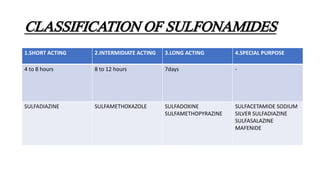
CLASSIFICATION OF SULFONAMIDES
1.SHORT ACTING 2.INTERMIDIATE ACTING 3.LONG ACTING 4.SPECIAL PURPOSE
4 to 8 hours 8 to 12 hours 7days -
SULFADIAZINE SULFAMETHOXAZOLE SULFADOXINE
SULFAMETHOPYRAZINE
SULFACETAMIDE SODIUM
SILVER SULFADIAZINE
SULFASALAZINE
MAFENIDE
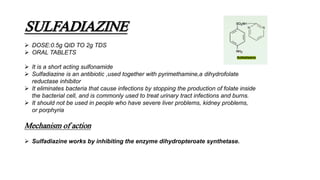
SULFADIAZINE
 DOSE:0.5g QID TO 2g TDS
 ORAL TABLETS
 It is a short acting sulfonamide
 Sulfadiazine is an antibiotic ,used together with pyrimethamine,a dihydrofolate
reductase inhibitor
 It eliminates bacteria that cause infections by stopping the production of folate inside
the bacterial cell, and is commonly used to treat urinary tract infections and burns.
 It should not be used in people who have severe liver problems, kidney problems,
or porphyria
Mechanism of action
 Sulfadiazine works by inhibiting the enzyme dihydropteroate synthetase.
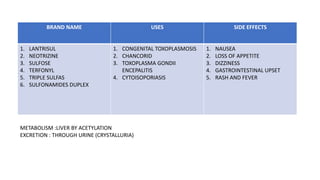
BRAND NAME USES SIDE EFFECTS
1. LANTRISUL
2. NEOTRIZINE
3. SULFOSE
4. TERFONYL
5. TRIPLE SULFAS
6. SULFONAMIDES DUPLEX
1. CONGENITAL TOXOPLASMOSIS
2. CHANCORID
3. TOXOPLASMA GONDII
ENCEPALITIS
4. CYTOISOPORIASIS
1. NAUSEA
2. LOSS OF APPETITE
3. DIZZINESS
4. GASTROINTESTINAL UPSET
5. RASH AND FEVER
METABOLISM :LIVER BY ACETYLATION
EXCRETION : THROUGH URINE (CRYSTALLURIA)
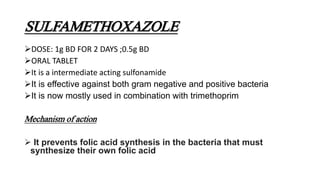
SULFAMETHOXAZOLE
DOSE: 1g BD FOR 2 DAYS ;0.5g BD
ORAL TABLET
It is a intermediate acting sulfonamide
It is effective against both gram negative and positive bacteria
It is now mostly used in combination with trimethoprim
Mechanism of action
 It prevents folic acid synthesis in the bacteria that must
synthesize their own folic acid
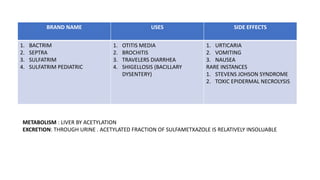
BRAND NAME USES SIDE EFFECTS
1. BACTRIM
2. SEPTRA
3. SULFATRIM
4. SULFATRIM PEDIATRIC
1. OTITIS MEDIA
2. BROCHITIS
3. TRAVELERS DIARRHEA
4. SHIGELLOSIS (BACILLARY
DYSENTERY)
1. URTICARIA
2. VOMITING
3. NAUSEA
RARE INSTANCES
1. STEVENS JOHSON SYNDROME
2. TOXIC EPIDERMAL NECROLYSIS
METABOLISM : LIVER BY ACETYLATION
EXCRETION: THROUGH URINE . ACETYLATED FRACTION OF SULFAMETXAZOLE IS RELATIVELY INSOLUABLE
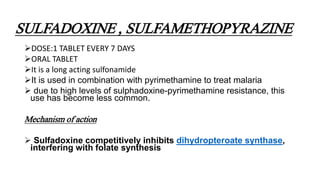
SULFADOXINE , SULFAMETHOPYRAZINE
DOSE:1 TABLET EVERY 7 DAYS
ORAL TABLET
It is a long acting sulfonamide
It is used in combination with pyrimethamine to treat malaria
 due to high levels of sulphadoxine-pyrimethamine resistance, this
use has become less common.
Mechanism of action
 Sulfadoxine competitively inhibits dihydropteroate synthase,
interfering with folate synthesis
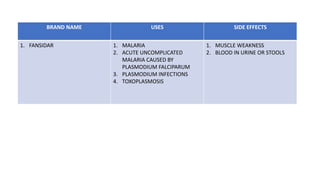
BRAND NAME USES SIDE EFFECTS
1. FANSIDAR 1. MALARIA
2. ACUTE UNCOMPLICATED
MALARIA CAUSED BY
PLASMODIUM FALCIPARUM
3. PLASMODIUM INFECTIONS
4. TOXOPLASMOSIS
1. MUSCLE WEAKNESS
2. BLOOD IN URINE OR STOOLS
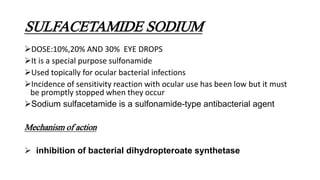
SULFACETAMIDE SODIUM
DOSE:10%,20% AND 30% EYE DROPS
It is a special purpose sulfonamide
Used topically for ocular bacterial infections
Incidence of sensitivity reaction with ocular use has been low but it must
be promptly stopped when they occur
Sodium sulfacetamide is a sulfonamide-type antibacterial agent
Mechanism of action
 inhibition of bacterial dihydropteroate synthetase
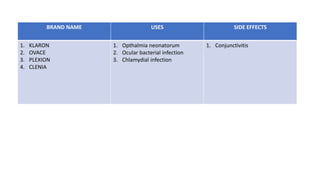
BRAND NAME USES SIDE EFFECTS
1. KLARON
2. OVACE
3. PLEXION
4. CLENIA
1. Opthalmia neonatorum
2. Ocular bacterial infection
3. Chlamydial infection
1. Conjunctivitis
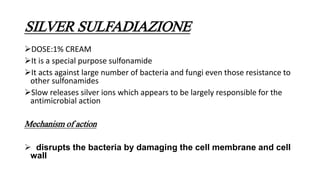
SILVER SULFADIAZIONE
DOSE:1% CREAM
It is a special purpose sulfonamide
It acts against large number of bacteria and fungi even those resistance to
other sulfonamides
Slow releases silver ions which appears to be largely responsible for the
antimicrobial action
Mechanism of action
 disrupts the bacteria by damaging the cell membrane and cell
wall
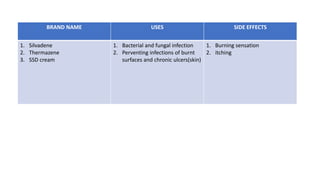
BRAND NAME USES SIDE EFFECTS
1. Silvadene
2. Thermazene
3. SSD cream
1. Bacterial and fungal infection
2. Perventing infections of burnt
surfaces and chronic ulcers(skin)
1. Burning sensation
2. itching
REFERENCE
www.webmd.com
www.healthline.com
www.drugs.com
go.drugbank.com
SULFONAMIDES

SULFONAMIDES

  • 1.
  • 2.
    CLASSIFICATION OF SULFONAMIDES 1.SHORTACTING 2.INTERMIDIATE ACTING 3.LONG ACTING 4.SPECIAL PURPOSE 4 to 8 hours 8 to 12 hours 7days - SULFADIAZINE SULFAMETHOXAZOLE SULFADOXINE SULFAMETHOPYRAZINE SULFACETAMIDE SODIUM SILVER SULFADIAZINE SULFASALAZINE MAFENIDE
  • 3.
    SULFADIAZINE  DOSE:0.5g QIDTO 2g TDS  ORAL TABLETS  It is a short acting sulfonamide  Sulfadiazine is an antibiotic ,used together with pyrimethamine,a dihydrofolate reductase inhibitor  It eliminates bacteria that cause infections by stopping the production of folate inside the bacterial cell, and is commonly used to treat urinary tract infections and burns.  It should not be used in people who have severe liver problems, kidney problems, or porphyria Mechanism of action  Sulfadiazine works by inhibiting the enzyme dihydropteroate synthetase.
  • 4.
    BRAND NAME USESSIDE EFFECTS 1. LANTRISUL 2. NEOTRIZINE 3. SULFOSE 4. TERFONYL 5. TRIPLE SULFAS 6. SULFONAMIDES DUPLEX 1. CONGENITAL TOXOPLASMOSIS 2. CHANCORID 3. TOXOPLASMA GONDII ENCEPALITIS 4. CYTOISOPORIASIS 1. NAUSEA 2. LOSS OF APPETITE 3. DIZZINESS 4. GASTROINTESTINAL UPSET 5. RASH AND FEVER METABOLISM :LIVER BY ACETYLATION EXCRETION : THROUGH URINE (CRYSTALLURIA)
  • 5.
    SULFAMETHOXAZOLE DOSE: 1g BDFOR 2 DAYS ;0.5g BD ORAL TABLET It is a intermediate acting sulfonamide It is effective against both gram negative and positive bacteria It is now mostly used in combination with trimethoprim Mechanism of action  It prevents folic acid synthesis in the bacteria that must synthesize their own folic acid
  • 6.
    BRAND NAME USESSIDE EFFECTS 1. BACTRIM 2. SEPTRA 3. SULFATRIM 4. SULFATRIM PEDIATRIC 1. OTITIS MEDIA 2. BROCHITIS 3. TRAVELERS DIARRHEA 4. SHIGELLOSIS (BACILLARY DYSENTERY) 1. URTICARIA 2. VOMITING 3. NAUSEA RARE INSTANCES 1. STEVENS JOHSON SYNDROME 2. TOXIC EPIDERMAL NECROLYSIS METABOLISM : LIVER BY ACETYLATION EXCRETION: THROUGH URINE . ACETYLATED FRACTION OF SULFAMETXAZOLE IS RELATIVELY INSOLUABLE
  • 7.
    SULFADOXINE , SULFAMETHOPYRAZINE DOSE:1TABLET EVERY 7 DAYS ORAL TABLET It is a long acting sulfonamide It is used in combination with pyrimethamine to treat malaria  due to high levels of sulphadoxine-pyrimethamine resistance, this use has become less common. Mechanism of action  Sulfadoxine competitively inhibits dihydropteroate synthase, interfering with folate synthesis
  • 8.
    BRAND NAME USESSIDE EFFECTS 1. FANSIDAR 1. MALARIA 2. ACUTE UNCOMPLICATED MALARIA CAUSED BY PLASMODIUM FALCIPARUM 3. PLASMODIUM INFECTIONS 4. TOXOPLASMOSIS 1. MUSCLE WEAKNESS 2. BLOOD IN URINE OR STOOLS
  • 9.
    SULFACETAMIDE SODIUM DOSE:10%,20% AND30% EYE DROPS It is a special purpose sulfonamide Used topically for ocular bacterial infections Incidence of sensitivity reaction with ocular use has been low but it must be promptly stopped when they occur Sodium sulfacetamide is a sulfonamide-type antibacterial agent Mechanism of action  inhibition of bacterial dihydropteroate synthetase
  • 10.
    BRAND NAME USESSIDE EFFECTS 1. KLARON 2. OVACE 3. PLEXION 4. CLENIA 1. Opthalmia neonatorum 2. Ocular bacterial infection 3. Chlamydial infection 1. Conjunctivitis
  • 11.
    SILVER SULFADIAZIONE DOSE:1% CREAM Itis a special purpose sulfonamide It acts against large number of bacteria and fungi even those resistance to other sulfonamides Slow releases silver ions which appears to be largely responsible for the antimicrobial action Mechanism of action  disrupts the bacteria by damaging the cell membrane and cell wall
  • 12.
    BRAND NAME USESSIDE EFFECTS 1. Silvadene 2. Thermazene 3. SSD cream 1. Bacterial and fungal infection 2. Perventing infections of burnt surfaces and chronic ulcers(skin) 1. Burning sensation 2. itching
  • 13.