Downloaded 17 times
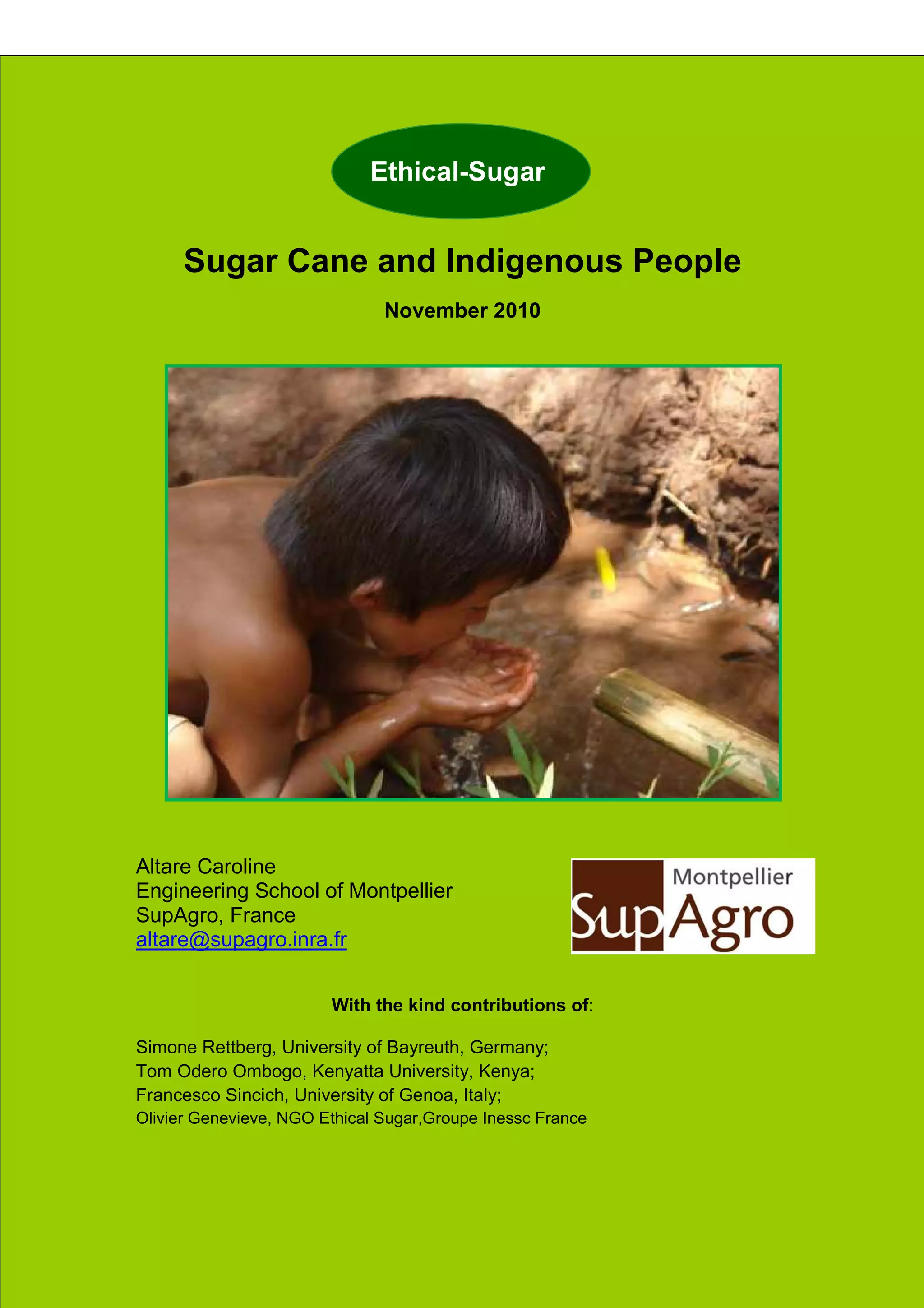
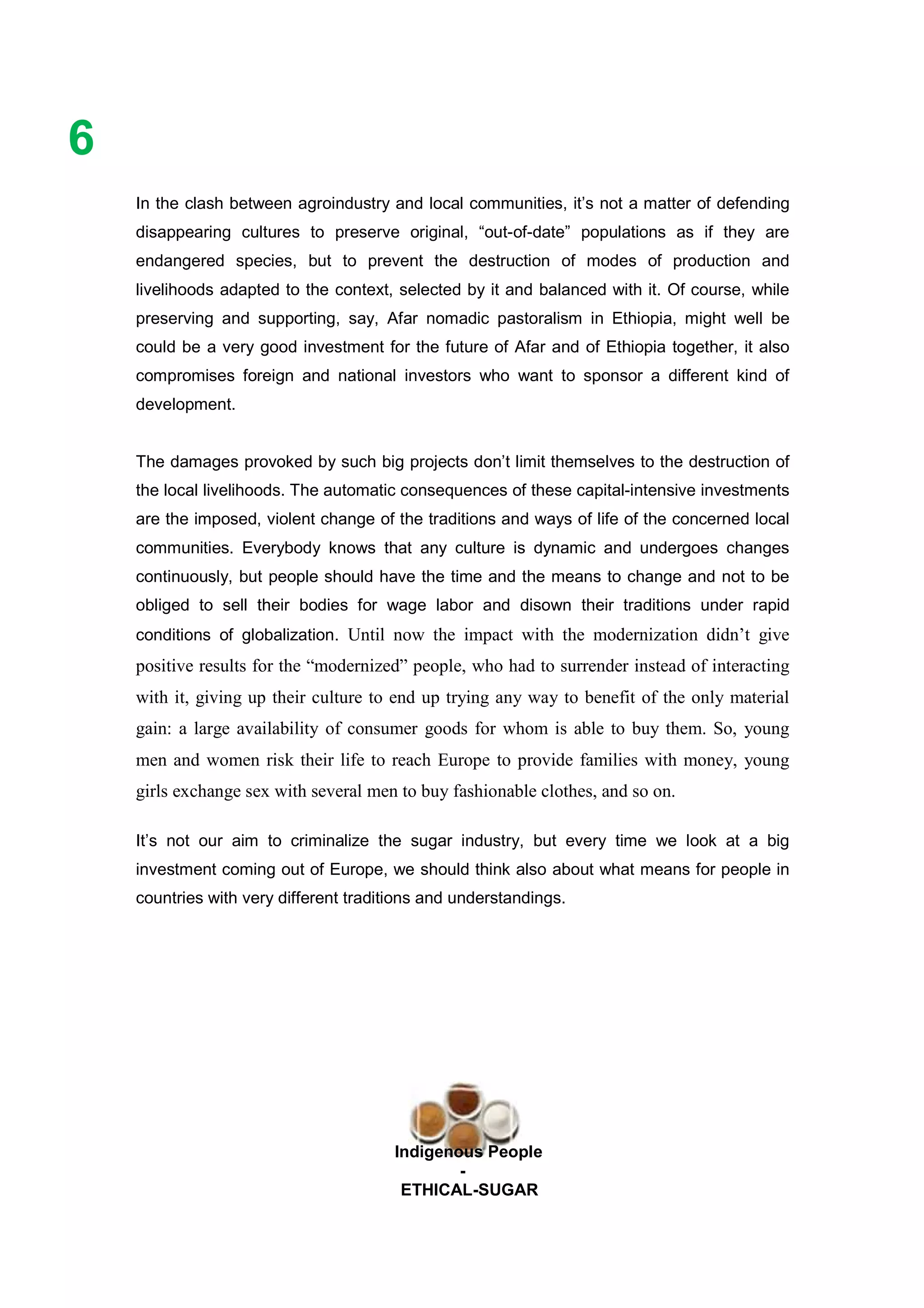
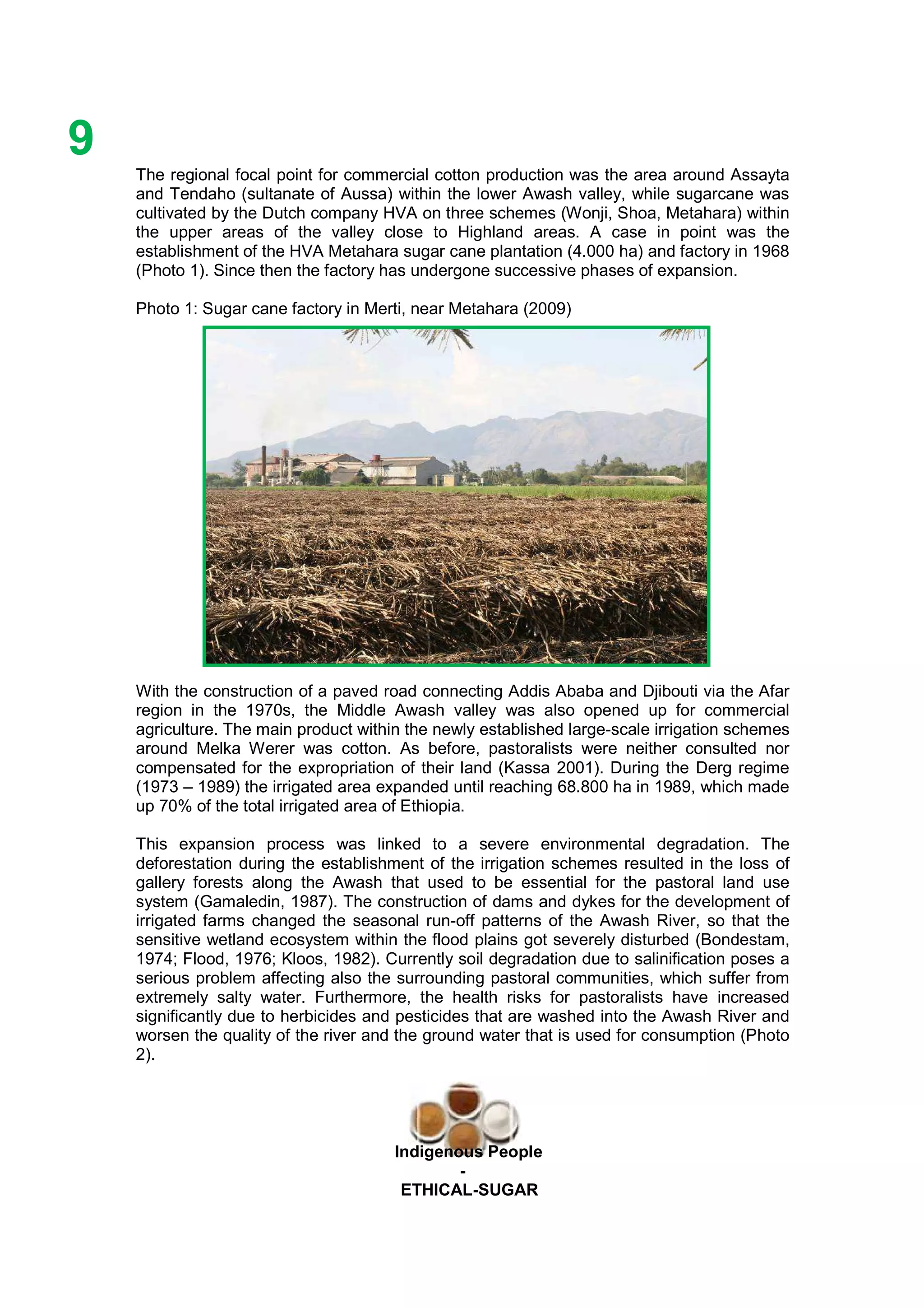
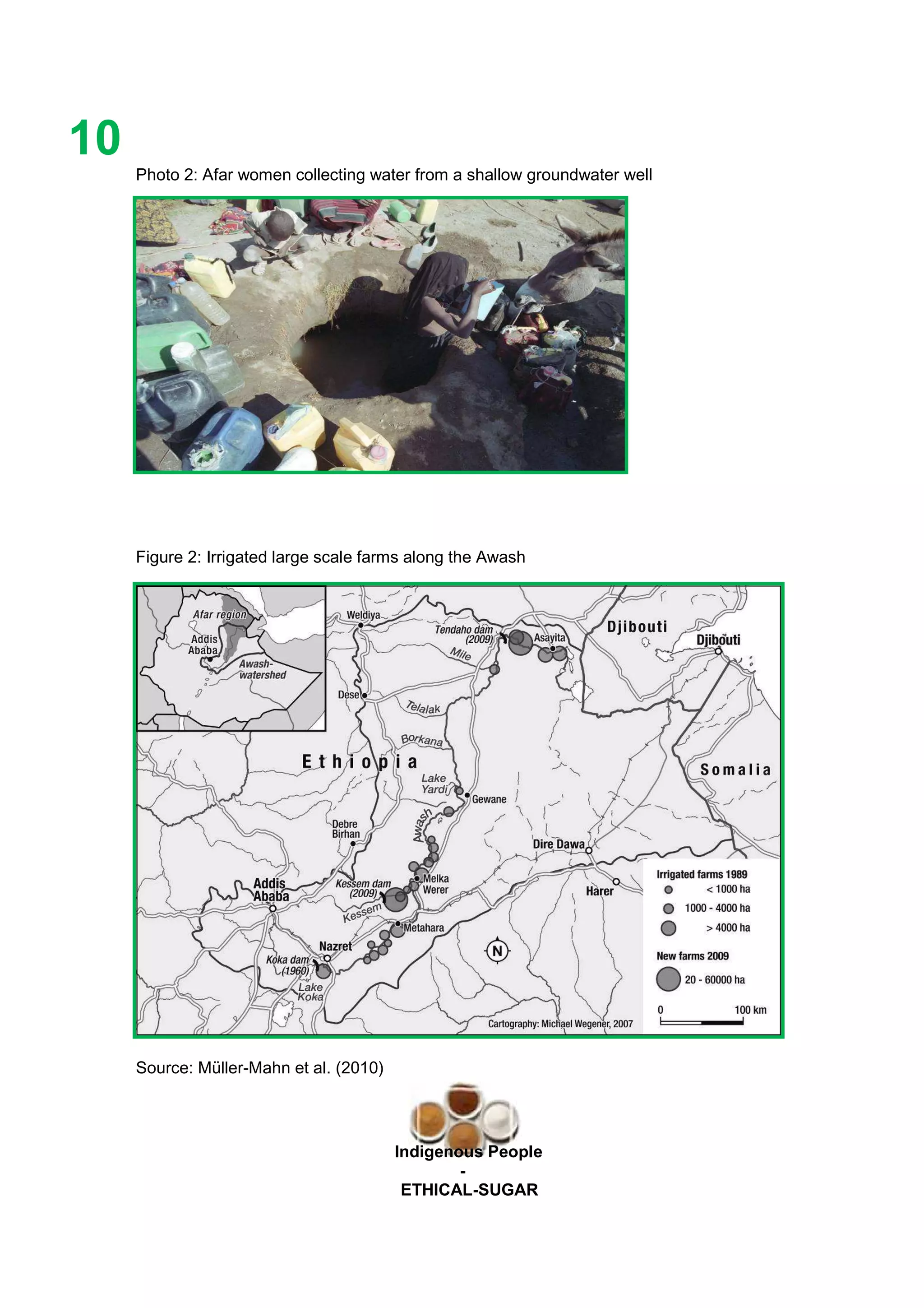
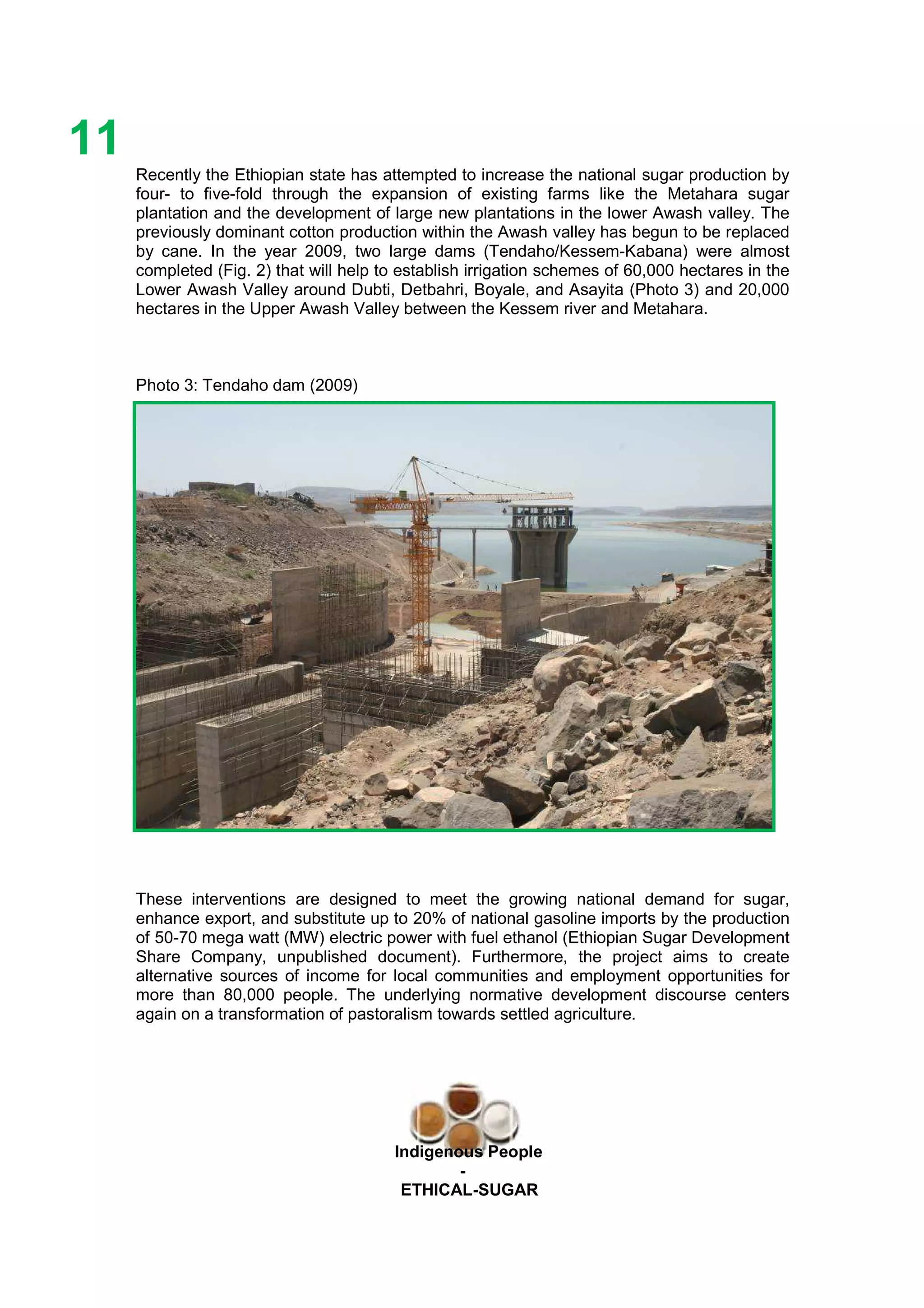
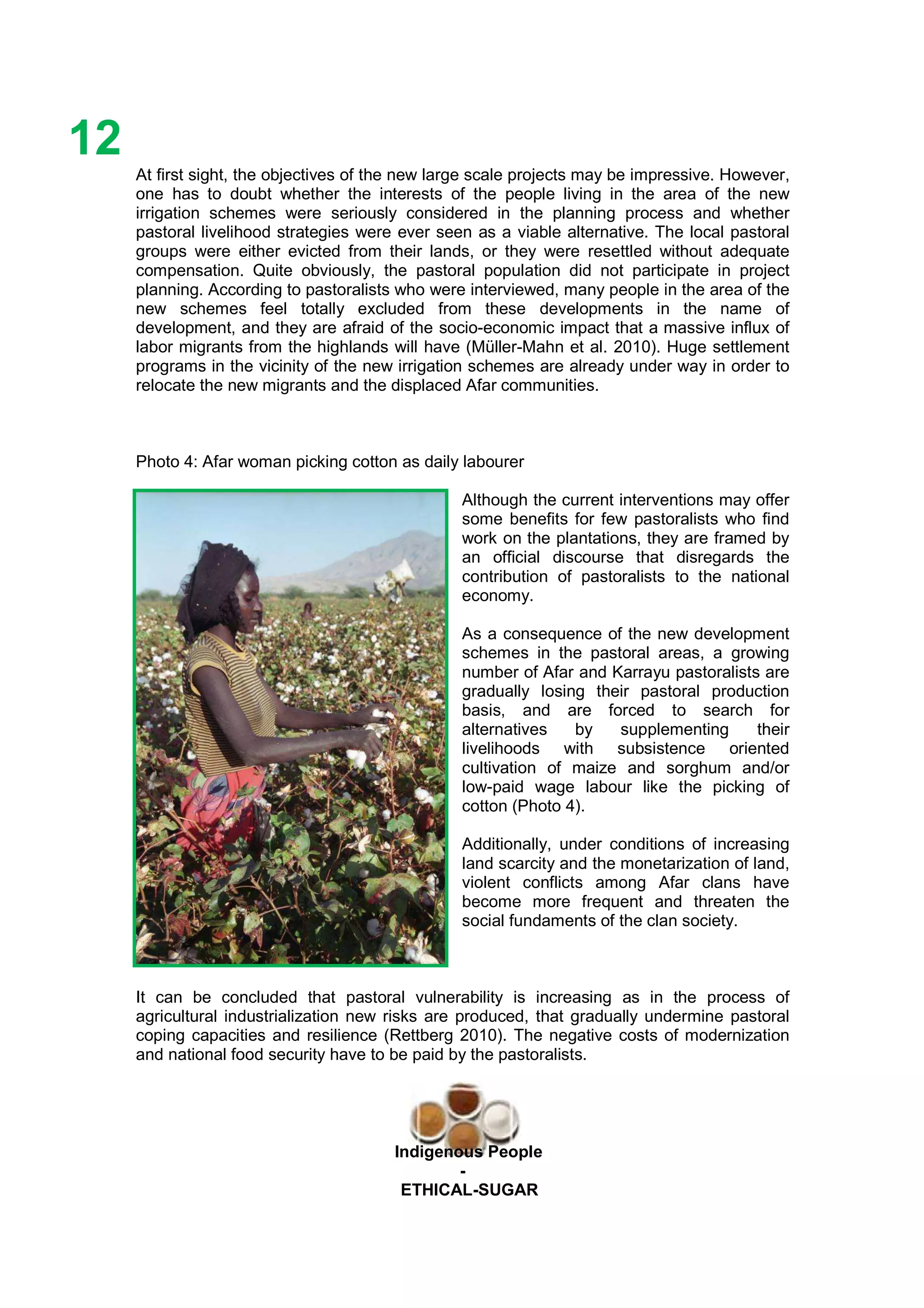
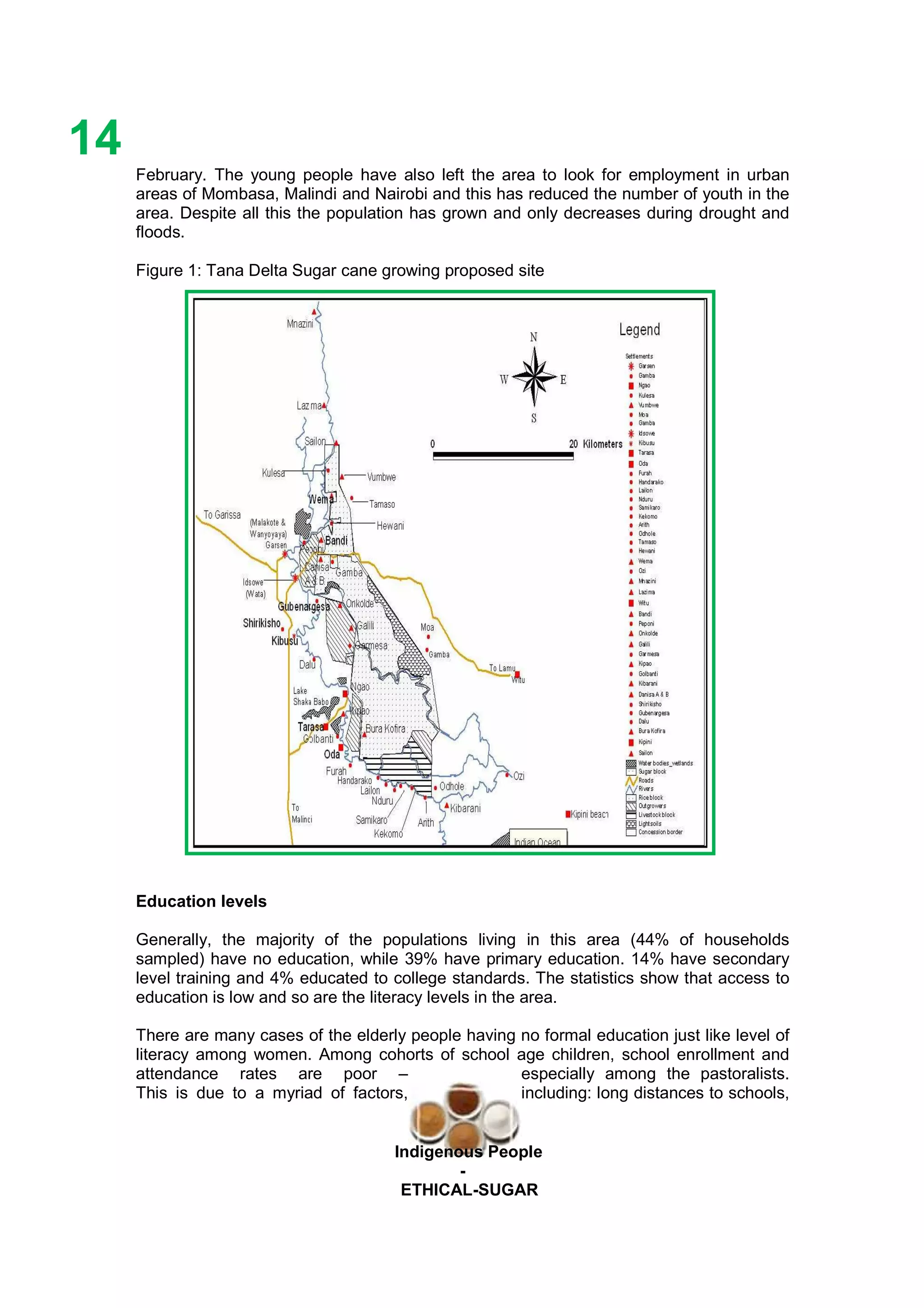
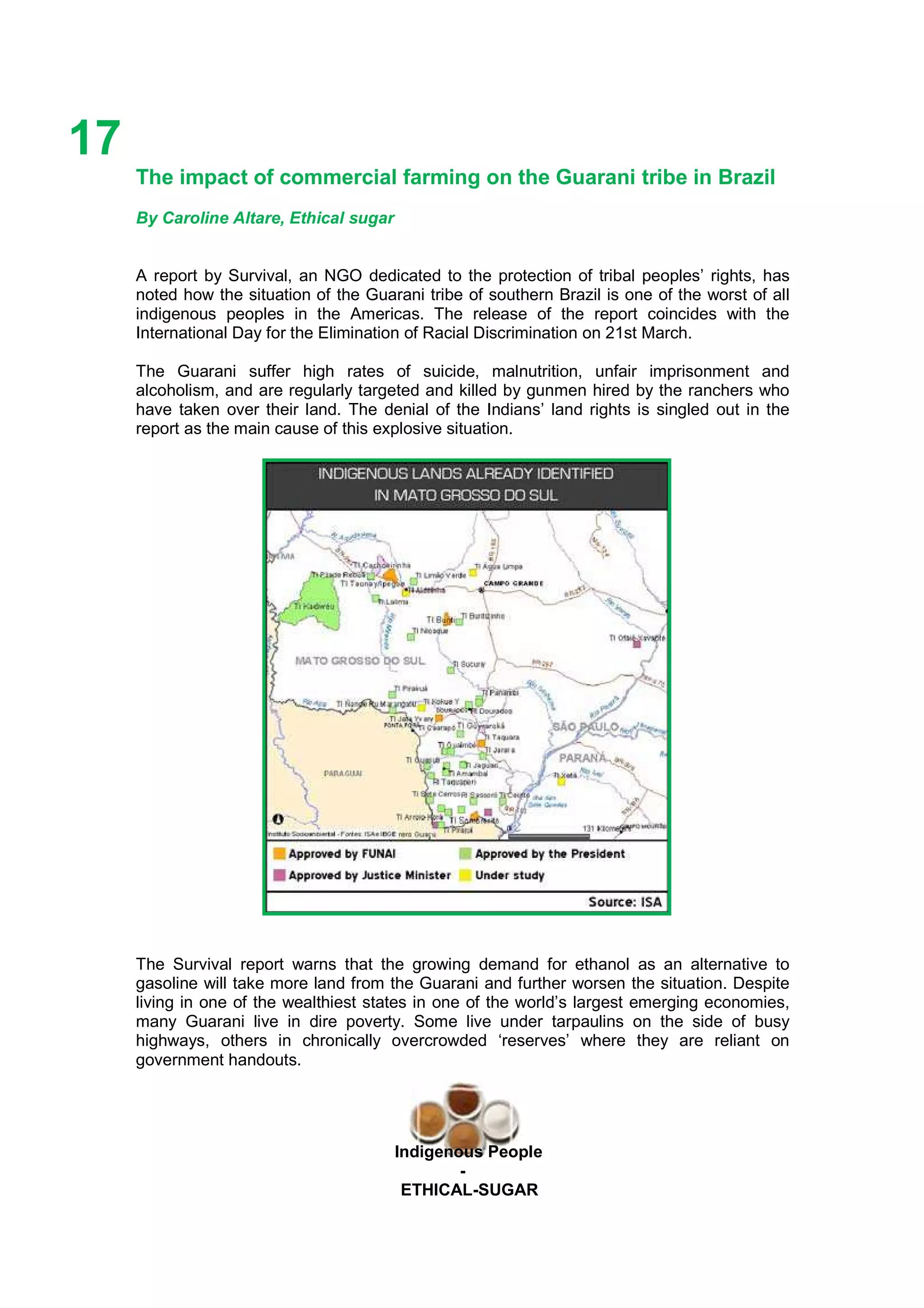
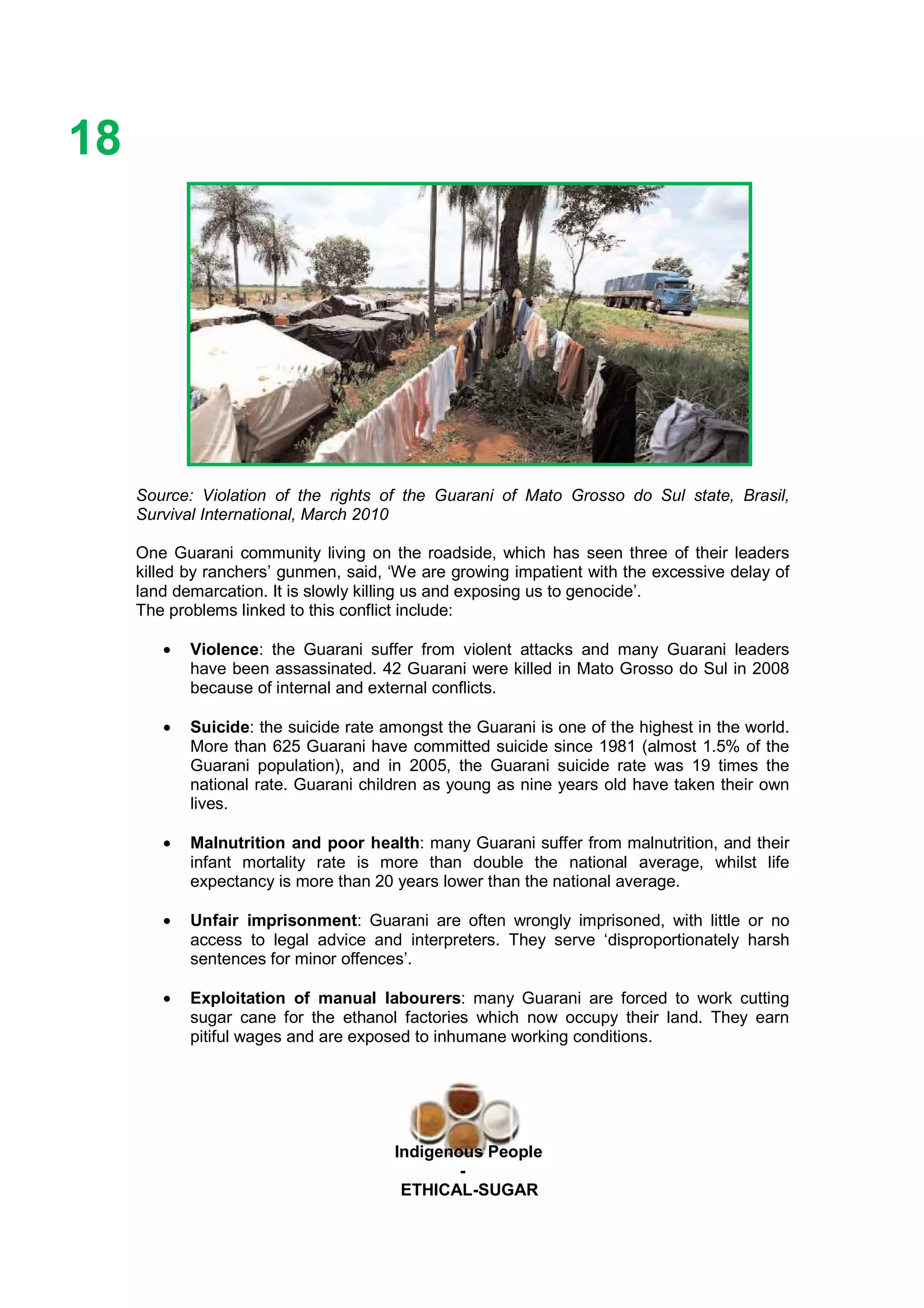
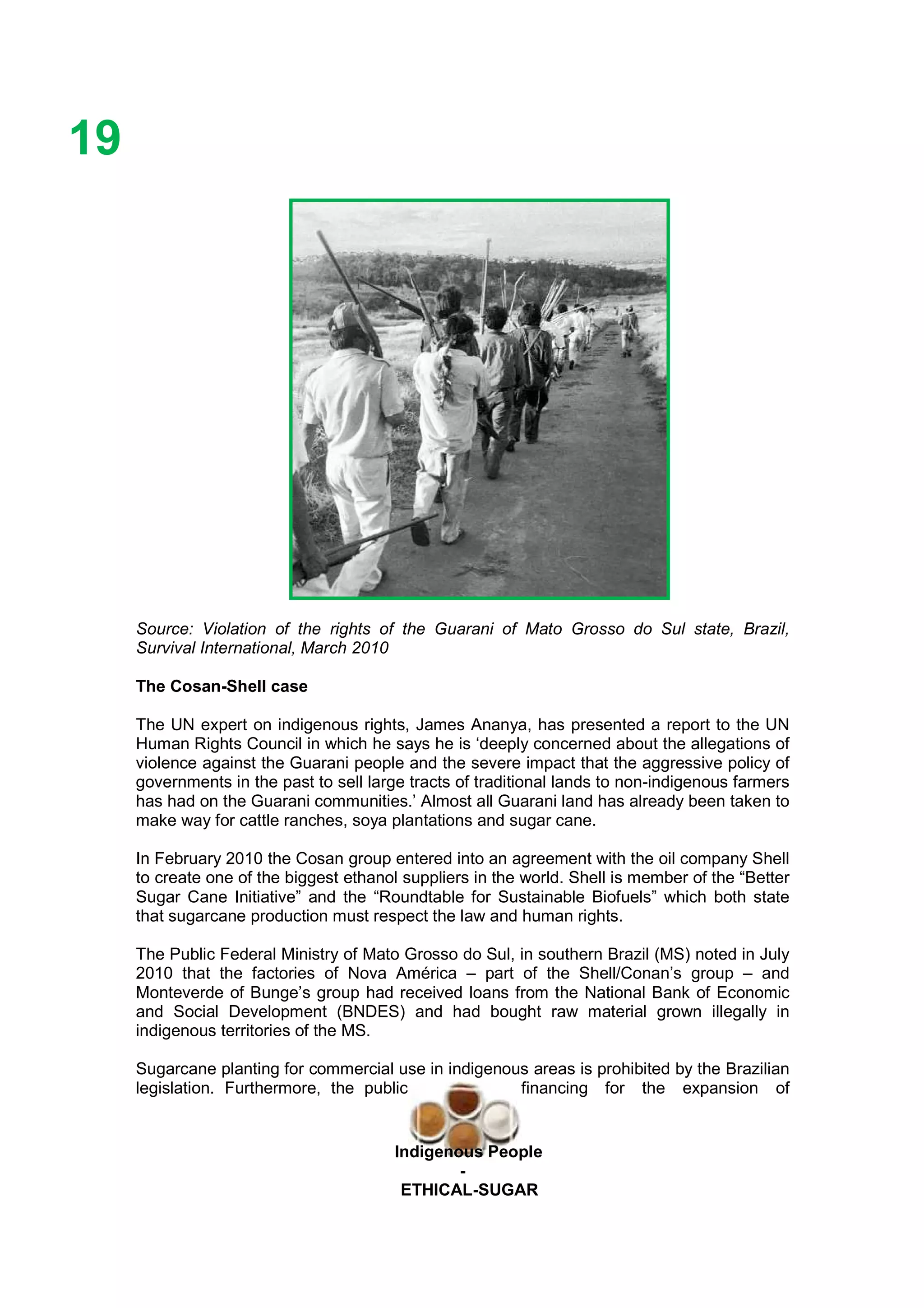
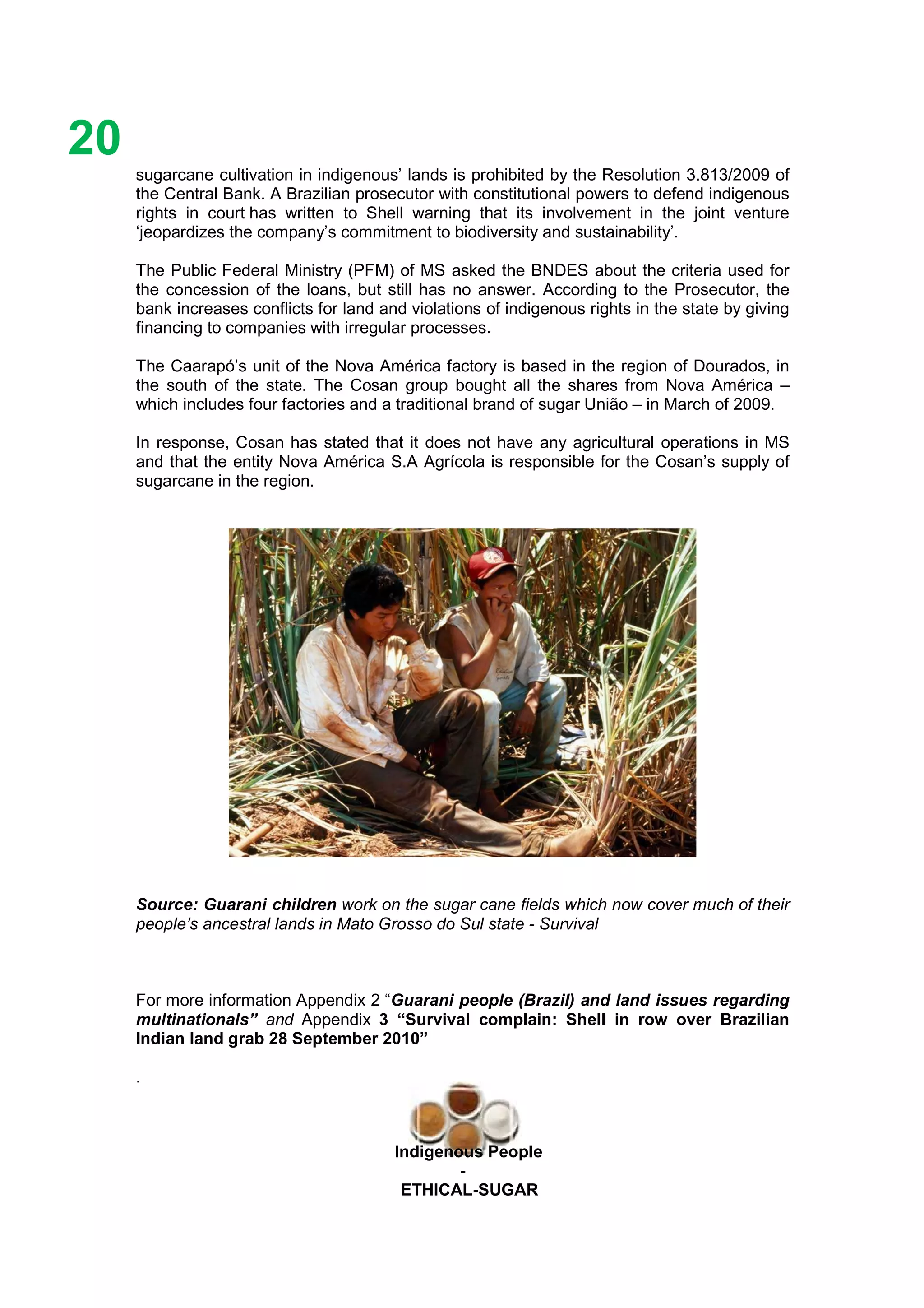
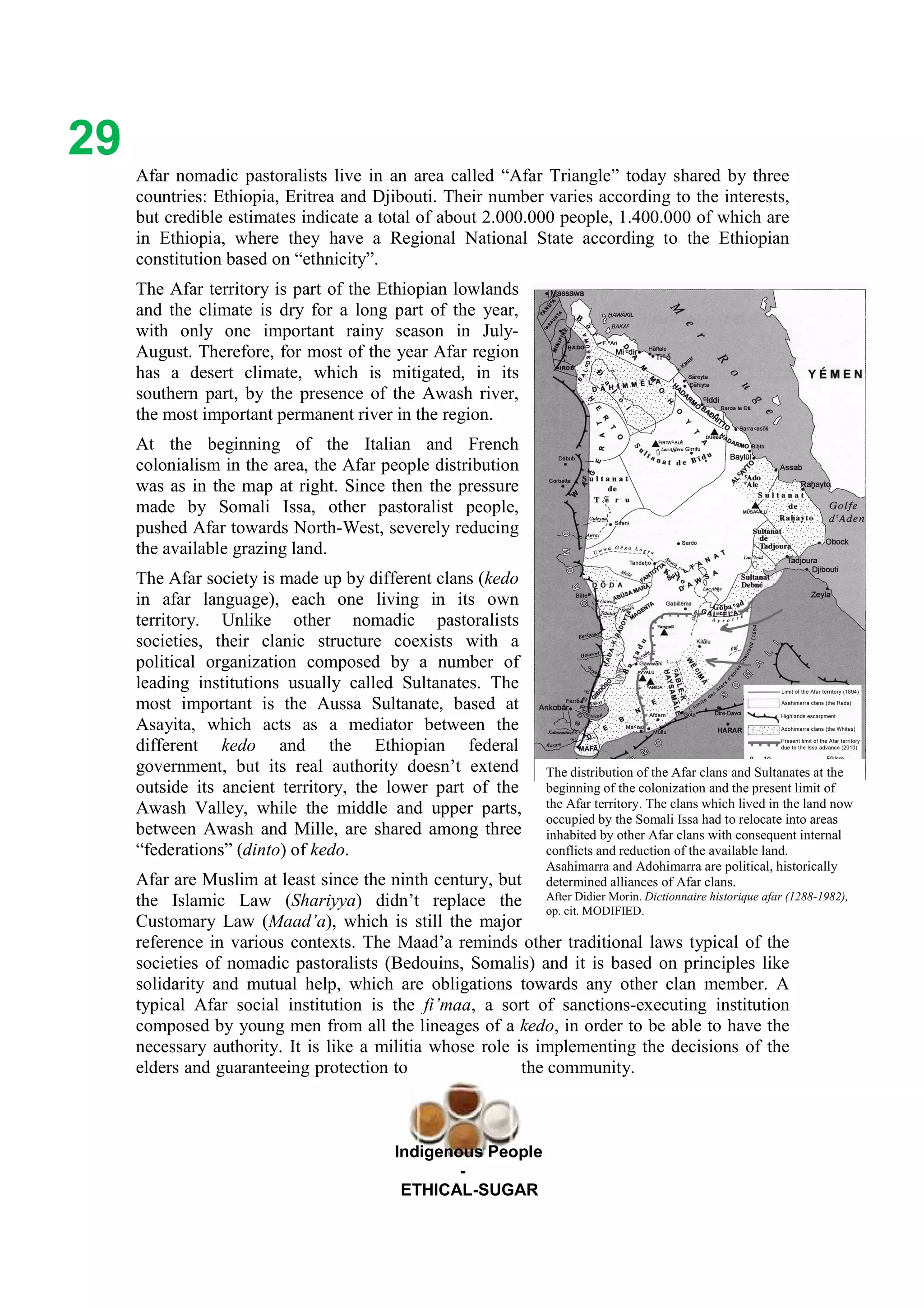
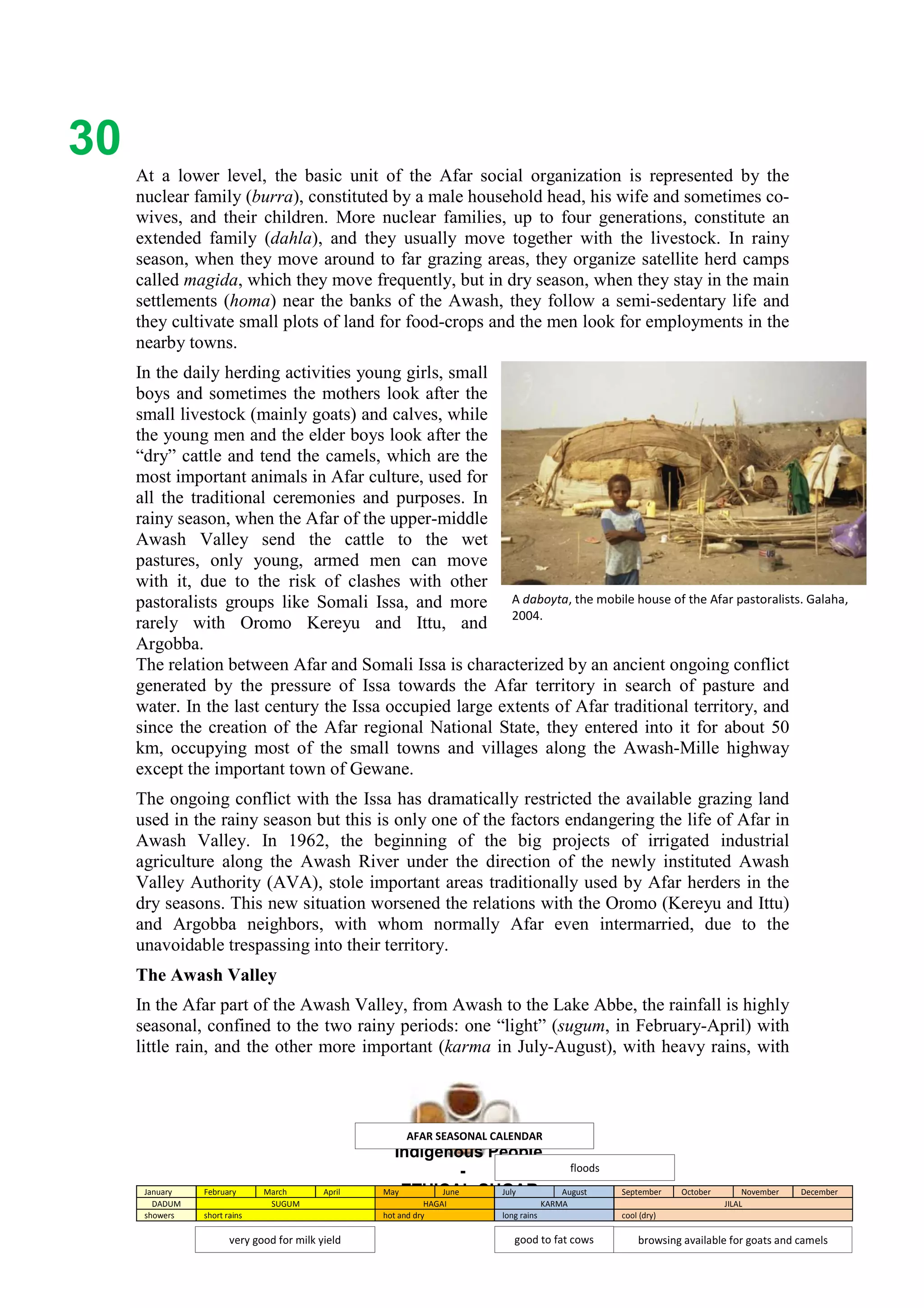
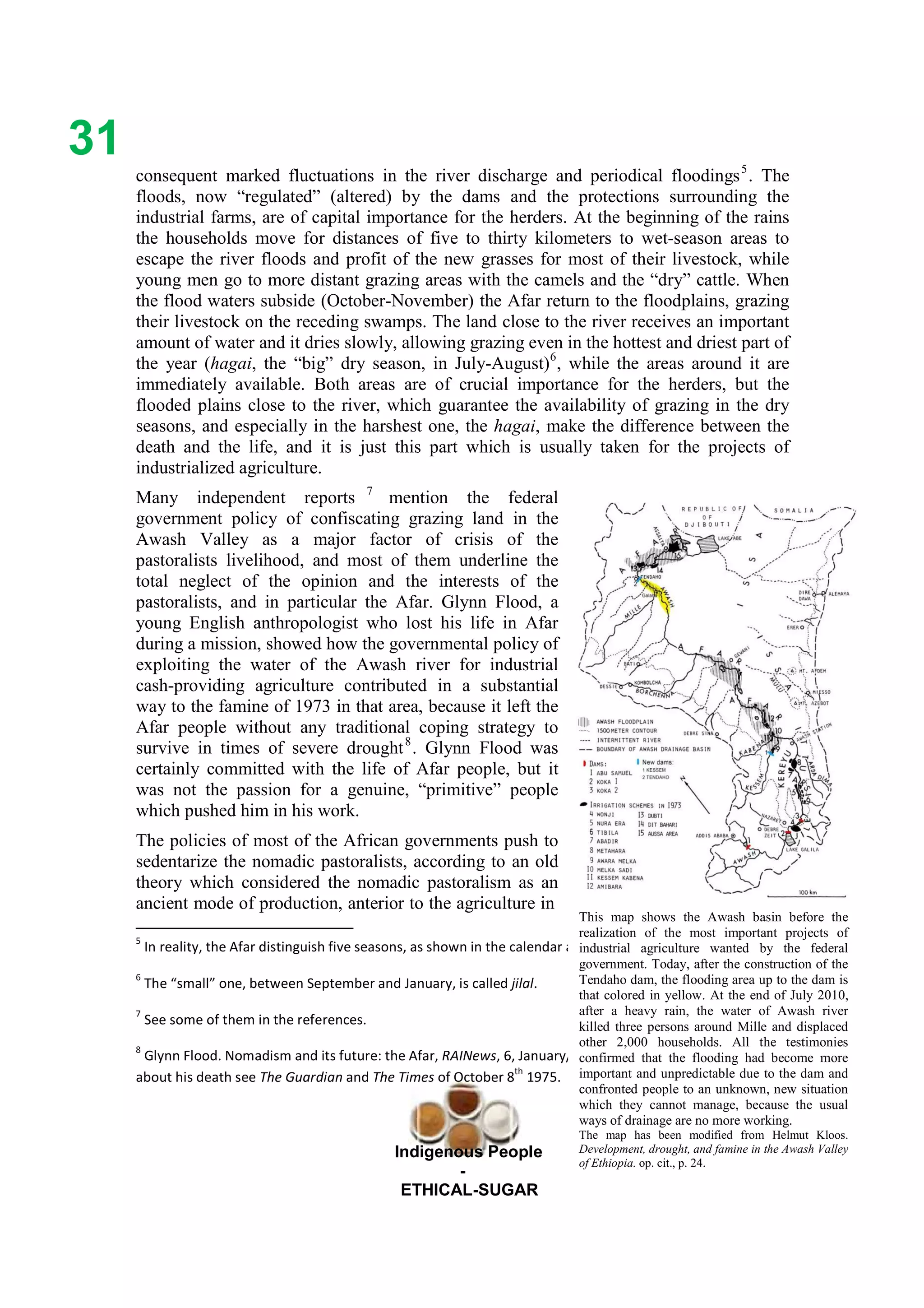


This document summarizes the impact of sugar cane plantations on indigenous pastoral communities in the Afar region of Ethiopia. It describes how beginning in the 1950s, the Ethiopian government established large-scale irrigation schemes along the Awash River for cotton and sugar cane production, expropriating the land traditionally used by Afar pastoralists. This led to loss of grazing lands and disruption of pastoral livelihoods. More recent expansion of sugar cane production, including new dams and plantations, further threatens the pastoral way of life and has caused environmental degradation. While the government aims to increase food and export production, the interests of indigenous groups are not adequately considered.


![11.[7 17]determinants of adoption and labour intensity of stone-terraces in e...](https://cdn.slidesharecdn.com/ss_thumbnails/11-7-17determinantsofadoptionandlabourintensityofstone-terracesineasternhighlandsofethiopia-120512235441-phpapp01-thumbnail.jpg?width=640&height=640&fit=bounds)


