Unit 1: PRONUNCIATION OF THE
          SUFFIX -s/-es

  3rd Person Singular Simple Present,
     Saxon Genitive and the Plural
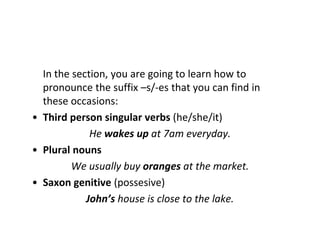
In the section, you are going to learn how to
  pronounce the suffix –s/-es that you can find in
  these occasions:
• Third person singular verbs (he/she/it)
             He wakes up at 7am everyday.
• Plural nouns
         We usually buy oranges at the market.
• Saxon genitive (possesive)
            John’s house is close to the lake.
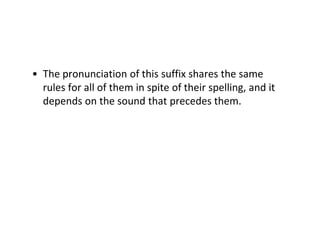
• The pronunciation of this suffix shares the same
  rules for all of them in spite of their spelling, and it
  depends on the sound that precedes them.
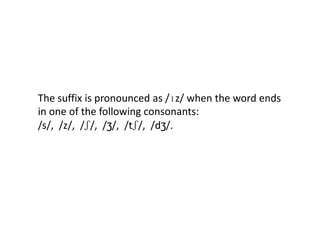
The suffix is pronounced as /ɪz/ when the word ends
in one of the following consonants:
/s/, /z/, /ʃ/, /ʒ/, /tʃ/, /dʒ/.
/s/

Susan always passes her exams with a good grade.
They have two horses in their country house.
Jess’s friend is so funny!
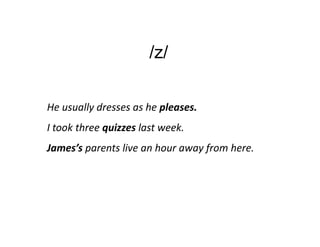
/z/

He usually dresses as he pleases.
I took three quizzes last week.
James’s parents live an hour away from here.
/ʃ/

Peter never washes his clothes.
I wash the dishes sometimes.
Have you met Josh’s cousin?
/ʒ/

He massages ten clients per day.
We chose two yellows and three beiges for the house.
Blanche’s mother is from France.
/ tʃ /

She usually watches TV after dinner.
Do you have some matches to light the fire?
I think I know Mitch’s new friend.
/ dʒ /

She often judges other people.
The officer wears a lot of badges on his uniform.
Marge’s children are very polite.
The suffix is pronounced as /s/ when the word ends
in one of the following consonants:
/p/, /t/, /k/, /θ/, /f/
/p/

He keeps a diary as therapy.
Laura always leaves tips to the waiters.
Kipp’s products are the freshest in the market.
/t/

She usually cuts ham into small pieces for her children.
He’s wearing blue shorts this morning.
Pete’s dogs are so lovely.
/k/

My grandmother cooks great meals.
She made some cakes this morning.
Are you coming to Mark’s party tonight?
/θ/

There are two paths we can take.
Keith’s classmates adore him.
/f/

She always laughs at his jokes.
These pants lack cuffs and pockets.
We are studying the wolf's anatomy.
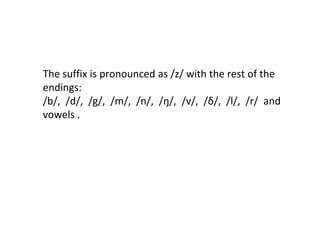
The suffix is pronounced as /z/ with the rest of the
endings:
/b/, /d/, /g/, /m/, /n/, /ŋ/, /v/, /δ/, /l/, /r/ and
vowels .
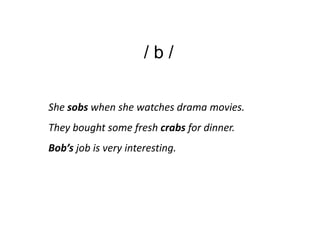
/b/

She sobs when she watches drama movies.
They bought some fresh crabs for dinner.
Bob’s job is very interesting.
/d/

He always proceeds with caution.
There are many rose buds in our garden.
Chad’s sister is in my class.
/g/

I don’t know how he always clogs the toilet.
Put the bags in the kitchen, please.
Doug’s hair is getting thinner.
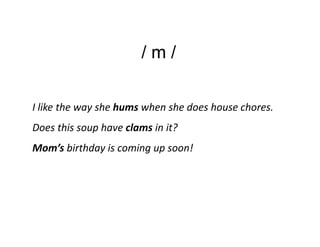
/m/

I like the way she hums when she does house chores.
Does this soup have clams in it?
Mom’s birthday is coming up soon!
/n/

She runs eight miles every day.
There are tons of people waiting outside.
John’s barbecue is this weekend.
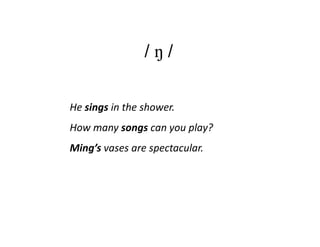
/ŋ/


He sings in the shower.
How many songs can you play?
Ming’s vases are spectacular.
/v/

Helen leaves for Turkey on Monday.
Be careful with the knives on the table.
Viv’s husband travels every month.
/δ/

She bathes her baby very carefully.
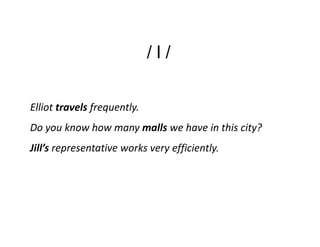
/l/

Elliot travels frequently.
Do you know how many malls we have in this city?
Jill’s representative works very efficiently.
/r/

She transfers money early in the morning.
They have some scars from their accident.
The director’s assistants work more than anyone else.
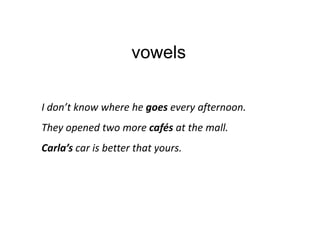
vowels

I don’t know where he goes every afternoon.
They opened two more cafés at the mall.
Carla’s car is better that yours.
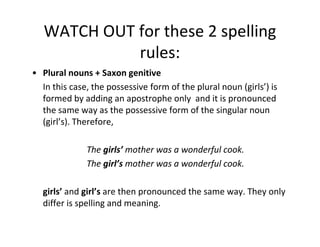
WATCH OUT for these 2 spelling
             rules:
• Plural nouns + Saxon genitive
  In this case, the possessive form of the plural noun (girls’) is
  formed by adding an apostrophe only and it is pronounced
  the same way as the possessive form of the singular noun
  (girl’s). Therefore,

              The girls’ mother was a wonderful cook.
              The girl’s mother was a wonderful cook.

  girls’ and girl’s are then pronounced the same way. They only
  differ is spelling and meaning.
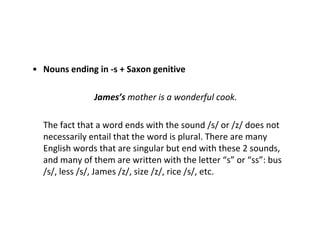
• Nouns ending in -s + Saxon genitive

               James’s mother is a wonderful cook.

  The fact that a word ends with the sound /s/ or /z/ does not
  necessarily entail that the word is plural. There are many
  English words that are singular but end with these 2 sounds,
  and many of them are written with the letter “s” or “ss”: bus
  /s/, less /s/, James /z/, size /z/, rice /s/, etc.
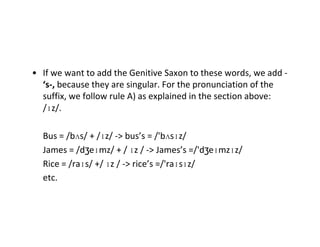
• If we want to add the Genitive Saxon to these words, we add -
  ‘s-, because they are singular. For the pronunciation of the
  suffix, we follow rule A) as explained in the section above:
  /ɪz/.

  Bus = /bʌs/ + /ɪz/ -> bus’s = /'bʌsɪz/
  James = /dʒeɪmz/ + / ɪz / -> James’s =/'dʒeɪmzɪz/
  Rice = /raɪs/ +/ ɪz / -> rice’s =/'raɪsɪz/
  etc.

Suffix s

  • 1.
    Unit 1: PRONUNCIATIONOF THE SUFFIX -s/-es 3rd Person Singular Simple Present, Saxon Genitive and the Plural
  • 2.
    In the section,you are going to learn how to pronounce the suffix –s/-es that you can find in these occasions: • Third person singular verbs (he/she/it) He wakes up at 7am everyday. • Plural nouns We usually buy oranges at the market. • Saxon genitive (possesive) John’s house is close to the lake.
  • 3.
    • The pronunciationof this suffix shares the same rules for all of them in spite of their spelling, and it depends on the sound that precedes them.
  • 4.
    The suffix ispronounced as /ɪz/ when the word ends in one of the following consonants: /s/, /z/, /ʃ/, /ʒ/, /tʃ/, /dʒ/.
  • 5.
    /s/ Susan always passesher exams with a good grade. They have two horses in their country house. Jess’s friend is so funny!
  • 6.
    /z/ He usually dressesas he pleases. I took three quizzes last week. James’s parents live an hour away from here.
  • 7.
    /ʃ/ Peter never washeshis clothes. I wash the dishes sometimes. Have you met Josh’s cousin?
  • 8.
    /ʒ/ He massages tenclients per day. We chose two yellows and three beiges for the house. Blanche’s mother is from France.
  • 9.
    / tʃ / Sheusually watches TV after dinner. Do you have some matches to light the fire? I think I know Mitch’s new friend.
  • 10.
    / dʒ / Sheoften judges other people. The officer wears a lot of badges on his uniform. Marge’s children are very polite.
  • 11.
    The suffix ispronounced as /s/ when the word ends in one of the following consonants: /p/, /t/, /k/, /θ/, /f/
  • 12.
    /p/ He keeps adiary as therapy. Laura always leaves tips to the waiters. Kipp’s products are the freshest in the market.
  • 13.
    /t/ She usually cutsham into small pieces for her children. He’s wearing blue shorts this morning. Pete’s dogs are so lovely.
  • 14.
    /k/ My grandmother cooksgreat meals. She made some cakes this morning. Are you coming to Mark’s party tonight?
  • 15.
    /θ/ There are twopaths we can take. Keith’s classmates adore him.
  • 16.
    /f/ She always laughsat his jokes. These pants lack cuffs and pockets. We are studying the wolf's anatomy.
  • 17.
    The suffix ispronounced as /z/ with the rest of the endings: /b/, /d/, /g/, /m/, /n/, /ŋ/, /v/, /δ/, /l/, /r/ and vowels .
  • 18.
    /b/ She sobs whenshe watches drama movies. They bought some fresh crabs for dinner. Bob’s job is very interesting.
  • 19.
    /d/ He always proceedswith caution. There are many rose buds in our garden. Chad’s sister is in my class.
  • 20.
    /g/ I don’t knowhow he always clogs the toilet. Put the bags in the kitchen, please. Doug’s hair is getting thinner.
  • 21.
    /m/ I like theway she hums when she does house chores. Does this soup have clams in it? Mom’s birthday is coming up soon!
  • 22.
    /n/ She runs eightmiles every day. There are tons of people waiting outside. John’s barbecue is this weekend.
  • 23.
    /ŋ/ He sings inthe shower. How many songs can you play? Ming’s vases are spectacular.
  • 24.
    /v/ Helen leaves forTurkey on Monday. Be careful with the knives on the table. Viv’s husband travels every month.
  • 25.
    /δ/ She bathes herbaby very carefully.
  • 26.
    /l/ Elliot travels frequently. Doyou know how many malls we have in this city? Jill’s representative works very efficiently.
  • 27.
    /r/ She transfers moneyearly in the morning. They have some scars from their accident. The director’s assistants work more than anyone else.
  • 28.
    vowels I don’t knowwhere he goes every afternoon. They opened two more cafés at the mall. Carla’s car is better that yours.
  • 29.
    WATCH OUT forthese 2 spelling rules: • Plural nouns + Saxon genitive In this case, the possessive form of the plural noun (girls’) is formed by adding an apostrophe only and it is pronounced the same way as the possessive form of the singular noun (girl’s). Therefore, The girls’ mother was a wonderful cook. The girl’s mother was a wonderful cook. girls’ and girl’s are then pronounced the same way. They only differ is spelling and meaning.
  • 30.
    • Nouns endingin -s + Saxon genitive James’s mother is a wonderful cook. The fact that a word ends with the sound /s/ or /z/ does not necessarily entail that the word is plural. There are many English words that are singular but end with these 2 sounds, and many of them are written with the letter “s” or “ss”: bus /s/, less /s/, James /z/, size /z/, rice /s/, etc.
  • 31.
    • If wewant to add the Genitive Saxon to these words, we add - ‘s-, because they are singular. For the pronunciation of the suffix, we follow rule A) as explained in the section above: /ɪz/. Bus = /bʌs/ + /ɪz/ -> bus’s = /'bʌsɪz/ James = /dʒeɪmz/ + / ɪz / -> James’s =/'dʒeɪmzɪz/ Rice = /raɪs/ +/ ɪz / -> rice’s =/'raɪsɪz/ etc.