Successful Project Management 7th Edition – Ebook PDF Version
Successful Project Management 7th Edition – Ebook PDF Version
Successful Project Management 7th Edition – Ebook PDF Version
Successful Project Management 7th Edition – Ebook PDF Version
Successful Project Management 7th Edition – Ebook PDF Version
1.
Successful Project Management7th Edition –
Ebook PDF Version pdf download
https://ebookmass.com/product/successful-project-management-7th-
edition-ebook-pdf-version/
Explore and download more ebooks at ebookmass.com
2.
We have selectedsome products that you may be interested in
Click the link to download now or visit ebookmass.com
for more options!.
Successful Project Management 7th Edition Jack Gido
https://ebookmass.com/product/successful-project-management-7th-
edition-jack-gido/
Contemporary Project Management 4th Edition – Ebook PDF
Version
https://ebookmass.com/product/contemporary-project-management-4th-
edition-ebook-pdf-version/
Successful project management Seventh Edition / Baker
https://ebookmass.com/product/successful-project-management-seventh-
edition-baker/
Effective Management 7th Edition – Ebook PDF Version
https://ebookmass.com/product/effective-management-7th-edition-ebook-
pdf-version/
3.
Introduction to 80×86Assembly Language and Computer
Architecture – Ebook PDF Version
https://ebookmass.com/product/introduction-to-8086-assembly-language-
and-computer-architecture-ebook-pdf-version/
Professional Baking, 7th Edition 7th Edition – Ebook PDF
Version
https://ebookmass.com/product/professional-baking-7th-edition-7th-
edition-ebook-pdf-version/
Construction Project Scheduling and Control – Ebook PDF
Version
https://ebookmass.com/product/construction-project-scheduling-and-
control-ebook-pdf-version/
Managerial Economics 7th Edition – Ebook PDF Version
https://ebookmass.com/product/managerial-economics-7th-edition-ebook-
pdf-version/
Lifespan Development 7th Edition – Ebook PDF Version
https://ebookmass.com/product/lifespan-development-7th-edition-ebook-
pdf-version/
5.
Copyright 2018 CengageLearning. All Rights Reserved. May not be copied, scanned, or duplicated, in whole or in part. WCN 02-200-203
6.
Brief Contents
CHAPTER 1Project Management Concepts 2
PART 1 Initiating a Project 34
CHAPTER 2 Identifying and Selecting Projects 36
CHAPTER 3 Developing Project Proposals 64
PART 2 Planning, Performing, and Controlling the Project 100
CHAPTER 4 Defining Scope, Quality, Responsibility, and Activity Sequence 102
CHAPTER 5 Developing the Schedule 146
CHAPTER 6 Resource Utilization 214
CHAPTER 7 Determining Costs, Budget, and Earned Value 242
CHAPTER 8 Managing Risk 288
CHAPTER 9 Closing the Project 304
PART 3 People: The Key to Project Success 324
CHAPTER 10 The Project Manager 326
CHAPTER 11 The Project Team 360
CHAPTER 12 Project Communication and Documentation 406
CHAPTER 13 Project Management Organizational Structures 442
Appendix A Project Management Information Systems 467
Appendix B Project Management Websites 479
Appendix C Project Management Associations around the Globe 481
Appendix D Acronyms 485
Reinforce Your Learning Answers 487
Glossary 503
Index 511
vii
Copyright 2018 Cengage Learning. All Rights Reserved. May not be copied, scanned, or duplicated, in whole or in part. WCN 02-200-203
8.
Contents
Preface. . .. . . . . . . . . . . . . . . . . . . . . . . . . . . . . . . . . . . . . . . . . . . . . . . . . . . . . . . . . . . . . . . . . . . . . . . . . . . . . . . . . . . . xvii
About the Authors. . . . . . . . . . . . . . . . . . . . . . . . . . . . . . . . . . . . . . . . . . . . . . . . . . . . . . . . . . . . . . . . . . . . . . . . . . xxix
C H A P T E R 1
Project Management Concepts . . . . . . . . . . . . . . . . . . . . . . . . . . . . . . . . . . . . . . . . . . . . . . . . . 2
Project Attributes 5
Balancing Project Constraints 7
Project Life Cycle 10
Initiating 11
Planning 12
Performing 12
Closing 14
Project Management Process 15
Stakeholder Engagement 22
Global Project Management 23
Project Management Associations 24
Benefits of Project Management 25
Summary 27
Questions 29
Internet Exercises 29
Case Study 1: A Not-for-Profit Organization 30
Case Study 2: E-Commerce for a Small Supermarket 31
Bibliography 32
PART 1 Initiating a Project
C H A P T E R 2
Identifying and Selecting Projects . . . . . . . . . . . . . . . . . . . . . . . . . . . . . . . . . . . . . . . . . . . . . 36
Project Identification 38
Project Selection 39
Project Charter 42
Preparing a Request for Proposal 47
Soliciting Proposals 53
Summary 56
Questions 57
Internet Exercises 57
Case Study 1: A Midsize Pharmaceutical Company 58
Case Study 2: Transportation Improvements 59
Bibliography 62
ix
Copyright 2018 Cengage Learning. All Rights Reserved. May not be copied, scanned, or duplicated, in whole or in part. WCN 02-200-203
9.
C H AP T E R 3
Developing Project Proposals . . . . . . . . . . . . . . . . . . . . . . . . . . . . . . . . . . . . . . . . . . . . . . . . . 64
Building Relationships with Customers and Partners 67
Pre-RFP/Proposal Marketing 69
Decision to Develop a Proposal 70
Creating a Winning Proposal 73
Proposal Preparation 74
Proposal Contents 75
Technical Section 75
Management Section 77
Cost Section 78
Pricing Considerations 80
Simplified Project Proposal 81
Proposal Submission and Follow-Up 83
Customer Evaluation of Proposals 84
Contracts 87
Fixed-Price Contracts 87
Cost-Reimbursement Contracts 87
Contract Terms and Conditions 88
Measuring Proposal Success 89
Summary 91
Questions 93
Internet Exercises 94
Case Study 1: Medical Information Systems 94
Case Study 2: New Manufacturing Facility in China 96
Bibliography 99
PART 2 Planning, Performing, and Controlling the Project
C H A P T E R 4
Defining Scope, Quality, Responsibility, and Activity Sequence. . . . . . . . . . . . . . . . . 102
Establish Project Objective 105
Define Project Scope 106
Plan for Quality 110
Create Work Breakdown Structure 112
Assign Responsibility 116
Define Activities 118
Sequence Activities 119
Network Principles 119
Create Network Diagram 121
Planning for Information Systems Development 125
An Information System Example: Internet Applications Development
for ABC Office Designs 129
Project Management Information Systems 130
Summary 132
Questions 134
Internet Exercises 135
x Contents
Copyright 2018 Cengage Learning. All Rights Reserved. May not be copied, scanned, or duplicated, in whole or in part. WCN 02-200-203
10.
Case Study 1:A Not-for-Profit Medical Research Center 135
Case Study 2: The Wedding 137
Bibliography 139
Appendix: Microsoft Project 139
C H A P T E R 5
Developing the Schedule . . . . . . . . . . . . . . . . . . . . . . . . . . . . . . . . . . . . . . . . . . . . . . . . . . . . . 146
Estimate Activity Resources 149
Estimate Activity Durations 150
Establish Project Start and Completion Times 151
Develop Project Schedule 152
Earliest Start and Finish Times 152
Latest Start and Finish Times 156
Total Slack 158
Critical Path 160
Free Slack 163
Bar Chart Format 165
Project Control Process 166
Effects of Actual Schedule Performance 168
Incorporate Changes into Schedule 169
Update Project Schedule 170
Control Schedule 171
Scheduling for Information Systems Development 176
An Information System Example: Internet Applications Development
for ABC Office Designs (Continued) 178
Project Management Information Systems 180
Agile Project Management 183
Summary 189
Questions 192
Internet Exercises 194
Case Study 1: A Not-for-Profit Medical Research Center 194
Case Study 2: The Wedding 195
Bibliography 195
Appendix 1: Probabilistic Activity Durations 196
Appendix 2: Microsoft Project 206
C H A P T E R 6
Resource Utilization. . . . . . . . . . . . . . . . . . . . . . . . . . . . . . . . . . . . . . . . . . . . . . . . . . . . . . . . . 214
Resource-Constrained Planning 216
Resource Requirements Plan 218
Resource Leveling 220
Resource-Limited Scheduling 222
Resource Requirements for Information Systems Development 227
An Information System Example: Internet Applications Development
for ABC Office Designs (Continued) 227
Project Management Information Systems 228
Summary 231
Questions 232
Internet Exercises 233
Contents xi
Copyright 2018 Cengage Learning. All Rights Reserved. May not be copied, scanned, or duplicated, in whole or in part. WCN 02-200-203
11.
Case Study 1:A Not-for-Profit Medical Research Center 233
Case Study 2: The Wedding 233
Bibliography 234
Appendix: Microsoft Project 234
C H A P T E R 7
Determining Costs, Budget, and Earned Value . . . . . . . . . . . . . . . . . . . . . . . . . . . . . . . . 242
Estimate Activity Costs 245
Determine Project Budget 247
Aggregate Total Budgeted Cost 247
Develop Cumulative Budgeted Cost 249
Determine Actual Cost 251
Actual Cost 251
Committed Costs 251
Compare Actual Cost to Budgeted Cost 252
Determine Value of Work Performed 254
Analyze Cost Performance 256
Cost Performance Index 257
Cost Variance 258
Estimate Cost at Completion 258
Control Costs 260
Manage Cash Flow 261
Cost Estimating for Information Systems Development 263
An Information System Example: Internet Applications Development
for ABC Office Designs (Continued) 264
Project Management Information Systems 265
Summary 267
Questions 269
Internet Exercises 270
Case Study 1: A Not-for-Profit Medical Research Center 271
Case Study 2: The Wedding 271
Bibliography 271
Appendix 1: Time–Cost Trade-Off 272
Appendix 2: Microsoft Project 276
C H A P T E R 8
Managing Risk. . . . . . . . . . . . . . . . . . . . . . . . . . . . . . . . . . . . . . . . . . . . . . . . . . . . . . . . . . . . . . 288
Identify Risks 290
Assess Risks 292
Plan Risk Responses 293
Monitor Risks 294
Managing Risks for Information Systems Development 296
An Information System Example: Internet Applications Development
for ABC Office Designs (Continued) 297
Summary 298
Questions 299
Internet Exercises 299
Case Study 1: A Not-for-Profit Medical Research Center 299
Case Study 2: The Wedding 300
Case Study 3: Student Fund-Raising Project 300
Bibliography 302
xii Contents
Copyright 2018 Cengage Learning. All Rights Reserved. May not be copied, scanned, or duplicated, in whole or in part. WCN 02-200-203
12.
C H AP T E R 9
Closing the Project . . . . . . . . . . . . . . . . . . . . . . . . . . . . . . . . . . . . . . . . . . . . . . . . . . . . . . . . . . 304
Project Closing Actions 306
Final Payments 307
Staff Recognition and Evaluation 307
Postproject Evaluation 308
Lessons Learned 310
Archive Project Documents 311
Customer Feedback 311
Early Project Termination 314
Summary 317
Questions 317
Internet Exercises 318
Case Study 1: Factory Expansion Project 318
Case Study 2: Market Research Report Project 320
Bibliography 322
PART 3 People: The Key to Project Success
C H A P T E R 1 0
The Project Manager . . . . . . . . . . . . . . . . . . . . . . . . . . . . . . . . . . . . . . . . . . . . . . . . . . . . . . . . 326
Project Manager Responsibilities 329
Planning 329
Organizing 329
Monitoring and Controlling 329
Project Manager Skills 330
Leadership Ability 330
Ability to Develop People 334
Communication Skills 335
Interpersonal Skills 336
Ability to Handle Stress 338
Problem-Solving Skills 338
Negotiating Skills 339
Time Management Skills 340
Developing Project Manager Competence 340
Delegation 342
Managing Changes 345
Summary 352
Questions 352
Internet Exercises 353
Case Study 1: Codeword 354
Case Study 2: ICS, Inc. 355
Bibliography 358
C H A P T E R 1 1
The Project Team . . . . . . . . . . . . . . . . . . . . . . . . . . . . . . . . . . . . . . . . . . . . . . . . . . . . . . . . . . . 360
Acquiring the Project Team 362
Project Team Development 364
Forming 365
Storming 365
Contents xiii
Copyright 2018 Cengage Learning. All Rights Reserved. May not be copied, scanned, or duplicated, in whole or in part. WCN 02-200-203
13.
Norming 366
Performing 367
ProjectKickoff Meeting 368
Effective Project Teams 370
Characteristics of Effective Teams 370
Barriers to Team Effectiveness 371
Effective Team Members 375
Team Building 376
Valuing Team Diversity 377
Ethical Behavior 382
Conflict on Projects 384
Sources of Conflict 384
Handling Conflict 386
Problem Solving 388
A Nine-Step Approach to Problem Solving 388
Brainstorming 390
Time Management 391
Summary 395
Questions 398
Internet Exercises 398
Case Study 1: Team Effectiveness? 399
Case Study 2: New Team Member 401
Bibliography 403
C H A P T E R 1 2
Project Communication and Documentation. . . . . . . . . . . . . . . . . . . . . . . . . . . . . . . . . . 406
Personal Communication 409
Verbal Communication 409
Written Communication 410
Effective Listening 411
Meetings 412
Types of Project Meetings 412
Effective Meetings 416
Presentations 419
Prepare the Presentation 421
Deliver the Presentation 422
Reports 423
Types of Project Reports 423
Useful Reports 425
Control Document Changes 426
Project Communication Plan 427
Stakeholder Communication 429
Collaborative Communication Tools 429
Summary 433
Questions 435
Internet Exercises 436
Case Study 1: Office Communications 436
Case Study 2: International Communications 438
Bibliography 441
xiv Contents
Copyright 2018 Cengage Learning. All Rights Reserved. May not be copied, scanned, or duplicated, in whole or in part. WCN 02-200-203
Visit https://ebookmass.com todayto explore
a vast collection of ebooks across various
genres, available in popular formats like
PDF, EPUB, and MOBI, fully compatible with
all devices. Enjoy a seamless reading
experience and effortlessly download high-
quality materials in just a few simple steps.
Plus, don’t miss out on exciting offers that
let you access a wealth of knowledge at the
best prices!
17.
Preface
There are thosewho make things happen,
those who let things happen, and
those who wonder what happened.
We hope that Successful Project Management will help you have an enjoyable,
exciting, and successful experience as you grow through future project endeavors,
and that it will be the catalyst for enabling you to make things happen!
Best wishes for enjoyment, satisfaction, and success in all that you do.
Jack Gido
Jim Clements
Rose Baker
Our Approach
Project management is more than merely parceling out work assignments to indivi-
duals and hoping that they will somehow accomplish a desired result. In fact, projects
that could have been successful often fail because of such take-it-for-granted
approaches. Individuals need hard information and real skills to work successfully in
a project environment and to accomplish project objectives. Successful Project Man-
agement is written to equip its users with both—by explaining concepts and techni-
ques and by using numerous examples to show how they can be skillfully applied.
Although the focus of the book is squarely on the practical things readers
absolutely need to know to thrive in project environments, the book does not
forsake objective learning; it simply challenges readers to think critically about
project management principles and to apply them within the context of the real
world. We capture lessons learned from years of managing projects, teaching
project management, and writing extensively about it.
Successful Project Management is intended for students as well as for working
professionals and volunteers. The book is designed to present the essential skills
readers need to make effective contributions and to have an immediate impact
on the accomplishment of projects in which they are involved. It prepares stu-
dents with marketable and transferable skills and sends them into the workforce
ready to apply project management knowledge and skills. The book also supports
employer talent development and lifelong learning programs to develop and
train employees to work effectively in multifunctional teams and apply project
management tools and techniques to successfully accomplish project objectives.
Successful Project Management is written for everyone involved in projects,
not just project managers. Projects with good or even great project managers
still may not succeed, as the best efforts of all involved are essential. All the
xvii
Copyright 2018 Cengage Learning. All Rights Reserved. May not be copied, scanned, or duplicated, in whole or in part. WCN 02-200-203
18.
people on theproject team must have the knowledge and skills to work effec-
tively together in a project environment. People do not become project managers
by reading books; they become project managers by first being effective project
team members. This book provides the foundation individuals need to be effec-
tive members of project teams and thereby boosts everyone’s potential to rise to
the challenge of managing teams and projects.
The book is written in an easy-to-understand, straightforward style with a min-
imum of technical terms. Readers acquire project management terminology grad-
ually as they read the text. The mathematics is purposely kept simple. The text
does not use complex mathematical theories or algorithms to describe scheduling
techniques and does not include highly technical projects as examples. An overtly
technical approach can create a barrier to learning for individuals who lack deep
understanding of advanced mathematics or technical backgrounds. Separate
appendixes are provided for those readers who want more in-depth coverage of
probability considerations and time-cost trade-offs. Our book includes a broad
range of easily understood examples based on projects encountered in everyday
situations. For example, real-world applications include conducting a market sur-
vey, building an information system, and organizing a community festival.
Enhancements to the Seventh Edition
MINDTAP
The seventh edition introduces a brand new MindTap product. For each chapter,
this all-digital version of the book enhances learning with an engagement video
and discussion, a quiz with rich feedback, Microsoft® Project 2016 tutorial videos,
and animations that highlight some of the cases in the end-of-chapter material. If
you’re interested in all these features, talk to your Cengage learning consultant.
Based on the excellent and supportive comments we received from our
reviewers, we are pleased to incorporate the following enhancements in the sev-
enth edition of Successful Project Management:
• Revised the chapter concepts and contents to support the Project Manage-
ment Knowledge Areas of the Project Management Institute’s A Guide to the
Project Management Body of Knowledge (PMBOK® Guide), Sixth Edition, as
shown in the table on the following page.
• Provided animated videos of selected case studies. Each case study animation
includes embedded questions at intervals during the video for students to
answer as well as discussion questions at the end of the video.
• Replaced all Real World Project Management vignettes (two in each chapter)
with more up-to-date vignettes that discuss a variety of applications and
industry sectors, both North American and International.
• Enhanced and updated the Microsoft Project Appendixes in Chapters 4 through
7 based on Microsoft®Project 2016, including all new figures of screen captures.
• Updated tutorial videos for using Microsoft® Project 2016, available within
the MindTap.
• Made minor edits in the chapters to support the Project Management
Knowledge Areas of A Guide to the Project Management Body of Knowledge
xviii Preface
Copyright 2018 Cengage Learning. All Rights Reserved. May not be copied, scanned, or duplicated, in whole or in part. WCN 02-200-203
19.
(PMBOK® Guide) andto provide consistency of concepts and terminology
among the chapters.
• Updated Appendix B, Project Management Websites.
• Updated Appendix C, Project Management Associations around the Globe.
Distinctive Features
Successful Project Management has many distinctive features to enhance learning
and build skills.
Supports PMBOK® Guide—Concepts in the chapters support the project man-
agement knowledge areas of the Project Management Institute’s A Guide to the
Project Management Body of Knowledge (PMBOK® Guide).
Chapter
PMBOK
®Project Management Knowledge Areas
Integration Scope Schedule Cost Quality Resource Communications Risk Procurement Stakeholder
1. Project Management
Concepts
3 3
2. Identifying and
Selecting Projects
3 3
3. Developing Project
Proposals
3
4. Defining Scope,
Quality, Responsibility,
and Activity Sequence
3 3 3 3 3
3 3 3 3 3
3 3 3 3 3
3 3 3 3 3
3 3 3 3 3
3 3 3 3 3
5. Developing the
Schedule
3 3 3
3 3 3
3 3 3
3 3 3
3 3 3
3 3 3
6. Resource Utilization 3 3
3 3
3 3
3 3
7. Determining Costs,
Budget, and Earned
Value
3 3
3 3
3 3
3 3
8. Managing Risk 3
9. Closing the Project 3 3
10. The Project Manager 3 3 3
3 3 3
3 3 3
3 3 3
3 3 3
3 3 3
3 3 3
3 3 3
3 3 3
3 3 3
11. The Project Team 3
12. Project
Communication and
Documentation
3 3 3 3
3 3
13. Project Management
Organizational Structures
3 3
3 3
3 3
3 3
3 3
3 3
Preface xix
Copyright 2018 Cengage Learning. All Rights Reserved. May not be copied, scanned, or duplicated, in whole or in part. WCN 02-200-203
20.
Learning Outcomes—The beginningof each chapter identifies specific outcomes
the learner should be able to accomplish after studying the material.
Real-World Vignettes—Each chapter contains two real-world vignettes that
illustrate the topics in the chapter. These vignettes not only reinforce chapter
concepts but also draw readers into the discussion and pique their interest in
applications of project management.
Examples and Applications—Specific relevant real-world examples and applica-
tions are incorporated throughout this text to reinforce the concepts presented.
Reinforce Your Learning Questions—Brief questions appear alongside the text
to ensure that learners retain key concepts and that the fundamentals are not
ignored. These in-the-margin questions “pop up” throughout the text to provide
positive reinforcement and to help learners to gauge their comprehension of the
material.
Critical Success Factors—Each chapter contains a concise list of the important
factors that project managers and team members need to know to help make
their projects successful.
Chapter Outlines—Each chapter opens with an outline of the key topics that
will be covered. These outlines clarify expectations and allow readers to see the
flow of information at a glance.
Graphics and Templates—Numerous exhibits and templates appear in the
text to illustrate the application of important concepts and project management
tools.
Chapter Summaries—At the end of each chapter is a concise summary of the
material presented in the chapter—a final distillation of core concepts.
Review Questions and Problems—Each chapter has a set of questions and pro-
blems that test and apply chapter concepts, support the learning outcomes, and
reinforce understanding and retention.
Internet Exercises—Each chapter has a set of exercises to invite learners to
research and review information about real-world applications of various project
management topics and summarize their findings.
Case Studies—End-of-chapter case studies provide critical-thinking scenarios for
either individual or group analysis. Variety in case format ensures that all lear-
ners can relate to the scenarios presented. The cases are fun and are intended to
spark interesting debates. By fostering discussion of various viewpoints, the cases
provide opportunities for participants to expand their thinking about how to
operate successfully when differing views arise in the work environment. Thus
students gain valuable insight into what teamwork is all about.
Case Study Animations—Animated videos are provided of selected case studies.
Each case study includes embedded questions at intervals during the animation
for students to answer as well as discussion questions at the end of the video.
Microsoft® Project 2016—Examples of how to use and apply Microsoft® Project
2016 are included in appendixes in Chapters 4–7. Detailed instructions and a
number of sample screen displays are included.
Tutorial Videos—The book’s MindTap includes a series of brief videos that
illustrate how to use Microsoft® Project 2016. The videos align with the material
in the Microsoft® Project 2016 appendixes in Chapters 4–7 of the book.
xx Preface
Copyright 2018 Cengage Learning. All Rights Reserved. May not be copied, scanned, or duplicated, in whole or in part. WCN 02-200-203
21.
Project Management InformationSystems—A comprehensive appendix dis-
cusses the use of project management information systems as a tool to plan,
track, and manage projects. Common features of project management informa-
tion systems are discussed, along with selection criteria.
Project Management Websites— An appendix of project management websites
is provided as a good resource for additional information, applications, tools, and
research about project management. The book’s companion website includes
links to each of the project management websites listed.
Project Management Associations—A list of project management associations
around the globe is provided in an appendix for individuals who want to contact
these organizations about professional development, access to periodicals and
other publications, or career opportunities. The book’s companion website
includes links to each of the project management associations listed.
Organization and Content
Successful Project Management comprises 13 chapters plus appendixes with an
opening foundation chapter on project management concepts and the remaining
12 chapters divided into three parts:
• Part 1, Initiating a Project, discusses identifying and selecting projects, and
developing project proposals.
• Part 2, Planning, Performing, and Controlling the Project, covers defining
scope, quality, responsibility, and activity sequence; developing the schedule;
resource utilization; determining costs, budget, and earned value; managing
risk; and closing the project.
• Part 3, People: The Key to Project Success, discusses the project manager; the
project team; project communication and documentation; and project man-
agement organizational structures.
Chapter 1, Project Management Concepts, is a foundation chapter that dis-
cusses the definition of a project and its attributes; managing a project within
the constraints of scope, quality, schedule, budget, resources, risks, and customer
satisfaction; the project life cycle of initiating, planning, performing, and closing
a project, as well as monitoring and controlling the project and managing
changes; the definition of project management and the steps of the project man-
agement process; stakeholder engagement; implications of global project manage-
ment; project management associations; and the benefits of project management.
The concepts in this chapter support two PMBOK® Guide project management
knowledge areas: project integration and stakeholder management.
Part 1, Initiating a Project, discusses identifying and selecting projects, and
developing project proposals. It includes two chapters:
• Chapter 2, Identifying and Selecting Projects, covers how projects are iden-
tified, selected, authorized, and outsourced. The project charter is also dis-
cussed. The concepts in this chapter support two PMBOK® Guide project
management knowledge areas: project integration and procurement
management.
Preface xxi
Copyright 2018 Cengage Learning. All Rights Reserved. May not be copied, scanned, or duplicated, in whole or in part. WCN 02-200-203
22.
• Chapter 3,Developing Project Proposals, deals with building effective rela-
tionships with customers and partners; proposal marketing strategies; deci-
sion making to go forward with a proposal; creating winning proposals;
proposal preparation and contents, including simplified project proposals;
pricing considerations; customer evaluation of proposals; types of contracts;
and measuring success of proposal efforts. The concepts in this chapter
support the PMBOK® Guide project management knowledge area of project
procurement management.
Part 2, Planning, Performing, and Controlling the Project, covers project man-
agement techniques and tools. It includes six chapters:
• Chapter 4, Defining Scope, Quality, Responsibility, and Activity Sequence,
discusses clearly defining the project objective; preparing a project scope
document; the importance of planning for quality; creating a work break-
down structure; assigning responsibilities for work elements; and defining
specific activities and creating a network diagram. The concepts in this
chapter support five PMBOK® Guide project management knowledge areas:
project integration, scope, quality, resource, and schedule management.
• Chapter 5, Developing the Schedule, deals with estimating the resources and
durations for activities; developing a schedule that indicates the earliest and
latest start and finish times for each activity; and determining slack and
identifying the critical path of activities. It also explains the project control
process, including monitoring and controlling progress; the effects of actual
performance; updating the schedule; approaches to controlling the schedule;
and agile project management. This chapter also includes an appendix on
using probabilistic activity durations. The concepts in this chapter support
three PMBOK® Guide project management knowledge areas: project inte-
gration, resource, and schedule management.
• Chapter 6, Resource Utilization, addresses taking resource constraints into
account when developing a network plan and project schedule; preparing a
resource requirements plan; leveling the use of resources within the required
time frame for a project; and determining the shortest project schedule when
the number of available resources is limited. The concepts in this chapter
support two PMBOK® Guide project management knowledge areas: project
resource and schedule management.
• Chapter 7, Determining Costs, Budget, and Earned Value, covers estimating the
costs of activities; creating a time-phased budget; cumulating actual costs;
determining the earned value of work actually performed; analyzing cost per-
formance; estimating project cost at completion; approaches to controlling
costs; and managing cash flow. This chapter also includes an appendix on time-
cost trade-off. The concepts in this chapter support two PMBOK®Guide project
management knowledge areas: project integration and cost management.
• Chapter 8, Managing Risk, includes identifying and categorizing risks and
their potential impact; assessing the likelihood of occurrence and degree of
impact; prioritizing risks; preparing risk response plans; creating a risk
assessment matrix; and controlling and monitoring risks. The concepts in
this chapter support the PMBOK® Guide project management knowledge
area of project risk management.
xxii Preface
Copyright 2018 Cengage Learning. All Rights Reserved. May not be copied, scanned, or duplicated, in whole or in part. WCN 02-200-203
23.
• Chapters 4–8include several continuing multichapter integrated examples
and case studies that apply the concepts and tools discussed in the chapters.
The examples and case studies are introduced in Chapter 4 and continue and
build through Chapters 5, 6, 7, and 8. Chapters 4 through 7 also include
appendixes on Microsoft Project that illustrate how to use and apply Micro-
soft Project to one of the multichapter integrated examples.
• The last chapter in Part 2 is Chapter 9, Closing the Project. It discusses what
actions should be taken when closing a project; conducting a postproject
evaluation; the importance of documenting and communicating lessons
learned; organizing and archiving project documents; obtaining feedback
from customers; and early termination of projects. The concepts in this
chapter support two PMBOK® Guide project management knowledge areas
of project integration and procurement management.
Part 3, People: The Key to Project Success, focuses on the importance of the peo-
ple involved in a project. It includes four chapters:
• Chapter 10, The Project Manager, discusses the responsibilities of the project
manager; the skills needed to manage projects successfully; ways to develop
project manager competence; approaches to effective delegation; and how the
project manager can manage and control changes to the project. The con-
cepts in this chapter support three PMBOK® Guide project management
knowledge areas: project integration, resource, and stakeholder management.
• Chapter 11, The Project Team, covers the development and growth of teams;
the project kickoff meeting; effective teams including characteristics of effec-
tive project teams, barriers to team effectiveness, effective team members,
team building, and valuing team diversity; ethical behavior; sources of con-
flict during the project and approaches to handling conflict; problem solving,
including brainstorming; and effective time management. The concepts in
this chapter support the PMBOK® Guide project management knowledge
area of project resource management.
• Chapter 12, Project Communication and Documentation, addresses the
importance of effective verbal and written communication, including sug-
gestions for enhancing personal communication; effective listening; types of
project meetings and suggestions for productive meetings; project presenta-
tions and suggestions for effective presentations; project reports and sugges-
tions for preparing useful reports; controlling changes to project documents;
creating a project communication plan; and collaborative communication
tools. The concepts in this chapter support four PMBOK® Guide project
management knowledge areas: project communications, integration,
resource, and stakeholder management.
• Chapter 13, Project Management Organizational Structures, explains the
characteristics, advantages, and disadvantages of the functional, autonomous
project and matrix organizational structures and discusses the role of the
project management office. The concepts in this chapter support two
PMBOK® Guide project management knowledge areas: project integration
and resource management.
Preface xxiii
Copyright 2018 Cengage Learning. All Rights Reserved. May not be copied, scanned, or duplicated, in whole or in part. WCN 02-200-203
24.
Appendix A, ProjectManagement Information Systems, discusses the com-
mon features of project management information systems; criteria for selecting
a project management information system; and advantages of and concerns
about using such systems. Appendix B provides a list of websites that are good
resources for additional information, applications, tools, and research about proj-
ect management. Appendix C is a list of project management associations
around the globe. Appendix D is a list of common project management acro-
nyms. The book also includes answers to the Reinforce Your Learning questions
for each chapter, and a Glossary of project management terms used in the book.
Support Materials
This edition of Successful Project Management provides a support package that
will encourage student success and increase instructor effectiveness.
The comprehensive Instructor Manual includes sample syllabi, learning objec-
tives and outcomes for each chapter, suggested teaching methods for each chapter,
lecture outlines, and answers to the end-of-chapter questions and case studies.
The Test Bank includes true/false, multiple-choice, and problem-solving exer-
cises for each chapter. Cognero, an online, fully customizable version of the Test
Bank, provides instructors with all the tools they need to create, author/edit, and
deliver multiple types of tests. Instructors can import questions directly from the
Test Bank, create their own questions, or edit existing questions.
Instructor Companion Site. In addition to the supplements above, a compre-
hensive set of instructor support materials, including the Instructor Manual, Power-
Point® slides, and a link to the trial version of Microsoft® Project 2016, is available
for Successful Project Management on the book’s companion website at www.cengage
brain.com. These support materials are designed to guide the instructor and mini-
mize class preparation time.
Student Companion Site. The Student Companion Site includes student
PowerPoint® slides, Internet exercises from the text, website links, a link to the
trial version of Microsoft® Project 2016, flashcards, and a glossary. The compan-
ion site can be found at www.cengagebrain.com. On the home page, students can
use the search box to insert the ISBN of the title (from the back cover of their
book). This will take them to the product page, where free companion resources
can be found.
Acknowledgments
We are very grateful to the individuals who helped with the publication of this
book. We offer special appreciation to Wes Donahue and Beth McLaughlin of
Penn State University for providing support materials and suggestions. Jason
Oakman did a meticulous job in preparing the original graphics. We want to
thank all the members of the project team at Cengage Learning/South-Western
who helped turn our vision into reality and contributed to the successful comple-
tion of this project. Special recognition goes to Aaron Arnsparger, Product Man-
ager, Tara Slagle, Senior Content Project Manager at MPS North America, and
Sharib Asrar, Associate Program Manager at Lumina Datamatics Inc.
We would like to acknowledge the contributions of the Project Management
Institute to advancing the project management profession and, in particular, the
xxiv Preface
Copyright 2018 Cengage Learning. All Rights Reserved. May not be copied, scanned, or duplicated, in whole or in part. WCN 02-200-203
25.
multitude of volunteersand staff for their diligent work on the current and pre-
vious editions of A Guide to the Project Management Body of Knowledge
(PMBOK® Guide).
We would like to recognize the important contributions of the following
reviewers for providing constructive and supportive comments for enhancing
this seventh edition:
Dennis Agboh
Morgan State University
Michael P. Allison
Embry-Riddle Aeronautical University
Charles Almond
West Virginia University–Parkersburg
Hilary Barnes
Lubbock Christian University
Graceful Beam
Georgia Northwestern Technical College
Sonja Bickford
University of Nebraska Kearny
Don Carpenter
Colorado Mesa University
Kuan-Chou Chen
Purdue University Calumet
Vivian Derby
Ottawa University (Ottawa, Kansas)
Dianna Dodd
Brown Mackie College
Karina Dundurs
West Valley College
Ahmed Eshra
Monroe College
Ephram Eyob
Virginia State University
Judy Field
Ridgewater College
James Gibbs
Mount St. Joseph University
Bob Gregory
Bellevue University
Donna Hanks
Western Dakota Technical Institute
Catherine Harris
Lone Star College
Morris Hsi
Lawrence Technical University
F. Kirk Keller
Wayne Community College
Jessica Kitchen
Rogue Community College
Frances Kubicek
Kalamazoo Valley Community College
J. Howard Kucher
Stevenson University
Changyue Luo
Governor’s State University
’s State University
’
Hiral Shah
St. Cloud State University
Ben Shaw
Cape Fear Community College
Clara Spenny
Embry-Riddle Aeronautical University
Carrie Stevick
Baker University
William Tawes
Stevenson University
Ed Weckerly
Penn State University
We are also grateful to the following reviewers of the first six editions for their
valuable comments that continually enriched and advanced the text:
Dennis Agboh
Morgan State University
Dr. Stephen O. Agyei-Mensah
Clarion University of North
Pennsylvania
Basil Al-Hashimi
Mesa Community College
Michael Anderson
Simpson College
Preface xxv
Copyright 2018 Cengage Learning. All Rights Reserved. May not be copied, scanned, or duplicated, in whole or in part. WCN 02-200-203
26.
Visit https://ebookmass.com todayto explore
a vast collection of ebooks across various
genres, available in popular formats like
PDF, EPUB, and MOBI, fully compatible with
all devices. Enjoy a seamless reading
experience and effortlessly download high-
quality materials in just a few simple steps.
Plus, don’t miss out on exciting offers that
let you access a wealth of knowledge at the
best prices!
On the eveof Turkey's entry into the war the Young Turks employed
every conceivable means—persuasion, cajolery, intimidation, the
promise of a large autonomous Armenia, etc.—to induce the
Armenian party leaders to prevail upon the Russian Armenians to
join themselves in a mass rally to the Turkish flag against Russia.
They sent a number of emissaries to Russian Armenia with the same
object. The Turk must have a peculiar understanding of human
nature, and not much sense of humour, to have the naïveté to make
such overtures to Armenians after having persecuted and harried
and massacred them for centuries. All the Armenian leaders
promised was a correct attitude as Ottoman subjects. They would do
neither more nor less than what they were bound to do by the laws
of the country. They could not interfere with the freedom of action
of their compatriots in the Caucasus who owed allegiance to Russia.
They kept their promise scrupulously in the first months of the war.
Armenian conscripts went to the dépôts without enthusiasm. How
could it be otherwise? What claim had the Turks upon the sympathy
and support of their Armenian subjects? Is sympathy won by
tyranny, or loyalty bred by massacre? They (the Armenians) were
placed in a most difficult position. They were naturally reluctant to
fight against the Russians, and the position was aggravated by the
fact that the Russian Caucasian army was largely composed of
Russian Armenians. But in spite of these sentimental difficulties,
mobilization was completed without any serious trouble.
Soon, however, Armenians began to desert in large numbers; the
Young Turks had joined the war against their wish and advice; they
had not their heart in the business, and, last, but not least, they
were harried, ill-treated and insulted by their Turkish officers and
comrades at every turn: there were exceptions, of course, but that
was the position generally in the closing months of 1914. Let me add
that there were large numbers of Turkish deserters also, and that
the Armenian leaders did all they could to send the deserters of their
own nationality back to the ranks, doing so forcibly in some cases.
Then came the defeat of the Turks at Sarikamysh and the ejection of
Djevdet Bey and his force from Azerbaijan. On his return to Van,
29.
Djevdet Bey toldhis friends: "It is the Armenians much more than
the Russians who are fighting us."
The massacres and deportations began soon after the collapse of
the Turkish invasion of the Caucasus and Northern Persia, and it is
only after it was seen clearly that the Turks were determined to
deport or destroy them all that the Armenians in many places took
up arms in self-defence. There was no armed resistance before that,
and the Turkish and German allegations of an Armenian revolt are a
barefaced invention to justify a crime, a tithe of which not one but a
hundred revolts cannot justify or palliate. This is proved beyond all
question by Mr. Toynbee's concise and illuminating historical
summary at the end of the Blue-book on the Treatment of
Armenians by the Turks during the war. There was no revolt. But
when the Armenians were driven to self-defence under the menace
of extermination, they fought with what arms they could scrape
together, with the courage of desperation. In Shahin-Karahissar they
held out for three months and were only reduced by artillery brought
from Erzerum. In Van and Jebel-Mousa they defended themselves
against heavy odds until relieved by the Russians and the Armenian
volunteers in the first case, and rescued by French and British
cruisers in the second. The Turkish force sent against the insurgents
of Jebel-Mousa was detached from the army intended for the attack
on the Suez Canal.
Of course ill-armed, poorly equipped bands without artillery, wanting
in almost all necessaries of modern warfare, brave as they may be,
cannot possibly maintain a prolonged resistance against superior
forces of regulars well supplied with artillery, machine-guns and all
that is needed in war. Nevertheless, some of these bands seem to
have succeeded in holding out for many months, and it is believed in
the Caucasus that there are groups of armed Armenians still holding
out in some parts of the higher mountains behind the Turkish lines.
[16] It will be remembered that some weeks ago—I do not recall the
date—a Constantinople telegram reprinted in The Times from
German papers stated that there were 30,000 armed Armenian
30.
rebels in thevilayet of Sivas. This is an obvious exaggeration, and it
may simply mean that a considerable number of Armenians were still
defending themselves against the menace of massacre. When the
Russian army entered Trebizond a band of some 400 armed
Armenians came down from the mountains and surrendered
themselves to the Russians. Quite recently a band of seventy men
cut through the Turkish lines and gained the Russian lines in the
neighbourhood of Erzinjian.
The Turks have repeatedly declared that the "Armenian revolt"
threatened to place their army between two fires. The particle of
truth that there is in this assertion is, as may be judged by the facts
so far known as cited above, that the Armenian resistance to
massacre and deportation proved to be more serious than they had
anticipated, and that they had to detach large numbers of troops
and in some cases artillery and machine-guns to keep these "rebels"
in check. It is consequently undeniable that Armenian armed
resistance to deportation and massacre has been a considerable
hindrance to the full development of Turkish military power during
the war and has, in that way, been of material, though, indirect
assistance to the Allied forces operating against the Turks. To this
may be added the demoralizing effect that the deplorable state of
affairs created by the Turks in their dominions must have exercised
on the morale of their people.
Such in general outline have been the services of the Turkish
Armenians to the Allied cause. It is not my purpose here to
endeavour to appraise the possibly ill-concealed, but not by any
means ostentatious or provocative, sympathy of the Armenians for
the Allies, upon the sinister designs of the Young Turks. I will
content myself with the description of a significant cartoon that
appeared early in the war in the Turkish comic paper Karagöz in
Constantinople. The cartoon depicted two Turks discussing the war.
"Where do you get your war news from?" asked Turk number one. "I
do not need war news," replied Turk number two; "I can follow the
course of the war by the expression on the faces of the Armenians I
31.
meet. When theyare happy I know the Allies are winning, when
depressed I know the Germans have had a victory."
The following extract from a dead Turkish officer's notebook,
reproduced in the Russkaia Viedomosti (No. 205), throws some light
on the Turkish estimate of the value of Armenian support in the war.
"If our Armenians had been with us," wrote this Turkish officer, "we
would have defeated the Russians long ago."[17]
The services of the Russian Armenians to the Allied cause, but
principally, of course to the Russian cause during the war, have been
of a more direct and positive character and of far-reaching
importance. They may be divided into two distinct parts, namely,
military and political; and in order the better to explain the full
meaning of the Armenian "strong support of the Russian cause" (in
the words of The Times), I will deal with each of the two parts
separately.
The Armenian population of Russian Armenia and the Caucasus
numbers, roughly, 1,750,000 souls, and there are probably another
100,000 to 200,000 Armenians scattered over the other parts of the
empire. They are liable to military service as Russian subjects, and it
is estimated that they have given to the Russian army some 160,000
men. Apart from this not negligible number of men called to the
colours in the ordinary course of mobilization, the Armenians, as a
result of an understanding with the authorities, organized and
equipped at their own expense a separate auxiliary volunteer force
under tried and experienced guerilla leaders, such as Andranik, Kéri
and others, to co-operate with the Caucasian army. This force
contained a number of Turkish Armenians, mostly refugees from
previous massacres. Some twenty thousand men responded to the
call for volunteers, though I believe not more than about ten
thousand could be armed and sent to the front. The greatest
enthusiasm prevailed. Armenian students at the Universities of
Moscow and Petrograd and educational institutions in the Caucasus
vied with each other in their eagerness to take part in the fight for
the liberation of their kinsmen from bondage. Several young lady
32.
students offered toenlist, but I believe all but two or three were
dissuaded from taking part in actual fighting. Boys of fourteen and
fifteen years ran away from home and tramped long distances to
join the volunteer battalions. It is recorded that an Armenian widow
at Kars, on hearing that her only son had been killed in battle,
exclaimed, "Curse me that I did not give birth to ten more sons to
fight and die for the freedom of our country."
The volunteer force was not large, but it was a mobile force well
adapted to the semi-guerilla kind of warfare carried on in Armenia,
and the men knew the country. They seem to have done good work
as scouts in particular, though they took part in many severe
engagements and were mentioned once or twice in Russian
communiqués as "our Armenian detachments." Generous
appreciation of the services and gallantry of the volunteers as well
as of Armenians in the army has been expressed by Russian military
commanders, the Press, and public men. High military honours were
conferred upon the volunteer leaders, and His Imperial Majesty the
Czar honoured the Armenian nation by his visit to the Armenian
Cathedral in Tiflis, demonstrating his satisfaction with the part
played by Armenians in the war.[18]
There are, of course, many Armenian high officers in the Russian
army, including several generals, but so far they have not had the
opportunity of producing in this war outstanding military leaders of
the calibre of Loris Melikoff and Terkhougasoff. General Samsonoff,
"the Russian Kitchener," was killed early in the war in East Prussia in
his gallant and successful attempt to relieve the pressure on Paris.
The political effect of the strong and enthusiastic support of the
Russian cause by Armenians has been to keep in check the
discontented and fanatical section of the Tartars and other Moslems
of the Caucasus, who would have been disposed to make common
cause with the Turks whenever a favourable opportunity should
present itself to do so without much risk to themselves. The Tartars
and other Moslem elements of the Caucasus are as a whole
genuinely loyal to Russia, but the existence of a minority who would
33.
welcome the successof the Turkish invasion cannot be denied. Some
of the Ajars did, in fact, join the Turks during their invasion of
Ardahan.
All things considered, therefore, those who have any knowledge of
the racial and political conditions in the Caucasus will not, I think,
regard it as in any sense an exaggeration to assert that the whole-
hearted support of the Armenians—and I may also add, though in a
lesser degree, the Georgians—has contributed very materially to the
success of Russian arms in the Caucasian theatre of the war. The
absence of that support, or even mere formal or lukewarm support,
would not only most probably have had serious consequences for
the Caucasus, it would have left the whole of Persia at the mercy of
the Turks; and who can say what the consequences of such a
catastrophe would have been on Arabia, Mesopotamia, Afghanistan
and even the northern frontiers of India itself?
Nearly all the able-bodied Armenians in France, between 1000 and
1500 strong, joined the French Foreign Legion quite early in the war.
Some Armenians came from the United States to fight for France.
Only some 250 have survived, I understand, most of whom are
proud possessors of the Military Cross.
Propaganda in neutral countries has played an important part during
the war. The just cause of the Allies has had no stauncher
supporters or better propagandists than the hundred and twenty-five
thousand or more Armenians in the United States, while the Great
Tragedy of Armenia has incidentally added to the armoury of the
Allies a melancholy but formidable moral weapon.
FOOTNOTES:
[15] Pierre Loti, the well-known French writer, who was an ardent
Turkophile before the war, after adding his quota to the current, and,
one is constrained to say, cheap, comments on the lack of courage
and numberless other failings of the Armenians, adds the following
34.
P.S. in hisTurquie Agonisante (pp. 94-95) after a longer sojourn in
the country and closer contact with realities. (I give the translation
from the French.)—
"Before concluding I desire to make honourable, sincere and
spontaneous amends to the Armenians, at least as regards their
attitude in the ranks of the Ottoman Army. This is certainly not due
to the protestations which they have inserted in the Constantinople
Press by the power of gold." [This is a curious admission by Pierre
Loti; one of the stock cries of the Turkophiles is that the Turk is
above "bakshish."] "No, I have many friends among Turkish officers;
I have learned from them, and there can be no doubt, that my
earlier information was exaggerated, and that, notwithstanding a
good number of previous desertions, the Armenians placed under
their orders conducted themselves with courage. Therefore, I am
happy to be able to withdraw without arrière pensée what I have
said on this subject, and I apologize."
Of all British games and sports Armenians in different parts of the
British Empire, the Dutch Colonies and Persia have manifested a
natural predilection for Rugby Football, in which physical courage
comes into play more than in most other games. In recent years the
Armenian College of Calcutta won the Calcutta Schools' Cup three
years in succession, which gave it the right to retain the trophy. I am
glad to see in the March issue of Ararat that the Boy Scouts of the
same college, under Scoutmaster Dr. G. D. Hope, have won the
King's Flag, presented by His Majesty to the troop having the largest
number of King's Scouts in India and Burmah.
[16] I may here point out that—though it is stated in the admirable
historical summary in the Blue-book (p. 649) that "the number of
those who have emerged from hiding since the Russian occupation is
extraordinarily small"—this number has been growing very
considerably of late, as may be seen from Mr. Backhouse's telegram
to the chairman of the Armenian Refugees (Lord Mayor's) Fund,
dated Tiflis, November 27, 1916, published in the newspapers.
35.
[17] Compare anArmenian officer's evidence, Blue-book, p. 231, "
... they laid the blame for this defeat upon the Armenians, though he
could not tell why."
[18] In an article on "The Armenian Massacres" in the April
Contemporary Review, Mr. Lewis Einstein, ex-member of the staff of
the United States Embassy in Constantinople, says: "Talaat
attributed the disasters that befell the Turks at Sarikamish, in
Azerbaijan and at Van, to the Armenian volunteers."
36.
VII
ARMENIA THE BATTLE-GROUNDOF ASIA MINOR AND VICTIM
OF CONTENDING EMPIRES
No country and people have suffered so severely from the clash of
rival empires, both in war and diplomacy, as have Armenia and the
Armenians, so far as is known to the recorded history of the world.
Her geographical position has made Armenia the cockpit of
ambitious empires and conquerors, and the highway of their armies
in Western Asia, much as Belgium and Poland have been the battle-
grounds of Europe. But whereas in these European battle-grounds
the invading armies have generally moved east and west only,
Armenia has endured the horrors of invasion, time after time, from
north, south, east and west. Then, again, Armenia being a much
older country, the record of her suffering from the invading armies of
her stronger neighbours, "hacking their way" through her territory,
extends over a proportionately longer period than that of Belgium
and Poland. Armenia has been invaded and ravaged in turn by
Babylonians, Assyrians, Egyptians, Hittites, Parthians, Macedonians,
Persians, Greeks, Romans, Arabs, Tartars and Turks. Only during the
first century B.C. did she succeed in subduing all her neighbours, and
establishing a short-lived empire of her own, extending from the
Mediterranean to the Caspian.
The analogy between Armenia and her European co-sufferers from
the ills of aggressive Imperialism ceases altogether, however, when
we come to the period of Turkish domination. The blood-stained
history of that régime is well enough known. Periodic explosions
have reminded Europe of the existence of the inferno of unbridled
lust, corruption and predatory barbarism which this unhappy people
have been fated to endure for centuries. What has not been brought
into sufficient relief is the fact that this "bloody tyranny" could have
37.
long since beenbrought to an end, or, at all events, effectively
curbed, if it had not been for the jealousies and rivalries of the great
modern Christian empires. The history of the acts of European
diplomacy in regard to Armenia and the Near East during the last
sixty or seventy years is not one of which the diplomats and
statesmen concerned can be particularly proud. Who can claim for
them to-day to have served, in the sum total of their results, either
the interests of the Christian subjects of the Porte, the progress of
civilization, the material interests of the Great Powers themselves, or
the supreme interests of peace?
Mr. Balfour says in his famous Dispatch to the British Ambassador to
the United States that "Turkey has ceased to be a bulwark of peace,"
thereby implying, obviously, that Turkey had played that part before.
Mr. Balfour is a great authority on political history, and when he
avers that Turkey has been a "bulwark of peace" she must have
filled such a rôle at some period of her history. But to his Christian
subjects, at any rate, the Turk has never brought peace. He has
brought them fire and sword and a riot of unbridled lust, rapacity,
corruption and cruelty unparalleled even in the Dark Ages. The only
peace he has brought them has been the peace of death and
devastation. He has not even left trees to break the awful silence of
desolation which he has spread over this fair and fertile land once
throbbing with human life and activity. That is the price paid for
whatever part Turkey may have played in the past as a bulwark of
international peace. Professor Valran of the University of Aix-en-
Provence estimates the Armenian population of Turkey in the
beginning of the nineteenth century at 5,000,000.[19] The
population of the not too healthy island of Java was the same at the
same period. Under the excellent rule of the Dutch, the population
of that island has grown up to over 35,000,000 during the century.
What has become of the Armenians, one of the most virile and
prolific races of the world living in a healthy country? Let the friends
and protectors of the Turk and his system of government give the
answer. In particular let those answer who, with the Turks' black and
bloodstained record of centuries before them, have, nevertheless,
38.
the effrontery tomaintain, at this hour of day, that the Turk has not
been given a fair chance. The blood of the myriads of innocents who
have fallen victims to the Turks' incurable barbarism throughout
these centuries, cries aloud against such a brazen and deliberate
travesty of the truth.
One of the principal enactments of the Treaty of Paris was to admit
Turkey into the comity of the Great Powers of Europe. To-day, after a
probation of sixty years, at a fearful cost to her Christian subjects, it
is at last admitted that Turkey has proved herself "decidedly foreign
to Western civilization." Could there be a more crushing
condemnation of the judgment of the statesmen responsible for that
treaty in regard to the Turk? The more one studies the record of the
Turk, the more one marvels at the unbounded confidence placed in
his promises of reform by some of the greatest statesmen of modern
times. In vain have I ransacked the history books in search of an
instance where the Turk carried out, or honestly attempted to carry
out, a single one of his numerous promises of reform. Every one of
them was a snare and a pretence designed merely to oil the wheels
of a cunning diplomacy or tide over a momentary embarrassment.
Whether it was the Sultan or Grand Vizier or Ambassador, whenever
the Turk made a promise to improve the lot of his Christian subjects,
he had made up his mind beforehand that that promise would never
be performed.[20]
Since the beginning of last century Russia has been, by reason of
her geographical contiguity, practically the only Power which the
Turk has really feared. In contrast with the near Eastern policies of
the Western Powers, Russian policy has been almost invariably
hostile to the Turk since the days of Peter the Great. Of course, this
was not always pure altruism on the part of the rulers of Russia. But,
whatever the motive, Russian policy certainly coincided absolutely
with the interests of humanity and civilization. And while in the West
the policy of "buttressing the Turk" (in the words of the Bishop of
Oxford) often met with strong opposition among the democracies of
England and France, Russian policy in regard to the Turk has always
39.
enjoyed the unanimoussupport of the Russian people, who being
the Turk's neighbour and having had several wars with him, knew
his true nature from prolonged personal contact. The one departure
from Russia's traditional policy was Count Lobanoff's regrettable—
and I may say inexplicable—refusal to take joint action with Britain
and France to put a term upon the butcheries of 1895-96, and adopt
such effective measures as would perhaps have put it beyond the
power of the Turk to indulge again in his diabolical orgies of cold-
blooded barbarism.
His fear of Russia, which acted as a wholesome restraint upon the
predatory tendencies of the Turk, was weakened by the Treaty of
Paris taking away from Russia her effective protectorate over the
Christian subjects of the Porte, and was removed altogether by the
Treaty of Berlin and the Cyprus Convention. The Turk was quick to
understand that the Western Powers would not permit Russia to
intervene on behalf of his persecuted Christian subjects. He saw that
conditions were favourable for putting into execution his "policy" of
getting rid of his Christian subjects, and he forthwith set to work to
carry out his foul project.
Events have proved the Treaty of Berlin to have been the
masterpiece of Bismarck's policy of "divide et impera." It created, as
it was designed to create, a deep and bitter feeling of mistrust and
antagonism between Great Britain and Russia, which gave Germany
her chance of gaining a strong foothold in the Ottoman Empire.
The appearance of Germany upon the scene created new dangers,
which have proved all but fatal to the Armenian people.
The Emperor William II, on his return from his pilgrimage to the
Holy Land, paid a visit to, and fraternized with, the murderer of
250,000 Armenians who had died for the sake of the very Christ
from the scene of whose life the Christian emperor had just
returned. This, by the way, was in characteristic contrast with King
Edward's refusal of the Sultan's offer of his portrait about the same
time. This act of the great and humane English king has touched the
40.
hearts of Armenians,who cherish a deep and reverent affection for
his memory.
The result of the Emperor William's visit to Abdul Hamid was the
Baghdad Railway and many other concessions, and no doubt a great
scheme of a future Germano-Turkish Empire in the East.
I believe it was Dr. Paul Rohrbach, the well-known German writer on
Near Eastern affairs, who suggested some years ago that the
deportation of the Armenians from their homes and their settlement
in agricultural colonies along the Baghdad Railway would be the best
way to make that line pay quick and handsome dividends.
Some time ago I read in The Near East the account of a
conversation between an American missionary and a German officer
travelling together in Anatolia. The German officer confessed that
what he had seen was horrible, more horrible than anything he had
ever seen before; "but," he added, "what could we do? The
Armenians were in the way of our military aims." Supposing that
resistance to massacre by Armenian men was interpreted by the
German agents in Turkey as being "in the way of their military aims,"
what possible excuse could there be for the abominable treatment,
the torture, the slaughter, and the driving to misery and death of
hundreds of thousands of women and children? Were they also in
the way of their military aims?
While the Turks were butchering Christians in their hundreds of
thousands, the German Emperor was presenting a sword of honour
to the Sultan of Turkey and showering honours upon Enver Pasha at
his headquarters. While thousands of Christian children and women
were being mercilessly slaughtered and driven to death by
Germany's ally, and their bodies thrown to the wolves and vultures
in the Mesopotamian deserts, the German Government was making
provision for the housing and tuition of thousands of Turkish youths
in the technical schools of Germany to fill the places of the
"eliminated" Armenians. What have Christian Germans to say to all
this? Do the Johanniter Knights, of whom the Kaiser is himself Grand
41.
Master, approve ofthese proceedings? Do they think that He who
said "inasmuch as ye have done it unto one of these little ones, ye
have done it unto Me" knows of any distinction of race? How can
German Christians, from their rulers downwards, face God and the
Son of God in the intimacy of their prayers after sanctioning these
black deeds which are the very negation of God and the teaching of
Christ? Do the rulers of Germany and Turkey and the protagonists of
the Reventlow doctrine believe that empires, railways, or any other
schemes of expansion, built upon foundations of the blood and tears
of hundreds of thousands of human beings, will endure and prosper
and bring forth harvests of plenty and peace and happiness to their
promoters, their children, and their children's children? They are
mistaken. My word may count for naught to the rulers and leaders of
mighty states; but it is true. We are an ancient people. "We have
seen empires come and empires go." We have been ground for
centuries in the mill of the ruthless clash of contending empires; but
in spite of our long and bitter sufferings our belief to-day is as strong
as ever in the existence of another mill, the mill of Divine Justice,
which grinds in its own good time, and may grind slow, but "it grinds
exceeding small." Who will doubt or deny that violence to women
and children and unoffending, defenceless men, "every hair of
whose head is numbered," will not be forgiven by their just and
Almighty Creator; that the sacrifice of them for ulterior selfish
objects will not be overlooked? Political and military acts of the
mightiest empires, entailing injustice, violence and suffering to
weaker peoples will bring Nemesis in their train in due course. The
idol with feet of clay, sunk in the blood of innocents, cannot endure.
Sooner or later it must fall.
FOOTNOTES:
[19] Le Sémaphore de Marseille, November 20, 1915.
[20] I am indebted to my friend Mr. H. N. Mosditchian for the
following account of an incident which throws some light on the
42.
ways of theTurk—
"The massacres of Sassoon in 1893-1894, first described at the time
by Dr. Dillon in The Daily Telegraph, and the first of the series that
drenched Armenia with the blood of over 200,000 of her sons and
daughters, raised such a cry of horror and indignation throughout
the civilised world that Great Britain, France and Russia, through
their Embassies at Constantinople, prepared a Scheme of Reforms,
known as the Scheme of the 11th of May 1895, and after much
difficulty and long negotiations obtained thereto the approval of Abd-
ul-Hamid, 'the Red Sultan.'
"I was with the Patriarch when the Hon. M. H. Herbert, Secretary to
the British Embassy, brought to the Patriarchate the good tidings of
the Sultan's acceptance of the Scheme. Upon his special advice, the
Patriarch sent there and then telegraphic instructions to all the
Armenian Bishoprics in the provinces to chant Te Deums in the
churches and to offer up prayers for the benign and magnanimous
Padishah!
"I was again with the Patriarch a day or two after when telegrams
began to pour in from the provinces announcing a fresh outbreak of
massacres throughout the country. I hastened to the Embassies of
the Six Great Powers to give them the appalling news and to ask for
their immediate assistance. As is well known, they did or could do
nothing, and the massacres went on, unchecked and unbridled,
assuming every day larger dimensions and a better organised
thoroughness...."
I called on Judge Terrell, the American Ambassador, also. "I am not
at all surprised," said he, "at these fresh massacres. I knew they
would be coming, so much so that the moment I heard that the
Sultan was about to affix his signature to the Scheme of Reforms, I
hastened to the Grand Vezir and insisted upon his sending
telegraphic orders to all the Valis to take good care that no American
subject was hurt. The Grand Vezir protested of course that there was
no necessity for such orders inasmuch as peace and security reigned
43.
supreme in allthe Vilayets, but I told him that I knew what was
going to happen shortly as well as he did, and refused to leave until
he had despatched the telegrams in my presence." Judge Terrell
then told me that it had long been known to him that the Valis of all
the Vilayets had received standing orders from the Sultan to
massacre the Armenians (a) whenever they should discover any
revolutionary movement among them, (b) whenever they should
hear of a British, French or Russian invasion of Turkish territory, and
(c) whenever they should hear that the Sultan had agreed to and
signed a Scheme of Reforms.
44.
VIII
THE BLUE-BOOK—THE EPICOF ARMENIA'S MARTYRDOM, THE
REVELATION OF HER SPIRIT AND CHARACTER—"TRUTH" ON
THE ARMENIANS: A DIGRESSION
To realize, even approximately, the unimaginable barbarities that
have been committed by the Turks during the Great Armenian
Tragedy of 1915, it is necessary to read the Blue-book itself. But the
Blue-book is a bulky volume, and the average man or woman has so
many calls on his or her attention in these stirring and momentous
times, that I fear it will not be read as widely as it deserves to be
read in the interests of humanity, Christianity, and civilization. I have,
therefore, thought it desirable to quote a number of extracts which
will give the reader some idea of the nature and magnitude of the
horrors chronicled in that fearful epic of a nation's martyrdom, in the
hope that they may thereby reach a wider circle of the public.
Apart from giving the reader a general idea of the atrocities
themselves, I have selected and grouped the extracts with the
object of calling attention to the incidental or subsidiary morals and
lessons they convey, which have received little or no notice in the
Press reviews. The Blue-book reveals the spirit, the character and
the ideals which lay hidden under the unattractive outside
appearance of the Armenians, upon which has been based their
mostly superficial judgment of them by European travellers. Often
under the influence of a sense of indebtedness for an escort of
Zaptiehs "graciously placed at their disposal by a kindly vali" (in
whose harem were probably languishing a dozen or more enslaved
women), they have seldom paused to understand the tragedy of the
dour, subdued, anxious mien of the Armenian peasant seen trudging
wearily along in the highways and byways of Asia Minor. They little
realized that the Armenian lived under the strain of constant
45.
terrorism; that henever knew when the honour of his wife or sister
might be violently assaulted; when he might be stabbed in the back;
when his cattle might be driven away or his crops burned or stolen.
He was afraid even of a too attractive personal appearance, lest he
should excite the cupidity and jealousy of his Turkish neighbour. If
he fell upon his persecutor and slew him in defence of the honour of
his womenfolk, it meant the wiping out not only of his family but of
his whole village. His own government was his deadly enemy, bent
upon his destruction. This has been the tragedy of the Armenian's
life for generations. It has been little known in the West because
Armenia is a long way off, and few European travellers have stopped
to look below the surface. He has lived with the yatagan hanging
over his head, like the sword of Damocles, from birth to death.
Virile, industrious, patient, long-suffering, but never despondent, he
has clung to his faith, his soil, his ancient culture, his nationality and
ideals of civilization with a tenacity that centuries of "bloody tyranny"
have tended only to steel more and more. That he has succeeded in
preserving the ideals which have cost his nation such heartbreaking
sacrifices is abundantly proved by the Blue-book. Here is one
evidence: "Mr. Yarrow, seeing all this, said, 'I am amazed at the self-
control of the Armenians, for though the Turks did not spare a single
wounded Armenian, the Armenians are helping us to save the
Turks'" (p. 70).
But of all the tales of calm, dignified heroism in face of death
recorded in the Blue-book, W. Effendi's letter (p. 133, and 504 of the
Blue-book) written on the eve of his, his young wife's and infant
child's deportation to what he knew to be certain death, will ever
stand out as an impressive example of the noblest heroism, the
highest conception of the teaching of Christ and a complete triumph
of the spirit, unsurpassed in the annals of Christian martyrdom. "May
God forgive this nation all their sin which they do without knowing,"
wrote this true follower of Christ, while he was making ready for his
and his loved ones' journey to sorrow and death. It recalls the story
of St. Stephen's martyrdom. W. Effendi's letter and Nurse Cavell's
immortal words, "patriotism is not enough," strike me as the two
46.
most remarkable utterancesdelivered spontaneously by heroic spirits
in proof of the bankruptcy of the "frightfulness" to which they were
on the point of falling victims.
There was a short notice in Truth of January 31, 1917, in connection
with Armenia Day which contained the following remark: "Some
people despise these 'eleventh Allies' as a mercenary race, but
others, like Mr. Noel Buxton, depict them in a much more attractive
light."
With the reader's indulgence I will digress for a moment to deal
briefly with this totally unjustified stigma cast wantonly upon the
character of a sorely tried nation.
In the unoffensive sense of the word the whole human family may
be called "mercenary." I have not met or heard of a race of men in
any of the explored parts of the earth, whatever their colour, creed,
or degree of civilization, who had any conscientious objection to the
acquiring of as much money as they could acquire by legitimate and
honourable means. I do not suppose Truth itself is dispensing its
very helpful "Rubber tips" week by week solely for the good of
humanity. But if it is asserted that the Armenian race puts the love of
gold before everything else in life, such an assertion at this juncture
is a particularly ill-timed, offensive and unworthy aspersion. A
mercenary race, forsooth! If the Armenian race had valued gold
above its loyalty to its faith and nationality; if it had attached greater
value to material prosperity than to spiritual ideals and principles, it
would have accepted Islam centuries ago—Heaven knows the
temptation was great—and won a predominant position for itself in
Asia Minor. It would be counted to-day not by two or three, but by
twenty or thirty millions. But under the longest and bloodiest
pressure endured by any people in history, culminating almost in its
extermination, it refused to sell its soul.
Thousands of Armenians could have saved their lives by feigning to
accept Islam, but, with few exceptions, they refused to commit even
that measure of spiritual dishonesty, which would perhaps not have
47.
been considered unpardonableunder the circumstances. There is
scarcely any instance of an Armenian woman trafficking her honour
for money; which is, perhaps, the most eloquent refutation of the
calumny.
What good object has Truth served by giving currency in its columns
to this libel against an oppressed people, almost wiped out because
of its Christian faith and its sympathy for and support of the Allied
cause? Even if there were the remotest justification for it one would
have thought that Truth would have shrunk, at this dark and bitter
hour, from adding insult to the agony of a people plunged into
sorrow and mourning for the loss of half its number. But the
assertion that the Armenians are a mercenary race is not true. It is
part of the propaganda carried on by a very few people who are
either blinded by unreasoning prejudice, or have some special
purpose to serve, or believe that they are discharging some kind of
duty by whitewashing the Turk and blackening the Armenian. I
believe that these admirers of the votaries of "bloody tyranny" on
the Bosphorus are very few indeed in this country. Whoever they are
and whatever their motives, conscious of my obligations to the
generous hospitality of this country—for which I cannot be too
grateful—but taking my stand on the broader ground of Humanity, I
wish to say to them, "Though you are in Great Britain, you are not of
it; though this great, humane and Christian country may be your
physical home by accident of birth, you will find your congenial
'spiritual home' in the offices of Count Reventlow and the Tanine.
Charity, after all, is a matter between a man and his conscience and
his God. If you cannot give your money to a starving woman or child
without massacring them morally, while the Turk is taking their life,
pray spare your money and let the Armenian die; it will please the
Turk and his allies. Perhaps it would be more in harmony with your
sentiments and political faith to lend your money to your friend the
Turk. When the war is over he may need a fresh supply of arms, for
even the tender limbs of the countless women and children on
whom he has practised his 'chivalry' may well have blunted and worn
his old stock."
48.
There are mercenaryArmenian individuals as there are mercenary
persons in every nation. It may be that, debarred from government
posts except when he was indispensable, the town Armenian in
Turkey, like the Greek and Syrian, has been compelled to direct his
energies into commercial channels in a larger proportion than free
and independent nations. Naturally, also, through generations of
ruthless persecution, the Armenian nation has thrown up a flotsam
and jetsam of indigents wandering far and wide in search of security
and the means of earning a living. But to brand the whole Armenian
race as "mercenary" is malevolent nonsense, or credulity due to a
total ignorance of the facts. Seventy or eighty per cent. of the
Armenians in Turkish as well as Russian Armenia are peasants,
farmers and artisans. That is approximately true also of the Persian
Armenians. Even in the United States the majority of the immigrants
have taken to fruit-growing in California. Armenians who have the
means to give their sons a good education almost invariably make
them follow a profession in preference to commerce, as witness the
number of Armenian university professors, doctors, lawyers and
some artists and painters of considerable merit in the United States.
[21] Probably no people have made the sacrifices made by
Armenians, in proportion to their means, for the relief of distress
during the war. There have been a few exceptions among the very
rich whose moral sense has been blunted by luxury and self-
indulgence. They can be counted on the fingers of one hand. They
belong to that class of cosmopolitan financiers and traders who are
no more thrilled by the music of their country's or any country's
name; who are unmoved by the cry of starving women and children
of their own or any race; whose home is the world and whose god is
gold; who are no more the masters but the slaves of money. But
this, again, is not peculiar to Armenians; very far from it. It is a
fraternity that embraces members of every, or almost every, race;
and Armenians are barely represented upon it. It is palpably
misleading as it is inaccurate to assert that these represent the
Armenian nation. In fact, as far as my knowledge goes, the masses
of the Armenian people are ashamed of them, because their worship
of gold and vanity are alien to the national spirit, and bring discredit
49.
upon the nation.For generations Armenian educational and religious
institutions have been maintained by voluntary grants; and I do not
know that any European citizen bears a heavier burden for the
needs of his nation than does the individual Armenian.
It must not be supposed from what I have said that all, or the
majority, of rich Armenians have been deaf or indifferent to their
country's need. That would be a mistake and an injustice. On the
whole their response to the call of their afflicted country has been
satisfactory, considering that they had obligations to the belligerent
countries to which they owed allegiance. I know of one contribution
of £30,000,[22] while ten Moscow merchants raised a million roubles
between them for their nation's needs. A prominent Armenian
physician has relinquished a large and remunerative practice at
Petrograd to superintend personally the administration of an
orphanage at Erzerum, which he has opened on his own private
account. The Catholicos's palace at Etchmiadzin was converted into
a hospital for refugees in the early months of 1915. Almost every
Armenian peasant family in the Caucasus have housed and cared for
one or more refugees in their humble cottages ever since the influx
of their distressed kinsmen from the other side of the frontier in the
spring and summer of 1915. I have not marshalled these facts in a
spirit of flaunting the virtues of my race—we certainly hold no
monopoly of all the virtues, or indeed of all the vices, to which
human nature is heir—but I know of no better way to disprove the
baseless aspersions assiduously disseminated by some interested
people for purposes of pro-Turkish propaganda and accepted by the
credulous as true.
Lord Bryce has known the Armenian people longer and more
intimately than any eminent European statesman, historian and
diplomatist has ever done before, and his dictum will no doubt be
generally accepted as that of a great and final authority. I therefore
make no apology for quoting his lordship's most recent utterance on
the subject reported in the Journal of the Royal Society of Arts,
February 2, 1917—
50.
"Having known avery large number of Armenians, he had been
greatly struck, not only with their high level of intelligence and
industry, but also by their intense patriotism. He did not know of
any people who had shown greater constancy, patience and
patriotism under difficulties and sufferings than the Armenians.
He personally had always found them perfectly loyal. He had
frequently had occasion to give them confidential advice and to
trust them with secrets, and never on any occasion had he
found that confidence misplaced.... As a proof of their loyalty
and devotion to their country he might mention that the
Armenians living in America had contributed sums enormous in
proportion to their number and resources, for they were nearly
all persons of small means, for the relief of the refugees who
had been driven out by the Turkish massacres. No people during
the war had done more in proportion to their capacities than the
Armenians had done for the relief of their suffering fellow-
countrymen. A large number of them were also fighting as
volunteers in the armies of France, where they had displayed
the utmost courage and valour in the combats before Verdun."
To return to the extracts from the Blue-book. Group "A" affords a
melancholy abundance of indisputable evidence that it was not
Kurds and brigands alone who did Satan's work in Armenia, but that
the chief culprits were Turkish officials, high and low, officers,
soldiers, gendarmes and rabble; even a member of parliament took
a turn! They not only played the principal part in the vast and
revolting carnival of blood, lust and savagery, but they took a delight
and pride in the part they played, and laughed at the sufferings and
tortures of their victims.[23]
Group "B" bears evidence of a heroism and fidelity in torture and
death, to faith, honour and the ideal of nationality, unsurpassed in
the history of mankind, which must redound to the eternal glory of
Christianity and to the honour of the Armenian name. I respectfully
suggest for consideration by the Heads of the Christian Churches
51.
that a dayshould be fixed to commemorate annually the martyrdom
of this vast number of Armenian Christians.
Group "C" contains proofs of the conduct of insurgent Armenians in
the unequal struggles for self-defence, and it should be remembered
that these are but a few instances, mainly of what was seen or
heard of by foreigners. The ruined towns and villages, the silent
fields and highways of this land of blood and tears, what secrets of
desperate heroism in defence of wife and child, mother and sister,
these guard will probably never be known. Group "C" also contains
evidence of the fact that the Turks had to employ considerable
bodies of troops to overcome the desperate resistance of Armenians
in many places, such as Moush, Sassoon, Van, etc. A third feature in
this group is, that the Turks attributed their defeats in the Caucasus
to the Armenians.[24]
Taken together, these extracts, and the Blue-book from which they
are taken, form a better mirror of the characteristics of the two races
than all that has been written on the subject for a century. They
show the radical dissimilarity of their natures, and the vast difference
between the respective stages of civilization in which the two races
find themselves.
Was it Buddha or Confucius who said that the principal difference
between man and the rest of the animal world is, that man
possesses the feeling of pity for the pain and suffering of his fellow-
men or animals? What would they think of this strange race of
human beings who delight in torture and murder, sparing neither sex
nor age, nor even unborn babes and their mothers; who inflict pain
and jeer at their victims?
I remember reading in one of Mr. Lloyd George's speeches not long
ago: "It is not the trials one has to go through in life, but the way
one faces them that matters," or words to that effect. This is as true
of nations as it is of individuals. "In the reproof of chance lies the
true proof of men," and of nations. How has the Armenian nation
conducted itself in this great upheaval and borne the terrible ordeal
52.
revealed by theBlue-book: an ordeal the horror and magnitude of
which it is absolutely beyond the power of the human mind to
imagine? The Blue-book itself furnishes the answer. From the first
day of the war, Armenians in all countries understood the nature of
the issues involved. They had no doubt on which side lay their
sympathies, which were never influenced by the varying fortunes of
the war. They were exposed to grave risks and paid a terrible price.
Could there be a better proof of intellectual rectitude and the
sincerity of sentiment? This, I trust, will silence for ever the
dastardly reflections often cast upon the honesty of the Armenian
people. There are some dishonest Armenians as there are some
dishonest men in all nations. But, whether through prejudice, malice,
or ignorance of the facts, to brand as dishonest a whole people who
have been on the Cross for half a millennium for their religion and
patriotism, is unworthy of civilized and right-minded men.
There are two other important facts which the Blue-book establishes
beyond dispute. There was no revolt. Indeed, it would have been
sheer madness on the part of the Armenians to attempt a rising
when their able-bodied manhood was with the colours. The second
fact the Blue-book reveals is, that the Armenian party leaders did
their utmost to dissuade the Young Turks from joining the war. When
the veil of war has lifted, and Europe comes to know more of what
took place behind the scenes in Constantinople prior to Turkey's
entry into the war, it will be seen how near the personal influence
and eloquence of the Armenian deputy Zohrab came to turning the
scale against the fateful and suicidal decision. This brilliant young
jurist, an intimate personal friend of Enver and Talaat who sought
his advice almost daily, was murdered by their orders on the way to
Diyarbekir. Armenians have been charged with a lack of political
aptitude as well as with treachery to the Ottoman Empire. I would
specially call the attention of those who hold these views—
Europeans, Moslems, and thinking Turks themselves—to the fact
that, at a time of crisis, it was the Armenians who saw clearly the
path of safety for the empire, and showed their loyalty to it, in spite
53.
Welcome to ourwebsite – the perfect destination for book lovers and
knowledge seekers. We believe that every book holds a new world,
offering opportunities for learning, discovery, and personal growth.
That’s why we are dedicated to bringing you a diverse collection of
books, ranging from classic literature and specialized publications to
self-development guides and children's books.
More than just a book-buying platform, we strive to be a bridge
connecting you with timeless cultural and intellectual values. With an
elegant, user-friendly interface and a smart search system, you can
quickly find the books that best suit your interests. Additionally,
our special promotions and home delivery services help you save time
and fully enjoy the joy of reading.
Join us on a journey of knowledge exploration, passion nurturing, and
personal growth every day!
ebookmasss.com






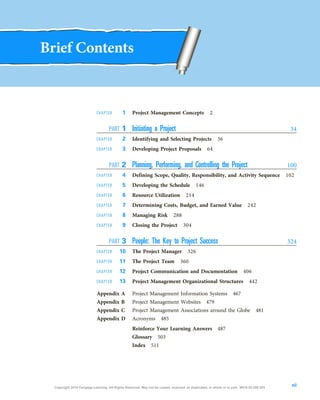

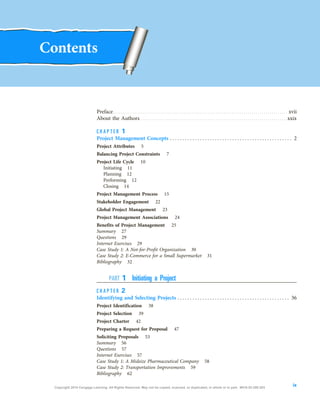
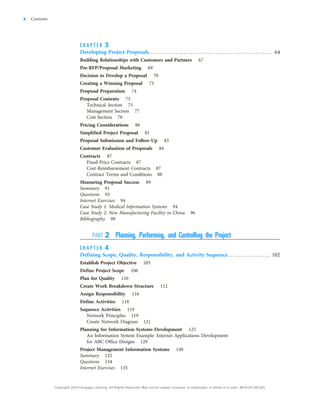
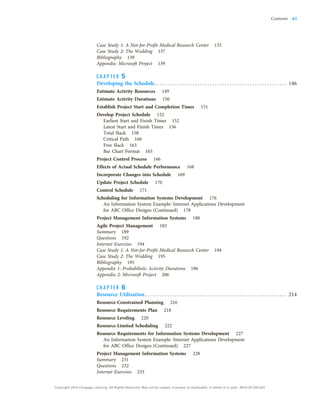
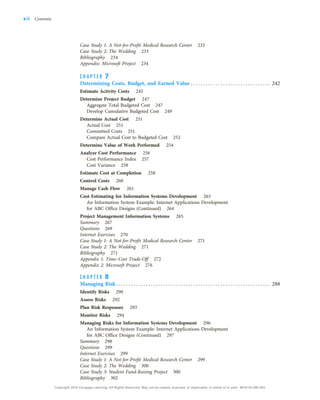
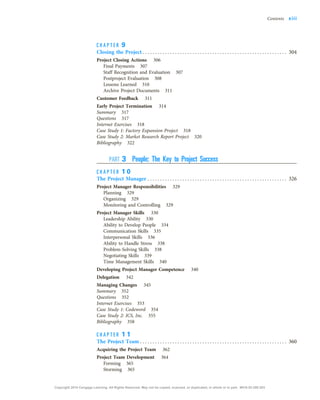
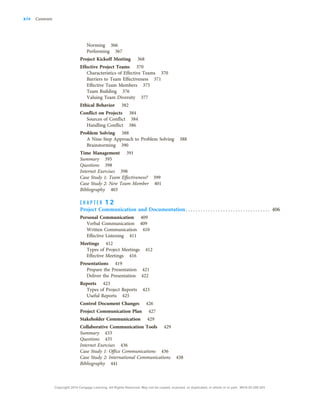
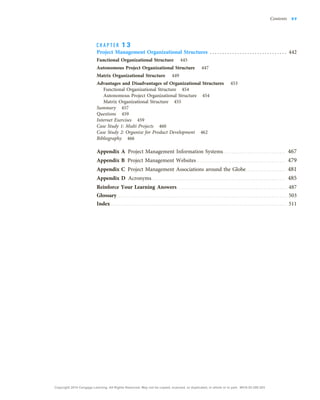


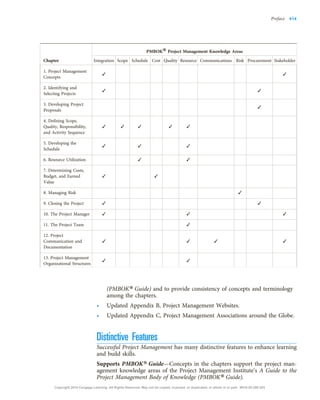


![Djevdet Bey told his friends: "It is the Armenians much more than
the Russians who are fighting us."
The massacres and deportations began soon after the collapse of
the Turkish invasion of the Caucasus and Northern Persia, and it is
only after it was seen clearly that the Turks were determined to
deport or destroy them all that the Armenians in many places took
up arms in self-defence. There was no armed resistance before that,
and the Turkish and German allegations of an Armenian revolt are a
barefaced invention to justify a crime, a tithe of which not one but a
hundred revolts cannot justify or palliate. This is proved beyond all
question by Mr. Toynbee's concise and illuminating historical
summary at the end of the Blue-book on the Treatment of
Armenians by the Turks during the war. There was no revolt. But
when the Armenians were driven to self-defence under the menace
of extermination, they fought with what arms they could scrape
together, with the courage of desperation. In Shahin-Karahissar they
held out for three months and were only reduced by artillery brought
from Erzerum. In Van and Jebel-Mousa they defended themselves
against heavy odds until relieved by the Russians and the Armenian
volunteers in the first case, and rescued by French and British
cruisers in the second. The Turkish force sent against the insurgents
of Jebel-Mousa was detached from the army intended for the attack
on the Suez Canal.
Of course ill-armed, poorly equipped bands without artillery, wanting
in almost all necessaries of modern warfare, brave as they may be,
cannot possibly maintain a prolonged resistance against superior
forces of regulars well supplied with artillery, machine-guns and all
that is needed in war. Nevertheless, some of these bands seem to
have succeeded in holding out for many months, and it is believed in
the Caucasus that there are groups of armed Armenians still holding
out in some parts of the higher mountains behind the Turkish lines.
[16] It will be remembered that some weeks ago—I do not recall the
date—a Constantinople telegram reprinted in The Times from
German papers stated that there were 30,000 armed Armenian](https://image.slidesharecdn.com/5192-250412100412-f25d1758/85/Successful-Project-Management-7th-Edition-Ebook-PDF-Version-29-320.jpg)
![meet. When they are happy I know the Allies are winning, when
depressed I know the Germans have had a victory."
The following extract from a dead Turkish officer's notebook,
reproduced in the Russkaia Viedomosti (No. 205), throws some light
on the Turkish estimate of the value of Armenian support in the war.
"If our Armenians had been with us," wrote this Turkish officer, "we
would have defeated the Russians long ago."[17]
The services of the Russian Armenians to the Allied cause, but
principally, of course to the Russian cause during the war, have been
of a more direct and positive character and of far-reaching
importance. They may be divided into two distinct parts, namely,
military and political; and in order the better to explain the full
meaning of the Armenian "strong support of the Russian cause" (in
the words of The Times), I will deal with each of the two parts
separately.
The Armenian population of Russian Armenia and the Caucasus
numbers, roughly, 1,750,000 souls, and there are probably another
100,000 to 200,000 Armenians scattered over the other parts of the
empire. They are liable to military service as Russian subjects, and it
is estimated that they have given to the Russian army some 160,000
men. Apart from this not negligible number of men called to the
colours in the ordinary course of mobilization, the Armenians, as a
result of an understanding with the authorities, organized and
equipped at their own expense a separate auxiliary volunteer force
under tried and experienced guerilla leaders, such as Andranik, Kéri
and others, to co-operate with the Caucasian army. This force
contained a number of Turkish Armenians, mostly refugees from
previous massacres. Some twenty thousand men responded to the
call for volunteers, though I believe not more than about ten
thousand could be armed and sent to the front. The greatest
enthusiasm prevailed. Armenian students at the Universities of
Moscow and Petrograd and educational institutions in the Caucasus
vied with each other in their eagerness to take part in the fight for
the liberation of their kinsmen from bondage. Several young lady](https://image.slidesharecdn.com/5192-250412100412-f25d1758/85/Successful-Project-Management-7th-Edition-Ebook-PDF-Version-31-320.jpg)
![students offered to enlist, but I believe all but two or three were
dissuaded from taking part in actual fighting. Boys of fourteen and
fifteen years ran away from home and tramped long distances to
join the volunteer battalions. It is recorded that an Armenian widow
at Kars, on hearing that her only son had been killed in battle,
exclaimed, "Curse me that I did not give birth to ten more sons to
fight and die for the freedom of our country."
The volunteer force was not large, but it was a mobile force well
adapted to the semi-guerilla kind of warfare carried on in Armenia,
and the men knew the country. They seem to have done good work
as scouts in particular, though they took part in many severe
engagements and were mentioned once or twice in Russian
communiqués as "our Armenian detachments." Generous
appreciation of the services and gallantry of the volunteers as well
as of Armenians in the army has been expressed by Russian military
commanders, the Press, and public men. High military honours were
conferred upon the volunteer leaders, and His Imperial Majesty the
Czar honoured the Armenian nation by his visit to the Armenian
Cathedral in Tiflis, demonstrating his satisfaction with the part
played by Armenians in the war.[18]
There are, of course, many Armenian high officers in the Russian
army, including several generals, but so far they have not had the
opportunity of producing in this war outstanding military leaders of
the calibre of Loris Melikoff and Terkhougasoff. General Samsonoff,
"the Russian Kitchener," was killed early in the war in East Prussia in
his gallant and successful attempt to relieve the pressure on Paris.
The political effect of the strong and enthusiastic support of the
Russian cause by Armenians has been to keep in check the
discontented and fanatical section of the Tartars and other Moslems
of the Caucasus, who would have been disposed to make common
cause with the Turks whenever a favourable opportunity should
present itself to do so without much risk to themselves. The Tartars
and other Moslem elements of the Caucasus are as a whole
genuinely loyal to Russia, but the existence of a minority who would](https://image.slidesharecdn.com/5192-250412100412-f25d1758/85/Successful-Project-Management-7th-Edition-Ebook-PDF-Version-32-320.jpg)
![welcome the success of the Turkish invasion cannot be denied. Some
of the Ajars did, in fact, join the Turks during their invasion of
Ardahan.
All things considered, therefore, those who have any knowledge of
the racial and political conditions in the Caucasus will not, I think,
regard it as in any sense an exaggeration to assert that the whole-
hearted support of the Armenians—and I may also add, though in a
lesser degree, the Georgians—has contributed very materially to the
success of Russian arms in the Caucasian theatre of the war. The
absence of that support, or even mere formal or lukewarm support,
would not only most probably have had serious consequences for
the Caucasus, it would have left the whole of Persia at the mercy of
the Turks; and who can say what the consequences of such a
catastrophe would have been on Arabia, Mesopotamia, Afghanistan
and even the northern frontiers of India itself?
Nearly all the able-bodied Armenians in France, between 1000 and
1500 strong, joined the French Foreign Legion quite early in the war.
Some Armenians came from the United States to fight for France.
Only some 250 have survived, I understand, most of whom are
proud possessors of the Military Cross.
Propaganda in neutral countries has played an important part during
the war. The just cause of the Allies has had no stauncher
supporters or better propagandists than the hundred and twenty-five
thousand or more Armenians in the United States, while the Great
Tragedy of Armenia has incidentally added to the armoury of the
Allies a melancholy but formidable moral weapon.
FOOTNOTES:
[15] Pierre Loti, the well-known French writer, who was an ardent
Turkophile before the war, after adding his quota to the current, and,
one is constrained to say, cheap, comments on the lack of courage
and numberless other failings of the Armenians, adds the following](https://image.slidesharecdn.com/5192-250412100412-f25d1758/85/Successful-Project-Management-7th-Edition-Ebook-PDF-Version-33-320.jpg)
![P.S. in his Turquie Agonisante (pp. 94-95) after a longer sojourn in
the country and closer contact with realities. (I give the translation
from the French.)—
"Before concluding I desire to make honourable, sincere and
spontaneous amends to the Armenians, at least as regards their
attitude in the ranks of the Ottoman Army. This is certainly not due
to the protestations which they have inserted in the Constantinople
Press by the power of gold." [This is a curious admission by Pierre
Loti; one of the stock cries of the Turkophiles is that the Turk is
above "bakshish."] "No, I have many friends among Turkish officers;
I have learned from them, and there can be no doubt, that my
earlier information was exaggerated, and that, notwithstanding a
good number of previous desertions, the Armenians placed under
their orders conducted themselves with courage. Therefore, I am
happy to be able to withdraw without arrière pensée what I have
said on this subject, and I apologize."
Of all British games and sports Armenians in different parts of the
British Empire, the Dutch Colonies and Persia have manifested a
natural predilection for Rugby Football, in which physical courage
comes into play more than in most other games. In recent years the
Armenian College of Calcutta won the Calcutta Schools' Cup three
years in succession, which gave it the right to retain the trophy. I am
glad to see in the March issue of Ararat that the Boy Scouts of the
same college, under Scoutmaster Dr. G. D. Hope, have won the
King's Flag, presented by His Majesty to the troop having the largest
number of King's Scouts in India and Burmah.
[16] I may here point out that—though it is stated in the admirable
historical summary in the Blue-book (p. 649) that "the number of
those who have emerged from hiding since the Russian occupation is
extraordinarily small"—this number has been growing very
considerably of late, as may be seen from Mr. Backhouse's telegram
to the chairman of the Armenian Refugees (Lord Mayor's) Fund,
dated Tiflis, November 27, 1916, published in the newspapers.](https://image.slidesharecdn.com/5192-250412100412-f25d1758/85/Successful-Project-Management-7th-Edition-Ebook-PDF-Version-34-320.jpg)
![[17] Compare an Armenian officer's evidence, Blue-book, p. 231, "
... they laid the blame for this defeat upon the Armenians, though he
could not tell why."
[18] In an article on "The Armenian Massacres" in the April
Contemporary Review, Mr. Lewis Einstein, ex-member of the staff of
the United States Embassy in Constantinople, says: "Talaat
attributed the disasters that befell the Turks at Sarikamish, in
Azerbaijan and at Van, to the Armenian volunteers."](https://image.slidesharecdn.com/5192-250412100412-f25d1758/85/Successful-Project-Management-7th-Edition-Ebook-PDF-Version-35-320.jpg)
![long since been brought to an end, or, at all events, effectively
curbed, if it had not been for the jealousies and rivalries of the great
modern Christian empires. The history of the acts of European
diplomacy in regard to Armenia and the Near East during the last
sixty or seventy years is not one of which the diplomats and
statesmen concerned can be particularly proud. Who can claim for
them to-day to have served, in the sum total of their results, either
the interests of the Christian subjects of the Porte, the progress of
civilization, the material interests of the Great Powers themselves, or
the supreme interests of peace?
Mr. Balfour says in his famous Dispatch to the British Ambassador to
the United States that "Turkey has ceased to be a bulwark of peace,"
thereby implying, obviously, that Turkey had played that part before.
Mr. Balfour is a great authority on political history, and when he
avers that Turkey has been a "bulwark of peace" she must have
filled such a rôle at some period of her history. But to his Christian
subjects, at any rate, the Turk has never brought peace. He has
brought them fire and sword and a riot of unbridled lust, rapacity,
corruption and cruelty unparalleled even in the Dark Ages. The only
peace he has brought them has been the peace of death and
devastation. He has not even left trees to break the awful silence of
desolation which he has spread over this fair and fertile land once
throbbing with human life and activity. That is the price paid for
whatever part Turkey may have played in the past as a bulwark of
international peace. Professor Valran of the University of Aix-en-
Provence estimates the Armenian population of Turkey in the
beginning of the nineteenth century at 5,000,000.[19] The
population of the not too healthy island of Java was the same at the
same period. Under the excellent rule of the Dutch, the population
of that island has grown up to over 35,000,000 during the century.
What has become of the Armenians, one of the most virile and
prolific races of the world living in a healthy country? Let the friends
and protectors of the Turk and his system of government give the
answer. In particular let those answer who, with the Turks' black and
bloodstained record of centuries before them, have, nevertheless,](https://image.slidesharecdn.com/5192-250412100412-f25d1758/85/Successful-Project-Management-7th-Edition-Ebook-PDF-Version-37-320.jpg)
![the effrontery to maintain, at this hour of day, that the Turk has not
been given a fair chance. The blood of the myriads of innocents who
have fallen victims to the Turks' incurable barbarism throughout
these centuries, cries aloud against such a brazen and deliberate
travesty of the truth.
One of the principal enactments of the Treaty of Paris was to admit
Turkey into the comity of the Great Powers of Europe. To-day, after a
probation of sixty years, at a fearful cost to her Christian subjects, it
is at last admitted that Turkey has proved herself "decidedly foreign
to Western civilization." Could there be a more crushing
condemnation of the judgment of the statesmen responsible for that
treaty in regard to the Turk? The more one studies the record of the
Turk, the more one marvels at the unbounded confidence placed in
his promises of reform by some of the greatest statesmen of modern
times. In vain have I ransacked the history books in search of an
instance where the Turk carried out, or honestly attempted to carry
out, a single one of his numerous promises of reform. Every one of
them was a snare and a pretence designed merely to oil the wheels
of a cunning diplomacy or tide over a momentary embarrassment.
Whether it was the Sultan or Grand Vizier or Ambassador, whenever
the Turk made a promise to improve the lot of his Christian subjects,
he had made up his mind beforehand that that promise would never
be performed.[20]
Since the beginning of last century Russia has been, by reason of
her geographical contiguity, practically the only Power which the
Turk has really feared. In contrast with the near Eastern policies of
the Western Powers, Russian policy has been almost invariably
hostile to the Turk since the days of Peter the Great. Of course, this
was not always pure altruism on the part of the rulers of Russia. But,
whatever the motive, Russian policy certainly coincided absolutely
with the interests of humanity and civilization. And while in the West
the policy of "buttressing the Turk" (in the words of the Bishop of
Oxford) often met with strong opposition among the democracies of
England and France, Russian policy in regard to the Turk has always](https://image.slidesharecdn.com/5192-250412100412-f25d1758/85/Successful-Project-Management-7th-Edition-Ebook-PDF-Version-38-320.jpg)
![Master, approve of these proceedings? Do they think that He who
said "inasmuch as ye have done it unto one of these little ones, ye
have done it unto Me" knows of any distinction of race? How can
German Christians, from their rulers downwards, face God and the
Son of God in the intimacy of their prayers after sanctioning these
black deeds which are the very negation of God and the teaching of
Christ? Do the rulers of Germany and Turkey and the protagonists of
the Reventlow doctrine believe that empires, railways, or any other
schemes of expansion, built upon foundations of the blood and tears
of hundreds of thousands of human beings, will endure and prosper
and bring forth harvests of plenty and peace and happiness to their
promoters, their children, and their children's children? They are
mistaken. My word may count for naught to the rulers and leaders of
mighty states; but it is true. We are an ancient people. "We have
seen empires come and empires go." We have been ground for
centuries in the mill of the ruthless clash of contending empires; but
in spite of our long and bitter sufferings our belief to-day is as strong
as ever in the existence of another mill, the mill of Divine Justice,
which grinds in its own good time, and may grind slow, but "it grinds
exceeding small." Who will doubt or deny that violence to women
and children and unoffending, defenceless men, "every hair of
whose head is numbered," will not be forgiven by their just and
Almighty Creator; that the sacrifice of them for ulterior selfish
objects will not be overlooked? Political and military acts of the
mightiest empires, entailing injustice, violence and suffering to
weaker peoples will bring Nemesis in their train in due course. The
idol with feet of clay, sunk in the blood of innocents, cannot endure.
Sooner or later it must fall.
FOOTNOTES:
[19] Le Sémaphore de Marseille, November 20, 1915.
[20] I am indebted to my friend Mr. H. N. Mosditchian for the
following account of an incident which throws some light on the](https://image.slidesharecdn.com/5192-250412100412-f25d1758/85/Successful-Project-Management-7th-Edition-Ebook-PDF-Version-41-320.jpg)

![There are mercenary Armenian individuals as there are mercenary
persons in every nation. It may be that, debarred from government
posts except when he was indispensable, the town Armenian in
Turkey, like the Greek and Syrian, has been compelled to direct his
energies into commercial channels in a larger proportion than free
and independent nations. Naturally, also, through generations of
ruthless persecution, the Armenian nation has thrown up a flotsam
and jetsam of indigents wandering far and wide in search of security
and the means of earning a living. But to brand the whole Armenian
race as "mercenary" is malevolent nonsense, or credulity due to a
total ignorance of the facts. Seventy or eighty per cent. of the
Armenians in Turkish as well as Russian Armenia are peasants,
farmers and artisans. That is approximately true also of the Persian
Armenians. Even in the United States the majority of the immigrants
have taken to fruit-growing in California. Armenians who have the
means to give their sons a good education almost invariably make
them follow a profession in preference to commerce, as witness the
number of Armenian university professors, doctors, lawyers and
some artists and painters of considerable merit in the United States.
[21] Probably no people have made the sacrifices made by
Armenians, in proportion to their means, for the relief of distress
during the war. There have been a few exceptions among the very
rich whose moral sense has been blunted by luxury and self-
indulgence. They can be counted on the fingers of one hand. They
belong to that class of cosmopolitan financiers and traders who are
no more thrilled by the music of their country's or any country's
name; who are unmoved by the cry of starving women and children
of their own or any race; whose home is the world and whose god is
gold; who are no more the masters but the slaves of money. But
this, again, is not peculiar to Armenians; very far from it. It is a
fraternity that embraces members of every, or almost every, race;
and Armenians are barely represented upon it. It is palpably
misleading as it is inaccurate to assert that these represent the
Armenian nation. In fact, as far as my knowledge goes, the masses
of the Armenian people are ashamed of them, because their worship
of gold and vanity are alien to the national spirit, and bring discredit](https://image.slidesharecdn.com/5192-250412100412-f25d1758/85/Successful-Project-Management-7th-Edition-Ebook-PDF-Version-48-320.jpg)
![upon the nation. For generations Armenian educational and religious
institutions have been maintained by voluntary grants; and I do not
know that any European citizen bears a heavier burden for the
needs of his nation than does the individual Armenian.
It must not be supposed from what I have said that all, or the
majority, of rich Armenians have been deaf or indifferent to their
country's need. That would be a mistake and an injustice. On the
whole their response to the call of their afflicted country has been
satisfactory, considering that they had obligations to the belligerent
countries to which they owed allegiance. I know of one contribution
of £30,000,[22] while ten Moscow merchants raised a million roubles
between them for their nation's needs. A prominent Armenian
physician has relinquished a large and remunerative practice at
Petrograd to superintend personally the administration of an
orphanage at Erzerum, which he has opened on his own private
account. The Catholicos's palace at Etchmiadzin was converted into
a hospital for refugees in the early months of 1915. Almost every
Armenian peasant family in the Caucasus have housed and cared for
one or more refugees in their humble cottages ever since the influx
of their distressed kinsmen from the other side of the frontier in the
spring and summer of 1915. I have not marshalled these facts in a
spirit of flaunting the virtues of my race—we certainly hold no
monopoly of all the virtues, or indeed of all the vices, to which
human nature is heir—but I know of no better way to disprove the
baseless aspersions assiduously disseminated by some interested
people for purposes of pro-Turkish propaganda and accepted by the
credulous as true.
Lord Bryce has known the Armenian people longer and more
intimately than any eminent European statesman, historian and
diplomatist has ever done before, and his dictum will no doubt be
generally accepted as that of a great and final authority. I therefore
make no apology for quoting his lordship's most recent utterance on
the subject reported in the Journal of the Royal Society of Arts,
February 2, 1917—](https://image.slidesharecdn.com/5192-250412100412-f25d1758/85/Successful-Project-Management-7th-Edition-Ebook-PDF-Version-49-320.jpg)
!["Having known a very large number of Armenians, he had been
greatly struck, not only with their high level of intelligence and
industry, but also by their intense patriotism. He did not know of
any people who had shown greater constancy, patience and
patriotism under difficulties and sufferings than the Armenians.
He personally had always found them perfectly loyal. He had
frequently had occasion to give them confidential advice and to
trust them with secrets, and never on any occasion had he
found that confidence misplaced.... As a proof of their loyalty
and devotion to their country he might mention that the
Armenians living in America had contributed sums enormous in
proportion to their number and resources, for they were nearly
all persons of small means, for the relief of the refugees who
had been driven out by the Turkish massacres. No people during
the war had done more in proportion to their capacities than the
Armenians had done for the relief of their suffering fellow-
countrymen. A large number of them were also fighting as
volunteers in the armies of France, where they had displayed
the utmost courage and valour in the combats before Verdun."
To return to the extracts from the Blue-book. Group "A" affords a
melancholy abundance of indisputable evidence that it was not
Kurds and brigands alone who did Satan's work in Armenia, but that
the chief culprits were Turkish officials, high and low, officers,
soldiers, gendarmes and rabble; even a member of parliament took
a turn! They not only played the principal part in the vast and
revolting carnival of blood, lust and savagery, but they took a delight
and pride in the part they played, and laughed at the sufferings and
tortures of their victims.[23]
Group "B" bears evidence of a heroism and fidelity in torture and
death, to faith, honour and the ideal of nationality, unsurpassed in
the history of mankind, which must redound to the eternal glory of
Christianity and to the honour of the Armenian name. I respectfully
suggest for consideration by the Heads of the Christian Churches](https://image.slidesharecdn.com/5192-250412100412-f25d1758/85/Successful-Project-Management-7th-Edition-Ebook-PDF-Version-50-320.jpg)
![that a day should be fixed to commemorate annually the martyrdom
of this vast number of Armenian Christians.
Group "C" contains proofs of the conduct of insurgent Armenians in
the unequal struggles for self-defence, and it should be remembered
that these are but a few instances, mainly of what was seen or
heard of by foreigners. The ruined towns and villages, the silent
fields and highways of this land of blood and tears, what secrets of
desperate heroism in defence of wife and child, mother and sister,
these guard will probably never be known. Group "C" also contains
evidence of the fact that the Turks had to employ considerable
bodies of troops to overcome the desperate resistance of Armenians
in many places, such as Moush, Sassoon, Van, etc. A third feature in
this group is, that the Turks attributed their defeats in the Caucasus
to the Armenians.[24]
Taken together, these extracts, and the Blue-book from which they
are taken, form a better mirror of the characteristics of the two races
than all that has been written on the subject for a century. They
show the radical dissimilarity of their natures, and the vast difference
between the respective stages of civilization in which the two races
find themselves.
Was it Buddha or Confucius who said that the principal difference
between man and the rest of the animal world is, that man
possesses the feeling of pity for the pain and suffering of his fellow-
men or animals? What would they think of this strange race of
human beings who delight in torture and murder, sparing neither sex
nor age, nor even unborn babes and their mothers; who inflict pain
and jeer at their victims?
I remember reading in one of Mr. Lloyd George's speeches not long
ago: "It is not the trials one has to go through in life, but the way
one faces them that matters," or words to that effect. This is as true
of nations as it is of individuals. "In the reproof of chance lies the
true proof of men," and of nations. How has the Armenian nation
conducted itself in this great upheaval and borne the terrible ordeal](https://image.slidesharecdn.com/5192-250412100412-f25d1758/85/Successful-Project-Management-7th-Edition-Ebook-PDF-Version-51-320.jpg)