SUBJECT-VERB
AGREEMENT
Prepared by: Jesieca Agustin
What is subject-verb agreement?
• Singular subject- singular
verb
• Plural subject- plural verb
• The verb of a sentence must
agree with the simple
subject of the sentence in
number and person.
• Singular subject takes
singular verb.
1. He talks.
2. The box is big.
• Plural subject takes plural
verb.
1. They talk.
2. The boxes are big.
SUBJECT-VERB
AGREEMENT RULES
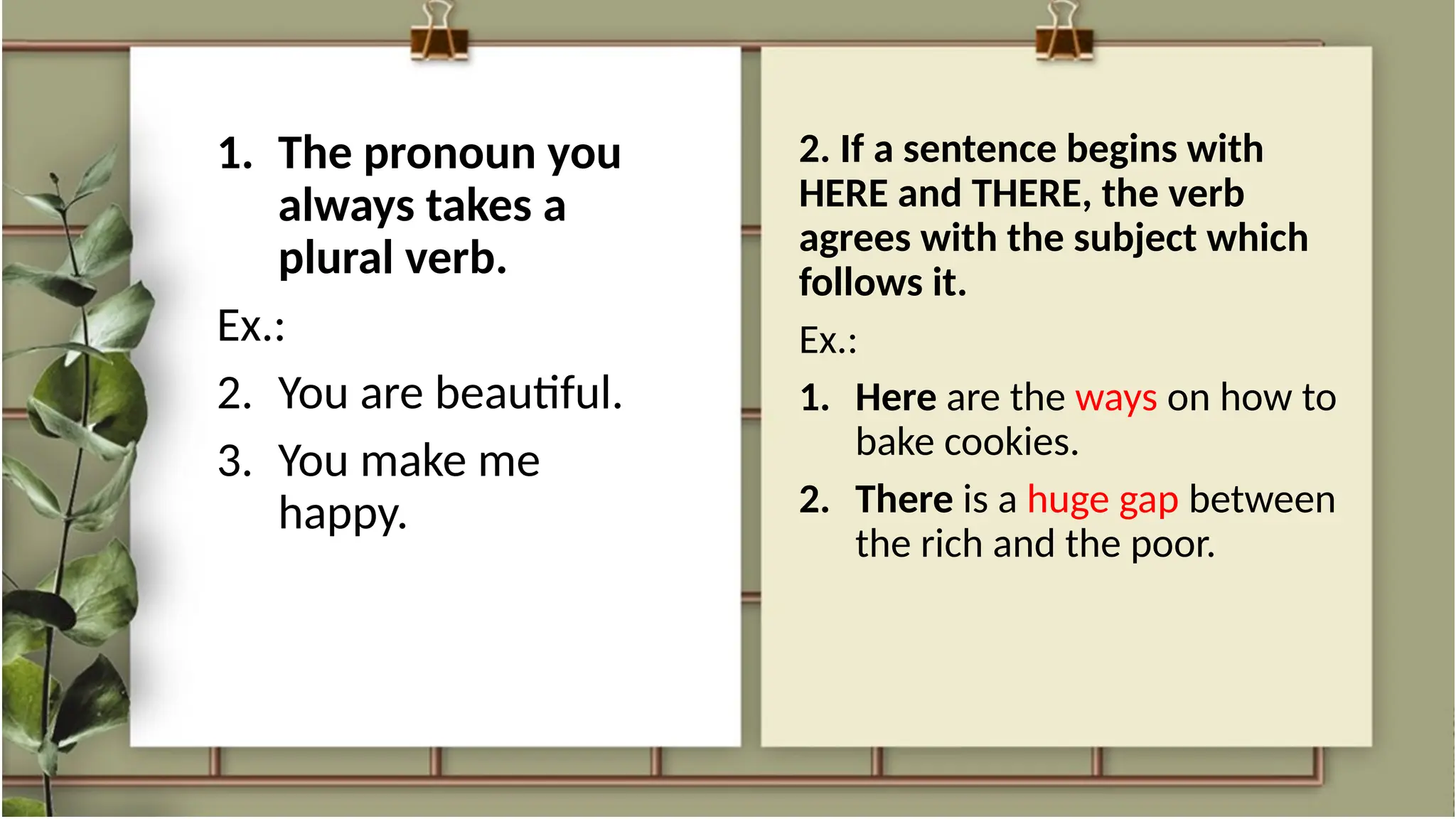
1. The pronoun you
always takes a
plural verb.
Ex.:
2. You are beautiful.
3. You make me
happy.
2. If a sentence begins with
HERE and THERE, the verb
agrees with the subject which
follows it.
Ex.:
1. Here are the ways on how to
bake cookies.
2. There is a huge gap between
the rich and the poor.
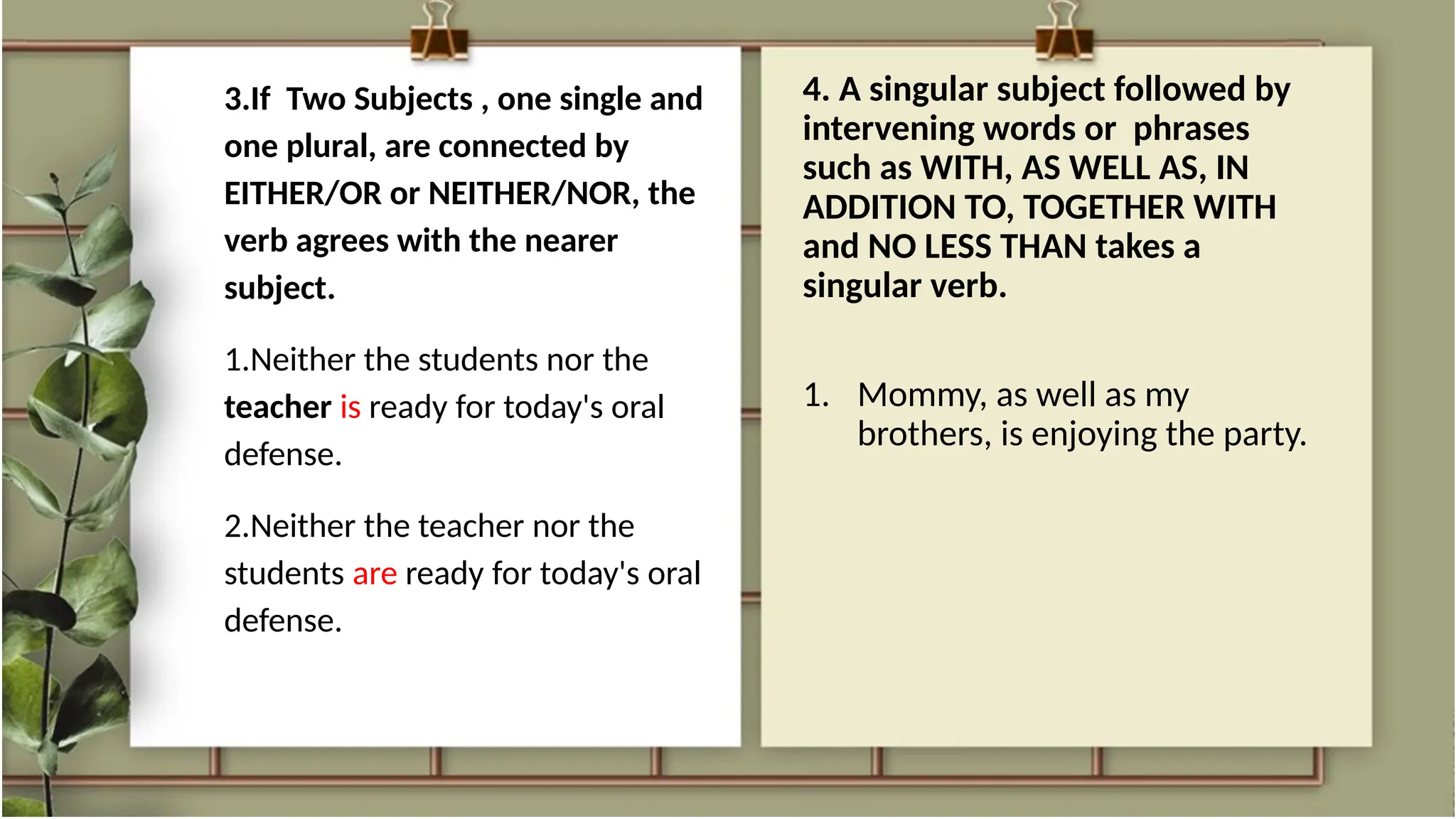
3.If Two Subjects , one single and
one plural, are connected by
EITHER/OR or NEITHER/NOR, the
verb agrees with the nearer
subject.
1.Neither the students nor the
teacher is ready for today's oral
defense.
2.Neither the teacher nor the
students are ready for today's oral
defense.
4. A singular subject followed by
intervening words or phrases
such as WITH, AS WELL AS, IN
ADDITION TO, TOGETHER WITH
and NO LESS THAN takes a
singular verb.
1. Mommy, as well as my
brothers, is enjoying the party.
5. Singular subjects joined by
AND require a plural verb,
except when they mean one
thing.
1. Ana and Bella are playing
in the yard.
2. Peanut
butter and jelly is my
favorite sandwich.
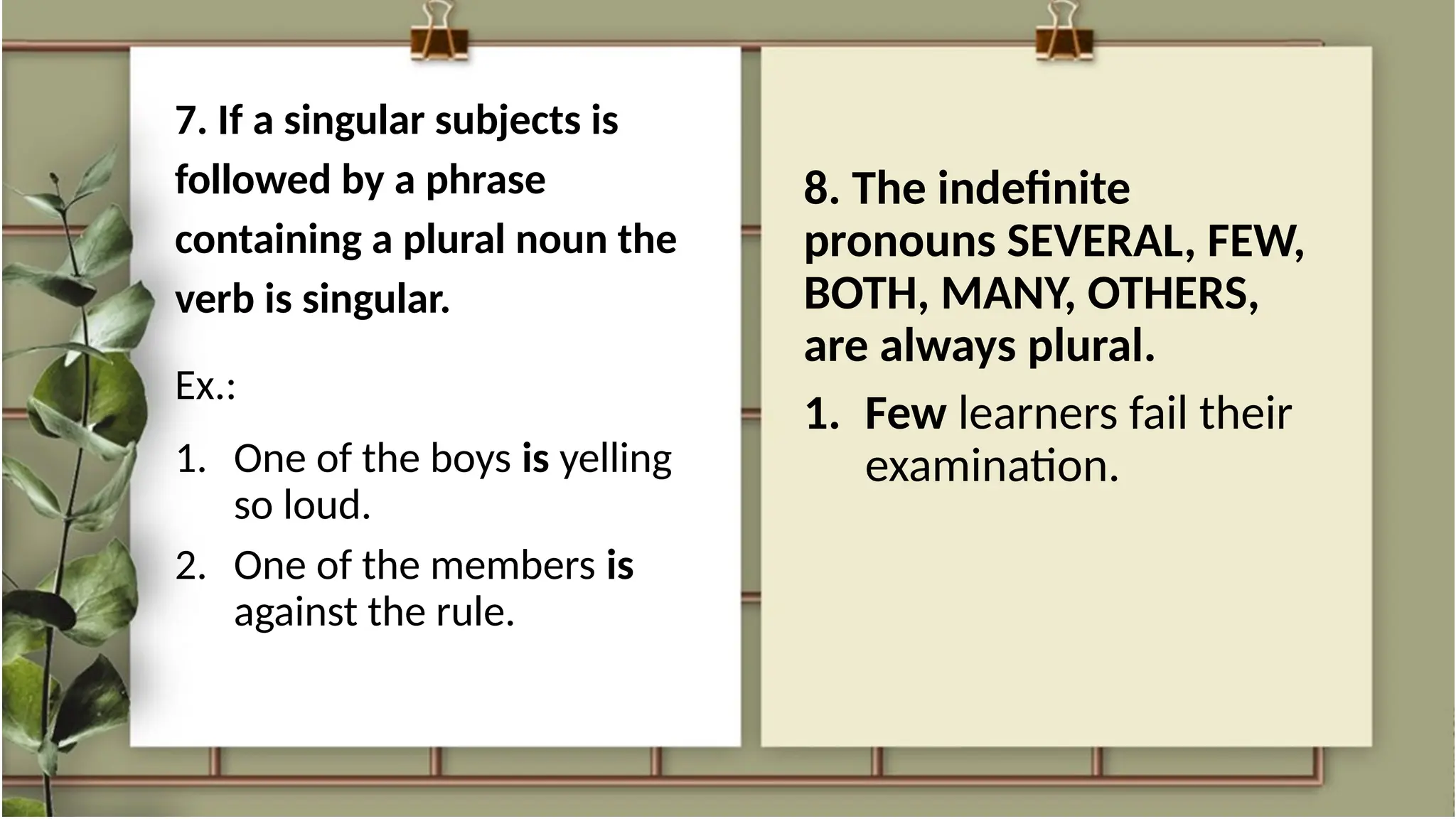
7. If a singular subjects is
followed by a phrase
containing a plural noun the
verb is singular.
Ex.:
1. One of the boys is yelling
so loud.
2. One of the members is
against the rule.
8. The indefinite
pronouns SEVERAL, FEW,
BOTH, MANY, OTHERS,
are always plural.
1. Few learners fail their
examination.
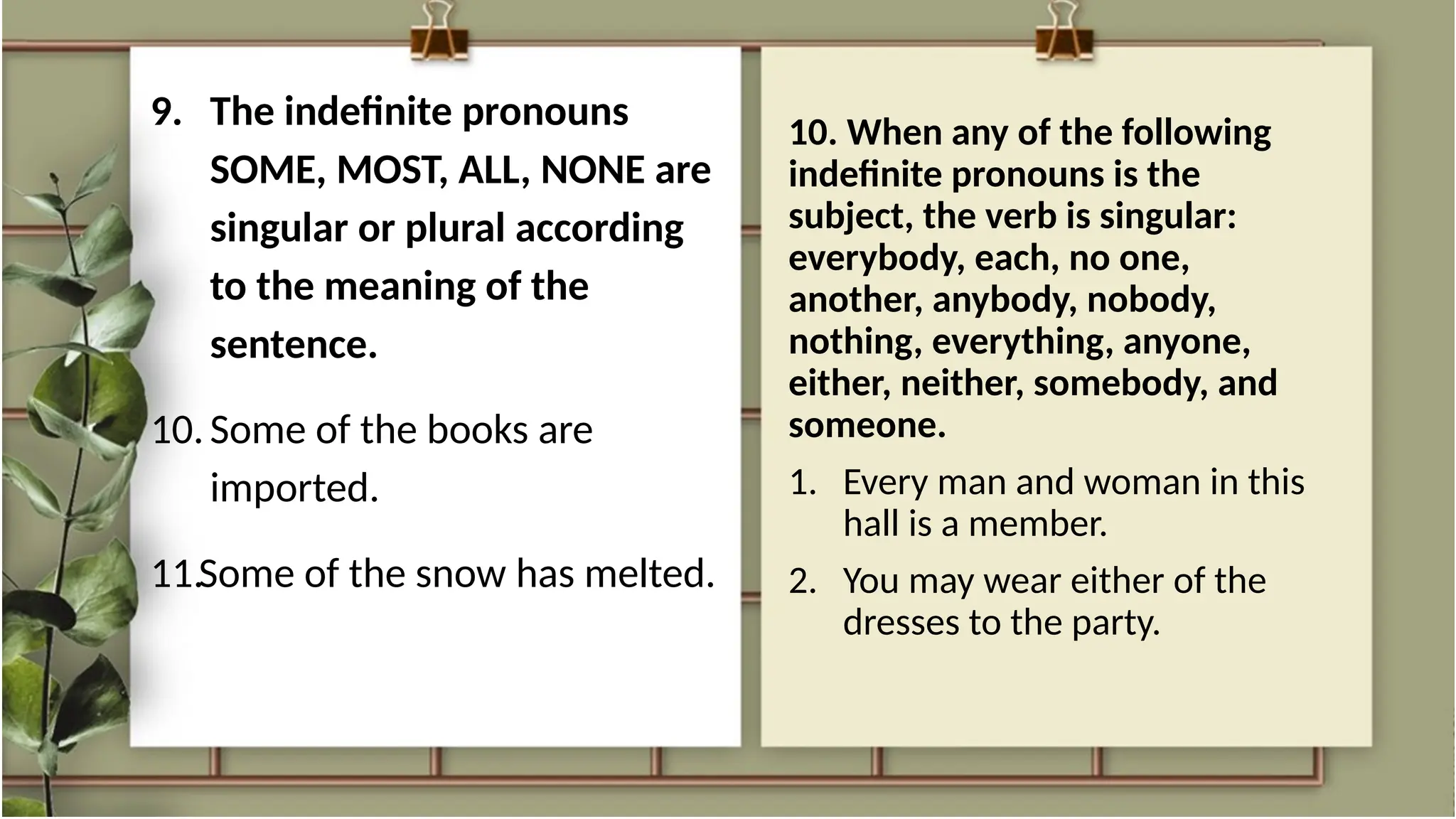
9. The indefinite pronouns
SOME, MOST, ALL, NONE are
singular or plural according
to the meaning of the
sentence.
10.Some of the books are
imported.
11.Some of the snow has melted.
10. When any of the following
indefinite pronouns is the
subject, the verb is singular:
everybody, each, no one,
another, anybody, nobody,
nothing, everything, anyone,
either, neither, somebody, and
someone.
1. Every man and woman in this
hall is a member.
2. You may wear either of the
dresses to the party.
11. Expressions of time, money,
weight, and distance are singular
even if the form is plural.
1. Two years is a long time to wait.
2. One million dollars was given
back to the owner.
12. When the amount of money
refers to separate units, the
verb is plural.
1. Four 25-centavo coins were
found.
2. Fifty-100 peso bills were
added to the budget.
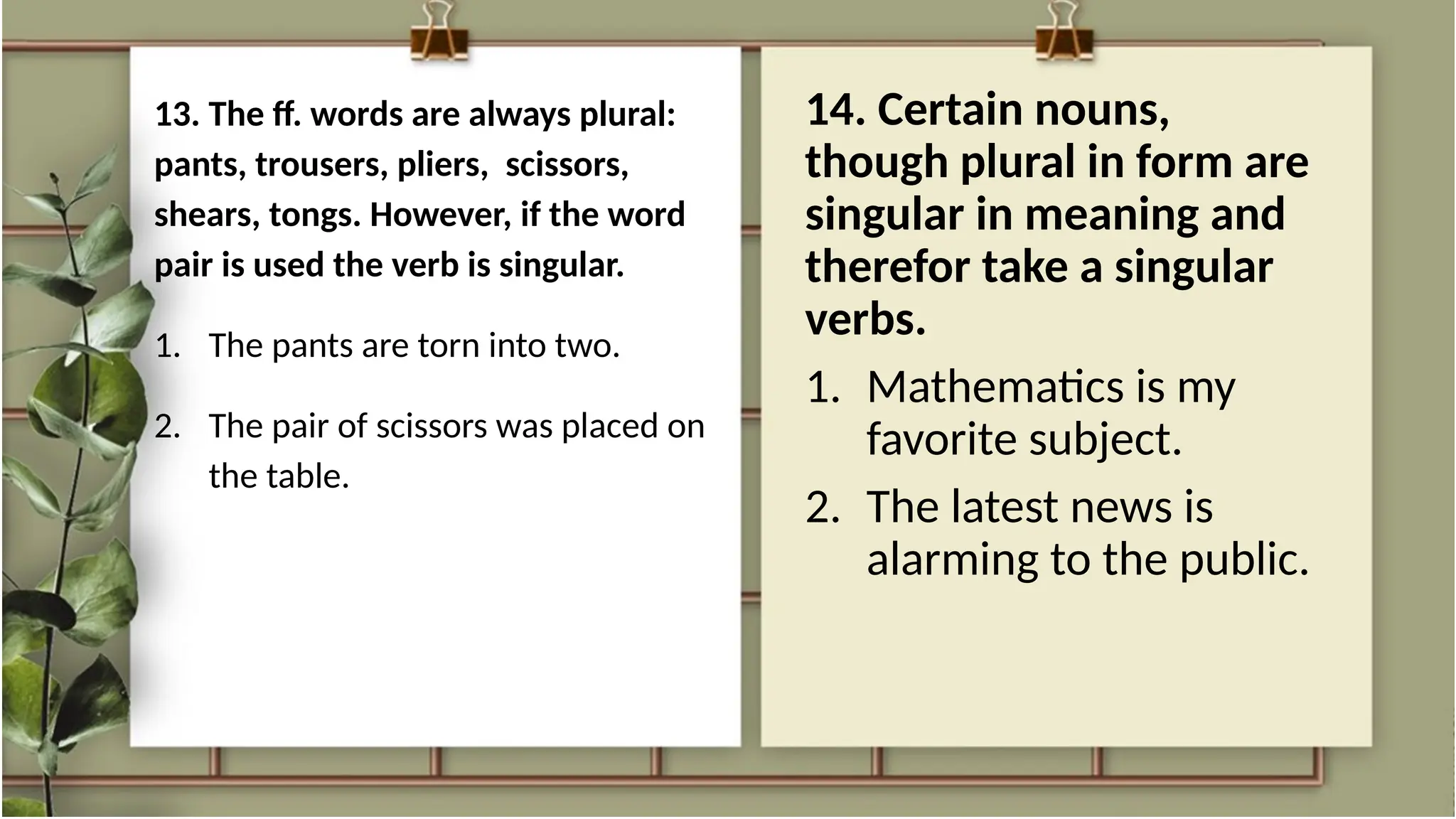
13. The ff. words are always plural:
pants, trousers, pliers, scissors,
shears, tongs. However, if the word
pair is used the verb is singular.
1. The pants are torn into two.
2. The pair of scissors was placed on
the table.
14. Certain nouns,
though plural in form are
singular in meaning and
therefor take a singular
verbs.
1. Mathematics is my
favorite subject.
2. The latest news is
alarming to the public.
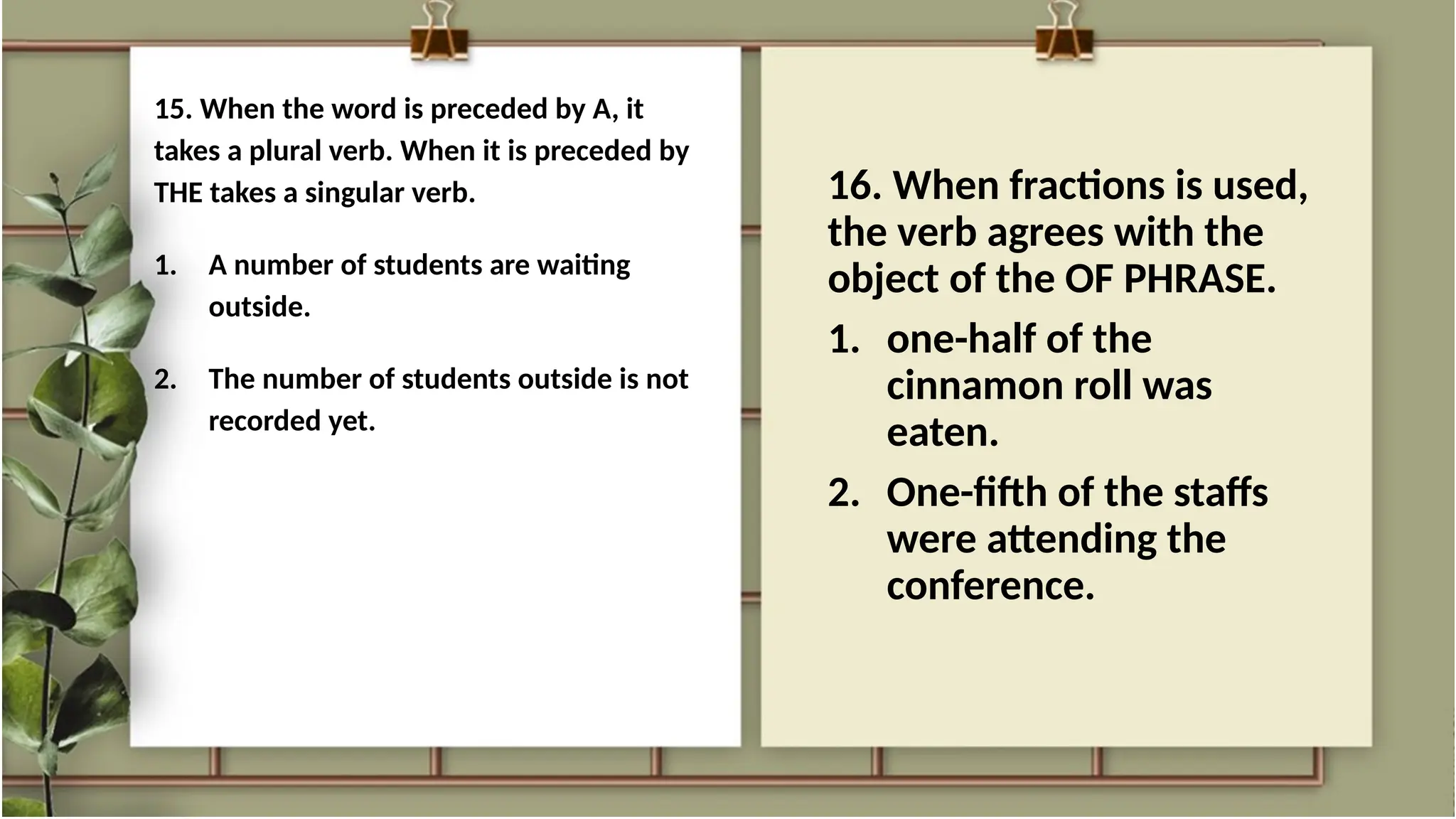
15. When the word is preceded by A, it
takes a plural verb. When it is preceded by
THE takes a singular verb.
1. A number of students are waiting
outside.
2. The number of students outside is not
recorded yet.
16. When fractions is used,
the verb agrees with the
object of the OF PHRASE.
1. one-half of the
cinnamon roll was
eaten.
2. One-fifth of the staffs
were attending the
conference.
17. The name of a country
is always regarded as
singular.
1. Philippines has beautiful
beaches.
2. Philippines is an
archipelago.
18.. Adjectives used as
nouns are considered
plural.
1. The poor are to lend
a hand.
2. The efficient are what
this company needs.
19. Collective nouns may be singular or
plural depending on whether the individual
members are acting individually or
collectively. These nouns are: COMPANY,
GROUP, COMMITTEE, CROWD, JURY,FLOCK,
TEAM.
1. The committee is against the plan.
(acting collectively-singular)
2. The committee are of different opinion.
(acting individually- plural)
2o. Titles of books,
plays, articles, movies,
etc. are regarded as
singular even though the
words within the title
may be plural.
1. "The Adventures of
Tom Sawyer" was written
by Mark Twain.
21. If a sentence begins with the expletive
IT, the verb is always singular even if the
subject that follows the verb is plural.
1. It is us who must take care of the
environment.
1. My sister and my brother (lives, live) in Davao city.
2. Either the man or his friends (know, knows) the answer.
3. Three weeks (is, are) a long time.
4. The news (surprise, surprises) me today.
5. Each student and the teacher(was, were) aware of the difficulty.
6. A car and a bike (is , are) my means of transportation.
7. Social studies (is, are) my favorite subject.
8. Mumps (is, are) a viral disease.
9. Everyone (look, looks) happy and contented.
10. Several people (observe, observes) the earthquake drill.

SUBJECT-VERB AGREEMENTS singular, plural

  • 1.
  • 2.
    What is subject-verbagreement? • Singular subject- singular verb • Plural subject- plural verb • The verb of a sentence must agree with the simple subject of the sentence in number and person.
  • 3.
    • Singular subjecttakes singular verb. 1. He talks. 2. The box is big.
  • 4.
    • Plural subjecttakes plural verb. 1. They talk. 2. The boxes are big.
  • 5.
  • 6.
    1. The pronounyou always takes a plural verb. Ex.: 2. You are beautiful. 3. You make me happy. 2. If a sentence begins with HERE and THERE, the verb agrees with the subject which follows it. Ex.: 1. Here are the ways on how to bake cookies. 2. There is a huge gap between the rich and the poor.
  • 7.
    3.If Two Subjects, one single and one plural, are connected by EITHER/OR or NEITHER/NOR, the verb agrees with the nearer subject. 1.Neither the students nor the teacher is ready for today's oral defense. 2.Neither the teacher nor the students are ready for today's oral defense. 4. A singular subject followed by intervening words or phrases such as WITH, AS WELL AS, IN ADDITION TO, TOGETHER WITH and NO LESS THAN takes a singular verb. 1. Mommy, as well as my brothers, is enjoying the party.
  • 8.
    5. Singular subjectsjoined by AND require a plural verb, except when they mean one thing. 1. Ana and Bella are playing in the yard. 2. Peanut butter and jelly is my favorite sandwich.
  • 9.
    7. If asingular subjects is followed by a phrase containing a plural noun the verb is singular. Ex.: 1. One of the boys is yelling so loud. 2. One of the members is against the rule. 8. The indefinite pronouns SEVERAL, FEW, BOTH, MANY, OTHERS, are always plural. 1. Few learners fail their examination.
  • 10.
    9. The indefinitepronouns SOME, MOST, ALL, NONE are singular or plural according to the meaning of the sentence. 10.Some of the books are imported. 11.Some of the snow has melted. 10. When any of the following indefinite pronouns is the subject, the verb is singular: everybody, each, no one, another, anybody, nobody, nothing, everything, anyone, either, neither, somebody, and someone. 1. Every man and woman in this hall is a member. 2. You may wear either of the dresses to the party.
  • 11.
    11. Expressions oftime, money, weight, and distance are singular even if the form is plural. 1. Two years is a long time to wait. 2. One million dollars was given back to the owner. 12. When the amount of money refers to separate units, the verb is plural. 1. Four 25-centavo coins were found. 2. Fifty-100 peso bills were added to the budget.
  • 12.
    13. The ff.words are always plural: pants, trousers, pliers, scissors, shears, tongs. However, if the word pair is used the verb is singular. 1. The pants are torn into two. 2. The pair of scissors was placed on the table. 14. Certain nouns, though plural in form are singular in meaning and therefor take a singular verbs. 1. Mathematics is my favorite subject. 2. The latest news is alarming to the public.
  • 13.
    15. When theword is preceded by A, it takes a plural verb. When it is preceded by THE takes a singular verb. 1. A number of students are waiting outside. 2. The number of students outside is not recorded yet. 16. When fractions is used, the verb agrees with the object of the OF PHRASE. 1. one-half of the cinnamon roll was eaten. 2. One-fifth of the staffs were attending the conference.
  • 14.
    17. The nameof a country is always regarded as singular. 1. Philippines has beautiful beaches. 2. Philippines is an archipelago. 18.. Adjectives used as nouns are considered plural. 1. The poor are to lend a hand. 2. The efficient are what this company needs.
  • 15.
    19. Collective nounsmay be singular or plural depending on whether the individual members are acting individually or collectively. These nouns are: COMPANY, GROUP, COMMITTEE, CROWD, JURY,FLOCK, TEAM. 1. The committee is against the plan. (acting collectively-singular) 2. The committee are of different opinion. (acting individually- plural) 2o. Titles of books, plays, articles, movies, etc. are regarded as singular even though the words within the title may be plural. 1. "The Adventures of Tom Sawyer" was written by Mark Twain.
  • 16.
    21. If asentence begins with the expletive IT, the verb is always singular even if the subject that follows the verb is plural. 1. It is us who must take care of the environment.
  • 17.
    1. My sisterand my brother (lives, live) in Davao city. 2. Either the man or his friends (know, knows) the answer. 3. Three weeks (is, are) a long time. 4. The news (surprise, surprises) me today. 5. Each student and the teacher(was, were) aware of the difficulty. 6. A car and a bike (is , are) my means of transportation. 7. Social studies (is, are) my favorite subject. 8. Mumps (is, are) a viral disease. 9. Everyone (look, looks) happy and contented. 10. Several people (observe, observes) the earthquake drill.