STUDY POINT
INTRODUCTION & PRINCIPLES
OF
FORENSIC SCIENCE
BY
JAYSHREE KATARIYA@
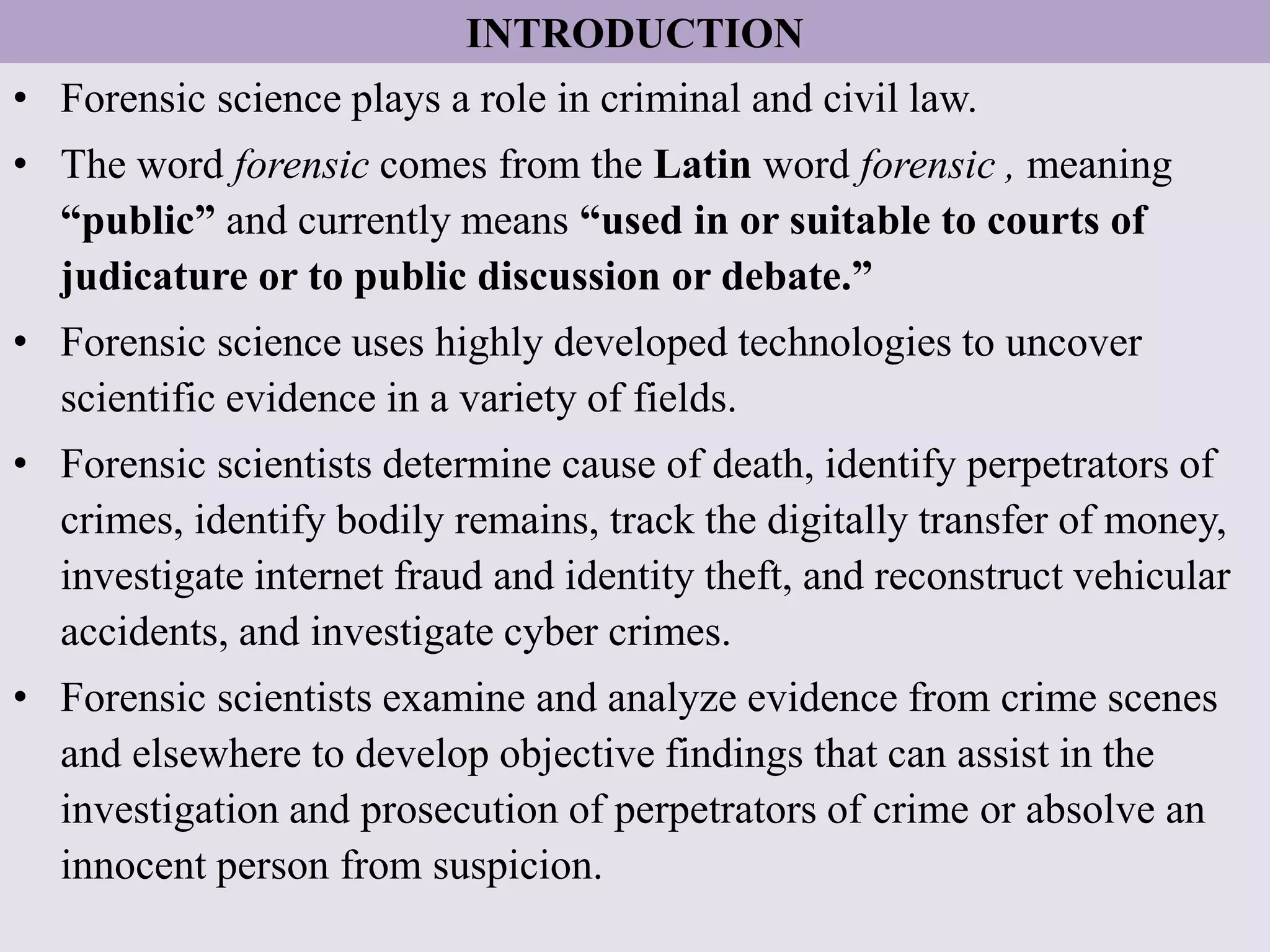
INTRODUCTION
• Forensic science plays a role in criminal and civil law.
• The word forensic comes from the Latin word forensic , meaning
“public” and currently means “used in or suitable to courts of
judicature or to public discussion or debate.”
• Forensic science uses highly developed technologies to uncover
scientific evidence in a variety of fields.
• Forensic scientists determine cause of death, identify perpetrators of
crimes, identify bodily remains, track the digitally transfer of money,
investigate internet fraud and identity theft, and reconstruct vehicular
accidents, and investigate cyber crimes.
• Forensic scientists examine and analyze evidence from crime scenes
and elsewhere to develop objective findings that can assist in the
investigation and prosecution of perpetrators of crime or absolve an
innocent person from suspicion.
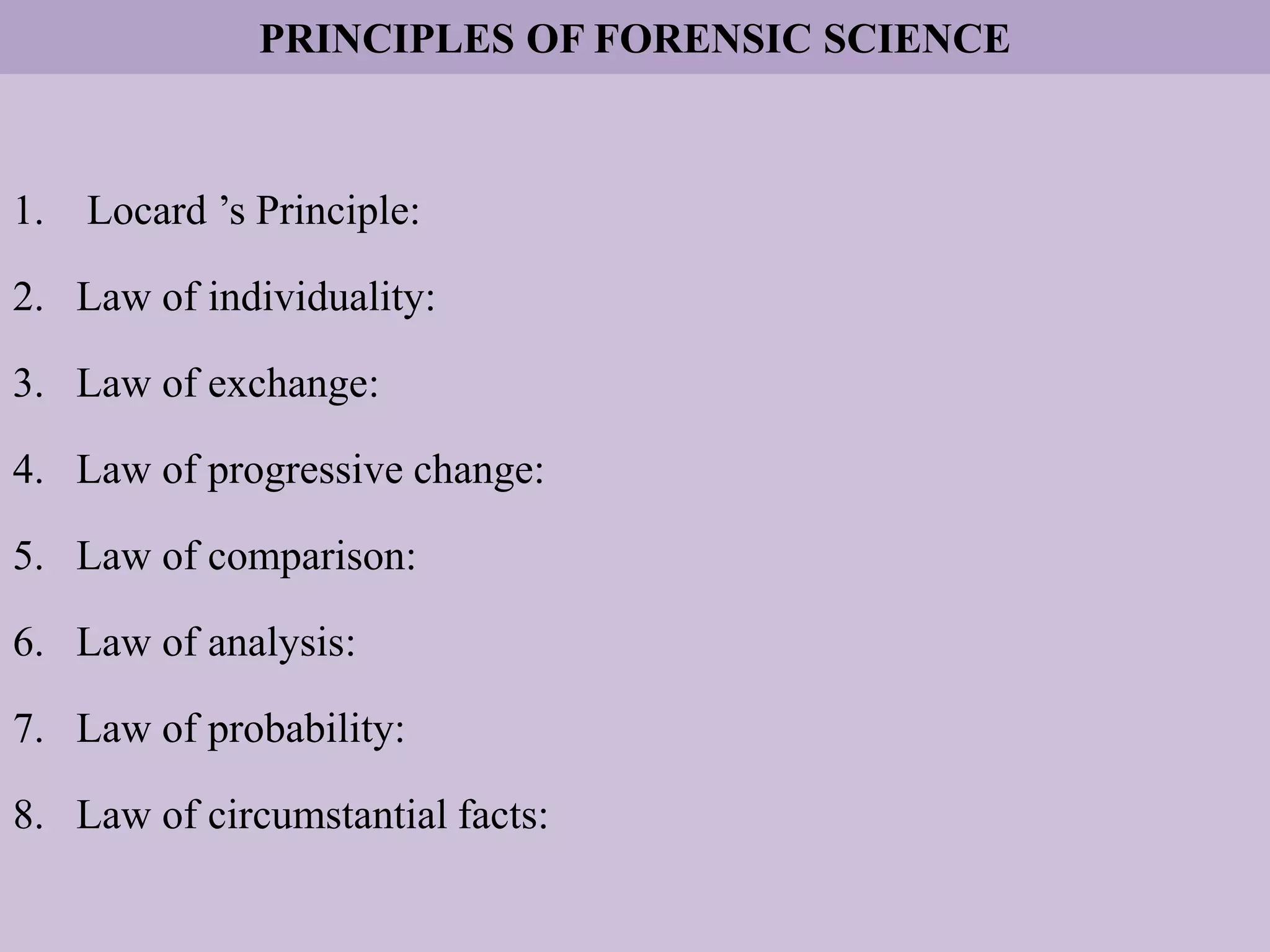
PRINCIPLES OF FORENSIC SCIENCE
1. Locard ’s Principle:
2. Law of individuality:
3. Law of exchange:
4. Law of progressive change:
5. Law of comparison:
6. Law of analysis:
7. Law of probability:
8. Law of circumstantial facts:
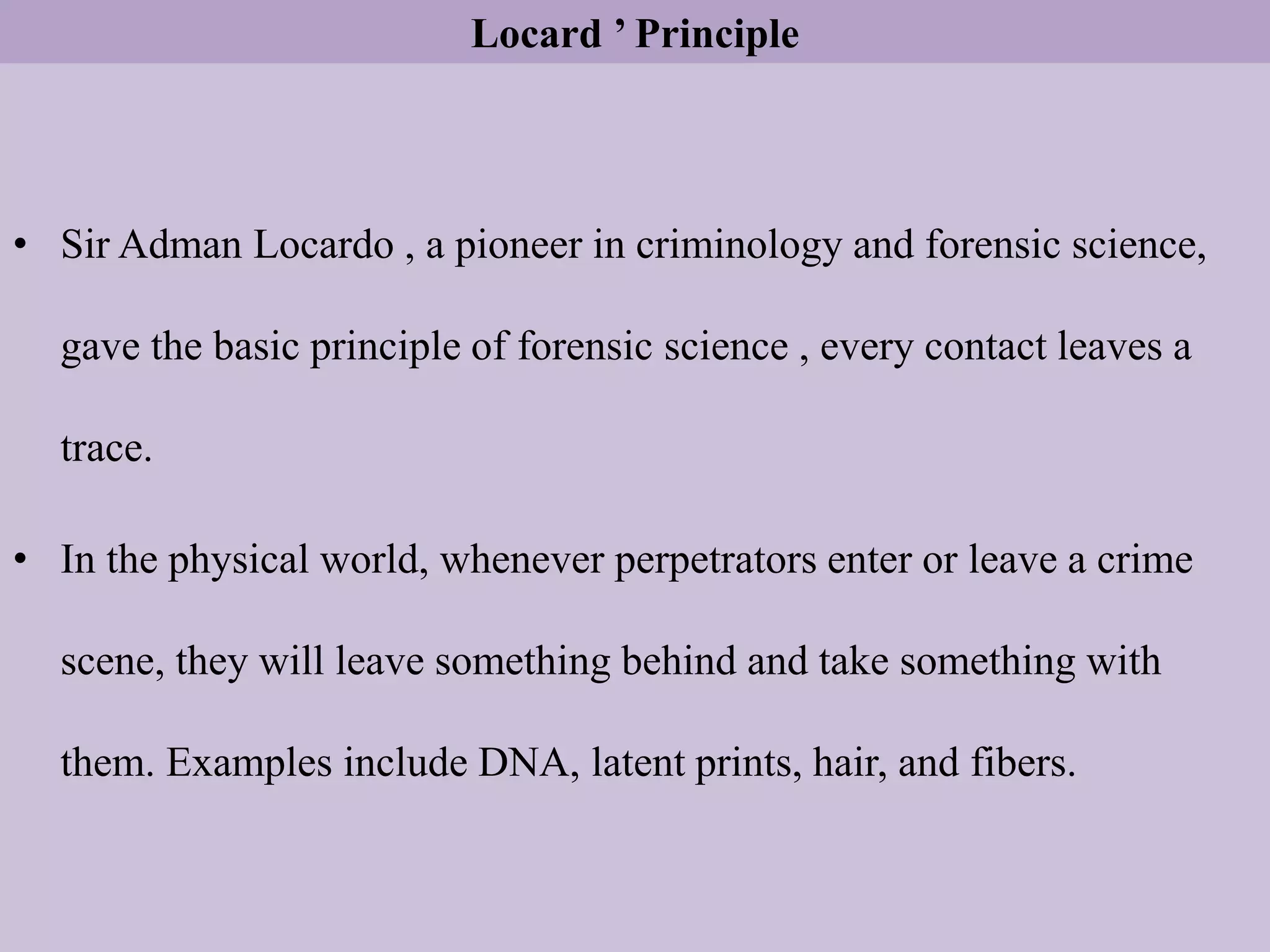
Locard ’ Principle
• Sir Adman Locardo , a pioneer in criminology and forensic science,
gave the basic principle of forensic science , every contact leaves a
trace.
• In the physical world, whenever perpetrators enter or leave a crime
scene, they will leave something behind and take something with
them. Examples include DNA, latent prints, hair, and fibers.
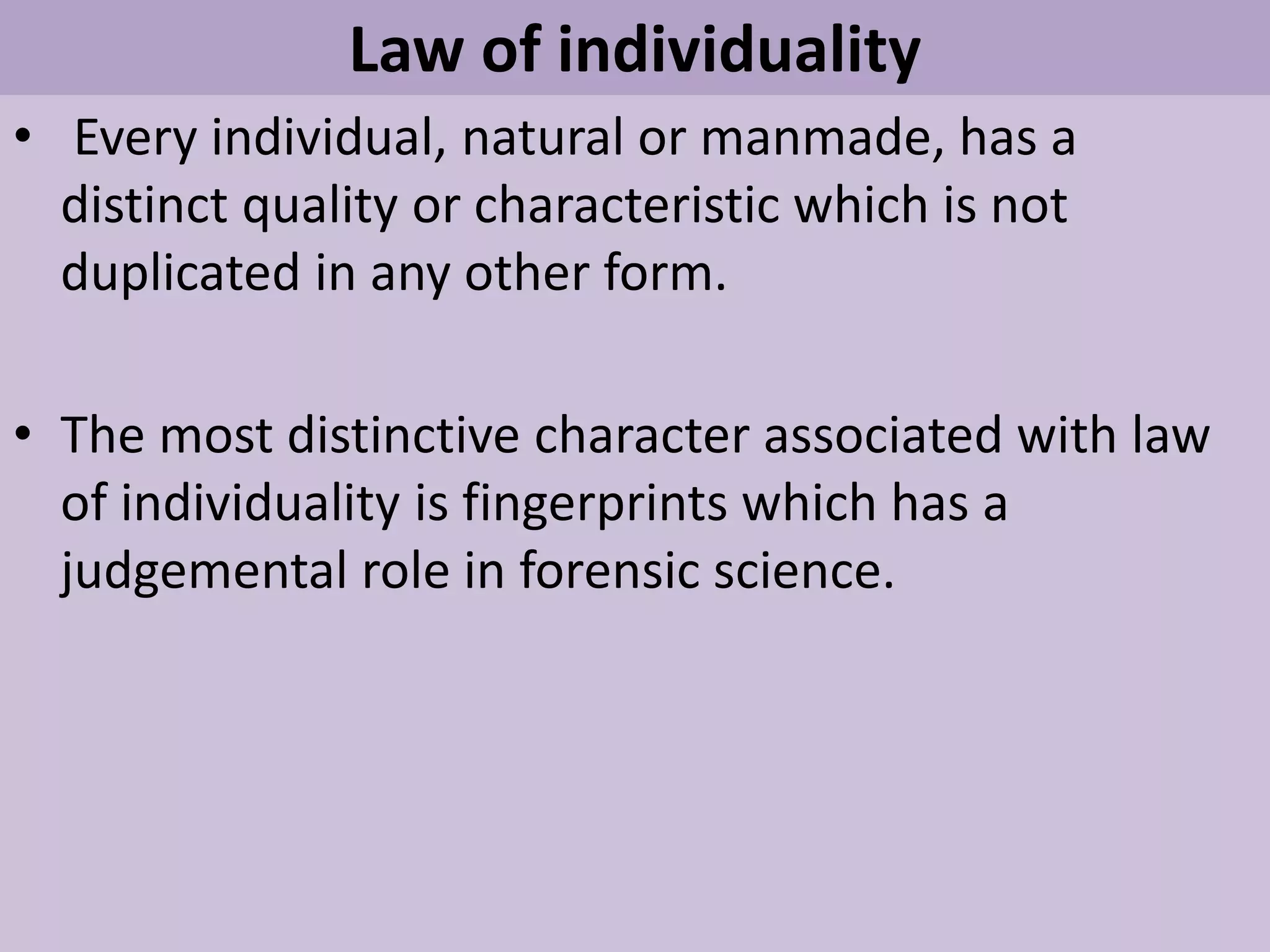
Law of individuality
• Every individual, natural or manmade, has a
distinct quality or characteristic which is not
duplicated in any other form.
• The most distinctive character associated with law
of individuality is fingerprints which has a
judgemental role in forensic science.
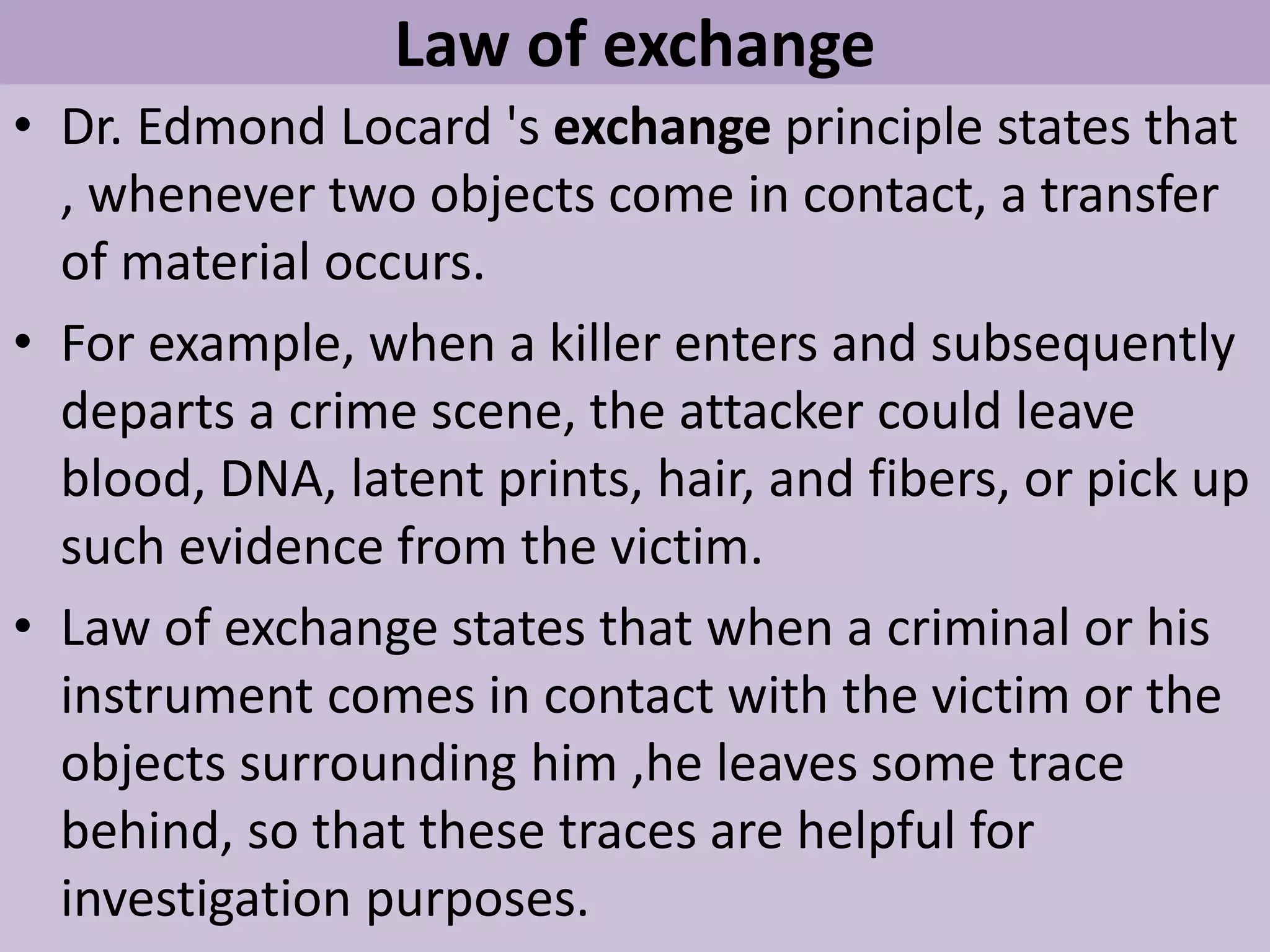
Law of exchange
• Dr. Edmond Locard 's exchange principle states that
, whenever two objects come in contact, a transfer
of material occurs.
• For example, when a killer enters and subsequently
departs a crime scene, the attacker could leave
blood, DNA, latent prints, hair, and fibers, or pick up
such evidence from the victim.
• Law of exchange states that when a criminal or his
instrument comes in contact with the victim or the
objects surrounding him ,he leaves some trace
behind, so that these traces are helpful for
investigation purposes.
Law of progressive change
It states that everything changes with the passage of
time and its impact on criminal investigation is
immense because the crime scene and the criminal
undergo changes and sometimes become
unrecognizable.
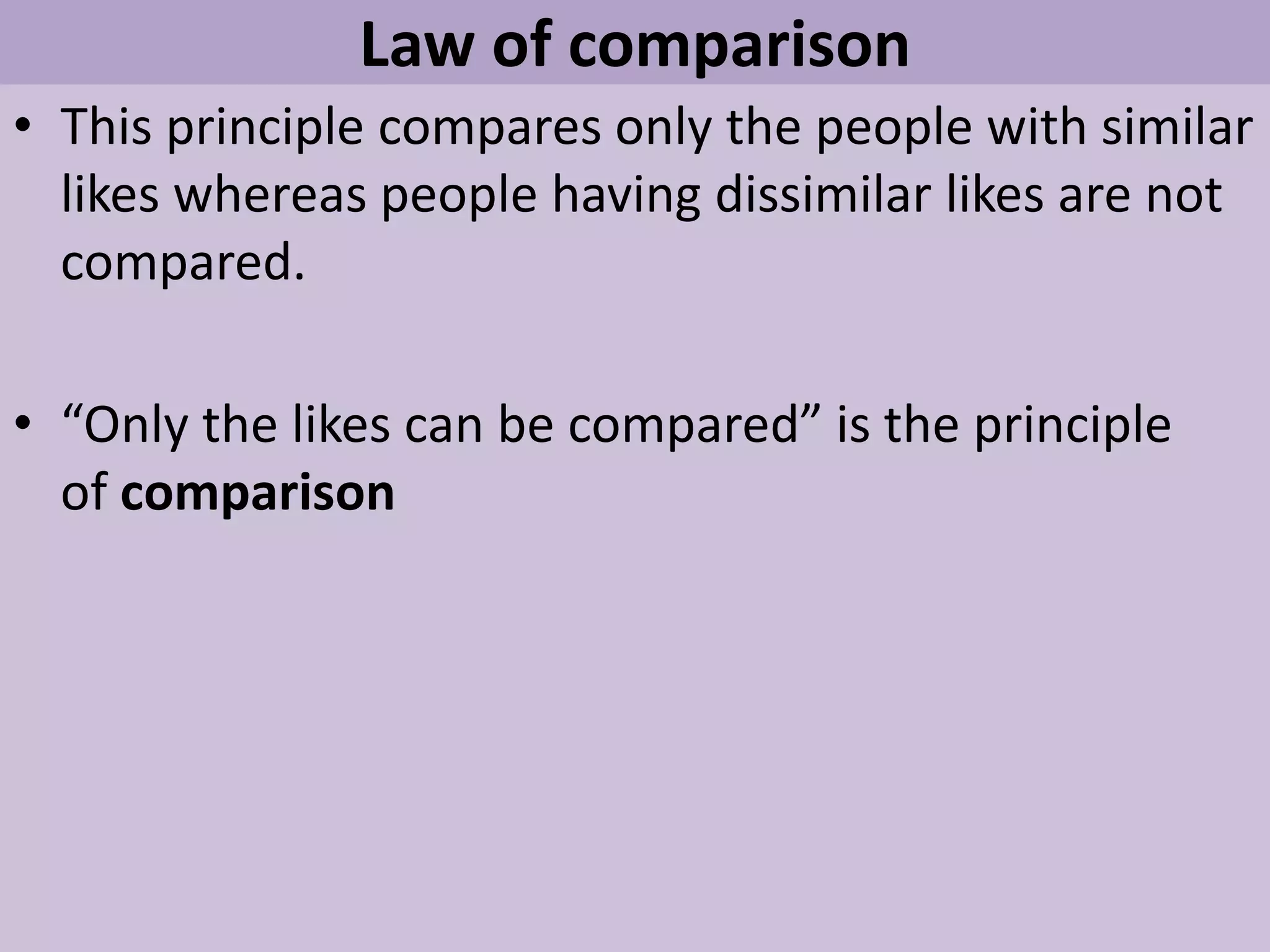
Law of comparison
• This principle compares only the people with similar
likes whereas people having dissimilar likes are not
compared.
• “Only the likes can be compared” is the principle
of comparison
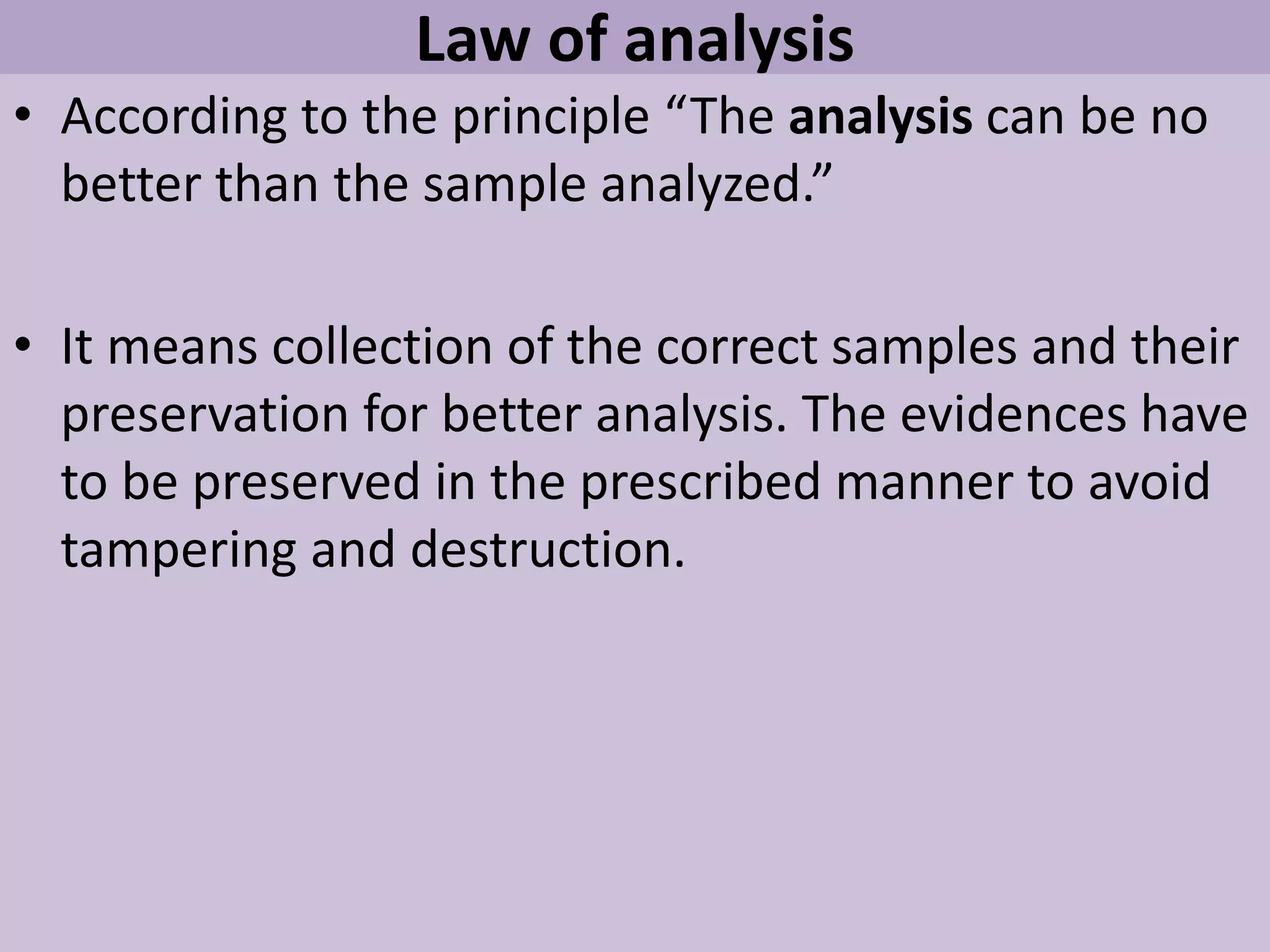
Law of analysis
• According to the principle “The analysis can be no
better than the sample analyzed.”
• It means collection of the correct samples and their
preservation for better analysis. The evidences have
to be preserved in the prescribed manner to avoid
tampering and destruction.
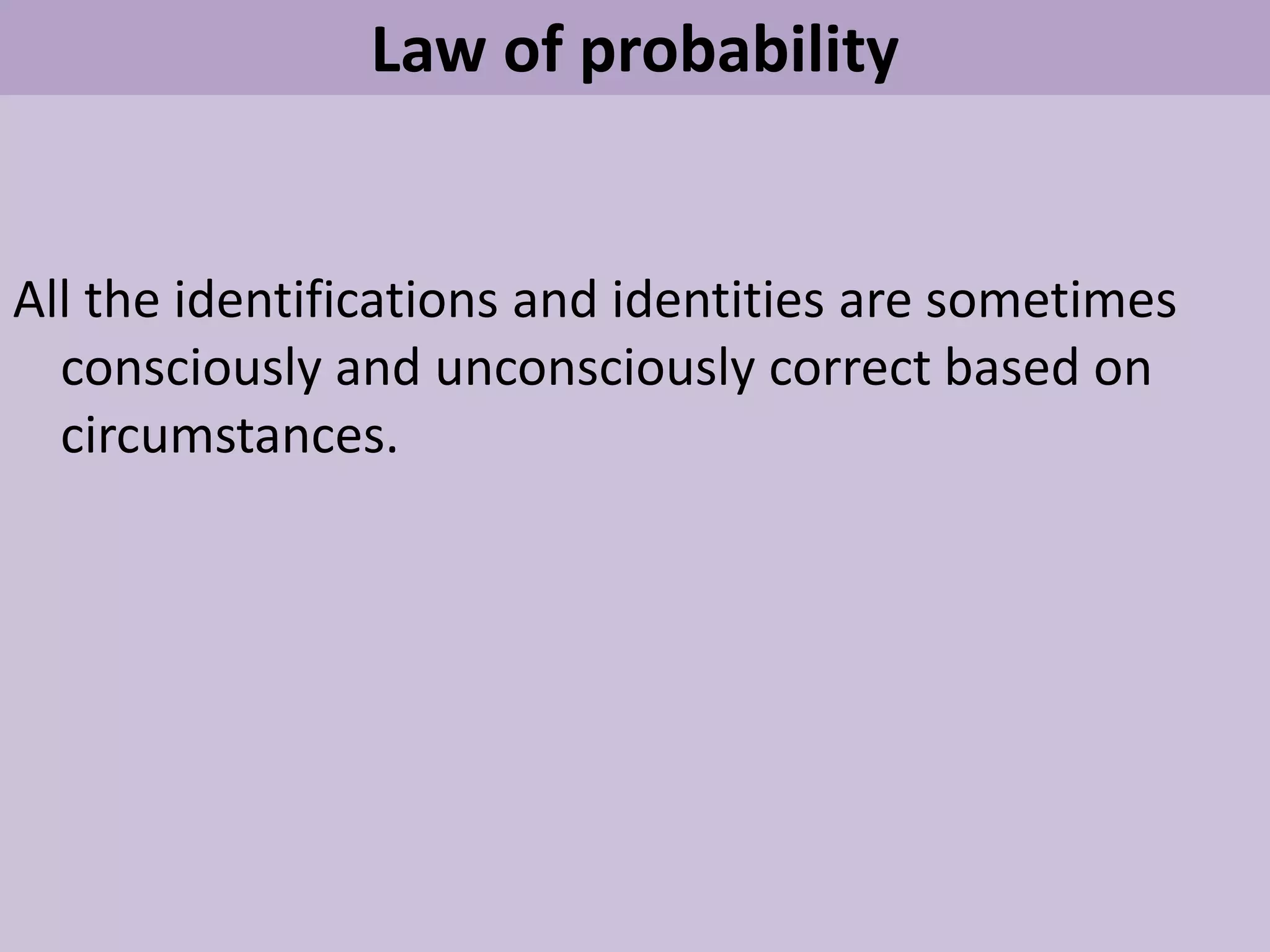
Law of probability
All the identifications and identities are sometimes
consciously and unconsciously correct based on
circumstances.
Law of circumstantial facts
• Facts never lie but men can lie. Facts cannot be
wrong, it cannot lie, it cannot be wholly absent.
Therefore the importance of circumstantial facts is
good for oral evidence.
THANK YOU

Study point 1

  • 1.
    STUDY POINT INTRODUCTION &PRINCIPLES OF FORENSIC SCIENCE BY JAYSHREE KATARIYA@
  • 2.
    INTRODUCTION • Forensic scienceplays a role in criminal and civil law. • The word forensic comes from the Latin word forensic , meaning “public” and currently means “used in or suitable to courts of judicature or to public discussion or debate.” • Forensic science uses highly developed technologies to uncover scientific evidence in a variety of fields. • Forensic scientists determine cause of death, identify perpetrators of crimes, identify bodily remains, track the digitally transfer of money, investigate internet fraud and identity theft, and reconstruct vehicular accidents, and investigate cyber crimes. • Forensic scientists examine and analyze evidence from crime scenes and elsewhere to develop objective findings that can assist in the investigation and prosecution of perpetrators of crime or absolve an innocent person from suspicion.
  • 3.
    PRINCIPLES OF FORENSICSCIENCE 1. Locard ’s Principle: 2. Law of individuality: 3. Law of exchange: 4. Law of progressive change: 5. Law of comparison: 6. Law of analysis: 7. Law of probability: 8. Law of circumstantial facts:
  • 4.
    Locard ’ Principle •Sir Adman Locardo , a pioneer in criminology and forensic science, gave the basic principle of forensic science , every contact leaves a trace. • In the physical world, whenever perpetrators enter or leave a crime scene, they will leave something behind and take something with them. Examples include DNA, latent prints, hair, and fibers.
  • 5.
    Law of individuality •Every individual, natural or manmade, has a distinct quality or characteristic which is not duplicated in any other form. • The most distinctive character associated with law of individuality is fingerprints which has a judgemental role in forensic science.
  • 6.
    Law of exchange •Dr. Edmond Locard 's exchange principle states that , whenever two objects come in contact, a transfer of material occurs. • For example, when a killer enters and subsequently departs a crime scene, the attacker could leave blood, DNA, latent prints, hair, and fibers, or pick up such evidence from the victim. • Law of exchange states that when a criminal or his instrument comes in contact with the victim or the objects surrounding him ,he leaves some trace behind, so that these traces are helpful for investigation purposes.
  • 7.
    Law of progressivechange It states that everything changes with the passage of time and its impact on criminal investigation is immense because the crime scene and the criminal undergo changes and sometimes become unrecognizable.
  • 8.
    Law of comparison •This principle compares only the people with similar likes whereas people having dissimilar likes are not compared. • “Only the likes can be compared” is the principle of comparison
  • 9.
    Law of analysis •According to the principle “The analysis can be no better than the sample analyzed.” • It means collection of the correct samples and their preservation for better analysis. The evidences have to be preserved in the prescribed manner to avoid tampering and destruction.
  • 10.
    Law of probability Allthe identifications and identities are sometimes consciously and unconsciously correct based on circumstances.
  • 11.
    Law of circumstantialfacts • Facts never lie but men can lie. Facts cannot be wrong, it cannot lie, it cannot be wholly absent. Therefore the importance of circumstantial facts is good for oral evidence.
  • 12.