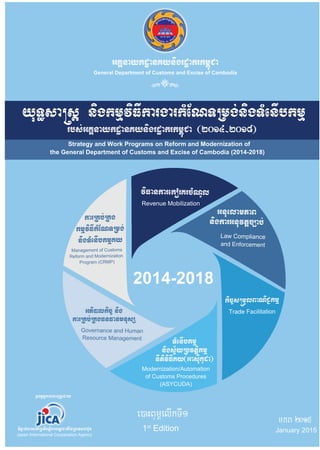
-i-
ŌijЊŁ
Ζũņĸ˝▫ ...................................................................................................................1 
ЯĩĖ˝◦Бơ ៖ Ю₤ş˝ʼnБЮĩʼnЧņ ..................................................................................................1 
ЯĩĖ˝◦БƯ ៖ ◦ЊřťļĮďŎН◦ċ⅜ū₤ʼn ....................................................................................2 
ơ.◦₤℮ĕŷЋ₤њŎ .........................................................................................................2 
Ư.ЮĠ₤˝˝ņŊ............................................................................................................2 
ư.ijаņųďņРŲŢť ĕ.....................................................................................................2 
̉.ЮýŲŁũ‗чņÐðОЮ◦₤˝є ............................................................................................3 
̣.Ų◦ċĩŲЯřŲ₤ЮŪņşģĕ˝ĕų₣ņ˝аĕŁũΒĕНŷijʼn˝ņŊŷЋĊБ˝еЯ‗◦Ūņ₣сĕЊ₣◦еЮĕЧĠ˝ņŊÐŎ ................4 
̀.ŁũŷЋļÐ⅜□ ĕŁũ‗ч ...............................................................................................5 
̀.ơ.˝″ʼn ž₣ЮŪł ..................................................................................................5 
̀.Ư.˝″ʼn ž₣˝ĖО₣...................................................................................................6 
̀.ư.ŁũŷЋļÐЮŲЧşе‗Нşžų е₣ şе‗НşЮŠ⅝Ŏ ŁŵĕНŷijʼnļĮ ĕЊ₣ŁũÐеŬņ˝еЯ΅₣.....................7 
ЯĩĖ˝◦Бư ៖ ЮýŲЮţŎН◦ċ⅜ū₤ʼnĂĖ еƯƠở-ƯƠơ៨............................................................9 
ЮýŲЮţŎН◦ċ⅜ū₤ʼn◦Б I : ŷЋēĕŁũЮ˝ЬũÐũşе‗РŲ ...........................................................9 
ơ.ŁũĮŪ₣Е₣˝ЊşĆřеЮ‗ЧũŁũĠеЮĮŀЯĠĠĠ◦ĠЮŃĆŀ◦еĕЊŀĮБÐŎ.............................................9 
Ư.ŁũĮŪ₣Е₣ŷЋēĕŁũĠİ˛ ũĕЊ₣Ġūİ˛ ĠΒеЮĮЧũijсЮÐşĮĕċ .....................................................12 
ư.ŷЋēĕŁũýеŪ◦ЮřЧņġБĄУŎřŲсŎН◦ċ⅜ū₤ʼnЮ˝ЬũÐũşе‗РŲũŎкЮĮŲņĊŏņ ...........................12 
̉.ŷЋēĕŁũŪĠņРŲşе‗РŲЮĩ℮₣Ю◦Ьij˝ĖО₣Ū˝ĠŠ‗Ź ŎН◦ċ⅜ū₤ʼnЮ˝ЬũÐũşе‗РŲũŎкЮĮŲņĊŏņ
ƯƠở-ƯƠơ៨ ũĠ₤сŪ˝₤У₣Ю₤řť˝ЊşĆĕЊ₣΅ЊũŃňŷij□О..........................................................12 
ЮýŲЮţŎН◦ċ⅜ū₤ʼn◦Б II : ΒĕНЮŵņļĮĕЊ₣ŁũΒĕНŷijʼnşĤĠс ............................................14 
ơ.ŁũΒķЊŷűΘŎН◦ċ⅜ū₤ʼn₤БʼnĮБΒĕНЮŵņļĮĕЊ₣ŁũĄŪņОŀŁũΒĕНŷijʼnşĤĠсЮŢŎũУņĠŃĆСŲЮýŲ
ĕЮŗģŎŪÐĠсŪÐ₣ΉĕЊķњŎ ..................................................................................14 
Ư.ŁũΒķЊŷűΘЯĩĕŁũ₤˝ņŊļĮĕЊ₣ЮýŲĕЮŗģŎĠūİ˛ ĠĠ◦ЮŲŊЧ₤▫Ė ˝сďijЊ .....................14 
ư.ŁũĮŪ₣Е₣ĕЊ₣ĮŪ₣Б˝ŎĕʼnŁũ₤ŷĕ˝ņŊЮŪŁŎЮĮŲĠЮŃĆŀ◦еĕЊŀĮБÐŎ (PCA) ....................15 
̉.ŁũĮŪ₣Е₣ŪĠĮњĕċ◦ЊĕĖĕњŎŪÐĠсŪÐ₣ΉĕЊķњŎÐŎ (CRMDS) ...........................................16 
̣.ŁũΒķЊŷűΘŪĠŁ₤ΒĕʼnũŪ˝₤У₣₤ʼnБĮБŁũŪÐĠсŪÐ₣ΉĕЊķњŎ .............................................17 
̀.ŁũΒĕНŷijʼnŪ˝ĠŠ‗Ź ₤ʼn₣сŢ₤Нŷij□ЊļĮ˝ЊşĆŪĮņЮŪĮЭ₣ũĠ₤с WCO......................................17 
́.ŁũĮŪ₣Е₣₤ņij□ļĮΒ₣ðļĮÐŎЮĄЧ₣◦Е˝ .................................................................18 
៨.ŁũĮŪ₣Е₣ŪĠ₤Њ◦ċļĮĠЮşĆ˝ŷЋ◦ŜŪijФijĮЊĕЊijŏЮŢŎýŊ ĕŁũũжžĕ (NII) ..............................18 
៩.ŁũΒķЊŷűΘ₤ņij□ļĮŪ⅜ŷŪďŷĠ◦ЮŲŊЧ₤ÐŎ............................................................19 
ơƠ.ŁũĮŪ₣Е₣ŪĠĮњĕċĕЊ₣₤ņij□ļĮЮ₤НЧĠΒЮ₣˛ijĮњijхŌĕ₤ŌĞ ijсÐŎ......................................19 
ơơ.ŁũĮŪ₣Е₣˝ЊşĆ₤΅ŪĠijЊĠijʼnЊŁũΒĕʼnũ⅜□ ĠњĕĕЊ₣ΒĕʼnũďijЊ ..............................................20 
ơƯ.˝ņŊŷЋĊБŪĠŎН◦ċŪĠĂе₣ŁũũжЮŵķ˝ņŊ₤Њ◦ċЊĠŔň ..........................................................20 
-ii-
ơư.ŁũΒķЊŷűΘ₤ņij□ļĮ˝ĖО₣ŁũŪĠŎН◦ċŪĠĂе₣ĕЕ₣ΧŪ˝Њřť˝ņŊΒĕʼnũďijЊ ................................21 
ở.Łũ˝⅜₣₤ņij□ļĮņūĕʼnБΒĕНŷijʼnşĤĠсÐŎ ..............................................................21 
ЮýŲЮţŎН◦ċ⅜ū₤ʼn◦Б III : ˝ЊşĆ₤ŪņФŲĵ‗ЊĄą˝ņŊ..........................................................22 
ơ.ŁũΒķЊŷűΘĕЊ₣ΒĕНŷijʼnŪĠĮњĕċĠŃąũЯijņУŎďijЊ .............................................................22 
Ư. ĮŪ₣Б˝ŁũЮŪĠЧŪģ₤с˝ЊşĆŪĠijЊĠijʼnЊŁũ◦Ūņ₣сЮΒΌЊ˝ŪijСĕЊ˝ ...............................................23 
ư.ŁũĠЮ₣˛ЧijŁũijļą Ġсũǻ₣ĠŃąũЯijņУŎďijЊĕЊ₣ĠŃąũЯijņУŎΖ⅜п ĕ ...................................23 
̉.ŁũĮŪ₣Б˝ŎĕʼnŁũĊНũĄĕŲΔĠеĩНij ĕЊ₣ŁũΒķЊŷűΘĕч˝ņŊŷЋĊБŪĠijЊĠijʼnЊ˝ũЮ₤řť˝ЊşĆŌĕŁũΒĕНŔň ij..23 
̣.ŁũŪÐĠсŪÐ₣ũĠĠЮŲЧ˝ЯŲ₣ĮĕċĕЊ₣Ζ˝ũ..................................................................24 
̀.ŁũЮũЬĠşеΒĕНŷijʼn˝ЊşĆŪĮņЮŪĮЭ₣ĵ‗ЊĄą˝ņŊ◦еĕЊŀũĠ₤сΖ⅜п ĕ ATIGA ĂĖ е ƯƠợ ĕЊ₣Łũ
şРŲũУņ˝ЊşĆŪĮņЮŪĮЭ₣ĵ‗ЊĄą˝ņŊЮ₤ũВ FTA Юĩ℮₣Ю◦Ьij....................................................24 
́.ŁũЮũЬĠşеΒĕНŷijʼn˝ЊşĆŪĮņЮŪĮЭ₣ĵ‗ЊĄą˝ņŊЮ₤ũВ FTA...................................................25 
៨.ŁũЮŪijЭņΒĕНŷijʼn˝ЊşĆŪĮņЮŪĮЭ₣₤ʼnБĮБ˝ЊşĆ₤ŪņФŲĵ‗ЊĄą˝ņŊũĠ₤с WTO.............................25 
៩.ŁũĠĕʼnĮŪ₣Е₣ŎĕʼnŁũļĮďаřÐРÐŎ-ЯĩĖ˝υ˝Ąĕ ......................................................25 
ơƠ.Łũ˝е‗ijс ĕЊ₣Łũģл ĕсŪĠŌ‗аĕũģе₣ņЊĕЯņĕĮĕċÐŎşеЮĵйŁũЮĊſЧĵ‗ЊĄą˝ņŊ (ũģе₣
ĠЮşĆ˝Ю◦₤ĵ‗ЊĄą˝ņŊ)ĕЊ₣˝ЊşĆ₤΅ŪĠijЊĠijʼnЊŁũΒĕʼnũ-ļĖ ˝сİũěĕņНŠ₤ŪŌĠсŲНĠιŁijсĠĕ□Ŏ
ũģе₣ņЊĕЯņĕĮĕċÐŎ.............................................................................................26 
ơơ.ŁũΒĕНŷijʼnŎĕʼnŁũĠ‗ʼn Е₣ijǻмΒĕНЮŵņ″ņ WTO ....................................................27 
ЮýŲЮţŎН◦ċ⅜ū₤ʼn◦Б IV : ◦еЮĕЧĠ˝ņŊĕЊ₣₤ſњŎŪĠŷijʼnЊ˝ņŊĕБijЊŷЋĊБÐŎ ..................................28 
ơ.ŁũΒķЊŷűΘЯĩĕŁũŎН◦ċ⅜ū₤ʼnĠЮşĆ˝ŷЋ◦ŜĮњijхŌĕ .......................................................28 
Ư.ŁũĮŪ₣Б˝˝ЊşĆŪĠijЊĠijʼnЊŁũķРņЊ⅜ū₤ʼnĕЊ₣ņНŠİũŪĠĮњĕċΖ₤НБÐРŢ ......................................29 
ư.ŁũşРŲďļÐБΒĕН₤Ŕň ΒĕʼnũďijЊĵ˝сĮњĕċĕЕ₣ÐŎ......................................................30 
̉.ŁũşРŲũУņЮũЬĠşеŷЋēĕЮřЧņ˝еЮ‗Чij◦еĕЊŀ.................................................................30 
̣.ŁũЮĊſЧЁŏŪĠЮ₤ЧũЮΌЧ₣ĕРŷĕБijЊŷЋĊБÐŎĜеЮşŀ (ďĮЊЮ₤₤ ◦еĕЊŀǻŎĕķњ‗Ź ŁijсЮřũ)..............31 
̀.ŁũЮũЬĠşе₤Њ˝⅝ũŎкЮĮŲĠЮŃĆŀ◦еĕЊŀ...................................................................31 
ЮýŲЮţŎН◦ċ⅜ū₤ʼn◦Б V: ΒķЊģŲ˝ЊşĆĕЊ₣ŁũŪÐĠсŪÐ₣ĊĕēĕņĕН₤℮.................................32 
ơ.ЯĩĕŁũΒķЊŷűΘĕчĊĕēĕņĕН₤℮ ............................................................................32 
Ư.ŁũĮЊĕЊijŏЮΌЧ₣ŷЋŀĕРŷũşĜ₤ņįњĕċΒ₣ðŁũЮŲŠũĠ₤с ΒÐũ ..............................................32 
ư. ˝ņŊŷЋĊБ˝⅜₣₤ņij□ļĮ.....................................................................................33 
̉. ŁũΒĕНŷijʼnŪĠĮњĕċǻŎijаņųŁũİũĠНÐðŲЊ˝.................................................................33 
̣.ΒĕНŷijʼnŁũĬų ₤сĠʼnСũņūĕʼnБÐŎĕЊ₣ũŢť ˝ũЮŢŎijŌų ļĮ....................................................34 
̀.˝ņŊŷЋĊБЮŲЧ˝◦Е˝şЊijʼn.............................................................................................34 
́.ΒĕНŷijʼnŷЋēĕŁũŢ˝с◦‗Ź ˝ņŊ ................................................................................34 
៨.ΒĕНŷijʼn˝ņŊŷЋĊБŪ˝ņ₤БŲĊņхĕЊ₣˝ЊũЋŗŌũŗ◦ņūĕʼnБŬĄŁũÐŎĕЊ₣ũŢť ˝ũ ............................34 
៩.ŁũĮŪ₣Е₣ijУĜ◦Б₤ŷĕ˝ņŊаĩĀ˝ĖО₣ũĠ₤с ΒÐũ ................................................................35 
ơƠ.ŁũĄеũНŀĕЊ₣ЮŲЧ˝˝ņį₤сŁũΒĠсũжŁŎ₤ņġĈ ..........................................................35 
ơơ.ЯĩĕŁũĕЊ₣ŎН◦ċ⅜ū₤ʼn ŷЋĕЊЮŗÐЮ΅Ţť ũşĜ₤ņįњĕċ ....................................................35 
-iii-
ЮýŲЮţŎН◦ċ⅜ū₤ʼn◦Б VI : ŁũŪÐĠсŪÐ₣˝ņŊŷЋĊБ˝еЯ‗◦Ūņ₣сĕЊ₣◦еЮĕЧĠ˝ņŊÐŎ .....................36 
ơ.ŁũЮũЬĠşеũşĜ₤ņįњĕċŪÐĠсŪÐ₣ÐЮŪŌ₣ℓŊБ..................................................................36 
Ư.ŁũΒĕНŷijʼnŪĠĮњĕċŪÐĠсŪÐ₣ŁũΒĕНŷijʼn˝ņŊŷЋĊБ˝еЯ‗◦Ūņ₣сĕЊ₣◦еЮĕЧĠ˝ņŊÐŎ ..........................38 
ư.ŁũЮũЬĠşе˝ņŊŷЋĊБЮřЧņġБЁŏ⅜ēũ‗ĄĕģĕŎŲсřЕ₣ĮБ˝ņŊŷЋĊБ˝еЯ‗◦Ūņ₣сũĠ₤сÐŎ .............39 
̉.ŪĠĮњĕċŬŎŁũ‗ч៖ ₤РşĜ˝ũŎН◦ċ⅜ū₤ʼnĕЊ₣₤РşĜ˝ũ⅜Ė аřаĕŪĠijЊĠijʼnЊŁũ.......................40 
ЯĩĖ˝◦Б IV : ΒĕʼnũĠġŃňijʼnЊĕЊ₣ΧĠ₤ņįњĕċ .............................................................................42 
-1-
-iv-
Content	
Content..............................................................................................................................................iv 
Preface................................................................................................................................................1 
PART I: INTRODUCTION.............................................................................................................43 
PART II: STRATEGIC OVERVIEW .............................................................................................44 
1  Vision...............................................................................................................................44 
2  Mission ...........................................................................................................................44 
3  Core Values .....................................................................................................................44 
4  Guiding Principles ...........................................................................................................44 
5  Major Results Achieved to date in Implementing the SWRM ........................................45 
6  Environmental Analysis...................................................................................................46 
6.1  External Factors...............................................................................................................46 
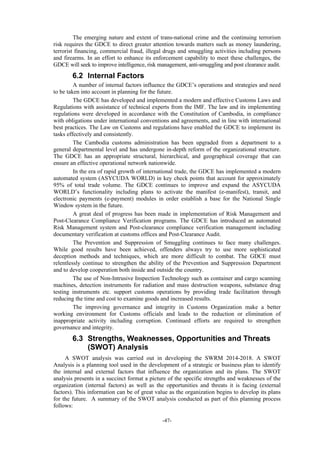
6.2  Internal Factors ................................................................................................................47 
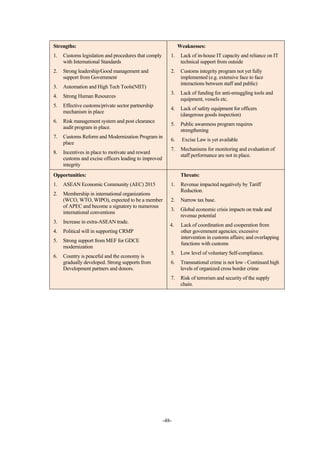
6.3  Strengths, Weaknesses, Opportunities and Threats (SWOT) Analysis ...........................47 
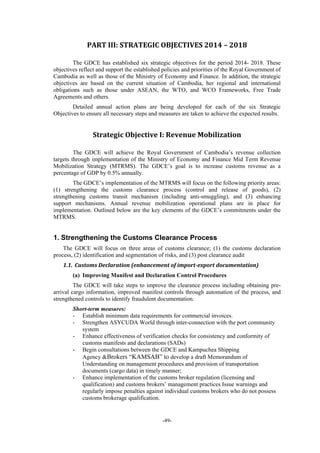
PART III: STRATEGIC OBJECTIVES 2014 – 2018.....................................................................49 
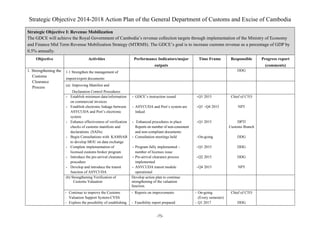
Strategic	Objective	I:	Revenue	Mobilization .............................................................................49 
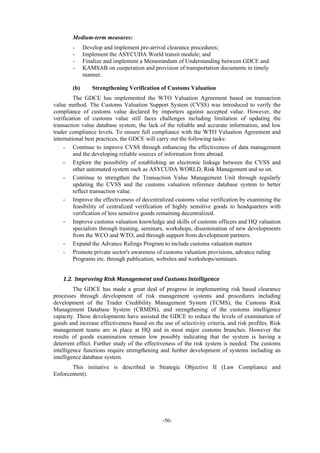
1.  Strengthening the Customs Clearance Process................................................................49 
2.  Prevention and Suppression of Customs Offences ..........................................................51 
3.  Supporting Processes.......................................................................................................51 
4.  Other Revenue Measures under the MTRMS..................................................................51 
Strategic Objective II: Law Compliance and Enforcement ..........................................................53 
1.  Development of a Compliance and Enforcement Strategy including a Risk
Management Policy .........................................................................................................53 
2.  Development of National Anti-Smuggling Policy and Action Plan................................53 
3.  Expansion and Enhancement of Post-Clearance Audit (PCA) Program. ........................54 
4.  Strengthening the Customs Risk Management Database System (CRMDS)..................54 
5.  Development of Joint Inter-Ministerial Prakas on Risk Management.............................55 
6.  Implementation of the WCO SAFE Framework of Standards ........................................55 
7.  Strengthening the Capacity of the Customs Marine Office.............................................55 
8.  Improving Effectiveness of Non-Intrusive Inspection (NII) Technologies.....................56 
9.  Developing a Customs Fraud Investigation Capacity......................................................56 
10.  Strengthening Customs Intelligence Systems and Capacity............................................57 
11.  Improving Inter-Institutional and International Cooperation...........................................57 
12.  Implementing IPR Programme Activities........................................................................57 
13.  Developing Increased Capacity to Combat Trans-national Crimes.................................58 
14.  Capacity Building of Customs Law Enforcement Officers .............................................58 
Strategic Objective III: Trade Facilitation ....................................................................................59 
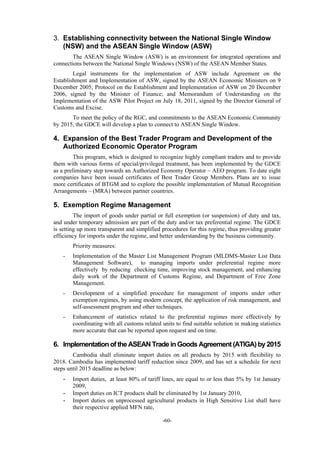
1.  Implementation of the National Single Window (NSW).................................................59 
2.  Expanding Use of Electronic Transactions......................................................................59 
3.  Establishing connectivity between the National Single Window (NSW) and the
ASEAN Single Window (ASW)......................................................................................60 
4.  Expansion of the Best Trader Program and Development of the Authorized
Economic Operator Program ...........................................................................................60 
5.  Exemption Regime Management.....................................................................................60 
6.  Implementation of the ASEAN Trade in Goods Agreement (ATIGA) by 2015.............60 
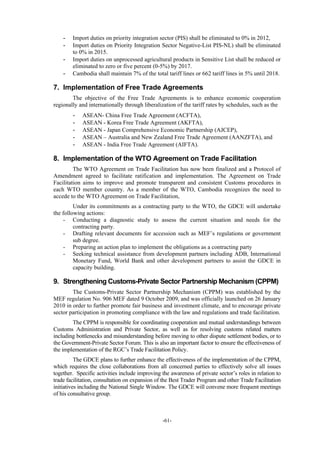
7.  Implementation of Free Trade Agreements.....................................................................61 
8.  Implementation of the WTO Agreement on Trade Facilitation.......................................61 
-v-
9.  Strengthening Customs-Private Sector Partnership Mechanism (CPPM) .......................61 
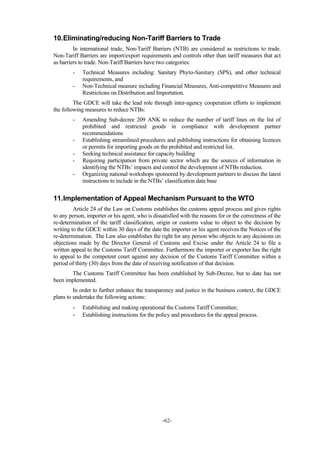
10.  Eliminating/reducing Non-Tariff Barriers to Trade.........................................................62 
11.  Implementation of Appeal Mechanism Pursuant to the WTO.........................................62 
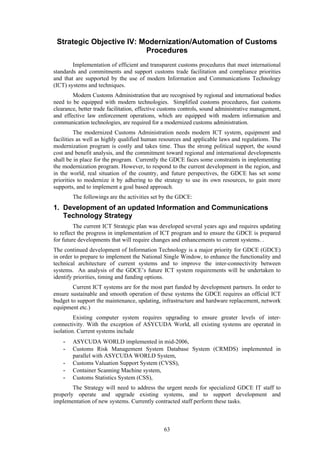
Strategic Objective IV: Modernization/Automation of Customs Procedures...............................63 
1.  Development of an updated Information and Communications Technology Strategy....63 
2.  ASYCUDA World Geographic and Functional Expansion.............................................64 
3.  Participating in International Conventions relating to Customs......................................64 
4.  Administration of Rules of Origin...................................................................................64 
5.  Streamlining Export Procedures (especially Textile Goods)...........................................65 
6.  Conducting Time Release Study......................................................................................65 
Strategic Objective V: Governance and Human Resource Management .....................................66 
1.  Preparation of a Human Resource Development Plan.....................................................66 
2.  Conducting a Review of the GDCE Organizational Structure ........................................66 
3.  Capacity Building Programs............................................................................................67 
4.  Implementation of Staff Performance Evaluation System...............................................67 
5.  Implementing a More Transparent Rotation System for Customs Officers ....................67 
6.  Strengthening of Staff Incentive Program .......................................................................68 
7.  Implementation of Disciplinary Measures.......................................................................68 
8.  Implementation of the Comprehensive Customs Integrity Program ...............................68 
9.  Strengthening the GDCE’s Internal Audit Function,.......................................................68 
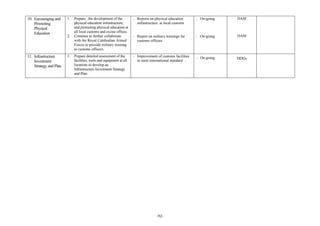
10.  Encouraging and Promoting Physical Education.............................................................68 
11.  Infrastructure Investment Strategy and Plan....................................................................69 
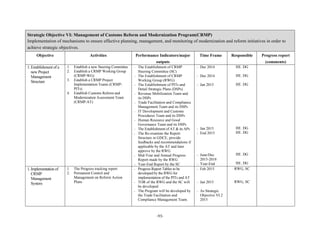
Strategic Objective VI: Management of Customs Reform and Modernization Program
(CRMP)............................................................................................................................70 
1.  Establishment of a new Project Management Structure ..................................................70 
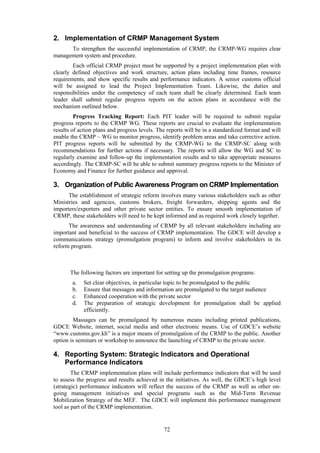
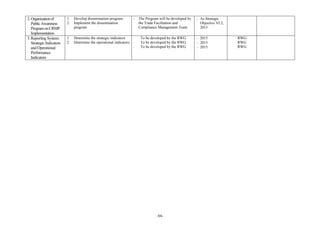
2.  Implementation of CRMP Management System.............................................................72 
3.  Organization of Public Awareness Program on CRMP Implementation ........................72 
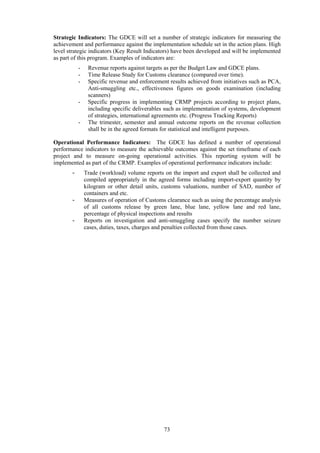
4.  Reporting System: Strategic Indicators and Operational Performance Indicators...........73 
PART IV: TRANSITIONAL PROVISIONS AND ANNEXES ....................................................74 
-1-
Ζũņĸ˝▫
₤ņЊ◦ċĩŲаĕ˝ЊşĆΒķЊŷűΘĕчũĠ₤с˝ņįОď˝ĖО₣ũŎкЮĮŲ˝ĕų₣Юĉ″ņũŎкŁũΒĕНŷijʼnЮŢŎЮďÐĄњŎ
ĕРŷŎН◦ċ⅜ū₤ʼnşijНЮŁ‗řе₧˝сŁŲ◦БơĕЊ₣◦БƯ ÐЙď₤˝šБļĮаĕŁũěĕЮΌЧ₣ũĠ₤с˝ņįОďЮĂį йЮĉũ˝
ŁũΒķЊŷűΘЮŲЧŪÐĠсŷЋ₤њŎŪĠ˝ĠЮŢŎşБũļĮĕЊ₣₤ĕʼnЊļĮŎРũΒЯ₣ſ₣ ЯřŲŪijСŷģĕđųОйĠŔĆ е₣″ņũŎк
˝еЮ‗ЧĕЮ₤řť˝ЊşĆÐУũЁŏ˝ijс₤Ōð Ųс¤ ◦ĕĀЕņЮĕй ΒÐðĜŎ˝Ţť ĕÐŎĕЊ₣ũŢť ˝ũ˝ņįОď (ΒÐũ) ģĕŠЊijŠе
ŪĠЕ₣ЯŪĠ₣ΒĕНŷijʼnЯĩĕŁũŎН◦ċ⅜ū₤ʼnĕЊ₣˝ņŊŷЋĊБŁũİũ˝еЯ‗◦Ūņ₣сĕЊ₣◦еЮĕЧĠ˝ņŊũřťģŲÐŎĕЊ₣ũŢť ˝ũ
˝ņįОďƯƠƠ៩-ƯƠơư ЮŢŎ΅НşĩŲďЯĩųĬ˛ ÐУũЁŏ˝ijс₤Ōð Ųс¤ ЮĈйĠБď◦◦УŲģĕĕРŷ₤ņЊ◦ċĩŲď
ЮŪşЧĕĜЮĮŲ˝ĕų₣ņ˝˝єЮŢŎ ˝ņŊŷЋĊБ˝еЯ‗◦Ūņ₣сĕЊ₣◦еЮĕЧĠ˝ņŊÐЙďŁũİũŪijСŷĠĕʼnΒĕНŷijʼnďŪĠČе ЯřŲ
ΒÐũ ďĕЊşĆŁŲŪijСŷŪĠĘņĕЕ₣ΧĠ₤ÐðĕЊ₣ŁŵĕНŷijʼnļĮℓŊБៗĠЯĕ□ņЮ◦ЬijĜЮĮŲž₣ņНŠ¤
ŬĄũŢť ķЊģŲΖ‗ijʼnЊ◦Б̣ řЕ˝ĜеЮŢŎ₤ЮņʼnşΒÐðņΉЮ₤ĜĠijБЮijЮď ΅пНĕ Я₤ĕ
ĜŎ˝ũřťņūĕʼnБаĕŪĮйŬď₧şŪ˝˝ņįОď ģĕЮĠʼnďń şЊijʼnŗл ₣ņНЙ₣Ōл ijсĕЊ₣ņНijŪ₤Фş˝ĖО₣ŁũĄеũНŀЁŏŁĕсЯij
ŪĠЮ₤ЧũĕРŷ₤□ЊũļĮĕЮŗģŎ₤ĕʼnЊ₤НŠĕЊ₣₤₧ʼn ĠсēĖ Ġс₤₣ðņ Ġĕʼnũ˝⅝ЁŏģĕĕРŷ₤□ЊũļĮŌл Ū˝СЮ₤řť˝ЊşĆ
ĕЊ₣ēĜļĮ₤њ˝ʼnЊ₤Њ◦ċĕЊ₣ŪĠ₤Њ◦ċļĮŠį₤с˝ĖО₣ŁũŪÐĠсŪÐ₣΅ЊũŃňŷij□О⅜ēũ‗к¤ ЮřЧņġБЮđųЧŎijĠĕЕ₣Ōýх
ũĠ₤сŬĄũŢť ķЊģŲ ΒÐũ Ōĕņ΅Њş¯″ЮĊſЧ◦еЮĕЧĠ˝ņŊĠЯĕ□ņЮ◦ЬijĕРŷ⅜□ ĠњĕũĠ₤сŠųФĕЮřЧņġБЮřЧũijУĜ◦Бď⅜□ Ġњĕ
ĩʼnŲсЮ₤ǻŗл ₣ŌĕŪĠ₤Њ◦ċļĮřŲсĕЮŗģŎ˝еЯ‗◦Ūņ₣сũĠ₤сŬĄũŢť ķЊģŲ˝ņįОďЮđųЧŎijĠĕЕ₣ijŪņСŷ
ŁũũĠ₤сĊНũĄĕĵ˝сĮњĕċ ĕЊ₣ŌĕÐН‗ŷНűΘЊ˝ĖО₣˝ЊşĆŪĠijЊĠijʼnЊũĠ₤сŠųФĕЁŏŪ₤Ġ″ņ₤ʼn₣сŢаĕΧijʼnŌĕНŷijʼnĕч
ΒĕʼnũďijЊ¤ ˝ĖО₣ĕњŎЮĕй ã ŎН◦ċ⅜ū₤ʼnĕЊ₣˝ņŊŷЋĊБŁũİũ˝еЯ‗◦Ūņ₣сĕЊ₣◦еЮĕЧĠ˝ņŊũřťģŲÐŎĕЊ₣ũŢť ˝ũ
˝ņįОďĂĖ еƯƠở-ƯƠơ៨åŌĕũУņĠŃĆСŲĕРŷijŪņСŷŁũℓŊБៗŪ₤Ġ″ņŷűΘĕļĮ₤₣ðņ˝ņįОďĕЊ₣⅜˝ŲЮŵ˝
ŪĮņĈе₣ЯĩΔ˝ЮŲЧĠ◦ĮЊЮ⅜Ċĕч˝ĖО₣ŁũΒĕНŷijʼnŎН◦ċ⅜ū₤ʼnĕЊ₣˝ņŊŷЋĊБŁũİũ˝еЯ‗◦Ūņ₣сĕЊ₣◦еЮĕЧĠ˝ņŊũřťģŲ
ÐŎĕЊ₣ũŢť ˝ũ˝ņįОďĜЮĮŲ˝ĕų₣ņ˝¤
ЮŢŎŌĕŁũýеŪ◦ĕЊ₣ŁũĩʼnŲсĕРŷΒĕН⅜₤ĕчřєаℓų▫ų ďŪĠČеĮБ υ˝Χijʼnņ ΒРĕ ĮњĕċņНĕĖБũћijĖ
ũřťņūĕʼnБŪ˝₤У₣Ю₤řť˝ЊşĆĕЊ₣΅ЊũŃňŷij□О ĕЊ₣ЮŪŁņŁũřЕ˝Ĝеřєěų ₤аŷĕЊ₣ŪĠ˝ĠЮŢŎÐijЊĠ‗Ź ЊijĮБ₤Юņʼnş
ЮijЮďĜŎ˝ũřťņūĕʼnБаĕŪĮйŬď₧şŪ˝˝ņįОďЯřŲďņРŲŢť ĕÐĕųЕйаĕŁũ˝⅜₣˝ņŊŷЋĊБ˝еЯ‗◦Ūņ₣сĕЊ₣
◦еЮĕЧĠ˝ņŊ⅜□ ĠњĕЮĕй ΒÐũ ĕЕ₣ĠĕʼnŪĠЕ₣ЯŪĠ₣ЁŏΒ₤сŲ◦ċļĮ˝ĖО₣ŁũЮŪĠЧŪģ₤сĊĕēĕņĕН₤℮ĕЊ₣₤Ōĸ ũ
ЯřŲŌĕ ₤еЮţΒĕНŷijʼnЁŏģĕЮďÐĄњŎĕРŷŎН◦ċ⅜ū₤ʼnĕЊ₣˝ņŊŷЋĊБŁũİũ˝еЯ‗◦Ūņ₣сĕЊ₣◦еЮĕЧĠ˝ņŊũřťģŲ
ÐŎĕЊ₣ũŢť ˝ũ˝ņįОďĂĖ еƯƠở-ƯƠơ៨ ŪĠ˝ĠЮŢŎŪĠ₤Њ◦ċļĮŠį₤сďΒijЊĠũŌ¤
ΒÐðĜŎ˝
ΒÐðĜŎ˝Ţť ĕÐŎĕЊ₣ũŢť ˝ũ˝ņįОď
Ġ‗Ź Њij ÐН‗ ŀЕņ
-2-
-1-
ЯĩĖ˝◦Бơ ៖ Ю₤ş˝ʼnБЮĩʼnЧņ
ЮĝЮĮŲЯřŲŌĕŁũũВ˝şеЮũВĕřєžų е₣Łų аĕĠЮşĆ˝ŷЋ◦Ŝ ĕЊ₣ŁũЮ˝ЧĕЮΌЧ₣ΟijĘĠсĘũаĕ◦е΅е
ĵ‗ЊĄą˝ņŊΒĕʼnũďijЊЯřŲďŲ◦ċĩŲаĕ⅜˝ŲļŷРĠĕБŎ˝ņŊЮĜй ŪĠijЊĠijʼnЊŁũũĠ₤сũřťģŲÐŎ˝єŁĕс
ЯijĄУĠŪĠ◦йĕРŷĠŔΆ ŪĠĘņЮŪşЧĕЮΌЧ₣ĩ₣Яřũ¤ ˝ĖО₣ĠũЋĠ◦Юĕй Łũ˝е‗ijсЁŏģĕŪijЕņŪijСŷĕРŷЮýŲЮţ
ďŎН◦ċ⅜ū₤ʼn ĕЊ₣ŷЋ₤њŎďΖ◦ЊļĮ₤ŪŌĠсΒĜÐijď˝″ʼn řє₤еžĕс˝ĖО₣Łũ₤ЮŪņşģĕЮďÐĄњŎĕРŷ
ЮĠ₤˝˝ņŊũĠ₤сũřťģŲÐŎ˝ņįОďĕЊ₣ЮřЧņġБěĕЮĉ₤ЮŪņşģĕĕРŷЮýŲЮţ₤΅ÐņĕчЮ₤řť˝ЊşĆΖ⅜п ĕ
ĂĖ еƯƠợ (ASEAN Economic Community 2015)¤ ″ņũŎкũģŎŁũ‗ч₤Ю₣šĠŲ◦ċĩŲаĕŁũ
ΒĕНŷijʼn˝ņŊŷЋĊБ˝еЯ‗◦Ūņ₣сũřťģŲÐŎ˝ņįОďĂĖ еƯƠƠ៩-ƯƠơư ˝ĕų₣ņ˝ЯřŲŌĕŢ˝сĠŃĆСŲ˝ĖО₣˝Ūņ₣
Βij□Ġ◦Юĕйĩ₣ЯřũĠİΆ ŀ▫ ₤ĮſаℓĞЮĕй ΒÐũ ₤ЮŪņşģĕĕРŷЮďÐĄњŎÐУũď◦БЮŌ◦ĕк¤ ЮĈйĠБďŗл ₣
₧˝єЮŢŎЮĝŌĕŷЋ₤њŎņУŎşеĕУĕď₤˝ņŊļĮЯřŲŪijСŷĠĕʼnΒĕНŷijʼnďŪĠČе ĕЊ₣ņУŎşеĕУĕЮ◦ЬijЮĝņЊĕ
Ĉĕс₤ЮŪņşģĕЮĝЮΌЧŎ¤ ЮĕйÐЙďļĮČеģşсijŪņСŷЁŏ ΒÐũ Ġĕʼn˝⅜₣ĕЊ₣ΒĕНŷijʼn˝ņŊŷЋĊБ˝еЯ‗◦Ūņ₣с₤ŪŌĠс
ũŎкЮĮŲ̣ĂĖ е ƯƠở-ƯƠơ៨ĠĕʼnЮ◦Ьij¤
υ˝⅜ũ₤ʼnБĮБŎН◦ċ⅜ū₤ʼnĕЊ₣˝ņŊŷЋĊБŁũİũ˝еЯ‗◦Ūņ₣сĕЊ₣◦еЮĕЧĠ˝ņŊũřťģŲÐŎĕЊ₣ũŢť ˝ũ˝ņįОď
ƯƠở-ƯƠơ៨ÐЙď˝Ūņ₣υ˝⅜ũ◦Б̉ЯřŲģĕЮģйĮНņįĩ⅝ŎĕЊ₣ЮũЬĠşеЮŢŎ ΒÐũ¤ Βij□Ġ◦ЮĕйĕЕ₣ĩʼnŲс
ĄРĕΒĖ˝ΖĕĕРŷĮњijхŌĕ₤ʼnБĮБЮýŲЮţďŎН◦ċ⅜ū₤ʼn ŷЋ₤њŎďΖ◦ЊļĮĕЊ₣ЯĩĕŁũ₤˝ņŊļĮĜĜЯřŲ
ģĕ˝е‗ijсЮΌЧ₣Ū₤Ġ″ņЮýŲĕЮŗģŎũĠ₤сŬĄũŢť ķЊģŲŎН◦ċ⅜ū₤ʼnЮ˝ЬũÐũşе‗РŲũĠ₤сŪ˝₤У₣
Ю₤řť˝ЊşĆĕЊ₣΅ЊũŃňŷij□ОĕЊ₣ΧijʼnŌĕНŷijʼnĕчďΒĕʼnũďijЊŪĮņĈе₣ĮЊČũ₧ЮŲЧ˝″ʼn Юĩ℮₣Ю◦ЬijЯřŲŌĕĩŲĠлй
ĵŲсũУņŌĕŁũЮĊſЧ₤Ō΅ũ‗˝ņŊЮ₤řť˝ЊşĆ˝ņįОďЮĉ˝ĖО₣Ζ⅜п ĕĕЊ₣ĮЊķĮЮŵ˝ŁijĮſ˝ЊşĆũĠ₤с˝ņįОď
Юĝ˝ĖО₣˝ŪņЊijΒĕʼnũďijЊЮĩ℮₣Ю◦Ьij (WTO, WCO, ...) ďЮřЧņ¤
υ˝⅜ũЮĕйЯş˝ЮşŀďĠУĕЯĩĖ˝ÐЙ ЯĩĖ˝◦Бơ - Ю₤ş˝ʼnБЮĩʼnЧņ ЯĩĖ˝◦БƯ -ĮњijхŌĕ◦РЮĉũУņŌĕ ◦₤℮ĕŷЋ₤њŎ
(Vision) ЮĠ₤˝˝ņŊ (Mission) ijаņųďņРŲŢť ĕ (Core Value) ЮýŲŁũ‗чņÐðОЮ◦₤˝ч (GuidingPrinciple)ĕЊ₣
ŁũŷЋļÐЮŲЧĩŲĠлйĵŲсĜĜ (Environmental Scan) ЯĩĖ˝◦Бư - ЮýŲЮţŎН◦ċ⅜ū₤ʼn (Strategic
Objectives) şеĕУĕ̀៖ ơ.ŁũЮ˝ЬũÐũşе‗РŲ Ư.ΒĕНЮŵņļĮĕЊ₣ŁũΒĕНŷijʼnşĤĠс ư.˝ЊşĆ₤ŪņФŲ
ĵ‗ЊĄą˝ņŊ ̉.◦еЮĕЧĠ˝ņŊĕЊ₣₤ſњŎŪĠŷijʼnЊ˝ņŊĕБijЊŷЋĊБÐŎ ̣.ΒķЊģŲ˝ЊşĆĕЊ₣ŁũŪÐĠсŪÐ₣ĊĕēĕņĕН₤℮ ĕЊ₣
̀.ŁũŪÐĠсŪÐ₣Łũİũ˝еЯ‗◦Ūņ₣сĕЊ₣◦еЮĕЧĠ˝ņŊÐŎ ĕЊ₣ЯĩĖ˝◦Б̉ - ΒĕʼnũĠġŃňijʼnЊĕЊ₣ΧĠ₤ņįњĕċЯřŲŌĕ
″Ŭ₣₤Ю₣šĠаĕЯĩĕŁũ₤˝ņŊļĮ″ņЮýŲЮţŁũİũĕЊ₣ЮýŲЮţŎН◦ċ⅜ū₤ʼn ĕБņУŎៗ ЮŢŎŌĕ
ĠİΆ ŀĕРŷЮĮŲЮŷŵ (Timeframe) ₤РşĜ˝ũǻŎijаņųŲ◦ċĩŲ (Performance Indicator)ĕЊ₣ΒĖ˝
″ņŢĕ¹ų еЮņЧŲŁũΒĕНŷijʼn¤
-2-
ЯĩĖ˝◦БƯ ៖ ◦ЊřťļĮďŎН◦ċ⅜ū₤ʼn
ơ.◦₤℮ĕŷЋ₤њŎ
ΒÐũ Ōĕ◦₤℮ĕŷЋ₤њŎ˝ĖО₣ŁũΒķЊŷűΘŠųФĕЁŏŁų ŎďũřťģŲÐŎ◦еЮĕЧĠņУŎŪ₤Ġ″ņĠŌ‗БŎĕЊ₣
ΧijʼnŌĕНŷijʼnĕчďΒĕʼnũďijЊ ЮŢŎŌĕŁũ◦◦УŲ⅜ð ŲсĮБ▫Ė ˝сďijЊĕЊ₣ΒĕʼnũďijЊЮŲЧŪĠ₤Њ◦ċļĮаĕŁũŪÐĠс
ŪÐ₣ũřťģŲĕЊ₣˝ЊşĆŪĠijЊĠijʼnЊŁũ ŪĮņĈе₣ď⅜□ ĠњĕĩʼnŲсЮ₤ǻŗл ₣ŌĕŪĠ₤Њ◦ċļĮřŲс₤΅ÐņĕчĊНũ˝ЊşĆ
ĕЊ₣ļÐБĵ˝сĮњĕċ¤
Ư.ЮĠ₤˝˝ņŊ
ЮĠ₤˝˝ņŊũĠ₤с ΒÐũ ÐЙ ЮřЧņġБĄУŎĮЮĕųЪĕĕЊ₣₤ŪņФŲřŲсŁũЮĊſЧĊНũ˝ЊşĆŪ₤ĠşĤĠс ĕЊ₣řеЮ‗Чũ
đų₣ŁijсũĠ₤сΒĖ˝Ю◦₤şũ‗ч ŁũŪĠņРŲĕЊ₣ĠЮ₣˛Чĕşе‗РŲℓŷЋŁďijЊ ŁũēĜЁŏŌĕŁũŪĠ˝УijŪĠЯĄ₣
Ю₤řť˝ЊşĆŪĠ˝ĠЮŢŎ₤ņĊņх ŁũЮĊſЧЁŏŪĠЮ₤ЧũЮΌЧ₣ĕРŷ₤Нŷij□ЊļĮ₤₣ðņĕЊ₣₤ĕʼnЊ₤НŠďijЊ ĕЊ₣ŁũЮĊſЧЁŏ
ŌĕĕЊũĕʼnļĮаĕŁũΒķЊŷűΘ ĕЊ₣₤ЮŪņşģĕ″ņЮýŲЮţ˝еЮ‗ЧĕЮ₤řť˝ЊşĆũĠ₤с˝ņįОď¤ ˝ĖО₣ĕњŎЮĕй
ЮýŲЮţŎН◦ċ⅜ū₤ʼnĕЊ₣ЯĩĕŁũ₤˝ņŊļĮŪijСŷĠЮ₣˛ЧijЮΌЧ₣ЮřЧņġБЮĊſЧЁŏЮĠ₤˝˝ņŊЮĕй◦◦УŲģĕ
ЮďÐĄњŎ¤
ư.ijаņųďņРŲŢť ĕ
ЮřЧņġБ₤ЮŪņşģĕĕРŷ◦₤℮ĕŷЋ₤њŎž₣ЮŲЧ ΒÐũ ģĕijŪņСŷЁŏņūĕʼnБĈе₣Β₤сΒĕНŷijʼnžą ĠсŠąФĕ″ņ
Ū˝ņ₤БŲĊņхĕЊ₣˝ЊũЋŗŌũŗ◦ũĠ₤сņūĕʼnБÐŎĕЊ₣ũŢť ˝ũ˝ņįОďЯřŲŪ₤Ġ″ņ₤ʼn₣сŢ WCO¤ ˝ĖО₣ĕњŎ
Юĕй ņūĕʼnБÐŎĕЊ₣ũŢť ˝ũ˝ņįОďŪijСŷĠеЮĮŀļũ˝ЊşĆŪĠČеаℓĞũĠ₤сŠųФĕЮŢŎŪĠŁĕсžą ĠсĕРŷijаņųďņРŲŢť ĕ
ĜĜřРşž₣ЮŪŁņ៖
 ijŌų ļĮ៖ņūĕʼnБÐŎĕЊ₣ũŢť ˝ũ˝ņįОďĠеЮĮŀŁũİũŪĠ˝ĠЮŢŎļĮЮ⅜Ŋ йŪij₣сĕЊ₣ŁũЮýũĮýĖ
ЮĉŷЋŀЮĉņ˝ Ĉе₣˝ĖО₣şеЮ₧ņņūĕʼnБŪÐĠсďĕс▫Ė ˝с˝ĖО₣Β₣ðļĮĕЊ₣şеЮĵйĠНÐðŲĵ˝сĮњĕċЮĩ℮₣
Ю◦Ьij ũУņĈе₣₤΅ÐņĕчĊНũ˝ЊşĆ˝ĖО₣Ū˝ĠŠ‗Ź аĕŁũ₤ŌĞ ijсŷЋďą ĄБŷк″ņĠ◦ĠġŃňijʼnЊďĊũŌĕ¤
 Ð‗ЮĕŎŏļĮ៖ ņūĕʼnБÐŎĕЊ₣ũŢť ˝ũ˝ņįОďŌĕŁũ◦◦УŲŠН₤ŪijСŷŠį₤с˝ĖО₣Łũ₤ЮŪņşģĕЮďÐ
ĄњŎĕРŷļũ˝ЊşĆřРşŌĕЯş₣˝ĖО₣Ġ◦ĠġŃňijʼnЊďĊũŌĕĕЊ₣″ņŁũČijс″е₣ũĠ₤сŪĠēĕΒ₣ðļĮ¤
 ₤НşũЋijļĮĕЊ₣ŁũЮýũĮŷЋĕњŎ៖ ˝ĖО₣ĜņďΒ₣ðļĮĵ˝с˝₧ʼn ŲŪĠŢĠсΖŷНĊ ₤НşũЋijļĮ ĕЊ₣
ŁũЮýũĮŷЋĕњŎЁŏģĕņНЙ₣Ōл ijсÐЙďŁijĮſ˝ЊşĆşеĠ₣ũĠ₤сņūĕʼnБÐŎĕЊ₣ũŢť ˝ũ˝ņįОďЯřŲ˝ĖО₣ЮĜй
ũУņŌĕ ₤БŲĊхņŲΔ˝ĖО₣Łũũ₤сЮĝ ĕЊ₣ŁũĠеЮĮŀŁũİũ ŁũЮýũĮůĜĕНŪ˝ņ ŁũЮŪĠЧ
Ūģ₤сυ˝₤₧ť ĕģĕŪijЕņŪijСŷ ΒijʼnşũЋ˝₤ųСijĠРijЯij΅Ŋijсşijс ŪĮņĈе₣Ζ˝Ġġ˝ЊũЋŗĕЊ₣ĵ˝ŏ₤ņʼnБ
₤ņũņŏşеЮĵйΒijЊℓЊĄĕĕЊ₣⅜ēũ‗Ąĕ¤
 ĄеĜŀŷЋďą ĄБŷк៖ ņūĕʼnБÐŎĕЊ₣ũŢť ˝ũ˝ņįОďŪÐĠсũРĠŪijСŷģĕđų₣ŁijсŷÐðĠ‗ʼnО йĠ₧ʼn ŲşĤ₤сŵ₤с
ĕРŷĄеĜŀŷЋďą ĄБŷкĈе₣˝ĖО₣ĕЊ₣ЮŪłŪĠЮ◦₤ЮŲЧĠ◦ĠġŃňijʼnЊşĤĠсďijЊĕЊ₣ΒĕʼnũďijЊĵ˝сĮњĕċďĊũŌĕ
ĜĜ ĕЊ₣ĄеĜŀĠЮşĆ˝Ю◦₤ĕЊ₣ĕБijЊŷЋĊБÐŎЯřŲŪ₤Ġ″ņ₤ʼn₣сŢΒĕʼnũďijЊ řРşďΒĕН₤Ŕň ˝ŏСijР
ЯřŲģĕЯ˝₤ŪņФŲ (Revised Kyoto ConventionRKC)ũĠ₤сΒ₣ðŁũ WCOďЮřЧņ¤
-3-
 ŁũİũďŪ˝Оņ៖ ΒÐũ Яij₣ЯijЮýũĮĕЊ₣ĩʼnŲсΖ◦ЊļĮЮŲЧŲ◦ċĩŲũĠ₤сŪ˝ОņŁũİũ¤ Łũ₤ЮŪņş
ĜĜũĠ₤с▫Ė ˝сřЕ˝ĜеΒ₣ðļĮ Яij₣ЮĊſЧЮΌЧ₣ЮŢŎЯĩΔ˝ЮŲЧŁũĩʼnŲсņijЊũĠ₤сŪ˝ОņņūĕʼnБĄеĜŀŌĕ
₤ņij□˝ЊşĆ ЯřŲďŲ◦ċĩŲаĕ˝ЊşĆĮЊļ˝⅝Ĭų ₤сĠʼnСũЮŗĠŲс ĕЊ₣ŁũΒЮ₣˛ijŪ⅜ŷŪďŷũУņýĖ ¤
̉.ЮýŲŁũ‗чņÐðОЮ◦₤˝є
◦ĕĀЕņĕЕ₣ŁũŪĠŁĕсžą ĠсĕРŷijаņųďņРŲŢť ĕ ΒÐũ ˝єЮýũĮĕРŷЮýŲŁũ‗чņÐðОЮ◦₤˝єņУŎşеĕУĕ
řРşž₣ЮŪŁņ៖
 ŁũĩʼnŲсЮ₤ǻ⅜ēũ‗к៖ ΒÐũ ģĕĠЮ₣˛ЧijĕРŷŎĕʼnŁũļĮďаřÐРÐŎ-ЯĩĖ˝υ˝Ąĕ Β₣ðļĮ
◦еĜ˝с◦еĕ₣⅜ēũ‗кŪĠΒĠс₤еĠНŪij⅜ēũ‗кďЮřЧņЮřЧņġБĩʼnŲсЮŷ◦ЊŁЁŏЯĩĖ˝υ˝ĄĕĕЊ₣Ġ₧ʼn
ļÐБĵ˝сĮњĕċĈе₣Β₤сΖş₤еЯř₣ņijЊЮŗĠŲс ŁũũЋйÐĕс ι₤е‗РņĮũЮĩ℮₣ៗ Ĉе₣˝ĖО₣ũРĠļĮ
ņЊĕĠЮŃĆŀЮěŊ й ĕЊ₣˝ĖО₣ũРĠļĮ˝ЊşĆĮЊļ˝⅝ũУņýĖ ЮŢйŪ⅜ŎĕРŷĠŔΆ Β₤˝ņŊĜĜ¤
 ΒĕНŷijʼnĕчşĤĠсЮŢŎЮ₤ŊЧļĮ៖ Ġ◦Ţť ĕÐijЊŎНijʼnЊũУņŌĕ şĤĠсĠ◦ĠġŃňijʼnЊιЮ₤ş˝ʼnБЯ‗ĜеďĊũŌĕ
ĜĜ ŪijСŷģĕΒĕНŷijʼnŪĠ˝ĠЮŢŎ₤₣ðijЊļĮ ĕЊ₣ŪijЕņŪijСŷşеЮĵйĄĕŪÐĠсũРĠ ĕЊ₣ŪÐĠс◦Б˝Яĕų₣Юĝ
◦РĈе₣ŪĠЮ◦₤ЮŢŎņЊĕЮũВ₤ЮΒЧ₣ŪĠŁĕсůĕкιĠ˝℮ĮУ˝ЮΌЧŎ¤
 ΒĕНЮŵņļĮşĤĠсĕЊ₣Ġ◦ĠġŃňijʼnЊďijЊ៖ ŬŲсŁũĠеЮĮŀļũ˝ЊşĆ ŁũΒĕНŷijʼn₤Њ◦ċЊ ĕЊ₣Łũ₤ЮŪņş
ŷЋĕЊş¯њŎĜĜ ÐЙЮĊſЧЮΌЧ₣ЮŢŎĘũЮŲЧņРŲŢť ĕşĤĠсĕЊ₣Ġ◦ĠġŃňijʼnЊďĊũŌĕĜĜřєũЖ₣ŌеŪĠ˝Ġ
ЮŢŎļĮşĤ₤сŵ₤сĕЊ₣ņЊĕŲЮņΔЭ₣¤
 ΒĕНЮŵņļĮŁijĮſ˝ЊşĆΒĕʼnũďijЊ៖ŬŲсĠ◦Ţť ĕÐijЊŎНijʼnЊďĊũŌĕũĠ₤сďijЊŪijСŷģĕ˝⅜₣ЮΌЧ₣
ЮŢŎΒĕНЮŵņ″ņĠ◦ĠġŃňijʼnЊ ι˝ЊşĆŪĮņЮŪĮЭ₣ΒĕʼnũďijЊĜĜ ЯřŲďŁijĮſ˝ЊşĆũĠ₤с˝ņįОď
Ĉе₣˝ĖО₣˝ŪņЊijijеĠĕсĕЊ₣˝ŪņЊijΒĕʼnũďijЊ ŪĮņĈе₣Ū₤Ġ″ņΧijʼnŌĕНŷijʼnĕчΒĕʼnũďijЊĩ₣Яřũ¤
 ŷЋņĄęŁũΒе₧ş៖ ΒÐũ ŪĠŁĕсŎ˝ĕРŷЮýŲŁũ‗чŷЋņĄęŁũΒе₧ş˝ĖО₣Łũ₤ЮŪņşЯĩĖ˝ŪĠijЊĠijʼnЊ
ĮБ▫Ė ˝сņĄęЊņЮĉ▫Ė ˝сņРŲŢť ĕ″ņΒķЊŪ˝ņďĄеΉĕៗŪ₤ĠĕЕ₣ŁũĮŪ₣Е₣₤ņij□ļĮĠЮşĆ˝Ю◦₤
řŲсņūĕʼnБŪĠijЊĠijʼnЊЮĝ▫Ė ˝сņРŲŢť ĕ¤
 ₤Њ◦ċЊĊНũĄĕ˝ĖО₣ŁũĠʼnЕ₣Χ◦ċũ‗ч៖ ″ņĠŃňijʼnЊşĤĠс₤ʼnБĮБÐŎďĊũŌĕ ЯĩĖ˝υ˝ĄĕιĠНÐðŲĵ˝сĮњĕċ
Ōĕ₤Њ◦ċЊЮ₤ĖЧ₤НеĠеķųЙĠЯĕ□ņşеЮĵйņРŲЮ΅ijНаĕŁũ₤ЮŪņşũĠ₤сÐŎ ιĠʼnЕ₣ĄеĈ₤сĕЕ₣Łũ₤ЮŪņşЮĜй
Юĉ⅜□ ĠњĕŌĕ₤ņij□˝ЊşĆ▫Ė ˝сŠį₤сď₣Юĕй¤
 ₤΅ŪĠijЊĠijʼnЊŁũΒĕʼnũ⅜□ Ġњĕ៖ ÐЙď˝″ʼn ÐĕųЕй˝ĖО₣ŁũēĜĕРŷŪĠ₤Њ◦ċļĮаĕŁũΒĕНŷijʼn˝ЊşĆ₤ŪņФŲ
ĵ‗ЊĄą˝ņŊĕЊ₣ŁũĮŪ₣Е₣ΒĕНЮŵņļĮşĤĠс¤ ΒÐũ Яij₣₤ſйЯ₤ſ₣ũ˝˝ЊşĆ₤΅ŁũďņУŎ⅜□ Ġњĕ
Ōĕ₤ņij□˝ЊşĆĵ˝сĮњĕċ řРşď Β₣ðļĮŪĠŢĠсΖŷНĊĜĜ˝ĖО₣ŁũşРŲũУņŪ⅜ŷŪďŷĕЊ₣Ġūİ˛ ĠĠ◦
ЮŲŊЧ₤ÐŎďņУŎĊĜýũďijЊаĕ˝ņįОď ˝ĖО₣Łũİũ◦Ġс⅜˛ ijсĕЊ₣Ġūİ˛ ĠĠ◦ЮŲŊЧ₤΅ЊũŃňŷij□О ĕЊ₣
ďņУŎ⅜□ Ġњĕυ˝Ю◦₤Юĩ℮₣Ю◦Ьij˝ĖО₣ŁũΒĕНŷijʼn˝ЊşĆ₤ŪņФŲĵ‗ЊĄą˝ņŊ″ņũŎкŁũŪÐĠсŪÐ₣Ή
ĕЊķњŎďЮřЧņ¤
 ₤΅ŪĠijЊĠijʼnЊŁũΒĕʼnũďijЊ៖ď˝″ʼn ČеģşсņУŎЮ◦ЬijЯřũ˝ĖО₣ŁũēĜŪĠ₤Њ◦ċļĮаĕŁũĠİ˛ ũĕЊ₣
Ġūİ˛ ĠĠ◦ЮŲŊЧ₤đų₣ŁijсŪĮеЯřĕŁũĠЮ₣˛ЧĕаřÐРĕЊ₣◦е΅еĵ‗ЊĄą˝ņŊŪĮņĈе₣ŁũĠ‗ʼnО йĠ₧ʼn Ų
-4-
ĊĕēĕņĕН₤℮˝ĖО₣˝ŪņЊijΒĕʼnũďijЊ¤ ũ΅Рijņ˝řŲсЮĮŲЮĕй ΒÐũ ģĕşНйΒĕН₤℮ũ‗каĕŁũ
ЮŗÐŎŲсýĖ ďņУŎũřťģŲÐŎаĕŪĠЮ◦₤ĄЊijž₣ ĕЊ₣şНй˝ЊşĆŪĮņЮŪĮЭ₣₤΅ŪĠijЊĠijʼnЊŁũď
ņУŎũřťģŲÐŎаĕŪĠЮ◦₤ďаřÐРЮĩ℮₣Ю◦Ьij řРşď ĄĠлНĕ şЊĕ ˝РЮũм Ο₧Ź ďЮřЧņ¤
̣.Ų◦ċĩŲЯřŲ₤ЮŪņşģĕ˝ĕų₣ņ˝аĕŁũΒĕНŷijʼn˝ņŊŷЋĊБ˝еЯ‗◦Ūņ₣сĕЊ₣◦еЮĕЧĠ˝ņŊÐŎ
ЮĈйĠБŌĕ₤˝ņŊļĮŁũİũņУŎşеĕУĕЮĝņЊĕĈĕс₤ЮŪņşģĕЮĝЮΌЧŎ ˝єЮĝ˝ĖО₣ŁũΒĕНŷijʼn
˝ņŊŷЋĊБ˝еЯ‗◦Ūņ₣сĕЊ₣◦еЮĕЧĠ˝ņŊũĠ₤сŠųФĕ ΒÐũ ģĕ₤ЮŪņşĕРŷ₤ņЊ◦ċĩŲďЯĩųĬ˛ ÐУũď◦БЮŌ◦ĕкďЮŪşЧĕ
ЯřŲũУņŌĕşе‗Нş₤еžĕсņУŎşеĕУĕřРşž₣ЮŪŁņ៖
- ģĕ˝⅜₣ĕЊ₣Ţ˝сЁŏΒĕНŷijʼnşĤĠс₤ʼnБĮБÐŎĕЊ₣Ġ◦ĠġŃňijʼnЊýеŪ◦ ЯřŲŌĕΒĕНЮŵņļĮďņУŎ
şĤĠсďijЊ ĕЊ₣Ōĕ₤₣ðijЊļĮďņУŎşĤĠс ˝ЊşĆŪĮņЮŪĮЭ₣ ĕЊ₣ΧijʼnŌĕНŷijʼnĕчΒĕʼnũďijЊ¤
- ΒĕНŷijʼnŪĠĮњĕċ₤ſњŎŪĠŷijʼnЊ˝ņŊ◦ЊĕĖĕњŎÐŎ (ASYCUDA) ĕЊ₣˝⅜₣ņРŲŢť ĕŁũЮŪĠЧŪģ₤с
ĠЮşĆ˝ŷЋďą ĮњijхŌĕŷЋ◦ŜģĕũЖ₣Ōе¤
- ЮĊſЧ⅜ņŃň˝ņŊĕБijЊŷЋĊБÐŎŪ₤Ġ″ņ₤ʼn₣сŢΒĕН₤Ŕň ˝ŏСijРЯřŲģĕЯ˝₤ŪņФŲ (RKC)ũУņĈе₣Łũ
ĠЮ₣˛ЧijĕБijЊŷЋĊБĮЊЮ₤₤₤ŪŌĠсijеĠĕсЮ₤řť˝ЊşĆĮЊЮ₤₤ ĕЊ₣₤ŪŌĠсŷЋĕЊЮŗÐЊĕŌĕ˝ŪņЊijΒĕНЮŵņ
ļĮŠį₤сĠеĩНij¤
- ΒĕНŷijʼnЮĮŀЮŲŀĕРŷŁũ˝е‗ijсijаņųÐЊijĮĕċÐŎ″ņ˝ЊşĆŪĮņЮŪĮЭ₣ WTO¤
- ΒĕНŷijʼnŁũŪÐĠсŪÐ₣ΉĕЊķњŎЮŢŎŪĠĮњĕċ₤ſњŎŪĠŷijʼnЊ˝ņŊЮĝ″ņŁũЋŗŲњŎÐŎ₤еžĕсៗ
˝ĖО₣Łũ˝е‗ijсņНŠ₤Ŕň ◦еĕЊŀΉĕЊķњŎŠį₤с ĕЊ₣ďĄеĕУŎřŲсņūĕʼnБÐŎĕЊ₣ũŢť ˝ũ˝ĖО₣ŁũĩʼnŲс
ŪĠŪĮЕijʼn˝ņŊ″ņ˝ŪņЊijΉĕЊķњŎ¤
- ΒĕНŷijʼn₤ŷĕ˝ņŊЮŪŁŎЮĮŲĠЮŃĆŀ◦еĕЊŀĮБÐŎЮĝ″ņΖĄБŷ˝ņŊŢť ĕ ЯřŲďŎĕʼnŁũņУŎřє
₤еžĕсũУņşеЯ‗˝˝ĖО₣ŁũĮŪ₣Е₣ ĕЊ₣ЮŲЧ˝˝ņį₤сΒĕНЮŵņļĮЮŢŎ₤ŊњŪÐşЊijʼn ŪĮņĈе₣ďŎĕʼnŁũ
ýеŪ◦ŪĠ₤Њ◦ċļĮŁũΒĕНŷijʼnijаņųÐЊijĮĕċÐŎ″ņ˝ЊşĆŪĮņЮŪĮЭ₣ WTO ĕЊ₣˝ЊşĆ₤ŪņФŲĵ‗ЊĄą˝ņŊ¤
- ΒĕНŷijʼnijУĜ◦БďΒĖ˝ěĕņНŠЮÐ ˝ĖО₣Łũ₤ŪņĠ₤ŪņФŲЁŏŌĕ˝ЊşĆŪĮņЮŪĮЭ₣Βĕʼnũ⅜□ Ġњĕаĕ˝ЊşĆ
₤ŪņФŲĵ‗ЊĄą˝ņŊ″ņũŎкŁũŪÐĠсŪÐ₣ΉĕЊķњŎďņУŎ⅜□ Ġњĕυ˝Ю◦₤řа◦ЮřЧņġБŲНĠĠеģijс
ŁũŪijФijďĕсļũ˝ЊşĆýĖ ĕЊ₣ĄеũНŀЁŏŌĕŁũŪijФijĮЊĕЊijŏЯijņУŎЮŲЧ˝¤
- ĠЮ₣˛ЧijŎĕʼnŁũļĮďаřÐРÐŎ-ЯĩĖ˝υ˝Ąĕ ЯřŲЮřЧũijУĜ◦Б₤еžĕсĕЊ₣ŌĕŪĠ₤Њ◦ċļĮ˝ĖО₣Łũ
ЮŢйŪ⅜ŎĠŔΆ ĵ˝сĮњĕċĕЕ₣ÐŎĜĜďņУŎĊНũĄĕ ĕЊ₣ĄеũНŀЁŏŌĕŁũşРŲũУņŁĕсЯijžų е₣ĮБЯĩĖ˝
υ˝Ąĕ˝ĖО₣˝ЊşĆŪĠijЊĠijʼnЊŁũÐŎ¤
- Β₣ðļĮĠİ˛ ũĕЊ₣Ġūİ˛ ĠĠ◦ЮŲŊЧ₤ŁĕсЯijŪijСŷģĕĮŪ₣Е₣ ЮĈйĠБď ĄУĠŪĠ◦йĕРŷ˝₣ſйžijЯĩĖ˝
΅ЊũŃňŷij□ОĕЊ₣ΧĠ˝ũ‗чŪĠijЊĠijʼnЊŁũ˝єЮŢŎ¤
- ˝⅜₣ģĕĕРŷĊĕēĕņĕН₤℮˝ĖО₣Β₣ðļĮЯřŲŌĕ₤Łʼn ĕНĮŲ ˝ĖО₣ŁũěĕЁŏĈĕсŁũŷЋŷijʼnаĕ
WCO¤
- Ōĕ˝ЊşĆ₤΅ŪĠijЊĠijʼnЊŁũŲΔďņУŎũřťģŲÐŎŪĠЮ◦₤řа◦ Ĉе₣˝ŪņЊijijеĠĕсĕЊ₣˝ŪņЊijΒĕʼnũďijЊ
ŪĮņĈе₣ďņУŎаřÐРΒķЊŷűΘĕчĜĜďЮŪşЧĕ¤
-5-
- ģĕĕЊ₣˝еĮН₣˝⅜₣ņРŲŢť ĕũЖ₣Ōе₤ŪŌĠсŁũΒĕНŷijʼnŎĕʼnŁũаĕ˝ЊşĆ₤ŪņФŲĵ‗ЊĄą˝ņŊ ″ņ
ΧijʼnŌĕНŷijʼnĕчΒĕʼnũďijЊ řРşďŁũЮŪijЭņΒĕНŷijʼn˝ņŊŷЋĊБŪĠijЊĠijʼnЊ˝ũЮ₤řť˝ЊşĆŌĕŁũΒĕНŔň ijŷЋēĕ
ĠŔą ˝сďņНĕЮŲЧşе₧ijс▫Ė ˝с◦еĕЊŀ″ņ″Ŭ₣ĮĕċÐŎ ЮřЧņ˝еЮ‗Чij◦еĕЊŀ ĕЊ₣ijаņųÐЊijĮĕċÐŎ
ĕЊ₣Łũ˝⅜₣ŪĠĮњĕċĠŃąũЯijņУŎďijЊ ŪĠĮњĕċĠŃąũЯijņУŎΖ⅜п ĕďЮřЧņ¤
̀.ŁũŷЋļÐ⅜□ ĕŁũ‗ч
ЮĈйĠБď˝ĖО₣ũŎкЮĮŲĠлНĜŊ ĕĂĖ е˝ĕų₣ЮĉЮĕй ΒÐũ ₤ЮŪņşģĕĕРŷŷűΘĕļĮÐУũЁŏ˝ijс₤Ōð Ųс
ЮŲЧŁũİũ◦еЮĕЧĠ˝ņŊ ĕЊ₣Я˝◦Ūņ₣с⅜□ Ġњĕŗл ₣₧˝єЮŢŎ ˝єЮĝŌĕĠŔΆ ŪĠĘņņУŎşеĕУĕЯřŲĠ₧ʼn Ų
ņ˝ĮБ˝″ʼn ž₣˝ĖО₣ĕЊ₣ž₣ЮŪł¤ ˝ĖО₣ĠũЋŁũЮĕй ΒÐũ ŪijСŷЯijŠЊijŠеŪĠЕ₣ЯŪĠ₣ĠЯĕ□ņЮ◦ЬijЮřЧņġБĄņĖйģĕ
ĕРŷŁũŪĠĘņĈе₣ЮĜйĕЊ₣ěĕЮĉĠĕʼnĮŪ₣Е₣ŁũΒĕНŷijʼnĕЊ₣ĠĕʼnŁũİũЯ˝◦Ūņ₣сĕЊ₣◦еЮĕЧĠ˝ņŊ¤ž₣ЮŪŁņ
Юĕй ÐЙďŁũŷЋļÐЮŢŎ₤Ю₣šĠЮŲЧ⅜□ ĕŁũ‗чЯřŲŌĕĩŲĠлйĵŲсřŲс˝ЊşĆŪĠijЊĠijʼnЊŁũũĠ₤с ΒÐũ
ЮŢŎŌĕĈе₣˝″ʼn ž₣˝ĖО₣ ĕЊ₣˝″ʼn ž₣ЮŪł¤
̀.ơ.˝″ʼn ž₣ЮŪł
řРşýĖ ĕЕ₣ũřťģŲÐŎ◦еЮĕЧĠļÐЮŪşЧĕřа◦Ю◦ЬijЯřũ ΒÐũ ŪijСŷŪĠĘņĕЕ₣˝″ʼn ₤еžĕсៗĮБņĄęŢť ĕ
ž₣ЮŪłņУŎşеĕУĕ ЯřŲŪijСŷЮđųЧŎijĠЁŏĈĕсЮĮŲЮŷŵ ЮřЧņġБũ˝⅝ģĕЮ₤□ũļĮЯĩĖ˝ŪĠ₤Њ◦ċļĮ ĕЊ₣Łũ
₤ЮŪņşģĕĕРŷЮĠ₤˝˝ņŊřРşЮũЬĠŬĠсž₣ЮŲЧ¤ ˝ĖО₣ΒеΌО₣ЮĮŲĮБũ◦₤℮ŷij℮şН₣ЮŪŁŎЮĕй ŁũũВ˝şЮŪņЧĕ
ĠЮşĆ˝Ю◦₤ĮњijхŌĕŷЋ◦Ŝ ďĮЊЮ₤₤ ŁũũВ˝řНйŢŲŗл ₣ĂĠсũ΅њ₤аĕŁũЮŪĠЧŪģ₤сŪĠĮњĕċΒНБĕЮĊЧЯ‗ij
ģĕĄйΟ◦ċЊĮŲžų е₣řŲсЮ₤ĀЧũŪÐĠсřеЮ‗ЧũŁũаĕĠũЋŗŁ₤ĊНũ˝ЊşĆ ŪĮņĈе₣˝ЊşĆŪĠijЊĠijʼnЊŁũũĠ₤сũŢť ķЊģŲ
ŬĠсĠŃĆСŲĈе₣ ΒÐũ ĩ₣Яřũ¤ ˝ЊşĆşņų₣ŁũаĕĊНũ˝ЊşĆļÐЮŪşЧĕŪijСŷģĕЮĊſЧ₤ſњŎŪĠŷijʼnЊ˝ņŊ ЯřŲЮĊſЧЁŏĵ‗ЊĄą˝ņŊ
″ņņЮĊŜģŎЮΒΌЊşŪijСĕЊ˝ŁĕсЯijŪijСŷģĕЮŪĠЧŪģ₤сЮŪşЧĕЮΌЧ₣¤ ũřťģŲÐŎŪijСŷěĕЁŏĈĕсŁũŷЋŷijʼn
₤ļĮŁũ‗чЮĕй Ю◦ЧĠΖşēĜģĕĕРŷŁũĩʼnŲсЮ₤ǻ˝ņŊũ΅њ₤ĈĕсЮĮŲ ĕЊ₣ÐУũЁŏ◦Н˝şЊijʼnģĕ¤
Ю₤ş˝ʼnБŪijСŷŁũЯřŲЮ˝ЧijЮşŀĮБŁũЮĊſЧ₤˝ŲļŷРĠ‗БŎ˝ņŊ ģĕĄеũНŀЁŏũřťģŲÐŎŪijСŷ
ЮŢйŪ⅜ŎĠŔΆ ŪĠĘņĜĜ˝ĖО₣ĠũЋĠ◦ũĠĠĵ‗ЊĄą˝ņŊℓŊБ¤ ˝ĖО₣ĠũЋĠ◦˝ņįОď ŁũΒĕНŷijʼn˝ЊşĆŪĮņЮŪĮЭ₣
ĵ‗ЊĄą˝ņŊЮ₤ũВΖ⅜п ĕ ŪĮņĈе₣˝ЊşĆŪĮņЮŪĮЭ₣ĵ‗ЊĄą˝ņŊЮ₤ũВũǻ₣Ζ⅜п ĕĕЊ₣ŪĠЮ◦₤řа◦Юĩ℮₣Ю◦Ьij
řРşď Ζ⅜п ĕ-şЊĕ Ζ⅜п ĕ-˝РЮũм Ζ⅜п ĕ-ĄĠлНĕ Ζ⅜п ĕ-Ο₧Ź ďЮřЧņ ģĕĕЊ₣˝еĮН₣ĄйΟ◦ċЊĮŲŗл ₣žų е₣
řŲс˝ЊşĆŪĠijЊĠijʼnЊŁũÐŎ˝ĖО₣ijеĠĕс¤ ЮŲЧ₤ĮБЮĕйЮ◦Ьij ˝ЊşĆŪĮņЮŪĮЭ₣ĵ‗ЊĄą˝ņŊЮ₤ũВ˝єģĕĠ₣˛ĩŲĠлйĵŲс
ÐУũЁŏ˝ijс₤Ōð Ųсĩ₣ЯřũřŲсŁũŪĠņРŲşе‗РŲ ЮĝЮĮŲЯřŲΒŪ″ĮĕċÐŎŪijСŷģĕŁijсĠĕ□Ŏ ιŲНĠ
ЮČŲĈе₣Ū₤О₣ЮŲЧŁũЮĊſЧĵ‗ЊĄą˝ņŊΒĕʼnũďijЊ¤
Юĝ˝ĖО₣Ū˝ĠŠ‗Ź Ζ⅜п ĕ ΒÐũ ŌĕŁijĮſ˝ЊşĆΒĕНŷijʼnĕРŷ˝ЊşĆŪĮņЮŪĮЭ₣ņУŎşеĕУĕřРşď ˝ЊşĆŪĮņЮŪĮЭ₣
Ζ⅜п ĕ₤ʼnБĮБÐŎ ˝ЊşĆŪĮņЮŪĮЭ₣Ζ⅜п ĕ₤ʼnБĮБŁũЮĊſЧĵ‗ЊĄą˝ņŊ◦еĕЊŀ (ATIGA) ˝ЊşĆŪĮņЮŪĮЭ₣Ū˝ĠŠ‗Ź
Ζ⅜п ĕЮŲЧ◦еĕЊŀđų₣Łijс ЯřŲĈе₣Β₤сЮĕйÐЙďēijНĩ℮ еаĕŁũΒĕНŷijʼn₤΅ÐņЮ₤řť˝ЊşĆΖ⅜п ĕ (AEC)¤
◦ĕĀЕņЮĕй Łũ₤ĕŜďŁijĮſ˝ЊşĆℓŊБៗďЮŪşЧĕЯřŲĵ˝сĮњĕċĕЕ₣ ΒÐũ ĕЕ₣ЮŲşЮşŀЮΌЧ₣″ņũŎк₤ŌĄЊ˝ļĮ
Ĉе₣Β₤сЮĕй¤
-6-
ЮŪłĮБ₤ŌĄЊ˝ļĮũĠ₤сΖ⅜п ĕ ˝ņįОď˝єď₤ŌĄЊ˝Β₣ðŁũĵ‗ЊĄą˝ņŊĮЊķĮЮŵ˝ Β₣ðŁũÐŎ
ĮЊķĮЮŵ˝ ˝ЊşĆŪĠĄНеΖ₤НБΒЙũмНĠ ĕЊ₣₤΅ÐņЮ₤řť˝ЊşĆΖ₤НБģл ₤НБ΅ſЊ˝¤Ų¤ ΒÐũ ŌĕŁũĵ˝сĮњĕċЮŪşЧĕďņУŎ
ĕЕ₣ÐеĕЊijĩʼnФşЮĩʼnЧņĜĜаĕ₤ŌĄЊ˝ļĮĈе₣Юĕй Ю΅ЧŎЮřЧũijУĜ◦Бŗл ₣₤еžĕс˝ĖО₣ŁũΒĕНŷijʼn ďĮЊЮ₤₤
ĵ˝сĮњĕċĕЕ₣˝ЊşĆ₤ŪņФŲĵ‗ЊĄą˝ņŊ ĕЊ₣ŁũĮŪ₣Е₣₤ĕʼnЊ₤НŠЯŠ℮şİſ ˝сĩðijсĩð₣сďЮřЧņ¤
ŁũЮ˝ЧĕЮΌЧ₣ĕРŷΧŪ˝Њřť˝ņŊđų₣ŁijсŪĮеЯřĕ ĕЊ₣ŁũĠĕʼnΒij□ЊļĮаĕΉĕЊķњŎ₤˝ņŊļĮЮķũŷ˝ņŊijŪņСŷ
Ёŏ ΒÐũ ŪijСŷЮĬʼn ijŁũŎ˝şЊijʼn◦Н˝Ţ˝сĠЯĕ□ņЮ◦ЬijЮŲЧĠŔΆ Юĩ℮₣ៗřРşď ₤˝ņŊļĮŵ₣₤ŌΔ ijŪģ˝с
΅ЊũŃňĠġĈĕЮķũŷ˝ņŊ Ġ◦ЮŲŊЧ₤ĵ‗ЊĄą˝ņŊ ₤˝ņŊļĮđų₣ŁijсŪĮеЯřĕŠН₤şĤĠсĕРŷЮŪÐЪ₣ЮŀЭĕ ņĕН₤℮
ĕЊ₣ΖŷНĊ ďЮřЧņ¤ ˝ĖО₣˝ЊşĆŠЊijŠеŪĠЕ₣ЯŪĠ₣ЮŲЧŁũĮŪ₣Е₣₤ņij□ļĮĠİ˛ ũĕЊ₣Ġūİ˛ ĠĠ◦ЮŲŊЧ₤ ЮřЧņġБŪĠĘņ
ĕЕ₣ĠŔΆ ž₣ЮŲЧЮĕй ΒÐũ ĕЕ₣ĠĕʼnŁũЯ˝ŲņΔŪĠĮњĕċĮњijхŌĕ₤ŌĞ ijс ŪĠĮњĕċŪÐĠсŪÐ₣ΉĕЊķњŎ ₤ŷĕ˝ņŊЮŪŁŎ
ЮĮŲĠЮŃĆŀ◦еĕЊŀĮБÐŎ ĕЊ₣ŁũĠūİ˛ ĠΒеЮĮЧũijсЮÐşĮĕċ¤
̀.Ư.˝″ʼn ž₣˝ĖО₣
˝″ʼn ž₣˝ĖО₣ņУŎşеĕУĕģĕĄйΟ◦ċЊĮŲЮŲЧ˝ЊşĆŪĠijЊĠijʼnЊŁũĕЊ₣ŎН◦ċ⅜ū₤ʼnũĠ₤с ΒÐũ ĕЕ₣ŪijСŷŁũŎ˝
ņ˝ĮЊČũ₧˝ĖО₣ŁũЮũЬĠşеЯĩĕŁũ₤ŪŌĠсЮĮŲΒĜÐij¤
ЮŢŎŌĕĄеĕУŎĠЮşĆ˝Ю◦₤ĕЊ₣ΒĖ˝ĄеĜŀŁũņРŲĕЊĊЊũРĠЊŎŷij□ОΒĕʼnũďijЊ (IMF) ΒÐũ ģĕ˝⅜₣
şĤĠс₤ʼnБĮБÐŎĕЊ₣Ġ◦ĠġŃňijʼnЊýеŪ◦ďЮŪşЧĕΒĕНЮŵņ″ņũřťĊņŊĕНŃňďşĤĠсЮýŲũĠ₤сďijЊ″ņĠŃňijʼnЊ
ΒĕН₤Ŕň ι˝ЊşĆŪĮņЮŪĮЭ₣ΒĕʼnũďijЊĜĜ ЯřŲďŁijĮſ˝ЊşĆũĠ₤с˝ņįОď ĕЊ₣Ū₤Ġ″ņΧijʼnŌĕНŷijʼnĕчΒĕʼnũďijЊ
ĩ₣Яřũ¤ЮĕйÐЙď˝″ʼn şеĠ₣ЯřŲĄУŎĄеũНŀЁŏ ΒÐũ ĠеЮĮŀļũ˝ЊşĆũĠ₤сŠųФĕŪĠ˝ĠЮŢŎŪĠ₤Њ◦ċļĮĕЊ₣
₤₣ðijЊļĮ¤
˝ĕų₣ņ˝ũřťģŲÐŎ˝ņįОďŪijСŷģĕřеЮΌЧ₣ĮБ◦БČijсŁũЮĉď ΒÐũ ĕЊ₣ģĕΒĕНŷijʼn˝ņŊŷЋĊБ˝еЯ‗◦Ūņ₣с
₤НБĄЮŪōЮŲЧЯĩĖ˝ũşĜ₤ņįњĕċ⅜□ Ġњĕ¤ ũ΅Рijņ˝řŲсĠşĆОĠġĕĖ ΒÐũ ēĜģĕĕРŷŁũŪÐĠř‗ʼn ĠсЯĩĖ˝ũşĜ
₤ņįњĕċĈе₣ЯĩĖ˝ůĜĕНŪ˝ņĕЊ₣⅜□ ĕļĮķРņЊ⅜ū₤ʼn ЯřŲŌĕĠ₧ʼn ŀŪĠijЊĠijʼnЊŁũ◦РĈе₣аĩĀŪĠЮ◦₤ŪĠ˝Ġ
ЮŢŎŪĠ₤Њ◦ċļĮ¤
₤□Њij˝ĖО₣ŎНÐ₤ņњŎаĕŁũũВ˝şеЮũВĕЯĩĖ˝ĵ‗ЊĄą˝ņŊΒĕʼnũďijЊ ΒÐũ ˝еĮН₣ΒĕНŷijʼnŪĠĮњĕċ₤ſњŎŪĠŷijʼnЊ˝ņŊ
◦ЊĕĖĕњŎÐŎ (ASYCUDAWORLD) ЮĝĠ₧ʼn ŌijсŪş˝₤еžĕсៗņУŎşеĕУĕЯřŲŪÐĠř‗ʼn ĠсŪĠŌ‗៩̣%
аĕ◦е΅еĵ‗ЊĄą˝ņŊ₤ũНĠ¤ŁũΒĕНŷijʼnŪĠĮњĕċ₤ſњŎŪĠŷijʼnЊ˝ņŊЮĕйĄеũНŀЁŏ ΒÐũŪijСŷĮНйĵũĠЯĕ□ņЮ◦Ьij˝ĖО₣Łũ
Я˝₤ŪņФŲιĮŪ₣Б˝ņНŠİũŪĠĮњĕċΖ₤НБÐРŢřРşďŁũĠЮ₣˛ЧijņНŠİũĕЊЮŷ◦ĕĠњ‗‼ (e-manifest) Łũđų₣Łijс
ÐŎ ŪĠijЊĠijʼnЊŁũ◦РĈijс⅜şсŪģ˝с″ņŪĠĮњĕċЮΒΌЊşŪijСĕЊ˝ (e-payment)ďЮřЧņ ЮřЧņġБěĕЮĉΒĕНŷijʼn
ŪĠĮњĕċĠŃąũЯijņУŎĜЮĮŲΒĜÐij¤
ΒÐũ ₤ЮŪņşģĕĕРŷŷűΘĕļĮÐУũЁŏ˝ijс₤Ōð Ųс˝ĖО₣ŁũΒĕНŷijʼn˝ЊşĆ₤ŪņФŲĵ‗ЊĄą˝ņŊ″ņũŎк
ŁũŪÐĠсŪÐ₣ΉĕЊķњŎ ĕЊ₣ŁũЮĩĀЭ₣ĬĀ ijсΒĕНЮŵņļĮЮŪŁŎЮĮŲĠЮŃĆŀ◦еĕЊŀĮБÐŎ¤ ũ΅Рijņ˝řŲс
ĠşĆОĠġĕĖ ΒÐũ ģĕŢ˝сЁŏΒĕНŷijʼnŪĠĮњĕċŪÐĠсŪÐ₣ΉĕЊķњŎЮŢŎ₤ſњŎŪĠŷijʼnЊĕЊ₣ŎĕʼnŁũŪijФijĮЊĕЊijŏЮŪŁŎ
-7-
ЮĮŲĠЮŃĆŀ◦еĕЊŀĮБÐŎũУņŌĕ ŁũЮĩĀЭ₣ĬĀ ijсŪĠijЊЮŷ◦ĕчÐŎĕЊ₣υ˝⅜ũýеŪ◦ĜĜЮĝ˝ĖО₣ŁũЋŗŲњŎ
ÐŎ (Post Clearance Documentary Verification) ĕЊ₣₤ŷĕ˝ņŊЮŪŁŎЮĮŲĠЮŃĆŀ◦еĕЊŀĮБÐŎ
(Post Clearance Audit)¤
Łũ◦Ġс⅜˛ ijсĕЊ₣Ġūİ˛ ĠΒеЮĮЧũijсĮĕċЮĝЯijĄУĠŪĠ◦йĕЕ₣ĠŔΆ ŪĠĘņ¤ ◦ĕĀЕņĕЕ₣Łũ◦◦УŲģĕ
Ų◦ċĩŲŲΔŪĠЮ₤ЧũĄĕЮŲŊЧ₤˝єģĕĮŜŗņЮŪĠЧŪģ₤сĕРŷņЮĊŜģŎ ĕЊ₣ŲġЊş˝Ų″ņũРĠļĮℓŊБЯĠų˝ៗЯřŲ
ŁĕсЯijĠ₣˛ļĮ₤ŊОÐ⅜Ŋ ŀЯℓņЮ◦ЬijřŲс₤ņij□˝ЊşĆĩ₣Яřũ¤ ŁũİũЮĕйijŪņСŷЁŏ ΒÐũ ĠĕʼnĮŪ₣Е₣ΟijĘĠс
ĘũĕРŷ₤ņij□ļĮаĕΒ₣ðļĮĠİ˛ ũĕЊ₣Ġūİ˛ ĠĠ◦ЮŲŊЧ₤ŪĮņĈе₣˝ЊşĆ₤΅ŪĠijЊĠijʼnЊŁũĈе₣˝ĖО₣ĕЊ₣ЮŪł
ŪĠЮ◦₤¤
ŁũЮŪĠЧŪģ₤сĠЮşĆ˝ŷЋ◦ŜŪijФijĮЊĕЊijŏЮŢŎýŊ ĕŁũũжžĕ (Non-Intrusive Inspection Technology)
řРşďŌл ₤НБĕЯ₤˛ĕ˝Н₣ijЙĕњũ Ōл ₤НБĕЯ₤˛ĕ˝ŃĆĠсΟǻмĕс ΧĠ˝ũ‗чŬŷũ˝ďijЊŷЋ◦ŏО₤˝ņŊ ĕЊ₣ΖŷНĊņΉŪĠŲњŎ
ΧĠ˝ũ‗чЮĊſЧЮij₤ʼn⅜ũēijНЮŀЭĕďЮřЧņģĕĄУŎřŲсŪĠijЊĠijʼnЊŁũÐŎЮŢŎĩʼnŲсĕРŷŁũ₤ŪņФŲĵ‗ЊĄą
˝ņŊ″ņũŎкŁũŁijсĠĕ□ŎЮĮŲЮŷŵĕЊ₣şе₧Ŏ˝ĖО₣ŁũŪijФijĮЊĕЊijŏũРĠŷĕʼnЮŲЧ◦еĕЊŀĕЊ₣ĠЮ₣˛ЧĕÐН‗ļĮ
аĕŁũŪijФijĮЊĕЊijŏ¤
ŁũЮĊſЧЁŏŪĠЮ₤ЧũЮΌЧ₣ĕРŷΒķЊģŲ˝ЊşĆĕЊ₣₤НşũЋijļĮď˝″ʼn ₤еžĕсЮřЧņġБĠ₣˛ĕРŷĠũЋŗŁ₤Łũİũ
ŁĕсЯijŪĠЮ₤Чũ₤ŪŌĠсņūĕʼnБÐŎĕЊ₣ũŢť ˝ũ˝ņįОď ĕЊ₣ěĕЮĉŁijсĠĕ□ŎιŲНĠĠеģijсļĮΒ₤˝ņŊĜĜ
ũУņĈе₣ΒеЮĮЧĮН˝ũŲУŎĩ₣Яřũ¤ ŁũŠЊijŠеŪĠЕ₣ЯŪĠ₣Я˝ŲņΔΒķЊģŲ˝ЊşĆĕЊ₣₤НşũЋijļĮĠЯĕ□ņЮ◦ЬijЮĝ
˝ĖО₣Β₣ðļĮÐЙďŁũİũЯřŲŪijСŷΒĕНŷijʼnďŪĠČе¤
̀.ư.ŁũŷЋļÐЮŲЧşе‗Нşžų е₣ şе‗НşЮŠ⅝Ŏ ŁŵĕНŷijʼnļĮ ĕЊ₣ŁũÐеŬņ˝еЯ΅₣
ŁũŷЋļÐЮŲЧşе‗Нşžų е₣ şе‗НşЮŠ⅝Ŏ ŁŵĕНŷijʼnļĮ ĕЊ₣ŁũÐеŬņ˝еЯ΅₣ ŪijСŷģĕЮĊſЧЮΌЧ₣ЮřЧņġБ
ďņРŲŢť ĕ˝ĖО₣Łũ˝⅜₣υ˝⅜ũŎН◦ċ⅜ū₤ʼnĕЊ₣˝ņŊŷЋĊБ˝еЯ‗◦Ūņ₣сĕЊ₣◦еЮĕЧĠ˝ņŊũřťģŲÐŎĕЊ₣ũŢť ˝ũ
˝ņįОďĂĖ еƯƠở-ƯƠơ៨¤ ŁũŷЋļÐЮĕйÐЙďΧĠ˝ũ‗ч˝⅜₣ЯĩĕŁũ ЯřŲŪijСŷģĕЮŪĠЧŪģ₤с˝ĖО₣Łũ
˝е‗ijсЮýŲЮţŎН◦ċ⅜ū₤ʼn ″ņũŎкŁũŷЋļÐЮŲЧ˝″ʼn ž₣˝ĖО₣ĕЊ₣˝″ʼn ž₣ЮŪł ЯřŲĄйΟ◦ċЊĮŲřŲс
˝ЊşĆřеЮ‗ЧũŁũũĠ₤с⅜□ Ġњĕ₧ņУŎ ĕЊ₣ЯĩĕŁũŁũİũũĠ₤с⅜□ ĠњĕЮĜй¤ ŁũŷЋļÐЮĕй ŪijСŷЯijЮĊſЧЮΌЧ₣˝ĖО₣
◦Ūņ₣сŠųБЯijşĤ₤сŵ₤с ЮřЧņġБđųОйĠŔĆ е₣ĕРŷşе‗Нşžų е₣ĕЊ₣şе‗НşЮŠ⅝ŎũĠ₤с⅜□ Ġњĕ ŪĮņĈе₣ŁŵĕНŷijʼnļĮ
ĕЊ₣ŁũÐŪŌņ˝еЯ΅₣ ЯřŲ⅜□ ĠњĕŪijСŷŪĠĘņņНŠЮŢйŪ⅜Ŏ¤ ĮњijхŌĕĈе₣ЮĕйŌĕ⅜ũк₤еžĕс₧₤с
₤ŪŌĠс⅜□ ĠњĕņУŎ ˝ĖО₣Łũ˝⅜₣ЯĩĕŁũĜЮĮŲΒĜÐijũĠ₤сŠųФĕ¤ Ю₤ş˝ʼnБ₤Ю₣šĠаĕŁũŷЋļÐЮŲЧ
şе‗Нşžų е₣ şе‗НşЮŠ⅝Ŏ ŁŵĕНŷijʼnļĮ ĕЊ₣ŁũÐеŬņ˝еЯ΅₣ ЯřŲŪijСŷģĕЮũЬĠşеЮΌЧ₣ďЯĩĖ˝ņУŎаĕ
Łũ˝⅜₣υ˝⅜ũďŎН◦ċ⅜ū₤ʼnЮĕй ŌĕřРş˝ĖО₣″Ŭ₣ž₣ЮŪŁņ៖
-8-
şе‗Нşžų е₣៖
1. Ġ◦ĠġŃňijЊʼnÐŎĜĜďĊũŌĕ ĕЊ₣ĕБijЊŷЋĊБÐŎ
ΒĕНЮŵņ″ņ₤ʼn₣сŢΒĕʼnũďijЊ
2. ŌĕŁũřЕ˝Ĝе ĕЊ₣ŪÐĠсŪÐ₣ŲΔ ĕЊ₣ŌĕŁũĄУŎ
ЮŪďņЯŪĄ₣ĮБŬĄũŢť ķЊģŲ
3. ŌĕŪĠĮњĕċ₤ſњŎŪĠŷijʼnЊ˝ņŊ◦ЊĕĖĕњŎÐŎ
4. ŌĕĊĕēĕņĕН₤℮ŪÐĠсŪýĕс
5. ŌĕŎĕʼnŁũаřÐРÐŎЯĩĖ˝υ˝Ąĕ
6. ŌĕŪĠĮњĕċŪÐĠсŪÐ₣ΉĕЊķњŎ ĕЊ₣˝ņŊŷЋĊБ₤ŷĕ˝ņŊ
ЮŪŁŎŁũĠЮŃĆŀ◦еĕЊŀĮБÐŎ ЯřŲďŎĕʼnŁũ
ýеŪ◦řŲс˝ЊşĆ₤ŪņФŲĵ‗ЊĄą˝ņŊĕЊ₣ΒĕНЮŵņļĮ
7. ģĕŢ˝сόŏřеЮ‗ЧũŁũЯĩĕŁũŎН◦ċ⅜ū₤ʼn˝еЯ‗
◦Ūņ₣сĕЊ₣◦еЮĕЧĠ˝ņŊÐŎ
8. ŌĕŁũЮŲЧ˝◦Е˝şЊijʼn ĕЊ₣ĩʼnŲсũİſ ĕсņūĕʼnБ ĕЊ₣
ļĖ ˝сİũ ЮřЧņġБěĕЮĉĠЮ₣˛ЧĕĕРŷ₤НşũЋijļĮ
şе‗НşЮŠ⅝Ŏ៖
1. Šſйžij ŁũЯş˝ũжЯŲ˝ĮњijхŌĕаĩĀ˝ĖО₣
ĕЊ₣ĮБž₣ЮŪł
2. ˝ņŊŷЋĊБ₤НşĆũЋijļĮÐŎņЊĕĈĕсģĕΒĕНŷijʼnĈе₣Ū₤О₣
(ŁũĄУĠýĖ ĬĀ ŲсņНŠũǻ₣ņūĕʼnБÐŎ ĕЊ₣ЯĩĖ˝ĄĕЮĝ
ЯijŌĕЮŪşЧĕЮĝЮΌЧŎ)
3. ŠſйžijℓŷЋŁ₤ŪŌĠс ΧĠ˝ũ‗ч ĕЊ₣ĠũЋŁš ũĜǻ
ŪĠЮřŀ ₤ŪŌĠсŪĠĂе₣ΒеЮĮЧũijсĮĕċ
4. ŠſйĠũЋŁš ũ₤Нŷij□ЊļĮ₤ŪŌĠсņūĕʼnБ ŪijФijĮЊĕЊijŏ◦еĕЊŀ
(◦еĕЊŀЮŪýй▫Ė ˝с)
5. ˝ņŊŷЋĊБЮŲЧ˝˝ņį₤сŁũŎŲсřЕ₣ď⅜ēũ‗к
ņЊĕĈĕсŪijСŷģĕĮŪ₣Е₣ЁŏģĕŲΔ
6. ņЊĕĈĕсŌĕşĤĠсũŢť ˝ũ
7. ņЊĕĈĕсŌĕŎĕʼnŁũŪijФijĮЊĕЊijŏ ĕЊ₣ǻŎijаņųŁũİũ
ũĠ₤сĠНÐðŲЊ˝
ŁŵĕНŷijʼnļĮ៖
1. Ōĕ₤΅ÐņĕчЮ₤řť˝ЊşĆΖ⅜п ĕ AEC 2015
2. ₤ŌĄЊ˝Β₣ðŁũΒĕʼnũďijЊĜĜ (WCO, WTO,
WIPO, etc.)
3. ŌĕŲ◦ċļĮşРŲď₤ŌĄЊ˝ APEC ĕЊ₣Ζşď
΅ij□ЮŲŠБаĕΒĕН₤Ŕň ΒĕʼnũďijЊďЮŪşЧĕЮ◦Ьij
4. ŌĕđĕĀкĕЮŗģŎ ˝ĖО₣ŁũýеŪ◦˝ņŊŷЋĊБ˝еЯ‗
◦Ūņ₣сĕЊ₣◦еЮĕЧĠ˝ņŊÐŎ
5. ŌĕŁũýеŪ◦ĮБŪ˝₤У₣Ю₤řť˝ЊşĆĕЊ₣΅ЊũŃňŷij□ОşеЮĵй
ŁũЮĊſЧ◦еЮĕЧĠ˝ņŊÐŎ
6. Ōĕ₤ĕʼnЊļĮďijЊ ĕЊ₣ŁũЮŲЧ˝˝ņį₤сŲ◦ċЊ
ŪĠďĊЊĠЮijŎŏ (ĩʼnŲсŁŵĕНŷijʼnļĮřŲс ΒÐũ )
ĕЊ₣ŌĕĄеĕУŎĮБаřÐРΒķЊŷűΘĕч
ŁũÐеŬņ˝еЯ΅₣៖
1. ĩŲĠлйĵŲсşе‗РŲĮБŁũŁijсĠĕ□ŎĮĕċ
2. ņРŲŢť ĕĮĕċşЮ₣ΔЭij
3. ŷЋĠijʼnЊ΅ЊũŃňŷij□ОĮЊķĮЮŵ˝ďŀЕ˝őĠсЮŲЧ
ĵ‗ЊĄą˝ņŊ ĕЊ₣₤Łʼn ĕНĮŲşе‗РŲ
4. Šſй˝ЊşĆ₤΅ŪĠijʼnЊĠijʼnЊŁũĮБ⅜□ Ġњĕĵ˝сĮњĕċņУŎşеĕУĕ
Ōĕļũ˝ЊşĆŪijФijýĖ ďņУŎļĖ ˝сİũЮĩ℮₣Ю◦Ьij
5. ΒĕНЮŵņļĮ₤ŊњŪÐşЊijʼnŌĕ˝ŪņЊijĈĠ
6. ŌĕŁũЮ˝ЧĕЮΌЧ₣ΧŪ˝Њřť˝ņŊđų₣ЯřĕŌĕŁũČijс″е₣
7. ŁũЮ˝ЧĕЮΌЧ₣ΉĕЊķњŎŪĠĂе₣Юķŷũ˝ņŊ ĕЊ₣
₤Нŷij□ЊļĮЯŠ℮şİſ ˝сĩŲЊij˝ņŊ
-9-
ЯĩĖ˝◦Бư ៖ ЮýŲЮţŎН◦ċ⅜ū₤ʼnĂĖ еƯƠở-ƯƠơ៨
ΒÐũ ģĕĠЮ₣˛ЧijЮýŲЮţŎН◦ċ⅜ū₤ʼnşеĕУĕ ̀ ₤ŪŌĠсũŎкЮĮŲ ƯƠở-ƯƠơ៨¤ ЮýŲЮţ
ŎН◦ċ⅜ū₤ʼnĈе₣ЮĕйđųОйĠŔĆ е₣ ĕЊ₣ýеŪ◦řŲсЮýŲĕЮŗģŎďΖ◦ЊļĮаĕŬĄũŢť ķЊģŲ˝ņįОď ˝єřРşď
Ū˝₤У₣Ю₤řť˝ЊşĆĕЊ₣΅ЊũŃňŷij□О¤ ЮýŲЮţŎН◦ċ⅜ū₤ʼnĈе₣ЮĕйŌĕņРŲŢť ĕĮБŁũŷЋŷijʼnĠşĆОĠġĕĖũĠ₤с˝ņįОď
ŁijĮſ˝ЊşĆЮĝ˝ĖО₣ijеĠĕсĕЊ₣ΒĕʼnũďijЊ ЯřŲŌĕЯş₣˝ĖО₣Ū˝ĠŠ‗Ź Ζ⅜п ĕ WTO ĕЊ₣ WCO˝ЊşĆŪĮņЮŪĮЭ₣
ĵ‗ЊĄą˝ņŊЮ₤ũВĜĜ¤
ЯĩĕŁũ₤˝ņŊļĮŲņΔЊijŪijСŷģĕЮũЬĠşе₤ŪŌĠсýеŪ◦řŲсЮýŲЮţŎН◦ċ⅜ū₤ʼnĈе₣ ̀ ˝ĖО₣ĕњŎ
ēĜЁŏŌĕŁũΒĕНŷijʼn″ņŪÐĠсĄеΉĕ ĕЊ₣ŷЋēĕŁũČеģşсĜĜЮřЧņġБ◦◦УŲģĕŲ◦ċĩŲ″ņŁũũжĮЕ₣◦Н˝¤
ЮýŲЮţŎН◦ċ⅜ū₤ʼn◦Б I : ŷЋēĕŁũЮ˝ЬũÐũşе‗РŲ
ΒÐũ ĕЕ₣₤ЮŪņşģĕ″ņЯĩĕŁũŪĠņРŲşе‗РŲũĠ₤сŬĄũŢť ķЊģŲ˝ņįОď ″ņũŎкŁũΒĕНŷijʼn
ŎН◦ċ⅜ū₤ʼnЮ˝ЬũÐũşе‗РŲũŎкЮĮŲņĊŏņũĠ₤сŪ˝₤У₣Ю₤řť˝ЊşĆĕЊ₣΅ЊũŃňŷij□О¤ ΒÐũ ŌĕЮýŲЮţŪĠņРŲ
şе‗РŲЁŏ₤ЮŪņşģĕĕРŷ˝еЮ‗Чĕ˝ĖО₣˝ŪņЊij Ơ,̣% аĕ ĩ.₤.₤ ďЮũЬ₣ŬŲсĂĖ е¤
ŎН◦ċ⅜ū₤ʼnЮ˝ЬũÐũşе‗РŲũŎкЮĮŲņĊŏņũĠ₤сŪ˝₤У₣Ю₤řť˝ЊşĆĕЊ₣΅ЊũŃňŷij□О ЯřŲΒĕНŷijʼnЮŢŎ
ΒÐũ ĕЕ₣ЮĬʼn ijЮŲЧ˝″ʼn Ζ◦ЊļĮņУŎşеĕУĕÐЙ (ơ)ĮŪ₣Е₣˝ЊşĆřеЮ‗ЧũŁũĠеЮĮŀЯĠĠĠ◦ĠЮŃĆŀ◦еĕЊŀĮБÐŎ
(ŁũŪijФijĮЊĕЊijŏĕЊ₣ŁũΒĕНŔň ijЁŏ◦еĕЊŀЮşŀ) (Ư)ĮŪ₣Е₣ŎĕʼnŁũđų₣ŁijсÐŎ (ŬĠсĠŃĆСŲĈе₣ŁũŪĠĂе₣
ΒеЮĮЧũijсЮÐşĮĕċ) ĕЊ₣ (ư)ЮĊſЧЁŏŪĠЮ₤ЧũЮΌЧ₣ĕРŷŎĕʼnŁũýеŪ◦ĜĜ¤ ЯĩĕŁũ₤˝ņŊļĮЮ˝ЬũÐũşе‗РŲ
ŪĠČеĂĖ еŪijСŷģĕŢ˝сЁŏΒĕНŷijʼn¤ ēijНĩ℮ е₤еžĕсៗаĕŁũЮĠʼnďń şЊijʼnũĠ₤с ΒÐũ ˝ĖО₣ŁũΒĕНŷijʼnŎН◦ċ⅜ū₤ʼn
Ю˝ЬũÐũşе‗РŲũŎкЮĮŲņĊŏņũĠ₤сŪ˝₤У₣Ю₤řť˝ЊşĆĕЊ₣΅ЊũŃňŷij□О ŌĕřРşž₣ЮŪŁņ៖
ơ.ŁũĮŪ₣Е₣˝ЊşĆřеЮ‗ЧũŁũĠеЮĮŀЯĠĠĠ◦ĠЮŃĆŀ◦еĕЊŀĮБÐŎ
ΒÐũ ĕЕ₣ЮĬʼn ijŁũŎ˝şЊijʼn◦Н˝Ţ˝сЮŲЧưřе₧˝сŁŲаĕŁũĠЮŃĆŀ◦еĕЊŀĮБÐŎÐЙ (ơ)řеЮ‗Чũ
ŁũĠеЮĮŀŪĠijЊЮŷ◦ĕчÐŎ (Ư)Łũ˝е‗ijсĕЊ₣ЯĠ₣Яş˝ΉĕЊķњŎ ĕЊ₣ (ư)₤ŷĕ˝ņŊЮŪŁŎЮĮŲĠЮŃĆŀ
◦еĕЊŀĮБÐŎ¤
ơ.ơ.ŁũĠеЮĮŀŪĠijЊЮŷ◦ĕчÐŎ (ŁũĮŪ₣Е₣ŁũŪÐĠсŪÐ₣υ˝⅜ũĜеЮşŀ-ĜеşРŲ)
(˝)ŁũĮŪ₣Е₣ĕБijЊŷЋĊБŪÐĠсŪÐ₣ĕЊЮŷ◦ĕĠњ‗‼ ĕЊ₣ŪĠijЊЮŷ◦ĕч
ΒÐũ ĕЕ₣ČijсŷЋēĕŁũ˝ĖО₣ŁũЮĊſЧЁŏŪĠЮ₤ЧũЮΌЧ₣ĕРŷřеЮ‗ЧũŁũĠЮŃĆŀ◦еĕЊŀĮБÐŎ ŬĠсĠŃĆСŲ
Ĉе₣Łũ◦◦УŲĮњijхŌĕņНĕЮĮŲ◦еĕЊŀņ˝řŲсŁũЯ˝ŲņΔŁũŪÐĠсŪÐ₣ĕЊЮŷ◦ĕĠњ‗‼ ″ņũŎкŪĠĮњĕċ₤ſњŎ
ŪĠŷijʼnЊ˝ņŊ ĕЊ₣ŁũĮŪ₣Е₣Łũ˝ijс₤Ōð Ųсυ˝⅜ũЯ˝ų₣Łų Ŏ¤
ŷЋēĕŁũũŎкЮĮŲŠųБ៖
 ĠЮ₣˛ЧijЁŏŌĕijŪņСŷŁũΒĠġĠũŌ₤ŪŌĠсŷЋ˝˛ŎĠŪijĵ‗ЊĄą˝ņŊ
 ĮŪ₣Е₣ŪĠĮњĕċ ASYCUDA World ″ņũŎкŁũļą ĠсЮĉŁĕсŪĠĮњĕċũĠ₤с₤΅Ðņĕч˝еĮ₣сЯĩ
 ЮĊſЧЁŏŪĠЮ₤ЧũЮΌЧ₣ĕРŷŪĠ₤Њ◦ċļĮ аĕŁũĮЊĕЊijŏЮĩĀЭ₣ĬĀ ijсЮřЧņġБēĜ₤₣ðijЊļĮ ĕЊ₣ļĮ₤НБýĖ
ũǻ₣ĕЊЮŷ◦ĕĠњ‗‼ ĕЊ₣ŪĠijЊЮŷ◦ĕчÐŎ¤
-10-
 ČĠсЮĩʼnЧņ˝ЊşĆĮЊļ˝⅝ũǻ₣ ΒÐũ ĕЊ₣ Łе⅜Ġ ЮřЧņġБ˝⅜₣Ю₤ş˝ʼnБŪĵ₣ΒĕН₤℮ũ‗каĕŁũЮŗÐ
ŎŲсýĖ ₤ʼnБĮБ ĕБijЊŷЋĊБŪÐĠсŪÐ₣ ĕЊ₣ŁũĩʼnŲсυ˝⅜ũřЕ˝ĄŃąСĕ (◦ЊĕĖĕњŎ₤ʼnБĮБ◦еĕЊŀ) Ёŏģĕ
ĈĕсЮĮŲЮŷŵ¤
 ЮĊſЧЁŏŪĠЮ₤ЧũЮΌЧ₣ĕРŷŁũΒĕНŷijʼnĠ◦ĠġŃňijʼnЊĵ˝сĮњĕċĕЕ₣ЮĄЧ₣⅜ÐŎ (ũУņŌĕŁũЮşŀΖďń Ġњ‗‼
Łũ˝е‗ijсŲ˝š‗к₤ņġijʼnЊ) ĕЊ₣ŎĕʼnŁũŪÐĠсŪÐ₣ЮĄЧ₣⅜ÐŎ ďЮřЧņ¤ ◦ĕĀЕņЮĕй ΒÐũ ĕЕ₣Юşŀ
Ю₤ş˝ʼnБŪĮŌĕĕЊ₣ŁũŢ˝сĮЊĕњŎЁŏģĕЮ◦Ь₣Ĉijс şеЮĵйЮĄЧ₣⅜ÐŎЯřŲņЊĕŌĕÐН‗ŷНűΘЊ
ŪÐĠсŪýĕсďЮĄЧ₣⅜ÐŎ¤
ŷЋēĕŁũũŎкЮĮŲņĊŏņ៖
 ˝⅜₣ ĕЊ₣Ţ˝сЁŏΒĕНŷijʼnĕРŷĕБijЊŷЋĊБĠЮŃĆŀ◦еĕЊŀĮБÐŎ ņНĕЮĮŲ◦еĕЊŀņ˝řŲс
 Ţ˝сЁŏΒĕНŷijʼnĕРŷņлРűНŲđų₣Łijс ũĠ₤сŪĠĮњĕċ ASYCUDA World ĕЊ₣
 ˝⅜₣ĕЊ₣ΒĕНŷijʼnΒĕН₤℮ũ‗каĕŁũЮŗÐŎŲсýĖ ũǻ₣ ΒÐũ ĕЊ₣Łе⅜Ġ ₤ʼnБĮБ₤΅ŪĠijЊĠijʼnЊŁũ
ĕЊ₣ŁũĩʼnŲсŲЊŠЊijřЕ˝ĄŃąСĕЁŏģĕĈĕсЮĮŲЮŷŵ¤
(Š) ĮŪ₣Е₣ŁũЮĩĀЭ₣ĬĀ ijсijаņųÐЊijĮĕċÐŎ
˝ĕų₣ņ˝ ΒÐũ ģĕΒĕНŷijʼn˝ЊşĆŪĮņЮŪĮЭ₣ũĠ₤сΒ₣ðŁũĵ‗ЊĄą˝ņŊĮЊķĮЮŵ˝₤ʼnБĮБŁũ˝е‗ijсijаņų
ÐЊijĮĕċÐŎЮŢŎЯĩΔ˝ЮŲЧŷЋĊБ⅜ū₤ʼnijаņųşņų₣Łũ¤ ŪĠĮњĕċŪ◦Ū◦₣сŁũ˝е‗ijсijаņųÐЊijĮĕċÐŎ (Customs
Valuation Supporting System - CVSS) ŪijСŷģĕŢ˝сЁŏΒĕНŷijʼn₤ŪŌĠсЮĩĀЭ₣ĬĀ ijсΒĕНЮŵņļĮаĕ
ŁũŪĠŁ₤ijаņųÐЊijĮĕċÐŎũĠ₤сΒĖ˝ĜеşРŲ¤ ЮĈйĠБďŗл ₣₧˝єЮŢŎŁũЮĩĀЭ₣ĬĀ ijсijаņųÐЊijĮĕċÐŎ
ģĕĄУĠĠŔΆ ŪĠĘņņУŎşеĕУĕЮĝЮΌЧŎřРşďļĮЮĝŌĕ˝ŪņЊijаĕŁũЮĊſЧĠşĆОĠġĕĖ˝ņŊаĕŪĠĮњĕċ◦ЊĕĖĕњŎ
ijаņųşņų₣Łũ˝₣ſйžijŪĠķĮĮњijхŌĕÐУũЁŏ◦Н˝şЊijʼnģĕĵ˝сĮњĕċĕЕ₣ijаņų◦еĕЊŀЮĝŪĠЮ◦₤ĜеЮşŀ ĕЊ₣ļĮ
ЮĝŌĕ˝ŪņЊijаĕΒĕНЮŵņļĮĊНũĄĕďЮřЧņ¤ЮřЧņġБēĜģĕĕРŷΒĕНЮŵņļĮЮĮŀЮŲŀ″ņ˝ЊşĆŪĮņЮŪĮЭ₣
Β₣ðŁũĵ‗ЊĄą˝ņŊĮЊķĮЮŵ˝ĕЊ₣ΧijʼnŌĕНŷijʼnĕчďΒĕʼnũďijЊ ΒÐũ ŪijСŷΒĕНŷijʼnřРşž₣ЮŪŁņ៖
 ĠĕʼnЯ˝ŲņΔŪĠĮњĕċŪ◦Ū◦₣сŁũ˝е‗ijсijаņųÐЊijĮĕċÐŎ (CVSS) ″ņũŎкŁũĄеũНŀŪĠ₤Њ◦ċļĮаĕ
ŁũŪÐĠсŪÐ₣◦ЊĕĖĕњŎ ĕЊ₣ŁũЯ₤ſ₣ũ˝ŪĠķĮ◦ЊĕĖĕњŎЯřŲΖş◦Н˝şЊijʼnĮБЮŪłŪĠЮ◦₤¤
 ĮЊĕЊijŏŲ◦ċļĮijļą Ġс″ņņЮĊŜģŎЮΒΌЊşŪijСĕЊşũǻ₣ŪĠĮњĕċ CVSS ďņУŎŪĠĮњĕċ₤ſњŎŪĠŷijʼnЊ
˝ņŊЮĩ℮₣Ю◦ЬijřРşďŪĠĮњĕċΖ₤НБÐРŢĕЊ₣ŪĠĮњĕċŪÐĠсŪÐ₣ΉĕЊķњŎďЮřЧņ¤
 ĠĕʼnĮŪ₣Е₣ŪĠ₤Њ◦ċļĮΒ₣ðļĮŪÐĠсŪÐ₣ijаņųşņų₣Łũаĕ◦еĕЊŀĜеşРŲ″ņũŎкŁũЮĊſЧĠşĆОĠġĕĖ˝ņŊ
ŪĠĮњĕċ◦ЊĕĖĕњŎijаņųÐЊijĮĕċÐŎ Ū₤Ġ″ņijаņų◦ЊŀŲ˝сĮЊijЁŏģĕЮ◦Ь₣ĈijсŬŲсřе₧şсŪijБŌ₤
″ņĠ◦ĠġŃňijʼnЊďĊũŌĕ¤
 ĠЮ₣˛ЧĕŪĠ₤Њ◦ċļĮаĕŷЋņĄęŁũŁũİũЮĩĀЭ₣ĬĀ ijсijаņųÐЊijĮĕċÐŎЮŢŎĮЊČũ₧ЮĊſЧņĄęŁũŁũİũ
ЮĩĀЭ₣ĬĀ ijсijаņųÐЊijĮĕċÐŎ şеЮĵйņНŠ◦еĕЊŀŌĕЮŷ◦ŎЊijļĮŠį₤сЮŲЧşе‗РŲĮĕċΖ˝ũÐŎņУŎ
şеĕУĕņ˝◦БČijсŁũ˝₧ʼn ŲŷЋŀ◦ĕĀЕņýĖ ĕЕ₣ŁũĮŪ₣Б˝ŷЋņĄęŁũŁũİũЮĩĀЭ₣ĬĀ ijсijаņųÐЊijĮĕċÐŎ
şеЮĵй◦еĕЊŀЯřŲņЊĕŌĕЮŷ◦ŎЊijļĮЮŲЧşе‗РŲĮĕċΖ˝ũÐŎĠЯĕ□ņЮ◦ЬijЮĉΒ₣ðļĮÐŎĕЊ₣
ũŢť ˝ũņРŲŢť ĕ¤
-11-
 ĮŪ₣Е₣şеЮ‗йřЕ₣ĕЊ₣ĄеĜŀЯĩĖ˝˝е‗ijсijаņųÐЊijĮĕċÐŎřŲсņūĕʼnБÐŎ ĕЊ₣ņūĕʼnБÐŎυ˝Ю◦₤
ЯĩĖ˝˝е‗ijсijаņųÐЊijĮĕċÐŎ ″ņũŎкŷÐðĠ‗ʼnО йĠ₧ʼn Ų ₤ЊŁš ⅜ŵ Łũĩ℮Įſĩ⅝ŎĕРŷŁũŷЋŷijʼnℓŊБៗĮБ
Β₣ðŁũÐŎĮЊķĮЮŵ˝ĕЊ₣Β₣ðŁũĵ‗ЊĄą˝ņŊĮЊķĮЮŵ˝ ĕЊ₣″ņũŎкŁũΧĠij□ņĸĮБаřÐРΒķЊŷűΘĕч ¤
 ĠЮ₣˛ЧĕŪĠ₤Њ◦ċļĮаĕŁũΒĕНŷijʼnŷЋēĕĠŔą ˝сďņНĕ₤ʼnБĮБijаņųÐЊijĮĕċÐŎ¤
 ĠЮ₣˛ЧĕŁũŎŲсřЕ₣ũĠ₤сЯĩĖ˝υ˝ĄĕЮŲЧĠ◦ĠġŃňijʼnЊĵ˝сĮњĕċĕЕ₣Łũ˝е‗ijсijаņųÐЊijĮĕċÐŎ ŷЋēĕ
ĠŔą ˝сďņНĕ¤Ų¤ ″ņũŎкŁũЮģйĮНņįĩ⅝ŎЮÐ΅◦еĮњũĕЊ₣₤ЊŁš ⅜ŵĜĜďЮřЧņ¤
ơ.Ư. ŁũĮŪ₣Е₣ŪĠĮњĕċŪÐĠсŪÐ₣ΉĕЊķњŎĕЊ₣ĮњijхŌĕ₤ŌĞ ijсÐŎ
ΒÐũ ₤ЮŪņşģĕĕРŷŷűΘĕļĮÐУũόŏ˝ijс₤Ōð ŲсаĕŁũΒĕНŷijʼnĕБijЊŷЋĊБĠЮŃĆŀ◦еĕЊŀĮБÐŎЯĩΔ˝ЮŲЧ
˝ŪņЊijΉĕЊķњŎ″ņũŎкŁũΒķЊŷűΘĕчŪĠĮњĕċŪÐĠсŪÐ₣ΉĕЊķњŎũУņŌĕ ŁũŢ˝сόŏΒĕНŷijʼnŪĠĮњĕċļĮЮĄЩ
ď˝сЮŲЧĊНũĄĕ (TCMS) ŪĠĮњĕċ◦ЊĕĖĕњŎŪÐĠсŪÐ₣ΉĕЊķњŎÐŎ (CRMDS) ĕЊ₣ŁũĮŪ₣Е₣₤ņij□ļĮŁũ
ŷЋļÐĮњijхŌĕÐŎ¤ ŁũΒķЊŷűΘĕчĈе₣ЮĕйĄУŎ ΒÐũ ŁijсĠĕ□ŎŁũŪijФijĮЊĕЊijŏũРĠŷĕʼnЮŲЧ◦еĕЊŀĕЊ₣ĠЮ₣˛Чĕ
ŪĠ₤Њ◦ċļĮЮŢŎЯĩΔ˝ЮŲЧ₤РşĜ˝ũΉĕЊķњŎĕЊ₣˝ŃĆĠсŲ˝š‗кŷЋĕЊş¯њŎЮŪĄЧ₤ЮũВ₤ΉĕЊķњŎ¤ Β₣ðļĮ
ŪÐĠсŪÐ₣ΉĕЊķњŎŌĕЮĝ ΒÐũ ĕЊ₣⅜žÐŎĕЊ₣ũŢť ˝ũ₤еžĕсៗďЮŪşЧĕ ˝єĠлНЯĕʼnŪĠ₤Њ◦ċļĮаĕŁũŪijФij
ĮЊĕЊijŏũРĠŷĕʼnЮŲЧ◦еĕЊŀЮĝŌĕ˝ŪņЊijЮĝЮΌЧŎ¤ řРЮşĖй ijŪņСŷόŏŌĕŁũ₤Њ˝⅝ĠЯĕ□ņЮ◦ЬijЮŲЧŪĠ₤Њ◦ċļĮаĕ
ŪĠĮњĕċЮĕй¤ ŁũΒķЊŷűΘĕчŪĠĮњĕċŷЋļÐĮњijхŌĕĕЊ₣ŁũĮŪ₣Е₣ņНŠİũŷЋļÐĮњijхŌĕ ÐЙďŁũČеģşсşеЮĵйņНŠ¤
ŁũĩʼnФşЮĩʼnЧņřєď˝сŵ˝сЮĕй ŌĕĠũЋŗŎŲņΔЊijЮĝЮýŲЮţŎН◦ċ⅜ū₤ʼn◦БƯ (ΒĕНЮŵņļĮ
ĕЊ₣ŁũΒĕНŷijʼnşĤĠс)¤
ơ .ư .ŁũĮŪ₣Е₣ĕЊ₣ĮŪ₣Б˝ŎĕʼnŁũ₤ŷĕ˝ņŊЮŪŁŎЮĮŲĠЮŃĆŀ◦еĕЊŀĮБÐŎ
₤ŷĕ˝ņŊЮŪŁŎŁũĠЮŃĆŀ◦еĕЊŀĮБÐŎ ÐЙďŎĕʼnŁũΒĕНЮŵņļĮÐŎřє₤еžĕсņУŎ ũĠ₤с
Β₣ðŁũĵ‗ЊĄąņŊĮЊķĮЮŵ˝ЯřŲŪijСŷΒĕНŷijʼn◦ĕĀЕņýĖ ĕЕ₣ĕБijЊŷЋĊБ˝е‗ijсijеаŲÐЊijĮĕċÐŎЮřЧņġБĄУŎĄеũНŀ
ĵ‗ЊĄą˝ņŊĘũЮŲЧΒĕНЮŵņļĮЮŢŎ₤ŊњŪÐşЊijʼnĕЊ₣şРŲũУņşеЯ‗˝₤ŪņФŲĵ‗ЊĄą˝ņŊ″ņũŎкŁũ
ŁijсĠĕ□ŎЮĮŲЮŷŵЮĝЮĮŲĠЮŃĆŀ◦еĕЊŀĜеşŀĜеşРŲĮБÐŎ¤
ŎĕʼnŁũ₤ŷĕ˝ņŊЮŪŁŎЮĮŲĠЮŃĆŀ◦еĕЊŀĮБÐŎŪijСŷģĕΒķЊŷűΘďЮŪşЧĕĂĖ е˝ĕų₣ņ˝Ю΅ЧŎĕЊ₣
ģĕŢ˝сόŏΒĕНŷijʼnЮĝ″ņΖĄБŷ˝ņŊŢť ĕ˝ĖО₣Ų˝š‗кşЮ₣ΔЭijЮĝЮΌЧŎ¤ ŁũΒĕНŷijʼnŎĕʼnŁũЮĕй ģĕĄУĠ
ĠŔΆ ŪĠĘņņУŎşеĕУĕřРşď ˝₣ſйžijŁũũ˝⅝◦Н˝υ˝⅜ũ ĠНÐðŲЊ˝ņЊĕĈĕсŌĕ₤ņij□ļĮ ЮũЬĠşеυ˝⅜ũ
όŏģĕŪijЕņŪijСŷĕЊ₣ŁũĬų ₤сĠʼnСũĮњijхŌĕďņУŎΒÐðĜŎ˝Ţť ĕĮĕċŢũЮĝŌĕ˝ŪņЊij¤
ŁũĩʼnФşЮĩʼnЧņřєď˝сŵ˝сЮĕйĕЕ₣ŌĕŲņΔЊijЮĝЮýŲЮţŎН◦ċ⅜ū₤ʼn◦БƯ (ΒĕНЮŵņļĮĕЊ₣Łũ
ΒĕНŷijʼnşĤĠс)¤
-12-
Ư.ŁũĮŪ₣Е₣ŷЋēĕŁũĠİ˛ ũĕЊ₣Ġūİ˛ ĠΒеЮĮЧũijсЮÐşĮĕċ
ΒеЮĮЧũijсЮÐşĮĕċģĕĕЊ₣˝еĮН₣ĄйΟ◦ċЊĮŲΒŷЋĄąŌĕřŲсĵ‗ЊĄą˝ņŊŪ₤ĠşĤĠсĩŲЊijĩŲ˝ĖО₣Ū₤О˝
ĕЊ₣şе‗РŲℓŷЋŁďijЊ¤ Ų◦ċĩŲŷЋĄąŌĕÐУũЁŏ˝ijс₤Ōð ŲсņУŎşеĕУĕаĕŁũĠūİ˛ ĠΒеЮĮЧũijсЮÐşĮĕċũĠ₤с
ΒÐũ ÐЙŁũℓŎşНйĕРŷΒеЮĮЧũijсЮÐşĮĕċЮŲЧņНŠ◦еĕЊŀŗĕŎĕʼn ģũВ ĕЊ₣ĩŲЊijĩŲЮijŲ₤Њŵ¤ ЮĈйďŗл ₣
₧˝єЮŢŎŁũΒĕНŷijʼnŷЋēĕŁũ◦Ġс⅜˛ ijсĕЊ₣Ġūİ˛ ĠĠ◦ЮŲŊЧ₤ĄУĠŪĠ◦йĕРŷΧĠ₤ÐðďЮŪşЧĕЮĝЮΌЧŎřРşď
ΒеЮĮЧũijсЮÐşĮĕċЯřŲŌĕĠ₧ʼn ŀũЖ₣ŌеΖşЮĝŌĕŠųйЮĝЮΌЧŎ˝₣ſйžijΧĠ˝ũ‗чşНйŲĤijĕЊ₣Ġūİ˛ Ġ
ŁũĮŜŗņĠеЯĠ˝ŁũřЕ˝ĄŃąСĕďŁũĜеşРŲ″ņũРĠļĮijРşņЊĕĩųСŷŁũ″ņĠЮ₧ʼn ŎŪĮеЯřĕΒеЮĮЧũijсЮÐş
ĮĕċЮŲЧаĩĀ₤ņНŪ◦ЮĊſЧЁŏŌĕŁũŲеģ˝˝ĖО₣ŁũĠūİ˛ Ġ ŪĮņĈе₣ ŪĠ₤Њ◦ċļĮаĕŁũЯş˝ũжЯŲ˝ĮњijхŌĕũǻ₣
⅜□ ĠњĕŌĕ₤ņij□˝ЊşĆĜĜЮĝŌĕ˝ŪņЊijďЮřЧņ¤
ЮýŲ₤ЮţŎН◦ċ⅜ū₤ʼn ĕЊ₣ÐеĕЊijĩʼnФşЮĩʼnЧņĜĜ ₤ŪŌĠсĮŪ₣Е₣ŁũĠİ˛ ũĕЊ₣Ġūİ˛ ĠĠ◦ЮŲŊЧ₤ Ōĕ
ЮũЬĠŬĠсЮĝ˝ĖО₣ЮýŲЮţŎН◦ċ⅜ū₤ʼn◦БƯ (ΒĕНЮŵņļĮĕЊ₣ŁũΒĕНŷijʼnşĤĠс)¤
ư.ŷЋēĕŁũýеŪ◦ЮřЧņġБĄУŎřŲсŎН◦ċ⅜ū₤ʼnЮ˝ЬũÐũşе‗РŲũŎкЮĮŲņĊŏņ
ŷЋēĕŁũýеŪ◦ЮĕйũУņŌĕÐеĕЊijĩʼnФşЮĩʼnЧņņУŎşеĕУĕЯřŲŪijСŷŬĠсĠŃĆСŲЮĝ˝ĖО₣ЮýŲЮţŎН◦ċ⅜ū₤ʼn
Юĩ℮₣Ю◦Ьij řРşď ŁũЯ˝ŲņΔĕЊ₣ĮŪ₣Б˝ŁũŪÐĠř‗ʼn ĠсũĠ₤сŪĠĮњĕċ ASYCUDA World ЯřŲŌĕЯş₣
˝ĖО₣ЮýŲЮţŎН◦ċ⅜ū₤ʼn◦Б̉ ŁũΒķЊŷűΘŪĠĮњĕċĠŃąũЯijņУŎďijЊĕЊ₣ŎĕʼnŁũ₤΅ŪĠijЊĠijʼnЊŁũďņУŎЯĩĖ˝
υ˝Ąĕ ЯřŲŌĕЯş₣˝ĖО₣ЮýŲЮţŎН◦ċ⅜ū₤ʼn◦Бư ĕЊ₣ŁũŪÐĠсŪÐ₣ĊĕēĕņĕН₤℮ĕЊ₣₤ŷĕ˝ņŊаĩĀ˝ĖО₣
ЯřŲŌĕЯş₣˝ĖО₣ЮýŲЮţŎН◦ċ⅜ū₤ʼn◦Б̣ ¤
̉.ŷЋēĕŁũŪĠņРŲşе‗РŲЮĩ℮₣Ю◦Ьij˝ĖО₣Ū˝ĠŠ‗Ź ŎН◦ċ⅜ū₤ʼnЮ˝ЬũÐũşе‗РŲũŎкЮĮŲņĊŏņƯƠở-ƯƠơ៨
ũĠ₤сŪ˝₤У₣Ю₤řť˝ЊşĆĕЊ₣΅ЊũŃňŷij□О
̉ .ơ. Łũģл ĕс⅜Ŋ ĕĩŲĠлйĵŲсşе‗РŲĮБŁũΒĕНŷijʼn˝ЊşĆŪĮņЮŪĮЭ₣ĵ‗ЊĄą˝ņŊЮ₤ũВΖ⅜п ĕĂĖ е ƯƠợ ĕЊ₣
ĵ‗ЊĄą˝ņŊЮ₤ũВřа◦Ю◦Ьij
˝ĖО₣ŎНÐ₤ņњŎ₤˝ŲļŷРĠĕБŎ˝ņŊĵ‗ЊĄą˝ņŊΒĕʼnũďijЊ ŪĠЮ◦₤ļÐЮŪşЧĕЮĝЮŲЧĮЊķĮЮŵ˝
ŬĠсĈе₣ŪĠЮ◦₤˝ņįОďĩ₣ЯřũЮĜй ģĕĕЊ₣˝еĮН₣ΒĕНŷijʼn˝ЊşĆŪĮņЮŪĮЭ₣ĵ‗ЊĄą˝ņŊЮ₤ũВ ЮřЧņġБĮŪ₣Е₣ļĮ
ΖşŪĠ˝УijŪĠЯĄ₣ ĕЊ₣ĠЮ₣˛ЧĕŁũĜеЮşŀũĠ₤сŠųФĕ ЮřЧņġБ◦◦УŲģĕĕРŷЮýŲЮţΒķЊŷűΘЮ₤řť˝ЊşĆ¤ ЮĈйď
ŗл ₣Юĕй˝єЮŢŎŁũΒĕНŷijʼnĵ‗ЊĄą˝ņŊЮ₤ũВņЊĕ₤Н◦ċЯij◦◦УŲģĕĄњŎĄеĕйŪÐĠсŪĠЮ◦₤ЮĜйЮ◦¤
ŪĠ₤ЊĕЮĠЧ ˝еЮ‗ЧĕŁũĜеЮşŀņЊĕ₤ņŌŪijЮĉĕЕ₣˝еЮ‗ЧĕаĕŁũĜеşРŲЮ◦ЮĜй ĄŃąБ₣ĵ‗ЊĄą˝ņŊĕЕ₣
ŌĕόĕļĮЮ΅ЧŎěĕЮĉŌĕĠŔΆ řŲсÐ‗ĕБşũĕʼnĕЊ₣₤НŠНŌŲļĮЮ₤řť˝ЊşĆ¤ ŁũģijсĠ₣сşе‗РŲ
ĮБĮĕċΖ˝ũĵ‗ЊĄą˝ņŊ ďĊņŊ″ ÐЙŪijСŷ◦РĈijсЮŢŎŁũĠЮ₣˛Чĕ₤˝ņŊļĮĊНũ˝ЊşĆ ĕЊ₣ĠЮ₣˛ЧĕŁũŪĠņРŲĮĕċ
Ζ˝ũ˝ĖО₣Ū₤О˝¤
-13-
ЮřЧņġБЮŢйŪ⅜ŎŁũŪĠĘņž₣ЮŲЧЮĕй ΒÐũ ĕЕ₣ĮЊĕЊijŏ⅜ũЮΌЧ₣ŷЋŀďŪĠČеЮũЬ₣ŬŲсŪijБŌ₤
ЮŲЧŁũģijсĠ₣сşе‗РŲÐŎĮБŁũΒĕНŷijʼn˝ЊşĆŪĮņЮŪĮЭ₣ ATIGA ĕЊ₣˝ЊşĆŪĮņЮŪĮЭ₣ĵ‗ЊĄą˝ņŊЮ₤ũВ ASEAN
ďņУŎŪĠЮ◦₤řа◦Ю◦Ьij ĕЊ₣ЮŲЧ˝ďŷЋēĕŁũ₤ņŪ₤Ġ¤
ΒÐũ ĕЕ₣şРŲũУņ˝ĖО₣ŁũĮЊļ˝⅝ďņУŎŪ˝₤У₣Ю₤řť˝ЊşĆĕЊ₣΅ЊũŃňŷij□ОЮřЧņġБЮũЬĠşеЮ₤ĖЧŷЋēĕŁũЮřЧņġБ
ĠЮ₣˛ЧĕĮĕċĕЊ₣Ζ˝ũЮŲЧĩŲЊijĩŲņУŎşеĕУĕ ЮřЧņġБĠлйĠлРŷřŲсşе‗РŲЯřŲģĕģijсĠ₣сЮĜй¤
̉ .Ư. Łũ˝⅜₣ĕЊ₣ŁũΒĕНŷijʼnşĤĠс₤БʼnĮБũŢť ˝ũ
ŁũЯ˝◦Ūņ₣сŪĠĮњĕċΖ˝ũĮЊЮ₤₤ĜЮĮŲĠşĆОĠġĕĖ ďĮЊЮ₤₤ Łũ˝⅜₣şĤĠс₤БʼnĮБũŢť ˝ũĕЊ₣Ġ◦
ĠġŃňijЊʼnĵ˝сĮњĕċĜĜ ÐЙďŁũČеģşс ĕЊ₣Ū₤Ġ″ņŁũΒĕНŷijʼnŲΔďΒĕʼnũďijЊ¤ ΒĕНЮŵņ″ņşĤĠсЮĕй
ĩŲЊij˝ņŊĕЊ₣ŁũЯş˝ČŎ◦еĕЊŀďĠсΖ˝ũĮЊЮ₤₤ĕЕ₣ŪijСŷŪÐĠсŪÐ₣ЮŢŎņūĕʼnБŌĕ₤ņij□˝ЊşĆ Ю΅ЧŎŁũ
ÐЊijĮĕċ″ņυ˝″ (Specific Duty)ĕЕ₣ŪijСŷČĠсЮĩʼnЧņΒĕНŷijʼnЮŲЧ◦еĕЊŀŌĕЮŷ◦ŎЊijļĮņУŎşеĕУĕĩ₣Яřũ¤
Ю₤ş˝БʼnŪĵ₣şĤĠс₤БʼnĮБũŢť ˝ũĕЊ₣Ġ◦ĠġŃňijЊʼnýеŪ◦ņУŎşеĕУĕģĕ˝⅜₣ũУşЮ΅ЧŎ¤ ĄеΉĕĠĜĀ Ġс ΒÐũ ĕЕ₣
₤΅ŁũďņУŎЮŲžĊЊŁũŢť ĕŪ˝ОņŪĠЕ˝⅝ĕБijЊ˝ņŊаĕŪ˝₤У₣Ю₤řť˝ЊşĆĕЊ₣΅ЊũŃňŷij□О ЮřЧņġБЮĊſЧŁũ₤Њ˝⅝ĠЯĕ□ņ
Ю◦ЬijЮŲЧĠ◦ĠġŃňijЊʼnЮĩ℮₣ៗĵ˝сĮњĕċĕЕ₣Ζ˝ũĮЊЮ₤₤˝ĖО₣ЮýŲĠе‗₣ЮũЬĠşе˝⅜₣şĤĠсũŢť ˝ũņУŎЯřŲŲΔ¤
-14-
ЮýŲЮţŎН◦ċ⅜ū₤ʼn◦Б II : ΒĕНЮŵņļĮĕЊ₣ŁũΒĕНŷijʼnşĤĠс
ЮřЧņġБ₤ЮŪņşЁŏģĕΒĕНЮŵņļĮ″ņijŪņСŷŁũŁũİũÐŎ ĕЊ₣⅜□ Ġњĕĵ˝сĮњĕċ ˝ĖО₣ŁũŪĠŁĕс
Ŏ˝ŷЋēĕŁũ₤ŪņФŲĕЊ₣ЮŲЧ˝◦Е˝şЊijʼnΒĕНЮŵņļĮ ŁũĮŪ₣Е₣ŪĠ₤Њ◦ċļĮŁũĠūİ˛ ĠΒеЮĮЧũijсЮÐşĮĕċ
ĕЊ₣₤˝ņŊļĮŠН₤şĤĠсđų₣ŁijсŪĮеЯřĕ ÐЙďЮýŲЮţŎН◦ċ⅜ū₤ʼnЯřŲŪijСŷŪĠŁĕсŎ˝ ˝ĖО₣ЮýŲĠе‗₣
ĠĕʼnĮŪ₣Е₣₤Нŷij□ЊļĮ₤₣ðņĕЊ₣ŷűΘĕļĮЮ₤řť˝ЊşĆũĠ₤с˝ņįОď¤
ΒÐũ ◦◦УŲģĕĕРŷŁũũВ˝şЮŪņЧĕŗл ₣ĊеЮĊ₣ ˝ĖО₣ŁũĮŪ₣Е₣˝ŪņЊijаĕΒĕНЮŵņļĮ″ņũŎкŁũ
ΒķЊŷűΘĠЮşĆ˝Ю◦₤ŪÐĠсŪÐ₣ΉĕЊķњŎ ĕЊ₣ŁũЮĩĀЭ₣ĬĀ ijсΒĕНЮŵņļĮ řРşď ₤ŷĕ˝ņŊЮŪŁŎŁũĠЮŃĆŀ
◦еĕЊŀĮБÐŎ ijаņųÐЊijĮĕċÐŎ ŁũŪĠĂе₣ΒеЮĮЧũijсЮÐşĮĕċďЮřЧņ¤Ų¤ ŎН◦ċ⅜ū₤ʼnаĕΒĕНЮŵņļĮĮЕ₣ЯĩΔ˝
ЮŲЧЮýŲŁũ‗чŪÐĠсŪÐ₣ΉĕЊķњŎ ĕЊ₣ŷЋēĕŁũаĕŁũĄŪņОŀŁũ ΒĕНŷijʼnşĤĠсĩʼnŲсĕРŷÐЮŪŌ₣Łũ₤еŬĠс
ЮýŲĕЮŗģŎď˝сŵ˝с ĕЊ₣ÐеĕЊijĩʼnФşЮĩʼnЧņ˝ĖО₣ЮýŲĠе‗₣₤ЮŪņşЁŏģĕĕРŷΒĕНЮŵņļĮ˝ĖО₣˝ŪņЊijŠį₤с¤
ơ.ŁũΒķЊŷűΘŎН◦ċ⅜ū₤ʼn₤БʼnĮБΒĕНЮŵņļĮĕЊ₣ŁũĄŪņОŀŁũΒĕНŷijʼnşĤĠсЮŢŎũУņĠŃĆСŲЮýŲĕЮŗģŎ
ŪÐĠсŪÐ₣ΉĕЊķњŎ
ŎН◦ċ⅜ū₤ʼn ₤Бʼn ĮБΒĕНЮŵņļĮ ĕЊ₣ŁũĄŪņОŀŁũΒĕНŷijʼnşĤĠсũĠ₤с ΒÐũ ĕЕ₣ĠЮ₣˛ЧijЮΌЧ₣ĕРŷ
řеЮ₧йŪ⅜Ŏ ĕЊ₣ŎН◦ċ⅜ū₤ʼn ЮřЧņġБĮŪ₣Е₣ĠЯĕ□ņЮ◦ЬijĕРŷ˝ŪņЊijаĕΒĕНЮŵņļĮ¤ ĠЯĕ□ņЮŲЧЮĕй ŪijСŷũУņ
ĠŃĆСŲýĖ ĕРŷŷЋēĕŁũЮřЧņġБЮŲЧ˝◦Е˝şЊijʼn ĕЊ₣₤ŪņФŲĕРŷΒĕНЮŵņļĮЮŢŎ₤ŊњŪÐşЊijʼn ŪĮņĈе₣ŁũĩʼnФşЮĩʼnЧņ
ЮřЧņġБŁũĵũ ◦Ġс⅜˛ ijс ĕЊ₣Ġūİ˛ Ġ₤˝ņŊļĮŠН₤şĤĠс ĕЊ₣ŁũņЊĕЮýũĮşĤĠсЮŢŎЮşijĜ ¤
řРşýĖ ЮĕйЯřũ ЮřЧņġБЯ˝ŲņΔĕРŷŪĠ₤Њ◦ċļĮаĕ˝ņŊŷЋĊБΒĕНЮŵņļĮ ĕЊ₣ŁũĄŪņОŀŁũΒĕНŷijʼnşĤĠс
ĕЊ₣ЮřЧņġБ₤ЮŪņşģĕĕРŷijНŲŏļĮũǻ₣ŁũŪijФijĮЊĕЊijŏÐŎĕЊ₣˝ЊşĆ₤ŪņФŲĵ‗ЊĄą˝ņŊЮĜй ΒÐũ ģĕĮŪ₣Е₣
ĕРŷŪĠijЊĠijЊʼnŁũаĕŁũΒĕНŷijʼnşĤĠсũĠ₤сŠųФĕ ũУņŌĕ ₤˝ņŊļĮŪĠĂе₣ΒеЮĮЧũijсЮÐşĮĕċ ₤ņij□ļĮЯĩĖ˝ĮњijхŌĕ
₤ŌĞ ijс ĕЊ₣₤΅ŪĠijЊĠijЊʼnŁũΒĕʼnũďijЊ ¤
ΒÐũ ĠĕʼnΒķЊŷűΘ˝ņŊŷЋĊБ΅ſЕ˝΅ſЙĕЮŢŎЮŪĠЧŪģ₤сĕРŷŪĠķĮĊĕēĕũĠ₤сŠųФĕ ЮŢŎŌĕĄеĕУŎĮБ
аřÐРΒķЊŷűΘĕчĕЊ₣ŪĠЮ◦₤ĩʼnŲсĄеĕУŎ ЮřЧņġБĠЮ₣˛ЧĕĕРŷ₤ņij□ļĮаĕŁũĄŪņОŀŁũΒĕНŷijʼnşĤĠсũĠ₤сũřťģŲ
ÐŎ¤ ◦ĕĀЕņĕЕ₣Юĕй ΒÐũ ĠĕʼnЯ₤ſ₣ũ˝ņРŲĕЊĊЊ₤ŪŌĠс₤Ōĸ ũкĠũЋŁš ŪÐĠсŗл ₣ЮřЧņġБЮĊſЧЁŏ₤ņij□ļĮаĕŁũ
ĄŪņОŀŁũΒĕНŷijʼnşĤĠсŁĕсЯijŌĕŪĠ₤Њ◦ċļĮ ¤
˝ņŊŷЋĊБЮřЧņġБЮŲЧ˝₤ĀФ ŎĕРŷŁũŎŲсřЕ₣ĮњijхŌĕď⅜ēũ‗кŪijСŷЯijĠĕʼnЮřЧņġБĠЮ₣˛ЧĕĕРŷşеЮ‗йřЕ₣
ĕЊ₣ŁũŎŲсřЕ₣ΒеĮБşĤĠсĕЊ₣Ġ◦ĠġŃňijЊʼnЮĩ℮₣ៗũУņĈе₣şĤĠс₤БʼnĮБÐŎ ĕЊ₣ЮřЧņġБЮŲЧ˝◦Е˝şЊijʼnЁŏŌĕŁũýеŪ◦
₤˝ņŊļĮаĕŁũĄŪņОŀŁũΒĕНŷijʼnşĤĠс¤ ďņУŎýĖ Юĕй ΒÐũ ˝єĕЕ₣ЮŲЧ˝˝ņį₤сĕРŷ₤НşũЋijļĮĕЊ₣ŁũŪÐĠсŪÐ₣
ĩ₣Яřũ¤ ŁũĮŪ₣Е₣ŷЋēĕŁũŪĠĂе₣ΒеЮĮЧĮН˝ũŲУŎ˝єď˝ņŊŷij□О₤ĖСŲũĠ₤с ΒÐũ ˝ĖО₣ŁũĮŪ₣Е₣ĕРŷŎН◦ċ⅜ū₤ʼn
ЮĊſЧЁŏŌĕΒĕНЮŵņļĮĕЊ₣ŁũΒĕНŷijʼnşĤĠсũĠ₤сŠųФĕ¤
Ư.ŁũΒķЊŷűΘЯĩĕŁũ₤˝ņŊļĮĕЊ₣ЮýŲĕЮŗģŎĠūİ˛ ĠĠ◦ЮŲŊЧ₤▫Ė ˝сďijЊ
ЮýŲĕЮŗģŎďijЊ ĕЊ₣ЯĩĕŁũ₤˝ņŊļĮĵ˝сĮњĕċ ŌĕЮýŲĠе‗₣ЮŲЧ˝˝ņį₤сŪĠ₤Њ◦ċļĮ
ĕЊ₣ŷЋďą ĄБŷкаĕ˝ņŊŷЋĊБŪĠĂе₣ĕЕ₣ŁũũijсĮĕċ¤ ǻĕЕ₣ýеŪ◦ŎН◦ċ⅜ū₤ʼnΒĕНЮŵņļĮĕЊ₣ŁũĮŪ₣Е₣ŁũΒĕНŷijʼn
şĤĠсũĠ₤с ΒÐũ ĕЊ₣˝е‗ijсijУĜ◦БĕЊ₣Łũ◦◦УŲŠН₤ŪijСŷ ŁũŪÐĠсŪÐ₣ Ð‗ЮĕŎŏļĮ ĕЊ₣ЮýŲŁũ‗ч
Я‗Ĝе₤ŪŌĠсŪĠijЊĠijʼnЊŁũŪĠĂе₣ĕЕ₣ŁũũijсĮĕċũĠ₤с ΒÐũ¤
-15-
ЮýŲĕЮŗģŎďijЊĕЊ₣ЯĩĕŁũ₤˝ņŊļĮ₤ŪŌĠсŁũŪĠĂе₣ĕЕ₣ŁũũijсĮĕċ ĕЕ₣ЮĬʼn ijЮŲЧЯĩĖ˝
řРşž₣ЮŪŁņЮĕй:
- ŁũΒķЊŷűΘЯĩĕŁũŪĠĂе₣ĕЕ₣ŁũũijсЮÐşĮĕċũŎкЮĮŲņĊŏņ ЮŢŎŌĕ₤РşĜ˝ũаĕŁũΒĕНŷijʼn
ŁũİũĕЊ₣ЮĮŲЮŷŵşĤ₤сŵ₤с¤ (ĮЊĕЊijŏЮΌЧ₣ŷЋŀ ĕЊ₣ ЮĊſЧĠşĆОĠġĕĖļĮŎН◦ċ⅜ū₤ʼnĮŪ₣Е₣
ŁũΒĕНŷijʼnşĤĠсĂĖ еƯƠỜ ũĠ₤с ΒÐũ)
- ŁũΒķЊŷűΘ₤ņij□ļĮņūĕʼnБЮřЧņġБЮũЬĠşеĕЊ₣ĠŃąСĕ₤е‗НеЮũЩ₣ЮĉijНŵŁũ
- Łũ″ņŢĕ₤₣ðijЊļĮаĕŁũĜеşРŲ ĕЊ₣ŁũĜеЮşŀЯřŲģĕŪĠŁ₤ ũУņĠŃĆСŲĈе₣◦еĕЊŀđų₣Łijс
- ŁũЮĊſЧόŏŪĠЮ₤ЧũЮΌЧ₣аĕŁũŪijФijĮЊĕЊijŏЮŲЧũℓŎĕʼnЯřŲģĕĜеşРŲ ũУņĈе₣ĠЊijŲ″ĠњŪijЮŲЧũℓŎĕʼn
ЯřŲ◦◦УŲģĕŁũЮŲЧ˝ЯŲ₣Įĕċ
- ŁũΒķЊŷűΘņРŲŢť ĕ◦ЊĕĖĕњŎ₤ŪŌĠсŁũşНйĠŃąБũℓŎĕʼn
- ŁũĠЮ₣˛Чij₤ĕĖЊĊЊĠЮ₧ʼn йΖ₤ĕĖЮĝ″ņĠЮ₧ʼn ŎŪĮеЯřĕЮřЧņġБŁijсĠĕ□ŎŁũĠЯ₣ſũ◦еĕЊŀĕЊ₣Łũ
ũijсĮĕċ
- ŁũĮЊĕЊijŏЮΌЧ₣ŷЋŀĕРŷ₤ŌĄЊ˝ļĮаĕÐ‗к˝ņŊŁũΒĕʼnũŪ˝₤У₣₤ʼnБĮБŁũĠİ˛ ũĕЊ₣Ġūİ˛ ĠĕЕ₣Łũ
ũijсĮĕċ (Ġ◦ĠŔą ũŢť ķЊģŲЮŲŠ ƠƯ şНйаℓĞ◦Бơ៩ ЯŠĊĖС ĂĖ еƯƠƠơ)
- ŁũЮĊſЧĠşĆОĠġĕĖļĮĠŃąБ◦еĕЊŀŌĕЮŷ◦ŎЊijļĮ ĕЊ₣ЮĊſЧŁũŷЋļÐĮБĕЊĜĖ ŁũũijсĮĕċ◦еĕЊŀŌĕ
Юŷ◦ŎЊijļĮ
- ŁũĠЮ₣˛Чĕ˝ЊşĆ₤΅ŪĠijЊĠijʼnЊŁũďņУŎũřťģŲÐŎĄЊijž₣ ĕЊ₣˝ĖО₣ijеĠĕс˝ĖО₣ŁũĬų ₤сĠʼnСũĮњijхŌĕ
ĕЊ₣ŁũĄУŎýĖ ЮĉŷЋŀЮĉņ˝ ĕЊ₣
- ⅜˝Ųġ₣ΒĕНŷijʼnŪĠĮњĕċĮњijхŌĕ₤ŌĞ ijсÐŎ¤
ư.ŁũĮŪ₣Е₣ĕЊ₣ĮŪ₣Б˝ŎĕʼnŁũ₤ŷĕ˝ņŊЮŪŁŎЮĮŲĠЮŃĆŀ◦еĕЊŀĮБÐŎ (PCA)
ŎĕʼnŁũЮĕйŪijСŷģĕЮũЬĠŬĠсŪijФ₤ៗũУşЮ΅ЧŎ ˝ĖО₣şе‗Нş◦Бơž₣ЮŲЧ¤ ŁũİũЮĕйņЊĕŪijЕņЯijď
ŁũĮŪ₣Е₣ŁũЮ˝ЬũÐũşе‗РŲďijЊЮ◦ ЯijďŎĕʼnŁũЮĊſЧЁŏŌĕ₤ņĊņх˝ĖО₣₤₣ðņĊНũ˝ЊşĆ˝ņįОď ũǻ₣ĊНũĄĕ
ŌĕΒĕНЮŵņļĮŠį₤сĕЊ₣ĊНũĄĕŌĕΒĕНЮŵņļĮĈĠ¤ ŁũΒĕНŷijʼn PCA ĄеΉĕřеĠР₣ЮĝĂĖ еƯƠơƯ-ƯƠơư
ģĕĠİΆ ŀĮБļĮЮďÐĄњŎ ĕЊ₣ďŁũČĠсЮĩʼnЧņřєŲΔņУŎ¤ ◦Њ₤ЮţďΖ◦ЊļĮũУņŌĕ៖
ŷЋēĕŁũũŎкЮĮŲŠųБ៖
- ĮŪ₣Б˝şеĕУĕΒ₣ðļĮ PCA ĮБ ̀ Юĉ ៩ Β₣ðļĮ¤
- Ġĕʼnĩ℮Įſĩ⅝ŎŁũЮŲЧ˝˝еĮ₤сşеЮ‗йřЕ₣⅜ēũ‗к ″ņũŎкŎĕʼnŁũļĮďаřÐРÐŎ -ЯĩĖ˝υ˝Ąĕ
₤ЊŁš ⅜ŵ ŁũЮģйĮНņįĩ⅝Ŏď˝РĕЮ₤ЬŷЮŅЮ₤ʼnЧ₣ៗ ŁЯ₤ij ι⅜□ ĕБŎч◦Рũ◦₤℮ĕч¤Ų¤
ŷЋēĕŁũũŎкЮĮŲņĊŏņ៖
- ĠĕʼnΒĕНŷijʼnŎĕʼnŁũ PCA ĘũЮŲЧЮýŲŁũ‗ч₤ĕ℮ЕņៗЮŢŎĮŪ₣Б˝ŁũΒĕНŷijʼnĮБŪ˝Оņ΅пНĕŷЋĕЊЮŗÐ
ŌĕŲ˝š‗к₤ņġijʼnЊŪÐĠсŪýĕс (ЮŬ₣şŪ˝ŁijсЮřũ₤еЮŲЬ˝Ġеĵ˝сĜеЮşŀ) ũ΅РijřŲсĊНũĄĕĜеЮşŀ
ĜеşРŲ⅜□ Įũ ¤
-16-
- ΒķЊŷűΘŪĠĮњĕċŪÐĠсŪÐ₣ΉĕЊķњŎЮřЧņġБ˝е‗ijсņНŠ₤Ŕň ĊНũĄĕŌĕΉĕЊķњŎŠį₤с₤ŪŌĠсЮŪĄЧ₤ЮũВ₤
ЮĊſЧ PCA¤
- ĮŪ₣Е₣ŁũĬų ₤сĠʼnСũĮњijхŌĕďņУŎŪĠĮњĕċŪÐĠсŪÐ₣ΉĕЊķњŎ ĕЊ₣ĠЮ₣˛ЧijďŪĠĮњĕċ₤ſњŎŪĠŷijʼnЊ˝ņŊ
ЮřЧņġБĬų ₤сĠʼnСũĮњijхŌĕĕРŷŲ◦ċĩŲ PCA ″ņŁũЋŗŲњŎÐŎĕЊ₣ũŢť ˝ũĵ˝сĮњĕċаĕ ΒÐũ¤
- ĠЮ₣˛ЧijŎĕʼnŁũĬų ₤сĠʼnСũĮњijхŌĕďņУŎΒÐðĜŎ˝Ţť ĕĮĕċŢũ ₤ʼnБĮБŲ◦ċĩŲ₤ŷĕ˝ņŊ ĕЊ₣şРŲũУņЮĊſЧ
₤ŷĕ˝ņŊũУņýĖ ũǻ₣ÐŎĕЊ₣ĮĕċŢũ¤
- ēĜĕРŷυ˝ŬĄŏļĮ ĕЊ₣ĄеĜŀŷЋďą ĄБŷк ₤ŪŌĠсņūĕʼnБ PCA ĕЊ₣ŁũŪĠÐŲсļũ˝ЊşĆďņūĕʼnБ PCA
ЮĮŀЮŌл ₣¤
̉.ŁũĮŪ₣Е₣ŪĠĮњĕċ◦ЊĕĖĕњŎŪÐĠсŪÐ₣ΉĕЊķњŎÐŎ (CRMDS)
ΒÐũ ģĕ₤ЮŪņşĕРŷŷűΘĕļĮÐУũЁŏ˝ijс₤Ōð Ųс˝ĖО₣ŁũΒĕНŷijʼnŪĠĮњĕċŪÐĠсŪÐ₣ΉĕЊķњŎ¤ ЮřЧņġБ
ēĜĕЊũĕʼnũļĮĕЊ₣ĮŪ₣Е₣ŪĠ₤Њ◦ċļĮŁũİũŪÐĠсŪÐ₣ΉĕЊķњŎÐŎ ΒÐũ ĕЕ₣ĮŪ₣Е₣řеЮ‗ЧũŁũаĕŁũŪĠŪĮЕijʼn
ЮĉũĠ₤сŪĠĮњĕċ řРşď ŁũЯ˝₤ŪņФŲďŪĠČеĕРŷŲ˝š‗кŷЋĕЊş¯њŎЮŪĄЧ₤ЮũВ₤ΉĕЊķњŎ ЮŢŎЯĩΔ˝ЮŲЧŁũ
ǻŎijеаŲŲ◦ċĩŲĮБЮŲЧ˝ņНĕ ũУņĈе₣˝″ʼn Юĩ℮₣Ю◦Ьij ĕЊ₣đųОйĠŔĆ е₣ĕРŷΉĕЊķњŎĜĜЯřŲĠлйĵŲсřŲс
ŁũŪĠņРŲĮĕċ ĕЊ₣ijŪņСŷŁũşеģşсĜĜũĠ₤сŪ˝₤У₣⅜□ Ġњĕĵ˝сĮњĕċ¤
◦Њ₤Юţ₤еžĕсៗ₤ŪŌĠсũŎкЮĮŲņĊŏņĕЊ₣Яŷ₣аĕŁũķЊŷűΘŪĠĮњĕċŪÐĠсŪÐ₣ΉĕЊķњŎ ũУņĈе₣
ŁũЮĊſЧόŏŪĠЮ₤ЧЮΌЧ₣аĕŪĠĮњĕċ◦ЊĕĖĕњŎŪÐĠсŪÐ₣ΉĕЊķњŎÐŎ (CRMDS) ЁŏŁĕсЯijŪÐĠř‗ʼn Ġс ĕЊ₣Łũ
ijļą ĠсďņУŎŪĠĮњĕċ ASYCUDA World ЮŲЧņНŠİũĠеЮĮŀ◦Ūņ₣сŪĠijЊЮŷ◦ĕчÐŎ (SAD) ĕЊ₣ņНŠİũЯ˝
₤ŪņФŲŲ˝š‗кŷЋĕЊş¯њŎЮŪĄЧ₤ЮũВ₤ΉĕЊķњŎÐŎЮŢŎ₤ſњŎŪĠŷijʼnЊ¤ CRMDSďŪĠĮњĕċřеЮ‗ЧũŁũЮŢŎ
Web Based ˝єĠлНЯĕʼnЮŢŎņЊĕĈĕсŌĕ WAN ιЮŢŎŪĠĮњĕċΒНЊĕĊЙЯ‗ijņЊĕĈĕсŌĕЮĝijеĠĕсŠųй ŁũΒĕНŷijʼn
ŪĠĮњĕċ CRMDS ĠşĆОĠġĕĖďŪĠЮķ◦ŪĠĮњĕċņЊĕijļą Ġс (Stand-alone System)¤ ˝ĖО₣ĕњŎЮĕй ŁũЋŗŲњŎ
ŪÐĠсŪÐ₣ΉĕЊķњŎĕЊ₣₤ŷĕ˝ņŊÐŎĕЊ₣ũŢť ˝ũ˝еĮН₣₤Њ˝⅝ĮБŲ◦ċļĮЁŏŁũЮŪĠЧŪģ₤с WAN ũĠ₤с ASYCUDA
World ιΖşЮŪĠЧŪģ₤сŪĠĮњĕċΒНЊĕĊЙЯ‗ij ЮřЧņġБΒĕНŷijʼnЁŏģĕЮĮŀЮŲŀĕРŷŪĠĮњĕċ CRMDS ď Web
based ŷЋŀ¤
◦Њ₤ЮţũŎкЮĮŲŠųБ៖
- Я˝₤ŪņФŲ ĕЊ₣ЮĊſЧĠşĆОĠġĕĖļĮďŪĠČеĕРŷŲ˝š‗кŷЋĕЊş¯њŎЮŪĄЧ₤ЮũВ₤ΉĕЊķњŎ
- ĮŪ₣Б˝ŪĠĮњĕċ◦ЊĕĖĕњŎΉĕЊķњŎÐŎřŲсŁũЋŗŲњŎЮĝ″ņŌijсŪş˝Юĩ℮₣Ю◦Ьij
- ЮĊſЧĠşĆОĠġĕĖļĮďŪĠČеĕРŷŲ˝š‗кŷЋĕЊş¯њŎЮŪĄЧ₤ЮũВ₤ΉĕЊķњŎÐŎЮŪŁņŪĠĮњĕċŪÐĠсŪÐ₣
ļĮЮĄЩď˝сĊНũĄĕ (TCMS)
- ЮĊſЧŷЋЮ⅜Ċĕ˝ņŊΒĕНŪ˝ЕijŏЮŲŠ ƯƠ៩ΒĕŪ˝.Ġ˝ şНйаℓĞ◦Б ươ ЯŠĊĖС ĂĖ еƯƠỚ ₤ʼnБĮБŁũŢ˝сЁŏ
ЮŪĠЧŪģ₤сĠŃąБ◦еĕЊŀΉņ¹ijсĕЊ₣ďĠс˝ŪņЊij˝е‗ijсЮŢŎЯ˝₤ŪņФŲŲ˝š‗кŷЋĕЊş¯њŎ
şеЮĵй◦еĕЊŀЯřŲ₤□ЊijЮĝ˝ĖО₣ĠŃąБ◦еĕЊŀΉņ¹ijсĕЊ₣ďĠс˝ŪņЊij˝е‗ijс¤
-17-
̣.ŁũΒķЊŷűΘŪĠŁ₤ΒĕʼnũŪ˝₤У₣₤ʼnБĮБŁũŪÐĠсŪÐ₣ΉĕЊķњŎ
ŁũİũЮĕй ĕЕ₣₤ЮŪņşģĕ″ņũŎкŁũΒĕНŷijʼnЮĮŀЮŲŀаĕŪĠŁ₤ΒĕʼnũŪ˝₤У₣₤ʼnБĮБ˝ЊşĆ₤ŪņФŲ
ĵ‗ЊĄą˝ņŊ″ņũŎкŁũŪÐĠсŪÐ₣ΉĕЊķњŎ¤ ЮýŲĠе‗₣аĕŪĠŁ₤ΒĕʼnũŪ˝₤У₣Юĕй ÐЙЮřЧņġБĠЮ₣˛ЧijŎĕʼnŁũ
ĩųСŷŁũ₤ŪŌĠсŁũΒĕНŷijʼnЮýŲĕЮŗģŎ₤ŪņФŲĵ‗ЊĄą˝ņŊ″ņũŎкŁũŪÐĠсŪÐ₣ΉĕЊķњŎЮŢŎŁũ
₤ŪņĠ₤ŪņФŲũǻ₣ ΒÐũ ĕЊ₣Ū˝₤У₣ ĕЊ₣⅜□ ĠњĕŌĕ₤ņij□˝ЊşĆĵ˝сĮњĕċЮĩ℮₣Ю◦Ьij ЮŢŎЯĩΔ˝ЮŲЧΒĕНŪ˝Еijŏ
ЮŲŠ Ươ şНйаℓĞ◦БƠơ ЯŠņБĜ ĂĖ еƯƠỜ¤ ΒĕНŪ˝ЕijŏЮĕй ģĕĠŔą ˝сĮБijУĜ◦Б Łũ◦◦УŲŠН₤ŪijСŷ ĕЊ₣◦Ūņ₣с
аĕ˝ЊşĆ₤΅ŪĠijЊĠijʼnЊŁũаĕŪ˝₤У₣ĕЊ₣⅜□ Ġњĕĵ˝сĮњĕċĈе₣ЮĜйЮřЧņġБēĜģĕĕРŷŪĠ₤Њ◦ċļĮĕЊ₣ŁũŪÐĠсŪÐ₣
ĕЊ₣ĮЊĕЊijŏ◦еĕЊŀĜеşРŲĕЊ₣ĜеЮşŀЮĝŌijсŪş˝ŪĮеЯřĕ¤ ŁũĮŪ₣Б˝ŷЋ⅜ŲļĮаĕŁũΒĕНŷijʼnЮýŲĕЮŗģŎ
₤ŪņФŲĵ‗ЊĄą˝ņŊ″ņũŎкŁũŪÐĠсŪÐ₣ΉĕЊķњŎЮĝ⅜□ Ġњĕĵ˝сĮњĕċ ÐЙďŁũČеģşс˝ĖО₣ЮýŲĠе‗₣
ũУņşеЯ‗˝řŲсŁũΒĕНŷijʼnŁũŪÐĠсŪÐ₣ΉĕЊķњŎ″ņũŎкŁũŪÐĠсŪÐ₣ĕЊ₣ǻŎijаņųĵ‗ЊĄą˝ũĕЊ₣◦еĕЊŀ¤
₤˝ņŊļĮЮĕй ĕЕ₣ýеŪ◦řŲсŁũΒķЊŷűΘĠŃąũЯijņУŎďijЊ ЮŢŎĠЮ₣˛ЧijŎĕʼnŁũ ĕЊ₣Ū˝ĠŠњ‗Ź
₤ŪŌĠсŁũΒķЊŷűΘŷЋĊБ⅜ū₤ʼnũУņ ₤ŪŌĠсŁũŪÐĠсŪÐ₣ΉĕЊķњŎЯřŲĕЕ₣ΒĕНŷijʼnЮĝ˝ĖО₣ŷЋ⅜ŲļĮаĕĠŃąũ
ЯijņУŎďijЊ¤ ˝ĖО₣ũŎкЮĮŲŠųБ ΒÐũ ĠĕʼnĮЊĕЊijŏЮņЧŲŲ◦ċļĮаĕŁũΒķЊŷűΘŪĠĮњĕċijļą ĠсЮΒΌЊşŪijСĕЊş₤ŪŌĠс
ŁũĬų ₤сĠʼnСũĮњijхŌĕ ιŁũĠŃąСĕĠĕʼnЮĉŷЋŀЮĉņ˝аĕŲЊŠЊijũǻ₣Β₣ðļĮÐŎĕЊ₣ũŢť ˝ũ ĕЊ₣⅜□ ĠњĕĄеĜŀ
Юĩ℮₣Ю◦Ьij ЯřŲЮĕйďЯĩĖ˝ņУŎаĕēijНřє₤еžĕсаĕŪĠĮњĕċĠŃąũЯijņУŎďijЊ¤
̀.ŁũΒĕНŷijʼnŪ˝ĠŠ‗Ź ₤ʼn₣сŢ₤Нŷij□ЊļĮ˝ЊşĆŪĮņЮŪĮЭ₣ũĠ₤с WCO
(WCO Framework of Standard to Secure and Facilitate Global Trade - WCO
SAFE Framework of Standard)
ŁŲĮБĂĖ еƯƠỜ ЮŪŁņĄеĕУŎΧĠij□ņĸЯĩĖ˝΅ЊũŃňŷij□ОĮБŬĄũŢť ķЊģŲĄĠлНĕ Ū˝ОņĄеĜŀŁũ WCO
ģĕņ˝ĠеЮĮŀ◦₤℮ĕ˝ЊşĆ₤Њ˝⅝Юĝ˝ņįОď ЮřЧņġБ₤Њ˝⅝ ŷЋļÐĮБЮýŲĕЮŗģŎĕЊ₣˝ЊşĆŪĠijЊĠijʼnЊŁũũĠ₤с
ΒÐũ ĵ˝сĮњĕċĕЕ₣ŁũΒĕНŷijʼnŪ˝ĠŠњ‗Ź ₤ʼn₣сŢ₤Нŷij□ЊļĮ˝ЊşĆŪĮņЮŪĮЭ₣ũĠ₤с WCO ŪĮņĈе₣ΒĕН⅜₤ĕє
ņУŎşеĕУĕĩ₣Яřũ¤ ΒÐũ ģĕΒĕНŷijʼnΒĕН⅜₤ĕєĈе₣ЮĜйņУŎşеĕУĕũУņŌĕ ŁũŢ˝сЁŏЮŪĠЧŪģ₤сŪĠĮњĕċ
₤ſњŎŪĠŷijʼnЊ˝ņŊÐŎ ŪĠĮњĕċŪÐĠсŪÐ₣ΉĕЊķњŎ ŁũĠеĵ˝сĠũЋŁš ũ◦еЮĕЧĠៗ₤ŪŌĠсŪĠijЊĠijʼnЊŁũÐŎ ŁũΒĕНŷijʼn
₤ŷĕ˝ņŊÐŎ ĕЊ₣ŁũŢ˝сЁŏřеЮ‗ЧũŁũŎĕʼnŁũļĮďаřÐРÐŎ-ЯĩĖ˝υ˝Ąĕ¤Ų¤
ΒÐũ ŪijСŷĠĕʼnŎ˝şЊijʼn◦Н˝Ţ˝сΒĕНŷijʼnĕРŷ˝ņŊŷЋĊБŪ˝ĠŠњ‗Ź ₤ʼn₣сŢ₤Нŷij□ЊļĮ˝ЊşĆŪĮņЮŪĮЭ₣ũĠ₤с
WCO řРşž₣ЮŪŁņ៖
- ΒķЊŷűΘĠ₧ʼn ŀĮњijхŌĕ₤еİijсÐŎ¤
- ˝⅜₣₤ņij□ļĮņūĕʼnБÐŎĕЊ₣ũŢť ˝ũ ˝ĖО₣ŁũŪĠŎН◦ċŪĠĂе₣Ġ◦ЮŲŊЧ₤đų₣Яřĕ¤
- ΒĕНŷijʼnŪĠĮњĕċĠŃąũЯijņУŎďijЊŪ₤Ġ″ņЮýŲĕЮŗģŎũĠ₤сŬĄũŢť ķЊģŲ˝ņįОďЮřЧņġБЮĊſЧ
₤Ō΅ũ‗˝ņŊďņУŎŪĠĮњĕċĠŃąũЯijņУŎΖ⅜п ĕ¤
- ΒĕНŷijʼn˝ņŊŷЋĊБŪĠijЊĠijʼnЊ˝ũЮ₤řť˝ЊşĆŌĕŁũΒĕНŔň ij (Authorized Economic Operator-AEO)¤
- ŠЊijŠеĠĕʼnЯ₤ſ₣ũ˝ĄеĕУŎ΅ЊũŃňŷij□ОĕЊ₣ĠЮşĆ˝Ю◦₤ĮБĠ₧ʼn аřÐРΒķЊŷűΘĕч ₤ŪŌĠсýеŪ◦ŁũΒĕНŷijʼn
₤ʼn₣сŢ₤Нŷij□ЊļĮ˝ЊşĆŪĮņЮŪĮЭ₣ũĠ₤с WCO¤
-18-
́.ŁũĮŪ₣Е₣₤ņij□ļĮΒ₣ðļĮÐŎЮĄЧ₣◦Е˝
ΒÐũ ď₤ŌĄЊ˝аĕÐ‗к˝ŌŊ ĊЊŁũďijЊ₤ĕʼnЊ₤НŠŲе΅₤ņНŪ◦ (NCMS)¤ ņūĕʼnБÐŎЮĄЧ₣◦Е˝ď
₤ŌĄЊ˝ аĕŁũЋŗŲњŎĄУũņНŠ аĕÐ‗к˝ŌŊ ĊЊŁũďijЊ₤ĕʼnЊ₤НŠŲе΅₤ņНŪ◦¤ ЮĝЮŪŁņŪ˝ĠŠ‗Ź Юĕй
◦Ūņ₣сĕЊ₣ŷЋ⅜ŲļĮаĕ˝ЊşĆ₤΅ŪĠijЊĠijʼnЊŁũĕЊ₣Łũ₤ŪņĠ₤ŪņФŲĕЊ₣ŁũİũĄеĜŀũĠ₤с₤ŌĄЊ˝ ŪijСŷ
ģĕ˝е‗ijсŗл ₣şĤ₤с¤ ЮĈйďŗл ₣₧ Β₣ðļĮÐŎЮĄЧ₣◦Е˝ ÐЙďŁũЋŗŲњŎЮ◦ЧĠĠЮ₣˛ЧijℓŊБ ₤□ЊijЮĝЮŪŁņ
όǻ◦ĜŎ˝Ţť ĕĠİ˛ ũĕЊ₣Ġūİ˛ ĠĠ◦ЮŲŊЧ₤¤ ŁũЋŗŲњŎЮĕй ŌĕijУĜ◦БЮ₤НЧĠΒЮ₣˛ijĕЊ₣Ġūİ˛ ĠŁũũijсĮĕċ
″ņ₤ņНŪ◦◦РĈе₣ЯřĕÐŎ ĕЊ₣ЮřЧũijУĜ◦Бŗл ₣₤еžĕс ˝ĖО₣ŁũŪĠŎН◦ċŪĠĂе₣ĕЕ₣ΧŪ˝Њřť˝ņŊđų₣ЯřĕЮĩ℮₣
Ю◦Ьij¤ ŁũĮŪ₣Е₣ŁũŪijФijĮЊĕЊijŏũĠ₤сÐŎЮĝĠĜĀ ijсЮđĖũĕЊ₣Яřĕ₤ņНŪ◦ЮŢŎ₤˝ņŊļĮŲĤijĕЊ₣ŁũΒĕНŷijʼn
ũĠ₤сŁũЋŗŲњŎ ΖşũУņşеЯ‗˝ďŷЋĄąŌĕ˝ĖО₣ŁũĠЮ₣˛ЧĕŁũŪĠņРŲĕЊ₣Ю˝ЬũÐũşе‗РŲ¤
ŁũЋŗŲњŎЮĕй˝еĮН₣ŪĠĘņņНŠĕЕ₣ΧĠ₤ÐðďЮŪşЧĕ៖ (ơ)˝₣ſйžijĜǻ₤ņŪ₤Ġ ΧĠ˝ũ‗ч
ЮŪĠЧŪģ₤с˝ĖО₣ŪĠijЊĠijʼnЊŁũŲĤij ŪĠЮřŀ ĕЊ₣⅜Ā ˝сČĠс◦Н˝Юĝ₤ņНŪ◦ (Ư) ˝₣ſйĄеĜŀÐŎЮĠЧ˝ĠũĜǻ
(ư)ĮњijхŌĕņЊĕŪÐĠсŪýĕсЮřЧņġБǻŎijаņųĕЊ₣˝е‗ijсŁũÐеŬņ˝еЯ΅₣Юĝ₤ņНŪ◦ ĕЊ₣ (̉)ℓŷЋŁņЊĕŪÐĠсŪýĕс
₤ŪŌĠсŪĠijЊĠijŚЊŁũ ĕЊ₣Łũĩðijсĩð₣с₤Ōĸ ũĕЊ₣ΧĠ˝ũ‗ч¤
Юĝ˝ĖО₣ΧĠ₤ÐðĈе₣Юĕй ΒÐũ ĕЕ₣Я₤ſ₣ũ˝ℓŷЋŁĮБŪĠķĮЮĩ℮₣ៗ ЮřЧņġБýеŪ◦řŲс₤˝ņŊļĮŪĠijЊĠijŚЊŁũ
ĕЊ₣ŁũĮŪ₣Е₣ŁũΒĕНŷijʼnũĠ₤сΒ₣ðļĮÐŎЮĄЧ₣◦Е˝ ďĮЊЮ₤₤ ₤ŪŌĠсĩðijсĩð₣сĜǻ ₤Ōĸ ũĠũЋŁš ũ ĕЊ₣ΧĠ˝ũ‗ч¤
ΒÐũ ˝єĕЕ₣Я₤ſ₣ũ˝ŁũĠ‗ʼnО йĠ₧ʼn Ų₤ŪŌĠсņūĕʼnБÐŎЮĄЧ₣◦Е˝ЮŲЧĄеĜŀЮ₤НЧĠΒЮ₣˛ij ŁũĠūİ˛ ĠаĕĠ◦ЮŲŊЧ₤
ĠЮşĆ˝Ю◦₤ЮΌЧ₣ĕЊ₣ЮũВũ˝Юĝ˝ĖО₣Ĝǻ ⅜Ā ˝сČĠсĜǻЮĝ₤ņНŪ◦ ĕЊ₣ŁũŪÐĠсŪÐ₣ĜǻĕЊ₣ΧĠ˝ũ‗ч¤
◦Њ₤ЮţΖ◦ЊļĮ:
- ЮũЬĠşеŁũǻŎijаņųŁũÐеŬņ˝еЯ΅₣ЮřЧņġБ˝е‗ijсΒijʼn₤Ŕň ‗аĕŲ˝š‗к ◦е΅е ŪĠijЊĠijʼnЊ˝ũ ĕЊ₣ĩŲ
ĠлйĵŲсаĕŁũũijсĮĕċ″ņ₤ņНŪ◦ ˝ĖО₣ЮýŲĠе‗₣ЮĊſЧŁũΒķЊŷűΘŎН◦ċ⅜ū₤ʼnĕЊ₣ЯĩĕŁũŪĠijЊĠijЊʼn
ũУņĈе₣ŁũŢ˝сĮŪİŎĊĕēĕ
- ŁũЯ₤ſ₣ũ˝ŪĠķĮаĕĜǻ ₤Ōĸ ũ ĕЊ₣ΧĠ˝ũ‗ч₤ŪŌĠсЮŪĠЧŪģ₤с˝ĖО₣ŪĠijЊĠijʼnЊŁũũĠ₤сΒ₣ðļĮÐŎ
ЮĄЧ₣◦Е˝ ĕЊ₣₤˝ņŊļĮĮŪ₣Е₣ΒĕНŷijʼnşĤĠсЮĝ₤ņНŪ◦
- ŁũЯ₤ſ₣ũ˝ŁũĠ‗ʼnО йĠ₧ʼn Ų▫Ė ˝сņРŲŢť ĕĕЊ₣ņĊŏņ˝ĖО₣ŁũЮ₤НЧĠΒЮ₣˛ijЮĝ₤ņНŪ◦ ⅜Ā ˝сČĠс
Юĝ₤ņНŪ◦ ĠЮşĆ˝Ю◦₤ЮΌЧ₣ ĕЊ₣ЮũВũ˝ЮŲЧĜǻ ĕЊ₣ŁũŪÐĠсŪÐ₣Ĝǻ ĕЊ₣ΧĠ˝ũ‗ч¤
៨.ŁũĮŪ₣Е₣ŪĠ₤Њ◦ċļĮĠЮşĆ˝ŷЋ◦ŜŪijФijĮЊĕЊijŏЮŢŎýŊ ĕŁũũжžĕ (NII)
ΒÐũ ₤ЮŪņşģĕĕРŷŁũũВ˝şЮŪņЧĕÐУũЁŏ˝ijс₤Ōð Ųс ˝ĖО₣ŁũΒĕНŷijʼnĕЊ₣ЮŪĠЧŪģ₤сĕРŷĠЮşĆ˝ŷЋ◦Ŝ
ŪijФijĮЊĕЊijŏ ЮŢŎýŊ ĕŁũũжžĕ (NII) řРşď ΧĠ˝ũ‗ч ℓijũРĠŪĠЮķ◦Łеũ₤БŊ X (X-Ray) Łеũ₤ŊБΉð Ō
(Gamma-Ray) ĕЊ₣ΧĠ˝ũ‗чŁũĵũŷЋ◦ŏО₤˝ņŊЮĝ″ņşеĕНşŪijФijĮЊĕЊijŏũĠ₤сÐŎ₤еžĕсៗ řРşď ˝еĮ₣с
ЯĩĕЊ₣ΖŁ₤ ŗĕŢť ĕΒĕʼnũďijЊďЮřЧņ¤ ĠЮşĆ˝ŷЋ◦ŜŪijФijĮЊĕЊijŏЮŢŎýŊ ĕŁũũжžĕΖş ĄУŎŁijс
Ġĕ□ŎЮĮŲЮŷŵ ĠеЮĮŀЯĠĠĠ◦Ŏ˝◦еĕЊŀĮБÐŎ ĕЊ₣ŁũŪijФijĮЊĕЊijŏũРĠŷћĕʼnЯřŲņЊĕČеģşс ¤ ΒÐũ ģĕ
ΒĕНŷijʼnĕРŷÐЮŪŌ₣Ġеĵ˝сĠЮşĆ˝ŷЋ◦Ŝ NII ĠЯĕ□ņЮ◦ЬijЮĝşеĕНşŪijФijĮЊĕЊijŏũĠ₤сÐŎ₤еžĕсៗ ņУŎşеĕУĕ
◦ĕĀЕņĕЕ₣ŁũЮũЬĠşе ЁŏŌĕ˝ņŊŷЋĊБ΅ſЕ˝΅ſЙĕřŲсņūĕʼnБÐŎЁŏЮşйЮŪĠЧŪģ₤сĠЮşĆ˝ŷЋ◦ŜЮĕйŪĠ˝Ġ ЮŢŎ
₤Нŷij□ЊļĮ ĕЊ₣ŪĠ₤Њ◦ċļĮŷЋďą ĄБŷк¤
-19-
◦ĕĀЕņĕЕ₣ŁũŢ˝сĮŪİŎĠЮşĆ˝ŷЋ◦Ŝ NII ΒÐũ ĕЕ₣ЮĊſЧŁũЯ˝ŲņΔřеЮ‗ЧŁũŪÐĠсŪÐ₣ЮřЧņġБŪijФijĮЊĕЊijŏ
ĕЊ₣ǻŎijаņųĕРŷŪĠ₤Њ◦ċļĮŪĠijЊĠijЊʼnŁũĠЮşĆ˝ŷЋ◦ŜŪijФijĮЊĕЊijŏЮŢŎýŊ ĕŁũũжžĕ (NII) Юĕй¤ ◦Ūņ₣сĕЊ₣ŪĠĮњĕċ
ũģŎŁũ‗ч₤БʼnĮБ₤Њ□ijЊаĕŁũŪijФijĮЊĕЊijŏЮŢŎŌл ₤НБĕЯ₤˛ĕ ĕЊ₣Ų◦ċĩŲаĕŁũŪijФijĮЊĕЊijŏ ЯřŲŌĕũРĠļĮ
şĤ₤сŵ₤сĠŔą ˝сĮБļĮņЊĕŪĠŪ˝ijБЯřŲΖşЮŪĠЧŪģ₤с₤ŪŌĠсŁũĵũĠ◦ЮŲŊЧ₤ÐŎ ŪĠ˝ĠЮŢŎŪĠ₤Њ◦ċļĮ
ĕЕ₣ŪijСŷЮĊſЧЮΌЧ₣ ¤
៩.ŁũΒķЊŷűΘ₤ņij□ļĮŪ⅜ŷŪďŷĠ◦ЮŲŊЧ₤ÐŎ
ΒÐũ ₤ŪņşģĕĕРŷŲ◦ċĩŲŗл ₣ĊеЮĊ₣˝ĖО₣ŁũЮŲЧ˝˝ņį₤с₤ņij□ļĮŪ⅜ŷŪďŷ řРşģĕЮŲЧ˝
ЮΌЧ₣˝ĖО₣ŎН◦ċ⅜ū₤ʼnĕЊ₣˝ņŊŷЋĊБŁũİũ˝еЯ‗◦Ūņ₣сĕЊ₣◦еЮĕЧĠ˝ņŊũřťģŲÐŎũĠ₤сŠųФĕ¤ ЮĈйĠБŌĕŁũ
ũВ˝şЮŪņЧĕЯĠĠЮĕй˝Бʼn ₤ņij□ļĮĕЊ₣ĄеĜŀ˝ĖО₣ŁũŪ⅜ŷŪďŷĠ◦ЮŲŊЧ₤ÐŎ ÐЙЮĝŌĕ˝ŪņЊijЮĝЮΌЧŎ¤
ŌĕŁũŎ˝şЊijʼn◦Н˝Ţ˝сijЊşijУşĠеĩНij˝ĖО₣ŁũŪ⅜ŷŪďŷ₤˝ņŊļĮĮБΒijБijŁŲũĠ₤сΒĖ˝ĜеşРŲЯřŲŌĕŁũ
₤₣℮њŎ▫ģĕŪĠŪĮЕijʼnĕРŷ₤˝ņŊļĮŠН₤şĤĠсЮřЧņġБĠİΆ ŀĮБΒеЮĮЧЮŲŊЧ₤˝ĕų₣ņ˝ĕЊ₣ČijсŷЋēĕŁũ″ņĩųСŷşĤĠс¤
ŁũΒķЊŷűΘŎН◦ċ⅜ū₤ʼnаĕŁũĮŪ₣Е₣ŁũΒĕНŷijʼnşĤĠс ĕЊ₣ЮýŲĕЮŗģŎŪĠĂе₣ΒеЮĮЧũijсЮÐşĮĕċ
▫Ė ˝сďijЊ ĕЊ₣ЯĩĕŁũ₤˝ņŊļĮũУņĠŃĆСŲĈе₣ŁũΒķЊŷűΘ₤ņij□ļĮŪ⅜ŷŪďŷĠ◦ЮŲŊЧ₤ÐŎ¤ ˝ņŊŷЋĊБ
Ū⅜ŷŪďŷĠ◦ЮŲŊЧ₤ÐŎijРşៗĕЕ₣ŪijСŷΒĕНŷijʼnЮĝĜŎ˝Ţť ĕĠİ˛ ũĕЊ₣Ġūİ˛ ĠĠ◦ЮŲŊЧ₤аĕ ΒÐũ ¤ ЯĩĕŁũ
₤ŪŌĠс˝⅜₣₤ņij□ļĮĕЕ₣ŪijСŷЮũЬĠşеЮΌЧ₣ũУņŌĕ Łũ΅ſЕ˝΅ſЙĕ ĄеĕУŎĠЮşĆ˝Ю◦₤ ĕЊ₣ŁũΒķЊŷűΘЮýŲ
ĕЮŗģŎ ĕЊ₣ĕБijЊŷЋĊБЮĩ℮₣ៗ ¤
ơƠ.ŁũĮŪ₣Е₣ŪĠĮњĕċĕЊ₣₤ņij□ļĮЮ₤НЧĠΒЮ₣˛ijĮњijхŌĕ₤ŌĞ ijсÐŎ
ĜŎ˝Ţť ĕĠİ˛ ũĕЊ₣Ġūİ˛ ĠĠ◦ЮŲŊЧ₤ ЮřЧũijУĜ◦Бŗл ₣₤еžĕсĕЊ₣ěĕņНŠ˝ĖО₣ŁũЮũЬĠşеĕЊ₣Łũ
ΒĕНŷijʼnŪĠĮњĕċĮњijхŌĕ₤ŌĞ ijсÐŎЯřŲďΧĠ˝ũ‗чřє₤еžĕс₤ŪŌĠс₤˝ņŊļĮ ŪĠijЊĠijŚЊŁũĮŪ₣Е₣ŁũΒĕНŷijʼn
şĤĠсÐŎ¤ ЮýŲĕЮŗģŎĕЊ₣ЯĩĕŁũŪĠĂе₣ΒеЮĮЧũijсĮĕċũĠ₤с ΒÐũ ĕЕ₣ũУņĠŃĆСŲŁũĠЮ₣˛ЧijŪĠĮњĕċ
ĮњijхŌĕ₤ŌĞ ijсÐŎЯřŲŌĕŪĠ₤Њ◦ċЊļĮ¤
ЮŢŎŌĕĄеĕУŎĠЮşĆ˝Ю◦₤ņУŎşеĕУĕ ΒÐũ ģĕΒĕНŷijʼnÐЮŪŌ₣ЮřЧņġБЮũЬĠşеĕЊ₣ĠЮ₣˛ЧijŪĠĮњĕċ
ĮњijхŌĕ₤ŌĞ ijсÐŎďijЊ¤ ЯĩĕŁũ ÐЙŁũ⅜˝Ųġ₣ŪĠĮњĕċЮĕйЮĝĄеΉĕ◦Бơ ĕЊ₣ĠĜĀ Ġсņ˝Ţ˝сЁŏřеЮ‗Чũ
ŁũЮřЧņġБýеŪ◦řŲс₤˝ņŊļĮĠİ˛ ũĕЊ₣Ġūİ˛ ĠĠ◦ЮŲŊЧ₤ďřе₧˝сŁŲĠĜĀ Ġс¤
ŁũЋŗŲњŎŪÐĠсŪÐ₣ĕЊ₣ŷЋļÐĮњijхŌĕ )Β₣ðļĮĮњijхŌĕ₤ŌĞ ijсÐŎ(аĕĜŎ˝Ţť ĕĠİ˛ ũĕЊ₣Ġūİ˛ Ġ
Ġ◦ЮŲŊЧ₤ĕЕ₣ЮĊſЧŪĠijЊĠijʼnЊŁũŪĠĮњĕċЮĕй Ю΅ЧŎņūĕʼnБÐŎЯřŲģĕČijс″е₣₤ŪŌĠсŁũİũЮĕй ĕЕ₣ĠеЮĮŀ
ŁũİũЮĕйЯijņУŎĠлНЮ₧‼ й¤ Łũ˝⅜₣₤ņij□ļĮĕЕ₣ŪijСŷģĕĩʼnŲсĄРĕřŲсņūĕʼnБĈе₣ЮĜй ũУņĈе₣ŁũĠ‗ʼnО й
Ġ₧ʼn ŲĄеĕУŎĠЮşĆ˝Ю◦₤ ĕЊ₣ŁũΒķЊŷűΘŪĠĮњĕċŪÐĠсŪÐ₣¤ ◦еĜ˝с◦еĕ₣ĕЊ₣ŁũĬų ₤сĠʼnСũĮњijхŌĕ₤ŌĞ ijсũǻ₣
Β₣ðļĮĮњijхŌĕ₤ŌĞ ijсÐŎ ĕЊ₣ŁũЋŗŲњŎÐŎЮĩ℮₣Ю◦ЬijЮĝ˝ĖО₣řе₧˝сŁŲřеĠР₣Юĕй ĕЕ₣ŪijСŷЮĊſЧЮΌЧ₣
ЮĝЮŲЧņРŲŢť ĕĩʼnŲсЮ₤ş˝ʼnБĄРĕřе‗Е₣ĮњijхŌĕ₤ŌĞ ijсÐŎ¤
Ġ₧ʼn ŀĮњijхŌĕ₤ŌĞ ijсÐŎ ĕЕ₣ŪijСŷģĕĮŪ₣Е₣ ũУņĈе₣ŁũĠЮ₣˛Чij˝ņŊŷЋĊБĩʼnŲсũİſ ĕсřŲсΒĖ˝ĩʼnŲс
ĮњijхŌĕ₤ŌĞ ijс ŁũĠЮ₣˛Чij◦еĜ˝с◦еĕ₣ďņУŎ⅜□ ĠњĕΒĕНŷijʼnşĤĠсũĠ₤с˝ņįОďřа◦Ю◦Ьij ˝єřРşďŁũďņУŎ
ĕЕ₣⅜□ ĠњĕΒĕНŷijʼnşĤĠсаĕĠ₧ʼn ŪĠЮ◦₤ĜĜ¤
-20-
ơơ.ŁũĮŪ₣Е₣˝ЊşĆ₤΅ŪĠijЊĠijʼnЊŁũΒĕʼnũ⅜□ ĠњĕĕЊ₣ΒĕʼnũďijЊ
˝ĕų₣ņ˝ ΒÐũ ģĕĮŪ₣Е₣˝ЊşĆ₤΅ŪĠijЊĠijʼnЊŁũďņУŎ⅜□ ĠњĕŌĕ₤ņij□˝ЊşĆĵ˝сĮњĕċ ũУņŌĕ
ĕÐũģŲďijЊ ˝₣ŬĄΖŷНĊ΅ij□ ⅜□ ĠњĕijНŵŁũ ĕЊ₣⅜□ Ġњĕĵ˝сĮњĕċЮĩ℮₣Ю◦Ьij¤ ΒÐũ ˝єģĕЮĊſЧŁũ
₤΅ŪĠijЊĠijʼnЊŁũŗл ₣ĄЊij₤ĖЊ◦ďņУŎĕЕ₣Ġ₧ʼn ũřťģŲÐŎĜĜЮĝ˝ĖО₣ijеĠĕсĕЊ₣ΒĕʼnũďijЊ ЮŢŎ◦◦УŲ
ģĕŲ◦ċĩŲďЯĩųĬ˛ ¤
ЮŢŎŁũÐеŬņ˝еЯ΅₣₤ĕʼnЊ₤НŠĕЊ₣₤Нŷij□ЊļĮ₤₣ðņ ŪĮņĈе₣ ŁũĠлНĕĠл₣ЮÐşЮŷ₤ĮБŁijĮſ˝ЊşĆĮĕċ
ЮĝЯijďĠŔΆ ŪĠĘņЮĜй ЯřŲijŪņСŷЁŏ ΒÐũ Ōĕ◦Њ₤ЮţĮŪ₣Е₣ĠЯĕ□ņЮ◦ЬijĕРŷ˝ЊşĆ₤΅ŪĠijЊĠijŚЊŁũ
ΒĕʼnũďijЊ ˝ĖО₣ĠũЋĠ◦аĕ˝ЊşĆŪĮņЮŪĮЭ₣Ю◦ſļÐБ ĕЊ₣Į΅НļÐБďņУŎũřťģŲÐŎ ĕЊ₣Β₣ðŁũΒĕʼnũďijЊĜĜ
ЯřŲĵ˝сĮњĕċĕЕ₣ŁũİũÐŎĕЊ₣ũŢť ˝ũ ЮřЧņġБĈŀŎ˝Βij□ŪĠЮŗĄĕчĮБ˝ЊşĆ₤΅ŪĠijЊĠijŚЊŁũĈе₣ЮĜй¤
ĜŎ˝Ţť ĕĠİ˛ ũĕЊ₣Ġūİ˛ ĠĠ◦ЮŲŊЧ₤ĕЕ₣ЮũЬĠşеЮĊſЧŁũĬų ₤сĠʼnСũĮњijхŌĕЁŏŌĕŪĠ₤Њ◦ċļĮ₤ʼnБĮБ
◦еĕЊŀŌĕ◦е΅еĵ‗ЊĄą˝ņŊЮŪşЧĕ ijаņųŠį₤с Юŷ◦ŎЊijļĮ ĕЊ₣ΉĕЊķњŎŠį₤сďņУŎũřťģŲÐŎЮĩ℮₣Ю◦Ьij
ĕЊ₣⅜□ ĠњĕΒĕНŷijʼnşĤĠсЮĝ▫Ė ˝сďijЊĕЊ₣▫Ė ˝сijеĠĕс¤ ЮřЧņġБ₤ЮŪņşģĕŁũİũЮĕйŪijСŷŌĕ˝ЊşĆ₤΅Łũŗл ₣
ĄЊij₤ĖЊ◦ċďņУŎÐŎ ĕÐũģŲ ĕЊ₣⅜□ Ġњĕĵ˝сĮњĕċĈе₣Β₤сĩ₣Яřũ¤
ΒÐũ ĕЕ₣ĠĕʼnĮŪ₣Е₣˝ЊşĆ₤΅ŪĠijʼnЊŁũΒĕʼnũďijЊŪ₤Ġ″ņÐеĕЊijĩʼnФşЮĩʼnЧņ GMS ĕЊ₣˝ЊşĆŪĮņЮŪĮЭ₣
ι ΒĕН₤℮ũ‗кЮ◦ſļÐБďņУŎũřťģŲÐŎЮĩ℮₣Ю◦Ьij˝ĖО₣ijеĠĕс ЮřЧņġБĬų ₤сĠʼnСũĮњijхŌĕĕЊ₣ĮњijхŌĕ₤еİijс
ĕЊ₣ŁũĄУŎýĖ ЮĉŷЋŀЮĉņ˝¤
ΒÐũ ĕЕ₣ĠЮ₣˛ЧijŎĕʼnŁũаĕŁũĄУŎďĩųСŷŁũďņУŎ˝₣◦њĮĕЊ₣ĕÐũģŲ ˝ĖО₣ŁũΒĕНŷijʼnşĤĠсĕЊ₣
Ġ◦ĠġŃňijʼnЊÐŎ ďĮЊЮ₤₤ ЮŲЧĩŲЊijĩŲЮŷ◦ŎЊijļĮ ĕЊ₣ijеĠĕсЯřŲŌĕĠŔΆ ЮřЧņġБĠİΆ ŀ▫Ōĕ
ŎН◦ċĜŁũ ŪĠĂе₣ŁũũijсĮĕċ▫Ė ˝сďijЊ ЮŢŎŌĕŁũşРŲũУņΒĕНŷijʼnĮБ⅜□ ĠњĕΒĕНŷijʼnşĤĠсĈе₣Β₤с ЯřŲď
ЯĩĖ˝ņУŎаĕ˝ЊşĆŠЊijŠеŪĠЕ₣ЯŪĠ₣₤ŪņĠ₤ŪņФŲ ЮŢŎΒĕНЮŵņ″ņΒĕНŪ˝ЕijŏЮŲŠ Ươ şНйаℓĞ◦БƠơ ЯŠņБĜ
ĂĖ еƯƠỜ¤
ơƯ.˝ņŊŷЋĊБŪĠŎН◦ċŪĠĂе₣ŁũũжЮŵķ˝ņŊ₤Њ◦ċЊĠŔň
ΒÐũ ĠĕʼnşРŲũУņŗл ₣₤˝ņŊ˝ĖО₣◦Ġс⅜˛ ijсĠ◦ЮŲŊЧ₤đų₣ЯřĕĕЊ₣ŁũũжЮŵķ˝ņŊ₤Њ◦ċЊĠŔň ¤ ď˝сЯ₤ʼn₣
ΒÐũ ₤ЮŪņşģĕĕРŷ⅜Ė аřďЮŪşЧĕÐУũ˝ijс₤еýŲс ˝ĖО₣ЮĜйũУņŌĕ ŁũşРŲũУņĠūİ˛ ĠĕЊ₣◦Ġс⅜˛ ijсŁũĜеşРŲ
◦еĕЊŀЯ˝ų₣Łų ŎĕЊ₣◦еĕЊŀŲУşşņų₣ģĕďЮŪşЧĕ˝ũ‗Б¤ ЮĈйďŗл ₣Юĕй˝ʼnБ ₤ņij□ļĮĠЮşĆ˝Ю◦₤ĄеĜŀ
ĕЊ₣ ņЮĊŜģŎ₤ŪŌĠсЮŪĠЧŪģ₤с◦Ġс⅜˛ ijсũĠ₤сΒ₣ðļĮЮĝŌĕ˝ŪņЊij ЯřŲņЊĕΖşЮđųЧŎijĠģĕ″ņ
ijŪņСŷŁũď˝сЯ₤ʼn₣ЮĝЮΌЧŎ¤
ЮřЧņġБЁŏŁĕсЯijŪĠЮ₤ЧũЮΌЧ₣Ю◦Ьij ΒÐũ ĠĕʼnĮŪ₣Е₣˝ЊşĆ₤΅ŁũďņУŎ⅜□ ĠњĕŌĕ₤ņij□˝ЊşĆĵ˝сĮњĕċ
ŪĮņĈе₣ďņУŎаřÐРΒķЊŷűΘĕчΒĕʼnũďijЊĜĜ˝ĖО₣ЮýŲĠе‗₣Я₤ſ₣ũ˝ŁũĄУŎΧĠij□ņĸĄеĕУŎĠЮşĆ˝Ю◦₤ ĕЊ₣
ĩʼnŲсĕРŷŷÐðĠ‗ʼnО йĠ₧ʼn ŲĄеĜŀ₤ʼnБĮБŁũ˝е‗ijсΒijʼn₤Ŕň ‗аĕ◦еĕЊŀĮЊijĕЊ₣◦еĕЊŀЯ˝ų₣Łų ŎřŲсņūĕʼnБ ĕЊ₣
ļĖ ˝сİũÐŎņРŲŢť ĕ˝ĖО₣ŁũŪĠŎН◦ċŪĠĂе₣Ġ◦ЮŲŊЧ₤ĜĜĵ˝сĮњĕċ˝ņŊ₤Њ◦ċЊĠŔň Юĝ˝ņįОď¤
-21-
ơư.ŁũΒķЊŷűΘ₤ņij□ļĮ˝ĖО₣ŁũŪĠŎН◦ċŪĠĂе₣ĕЕ₣ΧŪ˝Њřť˝ņŊΒĕʼnũďijЊ
ΒÐũ ₤ЮŪņşģĕŲ◦ċĩŲÐУũόŏ˝ijс₤Ōð ŲсĮБŪĠijЊĠijŚЊŁũĕЊ₣₤΅ŪĠijЊĠijŚЊŁũ˝ĖО₣ŁũĠūİ˛ ĠŁũũijсĮĕċ
ΖŷНĊЮŪÐЪ₣ЮŀЭĕŷij□ОĠНŬ‗ŪĠЮķ◦₤ijſ ĕЊ₣ũН˝šďijЊĄЊijĩНijĮРĄЮĘЧ Ł˝с₤е‗ŲсЮŪýй▫Ė ˝с ĕЊ₣ũРĠЊŎĠњ‗‼¤
ЮĈйďŗл ₣₧₤ņij□ļĮĠЮşĆ˝Ю◦₤ĕЊ₣ņЮĊŜģŎ₤ŪŌĠс₤˝ņŊļĮŪĠijЊĠijŚЊŁũĈе₣ЮĕйЮĝЯijŌĕ˝ŪņЊij¤
ЮřЧņġБĠЮ₣˛Чĕ₤ņij□ļĮũĠ₤сŠųФĕ₤ŪŌĠсŁũŪĠŎН◦ċŪĠĂе₣ĕЕ₣ΧŪ˝Њřť˝ņŊđų₣ЯřĕĈе₣Юĕй ΒÐũ
ŌĕЯĩĕŁũЯ˝ŲņΔŪĠ₤Њ◦ċļĮаĕ˝ЊşĆ₤΅ŪĠijЊĠijʼnЊŁũΒĕʼnũ⅜□ ĠњĕĕЊ₣ΒĕʼnũďijЊЮřЧņġБĠЮ₣˛Чĕ₤ņij□ļĮũĠ₤с
ņūĕʼnБÐŎďЮ◦Ь₣Ĉijс ĕЊ₣ЮřЧņġБЯ₤ſ₣ũ˝ĄеĕУŎĮБаřÐРΒķЊŷűΘĕч ˝єřРşďŪĠЮ◦₤ŌĆ ₤сĄеĕУŎ˝ĖО₣Łũĩðijсĩð₣с
₤Ōĸ ũĕЊ₣ΧĠ˝ũ‗ч₤ŪŌĠс₤˝ņŊļĮŪĠijЊĠijŚЊŁũĈе₣Юĕй¤
ở.Łũ˝⅜₣₤ņij□ļĮņūĕʼnБΒĕНŷijʼnşĤĠсÐŎ
˝ĖО₣ЮýŲĠе‗₣ЮđųЧŎijĠЮĉĕЕ₣ijŪņСŷŁũĠşĆОĠġĕĖ ΒÐũ ĕЕ₣ЮũЬĠşеЯĩĕŁũЮřЧņġБĮŪ₣Е₣₤ņij□ļĮ
ņūĕʼnБΒĕНŷijʼnşĤĠсÐŎ″ņũŎкĊĕēĕũĠ₤сŠųФĕ ĕЊ₣ĄеĕУŎĠЮşĆ˝Ю◦₤ĮБũřťģŲÐŎŪĠЮ◦₤ĄЊijž₣ĕЊ₣
˝ĖО₣ijеĠĕс Β₣ðŁũÐŎĮЊķĮЮŵ˝ Β₣ðŁũΒĕʼnũďijЊЮĩ℮₣Ю◦Ьij аřÐРΒķЊŷűΘĕч¤Ų¤
-22-
ЮýŲЮţŎН◦ċ⅜ū₤ʼn◦Б III : ˝ЊşĆ₤ŪņФŲĵ‗ЊĄą˝ņŊ
ЮřЧņġБũУņşеЯ‗˝řŲсŁũŪĠ˝УijŪĠЯĄ₣ũĠ₤сŪĠЮ◦₤˝ņįОď ˝ĖО₣˝ЊşĆ₤ŪņФŲĕЊ₣ĮŪ₣Е₣˝ЊşĆŪĠijЊĠijʼnЊŁũ
ĵ‗ЊĄą˝ņŊΒĕʼnũďijЊ ΒÐũ ĕЕ₣ĠĕʼnĜеņНŠ˝ĖО₣ŁũΒķЊŷűΘĕЊ₣ΒĕНŷijʼnŷЋēĕŁũЮŲЧ˝˝ņį₤с˝ЊşĆ₤΅ŪĠijЊĠijʼnЊŁũ
Βĕʼnũ⅜□ Ġњĕ ĕЊ₣₤ŪņĠ₤ŪņФŲŁũĩʼnŲсЮ₤ǻЮĝ″ņŪĮеЯřĕ″ņĠŃňijʼnЊďĊũŌĕ¤
ơ.ŁũΒķЊŷűΘĕЊ₣ΒĕНŷijʼnŪĠĮњĕċĠŃąũЯijņУŎďijЊ
ĠŃąũЯijņУŎďijЊ ÐЙď˝Яĕų₣ЯřŲΒĕНŔň ijόŏļÐБĵ˝сĮњĕċĕЕ₣ŁũЮĊſЧĵ‗ЊĄą˝ņŊĕЊ₣řЕ˝ĄŃąСĕ Ţ˝с
ĕРŷĮњijхŌĕΧijʼnŌĕНŷijʼnĕчĕЊ₣₤е‗Неυ˝⅜ũЮĝşе‗НşşРŲЯijņУŎ₤ŪŌĠсĠеЮĮŀĕРŷŬŲсĠ◦ĠġŃňijʼnЊЯřŲijŪņСŷ
ĵ˝сĮњĕċĕЕ₣ŁũĜеЮşŀ ĜеşРŲ ĕЊ₣Łũđų₣Łijс¤ ₤ŪŌĠсĮijхŌĕЯřŲŢ˝сЮ₤ĖЧ˝ĖО₣◦Ūņ₣сЮΒΌЊşŪijСĕЊ˝ ÐŪņС
◦ЊĕĖĕњŎĕЕ₣ŪijСŷģĕЁŏŢ˝сЮ₤ĖЧЯijņʼn₣ĠлНЮ₧‼ й¤ ЮýŲЮţ₤еžĕсĠеĩНijаĕŪĠĮњĕċĠŃąũЯijņУŎ ÐЙŁũĮŪ₣Е₣
◦еĜ˝с◦еĕ₣ũǻ₣ũŢť ķЊģŲĕЊ₣ũŢť ķЊģŲ (G2G) ũŢť ķЊģŲĕЊ₣ĊНũĄĕ (G2B) ĕЊ₣ĊНũĄĕĕЊ₣ĊНũĄĕ (G2G)¤
″ņЮýŲĕЮŗģŎũĠ₤сŬĄũŢť ķЊģŲ˝ņįОď ΒÐũ ĕЕ₣řЕ˝ĜеŪÐĠсŪÐ₣ŁũΒķЊŷűΘ ďŌĆ ₤сĕЊ₣
˝ЊşĆŪĠijЊĠijʼnЊŁũŪĠĮњĕċ ĕЊ₣ďŪĠijЊĠijʼnЊ˝ũÐЮŪŌ₣ĠŃąũЯijņУŎ ЮĝЮĮŲЯřŲÐЮŪŌ₣ЮĕйŪijСŷģĕŢ˝сЁŏ
ΒĕНŷijʼn¤ Ð‗к˝ņŊŁũřЕ˝ĜеÐЮŪŌ₣ĠŃąũЯijņУŎďijЊ ŪijСŷģĕĠЮ₣˛ЧijЮΌЧ₣ĜаℓĞ◦Б ƯƯ ЯŠ Χ₤ļ ĂĖ е
ƯƠƠ៨ řЕ˝ĜеЮŢŎ ΒÐũ ĕЊ₣Ōĕ⅜□ ĠњĕĄеĜŀ ĕЊ₣ЯĩĖ˝υ˝Ąĕĵ˝сĮњĕċď₤ŌĄЊ˝¤ ◦ĕĀЕņЮĕйŪ˝ОņĩʼnŲс
ŪĠЕ˝⅝ĠЮşĆ˝Ю◦₤ÐЮŪŌ₣ĠŃąũЯijņУŎďijЊ ĕЊ₣Ū˝ОņŁũİũÐЮŪŌ₣ĠŃąũЯijņУŎďijЊ ˝єŪijСŷģĕĠЮ₣˛ЧijЮΌЧ₣
ĜаℓĞ◦Бở ЯŠņЊℓНĜ ĂĖ еƯƠơƯ ¤
ŷűΘĕļĮ₤еžĕсៗЯřŲ₤ЮŪņşģĕ˝ĖО₣řе₧˝сŁŲаĕŁũЮũЬĠşеΒĕНŷijʼnÐЮŪŌ₣ũУņŌĕ៖ (ơ)
Ų◦ċĩŲаĕŁũ₤Њ˝⅝ЯĩĕŁũŲņΔЊij₤ŪŌĠсŁũΒķЊŷűΘŪĠĮњĕċ (Blueprint)ŪijСŷģĕΒķЊŷűΘЮŢŎŬĠсĠŃĆСŲ
ĕРŷÐŪņСĠşĆ˝Ю◦₤ĕЊ₣ņНŠİũŪĠĮњĕċ ÐŪņСΒķЊģŲ˝ЊşĆĕЊ₣˝ЊşĆŪĠijЊĠijʼnЊŁũ ŎН◦ċ⅜ū₤ʼnŲ◦ċ˝ņŊ ĕЊ₣ЯĩĕŁũ
аĕŁũΒĕНŷijʼnÐЮŪŌ₣ ЮŪŁņÐЮŪŌ₣ĄеĕУŎ΅ЊũŃňŷij□ОũĠ₤сĊĜýũĮЊķĮЮŵ˝ (Ư)Ų◦ċĩŲ₤Њ˝⅝ÐŌų ij
ЯĩĖ˝şĤĠс₤ŪŌĠсýеŪ◦ŁũΒĕНŷijʼnŪĠĮњĕċĠŃąũЯijņУŎďijЊ ЮŪŁņÐЮŪŌ₣ĄеĕУŎ ASEAN Single Window
- ASEAN Connectivity through Trade and Investment (ASW-ACTI) ¤
ΒÐũ ĕЕ₣ŪÐĠсŪÐ₣ŁũЮĊſЧЯĩĕŁũ ŁũΒķЊŷűΘ ĕЊ₣ŁũΒĕНŷijʼnĠŃąũЯijņУŎďijЊ Ū₤Ġ″ņЮýŲ
ĕЮŗģŎĕЊ₣◦Њ₤ЮţũĠ₤сŬĄũŢť ķЊģŲ˝ņįОď ďņУŎĕЕ₣ŁũΒĕНŷijʼnЯĩĕŁũЯřŲģĕЮŪý₣◦Н˝ũĠ₤с
₤΅ÐņĕчЮ₤řť˝ЊşĆΖ⅜п ĕĂĖ еƯƠợ ĕЊ₣ĠŃąũЯijņУŎΖ⅜п ĕ¤
ΒÐũ Ōĕ◦Њ₤ЮţŎН◦ċ⅜ū₤ʼnď ̉ řе₧˝сŁŲřРşž₣ЮŪŁņ៖
- řе₧˝сŁŲЮũЬĠşе៖ (ũŎкЮĮŲŪģеņУŎЯŠ - ĂĖ еƯƠợ) ĠЮ₣˛ЧijĕРŷŁũİũďĠŤņЮřЧņġБĠЮ₣˛Чij
ÐЮŪŌ₣ ĕЊ₣ŁũЋŗŲњŎŪÐĠсŪÐ₣ÐЮŪŌ₣ ũУņĈе₣ ŁũēĜŌĕņРŲĕЊĊЊ ĕЊ₣ŁũĠЮ₣˛ЧijŁũЋŗŲњŎ
ÐЮŪŌ₣řеĠР₣)¤
- řе₧˝сŁŲ◦Бơ ៖ (ũŎкЮĮŲřĠсĮБũЯŠ ĂĖ е ƯƠợ - ƯƠờ) ŬĠсĠŃĆСŲĈе₣ŁũĠЮ₣˛Чij
ŁũЋŗŲњŎŪÐĠсŪÐ₣ÐЮŪŌ₣ЮĮŀЮŲŀ Ų◦ċ˝ņŊ₤ŪŌĠсŁũĩðijсĩð₣сŁũΒĕНŷijʼnĠŤņ ĕЊ₣ ŁũΒķЊŷűΘ
ЯĩĕŁũŲņΔЊij¤
-23-
- řе₧˝сŁŲ◦Б Ư ៖ (ũŎкЮĮŲřĠсĮБũЯŠ ƯƠờ - ƯƠớ) ĠЮ₣˛ЧijЮ΅Ţť ũşĜ₤ņįњĕċũРĠŷĕʼn
ŪĠĮњĕċĮњijхŌĕŷЋ◦Ŝ₤ĖСŲĕЊ₣Łũ˝⅜₣ŪĠĮњĕċřе₧˝сŁŲřеĠР₣ ŁũЮĊſЧЮij₤ʼnĕЊ₣Ţ˝сЁŏΒĕНŷijʼn⅜˝Ųġ₣
ЮŢŎũУņĠŃĆСŲĈе₣ŁũĠЮ₣˛ЧijņĄęņ‗Ź Ų◦ЊĕĖĕњŎ Ю΅Ţť ũşĜ₤ņįњĕċ◦еĜ˝с◦еĕ₣ ˝ņŊŷЋĊБΒĕНŷijʼnŪĠĮњĕċΒĕНŷijʼn
⅜˝Ųġ₣ĠŤņ₤ŪŌĠс⅜□ ĠњĕşеĕУĕ̉ ЯřŲĵ˝сĮњĕċĕЕ₣ŁũЮşŀŲЊŠЊijΒĕНŔň ij ŷЋŔň ĠĕĠŪij Ζďń Ġњ‗‼
ĕЊ₣ŁũЋŗŲњŎŪĮеЯřĕşеĕУĕư¤
- řе₧˝сŁŲ◦Б ư ៖ (ũŎкЮĮŲřĠсĮБũЯŠ ƯƠớ - ƯƠơ៨) ΒķЊŷűΘŪĠĮњĕċЮĮŀЮŲŀ ĕЊ₣
ĮŪ₣Б˝ĠЯĕ□ņņНŠİũ ĕЊ₣ijеĠĕсŪĠijЊĠijŚЊŁũ ĕЊ₣˝ЊşĆŪĠijЊĠijʼnЊŁũřе₧˝сŁŲ◦Б ơ ¤
Ư. ĮŪ₣Б˝ŁũЮŪĠЧŪģ₤с˝ЊşĆŪĠijЊĠijʼnЊŁũ◦Ūņ₣сЮΒΌЊ˝ŪijСĕЊ˝
ņНŠİũ◦РĈijс″ņņЮĊŜģŎЮΒΌЊşŪijСĕЊ˝ (e-Payment) ďņНŠİũ₤еžĕсņУŎЮ◦Ьij˝ĖО₣şеЮ₧ņ
ņНŠİũ₤еžĕсៗаĕ˝ЊşĆŪĠijЊĠijʼnЊŁũĮŪ₣Б˝ĠЯĕ□ņņНŠİũŪĠĮњĕċ₤ſњŎŪĠŷijʼnЊ˝ņŊ◦ЊĕĖĕњŎÐŎΖ₤НБÐРŢ ЮŢŎ
ŬĠсĠŃĆСŲĈе₣Łũ◦◦УŲŎ˝υ˝⅜ũļą Ġс˝ĖО₣◦Ūņ₣сЮΒΌЊşŪijСĕЊ˝ řРşď ŷЋ˝њŎĠњŪij υ˝⅜ũřЕ˝ĄŃąСĕ¤Ų¤
ņНŠİũЮĕйĕЕ₣ĄУŎ₤ŪņФŲЯℓņЮ◦ЬijřŲсŪĠijЊĠijʼnЊ˝ũĠеЮĮŀЯĠĠĠ◦ĠЮŃĆŀ◦еĕЊŀĮБÐŎ ĮЊЮ₤₤Łũ◦РĈijс
Ūģ˝сĮĕċĕЊ₣Ζ˝ũ˝ĖО₣◦Ūņ₣сЮΒΌЊşŪijСĕЊ˝¤ ЮřЧņġБΒĕНŷijʼnņНŠİũЮĕйЁŏŌĕŪĠ₤Њ◦ċļĮ ΒÐũ Ōĕ◦Њ₤Юţ
₤Њ˝⅝ĮБŲ◦ċļĮĠЮşĆ˝Ю◦₤◦ЊřťļĮşĤĠсĕЊ₣₤Нŷij□ЊļĮаĕŁũijļą ĠсŪĠĮњĕċũǻ₣⅜□ ĠњĕÐŎďņУŎĕЕ₣⅜□ Ġњĕ
΅ЊũŃňŷij□О řРşď ĊĜýũ ι ũijĜýũ ĕРŷŬŲс˝ЊşĆŪĠijЊĠijʼnЊŁũ◦РĈijсĮĕċĕЊ₣Ζ˝ũÐŎ ЯřŲŪijСŷĠ₣сЮŲЧŪĠijЊЮŷ◦ĕч
ÐŎ ″ņĠŃňijʼnЊşĤĠсďĊũŌĕ řРşŌĕЯş₣˝ĖО₣şе‗Нş ̉.Ư аĕ˝ņŊŷЋĊБ˝еЯ‗◦Ūņ₣с◦еЮĕЧĠ˝ņŊÐŎЮĕй¤
ư.ŁũĠЮ₣˛ЧijŁũijļą Ġсũǻ₣ĠŃąũЯijņУŎďijЊĕЊ₣ĠŃąũЯijņУŎΖ⅜п ĕ
ĠŃąũЯijņУŎΖ⅜п ĕÐЙďĠũЋ⅜□ ĕņУŎ₤ŪŌĠсЮĊſЧ˝ЊşĆŪĠijЊĠijʼnЊŁũ₤Ō΅ũ‗˝ņŊĕЊ₣Łũijļą Ġс
ũǻ₣ĠŃąũЯijņУŎďijЊаĕŪĠЮ◦₤ď₤ŌĄЊ˝¤
υ˝⅜ũşĤĠсĕЊ₣Ġ◦ĠġŃňijʼnЊ₤ŪŌĠсýеŪ◦ŁũΒĕНŷijʼnĠŃąũЯijņУŎΖ⅜п ĕũУņŌĕ៖˝ЊşĆŪĮņЮŪĮЭ₣
₤ʼnБĮБŁũĠЮ₣˛ЧijĕЊ₣ΒĕНŷijʼnĠŃąũЯijņУŎΖ⅜п ĕЯřŲşНй΅ij□ЮŲžЮŢŎĠ₧ʼn ũřťņūĕʼnБЮ₤řť˝ЊşĆΖ⅜п ĕ Ĝ
аℓĞ◦БƠ៩ ЯŠĊĖС ĂĖ еƯƠỢ ĮЊĊБ⅜ũ₤ʼnБĮБŁũĠЮ₣˛ЧijĕЊ₣ΒĕНŷijʼnĠŃąũЯijņУŎΖ⅜п ĕĜаℓĞ◦БƯƠЯŠĊĖС ĂĖ еƯƠỜ
ЯřŲşНй΅ij□ЮŲžЮŢŎĠ₧ʼn ũřťņūĕʼnБ΅ЊũŃňŷij□О ĕЊ₣ΒĕН₤℮ũ‗кЮŗÐŎŲс₤ʼnБĮБŁũΒĕНŷijʼnÐЮŪŌ₣⅜˝Ųġ₣
ĠŃąũЯijņУŎΖ⅜п ĕĜаℓĞ◦Бơ៨ ЯŠ˝˝˛Ţ ĂĖ еƯƠơơ ЯřŲşНй΅ij□ЮŲžЮŢŎ ΒÐðĜŎ˝ÐŎΖ⅜п ĕ¤
ЮřЧņġБ₤ЮŪņşģĕ″ņЮýŲĕЮŗģŎũĠ₤сŬĄũŢť ķЊģŲ˝ņįОď˝єřРşď◦₤℮ĕŷЋ₤њŎ₤΅Ðņĕч
Ю₤řť˝ЊşĆΖ⅜п ĕ ĂĖ еƯƠợ ΒÐũ ĕЕ₣ΒķЊŷűΘЯĩĕŁũijļą ĠсЮĉĠŃąũЯijņУŎΖ⅜п ĕ″ņŁũЮŪý₣◦Н˝¤
̉.ŁũĮŪ₣Б˝ŎĕʼnŁũĊНũĄĕŲΔĠеĩНij ĕЊ₣ŁũΒķЊŷűΘĕч˝ņŊŷЋĊБŪĠijЊĠijʼnЊ˝ũЮ₤řť˝ЊşĆŌĕŁũΒĕНŔň ij
ŎĕʼnŁũЮĕй ĠЮ₣˛ЧijЮΌЧ₣ЮřЧņġБ◦◦УŲ⅜ð ŲсĊНũĄĕŌĕΒĕНЮŵņļĮŠį₤сĠеĩНij ĕЊ₣ĩʼnŲсŁũЮŲЧ˝
◦Е˝şЊijʼnďĮЊЮ₤₤řŲсĊНũĄĕĈе₣Юĕй ″ņũŎкĩʼnŲсŪĠŪĮЕijʼn˝ņŊĮЊЮ₤₤ ˝ĖО₣˝ЊşĆ₤ŪņФŲĵ‗ЊĄą˝ņŊЮřЧņġБ
ďÐŪņСřŲсĊНũĄĕЮĩ℮₣Ю◦Ьij ˝чřРşď ŁũşРŲũУņЮŲЧ˝˝ņį₤с₤БŲĊņх⅜ũЮĮЧĮĕċ˝ĖО₣₤₣ðņĊНũ˝ЊşĆ˝ņįОď
ЯřŲŪ₤Ġ″ņΧijʼnŌĕНŷijʼnĕчũĠ₤с WCO¤ ˝ĕų₣ņ˝ ΒÐũ ģĕΒĕНŷijʼnďĄеΉĕřеĠР₣ĕРŷ˝ņŊŷЋĊБŪĠijЊĠijʼnЊ˝ũ
Ю₤řť˝ЊşĆŌĕŁũΒĕНŔň ij ЮŢŎģĕĩʼnŲсŷЋŔň ĠĕĠŪij₤ŌĄЊ˝Ū˝ОņĊНũĄĕŲΔĠеĩНij ĄРĕĊНũĄĕşеĕУĕ ៨
Ū˝Оņ΅пНĕ¤ ЮĈйĠБďŗл ₣₧˝єЮŢŎ Ю₤řť˝ЊşĆ˝ņįОďŌĕ˝еЮ‗ЧĕЮĉņНŠΟijĘĠсĘũ ЯřŲijŪņСŷЁŏĮŪ₣Б˝
-24-
ŷЋ⅜ŲļĮŪĠijЊĠijʼnЊ˝ũЮ₤řť˝ЊşĆŌĕŁũΒĕНŔň ijĠЯĕ□ņЮ◦Ьij¤ ˝ĖО₣ĠũЋŁũ‗чЮĕй ΒÐũ Ōĕ◦Њ₤ЮţĩʼnŲс
ŷЋŔň ĠĕĠŪij₤ŌĄЊ˝Ū˝ОņĊНũĄĕŲΔĠеĩНijĠЯĕ□ņЮ◦Ьij ″ņ˝ŪņЊijΒĕНЮŵņļĮ ĕЊ₣ĮЊĕЊijŏŲ◦ċļĮЮũЬĠşе
ŎĕʼnŁũ◦◦УŲ⅜ð ŲсЮĕйЮĉŷЋŀЮĉņ˝ (MRA) ďņУŎŪĠЮ◦₤˝ĖО₣ijеĠĕсĩ₣Яřũ¤
̣.ŁũŪÐĠсŪÐ₣ũĠĠЮŲЧ˝ЯŲ₣ĮĕċĕЊ₣Ζ˝ũ
ũĠĠΒĕНЮŪýйĮĕċĕЊ₣/ιΖ˝ũ ÐЙďŁũĜеşРŲĕРŷ◦еĕЊŀЯřŲŢ˝сόŏ₤□ЊijЮĝЮŪŁņũĠĠЮŲЧ˝
ЯŲ₣Įĕċ ĕЊ₣Ζ˝ũ (ũĠĠĮŏФũĮĕċ) Ĉе₣Ū₤О₣ ιďļÐ ĕЊ₣ ЮŪŁņũĠĠŪĠЮŷ₤ĕчŁŲЊ˝¤ ЮřЧņġБŪÐĠсŪÐ₣
ĕРŷũĠĠΒĕНЮŪýйЮĕй ΒÐũ ģĕЮũЬĠşеĠЮ₣˛ЧijĕРŷĕБijЊŷЋĊБ⅜ņŃňŪĠ˝ĠijŌų ļĮ ˝ĖО₣ЮýŲĠе‗₣ĮŪ₣Е₣
ŪĠ₤Њ◦ċļĮ˝ĖО₣ŁũĜеşРŲ ĕЊ₣ ЮřЧņġБόŏŌĕļĮİŎŎŲсřŲс₤΅ÐņĕчĊНũ˝ЊşĆĩ₣Яřũ¤
ŷЋēĕŁũΖ◦ЊļĮ:
- ŁũЮũЬĠşеΒĕНŷijʼn˝ņŊŷЋĊБŪÐĠсŪÐ₣ĠŃąБЮņ (MLDMS) ЮřЧņġБŪÐĠсŪÐ₣ŁũĜеşРŲЮŪŁņũĠĠΒĕНЮŪýй
όŏŁĕсЯijŌĕŪĠ₤Њ◦ċļĮЯřŲΖşĄУŎģĕ˝ĖО₣ ŁũŁijсĠĕ□ŎĕРŷЮĮŲЮŷŵŪijФijĮЊĕЊijŏ Łũ
ŪÐĠсŪÐ₣₤ĕĖЊĊЊŁĕсЯijŲΔ ĕЊ₣ ĮŪ₣Е₣ŁũΒĕНŷijʼnŁũİũŪĠČеаℓĞũĠ₤сĜŎ˝Ţť ĕũĠĠÐŎ ĕЊ₣
ĜŎ˝Ţť ĕŪÐĠсŪÐ₣ijеĠĕсũУşĮĕċόŏŁĕсЯijŪĠЮ₤ЧũЮΌЧ₣ď₣ņНĕ¤
- ŁũĠЮ₣˛ЧijĕБijЊŷЋĊБ⅜ņŃňЮřЧņġБŪÐĠсŪÐ₣ŁũĜеşРŲЮŪŁņũĠĠЮŲЧ˝ЯŲ₣ĮĕċЮĩ℮₣Ю◦Ьij ЮŢŎŁũ
ЮŪĠЧŪģ₤сĕРŷ◦еЮĕЧĠ˝ņŊ ŁũΒĕНŷijʼnŁũŪÐĠсŪÐ₣ΉĕЊķњŎĕЊ₣˝ņŊŷЋĊБǻŎijаņųЮŢŎŠųФĕυ₣ ĕЊ₣
ĠЮşĆ˝Ю◦₤Юĩ℮₣Ю◦Ьij¤
- ŁũЮĊſЧόŏŁĕсЯijŪĠЮ₤ЧũЮΌЧ₣ĕРŷ₤□ЊijЊЯřŲĵ˝сĮњĕċĕЕ₣ũĠĠΒĕНЮŪýйŪĠ˝ĠЮŢŎŪĠ₤Њ◦ċļĮŠį₤с
″ņũŎкŁũ₤ŪņĠ₤ŪņФŲŁũİũďņУŎΒ₣ðļĮÐŎĕЊ₣ũŢť ˝ũĵĕсĮњĕċĈе₣Β₤с˝ĖО₣ŁũЯ₤ſ₣ũ˝
ĕРŷřеЮ₧йŪ⅜Ŏ ЯřŲΖş◦◦УŲŎ˝ģĕ˝ĖО₣ŁũЮũЬĠşеĕРŷ₤□ЊijЊņУŎόŏŁĕсЯijŪijЕņŪijСŷď₣ņНĕ
ЯřŲΖşŬŎŁũ‗чģĕĈĕсЮĮŲЮŷŵ ĕЊ₣ ″ņ₤е‗РņĮũ¤
̀.ŁũЮũЬĠşеΒĕНŷijʼn˝ЊşĆŪĮņЮŪĮЭ₣ĵ‗ЊĄą˝ņŊ◦еĕЊŀũĠ₤сΖ⅜п ĕ ATIGA ĂĖ е ƯƠợ ĕЊ₣ŁũşРŲũУņ˝ЊşĆ
ŪĮņЮŪĮЭ₣ĵ‗ЊĄą˝ņŊЮ₤ũВ FTA Юĩ℮₣Ю◦Ьij
ŪĮйŬď₧şŪ˝˝ņįОďŌĕļũ˝ЊşĆŲНĠĮĕċĜеşРŲЮŲЧŪÐĠсĩŲЊijĩŲĈе₣Β₤сЮĝĂĖ еƯƠợ
ЮŢŎŌĕļĮ◦ĕсķųĕсřŲсĂĖ е ƯƠơ៨ Ю΅ЧŎ ģĕČĠсΒĕНŷijʼn˝ņŊŷЋĊБŁijсĠĕ□ŎΒŪ″ĮĕċÐŎ″е₣ĮБĂĖ е
ƯƠƠ៩ ĕЊ₣ģĕŢ˝сЮşŀĕРŷ˝ņŊŷЋĊБņУŎ₤ŪŌĠсřе₧˝сŁŲĠĜĀ Ġсũ΅РijřŲсĂĖ еƯƠợ řРşž₣ЮŪŁņ ៖
- ĮĕċĜеşРŲŗл ₣ijЊş៨Ơ%аĕĠĜĀ ijсĮĕċÐŎ₤ũНĠŪijСŷЮ₤ŊЧ ιijЊşď₣ ̣% ŪijЕņаℓĞ◦Б Ơơ ЯŠ
ņ˝Ŭ ĂĖ еƯƠƠ៩¤
- ĮĕċĜеşРŲЮŲЧĩŲЊijĩŲ ICT ŪijСŷŲНĠĈе₣Ū₤О₣ЮĝаℓĞ◦БƠơ ЯŠņ˝Ŭ ĂĖ еƯƠơƠ¤
- ĮĕċĜеşРŲЮŲЧĩŲЊijĩŲ˝₤Њ˝ņŊņЊĕĈĕсЯ˝аşĖ Юĝ˝ĖО₣ĠŃąБ◦еĕЊŀЮŷ◦ŎЊij SLŪijСŷģĕŁijс
Ġĕ□Ŏ ιŲНĠņ˝₤Рĕŏ ιŪģеļÐũŎ (Ơ-̣%) ŪijЕņĂĖ еƯƠớ¤
- ĮĕċĜеşРŲЮŲЧĩŲЊijĩŲ˝₤Њ˝ņŊņЊĕĈĕсЯ˝аşĖ Юĝ˝ĖО₣ĠŃąБ◦еĕЊŀЮŷ◦ŎЊijŠį₤с HSLŪijСŷΒĕНŷijʼn
″ņΒŪ″ MFN ¤
- ĮĕċĜеşРŲЮŲЧЯĩĖ˝₤Ō΅ũ‗˝ņŊΖ◦ЊļĮ (Priority Integration Sector PIS) ŪijСŷŲНĠ
ņ˝Ơ%ЮĝĂĖ еƯƠơƯ¤
-25-
́.ŁũЮũЬĠşеΒĕНŷijʼn˝ЊşĆŪĮņЮŪĮЭ₣ĵ‗ЊĄą˝ņŊЮ₤ũВ FTA
˝ЊşĆŪĮņЮŪĮЭ₣ĵ‗ЊĄą˝ņŊЮ₤ũВ ŌĕЮýŲĠе‗₣ЮŲЧ˝˝еĮ₤с˝ЊşĆ₤΅ŪĠijЊĠijʼnЊŁũЮ₤řť˝ЊşĆ˝ĖО₣
ijеĠĕс ĕЊ₣ĮЊķĮЮŵ˝″ņũŎкŁũЮĊſЧЮ₤ũВ˝ņŊĮĕċĜеşРŲ ″ņ˝ņŊŷЋĊБřРşž₣ЮŪŁņ៖
- ˝ЊşĆŪĮņЮŪĮЭ₣ĵ‗ЊĄą˝ņŊ◦еĕЊŀЮ₤ũВũĠ₤сΖ⅜п ĕ-şЊĕ ACFTA
- ˝ЊşĆŪĮņЮŪĮЭ₣ĵ‗ЊĄą˝ņŊ◦еĕЊŀЮ₤ũВΖ⅜п ĕ-˝РЮũм AKFTA
- ļĮďаřÐРЮ₤řť˝Њşą◦РŲе◦РŵŎũĠ₤сΖ⅜п ĕ-ĄĠлНĕ AJCEP
- ˝ЊşĆŪĮņЮŪĮЭ₣ĵ‗ЊĄą˝ņŊ◦еĕЊŀЮ₤ũВΖ⅜п ĕ-ΒРū⅜ʼn ŲБ-‗РЯŷмŲ΅℮Ό₣с AANZFTA
- ˝ЊşĆŪĮņЮŪĮЭ₣ĵ‗ЊĄą˝ņŊ◦еĕЊŀЮ₤ũВũĠ₤сΖ⅜п ĕ-Ο₧Ź ¤
៨.ŁũЮŪijЭņΒĕНŷijʼn˝ЊşĆŪĮņЮŪĮЭ₣₤ʼnБĮБ˝ЊşĆ₤ŪņФŲĵ‗ЊĄą˝ņŊũĠ₤с WTO
˝ЊşĆŪĮņЮŪĮЭ₣₤ʼnБĮБ˝ЊşĆ₤ŪņФŲĵ‗ЊĄą˝ņŊũĠ₤с WCO ģĕĠŃĆĠс Ю΅ЧŎ ĮЊĊБ⅜ũŷЋЮ⅜Ċĕ˝ņŊ
ŪijСŷģĕυ˝ļĮ˝ĖО₣ЮýŲĠе‗₣₤ŪņФŲ˝ĖО₣ŁũĩʼnŲс₤ČĆ ĠњĕĕЊ₣ΒĕНŷijʼn¤ ˝ЊşĆŪĮņЮŪĮЭ₣₤ʼnБĮБ˝ЊşĆ₤ŪņФŲ
ĵ‗ЊĄą˝ņŊ ŌĕЮýŲĠе‗₣ЮřЧņġБĮŪ₣Е₣ ĕЊ₣ĄеũНŀЁŏŌĕijŌų ļĮĕЊ₣₤₣ðijЊļĮаĕŁũΒĕНŷijʼnĕБijЊŷЋĊБÐŎ
ũĠ₤сŪĠЮ◦₤₤ŌĄЊ˝ WTO ĕБņУŎៗ¤ ˝ĖО₣ĜņďŪĠЮ◦₤₤ŌĄЊ˝аĕ WTO ŪĠЮ◦₤˝ņįОďģĕĠİΆ ŀΒеĮБ
ijŪņСŷŁũČеģşс˝ĖО₣Łũ◦◦УŲŎ˝˝ЊşĆŪĮņЮŪĮЭ₣₤ʼnБĮБ˝ЊşĆ₤ŪņФŲĵ‗ЊĄą˝ņŊ¤
˝ĖО₣ĜņďļÐБаĕ˝ЊşĆŪĮņЮŪĮЭ₣₤ʼnБĮБ˝ЊşĆ₤ŪņФŲĵ‗ЊĄą˝ņŊЮĕй ΒÐũ Ōĕ◦Њ₤ЮţЮũЬĠşеŁũİũ
ņУŎşеĕУĕřРşž₣ЮŪŁņ៖
- ЮĊſЧŁũ₤Њ˝⅝ŷЋļÐĮБ⅜□ ĕļĮĠşĆОĠġĕĖĕЊ₣ijŪņСŷŁũČеģşс₤ŪŌĠсļÐБ΅ij□ЮŲŠБ¤
- ЮũЬĠşеŲЊŠЊijĠ◦Ţť ĕĵ˝сĮњĕċĜĜũУņŌĕŪĠŁ₤ũĠ₤с˝₤΅ŷιΒĕНŪ˝ЕijŏũĠ₤сŬĄũŢť ķЊģŲ
ЮřЧņġБşРŲďļÐБ¤
- ЮũЬĠşеЮ₤ş˝ʼnБŪĵ₣ЯĩĕŁũ₤˝ņŊļĮЮřЧņġБĠеЮĮŀŁijĮſ˝ЊşĆďļÐБ΅ij□ЮŲŠБ¤
- Ю₤ĖЧ₤НеĄеĕУŎĠЮşĆ˝Ю◦₤ĮБаřÐРΒķЊŷűΘĕчĜĜ ũУņŌĕĊĜýũΒķЊŷűΘĕчΖ₤НБ ņРŲĕЊĊЊũРĠЊŎĠ‗‼
ΒĕʼnũďijЊ ĊĜýũĮЊķĮЮŵ˝ĕЊ₣аřÐРΒķЊŷűΘĕчЮĩ℮₣Ю◦ЬijЮřЧņġБĄУŎřŲс ΒÐũ ˝ĖО₣ŁũĮŪ₣Е₣
₤ņij□ļĮņūĕʼnБÐŎĕЊ₣ũŢť ˝ũ˝ņįОď¤
៩.ŁũĠĕʼnĮŪ₣Е₣ŎĕʼnŁũļĮďаřÐРÐŎ-ЯĩĖ˝υ˝Ąĕ
ŎĕʼnŁũļĮďаřÐРÐŎ-ЯĩĖ˝υ˝ĄĕŪijСŷģĕĠЮ₣˛ЧijЮΌЧ₣″ņũŎкĠŃňijʼnЊŪĠŁ₤ЮŲŠ ៩Ờ ₤΅ŷ.
ŪĠ˝ şНйаℓĞ◦Б Ơ៩ ЯŠ ijНŵ ĂĖ е ƯƠƠ៩ ĕЊ₣ ŪijСŷģĕŪĠŁ₤ďĩųСŷŁũĜаℓĞ◦Б Ừ ЯŠ ņ˝Ŭ ĂĖ е ƯƠơƠ
ЮřЧņġБ ЮŲЧ˝˝ņį₤сĠũЋŗŁ₤ŷЋĕЊЮŗÐĕЊ₣ĊНũ˝ЊşĆŲΔŪĠ˝ĠЮŢŎ₤ņĊņх₤ŪŌĠсЯĩĖ˝υ˝ĄĕĠЯĕ□ņЮ◦Ьij
ĕЊ₣ЮŲЧ˝◦Е˝şЊijʼnЁŏŌĕŁũşРŲũУņũĠ₤сЯĩĖ˝υ˝Ąĕ˝ĖО₣ŁũĄеũНŀĕРŷΒĕНЮŵņļĮşĤĠсĕЊ₣ŪĠ₤Њ◦ċļĮ
аĕ˝ЊşĆ₤ŪņФŲĵ‗ЊĄą˝ņŊ¤
-26-
ŎĕʼnŁũļĮďаřÐРÐŎ-ЯĩĖ˝υ˝ĄĕÐЙďŎĕʼnŁũ₤ŪņĠ₤ŪņФŲЁŏŌĕ˝ЊşĆ₤΅ŁũЮŗÐŎŲс
ýĖ ЮĉŷЋŀЮĉņ˝ŲΔ ũǻ₣ũřťģŲÐŎĕЊ₣ЯĩĖ˝υ˝Ąĕĵ˝сĮњĕċЁŏΒ₤сŲ◦ċļĮďņНĕ ņНĕĕЕ₣ěĕЮĉ
ЮŢйŪ⅜Ŏ˝ŪņЊijΒĕʼnũŪ˝₤У₣ ιŢ˝сĄРĕЮŷ◦ЊŁŬĄũŢť ķЊģŲ-ЯĩĖ˝υ˝Ąĕ¤ ЮĕйÐЙď˝″ʼn ņУŎřє₤еžĕс
˝ĖО₣ŁũēĜĕРŷŪĠ₤Њ◦ċļĮаĕŁũΒĕНŷijʼnЮýŲĕЮŗģŎаĕ˝ЊşĆ₤ŪņФŲĵ‗ЊĄą˝ņŊũĠ₤сŬĄũŢť ķЊģŲ
˝ņįОď¤
ΒÐũ Ōĕ◦Њ₤ЮţЮĊſЧЁŏŪĠЮ₤ЧũЮΌЧ₣ЯℓņЮ◦Ьij˝ĖО₣ŁũĠЮ₣˛ЧĕŪĠ₤Њ◦ċļĮŁũΒĕНŷijʼnŎĕʼnŁũļĮď
аřÐРÐŎ-ЯĩĖ˝υ˝Ąĕ ЯřŲijŪņСŷЁŏŌĕ˝ЊşĆ₤΅ŪĠijЊĠijʼnЊŁũĄЊij₤ĖЊ◦ċĠЯĕ□ņЮ◦Ьij ĮБŪÐĠсļÐБĵ˝сĮњĕċ
ЮřЧņġБũУņýĖ ЮŢйŪ⅜ŎЁŏŁĕсЯijŌĕŪĠ₤Њ◦ċļĮĕРŷŬŲсģijНļĮΒ₤˝ņŊĜĜ¤ ◦Њ₤ЮţĈе₣ЮĕйũУņŌĕ
ŁũЮŲЧ˝˝ņį₤сŁũŎŲсřЕ₣₤ʼnБĮБ ijУĜ◦БũĠ₤сЯĩĖ˝υ˝Ąĕĵ˝сĮњĕċĕЕ₣˝ЊşĆ₤ŪņФŲĵ‗ЊĄą˝ņŊ ˝ЊşĆĮЊЮŪýй
ЮŗĠŲс₤ʼnБĮБŁũĮŪ₣Б˝˝ņŊŷЋĊБĊНũĄĕŲΔ ĕЊ₣ÐеĕЊijĩʼnФşЮĩʼnЧņĵ˝сĮњĕċĕЕ₣˝ЊşĆ₤ŪņФŲĵ‗ЊĄą˝ņŊЮĩ℮₣Ю◦Ьij
ũУņŌĕĠŃąũЯijņУŎďijЊ ďЮřЧņ¤ ΒÐũ ĕЕ₣ЮũЬĠşе˝ЊşĆŪĠĄНеďŪĠČе₤ŪŌĠсŪ˝ОņŁũİũĮЊЮŪýйЮŗĠŲс
ĵ˝сĮњĕċĕЕ₣Łũİũž₣ЮŲЧЮĕй¤
ơƠ.Łũ˝е‗ijс ĕЊ₣Łũģл ĕсŪĠŌ‗аĕũģе₣ņЊĕЯņĕĮĕċÐŎşеЮĵйŁũЮĊſЧĵ‗ЊĄą˝ņŊ (ũģе₣ĠЮşĆ˝Ю◦₤
ĵ‗ЊĄą˝ņŊ)ĕЊ₣˝ЊşĆ₤΅ŪĠijЊĠijʼnЊŁũΒĕʼnũ-ļĖ ˝сİũěĕņНŠ₤ŪŌĠсŲНĠιŁijсĠĕ□Ŏũģе₣ņЊĕЯņĕĮĕċÐŎ
˝ĖО₣ŎНÐ₤ņњŎ₤˝ŲļŷРĠĕБŎ˝ņŊĵ‗ЊĄą˝ņŊ ŷЋēĕŁũņЊĕЯņĕĮĕċÐЙďŁũũЖijijġЊij ιŁũŢ˝с
˝ŪņЊij˝е‗ijсĜĜаĕŲе΅Рũ◦еĕЊŀĵ‗ЊĄą˝ņŊ¤ ŷЋēĕŁũņЊĕЯņĕĮĕċЯş˝ЮşŀďĮБũŪĠЮķ◦к
- ŷЋēĕŁũĠЮşĆ˝Ю◦₤ũУņŌĕ ŷЋēĕŁũΒĜņњŎ ĕЊ₣ķРijýņΒĜņњŎ ĕЊ₣Ġ◦ĠġŃňijʼnЊĠЮşĆ˝Ю◦₤
ĵ˝сĮњĕċņУŎşеĕУĕЮ◦Ьij¤
- ŷЋēĕŁũņЊĕЯņĕĠЮşĆ˝Ю◦₤ũУņŌĕ ŷЋēĕŁũ΅ЊũŃňŷij□О ŷЋēĕŁũ◦Ġс◦ŲсĕЕ₣ŁũŪĠ˝УijŪĠЯĄ₣
ĕЊ₣ŁũũЋijijġЊijşеЮĵйŁũĜеşРŲ ĕЊ₣Яş˝ČŎ¤
ΒÐũ ŌĕijУĜ◦БěĕņНŠ˝ĖО₣˝ЊşĆ₤΅ŪĠijЊĠijʼnЊŁũďņУŎΒ₣ðļĮĵ˝сĮњĕċ ЮřЧņġБΒĕНŷijʼnŷЋēĕŁũŁijс
Ġĕ□ŎĕРŷũģе₣ņЊĕЯņĕĮĕċřРşž₣ЮŪŁņ ៖
ơ.ĮЊĕЊijŏŲ◦ċļĮЯ˝₤ŪņФŲΒĕНŪ˝ЕijŏЮŲŠ ƯƠ៩ ΒĕŪ˝ ₤ʼnБĮБ ◦еĕЊŀΉņ¹ijсĕЊ₣ďĠс˝ŪņЊij
˝е‗ijсŪ₤Ġ″ņΒĕН⅜₤ĕчũĠ₤саřÐРΒķЊŷűΘĕч ЮŢŎŪijСŷĠĕ□ŎşеĕУĕĠĜĀ ijсņНŠ◦еĕЊŀ ЯřŲď
˝ņŊŷij□ОаĕŁũΉņ¹ijсιďĠс˝ŪņЊij˝е‗ijс¤
Ư.ЮĊſЧЮ₤ş˝ʼnБЯ‗ĜеĕЊ₣ĕБijЊŷЋĊБόŏģĕİŎŪ₤ФŲ ĕЊ₣ŌĕΧijʼnŌĕНŷijʼnļĮ˝ĖО₣ŁũĩʼnŲсΖďń Ġњ‗‼
şеЮĵй◦еĕЊŀĜеşРŲЯřŲŌĕ˝ĖО₣ĠŃąБ◦еĕЊŀΉņ¹ijсĕЊ₣ďĠс˝ŪņЊij˝е‗ijс ¤
ư.Ю₤ĖЧ₤НеĄеĕУŎĠЮşĆ˝Ю◦₤ĮБаřÐРΒķЊŷűΘĕчЮřЧņġБ˝⅜₣₤ņij□ļĮņūĕʼnБĵ˝сĮњĕċ″ņŪ˝₤У₣⅜□ Ġњĕ
ĵ˝сĮњĕċ¤
̉.ijŪņСŷЁŏŌĕŁũşРŲũУņĮБЯĩĖ˝υ˝ĄĕόŏŁĕсЯijЮŪşЧĕ ĕЊ₣ŌĕŪĠ₤Њ◦ċļĮ˝ĖО₣ŎĕʼnŁũÐŎЯĩĖ˝
υ˝Ąĕ ЮřЧņġБĩʼnŲсĮњijхŌĕĕЊ₣˝е‗ijс◦е΅еаĕĩŲĠлйĵŲсũĠ₤с NTMs ¤
̣.ЮũЬĠşеόŏŌĕ₤ЊŁš ⅜ŵ▫Ė ˝сďijЊЮŢŎŌĕŁũĄУŎЮŪďņЯŪĄ₣ĮБаřÐРΒķЊŷűΘĕчЮřЧņġБ
ĮЊļ˝⅝ЮşŀЮ₤ş˝ʼnБЯ‗ĜеЮřЧņġБĠŃĆСŲņРŲŢť ĕ◦ЊĕĖĕњŎşе₧ijс▫Ė ˝с NTMs¤
-27-
ơơ.ŁũΒĕНŷijʼnŎĕʼnŁũĠ‗ʼn Е₣ijǻмΒĕНЮŵņ″ņ WTO
ŌŪ″ Ử аĕşĤĠс₤ʼnБĮБÐŎģĕЯş₣ĵ˝сĮњĕċĕЕ₣ŁũΒĕНŷijʼnŎĕʼnŁũĠʼnЕ₣ijǻм ĕЊ₣ ģĕĩʼnŲс₤Њ◦ċЊЁŏ
ĠНÐðŲ ΒĖ˝ĜеşРŲ ιļĖ ˝сİũũĠ₤сŠųФĕ ЯřŲņЊĕЮĮŀşЊijʼnşеЮĵйЮ΅ijНĩŲ ιļĮŪijЕņŪijСŷаĕŁũ˝е‗ijс
ЮΌЧ₣ŷЋŀĕРŷşе₧ijс▫Ė ˝с″ņ″Ŭ₣ЮřЧņ˝еЮ‗ЧijιijаņųÐЊijĮĕťÐŎЯřŲģĕĩʼnŲсĄРĕ˝ĖО₣ŪĠЮŷ₤ĕч ΖşĄеĈ₤с
ЮĉĕЕ₣Łũ₤ЮŪņşЮĕйďŵŎŲ˝š‗чΒ˝℮ũЮĉ ΒÐũ ˝ĖО₣ũŎкЮĮŲ⅜ņ₤ЊĠ(ưƠ)аℓĞ ÐЊijĮБаℓĞЯřŲ
ŪĠijЊЮŷ◦˝ũģĕ◦◦УŲŪĠЮŷ₤ĕчĮБŁũ˝е‗ijсЮΌЧ₣ŷЋŀĕРŷşе₧ijс▫Ė ˝с ″ņ″Ŭ₣ЮřЧņ˝еЮ‗ЧijιijаņųÐЊijĮĕċ
ÐŎЮĕй¤ ◦ĕĀЕņЮĕй şĤĠсЮĕй˝єĩʼnŲс₤Њ◦ċЊЁŏĠНÐðŲЯřŲĄеĈ₤сЮĉĕЕ₣Łũ₤ЮŪņşũĠ₤с ΒÐũ řРşŌĕЯş₣
˝ĖО₣ŌŪ″ Ử Юĕй ΖşЮĊſЧŁũijǻмďŵŎŲ˝š‗чΒ˝℮ũЮĉÐ‗к˝ŌŊ ĊЊŁũ″Ŭ₣ĮĕťÐŎģĕ¤ ЮŲЧ₤
ĮБЮĕй ΒĖ˝ĜеЮşŀ ιΒĖ˝ĜеşРŲ Ōĕ₤Њ◦ťЊЮĊſЧŁũijǻмЮĉijНŵŁũŌĕ₤ņij□˝ЊşĆ ĄеĈ₤сĕЕ₣Łũ₤ЮŪņşũĠ₤с
Ð‗к˝ŌŊ ĊЊŁũ″Ŭ₣ĮĕťÐŎ ˝ĖО₣ũŎкЮĮŲ⅜ņ₤ЊĠ(ưƠ)аℓĞÐЊijĮБаℓĞģĕ◦◦УŲĕРŷЮ₤ş˝ʼnБĄРĕřе‗Е₣
ĮБŁũ₤ЮŪņşЮĕй¤
Ð‗к˝ŌŊ ĊЊŁũ″Ŭ₣ĮĕťÐŎģĕĠЮ₣˛ЧijЮŢŎΒĕНŪ˝Еijŏ ĠлНЯĕʼnņЊĕĈĕсΒĕНŷijʼnЮĮŀЮŲŀЮĝЮΌЧŎ¤
ЮřЧņġБЮŲЧ˝˝ņį₤сijŌų ļĮĕЊ₣ŎНijʼnЊĊņхĠЯĕ□ņЮ◦Ьij˝ĖО₣ĠũЋĠ◦Ю₤řť˝ЊşĆ ΒÐũ Ōĕ◦Њ₤ЮţΒĕНŷijʼn
ĕРŷŷЋēĕŁũřРşž₣ЮŪŁņ៖
- ĠЮ₣˛ЧijĕЊ₣Ţ˝сЁŏřеЮ‗ЧũŁũÐ‗к˝ŌŊ ĊЊŁũ″Ŭ₣ĮĕťÐŎ
- ĠЮ₣˛ЧijЮ₤ş˝ʼnБЯ‗Ĝе₤ŪŌĠсЮýŲĕЮŗģŎĕЊ₣ĕБijЊŷЋĊБаĕřеЮ‗ЧŁũĠ‗ʼn Е₣ijǻм¤
-28-
ЮýŲЮţŎН◦ċ⅜ū₤ʼn◦Б IV : ◦еЮĕЧĠ˝ņŊĕЊ₣₤ſњŎŪĠŷijʼnЊ˝ņŊĕБijЊŷЋĊБÐŎ
ŁũЮŪĠЧŪĠĮњĕċĠЮşĆ˝Ю◦₤ĮњijхŌĕŷЋ◦ŜďŁũýеŪ◦ŁũΒĕНŷijʼnĕБijЊŷЋĊБÐŎřєŌĕŪĠ₤Њ◦ċļĮĕЊ₣
ijŌų ļĮ Ū₤Ġ″ņ₤ʼn₣сŢΒĕʼnũďijЊ ĵ˝сĮњĕċĕЕ₣ŁijĮſ˝ЊşĆ₤ŪņФŲĵ‗ЊĄą˝ņŊЯřŲŌĕijНŲŏļĮĕЕ₣
ΒĕНЮŵņļĮ¤
ũřťģŲÐŎ◦еЮĕЧĠЯřŲ◦◦УŲ⅜ð ŲсЮŢŎ⅜□ ĠњĕŪĠČеijеĠĕсĕЊ₣ΒĕʼnũďijЊ ČеģşсŪijСŷĠеĵ˝сĕРŷ
ĠЮşĆ˝ŷЋ◦Ŝřє◦еЮĕЧĠ¤ ĕБijЊŷЋĊБÐŎřч⅜ņŃň ŁũĠЮŃĆŀ◦еĕЊŀĮБÐŎģĕũ΅њŎ ˝ЊşĆ₤ŪņФŲĵ‗ЊĄą˝ņŊřє
ŪĠЮ₤Чũ ŁũŪÐĠсŪÐ₣řєŌĕŪĠ₤Њ◦ċļĮũĠ₤сÐŎ ŁũŪÐĠсŪÐ₣ũřťģŲřєŲΔ ĕЊ₣ŪĠijЊĠijʼnЊŁũĮŪ₣Е₣ΒĕНŷijʼnşĤĠс
řєŌĕŪĠ₤Њ◦ċļĮďijŪņСŷŁũ₤ŪŌĠсũřťģŲÐŎ◦еЮĕЧĠ¤
ņŜл₣Ю◦Ьij ũřťģŲÐŎ◦еЮĕЧĠŪijСŷŁũŪĠĮњĕċĮњijхŌĕŷЋ◦Ŝ ₤Ōĸ ũĕЊ₣ĠũЋŁš ũ ĕЊ₣ЮĝŪijСŷŁũĊĕēĕ
ņĕН₤℮ņУŎşеĕУĕЯřŲŌĕÐН‗ŷűΘЊŠį₤с ĕЊ₣şĤĠсĕЊ₣Ġ◦ĠġŃňijʼnЊ¤ ˝ņŊŷЋĊБ◦еЮĕЧĠ˝ņŊ ŪijСŷŁũЮĮŲЮŷŵ ĕЊ₣
şе₧ŎЮŪşЧĕ¤ řРЮşĖйŪijСŷЮŪijЭņďЮŪ₤ş₤ŪŌĠс˝ņŊŷЋĊБЮĕй ũУņŌĕŁũýеŪ◦ЯĩĖ˝ĕЮŗģŎřєũЖ₣Ōе Łũ
şе₧Ŏ₤ņŪ₤Ġ ĕЊ₣ŁũŷЋļÐĮБĩŲşеЮ‗ŀ ĕЊ₣ŁũşРŲũУņ˝ĖО₣ŁũΒķЊŷűΘijеĠĕсĕЊ₣ΒĕʼnũďijЊ¤ ĠşĆОĠġĕĖ
ΒÐũ ŪĠĘņĕРŷΧĠ₤ÐðŠųйៗ ˝ĖО₣ŁũΒĕНŷijʼn˝ņŊŷЋĊБ◦еЮĕЧĠ˝ņŊ¤ ЮĈйĠБďŗл ₣₧˝ʼnБ ЮřЧņġБЮđųЧŎijĠĕЕ₣Łũ
ΒķЊŷűΘĜЮĮŲĠşĆОĠġĕĖ ˝ĖО₣ijеĠĕс ĕЊ₣ĮЊķĮЮŵ˝ ⅜□ ĕŁũ‗чď˝сЯ₤ʼn₣аĕŪĠЮ◦₤ ĕЊ₣ş˝šОŷЋ₤њŎĜЮĮŲ
ΒĜÐij ΒÐũ ģĕŢ˝сЮşŀ◦Њ₤ЮţΖ◦ЊļĮЮřЧņġБЮĊſЧ◦еЮĕЧĠ˝ņŊ ЮŢŎŪĠŁĕсžą ĠсĕРŷŎН◦ċ⅜ū₤ʼnЮŪĠЧŪģ₤с
ĊĕēĕũĠ₤сŠųФĕ ЮřЧņġБ◦◦УŲģĕŁũýеŪ◦ŁĕсЯijЮŪşЧĕ ĕЊ₣ΒĕНŷijʼn″ņΒķЊŪ˝ņŌĕЮýŲЮţ¤
ž₣ЮŪŁņď◦Њ₤Юţ₤˝ņŊļĮ˝е‗ijсЮŢŎ ΒÐũ៖
ơ.ŁũΒķЊŷűΘЯĩĕŁũŎН◦ċ⅜ū₤ʼnĠЮşĆ˝ŷЋ◦ŜĮњijхŌĕ
ЯĩĕŎН◦ċ⅜ū₤ʼn ĠЮşĆ˝ŷЋ◦ŜĮњijхŌĕŪijСŷģĕĠЮ₣˛ЧijЮΌЧ₣ЮŪşЧĕĂĖ еņ˝Ю΅ЧŎ Ю΅ЧŎĈņĈũĕРŷŁũЮĊſЧ
ĠşĆОĠġĕĖļĮЮřЧņġБđųОйĠŔĆ е₣ĮБŷűΘĕļĮ˝ĖО₣ŁũΒĕНŷijʼn˝ņŊŷЋĊБĮњijхŌĕŷЋ◦Ŝ ĕЊ₣ēĜřŲсŁũΒķЊŷűΘĜЮĮŲ
ΒĜÐij ЯřŲČеģşсŪijСŷŌĕŁũĬų ₤сĠʼnСũŠųйៗ ЮřЧņġБЁŏ˝ņŊŷЋĊБĠşĆОĠġĕĖЮĕйŁĕсЯijŪĠЮ₤ЧũЮΌЧ₣¤ ŁũĠĕʼn
ΒķЊŷűΘŪĠĮњĕċĮњijхŌĕŷЋ◦Ŝ ď◦Њ₤Юţ₤еžĕсņУŎ₤ŪŌĠс ΒÐũ ЮřЧņġБЮũЬĠşеΒĕНŷijʼnŪĠĮњĕċĠŃąũЯijņУŎďijЊ
Я˝ŲņΔņНŠİũ ĕЊ₣ũşĜ₤ņįњĕċĠЮşĆ˝Ю◦₤аĕŪĠĮњĕċĠşĆОĠġĕĖ ĕЊ₣ЮřЧņġБĮŪ₣Е₣Łũijļą ĠсŪĠĮњĕċũǻ₣ýĖ ¤ Łũ
ŷЋļÐņУŎаĕijŪņСŷŁũŪĠĮњĕċĮњijхŌĕŷЋ◦ŜĜЮĮŲΒĜÐijũĠ₤с ΒÐũ ĕЕ₣ŪijСŷ◦◦УŲŎ˝ЮřЧņġБ˝е‗ijсΖ◦Њ
ļĮ ĄЮŪņЧ₤ЮĮŲЮŷŵ ĕЊ₣΅ЊũŃňĠġĈĕ¤
ŪĠĮњĕċĠЮşĆ˝ŷЋ◦ŜĮњijхŌĕ ĕЕ₣ЮŲЧ˝ЮΌЧ₣ΒеĮБijŪņСŷŁũ˝ŃĆĠсℓŷЋŁũĠ₤с ΒÐũ ₤ŪŌĠс˝ЊşĆ
ΒķЊŷűΘ řеЮ‗ЧũŁũ ĕЊ₣ Яℓũ˝⅝ŪĠĮњĕċĮњijхŌĕŷЋ◦Ŝ ЮĝЮĮŲЯřŲĠşĆОĠġĕĖЮĕй ŪĠĮњĕċĵ˝сĮњĕċļÐЮŪşЧĕ
ģĕ◦◦УŲŁũΧĠij□ņĸ΅ЊũŃňŷij□ОĮБаřÐРΒķЊŷűΘĕч¤ ЮřЧņġБēĜĕРŷřеЮ‗ЧũŁũřєũŲРĕ ĕЊ₣ ďĕЊũĕʼn аĕŪĠĮњĕċ
ĮњijхŌĕŷЋ◦ŜĈе₣ЮĜй ΒÐũ ŪijСŷŁũℓŷЋŁşеĕУĕď˝сŵ˝с ЮřЧņġБŪ◦Ū◦₣сřŲсЯℓũ˝⅝ ŁũЮĊſЧЁŏŪĠЮ₤ЧũЮΌЧ₣
ĕРŷŪĠĮњĕċĈе₣ЯĩĖ˝ĠũЋŁš ũ ĕЊ₣˝ņŊŷЋĊБ (ЯĩĖ˝◦ĕс) ĠũЋŁš ũĕЊ₣Ю΅Ţť ũşĜ₤ņįњĕċ ĕЊ₣₤Ōĸ ũijļą ĠсĠ₧ʼn ŀ¤
ŪĠĮњĕċ˝НеĮŏС◦њũЯřŲŌĕŪ⅜Ġс ĈņĈũĕРŷŁũЮĊſЧЁŏŪĠЮ₤ЧũЮΌЧ₣ ЮřЧņġБēĜ˝ŪņЊijĠ₧ʼn ŀijļą Ġс
ýĖ ЯřŲŁĕсЯijũВ˝Ċе¤ ЮŪłĮБŪĠĮњĕċ ASYCUDAŪĠĮњĕċЯřŲŌĕŪ⅜ĠсĈе₣Β₤сЮĕйŪijСŷģĕřеЮ‗ЧũŁũЮĝ
ŢşсĮБýĖ ¤ ŪĠĮњĕċĈе₣ЮĜйũУņŌĕ ៖
-29-
- ŪĠĮњĕċ₤ſњŎŪĠŷijʼnЊ˝ņŊ◦ЊĕĖĕњŎÐŎ (ASYCUDA) ЯřŲģĕŢ˝сЁŏΒĕНŷijʼnČĠс″е₣ĮБĵ˝с˝₧ʼn Ų
ĂĖ еƯƠỜ ũ΅Рijņ˝řŲсĠşĆОĠġĕˤ
- ŪĠĮњĕċ◦ЊĕĖĕњŎŪÐĠсŪÐ₣ΉĕЊķњŎÐŎ (CRMDS) ЯřŲģĕŢ˝сЁŏΒĕНŷijʼnŪ₤ĠýĖ ďņУŎŪĠĮњĕċ
Ζ₤НБÐРŢ ¤
- ŪĠĮњĕċ◦ЊĕĖĕњŎ˝е‗ijсijаņųÐЊijĮĕċÐŎ (CVSS)
- ŪĠĮњĕċŌл ₤НБĕЮ₤˛ĕ˝Н₣Яijĕњũ
- ŪĠĮњĕċ₤□ЊijЊÐŎ ¤
ŎН◦ċ⅜ū₤ʼnЮĕйĕЕ₣ЮŲЧ˝ĮБijŪņСŷŁũĠĜĀ ĕсĕРŷĠНÐðŲЊ˝ĄеĜŀĮњijхŌĕŷЋ◦ŜũĠ₤с ΒÐũ ЮřЧņġБřеЮ‗Чũ
Łũ ĕЊ₣ ЮĊſЧЁŏŪĠĮњĕċЯřŲŌĕŪ⅜ĠсŁĕсЯijŪĠЮ₤ЧũЮΌЧ₣ ĕЊ₣ ЮřЧņġБŪ◦Ū◦₣сřŲсŁũΒķЊŷűΘ ĕЊ₣ŁũΒĕНŷijʼn
ŪĠĮњĕċℓŊБៗ¤ ĠşĆОĠġĕĖЮĕй ŌĕĠНÐðŲЊ˝ďĠс˝ЊşĆ₤ĕŜĠеЮĮŀŁũİũĈе₣Юĕй ¤
Ư.ŁũĮŪ₣Б˝˝ЊşĆŪĠijЊĠijʼnЊŁũķРņЊ⅜ū₤ʼnĕЊ₣ņНŠİũŪĠĮњĕċΖ₤НБÐРŢ
ЮŢŎŌĕŁũýеŪ◦ЯĩĖ˝΅ЊũŃňŷij□ОĕЊ₣ĠЮşĆ˝Ю◦₤ďĠĕʼnĠĜĀ ĠсĮБаřÐРΒķЊŷűΘĕч ďĮЊЮ₤₤ ĮБĊĜýũ
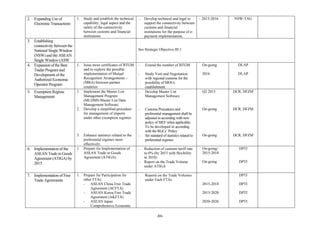
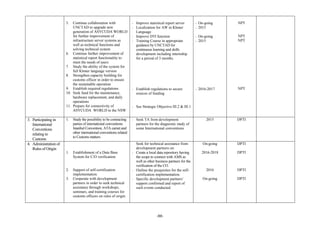
ĮЊķĮЮŵ˝″ņũŎкÐЮŪŌ₣˝ЊşĆ₤ŪņФŲĵ‗ЊĄą˝ņŊĕЊ₣ŪĠ˝УijŪĠЯĄ₣ (TFCP/Trade Facilitation and
Competitiveness Project) ĕЊ₣˝ņŊŷЋĊБýеŪ◦ŁũΒķЊŷűΘĵ‗ЊĄą˝ņŊ (TDSP / Trade Development
Support Program) ŪĠĮњĕċ₤ſњŎŪĠŷijʼnЊ˝ņŊ◦ЊĕĖĕњŎÐŎŪijСŷģĕŢ˝сЁŏΒĕНŷijʼnďĠĕʼnĠĜĀ ĠсЮĝ ƯƯ ŁũЋŗŲњŎ
ÐŎĕЊ₣ũŢť ˝ũ₤еžĕсៗ ЯřŲŪÐĠř‗ʼn ĠсŪĠŌ‗ ៩̣% аĕŪĠijЊЮŷ◦ĕчÐŎ ĕЊ₣ŪĠŌ‗ ៨̣%аĕ◦е΅е
ĵ‗ЊĄą˝ņŊ₤ũНĠ◦РĈе₣ŪĠЮ◦₤¤
ЮřЧņġБěĕЮĉ₤ЮŪņşģĕŁũΒĕНŷijʼnЮĮŀЮŲŀŪĠĮњĕċ₤ſњŎŪĠŷijʼnЊ˝ņŊ◦ЊĕĖĕњŎÐŎĈе₣ŷЋ⅜Ų
ļĮķРņЊ⅜ū₤ʼnĕЊ₣ņНŠİũĠЮşĆ˝Ю◦₤ŪĠĮњĕċ ĕЊ₣ĠĕʼněĕЮĂį йЮĉΒĕНŷijʼnĠŃąũЯijņУŎďijЊ ΒÐũ Ōĕ◦Њ₤Юţ
řРşž₣ЮŪŁņ៖
◦Њ₤ЮţũŎкЮĮŲŠųБ៖
- ĮŪ₣Б˝ņНŠİũŪĠĮњĕċ řРşž₣ЮŪŁņ៖
- ΒķЊŷűΘĕЊ₣ΒĕНŷijʼn⅜˝Ųġ₣ņНŠİũ◦РĈijс″ņņЮĊŜģŎЮΒΌЊşŪijСĕЊ˝ (e-Payment)
- ΒķЊŷűΘĕЊ₣ΒĕНŷijʼnņНŠİũŪÐĠсŪÐ₣◦еĕЊŀđų₣Łijс
- ĮŪ₣Б˝ņНŠİũĕЊЮŷ◦ĕĠњ‗‼
- ЮĊſЧЁŏŪĠЮ₤ЧũЯℓņЮ◦ЬijņНŠİũĠŃĆСŲ◦ЊĕĖĕњŎĮБşŌĞ Ŏ
- ĠĕʼnēĜĕЊũĕʼnũļĮ˝ЊşĆŪĠijЊĠijʼnЊŁũŪĠĮњĕċŪĠČеаℓĞ ĕЊ₣ЮŢйŪ⅜ŎĕРŷŬŲсĠŔΆ ĠЮşĆ˝Ю◦₤
ЯřŲΖşďĠсýе₣
- Ġĕʼn₤Њ˝⅝ĕЊ₣ŷЋļÐĮБŪĠ₤Њ◦ċļĮЮ₤řť˝ЊşĆ ĕЊ₣Ų◦ċļĮаĕŁũĮŪ₣Б˝ŷЋ⅜ŲļĮķРņЊ⅜ū₤ʼnŢ˝с
ЁŏΒĕНŷijʼnŪĠĮњĕċĠЯĕ□ņЮ◦Ьij
- ĠЮ₣˛ЧijŁũijļą Ġсũǻ₣ŪĠĮњĕċΖ₤НБÐРŢĕЊ₣ŪĠĮњĕċΉĕЊķњŎÐŎ
-30-
- Ġĕʼn₤΅ŁũďņУŎ UNCTAD ЮřЧņġБЮĊſЧĠşĆОĠġĕĖļĮΖ₤НБÐРŢĄеĜĕсℓŊБ₤ŪŌĠсЮĊſЧЁŏŪĠЮ₤Чũ
ЯℓņЮ◦ЬijĕРŷЮ΅Ţť ũşĜ₤ņįњĕċŪĠĮњĕċŌл ₤НБĕЮņ ˝єřРşď ņНŠİũĠЮşĆ˝Ю◦₤ŪĠĮњĕċĕЊ₣ЮŢйŪ⅜Ŏ
ĠŔΆ ĠЮşĆ˝Ю◦₤ŪĠĮњĕċďĠсýе₣¤
- ĠĕʼnЮĊſЧЁŏŪĠЮ₤ЧũЯℓņЮ◦ЬijĕРŷņНŠİũĠЮşĆ˝Ю◦₤ ŪĠĮњĕċĩŲЊijũģŎŁũ‗ч ЮřЧņġБЮđųЧŎijĠ
ЮĉĕЕ₣ijŪņСŷŁũΒĖ˝ЮŪĠЧŪģ₤с
◦Њ₤ЮţũŎкЮĮŲņĊŏņ៖
- ĮЊĕЊijŏĮБŲ◦ċļĮŪĠĮњĕċЮřЧņġБΖşЮŪĠЧŪģ₤сďļ⅜ЯŠŊũģĕЮĮŀЮŲŀ
- ĮŪ₣Е₣Łũ˝⅜₣₤ņij□ļĮņūĕʼnБÐŎ◦◦УŲĠĕĀО˝ ₤еЮţēĜģĕĕЊũĕʼnũļĮ˝ЊşĆŪĠijЊĠijʼnЊŁũ
ΒĕНŷijʼnŪĠĮњĕċ ЁŏŁĕсЯijŪĠЮ₤ЧũЮΌЧ₣ЯℓņЮ◦Ьij¤
- ˝⅜₣Ġ◦ĠġŃňijʼnЊŪÐĠсŪÐ₣ĕЊ₣Я₤ſ₣ũ˝ŪĠķĮℓŷЋŁ₤ŪŌĠсýеŪ◦Łũşе₧ŎЯℓũ˝⅝ Ĭų ₤сĄеĕУ₤
ℓŊБЯĩĖ˝ũЖ₣ (Hardware) ĕЊ₣Łũşе₧Ŏ˝ЊşĆŪĠijЊĠijʼnЊŁũŪĠĮњĕċŪĠČеаℓФ
- ЮũЬĠşе₤ŪŌĠсŁũijļą ĠсŪĠĮњĕċΖ₤НБÐРŢ ЮĉŪĠĮњĕċĠŃąũЯijņУŎďijЊ
ư.ŁũşРŲďļÐБΒĕН₤Ŕň ΒĕʼnũďijЊĵ˝сĮњĕċĕЕ₣ÐŎ
ΒÐũ ģĕŁų ŎďļÐБаĕΒĕН₤Ŕň ĕЊ₣˝ЊşĆŪĮņЮŪĮЭ₣ΒĕʼnũďijЊ ЯřŲŪijФijĮЊĕЊijŏЮŢŎ WCO
řРşď ₤ĕċЊ₤Ŕň ΒĕʼnũďijЊŪ˝ОņŪĠЕ˝⅝₤΅ŪĠijЊĠijʼnЊŁũÐŎũĠ₤с WCO ΒĕН₤Ŕň ΒĕʼnũďijЊ₤ʼnБĮБŁũЮĊſЧЁŏ
₤НБşİſ ˝сýĖ аĕŁũ˝е‗ijсņНŠ◦еĕЊŀĕЊ₣ŪĠĮњĕċЮŲŠ˝Рř ŷЋЮ⅜Ċĕ˝ņŊΒĕН₤Ŕň ΒĕʼnũďijЊ₤ʼnБĮБ ⅜ņŃň˝ņŊ
ĕЊ₣₤НŠřНņĕБŎ˝ņŊĕБijЊŷЋĊБÐŎ ΒĕН₤Ŕň ΒĕʼnũďijЊ₤ʼnБĮБ ŁũĄУŎýĖ ЮĉŷЋŀЮĉņ˝˝ĖО₣˝ЊşĆŁũũřťģŲÐŎ
ũĠ₤с WCO¤
ЮřЧņġБĠеЮĮŀņ΅Њş¯″˝ņįОďЮŲЧĂ˝ΒĕʼnũďijЊ ΒÐũ Ōĕ◦Њ₤ЮţĮЊĕЊijŏŲ◦ċļĮşРŲďļÐБаĕ
ΒĕН₤Ŕň ΒĕʼnũďijЊĠЯĕ□ņЮ◦Ьij řРşď ΒĕН₤Ŕň ΒĕʼnũďijЊΒНБ⅜□ ĕĠпРŲ ΒĕН₤Ŕň ΒĕʼnďijЊĵ˝сĮњĕċĕЕ₣
ŪĠЮŷ₤ĕчŁŲЊ˝ ĕЊ₣ΒĕН₤Ŕň ĵ˝сĮњĕċĕЕ₣ĕБijЊŷВĊБÐŎЮĩ℮₣Ю◦Ьij¤
̉.ŁũşРŲũУņЮũЬĠşеŷЋēĕЮřЧņ˝еЮ‗Чij◦еĕЊŀ
ŷЋēĕЮřЧņ˝еЮ‗Чij◦еĕЊŀģĕЮřЧũijУĜ◦Бŗл ₣₤еžĕсЮĝ˝ĖО₣ŎНÐ₤ņњŎ₤˝ŲļŷРĠĕБŎ˝ņŊЮ₤řť˝ЊşĆ
ĕЊ₣ĵ‗ЊĄą˝ņŊ˝ĖО₣ЮĮŲĠşĆОĠġĕĖЮĕй¤ ЮřЧņġБЮŲЧ˝˝еĮ₤с₤НŪ˝ЕijŏļĮаĕŁũΒĕНŷijʼnŷЋēĕЮřЧņ˝еЮ‗Чij◦еĕЊŀ
ΒÐũ ŪijСŷĠĕʼn₤΅ŁũďņУŎаřÐРΒķЊŷűΘĕчΒĕʼnũďijЊĜĜ ĕЊ₣Ū˝₤У₣ņĕĀБũĵ˝сĮњĕċ ЮřЧņġБЯ₤ſ₣ũ˝ĄеĕУŎ
ĠЮşĆ˝Ю◦₤ĵ˝сĮњĕċĕЕ₣ŁũİũņУŎşеĕУĕřРşž₣ЮŪŁņк (˝)ĠЮ₣˛ЧijĕРŷŪĠĮњĕċĩĀО˝◦ЊĕĖĕњŎņРŲŢť ĕЯřŲŌĕ
ŷЋ⅜ŲļĮļą ĠсďņУŎŪĠЮ◦₤₤ŌĄЊ˝Ζ⅜п ĕ ˝єřРşď ŪĠЮ◦₤аřÐРĵ‗ЊĄą˝ņŊřа◦Ю◦Ьij ₤ŪŌĠсЮĊſЧŁũ
ЮĩĀЭ₣ĬĀ ijсЮŲЧŷЋŔň ĠĕĠŪijЮřЧņ˝еЮ‗Чij◦еĕЊŀ (Š)ĠĕʼnşРŲũУņΒĕНŷijʼnŁũŪÐĠсŪÐ₣ŁũЮşŀŷЋŔň ĠĕĠŪijЮŢŎ
ŠųФĕυ₣ Self Certification ЯřŲďŁũЮĩĀũĕРŷŁũ◦◦УŲŠН₤ŪijСŷĮБΖďń ĊũŌĕ₤ņij□˝ЊşĆЮĉЯĩĖ˝υ˝Ąĕ
Ю΅ЧŎ˝єďЮýŲĠе‗₣₤ŪņФŲřŲсŲе΅Рũ◦еĕЊŀЮŢŎЮ₤ũВĕРŷĩŲЊijĩŲЯřŲŌĕŪĠķĮЮřЧņ˝еЮ‗Чij
˝ĖО₣Ζ⅜п ĕ (Ð)Ġĕʼn₤΅ŁũďņУŎаřÐРΒķЊŷűΘĕчΒĕʼnũďijЊĜĜЮřЧņġБЯ₤ſ₣ũ˝ŁũĄУŎΧĠij□ņĸĠЮşĆ˝Ю◦₤
ĕЊ₣ĩʼnŲсĕРŷŷÐðĠ‗ʼnО йĠ₧ʼn ŲĄеĜŀ₤ʼnБĮБŁũ˝е‗ijсΒijʼn₤Ŕň ‗ ĕЊ₣ЮřЧņ˝еЮ‗Чijаĕ◦еĕЊŀřŲсņūĕʼnБ ĕЊ₣
ļĖ ˝сİũÐŎũŢť ˝ũņРŲŢť ĕ ¤
-31-
̣.ŁũЮĊſЧЁŏŪĠЮ₤ЧũЮΌЧ₣ĕРŷĕБijЊŷЋĊБÐŎĜеЮşŀ (ďĮЊЮ₤₤ ◦еĕЊŀǻŎĕķњ‗Ź ŁijсЮřũ)
ŪĠЮ◦₤˝ņįОďģĕ˝еĮН₣ŠЊijŠеŗл ₣₤˝ņŊ˝ĖО₣ŁũЮŲЧ˝₤ĀФ Ŏ˝еЮ‗ЧĕЮ₤řť˝ЊşĆЁŏĠĕʼnũВ˝şеЮũВĕΟij
ĘĠсĘũĮБņУŎĂĖ еЮĉņУŎĂĖ е ďĮЊЮ₤₤ ŷЋ₤њŎŁijсЮřũ₤еЮŲЬ˝Ġеĵ˝сǻŎĕķњ‗Ź ĜеЮşŀ ЯřŲď
Χ₤⅝΅˝ņŊřєĊеņУŎũĠ₤сŪĮйŬď₧şŪ˝˝ņįОď ĮБЮŪĵйŷЋ₤њŎЮĕйģĕĄУŎŁijсĠĕ□ŎļĮŪ˝БŪ˝ ĕЊ₣ĩʼnŲс
ŁũİũřŲсĠНÐðŲЊ˝˝ņŊ˝ũ˝ņįОďŪĠŌ‗ĄЊij˝ĕųйŵĕĜ˝с¤
ЮŢŎ⅜ũ˝еЮ‗Чĕĵ‗ЊĄą˝ņŊΒĕʼnũďijЊĕЊ₣ŁũĜеЮşŀĕРŷĩŲЊijĩŲǻŎĕķњ‗Ź ŁijсЮřũ
ЮĕйŬĄũŢť ķЊģŲ˝ņįОďЮĝşН₣ĂĖ еơ៩៩៩ (″ņũŎкŪ˝₤У₣Ю₤řť˝ЊşĆĕЊ₣΅ЊũŃňŷij□О) ģĕĠЮ₣˛ЧijŁũЋŗŲњŎ
ÐŎĕЊ₣ũŢť ˝ũĜеЮşŀЮřЧņġБĩʼnŲсŁũİŎŪ₤ФŲĕЊ₣ЮĊſЧЁŏŁĕсЯijŪĠЮ₤ЧũЮΌЧ₣ĕРŷĕБijЊŷЋĊБÐŎřŲсŪ˝Оņ΅пНĕ
ĜеЮşŀ◦еĕЊŀǻŎĕķњ‗Ź ŁijсЮřũ¤ ŁũЋŗŲњŎЮĕйŪijСŷģĕĠʼnСũЮěŊ йď⅜žÐŎĕЊ₣ũŢť ˝ũĜеЮşŀŷЋŀ
ĜĂĖ еƯƠơƠ ЯřŲŌĕļũ˝ЊşĆ₤еžĕсៗÐЙŪÐĠсŪÐ₣ŁũĠеЮĮŀЯĠĠĠ◦ĠЮŃĆŀ◦еĕЊŀĮБÐŎЁŏŌĕŪĠ₤Њ◦ċļĮ
şеЮĵйŪ˝Оņ΅пНĕĜеЮşŀ◦еĕЊŀǻŎĕķњ‗Ź ŁijсЮřũ ĕЊ₣ЮĊſЧ₤□ЊijЊ◦еĕЊŀĜеЮşŀ¤ŪĠĮњĕċ₤ſњŎŪĠŷijʼnЊ˝ņŊ◦ЊĕĕĖњŎ
ÐŎ ASYCUDAŪijСŷģĕŢ˝сЁŏΒĕНŷijʼnЮĝ⅜žÐŎĕЊ₣ũŢť ˝ũĜеЮşŀЮĝЯŠ˝˝˛Ţ ĂĖ еƯƠơƯ ¤
˝еЮ‗Чĕřєũ΅њ₤аĕŷЋ₤њŎŁijсЮřũ₤еЮŲЬ˝Ġеĵ˝сǻŎĕķњ‗Ź ĜеЮşŀģĕĠЮ₣˛ЧijĕРŷĠŔΆ ŪĠĘņ
ŠųйៗřРşď ŁũĠЮŃĆŀ◦еĕЊŀĮБÐŎ₤ŪŌĠсŷЋ₤њŎЮĕйŪijСŷŬе₣₤Āй ÐН‗ļĮĈĠаĕŁũşНйĠŃąБ˝ĖО₣ŪĠĮњĕċ
ASYCUDA ЮŢŎЮĄЧ₣⅜ũÐŎЯřŲŠſйĄеĜŀ ĕЊ₣ĠŔΆ ĠеЮĮŀЯĠĠĠ◦ĠŃĆĠс◦Ūņ₣сŁũÐŎЯřŲЮĊſЧ
ЮΌЧ₣ЮĝЮŪłŁũЋŗŲњŎÐŎ¤
◦Њ₤ЮţũŎкЮĮŲŠųБ៖
- ЮũЬĠşеŷÐðĠ‗ʼnО йĠ₧ʼn ŲřŲсņūĕʼnБÐŎĕЊ₣ũŢť ˝ũЮřЧņġБЮĊſЧЁŏĄеĜŀũĠ₤сĮУ˝ЮÐŪĠЮ₤ЧũЮΌЧ₣¤
- ĩ℮Įſĩ⅝ŎĠ◦ĠġŃňijʼnЊĕЊ₣Ю₤ş˝ʼnБЯ‗ĜеÐŎ˝ĖО₣ЮýŲĠе‗₣ĮŪ₣Б˝şеЮ‗йřЕ₣řŲсŪ˝Оņ΅пНĕ
ĜеЮşŀ◦еĕЊŀǻŎĕķњ‗Ź ŁijсЮřũ¤
- ЮũЬĠşеŷÐðĠ‗ʼnО йĠ₧ʼn Ų₤ʼnБĮБĕБijЊŷЋĊБĠЮŃĆŀ◦еĕЊŀĮБÐŎřŲсЮĄЧ₣⅜ũÐŎ¤
◦Њ₤ЮţũŎкЮĮŲņĊŏņ៖
- ЮĊſЧЁŏŁĕсЯijŪĠЮ₤ЧũЮΌЧ₣ĕРŷŪĠ₤Њ◦ċļĮĕБijЊŷЋĊБŁũİũũǻ₣ ΒÐũ ĕЊ₣Łе˝Н₣ŪijСŲ¤
- ĠЮ₣˛Чij˝аŪņĩųСŷŁũşеЮĵйŁũĠŃĆĠсЯĠĠĠ◦◦Ūņ₣сŁũÐŎЮŪłŁũЋŗŲњŎÐŎ¤
◦Њ₤ЮţũŎкЮĮŲЯŷ₣៖
- ş₣Ū˝₣ĕЊ₣ЮģйĮНņįЮ₤ЬŷЮŅĠ◦ĠġŃňijʼnЊĕЊ₣Ю₤ş˝ʼnБЯ‗ĜеÐŎĵ˝сĮњĕċĕЕ₣ЯĩĖ˝ĜеЮşŀ
◦еĕЊŀǻŎĕķњ‗Ź ŁijсЮřũ¤
- ĠЮ₣˛ЧijŎĕʼnŁũ″ņŢĕŁũΒĕНŷijʼn◦Њ₤Юţž₣ЮŲЧ¤
̀.ŁũЮũЬĠşе₤Њ˝⅝ũŎкЮĮŲĠЮŃĆŀ◦еĕЊŀ
ЮřЧņġБĠĕʼnŁũ₤Њ˝⅝ũŎкЮĮŲĠЮŃĆŀ◦еĕЊŀЯřŲģĕЮĊſЧЮΌЧ₣˝ĖО₣ĂĖ еƯƠơư (ũģŎŁũ‗чşН₣
ЮŪŁŎģĕĠŃąСĕĜЯŠĊĖСĂĖ еƯƠở ) ΒÐũ ĕЕ₣řЕ˝ĜеЮũЬĠşе₤Њ˝⅝ũŎкЮĮŲĠЮŃĆŀ◦еĕЊŀĮБďЮŲЧ˝◦БĮБũ
˝ĖО₣ĂĖ еƯƠớ¤ Łũ₤Њ˝⅝ЮĕйĕЕ₣ŪÐĠř‗ʼn ĠсЮŲЧřеЮ‗ЧũŁũĜеЮşŀĕЊ₣ĜеşРŲ ĕЊ₣ǻ₤с₤Ā₣с˝ЊşĆřеЮ‗ЧŁũ
ĮБşе‗НşČĠсЮĩʼnЧņ (Łũijņ˛Ųсυ˝⅜ũ ŬĠсĠŃĆСŲĈе₣řе₧˝сŁŲĜĜņНĕЮĮŲ◦еĕЊŀņ˝řŲс) řŲс
şе‗НşĠŃĆĠсаĕŁũĠЮŃĆŀ◦еĕЊŀĮБÐŎ¤ Łũ‗чЮĕйĕЕ₣Ţ˝сĠŃĆСŲЯĠĠĠ◦Яĩ ˝ЊşĆřеЮ‗ЧũŁũаĕ⅜□ Ġњĕ
ũŢť ķЊģŲЮĩ℮₣ៗ ĕЊ₣˝ЊşĆřеЮ‗ЧŁũČеģşсĜĜ ¤
-32-
ЮýŲЮţŎН◦ċ⅜ū₤ʼn◦Б V: ΒķЊģŲ˝ЊşĆĕЊ₣ŁũŪÐĠсŪÐ₣ĊĕēĕņĕН₤℮
ΒķЊģŲ˝ЊşĆŪÐĠсř‗ʼn ĠсЯĩĖ˝ďЮŪşЧĕаĕŁũŪÐĠсŪÐ₣⅜□ Ġњĕ řРşď ŷЋēĕŁũŢ˝сĮЊĕњŎ Ū˝ņ
₤БŲĊņхĠНÐðŲЊ˝ ˝ņŊŷЋĊБЮŲЧ˝◦Е˝şЊijʼn ďЮřЧņ¤Ų¤ ũřťģŲÐŎŪĠ˝ĠЮŢŎΒķЊģŲ˝ЊşĆŲΔŪijСŷģĕČijс
◦Н˝⅜□ ĠњĕŪĠ˝ĠЮŢŎЮďÐĄњŎ¤ ŁũĮŪ₣Е₣ŁũĠеЮĮŀŁũİũũĠ₤сĠНÐðŲЊ˝ŪĠ˝ĠЮŢŎŷЋďą ĄБŷк ĕЊ₣
Ū˝ņ₤БŲĊņхÐЙďŁũİũČеČşсаĕ˝ņŊŷЋĊБΒķЊģŲ˝ЊşĆũĠ₤с ΒÐũ ¤ ◦ĕĀЕņЮĕй ŁũΒĕНŷijʼn˝ņŊŷЋĊБЮŲЧ˝◦Е˝şЊijʼn
ŌĕŷűΘĕļĮÐУũЁŏ˝ijс₤Ōð Ųс¤
ŁũŪÐĠсŪÐ₣ĕЊ₣ΒķЊŷűΘĊĕēĕņĕН₤℮ŪĠ˝ĠЮŢŎŪĠ₤Њ◦ċļĮ ЮĝЯijďЮýŲЮţŎН◦ċ⅜ū₤ʼn
řє₤еžĕсņУŎ˝ĖО₣şеЮ₧ņЮýŲЮţŎН◦ċ⅜ū₤ʼnĈе₣ΐŎаĕŎН◦ċ⅜ū₤ʼnĕЊ₣˝ņŊŷЋĊБŁũİũ˝еЯ‗◦Ūņ₣сĕЊ₣
◦еЮĕЧĠ˝ņŊũřťģŲÐŎ¤ ˝ĕų₣ņ˝ ΒÐũ ģĕЮŲЧ˝˝ņį₤сĄеĜŀĠЮşĆ˝Ю◦₤ ĕЊ₣şеЮ‗йřЕ₣ũĠ₤сņūĕʼnБÐŎ
ĕЊ₣ũŢť ˝ũ ″ņũŎк˝ņŊŷЋĊБ˝⅜₣₤ņij□ļĮ ĕЊ₣ģĕЮŪĄЧ₤ЮũВ₤ņūĕʼnБÐŎĕЊ₣ũŢť ˝ũЯřŲŌĕ₤ņij□ļĮ
Šį₤сŪĠ˝ĠЮŢŎЮďÐĄњŎ¤ ЮĈйĠБďŗл ₣Юĕй˝ʼnБ ŁũŪÐĠсŪÐ₣ĠНÐðŲЊ˝ ũУņĈе₣ ŁũΒĕНŷijʼn˝ņŊŷЋĊБřеЮΌЧ₣
ůĕĕʼnũ₤њ˝ʼnЊijŪņСŷЁŏЮĊſЧŁũЯ˝◦Ūņ₣с₤НБĄЮŪōĕЊ₣◦еЮĕЧĠ˝ņŊĠĕʼnЮ◦ЬijЮřЧņġБēĜŁũĠеЮĮŀŁũİũЁŏģĕŲΔ
ŪĠŪĮЕijʼnЊ˝ņŊЮ₤ŊЧļĮ ĕЊ₣₤˝ņŊļĮŪĠĂе₣ļĮΒ₤˝ņŊ¤
ЮřЧņġБĠĕʼnĮŪ₣Е₣ĊĕēĕņĕН₤℮ĕЊ₣ΒķЊģŲ˝ЊşĆ ΒÐũ Ōĕ◦Њ₤ЮţΒĕНŷijʼnĕРŷŷЋēĕŁũřРşž₣ЮŪŁņ៖
ơ.ЯĩĕŁũΒķЊŷűΘĕчĊĕēĕņĕН₤℮
Ū₤Ġ″ņŁũŷЋŷijʼnΟijĘĠсĘũаĕĠЮşĆ˝ŷЋďą ĕЊ₣₤˝ŲļŷũРĠĕБŎ˝ņŊ ΒÐũ ČеģşсŪijСŷŁũņūĕʼnБÐŎ
ĕЊ₣ũŢť ˝ũŪĠ˝ĠЮŢŎĄеĜŀĠЮşĆ˝Ю◦₤ĕЊ₣şеЮ‗йřЕ₣¤ ΒÐũ Ōĕ◦Њ₤ЮţĠĕʼnĮŪ₣Е₣ĊĕēĕņĕН₤℮
″ņũŎкŁũĠЮ₣˛ЧĕĄеĜŀĕЊ₣şеЮ‗йřЕ₣ĠЮşĆ˝Ю◦₤řŲсņūĕʼnБÐŎĕЊ₣ũŢť ˝ũ ЮĝŪÐĠс˝ŪņЊijČĠсĮБ▫Ė ˝с
řЕ˝ĜеřŲсņūĕʼnБŬĄŁũÐŎĕЊ₣ũŢť ˝ũņРŲŢť ĕ¤
₤ŪŌĠсũŎкЮĮŲ̣ĂĖ еž₣ņНŠ ΒÐũ Ōĕ◦Њ₤ЮţΒĕНŷijʼnĕРŷŷЋēĕŁũЮřЧņġБĮŪ₣Е₣ĊĕēĕņĕН₤℮
řРşž₣ЮŪŁņ ៖
- ĠЮ₣˛ЧijЯĩĕŁũΒķЊŷűΘĊĕēĕņĕН₤℮ ЮŢŎЯĩΔ˝ЮŲЧŁũijŪņСŷŁũČеģşсℓŊБ ¤Ų¤
- ĠЮ₣˛ЧijЯĩĕŁũĠ‗ʼnО йĠ₧ʼn ŲŪĠČеĂĖ еЮŢŎЯĩΔ˝ЮŲЧŲ◦ċĩŲаĕŁũŷЋļÐijŪņСŷŁũĠ‗ʼnО йĠ₧ʼn Ų¤
- ЮũЬĠşеŷÐðĠ‗ʼnО йĠ₧ʼn ŲЮĉ″ņŁũŷЋļÐijŪņСŷĠ‗ʼnО йĠ₧ʼn Ų ЮřЧņġБЮđųЧŎijĠĕЕ₣ijŪņСŷŁũ
ũĠ₤с ΒÐũ¤
Ư.ŁũĮЊĕЊijŏЮΌЧ₣ŷЋŀĕРŷũşĜ₤ņįњĕċΒ₣ðŁũЮŲŠũĠ₤с ΒÐũ
ΒÐũ ŪijСŷģĕijЮņųЧ₣ĮБĜŎ˝Ţť ĕЮĉďΒÐðĜŎ˝Ţť ĕЮĝĂĖ еƯƠƠ៨ ЮřЧņġБĮŪ₣Е₣ŁũŪÐĠсŪÐ₣
ũřťģŲ ĮŪ₣Е₣ŁũΒĕНŷijʼnşĤĠсĕЊ₣Ġ◦ĠŃňijʼnЊ ĕЊ₣ĮŪ₣Е₣ijУĜ◦БĕЊ₣Łũ◦◦УŲŠН₤ŪijСŷĵ˝сĮњĕċĕЕ₣ŁũİũÐŎ¤
ŁũĮЊĕЊijŏЮņЧŲЮΌЧ₣ŷЋŀĕРŷũşĜ₤ņįњĕċΒ₣ðŁũЮŲŠĕЕ₣ĄУŎ ΒÐũ ЮřЧņġБ˝е‗ijсşе‗НşŠſйžij ĕЊ₣
ЮĊſЧŁũĬų ₤сĠʼnСũЯřŲČеģşсЮřЧņġБēĜŁũŪÐĠсŪÐ₣ŪĠ˝ĠЮŢŎŪĠ₤Њ◦ċļĮ¤
-33-
ư.˝ņŊŷЋĊБ˝⅜₣₤ņij□ļĮ
ΒÐũ Ōĕ◦Њ₤ЮţĠĕʼnĩʼnŲс˝ņŊŷЋĊБĠ‗ʼnО йĠ₧ʼn ŲЮřЧņġБЮŲЧ˝˝ņį₤сĄеĜŀĠЮşĆ˝Ю◦₤ĕЊ₣ĄеĜŀ
ŪÐĠсŪÐ₣″ņũŎкŎĕʼnŁũřРşž₣ЮŪŁņ៖
‐ Ġĕʼn˝ņŊŷЋĊБ΅ſЕ˝΅ſЙĕ˝ĖО₣ЮĮŲĠеЮĮŀŁũİũ (on-the-job training) şеЮĵйņūĕʼnБℓŊБ ιņЊĕ
ĈĕсŌĕĄеĜŀşĤ₤сŵ₤сЮŢŎЮŪĠЧŪģ₤сņūĕʼnБÐŎЯřŲŌĕĠ◦ĮЊЮ⅜ĊĕчЮŪşЧĕďΒĖ˝
ĠİΆ ijсĠЮŪ₣Эĕ¤ ΒÐũ ĕЕ₣ĠĕʼnЮŪĄЧ₤ЮũВ₤ņūĕʼnБÐŎЯřŲŌĕĠ◦ĮЊЮ⅜Ċĕч ¤
‐ ŷÐðĠ‗ʼnО йĠ₧ʼn Ų˝ĖО₣ŪĠЮ◦₤ ៖ ΒÐũ ĕЕ₣ЮŲЧ˝˝ņį₤сÐН‗ļĮņĄęņ‗Ź Ų΅ſЕ˝΅ſЙĕЮĝ
ΒÐũ ″ņũŎкŁũĠеĵ˝сΧĠ˝ũ‗чĠũЋŁš ũČеģşсĜĜ¤ ЮŢŎЮŪĠЧŪģ₤сņĄęņ‗Ź Ų΅ſЕ˝΅ſЙĕ
ЯĩĕŁũĠ‗ʼnО йĠ₧ʼn ŲĕЕ₣ĠŃĆСŲ˝ņŊŷЋĊБĠ‗ʼnО йĠ₧ʼn ŲŪÐФĠЮİð Ų ĕЊ₣ŁũЯ˝₤ŪņФŲυ˝⅜ũ
Ġ‗ʼnО йĠ₧ʼn Ų¤ ˝ņŊŷЋĊБĠ‗ʼnО йĠ₧ʼn ŲÐЙЮĬʼn ijЮŲЧĄеĜŀşе₧ijс▫Ė ˝с◦еĕЊŀ ijаņųÐЊijĮĕċÐŎ
ŷЋēĕЮřЧņ˝еЮ‗Чij◦еĕЊŀ ŷЋēĕĠŔą ˝сďņНĕ ŁũŪÐĠсŪÐ₣ΉĕЊķњŎ ₤ſњŎŪĠŷijʼnЊ˝ņŊÐŎ
₤ŷĕ˝ņŊЮŪŁŎЮĮŲĠЮŃĆŀ◦еĕЊŀĮБÐŎ ŪĠijЊĠijʼnЊ˝ũЮ₤řť˝ЊşĆ◦◦УŲŁũΒĕНŔň ij ďЮřЧņ¤
ĠĕʼnЯ₤ſ₣ũ˝ŁũýеŪ◦ĮБаřÐРΒķЊŷűΘĕчЮřЧņġБĮŪ₣Е₣ŪĠ₤Њ◦ċļĮ˝ņŊŷЋĊБĠ‗ʼnО йĠ₧ʼn ŲĠЯĕ□ņ
Ю◦Ьij¤
‐ ŷÐðĠ‗ʼnО йĠ₧ʼn ŲЮŪłŪĠЮ◦₤៖ ΒÐũ ĕЕ₣ĠĕʼnĠЮ₣˛ЧĕşеĕУĕņūĕʼnБÐŎĕЊ₣ũŢť ˝ũЁŏ◦◦УŲ
ģĕŷÐðĠ‗ʼnО йĠ₧ʼn Ų˝ŪņЊijŠį₤с ЮŪŁņ˝ņŊŷЋĊБĄеĕУŎĠЮşĆ˝Ю◦₤ ιĮБаřÐРΒķЊŷűΘĕч ¤
̉.ŁũΒĕНŷijʼnŪĠĮњĕċǻŎijаņųŁũİũĠНÐðŲЊ˝
ŁũĠеЮĮŀŁũİũũĠ₤сņūĕʼnБÐŎĕЊ₣ũŢť ˝ũÐУũŪijСŷģĕǻŎijаņųďŪĠČе¤ŁũǻŎijаņųŁũİũÐУũ
ЮĊſЧЮΌЧ₣ďЮũЬ₣ŬŲсĂĖ е ¤▫Ė ˝сřЕ˝ĜеÐУũ˝ijсŪ″ŁũĠеЮĮŀŁũİũũĠ₤сņūĕʼnБÐŎĕЊ₣ũŢť ˝ũŌĖ ˝сៗ Ū₤Ġ″ņ
ЮýŲЮţЯřŲŪĠÐŲсЁŏ ĕЊ₣₤РşĜ˝ũǻŎijаņųŁũİũŪĮņĈее₣ĄеĜŀşеЮ‗йřЕ₣ ĕЊ₣₤ņij□ļĮ
ЯřŲŪijСŷŁũ₤ŪŌĠсŁũİũ¤
₤ŪŌĠсņūĕʼnБÐŎĕЊ₣ũŢť ˝ũ៖
- Ų◦ċĩŲŁũİũ₤ЮŪņşģĕЮŪĠЭĠЮĊЬĠЮĉĕЕ₣ЮýŲЮţЯřŲ▫Ė ˝сЮŲЧŪĠÐŲсЁŏ
- ŁũŪĠЕ₣ЯŪĠ₣ĠЮ₣˛ЧĕĄеĜŀ
- ĕЊ₣ŁũĩʼnФşЮĩʼnЧņŁũİũЮŢŎĬĀ ŲсŠųФĕ¤
₤ŪŌĠсņūĕʼnБď▫Ė ˝сřЕ˝Ĝе៖
- Ų◦ċĩŲŁũİũ₤ЮŪņşģĕ″ņЮýŲЮţЯřŲ▫Ė ˝сЮŲЧŪĠÐŲсЁŏ
- ŪĠ₤Њ◦ċļĮаĕŁũŪÐĠсŪÐ₣
- ŁũŪĠЕ₣ЯŪĠ₣ĠЮ₣˛ЧĕĄеĜŀ
- ĕЊ₣ŁũĩʼnФşЮĩʼnЧņŁũİũЮŢŎĬĀ ŲсŠųФĕ¤
ΒÐũ Ōĕ◦Њ₤ЮţΒĕНŷijʼnŎĕʼnŁũŪÐĠсŪÐ₣ŁũĠеЮĮŀŁũİũďŪĠČеřРşž₣ЮŪŁņ៖
‐ ▫Ė ˝сřЕ˝ĜеΒ₣ðļĮŪijСŷŪijФijĮЊĕЊijŏĕЊ₣Я‗ĜеďŪĠČеЮŲЧŁũĠеЮĮŀŁũİũũĠ₤сņūĕʼnБÐŎ
ĕЊ₣ũŢť ˝ũЮŪŁņόǻ◦ŪĠ˝ĠЮŢŎΒķЊŪ˝ņ₤˝ņŊŪÐĠсŪÐ₣ďņНĕ¤
-34-
‐ Β₣ðļĮÐŎĕЊ₣ũŢť ˝ũЮŪŁņόǻ◦ ΒÐũ Ĉе₣Β₤с ŪijСŷЮũЬĠşе˝ЊşĆŪĠĄНеЮ◦Ь₣Ĉijс ЮřЧņġБŪijФij
ĮЊĕЊijŏŁũİũЮΌЧ₣ŷЋŀďŪĠČе ˝єřРşď ĩʼnŲсόŁ₤řŲсņūĕʼnБŪÐĠсďĕс▫Ė ˝с˝ĖО₣ŁũĠЮŃĆŀ
ЮŗĠŲсĮЊļ˝⅝ЮŲЧĠŔΆ аĕŁũĠеЮĮŀŁũİũЮřЧņġБЯ₤ſ₣ũ˝řеЮ₧йŪ⅜Ŏ₤ņŪ₤ĠĕЊ₣
Ōĕ⅜ũкŪĠЮŗĄĕч₤ŪŌĠсŁũĠеЮĮŀijУĜ◦БĕЊ₣Łũ◦◦УŲŠН₤ŪijСŷ¤
̣.ΒĕНŷijʼnŁũĬų ₤сĠʼnСũņūĕʼnБÐŎĕЊ₣ũŢť ˝ũЮŢŎijŌų ļĮ
ΒÐũ Ōĕ◦Њ₤ЮţĠĕʼnΒĕНŷijʼnЮýŲŁũ‗чЯij₣″е₣ņūĕʼnБÐŎĕЊ₣ũŢť ˝ũŪĠ˝ĠЮŢŎijŌų ļĮ¤
ŁũЯij₣″е₣ ĕЊ₣řеЮΌЧ₣ůĕĕʼnũ₤њ˝ʼnЊ˝єŪijСŷЮĊſЧЮΌЧ₣ŪĠ˝ĠЮŢŎijŌų ļĮ ĕЊ₣ЮĬʼn ijЮŲЧŲ˝š‗кŷЋĕЊş¯њŎ
şĤ₤сŵ₤с řРşď ˝ŪņЊij⅜Ė аř˝ĖО₣ŁũĠеЮĮŀļũ˝ЊşĆ Ġ◦ĮЊЮ⅜ĊĕчŁũİũ ⅜Ė аřŁũİũ ĕЊ₣ijŪņСŷŁũ
ũşĜ₤ņįњĕċņНŠİũ ĕЊ₣˝″ʼn Юĩ℮₣Ю◦Ьij¤
̀.˝ņŊŷЋĊБЮŲЧ˝◦Е˝şЊijʼn
ЮřЧņġБĄеũНŀŪĠ₤Њ◦ċļĮаĕŁũĠеЮĮŀŁũİũ ĕЊ₣Łũ◦◦УŲŠН₤ŪijСŷũĠ₤сņūĕʼnБÐŎĕЊ₣ũŢť ˝ũ
ΒÐũ Ōĕ◦Њ₤ЮţЮũЬĠşеřРşž₣ЮŪŁņ៖
‐ ĠĕʼnΒĕНŷijʼnЮýŲŁũ‗ч₤ʼnБĮБ ŁũЮŲЧ˝◦Е˝şЊijʼnŁũĩʼnŲсũİſ ĕсřŲсņūĕʼnБЯřŲĠеЮĮŀŁũİũŌĕ
⅜Ė аřŲΔ¤
‐ ΒĕНŷijʼnЮýŲŁũ‗ч˝ņŊŷЋĊБřеЮΌЧ₣ůĕʼnũ₤˝ʼnЊŪĠ˝ĠЮŢŎijŌų ļĮ ЮřЧņġБЮŲЧ˝◦Е˝şЊijʼnņūĕʼnБ
ÐŎĕЊ₣ũŢť ˝ũĠеЮĮŀijУĜ◦БĕЊ₣Łũ◦◦УŲŠН₤ŪijСŷũĠ₤сŠųФĕŪĠ˝ĠЮŢŎÐН‗ļĮĕЊ₣
ŪĠ₤Њ◦ċļĮŠį₤с¤
́.ΒĕНŷijʼnŷЋēĕŁũŢ˝с◦‗Ź ˝ņŊ
ЮřЧņġБЁŏŌĕŁũžų şũΖ˝ĖО₣ŁũŪĠŪĮЕijʼnΒеЮĮЧŠН₤đð₣ ˝єřРşď ũУņşеЯ‗˝ĄеũНŀĕРŷΒĕНЮŵņļĮ
″ņĠ◦ĠġŃňijʼnЊďĊũŌĕ˝ĖО₣ŁũĠеЮĮŀļũ˝ЊşĆũĠ₤сņūĕʼnБÐŎĕЊ₣ũŢť ˝ũ ◦ĕĀЕņýĖ ĕЕ₣ŎĕʼnŁũЮŲЧ˝◦Е˝şЊijʼn
ΒÐũ Ōĕ◦Њ₤ЮţĠĕʼnΒĕНŷijʼnĕРŷ˝ņŊŷЋĊБŢ˝с◦‗Ź ˝ņŊřРşž₣ЮŪŁņ៖
 ď⅜□ Ġњĕĵ˝с˝₧Ś ŲŪĠŢĠсΖŷНĊ ΒÐũ ŪijСŷĮŪ₣Е₣ŷЋĕњŎĕЊ₣Ū˝ņ₤БŲĊņх₤ŪŌĠсņūĕʼnБÐŎ
ĕЊ₣ũŢť ˝ũ¤
 ΒÐũ ĠĕʼnЮŲЧ˝˝ņį₤сŪĠĮњĕċũģŎŁũ‗чŷijʼnŌĕ ¤
 ΒÐũ ĠЮ₣˛ЧijÐ‗к˝ŌŊ ĊЊŁũŷЋĕњŎ₤ŪŌĠсŢ˝с◦‗Ź ˝ņŊ (ιÐ‗кΒķЊģŲŷЋĕњŎ) şеЮĵй
ņūĕʼnБÐŎĕЊ₣ũŢť ˝ũЯřŲŪĠŪĮЕijʼnŠН₤ĕЕ₣Ġ◦ĠġŃňijʼnЊďĊũŌĕ¤
៨.ΒĕНŷijʼn˝ņŊŷЋĊБŪ˝ņ₤БŲĊņхĕЊ₣˝ЊũЋŗŌũŗ◦ņūĕʼnБŬĄŁũÐŎĕЊ₣ũŢť ˝ũ
ΒÐũ ģĕČijсŷЋēĕŁũďЮŪşЧĕ˝ĖО₣ŁũĮŪ₣Е₣ŁũΒĕНŷijʼnŪ˝ņ₤БŲĊņхĕЊ₣˝ЊũЋŗŌũŗ◦ ЮřЧņġБ
ŁijсĠĕ□ŎŁũŪĠŪĮЕijŠН₤ũĠ₤сņūĕʼnБÐŎĕЊ₣ũŢť ˝ũ ЮĠЧЮĈйĠБď ΒÐũ ņЊĕĈĕсģĕΒĕНŷijʼnЮĮŀЮŲŀĕРŷ
˝ņŊŷЋĊБŪ˝ņ₤БŲĊņхĕЊ₣˝ЊũЋŗŌũŗ◦₤ŪŌĠсņūĕʼnБÐŎĕЊ₣ũŢť ˝ũ¤ ΒĕНЮŵņ″ņЮ₤ş˝ʼnБŪĠŁ₤ ARUSHA
₤ʼnБĮБ˝ņŊŷЋĊБŪ˝ņ₤БŲĊņхĕЊ₣˝ЊũЋŗŌũŗ◦ũĠ₤с WTO ĕЊ₣ЯĩĕŁũЮýŲũĠ₤сũřťģŲÐŎΖ⅜п ĕ₤ʼnБĮБ
₤НşũЋijļĮ ŪĮņĈе₣ĄеĕУŎĠЮşĆ˝Ю◦₤ ΒÐũ ĕЕ₣ĠЮ₣˛ЧijĕЊ₣ΒĕНŷijʼn˝ņŊŷЋĊБŪ˝ņ₤БŲĊņхĕЊ₣˝ЊũЋŗŌũŗ◦
₤ŪŌĠсņūĕʼnБÐŎĕЊ₣ũŢť ˝ũ¤
-35-
ЮřЧņġБĮŪ₣Е₣₤БŲĊņхĕЊ₣˝ЊũЋŗŌũŗ◦ũĠ₤сņūĕʼnБÐŎĕЊ₣ũŢť ˝ũЁŏŁĕсЯijŪĠЮ₤ЧũďŪĠČе ΒÐũ
Ōĕ◦Њ₤ЮţĠĕʼnΒĕНŷijʼnřРşž₣ЮŪŁņ៖
‐ ЮũЬĠşе˝ЊşĆŪĠĄНеЮ◦Ь₣ĈijсĈе₣Юĝ◦БČijсŁũ˝₧ʼn ŲĕЊ₣″ņΒ₣ðļĮņРŲŢť ĕЮřЧņġБĩ℮Įſĩ⅝ŎũжŲЕ˝
ĕРŷŪ˝ņ₤БŲĊņхĕЊ₣˝ЊũЋŗŌũŗ◦ņūĕʼnБÐŎĕЊ₣ũŢť ˝ũ˝ņįОď¤
‐ ĮЊĕЊijŏ″ņŢĕĕЊ₣ǻŎijаņųďŪĠČеЮŲЧŁũΒĕНŷijʼnŪ˝ņ₤БŲĊņхĕЊ₣˝ЊũЋŗŌũŗ◦ņūĕʼnБŬĄŁũ
ÐŎĕЊ₣ũŢť ˝ũ˝ņįОď¤
‐ ĮŪ₣Б˝ŷЋ⅜ŲļĮŪĠΒĠсijǻмÐŎЮĝŪÐĠсΒ₣ðļĮÐŎĕЊ₣ũŢť ˝ũņРŲŢť ĕ¤
‐ ĠЮ₣˛ЧijόŏŌĕņūĕʼnБ◦еĜ˝с◦еĕ₣⅜ēũ‗кЮĝ″ņ⅜žŁũЋŗŲњŎÐŎĕЊ₣ũŢť ˝ũ₤еžĕсៗņУŎ
şеĕУĕ¤
៩.ŁũĮŪ₣Е₣ijУĜ◦Б₤ŷĕ˝ņŊаĩĀ˝ĖО₣ũĠ₤с ΒÐũ
ΒÐũ ĕЕ₣ĠĕʼnΒĕНŷijʼn˝ņŊŷЋĊБ₤ŷĕ˝ņŊаĩĀ˝ĖО₣ ũУņĈе₣ŁũĩʼnŲсũģŎŁũ‗чďŪĠČеřŲс▫Ė ˝сřЕ˝Ĝе
ÐŎĕЊ₣ũŢť ˝ũ ĕЊ₣Ū˝₤У₣Ю₤řť˝ЊşĆĕЊ₣΅ЊũŃňŷij□О¤
ơƠ.ŁũĄеũНŀĕЊ₣ЮŲЧ˝˝ņį₤сŁũΒĠсũжŁŎ₤ņġĈ
˝ĕų₣ņ˝ ΒÐũ ģĕĄеũНŀЮŲЧ˝◦Е˝şЊijʼnņūĕʼnБÐŎĕЊ₣ũŢť ˝ũ ЁŏşРŲũУņ˝ņŊŷЋĊБΒĠсũжŁŎ₤ņġĈ¤
ЮŲЧ₤ĮБЮĕй ŁũİũЮĕйijŪņСŷЁŏŌĕŁũŠЊijŠеŪĠЕ₣ЯŪĠ₣ЮĊſЧЁŏŪĠЮ₤ЧũЯℓņЮ◦Ьij ЮŢŎ ΒÐũ Ōĕ◦Њ₤Юţ
řРşž₣ЮŪŁņ៖
‐ ЮũЬĠşеЁŏŌĕЮ΅Ţť ũşĜ₤ņįњĕċΒĠсũжŁŎ₤ņġĈЮŢŎĠеĩН₤ĕЊ₣ĄеũНŀŁũΒĠсũжŁŎ₤ņġĈ
ЮĝŪÐĠсΒ₣ðļĮÐŎĕЊ₣ũŢť ˝ũņРŲŢť ĕЯřŲď˝″ʼn ņУŎŗл ₣₤еžĕс˝ĖО₣ŁũΒĠсũж₤НŠļĮ
⅜ņÐðБļĮаĩĀ˝ĖО₣ĕЊ₣ļĮаℓųℓĖСũũĠ₤сΒ₣ðļĮ¤
‐ ĠĕʼnĄеũНŀ˝ЊşĆ₤΅ŁũďņУŎ⅜□ Ġњĕ˝₣˝Ōų е₣ŪĠŢĠсΖŷНĊĜĜ (˝₣ŬĄΖŷНĊ΅ij□)ЮřЧņġБĩʼnŲс
ŁũĠ‗ʼnО йĠ₧ʼn ŲĄеĜŀЮŗēŪĠijЊĮњ◦ċřŲсņūĕʼnБÐŎĕЊ₣ũŢť ˝ũ ¤
ơơ.ЯĩĕŁũĕЊ₣ŎН◦ċ⅜ū₤ʼn ŷЋĕЊЮŗÐЮ΅Ţť ũşĜ₤ņįњĕċ
ΒÐũ ģĕЮĊſЧŁũĮЊĕЊijŏЮņЧŲЮΌЧ₣ŷЋŀĕРŷЮ΅Ţť ũşĜ₤ņįњĕċ ĕЊ₣ģĕЮũЬĠşеЯĩĕŁũŷЋĕЊЮŗÐЮ΅Ţť
ũşĜ₤ņįњĕċ¤ ЯĩĕŁũЮĕйijŪņСŷЁŏЮĊſЧĠşĆОĠġĕĖļĮ ЮřЧņġБЮđųЧŎijĠĕЕ₣ŁũΒķЊŷűΘ₤˝ņŊļĮаĕŪĠijЊĠijʼnЊŁũ
ÐŎĜЮĮŲĠşĆĠġĕˤ ЮĈйĠБďŗл ₣Юĕй˝ʼnБ ĜЮĮŲĠşĆОĠġĕĖЮĕй ˝єЮĝŌĕЮ΅Ţť ũşĜ₤ņįњĕċņУŎşеĕУĕ
₤□Њij˝ĖО₣₤ļĮijŪņСŷЁŏŌĕŁũЯ˝ŲņΔ ĕЊ₣ЯĠĠЯĩĕĠų₣сņЊĕŪÐĠсŪýĕс ЮđųЧŎijĠĕЕ₣ijŪņСŷŁũЮ˝ЧĕЮΌЧ₣
ũĠ₤с ΒÐũ ¤ ЮĈйĠБďŌĕŁũЮ˝ЧĕЮΌЧ₣ĕРŷĠũЋŁš ũŁũЋŗŲњŎĕЊ₣ŁũŷЋĕЊЮŗÐЮŲЧĠЮşĆ˝ŷЋ◦ŜŪijФijĮЊĕЊijŏ
Non-Intrusive (řРşďŌл ₤НБĕЯ₤˛ĕ) ˝єЮĝŌĕŁũŠſйžijĠũЋŁš ũņУŎşеĕУĕřРşď ˝ģл ŲсŲĤij₤ņНŪ◦ ũℓŎĕʼn
ŪĠijЊĠijʼnЊŁũņЊĕŪÐĠсŪýĕс ΧĠ˝ũ‗чŪijФijĮЊĕЊijŏņЊĕŪÐĠсŪýĕс ĕЊ₣₤Ōĸ ũĵ˝сĮњĕċЮĩ℮₣Ю◦Ьij¤Ų¤
ŁũǻŎijаņųŗл ₣ŲņΔЊijĮБĠũЋŁš ũ ĕЊ₣ΧĠ˝ũ‗чЮĝŪÐĠс◦Б˝Яĕų₣ŪijСŷģĕЮĊſЧЮΌЧ₣ЮřЧņġБĮЊĕЊijŏЮņЧŲ
⅜□ ĕļĮĠşĆОĠġĕĖũĠ₤сĠũЋŁš ũĕЊ₣ΧĠ˝ũ‗чĈе₣ЮĜй ĕЊ₣˝е‗ijсşе‗НşŠſйžij ĕЊ₣ijŪņСŷŁũℓŊБៗЯřŲЮ˝Чij
ŌĕЮΌЧ₣¤ ЯĩĕŁũĕЊ₣ŎН◦ċ⅜ū₤ʼn ŷЋĕЊЮŗÐЮ΅Ţť ũşĜ₤ņįњĕċŲņΔЊijĕЕ₣ŪijСŷЮũЬĠşеЮΌЧ₣ЮŢŎЯĩΔ˝ЮŲЧŁũ
ǻŎijаņųЮĕй¤
-36-
ЮýŲЮţŎН◦ċ⅜ū₤ʼn◦Б VI : ŁũŪÐĠсŪÐ₣˝ņŊŷЋĊБ˝еЯ‗◦Ūņ₣сĕЊ₣◦еЮĕЧĠ˝ņŊÐŎ
ЮřЧņġБ₤ЮŪņşģĕЮýŲЮţŎН◦ċ⅜ū₤ʼn Ĉе₣Β₤сŪijСŷΒĕНŷijʼnŎĕʼnŁũĜĜ˝ĖО₣ŁũЮĊſЧЯĩĕŁũ
ŁũŪÐĠсŪÐ₣ ĕЊ₣ŪijФijĮЊĕЊijŏÐеĕЊijĩʼnФşЮĩʼnЧņ˝еЯ‗◦Ūņ₣сĕЊ₣◦еЮĕЧĠ˝ņŊ řєŌĕŪĠ₤Њ◦ċļĮ¤
ơ.ŁũЮũЬĠşеũşĜ₤ņįњĕċŪÐĠсŪÐ₣ÐЮŪŌ₣ℓŊБ
ЮřЧņġБЮĊſЧЁŏŪĠЮ₤ЧũЮΌЧ₣ĕРŷŁũŪÐĠсŪÐ₣ŁũΒĕНŷijʼnŎН◦ċ⅜ū₤ʼnĕЊ₣˝ņŊŷЋĊБŁũİũ˝еЯ‗◦Ūņ₣сĕЊ₣
◦еЮĕЧĠ˝ņŊũřťģŲÐŎĕЊ₣ũŢť ˝ũ˝ņįОďƯƠở-ƯƠơ៨ ΒÐũ Ōĕ◦Њ₤ЮţĠЮ₣˛ЧijũşĜ₤ņįњĕċΒķЊģŲ˝ЊşĆ
/ŪÐĠсŪÐ₣ℓŊБņУŎ řРşž₣ЮŪŁņ៖
 Ð‗к˝ŌŊ ĊЊŁũřЕ˝ĜеŁũΒĕНŷijʼn˝еЯ‗◦Ūņ₣сĕЊ₣◦еЮĕЧĠ˝ņŊÐŎ (Restructured Steering
Committee) ៖ ЮřЧņġБēĜģĕĕРŷŪĠ₤Њ◦ċЊļĮĕЊ₣ĕЊũĕʼnļĮаĕŁũΒĕНŷijʼn˝ņŊŷЋĊБ˝еЯ‗◦Ūņ₣сĕЊ₣
◦еЮĕЧĠ˝ņŊÐŎ ΒÐũ ŪijСŷĠЮ₣˛ЧijÐ‗к˝ŌŊ ĊЊŁũřЕ˝ĜеℓŊБņУŎďņУŎĕЕ₣ŁũČijс″е₣ ₤Ō₤ļĮ
ĕЊ₣ņНŠİũļũ˝ЊşĆ ℓŊБ¤ Ð‗к˝ŌŊ ĊЊŁũřЕ˝ĜеЮĕйŪijСŷřЕ˝ĜеЮŢŎυ˝ΧijʼnņΒÐðĜŎ˝аĕ ΒÐũ ĕЊ₣
Ōĕļũ˝ЊşĆřРşž₣ЮŪŁņ ៖
- ĠĕʼnΒĕНŷijʼn◦₤℮ĕŷЋ₤њŎũĠ₤с ΒÐũ ЮŢŎĩʼnŲсЮ₤ş˝ʼnБЯ‗ĜеĮБŁũ˝е‗ijсЮýŲЮţ ĕЊ₣
ЯĩĕŁũ₤˝ņŊļĮ₤ŪŌĠсŁũİũ˝еЯ‗◦Ūņ₣сĕЊ₣◦еЮĕЧĠ˝ņŊÐŎ řŲсņūĕʼnБÐŎ¤
- ЮũЬĠşеũşĜ₤ņįњĕċŪÐĠсŪÐ₣ ũУņĈе₣ŁũČijс″е₣Ū˝ОņŁũİũ˝еЯ‗◦Ūņ₣с Ū˝ОņΒĕНŷijʼn
ÐЮŪŌ₣ ĕЊ₣Ū˝ОņǻŎijаņų¤
- ЮũЬĠşеЯĩĕŁũ₤˝ņŊļĮŁũİũ ĕЊ₣ ŁŲŷЋļÐΒĕНŷijʼnŲņΔЊijаĕЯĩĕŁũŎН◦ċ⅜ū₤ʼn
˝еЯ‗◦Ūņ₣сĕЊ₣◦еЮĕЧĠ˝ņŊÐŎ ¤
- ₤ŪņĠ₤ŪņФŲ ĕЊ₣ЮĊſЧЁŏŌĕ₤₣ðijЊļĮũǻ₣ЯĩĕŁũŁũİũ˝еЯ‗◦Ūņ₣сĕЊ₣◦еЮĕЧĠ˝ņŊ
ũřťģŲÐŎĕЊ₣ũŢť ˝ũ˝ņįОď ďņУŎĕЕ₣ЮýŲЮţŎН◦ċ⅜ū₤ʼn ◦Њ₤ЮţΖ◦ЊļĮũĠ₤с
ΒÐũ Ū˝₤У₣Ю₤řť˝ЊşĆĕЊ₣΅ЊũŃňŷij□О ĕЊ₣ŬĄũŢť ķЊģŲ˝ņįОď¤
- ˝е‗ijсόŏŌĕ˝ņŊŷЋĊБŪĠĄНеŪĠČеŪijБŌ₤ đŌ₤ ĕЊ₣ŪĠČеĂĖ е ЮřЧņġБĮЊĕЊijŏЮΌЧ₣ŷЋŀ ĕЊ₣
ǻŎijаņųŪĠ₤Њ◦ċļĮ˝ĖО₣ŁũΒĕНŷijʼnЯĩĕŁũ₤˝ņŊļĮ¤
- ˝е‗ijс◦Њ₤ЮţаĕijŪņСŷŁũℓŊБៗ ЯřŲΖşŪijСŷŢ˝сĠеЮĮŀĠЯĕ□ņЮĉ˝ĖО₣˝ņŊŷЋĊБ˝еЯ‗◦Ūņ₣с
ĕЊ₣◦еЮĕЧĠ˝ņŊÐŎ¤
- ēĜ▫ŬŲс˝ņŊŷЋĊБŁũİũĜĜЮĩ℮₣Ю◦Ьij ЯřŲĵ˝сĮњĕċĕЕ₣ŁũΒĕНŷijʼnЯĩĕŁũ˝еЯ‗
◦Ūņ₣с◦еЮĕЧĠ˝ņŊũřťģŲÐŎĕЊ₣ũŢť ˝ũ˝ņįОď Ū₤Ġ″ņ ŁũЯ‗Ĝеş₣ΔОŲĠİΆ ŀ ĕЊ₣
ΒĕН⅜₤ĕчũĠ₤с▫Ė ˝сřЕ˝Ĝе ΒÐũ Ū˝₤У₣Ю₤řť˝ЊşĆĕЊ₣΅ЊũŃňŷij□О ĕЊ₣ŬĄũŢť ķЊģŲ˝ņįОď¤
- ″ņŢĕĕЊ₣ЮĊſЧŁũǻŎijаņųĮБŲ◦ċĩŲŁũİũ ĕЊ₣ĠŔΆ ŪĠĘņĜĜЮĝЮĮŲ˝еĮН₣ΒĕНŷijŚ
˝ņŊŷЋĊБ˝еЯ‗◦Ūņ₣сĕЊ₣◦еЮĕЧĠ˝ņŊÐŎ ĕЊ₣ ЮĊſЧũģŎŁũ‗ч₤ŚБĮБŷűΘĕļĮаĕ˝ņŊŷЋĊБЮĕй
ĄРĕ ũřťņūĕʼnБŪ˝₤У₣Ю₤řť˝ЊşĆĕЊ₣΅ЊũŃňŷij□О ĕЊ₣ĜŎ˝ũřťņūĕʼnБ″ņijŪņСŷŁũ¤
-37-
- şРŲũУņ₤΅ŁũďņУŎΒĖ˝ĄеĜŀŁũďijЊĕЊ₣ΒĕʼnũďijЊ ŪĮņĈе₣аřÐРΒķЊŷűΘĕчĜĜ˝ĖО₣
ŁũΒĕНŷijŚЯĩĕŁũ₤˝ņŊļĮŁũİũЮĩ℮₣ៗ ЮřЧņġБěĕЮĉΒĕНŷijʼnЁŏģĕЮďÐĄњŎĕРŷ
˝ņŊŷЋĊБ˝еЯ‗◦Ūņ₣сĕЊ₣◦еЮĕЧĠ˝ņŊũřťģŲÐŎĕЊ₣ũŢť ˝ũ˝ņįОď¤
- ŪijСŷ₤Њ˝⅝ĠЯĕ□ņЮ◦ЬijĕРŷŬŲсĠŔΆ ŪĠĘņ˝ĖО₣˝еΌО₣ЮĮŲΒĕНŷijʼn ŪĮņĈе₣◦◦УŲĕРŷŬŲс
ņijЊЮŗĠŲсЯĠĠ⅜□ ĠĜĮБÐРļÐБĵ˝сĮњĕċĈе₣Β₤с ¤
- ΒĕНŷijʼnŁũİũЮĩ℮₣Ю◦Ьij″ņČijс″е₣ũĠ₤с▫Ė ˝сřЕ˝Ĝе¤
 Ū˝ОņŁũİũ˝еЯ‗◦Ūņ₣сĕЊ₣◦еЮĕЧĠ˝ņŊÐŎ
ΒÐũ Ōĕ◦Њ₤ЮţĠЮ₣˛ЧijŪ˝ОņŁũİũ˝еЯ‗◦Ūņ₣сĕЊ₣◦еЮĕЧĠ˝ņŊÐŎ ЯřŲřЕ˝ĜеЮŢŎΒÐðĜŎ˝ũ₣
ÐŎ ĕЊ₣Ōĕ₤Ō₤ļĮşРŲũУņďņūĕʼnБÐŎĕЊ₣ũŢť ˝ũďĕсŠį₤с ŪĠēĕŪ˝ОņΒĕНŷijʼnĕчÐЮŪŌ₣ ŪĠēĕ
Ū˝ОņǻŎijаņų ĕЊ₣ņūĕʼnБÐŎЮĩ℮₣Ю◦Ьij ЯřŲЯij₣″е₣ЮŢŎΒÐðĜŎ˝ÐŎ¤ Ū˝ОņŁũİũЮĕйŪijСŷŌĕ
ļũ˝ЊşĆřРşž₣ЮŪŁņ ៖
- ◦◦УŲŠН₤ŪijСŷ¹ų еЮņЧŲŁũΒĕНŷijʼn˝ņŊŷЋĊБ˝еЯ‗◦Ūņ₣сĕЊ₣◦еЮĕЧĠ˝ņŊÐŎƯƠở-ƯƠơ៨¤
- ĮЊĕЊijŏЮΌЧ₣ŷЋŀ ĕЊ₣ĩʼnŲсЮŗĠŲсЮŲЧЯĩĕŁũΒĕНŷijʼnÐЮŪŌ₣ (ĠũЋŗŎŁũİũ ЯĩĕŁũ
₤˝ņŊļĮ ¤Ų¤) ЯřŲŢ˝сĄРĕЮŢŎŪ˝ОņΒĕНŷijʼnÐЮŪŌ₣ЮĉÐ‗к˝ŌŊ ĊЊŁũřЕ˝ĜеÐЮŪŌ₣
ЮřЧņġБЮ₤ĖЧ₤НеŁũυ˝ļĮ¤
- ŌĕijУĜ◦БďΒĖ˝₤ŪņĠ₤ŪņФŲũǻ₣Ū˝ОņΒĕНŷijʼnÐЮŪŌ₣¤
- ĩʼnŲсŁũЯ‗ĜеŲ˝š‗кĠЮşĆ˝Ю◦₤ řŲсŪ˝ОņΒĕНŷijʼnÐЮŪŌ₣¤
- ЮũЬĠşеũģŎŁũ‗чŷűΘĕļĮũУņĈе₣˝е‗ijс₤Ŕň ‗ĠŔΆ ŪĠĘņ˝еΌО₣ЮĮŲřеЮ‗ЧũŁũ¤
- ĩʼnŲсΒĕН⅜₤ĕчΒеĮБ ŷЋēĕŁũ₤ņŪ₤ĠЮĉΒÐðĜŎ˝аĕΒÐũ ЮřЧņġБ₤ЮŪņşŷЋĕЊş¯њŎ ĕЊ₣υ˝ļĮ
ĠЯĕ□ņЮ◦Ьij¤
- ЮũЬĠşеŪĠĄНеďŪĠČе - ŪĠČеЯŠ ŪĠČеŪijБŌ₤ ĕЊ₣ŪĠČеĂĖ е - ЮřЧņġБēĜŪĠ₤Њ◦ċļĮŁũİũ ĕЊ₣ŬŎ
Łũ‗чĮБŷűΘĕļĮďŪĠČе¤
- ˝е‗ijсņНŠİũļũ˝ЊşĆŁũİũ₤ŪŌĠсŪ˝ОņΒĕНŷijʼnÐЮŪŌ₣ ĕЊ₣₤ŌĄЊ˝ ¤
 Ū˝ОņΒĕНŷijʼnÐЮŪŌ₣Łũİũ˝еЯ‗◦Ūņ₣сĕЊ₣◦еЮĕЧĠ˝ņŊÐŎ
ΒÐũ ŪijСŷĠЮ₣˛ЧijŪ˝ОņΒĕНŷijʼnÐЮŪŌ₣Łũİũ˝еЯ‗◦Ūņ₣сĕЊ₣◦еЮĕЧĠ˝ņŊÐŎ″ņijŪņСŷŁũ ЮŢŎŌĕ
Łũυ˝ļĮĮБŪ˝ОņřЕ˝ĜеÐЮŪŌ₣¤ Ū˝ОņĕБņУŎៗŪijСŷřЕ˝ĜеЮŢŎņūĕʼnБÐŎďĕсŠį₤сņУŎũРĠ ЯřŲŌĕ ĄеĜŀ
ĕЊ₣₤ņij□ļĮŠį₤с¤ ŪĠēĕŪ˝ОņŁũİũ˝еЯ‗◦Ūņ₣сĕЊ₣◦еЮĕЧĠ˝ņŊÐŎŪijСŷČijс″е₣₤ŌĄЊ˝Ū˝ОņЯřŲ
ŌĕĄеĜŀĕЊ₣şеЮ‗йřЕ₣ĵ˝сĮњĕċ¤
Ū˝ОņΒĕНŷijʼnÐЮŪŌ₣ĕБņУŎៗ Ōĕļũ˝ЊşĆřРşž₣ЮŪŁņк
- ΒĕНŷijʼnļũ˝ЊşĆ″ņŁũČijс″е₣ũĠ₤сŪĠēĕŪ˝ОņŁũİũ˝еЯ‗◦Ūņ₣сĕЊ₣◦еЮĕЧĠ˝ņŊÐŎ ¤
- ЮũЬĠşеЯĩĕŁũΒĕНŷijʼnÐЮŪŌ₣ (ņНŠİũļũ˝ЊşĆ ЯĩĕŁũ₤˝ņŊļĮ ďЮřЧņ) ЮŪŁņŁũЯ‗Ĝе
ũĠ₤сŪ˝ОņŁũİũ˝еЯ‗◦Ūņ₣сĕЊ₣◦еЮĕЧĠ˝ņŊÐŎ¤
- ΒĕНŷijʼnЯĩĕŁũΒĕНŷijʼnÐЮŪŌ₣ЯřŲ◦◦УŲģĕŁũυ˝ļĮ¤
Яř
Ł
řР
Ư
Ł
Ð
Юŷ
Ł
ũģ
- ŪijСŷŬŎ
ŬĠсĠŃ
Ū˝Оņ ĕЊ
- ˝⅜₣
ÐРļÐБ
 Ū˝Оņǻ
Ū˝Оņǻ
řŲŌĕĄеĜŀ
Łũİũ˝еЯ‗◦
şž₣ЮŪŁņк
- ΒĕНŷijʼn
- ″ņŢ
ş₣ΔОŲ
ƯƠơ
- ЮũЬĠşе
ĄРĕŪ˝О
Ư.ŁũΒĕНŷijʼnŪĠ
ЮřЧņġБĮ
Łũİũ˝еЯ‗◦Ūņ
ÐЮŪŌ
ЮŪŌ₣ЮŢŎŌ
ŷŵ ijŪņСŷŁũ
Łũ◦◦УŲŠН₤Ū
ģŎŁũ‗чŷűΘ
ŎŁũ‗чЁŏģ
ŃĆСŲĈе₣ŁũŲ
ĕЊ₣ŪijСŷЮĊſЧũģ
₣ ĕЊ₣ũ˝⅝◦еĜ
Юĩ℮₣Ю◦Ьij)
ŎijаņųŁũİ
ǻŎijаņųŁũİ
ŀĕЊ₣₤ņij□ļ
Ūņ₣сĕЊ₣◦еЮĕЧĠ
к
ijʼnļũ˝ЊşĆ″ņŁ
ŢĕĕЊ₣ǻŎijа
ĠİΆ ŀŲņΔЊijа
̉-ƯƠơ៨¤
şũģŎŁũ‗ч
˝ņŁũİũ˝еЯ‗
ĠĮњĕċŪÐĠсŪÐ₣
ĮŪ₣Е₣ŁũΒĕНŷ
Ūņ₣сČеģşсŪijСŷ
₣˝ņŊŷЋĊБŎН◦ċ⅜
ŌĕũşĜ₤ņįњ
ũĊĕēĕ ЯřŲ
ŪijСŷЮŪŁņ₤ņ
űΘĕļĮďЮ◦Ь
ģĕЮ◦Ь₣ĈijсΒе
Ųеģ˝ ĠŔΆ ŪĠ
ŎŁũ‗ч₤ʼnБĮБ
Ĝ˝с◦еĕ₣ďņУŎ
ũ˝еЯ‗◦Ūņ₣с
İũ˝еЯ‗◦Ūņ₣с
ļĮŠį₤с ĕЊ₣
Ġ˝ņŊÐŎ¤
ŁũČijс″е₣ũĠ
аņųЮŲЧ˝ЊşĆŪĠijЊ
аĕЯĩĕŁũŎН◦ċ
ũĠ₤сŠųФĕ₤ʼnБĮБ
‗◦Ūņ₣сĕЊ₣◦е
ŁũΒĕНŷijʼn˝ņŊ Ћ
ŷijʼn˝ņŊŷЋĊБŎН◦ċ
ŷŌĕĕБijЊŷЋĊБĕЊ₣
⅜ū₤ʼn˝еЯ‗◦
ņњĕċŁũİũĕЊ₣Ю
ŲĠİΆ ŀĕРŷŲ
ņij□˝ЊşĆŪ˝ОņĕБņУ
Ь₣Ĉijс₤ʼnБĮБЯĩ
-38-
ΒĮБ₤˝ņŊļĮŁ
ŪĠĘņ ĕЊ₣ĩ
ĮŷűΘĕļĮĄРĕ
ŎÐРļÐ (˝ĖО₣
ĕЊ₣◦еЮĕЧĠ˝ņŊ
₣ĕЊ₣◦еЮĕЧĠ˝ņŊ
₣ņūĕʼnБÐŎĵ˝с
Ū˝ОņǻŎijаņų
Ġ₤сŪĠēĕŪ˝О
ijЊĠijʼnЊŁŁũİ
◦ċ⅜ū₤ʼn˝еЯ‗
Į Ų◦ċĩŲ₤
◦ЮĕЧĠ˝ņŊũŢť ģ
ŷЋĊБ˝еЯ‗◦Ūņ
⅜ū₤ʼn˝еЯ‗
₣ŪĠĮњĕċŪÐĠсŪÐ
◦Ūņ₣сĕЊ₣◦еЮĕЧ
ЮýŲЮţĠŔą
Ų◦ċĩŲď˝сŵ
ņУŎ˝єŪijСŷ˝е‗
ĩĕŁũ₤˝ņŊļ
ŁũİũũĠ₤сŠųФ
ŲŷЋģ˝Юĩ℮₣
ĕŪ˝ОņŁũİũ˝е
₣ ΒÐũ Ū˝₤У₣
ÐŎ
ņŊÐŎŪijСŷřЕ˝Ĝ
˝ĮњĕċЮĩ℮₣Ю◦Ь
ņųŁũİũ˝еЯ‗
ņŁũİũ˝еЯ‗
ũũũĠ₤сŪ˝ОņΒ
‗◦Ūņ₣сĕЊ₣◦еЮĕЧ
₤ЮŪņşģĕ ũУņ
ģŲÐŎĕЊ₣ũ
₣сĕЊ₣◦еЮĕЧĠ˝
◦Ūņ₣сĕЊ₣◦еЮĕЧ
Ð₣ЁŏģĕşĤ₤
ĕЧ˝ņŊÐŎĩųСŷŁ
Ŕą ˝сşĤ₤сŵ
ŵ˝сĕЊ₣₤РşĜ
‗ijсЁŏşĤ₤сŵ
ļĮ ″ņŎĕʼn
ĕЮĊЬĠĕЕ₣Яĩ
″ņũŎк˝ЊşĆŪ
˝еЯ‗◦Ūņ₣сĕЊ
₣ĕЊ₣⅜□ ĠњĕĜ
ĜеЮŢŎņūĕʼnБÐ
ij″ņŁũČijс
◦Ūņ₣сĕЊ₣◦еЮĕЧ
‗◦Ūņ₣сĕЊ₣◦е
ΒĕНŷijʼnÐЮŪŌ₣Ю
ĕЧĠ˝ņŊũřťģŲ
ņĈе₣Ų◦ċļĮ
Ţť ˝ũ˝ņįОď¤
ņŊÐŎ
ĕЧ˝ņŊÐŎ◦◦УŲ
₤сŵ₤с¤
ŁũŪijСŷŌĕŁũ
₤с ЯĩĕŁũ₤
Ĝ˝ũŁũİũ¤
ŵ₤с¤ ΒĖ˝
ŁũřРşЯřŲЮ
ĕŁũ₤˝ņŊļ
ŪĠijЊĠijʼnЊŁũŁ
₣◦еЮĕЧĠ˝ņŊÐ
ĜĜ ŷЋ₤њŎυ˝
ÐŎďĕсŠį₤сņ
ijс″е₣ũĠ₤сŪĠ
ĕЧĠ˝ņŊÐŎŌ
ЮĕЧĠ˝ņŊÐŎ¤
ЮĊЬĠĕЕ₣Яĩĕ
ŲÐŎĕЊ₣ũŢť ˝
ĮЮŢйŪ⅜Ŏ
ŲģĕЮďÐĄњ
ýеŪ◦ĮБЯĩĕŁ
₤˝ņŊļĮũУņ
řРşýĖ Яřũ ļ
řЕ˝ĜеŪ˝ОņŪijС
ЮũЬĠŬĠсž₣Ю
ļĮŁũİũ
ũİũũĠ₤с
ÐŎ ¤
˝Ąĕ ĕЊ₣
ņУŎũРĠ
ĠēĕŪ˝Оņ
Ōĕļũ˝ЊşĆ
¤
Łũ
˝ũ˝ņįОď
₤ņŪ₤Ġ
Ŏ Ū˝Оņ
ŁũΒĕНŷijʼn
Ĉе₣ЮĮŲ
ļũ˝ЊşĆ ĕЊ₣
ijСŷŢ˝сĄРĕ
ЮŪŁņ៖
-39-
 ũģŎŁũ‗чŷűΘĕļĮŁũİũ
ŪĠēĕŪ˝ОņΒĕНŷijʼnÐЮŪŌ₣ ŪijСŷЮĊſЧЮ₤ş˝ʼnБŬŎŁũ‗чŷűΘĕļĮďŪĠČе ĄРĕŪ˝ОņŁũİũ˝еЯ‗
◦Ūņ₣сĕЊ₣◦еЮĕЧĠ˝ņŊÐŎ¤ ũģŎŁũ‗чЮĕй Ōĕ⅜ũк₤еžĕс₧₤с˝ĖО₣Łũǻ₤с₤Ā₣сĕЊ₣ǻŎijаņųЮŲЧ
Ų◦ċĩŲаĕŁũΒĕНŷijʼnЯĩĕŁũ₤˝ņŊļĮŁũİũ Ю΅ЧŎ˝єΖşŎ˝ņ˝ЮŪĠЧ₤ŪŌĠсǻ₤с˝ŪņЊijЮĄЩĕЮŲЩĕ
аĕ˝ЊşĆŪĠijЊĠijʼnЊŁũİũ¤ ũģŎŁũ‗чЮĕй Ōĕ◦Ūņ₣с₤ʼn₣сŢũĕЊ₣ΖşЁŏŪ˝ОņŁũİũ˝еЯ‗◦Ūņ₣сĕЊ₣
◦еЮĕЧĠ˝ņŊÐŎĮЊĕЊijŏŷűΘĕļĮŁũİũ ũ˝ЮþЧŀĠŔΆ ĕЊ₣ЮĊſЧŁũЯ˝ijŪņСŷģĕ¤ Ū˝ОņŁũİũ˝еЯ‗◦Ūņ₣сĕЊ₣
◦еЮĕЧĠ˝ņŊÐŎŪijСŷĄРĕũģŎŁũ‗чЮĕйЮĉÐ‗к˝ŌŊ ĊЊŁũřЕ˝ĜеŁũİũ˝еЯ‗◦Ūņ₣сĕЊ₣◦еЮĕЧĠ˝ņŊ ĮЊĕЊijŏ
ĕЊ₣″ņŢĕďŪĠČеΒеĮБ₤˝ņŊļĮ˝еЯ‗◦Ūņ₣сũĠ₤сŠųФĕ Ю΅ЧŎΖşČijсŷЋēĕŁũČеģşсЯ˝ijŪņСŷļų ņ
ģĕ₤ņŪ₤ĠĕЊ₣ĈĕсЮĮŲЮŷŵ ЮřЧņġБēĜЁŏŪģ˝ř▫ ₤˝ņŊļĮаĕ˝ЊşĆřеЮ‗ЧũŁũ˝еЯ‗◦Ūņ₣сЮĕй
ņЊĕ¹ų ijČ˝ĂĞ ŎĮБЮýŲЮţаĕЯĩĕŁũŎН◦ċ⅜ū₤Ś ЯřŲŌĕЯş₣˝ĖО₣˝ņŊŷЋĊБ˝еЯ‗◦Ūņ₣сĕЊ₣◦еЮĕЧĠ˝ņŊ
ũřťģŲÐŎĕЊ₣ũŢť ˝ũ˝ņįОď¤ Ð‗к˝ŌŊ ĊЊŁũřЕ˝ĜеĕЕ₣ЮĊſЧЮ₤ş˝ʼnБŬŎŁũ‗чĄРĕũřťņūĕʼnБŪ˝₤У₣Ю₤řť˝ЊşĆ
ĕЊ₣΅ЊũŃňŷij□ОĮЊĕЊijŏĕЊ₣₤ЮŪņş¤
ư.ŁũЮũЬĠşе˝ņŊŷЋĊБЮřЧņġБЁŏ⅜ēũ‗ĄĕģĕŎŲсřЕ₣ĮБ˝ņŊŷЋĊБ˝еЯ‗◦Ūņ₣сũĠ₤сÐŎ
ŁũĠЮ₣˛Чij˝ņŊŷЋĊБ˝еЯ‗◦Ūņ₣сďŎН◦ċ⅜ū₤ʼnŪijСŷŁũŁũşРŲũУņĮБÐРļÐБďЮŪşЧĕřРşď៖ Ū˝₤У₣
ĕЊ₣⅜□ ĠњĕĜĜ ЮĄЧ₣⅜ũÐŎ ļĖ ˝сİũĠŃąСĕ◦еĕЊŀ ļĖ ˝сİũřЕ˝ĄŃąСĕ◦еĕЊŀ ĕЊ₣ΒĖ˝ĜеЮşŀ-ĜеşРŲ
ĕЊ₣Ū˝Оņ΅пНĕυ˝Ąĕřа◦Ю◦Ьij¤ ЮřЧņġБЮĊſЧЁŏŁũΒĕНŷijŚ˝ņŊŷЋĊБ˝еЯ‗◦Ūņ₣сĕЊ₣◦еЮĕЧ˝ņŊÐŎŪĠŪĮЕijʼnЮĉЮŢŎ
ũŲРĕ ΒÐũ ŪijСŷĄРĕřе‗Й₣ ĕЊ₣ЮĊſЧŁũŗл ₣ĄЊij₤ĖЊ◦ďņУŎÐРļÐБ¤
Łũ◦◦УŲ⅜ð Ųс ĕЊ₣ŁũŎŲсřЕ₣ΒеĮБ˝ņŊŷЋĊБ˝еЯ‗◦Ūņ₣сũĠ₤сÐŎ″ņũŎк˝ЊşĆ₤΅ŁũďņУŎ
ŪÐĠсļÐБĵ˝сĮњĕċĈе₣Β₤с ŬĠсĠŃĆСŲĈе₣ņūĕʼnБŌĕ₤ņij□˝ЊşĆũĠ₤сŬĄũŢť ķЊģŲĕЊ₣ŷЋ₤њŎυ˝ĄĕÐЙ Ōĕ
ŪĠЮŗĄĕчĕЊ₣⅜ũк₤еžĕсžų е₣₧₤с ¤ ЮĕйŌĕĕњŎ▫ ΒÐũ ÐУũЯijΒķЊŷűΘĕРŷ˝ņŊŷЋĊБĩ℮Įſĩ⅝ŎřŲс
⅜ēũ‗ĄĕЁŏģĕŪĄФijŪďĠ¤ ˝″Ś ₤еžĕсៗņУŎşеĕУĕ₤ŪŌĠсŁũЮũЬĠşе″˝сЯij₣˝ņŊŷЋĊБĩ℮Įſĩ⅝ŎũУņ
Ōĕ ៖
˝. ˝е‗ijсΒеĮБŷij□ОĠе‗₣ЁŏşĤ₤сŵ₤с ďĮЊЮ₤₤ ŪĠēĕĠ◦ЯřŲĕЕ₣ŪijСŷЮĊſЧŁũĩ℮Įſĩ⅝Ŏ
ď⅜ũēũ‗к¤
Š. ũЮĠЬĠŃąСĕ⅜ũĕЊ₣ĮњijхŌĕŪijСŷЮĊſЧЁŏşеЮýŲЮţЮřЧņġБēĜЁŏŪģ˝ř▫ ŬŲс⅜ũ ĕЊ₣ĮњijхŌĕ
Ĉе₣ЮĜйŪijСŷģĕĩ℮Įſĩ⅝ŎЮĉřŲсļÐБЯřŲďĠсĵ˝сĮњĕċ¤
Ð. ЮĊſЧŁũ₤΅ŁũďаřÐРďņУŎŷЋ₤њŎυ˝Ąĕ¤
þ. ŁũЮũЬĠşеΒķЊŷűΘŎН◦ċ⅜ū₤Śĩ℮Įſĩ⅝ŎŪijСŷЮĊſЧЮΌЧ₣ŪĠ˝ĠЮŢŎŪĠ₤Њ◦ċļĮŠį₤с¤
ΒÐũ ΖşĩŚŲсŁũŎŲсřЕ₣řŲс⅜ēũ‗Ąĕ ″ņũŎкŁũЮŪĠЧŪģ₤сŪĠĮњĕċĩ℮Įſĩ⅝ŎĜĜ
″ņŪĠĮњĕċЮΒΌЊşŪijСĕЊ˝ ĕЊ₣″ņŁũ₤ũЮ₤ũЮģйĩ⅝Ŏ ÐЙďņЮĊŜģŎĩŚŲсĮњijхŌĕřєŌĕŪĠ₤Њ◦ċļĮ
Ю΅ЧŎ ŪĠĮњĕċĩ℮Įſĩ⅝ŎŪijСŷ◦◦УŲģĕĮњijхŌĕŪÐĠсŪýĕсЮřЧņġБýеŪ◦ŬŲсŁũΒĕНŷijŚ₤ŪŌĠс˝ņŊŷЋĊБ˝еЯ‗
◦Ūņ₣с¤ ŁũЮŪĠЧŪģ₤сЮÐ΅◦еĮњũũĠ₤с ΒÐũ (www.customs.gov.kh) ďņЮĊŜģŎЮřЧņġБЯş˝ũжЯŲ˝
ĮњijхŌĕЯřŲĈ˝с◦₣ЮĉĕЕ₣ŁũŪÐĠсŪÐ₣˝ņŊŷЋĊБ˝еЯ‗◦Ūņ₣сÐŎÐЙďņЮĊŜģŎņУŎЮĩ℮₣Ю◦Ьij₤ŪŌĠс
-40-
ĩ℮Įſĩ⅝ŎřŲс⅜ēũ‗Ąĕ¤ ď₣ЮĕйЮĉЮ◦Ьij Łũĩ℮Įſĩ⅝ŎΖşЮĊſЧЮΌЧ₣″ņũŎкŁũЮũЬĠşе₤ЊŁš
⅜ŵ ЮřЧņġБЁŏЯĩĖ˝υ˝ĄĕģĕŪĄФijŪďĠĮБŁũΒĕНŷijʼn˝ņŊŷЋĊБ˝еЯ‗◦Ūņ₣сĕЊ₣◦еЮĕЧĠ˝ņŊũĠ₤сÐŎ¤
̉.ŪĠĮњĕċŬŎŁũ‗ч៖ ₤РşĜ˝ũŎН◦ċ⅜ū₤ʼnĕЊ₣₤РşĜ˝ũ⅜Ė аřаĕŪĠijЊĠijʼnЊŁũ
ŁũΒĕНŷijʼnЯĩĕŁũ₤˝ņŊļĮŁũİũ˝еЯ‗◦Ūņ₣сĕЊ₣◦еЮĕЧĠ˝ņŊÐŎŪijСŷŢ˝сĠŃĆСŲĕРŷ₤РşĜ˝ũ
₤˝ņŊļĮЯřŲΖşǻ₤с₤Ā₣сĕРŷ⅜Ė аřĕЊ₣₤ņŊЊ◦ċЊĩŲЮĝ˝ĖО₣ŁũİũЮĕй¤ ďņУŎýĖ Яřũ ₤РşĜ˝ũ
₤˝ņŊļĮ (ďŎН◦ċ⅜ū₤ʼn) ˝ŪņЊijŠį₤с ŪijСŷđųОйĠŔĆ е₣ĮБЮďÐĄњŎаĕ˝ņŊŷЋĊБŁũİũЮĕй ũУņĈе₣Łũİũ
ŪÐĠсŪÐ₣ŪĠijЊĠijʼnЊŁũĩ₣ ĕЊ₣˝ņŊŷЋĊБŁũİĮЊЮ₤₤ řРşďŎН◦ċ⅜ū₤ʼnЮ˝ЬũÐũşе‗РŲũŎкЮĮŲņĊŏņ
ũĠ₤сŪ˝₤У₣Ю₤řť˝ЊşĆĕЊ₣΅ЊũŃňŷij□О¤ ΒÐũ ŪijСŷЮŪĠЧŷЋĊБŪÐĠсŪÐ₣₤˝ņŊļĮЮĕй ЯřŲďЯĩĖ˝ņУŎаĕŁũΒĕН
ŷijʼn˝ņŊŷЋĊБ˝еЯ‗◦Ūņ₣сĕЊ₣◦еЮĕЧĠ˝ņŊÐŎ¤
 ₤РşĜ˝ũŎН◦ċ⅜ū₤ʼn
ΒÐũ Ōĕ◦Њ₤ЮţЮũЬĠşе₤РşĜ˝ũŎН◦ċ⅜ū₤ʼnņУŎşеĕУĕ₤ŪŌĠсďŁũǻ₤с₤Ā₣сĕРŷŲ◦ċĩŲŁũİũ
ĕЊ₣⅜Ė аř₤ЮŪņşģĕ ЮĊЬĠĕЕ₣ŁŲЮŷŵЯřŲģĕ˝е‗ijс₤ŪŌĠсĠŃĆĠсÐЮŪŌ₣ĕБņУŎៗ¤ ₤РşĜ˝ũŎН◦ċ
⅜ū₤ʼn˝ŪņЊijŠį₤с (₤РşĜ˝ũş₣ΔОŲĠİΆ ŀĮБŲ◦ċĩŲÐĕųЕй) ŪijСŷģĕĠЮ₣˛ЧijЮΌЧ₣ ĕЊ₣ŪijСŷΒĕНŷijʼnďЯĩĖ˝ņУŎ
аĕ˝ņŊŷЋĊБŁũİũЮĕй¤ ΧĈ΅ũ‗чаĕ₤РşĜ˝ũũУņŌĕ៖
- ũģŎŁũ‗чşе‗РŲЮĊЬĠĕЕ₣ЮýŲЮţаĕЯĩĕŁũŪĠņРŲşе‗РŲũĠ₤с ΒÐũ ĕЊ₣şĤĠс₤ʼnБ
ĮБℓŷЋŁ ¤
- Łũ₤Њ˝⅝ĮБũŎкЮĮŲЮŪĠЧŪģ₤с˝ĖО₣ŁũĠеЮĮŀЯĠĠĠ◦ĕЊ₣ĠЮŃĆŀ◦еĕЊŀĮБÐŎ (Time Release
Study) ˝ĖО₣ЮýŲĠе‗₣ΒĕНŷijʼnЮýŲŁũ‗ч₤ŪņФŲĵ‗ЊĄą˝ņŊΒĕʼnũďijЊ ŁijсĠĕ□ŎЮĮŲ
ЮŷŵĕЊ₣şе₧ŎЯřŲņЊĕČеģşс¤
- ijУЮŲŠřєŌĕŪĠ₤Њ◦ċļĮĮБŁũŪijФijĮЊĕЊijŏ◦еĕЊŀ (ũУņĈе₣ĮБŌл ₤НБĕЯ₤˛ĕ) ĕЊ₣ Ų◦ċĩŲ
₤ЮŪņşģĕĮБŁũĮŪ₣Е₣ΒĕНŷijʼnşĤĠс ĕЊ₣şе‗РŲĵ˝сĮĕċ řРşď ₤ŷĕ˝ņŊЮŪŁŎЮĮŲ
ĠЮŃĆŀ◦еĕЊŀĮБÐŎ ŁũŪĠĂе₣ΒеЮĮЧũijсЮÐşĮĕċ ďЮřЧņ¤
- ũģŎŁũ‗чΒеĮБŲ◦ċĩŲаĕŁũŪĠņРŲşе‗РŲŪĠČеЯŠ ŪijБŌ₤ đŌ₤ ĕЊ₣ŪĠČеĂĖ е ″ņ
ÐŪņСυ˝ļĮņУŎşеĕУĕ ₤ŪŌĠсЮýŲĠе‗₣аĕŁũş₣Ū˝₣ŷЋļÐĮњijхŌĕĕЊ₣₤□ЊijЊ¤
 ₤РşĜ˝ũ⅜Ė аřаĕŪĠijЊĠijʼnЊŁũ
ΒÐũ Ōĕ◦Њ₤Юţ˝е‗ijсĕРŷ₤РşĜ˝ũ⅜Ė аřŪĠijЊĠijʼnЊŁũņУŎşеĕУĕЮřЧņġБǻ₤с₤Ā₣сĕРŷŲ◦ċĩŲŁũİũ
ĕЊ₣⅜Ė аř₤ЮŪņşģĕЮĊЬĠĕЕ₣ŁŲЮŷŵ˝е‗ijс₤ŪŌĠсĠŃĆĠсÐЮŪŌ₣ĕБņУŎៗ¤ ₤РşĜ˝ũž₣ЮŪŁņ
ЮĕйΖşŎ˝ņ˝ЮŪĠЧЮřЧņġБǻŎijаņųĮБŲ◦ċĩŲаĕ₤˝ņŊļĮ˝еЯ‗◦Ūņ₣сĕБņУŎៗ ¤ ΧĈ΅ũ‗чаĕ₤РşĜ˝ũ
⅜Ė аřŪĠijЊĠijʼnЊŁũ ũУņŌĕ៖
- ũģŎŁũ‗чΒеĮБ ◦е΅еĵ‗ЊĄą˝ņŊĜеЮşŀ ĕЊ₣ĜеşРŲ ŪijСŷЮĊſЧŁũŪĠņРŲĩʼnОеĕЊ₣ş₣Ū˝₣Ёŏģĕ
ŪijЕņŪijСŷ ˝ĖО₣◦Ūņ₣сЯřŲģĕυ˝ļĮ ũУņŌĕ ĠũЋŌ‗◦еĕЊŀĜеЮşŀ-ĜеşРŲ ″ņυ˝″
-41-
ÐБΌСŪŁņ ιŲņΔЊijЮĩ℮₣Ю◦Ьij Łũ˝е‗ijсijаņųÐЊijĮĕċÐŎ şеĕУĕŪĠijЊЮŷ◦ĕчÐŎ şеĕУĕ˝Н₣Яijĕњũ
¤Ų¤
- ŁũŷЋļÐĮБЮℓũЮŷŵďļÐũŎ ˝ĖО₣ŁũĠЮŃĆŀ◦еĕЊŀĮБÐŎ₤ŪŌĠсŁũĜеşРŲ ĜеЮşŀ ″ņ
Ūş˝ аĠij₣ ЮŠЬŷ ЮŲЩ₣ ĕЊ₣Ū˝΅ņ ĕЊ₣ļÐũŎаĕŁũŪijФijĮЊĕЊijŏũРĠŷĕʼn
- ŁũЮĊſЧũģŎŁũ‗чĵ˝сĮњĕċĕЕ₣ŁũŪ⅜ŷŪďŷĕЊ₣Ġūİ˛ ĠĠ◦ЮŲŊЧ₤ÐŎÐУũŪijСŷĠŔą ˝сΒеĮБşеĕУĕ
Ġ◦ЮŲŊЧ₤ЯřŲĠūİ˛ Ġģĕ şе‗РŲĮĕċ Ζ˝ũ ˝аŪņ ĕЊ₣Ūģ˝сĮЊĕњŎЯřŲŪĠņРŲģĕĠĜĀ Ġс
ĮБģĕΒĕНŷijʼn₤˝ņŊļĮĠūİ˛ Ġ¤
-42-
ЯĩĖ˝◦Б IV : ΒĕʼnũĠġŃňijʼnЊĕЊ₣ΧĠ₤ņįњĕċ
ď◦РЮĉ ŁũΒķЊŷűΘ˝ĖО₣ijеĠĕсΖ⅜п ĕĕЊ₣ĮЊķĮЮŵ˝ ũУņĈе₣⅜□ ĕļĮŷЋŷijʼnĕч˝ĖО₣ŪĠЮ◦₤ΖşŌĕŁũ
ЯŪĠŪĠФŲžų е₣ďŎ▫Ю΅ijН₤ŪŌĠсЮĮŲЮŷẉ̂ĂĖ еž₣ņНŠ¤ ˝ĖО₣ĕњŎЮĕй ˝ņŊŷЋĊБŁũİũ˝еЯ‗◦Ūņ₣сĕЊ₣
◦еЮĕЧĠ˝ņŊũřťģŲÐŎĕЊ₣ũŢť ˝ũ˝ņįОď˝єijŪņСŷЁŏŌĕŁũЯ˝₤ŪņФŲ Ёŏ₤НБ₤İſ ˝сĕЕ₣ŁũΒķЊŷűΘℓŊБៗаĕ
ĠЮşĆ˝Ю◦₤ ŁũŪÐĠсŪÐ₣ ĕЊ₣ĠЮşĆ˝ŷЋ◦Ŝ ŪĮņĈе₣ЁŏŌĕ₤₣ðijЊļĮďņУŎĕЕ₣ŷЋЮ⅜Ċĕ˝ņŊℓŊБаĕЮýŲ
ĕЮŗģŎũĠ₤сŬĄũŢť ķЊģŲ¤ řРЮşĖй ЮýŲЮţŎН◦ċ⅜ū₤ʼnĕЊ₣ЯĩĕŁũ₤˝ņŊļĮ˝єŪijСŷЮĊſЧĠşĆОĠġĕĖļĮ
ЮŢŎЮĊſЧŁũЯ˝₤ŪņФŲЁŏŪ₤Ġ″ņŁũŷЋŷijʼnЮĜй¤
ŁũĮЊĕЊijŏЮΌЧ₣ŷЋŀ ĕЊ₣ŁũǻŎijаņųŪĠČеĂĖ еаĕŎН◦ċ⅜ū₤ʼnĕЊ₣˝ņŊŷЋĊБŁũİũ˝еЯ‗◦Ūņ₣сĕЊ₣◦еЮĕЧĠ
˝ņŊũřťģŲÐŎĕЊ₣ũŢť ˝ũ˝ņįОďĂĖ еƯƠở-ƯƠơ៨ŪijСŷΒĕНŷijʼnŪ₤Ġ″ņŁũŷЋŷijʼnřРşģĕЮũЬĠŬĠсž₣ЮŲЧ¤
ЯĩĕŁũ₤˝ņŊļĮℓŊБЮĕйĕЕ₣ŪijСŷĠЮ₣˛ЧijЮΌЧ₣ЮřЧņġБЁŏŎН◦ċ⅜ū₤ʼnĕЊ₣˝ņŊŷЋĊБŁũİũ˝еЯ‗◦Ūņ₣сĕЊ₣◦еЮĕЧĠ˝ņŊ
ũřťģŲÐŎĕЊ₣ũŢť ˝ũ˝ņįОďřеЮ‗ЧũŁũŪĠ˝ĠЮŢŎĠşĆОĠġĕĖļĮďņУŎĕЕ₣Ų◦ċĩŲ₤ЮŪņşģĕď˝с
ŵ˝с¤ ď₣ЮĕйЮ◦Ьij ЯĩĕŁũŁũİũŪĠČеĂĖ е˝єŪijСŷĠЮ₣˛ЧijЮΌЧ₣ЮŢŎЯĩΔ˝ЮŲЧŎН◦ċ⅜ū₤ʼnĕЊ₣˝ņŊŷЋĊБŁũİũ
˝еЯ‗◦Ūņ₣сĕЊ₣◦еЮĕЧĠ˝ņŊũřťģŲÐŎĕЊ₣ũŢť ˝ũ˝ņįОďď₤ĖСŲ¤
ĠşĆОĠġĕĖļĮаĕЯĩĕŁũŁũİũŲņΔЊijŪijСŷЯ˝₤ŪņФŲ ĕЊ₣ļą ĠсďΧĠ₤ņįњĕċаĕŎН◦ċ⅜ū₤ʼnĕЊ₣˝ņŊŷЋĊБ
Łũİũ˝еЯ‗◦Ūņ₣сĕЊ₣◦еЮĕЧĠ˝ņŊũřťģŲÐŎĕЊ₣ũŢť ˝ũ˝ņįОďĂĖ еƯƠở-ƯƠơ៨


ΧĠ₤ņįњĕċ
ANNEX


ΧĠ₤ņįњĕċ
ANNEX
-1-
	
	
Preface	
The economic growth and achievements of Cambodia over recent years through the
successful implementation of the Rectangular Strategy Phase I and II are testimony to the
sustainable development in all areas. Meanwhile, the General Department of Customs and
Excise of Cambodia implemented its Strategy and Work Program on Reform and
Modernization (SWRM) 2009-2013 with fruitful results. While much has been accomplished,
the work of reform and modernization is a continuing process as the General Department of
Customs and Excise prepares to face additional challenges and opportunities in the years ahead.
The 5th
Mandate of the Royal Government of Cambodia led by Samdech Akak Moha
Sena Padei Techo Hun Sen, Prime Minister of the Kingdom of Cambodia has firmly and
sharply committed to: maintaining political stability, and social security and order; continuing
to keep macro-economic stability; and ensuring high efficiency and effectiveness of public
financial management. To follow the set way of the Royal Government toward deep reform, as
set forth in the Rectangular Strategy Phase III, the General Department of Customs and Excise
of Cambodia will continue to further modernize itself to fulfill a role as an effective service
provider, with high standard and professionalism and consistency with the international best
practices, for the reform policy of the Royal Government to satisfy the needs of relevant
traders. In this regard, “the Strategy and Work Program on Customs Reform and Modernization
2014-2018” has included the new requirements, in accordance with the practical progress of the
Cambodian society and the world, with the previous experience in the implementation of the
Customs Reform and Modernization Programs 1999-2002, 2003-2008 and 2009-2013.
The support and ongoing invaluable recommendations from H.E. Dr. Aun Pornmoniroth,
Minister of Economy and Finance together with bright and wise guidance from Samdech
Techo HUN SEN, Prime Minister of the Kingdom of Cambodia will be used as the key
basis for the development of the Customs Reform and Modernization Program. In this context,
the GDCE shall commit and strive its best with available facilities and human resources to
successfully implement the strategic objectives of Customs Reform and Modernization
Program 2014-2018 with maximum effectiveness.
signature
Dr. Kun Nhem
Director General
General Department of Customs and Excise of Cambodia
-1-
-43-


PART	I:	INTRODUCTION	
In this time of rapid progress in technology and continuous increases in international
trade volumes and trade liberalization customs administrations are increasingly facing
challenges to meet these growing demands and expectations. In this context, the setting of
appropriate strategic objectives and priorities are critical factors for the General Department of
Customs and Excise of Cambodia (GDCE) to achieve its vision and mission, to support the
objectives of the Royal Government of Cambodia and to achieve the objective of the ASEAN
Economic Community by 2015. The brief reports of the previous implementation of the
SWRM 2009-2013, which have also been incorporated into this publication, indicate that the
GDCE has to date achieved notable results. In order to build on these past successes, to
continue the reform and modernization process, and to strengthen those areas of the GDCE that
require further development, a new strategic plan outlining GDCE’s strategic objectives,
priority initiatives and action plans has been developed covering the next five year period 2014-
2018.
This Strategy and Work Program on Customs Reform and Modernization (SWRM)
2014-2018 is the fourth strategic plan of the GDCE. It provides detail information on the
organization's strategic objectives and priority sectors and related action plans. The detail
information was developed in accordance with the Royal Government of Cambodia (RGC)
implementation policies, the Revenue Mobilization Strategy of the Ministry of Economy and
Finance (MEF), international best practice and in consideration of other influencing factors
such as the integration of the Cambodian economy into ASEAN, and obligations of Cambodia
to be fulfilled at the international level (WTO, WCO) etc.
This document is divided into four parts: Part I-Introduction; Part II-Strategic Overview
including vision, mission, core values, guiding principles and environmental analysis; Part III-
The GDCE’s six strategic objectives: 1) Revenue Mobilization, 2) Law Compliance and
Enforcement, 3) Trade Facilitation, 4) Automation and Modernization of Customs Procedures,
5) Good Governance and Human Resources Management and 6)Management of Customs
Reform and Modernization Program; and Part IV- Transitional Provision and Annexes
containing summary action plans for each of the strategic objectives with timeframes and
performance indicators.
-44-
PART	II:	STRATEGIC	OVERVIEW	
1 Vision
The Vision of the GDCE is to become a modern Customs Administration, that meets
international standards and best practices and that is recognized both internationally and within
Cambodia for its administrative and operational efficiency and high quality of service to
stakeholders.
2 Mission
The mission of the GDCE to expedite and facilitate legitimate trade and travel, to
collect and increase government revenue, to ensure fair economic competition, to enhance
social safety and national security, and to sustain economic development and viability of
Cambodia. In this regard, various strategic objectives and action plans will be created to make
her missions successful and fruitful.
3 Core Values
To achieve the above vision, mission and the strategic objectives, the GDCE requires
that all officials abide by its Code of Conduct and Ethics in accordance with the WCO
standards. In this regard, the Customs officials must perform their daily functions and duties by
adhering to the following core values:
• Transparency: All Customs officials shall work with honesty and mutual respect
both amongst themselves at all levels within the organization and shall deal with
external stakeholders including the business community with professionalism and
confidentiality as stipulated in the existing regulations.
• Accountability: All Customs and excise officers are held highly responsible and
accountable for successfully achieving their tasks according to existing regulations
and assignment by management.
• Integrity and Discipline: As a paramilitary organization that is partially armed,
integrity and discipline are strictly required including good ethics in living and
performance, respect for hierarchy, proper use of uniform and proper attitudes
behaviour and communications when dealing with clients and the public.
• Professionalism: All Customs and Excise officers are to receive professional
training both in house and external on national and international legal provisions,
technical skills and customs procedures in accordance with international standards
such as the World Customs Organization’s Revised Kyoto Convention (RKC) etc.
• Teamwork: The GDCE always respects and gives priority on the results of the
team. The organization leadership’s decisions are based on feedback from
competent officials as a result of dynamic dialogue and questionnaires.
4 Guiding Principles
In adhering to its core values, the General Department of Customs and Excise operates
under the following guiding principles:
 Provision of Service to the Public: The GDCE provides forums for the private
sector and other related stakeholders to express their comments, criticisms or
suggestions both anonymously and during dialogue with partners to resolve all
Customs-related issues. The GDCE has established the Customs – Private Sector
Partnership Mechanism, a Public Relations Unit, public mailboxes and so on to
facilitate this service to the public
 Equal Implementation of the Law: Existing regulatory standards, including rules,
regulations and guidelines are consistently applied to everyone throughout the
country without discrimination as to class or faction.
-45-
 Compliance with domestic Laws and regulations: All execution of duties, use of
authority and decision making are carried out on the basis of existing laws and
regulations with clarity and impartiality
 Compliance with International Obligations: The Customs legal framework has
been developed in accordance with regional and international agreements, and
reflect international best practice.
 Decentralization of Power: The GDCE adheres to the principles of decentralization
of authority in decision making from the Headquarters to the operational
offices/branches on a step-by-step approach in parallel with the rate of capacity
building of officials at the operational level.
 Right of Appeal: In accordance with the existing Law on Customs, the private
sector or concerned person have the right to request additional clarification of the
reasons for any customs decisions or to appeal against those decisions to higher
competent authority.
 Inter-agency Cooperation: This is a key factor in ensuring effective
implementation of trade facilitation and strengthened compliance. The General
Department of Customs and Excise seeks to collaborate with other authorities such
as police and military units to take part in suppression and of customs offenses; with
National Bank of Cambodia in financial crime prevention; and with other
specialized authorities in the implementation of trade facilitation through risk
management etc.
 International Cooperation: This is a necessary factor in ensuring the effectiveness
in preventing and combating cross border crimes, in increasing the number of
cooperative partnerships, and providing overseas training opportunities for Customs
officials. To date the GDCE has signed Memorandum of Understanding with
neighbouring Customs administrations and with customs administration of the other
dialogue partner countries, such as Japan, China, Korea, India etc.
5 Major Results Achieved to date in Implementing the SWRM
While some activities have not been completed in the implementation of its SWRM
(2009-2013), the GDCE has made remarkable progress and achieved fruitful results. The major
achievements of the reform and modernization program to date include:
- Development and implementation of the Law on Customs and its supporting
regulations that comply with national and international laws, agreements and best
practices.
- Implementation of the automated system for customs data (ASYCUDA WORLD)
and implementation of extensive application of information technology.
- Simplification of Customs procedures to bring them in line with standards of the
Revised Kyoto Convention (RKC), such as creation of special procedures for the
special economic zone and for highest compliant traders and investors.
- Implementation of Customs valuation procedures that are consistent with the World
Trade Organization Valuation Agreement.
- Implementation of risk management concepts and an automated risk management
system at major Customs posts to identify high risk cargo and provide guidance to
officers in treating the risks.
- Implementation of post clearance audit, an important mechanism in fostering and
promoting voluntary compliance, at company premises, and provision of a mechanism
to support the effective implementation of trade facilitation principles and Valuation
Agreement.
- Carrying out a lead role in coordinating inter-agency implementation of Service Level
Agreements for trade facilitation through risk management to eliminate overlapping
tasks and excessive goods inspections.
- Establishment of the Customs-Private Sector Partnership Mechanism (CPPM), which
plays an important role in resolving day-to-day operation problems between Customs
-46-
and the trade and to promote greater participation from the private sector in Customs
operations.
- Prevention and Suppression activities are carried out more effectively despite
experiencing a lack of budget and equipment required for operational activities.
- Provision of capacity building to Customs officials who have the potential to become
leaders and strengthening technical capacity in relation to new developments from the
World Customs Organization.
- Enhanced cooperation with other Customs administrations both at regional and
international levels as well as other development partners, including participation in the
ASEAN work programs and developments.
- Building a strong foundation for the implementation of international trade facilitation
mechanisms and standards such as preparations to launch Authorized Economic
Operators Program (the Best Trader Program), introduction of the Advance Ruling
Systems on Tariff Classification, Rule of Origin and Customs Valuation, and
development of the Cambodia National Single Window that will eventually connect
with the ASEAN Single Window.
6 Environmental Analysis
While a great deal of progress has been made in recent years to modernize and reform
the GDCE, we face a number of challenges caused by both internal and external factors. We
will need to undertake even greater efforts to overcome these challenges in order to continue to
strengthen performance and to continue to reform and modernize. A brief analysis of the
environment in which the GDCE operates has been carried out, including both external and
internal factors and is set out below.
6.1 External Factors
As with most modern Customs administrations the GDCE is faced with significant
external challenges to which we have to respond quickly if we are to remain effective and
efficient, and to deliver our mission. In the last two decades, technological advances, especially
the expanding use of the internet have been rapid and impact every sphere of the business
environment and on the government operations including the GDCE. Business transactions are
largely automated and electronic commerce is becoming more and more the norm. Customs
needs to keep up with these developments if it is to provide fast, reliable and consistent
services.
The demands brought about by globalization mean that modern customs
administrations have to address issues of new international trade regimes. In the case of
Cambodia the ASEAN Free Trade Agreement (ATIGA) as well as other Free Trade
Agreements (ASEAN – China Free Trade Agreement, ASEAN - Korea Free Trade Agreement,
ASEAN - Japan Free Trade Agreement, ASEAN - India Free Trade Agreement –etc.) are
having major impacts on the customs administrations of the region. In addition to the
commitments to facilitate trade these agreements have significant impacts on customs revenue
collections as tariff rates decline or are eliminated on much of the international trade.
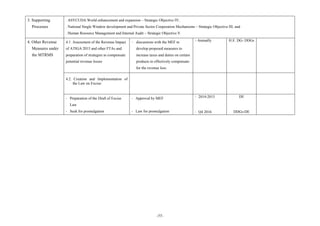
Within the ASEAN framework there are a number of instruments that the GDCE is
charged with implementing, including the ASEAN Agreement on Customs, the ASEAN
Agreement on Customs Trade in goods (ATIGA), ASEAN Framework Agreement on goods in
Transit (AFAGIT) all of which are elements of the implementation of the ASEAN Economic
Community (AEC). Numerous commitments involving the GDCE arise out of these
memberships.
In addition to its ASEAN membership, Cambodia is a member of the WTO, WCO, the
Asia - Europe (ASEM-Asia-Europe Meeting), APEC, etc. The GDCE is deeply involved in many
initiatives related to these memberships and plays an important role in their implementation, in
particular regarding trade facilitation, strengthening the supply chain security, etc.
-47-
The emerging nature and extent of trans-national crime and the continuing terrorism
risk requires the GDCE to direct greater attention towards matters such as money laundering,
terrorist financing, commercial fraud, illegal drugs and smuggling activities including persons
and firearms. In an effort to enhance its enforcement capability to meet these challenges, the
GDCE will seek to improve intelligence, risk management, anti-smuggling and post clearance audit.
6.2 Internal Factors
A number of internal factors influence the GDCE’s operations and strategies and need
to be taken into account in planning for the future.
The GDCE has developed and implemented a modern and effective Customs Laws and
Regulations with assistance of technical experts from the IMF. The law and its implementing
regulations were developed in accordance with the Constitution of Cambodia, in compliance
with obligations under international conventions and agreements, and in line with international
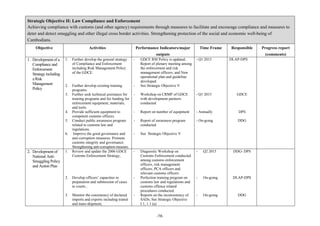
best practices. The Law on Customs and regulations have enabled the GDCE to implement its
tasks effectively and consistently.
The Cambodia customs administration has been upgraded from a department to a
general departmental level and has undergone in-depth reform of the organizational structure.
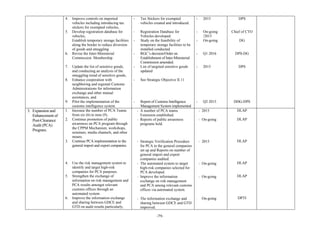
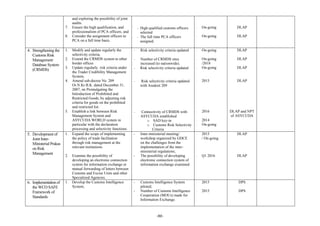
The GDCE has an appropriate structural, hierarchical, and geographical coverage that can
ensure an effective operational network nationwide.
In the era of rapid growth of international trade, the GDCE has implemented a modern
automated system (ASYCUDA WORLD) in key check points that account for approximately
95% of total trade volume. The GDCE continues to improve and expand the ASYCUDA
WORLD’s functionality including plans to activate the manifest (e-manifest), transit, and
electronic payments (e-payment) modules in order establish a base for the National Single
Window system in the future.
A great deal of progress has been made in implementation of Risk Management and
Post-Clearance Compliance Verification programs. The GDCE has introduced an automated
Risk Management system and Post-clearance compliance verification management including
documentary verification at customs offices and Post-Clearance Audit.
The Prevention and Suppression of Smuggling continues to face many challenges.
While good results have been achieved, offenders always try to use more sophisticated
deception methods and techniques, which are more difficult to combat. The GDCE must
relentlessly continue to strengthen the ability of the Prevention and Suppression Department
and to develop cooperation both inside and outside the country.
The use of Non-Intrusive Inspection Technology such as container and cargo scanning
machines, detection instruments for radiation and mass destruction weapons, substance drug
testing instruments etc. support customs operations by providing trade facilitation through
reducing the time and cost to examine goods and increased results.
The improving governance and integrity in Customs Organization make a better
working environment for Customs officials and leads to the reduction or elimination of
inappropriate activity including corruption. Continued efforts are required to strengthen
governance and integrity.
6.3 Strengths, Weaknesses, Opportunities and Threats
(SWOT) Analysis
A SWOT analysis was carried out in developing the SWRM 2014-2018. A SWOT
Analysis is a planning tool used in the development of a strategic or business plan to identify
the internal and external factors that influence the organization and its plans. The SWOT
analysis presents in a succinct format a picture of the specific strengths and weaknesses of the
organization (internal factors) as well as the opportunities and threats it is facing (external
factors). This information can be of great value as the organization begins to develop its plans
for the future. A summary of the SWOT analysis conducted as part of this planning process
follows:
-48-
Strengths:
1. Customs legislation and procedures that comply
with International Standards
2. Strong leadership/Good management and
support from Government
3. Automation and High Tech Tools(NIIT)
4. Strong Human Resources
5. Effective customs/private sector partnership
mechanism in place
6. Risk management system and post clearance
audit program in place.
7. Customs Reform and Modernization Program in
place
8. Incentives in place to motivate and reward
customs and excise officers leading to improved
integrity
Weaknesses:
1. Lack of in-house IT capacity and reliance on IT
technical support from outside
2. Customs integrity program not yet fully
implemented (e.g. extensive face to face
interactions between staff and public)
3. Lack of funding for anti-smuggling tools and
equipment, vessels etc.
4. Lack of safety equipment for officers
(dangerous goods inspection)
5. Public awareness program requires
strengthening
6. Excise Law is yet available
7. Mechanisms for monitoring and evaluation of
staff performance are not in place.
Opportunities:
1. ASEAN Economic Community (AEC) 2015
2. Membership in international organizations
(WCO, WTO, WIPO), expected to be a member
of APEC and become a signatory to numerous
international conventions
3. Increase in extra-ASEAN trade.
4. Political will in supporting CRMP
5. Strong support from MEF for GDCE
modernization
6. Country is peaceful and the economy is
gradually developed. Strong supports from
Development partners and donors.
Threats:
1. Revenue impacted negatively by Tariff
Reduction.
2. Narrow tax base.
3. Global economic crisis impacts on trade and
revenue potential
4. Lack of coordination and cooperation from
other government agencies; excessive
intervention in customs affairs; and overlapping
functions with customs
5. Low level of voluntary Self-compliance.
6. Transnational crime is not low - Continued high
levels of organized cross border crime
7. Risk of terrorism and security of the supply
chain.
-49-
PART	III:	STRATEGIC	OBJECTIVES	2014	–	2018	
The GDCE has established six strategic objectives for the period 2014- 2018. These
objectives reflect and support the established policies and priorities of the Royal Government of
Cambodia as well as those of the Ministry of Economy and Finance. In addition, the strategic
objectives are based on the current situation of Cambodia, her regional and international
obligations such as those under ASEAN, the WTO, and WCO Frameworks, Free Trade
Agreements and others.
Detailed annual action plans are being developed for each of the six Strategic
Objectives to ensure all necessary steps and measures are taken to achieve the expected results.
Strategic	Objective	I:	Revenue	Mobilization	
The GDCE will achieve the Royal Government of Cambodia’s revenue collection
targets through implementation of the Ministry of Economy and Finance Mid Term Revenue
Mobilization Strategy (MTRMS). The GDCE’s goal is to increase customs revenue as a
percentage of GDP by 0.5% annually.
The GDCE’s implementation of the MTRMS will focus on the following priority areas:
(1) strengthening the customs clearance process (control and release of goods), (2)
strengthening customs transit mechanism (including anti-smuggling), and (3) enhancing
support mechanisms. Annual revenue mobilization operational plans are in place for
implementation. Outlined below are the key elements of the GDCE’s commitments under the
MTRMS.
1. Strengthening the Customs Clearance Process
The GDCE will focus on three areas of customs clearance; (1) the customs declaration
process, (2) identification and segmentation of risks, and (3) post clearance audit
1.1. Customs	Declaration	(enhancement	of	import‐export	documentation)	
(a) Improving Manifest and Declaration Control Procedures
The GDCE will take steps to improve the clearance process including obtaining pre-
arrival cargo information, improved manifest controls through automation of the process, and
strengthened controls to identify fraudulent documentation.
Short-term measures:
- Establish minimum data requirements for commercial invoices.
- Strengthen ASYCUDA World through inter-connection with the port community
system
- Enhance effectiveness of verification checks for consistency and conformity of
customs manifests and declarations (SADs)
- Begin consultations between the GDCE and Kampuchea Shipping
Agency &Brokers “KAMSAB” to develop a draft Memorandum of
Understanding on management procedures and provision of transportation
documents (cargo data) in timely manner;
- Enhance implementation of the customs broker regulation (licensing and
qualification) and customs brokers’ management practices Issue warnings and
regularly impose penalties against individual customs brokers who do not possess
customs brokerage qualification.
-50-
Medium-term measures:
- Develop and implement pre-arrival clearance procedures;
- Implement the ASYCUDA World transit module; and
- Finalize and implement a Memorandum of Understanding between GDCE and
- KAMSAB on cooperation and provision of transportation documents in timely
manner.
(b) Strengthening Verification of Customs Valuation
The GDCE has implemented the WTO Valuation Agreement based on transaction
value method. The Customs Valuation Support System (CVSS) was introduced to verify the
compliance of customs value declared by importers against accepted value. However, the
verification of customs value still faces challenges including limitation of updating the
transaction value database system, the lack of the reliable and accurate information, and low
trader compliance levels. To ensure full compliance with the WTO Valuation Agreement and
international best practices, the GDCE will carry out the following tasks:
- Continue to improve CVSS through enhancing the effectiveness of data management
and the developing reliable sources of information from abroad.
- Explore the possibility of establishing an electronic linkage between the CVSS and
other automated system such as ASYCUDA WORLD, Risk Management and so on.
- Continue to strengthen the Transaction Value Management Unit through regularly
updating the CVSS and the customs valuation reference database system to better
reflect transaction value.
- Improve the effectiveness of decentralized customs value verification by examining the
feasibility of centralized verification of highly sensitive goods to headquarters with
verification of less sensitive goods remaining decentralized.
- Improve customs valuation knowledge and skills of customs officers and HQ valuation
specialists through training, seminars, workshops, dissemination of new developments
from the WCO and WTO, and through support from development partners.
- Expand the Advance Rulings Program to include customs valuation matters
- Promote private sector's awareness of customs valuation provisions, advance ruling
Programs etc. through publication, websites and workshops/seminars.
1.2. Improving	Risk	Management	and	Customs	Intelligence		
The GDCE has made a great deal of progress in implementing risk based clearance
processes through development of risk management systems and procedures including
development of the Trader Credibility Management System (TCMS), the Customs Risk
Management Database System (CRMDS), and strengthening of the customs intelligence
capacity. These developments have assisted the GDCE to reduce the levels of examination of
goods and increase effectiveness based on the use of selectivity criteria, and risk profiles. Risk
management teams are in place at HQ and in most major customs branches. However the
results of goods examination remain low possibly indicating that the system is having a
deterrent effect. Further study of the effectiveness of the risk system is needed. The customs
intelligence functions require strengthening and further development of systems including an
intelligence database system.
This initiative is described in Strategic Objective II (Law Compliance and
Enforcement).
-51-
1.3. Expanding	and	Strengthening	Post	Clearance	Audit	
Post Clearance Audit is critical to implementation of WTO valuation agreement as it
helps promote traders’ voluntary compliance and contributes to trade facilitation through the
reduction of time for customs clearance during import and export.
The PCA program has been developed over recent years and on-site company audits
are being carried out on a limited basis. The program faces challenges including poor record
keeping by traders, staff coverage is insufficient, and information exchange is limited.
This initiatives is included in Strategic Objective II (Law Compliance and
Enforcement)
2. Prevention and Suppression of Customs Offences
Smuggling of Goods has negative impacts on legitimate trade, domestic production and
revenue collections for the national budget. The GDCE has combatted smuggling and has
achieved some positive results such as reduction in vehicle, cigarette and petroleum smuggling.
Despite these successes smuggling still remain a serious problem. Currently, the GDCE faces
numerous challenges such as strong networks of smugglers, the lack of equipment, materials
and tools to support enforcement activities, dispersion of goods, maritime smuggling, and
weaknesses in information sharing among competent authorities.
The strategic objective and initiatives to enhance the prevention and suppression of
customs offenses are included in Strategic Objective II (Law Compliance and Enforcement).
3. Supporting Processes
This action covers a number of specific initiatives that are included under various
Strategic Objectives. Initiatives include ASYCUDA World enhancement and expansion
described under Strategic Objective IV; National Single Window development and Private
Sector Cooperation Mechanisms included under Strategic Objective III; and Human Resource
Management and Internal Audit described under Strategic Objective V.
4. Other Revenue Measures under the MTRMS
4.1. Assessment	 of	 the	 Revenue	 Impact	 of	 ATIGA	 2015	 and	 other	 FTAs	 and	
preparation	of	strategies	to	compensate	potential	revenue	losses	
With global trade liberalization most countries, including Cambodia, have been
implementing free trade agreements to strengthen their competitiveness and increase exports to
achieve economic development targets. However, free trade arrangements are not always a
great success for all countries, and if exports do not balance with imports, a trade deficit results,
impacting the current account balance and the economic well-being. The loss in revenue from
trade taxes is usually offset by increased business activity and increases in domestic tax
collections.
In order to address the above challenges, the General Department of Customs and
Excise will, on a quarterly basis, review the loss of customs revenue from implementation of
ATIGA and ASEAN Free Trade Agreement with other countries and suggest appropriate
measures.
The GDCE will participate in discussions with the MEF to develop proposed measures to
increase taxes and duties on certain products to effectively compensate for the revenue loss
-52-
4.2. Creation	and	Implementation	of	the	Law	on	Excise:	
Reform of the present excise system, particularly the application of the excise law and
other relevant regulations, is vital and consistent with international best practices. To comply
with this law, the production and distribution of the excisable goods will be managed by the
competent officials, and the tax calculation based on the specific duty will be applied with
some sensitive goods. A draft law on excise and some supporting regulations have already been
prepared. For the next step, the GDCE will cooperate with the Secretariat of Legal Council of
the MEF in order to study other regulations which relate to excise tax with the aim to ensure
development of a good excise law.
-53-
Strategic Objective II: Law Compliance and Enforcement
Achieving compliance with customs (and other agency) requirements through measures to
facilitate and encourage compliance and measures to deter and detect smuggling and other
illegal cross border activities. Strengthening protection of the social and economic well-being
of Cambodians.
The GDCE has made significant progress in strengthening compliance levels through
development of risk management techniques and compliance verification initiatives such as
PCA, customs valuation, anti-smuggling etc. A compliance strategy based on application of
risk management principles and enforcement measures provides a framework for specific
policies and initiatives aimed at achieving high levels of compliance.
1. Development of a Compliance and Enforcement Strategy
including a Risk Management Policy
The GDCE Compliance and Enforcement Strategy will establish the approaches and
strategies to further strengthen levels of compliance. Additionally, it will incorporate measures
to encourage and facilitate voluntary compliance as well as initiatives to prevent, detect and
suppress intentional non-compliance and illegal activities.
Likewise, to improve the effectiveness of compliance and enforcement programs and to
achieve the balance between customs control and trade facilitation, the GDCE has strengthened
its enforcement operations including anti-smuggling activities intelligence capacity, and
international cooperation. The GDCE continues to develop training programs by using its own
resources and assistance from development partners and donor countries in order to increase the
customs law enforcement capacity. At the same time, the GDCE continues to seek funding for
enforcement equipment, materials, and tools to make customs law enforcement capacity more
effective.
A program to raise public awareness has to be continued to increase the public
knowledge and understanding of applications of laws and regulations including customs law,
and to encourage them to support law enforcement activities. At the same time GDCE will
promote customs integrity and governance. Strengthening anti-corruption measures is the core
objective of the GDCE to ensure its effective law compliance and enforcement.
2. Development of National Anti-Smuggling Policy and Action Plan
The national policy and related action plan aim to improve the effectiveness and
professionalism of the anti-smuggling program. It will support the GDCE’s Law Compliance
and Enforcement Strategy, and set out the various roles and responsibilities, management
accountabilities and operational guidelines for the GDCE’s anti-smuggling operations.
The national policy and action plan for the anti-smuggling will focus on the following
areas:
- Development of a medium term anti-smuggling plan with clear performance indicators
and timeframes. (Review and update the 2006 GDCE Customs Enforcement Strategy),
- Development of officers capacities to prepare and submit cases to courts ,
- Monitoring of the consistency of declared imports and exports including transit and
trans-shipment,
- Improvement of controls on imported vehicles including introducing tax stickers for
exempted vehicles,
- Development of registration database for vehicles,
- Establishment of temporary storage facilities along the border to reduce diversion of
goods and smuggling
- Revision of membership of the Inter-Ministerial Commission on preventing and
combatting smuggling (Government Orders number 02, dated 19 December 2001),
-54-
- Updating the list of sensitive goods, and conducting an analysis of the smuggling trend
of sensitive goods,
- Enhancement of cooperation with neighbouring and regional Customs Administrations
for information exchange and other mutual assistances, and
- Piloting the implementation of the customs intelligence system.
3. Expansion and Enhancement of Post-Clearance Audit (PCA)
Program.
This objective has been briefly mentioned under Strategic Objective 1 above. This
activity can strengthen the mobilization and collection of national revenue through detection of
tax and duty obligation evasion on the one hand, and can be used as a mechanism to enhance
voluntary compliance on the other hand. The current success of implementation of PCA in the
initial phase from 2012 to 2013 is a good start of the full program implementation
Priority activities under this objective are as follows:
Short - term measures:
- Increasing the number of PCA Teams from six (6) to nine (9),
- Continuing promotion of public awareness on PCA program through the Customs
– Private Sector Participation Mechanism, workshops, seminars, media channels,
and other means.
Medium-term measures:
- Continuing PCA implementation, on a gradual basis, by expanding from current
activity that focuses only on export oriented enterprises to focusing on the general
import and export companies,
- Using the risk management system to identify and target high-risk companies for
PCA purposes,
- Strengthening the exchange of information on risk management and PCA results
amongst relevant customs offices through an automated system,
- Improving the information exchange and sharing between GDEC and GTD on
audit results particularly, and exploring the possibility of joint audits
- Ensuring the high qualification, and professionalism of PCA officers, and
- Considering the assignment officers to PCA on a full time basis.
4. Strengthening the Customs Risk Management Database System
(CRMDS)
The GDCE has achieved significant progress in implementation of the Risk
Management System. To ensure its sustainability and to enhance the effectiveness of Risk
Management, the modification and updating of selectivity criteria on a regular basis, are
required. The conditions set forth for these are based on evaluation of the previous outcomes
and other factors. This will reflect the emerging risks, and to meet the government
requirements.
Main goals for medium-term and long-term development of the Customs Risk
Management Program include enhancement of the Customs Risk Management Database
System (CRMDS) to provide more coverage, and to establish a link between Risk Management
System and ASYCUDA WORLD system in particular with the declaration processing and
selectivity functions. CRMDS is web-based system, but as a WAN is not yet available or the
Internet is not yet easily accessed in some areas, the current application of CRMDS system is
on a stand-alone system. The feasibility of using the ASYCUDA WORLD WAN or the Internet
to fully apply CRMDS as a web-based system will be explored.
-55-
Short - term measures:
- Modifying and updating regularly the selectivity criteria,
- Extending the CRMDS system to other border offices
- Updating regularly risk criteria under the Trader Credibility Management System,
- Amending sub-decree No. 209 Or.N.Kr.B.K. dated December 31, 2007, on
Promulgating the Introduction of Prohibited and Restricted Goods, by adjusting
risk criteria for goods on the prohibited and restricted list.
5. Development of Joint Inter-Ministerial Prakas on Risk Management
This will be done through full implementation of the Inter-Ministerial Prakas on Trade
Facilitation through Risk Management. The purpose of the Inter-Ministerial Prakas is to
officially establish mechanisms for implementation of the trade facilitation policy through risk
management by coordinating between the GDCE and other relevant competent Ministries and
Agencies, based on Sub-Decree No. 21 S.E. The regulation specifies roles, responsibilities and
forms of cooperation of those relevant Ministries and Agencies to ensure effective management
and examination of imported and exported goods at border checkpoints. Expanding the scope
of implementing the policy of trade facilitation through risk management at the relevant
institutions is required in order to contribute to implementing risk management through the
management and evaluation of traders and goods.
This activity will support the development of the National Single Window (CNSW) by
establishing the mechanisms and framework for development of a common approach to risk
management that will operate in the scope of the NSW. In the short term, the GDCE continues
to examine the possibility of developing an electronic connection system for information
exchange or mutual forwarding of letters between Customs and Excise Units and other
Specialized Agencies, which is one of the key elements of the National Single Window system
6. Implementation of the WCO SAFE Framework of Standards
In 2006, with financial assistance from the Government of Japan, the World Customs
Organization (WCO) experts visited Cambodia to carry out a diagnostic assessment of policy
and operations of the GDCE in relation to the SAFE Framework of Standards and made
numerous recommendations. The GDCE has been implementing many of those
recommendations such as Customs Automation System, risk management system, supply of
modern equipment and facilities, Post Clearance Audit, Customs Private Sector Partnership
Program, and so on.
The following priority actions shall be taken in accordance with the provisions of the
Safe Framework of Standards:
- Development of the Customs Intelligence System,
- Capacity building for Customs Officers to combat transnational crimes,
- Implementation of the National Single Window in accordance with the Government's
policy, which can be integrated with the ASEAN Single Window,
- Implementation of an Authorized Economic Operator program (Best Trader Program),
- Seeking financial and technical assistances from development partners to support the
implementation of SAFE framework of standard.
7. Strengthening the Capacity of the Customs Marine Office
GDCE is a member of National Committee for Maritime Security (NCMS). The
Customs Marine Officers are members of the NCMS’s front office. Under this framework, the
forms and scope of cooperation and coordination, and the specialized task of the members are
clearly identified and determined. The Customs Marine however is a newly established office
under the Department of Prevention and Suppression of Offenses. This office is responsible for
-56-
investigation and suppression of smuggling by sea throughout the customs territory, and plays
an important role in combating other transnational crimes. Strengthening customs’ control of
the coast line and sea territory by the Office’s patrol and enforcement activities can contribute
positively to the increase in revenue mobilization and collection.
The Office is facing many challenges, including (1) lack of appropriate vessels,
equipment and tools for use in patrol operations, pursuit, and interdiction at sea, (2) lack of
customs expertise to operate the vessels, (3) insufficient information to assess and identify
threats by sea, and (4) inadequate budget for operation and for supply of equipment and tools.
Within these constraints the GDCE will seek budget from available sources to support
the customs marine operation and enforcement activities, particularly for the supply of required
vessels, equipment and tools. The GDCE will also seek trainings for customs marine officers
in the areas of investigation skills, suppression of offense at sea, ship boarding and rummage
(search) techniques, interdiction at sea, risk assessment, and so on.
Priority activities include:
- Preparation of a threat assessment to identify the nature, extent, operators and impacts
of marine smuggling in order to develop operational strategies and plans including
resource deployment,
- Seeking sources of vessels, equipment and tools for uses in customs marine operation
and maritime enforcement activities,
- Seeking basic and intermediate training in investigation at sea, interdiction at sea, ship
boarding, searching technique, and management of vessels and equipment.
8. Improving Effectiveness of Non-Intrusive Inspection (NII)
Technologies
The GDCE has made some significant progress in the implementation and the use of
Non-Intrusive Inspection (NII) Technologies such as X-Ray, Gamma-Ray scanners, and
Radiation detection tools at major customs check points, international ports and airports. NII
Technologies can help reduce clearance time and unnecessary physical inspection. The GDCE
has implemented a project to install the NII Technologies at some other important customs
check points, while seeking training program for Customs officials to operate NII Technologies
safely, effectively and professionally.
In addition to the deployment of NII Technologies, the GDCE will improve
management processes to monitor and evaluate the effectiveness of the NII operation. Format
and the system of report on the statistics of scanning and the outcomes of scanning with good
images of any irregularity that can be used for effective detection of offense will be developed
and implemented.
9. Developing a Customs Fraud Investigation Capacity
The GDCE has achieved significant results in enhancement of customs investigation
capacity as indicated in the previous SWRM of the GDCE. Despite this progress, the capacity
and expertise to conduct customs fraud investigations are still limited. Very little attention has
been given to investigating past activities of importers who are suspected of illegal activities, to
identify previous infractions and to take legal action.
The development of the National Anti – Smuggling Policy and Action Plan includes
the development of a customs fraud investigation capacity. The customs fraud investigations
program shall be implemented by the Department of Prevention and Suppression of Offences.
A plan for capacity building shall be prepared including training, technical assistance and
development of policies and procedures.
-57-
10. Strengthening Customs Intelligence Systems and Capacity
The Department of Prevention and Suppression of Offenses plays a vital and leading
role in preparing and implementing the customs intelligence system which is an important
instrument for customs enforcement operation activities. The GDCE’s National Anti-
Smuggling Policy and Action plan shall include the establishment of an effective customs
intelligence system.
With some technical assistance, the GDCE has been implementing a project to design
and establish a National Customs Intelligence System. Plans are to trial the system as the first
stage, and then put it into operation to support the activities of prevention and suppression of
offenses, as the next stage.
The Information Management and Analysis Office (the customs intelligence unit) of
the Prevention and Suppression of Customs Offences Department will operate the System, and
staff assigned to this shall be on a full time dedicated basis. Capacity building shall be
provided, including training, technical assistance and development of management systems.
Communication and intelligence exchange between Customs Intelligence Unit and other
Customs Offices at the preliminary stage shall be done on Customs Intelligence Alert Notice
basis.
The customs intelligence network will be strengthened including the establishment of a
paid confidential informant program, establishment of relations with other Cambodian law
enforcement agencies as well as with those of foreign countries.
11. Improving Inter-Institutional and International Cooperation
Previously, the GDCE has enhanced its cooperation with government competent
authorities, such as National Police, Gendarmerie, Court Offices, and others. GDCE also
implemented close cooperation with regional and international customs administrations which
have produced fruitful results.
Since threats to the social security and safety and the avoidance of tax obligation are
still challenges, the GDCE is required to strengthen further international cooperation by way of
bilateral and/or multilateral agreements with other Customs administrations and other relevant
international organizations in order to gain benefits from the cooperation:
The Department of Prevention and Suppression of Offenses will arrange for the
efficient exchange of information on high risk and sensitive cases with other customs and law
enforcement agencies in the country and in the region. This can be achieved only through a
closer working relationship between customs, police and all other related agencies.
The GDCE will continue to improve international cooperation in the light of the
Greater Mekong Sub-region Cross Border Transport initiative, and seek development of a
bilateral agreement (Memorandum of Understanding) with other customs administrations in the
region to exchange information and intelligence, and for mutual assistances.
The GDCE will establish formal assistance arrangements with the Royal Cambodia
Armed Forces and National Police to enforce customs and other related laws and regulations,
and support customs operation in problem areas to ensure that there is a national campaign
against smuggling, wherein all involved law enforcement and counteraction agencies are
operating as part of an integrated and coordinated effort in accordance with Sub-decree No 21
dated 01 March 2006.
12. Implementing IPR Programme Activities
The GDCE is committed to actively participate in the prevention and suppression of
transnational crimes of intellectual property right infringement. The GDCE has generated
significant results including seizures of counterfeit products and other violations. However,
these offenses are more complex, and the GDCE will need to improve its capacity and
-58-
expertise, make available appropriate equipment and tools, encourage more participation from
the rights owners to cooperate with Customs and to provide training for customs officers and
to expand its cooperation regionally and internationally in order to fight against such crime
successfully.
13. Developing Increased Capacity to Combat Trans-national
Crimes
Over time, the GDCE has achieved remarkable results from the operations and joint
operations to suppress smuggling of weapons, drugs, artefacts, endangered species of flora and
fauna, timber, hazardous wastes, and currency. However, the technical capability and means for
these operation activities are still limited.
To improve its capacity for fighting against these transnational crimes, the GDCE plans
to improve the effectiveness of inter-institutional cooperation and international cooperation, to
regularly enhance the capacity of customs officers, and to seek assistance from development
partners as well as donor countries to supply equipment and tools for these operation activities.
14. Capacity Building of Customs Law Enforcement Officers
In order to respond to the current needs, the GDCE will set up a plan to strengthen the
capacity of customs law enforcement officers through its own resources and technical
assistance from the neighbouring and regional customs administrations, World Customs
Organization, other international organizations, development partners, and others.
-59-
Strategic Objective III: Trade Facilitation
To contribute to Cambodia’s competitiveness in the world market by facilitating
international trade flows, securing the international supply chain, and streamlining customs
procedures, the GDCE will continue to take the lead in developing and implementing measures
to improve inter-agency cooperation and coordination in provision of border service agency.
1. Implementation of the National Single Window (NSW)
The NSW is a facility that allows parties involved in trade and transport to lodge
standardized information and documents with a single entry point to fulfill all import, export,
and transit-related regulatory requirements. For information submitted electronically, individual
data elements will only be submitted once. An overriding objective of the Single Window is to
strengthen government-to-government; government-to-business; and business-to-business inter
relationships.
The policy of the Royal Government of Cambodia is to develop, own and operate the
system and that the GDCE will lead and manage the project and be the operator of the system
once implemented. The National Single Window Steering Committee was established on 22th
May 2008, led by GDCE, with membership from relevant government agencies and the private
sector. A National Single Window Technical Advisory Group and the National Single Window
Project Team were also established on 14th
June 2012.
Significant progress has been made in preparing for project implementation including:
(1), the CNSW Blueprint has been developed with financial support of the World Bank,
incorporating technical and functional specifications for the system, a governance and
operational model, procurement strategy and a project implementation plan; and (2) the
completion of a Legal Gap Analysis carried out under the ASEAN Single Window – ASEAN
Connectivity through Trade and Investment (ASW-ACTI) project.
The GDCE will manage the planning, development, and implementation of the NSW in
accordance with RGC policy and directions, the implementation plan of the ASEAN Economic
Community 2015, and the ASEAN Single Window.
The GDCE has set up the following implementation strategy which broken down into 4
phases.
- Preparation Phase (six months: - 2015): preliminary activities to establish the project and
Project Management Office including securing funding, initial project office set up etc.)
- Phase 1 (twelve months: 2015 - 2016): establishment of full Project Management
Office, procurement of primary supplies, and development of detailed plans,
- Phase 2 (twelve months: 2016 – 2017): establishment of core physical and ICT
infrastructure and building First Stage systems, testing and piloting the system,
establishing data centres, communications infrastructure, applications software
tailoring, and preliminary system piloting for 4 CLPs and 3 border posts,
- Phase 3 (twelve months: 2017 - 2018): full system building and rollout (additional
functionality and operational sites), and operationalization of the Stage 1 products.
2. Expanding Use of Electronic Transactions
This activity includes implementation of e-payment of duties and taxes, and the
acceptance of electronic copies of attached documents such as invoice, transportation
documentations etc. This is also a part of the on-going enhancement and expansion of the
ASYCUDA World system. This function will further facilitate the operator/declarant to
complete customs clearance. A study will be needed on the technical field, legal aspects, and
security of the connection between customs and other financial institutions such as banks or
National Treasury for all operations relating to customs duty and tax payments.
-60-
3. Establishing connectivity between the National Single Window
(NSW) and the ASEAN Single Window (ASW)
The ASEAN Single Window (ASW) is an environment for integrated operations and
connections between the National Single Windows (NSW) of the ASEAN Member States.
Legal instruments for the implementation of ASW include Agreement on the
Establishment and Implementation of ASW, signed by the ASEAN Economic Ministers on 9
December 2005; Protocol on the Establishment and Implementation of ASW on 20 December
2006, signed by the Minister of Finance; and Memorandum of Understanding on the
Implementation of the ASW Pilot Project on July 18, 2011, signed by the Director General of
Customs and Excise.
To meet the policy of the RGC, and commitments to the ASEAN Economic Community
by 2015, the GDCE will develop a plan to connect to ASEAN Single Window.
4. Expansion of the Best Trader Program and Development of the
Authorized Economic Operator Program
This program, which is designed to recognize highly compliant traders and to provide
them with various forms of special/privileged treatment, has been implemented by the GDCE
as a preliminary step towards an Authorized Economy Operator – AEO program. To date eight
companies have been issued certificates of Best Trader Group Members. Plans are to issue
more certificates of BTGM and to explore the possible implementation of Mutual Recognition
Arrangements – (MRA) between partner countries.
5. Exemption Regime Management
The import of goods under partial or full exemption (or suspension) of duty and tax,
and under temporary admission are part of the duty and/or tax preferential regime. The GDCE
is setting up more transparent and simplified procedures for this regime, thus providing greater
efficiency for imports under the regime, and better understanding by the business community.
Priority measures:
- Implementation of the Master List Management Program (MLDMS-Master List Data
Management Software), to managing imports under preferential regime more
effectively by reducing checking time, improving stock management, and enhancing
daily work of the Department of Customs Regime, and Department of Free Zone
Management.
- Development of a simplified procedure for management of imports under other
exemption regimes, by using modern concept, the application of risk management, and
self-assessment program and other techniques.
- Enhancement of statistics related to the preferential regimes more effectively by
coordinating with all customs related units to find suitable solution in making statistics
more accurate that can be reported upon request and on time.
6. Implementationof the ASEAN Trade in Goods Agreement (ATIGA) by 2015
Cambodia shall eliminate import duties on all products by 2015 with flexibility to
2018. Cambodia has implemented tariff reduction since 2009, and has set a schedule for next
steps until 2015 deadline as below:
- Import duties, at least 80% of tariff lines, are equal to or less than 5% by 1st January
2009,
- Import duties on ICT products shall be eliminated by 1st January 2010,
- Import duties on unprocessed agricultural products in High Sensitive List shall have
their respective applied MFN rate,
-61-
- Import duties on priority integration sector (PIS) shall be eliminated to 0% in 2012,
- Import duties on Priority Integration Sector Negative-List PIS-NL) shall be eliminated
to 0% in 2015.
- Import duties on unprocessed agricultural products in Sensitive List shall be reduced or
eliminated to zero or five percent (0-5%) by 2017.
- Cambodia shall maintain 7% of the total tariff lines or 662 tariff lines in 5% until 2018.
7. Implementation of Free Trade Agreements
The objective of the Free Trade Agreements is to enhance economic cooperation
regionally and internationally through liberalization of the tariff rates by schedules, such as the
- ASEAN- China Free Trade Agreement (ACFTA),
- ASEAN - Korea Free Trade Agreement (AKFTA),
- ASEAN - Japan Comprehensive Economic Partnership (AJCEP),
- ASEAN – Australia and New Zealand Free Trade Agreement (AANZFTA), and
- ASEAN - India Free Trade Agreement (AIFTA).
8. Implementation of the WTO Agreement on Trade Facilitation
The WTO Agreement on Trade Facilitation has now been finalized and a Protocol of
Amendment agreed to facilitate ratification and implementation. The Agreement on Trade
Facilitation aims to improve and promote transparent and consistent Customs procedures in
each WTO member country. As a member of the WTO, Cambodia recognizes the need to
accede to the WTO Agreement on Trade Facilitation,
Under its commitments as a contracting party to the WTO, the GDCE will undertake
the following actions:
- Conducting a diagnostic study to assess the current situation and needs for the
contracting party.
- Drafting relevant documents for accession such as MEF’s regulations or government
sub degree.
- Preparing an action plan to implement the obligations as a contracting party
- Seeking technical assistance from development partners including ADB, International
Monetary Fund, World Bank and other development partners to assist the GDCE in
capacity building.
9. Strengthening Customs-Private Sector Partnership Mechanism (CPPM)
The Customs-Private Sector Partnership Mechanism (CPPM) was established by the
MEF regulation No. 906 MEF dated 9 October 2009, and was officially launched on 26 January
2010 in order to further promote fair business and investment climate, and to encourage private
sector participation in promoting compliance with the law and regulations and trade facilitation.
The CPPM is responsible for coordinating cooperation and mutual understandings between
Customs Administration and Private Sector, as well as for resolving customs related matters
including bottlenecks and misunderstanding before moving to other dispute settlement bodies, or to
the Government-Private Sector Forum. This is also an important factor to ensure the effectiveness of
the implementation of the RGC’s Trade Facilitation Policy.
The GDCE plans to further enhance the effectiveness of the implementation of the CPPM,
which requires the close collaborations from all concerned parties to effectively solve all issues
together. Specific activities include improving the awareness of private sector’s roles in relation to
trade facilitation, consultation on expansion of the Best Trader Program and other Trade Facilitation
initiatives including the National Single Window. The GDCE will convene more frequent meetings
of his consultative group.
-62-
10.Eliminating/reducing Non-Tariff Barriers to Trade
In international trade, Non-Tariff Barriers (NTB) are considered as restrictions to trade.
Non-Tariff Barriers are import/export requirements and controls other than tariff measures that act
as barriers to trade. Non-Tariff Barriers have two categories:
- Technical Measures including: Sanitary Phyto-Sanitary (SPS), and other technical
requirements, and
- Non-Technical measure including Financial Measures, Anti-competitive Measures and
Restrictions on Distribution and Importation.
The GDCE will take the lead role through inter-agency cooperation efforts to implement
the following measures to reduce NTBs:
- Amending Sub-decree 209 ANK to reduce the number of tariff lines on the list of
prohibited and restricted goods in compliance with development partner
recommendations
- Establishing streamlined procedures and publishing instructions for obtaining licences
or permits for importing goods on the prohibited and restricted list.
- Seeking technical assistance for capacity building
- Requiring participation from private sector which are the sources of information in
identifying the NTBs’ impacts and control the development of NTBs reduction.
- Organizing national workshops sponsored by development partners to discuss the latest
instructions to include in the NTBs’ classification data base
11.Implementation of Appeal Mechanism Pursuant to the WTO
Article 24 of the Law on Customs establishes the customs appeal process and gives rights
to any person, importer or his agent, who is dissatisfied with the reasons for or the correctness of the
re-determination of the tariff classification, origin or customs value to object to the decision by
writing to the GDCE within 30 days of the date the importer or his agent receives the Notices of the
re-determination. The Law also establishes the right for any person who objects to any decisions on
objections made by the Director General of Customs and Excise under the Article 24 to file a
written appeal to the Customs Tariff Committee. Furthermore the importer or exporter has the right
to appeal to the competent court against any decision of the Customs Tariff Committee within a
period of thirty (30) days from the date of receiving notification of that decision.
The Customs Tariff Committee has been established by Sub-Decree, but to date has not
been implemented.
In order to further enhance the transparency and justice in the business context, the GDCE
plans to undertake the following actions:
- Establishing and making operational the Customs Tariff Committee;
- Establishing instructions for the policy and procedures for the appeal process.
63
Strategic Objective IV: Modernization/Automation of Customs
Procedures
Implementation of efficient and transparent customs procedures that meet international
standards and commitments and support customs trade facilitation and compliance priorities
and that are supported by the use of modern Information and Communications Technology
(ICT) systems and techniques.
Modern Customs Administration that are recognised by regional and international bodies
need to be equipped with modern technologies. Simplified customs procedures, fast customs
clearance, better trade facilitation, effective customs controls, sound administrative management,
and effective law enforcement operations, which are equipped with modern information and
communication technologies, are required for a modernized customs administration.
The modernized Customs Administration needs modern ICT system, equipment and
facilities as well as highly qualified human resources and applicable laws and regulations. The
modernization program is costly and takes time. Thus the strong political support, the sound
cost and benefit analysis, and the commitment toward regional and international developments
shall be in place for the program. Currently the GDCE faces some constraints in implementing
the modernization program. However, to respond to the current development in the region, and
in the world, real situation of the country, and future perspectives, the GDCE has set some
priorities to modernize it by adhering to the strategy to use its own resources, to gain more
supports, and to implement a goal based approach.
The followings are the activities set by the GDCE:
1. Development of an updated Information and Communications
Technology Strategy
The current ICT Strategic plan was developed several years ago and requires updating
to reflect the progress in implementation of ICT program and to ensure the GDCE is prepared
for future developments that will require changes and enhancements to current systems. .
The continued development of Information Technology is a major priority for GDCE (GDCE)
in order to prepare to implement the National Single Window, to enhance the functionality and
technical architecture of current systems and to improve the inter-connectivity between
systems. An analysis of the GDCE’s future ICT system requirements will be undertaken to
identify priorities, timing and funding options.
Current ICT systems are for the most part funded by development partners. In order to
ensure sustainable and smooth operation of these systems the GDCE requires an official ICT
budget to support the maintenance, updating, infrastructure and hardware replacement, network
equipment etc.)
Existing computer system requires upgrading to ensure greater levels of inter-
connectivity. With the exception of ASYCUDA World, all existing systems are operated in
isolation. Current systems include
- ASYCUDA WORLD implemented in mid-2006,
- Customs Risk Management System Database System (CRMDS) implemented in
parallel with ASYCUDA WORLD System,
- Customs Valuation Support System (CVSS),
- Container Scanning Machine system,
- Customs Statistics System (CSS),
The Strategy will need to address the urgent needs for specialized GDCE IT staff to
properly operate and upgrade existing systems, and to support development and
implementation of new systems. Currently contracted staff perform these tasks.
64
2. ASYCUDA World Geographic and Functional Expansion
With financial and technical support from development partners, especially the World
Bank under the Trade Facilitation and Competitiveness Project (TFCP) and Trade Development
Support Program (TDSP), the ASYCUDA WORLD system has been implemented at 22 major
customs offices, which covered almost 95% of Single Administrative Declaration (SAD) and
approximately 85% of trade volume.
In order to achieve full implementation of ASYCUDA WORLD system in term of
geographical and functional expansions, and to play key functions in implementing the NSW,
the GDCE sets out strategic activities as follows:
Short-term strategy:
- Expanding functionality of the system as below:
 Developing and piloting E-Payment module
 Developing and implementing Transit Module
 Expanding Manifest Module
 Enhancing Direct Trader Input Functionality.
- Continuing to ensure sustainable daily operations and resolve any technical
problems,
- Continuing to study the effectiveness and conduct feasibility of cost and benefit
analysis of expanding the geographical scope to further customs offices,
- Establishing connection between ASYCUDA WORLD and the CRMDS,
- Continuing collaboration with UNCTAD to upgrade new generation of
ASYCUDA WORLD for further improvement of infrastructure server systems as
well as technical functions and solving technical systems,
- Continuing further improvement of statistical report functionality to meet the needs
of users,
Medium-term strategy:
- Studying the ability of the system for full Khmer language version,
- Strengthening capacity building for customs officers in order to ensure the
sustainable operation,
- Establishing required regulations,
- Seeking fund for the maintenance, hardware replacement, and daily operations.
- Preparing for connectivity of ASYCUDAWORLD to the NSW.
3. Participating in International Conventions relating to Customs
Cambodia is a member and contracting party to a number of International conventions
and agreements such as International Convention on Customs Cooperation Council,
Harmonised System Convention, Revised Kyoto Convention and MAA.
To fulfill the ambition at global forums, Cambodia is considering becoming a
contracting party to the Istanbul Convention, ATA carnet and other international conventions
related to Customs matters.
4. Administration of Rules of Origin
Rules of Origin play an important role in economic and trade globalization. In order to
enhance the implementation of Rules of Origin in Cambodia, the GDCE will continue to
cooperate with development partners and other responsible Government Ministries in the
following activities: (a) establishment of a Data Base System for C/O verification, (b) support
of self-certification implementation, and (c) cooperation with development partners in order to
seek technical assistance through workshops, seminars, and training courses for customs
officers on rules of origin.
65
5. Streamlining Export Procedures (especially Textile Goods)
Cambodia has been actively attempting to boost Cambodia’s economic growth from
year to year, especially the textile export sector. This sector is one of the major industries of
Cambodia, and plays an important role in creating jobs for more than half million Cambodian
workers, and helps reduce the poverty rate.
In light of growth of global trade, and the increase in Cambodian textile exports, in late
1999, the RGC set up the Export Office of Customs to facilitate and streamline the procedures
for textile export oriented enterprises. The Office was renamed as the Export Branch of
Customs and Excise in 2010 with the main duties to handle the effective customs clearance for
export oriented enterprises, including statistic of such exports. ASYCUDA WORLD system
has been installed and put into operation at the Export Branch of Customs and Excise since July
2012.
The rapid growth of the textile export sector has created some challenges such as
customs clearance for this sectors has been hampered, poor quality of data registering into
ASYCUDA WORLD by customs brokers who lack required skills, and problems for customs
formality completion conducted outside customs offices.
Short-term measures:
- Conducting training courses for customs officers to improve their skills,
- Disseminating customs regulations and instructions to gain more understanding for
export oriented enterprises,
- Conducting training course on customs clearance procedures for customs brokers,
Medium-term measures:
- Enhancing effectiveness of working procedures between GDCE and CamControl,
- Establishing an official fee for completing customs formality outside the customs
office,
Long-term Measures:
- Compilation and publication of a booklet of customs regulations and instructions
related to the textile export oriented sector,
- Setting up a mechanism to follow up the implementation of the above measures.
6. Conducting Time Release Study
To follow up on the TRS carried out in 2013 (final reports submitted in December
2014), the GDCE will lead the conduct of a second TRS in 2017. This study will include both
import and export processes and will measure all documentary and clearance steps from the
beginning of the process (including those steps in advance of goods arrival), through the arrival
of the conveyance to final release of the cargo. This will include port procedures, other
government agency processing and any other required processes.
66
Strategic Objective V: Governance and Human Resource
Management
Strengthening governance of the GDCE to ensure staff are performing their duties in a
professional and ethical manner to ensure the development of the GDCE and its recognition as
a modern customs administration.
Governance covers many areas of organization management such as disciplinary
measures, integrity of staff, incentive program, and so on. A Customs Administration with good
governance will be considered as a successful organization, and one on the right track to the
becoming a modern one. Strengthening customs staff’ performance in a professional and
ethical manner is a critical point of the GDCE’s governance program. this is demonstrated by
the significant progresses made in implementation of a well-designed incentive program.
Effective human resource management and development still remain one of the most
important strategic goals of GDCE’s SWRM program. In recent years, the GDCE has improved
the technical skills and knowledge of customs officers through capacity building programs, and
recruitment of highly qualified customs officers. However, better management of staff
including implementing an improved promotion program requires deeper reform and
application of modern techniques to ensure good performance, fair treatment, and elimination
of inappropriate activities.
The GDCE will implement the following major activities to strengthen its human
resources management and governance.
1. Preparation of a Human Resource Development Plan
In response to continuous evolution of technology and globalization, the GDCE needs
more knowledgeable and technically-skilled staff. The GDCE will take steps to improve its
human resources by providing skills, techniques, and expertise to officers at all levels –
management to front line levels.
In the next 5 years, the GDCE will implement the following measures to strengthen its
human resources:
- Development of a human resource development plan, based on emerging needs and
requirements,,
- Preparation of Annual Training Plans which based on the results of Training Needs
Analysis (TNA),
- Restructuring of the Training which based on the Training Needs Analysis (TNA)
to meet the demand of the GDCE.
2. Conducting a Review of the GDCE Organizational Structure
The Cambodia Customs and Excise was upgraded from a Department to a General
Department in 2008 to strengthen the Administration management, law and regulation
enforcement, and to reflect the importance of customs functions and responsibilities.
Since its creation there have been a number of senior level retirements and high levels
of recruitment of new highly qualified and competent customs staff. Several senior level posts
remain vacant and senior officials are often assigned responsibility for managing more than one
organization.
The Organizational Review will examine the current organizational structure of the
GDCE to identify weaknesses and propose changes needed to ensure the GDCE is well
organized to manage the many changes it faces in the coming years as well as meeting its on-
going responsibilities.
67
3. Capacity Building Programs
The GDCE will develop and deliver training programs to improve the customs
management and technical skills through:
- On-the-Job Training - using experienced customs officers to provide the on-the-
job training to new recruited customs officers and customs officers who have not
been equipped with enough skills. The GDCE will continue to recruit more
experienced officials.
- In house training – The GDCE needs to improve the quality of its training center
at headquarters by equipping necessary training facilities. By using this center, the
training plan will include the training for trainers program , and the revision of
training materials The areas of training will be tariff classification, customs
valuation, rule of origins, advance rulings, risk management, customs automation,
PCA, AEO, and so on. Development partners’ support will be sought to further
strengthen the effectiveness of training programs.
- Overseas Training - The GDCE will increase the number of officers to attend
overseas training for advanced level conducted under technical assistance programs
or any others.
4. Implementation of Staff Performance Evaluation System
Staff performance should be reviewed on a regular basis. On an annual basis, a formal
performance evaluation should be carried out. Managers should keep records of staff
performance in relation to established goals, performance indicators, technical skills,
experienced knowledge, and competencies required for the job.
For Customs Officers, criteria would include:
- Productivity achievement in terms of results against the set targets with their
Chiefs or Directors,
- Efforts made in skills development, and
- Personal initiatives taken in work.
For Senior Staff including Chiefs or Directors, criteria would include:
- Productivity achievement in terms of results against the set targets with the top
management,
- Management effectiveness,
- Efforts made in skills development, and
- Personal initiatives taken in work.
The GDCE has put forward a plan to regularly implement the performance
management mechanism as follows:
- The top management of the GDCE should be proactive to regularly monitor and
advise the fellow customs officers on the individual and team.
Customs departments, branches, and Offices are required to hold regular meetings
to monitor job performance, provide the opportunity to customs officers at all
levels to express and discuss the issues they are facing during fulfilling the jobs,
and find reasonable and useful solutions for performance of their functions and
responsibilities.
5. Implementing a More Transparent Rotation System for Customs Officers
The GDCE plans to improve the implementation of transparent principles of
assignment of customs officers. Assignment and promotion will be carried out in a transparent
manner based on accurate judgment of many factors such as job performance, technical skills
and expertise, experiences, merit, the actual requirement of organizational function, and other
factors.
68
6. Strengthening of Staff Incentive Program
To promote high quality of the job performance and responsibility of customs officers,
the GDCE plans to implement the following measures:
- Continuing to implement incentive/reward program more transparently and
effectively.
- Applying a transparent promotion program to encourage customs officers to
perform their functions and responsibilities with high quality and effectiveness.
7. Implementation of Disciplinary Measures
To prevent and avoid misconduct, and to promote strong compliance with existing laws
and regulations by customs officers, in parallel with the incentive program, the GDCE
continues to implement disciplinary measures, as follows:
- As a semi-armed forces, the GDCE has to constantly maintain high discipline for
customs officers,
- The GDCE has to improve the attendance reporting system.
- The GDCE has to establish a disciplinary committee (or Disciplinary Board) to
impose punishment on those who commit wrongdoing against existing law and
regulations.
8. Implementation of the Comprehensive Customs Integrity Program
While the GDCE has taken a number of steps to strengthen integrity and reduce
misconduct by customs officers, a full-fledged customs integrity program has not yet been
implemented. Under guidance of the WCO’s program for integrity based on the Arusha
Declaration, in consideration of the ASEAN Blueprint on Integrity, and with technical
assistances, the GDCE will develop and implement a Customs Integrity Program.
In the meantime, the GDCE will continue to take steps to enforce the application of the
Code of Conduct and Ethics for Customs Officers:
- Organizing regular meetings at the GDCE’s headquarter and at local customs and
excise offices to remind Customs Officers regarding the implementation of code of
conduct and ethics,
- Monitoring and evaluating the implementation of Code of Conduct and Ethics by
Customs Officers,
- Expanding the numbers of appeal boxes to all local customs and excise offices,
- Establishing public relation officers at some important customs and excise offices.
9. Strengthening the GDCE’s Internal Audit Function,
The GDCE will develop an action plan to implement the GDCE Internal Audit
Program, including provision of regular reports to senior management and the MEF, staff
assignment, and so on.
10. Encouraging and Promoting Physical Education
The GDCE has recently encouraged and promoted staff attendance at physical
education programs. Additionally, the GDCE needs to further improve the program and
following steps are to be carried out:
- Preparing the development of the physical education infrastructure, and promoting
physical education at all local customs and excise offices – essential factors to
promote health education, internal unity, and morality in the organization.
- Continuing to further collaborate with the Royal Cambodian Armed Forces
(Gendarmerie) to provide military training to customs officers.
69
11. Infrastructure Investment Strategy and Plan
The GDCE carried out an infrastructure review, and developed an infrastructure
investment plan some ten years ago. The plan needs to be updated to meet the current
development of customs operation activities. Currently, many facilities remain in a poor state
of repair, and their designs are not adequate to meet the evolution of the GDCE. While there
have been improvements in the amount and quality of office equipment, and significant
investments have been made in non- intrusive inspection technology (such as scanners), many
deficiencies persist including the lack of marine patrol vessels, insufficient numbers of
operational vehicles, lack of inspection and detection tools and many others .
A detailed assessment of the facilities, tools and equipment at all locations will be
carried out to document current conditions, and to identify areas of shortcomings and emerging
needs. Based on this assessment, a detailed infrastructure investment strategy and plan will be
developed.
70
Strategic Objective VI: Management of Customs Reform and
Modernization Program(CRMP)
Implementation of mechanisms to ensure effective planning, management, and
monitoring of modernization and reform initiatives in order to achieve strategic objectives.
1. Establishment of a new Project Management Structure
In order to improve the overall management of the implementation of the Strategy and
Work Program on Customs Reform and Modernization (SWRM) 2014 – 2018 the GDCE will
implement a new management/governance structure as outlined below.
Restructured Steering Committee: To ensure the effectiveness and sustainable
implementation of CRMP, the GDCE will establish a new Steering Committee (SC) with a new
mandate, membership and terms of reference. The SC shall be chaired by H.E. Director
General of the GDCE and will have the following duties:
- Continue to implement the vision of the GDCE by providing guidance to GDCE
officials in establishing goals and action plans for reform and modernization.
- Establish the Project management structure including appointing CRMP Working
Group (CRMP-WG), Project Implementation Teams (PIT) and an Assessment
Team (AT).
- Approve project implementation plans and detail works schedule for
implementation of the CRMP
- Coordinate and ensure CRMP action plans are consistent with the strategic objectives
and priorities of the GDCE, the MEF and the Royal Government
- Organize trimester, semester and annual meetings to review progress and assess the
effectiveness in implementing action plans.
- Provide direction on new requirements and initiatives to be added to the CRMP
based on emerging circumstances
- Ensure other programs that relate to the CRMP are consistent with the guidance
and recommendations of the leaders of GDCE, MEF and the RGC.
- Monitor and evaluate the progress and constraints in developing the CRMP, and
provide progress reports to the Minister and Prime Minister as required.
- Co-operate with national and international experts and development partners in
implementing the various action plans toward successful implementation of CRMP.
- Additionally, the SC shall study all challenges encountered during the
implementation phase as well as considering all constructive responses and
feedbacks from all related stakeholders, if applicable.
- Other responsibilities assigned by management.
A CRMP Working Group (CRMP-WG): A new CRMP-WG shall be established and
shall be led by a Deputy Director General with membership of senior customs officials, heads
of Project Implementation Teams (PIT) s, head of the Assessment Team and other customs
officials assigned by the DGs.
The CRMP-WG shall have the following duties:
- Monitoring and examining the overall implementation of SWRM 2014-2018.
- Reviewing and recommending project implementation plans (project terms of
reference, action plans etc.) submitted by the PITs to the SC for approval.
- Acting as a coordinator between PITs
- Providing technical guidance to PITs
- Preparing progress reports including identification of constraints confronted during
the operation
71
- Providing recommendations on appropriate measures to the Director General of
GDCE for further consideration and approval
- Setting up regular meetings - monthly, trimester, semester and annual - to ensure
efficiency of work and providing regular progress tracking reports.
- Defining term of reference for the PITs and assigning members
CRMP Project Implementation Teams (CRMP-PITs): CRMP-PITs shall be
established in according with the needs of GDCE and approved by the SC. Each PIT shall be
led by a senior customs official with high capability and expertise. Team members with
relevant skills and knowledge shall be assigned by the head of CRMP-WG.
Each PIT shall have the following duties:
- Carries out all duties assigned by the head of CRMP-WG.
- Prepares project implementation plans (terms of reference, action plans etc.) under
the guidance of the WG.
- Implements the approved project implementation plans.
- Prepares reports regularly on the activities of its team in comparison with the set of
action plans such as difficulties, challenges and consequences in its operation and
prepares progress tracking report to the CRMP-WG.
- Establishes and maintains effective relationships with stakeholders (within GDCE,
other Ministries and agencies, the private sector, and other stakeholders)
The Customs Reform and Modernization Assessment Team (CRMP-AT): The
assessment team shall be headed by a senior customs official with high capacity and expertise,
and other relevant customs officials assigned by the head of the CRMP-WG.
The CRMP-AT has the following duties:
- Carries out all duties assigned by the head of CRMP-WG.
- Examines and assess the operation of the works implemented by PITs against the
detail action plans of the strategic objective of CRMP 2014-2018.
- Prepares reports on the achievement of its team including the possibility of
appropriate solutions to the CRMP-WG.
Steering Committee
Project Implementation Team
CRMP Working Group
Assessment Team
1 2 3
72
2. Implementation of CRMP Management System
To strengthen the successful implementation of CRMP, the CRMP-WG requires clear
management system and procedure.
Each official CRMP project must be supported by a project implementation plan with
clearly defined objectives and work structure, action plans including time frames, resource
requirements, and show specific results and performance indicators. A senior customs official
will be assigned to lead the Project Implementation Team. Likewise, the duties and
responsibilities under the competency of each team shall be clearly determined. Each team
leader shall submit regular progress reports on the action plans in accordance with the
mechanism outlined below.
Progress Tracking Report: Each PIT leader will be required to submit regular
progress reports to the CRMP WG. These reports are crucial to evaluate the implementation
results of action plans and progress levels. The reports will be in a standardized format and will
enable the CRMP – WG to monitor progress, identify problem areas and take corrective action.
PIT progress reports will be submitted by the CRMP-WG to the CRMP-SC along with
recommendations for further actions if necessary. The reports will allow the WG and SC to
regularly examine and follow-up the implementation results and to take appropriate measures
accordingly. The CRMP-SC will be able to submit summary progress reports to the Minister of
Economy and Finance for further guidance and approval.
3. Organization of Public Awareness Program on CRMP Implementation
The establishment of strategic reform involves many various stakeholders such as other
Ministries and agencies, customs brokers, freight forwarders, shipping agents and the
importers/exporters and other private sector entities. To ensure smooth implementation of
CRMP, these stakeholders will need to be kept informed and as required work closely together.
The awareness and understanding of CRMP by all relevant stakeholders including are
important and beneficial to the success of CRMP implementation. The GDCE will develop a
communications strategy (promulgation program) to inform and involve stakeholders in its
reform program.
The following factors are important for setting up the promulgation programs:
a. Set clear objectives, in particular topic to be promulgated to the public
b. Ensure that messages and information are promulgated to the target audience
c. Enhanced cooperation with the private sector
d. The preparation of strategic development for promulgation shall be applied
efficiently.
Massages can be promulgated by numerous means including printed publications,
GDCE Website, internet, social media and other electronic means. Use of GDCE’s website
“www.customs.gov.kh” is a major means of promulgation of the CRMP to the public. Another
option is seminars or workshop to announce the launching of CRMP to the private sector.
4. Reporting System: Strategic Indicators and Operational
Performance Indicators
The CRMP implementation plans will include performance indicators that will be used
to assess the progress and results achieved in the initiatives. As well, the GDCE’s high level
(strategic) performance indicators will reflect the success of the CRMP as well as other on-
going management initiatives and special programs such as the Mid-Term Revenue
Mobilization Strategy of the MEF. The GDCE will implement this performance management
tool as part of the CRMP implementation.
73
Strategic Indicators: The GDCE will set a number of strategic indicators for measuring the
achievement and performance against the implementation schedule set in the action plans. High
level strategic indicators (Key Result Indicators) have been developed and will be implemented
as part of this program. Examples of indicators are:
- Revenue reports against targets as per the Budget Law and GDCE plans.
- Time Release Study for Customs clearance (compared over time).
- Specific revenue and enforcement results achieved from initiatives such as PCA,
Anti-smuggling etc., effectiveness figures on goods examination (including
scanners)
- Specific progress in implementing CRMP projects according to project plans,
including specific deliverables such as implementation of systems, development
of strategies, international agreements etc. (Progress Tracking Reports)
- The trimester, semester and annual outcome reports on the revenue collection
shall be in the agreed formats for statistical and intelligent purposes.
Operational Performance Indicators: The GDCE has defined a number of operational
performance indicators to measure the achievable outcomes against the set timeframe of each
project and to measure on-going operational activities. This reporting system will be
implemented as part of the CRMP. Examples of operational performance indicators include:
- Trade (workload) volume reports on the import and export shall be collected and
compiled appropriately in the agreed forms including import-export quantity by
kilogram or other detail units, customs valuations, number of SAD, number of
containers and etc.
- Measures of operation of Customs clearance such as using the percentage analysis
of all customs release by green lane, blue lane, yellow lane and red lane,
percentage of physical inspections and results
- Reports on investigation and anti-smuggling cases specify the number seizure
cases, duties, taxes, charges and penalties collected from those cases.
74


PART	IV:		TRANSITIONAL	PROVISIONS	AND	ANNEXES	
The situation of country, developments in the ASEAN regional block and the world in
general will continue to be very dynamic for over the five year planning period. New
developments of technique, management and technology, and government policy will lead to
great changes in the reform and modernization program of countries including Cambodia. Thus
the strategic objectives and related activities will need to be flexible and adapted to take into
account these changes.
Annual review and evaluation of the SWRM 2014 – 2018 shall be carried out to ensure
the SWRM meets the developments and evolution noted above. Action plans shall be
developed to implement the SWRM to achieve concrete results and improvements. In addition,
annual work plans shall be prepared based on this SWRM as the core, and subjected to
developing changes in the government policy, and the wider environment.
The detail work plans annexed shall also be adjusted accordingly.


ΧΧĠ
AN
Ġ₤
NNE
ņįњĕċ
EX
ĕċ


ΧĠ₤ņįњĕċ
ANNEX
‐75‐	
	
Strategic Objective 2014-2018 Action Plan of the General Department of Customs and Excise of Cambodia
Strategic Objective I: Revenue Mobilization
The GDCE will achieve the Royal Government of Cambodia’s revenue collection targets through implementation of the Ministry of Economy
and Finance Mid Term Revenue Mobilization Strategy (MTRMS). The GDCE’s goal is to increase customs revenue as a percentage of GDP by
0.5% annually.
Objective Activities Performance Indicators/major
outputs
Time Frame Responsible Progress report
(comments)
1. Strengthening the
Customs
Clearance
Process
1.1 Strengthen the management of
import/export documents:
DDG
(a) Improving Manifest and
Declaration Control Procedures
- Establish minimum data/information
on commercial invoices
- Establish electronic linkage between
ASYCUDA and Port’s electronic
system
- Enhance effectiveness of verification
checks of customs manifests and
declarations. (SADs)
- Begin Consultations with KAMSAB
to develop MOU on data exchange
- Complete implementation of
licensed customs broker program
- Introduce the pre-arrival clearance
procedure
- Develop and introduce the transit
function of ASYCUDA
- GDCE’s instruction issued
- ASYCUDA and Port’s system are
linked
- Enhanced procedures in place
Reports on number of non-consistent
and non-compliant documents
- Consultation meetings held
- Program fully implemented –
number of licenses issue
- Pre-arrival clearance process
implemented
- ASYCUDA transit module
operational
-Q1 2015
-Q1 –Q4 2015
-Q1 2015
-On-going
-Q1 2015
-Q2 2015
-Q4 2015
Chief of CTO
NPT
DPTI
Customs Branch
DDG
DDG
DDG
NPT
(b) Strengthening Verification of
Customs Valuation
Develop action plan to continue
strengthening of the valuation
function.
- Continue to improve the Customs
Valuation Support System-CVSS
- Explore the possibility of establishing
- Reports on improvements
- Feasibility report prepared
- On-going
(Every semester)
- Q1 2017
Chief of CTO
DDG
‐76‐	
	
an electronic linkage between the
CVSS and other automated system
such as ASYCUDA WORLD, Risk
Management
- Continue to Strengthen the
Transaction Value Management Unit
through regularly updating the CVSS
and the customs valuation reference
database system.
- Examine the feasibility of
centralization verification of highly
sensitive goods to headquarters with
verification of less sensitive goods
remaining decentralized
- Improve customs valuation
knowledge and skills of customs
officers and HQ valuation specialists
through training, dissemination of
new developments from the WCO and
WTO, and through development
partners support
- Expand the Advance Ruling program
to include customs valuation matters
- Promote private sector's awareness of
customs valuation provisions,
advance rulings etc. through
publication, websites and
workshop/seminars
- Project initiated to establish linkage
between systems
- Linkages established
- CVSS data updated monthly
- CVR database updated monthly
- Reports on the effectiveness of the
CVSS and CVR
- Feasibility report completed
- Training and instructions provided
to customs officers – number of
officers trained
- Regular distribution of technical
information from the WCO, WTO
etc,
- Advance rulings procedures
implemented for customs valuation
- Pubic Relations/communications
program in place
- Seminars and workshops held
- Publications issues
- Q3 2017
- Q1 2018
- On-going
- On-going
- On-going
- Annually
- On-going
- On-going
- On-going
- Annually
DLAP, DPTI,
NPT
DDG
Chief of CTO
Chief of CTO
Chief of CTO
DPTI
DPTI
DPTI
DPTI
DDG
1.2. Improving Risk Management and
Customs Intelligence
See strategic Objective II
1.3. Expanding and Strengthening Post
Clearance Audit
See strategic Objective II
2. Prevention and
Suppression of
Customs Offences
See strategic Objective II
‐77‐	
	
3. Supporting
Processes
- ASYCUDA World enhancement and expansion – Strategic Objective IV;
- National Single Window development and Private Sector Cooperation Mechanisms – Strategic Objective III; and
- Human Resource Management and Internal Audit – Strategic Objective V.
4. Other Revenue
Measures under
the MTRMS
4.1. Assessment of the Revenue Impact
of ATIGA 2015 and other FTAs and
preparation of strategies to compensate
potential revenue losses
‐ discussions with the MEF to
develop proposed measures to
increase taxes and duties on certain
products to effectively compensate
for the revenue loss
- Annually H.E. DG- DDGs
4.2. Creation and Implementation of
the Law on Excise:
‐ Preparation of the Draft of Excise
Law
‐ Seek for promulgation
‐ Approval by MEF
‐ Law for promulgation
‐ 2014-2015
‐ Q4 2016
DE
DDGs-DE
‐78‐	
	
Strategic Objective II: Law Compliance and Enforcement
Achieving compliance with customs (and other agency) requirements through measures to facilitate and encourage compliance and measures to
deter and detect smuggling and other illegal cross border activities. Strengthening protection of the social and economic well-being of
Cambodians.
Objective Activities Performance Indicators/major
outputs
Time Frame Responsible Progress report
(comments)
1. Development of a
Compliance and
Enforcement
Strategy including
a Risk
Management
Policy
1. Further develop the general strategy
of Compliance and Enforcement
including Risk Management Policy
of the GDCE.
2. Further develop existing training
programs.
3. Further seek technical assistance for
training programs and for funding for
enforcement equipment, materials,
and tools.
4. Provide sufficient equipment to
competent customs officers.
5. Conduct public awareness program
related to customs law and
regulations.
6. Improve the good governance and
anti-corruption measures. Promote
customs integrity and governance.
Strengthening anti-corruption measure.
- GDCE RM Policy is updated;
Report of plenary meeting among
the enforcement and risk
management officers; and New
operational plan and guideline
developed.
- See Strategic Objective V
- Workshop on CRMP of GDCE
with development partners
conducted
- Report on number of equipment
- Report of awareness program
conducted
- See Strategic Objective V
- Q1 2015
- Q1 2015
- Annually
- On-going
DLAP-DPS
GDCE
DPS
DDG
2. Development of
National Anti-
Smuggling Policy
and Action Plan
1. Review and update the 2006 GDCE
Customs Enforcement Strategy,
2. Develop officers’ capacities in
preparation and submission of cases
to courts ,
3. Monitor the consistency of declared
imports and exports including transit
and trans-shipment,
- Diagnostic Workshop on
Customs Enforcement conducted
among customs enforcement
officers, risk management
officers, PCA officers and
relevant customs officers.
- Perfection training program on
customs law and regulations and
customs offence related
procedures conducted.
- Reports on the inconsistency of
SADs, See Strategic Objective
I.1, 1.1 (a)
- Q2 2015
- On-going
- On-going
DDG- DPS
DLAP-DPS
DDG
‐79‐	
	
4. Improve controls on imported
vehicles including introducing tax
stickers for exempted vehicles,
5. Develop registration database for
vehicles,
Establish temporary storage facilities
along the border to reduce diversion
of goods and smuggling
6. Revise the Inter-Ministerial
Commission Membership
7. Update the list of sensitive goods,
and conducting an analysis of the
smuggling trend of sensitive goods,
8. Enhance cooperation with
neighboring and regional Customs
Administrations for information
exchange and other mutual
assistances, and
9. Pilot the implementation of the
customs intelligence system.
- Tax Stickers for exempted
vehicles created and introduced.
- Registration Database for
Vehicles developed.
- Study on the feasibility of
temporary storage facilities to be
installed conducted
- RGC’s decision/Order on
Establishment of Inter-Ministerial
Commission amended.
- List of targeted sensitive goods
updated
- See Strategic Objective II.11
- Report of Customs Intelligence
Management System implemented
- 2015
- On-going
/2015
- On-going
- Q1 2016
- 2015
- Q2 2015
DPS
Chief of CTO
DG
DPS-DG
DPS
DDG-DPS
3. Expansion and
Enhancement of
Post-Clearance
Audit (PCA)
Program.
1. Increase the number of PCA Teams
from six (6) to nine (9).
2. Continue promotion of public
awareness on PCA program through
the CPPM Mechanism, workshops,
seminars, media channels, and other
means.
3. Continue PCA implementation to the
general import and export companies.
4. Use the risk management system to
identify and target high-risk
companies for PCA purposes.
5. Strengthen the exchange of
information on risk management and
PCA results amongst relevant
customs offices through an
automated system.
6. Improve the information exchange
and sharing between GDCE and
GTD on audit results particularly,
- A number of PCA teams
Extension established.
- Reports of public awareness
programs held.
- Strategic Verification Procedure
for PCA to the general companies
set up and Reports on number of
general import and export
companies audited.
- The automated system to target
high-risk companies selected for
PCA developed.
- Improve the information
exchange on risk management
and PCA among relevant customs
offices via automated system.
- The information exchange and
sharing between GDCE and GTD
improved.
- 2015
- On-going
- 2015
- On-going
- On-going
- On-going
DLAP
DLAP
DLAP
DLAP
DLAP
DPTI
‐80‐	
	
and exploring the possibility of joint
audits.
7. Ensure the high qualification, and
professionalism of PCA officers, and
8. Consider the assignment officers to
PCA on a full time basis.
- High qualified customs officers
selected
- The full time PCA officers
assigned.
- On-going
- On-going
DLAP
DLAP
4. Strengthening the
Customs Risk
Management
Database System
(CRMDS)
1. Modify and update regularly the
selectivity criteria,
2. Extend the CRMDS system to other
border offices
3. Update regularly risk criteria under
the Trader Credibility Management
System,
4. Amend sub-decree No. 209
Or.N.Kr.B.K. dated December 31,
2007, on Promulgating the
Introduction of Prohibited and
Restricted Goods, by adjusting risk
criteria for goods on the prohibited
and restricted list.
5. Establish a link between Risk
Management System and
ASYCUDA WORLD system in
particular with the declaration
processing and selectivity functions.
- Risk selectivity criteria updated
- Number of CRMDS sites
increased (to nationwide).
- Risk selectivity criteria updated
with Anukret 209
- Connectivity of CRMDS with
ASYCUDA established
o SAD key-in
o Customs Risk Selectivity
Criteria
- On-going
- On-going
/2018
- On-going
- 2015
- 2016
- 2014
- On-going
DLAP
DLAP
DLAP
DLAP
DLAP and NPT
of ASYCUDA
5. Development of
Joint Inter-
Ministerial Prakas
on Risk
Management
1. Expand the scope of implementing
the policy of trade facilitation
through risk management at the
relevant institutions
2. Examine the possibility of
developing an electronic connection
system for information exchange or
mutual forwarding of letters between
Customs and Excise Units and other
Specialized Agencies.
- Inter-ministerial meeting/
workshop organized by GDCE
on the challenges from the
implementation of the inter-
ministerial regulations;
- The possibility of developing
electronic connection system of
information exchange examined
- 2015
/ On-going
- Q1 2016
DLAP
DLAP
6. Implementationof
the WCO SAFE
Framework of
Standards
1. Develop the Customs Intelligence
System,
- Customs Intelligence System
piloted;
- Number of Customs Intelligence
Cooperation (MOUs) made for
Information Exchange.
- 2015
- 2015
DPS
DPS
‐81‐	
	
2. Build Capacity for Customs Officers
to combat transnational crimes,
3. Implement the National Single Window
in accordance with RGC’s policy that
can be integrated with ASW,
4. Implement an Authorized Economic
Operator program (Best Trader
Program),
5. Seek financial and technical
assistances to support the
implementation of SAFE framework
of standard.
- Number of customs officers trained
- see Strategic Objective III
- See Strategic Objective III.4;
MRAs signed.
- Workshop on CRMP of GDCE
with Development Partners
conducted.
- On-going
- 2016
- 2015
DPS
DLAP
DG
7. Strengthening the
Capacity of the
Customs Marine
Office
1. Prepare threat assessment to identify
the nature, extent, operators and
impacts of marine smuggling in order
to develop operational strategies and
plans including resource deployment,
2. Seek sources of vessels, equipment
and tools for uses in customs marine
operation and maritime enforcement
activities,
3. Seek basic and intermediate training
in investigation at sea, interdiction at
sea, ship boarding, searching
technique, and management of
vessels and equipment.
- Threat assessment conducted
- Marines, Patrolling boats, and
Equipment supply
- Organize training course
- 2017
- 2017
- On-going
/2017
DPS
DPS
DPS
8. Improving
Effectivenessof
Non-Intrusive
Inspection(NII)
Technologies
1. Seek training program for Customs
officials to operate NII Technologies
safely, effectively and professionally;
2. Improve management processes to
monitor and evaluate the
effectiveness of the NII operation.
- Advanced Training for competent
customs officers to operate NII
conducted.
- Number of NII equipment installed
at main customs offices.
- 2015
- On-going
DPS
DPTI
9. Developing a
Customs Fraud
Investigation
Capacity
1. Develop a capacity building plan
related to customs fraud
investigations
- Organize workshop, seminar,
training course, etc.
- On-going DPS
10. Strengthening
Customs
Intelligence
Systems and
Capacity
1. Pilot the customs intelligence system
and assign staff to operate this
system on a full time basis.
2. Strengthen Capacity including
training, technical assistance and
development of management systems.
- Pilot customs intelligence system
- Organize training course,
seminar, and workshop
- 2015
- 2015
DPS
DPS
‐82‐	
	
3. Establish Communication and
Information Exchange between
Customs Intelligence Unit and other
Customs Offices by Customs
Intelligence Alert Notice.
4. Strengthen customs intelligence
network.
- Prepare the customs intelligence
alert notice
- Customs intelligence network
improved
- 2015
- On-going
DPS
DPS
11. Improving Inter-
Institutional and
International
Cooperation
1. Strengthen further international:
bilateral/multilateral cooperation with
other Customs administrations and other
relevant international organizations, and
in the context of GMS.
2. Establish formal assistance
arrangements with the Royal
Cambodia Armed Forces and National
Police to enforce customs and other
related laws and regulations, and
support customs operation
- Further enhance the information
and intelligence related to
customs matters.
- increase a number of
bilateral/multilateral cooperation
- On-going
- On-going
DPS-DPTI
DPS-DPTI
12. Implementing
IPR Programme
Activities
1. Enhance the international
cooperation in the bilateral and
multilateral context and international
organizations related customs
matters, and right holders.
2. Make available appropriate
equipment and tools for combating
IPR fraud
- Establish focal points and
communication channel with
competent ministries/institutions
and right holders.
- Seek for technical assistance
through Workshop on CRMP of
GDCE with development
partners
- On-going
- On-going
DPS-DPTI
DPS-DPTI
13. Developing
Increased
Capacity to
Combat Trans-
national Crimes
1. Improve the effectiveness of inter-
institutional cooperation and
international cooperation.
2. Regularly strengthen the technical
competence of officers
- Establish ministerial regulations
and MOUs
- Organize Workshop, Seminar,
Training, etc.
- On-going
- On-going
DPS
DPS
14. Capacity
Building of
Customs Law
Enforcement
Officers
1. Strengthen the capacity of customs
law enforcement officers.
See Strategic Objective V DPS
‐83‐	
	
Strategic Objective III: Trade Facilitation
To contribute to Cambodia’s competitiveness in the world market by facilitating international trade flows, securing the international supply
chain, and streamlining customs procedures, the GDCE will continue to take the lead in developing and implementing measures to improve
inter-agency cooperation and coordination in provision of border service agency.
Objective Activities Performance Indicators/major
outputs
Time Frame Responsible Progress report
(comments)
1. Implementation of the
National Single Window
(NSW)
1.Manage the planning, development,
and implementation of the NSW,
AEC2015, ASW:
-Preparation Phase: preliminary
activities to establish the project and
Project Management Office;
-Phase 1: establish full Project
Management Office, procurement of
primary supplies, and development
of detailed plans;
-Phase 2: establish core physical and
ICT infrastructure and building First
Stage systems, testing and piloting
the system, establishing data centers,
communications infrastructure,
applications software tailoring, and
preliminary system piloting,
-Phase 3: develop full system and
rollout.
- Establish new NSWSC, Legal
and Technical Working Group
- Establish full Project Office
- Procure Project Specialist
- Prepare detailed Plans
- Develop Procurement
Documents
- Establish mechanism for
addressing law and regulations
- Training Course on of data
harmonization model
- Build and test Core Business
System
- Establish core infrastructure
- Build Certificate, License and
Permit (CLP) functionality
- Testing and pilot
Implementation
- Rollout border agency and CLP
functionality
- Connectivity of customs
automated system with sea ports
and airports
- Project completion and handover
- Review project outcome for
future expansion
- Further enhance the cooperation
among customs and stakeholders
by establishing MOUs.
- On-going
/2015-2018
- On-going /1st
Semester 2015
- 2015
- 2015-2016
- 2015
- 2015 -2016
- 2015 -2016
- 2015-2016
- 2017-2018
- 2017-2018
- 2018
- 2018
- On-going/2018
NSW-TAG
NSW-TAG
NSW-TAG
NSW-TAG
NSW-TAG
NSW-TAG
NSW-TAG
NSW-TAG
NSW-TAG
NSW-TAG
NSW-TAG
NSW-TAG
NSW-TAG
‐84‐	
	
2. Expanding Use of
Electronic Transactions
1. Study and establish the technical
capability, legal aspect and the
safety of the connectivity
between customs and financial
institutions
- Develop technical and legal to
support the connectivity between
customs and financial
institutions for the purpose of e-
payment implementation.
- 2015-2016 NSW-TAG
3. Establishing
connectivity between the
National Single Window
(NSW) and the ASEAN
Single Window (ASW
See Strategic Objective III.1
4. Expansion of the Best
Trader Program and
Development of the
Authorized Economic
Operator Program
1. Issue more certificates of BTGM
and to explore the possible
implementation of Mutual
Recognition Arrangements –
(MRA) between partner
countries
- Extend the number of BTGM
- Study Visit and Negotiation
with regional customs for the
possibility of MOUs
establishment
- On-going
- 2016
DLAP
DLAP
5. Exemption Regime
Management
1. Implement the Master List
Management Program
(MLDMS-Master List Data
Management Software.
2. Develop a simplified procedure
for management of imports
under other exemption regimes
3. Enhance statistics related to the
preferential regimes more
effectively.
- Develop Master List
Management Software
- Customs Procedures and
preferential management shall be
adjusted in according with new
policy of MEF when applicable;
To be developed in according
with the RGCs’ Policy
- Set standard of statistics related to
preferential regimes
- Q2 2015
- On-going
- On-going
DCR, DFZM
DCR, DFZM
DCR, DFZM
6. Implementation of the
ASEAN Trade in Goods
Agreement (ATIGA) by
2015
1. Prepare for Implementation of
ASEAN Trade in Goods
Agreement (ATIGA)
- Reduction of customs tariff rate
to 0% (by 2015 with flexibility
to 2018)
- Report on the Trade Volume
under ATIGA
- On-going/
2015-2018
- On-going
DPTI
DPTI
7. Implementation of Free
Trade Agreements
1. Prepare for Participation for
other FTAs:
- ASEAN China Free Trade
Agreement (ACFTA)
- ASEAN Korea Free Trade
Agreement (AKFTA)
- ASEAN Japan
Comprehensive Economic
- Reports on the Trade Volumes
under Each FTAs
- 2015-2018
- 2015-2020
- 2020-2026
DPTI
DPTI
DPTI
DPTI
‐85‐	
	
Partnership (AJCEP)
- ASEAN Australia New-
Zealand Free Trade
Agreement (AANZFTA)
- ASEAN India Free Trade
Agreement (AIFTA)
- 2024
- 2009-2021
DPTI
DPTI
8. Implementation of the
WTO Agreement on
Trade Facilitation
1. Conduct a diagnostic study to
assess the current situation and
needs for the contracting party.
2. Draft relevant documents for
accession such as MEF’s
regulations or government sub
degree.
3. Prepare an action plan to
implement the obligations as a
contracting party
4. Seek technical assistance from
development partners including
ADB, IMF, WB and other
development partners to assist
the GDCE in capacity building.
- Seek TA from development
partners to conduct the diagnostic
study.
- Set up Customs team
- Need TA for study on the cost /
benefit to be the contracting
party.
- Need TA from development
partner
- 2015
- 2016
- 2017
- 2016
All
Departments
All
Departments
All
Departments
All
Departments
9. Strengthening Customs-
Private Sector
Partnership Mechanism
(CPPM)
1. Strengthen close collaborations
from all concerned parties
2. Convene more frequent meetings
of his consultative group.
- Report on number of CPPM
Meeting
- Semesterly DLAP
10. Eliminating/reducing
Non-Tariff Barriers to
Trade
1. Amend Sub-decree 209 ANK to
reduce the number of tariff lines
on the list of prohibited and
restricted goods in compliance
with development partner
recommendations
2. Establish streamlined procedures
and publish instructions for
obtaining licenses or permits for
imported goods on the
prohibited and restricted list.
3. Seek technical assistance for
capacity building
4. Require participation from
private sector which is the
sources of information in
identifying the NTBs’ impacts
and control the development of
- Meeting between GDCE and
relevant government agencies
on the amendment of Prohibited
and Restricted Goods List.
- Procedures and Instructions for
licensing and permission for
prohibited/and restricted goods
developed.
- Seek for this assistance from
development partners.
- Make use of the CPPM
Mechanisms.
- On-going /2016
- 2016-2017
- 2015
- On-going /2016
DDG, DLAP,
DPTI
DDG, DLAP,
DPTI
DDG, DLAP,
DPTI
DDG, DLAP,
DPTI
‐86‐	
	
NTBs reduction.
5. Organize national workshops
sponsored by development
partners to discuss the latest
instructions to include in the
NTBs’ classification data base
- National workshops held. - 2015 /
On-going
DDG, DLAP,
DPTI
11. Implementation of
Appeal Mechanism
Pursuant to the WTO
1. Establish and make operational
the Customs Tariff Committee;
2. Establish instructions for the
policy and procedures for the
appeal process.
- Organize the meeting
- Set up the team
- 2015
- 2016
DLAP
DLAP
‐87‐	
	
Strategic Objective IV: Modernization and Automation of Customs Procedures
Implementation of efficient and transparent customs procedures that meet international standards and commitments and support customs trade
facilitation and compliance priorities and that are supported by the use of modern Information and Communications Technology (ICT) systems
and techniques.
Objective Activities Performance Indicators/major
outputs
Time Frame Responsible Progress report
(comments)
1. Development of
an updated ICT
Strategy
1. Prepare budget to support ICT
development, operation and
maintenance (Existing and New
Systems).
2. Upgrade and Update IT System.
3. Require more GDCE's specialized
IT Staff
- Approval from MEF on the
budget allocation for IT
Development of GDCE
/Workshop on CRMP with
Development Partners.
- Report on the upgrade and update
of IT System of GDCE (including
ASYCUDA, CRMDS, CVSS,
Scanning Container Machine
System, CSS, etc.)
- Report of the study on the
existing system’s capability and
its possible development; and
Seek for TA
- Report on Number of CSS
installed at Non-ASYCUDA
customs offices
- Recruitment of IT Staff
- 2015
- On-going
- 2015
- On-going
/2015-2016
- On-going
DPTI
NPT of
ASYCUDA
(NPT), Chief of
CRMO, CTO,
SITO
NPT, Chief of
CRMO, CTO,
SITO
Chief of SITO
NPT, Chief of
SITO
2. ASYCUDA
World Geographic
and Functional
Expansion
1. Expand functionality of the system
2. Continue to ensure sustainable
daily operations and resolve any
technical problems
3. Continue to study the effectiveness
and conduct feasibility of cost and
benefit analysis of expanding the
geographical scope to further
customs offices
4. Establish connection between
ASYCUDA WORLD and the
CRMDS
- Daily technical support and
operation to all site users
- Extension to 10 customs offices
- See Objective III.1
- Technical support from UNCTAD
to delivery of new releases of AW
- On-going
- 2015
- 2014-2015
NPT
NPT
NPT
‐88‐	
	
5. Continue collaboration with
UNCTAD to upgrade new
generation of ASYCUDA WORLD
for further improvement of
infrastructure server systems as
well as technical functions and
solving technical system
6. Continue further improvement of
statistical report functionality to
meet the needs of users
7. Study the ability of the system for
full Khmer language version
8. Strengthen capacity building for
customs officer in order to ensure
the sustainable operation
9. Establish required regulations
10. Seek fund for the maintenance,
hardware replacement, and daily
operations
11. Prepare for connectivity of
ASYCUDA WORLD to the NSW
- Improve statistical report server
- Localization for AW in Khmer
Language
- Improve DTI function
- Training Course in appropriate
guidance by UNCTAD for
continuous learning and skills
development including internship
for a period of 3 months.
- Establish regulations to secure
sources of funding
- See Strategic Objective III.2 & III.1
- On-going
- 2015
- On-going
- 2015
- 2016-2017
NPT
NPT
NPT
NPT
3. Participating in
International
Conventions
relating to
Customs
1. Study the possibility to be contracting
parties of international conventions
Istanbul Convention, ATA carnet and
other international conventions related
to Customs matters.
- Seek TA from development
partners for the diagnostic study of
some International conventions
2015 DPTI
4. Administration of
Rules of Origin
1. Establishment of a Data Base
System for C/O verification.
2. Support of self-certification
implementation.
3. Cooperate with development
partners in order to seek technical
assistance through workshops,
seminars, and training courses for
customs officers on rules of origin.
Seek for technical assistance from
development partners on:
- Create a local data repository having
the scope to connect with AMS as
well as other business partners for the
verification of the CO.
- Outline the prequisites for the self-
certification implementation.
- Specific development partners’
support confirmed and report of
such events conducted.
On-going
2016-2018
2016
On-going
DPTI
DPTI
DPTI
DPTI
‐89‐	
	
5. Streamlining
Export Procedures
(especially Textile
Goods)
1. Conduct training courses for
customs officers to improve their
skills.
2. Disseminate the customs
regulations and instructions for the
purpose to gain more
understanding for export oriented
enterprises.
3. Conduct training course on
customs clearance procedure for
customs brokers.
4. Enhance effectiveness of working
procedures between GDCE and
CamControl.
5. Establish official fee for
completing customs formality
outside the customs office.
6. Compile and publish of a booklet
of customs regulations and
instructions related to the textile
export oriented sector.
7. Set up a mechanism to follow up
the implementation of the above
measures.
- Training courses held.
- Customs regulations and
instructions related to Export
Procedures surfed in Customs
Website and disseminated at
customs offices.
- Training courses held.
Working procedures between
GDCE and CamControl improved
- Developing and Implementation of
Supporting regulations on Customs
Formality fee from customs
processing conducted out of
customs office.
- Booklet of customs regulations and
instructions related to the textile
export oriented sector published.
- A follow-up mechanism set up.
On-going
On-going
On-going
On-going
On-going/2015
2015
2015
Customs Export
Branch (CEB)
CEB
CEB
CEB
CEB
CEB
CEB
6. Conducting Time
Release Study
8. Conducting Second Time Release
Study
- 2nd
TRS conducted with
cooperation from OGAs.
2017 GDCE
‐90‐	
	
Strategic Objective V: Governance and Human Resource Management
Strengthening governance of the GDCE to ensure staff is performing their duties in a professional and ethical manner to ensure the development
of the GDCE and its recognition as a modern customs administration.
Objective Activities Performance Indicators/major
outputs
Time Frame Responsible Progress report
(comments)
1. Preparation of a
Human Resource
Development Plan
1. Develop a human resource
development plan, based on
emerging needs and requirements,
2. Prepare Annual Training Plans
which based on the results of
Training Needs Analysis (TNA),
3. Restructure the Training which
based on the Training Needs
Analysis (TNA) to meet the
demand of the GDCE.
- HR Development plan established
- Annual schedule of training
courses for customs officers
- Organizational structure of training
program
- On-going
- Annually
- Annually
DAM
DAM
DAM
2. Conducting a
Review of the
GDCE
Organizational
Structure
1. Examine the current organizational
structure of the GDCE to identify
weaknesses and propose changes
- Quarter and annual report of
performance evaluation
- On-going DAM
3. Capacity Building
Programs
1. Develop and deliver training
programs to improve the customs
management and technical skills
through: On-the-Job Training, In
house training, and Overseas
Training.
- Number of on-the-job trainings
- Number of local customs trainers
- Number of training tools in
customs training center
- Number of GDCE’s trainers
- Report on updated teaching
materials on CV, HS, RoO,
Advance Ruling, RM, AEO etc.
- Report on assistance by DP.
- On-going
- On-going
- On-going
- On-going
- On-going
- Annually
- Annually
DAM
DAM
DAM
DAM
DAM
DAM
DAM
4. Implementation of
Staff Performance
Evaluation System
1. To Management: Proactively
Review and Advise staff
performance on regular basis
2. Customs Branches and Offices:
hold regular meetings to monitor
job performance, provide the
opportunity to customs officers at
all levels to express and discuss the
challenging issues.
- Quarter and annual report of
performance evaluation
- Report of Meetings held
- On-going
- On-going
DAM
DAM
‐91‐	
	
5. Implementing a
More Transparent
Rotation System
for Customs
Officers
1. Improve the implementation of
transparent principles of
assignment and promotion of
customs officers.
- Reports on rotation of customs
officers
- Reports on promotion for well-
performed officers
- Annually
- Annually
DAM
DAM
6. Strengthening of
Staff Incentive
Program
1. Continue to implement
incentive/reward program more
transparently and effectively.
2. Applying a transparent promotion
program to encourage customs
officers to perform their functions
and responsibilities with high
quality and effectiveness.
- Reports on incentives for well-
performed officers
- On-going DAM
7. Implementation of
Disciplinary
Measures
1. Constantly maintain high discipline
for customs officers,
2. Improve the attendance reporting
system.
3. Establish a disciplinary committee
- Reports on penalties on customs
officers
- Reports on customs officers’
attendance for their daily works
- GDCE’s decision to establish such
committee
- On-going
- 2015
- 2015
DAM
DAM
DAM
8. Implementation of
theComprehensive
CustomsIntegrity
Program
1. Organize regular meetings at the
GDCE’s headquarter and at local
customs and excise offices to
remind Customs Officers regarding
the implementation of code of
conduct and ethics,
2. Monitor and evaluate the
implementation of Code of
Conduct and Ethics by Customs
Officers,
3. Expand the numbers of appeal
boxes to all local customs and
excise offices,
4. Establish public relation officers at
some important customs and excise
offices
- Number of meeting on Customs
code of conduct and ethic
- Evaluation report on the
implementation of Customs Code
of conduct and ethic
- Report on the introduction of
Appeal boxes at local customs
office
- Number of officers assigned as
focal point for customs offices
- Every Semester
- Annually
- 2015
- 2015
DAM
DAM
DAM
DAM
9. Strengthening the
GDCE’s Internal
Audit Function
1. Implement the GDCE Internal
Audit Program, including provision
of regular reports to senior
management and the MEF, staff
assignment, and so on.
- Expand PCA to company premises - Q2 2015 DLAP
‐92‐	
	
10. Encouraging and
Promoting
Physical
Education
1. Prepare the development of the
physical education infrastructure,
and promoting physical education at
all local customs and excise offices.
2. Continue to further collaborate
with the Royal Cambodian Armed
Forces to provide military training
to customs officers.
- Reports on physical education
infrastructure at local customs
- Report on military trainings for
customs officers
- On-going
- On-going
DAM
DAM
11. Infrastructure
Investment
Strategy and Plan
1. Prepare detailed assessment of the
facilities, tools and equipment at all
locations to develop an
Infrastructure Investment Strategy
and Plan.
- Improvement of customs facilities
to meet international standard
- On-going DDGs
‐93‐	
	
Strategic Objective VI: Management of Customs Reform and Modernization Program(CRMP)
Implementation of mechanisms to ensure effective planning, management, and monitoring of modernization and reform initiatives in order to
achieve strategic objectives.
Objective Activities Performance Indicators/major
outputs
Time Frame Responsible Progress report
(comments)
1.Establishment of a
new Project
Management
Structure
1. Establish a new Steering Committee
2. Establish a CRMP Working Group
(CRMP-WG)
3. Establish a CRMP Project
Implementation Teams (CRMP-
PITs)
4. Establish Customs Reform and
Modernization Assessment Team
(CRMP-AT)
- The Establishment of CRMP
Steering Committee (SC)
- The Establishment of CRMP
Working Group (RWG)
- The Establishment of PITs and
Detail Strategic Plans (DSPs)
- Revenue Mobilization Team and
its DSPs
- Trade Facilitation and Compliance
Management Team and its DSPs
- IT Development and Customs
Procedures Team and its DSPs
- Human Resource and Good
Governance Team and its DSPs
- The Establishment of AT & its APs
- The Re-examine the Report
Structure in GDCE, provide
feedbacks and recommendations if
applicable by the AT and later
approve by the RWG.
- Mid-Year and Annual Progress
Report made by the RWG
- Year-End Report by the SC
- Dec 2014
- Dec 2014
- Jan 2015
- Jan 2015
- End 2015
- June/Dec
2015-2018
- Year-End
HE. DG
HE. DG
HE. DG
HE. DG
HE. DG
HE. DG
HE. DG
1.Implementation of
CRMP
Management
System
1. The Progress tracking report
2. Permanent Control and
Management on Reform Action
Plans
- Progress Report Tables to be
developed by the RWG for
implementation of the PITs and AT
- TOR of the RWG and the SC will
be developed
- The Program will be developed by
the Trade Facilitation and
Compliance Management Team.
- Feb 2015
- Jan 2015
- As Strategic
Objective VI.2
2015
RWG, SC
RWG, SC
‐94‐	
	
2.Organizationof
PublicAwareness
ProgramonCRMP
Implementation
1. Develop dissemination program
2. Implement the dissemination
program
- The Program will be developed by
the Trade Facilitation and
Compliance Management Team
- As Strategic
Objective VI.2,
2015
3.Reporting System:
Strategic Indicators
and Operational
Performance
Indicators
1. Determine the strategic indicators
2. Determine the operational indicators
- To be developed by the RWG
- 2015
- 2015
- 2015
RWG
RWG
RWG

Strategy and work programs on reform and modernization 2014-2018

  • 4.
    -i- ŌijЊŁ Ζũņĸ˝▫ ...................................................................................................................1  ЯĩĖ˝◦Бơ ៖Ю₤ş˝ʼnБЮĩʼnЧņ ..................................................................................................1  ЯĩĖ˝◦БƯ ៖ ◦ЊřťļĮďŎН◦ċ⅜ū₤ʼn ....................................................................................2  ơ.◦₤℮ĕŷЋ₤њŎ .........................................................................................................2  Ư.ЮĠ₤˝˝ņŊ............................................................................................................2  ư.ijаņųďņРŲŢť ĕ.....................................................................................................2  ̉.ЮýŲŁũ‗чņÐðОЮ◦₤˝є ............................................................................................3  ̣.Ų◦ċĩŲЯřŲ₤ЮŪņşģĕ˝ĕų₣ņ˝аĕŁũΒĕНŷijʼn˝ņŊŷЋĊБ˝еЯ‗◦Ūņ₣сĕЊ₣◦еЮĕЧĠ˝ņŊÐŎ ................4  ̀.ŁũŷЋļÐ⅜□ ĕŁũ‗ч ...............................................................................................5  ̀.ơ.˝″ʼn ž₣ЮŪł ..................................................................................................5  ̀.Ư.˝″ʼn ž₣˝ĖО₣...................................................................................................6  ̀.ư.ŁũŷЋļÐЮŲЧşе‗Нşžų е₣ şе‗НşЮŠ⅝Ŏ ŁŵĕНŷijʼnļĮ ĕЊ₣ŁũÐеŬņ˝еЯ΅₣.....................7  ЯĩĖ˝◦Бư ៖ ЮýŲЮţŎН◦ċ⅜ū₤ʼnĂĖ еƯƠở-ƯƠơ៨............................................................9  ЮýŲЮţŎН◦ċ⅜ū₤ʼn◦Б I : ŷЋēĕŁũЮ˝ЬũÐũşе‗РŲ ...........................................................9  ơ.ŁũĮŪ₣Е₣˝ЊşĆřеЮ‗ЧũŁũĠеЮĮŀЯĠĠĠ◦ĠЮŃĆŀ◦еĕЊŀĮБÐŎ.............................................9  Ư.ŁũĮŪ₣Е₣ŷЋēĕŁũĠİ˛ ũĕЊ₣Ġūİ˛ ĠΒеЮĮЧũijсЮÐşĮĕċ .....................................................12  ư.ŷЋēĕŁũýеŪ◦ЮřЧņġБĄУŎřŲсŎН◦ċ⅜ū₤ʼnЮ˝ЬũÐũşе‗РŲũŎкЮĮŲņĊŏņ ...........................12  ̉.ŷЋēĕŁũŪĠņРŲşе‗РŲЮĩ℮₣Ю◦Ьij˝ĖО₣Ū˝ĠŠ‗Ź ŎН◦ċ⅜ū₤ʼnЮ˝ЬũÐũşе‗РŲũŎкЮĮŲņĊŏņ ƯƠở-ƯƠơ៨ ũĠ₤сŪ˝₤У₣Ю₤řť˝ЊşĆĕЊ₣΅ЊũŃňŷij□О..........................................................12  ЮýŲЮţŎН◦ċ⅜ū₤ʼn◦Б II : ΒĕНЮŵņļĮĕЊ₣ŁũΒĕНŷijʼnşĤĠс ............................................14  ơ.ŁũΒķЊŷűΘŎН◦ċ⅜ū₤ʼn₤БʼnĮБΒĕНЮŵņļĮĕЊ₣ŁũĄŪņОŀŁũΒĕНŷijʼnşĤĠсЮŢŎũУņĠŃĆСŲЮýŲ ĕЮŗģŎŪÐĠсŪÐ₣ΉĕЊķњŎ ..................................................................................14  Ư.ŁũΒķЊŷűΘЯĩĕŁũ₤˝ņŊļĮĕЊ₣ЮýŲĕЮŗģŎĠūİ˛ ĠĠ◦ЮŲŊЧ₤▫Ė ˝сďijЊ .....................14  ư.ŁũĮŪ₣Е₣ĕЊ₣ĮŪ₣Б˝ŎĕʼnŁũ₤ŷĕ˝ņŊЮŪŁŎЮĮŲĠЮŃĆŀ◦еĕЊŀĮБÐŎ (PCA) ....................15  ̉.ŁũĮŪ₣Е₣ŪĠĮњĕċ◦ЊĕĖĕњŎŪÐĠсŪÐ₣ΉĕЊķњŎÐŎ (CRMDS) ...........................................16  ̣.ŁũΒķЊŷűΘŪĠŁ₤ΒĕʼnũŪ˝₤У₣₤ʼnБĮБŁũŪÐĠсŪÐ₣ΉĕЊķњŎ .............................................17  ̀.ŁũΒĕНŷijʼnŪ˝ĠŠ‗Ź ₤ʼn₣сŢ₤Нŷij□ЊļĮ˝ЊşĆŪĮņЮŪĮЭ₣ũĠ₤с WCO......................................17  ́.ŁũĮŪ₣Е₣₤ņij□ļĮΒ₣ðļĮÐŎЮĄЧ₣◦Е˝ .................................................................18  ៨.ŁũĮŪ₣Е₣ŪĠ₤Њ◦ċļĮĠЮşĆ˝ŷЋ◦ŜŪijФijĮЊĕЊijŏЮŢŎýŊ ĕŁũũжžĕ (NII) ..............................18  ៩.ŁũΒķЊŷűΘ₤ņij□ļĮŪ⅜ŷŪďŷĠ◦ЮŲŊЧ₤ÐŎ............................................................19  ơƠ.ŁũĮŪ₣Е₣ŪĠĮњĕċĕЊ₣₤ņij□ļĮЮ₤НЧĠΒЮ₣˛ijĮњijхŌĕ₤ŌĞ ijсÐŎ......................................19  ơơ.ŁũĮŪ₣Е₣˝ЊşĆ₤΅ŪĠijЊĠijʼnЊŁũΒĕʼnũ⅜□ ĠњĕĕЊ₣ΒĕʼnũďijЊ ..............................................20  ơƯ.˝ņŊŷЋĊБŪĠŎН◦ċŪĠĂе₣ŁũũжЮŵķ˝ņŊ₤Њ◦ċЊĠŔň ..........................................................20 
  • 5.
    -ii- ơư.ŁũΒķЊŷűΘ₤ņij□ļĮ˝ĖО₣ŁũŪĠŎН◦ċŪĠĂе₣ĕЕ₣ΧŪ˝Њřť˝ņŊΒĕʼnũďijЊ ................................21  ở.Łũ˝⅜₣₤ņij□ļĮņūĕʼnБΒĕНŷijʼnşĤĠсÐŎ ..............................................................21  ЮýŲЮţŎН◦ċ⅜ū₤ʼn◦БIII : ˝ЊşĆ₤ŪņФŲĵ‗ЊĄą˝ņŊ..........................................................22  ơ.ŁũΒķЊŷűΘĕЊ₣ΒĕНŷijʼnŪĠĮњĕċĠŃąũЯijņУŎďijЊ .............................................................22  Ư. ĮŪ₣Б˝ŁũЮŪĠЧŪģ₤с˝ЊşĆŪĠijЊĠijʼnЊŁũ◦Ūņ₣сЮΒΌЊ˝ŪijСĕЊ˝ ...............................................23  ư.ŁũĠЮ₣˛ЧijŁũijļą Ġсũǻ₣ĠŃąũЯijņУŎďijЊĕЊ₣ĠŃąũЯijņУŎΖ⅜п ĕ ...................................23  ̉.ŁũĮŪ₣Б˝ŎĕʼnŁũĊНũĄĕŲΔĠеĩНij ĕЊ₣ŁũΒķЊŷűΘĕч˝ņŊŷЋĊБŪĠijЊĠijʼnЊ˝ũЮ₤řť˝ЊşĆŌĕŁũΒĕНŔň ij..23  ̣.ŁũŪÐĠсŪÐ₣ũĠĠЮŲЧ˝ЯŲ₣ĮĕċĕЊ₣Ζ˝ũ..................................................................24  ̀.ŁũЮũЬĠşеΒĕНŷijʼn˝ЊşĆŪĮņЮŪĮЭ₣ĵ‗ЊĄą˝ņŊ◦еĕЊŀũĠ₤сΖ⅜п ĕ ATIGA ĂĖ е ƯƠợ ĕЊ₣Łũ şРŲũУņ˝ЊşĆŪĮņЮŪĮЭ₣ĵ‗ЊĄą˝ņŊЮ₤ũВ FTA Юĩ℮₣Ю◦Ьij....................................................24  ́.ŁũЮũЬĠşеΒĕНŷijʼn˝ЊşĆŪĮņЮŪĮЭ₣ĵ‗ЊĄą˝ņŊЮ₤ũВ FTA...................................................25  ៨.ŁũЮŪijЭņΒĕНŷijʼn˝ЊşĆŪĮņЮŪĮЭ₣₤ʼnБĮБ˝ЊşĆ₤ŪņФŲĵ‗ЊĄą˝ņŊũĠ₤с WTO.............................25  ៩.ŁũĠĕʼnĮŪ₣Е₣ŎĕʼnŁũļĮďаřÐРÐŎ-ЯĩĖ˝υ˝Ąĕ ......................................................25  ơƠ.Łũ˝е‗ijс ĕЊ₣Łũģл ĕсŪĠŌ‗аĕũģе₣ņЊĕЯņĕĮĕċÐŎşеЮĵйŁũЮĊſЧĵ‗ЊĄą˝ņŊ (ũģе₣ ĠЮşĆ˝Ю◦₤ĵ‗ЊĄą˝ņŊ)ĕЊ₣˝ЊşĆ₤΅ŪĠijЊĠijʼnЊŁũΒĕʼnũ-ļĖ ˝сİũěĕņНŠ₤ŪŌĠсŲНĠιŁijсĠĕ□Ŏ ũģе₣ņЊĕЯņĕĮĕċÐŎ.............................................................................................26  ơơ.ŁũΒĕНŷijʼnŎĕʼnŁũĠ‗ʼn Е₣ijǻмΒĕНЮŵņ″ņ WTO ....................................................27  ЮýŲЮţŎН◦ċ⅜ū₤ʼn◦Б IV : ◦еЮĕЧĠ˝ņŊĕЊ₣₤ſњŎŪĠŷijʼnЊ˝ņŊĕБijЊŷЋĊБÐŎ ..................................28  ơ.ŁũΒķЊŷűΘЯĩĕŁũŎН◦ċ⅜ū₤ʼnĠЮşĆ˝ŷЋ◦ŜĮњijхŌĕ .......................................................28  Ư.ŁũĮŪ₣Б˝˝ЊşĆŪĠijЊĠijʼnЊŁũķРņЊ⅜ū₤ʼnĕЊ₣ņНŠİũŪĠĮњĕċΖ₤НБÐРŢ ......................................29  ư.ŁũşРŲďļÐБΒĕН₤Ŕň ΒĕʼnũďijЊĵ˝сĮњĕċĕЕ₣ÐŎ......................................................30  ̉.ŁũşРŲũУņЮũЬĠşеŷЋēĕЮřЧņ˝еЮ‗Чij◦еĕЊŀ.................................................................30  ̣.ŁũЮĊſЧЁŏŪĠЮ₤ЧũЮΌЧ₣ĕРŷĕБijЊŷЋĊБÐŎĜеЮşŀ (ďĮЊЮ₤₤ ◦еĕЊŀǻŎĕķњ‗Ź ŁijсЮřũ)..............31  ̀.ŁũЮũЬĠşе₤Њ˝⅝ũŎкЮĮŲĠЮŃĆŀ◦еĕЊŀ...................................................................31  ЮýŲЮţŎН◦ċ⅜ū₤ʼn◦Б V: ΒķЊģŲ˝ЊşĆĕЊ₣ŁũŪÐĠсŪÐ₣ĊĕēĕņĕН₤℮.................................32  ơ.ЯĩĕŁũΒķЊŷűΘĕчĊĕēĕņĕН₤℮ ............................................................................32  Ư.ŁũĮЊĕЊijŏЮΌЧ₣ŷЋŀĕРŷũşĜ₤ņįњĕċΒ₣ðŁũЮŲŠũĠ₤с ΒÐũ ..............................................32  ư. ˝ņŊŷЋĊБ˝⅜₣₤ņij□ļĮ.....................................................................................33  ̉. ŁũΒĕНŷijʼnŪĠĮњĕċǻŎijаņųŁũİũĠНÐðŲЊ˝.................................................................33  ̣.ΒĕНŷijʼnŁũĬų ₤сĠʼnСũņūĕʼnБÐŎĕЊ₣ũŢť ˝ũЮŢŎijŌų ļĮ....................................................34  ̀.˝ņŊŷЋĊБЮŲЧ˝◦Е˝şЊijʼn.............................................................................................34  ́.ΒĕНŷijʼnŷЋēĕŁũŢ˝с◦‗Ź ˝ņŊ ................................................................................34  ៨.ΒĕНŷijʼn˝ņŊŷЋĊБŪ˝ņ₤БŲĊņхĕЊ₣˝ЊũЋŗŌũŗ◦ņūĕʼnБŬĄŁũÐŎĕЊ₣ũŢť ˝ũ ............................34  ៩.ŁũĮŪ₣Е₣ijУĜ◦Б₤ŷĕ˝ņŊаĩĀ˝ĖО₣ũĠ₤с ΒÐũ ................................................................35  ơƠ.ŁũĄеũНŀĕЊ₣ЮŲЧ˝˝ņį₤сŁũΒĠсũжŁŎ₤ņġĈ ..........................................................35  ơơ.ЯĩĕŁũĕЊ₣ŎН◦ċ⅜ū₤ʼn ŷЋĕЊЮŗÐЮ΅Ţť ũşĜ₤ņįњĕċ ....................................................35 
  • 6.
    -iii- ЮýŲЮţŎН◦ċ⅜ū₤ʼn◦Б VI :ŁũŪÐĠсŪÐ₣˝ņŊŷЋĊБ˝еЯ‗◦Ūņ₣сĕЊ₣◦еЮĕЧĠ˝ņŊÐŎ .....................36  ơ.ŁũЮũЬĠşеũşĜ₤ņįњĕċŪÐĠсŪÐ₣ÐЮŪŌ₣ℓŊБ..................................................................36  Ư.ŁũΒĕНŷijʼnŪĠĮњĕċŪÐĠсŪÐ₣ŁũΒĕНŷijʼn˝ņŊŷЋĊБ˝еЯ‗◦Ūņ₣сĕЊ₣◦еЮĕЧĠ˝ņŊÐŎ ..........................38  ư.ŁũЮũЬĠşе˝ņŊŷЋĊБЮřЧņġБЁŏ⅜ēũ‗ĄĕģĕŎŲсřЕ₣ĮБ˝ņŊŷЋĊБ˝еЯ‗◦Ūņ₣сũĠ₤сÐŎ .............39  ̉.ŪĠĮњĕċŬŎŁũ‗ч៖ ₤РşĜ˝ũŎН◦ċ⅜ū₤ʼnĕЊ₣₤РşĜ˝ũ⅜Ė аřаĕŪĠijЊĠijʼnЊŁũ.......................40  ЯĩĖ˝◦Б IV : ΒĕʼnũĠġŃňijʼnЊĕЊ₣ΧĠ₤ņįњĕċ .............................................................................42 
  • 7.
  • 8.
    -iv- Content Content..............................................................................................................................................iv  Preface................................................................................................................................................1  PART I: INTRODUCTION.............................................................................................................43  PARTII: STRATEGIC OVERVIEW .............................................................................................44  1  Vision...............................................................................................................................44  2  Mission ...........................................................................................................................44  3  Core Values .....................................................................................................................44  4  Guiding Principles ...........................................................................................................44  5  Major Results Achieved to date in Implementing the SWRM ........................................45  6  Environmental Analysis...................................................................................................46  6.1  External Factors...............................................................................................................46  6.2  Internal Factors ................................................................................................................47  6.3  Strengths, Weaknesses, Opportunities and Threats (SWOT) Analysis ...........................47  PART III: STRATEGIC OBJECTIVES 2014 – 2018.....................................................................49  Strategic Objective I: Revenue Mobilization .............................................................................49  1.  Strengthening the Customs Clearance Process................................................................49  2.  Prevention and Suppression of Customs Offences ..........................................................51  3.  Supporting Processes.......................................................................................................51  4.  Other Revenue Measures under the MTRMS..................................................................51  Strategic Objective II: Law Compliance and Enforcement ..........................................................53  1.  Development of a Compliance and Enforcement Strategy including a Risk Management Policy .........................................................................................................53  2.  Development of National Anti-Smuggling Policy and Action Plan................................53  3.  Expansion and Enhancement of Post-Clearance Audit (PCA) Program. ........................54  4.  Strengthening the Customs Risk Management Database System (CRMDS)..................54  5.  Development of Joint Inter-Ministerial Prakas on Risk Management.............................55  6.  Implementation of the WCO SAFE Framework of Standards ........................................55  7.  Strengthening the Capacity of the Customs Marine Office.............................................55  8.  Improving Effectiveness of Non-Intrusive Inspection (NII) Technologies.....................56  9.  Developing a Customs Fraud Investigation Capacity......................................................56  10.  Strengthening Customs Intelligence Systems and Capacity............................................57  11.  Improving Inter-Institutional and International Cooperation...........................................57  12.  Implementing IPR Programme Activities........................................................................57  13.  Developing Increased Capacity to Combat Trans-national Crimes.................................58  14.  Capacity Building of Customs Law Enforcement Officers .............................................58  Strategic Objective III: Trade Facilitation ....................................................................................59  1.  Implementation of the National Single Window (NSW).................................................59  2.  Expanding Use of Electronic Transactions......................................................................59  3.  Establishing connectivity between the National Single Window (NSW) and the ASEAN Single Window (ASW)......................................................................................60  4.  Expansion of the Best Trader Program and Development of the Authorized Economic Operator Program ...........................................................................................60  5.  Exemption Regime Management.....................................................................................60  6.  Implementation of the ASEAN Trade in Goods Agreement (ATIGA) by 2015.............60  7.  Implementation of Free Trade Agreements.....................................................................61  8.  Implementation of the WTO Agreement on Trade Facilitation.......................................61 
  • 9.
    -v- 9.  Strengthening Customs-PrivateSector Partnership Mechanism (CPPM) .......................61  10.  Eliminating/reducing Non-Tariff Barriers to Trade.........................................................62  11.  Implementation of Appeal Mechanism Pursuant to the WTO.........................................62  Strategic Objective IV: Modernization/Automation of Customs Procedures...............................63  1.  Development of an updated Information and Communications Technology Strategy....63  2.  ASYCUDA World Geographic and Functional Expansion.............................................64  3.  Participating in International Conventions relating to Customs......................................64  4.  Administration of Rules of Origin...................................................................................64  5.  Streamlining Export Procedures (especially Textile Goods)...........................................65  6.  Conducting Time Release Study......................................................................................65  Strategic Objective V: Governance and Human Resource Management .....................................66  1.  Preparation of a Human Resource Development Plan.....................................................66  2.  Conducting a Review of the GDCE Organizational Structure ........................................66  3.  Capacity Building Programs............................................................................................67  4.  Implementation of Staff Performance Evaluation System...............................................67  5.  Implementing a More Transparent Rotation System for Customs Officers ....................67  6.  Strengthening of Staff Incentive Program .......................................................................68  7.  Implementation of Disciplinary Measures.......................................................................68  8.  Implementation of the Comprehensive Customs Integrity Program ...............................68  9.  Strengthening the GDCE’s Internal Audit Function,.......................................................68  10.  Encouraging and Promoting Physical Education.............................................................68  11.  Infrastructure Investment Strategy and Plan....................................................................69  Strategic Objective VI: Management of Customs Reform and Modernization Program (CRMP)............................................................................................................................70  1.  Establishment of a new Project Management Structure ..................................................70  2.  Implementation of CRMP Management System.............................................................72  3.  Organization of Public Awareness Program on CRMP Implementation ........................72  4.  Reporting System: Strategic Indicators and Operational Performance Indicators...........73  PART IV: TRANSITIONAL PROVISIONS AND ANNEXES ....................................................74 
  • 12.
    -1- Ζũņĸ˝▫ ₤ņЊ◦ċĩŲаĕ˝ЊşĆΒķЊŷűΘĕчũĠ₤с˝ņįОď˝ĖО₣ũŎкЮĮŲ˝ĕų₣Юĉ″ņũŎкŁũΒĕНŷijʼnЮŢŎЮďÐĄњŎ ĕРŷŎН◦ċ⅜ū₤ʼnşijНЮŁ‗řе₧˝сŁŲ◦БơĕЊ₣◦БƯ ÐЙď₤˝šБļĮаĕŁũěĕЮΌЧ₣ũĠ₤с˝ņįОďЮĂį йЮĉũ˝ ŁũΒķЊŷűΘЮŲЧŪÐĠсŷЋ₤њŎŪĠ˝ĠЮŢŎşБũļĮĕЊ₣₤ĕʼnЊļĮŎРũΒЯ₣ſ₣ЯřŲŪijСŷģĕđųОйĠŔĆ е₣″ņũŎк ˝еЮ‗ЧĕЮ₤řť˝ЊşĆÐУũЁŏ˝ijс₤Ōð Ųс¤ ◦ĕĀЕņЮĕй ΒÐðĜŎ˝Ţť ĕÐŎĕЊ₣ũŢť ˝ũ˝ņįОď (ΒÐũ) ģĕŠЊijŠе ŪĠЕ₣ЯŪĠ₣ΒĕНŷijʼnЯĩĕŁũŎН◦ċ⅜ū₤ʼnĕЊ₣˝ņŊŷЋĊБŁũİũ˝еЯ‗◦Ūņ₣сĕЊ₣◦еЮĕЧĠ˝ņŊũřťģŲÐŎĕЊ₣ũŢť ˝ũ ˝ņįОďƯƠƠ៩-ƯƠơư ЮŢŎ΅НşĩŲďЯĩųĬ˛ ÐУũЁŏ˝ijс₤Ōð Ųс¤ ЮĈйĠБď◦◦УŲģĕĕРŷ₤ņЊ◦ċĩŲď ЮŪşЧĕĜЮĮŲ˝ĕų₣ņ˝˝єЮŢŎ ˝ņŊŷЋĊБ˝еЯ‗◦Ūņ₣сĕЊ₣◦еЮĕЧĠ˝ņŊÐЙďŁũİũŪijСŷĠĕʼnΒĕНŷijʼnďŪĠČе ЯřŲ ΒÐũ ďĕЊşĆŁŲŪijСŷŪĠĘņĕЕ₣ΧĠ₤ÐðĕЊ₣ŁŵĕНŷijʼnļĮℓŊБៗĠЯĕ□ņЮ◦ЬijĜЮĮŲž₣ņНŠ¤ ŬĄũŢť ķЊģŲΖ‗ijʼnЊ◦Б̣ řЕ˝ĜеЮŢŎ₤ЮņʼnşΒÐðņΉЮ₤ĜĠijБЮijЮď ΅пНĕ Я₤ĕ ĜŎ˝ũřťņūĕʼnБаĕŪĮйŬď₧şŪ˝˝ņįОď ģĕЮĠʼnďń şЊijʼnŗл ₣ņНЙ₣Ōл ijсĕЊ₣ņНijŪ₤Фş˝ĖО₣ŁũĄеũНŀЁŏŁĕсЯij ŪĠЮ₤ЧũĕРŷ₤□ЊũļĮĕЮŗģŎ₤ĕʼnЊ₤НŠĕЊ₣₤₧ʼn ĠсēĖ Ġс₤₣ðņ Ġĕʼnũ˝⅝ЁŏģĕĕРŷ₤□ЊũļĮŌл Ū˝СЮ₤řť˝ЊşĆ ĕЊ₣ēĜļĮ₤њ˝ʼnЊ₤Њ◦ċĕЊ₣ŪĠ₤Њ◦ċļĮŠį₤с˝ĖО₣ŁũŪÐĠсŪÐ₣΅ЊũŃňŷij□О⅜ēũ‗к¤ ЮřЧņġБЮđųЧŎijĠĕЕ₣Ōýх ũĠ₤сŬĄũŢť ķЊģŲ ΒÐũ Ōĕņ΅Њş¯″ЮĊſЧ◦еЮĕЧĠ˝ņŊĠЯĕ□ņЮ◦ЬijĕРŷ⅜□ ĠњĕũĠ₤сŠųФĕЮřЧņġБЮřЧũijУĜ◦Бď⅜□ Ġњĕ ĩʼnŲсЮ₤ǻŗл ₣ŌĕŪĠ₤Њ◦ċļĮřŲсĕЮŗģŎ˝еЯ‗◦Ūņ₣сũĠ₤сŬĄũŢť ķЊģŲ˝ņįОďЮđųЧŎijĠĕЕ₣ijŪņСŷ ŁũũĠ₤сĊНũĄĕĵ˝сĮњĕċ ĕЊ₣ŌĕÐН‗ŷНűΘЊ˝ĖО₣˝ЊşĆŪĠijЊĠijʼnЊũĠ₤сŠųФĕЁŏŪ₤Ġ″ņ₤ʼn₣сŢаĕΧijʼnŌĕНŷijʼnĕч ΒĕʼnũďijЊ¤ ˝ĖО₣ĕњŎЮĕй ã ŎН◦ċ⅜ū₤ʼnĕЊ₣˝ņŊŷЋĊБŁũİũ˝еЯ‗◦Ūņ₣сĕЊ₣◦еЮĕЧĠ˝ņŊũřťģŲÐŎĕЊ₣ũŢť ˝ũ ˝ņįОďĂĖ еƯƠở-ƯƠơ៨åŌĕũУņĠŃĆСŲĕРŷijŪņСŷŁũℓŊБៗŪ₤Ġ″ņŷűΘĕļĮ₤₣ðņ˝ņįОďĕЊ₣⅜˝ŲЮŵ˝ ŪĮņĈе₣ЯĩΔ˝ЮŲЧĠ◦ĮЊЮ⅜Ċĕч˝ĖО₣ŁũΒĕНŷijʼnŎН◦ċ⅜ū₤ʼnĕЊ₣˝ņŊŷЋĊБŁũİũ˝еЯ‗◦Ūņ₣сĕЊ₣◦еЮĕЧĠ˝ņŊũřťģŲ ÐŎĕЊ₣ũŢť ˝ũ˝ņįОďĜЮĮŲ˝ĕų₣ņ˝¤ ЮŢŎŌĕŁũýеŪ◦ĕЊ₣ŁũĩʼnŲсĕРŷΒĕН⅜₤ĕчřєаℓų▫ų ďŪĠČеĮБ υ˝Χijʼnņ ΒРĕ ĮњĕċņНĕĖБũћijĖ ũřťņūĕʼnБŪ˝₤У₣Ю₤řť˝ЊşĆĕЊ₣΅ЊũŃňŷij□О ĕЊ₣ЮŪŁņŁũřЕ˝Ĝеřєěų ₤аŷĕЊ₣ŪĠ˝ĠЮŢŎÐijЊĠ‗Ź ЊijĮБ₤Юņʼnş ЮijЮďĜŎ˝ũřťņūĕʼnБаĕŪĮйŬď₧şŪ˝˝ņįОďЯřŲďņРŲŢť ĕÐĕųЕйаĕŁũ˝⅜₣˝ņŊŷЋĊБ˝еЯ‗◦Ūņ₣сĕЊ₣ ◦еЮĕЧĠ˝ņŊ⅜□ ĠњĕЮĕй ΒÐũ ĕЕ₣ĠĕʼnŪĠЕ₣ЯŪĠ₣ЁŏΒ₤сŲ◦ċļĮ˝ĖО₣ŁũЮŪĠЧŪģ₤сĊĕēĕņĕН₤℮ĕЊ₣₤Ōĸ ũ ЯřŲŌĕ ₤еЮţΒĕНŷijʼnЁŏģĕЮďÐĄњŎĕРŷŎН◦ċ⅜ū₤ʼnĕЊ₣˝ņŊŷЋĊБŁũİũ˝еЯ‗◦Ūņ₣сĕЊ₣◦еЮĕЧĠ˝ņŊũřťģŲ ÐŎĕЊ₣ũŢť ˝ũ˝ņįОďĂĖ еƯƠở-ƯƠơ៨ ŪĠ˝ĠЮŢŎŪĠ₤Њ◦ċļĮŠį₤сďΒijЊĠũŌ¤ ΒÐðĜŎ˝ ΒÐðĜŎ˝Ţť ĕÐŎĕЊ₣ũŢť ˝ũ˝ņįОď Ġ‗Ź Њij ÐН‗ ŀЕņ
  • 13.
  • 14.
    -1- ЯĩĖ˝◦Бơ ៖ Ю₤ş˝ʼnБЮĩʼnЧņ ЮĝЮĮŲЯřŲŌĕŁũũВ˝şеЮũВĕřєžųе₣Łų аĕĠЮşĆ˝ŷЋ◦Ŝ ĕЊ₣ŁũЮ˝ЧĕЮΌЧ₣ΟijĘĠсĘũаĕ◦е΅е ĵ‗ЊĄą˝ņŊΒĕʼnũďijЊЯřŲďŲ◦ċĩŲаĕ⅜˝ŲļŷРĠĕБŎ˝ņŊЮĜй ŪĠijЊĠijʼnЊŁũũĠ₤сũřťģŲÐŎ˝єŁĕс ЯijĄУĠŪĠ◦йĕРŷĠŔΆ ŪĠĘņЮŪşЧĕЮΌЧ₣ĩ₣Яřũ¤ ˝ĖО₣ĠũЋĠ◦Юĕй Łũ˝е‗ijсЁŏģĕŪijЕņŪijСŷĕРŷЮýŲЮţ ďŎН◦ċ⅜ū₤ʼn ĕЊ₣ŷЋ₤њŎďΖ◦ЊļĮ₤ŪŌĠсΒĜÐijď˝″ʼn řє₤еžĕс˝ĖО₣Łũ₤ЮŪņşģĕЮďÐĄњŎĕРŷ ЮĠ₤˝˝ņŊũĠ₤сũřťģŲÐŎ˝ņįОďĕЊ₣ЮřЧņġБěĕЮĉ₤ЮŪņşģĕĕРŷЮýŲЮţ₤΅ÐņĕчЮ₤řť˝ЊşĆΖ⅜п ĕ ĂĖ еƯƠợ (ASEAN Economic Community 2015)¤ ″ņũŎкũģŎŁũ‗ч₤Ю₣šĠŲ◦ċĩŲаĕŁũ ΒĕНŷijʼn˝ņŊŷЋĊБ˝еЯ‗◦Ūņ₣сũřťģŲÐŎ˝ņįОďĂĖ еƯƠƠ៩-ƯƠơư ˝ĕų₣ņ˝ЯřŲŌĕŢ˝сĠŃĆСŲ˝ĖО₣˝Ūņ₣ Βij□Ġ◦Юĕйĩ₣ЯřũĠİΆ ŀ▫ ₤ĮſаℓĞЮĕй ΒÐũ ₤ЮŪņşģĕĕРŷЮďÐĄњŎÐУũď◦БЮŌ◦ĕк¤ ЮĈйĠБďŗл ₣ ₧˝єЮŢŎЮĝŌĕŷЋ₤њŎņУŎşеĕУĕď₤˝ņŊļĮЯřŲŪijСŷĠĕʼnΒĕНŷijʼnďŪĠČе ĕЊ₣ņУŎşеĕУĕЮ◦ЬijЮĝņЊĕ Ĉĕс₤ЮŪņşģĕЮĝЮΌЧŎ¤ ЮĕйÐЙďļĮČеģşсijŪņСŷЁŏ ΒÐũ Ġĕʼn˝⅜₣ĕЊ₣ΒĕНŷijʼn˝ņŊŷЋĊБ˝еЯ‗◦Ūņ₣с₤ŪŌĠс ũŎкЮĮŲ̣ĂĖ е ƯƠở-ƯƠơ៨ĠĕʼnЮ◦Ьij¤ υ˝⅜ũ₤ʼnБĮБŎН◦ċ⅜ū₤ʼnĕЊ₣˝ņŊŷЋĊБŁũİũ˝еЯ‗◦Ūņ₣сĕЊ₣◦еЮĕЧĠ˝ņŊũřťģŲÐŎĕЊ₣ũŢť ˝ũ˝ņįОď ƯƠở-ƯƠơ៨ÐЙď˝Ūņ₣υ˝⅜ũ◦Б̉ЯřŲģĕЮģйĮНņįĩ⅝ŎĕЊ₣ЮũЬĠşеЮŢŎ ΒÐũ¤ Βij□Ġ◦ЮĕйĕЕ₣ĩʼnŲс ĄРĕΒĖ˝ΖĕĕРŷĮњijхŌĕ₤ʼnБĮБЮýŲЮţďŎН◦ċ⅜ū₤ʼn ŷЋ₤њŎďΖ◦ЊļĮĕЊ₣ЯĩĕŁũ₤˝ņŊļĮĜĜЯřŲ ģĕ˝е‗ijсЮΌЧ₣Ū₤Ġ″ņЮýŲĕЮŗģŎũĠ₤сŬĄũŢť ķЊģŲŎН◦ċ⅜ū₤ʼnЮ˝ЬũÐũşе‗РŲũĠ₤сŪ˝₤У₣ Ю₤řť˝ЊşĆĕЊ₣΅ЊũŃňŷij□ОĕЊ₣ΧijʼnŌĕНŷijʼnĕчďΒĕʼnũďijЊŪĮņĈе₣ĮЊČũ₧ЮŲЧ˝″ʼn Юĩ℮₣Ю◦ЬijЯřŲŌĕĩŲĠлй ĵŲсũУņŌĕŁũЮĊſЧ₤Ō΅ũ‗˝ņŊЮ₤řť˝ЊşĆ˝ņįОďЮĉ˝ĖО₣Ζ⅜п ĕĕЊ₣ĮЊķĮЮŵ˝ŁijĮſ˝ЊşĆũĠ₤с˝ņįОď Юĝ˝ĖО₣˝ŪņЊijΒĕʼnũďijЊЮĩ℮₣Ю◦Ьij (WTO, WCO, ...) ďЮřЧņ¤ υ˝⅜ũЮĕйЯş˝ЮşŀďĠУĕЯĩĖ˝ÐЙ ЯĩĖ˝◦Бơ - Ю₤ş˝ʼnБЮĩʼnЧņ ЯĩĖ˝◦БƯ -ĮњijхŌĕ◦РЮĉũУņŌĕ ◦₤℮ĕŷЋ₤њŎ (Vision) ЮĠ₤˝˝ņŊ (Mission) ijаņųďņРŲŢť ĕ (Core Value) ЮýŲŁũ‗чņÐðОЮ◦₤˝ч (GuidingPrinciple)ĕЊ₣ ŁũŷЋļÐЮŲЧĩŲĠлйĵŲсĜĜ (Environmental Scan) ЯĩĖ˝◦Бư - ЮýŲЮţŎН◦ċ⅜ū₤ʼn (Strategic Objectives) şеĕУĕ̀៖ ơ.ŁũЮ˝ЬũÐũşе‗РŲ Ư.ΒĕНЮŵņļĮĕЊ₣ŁũΒĕНŷijʼnşĤĠс ư.˝ЊşĆ₤ŪņФŲ ĵ‗ЊĄą˝ņŊ ̉.◦еЮĕЧĠ˝ņŊĕЊ₣₤ſњŎŪĠŷijʼnЊ˝ņŊĕБijЊŷЋĊБÐŎ ̣.ΒķЊģŲ˝ЊşĆĕЊ₣ŁũŪÐĠсŪÐ₣ĊĕēĕņĕН₤℮ ĕЊ₣ ̀.ŁũŪÐĠсŪÐ₣Łũİũ˝еЯ‗◦Ūņ₣сĕЊ₣◦еЮĕЧĠ˝ņŊÐŎ ĕЊ₣ЯĩĖ˝◦Б̉ - ΒĕʼnũĠġŃňijʼnЊĕЊ₣ΧĠ₤ņįњĕċЯřŲŌĕ ″Ŭ₣₤Ю₣šĠаĕЯĩĕŁũ₤˝ņŊļĮ″ņЮýŲЮţŁũİũĕЊ₣ЮýŲЮţŎН◦ċ⅜ū₤ʼn ĕБņУŎៗ ЮŢŎŌĕ ĠİΆ ŀĕРŷЮĮŲЮŷŵ (Timeframe) ₤РşĜ˝ũǻŎijаņųŲ◦ċĩŲ (Performance Indicator)ĕЊ₣ΒĖ˝ ″ņŢĕ¹ų еЮņЧŲŁũΒĕНŷijʼn¤
  • 15.
    -2- ЯĩĖ˝◦БƯ ៖ ◦ЊřťļĮďŎН◦ċ⅜ū₤ʼn ơ.◦₤℮ĕŷЋ₤њŎ ΒÐũŌĕ◦₤℮ĕŷЋ₤њŎ˝ĖО₣ŁũΒķЊŷűΘŠųФĕЁŏŁų ŎďũřťģŲÐŎ◦еЮĕЧĠņУŎŪ₤Ġ″ņĠŌ‗БŎĕЊ₣ ΧijʼnŌĕНŷijʼnĕчďΒĕʼnũďijЊ ЮŢŎŌĕŁũ◦◦УŲ⅜ð ŲсĮБ▫Ė ˝сďijЊĕЊ₣ΒĕʼnũďijЊЮŲЧŪĠ₤Њ◦ċļĮаĕŁũŪÐĠс ŪÐ₣ũřťģŲĕЊ₣˝ЊşĆŪĠijЊĠijʼnЊŁũ ŪĮņĈе₣ď⅜□ ĠњĕĩʼnŲсЮ₤ǻŗл ₣ŌĕŪĠ₤Њ◦ċļĮřŲс₤΅ÐņĕчĊНũ˝ЊşĆ ĕЊ₣ļÐБĵ˝сĮњĕċ¤ Ư.ЮĠ₤˝˝ņŊ ЮĠ₤˝˝ņŊũĠ₤с ΒÐũ ÐЙ ЮřЧņġБĄУŎĮЮĕųЪĕĕЊ₣₤ŪņФŲřŲсŁũЮĊſЧĊНũ˝ЊşĆŪ₤ĠşĤĠс ĕЊ₣řеЮ‗Чũ đų₣ŁijсũĠ₤сΒĖ˝Ю◦₤şũ‗ч ŁũŪĠņРŲĕЊ₣ĠЮ₣˛Чĕşе‗РŲℓŷЋŁďijЊ ŁũēĜЁŏŌĕŁũŪĠ˝УijŪĠЯĄ₣ Ю₤řť˝ЊşĆŪĠ˝ĠЮŢŎ₤ņĊņх ŁũЮĊſЧЁŏŪĠЮ₤ЧũЮΌЧ₣ĕРŷ₤Нŷij□ЊļĮ₤₣ðņĕЊ₣₤ĕʼnЊ₤НŠďijЊ ĕЊ₣ŁũЮĊſЧЁŏ ŌĕĕЊũĕʼnļĮаĕŁũΒķЊŷűΘ ĕЊ₣₤ЮŪņşģĕ″ņЮýŲЮţ˝еЮ‗ЧĕЮ₤řť˝ЊşĆũĠ₤с˝ņįОď¤ ˝ĖО₣ĕњŎЮĕй ЮýŲЮţŎН◦ċ⅜ū₤ʼnĕЊ₣ЯĩĕŁũ₤˝ņŊļĮŪijСŷĠЮ₣˛ЧijЮΌЧ₣ЮřЧņġБЮĊſЧЁŏЮĠ₤˝˝ņŊЮĕй◦◦УŲģĕ ЮďÐĄњŎ¤ ư.ijаņųďņРŲŢť ĕ ЮřЧņġБ₤ЮŪņşģĕĕРŷ◦₤℮ĕŷЋ₤њŎž₣ЮŲЧ ΒÐũ ģĕijŪņСŷЁŏņūĕʼnБĈе₣Β₤сΒĕНŷijʼnžą ĠсŠąФĕ″ņ Ū˝ņ₤БŲĊņхĕЊ₣˝ЊũЋŗŌũŗ◦ũĠ₤сņūĕʼnБÐŎĕЊ₣ũŢť ˝ũ˝ņįОďЯřŲŪ₤Ġ″ņ₤ʼn₣сŢ WCO¤ ˝ĖО₣ĕњŎ Юĕй ņūĕʼnБÐŎĕЊ₣ũŢť ˝ũ˝ņįОďŪijСŷĠеЮĮŀļũ˝ЊşĆŪĠČеаℓĞũĠ₤сŠųФĕЮŢŎŪĠŁĕсžą ĠсĕРŷijаņųďņРŲŢť ĕ ĜĜřРşž₣ЮŪŁņ៖  ijŌų ļĮ៖ņūĕʼnБÐŎĕЊ₣ũŢť ˝ũ˝ņįОďĠеЮĮŀŁũİũŪĠ˝ĠЮŢŎļĮЮ⅜Ŋ йŪij₣сĕЊ₣ŁũЮýũĮýĖ ЮĉŷЋŀЮĉņ˝ Ĉе₣˝ĖО₣şеЮ₧ņņūĕʼnБŪÐĠсďĕс▫Ė ˝с˝ĖО₣Β₣ðļĮĕЊ₣şеЮĵйĠНÐðŲĵ˝сĮњĕċЮĩ℮₣ Ю◦Ьij ũУņĈе₣₤΅ÐņĕчĊНũ˝ЊşĆ˝ĖО₣Ū˝ĠŠ‗Ź аĕŁũ₤ŌĞ ijсŷЋďą ĄБŷк″ņĠ◦ĠġŃňijʼnЊďĊũŌĕ¤  Ð‗ЮĕŎŏļĮ៖ ņūĕʼnБÐŎĕЊ₣ũŢť ˝ũ˝ņįОďŌĕŁũ◦◦УŲŠН₤ŪijСŷŠį₤с˝ĖО₣Łũ₤ЮŪņşģĕЮďÐ ĄњŎĕРŷļũ˝ЊşĆřРşŌĕЯş₣˝ĖО₣Ġ◦ĠġŃňijʼnЊďĊũŌĕĕЊ₣″ņŁũČijс″е₣ũĠ₤сŪĠēĕΒ₣ðļĮ¤  ₤НşũЋijļĮĕЊ₣ŁũЮýũĮŷЋĕњŎ៖ ˝ĖО₣ĜņďΒ₣ðļĮĵ˝с˝₧ʼn ŲŪĠŢĠсΖŷНĊ ₤НşũЋijļĮ ĕЊ₣ ŁũЮýũĮŷЋĕњŎЁŏģĕņНЙ₣Ōл ijсÐЙďŁijĮſ˝ЊşĆşеĠ₣ũĠ₤сņūĕʼnБÐŎĕЊ₣ũŢť ˝ũ˝ņįОďЯřŲ˝ĖО₣ЮĜй ũУņŌĕ ₤БŲĊхņŲΔ˝ĖО₣Łũũ₤сЮĝ ĕЊ₣ŁũĠеЮĮŀŁũİũ ŁũЮýũĮůĜĕНŪ˝ņ ŁũЮŪĠЧ Ūģ₤сυ˝₤₧ť ĕģĕŪijЕņŪijСŷ ΒijʼnşũЋ˝₤ųСijĠРijЯij΅Ŋijсşijс ŪĮņĈе₣Ζ˝Ġġ˝ЊũЋŗĕЊ₣ĵ˝ŏ₤ņʼnБ ₤ņũņŏşеЮĵйΒijЊℓЊĄĕĕЊ₣⅜ēũ‗Ąĕ¤  ĄеĜŀŷЋďą ĄБŷк៖ ņūĕʼnБÐŎĕЊ₣ũŢť ˝ũ˝ņįОďŪÐĠсũРĠŪijСŷģĕđų₣ŁijсŷÐðĠ‗ʼnО йĠ₧ʼn ŲşĤ₤сŵ₤с ĕРŷĄеĜŀŷЋďą ĄБŷкĈе₣˝ĖО₣ĕЊ₣ЮŪłŪĠЮ◦₤ЮŲЧĠ◦ĠġŃňijʼnЊşĤĠсďijЊĕЊ₣ΒĕʼnũďijЊĵ˝сĮњĕċďĊũŌĕ ĜĜ ĕЊ₣ĄеĜŀĠЮşĆ˝Ю◦₤ĕЊ₣ĕБijЊŷЋĊБÐŎЯřŲŪ₤Ġ″ņ₤ʼn₣сŢΒĕʼnũďijЊ řРşďΒĕН₤Ŕň ˝ŏСijР ЯřŲģĕЯ˝₤ŪņФŲ (Revised Kyoto ConventionRKC)ũĠ₤сΒ₣ðŁũ WCOďЮřЧņ¤
  • 16.
    -3-  ŁũİũďŪ˝Оņ៖ ΒÐũЯij₣ЯijЮýũĮĕЊ₣ĩʼnŲсΖ◦ЊļĮЮŲЧŲ◦ċĩŲũĠ₤сŪ˝ОņŁũİũ¤ Łũ₤ЮŪņş ĜĜũĠ₤с▫Ė ˝сřЕ˝ĜеΒ₣ðļĮ Яij₣ЮĊſЧЮΌЧ₣ЮŢŎЯĩΔ˝ЮŲЧŁũĩʼnŲсņijЊũĠ₤сŪ˝ОņņūĕʼnБĄеĜŀŌĕ ₤ņij□˝ЊşĆ ЯřŲďŲ◦ċĩŲаĕ˝ЊşĆĮЊļ˝⅝Ĭų ₤сĠʼnСũЮŗĠŲс ĕЊ₣ŁũΒЮ₣˛ijŪ⅜ŷŪďŷũУņýĖ ¤ ̉.ЮýŲŁũ‗чņÐðОЮ◦₤˝є ◦ĕĀЕņĕЕ₣ŁũŪĠŁĕсžą ĠсĕРŷijаņųďņРŲŢť ĕ ΒÐũ ˝єЮýũĮĕРŷЮýŲŁũ‗чņÐðОЮ◦₤˝єņУŎşеĕУĕ řРşž₣ЮŪŁņ៖  ŁũĩʼnŲсЮ₤ǻ⅜ēũ‗к៖ ΒÐũ ģĕĠЮ₣˛ЧijĕРŷŎĕʼnŁũļĮďаřÐРÐŎ-ЯĩĖ˝υ˝Ąĕ Β₣ðļĮ ◦еĜ˝с◦еĕ₣⅜ēũ‗кŪĠΒĠс₤еĠНŪij⅜ēũ‗кďЮřЧņЮřЧņġБĩʼnŲсЮŷ◦ЊŁЁŏЯĩĖ˝υ˝ĄĕĕЊ₣Ġ₧ʼn ļÐБĵ˝сĮњĕċĈе₣Β₤сΖş₤еЯř₣ņijЊЮŗĠŲс ŁũũЋйÐĕс ι₤е‗РņĮũЮĩ℮₣ៗ Ĉе₣˝ĖО₣ũРĠļĮ ņЊĕĠЮŃĆŀЮěŊ й ĕЊ₣˝ĖО₣ũРĠļĮ˝ЊşĆĮЊļ˝⅝ũУņýĖ ЮŢйŪ⅜ŎĕРŷĠŔΆ Β₤˝ņŊĜĜ¤  ΒĕНŷijʼnĕчşĤĠсЮŢŎЮ₤ŊЧļĮ៖ Ġ◦Ţť ĕÐijЊŎНijʼnЊũУņŌĕ şĤĠсĠ◦ĠġŃňijʼnЊιЮ₤ş˝ʼnБЯ‗ĜеďĊũŌĕ ĜĜ ŪijСŷģĕΒĕНŷijʼnŪĠ˝ĠЮŢŎ₤₣ðijЊļĮ ĕЊ₣ŪijЕņŪijСŷşеЮĵйĄĕŪÐĠсũРĠ ĕЊ₣ŪÐĠс◦Б˝Яĕų₣Юĝ ◦РĈе₣ŪĠЮ◦₤ЮŢŎņЊĕЮũВ₤ЮΒЧ₣ŪĠŁĕсůĕкιĠ˝℮ĮУ˝ЮΌЧŎ¤  ΒĕНЮŵņļĮşĤĠсĕЊ₣Ġ◦ĠġŃňijʼnЊďijЊ៖ ŬŲсŁũĠеЮĮŀļũ˝ЊşĆ ŁũΒĕНŷijʼn₤Њ◦ċЊ ĕЊ₣Łũ₤ЮŪņş ŷЋĕЊş¯њŎĜĜ ÐЙЮĊſЧЮΌЧ₣ЮŢŎĘũЮŲЧņРŲŢť ĕşĤĠсĕЊ₣Ġ◦ĠġŃňijʼnЊďĊũŌĕĜĜřєũЖ₣ŌеŪĠ˝Ġ ЮŢŎļĮşĤ₤сŵ₤сĕЊ₣ņЊĕŲЮņΔЭ₣¤  ΒĕНЮŵņļĮŁijĮſ˝ЊşĆΒĕʼnũďijЊ៖ŬŲсĠ◦Ţť ĕÐijЊŎНijʼnЊďĊũŌĕũĠ₤сďijЊŪijСŷģĕ˝⅜₣ЮΌЧ₣ ЮŢŎΒĕНЮŵņ″ņĠ◦ĠġŃňijʼnЊ ι˝ЊşĆŪĮņЮŪĮЭ₣ΒĕʼnũďijЊĜĜ ЯřŲďŁijĮſ˝ЊşĆũĠ₤с˝ņįОď Ĉе₣˝ĖО₣˝ŪņЊijijеĠĕсĕЊ₣˝ŪņЊijΒĕʼnũďijЊ ŪĮņĈе₣Ū₤Ġ″ņΧijʼnŌĕНŷijʼnĕчΒĕʼnũďijЊĩ₣Яřũ¤  ŷЋņĄęŁũΒе₧ş៖ ΒÐũ ŪĠŁĕсŎ˝ĕРŷЮýŲŁũ‗чŷЋņĄęŁũΒе₧ş˝ĖО₣Łũ₤ЮŪņşЯĩĖ˝ŪĠijЊĠijʼnЊ ĮБ▫Ė ˝сņĄęЊņЮĉ▫Ė ˝сņРŲŢť ĕ″ņΒķЊŪ˝ņďĄеΉĕៗŪ₤ĠĕЕ₣ŁũĮŪ₣Е₣₤ņij□ļĮĠЮşĆ˝Ю◦₤ řŲсņūĕʼnБŪĠijЊĠijʼnЊЮĝ▫Ė ˝сņРŲŢť ĕ¤  ₤Њ◦ċЊĊНũĄĕ˝ĖО₣ŁũĠʼnЕ₣Χ◦ċũ‗ч៖ ″ņĠŃňijʼnЊşĤĠс₤ʼnБĮБÐŎďĊũŌĕ ЯĩĖ˝υ˝ĄĕιĠНÐðŲĵ˝сĮњĕċ Ōĕ₤Њ◦ċЊЮ₤ĖЧ₤НеĠеķųЙĠЯĕ□ņşеЮĵйņРŲЮ΅ijНаĕŁũ₤ЮŪņşũĠ₤сÐŎ ιĠʼnЕ₣ĄеĈ₤сĕЕ₣Łũ₤ЮŪņşЮĜй Юĉ⅜□ ĠњĕŌĕ₤ņij□˝ЊşĆ▫Ė ˝сŠį₤сď₣Юĕй¤  ₤΅ŪĠijЊĠijʼnЊŁũΒĕʼnũ⅜□ Ġњĕ៖ ÐЙď˝″ʼn ÐĕųЕй˝ĖО₣ŁũēĜĕРŷŪĠ₤Њ◦ċļĮаĕŁũΒĕНŷijʼn˝ЊşĆ₤ŪņФŲ ĵ‗ЊĄą˝ņŊĕЊ₣ŁũĮŪ₣Е₣ΒĕНЮŵņļĮşĤĠс¤ ΒÐũ Яij₣₤ſйЯ₤ſ₣ũ˝˝ЊşĆ₤΅ŁũďņУŎ⅜□ Ġњĕ Ōĕ₤ņij□˝ЊşĆĵ˝сĮњĕċ řРşď Β₣ðļĮŪĠŢĠсΖŷНĊĜĜ˝ĖО₣ŁũşРŲũУņŪ⅜ŷŪďŷĕЊ₣Ġūİ˛ ĠĠ◦ ЮŲŊЧ₤ÐŎďņУŎĊĜýũďijЊаĕ˝ņįОď ˝ĖО₣Łũİũ◦Ġс⅜˛ ijсĕЊ₣Ġūİ˛ ĠĠ◦ЮŲŊЧ₤΅ЊũŃňŷij□О ĕЊ₣ ďņУŎ⅜□ Ġњĕυ˝Ю◦₤Юĩ℮₣Ю◦Ьij˝ĖО₣ŁũΒĕНŷijʼn˝ЊşĆ₤ŪņФŲĵ‗ЊĄą˝ņŊ″ņũŎкŁũŪÐĠсŪÐ₣Ή ĕЊķњŎďЮřЧņ¤  ₤΅ŪĠijЊĠijʼnЊŁũΒĕʼnũďijЊ៖ď˝″ʼn ČеģşсņУŎЮ◦ЬijЯřũ˝ĖО₣ŁũēĜŪĠ₤Њ◦ċļĮаĕŁũĠİ˛ ũĕЊ₣ Ġūİ˛ ĠĠ◦ЮŲŊЧ₤đų₣ŁijсŪĮеЯřĕŁũĠЮ₣˛ЧĕаřÐРĕЊ₣◦е΅еĵ‗ЊĄą˝ņŊŪĮņĈе₣ŁũĠ‗ʼnО йĠ₧ʼn Ų
  • 17.
    -4- ĊĕēĕņĕН₤℮˝ĖО₣˝ŪņЊijΒĕʼnũďijЊ¤ ũ΅Рijņ˝řŲсЮĮŲЮĕй ΒÐũģĕşНйΒĕН₤℮ũ‗каĕŁũ ЮŗÐŎŲсýĖ ďņУŎũřťģŲÐŎаĕŪĠЮ◦₤ĄЊijž₣ ĕЊ₣şНй˝ЊşĆŪĮņЮŪĮЭ₣₤΅ŪĠijЊĠijʼnЊŁũď ņУŎũřťģŲÐŎаĕŪĠЮ◦₤ďаřÐРЮĩ℮₣Ю◦Ьij řРşď ĄĠлНĕ şЊĕ ˝РЮũм Ο₧Ź ďЮřЧņ¤ ̣.Ų◦ċĩŲЯřŲ₤ЮŪņşģĕ˝ĕų₣ņ˝аĕŁũΒĕНŷijʼn˝ņŊŷЋĊБ˝еЯ‗◦Ūņ₣сĕЊ₣◦еЮĕЧĠ˝ņŊÐŎ ЮĈйĠБŌĕ₤˝ņŊļĮŁũİũņУŎşеĕУĕЮĝņЊĕĈĕс₤ЮŪņşģĕЮĝЮΌЧŎ ˝єЮĝ˝ĖО₣ŁũΒĕНŷijʼn ˝ņŊŷЋĊБ˝еЯ‗◦Ūņ₣сĕЊ₣◦еЮĕЧĠ˝ņŊũĠ₤сŠųФĕ ΒÐũ ģĕ₤ЮŪņşĕРŷ₤ņЊ◦ċĩŲďЯĩųĬ˛ ÐУũď◦БЮŌ◦ĕкďЮŪşЧĕ ЯřŲũУņŌĕşе‗Нş₤еžĕсņУŎşеĕУĕřРşž₣ЮŪŁņ៖ - ģĕ˝⅜₣ĕЊ₣Ţ˝сЁŏΒĕНŷijʼnşĤĠс₤ʼnБĮБÐŎĕЊ₣Ġ◦ĠġŃňijʼnЊýеŪ◦ ЯřŲŌĕΒĕНЮŵņļĮďņУŎ şĤĠсďijЊ ĕЊ₣Ōĕ₤₣ðijЊļĮďņУŎşĤĠс ˝ЊşĆŪĮņЮŪĮЭ₣ ĕЊ₣ΧijʼnŌĕНŷijʼnĕчΒĕʼnũďijЊ¤ - ΒĕНŷijʼnŪĠĮњĕċ₤ſњŎŪĠŷijʼnЊ˝ņŊ◦ЊĕĖĕњŎÐŎ (ASYCUDA) ĕЊ₣˝⅜₣ņРŲŢť ĕŁũЮŪĠЧŪģ₤с ĠЮşĆ˝ŷЋďą ĮњijхŌĕŷЋ◦ŜģĕũЖ₣Ōе¤ - ЮĊſЧ⅜ņŃň˝ņŊĕБijЊŷЋĊБÐŎŪ₤Ġ″ņ₤ʼn₣сŢΒĕН₤Ŕň ˝ŏСijРЯřŲģĕЯ˝₤ŪņФŲ (RKC)ũУņĈе₣Łũ ĠЮ₣˛ЧijĕБijЊŷЋĊБĮЊЮ₤₤₤ŪŌĠсijеĠĕсЮ₤řť˝ЊşĆĮЊЮ₤₤ ĕЊ₣₤ŪŌĠсŷЋĕЊЮŗÐЊĕŌĕ˝ŪņЊijΒĕНЮŵņ ļĮŠį₤сĠеĩНij¤ - ΒĕНŷijʼnЮĮŀЮŲŀĕРŷŁũ˝е‗ijсijаņųÐЊijĮĕċÐŎ″ņ˝ЊşĆŪĮņЮŪĮЭ₣ WTO¤ - ΒĕНŷijʼnŁũŪÐĠсŪÐ₣ΉĕЊķњŎЮŢŎŪĠĮњĕċ₤ſњŎŪĠŷijʼnЊ˝ņŊЮĝ″ņŁũЋŗŲњŎÐŎ₤еžĕсៗ ˝ĖО₣Łũ˝е‗ijсņНŠ₤Ŕň ◦еĕЊŀΉĕЊķњŎŠį₤с ĕЊ₣ďĄеĕУŎřŲсņūĕʼnБÐŎĕЊ₣ũŢť ˝ũ˝ĖО₣ŁũĩʼnŲс ŪĠŪĮЕijʼn˝ņŊ″ņ˝ŪņЊijΉĕЊķњŎ¤ - ΒĕНŷijʼn₤ŷĕ˝ņŊЮŪŁŎЮĮŲĠЮŃĆŀ◦еĕЊŀĮБÐŎЮĝ″ņΖĄБŷ˝ņŊŢť ĕ ЯřŲďŎĕʼnŁũņУŎřє ₤еžĕсũУņşеЯ‗˝˝ĖО₣ŁũĮŪ₣Е₣ ĕЊ₣ЮŲЧ˝˝ņį₤сΒĕНЮŵņļĮЮŢŎ₤ŊњŪÐşЊijʼn ŪĮņĈе₣ďŎĕʼnŁũ ýеŪ◦ŪĠ₤Њ◦ċļĮŁũΒĕНŷijʼnijаņųÐЊijĮĕċÐŎ″ņ˝ЊşĆŪĮņЮŪĮЭ₣ WTO ĕЊ₣˝ЊşĆ₤ŪņФŲĵ‗ЊĄą˝ņŊ¤ - ΒĕНŷijʼnijУĜ◦БďΒĖ˝ěĕņНŠЮÐ ˝ĖО₣Łũ₤ŪņĠ₤ŪņФŲЁŏŌĕ˝ЊşĆŪĮņЮŪĮЭ₣Βĕʼnũ⅜□ Ġњĕаĕ˝ЊşĆ ₤ŪņФŲĵ‗ЊĄą˝ņŊ″ņũŎкŁũŪÐĠсŪÐ₣ΉĕЊķњŎďņУŎ⅜□ Ġњĕυ˝Ю◦₤řа◦ЮřЧņġБŲНĠĠеģijс ŁũŪijФijďĕсļũ˝ЊşĆýĖ ĕЊ₣ĄеũНŀЁŏŌĕŁũŪijФijĮЊĕЊijŏЯijņУŎЮŲЧ˝¤ - ĠЮ₣˛ЧijŎĕʼnŁũļĮďаřÐРÐŎ-ЯĩĖ˝υ˝Ąĕ ЯřŲЮřЧũijУĜ◦Б₤еžĕсĕЊ₣ŌĕŪĠ₤Њ◦ċļĮ˝ĖО₣Łũ ЮŢйŪ⅜ŎĠŔΆ ĵ˝сĮњĕċĕЕ₣ÐŎĜĜďņУŎĊНũĄĕ ĕЊ₣ĄеũНŀЁŏŌĕŁũşРŲũУņŁĕсЯijžų е₣ĮБЯĩĖ˝ υ˝Ąĕ˝ĖО₣˝ЊşĆŪĠijЊĠijʼnЊŁũÐŎ¤ - Β₣ðļĮĠİ˛ ũĕЊ₣Ġūİ˛ ĠĠ◦ЮŲŊЧ₤ŁĕсЯijŪijСŷģĕĮŪ₣Е₣ ЮĈйĠБď ĄУĠŪĠ◦йĕРŷ˝₣ſйžijЯĩĖ˝ ΅ЊũŃňŷij□ОĕЊ₣ΧĠ˝ũ‗чŪĠijЊĠijʼnЊŁũ˝єЮŢŎ¤ - ˝⅜₣ģĕĕРŷĊĕēĕņĕН₤℮˝ĖО₣Β₣ðļĮЯřŲŌĕ₤Łʼn ĕНĮŲ ˝ĖО₣ŁũěĕЁŏĈĕсŁũŷЋŷijʼnаĕ WCO¤ - Ōĕ˝ЊşĆ₤΅ŪĠijЊĠijʼnЊŁũŲΔďņУŎũřťģŲÐŎŪĠЮ◦₤řа◦ Ĉе₣˝ŪņЊijijеĠĕсĕЊ₣˝ŪņЊijΒĕʼnũďijЊ ŪĮņĈе₣ďņУŎаřÐРΒķЊŷűΘĕчĜĜďЮŪşЧĕ¤
  • 18.
    -5- - ģĕĕЊ₣˝еĮН₣˝⅜₣ņРŲŢť ĕũЖ₣Ōе₤ŪŌĠсŁũΒĕНŷijʼnŎĕʼnŁũаĕ˝ЊşĆ₤ŪņФŲĵ‗ЊĄą˝ņŊ″ņ ΧijʼnŌĕНŷijʼnĕчΒĕʼnũďijЊ řРşďŁũЮŪijЭņΒĕНŷijʼn˝ņŊŷЋĊБŪĠijЊĠijʼnЊ˝ũЮ₤řť˝ЊşĆŌĕŁũΒĕНŔň ijŷЋēĕ ĠŔą ˝сďņНĕЮŲЧşе₧ijс▫Ė ˝с◦еĕЊŀ″ņ″Ŭ₣ĮĕċÐŎ ЮřЧņ˝еЮ‗Чij◦еĕЊŀ ĕЊ₣ijаņųÐЊijĮĕċÐŎ ĕЊ₣Łũ˝⅜₣ŪĠĮњĕċĠŃąũЯijņУŎďijЊ ŪĠĮњĕċĠŃąũЯijņУŎΖ⅜п ĕďЮřЧņ¤ ̀.ŁũŷЋļÐ⅜□ ĕŁũ‗ч ЮĈйĠБď˝ĖО₣ũŎкЮĮŲĠлНĜŊ ĕĂĖ е˝ĕų₣ЮĉЮĕй ΒÐũ ₤ЮŪņşģĕĕРŷŷűΘĕļĮÐУũЁŏ˝ijс₤Ōð Ųс ЮŲЧŁũİũ◦еЮĕЧĠ˝ņŊ ĕЊ₣Я˝◦Ūņ₣с⅜□ Ġњĕŗл ₣₧˝єЮŢŎ ˝єЮĝŌĕĠŔΆ ŪĠĘņņУŎşеĕУĕЯřŲĠ₧ʼn Ų ņ˝ĮБ˝″ʼn ž₣˝ĖО₣ĕЊ₣ž₣ЮŪł¤ ˝ĖО₣ĠũЋŁũЮĕй ΒÐũ ŪijСŷЯijŠЊijŠеŪĠЕ₣ЯŪĠ₣ĠЯĕ□ņЮ◦ЬijЮřЧņġБĄņĖйģĕ ĕРŷŁũŪĠĘņĈе₣ЮĜйĕЊ₣ěĕЮĉĠĕʼnĮŪ₣Е₣ŁũΒĕНŷijʼnĕЊ₣ĠĕʼnŁũİũЯ˝◦Ūņ₣сĕЊ₣◦еЮĕЧĠ˝ņŊ¤ž₣ЮŪŁņ Юĕй ÐЙďŁũŷЋļÐЮŢŎ₤Ю₣šĠЮŲЧ⅜□ ĕŁũ‗чЯřŲŌĕĩŲĠлйĵŲсřŲс˝ЊşĆŪĠijЊĠijʼnЊŁũũĠ₤с ΒÐũ ЮŢŎŌĕĈе₣˝″ʼn ž₣˝ĖО₣ ĕЊ₣˝″ʼn ž₣ЮŪł¤ ̀.ơ.˝″ʼn ž₣ЮŪł řРşýĖ ĕЕ₣ũřťģŲÐŎ◦еЮĕЧĠļÐЮŪşЧĕřа◦Ю◦ЬijЯřũ ΒÐũ ŪijСŷŪĠĘņĕЕ₣˝″ʼn ₤еžĕсៗĮБņĄęŢť ĕ ž₣ЮŪłņУŎşеĕУĕ ЯřŲŪijСŷЮđųЧŎijĠЁŏĈĕсЮĮŲЮŷŵ ЮřЧņġБũ˝⅝ģĕЮ₤□ũļĮЯĩĖ˝ŪĠ₤Њ◦ċļĮ ĕЊ₣Łũ ₤ЮŪņşģĕĕРŷЮĠ₤˝˝ņŊřРşЮũЬĠŬĠсž₣ЮŲЧ¤ ˝ĖО₣ΒеΌО₣ЮĮŲĮБũ◦₤℮ŷij℮şН₣ЮŪŁŎЮĕй ŁũũВ˝şЮŪņЧĕ ĠЮşĆ˝Ю◦₤ĮњijхŌĕŷЋ◦Ŝ ďĮЊЮ₤₤ ŁũũВ˝řНйŢŲŗл ₣ĂĠсũ΅њ₤аĕŁũЮŪĠЧŪģ₤сŪĠĮњĕċΒНБĕЮĊЧЯ‗ij ģĕĄйΟ◦ċЊĮŲžų е₣řŲсЮ₤ĀЧũŪÐĠсřеЮ‗ЧũŁũаĕĠũЋŗŁ₤ĊНũ˝ЊşĆ ŪĮņĈе₣˝ЊşĆŪĠijЊĠijʼnЊŁũũĠ₤сũŢť ķЊģŲ ŬĠсĠŃĆСŲĈе₣ ΒÐũ ĩ₣Яřũ¤ ˝ЊşĆşņų₣ŁũаĕĊНũ˝ЊşĆļÐЮŪşЧĕŪijСŷģĕЮĊſЧ₤ſњŎŪĠŷijʼnЊ˝ņŊ ЯřŲЮĊſЧЁŏĵ‗ЊĄą˝ņŊ ″ņņЮĊŜģŎЮΒΌЊşŪijСĕЊ˝ŁĕсЯijŪijСŷģĕЮŪĠЧŪģ₤сЮŪşЧĕЮΌЧ₣¤ ũřťģŲÐŎŪijСŷěĕЁŏĈĕсŁũŷЋŷijʼn ₤ļĮŁũ‗чЮĕй Ю◦ЧĠΖşēĜģĕĕРŷŁũĩʼnŲсЮ₤ǻ˝ņŊũ΅њ₤ĈĕсЮĮŲ ĕЊ₣ÐУũЁŏ◦Н˝şЊijʼnģĕ¤ Ю₤ş˝ʼnБŪijСŷŁũЯřŲЮ˝ЧijЮşŀĮБŁũЮĊſЧ₤˝ŲļŷРĠ‗БŎ˝ņŊ ģĕĄеũНŀЁŏũřťģŲÐŎŪijСŷ ЮŢйŪ⅜ŎĠŔΆ ŪĠĘņĜĜ˝ĖО₣ĠũЋĠ◦ũĠĠĵ‗ЊĄą˝ņŊℓŊБ¤ ˝ĖО₣ĠũЋĠ◦˝ņįОď ŁũΒĕНŷijʼn˝ЊşĆŪĮņЮŪĮЭ₣ ĵ‗ЊĄą˝ņŊЮ₤ũВΖ⅜п ĕ ŪĮņĈе₣˝ЊşĆŪĮņЮŪĮЭ₣ĵ‗ЊĄą˝ņŊЮ₤ũВũǻ₣Ζ⅜п ĕĕЊ₣ŪĠЮ◦₤řа◦Юĩ℮₣Ю◦Ьij řРşď Ζ⅜п ĕ-şЊĕ Ζ⅜п ĕ-˝РЮũм Ζ⅜п ĕ-ĄĠлНĕ Ζ⅜п ĕ-Ο₧Ź ďЮřЧņ ģĕĕЊ₣˝еĮН₣ĄйΟ◦ċЊĮŲŗл ₣žų е₣ řŲс˝ЊşĆŪĠijЊĠijʼnЊŁũÐŎ˝ĖО₣ijеĠĕс¤ ЮŲЧ₤ĮБЮĕйЮ◦Ьij ˝ЊşĆŪĮņЮŪĮЭ₣ĵ‗ЊĄą˝ņŊЮ₤ũВ˝єģĕĠ₣˛ĩŲĠлйĵŲс ÐУũЁŏ˝ijс₤Ōð Ųсĩ₣ЯřũřŲсŁũŪĠņРŲşе‗РŲ ЮĝЮĮŲЯřŲΒŪ″ĮĕċÐŎŪijСŷģĕŁijсĠĕ□Ŏ ιŲНĠ ЮČŲĈе₣Ū₤О₣ЮŲЧŁũЮĊſЧĵ‗ЊĄą˝ņŊΒĕʼnũďijЊ¤ Юĝ˝ĖО₣Ū˝ĠŠ‗Ź Ζ⅜п ĕ ΒÐũ ŌĕŁijĮſ˝ЊşĆΒĕНŷijʼnĕРŷ˝ЊşĆŪĮņЮŪĮЭ₣ņУŎşеĕУĕřРşď ˝ЊşĆŪĮņЮŪĮЭ₣ Ζ⅜п ĕ₤ʼnБĮБÐŎ ˝ЊşĆŪĮņЮŪĮЭ₣Ζ⅜п ĕ₤ʼnБĮБŁũЮĊſЧĵ‗ЊĄą˝ņŊ◦еĕЊŀ (ATIGA) ˝ЊşĆŪĮņЮŪĮЭ₣Ū˝ĠŠ‗Ź Ζ⅜п ĕЮŲЧ◦еĕЊŀđų₣Łijс ЯřŲĈе₣Β₤сЮĕйÐЙďēijНĩ℮ еаĕŁũΒĕНŷijʼn₤΅ÐņЮ₤řť˝ЊşĆΖ⅜п ĕ (AEC)¤ ◦ĕĀЕņЮĕй Łũ₤ĕŜďŁijĮſ˝ЊşĆℓŊБៗďЮŪşЧĕЯřŲĵ˝сĮњĕċĕЕ₣ ΒÐũ ĕЕ₣ЮŲşЮşŀЮΌЧ₣″ņũŎк₤ŌĄЊ˝ļĮ Ĉе₣Β₤сЮĕй¤
  • 19.
    -6- ЮŪłĮБ₤ŌĄЊ˝ļĮũĠ₤сΖ⅜п ĕ ˝ņįОď˝єď₤ŌĄЊ˝Β₣ðŁũĵ‗ЊĄą˝ņŊĮЊķĮЮŵ˝Β₣ðŁũÐŎ ĮЊķĮЮŵ˝ ˝ЊşĆŪĠĄНеΖ₤НБΒЙũмНĠ ĕЊ₣₤΅ÐņЮ₤řť˝ЊşĆΖ₤НБģл ₤НБ΅ſЊ˝¤Ų¤ ΒÐũ ŌĕŁũĵ˝сĮњĕċЮŪşЧĕďņУŎ ĕЕ₣ÐеĕЊijĩʼnФşЮĩʼnЧņĜĜаĕ₤ŌĄЊ˝ļĮĈе₣Юĕй Ю΅ЧŎЮřЧũijУĜ◦Бŗл ₣₤еžĕс˝ĖО₣ŁũΒĕНŷijʼn ďĮЊЮ₤₤ ĵ˝сĮњĕċĕЕ₣˝ЊşĆ₤ŪņФŲĵ‗ЊĄą˝ņŊ ĕЊ₣ŁũĮŪ₣Е₣₤ĕʼnЊ₤НŠЯŠ℮şİſ ˝сĩðijсĩð₣сďЮřЧņ¤ ŁũЮ˝ЧĕЮΌЧ₣ĕРŷΧŪ˝Њřť˝ņŊđų₣ŁijсŪĮеЯřĕ ĕЊ₣ŁũĠĕʼnΒij□ЊļĮаĕΉĕЊķњŎ₤˝ņŊļĮЮķũŷ˝ņŊijŪņСŷ Ёŏ ΒÐũ ŪijСŷЮĬʼn ijŁũŎ˝şЊijʼn◦Н˝Ţ˝сĠЯĕ□ņЮ◦ЬijЮŲЧĠŔΆ Юĩ℮₣ៗřРşď ₤˝ņŊļĮŵ₣₤ŌΔ ijŪģ˝с ΅ЊũŃňĠġĈĕЮķũŷ˝ņŊ Ġ◦ЮŲŊЧ₤ĵ‗ЊĄą˝ņŊ ₤˝ņŊļĮđų₣ŁijсŪĮеЯřĕŠН₤şĤĠсĕРŷЮŪÐЪ₣ЮŀЭĕ ņĕН₤℮ ĕЊ₣ΖŷНĊ ďЮřЧņ¤ ˝ĖО₣˝ЊşĆŠЊijŠеŪĠЕ₣ЯŪĠ₣ЮŲЧŁũĮŪ₣Е₣₤ņij□ļĮĠİ˛ ũĕЊ₣Ġūİ˛ ĠĠ◦ЮŲŊЧ₤ ЮřЧņġБŪĠĘņ ĕЕ₣ĠŔΆ ž₣ЮŲЧЮĕй ΒÐũ ĕЕ₣ĠĕʼnŁũЯ˝ŲņΔŪĠĮњĕċĮњijхŌĕ₤ŌĞ ijс ŪĠĮњĕċŪÐĠсŪÐ₣ΉĕЊķњŎ ₤ŷĕ˝ņŊЮŪŁŎ ЮĮŲĠЮŃĆŀ◦еĕЊŀĮБÐŎ ĕЊ₣ŁũĠūİ˛ ĠΒеЮĮЧũijсЮÐşĮĕċ¤ ̀.Ư.˝″ʼn ž₣˝ĖО₣ ˝″ʼn ž₣˝ĖО₣ņУŎşеĕУĕģĕĄйΟ◦ċЊĮŲЮŲЧ˝ЊşĆŪĠijЊĠijʼnЊŁũĕЊ₣ŎН◦ċ⅜ū₤ʼnũĠ₤с ΒÐũ ĕЕ₣ŪijСŷŁũŎ˝ ņ˝ĮЊČũ₧˝ĖО₣ŁũЮũЬĠşеЯĩĕŁũ₤ŪŌĠсЮĮŲΒĜÐij¤ ЮŢŎŌĕĄеĕУŎĠЮşĆ˝Ю◦₤ĕЊ₣ΒĖ˝ĄеĜŀŁũņРŲĕЊĊЊũРĠЊŎŷij□ОΒĕʼnũďijЊ (IMF) ΒÐũ ģĕ˝⅜₣ şĤĠс₤ʼnБĮБÐŎĕЊ₣Ġ◦ĠġŃňijʼnЊýеŪ◦ďЮŪşЧĕΒĕНЮŵņ″ņũřťĊņŊĕНŃňďşĤĠсЮýŲũĠ₤сďijЊ″ņĠŃňijʼnЊ ΒĕН₤Ŕň ι˝ЊşĆŪĮņЮŪĮЭ₣ΒĕʼnũďijЊĜĜ ЯřŲďŁijĮſ˝ЊşĆũĠ₤с˝ņįОď ĕЊ₣Ū₤Ġ″ņΧijʼnŌĕНŷijʼnĕчΒĕʼnũďijЊ ĩ₣Яřũ¤ЮĕйÐЙď˝″ʼn şеĠ₣ЯřŲĄУŎĄеũНŀЁŏ ΒÐũ ĠеЮĮŀļũ˝ЊşĆũĠ₤сŠųФĕŪĠ˝ĠЮŢŎŪĠ₤Њ◦ċļĮĕЊ₣ ₤₣ðijЊļĮ¤ ˝ĕų₣ņ˝ũřťģŲÐŎ˝ņįОďŪijСŷģĕřеЮΌЧ₣ĮБ◦БČijсŁũЮĉď ΒÐũ ĕЊ₣ģĕΒĕНŷijʼn˝ņŊŷЋĊБ˝еЯ‗◦Ūņ₣с ₤НБĄЮŪōЮŲЧЯĩĖ˝ũşĜ₤ņįњĕċ⅜□ Ġњĕ¤ ũ΅Рijņ˝řŲсĠşĆОĠġĕĖ ΒÐũ ēĜģĕĕРŷŁũŪÐĠř‗ʼn ĠсЯĩĖ˝ũşĜ ₤ņįњĕċĈе₣ЯĩĖ˝ůĜĕНŪ˝ņĕЊ₣⅜□ ĕļĮķРņЊ⅜ū₤ʼn ЯřŲŌĕĠ₧ʼn ŀŪĠijЊĠijʼnЊŁũ◦РĈе₣аĩĀŪĠЮ◦₤ŪĠ˝Ġ ЮŢŎŪĠ₤Њ◦ċļĮ¤ ₤□Њij˝ĖО₣ŎНÐ₤ņњŎаĕŁũũВ˝şеЮũВĕЯĩĖ˝ĵ‗ЊĄą˝ņŊΒĕʼnũďijЊ ΒÐũ ˝еĮН₣ΒĕНŷijʼnŪĠĮњĕċ₤ſњŎŪĠŷijʼnЊ˝ņŊ ◦ЊĕĖĕњŎÐŎ (ASYCUDAWORLD) ЮĝĠ₧ʼn ŌijсŪş˝₤еžĕсៗņУŎşеĕУĕЯřŲŪÐĠř‗ʼn ĠсŪĠŌ‗៩̣% аĕ◦е΅еĵ‗ЊĄą˝ņŊ₤ũНĠ¤ŁũΒĕНŷijʼnŪĠĮњĕċ₤ſњŎŪĠŷijʼnЊ˝ņŊЮĕйĄеũНŀЁŏ ΒÐũŪijСŷĮНйĵũĠЯĕ□ņЮ◦Ьij˝ĖО₣Łũ Я˝₤ŪņФŲιĮŪ₣Б˝ņНŠİũŪĠĮњĕċΖ₤НБÐРŢřРşďŁũĠЮ₣˛ЧijņНŠİũĕЊЮŷ◦ĕĠњ‗‼ (e-manifest) Łũđų₣Łijс ÐŎ ŪĠijЊĠijʼnЊŁũ◦РĈijс⅜şсŪģ˝с″ņŪĠĮњĕċЮΒΌЊşŪijСĕЊ˝ (e-payment)ďЮřЧņ ЮřЧņġБěĕЮĉΒĕНŷijʼn ŪĠĮњĕċĠŃąũЯijņУŎĜЮĮŲΒĜÐij¤ ΒÐũ ₤ЮŪņşģĕĕРŷŷűΘĕļĮÐУũЁŏ˝ijс₤Ōð Ųс˝ĖО₣ŁũΒĕНŷijʼn˝ЊşĆ₤ŪņФŲĵ‗ЊĄą˝ņŊ″ņũŎк ŁũŪÐĠсŪÐ₣ΉĕЊķњŎ ĕЊ₣ŁũЮĩĀЭ₣ĬĀ ijсΒĕНЮŵņļĮЮŪŁŎЮĮŲĠЮŃĆŀ◦еĕЊŀĮБÐŎ¤ ũ΅Рijņ˝řŲс ĠşĆОĠġĕĖ ΒÐũ ģĕŢ˝сЁŏΒĕНŷijʼnŪĠĮњĕċŪÐĠсŪÐ₣ΉĕЊķњŎЮŢŎ₤ſњŎŪĠŷijʼnЊĕЊ₣ŎĕʼnŁũŪijФijĮЊĕЊijŏЮŪŁŎ
  • 20.
    -7- ЮĮŲĠЮŃĆŀ◦еĕЊŀĮБÐŎũУņŌĕ ŁũЮĩĀЭ₣ĬĀ ijсŪĠijЊЮŷ◦ĕчÐŎĕЊ₣υ˝⅜ũýеŪ◦ĜĜЮĝ˝ĖО₣ŁũЋŗŲњŎ ÐŎ(Post Clearance Documentary Verification) ĕЊ₣₤ŷĕ˝ņŊЮŪŁŎЮĮŲĠЮŃĆŀ◦еĕЊŀĮБÐŎ (Post Clearance Audit)¤ Łũ◦Ġс⅜˛ ijсĕЊ₣Ġūİ˛ ĠΒеЮĮЧũijсĮĕċЮĝЯijĄУĠŪĠ◦йĕЕ₣ĠŔΆ ŪĠĘņ¤ ◦ĕĀЕņĕЕ₣Łũ◦◦УŲģĕ Ų◦ċĩŲŲΔŪĠЮ₤ЧũĄĕЮŲŊЧ₤˝єģĕĮŜŗņЮŪĠЧŪģ₤сĕРŷņЮĊŜģŎ ĕЊ₣ŲġЊş˝Ų″ņũРĠļĮℓŊБЯĠų˝ៗЯřŲ ŁĕсЯijĠ₣˛ļĮ₤ŊОÐ⅜Ŋ ŀЯℓņЮ◦ЬijřŲс₤ņij□˝ЊşĆĩ₣Яřũ¤ ŁũİũЮĕйijŪņСŷЁŏ ΒÐũ ĠĕʼnĮŪ₣Е₣ΟijĘĠс ĘũĕРŷ₤ņij□ļĮаĕΒ₣ðļĮĠİ˛ ũĕЊ₣Ġūİ˛ ĠĠ◦ЮŲŊЧ₤ŪĮņĈе₣˝ЊşĆ₤΅ŪĠijЊĠijʼnЊŁũĈе₣˝ĖО₣ĕЊ₣ЮŪł ŪĠЮ◦₤¤ ŁũЮŪĠЧŪģ₤сĠЮşĆ˝ŷЋ◦ŜŪijФijĮЊĕЊijŏЮŢŎýŊ ĕŁũũжžĕ (Non-Intrusive Inspection Technology) řРşďŌл ₤НБĕЯ₤˛ĕ˝Н₣ijЙĕњũ Ōл ₤НБĕЯ₤˛ĕ˝ŃĆĠсΟǻмĕс ΧĠ˝ũ‗чŬŷũ˝ďijЊŷЋ◦ŏО₤˝ņŊ ĕЊ₣ΖŷНĊņΉŪĠŲњŎ ΧĠ˝ũ‗чЮĊſЧЮij₤ʼn⅜ũēijНЮŀЭĕďЮřЧņģĕĄУŎřŲсŪĠijЊĠijʼnЊŁũÐŎЮŢŎĩʼnŲсĕРŷŁũ₤ŪņФŲĵ‗ЊĄą ˝ņŊ″ņũŎкŁũŁijсĠĕ□ŎЮĮŲЮŷŵĕЊ₣şе₧Ŏ˝ĖО₣ŁũŪijФijĮЊĕЊijŏũРĠŷĕʼnЮŲЧ◦еĕЊŀĕЊ₣ĠЮ₣˛ЧĕÐН‗ļĮ аĕŁũŪijФijĮЊĕЊijŏ¤ ŁũЮĊſЧЁŏŪĠЮ₤ЧũЮΌЧ₣ĕРŷΒķЊģŲ˝ЊşĆĕЊ₣₤НşũЋijļĮď˝″ʼn ₤еžĕсЮřЧņġБĠ₣˛ĕРŷĠũЋŗŁ₤Łũİũ ŁĕсЯijŪĠЮ₤Чũ₤ŪŌĠсņūĕʼnБÐŎĕЊ₣ũŢť ˝ũ˝ņįОď ĕЊ₣ěĕЮĉŁijсĠĕ□ŎιŲНĠĠеģijсļĮΒ₤˝ņŊĜĜ ũУņĈе₣ΒеЮĮЧĮН˝ũŲУŎĩ₣Яřũ¤ ŁũŠЊijŠеŪĠЕ₣ЯŪĠ₣Я˝ŲņΔΒķЊģŲ˝ЊşĆĕЊ₣₤НşũЋijļĮĠЯĕ□ņЮ◦ЬijЮĝ ˝ĖО₣Β₣ðļĮÐЙďŁũİũЯřŲŪijСŷΒĕНŷijʼnďŪĠČе¤ ̀.ư.ŁũŷЋļÐЮŲЧşе‗Нşžų е₣ şе‗НşЮŠ⅝Ŏ ŁŵĕНŷijʼnļĮ ĕЊ₣ŁũÐеŬņ˝еЯ΅₣ ŁũŷЋļÐЮŲЧşе‗Нşžų е₣ şе‗НşЮŠ⅝Ŏ ŁŵĕНŷijʼnļĮ ĕЊ₣ŁũÐеŬņ˝еЯ΅₣ ŪijСŷģĕЮĊſЧЮΌЧ₣ЮřЧņġБ ďņРŲŢť ĕ˝ĖО₣Łũ˝⅜₣υ˝⅜ũŎН◦ċ⅜ū₤ʼnĕЊ₣˝ņŊŷЋĊБ˝еЯ‗◦Ūņ₣сĕЊ₣◦еЮĕЧĠ˝ņŊũřťģŲÐŎĕЊ₣ũŢť ˝ũ ˝ņįОďĂĖ еƯƠở-ƯƠơ៨¤ ŁũŷЋļÐЮĕйÐЙďΧĠ˝ũ‗ч˝⅜₣ЯĩĕŁũ ЯřŲŪijСŷģĕЮŪĠЧŪģ₤с˝ĖО₣Łũ ˝е‗ijсЮýŲЮţŎН◦ċ⅜ū₤ʼn ″ņũŎкŁũŷЋļÐЮŲЧ˝″ʼn ž₣˝ĖО₣ĕЊ₣˝″ʼn ž₣ЮŪł ЯřŲĄйΟ◦ċЊĮŲřŲс ˝ЊşĆřеЮ‗ЧũŁũũĠ₤с⅜□ Ġњĕ₧ņУŎ ĕЊ₣ЯĩĕŁũŁũİũũĠ₤с⅜□ ĠњĕЮĜй¤ ŁũŷЋļÐЮĕй ŪijСŷЯijЮĊſЧЮΌЧ₣˝ĖО₣ ◦Ūņ₣сŠųБЯijşĤ₤сŵ₤с ЮřЧņġБđųОйĠŔĆ е₣ĕРŷşе‗Нşžų е₣ĕЊ₣şе‗НşЮŠ⅝ŎũĠ₤с⅜□ Ġњĕ ŪĮņĈе₣ŁŵĕНŷijʼnļĮ ĕЊ₣ŁũÐŪŌņ˝еЯ΅₣ ЯřŲ⅜□ ĠњĕŪijСŷŪĠĘņņНŠЮŢйŪ⅜Ŏ¤ ĮњijхŌĕĈе₣ЮĕйŌĕ⅜ũк₤еžĕс₧₤с ₤ŪŌĠс⅜□ ĠњĕņУŎ ˝ĖО₣Łũ˝⅜₣ЯĩĕŁũĜЮĮŲΒĜÐijũĠ₤сŠųФĕ¤ Ю₤ş˝ʼnБ₤Ю₣šĠаĕŁũŷЋļÐЮŲЧ şе‗Нşžų е₣ şе‗НşЮŠ⅝Ŏ ŁŵĕНŷijʼnļĮ ĕЊ₣ŁũÐеŬņ˝еЯ΅₣ ЯřŲŪijСŷģĕЮũЬĠşеЮΌЧ₣ďЯĩĖ˝ņУŎаĕ Łũ˝⅜₣υ˝⅜ũďŎН◦ċ⅜ū₤ʼnЮĕй ŌĕřРş˝ĖО₣″Ŭ₣ž₣ЮŪŁņ៖
  • 21.
    -8- şе‗Нşžų е₣៖ 1. Ġ◦ĠġŃňijЊʼnÐŎĜĜďĊũŌĕĕЊ₣ĕБijЊŷЋĊБÐŎ ΒĕНЮŵņ″ņ₤ʼn₣сŢΒĕʼnũďijЊ 2. ŌĕŁũřЕ˝Ĝе ĕЊ₣ŪÐĠсŪÐ₣ŲΔ ĕЊ₣ŌĕŁũĄУŎ ЮŪďņЯŪĄ₣ĮБŬĄũŢť ķЊģŲ 3. ŌĕŪĠĮњĕċ₤ſњŎŪĠŷijʼnЊ˝ņŊ◦ЊĕĖĕњŎÐŎ 4. ŌĕĊĕēĕņĕН₤℮ŪÐĠсŪýĕс 5. ŌĕŎĕʼnŁũаřÐРÐŎЯĩĖ˝υ˝Ąĕ 6. ŌĕŪĠĮњĕċŪÐĠсŪÐ₣ΉĕЊķњŎ ĕЊ₣˝ņŊŷЋĊБ₤ŷĕ˝ņŊ ЮŪŁŎŁũĠЮŃĆŀ◦еĕЊŀĮБÐŎ ЯřŲďŎĕʼnŁũ ýеŪ◦řŲс˝ЊşĆ₤ŪņФŲĵ‗ЊĄą˝ņŊĕЊ₣ΒĕНЮŵņļĮ 7. ģĕŢ˝сόŏřеЮ‗ЧũŁũЯĩĕŁũŎН◦ċ⅜ū₤ʼn˝еЯ‗ ◦Ūņ₣сĕЊ₣◦еЮĕЧĠ˝ņŊÐŎ 8. ŌĕŁũЮŲЧ˝◦Е˝şЊijʼn ĕЊ₣ĩʼnŲсũİſ ĕсņūĕʼnБ ĕЊ₣ ļĖ ˝сİũ ЮřЧņġБěĕЮĉĠЮ₣˛ЧĕĕРŷ₤НşũЋijļĮ şе‗НşЮŠ⅝Ŏ៖ 1. Šſйžij ŁũЯş˝ũжЯŲ˝ĮњijхŌĕаĩĀ˝ĖО₣ ĕЊ₣ĮБž₣ЮŪł 2. ˝ņŊŷЋĊБ₤НşĆũЋijļĮÐŎņЊĕĈĕсģĕΒĕНŷijʼnĈе₣Ū₤О₣ (ŁũĄУĠýĖ ĬĀ ŲсņНŠũǻ₣ņūĕʼnБÐŎ ĕЊ₣ЯĩĖ˝ĄĕЮĝ ЯijŌĕЮŪşЧĕЮĝЮΌЧŎ) 3. ŠſйžijℓŷЋŁ₤ŪŌĠс ΧĠ˝ũ‗ч ĕЊ₣ĠũЋŁš ũĜǻ ŪĠЮřŀ ₤ŪŌĠсŪĠĂе₣ΒеЮĮЧũijсĮĕċ 4. ŠſйĠũЋŁš ũ₤Нŷij□ЊļĮ₤ŪŌĠсņūĕʼnБ ŪijФijĮЊĕЊijŏ◦еĕЊŀ (◦еĕЊŀЮŪýй▫Ė ˝с) 5. ˝ņŊŷЋĊБЮŲЧ˝˝ņį₤сŁũŎŲсřЕ₣ď⅜ēũ‗к ņЊĕĈĕсŪijСŷģĕĮŪ₣Е₣ЁŏģĕŲΔ 6. ņЊĕĈĕсŌĕşĤĠсũŢť ˝ũ 7. ņЊĕĈĕсŌĕŎĕʼnŁũŪijФijĮЊĕЊijŏ ĕЊ₣ǻŎijаņųŁũİũ ũĠ₤сĠНÐðŲЊ˝ ŁŵĕНŷijʼnļĮ៖ 1. Ōĕ₤΅ÐņĕчЮ₤řť˝ЊşĆΖ⅜п ĕ AEC 2015 2. ₤ŌĄЊ˝Β₣ðŁũΒĕʼnũďijЊĜĜ (WCO, WTO, WIPO, etc.) 3. ŌĕŲ◦ċļĮşРŲď₤ŌĄЊ˝ APEC ĕЊ₣Ζşď ΅ij□ЮŲŠБаĕΒĕН₤Ŕň ΒĕʼnũďijЊďЮŪşЧĕЮ◦Ьij 4. ŌĕđĕĀкĕЮŗģŎ ˝ĖО₣ŁũýеŪ◦˝ņŊŷЋĊБ˝еЯ‗ ◦Ūņ₣сĕЊ₣◦еЮĕЧĠ˝ņŊÐŎ 5. ŌĕŁũýеŪ◦ĮБŪ˝₤У₣Ю₤řť˝ЊşĆĕЊ₣΅ЊũŃňŷij□ОşеЮĵй ŁũЮĊſЧ◦еЮĕЧĠ˝ņŊÐŎ 6. Ōĕ₤ĕʼnЊļĮďijЊ ĕЊ₣ŁũЮŲЧ˝˝ņį₤сŲ◦ċЊ ŪĠďĊЊĠЮijŎŏ (ĩʼnŲсŁŵĕНŷijʼnļĮřŲс ΒÐũ ) ĕЊ₣ŌĕĄеĕУŎĮБаřÐРΒķЊŷűΘĕч ŁũÐеŬņ˝еЯ΅₣៖ 1. ĩŲĠлйĵŲсşе‗РŲĮБŁũŁijсĠĕ□ŎĮĕċ 2. ņРŲŢť ĕĮĕċşЮ₣ΔЭij 3. ŷЋĠijʼnЊ΅ЊũŃňŷij□ОĮЊķĮЮŵ˝ďŀЕ˝őĠсЮŲЧ ĵ‗ЊĄą˝ņŊ ĕЊ₣₤Łʼn ĕНĮŲşе‗РŲ 4. Šſй˝ЊşĆ₤΅ŪĠijʼnЊĠijʼnЊŁũĮБ⅜□ Ġњĕĵ˝сĮњĕċņУŎşеĕУĕ Ōĕļũ˝ЊşĆŪijФijýĖ ďņУŎļĖ ˝сİũЮĩ℮₣Ю◦Ьij 5. ΒĕНЮŵņļĮ₤ŊњŪÐşЊijʼnŌĕ˝ŪņЊijĈĠ 6. ŌĕŁũЮ˝ЧĕЮΌЧ₣ΧŪ˝Њřť˝ņŊđų₣ЯřĕŌĕŁũČijс″е₣ 7. ŁũЮ˝ЧĕЮΌЧ₣ΉĕЊķњŎŪĠĂе₣Юķŷũ˝ņŊ ĕЊ₣ ₤Нŷij□ЊļĮЯŠ℮şİſ ˝сĩŲЊij˝ņŊ
  • 22.
    -9- ЯĩĖ˝◦Бư ៖ ЮýŲЮţŎН◦ċ⅜ū₤ʼnĂĖеƯƠở-ƯƠơ៨ ΒÐũ ģĕĠЮ₣˛ЧijЮýŲЮţŎН◦ċ⅜ū₤ʼnşеĕУĕ ̀ ₤ŪŌĠсũŎкЮĮŲ ƯƠở-ƯƠơ៨¤ ЮýŲЮţ ŎН◦ċ⅜ū₤ʼnĈе₣ЮĕйđųОйĠŔĆ е₣ ĕЊ₣ýеŪ◦řŲсЮýŲĕЮŗģŎďΖ◦ЊļĮаĕŬĄũŢť ķЊģŲ˝ņįОď ˝єřРşď Ū˝₤У₣Ю₤řť˝ЊşĆĕЊ₣΅ЊũŃňŷij□О¤ ЮýŲЮţŎН◦ċ⅜ū₤ʼnĈе₣ЮĕйŌĕņРŲŢť ĕĮБŁũŷЋŷijʼnĠşĆОĠġĕĖũĠ₤с˝ņįОď ŁijĮſ˝ЊşĆЮĝ˝ĖО₣ijеĠĕсĕЊ₣ΒĕʼnũďijЊ ЯřŲŌĕЯş₣˝ĖО₣Ū˝ĠŠ‗Ź Ζ⅜п ĕ WTO ĕЊ₣ WCO˝ЊşĆŪĮņЮŪĮЭ₣ ĵ‗ЊĄą˝ņŊЮ₤ũВĜĜ¤ ЯĩĕŁũ₤˝ņŊļĮŲņΔЊijŪijСŷģĕЮũЬĠşе₤ŪŌĠсýеŪ◦řŲсЮýŲЮţŎН◦ċ⅜ū₤ʼnĈе₣ ̀ ˝ĖО₣ĕњŎ ēĜЁŏŌĕŁũΒĕНŷijʼn″ņŪÐĠсĄеΉĕ ĕЊ₣ŷЋēĕŁũČеģşсĜĜЮřЧņġБ◦◦УŲģĕŲ◦ċĩŲ″ņŁũũжĮЕ₣◦Н˝¤ ЮýŲЮţŎН◦ċ⅜ū₤ʼn◦Б I : ŷЋēĕŁũЮ˝ЬũÐũşе‗РŲ ΒÐũ ĕЕ₣₤ЮŪņşģĕ″ņЯĩĕŁũŪĠņРŲşе‗РŲũĠ₤сŬĄũŢť ķЊģŲ˝ņįОď ″ņũŎкŁũΒĕНŷijʼn ŎН◦ċ⅜ū₤ʼnЮ˝ЬũÐũşе‗РŲũŎкЮĮŲņĊŏņũĠ₤сŪ˝₤У₣Ю₤řť˝ЊşĆĕЊ₣΅ЊũŃňŷij□О¤ ΒÐũ ŌĕЮýŲЮţŪĠņРŲ şе‗РŲЁŏ₤ЮŪņşģĕĕРŷ˝еЮ‗Чĕ˝ĖО₣˝ŪņЊij Ơ,̣% аĕ ĩ.₤.₤ ďЮũЬ₣ŬŲсĂĖ е¤ ŎН◦ċ⅜ū₤ʼnЮ˝ЬũÐũşе‗РŲũŎкЮĮŲņĊŏņũĠ₤сŪ˝₤У₣Ю₤řť˝ЊşĆĕЊ₣΅ЊũŃňŷij□О ЯřŲΒĕНŷijʼnЮŢŎ ΒÐũ ĕЕ₣ЮĬʼn ijЮŲЧ˝″ʼn Ζ◦ЊļĮņУŎşеĕУĕÐЙ (ơ)ĮŪ₣Е₣˝ЊşĆřеЮ‗ЧũŁũĠеЮĮŀЯĠĠĠ◦ĠЮŃĆŀ◦еĕЊŀĮБÐŎ (ŁũŪijФijĮЊĕЊijŏĕЊ₣ŁũΒĕНŔň ijЁŏ◦еĕЊŀЮşŀ) (Ư)ĮŪ₣Е₣ŎĕʼnŁũđų₣ŁijсÐŎ (ŬĠсĠŃĆСŲĈе₣ŁũŪĠĂе₣ ΒеЮĮЧũijсЮÐşĮĕċ) ĕЊ₣ (ư)ЮĊſЧЁŏŪĠЮ₤ЧũЮΌЧ₣ĕРŷŎĕʼnŁũýеŪ◦ĜĜ¤ ЯĩĕŁũ₤˝ņŊļĮЮ˝ЬũÐũşе‗РŲ ŪĠČеĂĖ еŪijСŷģĕŢ˝сЁŏΒĕНŷijʼn¤ ēijНĩ℮ е₤еžĕсៗаĕŁũЮĠʼnďń şЊijʼnũĠ₤с ΒÐũ ˝ĖО₣ŁũΒĕНŷijʼnŎН◦ċ⅜ū₤ʼn Ю˝ЬũÐũşе‗РŲũŎкЮĮŲņĊŏņũĠ₤сŪ˝₤У₣Ю₤řť˝ЊşĆĕЊ₣΅ЊũŃňŷij□О ŌĕřРşž₣ЮŪŁņ៖ ơ.ŁũĮŪ₣Е₣˝ЊşĆřеЮ‗ЧũŁũĠеЮĮŀЯĠĠĠ◦ĠЮŃĆŀ◦еĕЊŀĮБÐŎ ΒÐũ ĕЕ₣ЮĬʼn ijŁũŎ˝şЊijʼn◦Н˝Ţ˝сЮŲЧưřе₧˝сŁŲаĕŁũĠЮŃĆŀ◦еĕЊŀĮБÐŎÐЙ (ơ)řеЮ‗Чũ ŁũĠеЮĮŀŪĠijЊЮŷ◦ĕчÐŎ (Ư)Łũ˝е‗ijсĕЊ₣ЯĠ₣Яş˝ΉĕЊķњŎ ĕЊ₣ (ư)₤ŷĕ˝ņŊЮŪŁŎЮĮŲĠЮŃĆŀ ◦еĕЊŀĮБÐŎ¤ ơ.ơ.ŁũĠеЮĮŀŪĠijЊЮŷ◦ĕчÐŎ (ŁũĮŪ₣Е₣ŁũŪÐĠсŪÐ₣υ˝⅜ũĜеЮşŀ-ĜеşРŲ) (˝)ŁũĮŪ₣Е₣ĕБijЊŷЋĊБŪÐĠсŪÐ₣ĕЊЮŷ◦ĕĠњ‗‼ ĕЊ₣ŪĠijЊЮŷ◦ĕч ΒÐũ ĕЕ₣ČijсŷЋēĕŁũ˝ĖО₣ŁũЮĊſЧЁŏŪĠЮ₤ЧũЮΌЧ₣ĕРŷřеЮ‗ЧũŁũĠЮŃĆŀ◦еĕЊŀĮБÐŎ ŬĠсĠŃĆСŲ Ĉе₣Łũ◦◦УŲĮњijхŌĕņНĕЮĮŲ◦еĕЊŀņ˝řŲсŁũЯ˝ŲņΔŁũŪÐĠсŪÐ₣ĕЊЮŷ◦ĕĠњ‗‼ ″ņũŎкŪĠĮњĕċ₤ſњŎ ŪĠŷijʼnЊ˝ņŊ ĕЊ₣ŁũĮŪ₣Е₣Łũ˝ijс₤Ōð Ųсυ˝⅜ũЯ˝ų₣Łų Ŏ¤ ŷЋēĕŁũũŎкЮĮŲŠųБ៖  ĠЮ₣˛ЧijЁŏŌĕijŪņСŷŁũΒĠġĠũŌ₤ŪŌĠсŷЋ˝˛ŎĠŪijĵ‗ЊĄą˝ņŊ  ĮŪ₣Е₣ŪĠĮњĕċ ASYCUDA World ″ņũŎкŁũļą ĠсЮĉŁĕсŪĠĮњĕċũĠ₤с₤΅Ðņĕч˝еĮ₣сЯĩ  ЮĊſЧЁŏŪĠЮ₤ЧũЮΌЧ₣ĕРŷŪĠ₤Њ◦ċļĮ аĕŁũĮЊĕЊijŏЮĩĀЭ₣ĬĀ ijсЮřЧņġБēĜ₤₣ðijЊļĮ ĕЊ₣ļĮ₤НБýĖ ũǻ₣ĕЊЮŷ◦ĕĠњ‗‼ ĕЊ₣ŪĠijЊЮŷ◦ĕчÐŎ¤
  • 23.
    -10-  ČĠсЮĩʼnЧņ˝ЊşĆĮЊļ˝⅝ũǻ₣ ΒÐũĕЊ₣ Łе⅜Ġ ЮřЧņġБ˝⅜₣Ю₤ş˝ʼnБŪĵ₣ΒĕН₤℮ũ‗каĕŁũЮŗÐ ŎŲсýĖ ₤ʼnБĮБ ĕБijЊŷЋĊБŪÐĠсŪÐ₣ ĕЊ₣ŁũĩʼnŲсυ˝⅜ũřЕ˝ĄŃąСĕ (◦ЊĕĖĕњŎ₤ʼnБĮБ◦еĕЊŀ) Ёŏģĕ ĈĕсЮĮŲЮŷŵ¤  ЮĊſЧЁŏŪĠЮ₤ЧũЮΌЧ₣ĕРŷŁũΒĕНŷijʼnĠ◦ĠġŃňijʼnЊĵ˝сĮњĕċĕЕ₣ЮĄЧ₣⅜ÐŎ (ũУņŌĕŁũЮşŀΖďń Ġњ‗‼ Łũ˝е‗ijсŲ˝š‗к₤ņġijʼnЊ) ĕЊ₣ŎĕʼnŁũŪÐĠсŪÐ₣ЮĄЧ₣⅜ÐŎ ďЮřЧņ¤ ◦ĕĀЕņЮĕй ΒÐũ ĕЕ₣Юşŀ Ю₤ş˝ʼnБŪĮŌĕĕЊ₣ŁũŢ˝сĮЊĕњŎЁŏģĕЮ◦Ь₣Ĉijс şеЮĵйЮĄЧ₣⅜ÐŎЯřŲņЊĕŌĕÐН‗ŷНűΘЊ ŪÐĠсŪýĕсďЮĄЧ₣⅜ÐŎ¤ ŷЋēĕŁũũŎкЮĮŲņĊŏņ៖  ˝⅜₣ ĕЊ₣Ţ˝сЁŏΒĕНŷijʼnĕРŷĕБijЊŷЋĊБĠЮŃĆŀ◦еĕЊŀĮБÐŎ ņНĕЮĮŲ◦еĕЊŀņ˝řŲс  Ţ˝сЁŏΒĕНŷijʼnĕРŷņлРűНŲđų₣Łijс ũĠ₤сŪĠĮњĕċ ASYCUDA World ĕЊ₣  ˝⅜₣ĕЊ₣ΒĕНŷijʼnΒĕН₤℮ũ‗каĕŁũЮŗÐŎŲсýĖ ũǻ₣ ΒÐũ ĕЊ₣Łе⅜Ġ ₤ʼnБĮБ₤΅ŪĠijЊĠijʼnЊŁũ ĕЊ₣ŁũĩʼnŲсŲЊŠЊijřЕ˝ĄŃąСĕЁŏģĕĈĕсЮĮŲЮŷŵ¤ (Š) ĮŪ₣Е₣ŁũЮĩĀЭ₣ĬĀ ijсijаņųÐЊijĮĕċÐŎ ˝ĕų₣ņ˝ ΒÐũ ģĕΒĕНŷijʼn˝ЊşĆŪĮņЮŪĮЭ₣ũĠ₤сΒ₣ðŁũĵ‗ЊĄą˝ņŊĮЊķĮЮŵ˝₤ʼnБĮБŁũ˝е‗ijсijаņų ÐЊijĮĕċÐŎЮŢŎЯĩΔ˝ЮŲЧŷЋĊБ⅜ū₤ʼnijаņųşņų₣Łũ¤ ŪĠĮњĕċŪ◦Ū◦₣сŁũ˝е‗ijсijаņųÐЊijĮĕċÐŎ (Customs Valuation Supporting System - CVSS) ŪijСŷģĕŢ˝сЁŏΒĕНŷijʼn₤ŪŌĠсЮĩĀЭ₣ĬĀ ijсΒĕНЮŵņļĮаĕ ŁũŪĠŁ₤ijаņųÐЊijĮĕċÐŎũĠ₤сΒĖ˝ĜеşРŲ¤ ЮĈйĠБďŗл ₣₧˝єЮŢŎŁũЮĩĀЭ₣ĬĀ ijсijаņųÐЊijĮĕċÐŎ ģĕĄУĠĠŔΆ ŪĠĘņņУŎşеĕУĕЮĝЮΌЧŎřРşďļĮЮĝŌĕ˝ŪņЊijаĕŁũЮĊſЧĠşĆОĠġĕĖ˝ņŊаĕŪĠĮњĕċ◦ЊĕĖĕњŎ ijаņųşņų₣Łũ˝₣ſйžijŪĠķĮĮњijхŌĕÐУũЁŏ◦Н˝şЊijʼnģĕĵ˝сĮњĕċĕЕ₣ijаņų◦еĕЊŀЮĝŪĠЮ◦₤ĜеЮşŀ ĕЊ₣ļĮ ЮĝŌĕ˝ŪņЊijаĕΒĕНЮŵņļĮĊНũĄĕďЮřЧņ¤ЮřЧņġБēĜģĕĕРŷΒĕНЮŵņļĮЮĮŀЮŲŀ″ņ˝ЊşĆŪĮņЮŪĮЭ₣ Β₣ðŁũĵ‗ЊĄą˝ņŊĮЊķĮЮŵ˝ĕЊ₣ΧijʼnŌĕНŷijʼnĕчďΒĕʼnũďijЊ ΒÐũ ŪijСŷΒĕНŷijʼnřРşž₣ЮŪŁņ៖  ĠĕʼnЯ˝ŲņΔŪĠĮњĕċŪ◦Ū◦₣сŁũ˝е‗ijсijаņųÐЊijĮĕċÐŎ (CVSS) ″ņũŎкŁũĄеũНŀŪĠ₤Њ◦ċļĮаĕ ŁũŪÐĠсŪÐ₣◦ЊĕĖĕњŎ ĕЊ₣ŁũЯ₤ſ₣ũ˝ŪĠķĮ◦ЊĕĖĕњŎЯřŲΖş◦Н˝şЊijʼnĮБЮŪłŪĠЮ◦₤¤  ĮЊĕЊijŏŲ◦ċļĮijļą Ġс″ņņЮĊŜģŎЮΒΌЊşŪijСĕЊşũǻ₣ŪĠĮњĕċ CVSS ďņУŎŪĠĮњĕċ₤ſњŎŪĠŷijʼnЊ ˝ņŊЮĩ℮₣Ю◦ЬijřРşďŪĠĮњĕċΖ₤НБÐРŢĕЊ₣ŪĠĮњĕċŪÐĠсŪÐ₣ΉĕЊķњŎďЮřЧņ¤  ĠĕʼnĮŪ₣Е₣ŪĠ₤Њ◦ċļĮΒ₣ðļĮŪÐĠсŪÐ₣ijаņųşņų₣Łũаĕ◦еĕЊŀĜеşРŲ″ņũŎкŁũЮĊſЧĠşĆОĠġĕĖ˝ņŊ ŪĠĮњĕċ◦ЊĕĖĕњŎijаņųÐЊijĮĕċÐŎ Ū₤Ġ″ņijаņų◦ЊŀŲ˝сĮЊijЁŏģĕЮ◦Ь₣ĈijсŬŲсřе₧şсŪijБŌ₤ ″ņĠ◦ĠġŃňijʼnЊďĊũŌĕ¤  ĠЮ₣˛ЧĕŪĠ₤Њ◦ċļĮаĕŷЋņĄęŁũŁũİũЮĩĀЭ₣ĬĀ ijсijаņųÐЊijĮĕċÐŎЮŢŎĮЊČũ₧ЮĊſЧņĄęŁũŁũİũ ЮĩĀЭ₣ĬĀ ijсijаņųÐЊijĮĕċÐŎ şеЮĵйņНŠ◦еĕЊŀŌĕЮŷ◦ŎЊijļĮŠį₤сЮŲЧşе‗РŲĮĕċΖ˝ũÐŎņУŎ şеĕУĕņ˝◦БČijсŁũ˝₧ʼn ŲŷЋŀ◦ĕĀЕņýĖ ĕЕ₣ŁũĮŪ₣Б˝ŷЋņĄęŁũŁũİũЮĩĀЭ₣ĬĀ ijсijаņųÐЊijĮĕċÐŎ şеЮĵй◦еĕЊŀЯřŲņЊĕŌĕЮŷ◦ŎЊijļĮЮŲЧşе‗РŲĮĕċΖ˝ũÐŎĠЯĕ□ņЮ◦ЬijЮĉΒ₣ðļĮÐŎĕЊ₣ ũŢť ˝ũņРŲŢť ĕ¤
  • 24.
    -11-  ĮŪ₣Е₣şеЮ‗йřЕ₣ĕЊ₣ĄеĜŀЯĩĖ˝˝е‗ijсijаņųÐЊijĮĕċÐŎřŲсņūĕʼnБÐŎ ĕЊ₣ņūĕʼnБÐŎυ˝Ю◦₤ ЯĩĖ˝˝е‗ijсijаņųÐЊijĮĕċÐŎ″ņũŎкŷÐðĠ‗ʼnО йĠ₧ʼn Ų ₤ЊŁš ⅜ŵ Łũĩ℮Įſĩ⅝ŎĕРŷŁũŷЋŷijʼnℓŊБៗĮБ Β₣ðŁũÐŎĮЊķĮЮŵ˝ĕЊ₣Β₣ðŁũĵ‗ЊĄą˝ņŊĮЊķĮЮŵ˝ ĕЊ₣″ņũŎкŁũΧĠij□ņĸĮБаřÐРΒķЊŷűΘĕч ¤  ĠЮ₣˛ЧĕŪĠ₤Њ◦ċļĮаĕŁũΒĕНŷijʼnŷЋēĕĠŔą ˝сďņНĕ₤ʼnБĮБijаņųÐЊijĮĕċÐŎ¤  ĠЮ₣˛ЧĕŁũŎŲсřЕ₣ũĠ₤сЯĩĖ˝υ˝ĄĕЮŲЧĠ◦ĠġŃňijʼnЊĵ˝сĮњĕċĕЕ₣Łũ˝е‗ijсijаņųÐЊijĮĕċÐŎ ŷЋēĕ ĠŔą ˝сďņНĕ¤Ų¤ ″ņũŎкŁũЮģйĮНņįĩ⅝ŎЮÐ΅◦еĮњũĕЊ₣₤ЊŁš ⅜ŵĜĜďЮřЧņ¤ ơ.Ư. ŁũĮŪ₣Е₣ŪĠĮњĕċŪÐĠсŪÐ₣ΉĕЊķњŎĕЊ₣ĮњijхŌĕ₤ŌĞ ijсÐŎ ΒÐũ ₤ЮŪņşģĕĕРŷŷűΘĕļĮÐУũόŏ˝ijс₤Ōð ŲсаĕŁũΒĕНŷijʼnĕБijЊŷЋĊБĠЮŃĆŀ◦еĕЊŀĮБÐŎЯĩΔ˝ЮŲЧ ˝ŪņЊijΉĕЊķњŎ″ņũŎкŁũΒķЊŷűΘĕчŪĠĮњĕċŪÐĠсŪÐ₣ΉĕЊķњŎũУņŌĕ ŁũŢ˝сόŏΒĕНŷijʼnŪĠĮњĕċļĮЮĄЩ ď˝сЮŲЧĊНũĄĕ (TCMS) ŪĠĮњĕċ◦ЊĕĖĕњŎŪÐĠсŪÐ₣ΉĕЊķњŎÐŎ (CRMDS) ĕЊ₣ŁũĮŪ₣Е₣₤ņij□ļĮŁũ ŷЋļÐĮњijхŌĕÐŎ¤ ŁũΒķЊŷűΘĕчĈе₣ЮĕйĄУŎ ΒÐũ ŁijсĠĕ□ŎŁũŪijФijĮЊĕЊijŏũРĠŷĕʼnЮŲЧ◦еĕЊŀĕЊ₣ĠЮ₣˛Чĕ ŪĠ₤Њ◦ċļĮЮŢŎЯĩΔ˝ЮŲЧ₤РşĜ˝ũΉĕЊķњŎĕЊ₣˝ŃĆĠсŲ˝š‗кŷЋĕЊş¯њŎЮŪĄЧ₤ЮũВ₤ΉĕЊķњŎ¤ Β₣ðļĮ ŪÐĠсŪÐ₣ΉĕЊķњŎŌĕЮĝ ΒÐũ ĕЊ₣⅜žÐŎĕЊ₣ũŢť ˝ũ₤еžĕсៗďЮŪşЧĕ ˝єĠлНЯĕʼnŪĠ₤Њ◦ċļĮаĕŁũŪijФij ĮЊĕЊijŏũРĠŷĕʼnЮŲЧ◦еĕЊŀЮĝŌĕ˝ŪņЊijЮĝЮΌЧŎ¤ řРЮşĖй ijŪņСŷόŏŌĕŁũ₤Њ˝⅝ĠЯĕ□ņЮ◦ЬijЮŲЧŪĠ₤Њ◦ċļĮаĕ ŪĠĮњĕċЮĕй¤ ŁũΒķЊŷűΘĕчŪĠĮњĕċŷЋļÐĮњijхŌĕĕЊ₣ŁũĮŪ₣Е₣ņНŠİũŷЋļÐĮњijхŌĕ ÐЙďŁũČеģşсşеЮĵйņНŠ¤ ŁũĩʼnФşЮĩʼnЧņřєď˝сŵ˝сЮĕй ŌĕĠũЋŗŎŲņΔЊijЮĝЮýŲЮţŎН◦ċ⅜ū₤ʼn◦БƯ (ΒĕНЮŵņļĮ ĕЊ₣ŁũΒĕНŷijʼnşĤĠс)¤ ơ .ư .ŁũĮŪ₣Е₣ĕЊ₣ĮŪ₣Б˝ŎĕʼnŁũ₤ŷĕ˝ņŊЮŪŁŎЮĮŲĠЮŃĆŀ◦еĕЊŀĮБÐŎ ₤ŷĕ˝ņŊЮŪŁŎŁũĠЮŃĆŀ◦еĕЊŀĮБÐŎ ÐЙďŎĕʼnŁũΒĕНЮŵņļĮÐŎřє₤еžĕсņУŎ ũĠ₤с Β₣ðŁũĵ‗ЊĄąņŊĮЊķĮЮŵ˝ЯřŲŪijСŷΒĕНŷijʼn◦ĕĀЕņýĖ ĕЕ₣ĕБijЊŷЋĊБ˝е‗ijсijеаŲÐЊijĮĕċÐŎЮřЧņġБĄУŎĄеũНŀ ĵ‗ЊĄą˝ņŊĘũЮŲЧΒĕНЮŵņļĮЮŢŎ₤ŊњŪÐşЊijʼnĕЊ₣şРŲũУņşеЯ‗˝₤ŪņФŲĵ‗ЊĄą˝ņŊ″ņũŎкŁũ ŁijсĠĕ□ŎЮĮŲЮŷŵЮĝЮĮŲĠЮŃĆŀ◦еĕЊŀĜеşŀĜеşРŲĮБÐŎ¤ ŎĕʼnŁũ₤ŷĕ˝ņŊЮŪŁŎЮĮŲĠЮŃĆŀ◦еĕЊŀĮБÐŎŪijСŷģĕΒķЊŷűΘďЮŪşЧĕĂĖ е˝ĕų₣ņ˝Ю΅ЧŎĕЊ₣ ģĕŢ˝сόŏΒĕНŷijʼnЮĝ″ņΖĄБŷ˝ņŊŢť ĕ˝ĖО₣Ų˝š‗кşЮ₣ΔЭijЮĝЮΌЧŎ¤ ŁũΒĕНŷijʼnŎĕʼnŁũЮĕй ģĕĄУĠ ĠŔΆ ŪĠĘņņУŎşеĕУĕřРşď ˝₣ſйžijŁũũ˝⅝◦Н˝υ˝⅜ũ ĠНÐðŲЊ˝ņЊĕĈĕсŌĕ₤ņij□ļĮ ЮũЬĠşеυ˝⅜ũ όŏģĕŪijЕņŪijСŷĕЊ₣ŁũĬų ₤сĠʼnСũĮњijхŌĕďņУŎΒÐðĜŎ˝Ţť ĕĮĕċŢũЮĝŌĕ˝ŪņЊij¤ ŁũĩʼnФşЮĩʼnЧņřєď˝сŵ˝сЮĕйĕЕ₣ŌĕŲņΔЊijЮĝЮýŲЮţŎН◦ċ⅜ū₤ʼn◦БƯ (ΒĕНЮŵņļĮĕЊ₣Łũ ΒĕНŷijʼnşĤĠс)¤
  • 25.
    -12- Ư.ŁũĮŪ₣Е₣ŷЋēĕŁũĠİ˛ ũĕЊ₣Ġūİ˛ ĠΒеЮĮЧũijсЮÐşĮĕċ ΒеЮĮЧũijсЮÐşĮĕċģĕĕЊ₣˝еĮН₣ĄйΟ◦ċЊĮŲΒŷЋĄąŌĕřŲсĵ‗ЊĄą˝ņŊŪ₤ĠşĤĠсĩŲЊijĩŲ˝ĖО₣Ū₤О˝ ĕЊ₣şе‗РŲℓŷЋŁďijЊ¤Ų◦ċĩŲŷЋĄąŌĕÐУũЁŏ˝ijс₤Ōð ŲсņУŎşеĕУĕаĕŁũĠūİ˛ ĠΒеЮĮЧũijсЮÐşĮĕċũĠ₤с ΒÐũ ÐЙŁũℓŎşНйĕРŷΒеЮĮЧũijсЮÐşĮĕċЮŲЧņНŠ◦еĕЊŀŗĕŎĕʼn ģũВ ĕЊ₣ĩŲЊijĩŲЮijŲ₤Њŵ¤ ЮĈйďŗл ₣ ₧˝єЮŢŎŁũΒĕНŷijʼnŷЋēĕŁũ◦Ġс⅜˛ ijсĕЊ₣Ġūİ˛ ĠĠ◦ЮŲŊЧ₤ĄУĠŪĠ◦йĕРŷΧĠ₤ÐðďЮŪşЧĕЮĝЮΌЧŎřРşď ΒеЮĮЧũijсЮÐşĮĕċЯřŲŌĕĠ₧ʼn ŀũЖ₣ŌеΖşЮĝŌĕŠųйЮĝЮΌЧŎ˝₣ſйžijΧĠ˝ũ‗чşНйŲĤijĕЊ₣Ġūİ˛ Ġ ŁũĮŜŗņĠеЯĠ˝ŁũřЕ˝ĄŃąСĕďŁũĜеşРŲ″ņũРĠļĮijРşņЊĕĩųСŷŁũ″ņĠЮ₧ʼn ŎŪĮеЯřĕΒеЮĮЧũijсЮÐş ĮĕċЮŲЧаĩĀ₤ņНŪ◦ЮĊſЧЁŏŌĕŁũŲеģ˝˝ĖО₣ŁũĠūİ˛ Ġ ŪĮņĈе₣ ŪĠ₤Њ◦ċļĮаĕŁũЯş˝ũжЯŲ˝ĮњijхŌĕũǻ₣ ⅜□ ĠњĕŌĕ₤ņij□˝ЊşĆĜĜЮĝŌĕ˝ŪņЊijďЮřЧņ¤ ЮýŲ₤ЮţŎН◦ċ⅜ū₤ʼn ĕЊ₣ÐеĕЊijĩʼnФşЮĩʼnЧņĜĜ ₤ŪŌĠсĮŪ₣Е₣ŁũĠİ˛ ũĕЊ₣Ġūİ˛ ĠĠ◦ЮŲŊЧ₤ Ōĕ ЮũЬĠŬĠсЮĝ˝ĖО₣ЮýŲЮţŎН◦ċ⅜ū₤ʼn◦БƯ (ΒĕНЮŵņļĮĕЊ₣ŁũΒĕНŷijʼnşĤĠс)¤ ư.ŷЋēĕŁũýеŪ◦ЮřЧņġБĄУŎřŲсŎН◦ċ⅜ū₤ʼnЮ˝ЬũÐũşе‗РŲũŎкЮĮŲņĊŏņ ŷЋēĕŁũýеŪ◦ЮĕйũУņŌĕÐеĕЊijĩʼnФşЮĩʼnЧņņУŎşеĕУĕЯřŲŪijСŷŬĠсĠŃĆСŲЮĝ˝ĖО₣ЮýŲЮţŎН◦ċ⅜ū₤ʼn Юĩ℮₣Ю◦Ьij řРşď ŁũЯ˝ŲņΔĕЊ₣ĮŪ₣Б˝ŁũŪÐĠř‗ʼn ĠсũĠ₤сŪĠĮњĕċ ASYCUDA World ЯřŲŌĕЯş₣ ˝ĖО₣ЮýŲЮţŎН◦ċ⅜ū₤ʼn◦Б̉ ŁũΒķЊŷűΘŪĠĮњĕċĠŃąũЯijņУŎďijЊĕЊ₣ŎĕʼnŁũ₤΅ŪĠijЊĠijʼnЊŁũďņУŎЯĩĖ˝ υ˝Ąĕ ЯřŲŌĕЯş₣˝ĖО₣ЮýŲЮţŎН◦ċ⅜ū₤ʼn◦Бư ĕЊ₣ŁũŪÐĠсŪÐ₣ĊĕēĕņĕН₤℮ĕЊ₣₤ŷĕ˝ņŊаĩĀ˝ĖО₣ ЯřŲŌĕЯş₣˝ĖО₣ЮýŲЮţŎН◦ċ⅜ū₤ʼn◦Б̣ ¤ ̉.ŷЋēĕŁũŪĠņРŲşе‗РŲЮĩ℮₣Ю◦Ьij˝ĖО₣Ū˝ĠŠ‗Ź ŎН◦ċ⅜ū₤ʼnЮ˝ЬũÐũşе‗РŲũŎкЮĮŲņĊŏņƯƠở-ƯƠơ៨ ũĠ₤сŪ˝₤У₣Ю₤řť˝ЊşĆĕЊ₣΅ЊũŃňŷij□О ̉ .ơ. Łũģл ĕс⅜Ŋ ĕĩŲĠлйĵŲсşе‗РŲĮБŁũΒĕНŷijʼn˝ЊşĆŪĮņЮŪĮЭ₣ĵ‗ЊĄą˝ņŊЮ₤ũВΖ⅜п ĕĂĖ е ƯƠợ ĕЊ₣ ĵ‗ЊĄą˝ņŊЮ₤ũВřа◦Ю◦Ьij ˝ĖО₣ŎНÐ₤ņњŎ₤˝ŲļŷРĠĕБŎ˝ņŊĵ‗ЊĄą˝ņŊΒĕʼnũďijЊ ŪĠЮ◦₤ļÐЮŪşЧĕЮĝЮŲЧĮЊķĮЮŵ˝ ŬĠсĈе₣ŪĠЮ◦₤˝ņįОďĩ₣ЯřũЮĜй ģĕĕЊ₣˝еĮН₣ΒĕНŷijʼn˝ЊşĆŪĮņЮŪĮЭ₣ĵ‗ЊĄą˝ņŊЮ₤ũВ ЮřЧņġБĮŪ₣Е₣ļĮ ΖşŪĠ˝УijŪĠЯĄ₣ ĕЊ₣ĠЮ₣˛ЧĕŁũĜеЮşŀũĠ₤сŠųФĕ ЮřЧņġБ◦◦УŲģĕĕРŷЮýŲЮţΒķЊŷűΘЮ₤řť˝ЊşĆ¤ ЮĈйď ŗл ₣Юĕй˝єЮŢŎŁũΒĕНŷijʼnĵ‗ЊĄą˝ņŊЮ₤ũВņЊĕ₤Н◦ċЯij◦◦УŲģĕĄњŎĄеĕйŪÐĠсŪĠЮ◦₤ЮĜйЮ◦¤ ŪĠ₤ЊĕЮĠЧ ˝еЮ‗ЧĕŁũĜеЮşŀņЊĕ₤ņŌŪijЮĉĕЕ₣˝еЮ‗ЧĕаĕŁũĜеşРŲЮ◦ЮĜй ĄŃąБ₣ĵ‗ЊĄą˝ņŊĕЕ₣ ŌĕόĕļĮЮ΅ЧŎěĕЮĉŌĕĠŔΆ řŲсÐ‗ĕБşũĕʼnĕЊ₣₤НŠНŌŲļĮЮ₤řť˝ЊşĆ¤ ŁũģijсĠ₣сşе‗РŲ ĮБĮĕċΖ˝ũĵ‗ЊĄą˝ņŊ ďĊņŊ″ ÐЙŪijСŷ◦РĈijсЮŢŎŁũĠЮ₣˛Чĕ₤˝ņŊļĮĊНũ˝ЊşĆ ĕЊ₣ĠЮ₣˛ЧĕŁũŪĠņРŲĮĕċ Ζ˝ũ˝ĖО₣Ū₤О˝¤
  • 26.
    -13- ЮřЧņġБЮŢйŪ⅜ŎŁũŪĠĘņž₣ЮŲЧЮĕй ΒÐũ ĕЕ₣ĮЊĕЊijŏ⅜ũЮΌЧ₣ŷЋŀďŪĠČеЮũЬ₣ŬŲсŪijБŌ₤ ЮŲЧŁũģijсĠ₣сşе‗РŲÐŎĮБŁũΒĕНŷijʼn˝ЊşĆŪĮņЮŪĮЭ₣ATIGA ĕЊ₣˝ЊşĆŪĮņЮŪĮЭ₣ĵ‗ЊĄą˝ņŊЮ₤ũВ ASEAN ďņУŎŪĠЮ◦₤řа◦Ю◦Ьij ĕЊ₣ЮŲЧ˝ďŷЋēĕŁũ₤ņŪ₤Ġ¤ ΒÐũ ĕЕ₣şРŲũУņ˝ĖО₣ŁũĮЊļ˝⅝ďņУŎŪ˝₤У₣Ю₤řť˝ЊşĆĕЊ₣΅ЊũŃňŷij□ОЮřЧņġБЮũЬĠşеЮ₤ĖЧŷЋēĕŁũЮřЧņġБ ĠЮ₣˛ЧĕĮĕċĕЊ₣Ζ˝ũЮŲЧĩŲЊijĩŲņУŎşеĕУĕ ЮřЧņġБĠлйĠлРŷřŲсşе‗РŲЯřŲģĕģijсĠ₣сЮĜй¤ ̉ .Ư. Łũ˝⅜₣ĕЊ₣ŁũΒĕНŷijʼnşĤĠс₤БʼnĮБũŢť ˝ũ ŁũЯ˝◦Ūņ₣сŪĠĮњĕċΖ˝ũĮЊЮ₤₤ĜЮĮŲĠşĆОĠġĕĖ ďĮЊЮ₤₤ Łũ˝⅜₣şĤĠс₤БʼnĮБũŢť ˝ũĕЊ₣Ġ◦ ĠġŃňijЊʼnĵ˝сĮњĕċĜĜ ÐЙďŁũČеģşс ĕЊ₣Ū₤Ġ″ņŁũΒĕНŷijʼnŲΔďΒĕʼnũďijЊ¤ ΒĕНЮŵņ″ņşĤĠсЮĕй ĩŲЊij˝ņŊĕЊ₣ŁũЯş˝ČŎ◦еĕЊŀďĠсΖ˝ũĮЊЮ₤₤ĕЕ₣ŪijСŷŪÐĠсŪÐ₣ЮŢŎņūĕʼnБŌĕ₤ņij□˝ЊşĆ Ю΅ЧŎŁũ ÐЊijĮĕċ″ņυ˝″ (Specific Duty)ĕЕ₣ŪijСŷČĠсЮĩʼnЧņΒĕНŷijʼnЮŲЧ◦еĕЊŀŌĕЮŷ◦ŎЊijļĮņУŎşеĕУĕĩ₣Яřũ¤ Ю₤ş˝БʼnŪĵ₣şĤĠс₤БʼnĮБũŢť ˝ũĕЊ₣Ġ◦ĠġŃňijЊʼnýеŪ◦ņУŎşеĕУĕģĕ˝⅜₣ũУşЮ΅ЧŎ¤ ĄеΉĕĠĜĀ Ġс ΒÐũ ĕЕ₣ ₤΅ŁũďņУŎЮŲžĊЊŁũŢť ĕŪ˝ОņŪĠЕ˝⅝ĕБijЊ˝ņŊаĕŪ˝₤У₣Ю₤řť˝ЊşĆĕЊ₣΅ЊũŃňŷij□О ЮřЧņġБЮĊſЧŁũ₤Њ˝⅝ĠЯĕ□ņ Ю◦ЬijЮŲЧĠ◦ĠġŃňijЊʼnЮĩ℮₣ៗĵ˝сĮњĕċĕЕ₣Ζ˝ũĮЊЮ₤₤˝ĖО₣ЮýŲĠе‗₣ЮũЬĠşе˝⅜₣şĤĠсũŢť ˝ũņУŎЯřŲŲΔ¤
  • 27.
    -14- ЮýŲЮţŎН◦ċ⅜ū₤ʼn◦Б II :ΒĕНЮŵņļĮĕЊ₣ŁũΒĕНŷijʼnşĤĠс ЮřЧņġБ₤ЮŪņşЁŏģĕΒĕНЮŵņļĮ″ņijŪņСŷŁũŁũİũÐŎ ĕЊ₣⅜□ Ġњĕĵ˝сĮњĕċ ˝ĖО₣ŁũŪĠŁĕс Ŏ˝ŷЋēĕŁũ₤ŪņФŲĕЊ₣ЮŲЧ˝◦Е˝şЊijʼnΒĕНЮŵņļĮ ŁũĮŪ₣Е₣ŪĠ₤Њ◦ċļĮŁũĠūİ˛ ĠΒеЮĮЧũijсЮÐşĮĕċ ĕЊ₣₤˝ņŊļĮŠН₤şĤĠсđų₣ŁijсŪĮеЯřĕ ÐЙďЮýŲЮţŎН◦ċ⅜ū₤ʼnЯřŲŪijСŷŪĠŁĕсŎ˝ ˝ĖО₣ЮýŲĠе‗₣ ĠĕʼnĮŪ₣Е₣₤Нŷij□ЊļĮ₤₣ðņĕЊ₣ŷűΘĕļĮЮ₤řť˝ЊşĆũĠ₤с˝ņįОď¤ ΒÐũ ◦◦УŲģĕĕРŷŁũũВ˝şЮŪņЧĕŗл ₣ĊеЮĊ₣ ˝ĖО₣ŁũĮŪ₣Е₣˝ŪņЊijаĕΒĕНЮŵņļĮ″ņũŎкŁũ ΒķЊŷűΘĠЮşĆ˝Ю◦₤ŪÐĠсŪÐ₣ΉĕЊķњŎ ĕЊ₣ŁũЮĩĀЭ₣ĬĀ ijсΒĕНЮŵņļĮ řРşď ₤ŷĕ˝ņŊЮŪŁŎŁũĠЮŃĆŀ ◦еĕЊŀĮБÐŎ ijаņųÐЊijĮĕċÐŎ ŁũŪĠĂе₣ΒеЮĮЧũijсЮÐşĮĕċďЮřЧņ¤Ų¤ ŎН◦ċ⅜ū₤ʼnаĕΒĕНЮŵņļĮĮЕ₣ЯĩΔ˝ ЮŲЧЮýŲŁũ‗чŪÐĠсŪÐ₣ΉĕЊķњŎ ĕЊ₣ŷЋēĕŁũаĕŁũĄŪņОŀŁũ ΒĕНŷijʼnşĤĠсĩʼnŲсĕРŷÐЮŪŌ₣Łũ₤еŬĠс ЮýŲĕЮŗģŎď˝сŵ˝с ĕЊ₣ÐеĕЊijĩʼnФşЮĩʼnЧņ˝ĖО₣ЮýŲĠе‗₣₤ЮŪņşЁŏģĕĕРŷΒĕНЮŵņļĮ˝ĖО₣˝ŪņЊijŠį₤с¤ ơ.ŁũΒķЊŷűΘŎН◦ċ⅜ū₤ʼn₤БʼnĮБΒĕНЮŵņļĮĕЊ₣ŁũĄŪņОŀŁũΒĕНŷijʼnşĤĠсЮŢŎũУņĠŃĆСŲЮýŲĕЮŗģŎ ŪÐĠсŪÐ₣ΉĕЊķњŎ ŎН◦ċ⅜ū₤ʼn ₤Бʼn ĮБΒĕНЮŵņļĮ ĕЊ₣ŁũĄŪņОŀŁũΒĕНŷijʼnşĤĠсũĠ₤с ΒÐũ ĕЕ₣ĠЮ₣˛ЧijЮΌЧ₣ĕРŷ řеЮ₧йŪ⅜Ŏ ĕЊ₣ŎН◦ċ⅜ū₤ʼn ЮřЧņġБĮŪ₣Е₣ĠЯĕ□ņЮ◦ЬijĕРŷ˝ŪņЊijаĕΒĕНЮŵņļĮ¤ ĠЯĕ□ņЮŲЧЮĕй ŪijСŷũУņ ĠŃĆСŲýĖ ĕРŷŷЋēĕŁũЮřЧņġБЮŲЧ˝◦Е˝şЊijʼn ĕЊ₣₤ŪņФŲĕРŷΒĕНЮŵņļĮЮŢŎ₤ŊњŪÐşЊijʼn ŪĮņĈе₣ŁũĩʼnФşЮĩʼnЧņ ЮřЧņġБŁũĵũ ◦Ġс⅜˛ ijс ĕЊ₣Ġūİ˛ Ġ₤˝ņŊļĮŠН₤şĤĠс ĕЊ₣ŁũņЊĕЮýũĮşĤĠсЮŢŎЮşijĜ ¤ řРşýĖ ЮĕйЯřũ ЮřЧņġБЯ˝ŲņΔĕРŷŪĠ₤Њ◦ċļĮаĕ˝ņŊŷЋĊБΒĕНЮŵņļĮ ĕЊ₣ŁũĄŪņОŀŁũΒĕНŷijʼnşĤĠс ĕЊ₣ЮřЧņġБ₤ЮŪņşģĕĕРŷijНŲŏļĮũǻ₣ŁũŪijФijĮЊĕЊijŏÐŎĕЊ₣˝ЊşĆ₤ŪņФŲĵ‗ЊĄą˝ņŊЮĜй ΒÐũ ģĕĮŪ₣Е₣ ĕРŷŪĠijЊĠijЊʼnŁũаĕŁũΒĕНŷijʼnşĤĠсũĠ₤сŠųФĕ ũУņŌĕ ₤˝ņŊļĮŪĠĂе₣ΒеЮĮЧũijсЮÐşĮĕċ ₤ņij□ļĮЯĩĖ˝ĮњijхŌĕ ₤ŌĞ ijс ĕЊ₣₤΅ŪĠijЊĠijЊʼnŁũΒĕʼnũďijЊ ¤ ΒÐũ ĠĕʼnΒķЊŷűΘ˝ņŊŷЋĊБ΅ſЕ˝΅ſЙĕЮŢŎЮŪĠЧŪģ₤сĕРŷŪĠķĮĊĕēĕũĠ₤сŠųФĕ ЮŢŎŌĕĄеĕУŎĮБ аřÐРΒķЊŷűΘĕчĕЊ₣ŪĠЮ◦₤ĩʼnŲсĄеĕУŎ ЮřЧņġБĠЮ₣˛ЧĕĕРŷ₤ņij□ļĮаĕŁũĄŪņОŀŁũΒĕНŷijʼnşĤĠсũĠ₤сũřťģŲ ÐŎ¤ ◦ĕĀЕņĕЕ₣Юĕй ΒÐũ ĠĕʼnЯ₤ſ₣ũ˝ņРŲĕЊĊЊ₤ŪŌĠс₤Ōĸ ũкĠũЋŁš ŪÐĠсŗл ₣ЮřЧņġБЮĊſЧЁŏ₤ņij□ļĮаĕŁũ ĄŪņОŀŁũΒĕНŷijʼnşĤĠсŁĕсЯijŌĕŪĠ₤Њ◦ċļĮ ¤ ˝ņŊŷЋĊБЮřЧņġБЮŲЧ˝₤ĀФ ŎĕРŷŁũŎŲсřЕ₣ĮњijхŌĕď⅜ēũ‗кŪijСŷЯijĠĕʼnЮřЧņġБĠЮ₣˛ЧĕĕРŷşеЮ‗йřЕ₣ ĕЊ₣ŁũŎŲсřЕ₣ΒеĮБşĤĠсĕЊ₣Ġ◦ĠġŃňijЊʼnЮĩ℮₣ៗũУņĈе₣şĤĠс₤БʼnĮБÐŎ ĕЊ₣ЮřЧņġБЮŲЧ˝◦Е˝şЊijʼnЁŏŌĕŁũýеŪ◦ ₤˝ņŊļĮаĕŁũĄŪņОŀŁũΒĕНŷijʼnşĤĠс¤ ďņУŎýĖ Юĕй ΒÐũ ˝єĕЕ₣ЮŲЧ˝˝ņį₤сĕРŷ₤НşũЋijļĮĕЊ₣ŁũŪÐĠсŪÐ₣ ĩ₣Яřũ¤ ŁũĮŪ₣Е₣ŷЋēĕŁũŪĠĂе₣ΒеЮĮЧĮН˝ũŲУŎ˝єď˝ņŊŷij□О₤ĖСŲũĠ₤с ΒÐũ ˝ĖО₣ŁũĮŪ₣Е₣ĕРŷŎН◦ċ⅜ū₤ʼn ЮĊſЧЁŏŌĕΒĕНЮŵņļĮĕЊ₣ŁũΒĕНŷijʼnşĤĠсũĠ₤сŠųФĕ¤ Ư.ŁũΒķЊŷűΘЯĩĕŁũ₤˝ņŊļĮĕЊ₣ЮýŲĕЮŗģŎĠūİ˛ ĠĠ◦ЮŲŊЧ₤▫Ė ˝сďijЊ ЮýŲĕЮŗģŎďijЊ ĕЊ₣ЯĩĕŁũ₤˝ņŊļĮĵ˝сĮњĕċ ŌĕЮýŲĠе‗₣ЮŲЧ˝˝ņį₤сŪĠ₤Њ◦ċļĮ ĕЊ₣ŷЋďą ĄБŷкаĕ˝ņŊŷЋĊБŪĠĂе₣ĕЕ₣ŁũũijсĮĕċ¤ ǻĕЕ₣ýеŪ◦ŎН◦ċ⅜ū₤ʼnΒĕНЮŵņļĮĕЊ₣ŁũĮŪ₣Е₣ŁũΒĕНŷijʼn şĤĠсũĠ₤с ΒÐũ ĕЊ₣˝е‗ijсijУĜ◦БĕЊ₣Łũ◦◦УŲŠН₤ŪijСŷ ŁũŪÐĠсŪÐ₣ Ð‗ЮĕŎŏļĮ ĕЊ₣ЮýŲŁũ‗ч Я‗Ĝе₤ŪŌĠсŪĠijЊĠijʼnЊŁũŪĠĂе₣ĕЕ₣ŁũũijсĮĕċũĠ₤с ΒÐũ¤
  • 28.
    -15- ЮýŲĕЮŗģŎďijЊĕЊ₣ЯĩĕŁũ₤˝ņŊļĮ₤ŪŌĠсŁũŪĠĂе₣ĕЕ₣ŁũũijсĮĕċ ĕЕ₣ЮĬʼn ijЮŲЧЯĩĖ˝ řРşž₣ЮŪŁņЮĕй: -ŁũΒķЊŷűΘЯĩĕŁũŪĠĂе₣ĕЕ₣ŁũũijсЮÐşĮĕċũŎкЮĮŲņĊŏņ ЮŢŎŌĕ₤РşĜ˝ũаĕŁũΒĕНŷijʼn ŁũİũĕЊ₣ЮĮŲЮŷŵşĤ₤сŵ₤с¤ (ĮЊĕЊijŏЮΌЧ₣ŷЋŀ ĕЊ₣ ЮĊſЧĠşĆОĠġĕĖļĮŎН◦ċ⅜ū₤ʼnĮŪ₣Е₣ ŁũΒĕНŷijʼnşĤĠсĂĖ еƯƠỜ ũĠ₤с ΒÐũ) - ŁũΒķЊŷűΘ₤ņij□ļĮņūĕʼnБЮřЧņġБЮũЬĠşеĕЊ₣ĠŃąСĕ₤е‗НеЮũЩ₣ЮĉijНŵŁũ - Łũ″ņŢĕ₤₣ðijЊļĮаĕŁũĜеşРŲ ĕЊ₣ŁũĜеЮşŀЯřŲģĕŪĠŁ₤ ũУņĠŃĆСŲĈе₣◦еĕЊŀđų₣Łijс - ŁũЮĊſЧόŏŪĠЮ₤ЧũЮΌЧ₣аĕŁũŪijФijĮЊĕЊijŏЮŲЧũℓŎĕʼnЯřŲģĕĜеşРŲ ũУņĈе₣ĠЊijŲ″ĠњŪijЮŲЧũℓŎĕʼn ЯřŲ◦◦УŲģĕŁũЮŲЧ˝ЯŲ₣Įĕċ - ŁũΒķЊŷűΘņРŲŢť ĕ◦ЊĕĖĕњŎ₤ŪŌĠсŁũşНйĠŃąБũℓŎĕʼn - ŁũĠЮ₣˛Чij₤ĕĖЊĊЊĠЮ₧ʼn йΖ₤ĕĖЮĝ″ņĠЮ₧ʼn ŎŪĮеЯřĕЮřЧņġБŁijсĠĕ□ŎŁũĠЯ₣ſũ◦еĕЊŀĕЊ₣Łũ ũijсĮĕċ - ŁũĮЊĕЊijŏЮΌЧ₣ŷЋŀĕРŷ₤ŌĄЊ˝ļĮаĕÐ‗к˝ņŊŁũΒĕʼnũŪ˝₤У₣₤ʼnБĮБŁũĠİ˛ ũĕЊ₣Ġūİ˛ ĠĕЕ₣Łũ ũijсĮĕċ (Ġ◦ĠŔą ũŢť ķЊģŲЮŲŠ ƠƯ şНйаℓĞ◦Бơ៩ ЯŠĊĖС ĂĖ еƯƠƠơ) - ŁũЮĊſЧĠşĆОĠġĕĖļĮĠŃąБ◦еĕЊŀŌĕЮŷ◦ŎЊijļĮ ĕЊ₣ЮĊſЧŁũŷЋļÐĮБĕЊĜĖ ŁũũijсĮĕċ◦еĕЊŀŌĕ Юŷ◦ŎЊijļĮ - ŁũĠЮ₣˛Чĕ˝ЊşĆ₤΅ŪĠijЊĠijʼnЊŁũďņУŎũřťģŲÐŎĄЊijž₣ ĕЊ₣˝ĖО₣ijеĠĕс˝ĖО₣ŁũĬų ₤сĠʼnСũĮњijхŌĕ ĕЊ₣ŁũĄУŎýĖ ЮĉŷЋŀЮĉņ˝ ĕЊ₣ - ⅜˝Ųġ₣ΒĕНŷijʼnŪĠĮњĕċĮњijхŌĕ₤ŌĞ ijсÐŎ¤ ư.ŁũĮŪ₣Е₣ĕЊ₣ĮŪ₣Б˝ŎĕʼnŁũ₤ŷĕ˝ņŊЮŪŁŎЮĮŲĠЮŃĆŀ◦еĕЊŀĮБÐŎ (PCA) ŎĕʼnŁũЮĕйŪijСŷģĕЮũЬĠŬĠсŪijФ₤ៗũУşЮ΅ЧŎ ˝ĖО₣şе‗Нş◦Бơž₣ЮŲЧ¤ ŁũİũЮĕйņЊĕŪijЕņЯijď ŁũĮŪ₣Е₣ŁũЮ˝ЬũÐũşе‗РŲďijЊЮ◦ ЯijďŎĕʼnŁũЮĊſЧЁŏŌĕ₤ņĊņх˝ĖО₣₤₣ðņĊНũ˝ЊşĆ˝ņįОď ũǻ₣ĊНũĄĕ ŌĕΒĕНЮŵņļĮŠį₤сĕЊ₣ĊНũĄĕŌĕΒĕНЮŵņļĮĈĠ¤ ŁũΒĕНŷijʼn PCA ĄеΉĕřеĠР₣ЮĝĂĖ еƯƠơƯ-ƯƠơư ģĕĠİΆ ŀĮБļĮЮďÐĄњŎ ĕЊ₣ďŁũČĠсЮĩʼnЧņřєŲΔņУŎ¤ ◦Њ₤ЮţďΖ◦ЊļĮũУņŌĕ៖ ŷЋēĕŁũũŎкЮĮŲŠųБ៖ - ĮŪ₣Б˝şеĕУĕΒ₣ðļĮ PCA ĮБ ̀ Юĉ ៩ Β₣ðļĮ¤ - Ġĕʼnĩ℮Įſĩ⅝ŎŁũЮŲЧ˝˝еĮ₤сşеЮ‗йřЕ₣⅜ēũ‗к ″ņũŎкŎĕʼnŁũļĮďаřÐРÐŎ -ЯĩĖ˝υ˝Ąĕ ₤ЊŁš ⅜ŵ ŁũЮģйĮНņįĩ⅝Ŏď˝РĕЮ₤ЬŷЮŅЮ₤ʼnЧ₣ៗ ŁЯ₤ij ι⅜□ ĕБŎч◦Рũ◦₤℮ĕч¤Ų¤ ŷЋēĕŁũũŎкЮĮŲņĊŏņ៖ - ĠĕʼnΒĕНŷijʼnŎĕʼnŁũ PCA ĘũЮŲЧЮýŲŁũ‗ч₤ĕ℮ЕņៗЮŢŎĮŪ₣Б˝ŁũΒĕНŷijʼnĮБŪ˝Оņ΅пНĕŷЋĕЊЮŗÐ ŌĕŲ˝š‗к₤ņġijʼnЊŪÐĠсŪýĕс (ЮŬ₣şŪ˝ŁijсЮřũ₤еЮŲЬ˝Ġеĵ˝сĜеЮşŀ) ũ΅РijřŲсĊНũĄĕĜеЮşŀ ĜеşРŲ⅜□ Įũ ¤
  • 29.
    -16- - ΒķЊŷűΘŪĠĮњĕċŪÐĠсŪÐ₣ΉĕЊķњŎЮřЧņġБ˝е‗ijсņНŠ₤Ŕň ĊНũĄĕŌĕΉĕЊķњŎŠį₤с₤ŪŌĠсЮŪĄЧ₤ЮũВ₤ ЮĊſЧPCA¤ - ĮŪ₣Е₣ŁũĬų ₤сĠʼnСũĮњijхŌĕďņУŎŪĠĮњĕċŪÐĠсŪÐ₣ΉĕЊķњŎ ĕЊ₣ĠЮ₣˛ЧijďŪĠĮњĕċ₤ſњŎŪĠŷijʼnЊ˝ņŊ ЮřЧņġБĬų ₤сĠʼnСũĮњijхŌĕĕРŷŲ◦ċĩŲ PCA ″ņŁũЋŗŲњŎÐŎĕЊ₣ũŢť ˝ũĵ˝сĮњĕċаĕ ΒÐũ¤ - ĠЮ₣˛ЧijŎĕʼnŁũĬų ₤сĠʼnСũĮњijхŌĕďņУŎΒÐðĜŎ˝Ţť ĕĮĕċŢũ ₤ʼnБĮБŲ◦ċĩŲ₤ŷĕ˝ņŊ ĕЊ₣şРŲũУņЮĊſЧ ₤ŷĕ˝ņŊũУņýĖ ũǻ₣ÐŎĕЊ₣ĮĕċŢũ¤ - ēĜĕРŷυ˝ŬĄŏļĮ ĕЊ₣ĄеĜŀŷЋďą ĄБŷк ₤ŪŌĠсņūĕʼnБ PCA ĕЊ₣ŁũŪĠÐŲсļũ˝ЊşĆďņūĕʼnБ PCA ЮĮŀЮŌл ₣¤ ̉.ŁũĮŪ₣Е₣ŪĠĮњĕċ◦ЊĕĖĕњŎŪÐĠсŪÐ₣ΉĕЊķњŎÐŎ (CRMDS) ΒÐũ ģĕ₤ЮŪņşĕРŷŷűΘĕļĮÐУũЁŏ˝ijс₤Ōð Ųс˝ĖО₣ŁũΒĕНŷijʼnŪĠĮњĕċŪÐĠсŪÐ₣ΉĕЊķњŎ¤ ЮřЧņġБ ēĜĕЊũĕʼnũļĮĕЊ₣ĮŪ₣Е₣ŪĠ₤Њ◦ċļĮŁũİũŪÐĠсŪÐ₣ΉĕЊķњŎÐŎ ΒÐũ ĕЕ₣ĮŪ₣Е₣řеЮ‗ЧũŁũаĕŁũŪĠŪĮЕijʼn ЮĉũĠ₤сŪĠĮњĕċ řРşď ŁũЯ˝₤ŪņФŲďŪĠČеĕРŷŲ˝š‗кŷЋĕЊş¯њŎЮŪĄЧ₤ЮũВ₤ΉĕЊķњŎ ЮŢŎЯĩΔ˝ЮŲЧŁũ ǻŎijеаŲŲ◦ċĩŲĮБЮŲЧ˝ņНĕ ũУņĈе₣˝″ʼn Юĩ℮₣Ю◦Ьij ĕЊ₣đųОйĠŔĆ е₣ĕРŷΉĕЊķњŎĜĜЯřŲĠлйĵŲсřŲс ŁũŪĠņРŲĮĕċ ĕЊ₣ijŪņСŷŁũşеģşсĜĜũĠ₤сŪ˝₤У₣⅜□ Ġњĕĵ˝сĮњĕċ¤ ◦Њ₤Юţ₤еžĕсៗ₤ŪŌĠсũŎкЮĮŲņĊŏņĕЊ₣Яŷ₣аĕŁũķЊŷűΘŪĠĮњĕċŪÐĠсŪÐ₣ΉĕЊķњŎ ũУņĈе₣ ŁũЮĊſЧόŏŪĠЮ₤ЧЮΌЧ₣аĕŪĠĮњĕċ◦ЊĕĖĕњŎŪÐĠсŪÐ₣ΉĕЊķњŎÐŎ (CRMDS) ЁŏŁĕсЯijŪÐĠř‗ʼn Ġс ĕЊ₣Łũ ijļą ĠсďņУŎŪĠĮњĕċ ASYCUDA World ЮŲЧņНŠİũĠеЮĮŀ◦Ūņ₣сŪĠijЊЮŷ◦ĕчÐŎ (SAD) ĕЊ₣ņНŠİũЯ˝ ₤ŪņФŲŲ˝š‗кŷЋĕЊş¯њŎЮŪĄЧ₤ЮũВ₤ΉĕЊķњŎÐŎЮŢŎ₤ſњŎŪĠŷijʼnЊ¤ CRMDSďŪĠĮњĕċřеЮ‗ЧũŁũЮŢŎ Web Based ˝єĠлНЯĕʼnЮŢŎņЊĕĈĕсŌĕ WAN ιЮŢŎŪĠĮњĕċΒНЊĕĊЙЯ‗ijņЊĕĈĕсŌĕЮĝijеĠĕсŠųй ŁũΒĕНŷijʼn ŪĠĮњĕċ CRMDS ĠşĆОĠġĕĖďŪĠЮķ◦ŪĠĮњĕċņЊĕijļą Ġс (Stand-alone System)¤ ˝ĖО₣ĕњŎЮĕй ŁũЋŗŲњŎ ŪÐĠсŪÐ₣ΉĕЊķњŎĕЊ₣₤ŷĕ˝ņŊÐŎĕЊ₣ũŢť ˝ũ˝еĮН₣₤Њ˝⅝ĮБŲ◦ċļĮЁŏŁũЮŪĠЧŪģ₤с WAN ũĠ₤с ASYCUDA World ιΖşЮŪĠЧŪģ₤сŪĠĮњĕċΒНЊĕĊЙЯ‗ij ЮřЧņġБΒĕНŷijʼnЁŏģĕЮĮŀЮŲŀĕРŷŪĠĮњĕċ CRMDS ď Web based ŷЋŀ¤ ◦Њ₤ЮţũŎкЮĮŲŠųБ៖ - Я˝₤ŪņФŲ ĕЊ₣ЮĊſЧĠşĆОĠġĕĖļĮďŪĠČеĕРŷŲ˝š‗кŷЋĕЊş¯њŎЮŪĄЧ₤ЮũВ₤ΉĕЊķњŎ - ĮŪ₣Б˝ŪĠĮњĕċ◦ЊĕĖĕњŎΉĕЊķњŎÐŎřŲсŁũЋŗŲњŎЮĝ″ņŌijсŪş˝Юĩ℮₣Ю◦Ьij - ЮĊſЧĠşĆОĠġĕĖļĮďŪĠČеĕРŷŲ˝š‗кŷЋĕЊş¯њŎЮŪĄЧ₤ЮũВ₤ΉĕЊķњŎÐŎЮŪŁņŪĠĮњĕċŪÐĠсŪÐ₣ ļĮЮĄЩď˝сĊНũĄĕ (TCMS) - ЮĊſЧŷЋЮ⅜Ċĕ˝ņŊΒĕНŪ˝ЕijŏЮŲŠ ƯƠ៩ΒĕŪ˝.Ġ˝ şНйаℓĞ◦Б ươ ЯŠĊĖС ĂĖ еƯƠỚ ₤ʼnБĮБŁũŢ˝сЁŏ ЮŪĠЧŪģ₤сĠŃąБ◦еĕЊŀΉņ¹ijсĕЊ₣ďĠс˝ŪņЊij˝е‗ijсЮŢŎЯ˝₤ŪņФŲŲ˝š‗кŷЋĕЊş¯њŎ şеЮĵй◦еĕЊŀЯřŲ₤□ЊijЮĝ˝ĖО₣ĠŃąБ◦еĕЊŀΉņ¹ijсĕЊ₣ďĠс˝ŪņЊij˝е‗ijс¤
  • 30.
    -17- ̣.ŁũΒķЊŷűΘŪĠŁ₤ΒĕʼnũŪ˝₤У₣₤ʼnБĮБŁũŪÐĠсŪÐ₣ΉĕЊķњŎ ŁũİũЮĕй ĕЕ₣₤ЮŪņşģĕ″ņũŎкŁũΒĕНŷijʼnЮĮŀЮŲŀаĕŪĠŁ₤ΒĕʼnũŪ˝₤У₣₤ʼnБĮБ˝ЊşĆ₤ŪņФŲ ĵ‗ЊĄą˝ņŊ″ņũŎкŁũŪÐĠсŪÐ₣ΉĕЊķњŎ¤ ЮýŲĠе‗₣аĕŪĠŁ₤ΒĕʼnũŪ˝₤У₣ЮĕйÐЙЮřЧņġБĠЮ₣˛ЧijŎĕʼnŁũ ĩųСŷŁũ₤ŪŌĠсŁũΒĕНŷijʼnЮýŲĕЮŗģŎ₤ŪņФŲĵ‗ЊĄą˝ņŊ″ņũŎкŁũŪÐĠсŪÐ₣ΉĕЊķњŎЮŢŎŁũ ₤ŪņĠ₤ŪņФŲũǻ₣ ΒÐũ ĕЊ₣Ū˝₤У₣ ĕЊ₣⅜□ ĠњĕŌĕ₤ņij□˝ЊşĆĵ˝сĮњĕċЮĩ℮₣Ю◦Ьij ЮŢŎЯĩΔ˝ЮŲЧΒĕНŪ˝Еijŏ ЮŲŠ Ươ şНйаℓĞ◦БƠơ ЯŠņБĜ ĂĖ еƯƠỜ¤ ΒĕНŪ˝ЕijŏЮĕй ģĕĠŔą ˝сĮБijУĜ◦Б Łũ◦◦УŲŠН₤ŪijСŷ ĕЊ₣◦Ūņ₣с аĕ˝ЊşĆ₤΅ŪĠijЊĠijʼnЊŁũаĕŪ˝₤У₣ĕЊ₣⅜□ Ġњĕĵ˝сĮњĕċĈе₣ЮĜйЮřЧņġБēĜģĕĕРŷŪĠ₤Њ◦ċļĮĕЊ₣ŁũŪÐĠсŪÐ₣ ĕЊ₣ĮЊĕЊijŏ◦еĕЊŀĜеşРŲĕЊ₣ĜеЮşŀЮĝŌijсŪş˝ŪĮеЯřĕ¤ ŁũĮŪ₣Б˝ŷЋ⅜ŲļĮаĕŁũΒĕНŷijʼnЮýŲĕЮŗģŎ ₤ŪņФŲĵ‗ЊĄą˝ņŊ″ņũŎкŁũŪÐĠсŪÐ₣ΉĕЊķњŎЮĝ⅜□ Ġњĕĵ˝сĮњĕċ ÐЙďŁũČеģşс˝ĖО₣ЮýŲĠе‗₣ ũУņşеЯ‗˝řŲсŁũΒĕНŷijʼnŁũŪÐĠсŪÐ₣ΉĕЊķњŎ″ņũŎкŁũŪÐĠсŪÐ₣ĕЊ₣ǻŎijаņųĵ‗ЊĄą˝ũĕЊ₣◦еĕЊŀ¤ ₤˝ņŊļĮЮĕй ĕЕ₣ýеŪ◦řŲсŁũΒķЊŷűΘĠŃąũЯijņУŎďijЊ ЮŢŎĠЮ₣˛ЧijŎĕʼnŁũ ĕЊ₣Ū˝ĠŠњ‗Ź ₤ŪŌĠсŁũΒķЊŷűΘŷЋĊБ⅜ū₤ʼnũУņ ₤ŪŌĠсŁũŪÐĠсŪÐ₣ΉĕЊķњŎЯřŲĕЕ₣ΒĕНŷijʼnЮĝ˝ĖО₣ŷЋ⅜ŲļĮаĕĠŃąũ ЯijņУŎďijЊ¤ ˝ĖО₣ũŎкЮĮŲŠųБ ΒÐũ ĠĕʼnĮЊĕЊijŏЮņЧŲŲ◦ċļĮаĕŁũΒķЊŷűΘŪĠĮњĕċijļą ĠсЮΒΌЊşŪijСĕЊş₤ŪŌĠс ŁũĬų ₤сĠʼnСũĮњijхŌĕ ιŁũĠŃąСĕĠĕʼnЮĉŷЋŀЮĉņ˝аĕŲЊŠЊijũǻ₣Β₣ðļĮÐŎĕЊ₣ũŢť ˝ũ ĕЊ₣⅜□ ĠњĕĄеĜŀ Юĩ℮₣Ю◦Ьij ЯřŲЮĕйďЯĩĖ˝ņУŎаĕēijНřє₤еžĕсаĕŪĠĮњĕċĠŃąũЯijņУŎďijЊ¤ ̀.ŁũΒĕНŷijʼnŪ˝ĠŠ‗Ź ₤ʼn₣сŢ₤Нŷij□ЊļĮ˝ЊşĆŪĮņЮŪĮЭ₣ũĠ₤с WCO (WCO Framework of Standard to Secure and Facilitate Global Trade - WCO SAFE Framework of Standard) ŁŲĮБĂĖ еƯƠỜ ЮŪŁņĄеĕУŎΧĠij□ņĸЯĩĖ˝΅ЊũŃňŷij□ОĮБŬĄũŢť ķЊģŲĄĠлНĕ Ū˝ОņĄеĜŀŁũ WCO ģĕņ˝ĠеЮĮŀ◦₤℮ĕ˝ЊşĆ₤Њ˝⅝Юĝ˝ņįОď ЮřЧņġБ₤Њ˝⅝ ŷЋļÐĮБЮýŲĕЮŗģŎĕЊ₣˝ЊşĆŪĠijЊĠijʼnЊŁũũĠ₤с ΒÐũ ĵ˝сĮњĕċĕЕ₣ŁũΒĕНŷijʼnŪ˝ĠŠњ‗Ź ₤ʼn₣сŢ₤Нŷij□ЊļĮ˝ЊşĆŪĮņЮŪĮЭ₣ũĠ₤с WCO ŪĮņĈе₣ΒĕН⅜₤ĕє ņУŎşеĕУĕĩ₣Яřũ¤ ΒÐũ ģĕΒĕНŷijʼnΒĕН⅜₤ĕєĈе₣ЮĜйņУŎşеĕУĕũУņŌĕ ŁũŢ˝сЁŏЮŪĠЧŪģ₤сŪĠĮњĕċ ₤ſњŎŪĠŷijʼnЊ˝ņŊÐŎ ŪĠĮњĕċŪÐĠсŪÐ₣ΉĕЊķњŎ ŁũĠеĵ˝сĠũЋŁš ũ◦еЮĕЧĠៗ₤ŪŌĠсŪĠijЊĠijʼnЊŁũÐŎ ŁũΒĕНŷijʼn ₤ŷĕ˝ņŊÐŎ ĕЊ₣ŁũŢ˝сЁŏřеЮ‗ЧũŁũŎĕʼnŁũļĮďаřÐРÐŎ-ЯĩĖ˝υ˝Ąĕ¤Ų¤ ΒÐũ ŪijСŷĠĕʼnŎ˝şЊijʼn◦Н˝Ţ˝сΒĕНŷijʼnĕРŷ˝ņŊŷЋĊБŪ˝ĠŠњ‗Ź ₤ʼn₣сŢ₤Нŷij□ЊļĮ˝ЊşĆŪĮņЮŪĮЭ₣ũĠ₤с WCO řРşž₣ЮŪŁņ៖ - ΒķЊŷűΘĠ₧ʼn ŀĮњijхŌĕ₤еİijсÐŎ¤ - ˝⅜₣₤ņij□ļĮņūĕʼnБÐŎĕЊ₣ũŢť ˝ũ ˝ĖО₣ŁũŪĠŎН◦ċŪĠĂе₣Ġ◦ЮŲŊЧ₤đų₣Яřĕ¤ - ΒĕНŷijʼnŪĠĮњĕċĠŃąũЯijņУŎďijЊŪ₤Ġ″ņЮýŲĕЮŗģŎũĠ₤сŬĄũŢť ķЊģŲ˝ņįОďЮřЧņġБЮĊſЧ ₤Ō΅ũ‗˝ņŊďņУŎŪĠĮњĕċĠŃąũЯijņУŎΖ⅜п ĕ¤ - ΒĕНŷijʼn˝ņŊŷЋĊБŪĠijЊĠijʼnЊ˝ũЮ₤řť˝ЊşĆŌĕŁũΒĕНŔň ij (Authorized Economic Operator-AEO)¤ - ŠЊijŠеĠĕʼnЯ₤ſ₣ũ˝ĄеĕУŎ΅ЊũŃňŷij□ОĕЊ₣ĠЮşĆ˝Ю◦₤ĮБĠ₧ʼn аřÐРΒķЊŷűΘĕч ₤ŪŌĠсýеŪ◦ŁũΒĕНŷijʼn ₤ʼn₣сŢ₤Нŷij□ЊļĮ˝ЊşĆŪĮņЮŪĮЭ₣ũĠ₤с WCO¤
  • 31.
    -18- ́.ŁũĮŪ₣Е₣₤ņij□ļĮΒ₣ðļĮÐŎЮĄЧ₣◦Е˝ ΒÐũ ď₤ŌĄЊ˝аĕÐ‗к˝ŌŊ ĊЊŁũďijЊ₤ĕʼnЊ₤НŠŲе΅₤ņНŪ◦(NCMS)¤ ņūĕʼnБÐŎЮĄЧ₣◦Е˝ď ₤ŌĄЊ˝ аĕŁũЋŗŲњŎĄУũņНŠ аĕÐ‗к˝ŌŊ ĊЊŁũďijЊ₤ĕʼnЊ₤НŠŲе΅₤ņНŪ◦¤ ЮĝЮŪŁņŪ˝ĠŠ‗Ź Юĕй ◦Ūņ₣сĕЊ₣ŷЋ⅜ŲļĮаĕ˝ЊşĆ₤΅ŪĠijЊĠijʼnЊŁũĕЊ₣Łũ₤ŪņĠ₤ŪņФŲĕЊ₣ŁũİũĄеĜŀũĠ₤с₤ŌĄЊ˝ ŪijСŷ ģĕ˝е‗ijсŗл ₣şĤ₤с¤ ЮĈйďŗл ₣₧ Β₣ðļĮÐŎЮĄЧ₣◦Е˝ ÐЙďŁũЋŗŲњŎЮ◦ЧĠĠЮ₣˛ЧijℓŊБ ₤□ЊijЮĝЮŪŁņ όǻ◦ĜŎ˝Ţť ĕĠİ˛ ũĕЊ₣Ġūİ˛ ĠĠ◦ЮŲŊЧ₤¤ ŁũЋŗŲњŎЮĕй ŌĕijУĜ◦БЮ₤НЧĠΒЮ₣˛ijĕЊ₣Ġūİ˛ ĠŁũũijсĮĕċ ″ņ₤ņНŪ◦◦РĈе₣ЯřĕÐŎ ĕЊ₣ЮřЧũijУĜ◦Бŗл ₣₤еžĕс ˝ĖО₣ŁũŪĠŎН◦ċŪĠĂе₣ĕЕ₣ΧŪ˝Њřť˝ņŊđų₣ЯřĕЮĩ℮₣ Ю◦Ьij¤ ŁũĮŪ₣Е₣ŁũŪijФijĮЊĕЊijŏũĠ₤сÐŎЮĝĠĜĀ ijсЮđĖũĕЊ₣Яřĕ₤ņНŪ◦ЮŢŎ₤˝ņŊļĮŲĤijĕЊ₣ŁũΒĕНŷijʼn ũĠ₤сŁũЋŗŲњŎ ΖşũУņşеЯ‗˝ďŷЋĄąŌĕ˝ĖО₣ŁũĠЮ₣˛ЧĕŁũŪĠņРŲĕЊ₣Ю˝ЬũÐũşе‗РŲ¤ ŁũЋŗŲњŎЮĕй˝еĮН₣ŪĠĘņņНŠĕЕ₣ΧĠ₤ÐðďЮŪşЧĕ៖ (ơ)˝₣ſйžijĜǻ₤ņŪ₤Ġ ΧĠ˝ũ‗ч ЮŪĠЧŪģ₤с˝ĖО₣ŪĠijЊĠijʼnЊŁũŲĤij ŪĠЮřŀ ĕЊ₣⅜Ā ˝сČĠс◦Н˝Юĝ₤ņНŪ◦ (Ư) ˝₣ſйĄеĜŀÐŎЮĠЧ˝ĠũĜǻ (ư)ĮњijхŌĕņЊĕŪÐĠсŪýĕсЮřЧņġБǻŎijаņųĕЊ₣˝е‗ijсŁũÐеŬņ˝еЯ΅₣Юĝ₤ņНŪ◦ ĕЊ₣ (̉)ℓŷЋŁņЊĕŪÐĠсŪýĕс ₤ŪŌĠсŪĠijЊĠijŚЊŁũ ĕЊ₣Łũĩðijсĩð₣с₤Ōĸ ũĕЊ₣ΧĠ˝ũ‗ч¤ Юĝ˝ĖО₣ΧĠ₤ÐðĈе₣Юĕй ΒÐũ ĕЕ₣Я₤ſ₣ũ˝ℓŷЋŁĮБŪĠķĮЮĩ℮₣ៗ ЮřЧņġБýеŪ◦řŲс₤˝ņŊļĮŪĠijЊĠijŚЊŁũ ĕЊ₣ŁũĮŪ₣Е₣ŁũΒĕНŷijʼnũĠ₤сΒ₣ðļĮÐŎЮĄЧ₣◦Е˝ ďĮЊЮ₤₤ ₤ŪŌĠсĩðijсĩð₣сĜǻ ₤Ōĸ ũĠũЋŁš ũ ĕЊ₣ΧĠ˝ũ‗ч¤ ΒÐũ ˝єĕЕ₣Я₤ſ₣ũ˝ŁũĠ‗ʼnО йĠ₧ʼn Ų₤ŪŌĠсņūĕʼnБÐŎЮĄЧ₣◦Е˝ЮŲЧĄеĜŀЮ₤НЧĠΒЮ₣˛ij ŁũĠūİ˛ ĠаĕĠ◦ЮŲŊЧ₤ ĠЮşĆ˝Ю◦₤ЮΌЧ₣ĕЊ₣ЮũВũ˝Юĝ˝ĖО₣Ĝǻ ⅜Ā ˝сČĠсĜǻЮĝ₤ņНŪ◦ ĕЊ₣ŁũŪÐĠсŪÐ₣ĜǻĕЊ₣ΧĠ˝ũ‗ч¤ ◦Њ₤ЮţΖ◦ЊļĮ: - ЮũЬĠşеŁũǻŎijаņųŁũÐеŬņ˝еЯ΅₣ЮřЧņġБ˝е‗ijсΒijʼn₤Ŕň ‗аĕŲ˝š‗к ◦е΅е ŪĠijЊĠijʼnЊ˝ũ ĕЊ₣ĩŲ ĠлйĵŲсаĕŁũũijсĮĕċ″ņ₤ņНŪ◦ ˝ĖО₣ЮýŲĠе‗₣ЮĊſЧŁũΒķЊŷűΘŎН◦ċ⅜ū₤ʼnĕЊ₣ЯĩĕŁũŪĠijЊĠijЊʼn ũУņĈе₣ŁũŢ˝сĮŪİŎĊĕēĕ - ŁũЯ₤ſ₣ũ˝ŪĠķĮаĕĜǻ ₤Ōĸ ũ ĕЊ₣ΧĠ˝ũ‗ч₤ŪŌĠсЮŪĠЧŪģ₤с˝ĖО₣ŪĠijЊĠijʼnЊŁũũĠ₤сΒ₣ðļĮÐŎ ЮĄЧ₣◦Е˝ ĕЊ₣₤˝ņŊļĮĮŪ₣Е₣ΒĕНŷijʼnşĤĠсЮĝ₤ņНŪ◦ - ŁũЯ₤ſ₣ũ˝ŁũĠ‗ʼnО йĠ₧ʼn Ų▫Ė ˝сņРŲŢť ĕĕЊ₣ņĊŏņ˝ĖО₣ŁũЮ₤НЧĠΒЮ₣˛ijЮĝ₤ņНŪ◦ ⅜Ā ˝сČĠс Юĝ₤ņНŪ◦ ĠЮşĆ˝Ю◦₤ЮΌЧ₣ ĕЊ₣ЮũВũ˝ЮŲЧĜǻ ĕЊ₣ŁũŪÐĠсŪÐ₣Ĝǻ ĕЊ₣ΧĠ˝ũ‗ч¤ ៨.ŁũĮŪ₣Е₣ŪĠ₤Њ◦ċļĮĠЮşĆ˝ŷЋ◦ŜŪijФijĮЊĕЊijŏЮŢŎýŊ ĕŁũũжžĕ (NII) ΒÐũ ₤ЮŪņşģĕĕРŷŁũũВ˝şЮŪņЧĕÐУũЁŏ˝ijс₤Ōð Ųс ˝ĖО₣ŁũΒĕНŷijʼnĕЊ₣ЮŪĠЧŪģ₤сĕРŷĠЮşĆ˝ŷЋ◦Ŝ ŪijФijĮЊĕЊijŏ ЮŢŎýŊ ĕŁũũжžĕ (NII) řРşď ΧĠ˝ũ‗ч ℓijũРĠŪĠЮķ◦Łеũ₤БŊ X (X-Ray) Łеũ₤ŊБΉð Ō (Gamma-Ray) ĕЊ₣ΧĠ˝ũ‗чŁũĵũŷЋ◦ŏО₤˝ņŊЮĝ″ņşеĕНşŪijФijĮЊĕЊijŏũĠ₤сÐŎ₤еžĕсៗ řРşď ˝еĮ₣с ЯĩĕЊ₣ΖŁ₤ ŗĕŢť ĕΒĕʼnũďijЊďЮřЧņ¤ ĠЮşĆ˝ŷЋ◦ŜŪijФijĮЊĕЊijŏЮŢŎýŊ ĕŁũũжžĕΖş ĄУŎŁijс Ġĕ□ŎЮĮŲЮŷŵ ĠеЮĮŀЯĠĠĠ◦Ŏ˝◦еĕЊŀĮБÐŎ ĕЊ₣ŁũŪijФijĮЊĕЊijŏũРĠŷћĕʼnЯřŲņЊĕČеģşс ¤ ΒÐũ ģĕ ΒĕНŷijʼnĕРŷÐЮŪŌ₣Ġеĵ˝сĠЮşĆ˝ŷЋ◦Ŝ NII ĠЯĕ□ņЮ◦ЬijЮĝşеĕНşŪijФijĮЊĕЊijŏũĠ₤сÐŎ₤еžĕсៗ ņУŎşеĕУĕ ◦ĕĀЕņĕЕ₣ŁũЮũЬĠşе ЁŏŌĕ˝ņŊŷЋĊБ΅ſЕ˝΅ſЙĕřŲсņūĕʼnБÐŎЁŏЮşйЮŪĠЧŪģ₤сĠЮşĆ˝ŷЋ◦ŜЮĕйŪĠ˝Ġ ЮŢŎ ₤Нŷij□ЊļĮ ĕЊ₣ŪĠ₤Њ◦ċļĮŷЋďą ĄБŷк¤
  • 32.
    -19- ◦ĕĀЕņĕЕ₣ŁũŢ˝сĮŪİŎĠЮşĆ˝ŷЋ◦Ŝ NII ΒÐũĕЕ₣ЮĊſЧŁũЯ˝ŲņΔřеЮ‗ЧŁũŪÐĠсŪÐ₣ЮřЧņġБŪijФijĮЊĕЊijŏ ĕЊ₣ǻŎijаņųĕРŷŪĠ₤Њ◦ċļĮŪĠijЊĠijЊʼnŁũĠЮşĆ˝ŷЋ◦ŜŪijФijĮЊĕЊijŏЮŢŎýŊ ĕŁũũжžĕ (NII) Юĕй¤ ◦Ūņ₣сĕЊ₣ŪĠĮњĕċ ũģŎŁũ‗ч₤БʼnĮБ₤Њ□ijЊаĕŁũŪijФijĮЊĕЊijŏЮŢŎŌл ₤НБĕЯ₤˛ĕ ĕЊ₣Ų◦ċĩŲаĕŁũŪijФijĮЊĕЊijŏ ЯřŲŌĕũРĠļĮ şĤ₤сŵ₤сĠŔą ˝сĮБļĮņЊĕŪĠŪ˝ijБЯřŲΖşЮŪĠЧŪģ₤с₤ŪŌĠсŁũĵũĠ◦ЮŲŊЧ₤ÐŎ ŪĠ˝ĠЮŢŎŪĠ₤Њ◦ċļĮ ĕЕ₣ŪijСŷЮĊſЧЮΌЧ₣ ¤ ៩.ŁũΒķЊŷűΘ₤ņij□ļĮŪ⅜ŷŪďŷĠ◦ЮŲŊЧ₤ÐŎ ΒÐũ ₤ŪņşģĕĕРŷŲ◦ċĩŲŗл ₣ĊеЮĊ₣˝ĖО₣ŁũЮŲЧ˝˝ņį₤с₤ņij□ļĮŪ⅜ŷŪďŷ řРşģĕЮŲЧ˝ ЮΌЧ₣˝ĖО₣ŎН◦ċ⅜ū₤ʼnĕЊ₣˝ņŊŷЋĊБŁũİũ˝еЯ‗◦Ūņ₣сĕЊ₣◦еЮĕЧĠ˝ņŊũřťģŲÐŎũĠ₤сŠųФĕ¤ ЮĈйĠБŌĕŁũ ũВ˝şЮŪņЧĕЯĠĠЮĕй˝Бʼn ₤ņij□ļĮĕЊ₣ĄеĜŀ˝ĖО₣ŁũŪ⅜ŷŪďŷĠ◦ЮŲŊЧ₤ÐŎ ÐЙЮĝŌĕ˝ŪņЊijЮĝЮΌЧŎ¤ ŌĕŁũŎ˝şЊijʼn◦Н˝Ţ˝сijЊşijУşĠеĩНij˝ĖО₣ŁũŪ⅜ŷŪďŷ₤˝ņŊļĮĮБΒijБijŁŲũĠ₤сΒĖ˝ĜеşРŲЯřŲŌĕŁũ ₤₣℮њŎ▫ģĕŪĠŪĮЕijʼnĕРŷ₤˝ņŊļĮŠН₤şĤĠсЮřЧņġБĠİΆ ŀĮБΒеЮĮЧЮŲŊЧ₤˝ĕų₣ņ˝ĕЊ₣ČijсŷЋēĕŁũ″ņĩųСŷşĤĠс¤ ŁũΒķЊŷűΘŎН◦ċ⅜ū₤ʼnаĕŁũĮŪ₣Е₣ŁũΒĕНŷijʼnşĤĠс ĕЊ₣ЮýŲĕЮŗģŎŪĠĂе₣ΒеЮĮЧũijсЮÐşĮĕċ ▫Ė ˝сďijЊ ĕЊ₣ЯĩĕŁũ₤˝ņŊļĮũУņĠŃĆСŲĈе₣ŁũΒķЊŷűΘ₤ņij□ļĮŪ⅜ŷŪďŷĠ◦ЮŲŊЧ₤ÐŎ¤ ˝ņŊŷЋĊБ Ū⅜ŷŪďŷĠ◦ЮŲŊЧ₤ÐŎijРşៗĕЕ₣ŪijСŷΒĕНŷijʼnЮĝĜŎ˝Ţť ĕĠİ˛ ũĕЊ₣Ġūİ˛ ĠĠ◦ЮŲŊЧ₤аĕ ΒÐũ ¤ ЯĩĕŁũ ₤ŪŌĠс˝⅜₣₤ņij□ļĮĕЕ₣ŪijСŷЮũЬĠşеЮΌЧ₣ũУņŌĕ Łũ΅ſЕ˝΅ſЙĕ ĄеĕУŎĠЮşĆ˝Ю◦₤ ĕЊ₣ŁũΒķЊŷűΘЮýŲ ĕЮŗģŎ ĕЊ₣ĕБijЊŷЋĊБЮĩ℮₣ៗ ¤ ơƠ.ŁũĮŪ₣Е₣ŪĠĮњĕċĕЊ₣₤ņij□ļĮЮ₤НЧĠΒЮ₣˛ijĮњijхŌĕ₤ŌĞ ijсÐŎ ĜŎ˝Ţť ĕĠİ˛ ũĕЊ₣Ġūİ˛ ĠĠ◦ЮŲŊЧ₤ ЮřЧũijУĜ◦Бŗл ₣₤еžĕсĕЊ₣ěĕņНŠ˝ĖО₣ŁũЮũЬĠşеĕЊ₣Łũ ΒĕНŷijʼnŪĠĮњĕċĮњijхŌĕ₤ŌĞ ijсÐŎЯřŲďΧĠ˝ũ‗чřє₤еžĕс₤ŪŌĠс₤˝ņŊļĮ ŪĠijЊĠijŚЊŁũĮŪ₣Е₣ŁũΒĕНŷijʼn şĤĠсÐŎ¤ ЮýŲĕЮŗģŎĕЊ₣ЯĩĕŁũŪĠĂе₣ΒеЮĮЧũijсĮĕċũĠ₤с ΒÐũ ĕЕ₣ũУņĠŃĆСŲŁũĠЮ₣˛ЧijŪĠĮњĕċ ĮњijхŌĕ₤ŌĞ ijсÐŎЯřŲŌĕŪĠ₤Њ◦ċЊļĮ¤ ЮŢŎŌĕĄеĕУŎĠЮşĆ˝Ю◦₤ņУŎşеĕУĕ ΒÐũ ģĕΒĕНŷijʼnÐЮŪŌ₣ЮřЧņġБЮũЬĠşеĕЊ₣ĠЮ₣˛ЧijŪĠĮњĕċ ĮњijхŌĕ₤ŌĞ ijсÐŎďijЊ¤ ЯĩĕŁũ ÐЙŁũ⅜˝Ųġ₣ŪĠĮњĕċЮĕйЮĝĄеΉĕ◦Бơ ĕЊ₣ĠĜĀ Ġсņ˝Ţ˝сЁŏřеЮ‗Чũ ŁũЮřЧņġБýеŪ◦řŲс₤˝ņŊļĮĠİ˛ ũĕЊ₣Ġūİ˛ ĠĠ◦ЮŲŊЧ₤ďřе₧˝сŁŲĠĜĀ Ġс¤ ŁũЋŗŲњŎŪÐĠсŪÐ₣ĕЊ₣ŷЋļÐĮњijхŌĕ )Β₣ðļĮĮњijхŌĕ₤ŌĞ ijсÐŎ(аĕĜŎ˝Ţť ĕĠİ˛ ũĕЊ₣Ġūİ˛ Ġ Ġ◦ЮŲŊЧ₤ĕЕ₣ЮĊſЧŪĠijЊĠijʼnЊŁũŪĠĮњĕċЮĕй Ю΅ЧŎņūĕʼnБÐŎЯřŲģĕČijс″е₣₤ŪŌĠсŁũİũЮĕй ĕЕ₣ĠеЮĮŀ ŁũİũЮĕйЯijņУŎĠлНЮ₧‼ й¤ Łũ˝⅜₣₤ņij□ļĮĕЕ₣ŪijСŷģĕĩʼnŲсĄРĕřŲсņūĕʼnБĈе₣ЮĜй ũУņĈе₣ŁũĠ‗ʼnО й Ġ₧ʼn ŲĄеĕУŎĠЮşĆ˝Ю◦₤ ĕЊ₣ŁũΒķЊŷűΘŪĠĮњĕċŪÐĠсŪÐ₣¤ ◦еĜ˝с◦еĕ₣ĕЊ₣ŁũĬų ₤сĠʼnСũĮњijхŌĕ₤ŌĞ ijсũǻ₣ Β₣ðļĮĮњijхŌĕ₤ŌĞ ijсÐŎ ĕЊ₣ŁũЋŗŲњŎÐŎЮĩ℮₣Ю◦ЬijЮĝ˝ĖО₣řе₧˝сŁŲřеĠР₣Юĕй ĕЕ₣ŪijСŷЮĊſЧЮΌЧ₣ ЮĝЮŲЧņРŲŢť ĕĩʼnŲсЮ₤ş˝ʼnБĄРĕřе‗Е₣ĮњijхŌĕ₤ŌĞ ijсÐŎ¤ Ġ₧ʼn ŀĮњijхŌĕ₤ŌĞ ijсÐŎ ĕЕ₣ŪijСŷģĕĮŪ₣Е₣ ũУņĈе₣ŁũĠЮ₣˛Чij˝ņŊŷЋĊБĩʼnŲсũİſ ĕсřŲсΒĖ˝ĩʼnŲс ĮњijхŌĕ₤ŌĞ ijс ŁũĠЮ₣˛Чij◦еĜ˝с◦еĕ₣ďņУŎ⅜□ ĠњĕΒĕНŷijʼnşĤĠсũĠ₤с˝ņįОďřа◦Ю◦Ьij ˝єřРşďŁũďņУŎ ĕЕ₣⅜□ ĠњĕΒĕНŷijʼnşĤĠсаĕĠ₧ʼn ŪĠЮ◦₤ĜĜ¤
  • 33.
    -20- ơơ.ŁũĮŪ₣Е₣˝ЊşĆ₤΅ŪĠijЊĠijʼnЊŁũΒĕʼnũ⅜□ ĠњĕĕЊ₣ΒĕʼnũďijЊ ˝ĕų₣ņ˝ ΒÐũģĕĮŪ₣Е₣˝ЊşĆ₤΅ŪĠijЊĠijʼnЊŁũďņУŎ⅜□ ĠњĕŌĕ₤ņij□˝ЊşĆĵ˝сĮњĕċ ũУņŌĕ ĕÐũģŲďijЊ ˝₣ŬĄΖŷНĊ΅ij□ ⅜□ ĠњĕijНŵŁũ ĕЊ₣⅜□ Ġњĕĵ˝сĮњĕċЮĩ℮₣Ю◦Ьij¤ ΒÐũ ˝єģĕЮĊſЧŁũ ₤΅ŪĠijЊĠijʼnЊŁũŗл ₣ĄЊij₤ĖЊ◦ďņУŎĕЕ₣Ġ₧ʼn ũřťģŲÐŎĜĜЮĝ˝ĖО₣ijеĠĕсĕЊ₣ΒĕʼnũďijЊ ЮŢŎ◦◦УŲ ģĕŲ◦ċĩŲďЯĩųĬ˛ ¤ ЮŢŎŁũÐеŬņ˝еЯ΅₣₤ĕʼnЊ₤НŠĕЊ₣₤Нŷij□ЊļĮ₤₣ðņ ŪĮņĈе₣ ŁũĠлНĕĠл₣ЮÐşЮŷ₤ĮБŁijĮſ˝ЊşĆĮĕċ ЮĝЯijďĠŔΆ ŪĠĘņЮĜй ЯřŲijŪņСŷЁŏ ΒÐũ Ōĕ◦Њ₤ЮţĮŪ₣Е₣ĠЯĕ□ņЮ◦ЬijĕРŷ˝ЊşĆ₤΅ŪĠijЊĠijŚЊŁũ ΒĕʼnũďijЊ ˝ĖО₣ĠũЋĠ◦аĕ˝ЊşĆŪĮņЮŪĮЭ₣Ю◦ſļÐБ ĕЊ₣Į΅НļÐБďņУŎũřťģŲÐŎ ĕЊ₣Β₣ðŁũΒĕʼnũďijЊĜĜ ЯřŲĵ˝сĮњĕċĕЕ₣ŁũİũÐŎĕЊ₣ũŢť ˝ũ ЮřЧņġБĈŀŎ˝Βij□ŪĠЮŗĄĕчĮБ˝ЊşĆ₤΅ŪĠijЊĠijŚЊŁũĈе₣ЮĜй¤ ĜŎ˝Ţť ĕĠİ˛ ũĕЊ₣Ġūİ˛ ĠĠ◦ЮŲŊЧ₤ĕЕ₣ЮũЬĠşеЮĊſЧŁũĬų ₤сĠʼnСũĮњijхŌĕЁŏŌĕŪĠ₤Њ◦ċļĮ₤ʼnБĮБ ◦еĕЊŀŌĕ◦е΅еĵ‗ЊĄą˝ņŊЮŪşЧĕ ijаņųŠį₤с Юŷ◦ŎЊijļĮ ĕЊ₣ΉĕЊķњŎŠį₤сďņУŎũřťģŲÐŎЮĩ℮₣Ю◦Ьij ĕЊ₣⅜□ ĠњĕΒĕНŷijʼnşĤĠсЮĝ▫Ė ˝сďijЊĕЊ₣▫Ė ˝сijеĠĕс¤ ЮřЧņġБ₤ЮŪņşģĕŁũİũЮĕйŪijСŷŌĕ˝ЊşĆ₤΅Łũŗл ₣ ĄЊij₤ĖЊ◦ċďņУŎÐŎ ĕÐũģŲ ĕЊ₣⅜□ Ġњĕĵ˝сĮњĕċĈе₣Β₤сĩ₣Яřũ¤ ΒÐũ ĕЕ₣ĠĕʼnĮŪ₣Е₣˝ЊşĆ₤΅ŪĠijʼnЊŁũΒĕʼnũďijЊŪ₤Ġ″ņÐеĕЊijĩʼnФşЮĩʼnЧņ GMS ĕЊ₣˝ЊşĆŪĮņЮŪĮЭ₣ ι ΒĕН₤℮ũ‗кЮ◦ſļÐБďņУŎũřťģŲÐŎЮĩ℮₣Ю◦Ьij˝ĖО₣ijеĠĕс ЮřЧņġБĬų ₤сĠʼnСũĮњijхŌĕĕЊ₣ĮњijхŌĕ₤еİijс ĕЊ₣ŁũĄУŎýĖ ЮĉŷЋŀЮĉņ˝¤ ΒÐũ ĕЕ₣ĠЮ₣˛ЧijŎĕʼnŁũаĕŁũĄУŎďĩųСŷŁũďņУŎ˝₣◦њĮĕЊ₣ĕÐũģŲ ˝ĖО₣ŁũΒĕНŷijʼnşĤĠсĕЊ₣ Ġ◦ĠġŃňijʼnЊÐŎ ďĮЊЮ₤₤ ЮŲЧĩŲЊijĩŲЮŷ◦ŎЊijļĮ ĕЊ₣ijеĠĕсЯřŲŌĕĠŔΆ ЮřЧņġБĠİΆ ŀ▫Ōĕ ŎН◦ċĜŁũ ŪĠĂе₣ŁũũijсĮĕċ▫Ė ˝сďijЊ ЮŢŎŌĕŁũşРŲũУņΒĕНŷijʼnĮБ⅜□ ĠњĕΒĕНŷijʼnşĤĠсĈе₣Β₤с ЯřŲď ЯĩĖ˝ņУŎаĕ˝ЊşĆŠЊijŠеŪĠЕ₣ЯŪĠ₣₤ŪņĠ₤ŪņФŲ ЮŢŎΒĕНЮŵņ″ņΒĕНŪ˝ЕijŏЮŲŠ Ươ şНйаℓĞ◦БƠơ ЯŠņБĜ ĂĖ еƯƠỜ¤ ơƯ.˝ņŊŷЋĊБŪĠŎН◦ċŪĠĂе₣ŁũũжЮŵķ˝ņŊ₤Њ◦ċЊĠŔň ΒÐũ ĠĕʼnşРŲũУņŗл ₣₤˝ņŊ˝ĖО₣◦Ġс⅜˛ ijсĠ◦ЮŲŊЧ₤đų₣ЯřĕĕЊ₣ŁũũжЮŵķ˝ņŊ₤Њ◦ċЊĠŔň ¤ ď˝сЯ₤ʼn₣ ΒÐũ ₤ЮŪņşģĕĕРŷ⅜Ė аřďЮŪşЧĕÐУũ˝ijс₤еýŲс ˝ĖО₣ЮĜйũУņŌĕ ŁũşРŲũУņĠūİ˛ ĠĕЊ₣◦Ġс⅜˛ ijсŁũĜеşРŲ ◦еĕЊŀЯ˝ų₣Łų ŎĕЊ₣◦еĕЊŀŲУşşņų₣ģĕďЮŪşЧĕ˝ũ‗Б¤ ЮĈйďŗл ₣Юĕй˝ʼnБ ₤ņij□ļĮĠЮşĆ˝Ю◦₤ĄеĜŀ ĕЊ₣ ņЮĊŜģŎ₤ŪŌĠсЮŪĠЧŪģ₤с◦Ġс⅜˛ ijсũĠ₤сΒ₣ðļĮЮĝŌĕ˝ŪņЊij ЯřŲņЊĕΖşЮđųЧŎijĠģĕ″ņ ijŪņСŷŁũď˝сЯ₤ʼn₣ЮĝЮΌЧŎ¤ ЮřЧņġБЁŏŁĕсЯijŪĠЮ₤ЧũЮΌЧ₣Ю◦Ьij ΒÐũ ĠĕʼnĮŪ₣Е₣˝ЊşĆ₤΅ŁũďņУŎ⅜□ ĠњĕŌĕ₤ņij□˝ЊşĆĵ˝сĮњĕċ ŪĮņĈе₣ďņУŎаřÐРΒķЊŷűΘĕчΒĕʼnũďijЊĜĜ˝ĖО₣ЮýŲĠе‗₣Я₤ſ₣ũ˝ŁũĄУŎΧĠij□ņĸĄеĕУŎĠЮşĆ˝Ю◦₤ ĕЊ₣ ĩʼnŲсĕРŷŷÐðĠ‗ʼnО йĠ₧ʼn ŲĄеĜŀ₤ʼnБĮБŁũ˝е‗ijсΒijʼn₤Ŕň ‗аĕ◦еĕЊŀĮЊijĕЊ₣◦еĕЊŀЯ˝ų₣Łų ŎřŲсņūĕʼnБ ĕЊ₣ ļĖ ˝сİũÐŎņРŲŢť ĕ˝ĖО₣ŁũŪĠŎН◦ċŪĠĂе₣Ġ◦ЮŲŊЧ₤ĜĜĵ˝сĮњĕċ˝ņŊ₤Њ◦ċЊĠŔň Юĝ˝ņįОď¤
  • 34.
    -21- ơư.ŁũΒķЊŷűΘ₤ņij□ļĮ˝ĖО₣ŁũŪĠŎН◦ċŪĠĂе₣ĕЕ₣ΧŪ˝Њřť˝ņŊΒĕʼnũďijЊ ΒÐũ ₤ЮŪņşģĕŲ◦ċĩŲÐУũόŏ˝ijс₤Ōð ŲсĮБŪĠijЊĠijŚЊŁũĕЊ₣₤΅ŪĠijЊĠijŚЊŁũ˝ĖО₣ŁũĠūİ˛ĠŁũũijсĮĕċ ΖŷНĊЮŪÐЪ₣ЮŀЭĕŷij□ОĠНŬ‗ŪĠЮķ◦₤ijſ ĕЊ₣ũН˝šďijЊĄЊijĩНijĮРĄЮĘЧ Ł˝с₤е‗ŲсЮŪýй▫Ė ˝с ĕЊ₣ũРĠЊŎĠњ‗‼¤ ЮĈйďŗл ₣₧₤ņij□ļĮĠЮşĆ˝Ю◦₤ĕЊ₣ņЮĊŜģŎ₤ŪŌĠс₤˝ņŊļĮŪĠijЊĠijŚЊŁũĈе₣ЮĕйЮĝЯijŌĕ˝ŪņЊij¤ ЮřЧņġБĠЮ₣˛Чĕ₤ņij□ļĮũĠ₤сŠųФĕ₤ŪŌĠсŁũŪĠŎН◦ċŪĠĂе₣ĕЕ₣ΧŪ˝Њřť˝ņŊđų₣ЯřĕĈе₣Юĕй ΒÐũ ŌĕЯĩĕŁũЯ˝ŲņΔŪĠ₤Њ◦ċļĮаĕ˝ЊşĆ₤΅ŪĠijЊĠijʼnЊŁũΒĕʼnũ⅜□ ĠњĕĕЊ₣ΒĕʼnũďijЊЮřЧņġБĠЮ₣˛Чĕ₤ņij□ļĮũĠ₤с ņūĕʼnБÐŎďЮ◦Ь₣Ĉijс ĕЊ₣ЮřЧņġБЯ₤ſ₣ũ˝ĄеĕУŎĮБаřÐРΒķЊŷűΘĕч ˝єřРşďŪĠЮ◦₤ŌĆ ₤сĄеĕУŎ˝ĖО₣Łũĩðijсĩð₣с ₤Ōĸ ũĕЊ₣ΧĠ˝ũ‗ч₤ŪŌĠс₤˝ņŊļĮŪĠijЊĠijŚЊŁũĈе₣Юĕй¤ ở.Łũ˝⅜₣₤ņij□ļĮņūĕʼnБΒĕНŷijʼnşĤĠсÐŎ ˝ĖО₣ЮýŲĠе‗₣ЮđųЧŎijĠЮĉĕЕ₣ijŪņСŷŁũĠşĆОĠġĕĖ ΒÐũ ĕЕ₣ЮũЬĠşеЯĩĕŁũЮřЧņġБĮŪ₣Е₣₤ņij□ļĮ ņūĕʼnБΒĕНŷijʼnşĤĠсÐŎ″ņũŎкĊĕēĕũĠ₤сŠųФĕ ĕЊ₣ĄеĕУŎĠЮşĆ˝Ю◦₤ĮБũřťģŲÐŎŪĠЮ◦₤ĄЊijž₣ĕЊ₣ ˝ĖО₣ijеĠĕс Β₣ðŁũÐŎĮЊķĮЮŵ˝ Β₣ðŁũΒĕʼnũďijЊЮĩ℮₣Ю◦Ьij аřÐРΒķЊŷűΘĕч¤Ų¤
  • 35.
    -22- ЮýŲЮţŎН◦ċ⅜ū₤ʼn◦Б III :˝ЊşĆ₤ŪņФŲĵ‗ЊĄą˝ņŊ ЮřЧņġБũУņşеЯ‗˝řŲсŁũŪĠ˝УijŪĠЯĄ₣ũĠ₤сŪĠЮ◦₤˝ņįОď ˝ĖО₣˝ЊşĆ₤ŪņФŲĕЊ₣ĮŪ₣Е₣˝ЊşĆŪĠijЊĠijʼnЊŁũ ĵ‗ЊĄą˝ņŊΒĕʼnũďijЊ ΒÐũ ĕЕ₣ĠĕʼnĜеņНŠ˝ĖО₣ŁũΒķЊŷűΘĕЊ₣ΒĕНŷijʼnŷЋēĕŁũЮŲЧ˝˝ņį₤с˝ЊşĆ₤΅ŪĠijЊĠijʼnЊŁũ Βĕʼnũ⅜□ Ġњĕ ĕЊ₣₤ŪņĠ₤ŪņФŲŁũĩʼnŲсЮ₤ǻЮĝ″ņŪĮеЯřĕ″ņĠŃňijʼnЊďĊũŌĕ¤ ơ.ŁũΒķЊŷűΘĕЊ₣ΒĕНŷijʼnŪĠĮњĕċĠŃąũЯijņУŎďijЊ ĠŃąũЯijņУŎďijЊ ÐЙď˝Яĕų₣ЯřŲΒĕНŔň ijόŏļÐБĵ˝сĮњĕċĕЕ₣ŁũЮĊſЧĵ‗ЊĄą˝ņŊĕЊ₣řЕ˝ĄŃąСĕ Ţ˝с ĕРŷĮњijхŌĕΧijʼnŌĕНŷijʼnĕчĕЊ₣₤е‗Неυ˝⅜ũЮĝşе‗НşşРŲЯijņУŎ₤ŪŌĠсĠеЮĮŀĕРŷŬŲсĠ◦ĠġŃňijʼnЊЯřŲijŪņСŷ ĵ˝сĮњĕċĕЕ₣ŁũĜеЮşŀ ĜеşРŲ ĕЊ₣Łũđų₣Łijс¤ ₤ŪŌĠсĮijхŌĕЯřŲŢ˝сЮ₤ĖЧ˝ĖО₣◦Ūņ₣сЮΒΌЊşŪijСĕЊ˝ ÐŪņС ◦ЊĕĖĕњŎĕЕ₣ŪijСŷģĕЁŏŢ˝сЮ₤ĖЧЯijņʼn₣ĠлНЮ₧‼ й¤ ЮýŲЮţ₤еžĕсĠеĩНijаĕŪĠĮњĕċĠŃąũЯijņУŎ ÐЙŁũĮŪ₣Е₣ ◦еĜ˝с◦еĕ₣ũǻ₣ũŢť ķЊģŲĕЊ₣ũŢť ķЊģŲ (G2G) ũŢť ķЊģŲĕЊ₣ĊНũĄĕ (G2B) ĕЊ₣ĊНũĄĕĕЊ₣ĊНũĄĕ (G2G)¤ ″ņЮýŲĕЮŗģŎũĠ₤сŬĄũŢť ķЊģŲ˝ņįОď ΒÐũ ĕЕ₣řЕ˝ĜеŪÐĠсŪÐ₣ŁũΒķЊŷűΘ ďŌĆ ₤сĕЊ₣ ˝ЊşĆŪĠijЊĠijʼnЊŁũŪĠĮњĕċ ĕЊ₣ďŪĠijЊĠijʼnЊ˝ũÐЮŪŌ₣ĠŃąũЯijņУŎ ЮĝЮĮŲЯřŲÐЮŪŌ₣ЮĕйŪijСŷģĕŢ˝сЁŏ ΒĕНŷijʼn¤ Ð‗к˝ņŊŁũřЕ˝ĜеÐЮŪŌ₣ĠŃąũЯijņУŎďijЊ ŪijСŷģĕĠЮ₣˛ЧijЮΌЧ₣ĜаℓĞ◦Б ƯƯ ЯŠ Χ₤ļ ĂĖ е ƯƠƠ៨ řЕ˝ĜеЮŢŎ ΒÐũ ĕЊ₣Ōĕ⅜□ ĠњĕĄеĜŀ ĕЊ₣ЯĩĖ˝υ˝Ąĕĵ˝сĮњĕċď₤ŌĄЊ˝¤ ◦ĕĀЕņЮĕйŪ˝ОņĩʼnŲс ŪĠЕ˝⅝ĠЮşĆ˝Ю◦₤ÐЮŪŌ₣ĠŃąũЯijņУŎďijЊ ĕЊ₣Ū˝ОņŁũİũÐЮŪŌ₣ĠŃąũЯijņУŎďijЊ ˝єŪijСŷģĕĠЮ₣˛ЧijЮΌЧ₣ ĜаℓĞ◦Бở ЯŠņЊℓНĜ ĂĖ еƯƠơƯ ¤ ŷűΘĕļĮ₤еžĕсៗЯřŲ₤ЮŪņşģĕ˝ĖО₣řе₧˝сŁŲаĕŁũЮũЬĠşеΒĕНŷijʼnÐЮŪŌ₣ũУņŌĕ៖ (ơ) Ų◦ċĩŲаĕŁũ₤Њ˝⅝ЯĩĕŁũŲņΔЊij₤ŪŌĠсŁũΒķЊŷűΘŪĠĮњĕċ (Blueprint)ŪijСŷģĕΒķЊŷűΘЮŢŎŬĠсĠŃĆСŲ ĕРŷÐŪņСĠşĆ˝Ю◦₤ĕЊ₣ņНŠİũŪĠĮњĕċ ÐŪņСΒķЊģŲ˝ЊşĆĕЊ₣˝ЊşĆŪĠijЊĠijʼnЊŁũ ŎН◦ċ⅜ū₤ʼnŲ◦ċ˝ņŊ ĕЊ₣ЯĩĕŁũ аĕŁũΒĕНŷijʼnÐЮŪŌ₣ ЮŪŁņÐЮŪŌ₣ĄеĕУŎ΅ЊũŃňŷij□ОũĠ₤сĊĜýũĮЊķĮЮŵ˝ (Ư)Ų◦ċĩŲ₤Њ˝⅝ÐŌų ij ЯĩĖ˝şĤĠс₤ŪŌĠсýеŪ◦ŁũΒĕНŷijʼnŪĠĮњĕċĠŃąũЯijņУŎďijЊ ЮŪŁņÐЮŪŌ₣ĄеĕУŎ ASEAN Single Window - ASEAN Connectivity through Trade and Investment (ASW-ACTI) ¤ ΒÐũ ĕЕ₣ŪÐĠсŪÐ₣ŁũЮĊſЧЯĩĕŁũ ŁũΒķЊŷűΘ ĕЊ₣ŁũΒĕНŷijʼnĠŃąũЯijņУŎďijЊ Ū₤Ġ″ņЮýŲ ĕЮŗģŎĕЊ₣◦Њ₤ЮţũĠ₤сŬĄũŢť ķЊģŲ˝ņįОď ďņУŎĕЕ₣ŁũΒĕНŷijʼnЯĩĕŁũЯřŲģĕЮŪý₣◦Н˝ũĠ₤с ₤΅ÐņĕчЮ₤řť˝ЊşĆΖ⅜п ĕĂĖ еƯƠợ ĕЊ₣ĠŃąũЯijņУŎΖ⅜п ĕ¤ ΒÐũ Ōĕ◦Њ₤ЮţŎН◦ċ⅜ū₤ʼnď ̉ řе₧˝сŁŲřРşž₣ЮŪŁņ៖ - řе₧˝сŁŲЮũЬĠşе៖ (ũŎкЮĮŲŪģеņУŎЯŠ - ĂĖ еƯƠợ) ĠЮ₣˛ЧijĕРŷŁũİũďĠŤņЮřЧņġБĠЮ₣˛Чij ÐЮŪŌ₣ ĕЊ₣ŁũЋŗŲњŎŪÐĠсŪÐ₣ÐЮŪŌ₣ ũУņĈе₣ ŁũēĜŌĕņРŲĕЊĊЊ ĕЊ₣ŁũĠЮ₣˛ЧijŁũЋŗŲњŎ ÐЮŪŌ₣řеĠР₣)¤ - řе₧˝сŁŲ◦Бơ ៖ (ũŎкЮĮŲřĠсĮБũЯŠ ĂĖ е ƯƠợ - ƯƠờ) ŬĠсĠŃĆСŲĈе₣ŁũĠЮ₣˛Чij ŁũЋŗŲњŎŪÐĠсŪÐ₣ÐЮŪŌ₣ЮĮŀЮŲŀ Ų◦ċ˝ņŊ₤ŪŌĠсŁũĩðijсĩð₣сŁũΒĕНŷijʼnĠŤņ ĕЊ₣ ŁũΒķЊŷűΘ ЯĩĕŁũŲņΔЊij¤
  • 36.
    -23- - řе₧˝сŁŲ◦Б Ư៖ (ũŎкЮĮŲřĠсĮБũЯŠ ƯƠờ - ƯƠớ) ĠЮ₣˛ЧijЮ΅Ţť ũşĜ₤ņįњĕċũРĠŷĕʼn ŪĠĮњĕċĮњijхŌĕŷЋ◦Ŝ₤ĖСŲĕЊ₣Łũ˝⅜₣ŪĠĮњĕċřе₧˝сŁŲřеĠР₣ ŁũЮĊſЧЮij₤ʼnĕЊ₣Ţ˝сЁŏΒĕНŷijʼn⅜˝Ųġ₣ ЮŢŎũУņĠŃĆСŲĈе₣ŁũĠЮ₣˛ЧijņĄęņ‗Ź Ų◦ЊĕĖĕњŎ Ю΅Ţť ũşĜ₤ņįњĕċ◦еĜ˝с◦еĕ₣ ˝ņŊŷЋĊБΒĕНŷijʼnŪĠĮњĕċΒĕНŷijʼn ⅜˝Ųġ₣ĠŤņ₤ŪŌĠс⅜□ ĠњĕşеĕУĕ̉ ЯřŲĵ˝сĮњĕċĕЕ₣ŁũЮşŀŲЊŠЊijΒĕНŔň ij ŷЋŔň ĠĕĠŪij Ζďń Ġњ‗‼ ĕЊ₣ŁũЋŗŲњŎŪĮеЯřĕşеĕУĕư¤ - řе₧˝сŁŲ◦Б ư ៖ (ũŎкЮĮŲřĠсĮБũЯŠ ƯƠớ - ƯƠơ៨) ΒķЊŷűΘŪĠĮњĕċЮĮŀЮŲŀ ĕЊ₣ ĮŪ₣Б˝ĠЯĕ□ņņНŠİũ ĕЊ₣ijеĠĕсŪĠijЊĠijŚЊŁũ ĕЊ₣˝ЊşĆŪĠijЊĠijʼnЊŁũřе₧˝сŁŲ◦Б ơ ¤ Ư. ĮŪ₣Б˝ŁũЮŪĠЧŪģ₤с˝ЊşĆŪĠijЊĠijʼnЊŁũ◦Ūņ₣сЮΒΌЊ˝ŪijСĕЊ˝ ņНŠİũ◦РĈijс″ņņЮĊŜģŎЮΒΌЊşŪijСĕЊ˝ (e-Payment) ďņНŠİũ₤еžĕсņУŎЮ◦Ьij˝ĖО₣şеЮ₧ņ ņНŠİũ₤еžĕсៗаĕ˝ЊşĆŪĠijЊĠijʼnЊŁũĮŪ₣Б˝ĠЯĕ□ņņНŠİũŪĠĮњĕċ₤ſњŎŪĠŷijʼnЊ˝ņŊ◦ЊĕĖĕњŎÐŎΖ₤НБÐРŢ ЮŢŎ ŬĠсĠŃĆСŲĈе₣Łũ◦◦УŲŎ˝υ˝⅜ũļą Ġс˝ĖО₣◦Ūņ₣сЮΒΌЊşŪijСĕЊ˝ řРşď ŷЋ˝њŎĠњŪij υ˝⅜ũřЕ˝ĄŃąСĕ¤Ų¤ ņНŠİũЮĕйĕЕ₣ĄУŎ₤ŪņФŲЯℓņЮ◦ЬijřŲсŪĠijЊĠijʼnЊ˝ũĠеЮĮŀЯĠĠĠ◦ĠЮŃĆŀ◦еĕЊŀĮБÐŎ ĮЊЮ₤₤Łũ◦РĈijс Ūģ˝сĮĕċĕЊ₣Ζ˝ũ˝ĖО₣◦Ūņ₣сЮΒΌЊşŪijСĕЊ˝¤ ЮřЧņġБΒĕНŷijʼnņНŠİũЮĕйЁŏŌĕŪĠ₤Њ◦ċļĮ ΒÐũ Ōĕ◦Њ₤Юţ ₤Њ˝⅝ĮБŲ◦ċļĮĠЮşĆ˝Ю◦₤◦ЊřťļĮşĤĠсĕЊ₣₤Нŷij□ЊļĮаĕŁũijļą ĠсŪĠĮњĕċũǻ₣⅜□ ĠњĕÐŎďņУŎĕЕ₣⅜□ Ġњĕ ΅ЊũŃňŷij□О řРşď ĊĜýũ ι ũijĜýũ ĕРŷŬŲс˝ЊşĆŪĠijЊĠijʼnЊŁũ◦РĈijсĮĕċĕЊ₣Ζ˝ũÐŎ ЯřŲŪijСŷĠ₣сЮŲЧŪĠijЊЮŷ◦ĕч ÐŎ ″ņĠŃňijʼnЊşĤĠсďĊũŌĕ řРşŌĕЯş₣˝ĖО₣şе‗Нş ̉.Ư аĕ˝ņŊŷЋĊБ˝еЯ‗◦Ūņ₣с◦еЮĕЧĠ˝ņŊÐŎЮĕй¤ ư.ŁũĠЮ₣˛ЧijŁũijļą Ġсũǻ₣ĠŃąũЯijņУŎďijЊĕЊ₣ĠŃąũЯijņУŎΖ⅜п ĕ ĠŃąũЯijņУŎΖ⅜п ĕÐЙďĠũЋ⅜□ ĕņУŎ₤ŪŌĠсЮĊſЧ˝ЊşĆŪĠijЊĠijʼnЊŁũ₤Ō΅ũ‗˝ņŊĕЊ₣Łũijļą Ġс ũǻ₣ĠŃąũЯijņУŎďijЊаĕŪĠЮ◦₤ď₤ŌĄЊ˝¤ υ˝⅜ũşĤĠсĕЊ₣Ġ◦ĠġŃňijʼnЊ₤ŪŌĠсýеŪ◦ŁũΒĕНŷijʼnĠŃąũЯijņУŎΖ⅜п ĕũУņŌĕ៖˝ЊşĆŪĮņЮŪĮЭ₣ ₤ʼnБĮБŁũĠЮ₣˛ЧijĕЊ₣ΒĕНŷijʼnĠŃąũЯijņУŎΖ⅜п ĕЯřŲşНй΅ij□ЮŲžЮŢŎĠ₧ʼn ũřťņūĕʼnБЮ₤řť˝ЊşĆΖ⅜п ĕ Ĝ аℓĞ◦БƠ៩ ЯŠĊĖС ĂĖ еƯƠỢ ĮЊĊБ⅜ũ₤ʼnБĮБŁũĠЮ₣˛ЧijĕЊ₣ΒĕНŷijʼnĠŃąũЯijņУŎΖ⅜п ĕĜаℓĞ◦БƯƠЯŠĊĖС ĂĖ еƯƠỜ ЯřŲşНй΅ij□ЮŲžЮŢŎĠ₧ʼn ũřťņūĕʼnБ΅ЊũŃňŷij□О ĕЊ₣ΒĕН₤℮ũ‗кЮŗÐŎŲс₤ʼnБĮБŁũΒĕНŷijʼnÐЮŪŌ₣⅜˝Ųġ₣ ĠŃąũЯijņУŎΖ⅜п ĕĜаℓĞ◦Бơ៨ ЯŠ˝˝˛Ţ ĂĖ еƯƠơơ ЯřŲşНй΅ij□ЮŲžЮŢŎ ΒÐðĜŎ˝ÐŎΖ⅜п ĕ¤ ЮřЧņġБ₤ЮŪņşģĕ″ņЮýŲĕЮŗģŎũĠ₤сŬĄũŢť ķЊģŲ˝ņįОď˝єřРşď◦₤℮ĕŷЋ₤њŎ₤΅Ðņĕч Ю₤řť˝ЊşĆΖ⅜п ĕ ĂĖ еƯƠợ ΒÐũ ĕЕ₣ΒķЊŷűΘЯĩĕŁũijļą ĠсЮĉĠŃąũЯijņУŎΖ⅜п ĕ″ņŁũЮŪý₣◦Н˝¤ ̉.ŁũĮŪ₣Б˝ŎĕʼnŁũĊНũĄĕŲΔĠеĩНij ĕЊ₣ŁũΒķЊŷűΘĕч˝ņŊŷЋĊБŪĠijЊĠijʼnЊ˝ũЮ₤řť˝ЊşĆŌĕŁũΒĕНŔň ij ŎĕʼnŁũЮĕй ĠЮ₣˛ЧijЮΌЧ₣ЮřЧņġБ◦◦УŲ⅜ð ŲсĊНũĄĕŌĕΒĕНЮŵņļĮŠį₤сĠеĩНij ĕЊ₣ĩʼnŲсŁũЮŲЧ˝ ◦Е˝şЊijʼnďĮЊЮ₤₤řŲсĊНũĄĕĈе₣Юĕй ″ņũŎкĩʼnŲсŪĠŪĮЕijʼn˝ņŊĮЊЮ₤₤ ˝ĖО₣˝ЊşĆ₤ŪņФŲĵ‗ЊĄą˝ņŊЮřЧņġБ ďÐŪņСřŲсĊНũĄĕЮĩ℮₣Ю◦Ьij ˝чřРşď ŁũşРŲũУņЮŲЧ˝˝ņį₤с₤БŲĊņх⅜ũЮĮЧĮĕċ˝ĖО₣₤₣ðņĊНũ˝ЊşĆ˝ņįОď ЯřŲŪ₤Ġ″ņΧijʼnŌĕНŷijʼnĕчũĠ₤с WCO¤ ˝ĕų₣ņ˝ ΒÐũ ģĕΒĕНŷijʼnďĄеΉĕřеĠР₣ĕРŷ˝ņŊŷЋĊБŪĠijЊĠijʼnЊ˝ũ Ю₤řť˝ЊşĆŌĕŁũΒĕНŔň ij ЮŢŎģĕĩʼnŲсŷЋŔň ĠĕĠŪij₤ŌĄЊ˝Ū˝ОņĊНũĄĕŲΔĠеĩНij ĄРĕĊНũĄĕşеĕУĕ ៨ Ū˝Оņ΅пНĕ¤ ЮĈйĠБďŗл ₣₧˝єЮŢŎ Ю₤řť˝ЊşĆ˝ņįОďŌĕ˝еЮ‗ЧĕЮĉņНŠΟijĘĠсĘũ ЯřŲijŪņСŷЁŏĮŪ₣Б˝
  • 37.
    -24- ŷЋ⅜ŲļĮŪĠijЊĠijʼnЊ˝ũЮ₤řť˝ЊşĆŌĕŁũΒĕНŔň ijĠЯĕ□ņЮ◦Ьij¤ ˝ĖО₣ĠũЋŁũ‗чЮĕйΒÐũ Ōĕ◦Њ₤ЮţĩʼnŲс ŷЋŔň ĠĕĠŪij₤ŌĄЊ˝Ū˝ОņĊНũĄĕŲΔĠеĩНijĠЯĕ□ņЮ◦Ьij ″ņ˝ŪņЊijΒĕНЮŵņļĮ ĕЊ₣ĮЊĕЊijŏŲ◦ċļĮЮũЬĠşе ŎĕʼnŁũ◦◦УŲ⅜ð ŲсЮĕйЮĉŷЋŀЮĉņ˝ (MRA) ďņУŎŪĠЮ◦₤˝ĖО₣ijеĠĕсĩ₣Яřũ¤ ̣.ŁũŪÐĠсŪÐ₣ũĠĠЮŲЧ˝ЯŲ₣ĮĕċĕЊ₣Ζ˝ũ ũĠĠΒĕНЮŪýйĮĕċĕЊ₣/ιΖ˝ũ ÐЙďŁũĜеşРŲĕРŷ◦еĕЊŀЯřŲŢ˝сόŏ₤□ЊijЮĝЮŪŁņũĠĠЮŲЧ˝ ЯŲ₣Įĕċ ĕЊ₣Ζ˝ũ (ũĠĠĮŏФũĮĕċ) Ĉе₣Ū₤О₣ ιďļÐ ĕЊ₣ ЮŪŁņũĠĠŪĠЮŷ₤ĕчŁŲЊ˝¤ ЮřЧņġБŪÐĠсŪÐ₣ ĕРŷũĠĠΒĕНЮŪýйЮĕй ΒÐũ ģĕЮũЬĠşеĠЮ₣˛ЧijĕРŷĕБijЊŷЋĊБ⅜ņŃňŪĠ˝ĠijŌų ļĮ ˝ĖО₣ЮýŲĠе‗₣ĮŪ₣Е₣ ŪĠ₤Њ◦ċļĮ˝ĖО₣ŁũĜеşРŲ ĕЊ₣ ЮřЧņġБόŏŌĕļĮİŎŎŲсřŲс₤΅ÐņĕчĊНũ˝ЊşĆĩ₣Яřũ¤ ŷЋēĕŁũΖ◦ЊļĮ: - ŁũЮũЬĠşеΒĕНŷijʼn˝ņŊŷЋĊБŪÐĠсŪÐ₣ĠŃąБЮņ (MLDMS) ЮřЧņġБŪÐĠсŪÐ₣ŁũĜеşРŲЮŪŁņũĠĠΒĕНЮŪýй όŏŁĕсЯijŌĕŪĠ₤Њ◦ċļĮЯřŲΖşĄУŎģĕ˝ĖО₣ ŁũŁijсĠĕ□ŎĕРŷЮĮŲЮŷŵŪijФijĮЊĕЊijŏ Łũ ŪÐĠсŪÐ₣₤ĕĖЊĊЊŁĕсЯijŲΔ ĕЊ₣ ĮŪ₣Е₣ŁũΒĕНŷijʼnŁũİũŪĠČеаℓĞũĠ₤сĜŎ˝Ţť ĕũĠĠÐŎ ĕЊ₣ ĜŎ˝Ţť ĕŪÐĠсŪÐ₣ijеĠĕсũУşĮĕċόŏŁĕсЯijŪĠЮ₤ЧũЮΌЧ₣ď₣ņНĕ¤ - ŁũĠЮ₣˛ЧijĕБijЊŷЋĊБ⅜ņŃňЮřЧņġБŪÐĠсŪÐ₣ŁũĜеşРŲЮŪŁņũĠĠЮŲЧ˝ЯŲ₣ĮĕċЮĩ℮₣Ю◦Ьij ЮŢŎŁũ ЮŪĠЧŪģ₤сĕРŷ◦еЮĕЧĠ˝ņŊ ŁũΒĕНŷijʼnŁũŪÐĠсŪÐ₣ΉĕЊķњŎĕЊ₣˝ņŊŷЋĊБǻŎijаņųЮŢŎŠųФĕυ₣ ĕЊ₣ ĠЮşĆ˝Ю◦₤Юĩ℮₣Ю◦Ьij¤ - ŁũЮĊſЧόŏŁĕсЯijŪĠЮ₤ЧũЮΌЧ₣ĕРŷ₤□ЊijЊЯřŲĵ˝сĮњĕċĕЕ₣ũĠĠΒĕНЮŪýйŪĠ˝ĠЮŢŎŪĠ₤Њ◦ċļĮŠį₤с ″ņũŎкŁũ₤ŪņĠ₤ŪņФŲŁũİũďņУŎΒ₣ðļĮÐŎĕЊ₣ũŢť ˝ũĵĕсĮњĕċĈе₣Β₤с˝ĖО₣ŁũЯ₤ſ₣ũ˝ ĕРŷřеЮ₧йŪ⅜Ŏ ЯřŲΖş◦◦УŲŎ˝ģĕ˝ĖО₣ŁũЮũЬĠşеĕРŷ₤□ЊijЊņУŎόŏŁĕсЯijŪijЕņŪijСŷď₣ņНĕ ЯřŲΖşŬŎŁũ‗чģĕĈĕсЮĮŲЮŷŵ ĕЊ₣ ″ņ₤е‗РņĮũ¤ ̀.ŁũЮũЬĠşеΒĕНŷijʼn˝ЊşĆŪĮņЮŪĮЭ₣ĵ‗ЊĄą˝ņŊ◦еĕЊŀũĠ₤сΖ⅜п ĕ ATIGA ĂĖ е ƯƠợ ĕЊ₣ŁũşРŲũУņ˝ЊşĆ ŪĮņЮŪĮЭ₣ĵ‗ЊĄą˝ņŊЮ₤ũВ FTA Юĩ℮₣Ю◦Ьij ŪĮйŬď₧şŪ˝˝ņįОďŌĕļũ˝ЊşĆŲНĠĮĕċĜеşРŲЮŲЧŪÐĠсĩŲЊijĩŲĈе₣Β₤сЮĝĂĖ еƯƠợ ЮŢŎŌĕļĮ◦ĕсķųĕсřŲсĂĖ е ƯƠơ៨ Ю΅ЧŎ ģĕČĠсΒĕНŷijʼn˝ņŊŷЋĊБŁijсĠĕ□ŎΒŪ″ĮĕċÐŎ″е₣ĮБĂĖ е ƯƠƠ៩ ĕЊ₣ģĕŢ˝сЮşŀĕРŷ˝ņŊŷЋĊБņУŎ₤ŪŌĠсřе₧˝сŁŲĠĜĀ Ġсũ΅РijřŲсĂĖ еƯƠợ řРşž₣ЮŪŁņ ៖ - ĮĕċĜеşРŲŗл ₣ijЊş៨Ơ%аĕĠĜĀ ijсĮĕċÐŎ₤ũНĠŪijСŷЮ₤ŊЧ ιijЊşď₣ ̣% ŪijЕņаℓĞ◦Б Ơơ ЯŠ ņ˝Ŭ ĂĖ еƯƠƠ៩¤ - ĮĕċĜеşРŲЮŲЧĩŲЊijĩŲ ICT ŪijСŷŲНĠĈе₣Ū₤О₣ЮĝаℓĞ◦БƠơ ЯŠņ˝Ŭ ĂĖ еƯƠơƠ¤ - ĮĕċĜеşРŲЮŲЧĩŲЊijĩŲ˝₤Њ˝ņŊņЊĕĈĕсЯ˝аşĖ Юĝ˝ĖО₣ĠŃąБ◦еĕЊŀЮŷ◦ŎЊij SLŪijСŷģĕŁijс Ġĕ□Ŏ ιŲНĠņ˝₤Рĕŏ ιŪģеļÐũŎ (Ơ-̣%) ŪijЕņĂĖ еƯƠớ¤ - ĮĕċĜеşРŲЮŲЧĩŲЊijĩŲ˝₤Њ˝ņŊņЊĕĈĕсЯ˝аşĖ Юĝ˝ĖО₣ĠŃąБ◦еĕЊŀЮŷ◦ŎЊijŠį₤с HSLŪijСŷΒĕНŷijʼn ″ņΒŪ″ MFN ¤ - ĮĕċĜеşРŲЮŲЧЯĩĖ˝₤Ō΅ũ‗˝ņŊΖ◦ЊļĮ (Priority Integration Sector PIS) ŪijСŷŲНĠ ņ˝Ơ%ЮĝĂĖ еƯƠơƯ¤
  • 38.
    -25- ́.ŁũЮũЬĠşеΒĕНŷijʼn˝ЊşĆŪĮņЮŪĮЭ₣ĵ‗ЊĄą˝ņŊЮ₤ũВ FTA ˝ЊşĆŪĮņЮŪĮЭ₣ĵ‗ЊĄą˝ņŊЮ₤ũВ ŌĕЮýŲĠе‗₣ЮŲЧ˝˝еĮ₤с˝ЊşĆ₤΅ŪĠijЊĠijʼnЊŁũЮ₤řť˝ЊşĆ˝ĖО₣ ijеĠĕсĕЊ₣ĮЊķĮЮŵ˝″ņũŎкŁũЮĊſЧЮ₤ũВ˝ņŊĮĕċĜеşРŲ ″ņ˝ņŊŷЋĊБřРşž₣ЮŪŁņ៖ - ˝ЊşĆŪĮņЮŪĮЭ₣ĵ‗ЊĄą˝ņŊ◦еĕЊŀЮ₤ũВũĠ₤сΖ⅜п ĕ-şЊĕ ACFTA - ˝ЊşĆŪĮņЮŪĮЭ₣ĵ‗ЊĄą˝ņŊ◦еĕЊŀЮ₤ũВΖ⅜п ĕ-˝РЮũм AKFTA - ļĮďаřÐРЮ₤řť˝Њşą◦РŲе◦РŵŎũĠ₤сΖ⅜п ĕ-ĄĠлНĕ AJCEP - ˝ЊşĆŪĮņЮŪĮЭ₣ĵ‗ЊĄą˝ņŊ◦еĕЊŀЮ₤ũВΖ⅜п ĕ-ΒРū⅜ʼn ŲБ-‗РЯŷмŲ΅℮Ό₣с AANZFTA - ˝ЊşĆŪĮņЮŪĮЭ₣ĵ‗ЊĄą˝ņŊ◦еĕЊŀЮ₤ũВũĠ₤сΖ⅜п ĕ-Ο₧Ź ¤ ៨.ŁũЮŪijЭņΒĕНŷijʼn˝ЊşĆŪĮņЮŪĮЭ₣₤ʼnБĮБ˝ЊşĆ₤ŪņФŲĵ‗ЊĄą˝ņŊũĠ₤с WTO ˝ЊşĆŪĮņЮŪĮЭ₣₤ʼnБĮБ˝ЊşĆ₤ŪņФŲĵ‗ЊĄą˝ņŊũĠ₤с WCO ģĕĠŃĆĠс Ю΅ЧŎ ĮЊĊБ⅜ũŷЋЮ⅜Ċĕ˝ņŊ ŪijСŷģĕυ˝ļĮ˝ĖО₣ЮýŲĠе‗₣₤ŪņФŲ˝ĖО₣ŁũĩʼnŲс₤ČĆ ĠњĕĕЊ₣ΒĕНŷijʼn¤ ˝ЊşĆŪĮņЮŪĮЭ₣₤ʼnБĮБ˝ЊşĆ₤ŪņФŲ ĵ‗ЊĄą˝ņŊ ŌĕЮýŲĠе‗₣ЮřЧņġБĮŪ₣Е₣ ĕЊ₣ĄеũНŀЁŏŌĕijŌų ļĮĕЊ₣₤₣ðijЊļĮаĕŁũΒĕНŷijʼnĕБijЊŷЋĊБÐŎ ũĠ₤сŪĠЮ◦₤₤ŌĄЊ˝ WTO ĕБņУŎៗ¤ ˝ĖО₣ĜņďŪĠЮ◦₤₤ŌĄЊ˝аĕ WTO ŪĠЮ◦₤˝ņįОďģĕĠİΆ ŀΒеĮБ ijŪņСŷŁũČеģşс˝ĖО₣Łũ◦◦УŲŎ˝˝ЊşĆŪĮņЮŪĮЭ₣₤ʼnБĮБ˝ЊşĆ₤ŪņФŲĵ‗ЊĄą˝ņŊ¤ ˝ĖО₣ĜņďļÐБаĕ˝ЊşĆŪĮņЮŪĮЭ₣₤ʼnБĮБ˝ЊşĆ₤ŪņФŲĵ‗ЊĄą˝ņŊЮĕй ΒÐũ Ōĕ◦Њ₤ЮţЮũЬĠşеŁũİũ ņУŎşеĕУĕřРşž₣ЮŪŁņ៖ - ЮĊſЧŁũ₤Њ˝⅝ŷЋļÐĮБ⅜□ ĕļĮĠşĆОĠġĕĖĕЊ₣ijŪņСŷŁũČеģşс₤ŪŌĠсļÐБ΅ij□ЮŲŠБ¤ - ЮũЬĠşеŲЊŠЊijĠ◦Ţť ĕĵ˝сĮњĕċĜĜũУņŌĕŪĠŁ₤ũĠ₤с˝₤΅ŷιΒĕНŪ˝ЕijŏũĠ₤сŬĄũŢť ķЊģŲ ЮřЧņġБşРŲďļÐБ¤ - ЮũЬĠşеЮ₤ş˝ʼnБŪĵ₣ЯĩĕŁũ₤˝ņŊļĮЮřЧņġБĠеЮĮŀŁijĮſ˝ЊşĆďļÐБ΅ij□ЮŲŠБ¤ - Ю₤ĖЧ₤НеĄеĕУŎĠЮşĆ˝Ю◦₤ĮБаřÐРΒķЊŷűΘĕчĜĜ ũУņŌĕĊĜýũΒķЊŷűΘĕчΖ₤НБ ņРŲĕЊĊЊũРĠЊŎĠ‗‼ ΒĕʼnũďijЊ ĊĜýũĮЊķĮЮŵ˝ĕЊ₣аřÐРΒķЊŷűΘĕчЮĩ℮₣Ю◦ЬijЮřЧņġБĄУŎřŲс ΒÐũ ˝ĖО₣ŁũĮŪ₣Е₣ ₤ņij□ļĮņūĕʼnБÐŎĕЊ₣ũŢť ˝ũ˝ņįОď¤ ៩.ŁũĠĕʼnĮŪ₣Е₣ŎĕʼnŁũļĮďаřÐРÐŎ-ЯĩĖ˝υ˝Ąĕ ŎĕʼnŁũļĮďаřÐРÐŎ-ЯĩĖ˝υ˝ĄĕŪijСŷģĕĠЮ₣˛ЧijЮΌЧ₣″ņũŎкĠŃňijʼnЊŪĠŁ₤ЮŲŠ ៩Ờ ₤΅ŷ. ŪĠ˝ şНйаℓĞ◦Б Ơ៩ ЯŠ ijНŵ ĂĖ е ƯƠƠ៩ ĕЊ₣ ŪijСŷģĕŪĠŁ₤ďĩųСŷŁũĜаℓĞ◦Б Ừ ЯŠ ņ˝Ŭ ĂĖ е ƯƠơƠ ЮřЧņġБ ЮŲЧ˝˝ņį₤сĠũЋŗŁ₤ŷЋĕЊЮŗÐĕЊ₣ĊНũ˝ЊşĆŲΔŪĠ˝ĠЮŢŎ₤ņĊņх₤ŪŌĠсЯĩĖ˝υ˝ĄĕĠЯĕ□ņЮ◦Ьij ĕЊ₣ЮŲЧ˝◦Е˝şЊijʼnЁŏŌĕŁũşРŲũУņũĠ₤сЯĩĖ˝υ˝Ąĕ˝ĖО₣ŁũĄеũНŀĕРŷΒĕНЮŵņļĮşĤĠсĕЊ₣ŪĠ₤Њ◦ċļĮ аĕ˝ЊşĆ₤ŪņФŲĵ‗ЊĄą˝ņŊ¤
  • 39.
    -26- ŎĕʼnŁũļĮďаřÐРÐŎ-ЯĩĖ˝υ˝ĄĕÐЙďŎĕʼnŁũ₤ŪņĠ₤ŪņФŲЁŏŌĕ˝ЊşĆ₤΅ŁũЮŗÐŎŲс ýĖ ЮĉŷЋŀЮĉņ˝ŲΔ ũǻ₣ũřťģŲÐŎĕЊ₣ЯĩĖ˝υ˝Ąĕĵ˝сĮњĕċЁŏΒ₤сŲ◦ċļĮďņНĕņНĕĕЕ₣ěĕЮĉ ЮŢйŪ⅜Ŏ˝ŪņЊijΒĕʼnũŪ˝₤У₣ ιŢ˝сĄРĕЮŷ◦ЊŁŬĄũŢť ķЊģŲ-ЯĩĖ˝υ˝Ąĕ¤ ЮĕйÐЙď˝″ʼn ņУŎřє₤еžĕс ˝ĖО₣ŁũēĜĕРŷŪĠ₤Њ◦ċļĮаĕŁũΒĕНŷijʼnЮýŲĕЮŗģŎаĕ˝ЊşĆ₤ŪņФŲĵ‗ЊĄą˝ņŊũĠ₤сŬĄũŢť ķЊģŲ ˝ņįОď¤ ΒÐũ Ōĕ◦Њ₤ЮţЮĊſЧЁŏŪĠЮ₤ЧũЮΌЧ₣ЯℓņЮ◦Ьij˝ĖО₣ŁũĠЮ₣˛ЧĕŪĠ₤Њ◦ċļĮŁũΒĕНŷijʼnŎĕʼnŁũļĮď аřÐРÐŎ-ЯĩĖ˝υ˝Ąĕ ЯřŲijŪņСŷЁŏŌĕ˝ЊşĆ₤΅ŪĠijЊĠijʼnЊŁũĄЊij₤ĖЊ◦ċĠЯĕ□ņЮ◦Ьij ĮБŪÐĠсļÐБĵ˝сĮњĕċ ЮřЧņġБũУņýĖ ЮŢйŪ⅜ŎЁŏŁĕсЯijŌĕŪĠ₤Њ◦ċļĮĕРŷŬŲсģijНļĮΒ₤˝ņŊĜĜ¤ ◦Њ₤ЮţĈе₣ЮĕйũУņŌĕ ŁũЮŲЧ˝˝ņį₤сŁũŎŲсřЕ₣₤ʼnБĮБ ijУĜ◦БũĠ₤сЯĩĖ˝υ˝Ąĕĵ˝сĮњĕċĕЕ₣˝ЊşĆ₤ŪņФŲĵ‗ЊĄą˝ņŊ ˝ЊşĆĮЊЮŪýй ЮŗĠŲс₤ʼnБĮБŁũĮŪ₣Б˝˝ņŊŷЋĊБĊНũĄĕŲΔ ĕЊ₣ÐеĕЊijĩʼnФşЮĩʼnЧņĵ˝сĮњĕċĕЕ₣˝ЊşĆ₤ŪņФŲĵ‗ЊĄą˝ņŊЮĩ℮₣Ю◦Ьij ũУņŌĕĠŃąũЯijņУŎďijЊ ďЮřЧņ¤ ΒÐũ ĕЕ₣ЮũЬĠşе˝ЊşĆŪĠĄНеďŪĠČе₤ŪŌĠсŪ˝ОņŁũİũĮЊЮŪýйЮŗĠŲс ĵ˝сĮњĕċĕЕ₣Łũİũž₣ЮŲЧЮĕй¤ ơƠ.Łũ˝е‗ijс ĕЊ₣Łũģл ĕсŪĠŌ‗аĕũģе₣ņЊĕЯņĕĮĕċÐŎşеЮĵйŁũЮĊſЧĵ‗ЊĄą˝ņŊ (ũģе₣ĠЮşĆ˝Ю◦₤ ĵ‗ЊĄą˝ņŊ)ĕЊ₣˝ЊşĆ₤΅ŪĠijЊĠijʼnЊŁũΒĕʼnũ-ļĖ ˝сİũěĕņНŠ₤ŪŌĠсŲНĠιŁijсĠĕ□Ŏũģе₣ņЊĕЯņĕĮĕċÐŎ ˝ĖО₣ŎНÐ₤ņњŎ₤˝ŲļŷРĠĕБŎ˝ņŊĵ‗ЊĄą˝ņŊ ŷЋēĕŁũņЊĕЯņĕĮĕċÐЙďŁũũЖijijġЊij ιŁũŢ˝с ˝ŪņЊij˝е‗ijсĜĜаĕŲе΅Рũ◦еĕЊŀĵ‗ЊĄą˝ņŊ¤ ŷЋēĕŁũņЊĕЯņĕĮĕċЯş˝ЮşŀďĮБũŪĠЮķ◦к - ŷЋēĕŁũĠЮşĆ˝Ю◦₤ũУņŌĕ ŷЋēĕŁũΒĜņњŎ ĕЊ₣ķРijýņΒĜņњŎ ĕЊ₣Ġ◦ĠġŃňijʼnЊĠЮşĆ˝Ю◦₤ ĵ˝сĮњĕċņУŎşеĕУĕЮ◦Ьij¤ - ŷЋēĕŁũņЊĕЯņĕĠЮşĆ˝Ю◦₤ũУņŌĕ ŷЋēĕŁũ΅ЊũŃňŷij□О ŷЋēĕŁũ◦Ġс◦ŲсĕЕ₣ŁũŪĠ˝УijŪĠЯĄ₣ ĕЊ₣ŁũũЋijijġЊijşеЮĵйŁũĜеşРŲ ĕЊ₣Яş˝ČŎ¤ ΒÐũ ŌĕijУĜ◦БěĕņНŠ˝ĖО₣˝ЊşĆ₤΅ŪĠijЊĠijʼnЊŁũďņУŎΒ₣ðļĮĵ˝сĮњĕċ ЮřЧņġБΒĕНŷijʼnŷЋēĕŁũŁijс Ġĕ□ŎĕРŷũģе₣ņЊĕЯņĕĮĕċřРşž₣ЮŪŁņ ៖ ơ.ĮЊĕЊijŏŲ◦ċļĮЯ˝₤ŪņФŲΒĕНŪ˝ЕijŏЮŲŠ ƯƠ៩ ΒĕŪ˝ ₤ʼnБĮБ ◦еĕЊŀΉņ¹ijсĕЊ₣ďĠс˝ŪņЊij ˝е‗ijсŪ₤Ġ″ņΒĕН⅜₤ĕчũĠ₤саřÐРΒķЊŷűΘĕч ЮŢŎŪijСŷĠĕ□ŎşеĕУĕĠĜĀ ijсņНŠ◦еĕЊŀ ЯřŲď ˝ņŊŷij□ОаĕŁũΉņ¹ijсιďĠс˝ŪņЊij˝е‗ijс¤ Ư.ЮĊſЧЮ₤ş˝ʼnБЯ‗ĜеĕЊ₣ĕБijЊŷЋĊБόŏģĕİŎŪ₤ФŲ ĕЊ₣ŌĕΧijʼnŌĕНŷijʼnļĮ˝ĖО₣ŁũĩʼnŲсΖďń Ġњ‗‼ şеЮĵй◦еĕЊŀĜеşРŲЯřŲŌĕ˝ĖО₣ĠŃąБ◦еĕЊŀΉņ¹ijсĕЊ₣ďĠс˝ŪņЊij˝е‗ijс ¤ ư.Ю₤ĖЧ₤НеĄеĕУŎĠЮşĆ˝Ю◦₤ĮБаřÐРΒķЊŷűΘĕчЮřЧņġБ˝⅜₣₤ņij□ļĮņūĕʼnБĵ˝сĮњĕċ″ņŪ˝₤У₣⅜□ Ġњĕ ĵ˝сĮњĕċ¤ ̉.ijŪņСŷЁŏŌĕŁũşРŲũУņĮБЯĩĖ˝υ˝ĄĕόŏŁĕсЯijЮŪşЧĕ ĕЊ₣ŌĕŪĠ₤Њ◦ċļĮ˝ĖО₣ŎĕʼnŁũÐŎЯĩĖ˝ υ˝Ąĕ ЮřЧņġБĩʼnŲсĮњijхŌĕĕЊ₣˝е‗ijс◦е΅еаĕĩŲĠлйĵŲсũĠ₤с NTMs ¤ ̣.ЮũЬĠşеόŏŌĕ₤ЊŁš ⅜ŵ▫Ė ˝сďijЊЮŢŎŌĕŁũĄУŎЮŪďņЯŪĄ₣ĮБаřÐРΒķЊŷűΘĕчЮřЧņġБ ĮЊļ˝⅝ЮşŀЮ₤ş˝ʼnБЯ‗ĜеЮřЧņġБĠŃĆСŲņРŲŢť ĕ◦ЊĕĖĕњŎşе₧ijс▫Ė ˝с NTMs¤
  • 40.
    -27- ơơ.ŁũΒĕНŷijʼnŎĕʼnŁũĠ‗ʼn Е₣ijǻмΒĕНЮŵņ″ņ WTO ŌŪ″Ử аĕşĤĠс₤ʼnБĮБÐŎģĕЯş₣ĵ˝сĮњĕċĕЕ₣ŁũΒĕНŷijʼnŎĕʼnŁũĠʼnЕ₣ijǻм ĕЊ₣ ģĕĩʼnŲс₤Њ◦ċЊЁŏ ĠНÐðŲ ΒĖ˝ĜеşРŲ ιļĖ ˝сİũũĠ₤сŠųФĕ ЯřŲņЊĕЮĮŀşЊijʼnşеЮĵйЮ΅ijНĩŲ ιļĮŪijЕņŪijСŷаĕŁũ˝е‗ijс ЮΌЧ₣ŷЋŀĕРŷşе₧ijс▫Ė ˝с″ņ″Ŭ₣ЮřЧņ˝еЮ‗ЧijιijаņųÐЊijĮĕťÐŎЯřŲģĕĩʼnŲсĄРĕ˝ĖО₣ŪĠЮŷ₤ĕч ΖşĄеĈ₤с ЮĉĕЕ₣Łũ₤ЮŪņşЮĕйďŵŎŲ˝š‗чΒ˝℮ũЮĉ ΒÐũ ˝ĖО₣ũŎкЮĮŲ⅜ņ₤ЊĠ(ưƠ)аℓĞ ÐЊijĮБаℓĞЯřŲ ŪĠijЊЮŷ◦˝ũģĕ◦◦УŲŪĠЮŷ₤ĕчĮБŁũ˝е‗ijсЮΌЧ₣ŷЋŀĕРŷşе₧ijс▫Ė ˝с ″ņ″Ŭ₣ЮřЧņ˝еЮ‗ЧijιijаņųÐЊijĮĕċ ÐŎЮĕй¤ ◦ĕĀЕņЮĕй şĤĠсЮĕй˝єĩʼnŲс₤Њ◦ċЊЁŏĠНÐðŲЯřŲĄеĈ₤сЮĉĕЕ₣Łũ₤ЮŪņşũĠ₤с ΒÐũ řРşŌĕЯş₣ ˝ĖО₣ŌŪ″ Ử Юĕй ΖşЮĊſЧŁũijǻмďŵŎŲ˝š‗чΒ˝℮ũЮĉÐ‗к˝ŌŊ ĊЊŁũ″Ŭ₣ĮĕťÐŎģĕ¤ ЮŲЧ₤ ĮБЮĕй ΒĖ˝ĜеЮşŀ ιΒĖ˝ĜеşРŲ Ōĕ₤Њ◦ťЊЮĊſЧŁũijǻмЮĉijНŵŁũŌĕ₤ņij□˝ЊşĆ ĄеĈ₤сĕЕ₣Łũ₤ЮŪņşũĠ₤с Ð‗к˝ŌŊ ĊЊŁũ″Ŭ₣ĮĕťÐŎ ˝ĖО₣ũŎкЮĮŲ⅜ņ₤ЊĠ(ưƠ)аℓĞÐЊijĮБаℓĞģĕ◦◦УŲĕРŷЮ₤ş˝ʼnБĄРĕřе‗Е₣ ĮБŁũ₤ЮŪņşЮĕй¤ Ð‗к˝ŌŊ ĊЊŁũ″Ŭ₣ĮĕťÐŎģĕĠЮ₣˛ЧijЮŢŎΒĕНŪ˝Еijŏ ĠлНЯĕʼnņЊĕĈĕсΒĕНŷijʼnЮĮŀЮŲŀЮĝЮΌЧŎ¤ ЮřЧņġБЮŲЧ˝˝ņį₤сijŌų ļĮĕЊ₣ŎНijʼnЊĊņхĠЯĕ□ņЮ◦Ьij˝ĖО₣ĠũЋĠ◦Ю₤řť˝ЊşĆ ΒÐũ Ōĕ◦Њ₤ЮţΒĕНŷijʼn ĕРŷŷЋēĕŁũřРşž₣ЮŪŁņ៖ - ĠЮ₣˛ЧijĕЊ₣Ţ˝сЁŏřеЮ‗ЧũŁũÐ‗к˝ŌŊ ĊЊŁũ″Ŭ₣ĮĕťÐŎ - ĠЮ₣˛ЧijЮ₤ş˝ʼnБЯ‗Ĝе₤ŪŌĠсЮýŲĕЮŗģŎĕЊ₣ĕБijЊŷЋĊБаĕřеЮ‗ЧŁũĠ‗ʼn Е₣ijǻм¤
  • 41.
    -28- ЮýŲЮţŎН◦ċ⅜ū₤ʼn◦Б IV :◦еЮĕЧĠ˝ņŊĕЊ₣₤ſњŎŪĠŷijʼnЊ˝ņŊĕБijЊŷЋĊБÐŎ ŁũЮŪĠЧŪĠĮњĕċĠЮşĆ˝Ю◦₤ĮњijхŌĕŷЋ◦ŜďŁũýеŪ◦ŁũΒĕНŷijʼnĕБijЊŷЋĊБÐŎřєŌĕŪĠ₤Њ◦ċļĮĕЊ₣ ijŌų ļĮ Ū₤Ġ″ņ₤ʼn₣сŢΒĕʼnũďijЊ ĵ˝сĮњĕċĕЕ₣ŁijĮſ˝ЊşĆ₤ŪņФŲĵ‗ЊĄą˝ņŊЯřŲŌĕijНŲŏļĮĕЕ₣ ΒĕНЮŵņļĮ¤ ũřťģŲÐŎ◦еЮĕЧĠЯřŲ◦◦УŲ⅜ð ŲсЮŢŎ⅜□ ĠњĕŪĠČеijеĠĕсĕЊ₣ΒĕʼnũďijЊ ČеģşсŪijСŷĠеĵ˝сĕРŷ ĠЮşĆ˝ŷЋ◦Ŝřє◦еЮĕЧĠ¤ ĕБijЊŷЋĊБÐŎřч⅜ņŃň ŁũĠЮŃĆŀ◦еĕЊŀĮБÐŎģĕũ΅њŎ ˝ЊşĆ₤ŪņФŲĵ‗ЊĄą˝ņŊřє ŪĠЮ₤Чũ ŁũŪÐĠсŪÐ₣řєŌĕŪĠ₤Њ◦ċļĮũĠ₤сÐŎ ŁũŪÐĠсŪÐ₣ũřťģŲřєŲΔ ĕЊ₣ŪĠijЊĠijʼnЊŁũĮŪ₣Е₣ΒĕНŷijʼnşĤĠс řєŌĕŪĠ₤Њ◦ċļĮďijŪņСŷŁũ₤ŪŌĠсũřťģŲÐŎ◦еЮĕЧĠ¤ ņŜл₣Ю◦Ьij ũřťģŲÐŎ◦еЮĕЧĠŪijСŷŁũŪĠĮњĕċĮњijхŌĕŷЋ◦Ŝ ₤Ōĸ ũĕЊ₣ĠũЋŁš ũ ĕЊ₣ЮĝŪijСŷŁũĊĕēĕ ņĕН₤℮ņУŎşеĕУĕЯřŲŌĕÐН‗ŷűΘЊŠį₤с ĕЊ₣şĤĠсĕЊ₣Ġ◦ĠġŃňijʼnЊ¤ ˝ņŊŷЋĊБ◦еЮĕЧĠ˝ņŊ ŪijСŷŁũЮĮŲЮŷŵ ĕЊ₣ şе₧ŎЮŪşЧĕ¤ řРЮşĖйŪijСŷЮŪijЭņďЮŪ₤ş₤ŪŌĠс˝ņŊŷЋĊБЮĕй ũУņŌĕŁũýеŪ◦ЯĩĖ˝ĕЮŗģŎřєũЖ₣Ōе Łũ şе₧Ŏ₤ņŪ₤Ġ ĕЊ₣ŁũŷЋļÐĮБĩŲşеЮ‗ŀ ĕЊ₣ŁũşРŲũУņ˝ĖО₣ŁũΒķЊŷűΘijеĠĕсĕЊ₣ΒĕʼnũďijЊ¤ ĠşĆОĠġĕĖ ΒÐũ ŪĠĘņĕРŷΧĠ₤ÐðŠųйៗ ˝ĖО₣ŁũΒĕНŷijʼn˝ņŊŷЋĊБ◦еЮĕЧĠ˝ņŊ¤ ЮĈйĠБďŗл ₣₧˝ʼnБ ЮřЧņġБЮđųЧŎijĠĕЕ₣Łũ ΒķЊŷűΘĜЮĮŲĠşĆОĠġĕĖ ˝ĖО₣ijеĠĕс ĕЊ₣ĮЊķĮЮŵ˝ ⅜□ ĕŁũ‗чď˝сЯ₤ʼn₣аĕŪĠЮ◦₤ ĕЊ₣ş˝šОŷЋ₤њŎĜЮĮŲ ΒĜÐij ΒÐũ ģĕŢ˝сЮşŀ◦Њ₤ЮţΖ◦ЊļĮЮřЧņġБЮĊſЧ◦еЮĕЧĠ˝ņŊ ЮŢŎŪĠŁĕсžą ĠсĕРŷŎН◦ċ⅜ū₤ʼnЮŪĠЧŪģ₤с ĊĕēĕũĠ₤сŠųФĕ ЮřЧņġБ◦◦УŲģĕŁũýеŪ◦ŁĕсЯijЮŪşЧĕ ĕЊ₣ΒĕНŷijʼn″ņΒķЊŪ˝ņŌĕЮýŲЮţ¤ ž₣ЮŪŁņď◦Њ₤Юţ₤˝ņŊļĮ˝е‗ijсЮŢŎ ΒÐũ៖ ơ.ŁũΒķЊŷűΘЯĩĕŁũŎН◦ċ⅜ū₤ʼnĠЮşĆ˝ŷЋ◦ŜĮњijхŌĕ ЯĩĕŎН◦ċ⅜ū₤ʼn ĠЮşĆ˝ŷЋ◦ŜĮњijхŌĕŪijСŷģĕĠЮ₣˛ЧijЮΌЧ₣ЮŪşЧĕĂĖ еņ˝Ю΅ЧŎ Ю΅ЧŎĈņĈũĕРŷŁũЮĊſЧ ĠşĆОĠġĕĖļĮЮřЧņġБđųОйĠŔĆ е₣ĮБŷűΘĕļĮ˝ĖО₣ŁũΒĕНŷijʼn˝ņŊŷЋĊБĮњijхŌĕŷЋ◦Ŝ ĕЊ₣ēĜřŲсŁũΒķЊŷűΘĜЮĮŲ ΒĜÐij ЯřŲČеģşсŪijСŷŌĕŁũĬų ₤сĠʼnСũŠųйៗ ЮřЧņġБЁŏ˝ņŊŷЋĊБĠşĆОĠġĕĖЮĕйŁĕсЯijŪĠЮ₤ЧũЮΌЧ₣¤ ŁũĠĕʼn ΒķЊŷűΘŪĠĮњĕċĮњijхŌĕŷЋ◦Ŝ ď◦Њ₤Юţ₤еžĕсņУŎ₤ŪŌĠс ΒÐũ ЮřЧņġБЮũЬĠşеΒĕНŷijʼnŪĠĮњĕċĠŃąũЯijņУŎďijЊ Я˝ŲņΔņНŠİũ ĕЊ₣ũşĜ₤ņįњĕċĠЮşĆ˝Ю◦₤аĕŪĠĮњĕċĠşĆОĠġĕĖ ĕЊ₣ЮřЧņġБĮŪ₣Е₣Łũijļą ĠсŪĠĮњĕċũǻ₣ýĖ ¤ Łũ ŷЋļÐņУŎаĕijŪņСŷŁũŪĠĮњĕċĮњijхŌĕŷЋ◦ŜĜЮĮŲΒĜÐijũĠ₤с ΒÐũ ĕЕ₣ŪijСŷ◦◦УŲŎ˝ЮřЧņġБ˝е‗ijсΖ◦Њ ļĮ ĄЮŪņЧ₤ЮĮŲЮŷŵ ĕЊ₣΅ЊũŃňĠġĈĕ¤ ŪĠĮњĕċĠЮşĆ˝ŷЋ◦ŜĮњijхŌĕ ĕЕ₣ЮŲЧ˝ЮΌЧ₣ΒеĮБijŪņСŷŁũ˝ŃĆĠсℓŷЋŁũĠ₤с ΒÐũ ₤ŪŌĠс˝ЊşĆ ΒķЊŷűΘ řеЮ‗ЧũŁũ ĕЊ₣ Яℓũ˝⅝ŪĠĮњĕċĮњijхŌĕŷЋ◦Ŝ ЮĝЮĮŲЯřŲĠşĆОĠġĕĖЮĕй ŪĠĮњĕċĵ˝сĮњĕċļÐЮŪşЧĕ ģĕ◦◦УŲŁũΧĠij□ņĸ΅ЊũŃňŷij□ОĮБаřÐРΒķЊŷűΘĕч¤ ЮřЧņġБēĜĕРŷřеЮ‗ЧũŁũřєũŲРĕ ĕЊ₣ ďĕЊũĕʼn аĕŪĠĮњĕċ ĮњijхŌĕŷЋ◦ŜĈе₣ЮĜй ΒÐũ ŪijСŷŁũℓŷЋŁşеĕУĕď˝сŵ˝с ЮřЧņġБŪ◦Ū◦₣сřŲсЯℓũ˝⅝ ŁũЮĊſЧЁŏŪĠЮ₤ЧũЮΌЧ₣ ĕРŷŪĠĮњĕċĈе₣ЯĩĖ˝ĠũЋŁš ũ ĕЊ₣˝ņŊŷЋĊБ (ЯĩĖ˝◦ĕс) ĠũЋŁš ũĕЊ₣Ю΅Ţť ũşĜ₤ņįњĕċ ĕЊ₣₤Ōĸ ũijļą ĠсĠ₧ʼn ŀ¤ ŪĠĮњĕċ˝НеĮŏС◦њũЯřŲŌĕŪ⅜Ġс ĈņĈũĕРŷŁũЮĊſЧЁŏŪĠЮ₤ЧũЮΌЧ₣ ЮřЧņġБēĜ˝ŪņЊijĠ₧ʼn ŀijļą Ġс ýĖ ЯřŲŁĕсЯijũВ˝Ċе¤ ЮŪłĮБŪĠĮњĕċ ASYCUDAŪĠĮњĕċЯřŲŌĕŪ⅜ĠсĈе₣Β₤сЮĕйŪijСŷģĕřеЮ‗ЧũŁũЮĝ ŢşсĮБýĖ ¤ ŪĠĮњĕċĈе₣ЮĜйũУņŌĕ ៖
  • 42.
    -29- - ŪĠĮњĕċ₤ſњŎŪĠŷijʼnЊ˝ņŊ◦ЊĕĖĕњŎÐŎ (ASYCUDA)ЯřŲģĕŢ˝сЁŏΒĕНŷijʼnČĠс″е₣ĮБĵ˝с˝₧ʼn Ų ĂĖ еƯƠỜ ũ΅Рijņ˝řŲсĠşĆОĠġĕˤ - ŪĠĮњĕċ◦ЊĕĖĕњŎŪÐĠсŪÐ₣ΉĕЊķњŎÐŎ (CRMDS) ЯřŲģĕŢ˝сЁŏΒĕНŷijʼnŪ₤ĠýĖ ďņУŎŪĠĮњĕċ Ζ₤НБÐРŢ ¤ - ŪĠĮњĕċ◦ЊĕĖĕњŎ˝е‗ijсijаņųÐЊijĮĕċÐŎ (CVSS) - ŪĠĮњĕċŌл ₤НБĕЮ₤˛ĕ˝Н₣Яijĕњũ - ŪĠĮњĕċ₤□ЊijЊÐŎ ¤ ŎН◦ċ⅜ū₤ʼnЮĕйĕЕ₣ЮŲЧ˝ĮБijŪņСŷŁũĠĜĀ ĕсĕРŷĠНÐðŲЊ˝ĄеĜŀĮњijхŌĕŷЋ◦ŜũĠ₤с ΒÐũ ЮřЧņġБřеЮ‗Чũ Łũ ĕЊ₣ ЮĊſЧЁŏŪĠĮњĕċЯřŲŌĕŪ⅜ĠсŁĕсЯijŪĠЮ₤ЧũЮΌЧ₣ ĕЊ₣ ЮřЧņġБŪ◦Ū◦₣сřŲсŁũΒķЊŷűΘ ĕЊ₣ŁũΒĕНŷijʼn ŪĠĮњĕċℓŊБៗ¤ ĠşĆОĠġĕĖЮĕй ŌĕĠНÐðŲЊ˝ďĠс˝ЊşĆ₤ĕŜĠеЮĮŀŁũİũĈе₣Юĕй ¤ Ư.ŁũĮŪ₣Б˝˝ЊşĆŪĠijЊĠijʼnЊŁũķРņЊ⅜ū₤ʼnĕЊ₣ņНŠİũŪĠĮњĕċΖ₤НБÐРŢ ЮŢŎŌĕŁũýеŪ◦ЯĩĖ˝΅ЊũŃňŷij□ОĕЊ₣ĠЮşĆ˝Ю◦₤ďĠĕʼnĠĜĀ ĠсĮБаřÐРΒķЊŷűΘĕч ďĮЊЮ₤₤ ĮБĊĜýũ ĮЊķĮЮŵ˝″ņũŎкÐЮŪŌ₣˝ЊşĆ₤ŪņФŲĵ‗ЊĄą˝ņŊĕЊ₣ŪĠ˝УijŪĠЯĄ₣ (TFCP/Trade Facilitation and Competitiveness Project) ĕЊ₣˝ņŊŷЋĊБýеŪ◦ŁũΒķЊŷűΘĵ‗ЊĄą˝ņŊ (TDSP / Trade Development Support Program) ŪĠĮњĕċ₤ſњŎŪĠŷijʼnЊ˝ņŊ◦ЊĕĖĕњŎÐŎŪijСŷģĕŢ˝сЁŏΒĕНŷijʼnďĠĕʼnĠĜĀ ĠсЮĝ ƯƯ ŁũЋŗŲњŎ ÐŎĕЊ₣ũŢť ˝ũ₤еžĕсៗ ЯřŲŪÐĠř‗ʼn ĠсŪĠŌ‗ ៩̣% аĕŪĠijЊЮŷ◦ĕчÐŎ ĕЊ₣ŪĠŌ‗ ៨̣%аĕ◦е΅е ĵ‗ЊĄą˝ņŊ₤ũНĠ◦РĈе₣ŪĠЮ◦₤¤ ЮřЧņġБěĕЮĉ₤ЮŪņşģĕŁũΒĕНŷijʼnЮĮŀЮŲŀŪĠĮњĕċ₤ſњŎŪĠŷijʼnЊ˝ņŊ◦ЊĕĖĕњŎÐŎĈе₣ŷЋ⅜Ų ļĮķРņЊ⅜ū₤ʼnĕЊ₣ņНŠİũĠЮşĆ˝Ю◦₤ŪĠĮњĕċ ĕЊ₣ĠĕʼněĕЮĂį йЮĉΒĕНŷijʼnĠŃąũЯijņУŎďijЊ ΒÐũ Ōĕ◦Њ₤Юţ řРşž₣ЮŪŁņ៖ ◦Њ₤ЮţũŎкЮĮŲŠųБ៖ - ĮŪ₣Б˝ņНŠİũŪĠĮњĕċ řРşž₣ЮŪŁņ៖ - ΒķЊŷűΘĕЊ₣ΒĕНŷijʼn⅜˝Ųġ₣ņНŠİũ◦РĈijс″ņņЮĊŜģŎЮΒΌЊşŪijСĕЊ˝ (e-Payment) - ΒķЊŷűΘĕЊ₣ΒĕНŷijʼnņНŠİũŪÐĠсŪÐ₣◦еĕЊŀđų₣Łijс - ĮŪ₣Б˝ņНŠİũĕЊЮŷ◦ĕĠњ‗‼ - ЮĊſЧЁŏŪĠЮ₤ЧũЯℓņЮ◦ЬijņНŠİũĠŃĆСŲ◦ЊĕĖĕњŎĮБşŌĞ Ŏ - ĠĕʼnēĜĕЊũĕʼnũļĮ˝ЊşĆŪĠijЊĠijʼnЊŁũŪĠĮњĕċŪĠČеаℓĞ ĕЊ₣ЮŢйŪ⅜ŎĕРŷŬŲсĠŔΆ ĠЮşĆ˝Ю◦₤ ЯřŲΖşďĠсýе₣ - Ġĕʼn₤Њ˝⅝ĕЊ₣ŷЋļÐĮБŪĠ₤Њ◦ċļĮЮ₤řť˝ЊşĆ ĕЊ₣Ų◦ċļĮаĕŁũĮŪ₣Б˝ŷЋ⅜ŲļĮķРņЊ⅜ū₤ʼnŢ˝с ЁŏΒĕНŷijʼnŪĠĮњĕċĠЯĕ□ņЮ◦Ьij - ĠЮ₣˛ЧijŁũijļą Ġсũǻ₣ŪĠĮњĕċΖ₤НБÐРŢĕЊ₣ŪĠĮњĕċΉĕЊķњŎÐŎ
  • 43.
    -30- - Ġĕʼn₤΅ŁũďņУŎ UNCTADЮřЧņġБЮĊſЧĠşĆОĠġĕĖļĮΖ₤НБÐРŢĄеĜĕсℓŊБ₤ŪŌĠсЮĊſЧЁŏŪĠЮ₤Чũ ЯℓņЮ◦ЬijĕРŷЮ΅Ţť ũşĜ₤ņįњĕċŪĠĮњĕċŌл ₤НБĕЮņ ˝єřРşď ņНŠİũĠЮşĆ˝Ю◦₤ŪĠĮњĕċĕЊ₣ЮŢйŪ⅜Ŏ ĠŔΆ ĠЮşĆ˝Ю◦₤ŪĠĮњĕċďĠсýе₣¤ - ĠĕʼnЮĊſЧЁŏŪĠЮ₤ЧũЯℓņЮ◦ЬijĕРŷņНŠİũĠЮşĆ˝Ю◦₤ ŪĠĮњĕċĩŲЊijũģŎŁũ‗ч ЮřЧņġБЮđųЧŎijĠ ЮĉĕЕ₣ijŪņСŷŁũΒĖ˝ЮŪĠЧŪģ₤с ◦Њ₤ЮţũŎкЮĮŲņĊŏņ៖ - ĮЊĕЊijŏĮБŲ◦ċļĮŪĠĮњĕċЮřЧņġБΖşЮŪĠЧŪģ₤сďļ⅜ЯŠŊũģĕЮĮŀЮŲŀ - ĮŪ₣Е₣Łũ˝⅜₣₤ņij□ļĮņūĕʼnБÐŎ◦◦УŲĠĕĀО˝ ₤еЮţēĜģĕĕЊũĕʼnũļĮ˝ЊşĆŪĠijЊĠijʼnЊŁũ ΒĕНŷijʼnŪĠĮњĕċ ЁŏŁĕсЯijŪĠЮ₤ЧũЮΌЧ₣ЯℓņЮ◦Ьij¤ - ˝⅜₣Ġ◦ĠġŃňijʼnЊŪÐĠсŪÐ₣ĕЊ₣Я₤ſ₣ũ˝ŪĠķĮℓŷЋŁ₤ŪŌĠсýеŪ◦Łũşе₧ŎЯℓũ˝⅝ Ĭų ₤сĄеĕУ₤ ℓŊБЯĩĖ˝ũЖ₣ (Hardware) ĕЊ₣Łũşе₧Ŏ˝ЊşĆŪĠijЊĠijʼnЊŁũŪĠĮњĕċŪĠČеаℓФ - ЮũЬĠşе₤ŪŌĠсŁũijļą ĠсŪĠĮњĕċΖ₤НБÐРŢ ЮĉŪĠĮњĕċĠŃąũЯijņУŎďijЊ ư.ŁũşРŲďļÐБΒĕН₤Ŕň ΒĕʼnũďijЊĵ˝сĮњĕċĕЕ₣ÐŎ ΒÐũ ģĕŁų ŎďļÐБаĕΒĕН₤Ŕň ĕЊ₣˝ЊşĆŪĮņЮŪĮЭ₣ΒĕʼnũďijЊ ЯřŲŪijФijĮЊĕЊijŏЮŢŎ WCO řРşď ₤ĕċЊ₤Ŕň ΒĕʼnũďijЊŪ˝ОņŪĠЕ˝⅝₤΅ŪĠijЊĠijʼnЊŁũÐŎũĠ₤с WCO ΒĕН₤Ŕň ΒĕʼnũďijЊ₤ʼnБĮБŁũЮĊſЧЁŏ ₤НБşİſ ˝сýĖ аĕŁũ˝е‗ijсņНŠ◦еĕЊŀĕЊ₣ŪĠĮњĕċЮŲŠ˝Рř ŷЋЮ⅜Ċĕ˝ņŊΒĕН₤Ŕň ΒĕʼnũďijЊ₤ʼnБĮБ ⅜ņŃň˝ņŊ ĕЊ₣₤НŠřНņĕБŎ˝ņŊĕБijЊŷЋĊБÐŎ ΒĕН₤Ŕň ΒĕʼnũďijЊ₤ʼnБĮБ ŁũĄУŎýĖ ЮĉŷЋŀЮĉņ˝˝ĖО₣˝ЊşĆŁũũřťģŲÐŎ ũĠ₤с WCO¤ ЮřЧņġБĠеЮĮŀņ΅Њş¯″˝ņįОďЮŲЧĂ˝ΒĕʼnũďijЊ ΒÐũ Ōĕ◦Њ₤ЮţĮЊĕЊijŏŲ◦ċļĮşРŲďļÐБаĕ ΒĕН₤Ŕň ΒĕʼnũďijЊĠЯĕ□ņЮ◦Ьij řРşď ΒĕН₤Ŕň ΒĕʼnũďijЊΒНБ⅜□ ĕĠпРŲ ΒĕН₤Ŕň ΒĕʼnďijЊĵ˝сĮњĕċĕЕ₣ ŪĠЮŷ₤ĕчŁŲЊ˝ ĕЊ₣ΒĕН₤Ŕň ĵ˝сĮњĕċĕЕ₣ĕБijЊŷВĊБÐŎЮĩ℮₣Ю◦Ьij¤ ̉.ŁũşРŲũУņЮũЬĠşеŷЋēĕЮřЧņ˝еЮ‗Чij◦еĕЊŀ ŷЋēĕЮřЧņ˝еЮ‗Чij◦еĕЊŀģĕЮřЧũijУĜ◦Бŗл ₣₤еžĕсЮĝ˝ĖО₣ŎНÐ₤ņњŎ₤˝ŲļŷРĠĕБŎ˝ņŊЮ₤řť˝ЊşĆ ĕЊ₣ĵ‗ЊĄą˝ņŊ˝ĖО₣ЮĮŲĠşĆОĠġĕĖЮĕй¤ ЮřЧņġБЮŲЧ˝˝еĮ₤с₤НŪ˝ЕijŏļĮаĕŁũΒĕНŷijʼnŷЋēĕЮřЧņ˝еЮ‗Чij◦еĕЊŀ ΒÐũ ŪijСŷĠĕʼn₤΅ŁũďņУŎаřÐРΒķЊŷűΘĕчΒĕʼnũďijЊĜĜ ĕЊ₣Ū˝₤У₣ņĕĀБũĵ˝сĮњĕċ ЮřЧņġБЯ₤ſ₣ũ˝ĄеĕУŎ ĠЮşĆ˝Ю◦₤ĵ˝сĮњĕċĕЕ₣ŁũİũņУŎşеĕУĕřРşž₣ЮŪŁņк (˝)ĠЮ₣˛ЧijĕРŷŪĠĮњĕċĩĀО˝◦ЊĕĖĕњŎņРŲŢť ĕЯřŲŌĕ ŷЋ⅜ŲļĮļą ĠсďņУŎŪĠЮ◦₤₤ŌĄЊ˝Ζ⅜п ĕ ˝єřРşď ŪĠЮ◦₤аřÐРĵ‗ЊĄą˝ņŊřа◦Ю◦Ьij ₤ŪŌĠсЮĊſЧŁũ ЮĩĀЭ₣ĬĀ ijсЮŲЧŷЋŔň ĠĕĠŪijЮřЧņ˝еЮ‗Чij◦еĕЊŀ (Š)ĠĕʼnşРŲũУņΒĕНŷijʼnŁũŪÐĠсŪÐ₣ŁũЮşŀŷЋŔň ĠĕĠŪijЮŢŎ ŠųФĕυ₣ Self Certification ЯřŲďŁũЮĩĀũĕРŷŁũ◦◦УŲŠН₤ŪijСŷĮБΖďń ĊũŌĕ₤ņij□˝ЊşĆЮĉЯĩĖ˝υ˝Ąĕ Ю΅ЧŎ˝єďЮýŲĠе‗₣₤ŪņФŲřŲсŲе΅Рũ◦еĕЊŀЮŢŎЮ₤ũВĕРŷĩŲЊijĩŲЯřŲŌĕŪĠķĮЮřЧņ˝еЮ‗Чij ˝ĖО₣Ζ⅜п ĕ (Ð)Ġĕʼn₤΅ŁũďņУŎаřÐРΒķЊŷűΘĕчΒĕʼnũďijЊĜĜЮřЧņġБЯ₤ſ₣ũ˝ŁũĄУŎΧĠij□ņĸĠЮşĆ˝Ю◦₤ ĕЊ₣ĩʼnŲсĕРŷŷÐðĠ‗ʼnО йĠ₧ʼn ŲĄеĜŀ₤ʼnБĮБŁũ˝е‗ijсΒijʼn₤Ŕň ‗ ĕЊ₣ЮřЧņ˝еЮ‗Чijаĕ◦еĕЊŀřŲсņūĕʼnБ ĕЊ₣ ļĖ ˝сİũÐŎũŢť ˝ũņРŲŢť ĕ ¤
  • 44.
    -31- ̣.ŁũЮĊſЧЁŏŪĠЮ₤ЧũЮΌЧ₣ĕРŷĕБijЊŷЋĊБÐŎĜеЮşŀ (ďĮЊЮ₤₤ ◦еĕЊŀǻŎĕķњ‗ŹŁijсЮřũ) ŪĠЮ◦₤˝ņįОďģĕ˝еĮН₣ŠЊijŠеŗл ₣₤˝ņŊ˝ĖО₣ŁũЮŲЧ˝₤ĀФ Ŏ˝еЮ‗ЧĕЮ₤řť˝ЊşĆЁŏĠĕʼnũВ˝şеЮũВĕΟij ĘĠсĘũĮБņУŎĂĖ еЮĉņУŎĂĖ е ďĮЊЮ₤₤ ŷЋ₤њŎŁijсЮřũ₤еЮŲЬ˝Ġеĵ˝сǻŎĕķњ‗Ź ĜеЮşŀ ЯřŲď Χ₤⅝΅˝ņŊřєĊеņУŎũĠ₤сŪĮйŬď₧şŪ˝˝ņįОď ĮБЮŪĵйŷЋ₤њŎЮĕйģĕĄУŎŁijсĠĕ□ŎļĮŪ˝БŪ˝ ĕЊ₣ĩʼnŲс ŁũİũřŲсĠНÐðŲЊ˝˝ņŊ˝ũ˝ņįОďŪĠŌ‗ĄЊij˝ĕųйŵĕĜ˝с¤ ЮŢŎ⅜ũ˝еЮ‗Чĕĵ‗ЊĄą˝ņŊΒĕʼnũďijЊĕЊ₣ŁũĜеЮşŀĕРŷĩŲЊijĩŲǻŎĕķњ‗Ź ŁijсЮřũ ЮĕйŬĄũŢť ķЊģŲ˝ņįОďЮĝşН₣ĂĖ еơ៩៩៩ (″ņũŎкŪ˝₤У₣Ю₤řť˝ЊşĆĕЊ₣΅ЊũŃňŷij□О) ģĕĠЮ₣˛ЧijŁũЋŗŲњŎ ÐŎĕЊ₣ũŢť ˝ũĜеЮşŀЮřЧņġБĩʼnŲсŁũİŎŪ₤ФŲĕЊ₣ЮĊſЧЁŏŁĕсЯijŪĠЮ₤ЧũЮΌЧ₣ĕРŷĕБijЊŷЋĊБÐŎřŲсŪ˝Оņ΅пНĕ ĜеЮşŀ◦еĕЊŀǻŎĕķњ‗Ź ŁijсЮřũ¤ ŁũЋŗŲњŎЮĕйŪijСŷģĕĠʼnСũЮěŊ йď⅜žÐŎĕЊ₣ũŢť ˝ũĜеЮşŀŷЋŀ ĜĂĖ еƯƠơƠ ЯřŲŌĕļũ˝ЊşĆ₤еžĕсៗÐЙŪÐĠсŪÐ₣ŁũĠеЮĮŀЯĠĠĠ◦ĠЮŃĆŀ◦еĕЊŀĮБÐŎЁŏŌĕŪĠ₤Њ◦ċļĮ şеЮĵйŪ˝Оņ΅пНĕĜеЮşŀ◦еĕЊŀǻŎĕķњ‗Ź ŁijсЮřũ ĕЊ₣ЮĊſЧ₤□ЊijЊ◦еĕЊŀĜеЮşŀ¤ŪĠĮњĕċ₤ſњŎŪĠŷijʼnЊ˝ņŊ◦ЊĕĕĖњŎ ÐŎ ASYCUDAŪijСŷģĕŢ˝сЁŏΒĕНŷijʼnЮĝ⅜žÐŎĕЊ₣ũŢť ˝ũĜеЮşŀЮĝЯŠ˝˝˛Ţ ĂĖ еƯƠơƯ ¤ ˝еЮ‗Чĕřєũ΅њ₤аĕŷЋ₤њŎŁijсЮřũ₤еЮŲЬ˝Ġеĵ˝сǻŎĕķњ‗Ź ĜеЮşŀģĕĠЮ₣˛ЧijĕРŷĠŔΆ ŪĠĘņ ŠųйៗřРşď ŁũĠЮŃĆŀ◦еĕЊŀĮБÐŎ₤ŪŌĠсŷЋ₤њŎЮĕйŪijСŷŬе₣₤Āй ÐН‗ļĮĈĠаĕŁũşНйĠŃąБ˝ĖО₣ŪĠĮњĕċ ASYCUDA ЮŢŎЮĄЧ₣⅜ũÐŎЯřŲŠſйĄеĜŀ ĕЊ₣ĠŔΆ ĠеЮĮŀЯĠĠĠ◦ĠŃĆĠс◦Ūņ₣сŁũÐŎЯřŲЮĊſЧ ЮΌЧ₣ЮĝЮŪłŁũЋŗŲњŎÐŎ¤ ◦Њ₤ЮţũŎкЮĮŲŠųБ៖ - ЮũЬĠşеŷÐðĠ‗ʼnО йĠ₧ʼn ŲřŲсņūĕʼnБÐŎĕЊ₣ũŢť ˝ũЮřЧņġБЮĊſЧЁŏĄеĜŀũĠ₤сĮУ˝ЮÐŪĠЮ₤ЧũЮΌЧ₣¤ - ĩ℮Įſĩ⅝ŎĠ◦ĠġŃňijʼnЊĕЊ₣Ю₤ş˝ʼnБЯ‗ĜеÐŎ˝ĖО₣ЮýŲĠе‗₣ĮŪ₣Б˝şеЮ‗йřЕ₣řŲсŪ˝Оņ΅пНĕ ĜеЮşŀ◦еĕЊŀǻŎĕķњ‗Ź ŁijсЮřũ¤ - ЮũЬĠşеŷÐðĠ‗ʼnО йĠ₧ʼn Ų₤ʼnБĮБĕБijЊŷЋĊБĠЮŃĆŀ◦еĕЊŀĮБÐŎřŲсЮĄЧ₣⅜ũÐŎ¤ ◦Њ₤ЮţũŎкЮĮŲņĊŏņ៖ - ЮĊſЧЁŏŁĕсЯijŪĠЮ₤ЧũЮΌЧ₣ĕРŷŪĠ₤Њ◦ċļĮĕБijЊŷЋĊБŁũİũũǻ₣ ΒÐũ ĕЊ₣Łе˝Н₣ŪijСŲ¤ - ĠЮ₣˛Чij˝аŪņĩųСŷŁũşеЮĵйŁũĠŃĆĠсЯĠĠĠ◦◦Ūņ₣сŁũÐŎЮŪłŁũЋŗŲњŎÐŎ¤ ◦Њ₤ЮţũŎкЮĮŲЯŷ₣៖ - ş₣Ū˝₣ĕЊ₣ЮģйĮНņįЮ₤ЬŷЮŅĠ◦ĠġŃňijʼnЊĕЊ₣Ю₤ş˝ʼnБЯ‗ĜеÐŎĵ˝сĮњĕċĕЕ₣ЯĩĖ˝ĜеЮşŀ ◦еĕЊŀǻŎĕķњ‗Ź ŁijсЮřũ¤ - ĠЮ₣˛ЧijŎĕʼnŁũ″ņŢĕŁũΒĕНŷijʼn◦Њ₤Юţž₣ЮŲЧ¤ ̀.ŁũЮũЬĠşе₤Њ˝⅝ũŎкЮĮŲĠЮŃĆŀ◦еĕЊŀ ЮřЧņġБĠĕʼnŁũ₤Њ˝⅝ũŎкЮĮŲĠЮŃĆŀ◦еĕЊŀЯřŲģĕЮĊſЧЮΌЧ₣˝ĖО₣ĂĖ еƯƠơư (ũģŎŁũ‗чşН₣ ЮŪŁŎģĕĠŃąСĕĜЯŠĊĖСĂĖ еƯƠở ) ΒÐũ ĕЕ₣řЕ˝ĜеЮũЬĠşе₤Њ˝⅝ũŎкЮĮŲĠЮŃĆŀ◦еĕЊŀĮБďЮŲЧ˝◦БĮБũ ˝ĖО₣ĂĖ еƯƠớ¤ Łũ₤Њ˝⅝ЮĕйĕЕ₣ŪÐĠř‗ʼn ĠсЮŲЧřеЮ‗ЧũŁũĜеЮşŀĕЊ₣ĜеşРŲ ĕЊ₣ǻ₤с₤Ā₣с˝ЊşĆřеЮ‗ЧŁũ ĮБşе‗НşČĠсЮĩʼnЧņ (Łũijņ˛Ųсυ˝⅜ũ ŬĠсĠŃĆСŲĈе₣řе₧˝сŁŲĜĜņНĕЮĮŲ◦еĕЊŀņ˝řŲс) řŲс şе‗НşĠŃĆĠсаĕŁũĠЮŃĆŀ◦еĕЊŀĮБÐŎ¤ Łũ‗чЮĕйĕЕ₣Ţ˝сĠŃĆСŲЯĠĠĠ◦Яĩ ˝ЊşĆřеЮ‗ЧũŁũаĕ⅜□ Ġњĕ ũŢť ķЊģŲЮĩ℮₣ៗ ĕЊ₣˝ЊşĆřеЮ‗ЧŁũČеģşсĜĜ ¤
  • 45.
    -32- ЮýŲЮţŎН◦ċ⅜ū₤ʼn◦Б V: ΒķЊģŲ˝ЊşĆĕЊ₣ŁũŪÐĠсŪÐ₣ĊĕēĕņĕН₤℮ ΒķЊģŲ˝ЊşĆŪÐĠсř‗ʼnĠсЯĩĖ˝ďЮŪşЧĕаĕŁũŪÐĠсŪÐ₣⅜□ Ġњĕ řРşď ŷЋēĕŁũŢ˝сĮЊĕњŎ Ū˝ņ ₤БŲĊņхĠНÐðŲЊ˝ ˝ņŊŷЋĊБЮŲЧ˝◦Е˝şЊijʼn ďЮřЧņ¤Ų¤ ũřťģŲÐŎŪĠ˝ĠЮŢŎΒķЊģŲ˝ЊşĆŲΔŪijСŷģĕČijс ◦Н˝⅜□ ĠњĕŪĠ˝ĠЮŢŎЮďÐĄњŎ¤ ŁũĮŪ₣Е₣ŁũĠеЮĮŀŁũİũũĠ₤сĠНÐðŲЊ˝ŪĠ˝ĠЮŢŎŷЋďą ĄБŷк ĕЊ₣ Ū˝ņ₤БŲĊņхÐЙďŁũİũČеČşсаĕ˝ņŊŷЋĊБΒķЊģŲ˝ЊşĆũĠ₤с ΒÐũ ¤ ◦ĕĀЕņЮĕй ŁũΒĕНŷijʼn˝ņŊŷЋĊБЮŲЧ˝◦Е˝şЊijʼn ŌĕŷűΘĕļĮÐУũЁŏ˝ijс₤Ōð Ųс¤ ŁũŪÐĠсŪÐ₣ĕЊ₣ΒķЊŷűΘĊĕēĕņĕН₤℮ŪĠ˝ĠЮŢŎŪĠ₤Њ◦ċļĮ ЮĝЯijďЮýŲЮţŎН◦ċ⅜ū₤ʼn řє₤еžĕсņУŎ˝ĖО₣şеЮ₧ņЮýŲЮţŎН◦ċ⅜ū₤ʼnĈе₣ΐŎаĕŎН◦ċ⅜ū₤ʼnĕЊ₣˝ņŊŷЋĊБŁũİũ˝еЯ‗◦Ūņ₣сĕЊ₣ ◦еЮĕЧĠ˝ņŊũřťģŲÐŎ¤ ˝ĕų₣ņ˝ ΒÐũ ģĕЮŲЧ˝˝ņį₤сĄеĜŀĠЮşĆ˝Ю◦₤ ĕЊ₣şеЮ‗йřЕ₣ũĠ₤сņūĕʼnБÐŎ ĕЊ₣ũŢť ˝ũ ″ņũŎк˝ņŊŷЋĊБ˝⅜₣₤ņij□ļĮ ĕЊ₣ģĕЮŪĄЧ₤ЮũВ₤ņūĕʼnБÐŎĕЊ₣ũŢť ˝ũЯřŲŌĕ₤ņij□ļĮ Šį₤сŪĠ˝ĠЮŢŎЮďÐĄњŎ¤ ЮĈйĠБďŗл ₣Юĕй˝ʼnБ ŁũŪÐĠсŪÐ₣ĠНÐðŲЊ˝ ũУņĈе₣ ŁũΒĕНŷijʼn˝ņŊŷЋĊБřеЮΌЧ₣ ůĕĕʼnũ₤њ˝ʼnЊijŪņСŷЁŏЮĊſЧŁũЯ˝◦Ūņ₣с₤НБĄЮŪōĕЊ₣◦еЮĕЧĠ˝ņŊĠĕʼnЮ◦ЬijЮřЧņġБēĜŁũĠеЮĮŀŁũİũЁŏģĕŲΔ ŪĠŪĮЕijʼnЊ˝ņŊЮ₤ŊЧļĮ ĕЊ₣₤˝ņŊļĮŪĠĂе₣ļĮΒ₤˝ņŊ¤ ЮřЧņġБĠĕʼnĮŪ₣Е₣ĊĕēĕņĕН₤℮ĕЊ₣ΒķЊģŲ˝ЊşĆ ΒÐũ Ōĕ◦Њ₤ЮţΒĕНŷijʼnĕРŷŷЋēĕŁũřРşž₣ЮŪŁņ៖ ơ.ЯĩĕŁũΒķЊŷűΘĕчĊĕēĕņĕН₤℮ Ū₤Ġ″ņŁũŷЋŷijʼnΟijĘĠсĘũаĕĠЮşĆ˝ŷЋďą ĕЊ₣₤˝ŲļŷũРĠĕБŎ˝ņŊ ΒÐũ ČеģşсŪijСŷŁũņūĕʼnБÐŎ ĕЊ₣ũŢť ˝ũŪĠ˝ĠЮŢŎĄеĜŀĠЮşĆ˝Ю◦₤ĕЊ₣şеЮ‗йřЕ₣¤ ΒÐũ Ōĕ◦Њ₤ЮţĠĕʼnĮŪ₣Е₣ĊĕēĕņĕН₤℮ ″ņũŎкŁũĠЮ₣˛ЧĕĄеĜŀĕЊ₣şеЮ‗йřЕ₣ĠЮşĆ˝Ю◦₤řŲсņūĕʼnБÐŎĕЊ₣ũŢť ˝ũ ЮĝŪÐĠс˝ŪņЊijČĠсĮБ▫Ė ˝с řЕ˝ĜеřŲсņūĕʼnБŬĄŁũÐŎĕЊ₣ũŢť ˝ũņРŲŢť ĕ¤ ₤ŪŌĠсũŎкЮĮŲ̣ĂĖ еž₣ņНŠ ΒÐũ Ōĕ◦Њ₤ЮţΒĕНŷijʼnĕРŷŷЋēĕŁũЮřЧņġБĮŪ₣Е₣ĊĕēĕņĕН₤℮ řРşž₣ЮŪŁņ ៖ - ĠЮ₣˛ЧijЯĩĕŁũΒķЊŷűΘĊĕēĕņĕН₤℮ ЮŢŎЯĩΔ˝ЮŲЧŁũijŪņСŷŁũČеģşсℓŊБ ¤Ų¤ - ĠЮ₣˛ЧijЯĩĕŁũĠ‗ʼnО йĠ₧ʼn ŲŪĠČеĂĖ еЮŢŎЯĩΔ˝ЮŲЧŲ◦ċĩŲаĕŁũŷЋļÐijŪņСŷŁũĠ‗ʼnО йĠ₧ʼn Ų¤ - ЮũЬĠşеŷÐðĠ‗ʼnО йĠ₧ʼn ŲЮĉ″ņŁũŷЋļÐijŪņСŷĠ‗ʼnО йĠ₧ʼn Ų ЮřЧņġБЮđųЧŎijĠĕЕ₣ijŪņСŷŁũ ũĠ₤с ΒÐũ¤ Ư.ŁũĮЊĕЊijŏЮΌЧ₣ŷЋŀĕРŷũşĜ₤ņįњĕċΒ₣ðŁũЮŲŠũĠ₤с ΒÐũ ΒÐũ ŪijСŷģĕijЮņųЧ₣ĮБĜŎ˝Ţť ĕЮĉďΒÐðĜŎ˝Ţť ĕЮĝĂĖ еƯƠƠ៨ ЮřЧņġБĮŪ₣Е₣ŁũŪÐĠсŪÐ₣ ũřťģŲ ĮŪ₣Е₣ŁũΒĕНŷijʼnşĤĠсĕЊ₣Ġ◦ĠŃňijʼnЊ ĕЊ₣ĮŪ₣Е₣ijУĜ◦БĕЊ₣Łũ◦◦УŲŠН₤ŪijСŷĵ˝сĮњĕċĕЕ₣ŁũİũÐŎ¤ ŁũĮЊĕЊijŏЮņЧŲЮΌЧ₣ŷЋŀĕРŷũşĜ₤ņįњĕċΒ₣ðŁũЮŲŠĕЕ₣ĄУŎ ΒÐũ ЮřЧņġБ˝е‗ijсşе‗НşŠſйžij ĕЊ₣ ЮĊſЧŁũĬų ₤сĠʼnСũЯřŲČеģşсЮřЧņġБēĜŁũŪÐĠсŪÐ₣ŪĠ˝ĠЮŢŎŪĠ₤Њ◦ċļĮ¤
  • 46.
    -33- ư.˝ņŊŷЋĊБ˝⅜₣₤ņij□ļĮ ΒÐũ Ōĕ◦Њ₤ЮţĠĕʼnĩʼnŲс˝ņŊŷЋĊБĠ‗ʼnО йĠ₧ʼnŲЮřЧņġБЮŲЧ˝˝ņį₤сĄеĜŀĠЮşĆ˝Ю◦₤ĕЊ₣ĄеĜŀ ŪÐĠсŪÐ₣″ņũŎкŎĕʼnŁũřРşž₣ЮŪŁņ៖ ‐ Ġĕʼn˝ņŊŷЋĊБ΅ſЕ˝΅ſЙĕ˝ĖО₣ЮĮŲĠеЮĮŀŁũİũ (on-the-job training) şеЮĵйņūĕʼnБℓŊБ ιņЊĕ ĈĕсŌĕĄеĜŀşĤ₤сŵ₤сЮŢŎЮŪĠЧŪģ₤сņūĕʼnБÐŎЯřŲŌĕĠ◦ĮЊЮ⅜ĊĕчЮŪşЧĕďΒĖ˝ ĠİΆ ijсĠЮŪ₣Эĕ¤ ΒÐũ ĕЕ₣ĠĕʼnЮŪĄЧ₤ЮũВ₤ņūĕʼnБÐŎЯřŲŌĕĠ◦ĮЊЮ⅜Ċĕч ¤ ‐ ŷÐðĠ‗ʼnО йĠ₧ʼn Ų˝ĖО₣ŪĠЮ◦₤ ៖ ΒÐũ ĕЕ₣ЮŲЧ˝˝ņį₤сÐН‗ļĮņĄęņ‗Ź Ų΅ſЕ˝΅ſЙĕЮĝ ΒÐũ ″ņũŎкŁũĠеĵ˝сΧĠ˝ũ‗чĠũЋŁš ũČеģşсĜĜ¤ ЮŢŎЮŪĠЧŪģ₤сņĄęņ‗Ź Ų΅ſЕ˝΅ſЙĕ ЯĩĕŁũĠ‗ʼnО йĠ₧ʼn ŲĕЕ₣ĠŃĆСŲ˝ņŊŷЋĊБĠ‗ʼnО йĠ₧ʼn ŲŪÐФĠЮİð Ų ĕЊ₣ŁũЯ˝₤ŪņФŲυ˝⅜ũ Ġ‗ʼnО йĠ₧ʼn Ų¤ ˝ņŊŷЋĊБĠ‗ʼnО йĠ₧ʼn ŲÐЙЮĬʼn ijЮŲЧĄеĜŀşе₧ijс▫Ė ˝с◦еĕЊŀ ijаņųÐЊijĮĕċÐŎ ŷЋēĕЮřЧņ˝еЮ‗Чij◦еĕЊŀ ŷЋēĕĠŔą ˝сďņНĕ ŁũŪÐĠсŪÐ₣ΉĕЊķњŎ ₤ſњŎŪĠŷijʼnЊ˝ņŊÐŎ ₤ŷĕ˝ņŊЮŪŁŎЮĮŲĠЮŃĆŀ◦еĕЊŀĮБÐŎ ŪĠijЊĠijʼnЊ˝ũЮ₤řť˝ЊşĆ◦◦УŲŁũΒĕНŔň ij ďЮřЧņ¤ ĠĕʼnЯ₤ſ₣ũ˝ŁũýеŪ◦ĮБаřÐРΒķЊŷűΘĕчЮřЧņġБĮŪ₣Е₣ŪĠ₤Њ◦ċļĮ˝ņŊŷЋĊБĠ‗ʼnО йĠ₧ʼn ŲĠЯĕ□ņ Ю◦Ьij¤ ‐ ŷÐðĠ‗ʼnО йĠ₧ʼn ŲЮŪłŪĠЮ◦₤៖ ΒÐũ ĕЕ₣ĠĕʼnĠЮ₣˛ЧĕşеĕУĕņūĕʼnБÐŎĕЊ₣ũŢť ˝ũЁŏ◦◦УŲ ģĕŷÐðĠ‗ʼnО йĠ₧ʼn Ų˝ŪņЊijŠį₤с ЮŪŁņ˝ņŊŷЋĊБĄеĕУŎĠЮşĆ˝Ю◦₤ ιĮБаřÐРΒķЊŷűΘĕч ¤ ̉.ŁũΒĕНŷijʼnŪĠĮњĕċǻŎijаņųŁũİũĠНÐðŲЊ˝ ŁũĠеЮĮŀŁũİũũĠ₤сņūĕʼnБÐŎĕЊ₣ũŢť ˝ũÐУũŪijСŷģĕǻŎijаņųďŪĠČе¤ŁũǻŎijаņųŁũİũÐУũ ЮĊſЧЮΌЧ₣ďЮũЬ₣ŬŲсĂĖ е ¤▫Ė ˝сřЕ˝ĜеÐУũ˝ijсŪ″ŁũĠеЮĮŀŁũİũũĠ₤сņūĕʼnБÐŎĕЊ₣ũŢť ˝ũŌĖ ˝сៗ Ū₤Ġ″ņ ЮýŲЮţЯřŲŪĠÐŲсЁŏ ĕЊ₣₤РşĜ˝ũǻŎijаņųŁũİũŪĮņĈее₣ĄеĜŀşеЮ‗йřЕ₣ ĕЊ₣₤ņij□ļĮ ЯřŲŪijСŷŁũ₤ŪŌĠсŁũİũ¤ ₤ŪŌĠсņūĕʼnБÐŎĕЊ₣ũŢť ˝ũ៖ - Ų◦ċĩŲŁũİũ₤ЮŪņşģĕЮŪĠЭĠЮĊЬĠЮĉĕЕ₣ЮýŲЮţЯřŲ▫Ė ˝сЮŲЧŪĠÐŲсЁŏ - ŁũŪĠЕ₣ЯŪĠ₣ĠЮ₣˛ЧĕĄеĜŀ - ĕЊ₣ŁũĩʼnФşЮĩʼnЧņŁũİũЮŢŎĬĀ ŲсŠųФĕ¤ ₤ŪŌĠсņūĕʼnБď▫Ė ˝сřЕ˝Ĝе៖ - Ų◦ċĩŲŁũİũ₤ЮŪņşģĕ″ņЮýŲЮţЯřŲ▫Ė ˝сЮŲЧŪĠÐŲсЁŏ - ŪĠ₤Њ◦ċļĮаĕŁũŪÐĠсŪÐ₣ - ŁũŪĠЕ₣ЯŪĠ₣ĠЮ₣˛ЧĕĄеĜŀ - ĕЊ₣ŁũĩʼnФşЮĩʼnЧņŁũİũЮŢŎĬĀ ŲсŠųФĕ¤ ΒÐũ Ōĕ◦Њ₤ЮţΒĕНŷijʼnŎĕʼnŁũŪÐĠсŪÐ₣ŁũĠеЮĮŀŁũİũďŪĠČеřРşž₣ЮŪŁņ៖ ‐ ▫Ė ˝сřЕ˝ĜеΒ₣ðļĮŪijСŷŪijФijĮЊĕЊijŏĕЊ₣Я‗ĜеďŪĠČеЮŲЧŁũĠеЮĮŀŁũİũũĠ₤сņūĕʼnБÐŎ ĕЊ₣ũŢť ˝ũЮŪŁņόǻ◦ŪĠ˝ĠЮŢŎΒķЊŪ˝ņ₤˝ņŊŪÐĠсŪÐ₣ďņНĕ¤
  • 47.
    -34- ‐ Β₣ðļĮÐŎĕЊ₣ũŢť ˝ũЮŪŁņόǻ◦ΒÐũ Ĉе₣Β₤с ŪijСŷЮũЬĠşе˝ЊşĆŪĠĄНеЮ◦Ь₣Ĉijс ЮřЧņġБŪijФij ĮЊĕЊijŏŁũİũЮΌЧ₣ŷЋŀďŪĠČе ˝єřРşď ĩʼnŲсόŁ₤řŲсņūĕʼnБŪÐĠсďĕс▫Ė ˝с˝ĖО₣ŁũĠЮŃĆŀ ЮŗĠŲсĮЊļ˝⅝ЮŲЧĠŔΆ аĕŁũĠеЮĮŀŁũİũЮřЧņġБЯ₤ſ₣ũ˝řеЮ₧йŪ⅜Ŏ₤ņŪ₤ĠĕЊ₣ Ōĕ⅜ũкŪĠЮŗĄĕч₤ŪŌĠсŁũĠеЮĮŀijУĜ◦БĕЊ₣Łũ◦◦УŲŠН₤ŪijСŷ¤ ̣.ΒĕНŷijʼnŁũĬų ₤сĠʼnСũņūĕʼnБÐŎĕЊ₣ũŢť ˝ũЮŢŎijŌų ļĮ ΒÐũ Ōĕ◦Њ₤ЮţĠĕʼnΒĕНŷijʼnЮýŲŁũ‗чЯij₣″е₣ņūĕʼnБÐŎĕЊ₣ũŢť ˝ũŪĠ˝ĠЮŢŎijŌų ļĮ¤ ŁũЯij₣″е₣ ĕЊ₣řеЮΌЧ₣ůĕĕʼnũ₤њ˝ʼnЊ˝єŪijСŷЮĊſЧЮΌЧ₣ŪĠ˝ĠЮŢŎijŌų ļĮ ĕЊ₣ЮĬʼn ijЮŲЧŲ˝š‗кŷЋĕЊş¯њŎ şĤ₤сŵ₤с řРşď ˝ŪņЊij⅜Ė аř˝ĖО₣ŁũĠеЮĮŀļũ˝ЊşĆ Ġ◦ĮЊЮ⅜ĊĕчŁũİũ ⅜Ė аřŁũİũ ĕЊ₣ijŪņСŷŁũ ũşĜ₤ņįњĕċņНŠİũ ĕЊ₣˝″ʼn Юĩ℮₣Ю◦Ьij¤ ̀.˝ņŊŷЋĊБЮŲЧ˝◦Е˝şЊijʼn ЮřЧņġБĄеũНŀŪĠ₤Њ◦ċļĮаĕŁũĠеЮĮŀŁũİũ ĕЊ₣Łũ◦◦УŲŠН₤ŪijСŷũĠ₤сņūĕʼnБÐŎĕЊ₣ũŢť ˝ũ ΒÐũ Ōĕ◦Њ₤ЮţЮũЬĠşеřРşž₣ЮŪŁņ៖ ‐ ĠĕʼnΒĕНŷijʼnЮýŲŁũ‗ч₤ʼnБĮБ ŁũЮŲЧ˝◦Е˝şЊijʼnŁũĩʼnŲсũİſ ĕсřŲсņūĕʼnБЯřŲĠеЮĮŀŁũİũŌĕ ⅜Ė аřŲΔ¤ ‐ ΒĕНŷijʼnЮýŲŁũ‗ч˝ņŊŷЋĊБřеЮΌЧ₣ůĕʼnũ₤˝ʼnЊŪĠ˝ĠЮŢŎijŌų ļĮ ЮřЧņġБЮŲЧ˝◦Е˝şЊijʼnņūĕʼnБ ÐŎĕЊ₣ũŢť ˝ũĠеЮĮŀijУĜ◦БĕЊ₣Łũ◦◦УŲŠН₤ŪijСŷũĠ₤сŠųФĕŪĠ˝ĠЮŢŎÐН‗ļĮĕЊ₣ ŪĠ₤Њ◦ċļĮŠį₤с¤ ́.ΒĕНŷijʼnŷЋēĕŁũŢ˝с◦‗Ź ˝ņŊ ЮřЧņġБЁŏŌĕŁũžų şũΖ˝ĖО₣ŁũŪĠŪĮЕijʼnΒеЮĮЧŠН₤đð₣ ˝єřРşď ũУņşеЯ‗˝ĄеũНŀĕРŷΒĕНЮŵņļĮ ″ņĠ◦ĠġŃňijʼnЊďĊũŌĕ˝ĖО₣ŁũĠеЮĮŀļũ˝ЊşĆũĠ₤сņūĕʼnБÐŎĕЊ₣ũŢť ˝ũ ◦ĕĀЕņýĖ ĕЕ₣ŎĕʼnŁũЮŲЧ˝◦Е˝şЊijʼn ΒÐũ Ōĕ◦Њ₤ЮţĠĕʼnΒĕНŷijʼnĕРŷ˝ņŊŷЋĊБŢ˝с◦‗Ź ˝ņŊřРşž₣ЮŪŁņ៖  ď⅜□ Ġњĕĵ˝с˝₧Ś ŲŪĠŢĠсΖŷНĊ ΒÐũ ŪijСŷĮŪ₣Е₣ŷЋĕњŎĕЊ₣Ū˝ņ₤БŲĊņх₤ŪŌĠсņūĕʼnБÐŎ ĕЊ₣ũŢť ˝ũ¤  ΒÐũ ĠĕʼnЮŲЧ˝˝ņį₤сŪĠĮњĕċũģŎŁũ‗чŷijʼnŌĕ ¤  ΒÐũ ĠЮ₣˛ЧijÐ‗к˝ŌŊ ĊЊŁũŷЋĕњŎ₤ŪŌĠсŢ˝с◦‗Ź ˝ņŊ (ιÐ‗кΒķЊģŲŷЋĕњŎ) şеЮĵй ņūĕʼnБÐŎĕЊ₣ũŢť ˝ũЯřŲŪĠŪĮЕijʼnŠН₤ĕЕ₣Ġ◦ĠġŃňijʼnЊďĊũŌĕ¤ ៨.ΒĕНŷijʼn˝ņŊŷЋĊБŪ˝ņ₤БŲĊņхĕЊ₣˝ЊũЋŗŌũŗ◦ņūĕʼnБŬĄŁũÐŎĕЊ₣ũŢť ˝ũ ΒÐũ ģĕČijсŷЋēĕŁũďЮŪşЧĕ˝ĖО₣ŁũĮŪ₣Е₣ŁũΒĕНŷijʼnŪ˝ņ₤БŲĊņхĕЊ₣˝ЊũЋŗŌũŗ◦ ЮřЧņġБ ŁijсĠĕ□ŎŁũŪĠŪĮЕijŠН₤ũĠ₤сņūĕʼnБÐŎĕЊ₣ũŢť ˝ũ ЮĠЧЮĈйĠБď ΒÐũ ņЊĕĈĕсģĕΒĕНŷijʼnЮĮŀЮŲŀĕРŷ ˝ņŊŷЋĊБŪ˝ņ₤БŲĊņхĕЊ₣˝ЊũЋŗŌũŗ◦₤ŪŌĠсņūĕʼnБÐŎĕЊ₣ũŢť ˝ũ¤ ΒĕНЮŵņ″ņЮ₤ş˝ʼnБŪĠŁ₤ ARUSHA ₤ʼnБĮБ˝ņŊŷЋĊБŪ˝ņ₤БŲĊņхĕЊ₣˝ЊũЋŗŌũŗ◦ũĠ₤с WTO ĕЊ₣ЯĩĕŁũЮýŲũĠ₤сũřťģŲÐŎΖ⅜п ĕ₤ʼnБĮБ ₤НşũЋijļĮ ŪĮņĈе₣ĄеĕУŎĠЮşĆ˝Ю◦₤ ΒÐũ ĕЕ₣ĠЮ₣˛ЧijĕЊ₣ΒĕНŷijʼn˝ņŊŷЋĊБŪ˝ņ₤БŲĊņхĕЊ₣˝ЊũЋŗŌũŗ◦ ₤ŪŌĠсņūĕʼnБÐŎĕЊ₣ũŢť ˝ũ¤
  • 48.
    -35- ЮřЧņġБĮŪ₣Е₣₤БŲĊņхĕЊ₣˝ЊũЋŗŌũŗ◦ũĠ₤сņūĕʼnБÐŎĕЊ₣ũŢť ˝ũЁŏŁĕсЯijŪĠЮ₤ЧũďŪĠČе ΒÐũ Ōĕ◦Њ₤ЮţĠĕʼnΒĕНŷijʼnřРşž₣ЮŪŁņ៖ ‐ЮũЬĠşе˝ЊşĆŪĠĄНеЮ◦Ь₣ĈijсĈе₣Юĝ◦БČijсŁũ˝₧ʼn ŲĕЊ₣″ņΒ₣ðļĮņРŲŢť ĕЮřЧņġБĩ℮Įſĩ⅝ŎũжŲЕ˝ ĕРŷŪ˝ņ₤БŲĊņхĕЊ₣˝ЊũЋŗŌũŗ◦ņūĕʼnБÐŎĕЊ₣ũŢť ˝ũ˝ņįОď¤ ‐ ĮЊĕЊijŏ″ņŢĕĕЊ₣ǻŎijаņųďŪĠČеЮŲЧŁũΒĕНŷijʼnŪ˝ņ₤БŲĊņхĕЊ₣˝ЊũЋŗŌũŗ◦ņūĕʼnБŬĄŁũ ÐŎĕЊ₣ũŢť ˝ũ˝ņįОď¤ ‐ ĮŪ₣Б˝ŷЋ⅜ŲļĮŪĠΒĠсijǻмÐŎЮĝŪÐĠсΒ₣ðļĮÐŎĕЊ₣ũŢť ˝ũņРŲŢť ĕ¤ ‐ ĠЮ₣˛ЧijόŏŌĕņūĕʼnБ◦еĜ˝с◦еĕ₣⅜ēũ‗кЮĝ″ņ⅜žŁũЋŗŲњŎÐŎĕЊ₣ũŢť ˝ũ₤еžĕсៗņУŎ şеĕУĕ¤ ៩.ŁũĮŪ₣Е₣ijУĜ◦Б₤ŷĕ˝ņŊаĩĀ˝ĖО₣ũĠ₤с ΒÐũ ΒÐũ ĕЕ₣ĠĕʼnΒĕНŷijʼn˝ņŊŷЋĊБ₤ŷĕ˝ņŊаĩĀ˝ĖО₣ ũУņĈе₣ŁũĩʼnŲсũģŎŁũ‗чďŪĠČеřŲс▫Ė ˝сřЕ˝Ĝе ÐŎĕЊ₣ũŢť ˝ũ ĕЊ₣Ū˝₤У₣Ю₤řť˝ЊşĆĕЊ₣΅ЊũŃňŷij□О¤ ơƠ.ŁũĄеũНŀĕЊ₣ЮŲЧ˝˝ņį₤сŁũΒĠсũжŁŎ₤ņġĈ ˝ĕų₣ņ˝ ΒÐũ ģĕĄеũНŀЮŲЧ˝◦Е˝şЊijʼnņūĕʼnБÐŎĕЊ₣ũŢť ˝ũ ЁŏşРŲũУņ˝ņŊŷЋĊБΒĠсũжŁŎ₤ņġĈ¤ ЮŲЧ₤ĮБЮĕй ŁũİũЮĕйijŪņСŷЁŏŌĕŁũŠЊijŠеŪĠЕ₣ЯŪĠ₣ЮĊſЧЁŏŪĠЮ₤ЧũЯℓņЮ◦Ьij ЮŢŎ ΒÐũ Ōĕ◦Њ₤Юţ řРşž₣ЮŪŁņ៖ ‐ ЮũЬĠşеЁŏŌĕЮ΅Ţť ũşĜ₤ņįњĕċΒĠсũжŁŎ₤ņġĈЮŢŎĠеĩН₤ĕЊ₣ĄеũНŀŁũΒĠсũжŁŎ₤ņġĈ ЮĝŪÐĠсΒ₣ðļĮÐŎĕЊ₣ũŢť ˝ũņРŲŢť ĕЯřŲď˝″ʼn ņУŎŗл ₣₤еžĕс˝ĖО₣ŁũΒĠсũж₤НŠļĮ ⅜ņÐðБļĮаĩĀ˝ĖО₣ĕЊ₣ļĮаℓųℓĖСũũĠ₤сΒ₣ðļĮ¤ ‐ ĠĕʼnĄеũНŀ˝ЊşĆ₤΅ŁũďņУŎ⅜□ Ġњĕ˝₣˝Ōų е₣ŪĠŢĠсΖŷНĊĜĜ (˝₣ŬĄΖŷНĊ΅ij□)ЮřЧņġБĩʼnŲс ŁũĠ‗ʼnО йĠ₧ʼn ŲĄеĜŀЮŗēŪĠijЊĮњ◦ċřŲсņūĕʼnБÐŎĕЊ₣ũŢť ˝ũ ¤ ơơ.ЯĩĕŁũĕЊ₣ŎН◦ċ⅜ū₤ʼn ŷЋĕЊЮŗÐЮ΅Ţť ũşĜ₤ņįњĕċ ΒÐũ ģĕЮĊſЧŁũĮЊĕЊijŏЮņЧŲЮΌЧ₣ŷЋŀĕРŷЮ΅Ţť ũşĜ₤ņįњĕċ ĕЊ₣ģĕЮũЬĠşеЯĩĕŁũŷЋĕЊЮŗÐЮ΅Ţť ũşĜ₤ņįњĕċ¤ ЯĩĕŁũЮĕйijŪņСŷЁŏЮĊſЧĠşĆОĠġĕĖļĮ ЮřЧņġБЮđųЧŎijĠĕЕ₣ŁũΒķЊŷűΘ₤˝ņŊļĮаĕŪĠijЊĠijʼnЊŁũ ÐŎĜЮĮŲĠşĆĠġĕˤ ЮĈйĠБďŗл ₣Юĕй˝ʼnБ ĜЮĮŲĠşĆОĠġĕĖЮĕй ˝єЮĝŌĕЮ΅Ţť ũşĜ₤ņįњĕċņУŎşеĕУĕ ₤□Њij˝ĖО₣₤ļĮijŪņСŷЁŏŌĕŁũЯ˝ŲņΔ ĕЊ₣ЯĠĠЯĩĕĠų₣сņЊĕŪÐĠсŪýĕс ЮđųЧŎijĠĕЕ₣ijŪņСŷŁũЮ˝ЧĕЮΌЧ₣ ũĠ₤с ΒÐũ ¤ ЮĈйĠБďŌĕŁũЮ˝ЧĕЮΌЧ₣ĕРŷĠũЋŁš ũŁũЋŗŲњŎĕЊ₣ŁũŷЋĕЊЮŗÐЮŲЧĠЮşĆ˝ŷЋ◦ŜŪijФijĮЊĕЊijŏ Non-Intrusive (řРşďŌл ₤НБĕЯ₤˛ĕ) ˝єЮĝŌĕŁũŠſйžijĠũЋŁš ũņУŎşеĕУĕřРşď ˝ģл ŲсŲĤij₤ņНŪ◦ ũℓŎĕʼn ŪĠijЊĠijʼnЊŁũņЊĕŪÐĠсŪýĕс ΧĠ˝ũ‗чŪijФijĮЊĕЊijŏņЊĕŪÐĠсŪýĕс ĕЊ₣₤Ōĸ ũĵ˝сĮњĕċЮĩ℮₣Ю◦Ьij¤Ų¤ ŁũǻŎijаņųŗл ₣ŲņΔЊijĮБĠũЋŁš ũ ĕЊ₣ΧĠ˝ũ‗чЮĝŪÐĠс◦Б˝Яĕų₣ŪijСŷģĕЮĊſЧЮΌЧ₣ЮřЧņġБĮЊĕЊijŏЮņЧŲ ⅜□ ĕļĮĠşĆОĠġĕĖũĠ₤сĠũЋŁš ũĕЊ₣ΧĠ˝ũ‗чĈе₣ЮĜй ĕЊ₣˝е‗ijсşе‗НşŠſйžij ĕЊ₣ijŪņСŷŁũℓŊБៗЯřŲЮ˝Чij ŌĕЮΌЧ₣¤ ЯĩĕŁũĕЊ₣ŎН◦ċ⅜ū₤ʼn ŷЋĕЊЮŗÐЮ΅Ţť ũşĜ₤ņįњĕċŲņΔЊijĕЕ₣ŪijСŷЮũЬĠşеЮΌЧ₣ЮŢŎЯĩΔ˝ЮŲЧŁũ ǻŎijаņųЮĕй¤
  • 49.
    -36- ЮýŲЮţŎН◦ċ⅜ū₤ʼn◦Б VI :ŁũŪÐĠсŪÐ₣˝ņŊŷЋĊБ˝еЯ‗◦Ūņ₣сĕЊ₣◦еЮĕЧĠ˝ņŊÐŎ ЮřЧņġБ₤ЮŪņşģĕЮýŲЮţŎН◦ċ⅜ū₤ʼn Ĉе₣Β₤сŪijСŷΒĕНŷijʼnŎĕʼnŁũĜĜ˝ĖО₣ŁũЮĊſЧЯĩĕŁũ ŁũŪÐĠсŪÐ₣ ĕЊ₣ŪijФijĮЊĕЊijŏÐеĕЊijĩʼnФşЮĩʼnЧņ˝еЯ‗◦Ūņ₣сĕЊ₣◦еЮĕЧĠ˝ņŊ řєŌĕŪĠ₤Њ◦ċļĮ¤ ơ.ŁũЮũЬĠşеũşĜ₤ņįњĕċŪÐĠсŪÐ₣ÐЮŪŌ₣ℓŊБ ЮřЧņġБЮĊſЧЁŏŪĠЮ₤ЧũЮΌЧ₣ĕРŷŁũŪÐĠсŪÐ₣ŁũΒĕНŷijʼnŎН◦ċ⅜ū₤ʼnĕЊ₣˝ņŊŷЋĊБŁũİũ˝еЯ‗◦Ūņ₣сĕЊ₣ ◦еЮĕЧĠ˝ņŊũřťģŲÐŎĕЊ₣ũŢť ˝ũ˝ņįОďƯƠở-ƯƠơ៨ ΒÐũ Ōĕ◦Њ₤ЮţĠЮ₣˛ЧijũşĜ₤ņįњĕċΒķЊģŲ˝ЊşĆ /ŪÐĠсŪÐ₣ℓŊБņУŎ řРşž₣ЮŪŁņ៖  Ð‗к˝ŌŊ ĊЊŁũřЕ˝ĜеŁũΒĕНŷijʼn˝еЯ‗◦Ūņ₣сĕЊ₣◦еЮĕЧĠ˝ņŊÐŎ (Restructured Steering Committee) ៖ ЮřЧņġБēĜģĕĕРŷŪĠ₤Њ◦ċЊļĮĕЊ₣ĕЊũĕʼnļĮаĕŁũΒĕНŷijʼn˝ņŊŷЋĊБ˝еЯ‗◦Ūņ₣сĕЊ₣ ◦еЮĕЧĠ˝ņŊÐŎ ΒÐũ ŪijСŷĠЮ₣˛ЧijÐ‗к˝ŌŊ ĊЊŁũřЕ˝ĜеℓŊБņУŎďņУŎĕЕ₣ŁũČijс″е₣ ₤Ō₤ļĮ ĕЊ₣ņНŠİũļũ˝ЊşĆ ℓŊБ¤ Ð‗к˝ŌŊ ĊЊŁũřЕ˝ĜеЮĕйŪijСŷřЕ˝ĜеЮŢŎυ˝ΧijʼnņΒÐðĜŎ˝аĕ ΒÐũ ĕЊ₣ Ōĕļũ˝ЊşĆřРşž₣ЮŪŁņ ៖ - ĠĕʼnΒĕНŷijʼn◦₤℮ĕŷЋ₤њŎũĠ₤с ΒÐũ ЮŢŎĩʼnŲсЮ₤ş˝ʼnБЯ‗ĜеĮБŁũ˝е‗ijсЮýŲЮţ ĕЊ₣ ЯĩĕŁũ₤˝ņŊļĮ₤ŪŌĠсŁũİũ˝еЯ‗◦Ūņ₣сĕЊ₣◦еЮĕЧĠ˝ņŊÐŎ řŲсņūĕʼnБÐŎ¤ - ЮũЬĠşеũşĜ₤ņįњĕċŪÐĠсŪÐ₣ ũУņĈе₣ŁũČijс″е₣Ū˝ОņŁũİũ˝еЯ‗◦Ūņ₣с Ū˝ОņΒĕНŷijʼn ÐЮŪŌ₣ ĕЊ₣Ū˝ОņǻŎijаņų¤ - ЮũЬĠşеЯĩĕŁũ₤˝ņŊļĮŁũİũ ĕЊ₣ ŁŲŷЋļÐΒĕНŷijʼnŲņΔЊijаĕЯĩĕŁũŎН◦ċ⅜ū₤ʼn ˝еЯ‗◦Ūņ₣сĕЊ₣◦еЮĕЧĠ˝ņŊÐŎ ¤ - ₤ŪņĠ₤ŪņФŲ ĕЊ₣ЮĊſЧЁŏŌĕ₤₣ðijЊļĮũǻ₣ЯĩĕŁũŁũİũ˝еЯ‗◦Ūņ₣сĕЊ₣◦еЮĕЧĠ˝ņŊ ũřťģŲÐŎĕЊ₣ũŢť ˝ũ˝ņįОď ďņУŎĕЕ₣ЮýŲЮţŎН◦ċ⅜ū₤ʼn ◦Њ₤ЮţΖ◦ЊļĮũĠ₤с ΒÐũ Ū˝₤У₣Ю₤řť˝ЊşĆĕЊ₣΅ЊũŃňŷij□О ĕЊ₣ŬĄũŢť ķЊģŲ˝ņįОď¤ - ˝е‗ijсόŏŌĕ˝ņŊŷЋĊБŪĠĄНеŪĠČеŪijБŌ₤ đŌ₤ ĕЊ₣ŪĠČеĂĖ е ЮřЧņġБĮЊĕЊijŏЮΌЧ₣ŷЋŀ ĕЊ₣ ǻŎijаņųŪĠ₤Њ◦ċļĮ˝ĖО₣ŁũΒĕНŷijʼnЯĩĕŁũ₤˝ņŊļĮ¤ - ˝е‗ijс◦Њ₤ЮţаĕijŪņСŷŁũℓŊБៗ ЯřŲΖşŪijСŷŢ˝сĠеЮĮŀĠЯĕ□ņЮĉ˝ĖО₣˝ņŊŷЋĊБ˝еЯ‗◦Ūņ₣с ĕЊ₣◦еЮĕЧĠ˝ņŊÐŎ¤ - ēĜ▫ŬŲс˝ņŊŷЋĊБŁũİũĜĜЮĩ℮₣Ю◦Ьij ЯřŲĵ˝сĮњĕċĕЕ₣ŁũΒĕНŷijʼnЯĩĕŁũ˝еЯ‗ ◦Ūņ₣с◦еЮĕЧĠ˝ņŊũřťģŲÐŎĕЊ₣ũŢť ˝ũ˝ņįОď Ū₤Ġ″ņ ŁũЯ‗Ĝеş₣ΔОŲĠİΆ ŀ ĕЊ₣ ΒĕН⅜₤ĕчũĠ₤с▫Ė ˝сřЕ˝Ĝе ΒÐũ Ū˝₤У₣Ю₤řť˝ЊşĆĕЊ₣΅ЊũŃňŷij□О ĕЊ₣ŬĄũŢť ķЊģŲ˝ņįОď¤ - ″ņŢĕĕЊ₣ЮĊſЧŁũǻŎijаņųĮБŲ◦ċĩŲŁũİũ ĕЊ₣ĠŔΆ ŪĠĘņĜĜЮĝЮĮŲ˝еĮН₣ΒĕНŷijŚ ˝ņŊŷЋĊБ˝еЯ‗◦Ūņ₣сĕЊ₣◦еЮĕЧĠ˝ņŊÐŎ ĕЊ₣ ЮĊſЧũģŎŁũ‗ч₤ŚБĮБŷűΘĕļĮаĕ˝ņŊŷЋĊБЮĕй ĄРĕ ũřťņūĕʼnБŪ˝₤У₣Ю₤řť˝ЊşĆĕЊ₣΅ЊũŃňŷij□О ĕЊ₣ĜŎ˝ũřťņūĕʼnБ″ņijŪņСŷŁũ¤
  • 50.
    -37- - şРŲũУņ₤΅ŁũďņУŎΒĖ˝ĄеĜŀŁũďijЊĕЊ₣ΒĕʼnũďijЊ ŪĮņĈе₣аřÐРΒķЊŷűΘĕчĜĜ˝ĖО₣ ŁũΒĕНŷijŚЯĩĕŁũ₤˝ņŊļĮŁũİũЮĩ℮₣ៗЮřЧņġБěĕЮĉΒĕНŷijʼnЁŏģĕЮďÐĄњŎĕРŷ ˝ņŊŷЋĊБ˝еЯ‗◦Ūņ₣сĕЊ₣◦еЮĕЧĠ˝ņŊũřťģŲÐŎĕЊ₣ũŢť ˝ũ˝ņįОď¤ - ŪijСŷ₤Њ˝⅝ĠЯĕ□ņЮ◦ЬijĕРŷŬŲсĠŔΆ ŪĠĘņ˝ĖО₣˝еΌО₣ЮĮŲΒĕНŷijʼn ŪĮņĈе₣◦◦УŲĕРŷŬŲс ņijЊЮŗĠŲсЯĠĠ⅜□ ĠĜĮБÐРļÐБĵ˝сĮњĕċĈе₣Β₤с ¤ - ΒĕНŷijʼnŁũİũЮĩ℮₣Ю◦Ьij″ņČijс″е₣ũĠ₤с▫Ė ˝сřЕ˝Ĝе¤  Ū˝ОņŁũİũ˝еЯ‗◦Ūņ₣сĕЊ₣◦еЮĕЧĠ˝ņŊÐŎ ΒÐũ Ōĕ◦Њ₤ЮţĠЮ₣˛ЧijŪ˝ОņŁũİũ˝еЯ‗◦Ūņ₣сĕЊ₣◦еЮĕЧĠ˝ņŊÐŎ ЯřŲřЕ˝ĜеЮŢŎΒÐðĜŎ˝ũ₣ ÐŎ ĕЊ₣Ōĕ₤Ō₤ļĮşРŲũУņďņūĕʼnБÐŎĕЊ₣ũŢť ˝ũďĕсŠį₤с ŪĠēĕŪ˝ОņΒĕНŷijʼnĕчÐЮŪŌ₣ ŪĠēĕ Ū˝ОņǻŎijаņų ĕЊ₣ņūĕʼnБÐŎЮĩ℮₣Ю◦Ьij ЯřŲЯij₣″е₣ЮŢŎΒÐðĜŎ˝ÐŎ¤ Ū˝ОņŁũİũЮĕйŪijСŷŌĕ ļũ˝ЊşĆřРşž₣ЮŪŁņ ៖ - ◦◦УŲŠН₤ŪijСŷ¹ų еЮņЧŲŁũΒĕНŷijʼn˝ņŊŷЋĊБ˝еЯ‗◦Ūņ₣сĕЊ₣◦еЮĕЧĠ˝ņŊÐŎƯƠở-ƯƠơ៨¤ - ĮЊĕЊijŏЮΌЧ₣ŷЋŀ ĕЊ₣ĩʼnŲсЮŗĠŲсЮŲЧЯĩĕŁũΒĕНŷijʼnÐЮŪŌ₣ (ĠũЋŗŎŁũİũ ЯĩĕŁũ ₤˝ņŊļĮ ¤Ų¤) ЯřŲŢ˝сĄРĕЮŢŎŪ˝ОņΒĕНŷijʼnÐЮŪŌ₣ЮĉÐ‗к˝ŌŊ ĊЊŁũřЕ˝ĜеÐЮŪŌ₣ ЮřЧņġБЮ₤ĖЧ₤НеŁũυ˝ļĮ¤ - ŌĕijУĜ◦БďΒĖ˝₤ŪņĠ₤ŪņФŲũǻ₣Ū˝ОņΒĕНŷijʼnÐЮŪŌ₣¤ - ĩʼnŲсŁũЯ‗ĜеŲ˝š‗кĠЮşĆ˝Ю◦₤ řŲсŪ˝ОņΒĕНŷijʼnÐЮŪŌ₣¤ - ЮũЬĠşеũģŎŁũ‗чŷűΘĕļĮũУņĈе₣˝е‗ijс₤Ŕň ‗ĠŔΆ ŪĠĘņ˝еΌО₣ЮĮŲřеЮ‗ЧũŁũ¤ - ĩʼnŲсΒĕН⅜₤ĕчΒеĮБ ŷЋēĕŁũ₤ņŪ₤ĠЮĉΒÐðĜŎ˝аĕΒÐũ ЮřЧņġБ₤ЮŪņşŷЋĕЊş¯њŎ ĕЊ₣υ˝ļĮ ĠЯĕ□ņЮ◦Ьij¤ - ЮũЬĠşеŪĠĄНеďŪĠČе - ŪĠČеЯŠ ŪĠČеŪijБŌ₤ ĕЊ₣ŪĠČеĂĖ е - ЮřЧņġБēĜŪĠ₤Њ◦ċļĮŁũİũ ĕЊ₣ŬŎ Łũ‗чĮБŷűΘĕļĮďŪĠČе¤ - ˝е‗ijсņНŠİũļũ˝ЊşĆŁũİũ₤ŪŌĠсŪ˝ОņΒĕНŷijʼnÐЮŪŌ₣ ĕЊ₣₤ŌĄЊ˝ ¤  Ū˝ОņΒĕНŷijʼnÐЮŪŌ₣Łũİũ˝еЯ‗◦Ūņ₣сĕЊ₣◦еЮĕЧĠ˝ņŊÐŎ ΒÐũ ŪijСŷĠЮ₣˛ЧijŪ˝ОņΒĕНŷijʼnÐЮŪŌ₣Łũİũ˝еЯ‗◦Ūņ₣сĕЊ₣◦еЮĕЧĠ˝ņŊÐŎ″ņijŪņСŷŁũ ЮŢŎŌĕ Łũυ˝ļĮĮБŪ˝ОņřЕ˝ĜеÐЮŪŌ₣¤ Ū˝ОņĕБņУŎៗŪijСŷřЕ˝ĜеЮŢŎņūĕʼnБÐŎďĕсŠį₤сņУŎũРĠ ЯřŲŌĕ ĄеĜŀ ĕЊ₣₤ņij□ļĮŠį₤с¤ ŪĠēĕŪ˝ОņŁũİũ˝еЯ‗◦Ūņ₣сĕЊ₣◦еЮĕЧĠ˝ņŊÐŎŪijСŷČijс″е₣₤ŌĄЊ˝Ū˝ОņЯřŲ ŌĕĄеĜŀĕЊ₣şеЮ‗йřЕ₣ĵ˝сĮњĕċ¤ Ū˝ОņΒĕНŷijʼnÐЮŪŌ₣ĕБņУŎៗ Ōĕļũ˝ЊşĆřРşž₣ЮŪŁņк - ΒĕНŷijʼnļũ˝ЊşĆ″ņŁũČijс″е₣ũĠ₤сŪĠēĕŪ˝ОņŁũİũ˝еЯ‗◦Ūņ₣сĕЊ₣◦еЮĕЧĠ˝ņŊÐŎ ¤ - ЮũЬĠşеЯĩĕŁũΒĕНŷijʼnÐЮŪŌ₣ (ņНŠİũļũ˝ЊşĆ ЯĩĕŁũ₤˝ņŊļĮ ďЮřЧņ) ЮŪŁņŁũЯ‗Ĝе ũĠ₤сŪ˝ОņŁũİũ˝еЯ‗◦Ūņ₣сĕЊ₣◦еЮĕЧĠ˝ņŊÐŎ¤ - ΒĕНŷijʼnЯĩĕŁũΒĕНŷijʼnÐЮŪŌ₣ЯřŲ◦◦УŲģĕŁũυ˝ļĮ¤
  • 51.
    Яř Ł řР Ư Ł Ð Юŷ Ł ũģ - ŪijСŷŬŎ ŬĠсĠŃ Ū˝Оņ ĕЊ -˝⅜₣ ÐРļÐБ  Ū˝Оņǻ Ū˝Оņǻ řŲŌĕĄеĜŀ Łũİũ˝еЯ‗◦ şž₣ЮŪŁņк - ΒĕНŷijʼn - ″ņŢ ş₣ΔОŲ ƯƠơ - ЮũЬĠşе ĄРĕŪ˝О Ư.ŁũΒĕНŷijʼnŪĠ ЮřЧņġБĮ Łũİũ˝еЯ‗◦Ūņ ÐЮŪŌ ЮŪŌ₣ЮŢŎŌ ŷŵ ijŪņСŷŁũ Łũ◦◦УŲŠН₤Ū ģŎŁũ‗чŷűΘ ŎŁũ‗чЁŏģ ŃĆСŲĈе₣ŁũŲ ĕЊ₣ŪijСŷЮĊſЧũģ ₣ ĕЊ₣ũ˝⅝◦еĜ Юĩ℮₣Ю◦Ьij) ŎijаņųŁũİ ǻŎijаņųŁũİ ŀĕЊ₣₤ņij□ļ Ūņ₣сĕЊ₣◦еЮĕЧĠ к ijʼnļũ˝ЊşĆ″ņŁ ŢĕĕЊ₣ǻŎijа ĠİΆ ŀŲņΔЊijа ̉-ƯƠơ៨¤ şũģŎŁũ‗ч ˝ņŁũİũ˝еЯ‗ ĠĮњĕċŪÐĠсŪÐ₣ ĮŪ₣Е₣ŁũΒĕНŷ Ūņ₣сČеģşсŪijСŷ ₣˝ņŊŷЋĊБŎН◦ċ⅜ ŌĕũşĜ₤ņįњ ũĊĕēĕ ЯřŲ ŪijСŷЮŪŁņ₤ņ űΘĕļĮďЮ◦Ь ģĕЮ◦Ь₣ĈijсΒе Ųеģ˝ ĠŔΆ ŪĠ ŎŁũ‗ч₤ʼnБĮБ Ĝ˝с◦еĕ₣ďņУŎ ũ˝еЯ‗◦Ūņ₣с İũ˝еЯ‗◦Ūņ₣с ļĮŠį₤с ĕЊ₣ Ġ˝ņŊÐŎ¤ ŁũČijс″е₣ũĠ аņųЮŲЧ˝ЊşĆŪĠijЊ аĕЯĩĕŁũŎН◦ċ ũĠ₤сŠųФĕ₤ʼnБĮБ ‗◦Ūņ₣сĕЊ₣◦е ŁũΒĕНŷijʼn˝ņŊ Ћ ŷijʼn˝ņŊŷЋĊБŎН◦ċ ŷŌĕĕБijЊŷЋĊБĕЊ₣ ⅜ū₤ʼn˝еЯ‗◦ ņњĕċŁũİũĕЊ₣Ю ŲĠİΆ ŀĕРŷŲ ņij□˝ЊşĆŪ˝ОņĕБņУ Ь₣Ĉijс₤ʼnБĮБЯĩ -38- ΒĮБ₤˝ņŊļĮŁ ŪĠĘņ ĕЊ₣ĩ ĮŷűΘĕļĮĄРĕ ŎÐРļÐ (˝ĖО₣ ĕЊ₣◦еЮĕЧĠ˝ņŊ ₣ĕЊ₣◦еЮĕЧĠ˝ņŊ ₣ņūĕʼnБÐŎĵ˝с Ū˝ОņǻŎijаņų Ġ₤сŪĠēĕŪ˝О ijЊĠijʼnЊŁŁũİ ◦ċ⅜ū₤ʼn˝еЯ‗ Į Ų◦ċĩŲ₤ ◦ЮĕЧĠ˝ņŊũŢť ģ ŷЋĊБ˝еЯ‗◦Ūņ ⅜ū₤ʼn˝еЯ‗ ₣ŪĠĮњĕċŪÐĠсŪÐ ◦Ūņ₣сĕЊ₣◦еЮĕЧ ЮýŲЮţĠŔą Ų◦ċĩŲď˝сŵ ņУŎ˝єŪijСŷ˝е‗ ĩĕŁũ₤˝ņŊļ ŁũİũũĠ₤сŠųФ ŲŷЋģ˝Юĩ℮₣ ĕŪ˝ОņŁũİũ˝е ₣ ΒÐũ Ū˝₤У₣ ÐŎ ņŊÐŎŪijСŷřЕ˝Ĝ ˝ĮњĕċЮĩ℮₣Ю◦Ь ņųŁũİũ˝еЯ‗ ņŁũİũ˝еЯ‗ ũũũĠ₤сŪ˝ОņΒ ‗◦Ūņ₣сĕЊ₣◦еЮĕЧ ₤ЮŪņşģĕ ũУņ ģŲÐŎĕЊ₣ũ ₣сĕЊ₣◦еЮĕЧĠ˝ ◦Ūņ₣сĕЊ₣◦еЮĕЧ Ð₣ЁŏģĕşĤ₤ ĕЧ˝ņŊÐŎĩųСŷŁ Ŕą ˝сşĤ₤сŵ ŵ˝сĕЊ₣₤РşĜ ‗ijсЁŏşĤ₤сŵ ļĮ ″ņŎĕʼn ĕЮĊЬĠĕЕ₣Яĩ ″ņũŎк˝ЊşĆŪ ˝еЯ‗◦Ūņ₣сĕЊ ₣ĕЊ₣⅜□ ĠњĕĜ ĜеЮŢŎņūĕʼnБÐ ij″ņŁũČijс ◦Ūņ₣сĕЊ₣◦еЮĕЧ ‗◦Ūņ₣сĕЊ₣◦е ΒĕНŷijʼnÐЮŪŌ₣Ю ĕЧĠ˝ņŊũřťģŲ ņĈе₣Ų◦ċļĮ Ţť ˝ũ˝ņįОď¤ ņŊÐŎ ĕЧ˝ņŊÐŎ◦◦УŲ ₤сŵ₤с¤ ŁũŪijСŷŌĕŁũ ₤с ЯĩĕŁũ₤ Ĝ˝ũŁũİũ¤ ŵ₤с¤ ΒĖ˝ ŁũřРşЯřŲЮ ĕŁũ₤˝ņŊļ ŪĠijЊĠijʼnЊŁũŁ ₣◦еЮĕЧĠ˝ņŊÐ ĜĜ ŷЋ₤њŎυ˝ ÐŎďĕсŠį₤сņ ijс″е₣ũĠ₤сŪĠ ĕЧĠ˝ņŊÐŎŌ ЮĕЧĠ˝ņŊÐŎ¤ ЮĊЬĠĕЕ₣Яĩĕ ŲÐŎĕЊ₣ũŢť ˝ ĮЮŢйŪ⅜Ŏ ŲģĕЮďÐĄњ ýеŪ◦ĮБЯĩĕŁ ₤˝ņŊļĮũУņ řРşýĖ Яřũ ļ řЕ˝ĜеŪ˝ОņŪijС ЮũЬĠŬĠсž₣Ю ļĮŁũİũ ũİũũĠ₤с ÐŎ ¤ ˝Ąĕ ĕЊ₣ ņУŎũРĠ ĠēĕŪ˝Оņ Ōĕļũ˝ЊşĆ ¤ Łũ ˝ũ˝ņįОď ₤ņŪ₤Ġ Ŏ Ū˝Оņ ŁũΒĕНŷijʼn Ĉе₣ЮĮŲ ļũ˝ЊşĆ ĕЊ₣ ijСŷŢ˝сĄРĕ ЮŪŁņ៖
  • 52.
    -39-  ũģŎŁũ‗чŷűΘĕļĮŁũİũ ŪĠēĕŪ˝ОņΒĕНŷijʼnÐЮŪŌ₣ ŪijСŷЮĊſЧЮ₤ş˝ʼnБŬŎŁũ‗чŷűΘĕļĮďŪĠČеĄРĕŪ˝ОņŁũİũ˝еЯ‗ ◦Ūņ₣сĕЊ₣◦еЮĕЧĠ˝ņŊÐŎ¤ ũģŎŁũ‗чЮĕй Ōĕ⅜ũк₤еžĕс₧₤с˝ĖО₣Łũǻ₤с₤Ā₣сĕЊ₣ǻŎijаņųЮŲЧ Ų◦ċĩŲаĕŁũΒĕНŷijʼnЯĩĕŁũ₤˝ņŊļĮŁũİũ Ю΅ЧŎ˝єΖşŎ˝ņ˝ЮŪĠЧ₤ŪŌĠсǻ₤с˝ŪņЊijЮĄЩĕЮŲЩĕ аĕ˝ЊşĆŪĠijЊĠijʼnЊŁũİũ¤ ũģŎŁũ‗чЮĕй Ōĕ◦Ūņ₣с₤ʼn₣сŢũĕЊ₣ΖşЁŏŪ˝ОņŁũİũ˝еЯ‗◦Ūņ₣сĕЊ₣ ◦еЮĕЧĠ˝ņŊÐŎĮЊĕЊijŏŷűΘĕļĮŁũİũ ũ˝ЮþЧŀĠŔΆ ĕЊ₣ЮĊſЧŁũЯ˝ijŪņСŷģĕ¤ Ū˝ОņŁũİũ˝еЯ‗◦Ūņ₣сĕЊ₣ ◦еЮĕЧĠ˝ņŊÐŎŪijСŷĄРĕũģŎŁũ‗чЮĕйЮĉÐ‗к˝ŌŊ ĊЊŁũřЕ˝ĜеŁũİũ˝еЯ‗◦Ūņ₣сĕЊ₣◦еЮĕЧĠ˝ņŊ ĮЊĕЊijŏ ĕЊ₣″ņŢĕďŪĠČеΒеĮБ₤˝ņŊļĮ˝еЯ‗◦Ūņ₣сũĠ₤сŠųФĕ Ю΅ЧŎΖşČijсŷЋēĕŁũČеģşсЯ˝ijŪņСŷļų ņ ģĕ₤ņŪ₤ĠĕЊ₣ĈĕсЮĮŲЮŷŵ ЮřЧņġБēĜЁŏŪģ˝ř▫ ₤˝ņŊļĮаĕ˝ЊşĆřеЮ‗ЧũŁũ˝еЯ‗◦Ūņ₣сЮĕй ņЊĕ¹ų ijČ˝ĂĞ ŎĮБЮýŲЮţаĕЯĩĕŁũŎН◦ċ⅜ū₤Ś ЯřŲŌĕЯş₣˝ĖО₣˝ņŊŷЋĊБ˝еЯ‗◦Ūņ₣сĕЊ₣◦еЮĕЧĠ˝ņŊ ũřťģŲÐŎĕЊ₣ũŢť ˝ũ˝ņįОď¤ Ð‗к˝ŌŊ ĊЊŁũřЕ˝ĜеĕЕ₣ЮĊſЧЮ₤ş˝ʼnБŬŎŁũ‗чĄРĕũřťņūĕʼnБŪ˝₤У₣Ю₤řť˝ЊşĆ ĕЊ₣΅ЊũŃňŷij□ОĮЊĕЊijŏĕЊ₣₤ЮŪņş¤ ư.ŁũЮũЬĠşе˝ņŊŷЋĊБЮřЧņġБЁŏ⅜ēũ‗ĄĕģĕŎŲсřЕ₣ĮБ˝ņŊŷЋĊБ˝еЯ‗◦Ūņ₣сũĠ₤сÐŎ ŁũĠЮ₣˛Чij˝ņŊŷЋĊБ˝еЯ‗◦Ūņ₣сďŎН◦ċ⅜ū₤ʼnŪijСŷŁũŁũşРŲũУņĮБÐРļÐБďЮŪşЧĕřРşď៖ Ū˝₤У₣ ĕЊ₣⅜□ ĠњĕĜĜ ЮĄЧ₣⅜ũÐŎ ļĖ ˝сİũĠŃąСĕ◦еĕЊŀ ļĖ ˝сİũřЕ˝ĄŃąСĕ◦еĕЊŀ ĕЊ₣ΒĖ˝ĜеЮşŀ-ĜеşРŲ ĕЊ₣Ū˝Оņ΅пНĕυ˝Ąĕřа◦Ю◦Ьij¤ ЮřЧņġБЮĊſЧЁŏŁũΒĕНŷijŚ˝ņŊŷЋĊБ˝еЯ‗◦Ūņ₣сĕЊ₣◦еЮĕЧ˝ņŊÐŎŪĠŪĮЕijʼnЮĉЮŢŎ ũŲРĕ ΒÐũ ŪijСŷĄРĕřе‗Й₣ ĕЊ₣ЮĊſЧŁũŗл ₣ĄЊij₤ĖЊ◦ďņУŎÐРļÐБ¤ Łũ◦◦УŲ⅜ð Ųс ĕЊ₣ŁũŎŲсřЕ₣ΒеĮБ˝ņŊŷЋĊБ˝еЯ‗◦Ūņ₣сũĠ₤сÐŎ″ņũŎк˝ЊşĆ₤΅ŁũďņУŎ ŪÐĠсļÐБĵ˝сĮњĕċĈе₣Β₤с ŬĠсĠŃĆСŲĈе₣ņūĕʼnБŌĕ₤ņij□˝ЊşĆũĠ₤сŬĄũŢť ķЊģŲĕЊ₣ŷЋ₤њŎυ˝ĄĕÐЙ Ōĕ ŪĠЮŗĄĕчĕЊ₣⅜ũк₤еžĕсžų е₣₧₤с ¤ ЮĕйŌĕĕњŎ▫ ΒÐũ ÐУũЯijΒķЊŷűΘĕРŷ˝ņŊŷЋĊБĩ℮Įſĩ⅝ŎřŲс ⅜ēũ‗ĄĕЁŏģĕŪĄФijŪďĠ¤ ˝″Ś ₤еžĕсៗņУŎşеĕУĕ₤ŪŌĠсŁũЮũЬĠşе″˝сЯij₣˝ņŊŷЋĊБĩ℮Įſĩ⅝ŎũУņ Ōĕ ៖ ˝. ˝е‗ijсΒеĮБŷij□ОĠе‗₣ЁŏşĤ₤сŵ₤с ďĮЊЮ₤₤ ŪĠēĕĠ◦ЯřŲĕЕ₣ŪijСŷЮĊſЧŁũĩ℮Įſĩ⅝Ŏ ď⅜ũēũ‗к¤ Š. ũЮĠЬĠŃąСĕ⅜ũĕЊ₣ĮњijхŌĕŪijСŷЮĊſЧЁŏşеЮýŲЮţЮřЧņġБēĜЁŏŪģ˝ř▫ ŬŲс⅜ũ ĕЊ₣ĮњijхŌĕ Ĉе₣ЮĜйŪijСŷģĕĩ℮Įſĩ⅝ŎЮĉřŲсļÐБЯřŲďĠсĵ˝сĮњĕċ¤ Ð. ЮĊſЧŁũ₤΅ŁũďаřÐРďņУŎŷЋ₤њŎυ˝Ąĕ¤ þ. ŁũЮũЬĠşеΒķЊŷűΘŎН◦ċ⅜ū₤Śĩ℮Įſĩ⅝ŎŪijСŷЮĊſЧЮΌЧ₣ŪĠ˝ĠЮŢŎŪĠ₤Њ◦ċļĮŠį₤с¤ ΒÐũ ΖşĩŚŲсŁũŎŲсřЕ₣řŲс⅜ēũ‗Ąĕ ″ņũŎкŁũЮŪĠЧŪģ₤сŪĠĮњĕċĩ℮Įſĩ⅝ŎĜĜ ″ņŪĠĮњĕċЮΒΌЊşŪijСĕЊ˝ ĕЊ₣″ņŁũ₤ũЮ₤ũЮģйĩ⅝Ŏ ÐЙďņЮĊŜģŎĩŚŲсĮњijхŌĕřєŌĕŪĠ₤Њ◦ċļĮ Ю΅ЧŎ ŪĠĮњĕċĩ℮Įſĩ⅝ŎŪijСŷ◦◦УŲģĕĮњijхŌĕŪÐĠсŪýĕсЮřЧņġБýеŪ◦ŬŲсŁũΒĕНŷijŚ₤ŪŌĠс˝ņŊŷЋĊБ˝еЯ‗ ◦Ūņ₣с¤ ŁũЮŪĠЧŪģ₤сЮÐ΅◦еĮњũũĠ₤с ΒÐũ (www.customs.gov.kh) ďņЮĊŜģŎЮřЧņġБЯş˝ũжЯŲ˝ ĮњijхŌĕЯřŲĈ˝с◦₣ЮĉĕЕ₣ŁũŪÐĠсŪÐ₣˝ņŊŷЋĊБ˝еЯ‗◦Ūņ₣сÐŎÐЙďņЮĊŜģŎņУŎЮĩ℮₣Ю◦Ьij₤ŪŌĠс
  • 53.
    -40- ĩ℮Įſĩ⅝ŎřŲс⅜ēũ‗Ąĕ¤ ď₣ЮĕйЮĉЮ◦Ьij Łũĩ℮Įſĩ⅝ŎΖşЮĊſЧЮΌЧ₣″ņũŎкŁũЮũЬĠşе₤ЊŁš ⅜ŵЮřЧņġБЁŏЯĩĖ˝υ˝ĄĕģĕŪĄФijŪďĠĮБŁũΒĕНŷijʼn˝ņŊŷЋĊБ˝еЯ‗◦Ūņ₣сĕЊ₣◦еЮĕЧĠ˝ņŊũĠ₤сÐŎ¤ ̉.ŪĠĮњĕċŬŎŁũ‗ч៖ ₤РşĜ˝ũŎН◦ċ⅜ū₤ʼnĕЊ₣₤РşĜ˝ũ⅜Ė аřаĕŪĠijЊĠijʼnЊŁũ ŁũΒĕНŷijʼnЯĩĕŁũ₤˝ņŊļĮŁũİũ˝еЯ‗◦Ūņ₣сĕЊ₣◦еЮĕЧĠ˝ņŊÐŎŪijСŷŢ˝сĠŃĆСŲĕРŷ₤РşĜ˝ũ ₤˝ņŊļĮЯřŲΖşǻ₤с₤Ā₣сĕРŷ⅜Ė аřĕЊ₣₤ņŊЊ◦ċЊĩŲЮĝ˝ĖО₣ŁũİũЮĕй¤ ďņУŎýĖ Яřũ ₤РşĜ˝ũ ₤˝ņŊļĮ (ďŎН◦ċ⅜ū₤ʼn) ˝ŪņЊijŠį₤с ŪijСŷđųОйĠŔĆ е₣ĮБЮďÐĄњŎаĕ˝ņŊŷЋĊБŁũİũЮĕй ũУņĈе₣Łũİũ ŪÐĠсŪÐ₣ŪĠijЊĠijʼnЊŁũĩ₣ ĕЊ₣˝ņŊŷЋĊБŁũİĮЊЮ₤₤ řРşďŎН◦ċ⅜ū₤ʼnЮ˝ЬũÐũşе‗РŲũŎкЮĮŲņĊŏņ ũĠ₤сŪ˝₤У₣Ю₤řť˝ЊşĆĕЊ₣΅ЊũŃňŷij□О¤ ΒÐũ ŪijСŷЮŪĠЧŷЋĊБŪÐĠсŪÐ₣₤˝ņŊļĮЮĕй ЯřŲďЯĩĖ˝ņУŎаĕŁũΒĕН ŷijʼn˝ņŊŷЋĊБ˝еЯ‗◦Ūņ₣сĕЊ₣◦еЮĕЧĠ˝ņŊÐŎ¤  ₤РşĜ˝ũŎН◦ċ⅜ū₤ʼn ΒÐũ Ōĕ◦Њ₤ЮţЮũЬĠşе₤РşĜ˝ũŎН◦ċ⅜ū₤ʼnņУŎşеĕУĕ₤ŪŌĠсďŁũǻ₤с₤Ā₣сĕРŷŲ◦ċĩŲŁũİũ ĕЊ₣⅜Ė аř₤ЮŪņşģĕ ЮĊЬĠĕЕ₣ŁŲЮŷŵЯřŲģĕ˝е‗ijс₤ŪŌĠсĠŃĆĠсÐЮŪŌ₣ĕБņУŎៗ¤ ₤РşĜ˝ũŎН◦ċ ⅜ū₤ʼn˝ŪņЊijŠį₤с (₤РşĜ˝ũş₣ΔОŲĠİΆ ŀĮБŲ◦ċĩŲÐĕųЕй) ŪijСŷģĕĠЮ₣˛ЧijЮΌЧ₣ ĕЊ₣ŪijСŷΒĕНŷijʼnďЯĩĖ˝ņУŎ аĕ˝ņŊŷЋĊБŁũİũЮĕй¤ ΧĈ΅ũ‗чаĕ₤РşĜ˝ũũУņŌĕ៖ - ũģŎŁũ‗чşе‗РŲЮĊЬĠĕЕ₣ЮýŲЮţаĕЯĩĕŁũŪĠņРŲşе‗РŲũĠ₤с ΒÐũ ĕЊ₣şĤĠс₤ʼnБ ĮБℓŷЋŁ ¤ - Łũ₤Њ˝⅝ĮБũŎкЮĮŲЮŪĠЧŪģ₤с˝ĖО₣ŁũĠеЮĮŀЯĠĠĠ◦ĕЊ₣ĠЮŃĆŀ◦еĕЊŀĮБÐŎ (Time Release Study) ˝ĖО₣ЮýŲĠе‗₣ΒĕНŷijʼnЮýŲŁũ‗ч₤ŪņФŲĵ‗ЊĄą˝ņŊΒĕʼnũďijЊ ŁijсĠĕ□ŎЮĮŲ ЮŷŵĕЊ₣şе₧ŎЯřŲņЊĕČеģşс¤ - ijУЮŲŠřєŌĕŪĠ₤Њ◦ċļĮĮБŁũŪijФijĮЊĕЊijŏ◦еĕЊŀ (ũУņĈе₣ĮБŌл ₤НБĕЯ₤˛ĕ) ĕЊ₣ Ų◦ċĩŲ ₤ЮŪņşģĕĮБŁũĮŪ₣Е₣ΒĕНŷijʼnşĤĠс ĕЊ₣şе‗РŲĵ˝сĮĕċ řРşď ₤ŷĕ˝ņŊЮŪŁŎЮĮŲ ĠЮŃĆŀ◦еĕЊŀĮБÐŎ ŁũŪĠĂе₣ΒеЮĮЧũijсЮÐşĮĕċ ďЮřЧņ¤ - ũģŎŁũ‗чΒеĮБŲ◦ċĩŲаĕŁũŪĠņРŲşе‗РŲŪĠČеЯŠ ŪijБŌ₤ đŌ₤ ĕЊ₣ŪĠČеĂĖ е ″ņ ÐŪņСυ˝ļĮņУŎşеĕУĕ ₤ŪŌĠсЮýŲĠе‗₣аĕŁũş₣Ū˝₣ŷЋļÐĮњijхŌĕĕЊ₣₤□ЊijЊ¤  ₤РşĜ˝ũ⅜Ė аřаĕŪĠijЊĠijʼnЊŁũ ΒÐũ Ōĕ◦Њ₤Юţ˝е‗ijсĕРŷ₤РşĜ˝ũ⅜Ė аřŪĠijЊĠijʼnЊŁũņУŎşеĕУĕЮřЧņġБǻ₤с₤Ā₣сĕРŷŲ◦ċĩŲŁũİũ ĕЊ₣⅜Ė аř₤ЮŪņşģĕЮĊЬĠĕЕ₣ŁŲЮŷŵ˝е‗ijс₤ŪŌĠсĠŃĆĠсÐЮŪŌ₣ĕБņУŎៗ¤ ₤РşĜ˝ũž₣ЮŪŁņ ЮĕйΖşŎ˝ņ˝ЮŪĠЧЮřЧņġБǻŎijаņųĮБŲ◦ċĩŲаĕ₤˝ņŊļĮ˝еЯ‗◦Ūņ₣сĕБņУŎៗ ¤ ΧĈ΅ũ‗чаĕ₤РşĜ˝ũ ⅜Ė аřŪĠijЊĠijʼnЊŁũ ũУņŌĕ៖ - ũģŎŁũ‗чΒеĮБ ◦е΅еĵ‗ЊĄą˝ņŊĜеЮşŀ ĕЊ₣ĜеşРŲ ŪijСŷЮĊſЧŁũŪĠņРŲĩʼnОеĕЊ₣ş₣Ū˝₣Ёŏģĕ ŪijЕņŪijСŷ ˝ĖО₣◦Ūņ₣сЯřŲģĕυ˝ļĮ ũУņŌĕ ĠũЋŌ‗◦еĕЊŀĜеЮşŀ-ĜеşРŲ ″ņυ˝″
  • 54.
    -41- ÐБΌСŪŁņ ιŲņΔЊijЮĩ℮₣Ю◦Ьij Łũ˝е‗ijсijаņųÐЊijĮĕċÐŎşеĕУĕŪĠijЊЮŷ◦ĕчÐŎ şеĕУĕ˝Н₣Яijĕњũ ¤Ų¤ - ŁũŷЋļÐĮБЮℓũЮŷŵďļÐũŎ ˝ĖО₣ŁũĠЮŃĆŀ◦еĕЊŀĮБÐŎ₤ŪŌĠсŁũĜеşРŲ ĜеЮşŀ ″ņ Ūş˝ аĠij₣ ЮŠЬŷ ЮŲЩ₣ ĕЊ₣Ū˝΅ņ ĕЊ₣ļÐũŎаĕŁũŪijФijĮЊĕЊijŏũРĠŷĕʼn - ŁũЮĊſЧũģŎŁũ‗чĵ˝сĮњĕċĕЕ₣ŁũŪ⅜ŷŪďŷĕЊ₣Ġūİ˛ ĠĠ◦ЮŲŊЧ₤ÐŎÐУũŪijСŷĠŔą ˝сΒеĮБşеĕУĕ Ġ◦ЮŲŊЧ₤ЯřŲĠūİ˛ Ġģĕ şе‗РŲĮĕċ Ζ˝ũ ˝аŪņ ĕЊ₣Ūģ˝сĮЊĕњŎЯřŲŪĠņРŲģĕĠĜĀ Ġс ĮБģĕΒĕНŷijʼn₤˝ņŊļĮĠūİ˛ Ġ¤
  • 55.
    -42- ЯĩĖ˝◦Б IV :ΒĕʼnũĠġŃňijʼnЊĕЊ₣ΧĠ₤ņįњĕċ ď◦РЮĉ ŁũΒķЊŷűΘ˝ĖО₣ijеĠĕсΖ⅜п ĕĕЊ₣ĮЊķĮЮŵ˝ ũУņĈе₣⅜□ ĕļĮŷЋŷijʼnĕч˝ĖО₣ŪĠЮ◦₤ΖşŌĕŁũ ЯŪĠŪĠФŲžų е₣ďŎ▫Ю΅ijН₤ŪŌĠсЮĮŲЮŷẉ̂ĂĖ еž₣ņНŠ¤ ˝ĖО₣ĕњŎЮĕй ˝ņŊŷЋĊБŁũİũ˝еЯ‗◦Ūņ₣сĕЊ₣ ◦еЮĕЧĠ˝ņŊũřťģŲÐŎĕЊ₣ũŢť ˝ũ˝ņįОď˝єijŪņСŷЁŏŌĕŁũЯ˝₤ŪņФŲ Ёŏ₤НБ₤İſ ˝сĕЕ₣ŁũΒķЊŷűΘℓŊБៗаĕ ĠЮşĆ˝Ю◦₤ ŁũŪÐĠсŪÐ₣ ĕЊ₣ĠЮşĆ˝ŷЋ◦Ŝ ŪĮņĈе₣ЁŏŌĕ₤₣ðijЊļĮďņУŎĕЕ₣ŷЋЮ⅜Ċĕ˝ņŊℓŊБаĕЮýŲ ĕЮŗģŎũĠ₤сŬĄũŢť ķЊģŲ¤ řРЮşĖй ЮýŲЮţŎН◦ċ⅜ū₤ʼnĕЊ₣ЯĩĕŁũ₤˝ņŊļĮ˝єŪijСŷЮĊſЧĠşĆОĠġĕĖļĮ ЮŢŎЮĊſЧŁũЯ˝₤ŪņФŲЁŏŪ₤Ġ″ņŁũŷЋŷijʼnЮĜй¤ ŁũĮЊĕЊijŏЮΌЧ₣ŷЋŀ ĕЊ₣ŁũǻŎijаņųŪĠČеĂĖ еаĕŎН◦ċ⅜ū₤ʼnĕЊ₣˝ņŊŷЋĊБŁũİũ˝еЯ‗◦Ūņ₣сĕЊ₣◦еЮĕЧĠ ˝ņŊũřťģŲÐŎĕЊ₣ũŢť ˝ũ˝ņįОďĂĖ еƯƠở-ƯƠơ៨ŪijСŷΒĕНŷijʼnŪ₤Ġ″ņŁũŷЋŷijʼnřРşģĕЮũЬĠŬĠсž₣ЮŲЧ¤ ЯĩĕŁũ₤˝ņŊļĮℓŊБЮĕйĕЕ₣ŪijСŷĠЮ₣˛ЧijЮΌЧ₣ЮřЧņġБЁŏŎН◦ċ⅜ū₤ʼnĕЊ₣˝ņŊŷЋĊБŁũİũ˝еЯ‗◦Ūņ₣сĕЊ₣◦еЮĕЧĠ˝ņŊ ũřťģŲÐŎĕЊ₣ũŢť ˝ũ˝ņįОďřеЮ‗ЧũŁũŪĠ˝ĠЮŢŎĠşĆОĠġĕĖļĮďņУŎĕЕ₣Ų◦ċĩŲ₤ЮŪņşģĕď˝с ŵ˝с¤ ď₣ЮĕйЮ◦Ьij ЯĩĕŁũŁũİũŪĠČеĂĖ е˝єŪijСŷĠЮ₣˛ЧijЮΌЧ₣ЮŢŎЯĩΔ˝ЮŲЧŎН◦ċ⅜ū₤ʼnĕЊ₣˝ņŊŷЋĊБŁũİũ ˝еЯ‗◦Ūņ₣сĕЊ₣◦еЮĕЧĠ˝ņŊũřťģŲÐŎĕЊ₣ũŢť ˝ũ˝ņįОďď₤ĖСŲ¤ ĠşĆОĠġĕĖļĮаĕЯĩĕŁũŁũİũŲņΔЊijŪijСŷЯ˝₤ŪņФŲ ĕЊ₣ļą ĠсďΧĠ₤ņįњĕċаĕŎН◦ċ⅜ū₤ʼnĕЊ₣˝ņŊŷЋĊБ Łũİũ˝еЯ‗◦Ūņ₣сĕЊ₣◦еЮĕЧĠ˝ņŊũřťģŲÐŎĕЊ₣ũŢť ˝ũ˝ņįОďĂĖ еƯƠở-ƯƠơ៨
  • 56.
  • 57.
  • 58.
    -1- Preface The economic growthand achievements of Cambodia over recent years through the successful implementation of the Rectangular Strategy Phase I and II are testimony to the sustainable development in all areas. Meanwhile, the General Department of Customs and Excise of Cambodia implemented its Strategy and Work Program on Reform and Modernization (SWRM) 2009-2013 with fruitful results. While much has been accomplished, the work of reform and modernization is a continuing process as the General Department of Customs and Excise prepares to face additional challenges and opportunities in the years ahead. The 5th Mandate of the Royal Government of Cambodia led by Samdech Akak Moha Sena Padei Techo Hun Sen, Prime Minister of the Kingdom of Cambodia has firmly and sharply committed to: maintaining political stability, and social security and order; continuing to keep macro-economic stability; and ensuring high efficiency and effectiveness of public financial management. To follow the set way of the Royal Government toward deep reform, as set forth in the Rectangular Strategy Phase III, the General Department of Customs and Excise of Cambodia will continue to further modernize itself to fulfill a role as an effective service provider, with high standard and professionalism and consistency with the international best practices, for the reform policy of the Royal Government to satisfy the needs of relevant traders. In this regard, “the Strategy and Work Program on Customs Reform and Modernization 2014-2018” has included the new requirements, in accordance with the practical progress of the Cambodian society and the world, with the previous experience in the implementation of the Customs Reform and Modernization Programs 1999-2002, 2003-2008 and 2009-2013. The support and ongoing invaluable recommendations from H.E. Dr. Aun Pornmoniroth, Minister of Economy and Finance together with bright and wise guidance from Samdech Techo HUN SEN, Prime Minister of the Kingdom of Cambodia will be used as the key basis for the development of the Customs Reform and Modernization Program. In this context, the GDCE shall commit and strive its best with available facilities and human resources to successfully implement the strategic objectives of Customs Reform and Modernization Program 2014-2018 with maximum effectiveness. signature Dr. Kun Nhem Director General General Department of Customs and Excise of Cambodia
  • 59.
  • 60.
    -43- PART I: INTRODUCTION In this timeof rapid progress in technology and continuous increases in international trade volumes and trade liberalization customs administrations are increasingly facing challenges to meet these growing demands and expectations. In this context, the setting of appropriate strategic objectives and priorities are critical factors for the General Department of Customs and Excise of Cambodia (GDCE) to achieve its vision and mission, to support the objectives of the Royal Government of Cambodia and to achieve the objective of the ASEAN Economic Community by 2015. The brief reports of the previous implementation of the SWRM 2009-2013, which have also been incorporated into this publication, indicate that the GDCE has to date achieved notable results. In order to build on these past successes, to continue the reform and modernization process, and to strengthen those areas of the GDCE that require further development, a new strategic plan outlining GDCE’s strategic objectives, priority initiatives and action plans has been developed covering the next five year period 2014- 2018. This Strategy and Work Program on Customs Reform and Modernization (SWRM) 2014-2018 is the fourth strategic plan of the GDCE. It provides detail information on the organization's strategic objectives and priority sectors and related action plans. The detail information was developed in accordance with the Royal Government of Cambodia (RGC) implementation policies, the Revenue Mobilization Strategy of the Ministry of Economy and Finance (MEF), international best practice and in consideration of other influencing factors such as the integration of the Cambodian economy into ASEAN, and obligations of Cambodia to be fulfilled at the international level (WTO, WCO) etc. This document is divided into four parts: Part I-Introduction; Part II-Strategic Overview including vision, mission, core values, guiding principles and environmental analysis; Part III- The GDCE’s six strategic objectives: 1) Revenue Mobilization, 2) Law Compliance and Enforcement, 3) Trade Facilitation, 4) Automation and Modernization of Customs Procedures, 5) Good Governance and Human Resources Management and 6)Management of Customs Reform and Modernization Program; and Part IV- Transitional Provision and Annexes containing summary action plans for each of the strategic objectives with timeframes and performance indicators.
  • 61.
    -44- PART II: STRATEGIC OVERVIEW 1 Vision The Visionof the GDCE is to become a modern Customs Administration, that meets international standards and best practices and that is recognized both internationally and within Cambodia for its administrative and operational efficiency and high quality of service to stakeholders. 2 Mission The mission of the GDCE to expedite and facilitate legitimate trade and travel, to collect and increase government revenue, to ensure fair economic competition, to enhance social safety and national security, and to sustain economic development and viability of Cambodia. In this regard, various strategic objectives and action plans will be created to make her missions successful and fruitful. 3 Core Values To achieve the above vision, mission and the strategic objectives, the GDCE requires that all officials abide by its Code of Conduct and Ethics in accordance with the WCO standards. In this regard, the Customs officials must perform their daily functions and duties by adhering to the following core values: • Transparency: All Customs officials shall work with honesty and mutual respect both amongst themselves at all levels within the organization and shall deal with external stakeholders including the business community with professionalism and confidentiality as stipulated in the existing regulations. • Accountability: All Customs and excise officers are held highly responsible and accountable for successfully achieving their tasks according to existing regulations and assignment by management. • Integrity and Discipline: As a paramilitary organization that is partially armed, integrity and discipline are strictly required including good ethics in living and performance, respect for hierarchy, proper use of uniform and proper attitudes behaviour and communications when dealing with clients and the public. • Professionalism: All Customs and Excise officers are to receive professional training both in house and external on national and international legal provisions, technical skills and customs procedures in accordance with international standards such as the World Customs Organization’s Revised Kyoto Convention (RKC) etc. • Teamwork: The GDCE always respects and gives priority on the results of the team. The organization leadership’s decisions are based on feedback from competent officials as a result of dynamic dialogue and questionnaires. 4 Guiding Principles In adhering to its core values, the General Department of Customs and Excise operates under the following guiding principles:  Provision of Service to the Public: The GDCE provides forums for the private sector and other related stakeholders to express their comments, criticisms or suggestions both anonymously and during dialogue with partners to resolve all Customs-related issues. The GDCE has established the Customs – Private Sector Partnership Mechanism, a Public Relations Unit, public mailboxes and so on to facilitate this service to the public  Equal Implementation of the Law: Existing regulatory standards, including rules, regulations and guidelines are consistently applied to everyone throughout the country without discrimination as to class or faction.
  • 62.
    -45-  Compliance withdomestic Laws and regulations: All execution of duties, use of authority and decision making are carried out on the basis of existing laws and regulations with clarity and impartiality  Compliance with International Obligations: The Customs legal framework has been developed in accordance with regional and international agreements, and reflect international best practice.  Decentralization of Power: The GDCE adheres to the principles of decentralization of authority in decision making from the Headquarters to the operational offices/branches on a step-by-step approach in parallel with the rate of capacity building of officials at the operational level.  Right of Appeal: In accordance with the existing Law on Customs, the private sector or concerned person have the right to request additional clarification of the reasons for any customs decisions or to appeal against those decisions to higher competent authority.  Inter-agency Cooperation: This is a key factor in ensuring effective implementation of trade facilitation and strengthened compliance. The General Department of Customs and Excise seeks to collaborate with other authorities such as police and military units to take part in suppression and of customs offenses; with National Bank of Cambodia in financial crime prevention; and with other specialized authorities in the implementation of trade facilitation through risk management etc.  International Cooperation: This is a necessary factor in ensuring the effectiveness in preventing and combating cross border crimes, in increasing the number of cooperative partnerships, and providing overseas training opportunities for Customs officials. To date the GDCE has signed Memorandum of Understanding with neighbouring Customs administrations and with customs administration of the other dialogue partner countries, such as Japan, China, Korea, India etc. 5 Major Results Achieved to date in Implementing the SWRM While some activities have not been completed in the implementation of its SWRM (2009-2013), the GDCE has made remarkable progress and achieved fruitful results. The major achievements of the reform and modernization program to date include: - Development and implementation of the Law on Customs and its supporting regulations that comply with national and international laws, agreements and best practices. - Implementation of the automated system for customs data (ASYCUDA WORLD) and implementation of extensive application of information technology. - Simplification of Customs procedures to bring them in line with standards of the Revised Kyoto Convention (RKC), such as creation of special procedures for the special economic zone and for highest compliant traders and investors. - Implementation of Customs valuation procedures that are consistent with the World Trade Organization Valuation Agreement. - Implementation of risk management concepts and an automated risk management system at major Customs posts to identify high risk cargo and provide guidance to officers in treating the risks. - Implementation of post clearance audit, an important mechanism in fostering and promoting voluntary compliance, at company premises, and provision of a mechanism to support the effective implementation of trade facilitation principles and Valuation Agreement. - Carrying out a lead role in coordinating inter-agency implementation of Service Level Agreements for trade facilitation through risk management to eliminate overlapping tasks and excessive goods inspections. - Establishment of the Customs-Private Sector Partnership Mechanism (CPPM), which plays an important role in resolving day-to-day operation problems between Customs
  • 63.
    -46- and the tradeand to promote greater participation from the private sector in Customs operations. - Prevention and Suppression activities are carried out more effectively despite experiencing a lack of budget and equipment required for operational activities. - Provision of capacity building to Customs officials who have the potential to become leaders and strengthening technical capacity in relation to new developments from the World Customs Organization. - Enhanced cooperation with other Customs administrations both at regional and international levels as well as other development partners, including participation in the ASEAN work programs and developments. - Building a strong foundation for the implementation of international trade facilitation mechanisms and standards such as preparations to launch Authorized Economic Operators Program (the Best Trader Program), introduction of the Advance Ruling Systems on Tariff Classification, Rule of Origin and Customs Valuation, and development of the Cambodia National Single Window that will eventually connect with the ASEAN Single Window. 6 Environmental Analysis While a great deal of progress has been made in recent years to modernize and reform the GDCE, we face a number of challenges caused by both internal and external factors. We will need to undertake even greater efforts to overcome these challenges in order to continue to strengthen performance and to continue to reform and modernize. A brief analysis of the environment in which the GDCE operates has been carried out, including both external and internal factors and is set out below. 6.1 External Factors As with most modern Customs administrations the GDCE is faced with significant external challenges to which we have to respond quickly if we are to remain effective and efficient, and to deliver our mission. In the last two decades, technological advances, especially the expanding use of the internet have been rapid and impact every sphere of the business environment and on the government operations including the GDCE. Business transactions are largely automated and electronic commerce is becoming more and more the norm. Customs needs to keep up with these developments if it is to provide fast, reliable and consistent services. The demands brought about by globalization mean that modern customs administrations have to address issues of new international trade regimes. In the case of Cambodia the ASEAN Free Trade Agreement (ATIGA) as well as other Free Trade Agreements (ASEAN – China Free Trade Agreement, ASEAN - Korea Free Trade Agreement, ASEAN - Japan Free Trade Agreement, ASEAN - India Free Trade Agreement –etc.) are having major impacts on the customs administrations of the region. In addition to the commitments to facilitate trade these agreements have significant impacts on customs revenue collections as tariff rates decline or are eliminated on much of the international trade. Within the ASEAN framework there are a number of instruments that the GDCE is charged with implementing, including the ASEAN Agreement on Customs, the ASEAN Agreement on Customs Trade in goods (ATIGA), ASEAN Framework Agreement on goods in Transit (AFAGIT) all of which are elements of the implementation of the ASEAN Economic Community (AEC). Numerous commitments involving the GDCE arise out of these memberships. In addition to its ASEAN membership, Cambodia is a member of the WTO, WCO, the Asia - Europe (ASEM-Asia-Europe Meeting), APEC, etc. The GDCE is deeply involved in many initiatives related to these memberships and plays an important role in their implementation, in particular regarding trade facilitation, strengthening the supply chain security, etc.
  • 64.
    -47- The emerging natureand extent of trans-national crime and the continuing terrorism risk requires the GDCE to direct greater attention towards matters such as money laundering, terrorist financing, commercial fraud, illegal drugs and smuggling activities including persons and firearms. In an effort to enhance its enforcement capability to meet these challenges, the GDCE will seek to improve intelligence, risk management, anti-smuggling and post clearance audit. 6.2 Internal Factors A number of internal factors influence the GDCE’s operations and strategies and need to be taken into account in planning for the future. The GDCE has developed and implemented a modern and effective Customs Laws and Regulations with assistance of technical experts from the IMF. The law and its implementing regulations were developed in accordance with the Constitution of Cambodia, in compliance with obligations under international conventions and agreements, and in line with international best practices. The Law on Customs and regulations have enabled the GDCE to implement its tasks effectively and consistently. The Cambodia customs administration has been upgraded from a department to a general departmental level and has undergone in-depth reform of the organizational structure. The GDCE has an appropriate structural, hierarchical, and geographical coverage that can ensure an effective operational network nationwide. In the era of rapid growth of international trade, the GDCE has implemented a modern automated system (ASYCUDA WORLD) in key check points that account for approximately 95% of total trade volume. The GDCE continues to improve and expand the ASYCUDA WORLD’s functionality including plans to activate the manifest (e-manifest), transit, and electronic payments (e-payment) modules in order establish a base for the National Single Window system in the future. A great deal of progress has been made in implementation of Risk Management and Post-Clearance Compliance Verification programs. The GDCE has introduced an automated Risk Management system and Post-clearance compliance verification management including documentary verification at customs offices and Post-Clearance Audit. The Prevention and Suppression of Smuggling continues to face many challenges. While good results have been achieved, offenders always try to use more sophisticated deception methods and techniques, which are more difficult to combat. The GDCE must relentlessly continue to strengthen the ability of the Prevention and Suppression Department and to develop cooperation both inside and outside the country. The use of Non-Intrusive Inspection Technology such as container and cargo scanning machines, detection instruments for radiation and mass destruction weapons, substance drug testing instruments etc. support customs operations by providing trade facilitation through reducing the time and cost to examine goods and increased results. The improving governance and integrity in Customs Organization make a better working environment for Customs officials and leads to the reduction or elimination of inappropriate activity including corruption. Continued efforts are required to strengthen governance and integrity. 6.3 Strengths, Weaknesses, Opportunities and Threats (SWOT) Analysis A SWOT analysis was carried out in developing the SWRM 2014-2018. A SWOT Analysis is a planning tool used in the development of a strategic or business plan to identify the internal and external factors that influence the organization and its plans. The SWOT analysis presents in a succinct format a picture of the specific strengths and weaknesses of the organization (internal factors) as well as the opportunities and threats it is facing (external factors). This information can be of great value as the organization begins to develop its plans for the future. A summary of the SWOT analysis conducted as part of this planning process follows:
  • 65.
    -48- Strengths: 1. Customs legislationand procedures that comply with International Standards 2. Strong leadership/Good management and support from Government 3. Automation and High Tech Tools(NIIT) 4. Strong Human Resources 5. Effective customs/private sector partnership mechanism in place 6. Risk management system and post clearance audit program in place. 7. Customs Reform and Modernization Program in place 8. Incentives in place to motivate and reward customs and excise officers leading to improved integrity Weaknesses: 1. Lack of in-house IT capacity and reliance on IT technical support from outside 2. Customs integrity program not yet fully implemented (e.g. extensive face to face interactions between staff and public) 3. Lack of funding for anti-smuggling tools and equipment, vessels etc. 4. Lack of safety equipment for officers (dangerous goods inspection) 5. Public awareness program requires strengthening 6. Excise Law is yet available 7. Mechanisms for monitoring and evaluation of staff performance are not in place. Opportunities: 1. ASEAN Economic Community (AEC) 2015 2. Membership in international organizations (WCO, WTO, WIPO), expected to be a member of APEC and become a signatory to numerous international conventions 3. Increase in extra-ASEAN trade. 4. Political will in supporting CRMP 5. Strong support from MEF for GDCE modernization 6. Country is peaceful and the economy is gradually developed. Strong supports from Development partners and donors. Threats: 1. Revenue impacted negatively by Tariff Reduction. 2. Narrow tax base. 3. Global economic crisis impacts on trade and revenue potential 4. Lack of coordination and cooperation from other government agencies; excessive intervention in customs affairs; and overlapping functions with customs 5. Low level of voluntary Self-compliance. 6. Transnational crime is not low - Continued high levels of organized cross border crime 7. Risk of terrorism and security of the supply chain.
  • 66.
    -49- PART III: STRATEGIC OBJECTIVES 2014 – 2018 The GDCE hasestablished six strategic objectives for the period 2014- 2018. These objectives reflect and support the established policies and priorities of the Royal Government of Cambodia as well as those of the Ministry of Economy and Finance. In addition, the strategic objectives are based on the current situation of Cambodia, her regional and international obligations such as those under ASEAN, the WTO, and WCO Frameworks, Free Trade Agreements and others. Detailed annual action plans are being developed for each of the six Strategic Objectives to ensure all necessary steps and measures are taken to achieve the expected results. Strategic Objective I: Revenue Mobilization The GDCE will achieve the Royal Government of Cambodia’s revenue collection targets through implementation of the Ministry of Economy and Finance Mid Term Revenue Mobilization Strategy (MTRMS). The GDCE’s goal is to increase customs revenue as a percentage of GDP by 0.5% annually. The GDCE’s implementation of the MTRMS will focus on the following priority areas: (1) strengthening the customs clearance process (control and release of goods), (2) strengthening customs transit mechanism (including anti-smuggling), and (3) enhancing support mechanisms. Annual revenue mobilization operational plans are in place for implementation. Outlined below are the key elements of the GDCE’s commitments under the MTRMS. 1. Strengthening the Customs Clearance Process The GDCE will focus on three areas of customs clearance; (1) the customs declaration process, (2) identification and segmentation of risks, and (3) post clearance audit 1.1. Customs Declaration (enhancement of import‐export documentation) (a) Improving Manifest and Declaration Control Procedures The GDCE will take steps to improve the clearance process including obtaining pre- arrival cargo information, improved manifest controls through automation of the process, and strengthened controls to identify fraudulent documentation. Short-term measures: - Establish minimum data requirements for commercial invoices. - Strengthen ASYCUDA World through inter-connection with the port community system - Enhance effectiveness of verification checks for consistency and conformity of customs manifests and declarations (SADs) - Begin consultations between the GDCE and Kampuchea Shipping Agency &Brokers “KAMSAB” to develop a draft Memorandum of Understanding on management procedures and provision of transportation documents (cargo data) in timely manner; - Enhance implementation of the customs broker regulation (licensing and qualification) and customs brokers’ management practices Issue warnings and regularly impose penalties against individual customs brokers who do not possess customs brokerage qualification.
  • 67.
    -50- Medium-term measures: - Developand implement pre-arrival clearance procedures; - Implement the ASYCUDA World transit module; and - Finalize and implement a Memorandum of Understanding between GDCE and - KAMSAB on cooperation and provision of transportation documents in timely manner. (b) Strengthening Verification of Customs Valuation The GDCE has implemented the WTO Valuation Agreement based on transaction value method. The Customs Valuation Support System (CVSS) was introduced to verify the compliance of customs value declared by importers against accepted value. However, the verification of customs value still faces challenges including limitation of updating the transaction value database system, the lack of the reliable and accurate information, and low trader compliance levels. To ensure full compliance with the WTO Valuation Agreement and international best practices, the GDCE will carry out the following tasks: - Continue to improve CVSS through enhancing the effectiveness of data management and the developing reliable sources of information from abroad. - Explore the possibility of establishing an electronic linkage between the CVSS and other automated system such as ASYCUDA WORLD, Risk Management and so on. - Continue to strengthen the Transaction Value Management Unit through regularly updating the CVSS and the customs valuation reference database system to better reflect transaction value. - Improve the effectiveness of decentralized customs value verification by examining the feasibility of centralized verification of highly sensitive goods to headquarters with verification of less sensitive goods remaining decentralized. - Improve customs valuation knowledge and skills of customs officers and HQ valuation specialists through training, seminars, workshops, dissemination of new developments from the WCO and WTO, and through support from development partners. - Expand the Advance Rulings Program to include customs valuation matters - Promote private sector's awareness of customs valuation provisions, advance ruling Programs etc. through publication, websites and workshops/seminars. 1.2. Improving Risk Management and Customs Intelligence The GDCE has made a great deal of progress in implementing risk based clearance processes through development of risk management systems and procedures including development of the Trader Credibility Management System (TCMS), the Customs Risk Management Database System (CRMDS), and strengthening of the customs intelligence capacity. These developments have assisted the GDCE to reduce the levels of examination of goods and increase effectiveness based on the use of selectivity criteria, and risk profiles. Risk management teams are in place at HQ and in most major customs branches. However the results of goods examination remain low possibly indicating that the system is having a deterrent effect. Further study of the effectiveness of the risk system is needed. The customs intelligence functions require strengthening and further development of systems including an intelligence database system. This initiative is described in Strategic Objective II (Law Compliance and Enforcement).
  • 68.
    -51- 1.3. Expanding and Strengthening Post Clearance Audit Post ClearanceAudit is critical to implementation of WTO valuation agreement as it helps promote traders’ voluntary compliance and contributes to trade facilitation through the reduction of time for customs clearance during import and export. The PCA program has been developed over recent years and on-site company audits are being carried out on a limited basis. The program faces challenges including poor record keeping by traders, staff coverage is insufficient, and information exchange is limited. This initiatives is included in Strategic Objective II (Law Compliance and Enforcement) 2. Prevention and Suppression of Customs Offences Smuggling of Goods has negative impacts on legitimate trade, domestic production and revenue collections for the national budget. The GDCE has combatted smuggling and has achieved some positive results such as reduction in vehicle, cigarette and petroleum smuggling. Despite these successes smuggling still remain a serious problem. Currently, the GDCE faces numerous challenges such as strong networks of smugglers, the lack of equipment, materials and tools to support enforcement activities, dispersion of goods, maritime smuggling, and weaknesses in information sharing among competent authorities. The strategic objective and initiatives to enhance the prevention and suppression of customs offenses are included in Strategic Objective II (Law Compliance and Enforcement). 3. Supporting Processes This action covers a number of specific initiatives that are included under various Strategic Objectives. Initiatives include ASYCUDA World enhancement and expansion described under Strategic Objective IV; National Single Window development and Private Sector Cooperation Mechanisms included under Strategic Objective III; and Human Resource Management and Internal Audit described under Strategic Objective V. 4. Other Revenue Measures under the MTRMS 4.1. Assessment of the Revenue Impact of ATIGA 2015 and other FTAs and preparation of strategies to compensate potential revenue losses With global trade liberalization most countries, including Cambodia, have been implementing free trade agreements to strengthen their competitiveness and increase exports to achieve economic development targets. However, free trade arrangements are not always a great success for all countries, and if exports do not balance with imports, a trade deficit results, impacting the current account balance and the economic well-being. The loss in revenue from trade taxes is usually offset by increased business activity and increases in domestic tax collections. In order to address the above challenges, the General Department of Customs and Excise will, on a quarterly basis, review the loss of customs revenue from implementation of ATIGA and ASEAN Free Trade Agreement with other countries and suggest appropriate measures. The GDCE will participate in discussions with the MEF to develop proposed measures to increase taxes and duties on certain products to effectively compensate for the revenue loss
  • 69.
    -52- 4.2. Creation and Implementation of the Law on Excise: Reform ofthe present excise system, particularly the application of the excise law and other relevant regulations, is vital and consistent with international best practices. To comply with this law, the production and distribution of the excisable goods will be managed by the competent officials, and the tax calculation based on the specific duty will be applied with some sensitive goods. A draft law on excise and some supporting regulations have already been prepared. For the next step, the GDCE will cooperate with the Secretariat of Legal Council of the MEF in order to study other regulations which relate to excise tax with the aim to ensure development of a good excise law.
  • 70.
    -53- Strategic Objective II:Law Compliance and Enforcement Achieving compliance with customs (and other agency) requirements through measures to facilitate and encourage compliance and measures to deter and detect smuggling and other illegal cross border activities. Strengthening protection of the social and economic well-being of Cambodians. The GDCE has made significant progress in strengthening compliance levels through development of risk management techniques and compliance verification initiatives such as PCA, customs valuation, anti-smuggling etc. A compliance strategy based on application of risk management principles and enforcement measures provides a framework for specific policies and initiatives aimed at achieving high levels of compliance. 1. Development of a Compliance and Enforcement Strategy including a Risk Management Policy The GDCE Compliance and Enforcement Strategy will establish the approaches and strategies to further strengthen levels of compliance. Additionally, it will incorporate measures to encourage and facilitate voluntary compliance as well as initiatives to prevent, detect and suppress intentional non-compliance and illegal activities. Likewise, to improve the effectiveness of compliance and enforcement programs and to achieve the balance between customs control and trade facilitation, the GDCE has strengthened its enforcement operations including anti-smuggling activities intelligence capacity, and international cooperation. The GDCE continues to develop training programs by using its own resources and assistance from development partners and donor countries in order to increase the customs law enforcement capacity. At the same time, the GDCE continues to seek funding for enforcement equipment, materials, and tools to make customs law enforcement capacity more effective. A program to raise public awareness has to be continued to increase the public knowledge and understanding of applications of laws and regulations including customs law, and to encourage them to support law enforcement activities. At the same time GDCE will promote customs integrity and governance. Strengthening anti-corruption measures is the core objective of the GDCE to ensure its effective law compliance and enforcement. 2. Development of National Anti-Smuggling Policy and Action Plan The national policy and related action plan aim to improve the effectiveness and professionalism of the anti-smuggling program. It will support the GDCE’s Law Compliance and Enforcement Strategy, and set out the various roles and responsibilities, management accountabilities and operational guidelines for the GDCE’s anti-smuggling operations. The national policy and action plan for the anti-smuggling will focus on the following areas: - Development of a medium term anti-smuggling plan with clear performance indicators and timeframes. (Review and update the 2006 GDCE Customs Enforcement Strategy), - Development of officers capacities to prepare and submit cases to courts , - Monitoring of the consistency of declared imports and exports including transit and trans-shipment, - Improvement of controls on imported vehicles including introducing tax stickers for exempted vehicles, - Development of registration database for vehicles, - Establishment of temporary storage facilities along the border to reduce diversion of goods and smuggling - Revision of membership of the Inter-Ministerial Commission on preventing and combatting smuggling (Government Orders number 02, dated 19 December 2001),
  • 71.
    -54- - Updating thelist of sensitive goods, and conducting an analysis of the smuggling trend of sensitive goods, - Enhancement of cooperation with neighbouring and regional Customs Administrations for information exchange and other mutual assistances, and - Piloting the implementation of the customs intelligence system. 3. Expansion and Enhancement of Post-Clearance Audit (PCA) Program. This objective has been briefly mentioned under Strategic Objective 1 above. This activity can strengthen the mobilization and collection of national revenue through detection of tax and duty obligation evasion on the one hand, and can be used as a mechanism to enhance voluntary compliance on the other hand. The current success of implementation of PCA in the initial phase from 2012 to 2013 is a good start of the full program implementation Priority activities under this objective are as follows: Short - term measures: - Increasing the number of PCA Teams from six (6) to nine (9), - Continuing promotion of public awareness on PCA program through the Customs – Private Sector Participation Mechanism, workshops, seminars, media channels, and other means. Medium-term measures: - Continuing PCA implementation, on a gradual basis, by expanding from current activity that focuses only on export oriented enterprises to focusing on the general import and export companies, - Using the risk management system to identify and target high-risk companies for PCA purposes, - Strengthening the exchange of information on risk management and PCA results amongst relevant customs offices through an automated system, - Improving the information exchange and sharing between GDEC and GTD on audit results particularly, and exploring the possibility of joint audits - Ensuring the high qualification, and professionalism of PCA officers, and - Considering the assignment officers to PCA on a full time basis. 4. Strengthening the Customs Risk Management Database System (CRMDS) The GDCE has achieved significant progress in implementation of the Risk Management System. To ensure its sustainability and to enhance the effectiveness of Risk Management, the modification and updating of selectivity criteria on a regular basis, are required. The conditions set forth for these are based on evaluation of the previous outcomes and other factors. This will reflect the emerging risks, and to meet the government requirements. Main goals for medium-term and long-term development of the Customs Risk Management Program include enhancement of the Customs Risk Management Database System (CRMDS) to provide more coverage, and to establish a link between Risk Management System and ASYCUDA WORLD system in particular with the declaration processing and selectivity functions. CRMDS is web-based system, but as a WAN is not yet available or the Internet is not yet easily accessed in some areas, the current application of CRMDS system is on a stand-alone system. The feasibility of using the ASYCUDA WORLD WAN or the Internet to fully apply CRMDS as a web-based system will be explored.
  • 72.
    -55- Short - termmeasures: - Modifying and updating regularly the selectivity criteria, - Extending the CRMDS system to other border offices - Updating regularly risk criteria under the Trader Credibility Management System, - Amending sub-decree No. 209 Or.N.Kr.B.K. dated December 31, 2007, on Promulgating the Introduction of Prohibited and Restricted Goods, by adjusting risk criteria for goods on the prohibited and restricted list. 5. Development of Joint Inter-Ministerial Prakas on Risk Management This will be done through full implementation of the Inter-Ministerial Prakas on Trade Facilitation through Risk Management. The purpose of the Inter-Ministerial Prakas is to officially establish mechanisms for implementation of the trade facilitation policy through risk management by coordinating between the GDCE and other relevant competent Ministries and Agencies, based on Sub-Decree No. 21 S.E. The regulation specifies roles, responsibilities and forms of cooperation of those relevant Ministries and Agencies to ensure effective management and examination of imported and exported goods at border checkpoints. Expanding the scope of implementing the policy of trade facilitation through risk management at the relevant institutions is required in order to contribute to implementing risk management through the management and evaluation of traders and goods. This activity will support the development of the National Single Window (CNSW) by establishing the mechanisms and framework for development of a common approach to risk management that will operate in the scope of the NSW. In the short term, the GDCE continues to examine the possibility of developing an electronic connection system for information exchange or mutual forwarding of letters between Customs and Excise Units and other Specialized Agencies, which is one of the key elements of the National Single Window system 6. Implementation of the WCO SAFE Framework of Standards In 2006, with financial assistance from the Government of Japan, the World Customs Organization (WCO) experts visited Cambodia to carry out a diagnostic assessment of policy and operations of the GDCE in relation to the SAFE Framework of Standards and made numerous recommendations. The GDCE has been implementing many of those recommendations such as Customs Automation System, risk management system, supply of modern equipment and facilities, Post Clearance Audit, Customs Private Sector Partnership Program, and so on. The following priority actions shall be taken in accordance with the provisions of the Safe Framework of Standards: - Development of the Customs Intelligence System, - Capacity building for Customs Officers to combat transnational crimes, - Implementation of the National Single Window in accordance with the Government's policy, which can be integrated with the ASEAN Single Window, - Implementation of an Authorized Economic Operator program (Best Trader Program), - Seeking financial and technical assistances from development partners to support the implementation of SAFE framework of standard. 7. Strengthening the Capacity of the Customs Marine Office GDCE is a member of National Committee for Maritime Security (NCMS). The Customs Marine Officers are members of the NCMS’s front office. Under this framework, the forms and scope of cooperation and coordination, and the specialized task of the members are clearly identified and determined. The Customs Marine however is a newly established office under the Department of Prevention and Suppression of Offenses. This office is responsible for
  • 73.
    -56- investigation and suppressionof smuggling by sea throughout the customs territory, and plays an important role in combating other transnational crimes. Strengthening customs’ control of the coast line and sea territory by the Office’s patrol and enforcement activities can contribute positively to the increase in revenue mobilization and collection. The Office is facing many challenges, including (1) lack of appropriate vessels, equipment and tools for use in patrol operations, pursuit, and interdiction at sea, (2) lack of customs expertise to operate the vessels, (3) insufficient information to assess and identify threats by sea, and (4) inadequate budget for operation and for supply of equipment and tools. Within these constraints the GDCE will seek budget from available sources to support the customs marine operation and enforcement activities, particularly for the supply of required vessels, equipment and tools. The GDCE will also seek trainings for customs marine officers in the areas of investigation skills, suppression of offense at sea, ship boarding and rummage (search) techniques, interdiction at sea, risk assessment, and so on. Priority activities include: - Preparation of a threat assessment to identify the nature, extent, operators and impacts of marine smuggling in order to develop operational strategies and plans including resource deployment, - Seeking sources of vessels, equipment and tools for uses in customs marine operation and maritime enforcement activities, - Seeking basic and intermediate training in investigation at sea, interdiction at sea, ship boarding, searching technique, and management of vessels and equipment. 8. Improving Effectiveness of Non-Intrusive Inspection (NII) Technologies The GDCE has made some significant progress in the implementation and the use of Non-Intrusive Inspection (NII) Technologies such as X-Ray, Gamma-Ray scanners, and Radiation detection tools at major customs check points, international ports and airports. NII Technologies can help reduce clearance time and unnecessary physical inspection. The GDCE has implemented a project to install the NII Technologies at some other important customs check points, while seeking training program for Customs officials to operate NII Technologies safely, effectively and professionally. In addition to the deployment of NII Technologies, the GDCE will improve management processes to monitor and evaluate the effectiveness of the NII operation. Format and the system of report on the statistics of scanning and the outcomes of scanning with good images of any irregularity that can be used for effective detection of offense will be developed and implemented. 9. Developing a Customs Fraud Investigation Capacity The GDCE has achieved significant results in enhancement of customs investigation capacity as indicated in the previous SWRM of the GDCE. Despite this progress, the capacity and expertise to conduct customs fraud investigations are still limited. Very little attention has been given to investigating past activities of importers who are suspected of illegal activities, to identify previous infractions and to take legal action. The development of the National Anti – Smuggling Policy and Action Plan includes the development of a customs fraud investigation capacity. The customs fraud investigations program shall be implemented by the Department of Prevention and Suppression of Offences. A plan for capacity building shall be prepared including training, technical assistance and development of policies and procedures.
  • 74.
    -57- 10. Strengthening CustomsIntelligence Systems and Capacity The Department of Prevention and Suppression of Offenses plays a vital and leading role in preparing and implementing the customs intelligence system which is an important instrument for customs enforcement operation activities. The GDCE’s National Anti- Smuggling Policy and Action plan shall include the establishment of an effective customs intelligence system. With some technical assistance, the GDCE has been implementing a project to design and establish a National Customs Intelligence System. Plans are to trial the system as the first stage, and then put it into operation to support the activities of prevention and suppression of offenses, as the next stage. The Information Management and Analysis Office (the customs intelligence unit) of the Prevention and Suppression of Customs Offences Department will operate the System, and staff assigned to this shall be on a full time dedicated basis. Capacity building shall be provided, including training, technical assistance and development of management systems. Communication and intelligence exchange between Customs Intelligence Unit and other Customs Offices at the preliminary stage shall be done on Customs Intelligence Alert Notice basis. The customs intelligence network will be strengthened including the establishment of a paid confidential informant program, establishment of relations with other Cambodian law enforcement agencies as well as with those of foreign countries. 11. Improving Inter-Institutional and International Cooperation Previously, the GDCE has enhanced its cooperation with government competent authorities, such as National Police, Gendarmerie, Court Offices, and others. GDCE also implemented close cooperation with regional and international customs administrations which have produced fruitful results. Since threats to the social security and safety and the avoidance of tax obligation are still challenges, the GDCE is required to strengthen further international cooperation by way of bilateral and/or multilateral agreements with other Customs administrations and other relevant international organizations in order to gain benefits from the cooperation: The Department of Prevention and Suppression of Offenses will arrange for the efficient exchange of information on high risk and sensitive cases with other customs and law enforcement agencies in the country and in the region. This can be achieved only through a closer working relationship between customs, police and all other related agencies. The GDCE will continue to improve international cooperation in the light of the Greater Mekong Sub-region Cross Border Transport initiative, and seek development of a bilateral agreement (Memorandum of Understanding) with other customs administrations in the region to exchange information and intelligence, and for mutual assistances. The GDCE will establish formal assistance arrangements with the Royal Cambodia Armed Forces and National Police to enforce customs and other related laws and regulations, and support customs operation in problem areas to ensure that there is a national campaign against smuggling, wherein all involved law enforcement and counteraction agencies are operating as part of an integrated and coordinated effort in accordance with Sub-decree No 21 dated 01 March 2006. 12. Implementing IPR Programme Activities The GDCE is committed to actively participate in the prevention and suppression of transnational crimes of intellectual property right infringement. The GDCE has generated significant results including seizures of counterfeit products and other violations. However, these offenses are more complex, and the GDCE will need to improve its capacity and
  • 75.
    -58- expertise, make availableappropriate equipment and tools, encourage more participation from the rights owners to cooperate with Customs and to provide training for customs officers and to expand its cooperation regionally and internationally in order to fight against such crime successfully. 13. Developing Increased Capacity to Combat Trans-national Crimes Over time, the GDCE has achieved remarkable results from the operations and joint operations to suppress smuggling of weapons, drugs, artefacts, endangered species of flora and fauna, timber, hazardous wastes, and currency. However, the technical capability and means for these operation activities are still limited. To improve its capacity for fighting against these transnational crimes, the GDCE plans to improve the effectiveness of inter-institutional cooperation and international cooperation, to regularly enhance the capacity of customs officers, and to seek assistance from development partners as well as donor countries to supply equipment and tools for these operation activities. 14. Capacity Building of Customs Law Enforcement Officers In order to respond to the current needs, the GDCE will set up a plan to strengthen the capacity of customs law enforcement officers through its own resources and technical assistance from the neighbouring and regional customs administrations, World Customs Organization, other international organizations, development partners, and others.
  • 76.
    -59- Strategic Objective III:Trade Facilitation To contribute to Cambodia’s competitiveness in the world market by facilitating international trade flows, securing the international supply chain, and streamlining customs procedures, the GDCE will continue to take the lead in developing and implementing measures to improve inter-agency cooperation and coordination in provision of border service agency. 1. Implementation of the National Single Window (NSW) The NSW is a facility that allows parties involved in trade and transport to lodge standardized information and documents with a single entry point to fulfill all import, export, and transit-related regulatory requirements. For information submitted electronically, individual data elements will only be submitted once. An overriding objective of the Single Window is to strengthen government-to-government; government-to-business; and business-to-business inter relationships. The policy of the Royal Government of Cambodia is to develop, own and operate the system and that the GDCE will lead and manage the project and be the operator of the system once implemented. The National Single Window Steering Committee was established on 22th May 2008, led by GDCE, with membership from relevant government agencies and the private sector. A National Single Window Technical Advisory Group and the National Single Window Project Team were also established on 14th June 2012. Significant progress has been made in preparing for project implementation including: (1), the CNSW Blueprint has been developed with financial support of the World Bank, incorporating technical and functional specifications for the system, a governance and operational model, procurement strategy and a project implementation plan; and (2) the completion of a Legal Gap Analysis carried out under the ASEAN Single Window – ASEAN Connectivity through Trade and Investment (ASW-ACTI) project. The GDCE will manage the planning, development, and implementation of the NSW in accordance with RGC policy and directions, the implementation plan of the ASEAN Economic Community 2015, and the ASEAN Single Window. The GDCE has set up the following implementation strategy which broken down into 4 phases. - Preparation Phase (six months: - 2015): preliminary activities to establish the project and Project Management Office including securing funding, initial project office set up etc.) - Phase 1 (twelve months: 2015 - 2016): establishment of full Project Management Office, procurement of primary supplies, and development of detailed plans, - Phase 2 (twelve months: 2016 – 2017): establishment of core physical and ICT infrastructure and building First Stage systems, testing and piloting the system, establishing data centres, communications infrastructure, applications software tailoring, and preliminary system piloting for 4 CLPs and 3 border posts, - Phase 3 (twelve months: 2017 - 2018): full system building and rollout (additional functionality and operational sites), and operationalization of the Stage 1 products. 2. Expanding Use of Electronic Transactions This activity includes implementation of e-payment of duties and taxes, and the acceptance of electronic copies of attached documents such as invoice, transportation documentations etc. This is also a part of the on-going enhancement and expansion of the ASYCUDA World system. This function will further facilitate the operator/declarant to complete customs clearance. A study will be needed on the technical field, legal aspects, and security of the connection between customs and other financial institutions such as banks or National Treasury for all operations relating to customs duty and tax payments.
  • 77.
    -60- 3. Establishing connectivitybetween the National Single Window (NSW) and the ASEAN Single Window (ASW) The ASEAN Single Window (ASW) is an environment for integrated operations and connections between the National Single Windows (NSW) of the ASEAN Member States. Legal instruments for the implementation of ASW include Agreement on the Establishment and Implementation of ASW, signed by the ASEAN Economic Ministers on 9 December 2005; Protocol on the Establishment and Implementation of ASW on 20 December 2006, signed by the Minister of Finance; and Memorandum of Understanding on the Implementation of the ASW Pilot Project on July 18, 2011, signed by the Director General of Customs and Excise. To meet the policy of the RGC, and commitments to the ASEAN Economic Community by 2015, the GDCE will develop a plan to connect to ASEAN Single Window. 4. Expansion of the Best Trader Program and Development of the Authorized Economic Operator Program This program, which is designed to recognize highly compliant traders and to provide them with various forms of special/privileged treatment, has been implemented by the GDCE as a preliminary step towards an Authorized Economy Operator – AEO program. To date eight companies have been issued certificates of Best Trader Group Members. Plans are to issue more certificates of BTGM and to explore the possible implementation of Mutual Recognition Arrangements – (MRA) between partner countries. 5. Exemption Regime Management The import of goods under partial or full exemption (or suspension) of duty and tax, and under temporary admission are part of the duty and/or tax preferential regime. The GDCE is setting up more transparent and simplified procedures for this regime, thus providing greater efficiency for imports under the regime, and better understanding by the business community. Priority measures: - Implementation of the Master List Management Program (MLDMS-Master List Data Management Software), to managing imports under preferential regime more effectively by reducing checking time, improving stock management, and enhancing daily work of the Department of Customs Regime, and Department of Free Zone Management. - Development of a simplified procedure for management of imports under other exemption regimes, by using modern concept, the application of risk management, and self-assessment program and other techniques. - Enhancement of statistics related to the preferential regimes more effectively by coordinating with all customs related units to find suitable solution in making statistics more accurate that can be reported upon request and on time. 6. Implementationof the ASEAN Trade in Goods Agreement (ATIGA) by 2015 Cambodia shall eliminate import duties on all products by 2015 with flexibility to 2018. Cambodia has implemented tariff reduction since 2009, and has set a schedule for next steps until 2015 deadline as below: - Import duties, at least 80% of tariff lines, are equal to or less than 5% by 1st January 2009, - Import duties on ICT products shall be eliminated by 1st January 2010, - Import duties on unprocessed agricultural products in High Sensitive List shall have their respective applied MFN rate,
  • 78.
    -61- - Import dutieson priority integration sector (PIS) shall be eliminated to 0% in 2012, - Import duties on Priority Integration Sector Negative-List PIS-NL) shall be eliminated to 0% in 2015. - Import duties on unprocessed agricultural products in Sensitive List shall be reduced or eliminated to zero or five percent (0-5%) by 2017. - Cambodia shall maintain 7% of the total tariff lines or 662 tariff lines in 5% until 2018. 7. Implementation of Free Trade Agreements The objective of the Free Trade Agreements is to enhance economic cooperation regionally and internationally through liberalization of the tariff rates by schedules, such as the - ASEAN- China Free Trade Agreement (ACFTA), - ASEAN - Korea Free Trade Agreement (AKFTA), - ASEAN - Japan Comprehensive Economic Partnership (AJCEP), - ASEAN – Australia and New Zealand Free Trade Agreement (AANZFTA), and - ASEAN - India Free Trade Agreement (AIFTA). 8. Implementation of the WTO Agreement on Trade Facilitation The WTO Agreement on Trade Facilitation has now been finalized and a Protocol of Amendment agreed to facilitate ratification and implementation. The Agreement on Trade Facilitation aims to improve and promote transparent and consistent Customs procedures in each WTO member country. As a member of the WTO, Cambodia recognizes the need to accede to the WTO Agreement on Trade Facilitation, Under its commitments as a contracting party to the WTO, the GDCE will undertake the following actions: - Conducting a diagnostic study to assess the current situation and needs for the contracting party. - Drafting relevant documents for accession such as MEF’s regulations or government sub degree. - Preparing an action plan to implement the obligations as a contracting party - Seeking technical assistance from development partners including ADB, International Monetary Fund, World Bank and other development partners to assist the GDCE in capacity building. 9. Strengthening Customs-Private Sector Partnership Mechanism (CPPM) The Customs-Private Sector Partnership Mechanism (CPPM) was established by the MEF regulation No. 906 MEF dated 9 October 2009, and was officially launched on 26 January 2010 in order to further promote fair business and investment climate, and to encourage private sector participation in promoting compliance with the law and regulations and trade facilitation. The CPPM is responsible for coordinating cooperation and mutual understandings between Customs Administration and Private Sector, as well as for resolving customs related matters including bottlenecks and misunderstanding before moving to other dispute settlement bodies, or to the Government-Private Sector Forum. This is also an important factor to ensure the effectiveness of the implementation of the RGC’s Trade Facilitation Policy. The GDCE plans to further enhance the effectiveness of the implementation of the CPPM, which requires the close collaborations from all concerned parties to effectively solve all issues together. Specific activities include improving the awareness of private sector’s roles in relation to trade facilitation, consultation on expansion of the Best Trader Program and other Trade Facilitation initiatives including the National Single Window. The GDCE will convene more frequent meetings of his consultative group.
  • 79.
    -62- 10.Eliminating/reducing Non-Tariff Barriersto Trade In international trade, Non-Tariff Barriers (NTB) are considered as restrictions to trade. Non-Tariff Barriers are import/export requirements and controls other than tariff measures that act as barriers to trade. Non-Tariff Barriers have two categories: - Technical Measures including: Sanitary Phyto-Sanitary (SPS), and other technical requirements, and - Non-Technical measure including Financial Measures, Anti-competitive Measures and Restrictions on Distribution and Importation. The GDCE will take the lead role through inter-agency cooperation efforts to implement the following measures to reduce NTBs: - Amending Sub-decree 209 ANK to reduce the number of tariff lines on the list of prohibited and restricted goods in compliance with development partner recommendations - Establishing streamlined procedures and publishing instructions for obtaining licences or permits for importing goods on the prohibited and restricted list. - Seeking technical assistance for capacity building - Requiring participation from private sector which are the sources of information in identifying the NTBs’ impacts and control the development of NTBs reduction. - Organizing national workshops sponsored by development partners to discuss the latest instructions to include in the NTBs’ classification data base 11.Implementation of Appeal Mechanism Pursuant to the WTO Article 24 of the Law on Customs establishes the customs appeal process and gives rights to any person, importer or his agent, who is dissatisfied with the reasons for or the correctness of the re-determination of the tariff classification, origin or customs value to object to the decision by writing to the GDCE within 30 days of the date the importer or his agent receives the Notices of the re-determination. The Law also establishes the right for any person who objects to any decisions on objections made by the Director General of Customs and Excise under the Article 24 to file a written appeal to the Customs Tariff Committee. Furthermore the importer or exporter has the right to appeal to the competent court against any decision of the Customs Tariff Committee within a period of thirty (30) days from the date of receiving notification of that decision. The Customs Tariff Committee has been established by Sub-Decree, but to date has not been implemented. In order to further enhance the transparency and justice in the business context, the GDCE plans to undertake the following actions: - Establishing and making operational the Customs Tariff Committee; - Establishing instructions for the policy and procedures for the appeal process.
  • 80.
    63 Strategic Objective IV:Modernization/Automation of Customs Procedures Implementation of efficient and transparent customs procedures that meet international standards and commitments and support customs trade facilitation and compliance priorities and that are supported by the use of modern Information and Communications Technology (ICT) systems and techniques. Modern Customs Administration that are recognised by regional and international bodies need to be equipped with modern technologies. Simplified customs procedures, fast customs clearance, better trade facilitation, effective customs controls, sound administrative management, and effective law enforcement operations, which are equipped with modern information and communication technologies, are required for a modernized customs administration. The modernized Customs Administration needs modern ICT system, equipment and facilities as well as highly qualified human resources and applicable laws and regulations. The modernization program is costly and takes time. Thus the strong political support, the sound cost and benefit analysis, and the commitment toward regional and international developments shall be in place for the program. Currently the GDCE faces some constraints in implementing the modernization program. However, to respond to the current development in the region, and in the world, real situation of the country, and future perspectives, the GDCE has set some priorities to modernize it by adhering to the strategy to use its own resources, to gain more supports, and to implement a goal based approach. The followings are the activities set by the GDCE: 1. Development of an updated Information and Communications Technology Strategy The current ICT Strategic plan was developed several years ago and requires updating to reflect the progress in implementation of ICT program and to ensure the GDCE is prepared for future developments that will require changes and enhancements to current systems. . The continued development of Information Technology is a major priority for GDCE (GDCE) in order to prepare to implement the National Single Window, to enhance the functionality and technical architecture of current systems and to improve the inter-connectivity between systems. An analysis of the GDCE’s future ICT system requirements will be undertaken to identify priorities, timing and funding options. Current ICT systems are for the most part funded by development partners. In order to ensure sustainable and smooth operation of these systems the GDCE requires an official ICT budget to support the maintenance, updating, infrastructure and hardware replacement, network equipment etc.) Existing computer system requires upgrading to ensure greater levels of inter- connectivity. With the exception of ASYCUDA World, all existing systems are operated in isolation. Current systems include - ASYCUDA WORLD implemented in mid-2006, - Customs Risk Management System Database System (CRMDS) implemented in parallel with ASYCUDA WORLD System, - Customs Valuation Support System (CVSS), - Container Scanning Machine system, - Customs Statistics System (CSS), The Strategy will need to address the urgent needs for specialized GDCE IT staff to properly operate and upgrade existing systems, and to support development and implementation of new systems. Currently contracted staff perform these tasks.
  • 81.
    64 2. ASYCUDA WorldGeographic and Functional Expansion With financial and technical support from development partners, especially the World Bank under the Trade Facilitation and Competitiveness Project (TFCP) and Trade Development Support Program (TDSP), the ASYCUDA WORLD system has been implemented at 22 major customs offices, which covered almost 95% of Single Administrative Declaration (SAD) and approximately 85% of trade volume. In order to achieve full implementation of ASYCUDA WORLD system in term of geographical and functional expansions, and to play key functions in implementing the NSW, the GDCE sets out strategic activities as follows: Short-term strategy: - Expanding functionality of the system as below:  Developing and piloting E-Payment module  Developing and implementing Transit Module  Expanding Manifest Module  Enhancing Direct Trader Input Functionality. - Continuing to ensure sustainable daily operations and resolve any technical problems, - Continuing to study the effectiveness and conduct feasibility of cost and benefit analysis of expanding the geographical scope to further customs offices, - Establishing connection between ASYCUDA WORLD and the CRMDS, - Continuing collaboration with UNCTAD to upgrade new generation of ASYCUDA WORLD for further improvement of infrastructure server systems as well as technical functions and solving technical systems, - Continuing further improvement of statistical report functionality to meet the needs of users, Medium-term strategy: - Studying the ability of the system for full Khmer language version, - Strengthening capacity building for customs officers in order to ensure the sustainable operation, - Establishing required regulations, - Seeking fund for the maintenance, hardware replacement, and daily operations. - Preparing for connectivity of ASYCUDAWORLD to the NSW. 3. Participating in International Conventions relating to Customs Cambodia is a member and contracting party to a number of International conventions and agreements such as International Convention on Customs Cooperation Council, Harmonised System Convention, Revised Kyoto Convention and MAA. To fulfill the ambition at global forums, Cambodia is considering becoming a contracting party to the Istanbul Convention, ATA carnet and other international conventions related to Customs matters. 4. Administration of Rules of Origin Rules of Origin play an important role in economic and trade globalization. In order to enhance the implementation of Rules of Origin in Cambodia, the GDCE will continue to cooperate with development partners and other responsible Government Ministries in the following activities: (a) establishment of a Data Base System for C/O verification, (b) support of self-certification implementation, and (c) cooperation with development partners in order to seek technical assistance through workshops, seminars, and training courses for customs officers on rules of origin.
  • 82.
    65 5. Streamlining ExportProcedures (especially Textile Goods) Cambodia has been actively attempting to boost Cambodia’s economic growth from year to year, especially the textile export sector. This sector is one of the major industries of Cambodia, and plays an important role in creating jobs for more than half million Cambodian workers, and helps reduce the poverty rate. In light of growth of global trade, and the increase in Cambodian textile exports, in late 1999, the RGC set up the Export Office of Customs to facilitate and streamline the procedures for textile export oriented enterprises. The Office was renamed as the Export Branch of Customs and Excise in 2010 with the main duties to handle the effective customs clearance for export oriented enterprises, including statistic of such exports. ASYCUDA WORLD system has been installed and put into operation at the Export Branch of Customs and Excise since July 2012. The rapid growth of the textile export sector has created some challenges such as customs clearance for this sectors has been hampered, poor quality of data registering into ASYCUDA WORLD by customs brokers who lack required skills, and problems for customs formality completion conducted outside customs offices. Short-term measures: - Conducting training courses for customs officers to improve their skills, - Disseminating customs regulations and instructions to gain more understanding for export oriented enterprises, - Conducting training course on customs clearance procedures for customs brokers, Medium-term measures: - Enhancing effectiveness of working procedures between GDCE and CamControl, - Establishing an official fee for completing customs formality outside the customs office, Long-term Measures: - Compilation and publication of a booklet of customs regulations and instructions related to the textile export oriented sector, - Setting up a mechanism to follow up the implementation of the above measures. 6. Conducting Time Release Study To follow up on the TRS carried out in 2013 (final reports submitted in December 2014), the GDCE will lead the conduct of a second TRS in 2017. This study will include both import and export processes and will measure all documentary and clearance steps from the beginning of the process (including those steps in advance of goods arrival), through the arrival of the conveyance to final release of the cargo. This will include port procedures, other government agency processing and any other required processes.
  • 83.
    66 Strategic Objective V:Governance and Human Resource Management Strengthening governance of the GDCE to ensure staff are performing their duties in a professional and ethical manner to ensure the development of the GDCE and its recognition as a modern customs administration. Governance covers many areas of organization management such as disciplinary measures, integrity of staff, incentive program, and so on. A Customs Administration with good governance will be considered as a successful organization, and one on the right track to the becoming a modern one. Strengthening customs staff’ performance in a professional and ethical manner is a critical point of the GDCE’s governance program. this is demonstrated by the significant progresses made in implementation of a well-designed incentive program. Effective human resource management and development still remain one of the most important strategic goals of GDCE’s SWRM program. In recent years, the GDCE has improved the technical skills and knowledge of customs officers through capacity building programs, and recruitment of highly qualified customs officers. However, better management of staff including implementing an improved promotion program requires deeper reform and application of modern techniques to ensure good performance, fair treatment, and elimination of inappropriate activities. The GDCE will implement the following major activities to strengthen its human resources management and governance. 1. Preparation of a Human Resource Development Plan In response to continuous evolution of technology and globalization, the GDCE needs more knowledgeable and technically-skilled staff. The GDCE will take steps to improve its human resources by providing skills, techniques, and expertise to officers at all levels – management to front line levels. In the next 5 years, the GDCE will implement the following measures to strengthen its human resources: - Development of a human resource development plan, based on emerging needs and requirements,, - Preparation of Annual Training Plans which based on the results of Training Needs Analysis (TNA), - Restructuring of the Training which based on the Training Needs Analysis (TNA) to meet the demand of the GDCE. 2. Conducting a Review of the GDCE Organizational Structure The Cambodia Customs and Excise was upgraded from a Department to a General Department in 2008 to strengthen the Administration management, law and regulation enforcement, and to reflect the importance of customs functions and responsibilities. Since its creation there have been a number of senior level retirements and high levels of recruitment of new highly qualified and competent customs staff. Several senior level posts remain vacant and senior officials are often assigned responsibility for managing more than one organization. The Organizational Review will examine the current organizational structure of the GDCE to identify weaknesses and propose changes needed to ensure the GDCE is well organized to manage the many changes it faces in the coming years as well as meeting its on- going responsibilities.
  • 84.
    67 3. Capacity BuildingPrograms The GDCE will develop and deliver training programs to improve the customs management and technical skills through: - On-the-Job Training - using experienced customs officers to provide the on-the- job training to new recruited customs officers and customs officers who have not been equipped with enough skills. The GDCE will continue to recruit more experienced officials. - In house training – The GDCE needs to improve the quality of its training center at headquarters by equipping necessary training facilities. By using this center, the training plan will include the training for trainers program , and the revision of training materials The areas of training will be tariff classification, customs valuation, rule of origins, advance rulings, risk management, customs automation, PCA, AEO, and so on. Development partners’ support will be sought to further strengthen the effectiveness of training programs. - Overseas Training - The GDCE will increase the number of officers to attend overseas training for advanced level conducted under technical assistance programs or any others. 4. Implementation of Staff Performance Evaluation System Staff performance should be reviewed on a regular basis. On an annual basis, a formal performance evaluation should be carried out. Managers should keep records of staff performance in relation to established goals, performance indicators, technical skills, experienced knowledge, and competencies required for the job. For Customs Officers, criteria would include: - Productivity achievement in terms of results against the set targets with their Chiefs or Directors, - Efforts made in skills development, and - Personal initiatives taken in work. For Senior Staff including Chiefs or Directors, criteria would include: - Productivity achievement in terms of results against the set targets with the top management, - Management effectiveness, - Efforts made in skills development, and - Personal initiatives taken in work. The GDCE has put forward a plan to regularly implement the performance management mechanism as follows: - The top management of the GDCE should be proactive to regularly monitor and advise the fellow customs officers on the individual and team. Customs departments, branches, and Offices are required to hold regular meetings to monitor job performance, provide the opportunity to customs officers at all levels to express and discuss the issues they are facing during fulfilling the jobs, and find reasonable and useful solutions for performance of their functions and responsibilities. 5. Implementing a More Transparent Rotation System for Customs Officers The GDCE plans to improve the implementation of transparent principles of assignment of customs officers. Assignment and promotion will be carried out in a transparent manner based on accurate judgment of many factors such as job performance, technical skills and expertise, experiences, merit, the actual requirement of organizational function, and other factors.
  • 85.
    68 6. Strengthening ofStaff Incentive Program To promote high quality of the job performance and responsibility of customs officers, the GDCE plans to implement the following measures: - Continuing to implement incentive/reward program more transparently and effectively. - Applying a transparent promotion program to encourage customs officers to perform their functions and responsibilities with high quality and effectiveness. 7. Implementation of Disciplinary Measures To prevent and avoid misconduct, and to promote strong compliance with existing laws and regulations by customs officers, in parallel with the incentive program, the GDCE continues to implement disciplinary measures, as follows: - As a semi-armed forces, the GDCE has to constantly maintain high discipline for customs officers, - The GDCE has to improve the attendance reporting system. - The GDCE has to establish a disciplinary committee (or Disciplinary Board) to impose punishment on those who commit wrongdoing against existing law and regulations. 8. Implementation of the Comprehensive Customs Integrity Program While the GDCE has taken a number of steps to strengthen integrity and reduce misconduct by customs officers, a full-fledged customs integrity program has not yet been implemented. Under guidance of the WCO’s program for integrity based on the Arusha Declaration, in consideration of the ASEAN Blueprint on Integrity, and with technical assistances, the GDCE will develop and implement a Customs Integrity Program. In the meantime, the GDCE will continue to take steps to enforce the application of the Code of Conduct and Ethics for Customs Officers: - Organizing regular meetings at the GDCE’s headquarter and at local customs and excise offices to remind Customs Officers regarding the implementation of code of conduct and ethics, - Monitoring and evaluating the implementation of Code of Conduct and Ethics by Customs Officers, - Expanding the numbers of appeal boxes to all local customs and excise offices, - Establishing public relation officers at some important customs and excise offices. 9. Strengthening the GDCE’s Internal Audit Function, The GDCE will develop an action plan to implement the GDCE Internal Audit Program, including provision of regular reports to senior management and the MEF, staff assignment, and so on. 10. Encouraging and Promoting Physical Education The GDCE has recently encouraged and promoted staff attendance at physical education programs. Additionally, the GDCE needs to further improve the program and following steps are to be carried out: - Preparing the development of the physical education infrastructure, and promoting physical education at all local customs and excise offices – essential factors to promote health education, internal unity, and morality in the organization. - Continuing to further collaborate with the Royal Cambodian Armed Forces (Gendarmerie) to provide military training to customs officers.
  • 86.
    69 11. Infrastructure InvestmentStrategy and Plan The GDCE carried out an infrastructure review, and developed an infrastructure investment plan some ten years ago. The plan needs to be updated to meet the current development of customs operation activities. Currently, many facilities remain in a poor state of repair, and their designs are not adequate to meet the evolution of the GDCE. While there have been improvements in the amount and quality of office equipment, and significant investments have been made in non- intrusive inspection technology (such as scanners), many deficiencies persist including the lack of marine patrol vessels, insufficient numbers of operational vehicles, lack of inspection and detection tools and many others . A detailed assessment of the facilities, tools and equipment at all locations will be carried out to document current conditions, and to identify areas of shortcomings and emerging needs. Based on this assessment, a detailed infrastructure investment strategy and plan will be developed.
  • 87.
    70 Strategic Objective VI:Management of Customs Reform and Modernization Program(CRMP) Implementation of mechanisms to ensure effective planning, management, and monitoring of modernization and reform initiatives in order to achieve strategic objectives. 1. Establishment of a new Project Management Structure In order to improve the overall management of the implementation of the Strategy and Work Program on Customs Reform and Modernization (SWRM) 2014 – 2018 the GDCE will implement a new management/governance structure as outlined below. Restructured Steering Committee: To ensure the effectiveness and sustainable implementation of CRMP, the GDCE will establish a new Steering Committee (SC) with a new mandate, membership and terms of reference. The SC shall be chaired by H.E. Director General of the GDCE and will have the following duties: - Continue to implement the vision of the GDCE by providing guidance to GDCE officials in establishing goals and action plans for reform and modernization. - Establish the Project management structure including appointing CRMP Working Group (CRMP-WG), Project Implementation Teams (PIT) and an Assessment Team (AT). - Approve project implementation plans and detail works schedule for implementation of the CRMP - Coordinate and ensure CRMP action plans are consistent with the strategic objectives and priorities of the GDCE, the MEF and the Royal Government - Organize trimester, semester and annual meetings to review progress and assess the effectiveness in implementing action plans. - Provide direction on new requirements and initiatives to be added to the CRMP based on emerging circumstances - Ensure other programs that relate to the CRMP are consistent with the guidance and recommendations of the leaders of GDCE, MEF and the RGC. - Monitor and evaluate the progress and constraints in developing the CRMP, and provide progress reports to the Minister and Prime Minister as required. - Co-operate with national and international experts and development partners in implementing the various action plans toward successful implementation of CRMP. - Additionally, the SC shall study all challenges encountered during the implementation phase as well as considering all constructive responses and feedbacks from all related stakeholders, if applicable. - Other responsibilities assigned by management. A CRMP Working Group (CRMP-WG): A new CRMP-WG shall be established and shall be led by a Deputy Director General with membership of senior customs officials, heads of Project Implementation Teams (PIT) s, head of the Assessment Team and other customs officials assigned by the DGs. The CRMP-WG shall have the following duties: - Monitoring and examining the overall implementation of SWRM 2014-2018. - Reviewing and recommending project implementation plans (project terms of reference, action plans etc.) submitted by the PITs to the SC for approval. - Acting as a coordinator between PITs - Providing technical guidance to PITs - Preparing progress reports including identification of constraints confronted during the operation
  • 88.
    71 - Providing recommendationson appropriate measures to the Director General of GDCE for further consideration and approval - Setting up regular meetings - monthly, trimester, semester and annual - to ensure efficiency of work and providing regular progress tracking reports. - Defining term of reference for the PITs and assigning members CRMP Project Implementation Teams (CRMP-PITs): CRMP-PITs shall be established in according with the needs of GDCE and approved by the SC. Each PIT shall be led by a senior customs official with high capability and expertise. Team members with relevant skills and knowledge shall be assigned by the head of CRMP-WG. Each PIT shall have the following duties: - Carries out all duties assigned by the head of CRMP-WG. - Prepares project implementation plans (terms of reference, action plans etc.) under the guidance of the WG. - Implements the approved project implementation plans. - Prepares reports regularly on the activities of its team in comparison with the set of action plans such as difficulties, challenges and consequences in its operation and prepares progress tracking report to the CRMP-WG. - Establishes and maintains effective relationships with stakeholders (within GDCE, other Ministries and agencies, the private sector, and other stakeholders) The Customs Reform and Modernization Assessment Team (CRMP-AT): The assessment team shall be headed by a senior customs official with high capacity and expertise, and other relevant customs officials assigned by the head of the CRMP-WG. The CRMP-AT has the following duties: - Carries out all duties assigned by the head of CRMP-WG. - Examines and assess the operation of the works implemented by PITs against the detail action plans of the strategic objective of CRMP 2014-2018. - Prepares reports on the achievement of its team including the possibility of appropriate solutions to the CRMP-WG. Steering Committee Project Implementation Team CRMP Working Group Assessment Team 1 2 3
  • 89.
    72 2. Implementation ofCRMP Management System To strengthen the successful implementation of CRMP, the CRMP-WG requires clear management system and procedure. Each official CRMP project must be supported by a project implementation plan with clearly defined objectives and work structure, action plans including time frames, resource requirements, and show specific results and performance indicators. A senior customs official will be assigned to lead the Project Implementation Team. Likewise, the duties and responsibilities under the competency of each team shall be clearly determined. Each team leader shall submit regular progress reports on the action plans in accordance with the mechanism outlined below. Progress Tracking Report: Each PIT leader will be required to submit regular progress reports to the CRMP WG. These reports are crucial to evaluate the implementation results of action plans and progress levels. The reports will be in a standardized format and will enable the CRMP – WG to monitor progress, identify problem areas and take corrective action. PIT progress reports will be submitted by the CRMP-WG to the CRMP-SC along with recommendations for further actions if necessary. The reports will allow the WG and SC to regularly examine and follow-up the implementation results and to take appropriate measures accordingly. The CRMP-SC will be able to submit summary progress reports to the Minister of Economy and Finance for further guidance and approval. 3. Organization of Public Awareness Program on CRMP Implementation The establishment of strategic reform involves many various stakeholders such as other Ministries and agencies, customs brokers, freight forwarders, shipping agents and the importers/exporters and other private sector entities. To ensure smooth implementation of CRMP, these stakeholders will need to be kept informed and as required work closely together. The awareness and understanding of CRMP by all relevant stakeholders including are important and beneficial to the success of CRMP implementation. The GDCE will develop a communications strategy (promulgation program) to inform and involve stakeholders in its reform program. The following factors are important for setting up the promulgation programs: a. Set clear objectives, in particular topic to be promulgated to the public b. Ensure that messages and information are promulgated to the target audience c. Enhanced cooperation with the private sector d. The preparation of strategic development for promulgation shall be applied efficiently. Massages can be promulgated by numerous means including printed publications, GDCE Website, internet, social media and other electronic means. Use of GDCE’s website “www.customs.gov.kh” is a major means of promulgation of the CRMP to the public. Another option is seminars or workshop to announce the launching of CRMP to the private sector. 4. Reporting System: Strategic Indicators and Operational Performance Indicators The CRMP implementation plans will include performance indicators that will be used to assess the progress and results achieved in the initiatives. As well, the GDCE’s high level (strategic) performance indicators will reflect the success of the CRMP as well as other on- going management initiatives and special programs such as the Mid-Term Revenue Mobilization Strategy of the MEF. The GDCE will implement this performance management tool as part of the CRMP implementation.
  • 90.
    73 Strategic Indicators: TheGDCE will set a number of strategic indicators for measuring the achievement and performance against the implementation schedule set in the action plans. High level strategic indicators (Key Result Indicators) have been developed and will be implemented as part of this program. Examples of indicators are: - Revenue reports against targets as per the Budget Law and GDCE plans. - Time Release Study for Customs clearance (compared over time). - Specific revenue and enforcement results achieved from initiatives such as PCA, Anti-smuggling etc., effectiveness figures on goods examination (including scanners) - Specific progress in implementing CRMP projects according to project plans, including specific deliverables such as implementation of systems, development of strategies, international agreements etc. (Progress Tracking Reports) - The trimester, semester and annual outcome reports on the revenue collection shall be in the agreed formats for statistical and intelligent purposes. Operational Performance Indicators: The GDCE has defined a number of operational performance indicators to measure the achievable outcomes against the set timeframe of each project and to measure on-going operational activities. This reporting system will be implemented as part of the CRMP. Examples of operational performance indicators include: - Trade (workload) volume reports on the import and export shall be collected and compiled appropriately in the agreed forms including import-export quantity by kilogram or other detail units, customs valuations, number of SAD, number of containers and etc. - Measures of operation of Customs clearance such as using the percentage analysis of all customs release by green lane, blue lane, yellow lane and red lane, percentage of physical inspections and results - Reports on investigation and anti-smuggling cases specify the number seizure cases, duties, taxes, charges and penalties collected from those cases.
  • 91.
    74 PART IV: TRANSITIONAL PROVISIONS AND ANNEXES The situation ofcountry, developments in the ASEAN regional block and the world in general will continue to be very dynamic for over the five year planning period. New developments of technique, management and technology, and government policy will lead to great changes in the reform and modernization program of countries including Cambodia. Thus the strategic objectives and related activities will need to be flexible and adapted to take into account these changes. Annual review and evaluation of the SWRM 2014 – 2018 shall be carried out to ensure the SWRM meets the developments and evolution noted above. Action plans shall be developed to implement the SWRM to achieve concrete results and improvements. In addition, annual work plans shall be prepared based on this SWRM as the core, and subjected to developing changes in the government policy, and the wider environment. The detail work plans annexed shall also be adjusted accordingly.
  • 92.
  • 93.
  • 94.
    ‐75‐ Strategic Objective 2014-2018Action Plan of the General Department of Customs and Excise of Cambodia Strategic Objective I: Revenue Mobilization The GDCE will achieve the Royal Government of Cambodia’s revenue collection targets through implementation of the Ministry of Economy and Finance Mid Term Revenue Mobilization Strategy (MTRMS). The GDCE’s goal is to increase customs revenue as a percentage of GDP by 0.5% annually. Objective Activities Performance Indicators/major outputs Time Frame Responsible Progress report (comments) 1. Strengthening the Customs Clearance Process 1.1 Strengthen the management of import/export documents: DDG (a) Improving Manifest and Declaration Control Procedures - Establish minimum data/information on commercial invoices - Establish electronic linkage between ASYCUDA and Port’s electronic system - Enhance effectiveness of verification checks of customs manifests and declarations. (SADs) - Begin Consultations with KAMSAB to develop MOU on data exchange - Complete implementation of licensed customs broker program - Introduce the pre-arrival clearance procedure - Develop and introduce the transit function of ASYCUDA - GDCE’s instruction issued - ASYCUDA and Port’s system are linked - Enhanced procedures in place Reports on number of non-consistent and non-compliant documents - Consultation meetings held - Program fully implemented – number of licenses issue - Pre-arrival clearance process implemented - ASYCUDA transit module operational -Q1 2015 -Q1 –Q4 2015 -Q1 2015 -On-going -Q1 2015 -Q2 2015 -Q4 2015 Chief of CTO NPT DPTI Customs Branch DDG DDG DDG NPT (b) Strengthening Verification of Customs Valuation Develop action plan to continue strengthening of the valuation function. - Continue to improve the Customs Valuation Support System-CVSS - Explore the possibility of establishing - Reports on improvements - Feasibility report prepared - On-going (Every semester) - Q1 2017 Chief of CTO DDG
  • 95.
    ‐76‐ an electronic linkagebetween the CVSS and other automated system such as ASYCUDA WORLD, Risk Management - Continue to Strengthen the Transaction Value Management Unit through regularly updating the CVSS and the customs valuation reference database system. - Examine the feasibility of centralization verification of highly sensitive goods to headquarters with verification of less sensitive goods remaining decentralized - Improve customs valuation knowledge and skills of customs officers and HQ valuation specialists through training, dissemination of new developments from the WCO and WTO, and through development partners support - Expand the Advance Ruling program to include customs valuation matters - Promote private sector's awareness of customs valuation provisions, advance rulings etc. through publication, websites and workshop/seminars - Project initiated to establish linkage between systems - Linkages established - CVSS data updated monthly - CVR database updated monthly - Reports on the effectiveness of the CVSS and CVR - Feasibility report completed - Training and instructions provided to customs officers – number of officers trained - Regular distribution of technical information from the WCO, WTO etc, - Advance rulings procedures implemented for customs valuation - Pubic Relations/communications program in place - Seminars and workshops held - Publications issues - Q3 2017 - Q1 2018 - On-going - On-going - On-going - Annually - On-going - On-going - On-going - Annually DLAP, DPTI, NPT DDG Chief of CTO Chief of CTO Chief of CTO DPTI DPTI DPTI DPTI DDG 1.2. Improving Risk Management and Customs Intelligence See strategic Objective II 1.3. Expanding and Strengthening Post Clearance Audit See strategic Objective II 2. Prevention and Suppression of Customs Offences See strategic Objective II
  • 96.
    ‐77‐ 3. Supporting Processes - ASYCUDAWorld enhancement and expansion – Strategic Objective IV; - National Single Window development and Private Sector Cooperation Mechanisms – Strategic Objective III; and - Human Resource Management and Internal Audit – Strategic Objective V. 4. Other Revenue Measures under the MTRMS 4.1. Assessment of the Revenue Impact of ATIGA 2015 and other FTAs and preparation of strategies to compensate potential revenue losses ‐ discussions with the MEF to develop proposed measures to increase taxes and duties on certain products to effectively compensate for the revenue loss - Annually H.E. DG- DDGs 4.2. Creation and Implementation of the Law on Excise: ‐ Preparation of the Draft of Excise Law ‐ Seek for promulgation ‐ Approval by MEF ‐ Law for promulgation ‐ 2014-2015 ‐ Q4 2016 DE DDGs-DE
  • 97.
    ‐78‐ Strategic Objective II:Law Compliance and Enforcement Achieving compliance with customs (and other agency) requirements through measures to facilitate and encourage compliance and measures to deter and detect smuggling and other illegal cross border activities. Strengthening protection of the social and economic well-being of Cambodians. Objective Activities Performance Indicators/major outputs Time Frame Responsible Progress report (comments) 1. Development of a Compliance and Enforcement Strategy including a Risk Management Policy 1. Further develop the general strategy of Compliance and Enforcement including Risk Management Policy of the GDCE. 2. Further develop existing training programs. 3. Further seek technical assistance for training programs and for funding for enforcement equipment, materials, and tools. 4. Provide sufficient equipment to competent customs officers. 5. Conduct public awareness program related to customs law and regulations. 6. Improve the good governance and anti-corruption measures. Promote customs integrity and governance. Strengthening anti-corruption measure. - GDCE RM Policy is updated; Report of plenary meeting among the enforcement and risk management officers; and New operational plan and guideline developed. - See Strategic Objective V - Workshop on CRMP of GDCE with development partners conducted - Report on number of equipment - Report of awareness program conducted - See Strategic Objective V - Q1 2015 - Q1 2015 - Annually - On-going DLAP-DPS GDCE DPS DDG 2. Development of National Anti- Smuggling Policy and Action Plan 1. Review and update the 2006 GDCE Customs Enforcement Strategy, 2. Develop officers’ capacities in preparation and submission of cases to courts , 3. Monitor the consistency of declared imports and exports including transit and trans-shipment, - Diagnostic Workshop on Customs Enforcement conducted among customs enforcement officers, risk management officers, PCA officers and relevant customs officers. - Perfection training program on customs law and regulations and customs offence related procedures conducted. - Reports on the inconsistency of SADs, See Strategic Objective I.1, 1.1 (a) - Q2 2015 - On-going - On-going DDG- DPS DLAP-DPS DDG
  • 98.
    ‐79‐ 4. Improve controlson imported vehicles including introducing tax stickers for exempted vehicles, 5. Develop registration database for vehicles, Establish temporary storage facilities along the border to reduce diversion of goods and smuggling 6. Revise the Inter-Ministerial Commission Membership 7. Update the list of sensitive goods, and conducting an analysis of the smuggling trend of sensitive goods, 8. Enhance cooperation with neighboring and regional Customs Administrations for information exchange and other mutual assistances, and 9. Pilot the implementation of the customs intelligence system. - Tax Stickers for exempted vehicles created and introduced. - Registration Database for Vehicles developed. - Study on the feasibility of temporary storage facilities to be installed conducted - RGC’s decision/Order on Establishment of Inter-Ministerial Commission amended. - List of targeted sensitive goods updated - See Strategic Objective II.11 - Report of Customs Intelligence Management System implemented - 2015 - On-going /2015 - On-going - Q1 2016 - 2015 - Q2 2015 DPS Chief of CTO DG DPS-DG DPS DDG-DPS 3. Expansion and Enhancement of Post-Clearance Audit (PCA) Program. 1. Increase the number of PCA Teams from six (6) to nine (9). 2. Continue promotion of public awareness on PCA program through the CPPM Mechanism, workshops, seminars, media channels, and other means. 3. Continue PCA implementation to the general import and export companies. 4. Use the risk management system to identify and target high-risk companies for PCA purposes. 5. Strengthen the exchange of information on risk management and PCA results amongst relevant customs offices through an automated system. 6. Improve the information exchange and sharing between GDCE and GTD on audit results particularly, - A number of PCA teams Extension established. - Reports of public awareness programs held. - Strategic Verification Procedure for PCA to the general companies set up and Reports on number of general import and export companies audited. - The automated system to target high-risk companies selected for PCA developed. - Improve the information exchange on risk management and PCA among relevant customs offices via automated system. - The information exchange and sharing between GDCE and GTD improved. - 2015 - On-going - 2015 - On-going - On-going - On-going DLAP DLAP DLAP DLAP DLAP DPTI
  • 99.
    ‐80‐ and exploring thepossibility of joint audits. 7. Ensure the high qualification, and professionalism of PCA officers, and 8. Consider the assignment officers to PCA on a full time basis. - High qualified customs officers selected - The full time PCA officers assigned. - On-going - On-going DLAP DLAP 4. Strengthening the Customs Risk Management Database System (CRMDS) 1. Modify and update regularly the selectivity criteria, 2. Extend the CRMDS system to other border offices 3. Update regularly risk criteria under the Trader Credibility Management System, 4. Amend sub-decree No. 209 Or.N.Kr.B.K. dated December 31, 2007, on Promulgating the Introduction of Prohibited and Restricted Goods, by adjusting risk criteria for goods on the prohibited and restricted list. 5. Establish a link between Risk Management System and ASYCUDA WORLD system in particular with the declaration processing and selectivity functions. - Risk selectivity criteria updated - Number of CRMDS sites increased (to nationwide). - Risk selectivity criteria updated - Risk selectivity criteria updated with Anukret 209 - Connectivity of CRMDS with ASYCUDA established o SAD key-in o Customs Risk Selectivity Criteria - On-going - On-going /2018 - On-going - 2015 - 2016 - 2014 - On-going DLAP DLAP DLAP DLAP DLAP and NPT of ASYCUDA 5. Development of Joint Inter- Ministerial Prakas on Risk Management 1. Expand the scope of implementing the policy of trade facilitation through risk management at the relevant institutions 2. Examine the possibility of developing an electronic connection system for information exchange or mutual forwarding of letters between Customs and Excise Units and other Specialized Agencies. - Inter-ministerial meeting/ workshop organized by GDCE on the challenges from the implementation of the inter- ministerial regulations; - The possibility of developing electronic connection system of information exchange examined - 2015 / On-going - Q1 2016 DLAP DLAP 6. Implementationof the WCO SAFE Framework of Standards 1. Develop the Customs Intelligence System, - Customs Intelligence System piloted; - Number of Customs Intelligence Cooperation (MOUs) made for Information Exchange. - 2015 - 2015 DPS DPS
  • 100.
    ‐81‐ 2. Build Capacityfor Customs Officers to combat transnational crimes, 3. Implement the National Single Window in accordance with RGC’s policy that can be integrated with ASW, 4. Implement an Authorized Economic Operator program (Best Trader Program), 5. Seek financial and technical assistances to support the implementation of SAFE framework of standard. - Number of customs officers trained - see Strategic Objective III - See Strategic Objective III.4; MRAs signed. - Workshop on CRMP of GDCE with Development Partners conducted. - On-going - 2016 - 2015 DPS DLAP DG 7. Strengthening the Capacity of the Customs Marine Office 1. Prepare threat assessment to identify the nature, extent, operators and impacts of marine smuggling in order to develop operational strategies and plans including resource deployment, 2. Seek sources of vessels, equipment and tools for uses in customs marine operation and maritime enforcement activities, 3. Seek basic and intermediate training in investigation at sea, interdiction at sea, ship boarding, searching technique, and management of vessels and equipment. - Threat assessment conducted - Marines, Patrolling boats, and Equipment supply - Organize training course - 2017 - 2017 - On-going /2017 DPS DPS DPS 8. Improving Effectivenessof Non-Intrusive Inspection(NII) Technologies 1. Seek training program for Customs officials to operate NII Technologies safely, effectively and professionally; 2. Improve management processes to monitor and evaluate the effectiveness of the NII operation. - Advanced Training for competent customs officers to operate NII conducted. - Number of NII equipment installed at main customs offices. - 2015 - On-going DPS DPTI 9. Developing a Customs Fraud Investigation Capacity 1. Develop a capacity building plan related to customs fraud investigations - Organize workshop, seminar, training course, etc. - On-going DPS 10. Strengthening Customs Intelligence Systems and Capacity 1. Pilot the customs intelligence system and assign staff to operate this system on a full time basis. 2. Strengthen Capacity including training, technical assistance and development of management systems. - Pilot customs intelligence system - Organize training course, seminar, and workshop - 2015 - 2015 DPS DPS
  • 101.
    ‐82‐ 3. Establish Communicationand Information Exchange between Customs Intelligence Unit and other Customs Offices by Customs Intelligence Alert Notice. 4. Strengthen customs intelligence network. - Prepare the customs intelligence alert notice - Customs intelligence network improved - 2015 - On-going DPS DPS 11. Improving Inter- Institutional and International Cooperation 1. Strengthen further international: bilateral/multilateral cooperation with other Customs administrations and other relevant international organizations, and in the context of GMS. 2. Establish formal assistance arrangements with the Royal Cambodia Armed Forces and National Police to enforce customs and other related laws and regulations, and support customs operation - Further enhance the information and intelligence related to customs matters. - increase a number of bilateral/multilateral cooperation - On-going - On-going DPS-DPTI DPS-DPTI 12. Implementing IPR Programme Activities 1. Enhance the international cooperation in the bilateral and multilateral context and international organizations related customs matters, and right holders. 2. Make available appropriate equipment and tools for combating IPR fraud - Establish focal points and communication channel with competent ministries/institutions and right holders. - Seek for technical assistance through Workshop on CRMP of GDCE with development partners - On-going - On-going DPS-DPTI DPS-DPTI 13. Developing Increased Capacity to Combat Trans- national Crimes 1. Improve the effectiveness of inter- institutional cooperation and international cooperation. 2. Regularly strengthen the technical competence of officers - Establish ministerial regulations and MOUs - Organize Workshop, Seminar, Training, etc. - On-going - On-going DPS DPS 14. Capacity Building of Customs Law Enforcement Officers 1. Strengthen the capacity of customs law enforcement officers. See Strategic Objective V DPS
  • 102.
    ‐83‐ Strategic Objective III:Trade Facilitation To contribute to Cambodia’s competitiveness in the world market by facilitating international trade flows, securing the international supply chain, and streamlining customs procedures, the GDCE will continue to take the lead in developing and implementing measures to improve inter-agency cooperation and coordination in provision of border service agency. Objective Activities Performance Indicators/major outputs Time Frame Responsible Progress report (comments) 1. Implementation of the National Single Window (NSW) 1.Manage the planning, development, and implementation of the NSW, AEC2015, ASW: -Preparation Phase: preliminary activities to establish the project and Project Management Office; -Phase 1: establish full Project Management Office, procurement of primary supplies, and development of detailed plans; -Phase 2: establish core physical and ICT infrastructure and building First Stage systems, testing and piloting the system, establishing data centers, communications infrastructure, applications software tailoring, and preliminary system piloting, -Phase 3: develop full system and rollout. - Establish new NSWSC, Legal and Technical Working Group - Establish full Project Office - Procure Project Specialist - Prepare detailed Plans - Develop Procurement Documents - Establish mechanism for addressing law and regulations - Training Course on of data harmonization model - Build and test Core Business System - Establish core infrastructure - Build Certificate, License and Permit (CLP) functionality - Testing and pilot Implementation - Rollout border agency and CLP functionality - Connectivity of customs automated system with sea ports and airports - Project completion and handover - Review project outcome for future expansion - Further enhance the cooperation among customs and stakeholders by establishing MOUs. - On-going /2015-2018 - On-going /1st Semester 2015 - 2015 - 2015-2016 - 2015 - 2015 -2016 - 2015 -2016 - 2015-2016 - 2017-2018 - 2017-2018 - 2018 - 2018 - On-going/2018 NSW-TAG NSW-TAG NSW-TAG NSW-TAG NSW-TAG NSW-TAG NSW-TAG NSW-TAG NSW-TAG NSW-TAG NSW-TAG NSW-TAG NSW-TAG
  • 103.
    ‐84‐ 2. Expanding Useof Electronic Transactions 1. Study and establish the technical capability, legal aspect and the safety of the connectivity between customs and financial institutions - Develop technical and legal to support the connectivity between customs and financial institutions for the purpose of e- payment implementation. - 2015-2016 NSW-TAG 3. Establishing connectivity between the National Single Window (NSW) and the ASEAN Single Window (ASW See Strategic Objective III.1 4. Expansion of the Best Trader Program and Development of the Authorized Economic Operator Program 1. Issue more certificates of BTGM and to explore the possible implementation of Mutual Recognition Arrangements – (MRA) between partner countries - Extend the number of BTGM - Study Visit and Negotiation with regional customs for the possibility of MOUs establishment - On-going - 2016 DLAP DLAP 5. Exemption Regime Management 1. Implement the Master List Management Program (MLDMS-Master List Data Management Software. 2. Develop a simplified procedure for management of imports under other exemption regimes 3. Enhance statistics related to the preferential regimes more effectively. - Develop Master List Management Software - Customs Procedures and preferential management shall be adjusted in according with new policy of MEF when applicable; To be developed in according with the RGCs’ Policy - Set standard of statistics related to preferential regimes - Q2 2015 - On-going - On-going DCR, DFZM DCR, DFZM DCR, DFZM 6. Implementation of the ASEAN Trade in Goods Agreement (ATIGA) by 2015 1. Prepare for Implementation of ASEAN Trade in Goods Agreement (ATIGA) - Reduction of customs tariff rate to 0% (by 2015 with flexibility to 2018) - Report on the Trade Volume under ATIGA - On-going/ 2015-2018 - On-going DPTI DPTI 7. Implementation of Free Trade Agreements 1. Prepare for Participation for other FTAs: - ASEAN China Free Trade Agreement (ACFTA) - ASEAN Korea Free Trade Agreement (AKFTA) - ASEAN Japan Comprehensive Economic - Reports on the Trade Volumes under Each FTAs - 2015-2018 - 2015-2020 - 2020-2026 DPTI DPTI DPTI DPTI
  • 104.
    ‐85‐ Partnership (AJCEP) - ASEANAustralia New- Zealand Free Trade Agreement (AANZFTA) - ASEAN India Free Trade Agreement (AIFTA) - 2024 - 2009-2021 DPTI DPTI 8. Implementation of the WTO Agreement on Trade Facilitation 1. Conduct a diagnostic study to assess the current situation and needs for the contracting party. 2. Draft relevant documents for accession such as MEF’s regulations or government sub degree. 3. Prepare an action plan to implement the obligations as a contracting party 4. Seek technical assistance from development partners including ADB, IMF, WB and other development partners to assist the GDCE in capacity building. - Seek TA from development partners to conduct the diagnostic study. - Set up Customs team - Need TA for study on the cost / benefit to be the contracting party. - Need TA from development partner - 2015 - 2016 - 2017 - 2016 All Departments All Departments All Departments All Departments 9. Strengthening Customs- Private Sector Partnership Mechanism (CPPM) 1. Strengthen close collaborations from all concerned parties 2. Convene more frequent meetings of his consultative group. - Report on number of CPPM Meeting - Semesterly DLAP 10. Eliminating/reducing Non-Tariff Barriers to Trade 1. Amend Sub-decree 209 ANK to reduce the number of tariff lines on the list of prohibited and restricted goods in compliance with development partner recommendations 2. Establish streamlined procedures and publish instructions for obtaining licenses or permits for imported goods on the prohibited and restricted list. 3. Seek technical assistance for capacity building 4. Require participation from private sector which is the sources of information in identifying the NTBs’ impacts and control the development of - Meeting between GDCE and relevant government agencies on the amendment of Prohibited and Restricted Goods List. - Procedures and Instructions for licensing and permission for prohibited/and restricted goods developed. - Seek for this assistance from development partners. - Make use of the CPPM Mechanisms. - On-going /2016 - 2016-2017 - 2015 - On-going /2016 DDG, DLAP, DPTI DDG, DLAP, DPTI DDG, DLAP, DPTI DDG, DLAP, DPTI
  • 105.
    ‐86‐ NTBs reduction. 5. Organizenational workshops sponsored by development partners to discuss the latest instructions to include in the NTBs’ classification data base - National workshops held. - 2015 / On-going DDG, DLAP, DPTI 11. Implementation of Appeal Mechanism Pursuant to the WTO 1. Establish and make operational the Customs Tariff Committee; 2. Establish instructions for the policy and procedures for the appeal process. - Organize the meeting - Set up the team - 2015 - 2016 DLAP DLAP
  • 106.
    ‐87‐ Strategic Objective IV:Modernization and Automation of Customs Procedures Implementation of efficient and transparent customs procedures that meet international standards and commitments and support customs trade facilitation and compliance priorities and that are supported by the use of modern Information and Communications Technology (ICT) systems and techniques. Objective Activities Performance Indicators/major outputs Time Frame Responsible Progress report (comments) 1. Development of an updated ICT Strategy 1. Prepare budget to support ICT development, operation and maintenance (Existing and New Systems). 2. Upgrade and Update IT System. 3. Require more GDCE's specialized IT Staff - Approval from MEF on the budget allocation for IT Development of GDCE /Workshop on CRMP with Development Partners. - Report on the upgrade and update of IT System of GDCE (including ASYCUDA, CRMDS, CVSS, Scanning Container Machine System, CSS, etc.) - Report of the study on the existing system’s capability and its possible development; and Seek for TA - Report on Number of CSS installed at Non-ASYCUDA customs offices - Recruitment of IT Staff - 2015 - On-going - 2015 - On-going /2015-2016 - On-going DPTI NPT of ASYCUDA (NPT), Chief of CRMO, CTO, SITO NPT, Chief of CRMO, CTO, SITO Chief of SITO NPT, Chief of SITO 2. ASYCUDA World Geographic and Functional Expansion 1. Expand functionality of the system 2. Continue to ensure sustainable daily operations and resolve any technical problems 3. Continue to study the effectiveness and conduct feasibility of cost and benefit analysis of expanding the geographical scope to further customs offices 4. Establish connection between ASYCUDA WORLD and the CRMDS - Daily technical support and operation to all site users - Extension to 10 customs offices - See Objective III.1 - Technical support from UNCTAD to delivery of new releases of AW - On-going - 2015 - 2014-2015 NPT NPT NPT
  • 107.
    ‐88‐ 5. Continue collaborationwith UNCTAD to upgrade new generation of ASYCUDA WORLD for further improvement of infrastructure server systems as well as technical functions and solving technical system 6. Continue further improvement of statistical report functionality to meet the needs of users 7. Study the ability of the system for full Khmer language version 8. Strengthen capacity building for customs officer in order to ensure the sustainable operation 9. Establish required regulations 10. Seek fund for the maintenance, hardware replacement, and daily operations 11. Prepare for connectivity of ASYCUDA WORLD to the NSW - Improve statistical report server - Localization for AW in Khmer Language - Improve DTI function - Training Course in appropriate guidance by UNCTAD for continuous learning and skills development including internship for a period of 3 months. - Establish regulations to secure sources of funding - See Strategic Objective III.2 & III.1 - On-going - 2015 - On-going - 2015 - 2016-2017 NPT NPT NPT NPT 3. Participating in International Conventions relating to Customs 1. Study the possibility to be contracting parties of international conventions Istanbul Convention, ATA carnet and other international conventions related to Customs matters. - Seek TA from development partners for the diagnostic study of some International conventions 2015 DPTI 4. Administration of Rules of Origin 1. Establishment of a Data Base System for C/O verification. 2. Support of self-certification implementation. 3. Cooperate with development partners in order to seek technical assistance through workshops, seminars, and training courses for customs officers on rules of origin. Seek for technical assistance from development partners on: - Create a local data repository having the scope to connect with AMS as well as other business partners for the verification of the CO. - Outline the prequisites for the self- certification implementation. - Specific development partners’ support confirmed and report of such events conducted. On-going 2016-2018 2016 On-going DPTI DPTI DPTI DPTI
  • 108.
    ‐89‐ 5. Streamlining Export Procedures (especiallyTextile Goods) 1. Conduct training courses for customs officers to improve their skills. 2. Disseminate the customs regulations and instructions for the purpose to gain more understanding for export oriented enterprises. 3. Conduct training course on customs clearance procedure for customs brokers. 4. Enhance effectiveness of working procedures between GDCE and CamControl. 5. Establish official fee for completing customs formality outside the customs office. 6. Compile and publish of a booklet of customs regulations and instructions related to the textile export oriented sector. 7. Set up a mechanism to follow up the implementation of the above measures. - Training courses held. - Customs regulations and instructions related to Export Procedures surfed in Customs Website and disseminated at customs offices. - Training courses held. Working procedures between GDCE and CamControl improved - Developing and Implementation of Supporting regulations on Customs Formality fee from customs processing conducted out of customs office. - Booklet of customs regulations and instructions related to the textile export oriented sector published. - A follow-up mechanism set up. On-going On-going On-going On-going On-going/2015 2015 2015 Customs Export Branch (CEB) CEB CEB CEB CEB CEB CEB 6. Conducting Time Release Study 8. Conducting Second Time Release Study - 2nd TRS conducted with cooperation from OGAs. 2017 GDCE
  • 109.
    ‐90‐ Strategic Objective V:Governance and Human Resource Management Strengthening governance of the GDCE to ensure staff is performing their duties in a professional and ethical manner to ensure the development of the GDCE and its recognition as a modern customs administration. Objective Activities Performance Indicators/major outputs Time Frame Responsible Progress report (comments) 1. Preparation of a Human Resource Development Plan 1. Develop a human resource development plan, based on emerging needs and requirements, 2. Prepare Annual Training Plans which based on the results of Training Needs Analysis (TNA), 3. Restructure the Training which based on the Training Needs Analysis (TNA) to meet the demand of the GDCE. - HR Development plan established - Annual schedule of training courses for customs officers - Organizational structure of training program - On-going - Annually - Annually DAM DAM DAM 2. Conducting a Review of the GDCE Organizational Structure 1. Examine the current organizational structure of the GDCE to identify weaknesses and propose changes - Quarter and annual report of performance evaluation - On-going DAM 3. Capacity Building Programs 1. Develop and deliver training programs to improve the customs management and technical skills through: On-the-Job Training, In house training, and Overseas Training. - Number of on-the-job trainings - Number of local customs trainers - Number of training tools in customs training center - Number of GDCE’s trainers - Report on updated teaching materials on CV, HS, RoO, Advance Ruling, RM, AEO etc. - Report on assistance by DP. - On-going - On-going - On-going - On-going - On-going - Annually - Annually DAM DAM DAM DAM DAM DAM DAM 4. Implementation of Staff Performance Evaluation System 1. To Management: Proactively Review and Advise staff performance on regular basis 2. Customs Branches and Offices: hold regular meetings to monitor job performance, provide the opportunity to customs officers at all levels to express and discuss the challenging issues. - Quarter and annual report of performance evaluation - Report of Meetings held - On-going - On-going DAM DAM
  • 110.
    ‐91‐ 5. Implementing a MoreTransparent Rotation System for Customs Officers 1. Improve the implementation of transparent principles of assignment and promotion of customs officers. - Reports on rotation of customs officers - Reports on promotion for well- performed officers - Annually - Annually DAM DAM 6. Strengthening of Staff Incentive Program 1. Continue to implement incentive/reward program more transparently and effectively. 2. Applying a transparent promotion program to encourage customs officers to perform their functions and responsibilities with high quality and effectiveness. - Reports on incentives for well- performed officers - On-going DAM 7. Implementation of Disciplinary Measures 1. Constantly maintain high discipline for customs officers, 2. Improve the attendance reporting system. 3. Establish a disciplinary committee - Reports on penalties on customs officers - Reports on customs officers’ attendance for their daily works - GDCE’s decision to establish such committee - On-going - 2015 - 2015 DAM DAM DAM 8. Implementation of theComprehensive CustomsIntegrity Program 1. Organize regular meetings at the GDCE’s headquarter and at local customs and excise offices to remind Customs Officers regarding the implementation of code of conduct and ethics, 2. Monitor and evaluate the implementation of Code of Conduct and Ethics by Customs Officers, 3. Expand the numbers of appeal boxes to all local customs and excise offices, 4. Establish public relation officers at some important customs and excise offices - Number of meeting on Customs code of conduct and ethic - Evaluation report on the implementation of Customs Code of conduct and ethic - Report on the introduction of Appeal boxes at local customs office - Number of officers assigned as focal point for customs offices - Every Semester - Annually - 2015 - 2015 DAM DAM DAM DAM 9. Strengthening the GDCE’s Internal Audit Function 1. Implement the GDCE Internal Audit Program, including provision of regular reports to senior management and the MEF, staff assignment, and so on. - Expand PCA to company premises - Q2 2015 DLAP
  • 111.
    ‐92‐ 10. Encouraging and Promoting Physical Education 1.Prepare the development of the physical education infrastructure, and promoting physical education at all local customs and excise offices. 2. Continue to further collaborate with the Royal Cambodian Armed Forces to provide military training to customs officers. - Reports on physical education infrastructure at local customs - Report on military trainings for customs officers - On-going - On-going DAM DAM 11. Infrastructure Investment Strategy and Plan 1. Prepare detailed assessment of the facilities, tools and equipment at all locations to develop an Infrastructure Investment Strategy and Plan. - Improvement of customs facilities to meet international standard - On-going DDGs
  • 112.
    ‐93‐ Strategic Objective VI:Management of Customs Reform and Modernization Program(CRMP) Implementation of mechanisms to ensure effective planning, management, and monitoring of modernization and reform initiatives in order to achieve strategic objectives. Objective Activities Performance Indicators/major outputs Time Frame Responsible Progress report (comments) 1.Establishment of a new Project Management Structure 1. Establish a new Steering Committee 2. Establish a CRMP Working Group (CRMP-WG) 3. Establish a CRMP Project Implementation Teams (CRMP- PITs) 4. Establish Customs Reform and Modernization Assessment Team (CRMP-AT) - The Establishment of CRMP Steering Committee (SC) - The Establishment of CRMP Working Group (RWG) - The Establishment of PITs and Detail Strategic Plans (DSPs) - Revenue Mobilization Team and its DSPs - Trade Facilitation and Compliance Management Team and its DSPs - IT Development and Customs Procedures Team and its DSPs - Human Resource and Good Governance Team and its DSPs - The Establishment of AT & its APs - The Re-examine the Report Structure in GDCE, provide feedbacks and recommendations if applicable by the AT and later approve by the RWG. - Mid-Year and Annual Progress Report made by the RWG - Year-End Report by the SC - Dec 2014 - Dec 2014 - Jan 2015 - Jan 2015 - End 2015 - June/Dec 2015-2018 - Year-End HE. DG HE. DG HE. DG HE. DG HE. DG HE. DG HE. DG 1.Implementation of CRMP Management System 1. The Progress tracking report 2. Permanent Control and Management on Reform Action Plans - Progress Report Tables to be developed by the RWG for implementation of the PITs and AT - TOR of the RWG and the SC will be developed - The Program will be developed by the Trade Facilitation and Compliance Management Team. - Feb 2015 - Jan 2015 - As Strategic Objective VI.2 2015 RWG, SC RWG, SC
  • 113.
    ‐94‐ 2.Organizationof PublicAwareness ProgramonCRMP Implementation 1. Develop disseminationprogram 2. Implement the dissemination program - The Program will be developed by the Trade Facilitation and Compliance Management Team - As Strategic Objective VI.2, 2015 3.Reporting System: Strategic Indicators and Operational Performance Indicators 1. Determine the strategic indicators 2. Determine the operational indicators - To be developed by the RWG - To be developed by the RWG - To be developed by the RWG - 2015 - 2015 - 2015 RWG RWG RWG