What is Strategic
Management
 Strategic Management is what managers do to
develop the organization’s strategies.
 Strategies are the plans for how the organization will
do whatever its in business to do, how it will
compete successfully, and how it will attract and
satisfy its customers in order to achieve its goal.

Stephen P. Robbins and Mary Coulter, “Management Eleventh Edition”, 2012
Why is Strategic
Management Important?
There are three reasons
 The most significant one is that it can make a
difference in how well an organization performs
 The fact that managers in organizations of all types
and sizes faces continually changing situations
 Organizations are complex and diverse
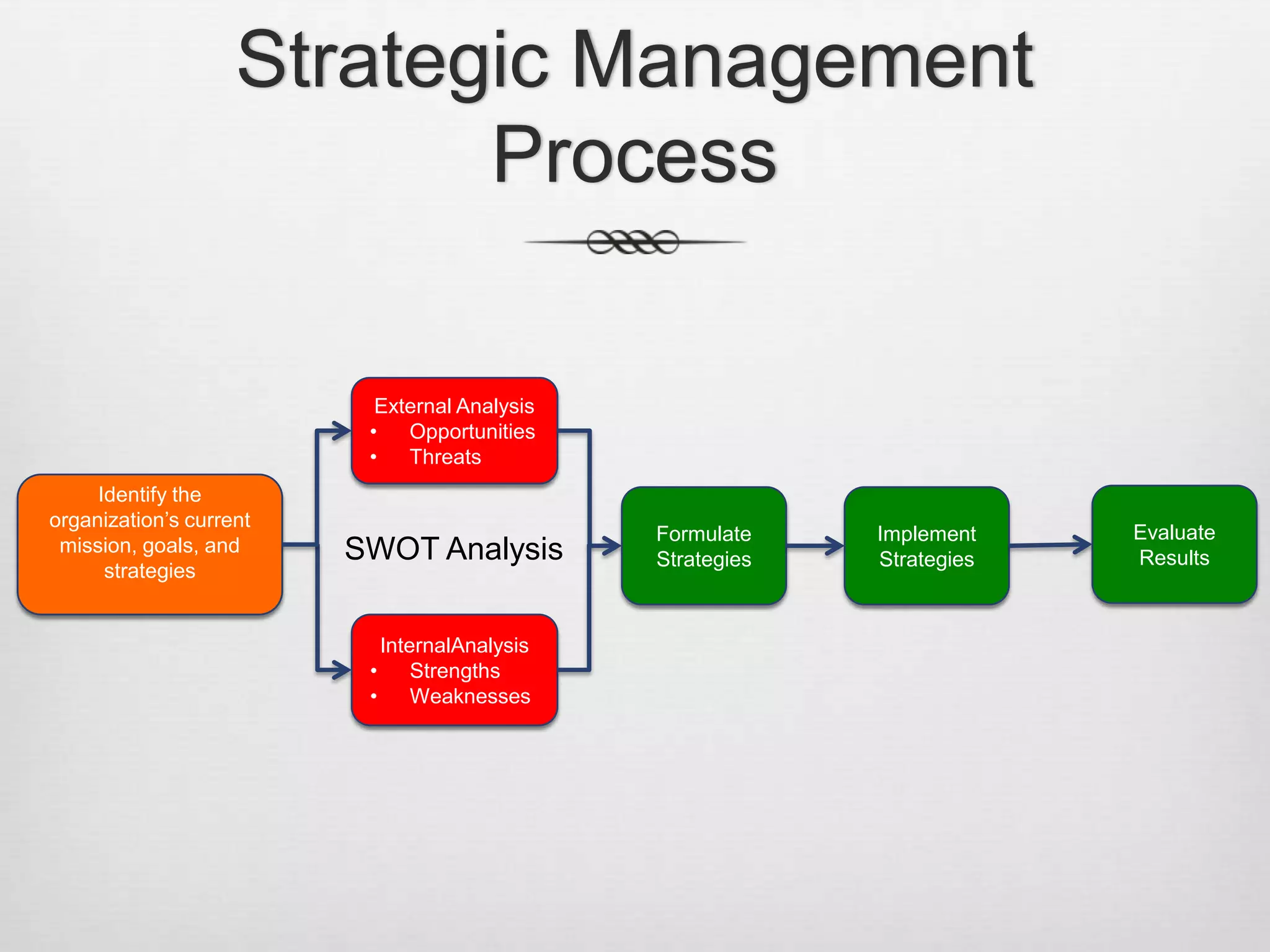
Strategic Management
Process

External Analysis
•
Opportunities
•
Threats
Identify the
organization’s current
mission, goals, and
strategies

SWOT Analysis
InternalAnalysis
•
Strengths
•
Weaknesses

Formulate
Strategies

Implement
Strategies

Evaluate
Results
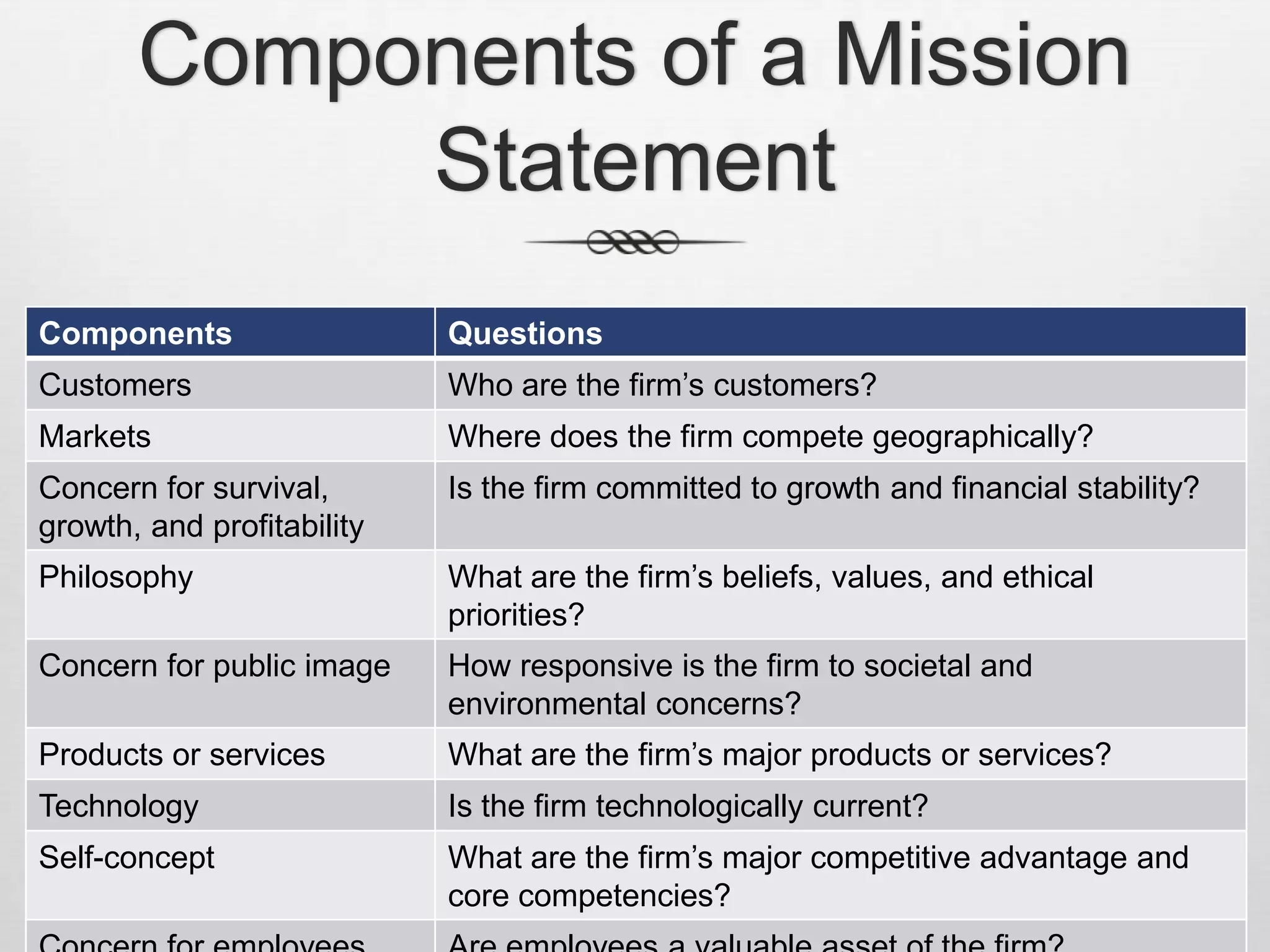
Components of a Mission
Statement
Components

Questions

Customers

Who are the firm’s customers?

Markets

Where does the firm compete geographically?

Concern for survival,
growth, and profitability

Is the firm committed to growth and financial stability?

Philosophy

What are the firm’s beliefs, values, and ethical
priorities?

Concern for public image

How responsive is the firm to societal and
environmental concerns?

Products or services

What are the firm’s major products or services?

Technology

Is the firm technologically current?

Self-concept

What are the firm’s major competitive advantage and
core competencies?
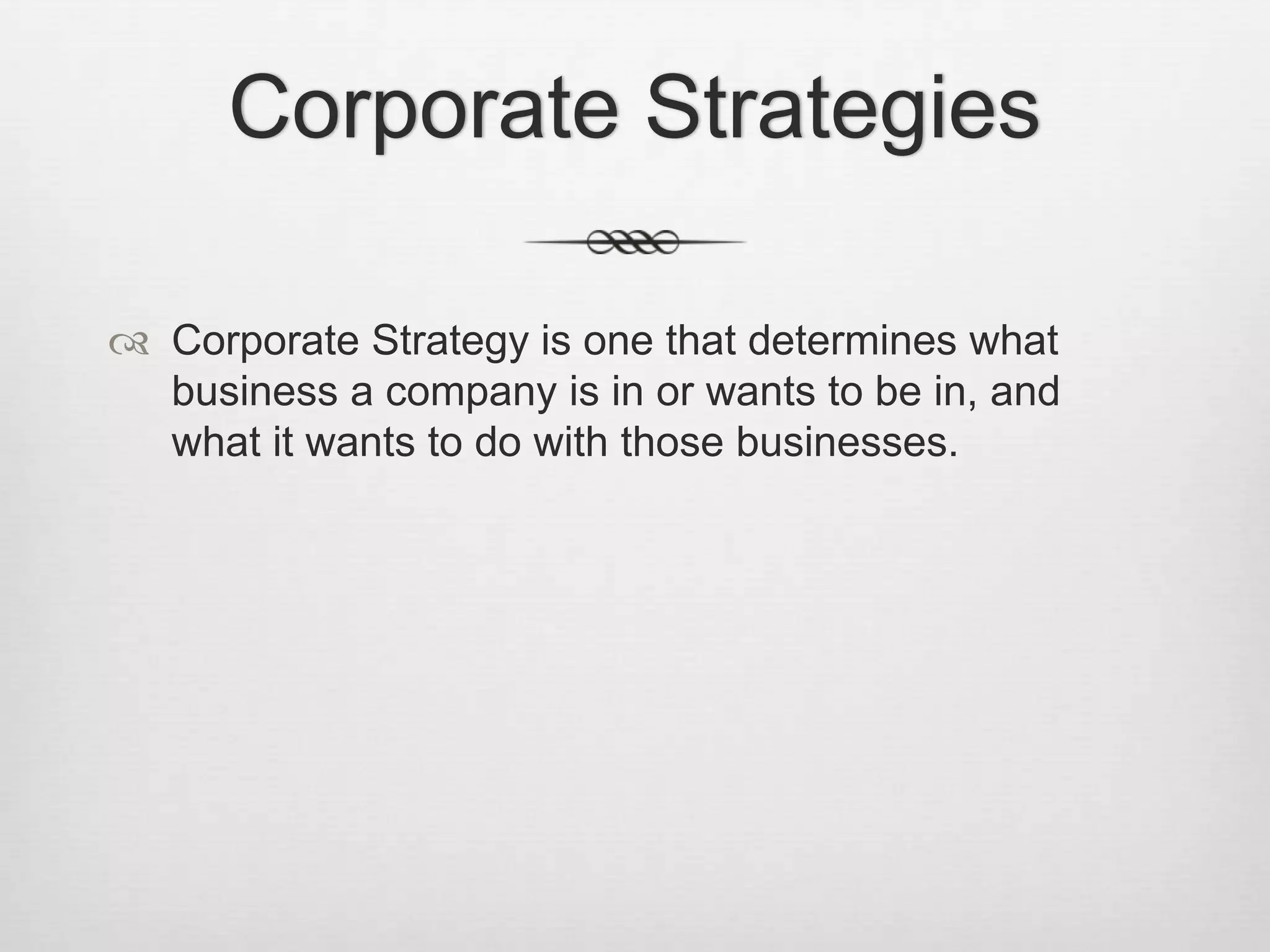
Corporate Strategies
 Corporate Strategy is one that determines what
business a company is in or wants to be in, and
what it wants to do with those businesses.
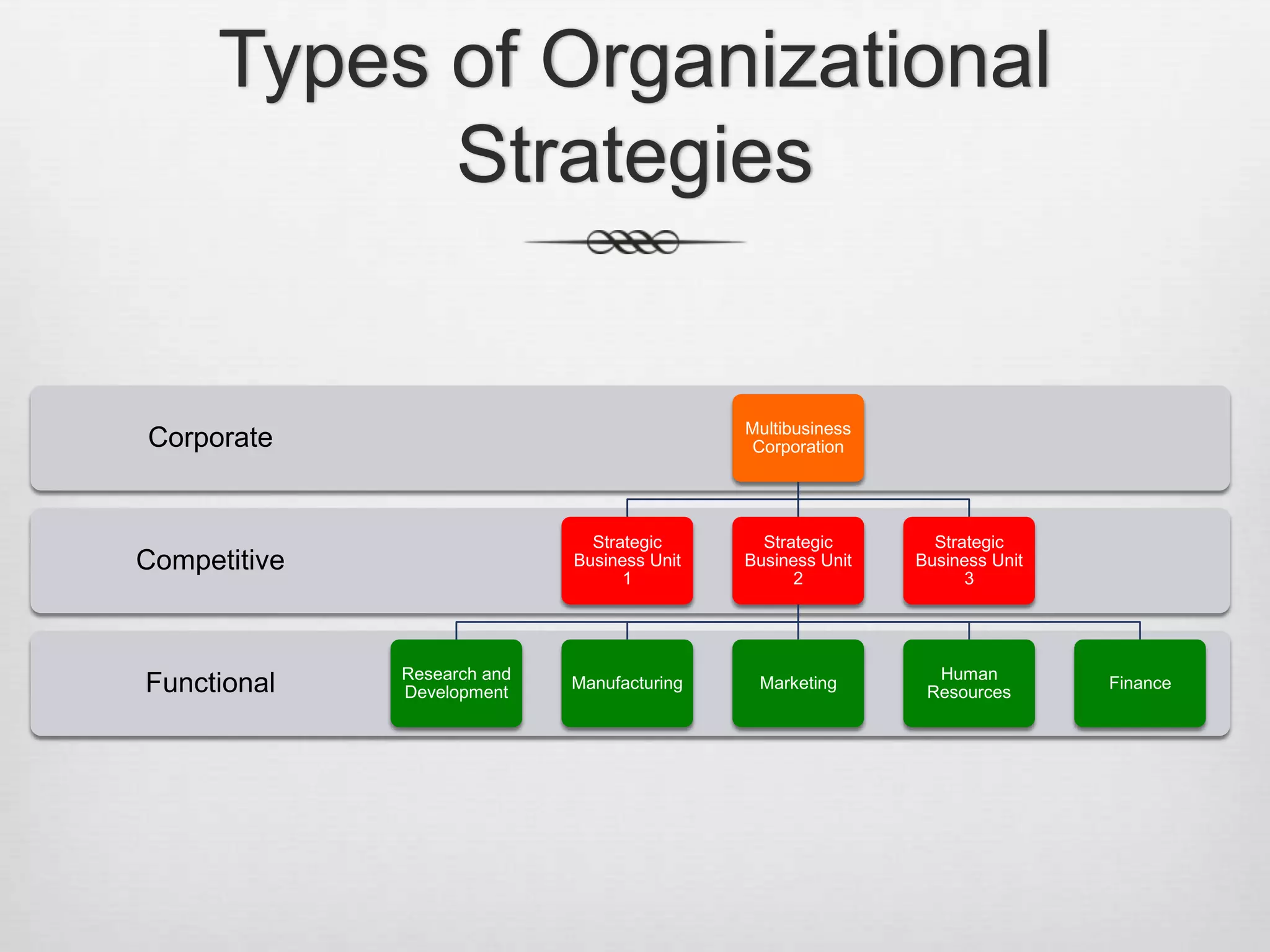
Types of Organizational
Strategies

Multibusiness
Corporation

Corporate

Strategic
Business Unit
1

Competitive

Functional

Research and
Development

Strategic
Business Unit
2

Strategic
Business Unit
3

Manufacturing

Marketing

Human
Resources

Finance
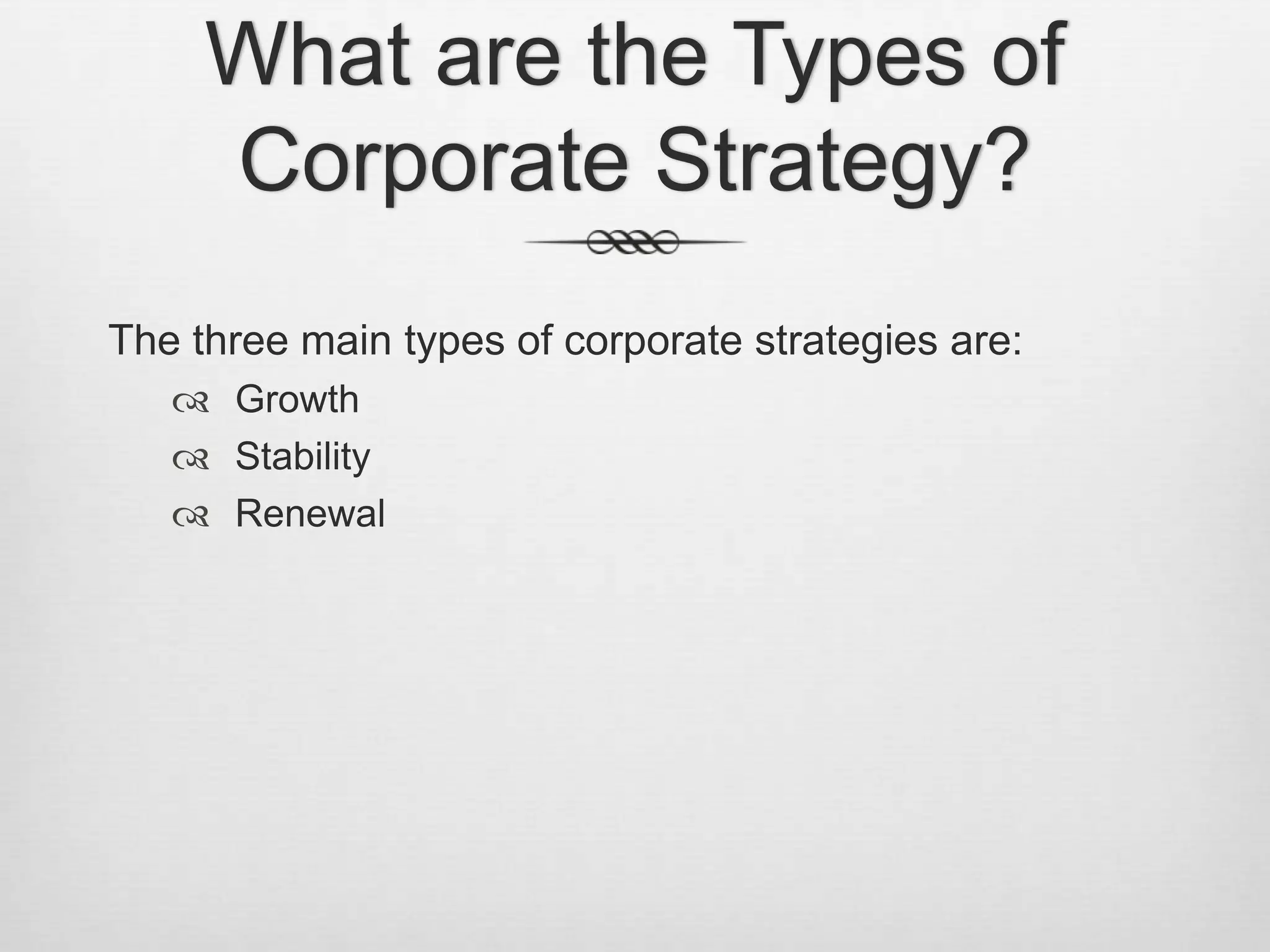
What are the Types of
Corporate Strategy?
The three main types of corporate strategies are:
 Growth
 Stability
 Renewal
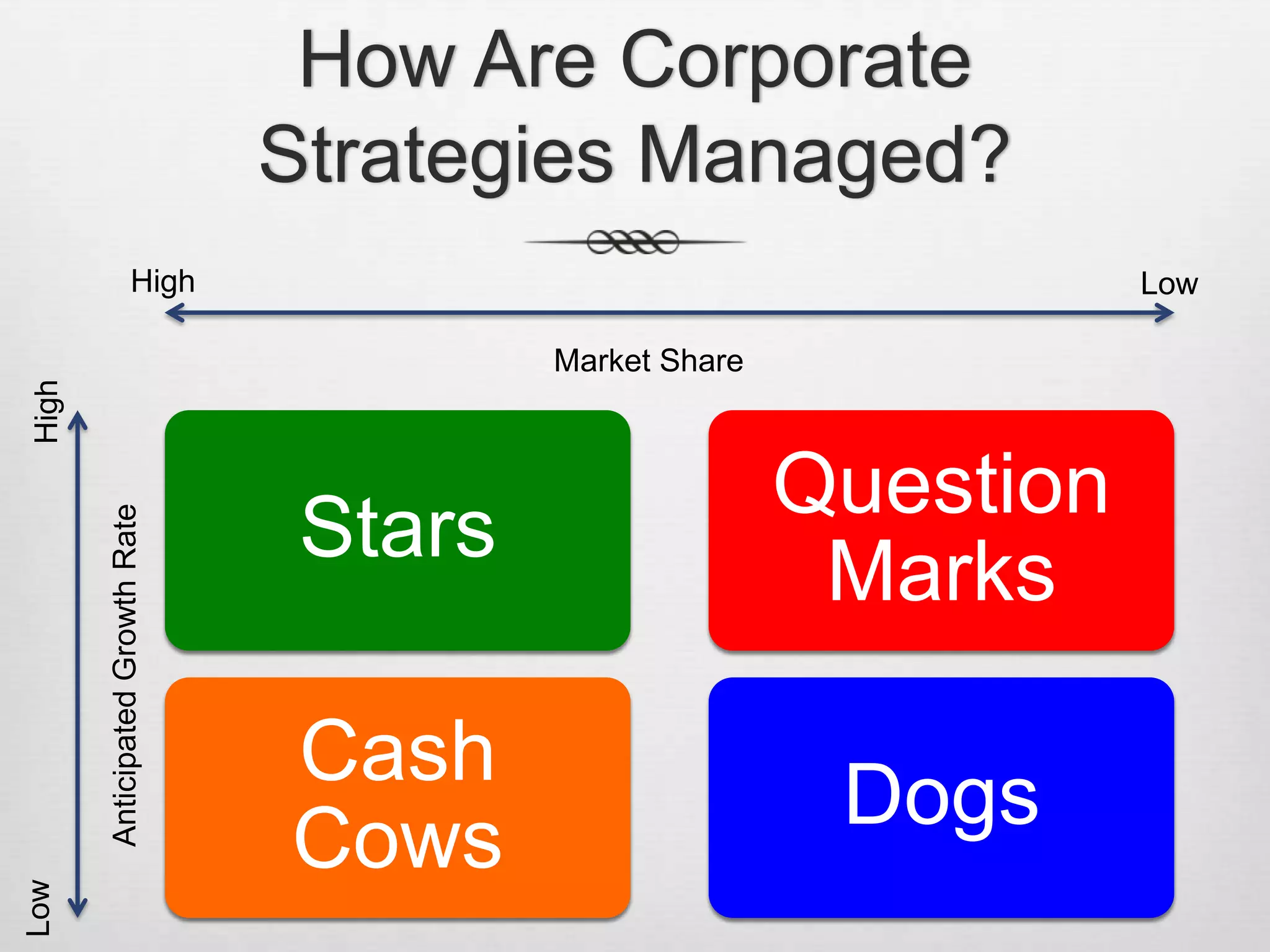
How Are Corporate
Strategies Managed?
High

Low

Low

Anticipated Growth Rate

High

Market Share

Stars

Question
Marks

Cash
Cows

Dogs
Competitive Strategies
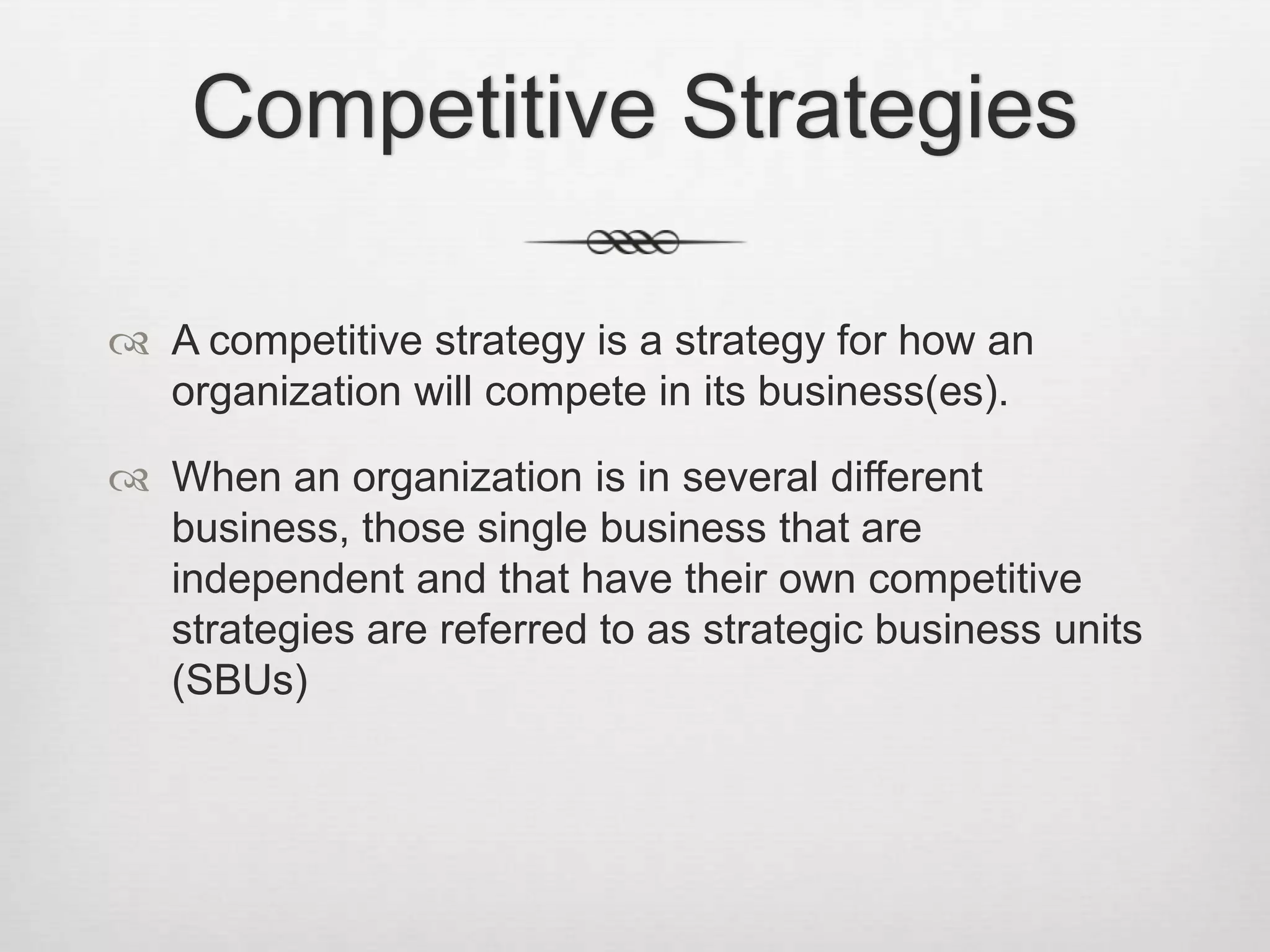
 A competitive strategy is a strategy for how an
organization will compete in its business(es).
 When an organization is in several different
business, those single business that are
independent and that have their own competitive
strategies are referred to as strategic business units
(SBUs)
The Role of Competitive
Advantage
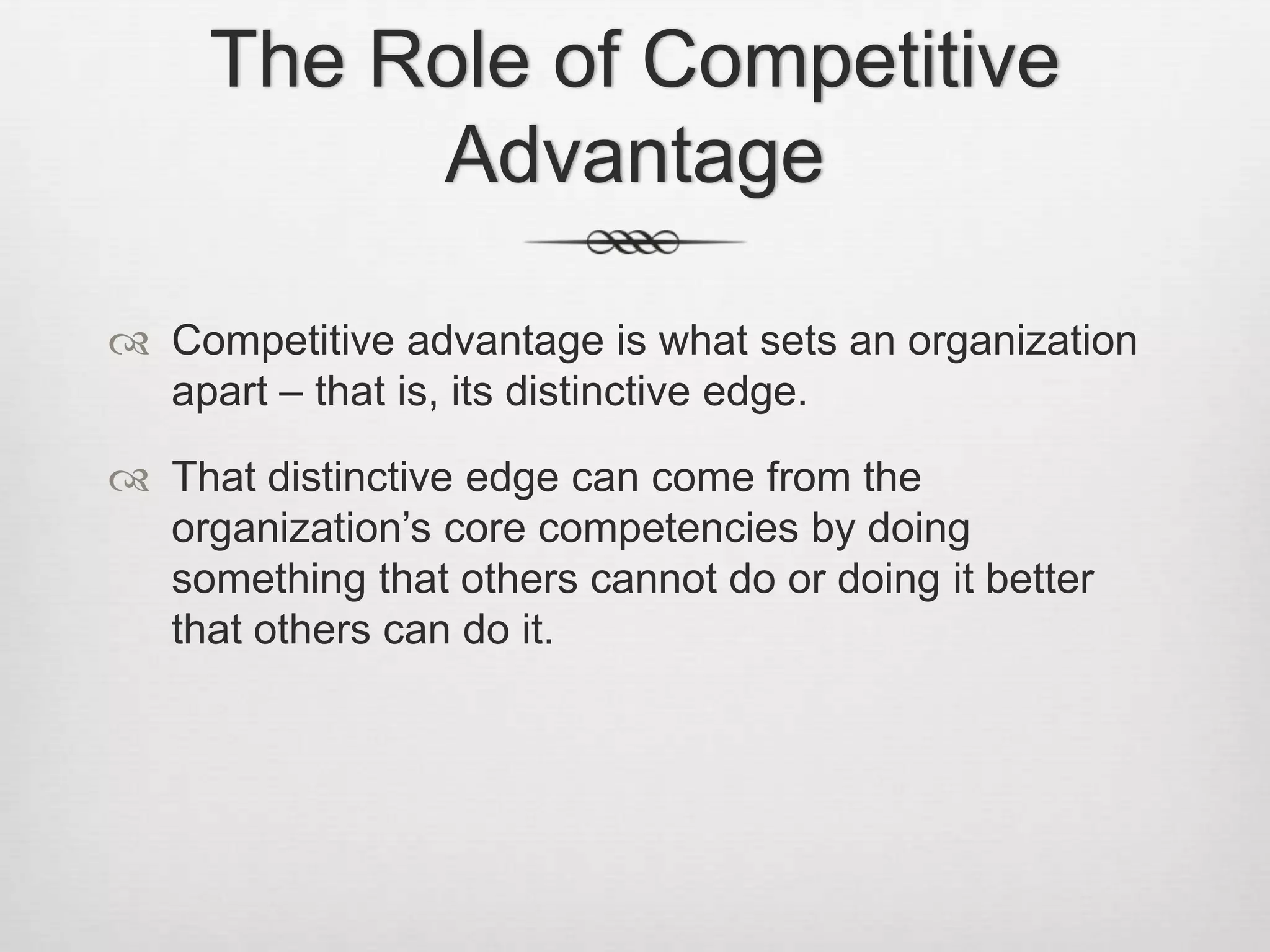
 Competitive advantage is what sets an organization
apart – that is, its distinctive edge.
 That distinctive edge can come from the
organization’s core competencies by doing
something that others cannot do or doing it better
that others can do it.
Quality as a Competitive
Advantage
 Emphasis on quality is still important today
 If implemented properly, quality can be a way for an
organization to create a sustainable competitive
advantage
 That’s why many organizations apply quality
management concepts
Sustaining Competitive
Advantage
 Every organization has resources (assets) and
capabilities (how work gets done)
 Not every organization is able to effectively exploit its
resources and to develop the core competencies that can
provide it with a competitive advantage
 It’s not enough simply to create a competitive advantage
 The organization must be able to sustain that advantage
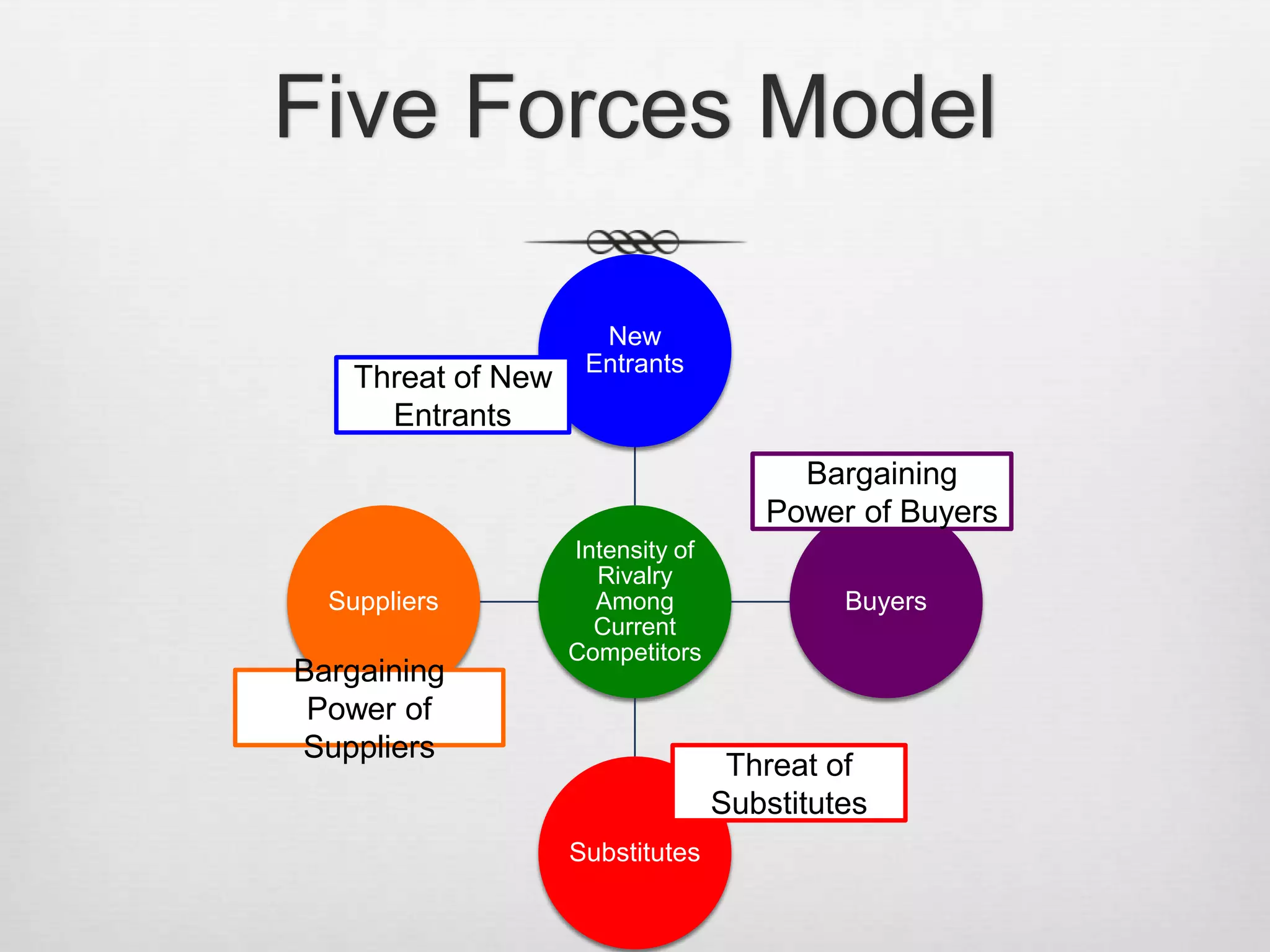
Five Forces Model
Threat of New
Entrants

New
Entrants

Bargaining
Power of Buyers
Suppliers

Bargaining
Power of
Suppliers

Intensity of
Rivalry
Among
Current
Competitors

Buyers

Threat of
Substitutes
Substitutes
Choosing a Competitive
Strategy
 Cost Leadership Strategy is when an organization competes on
the basis of having the lowest costs (costs or expenses, not
prices) in its industry
 Differentiation Strategy is when an organization competes by
offering unique products that are widely valued by customers
 Focus Strategy involves a cost advantage (cost focus) or a
differentiation advantage (differentiation focus) in a narrow
segment or niche
 Stuck in the middle is what happened if an organization can’t
develop a cost or a differentiation advantage
 Functional Strategy is the strategy used by an organization’s
various functional departments to support the competitive
strategy
The Need for Strategic
Leadership
 Strategic Leadership is the ability to anticipate,
envision, maintain flexibility, think strategically, and
work with others in the organization to initiate
changes that will create a viable and valuable future
for the organization
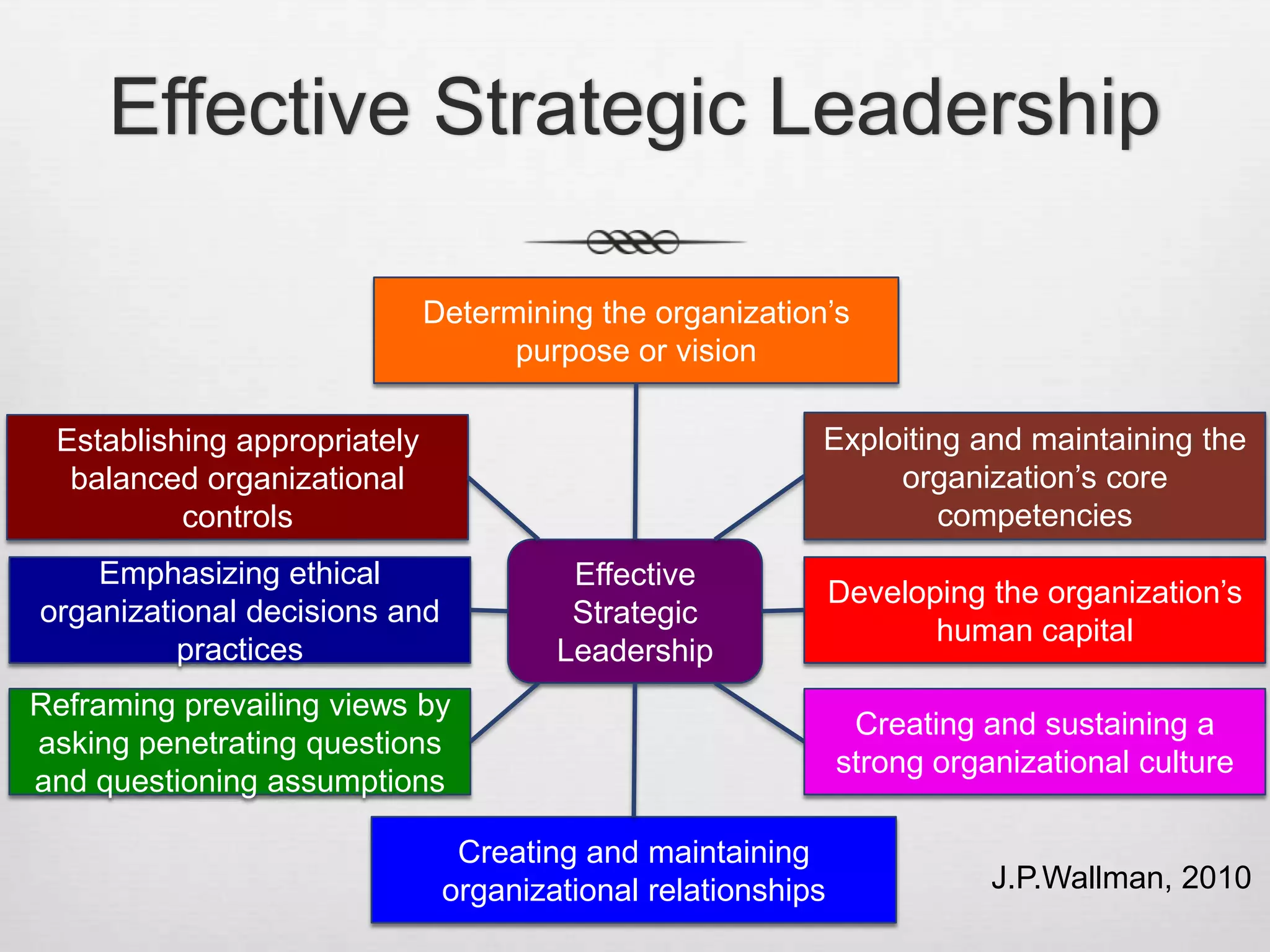
Effective Strategic Leadership
Determining the organization’s
purpose or vision
Exploiting and maintaining the
organization’s core
competencies

Establishing appropriately
balanced organizational
controls
Emphasizing ethical
organizational decisions and
practices

Effective
Strategic
Leadership

Reframing prevailing views by
asking penetrating questions
and questioning assumptions

Creating and maintaining
organizational relationships

Developing the organization’s
human capital
Creating and sustaining a
strong organizational culture

J.P.Wallman, 2010
The Need for Strategic
Flexibility
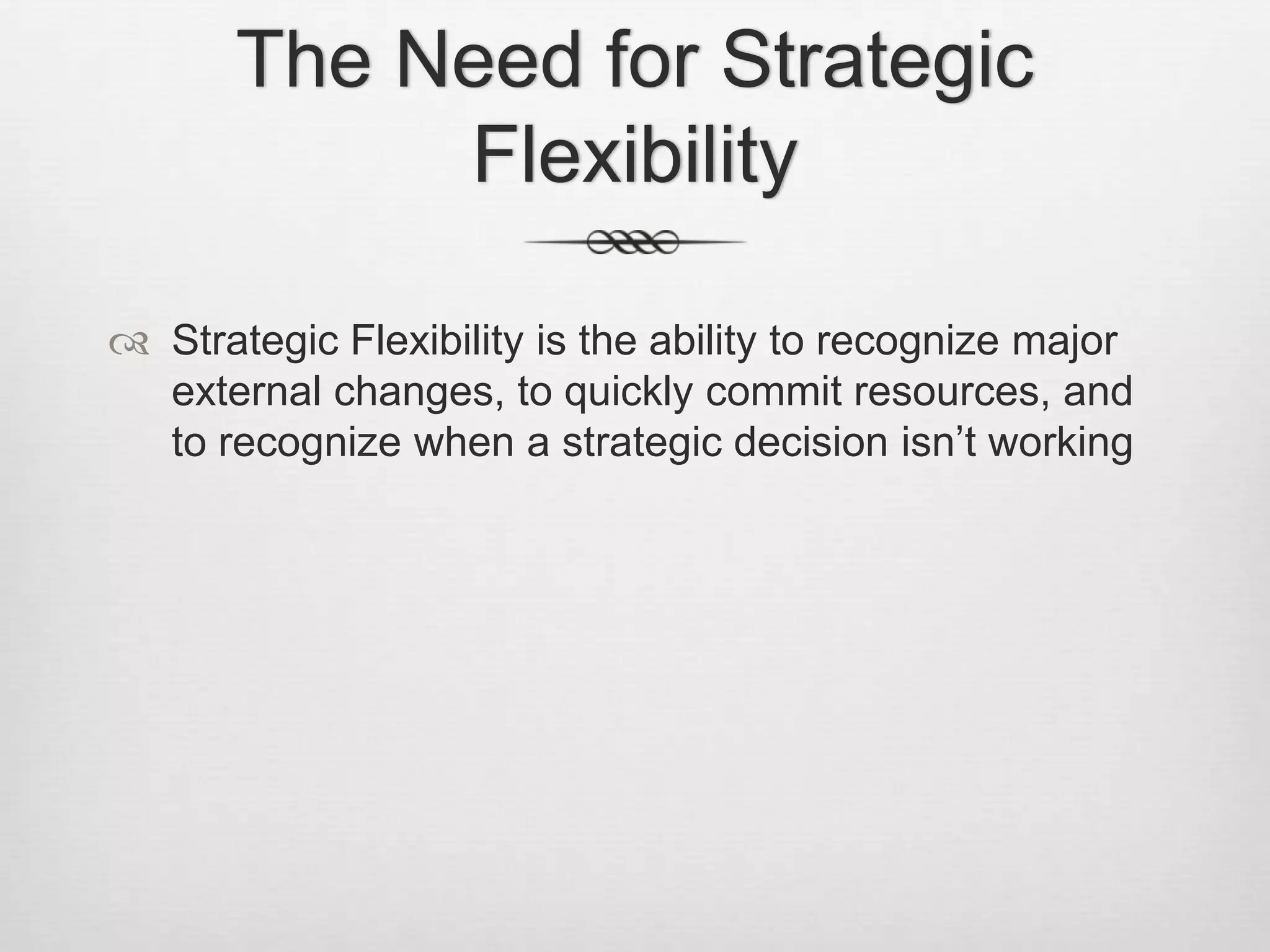
 Strategic Flexibility is the ability to recognize major
external changes, to quickly commit resources, and
to recognize when a strategic decision isn’t working
Developing Strategic
Flexibility
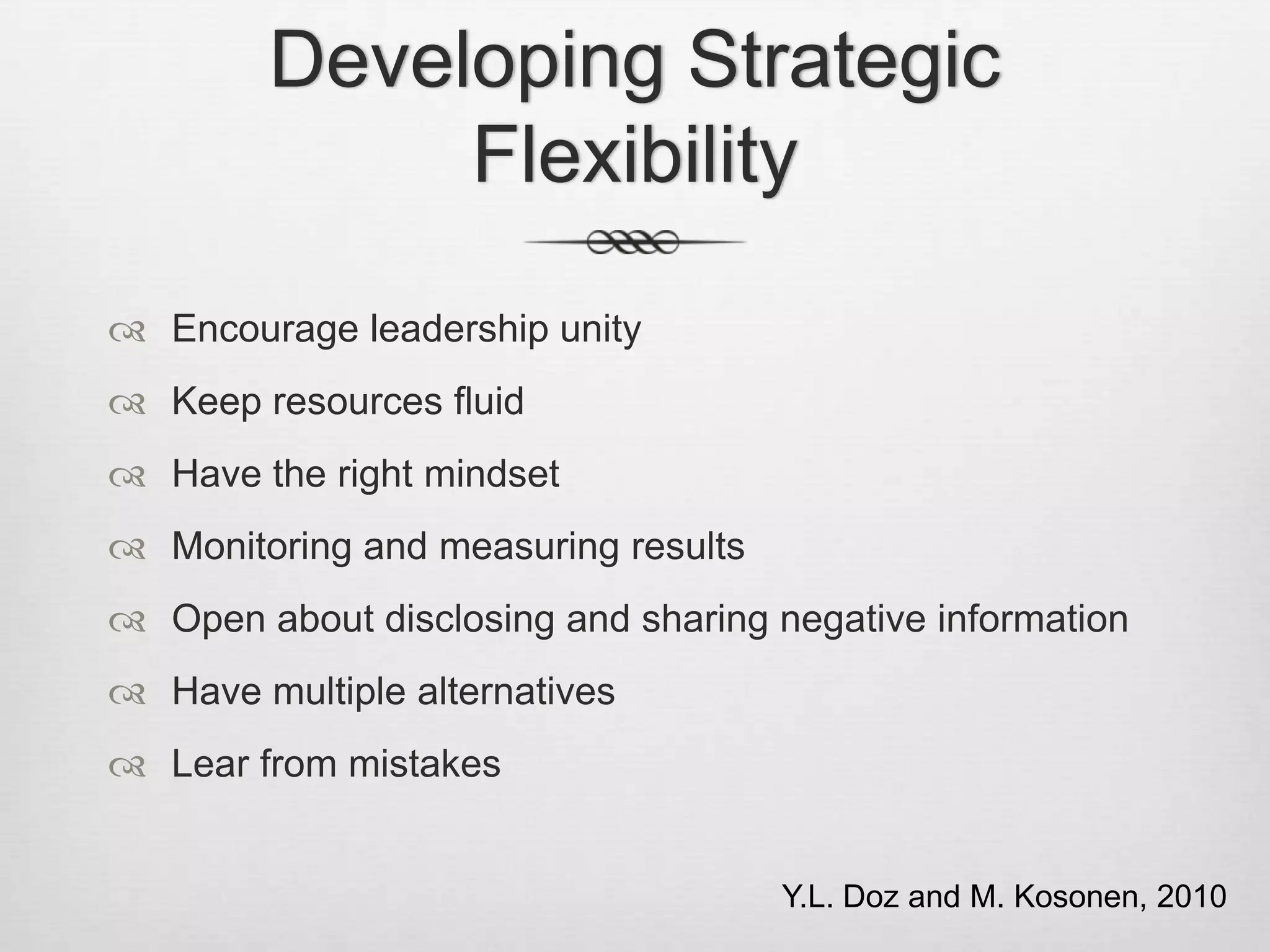
 Encourage leadership unity
 Keep resources fluid
 Have the right mindset
 Monitoring and measuring results
 Open about disclosing and sharing negative information
 Have multiple alternatives
 Lear from mistakes

Y.L. Doz and M. Kosonen, 2010
Important Organizational
Strategies for Today’s
Environment
Three strategies that are important in today’s
environment:
 E-Business Strategies

 Customer Service Strategies
 Innovation Strategies
E-Business Strategies
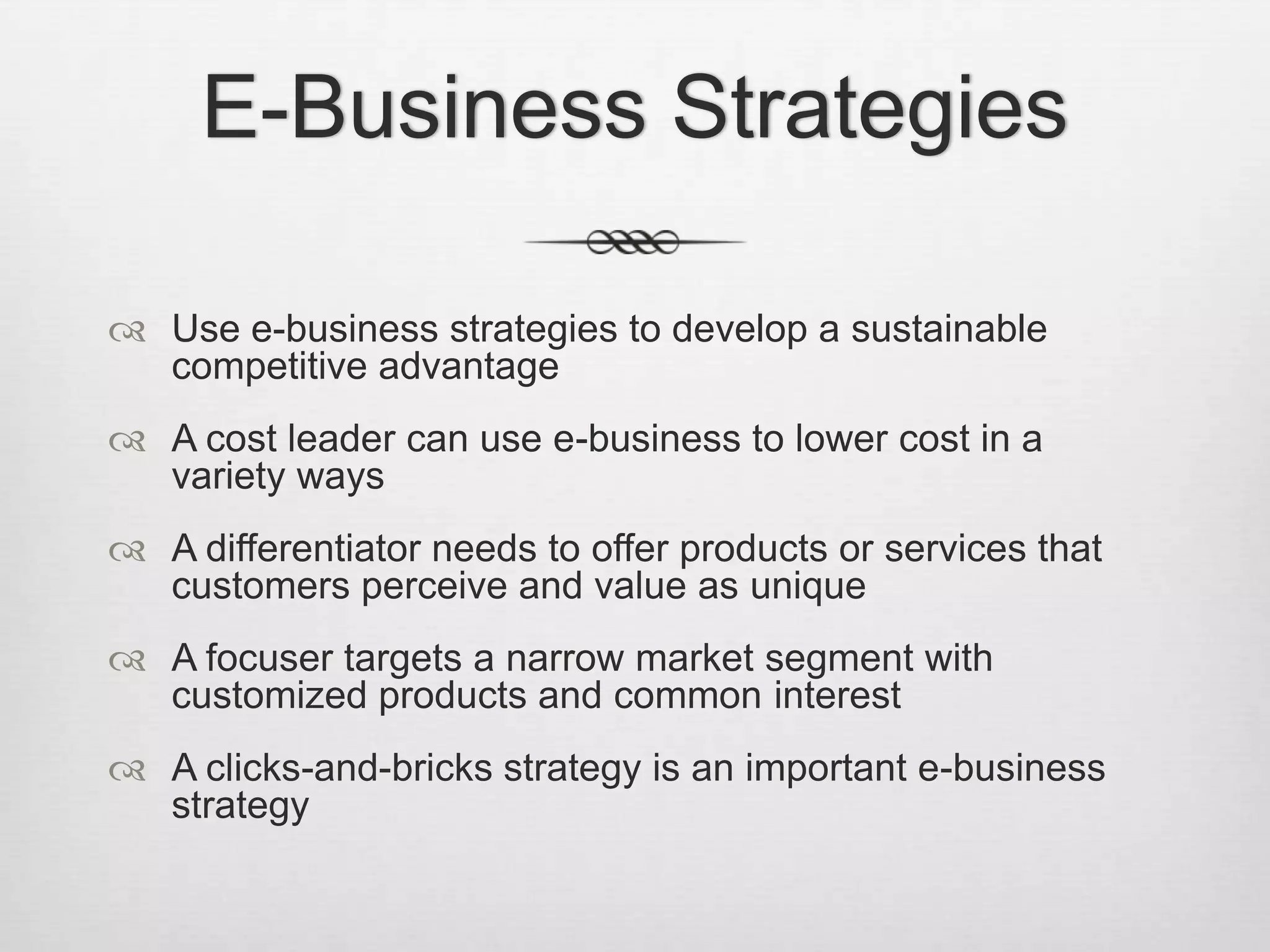
 Use e-business strategies to develop a sustainable
competitive advantage
 A cost leader can use e-business to lower cost in a
variety ways
 A differentiator needs to offer products or services that
customers perceive and value as unique
 A focuser targets a narrow market segment with
customized products and common interest
 A clicks-and-bricks strategy is an important e-business
strategy
Customer Service
Strategies
 Having effective customer communication system is
an important customer service strategy
 An organization’s culture is important to providing
excellent customer service
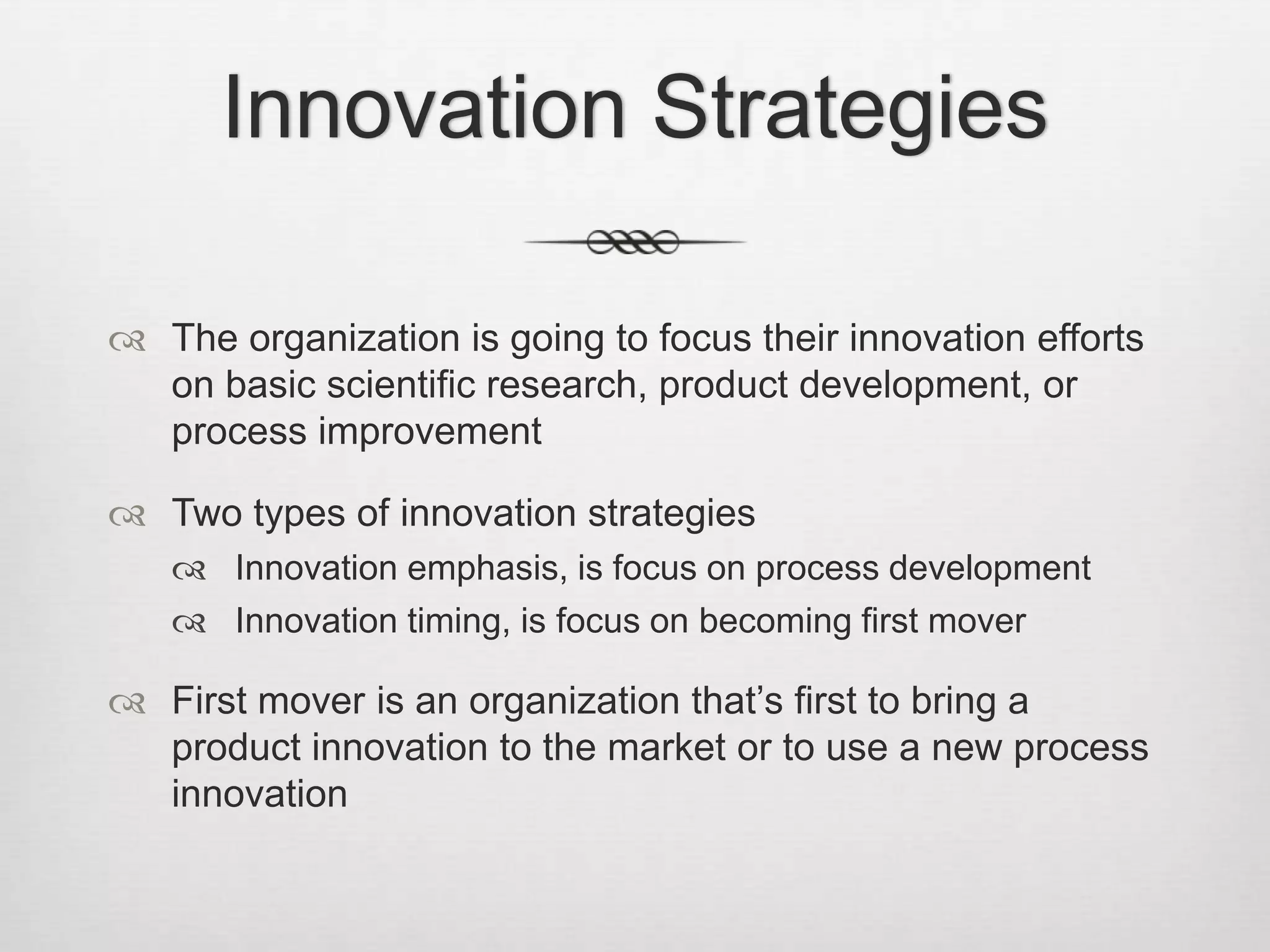
Innovation Strategies
 The organization is going to focus their innovation efforts
on basic scientific research, product development, or
process improvement
 Two types of innovation strategies
 Innovation emphasis, is focus on process development
 Innovation timing, is focus on becoming first mover

 First mover is an organization that’s first to bring a
product innovation to the market or to use a new process
innovation
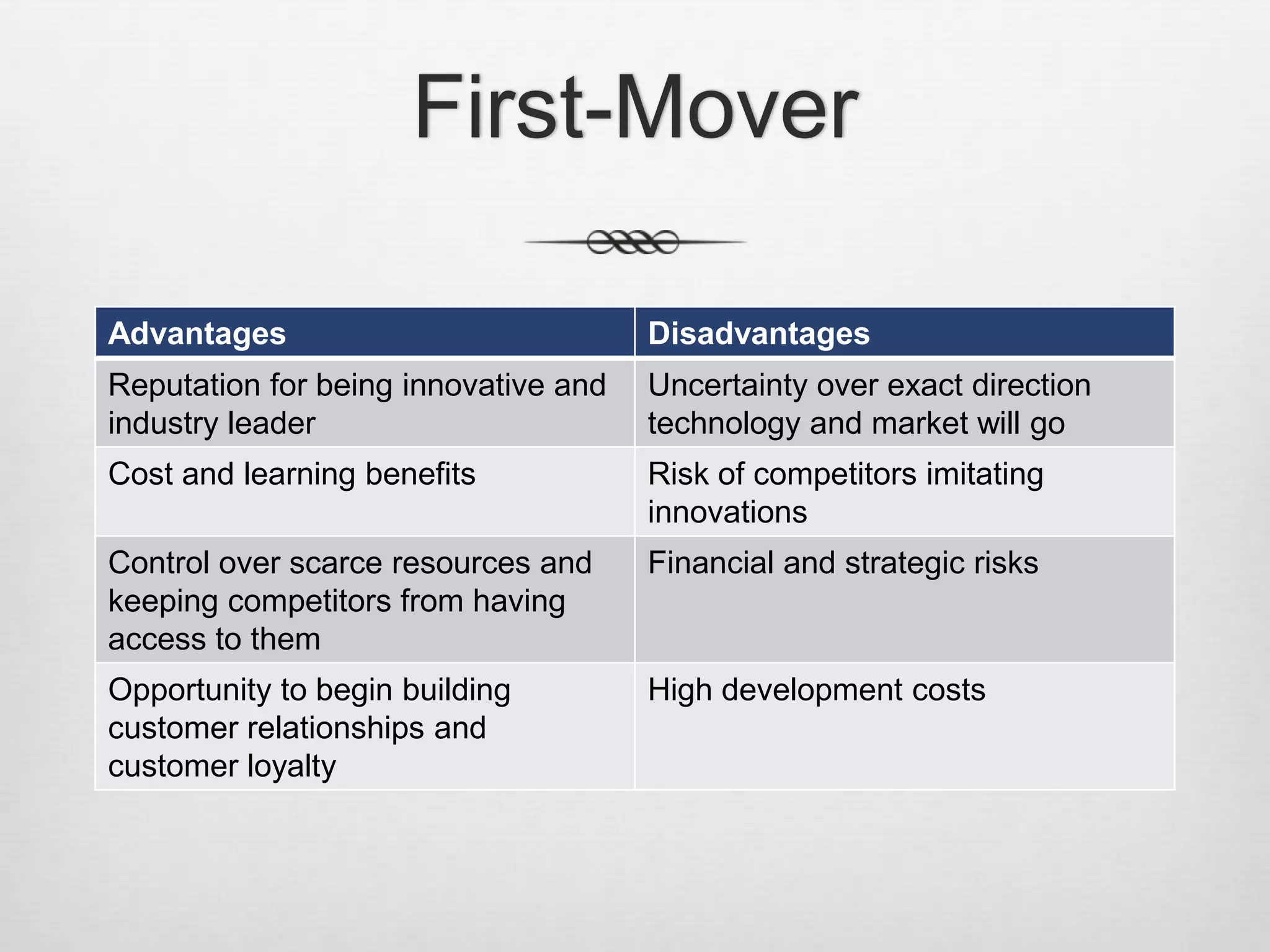
First-Mover
Advantages

Disadvantages

Reputation for being innovative and
industry leader

Uncertainty over exact direction
technology and market will go

Cost and learning benefits

Risk of competitors imitating
innovations

Control over scarce resources and
keeping competitors from having
access to them

Financial and strategic risks

Opportunity to begin building
customer relationships and
customer loyalty

High development costs

Strategic management overview

  • 2.
    What is Strategic Management Strategic Management is what managers do to develop the organization’s strategies.  Strategies are the plans for how the organization will do whatever its in business to do, how it will compete successfully, and how it will attract and satisfy its customers in order to achieve its goal. Stephen P. Robbins and Mary Coulter, “Management Eleventh Edition”, 2012
  • 3.
    Why is Strategic ManagementImportant? There are three reasons  The most significant one is that it can make a difference in how well an organization performs  The fact that managers in organizations of all types and sizes faces continually changing situations  Organizations are complex and diverse
  • 4.
    Strategic Management Process External Analysis • Opportunities • Threats Identifythe organization’s current mission, goals, and strategies SWOT Analysis InternalAnalysis • Strengths • Weaknesses Formulate Strategies Implement Strategies Evaluate Results
  • 5.
    Components of aMission Statement Components Questions Customers Who are the firm’s customers? Markets Where does the firm compete geographically? Concern for survival, growth, and profitability Is the firm committed to growth and financial stability? Philosophy What are the firm’s beliefs, values, and ethical priorities? Concern for public image How responsive is the firm to societal and environmental concerns? Products or services What are the firm’s major products or services? Technology Is the firm technologically current? Self-concept What are the firm’s major competitive advantage and core competencies?
  • 6.
    Corporate Strategies  CorporateStrategy is one that determines what business a company is in or wants to be in, and what it wants to do with those businesses.
  • 7.
    Types of Organizational Strategies Multibusiness Corporation Corporate Strategic BusinessUnit 1 Competitive Functional Research and Development Strategic Business Unit 2 Strategic Business Unit 3 Manufacturing Marketing Human Resources Finance
  • 8.
    What are theTypes of Corporate Strategy? The three main types of corporate strategies are:  Growth  Stability  Renewal
  • 9.
    How Are Corporate StrategiesManaged? High Low Low Anticipated Growth Rate High Market Share Stars Question Marks Cash Cows Dogs
  • 10.
    Competitive Strategies  Acompetitive strategy is a strategy for how an organization will compete in its business(es).  When an organization is in several different business, those single business that are independent and that have their own competitive strategies are referred to as strategic business units (SBUs)
  • 11.
    The Role ofCompetitive Advantage  Competitive advantage is what sets an organization apart – that is, its distinctive edge.  That distinctive edge can come from the organization’s core competencies by doing something that others cannot do or doing it better that others can do it.
  • 12.
    Quality as aCompetitive Advantage  Emphasis on quality is still important today  If implemented properly, quality can be a way for an organization to create a sustainable competitive advantage  That’s why many organizations apply quality management concepts
  • 13.
    Sustaining Competitive Advantage  Everyorganization has resources (assets) and capabilities (how work gets done)  Not every organization is able to effectively exploit its resources and to develop the core competencies that can provide it with a competitive advantage  It’s not enough simply to create a competitive advantage  The organization must be able to sustain that advantage
  • 14.
    Five Forces Model Threatof New Entrants New Entrants Bargaining Power of Buyers Suppliers Bargaining Power of Suppliers Intensity of Rivalry Among Current Competitors Buyers Threat of Substitutes Substitutes
  • 15.
    Choosing a Competitive Strategy Cost Leadership Strategy is when an organization competes on the basis of having the lowest costs (costs or expenses, not prices) in its industry  Differentiation Strategy is when an organization competes by offering unique products that are widely valued by customers  Focus Strategy involves a cost advantage (cost focus) or a differentiation advantage (differentiation focus) in a narrow segment or niche  Stuck in the middle is what happened if an organization can’t develop a cost or a differentiation advantage  Functional Strategy is the strategy used by an organization’s various functional departments to support the competitive strategy
  • 16.
    The Need forStrategic Leadership  Strategic Leadership is the ability to anticipate, envision, maintain flexibility, think strategically, and work with others in the organization to initiate changes that will create a viable and valuable future for the organization
  • 17.
    Effective Strategic Leadership Determiningthe organization’s purpose or vision Exploiting and maintaining the organization’s core competencies Establishing appropriately balanced organizational controls Emphasizing ethical organizational decisions and practices Effective Strategic Leadership Reframing prevailing views by asking penetrating questions and questioning assumptions Creating and maintaining organizational relationships Developing the organization’s human capital Creating and sustaining a strong organizational culture J.P.Wallman, 2010
  • 18.
    The Need forStrategic Flexibility  Strategic Flexibility is the ability to recognize major external changes, to quickly commit resources, and to recognize when a strategic decision isn’t working
  • 19.
    Developing Strategic Flexibility  Encourageleadership unity  Keep resources fluid  Have the right mindset  Monitoring and measuring results  Open about disclosing and sharing negative information  Have multiple alternatives  Lear from mistakes Y.L. Doz and M. Kosonen, 2010
  • 20.
    Important Organizational Strategies forToday’s Environment Three strategies that are important in today’s environment:  E-Business Strategies  Customer Service Strategies  Innovation Strategies
  • 21.
    E-Business Strategies  Usee-business strategies to develop a sustainable competitive advantage  A cost leader can use e-business to lower cost in a variety ways  A differentiator needs to offer products or services that customers perceive and value as unique  A focuser targets a narrow market segment with customized products and common interest  A clicks-and-bricks strategy is an important e-business strategy
  • 22.
    Customer Service Strategies  Havingeffective customer communication system is an important customer service strategy  An organization’s culture is important to providing excellent customer service
  • 23.
    Innovation Strategies  Theorganization is going to focus their innovation efforts on basic scientific research, product development, or process improvement  Two types of innovation strategies  Innovation emphasis, is focus on process development  Innovation timing, is focus on becoming first mover  First mover is an organization that’s first to bring a product innovation to the market or to use a new process innovation
  • 24.
    First-Mover Advantages Disadvantages Reputation for beinginnovative and industry leader Uncertainty over exact direction technology and market will go Cost and learning benefits Risk of competitors imitating innovations Control over scarce resources and keeping competitors from having access to them Financial and strategic risks Opportunity to begin building customer relationships and customer loyalty High development costs