DEFINITION
• an approachto the practice of human
resources that addresses business
challenges and make a direct
contribution to long term objectives.
• it focuses in long term resourcing issues
within the context of an organization's
goals and evolving nature of work
3.
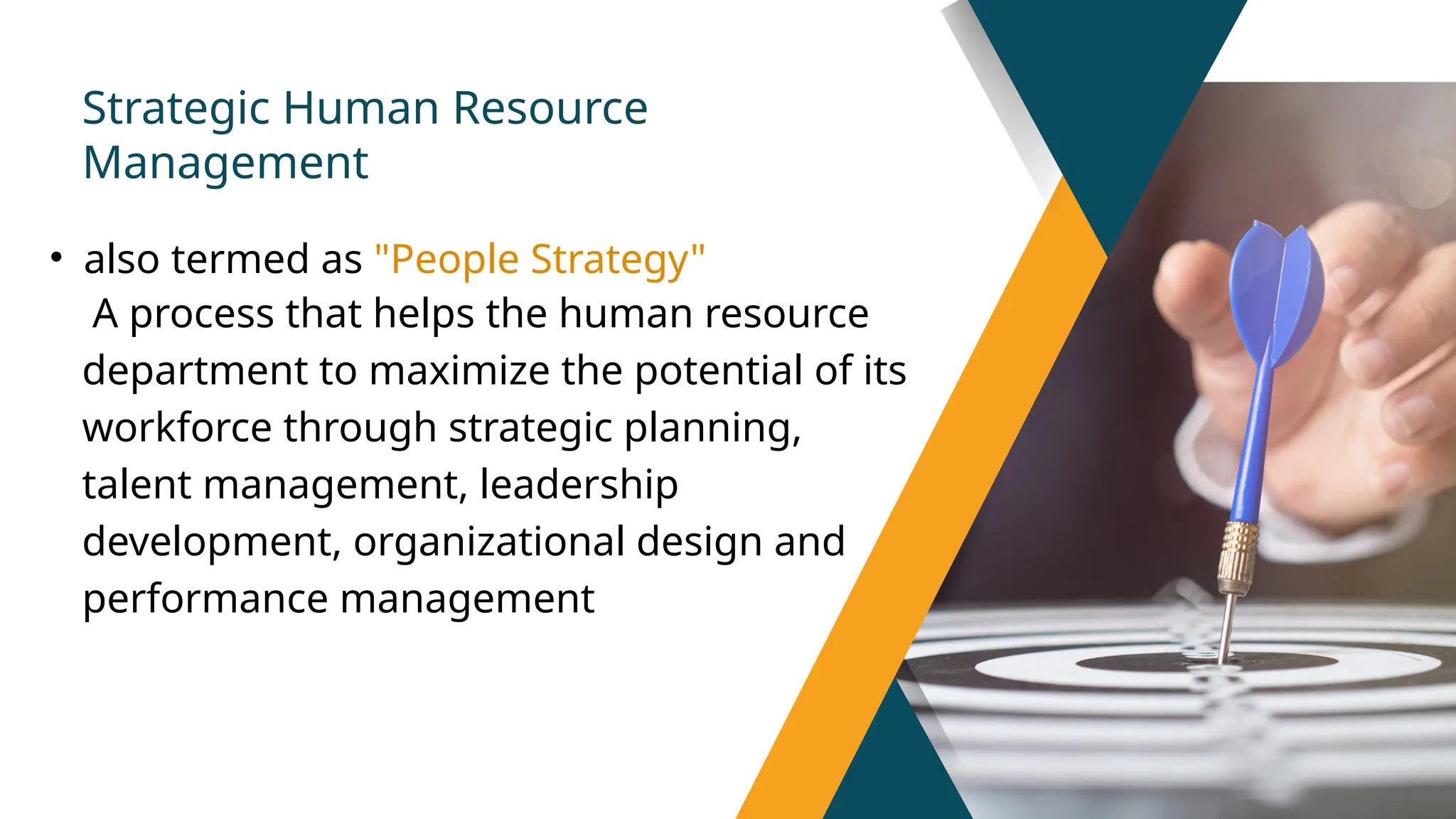
Strategic Human Resource
Management
•also termed as "People Strategy"
A process that helps the human resource
department to maximize the potential of its
workforce through strategic planning,
talent management, leadership
development, organizational design and
performance management
4.
SHRM GOAL
SHRM aimsto achieve COMPETITIVE
ADVANTAGE by creating value for
customers, shareholders, employees
and other stakeholders.
COMPETITIVE ADVANTAGE
• a competitive edge
• what makes an organization/business'
goods/services superior to all
consumer's other choice.
5.
SHRM PURPOSE
SHRM mainpurpose is to improve
the performance of the business
and maintain a culture that
encourages innovation and works
continuously to gain a competitive
advantage.
PURPOSE
6.
KEY DIFFERENCES OFHRM and SHRM
HUMAN RESOURCE MANAGEMENT STRATEGIC HUMAN RESOURCE
MANAGEMENT
• managing people to achieve short term
goals
• modern approach to develop HR in line
with overall strategy of the organization;
long term
• select and compensate employees for the
activity performed
• improve employees effectiveness and
efficiency
• proactive
• reactive
• short term goals and outcomes • supports long term goals
• change follower • change leader
• job design: division of labor / specialization • job design: flexibility, cross training