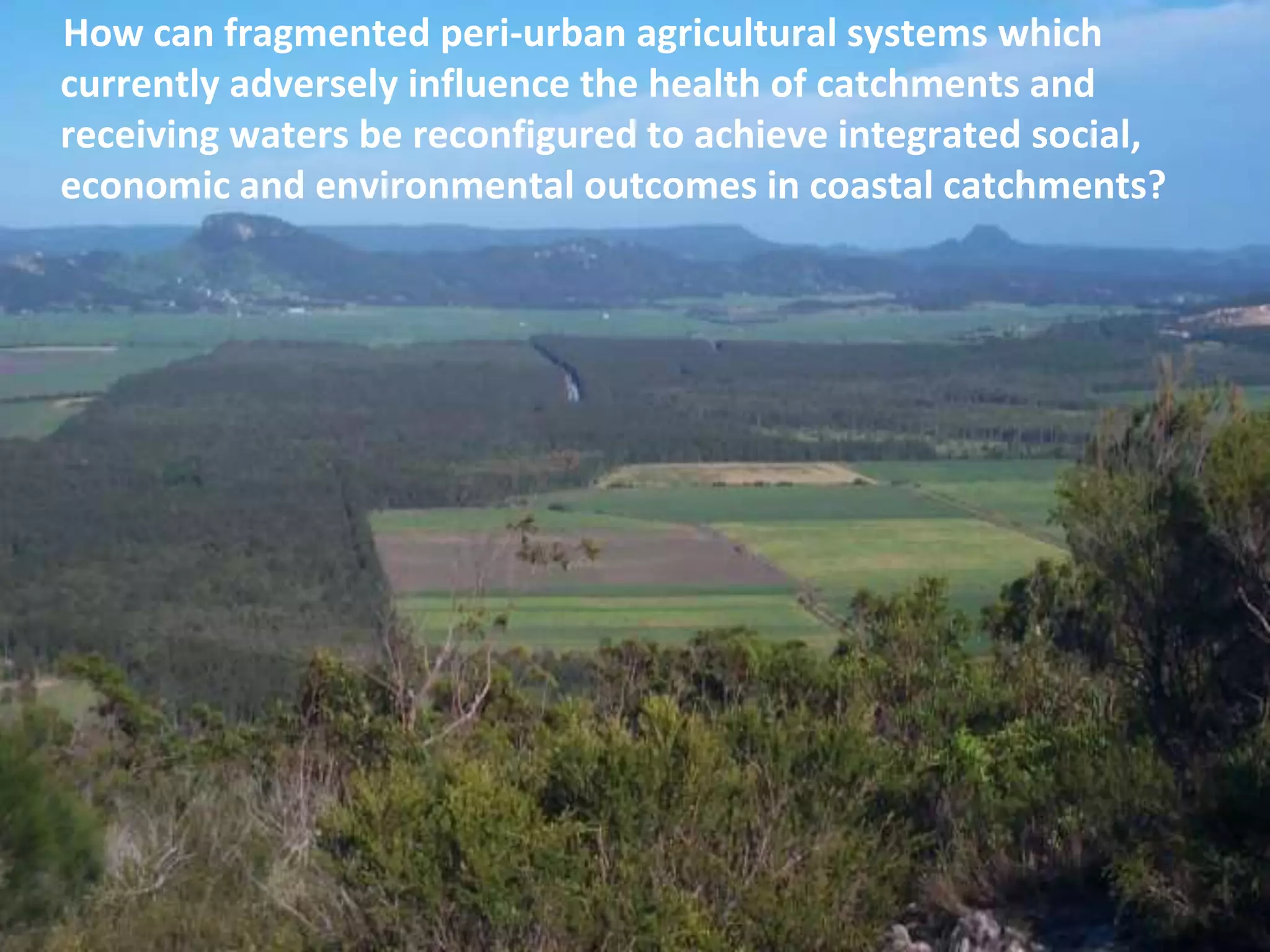
How can fragmented peri-urban agricultural systems which
currently adversely influence the health of catchments and
receiving waters be reconfigured to achieve integrated social,
economic and environmental outcomes in coastal catchments?
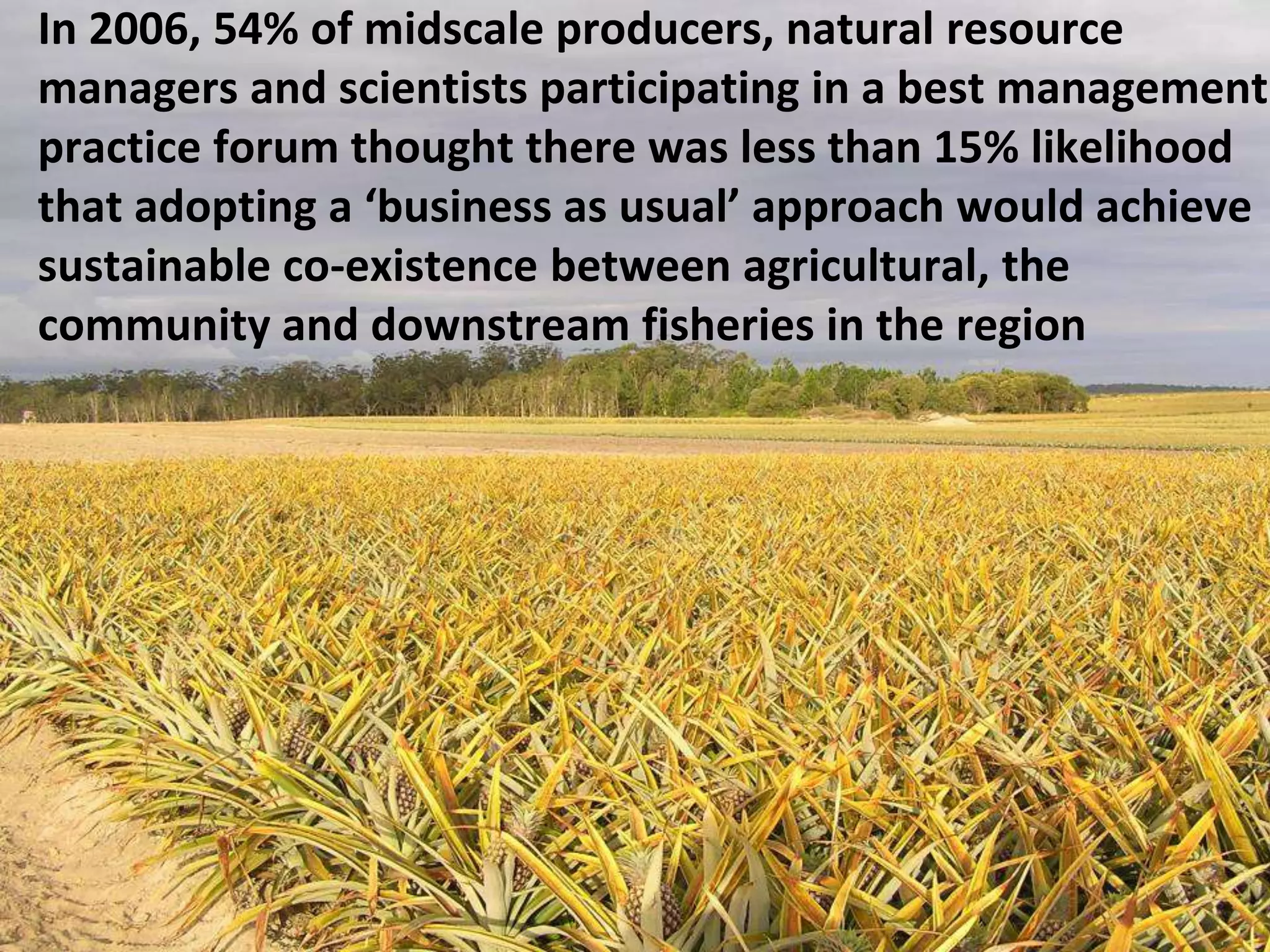
In 2006, 54% of midscale producers, natural resource
managers and scientists participating in a best management
practice forum thought there was less than 15% likelihood
that adopting a ‘business as usual’ approach would achieve
sustainable co-existence between agricultural, the
community and downstream fisheries in the region
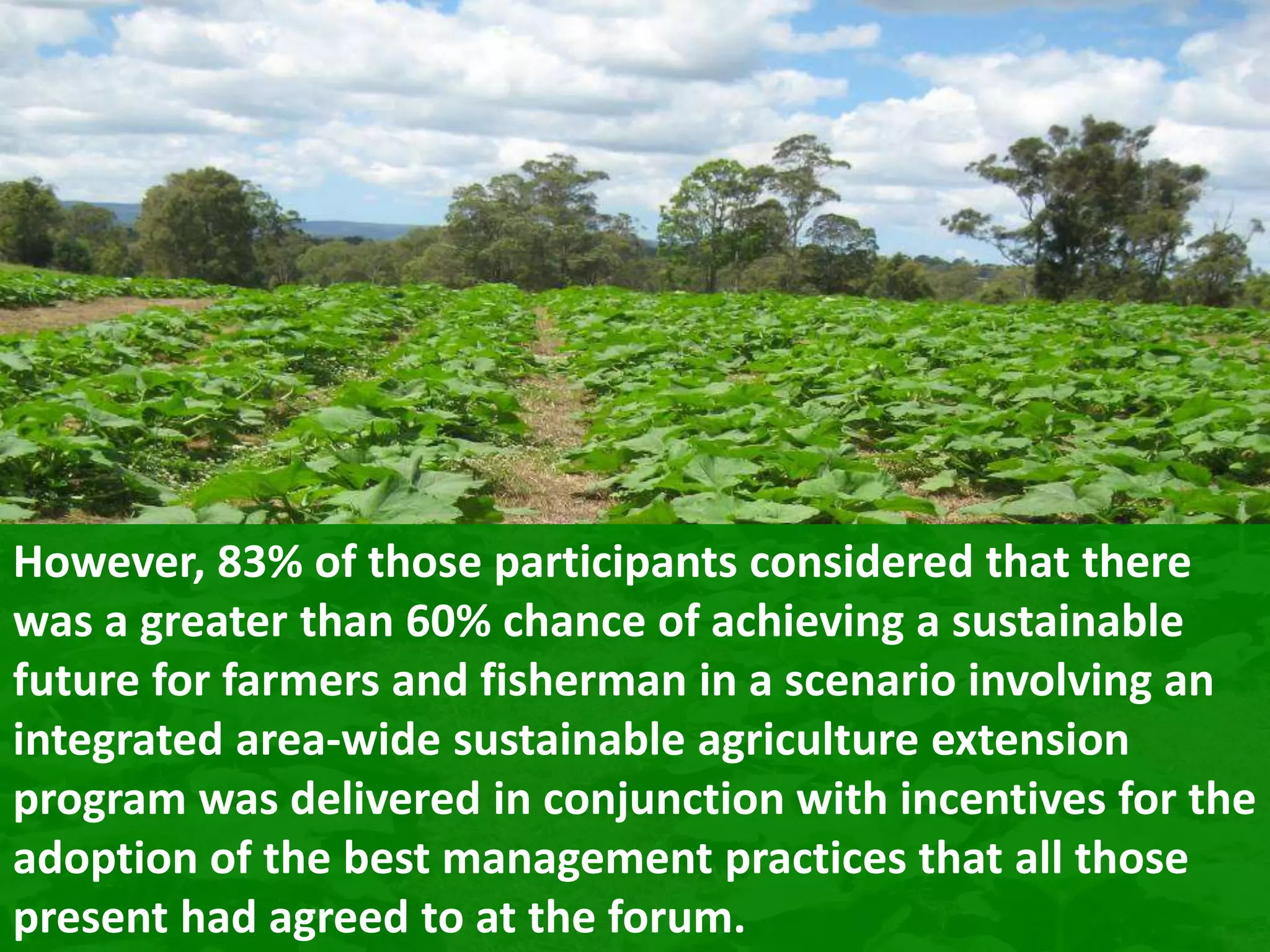
However, 83% of those participants considered that there
was a greater than 60% chance of achieving a sustainable
future for farmers and fisherman in a scenario involving an
integrated area-wide sustainable agriculture extension
program was delivered in conjunction with incentives for the
adoption of the best management practices that all those
present had agreed to at the forum.
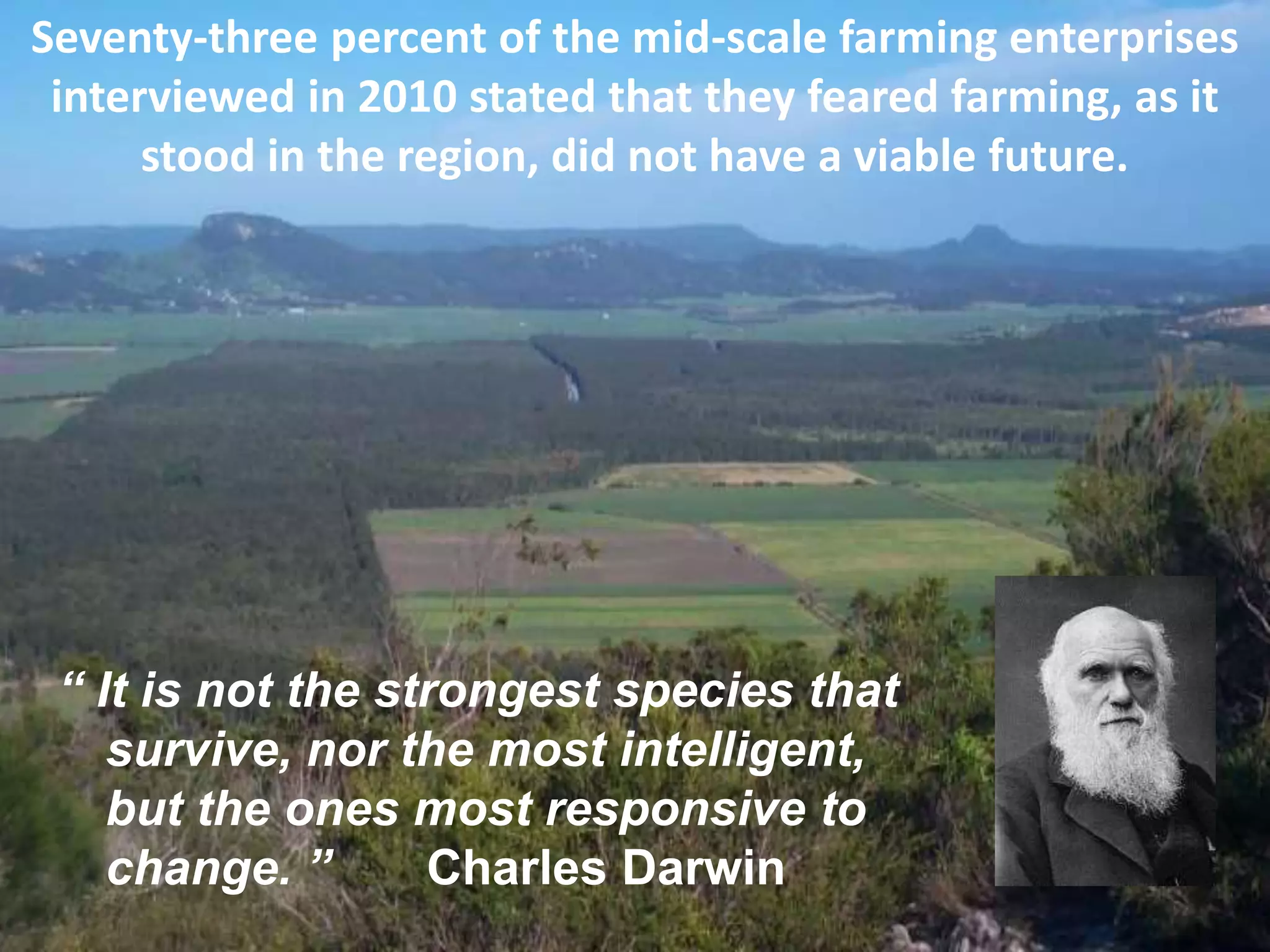
Seventy-three percent of the mid-scale farming enterprises
interviewed in 2010 stated that they feared farming, as it
stood in the region, did not have a viable future.

“ It is not the strongest species that
survive, nor the most intelligent,
but the ones most responsive to
change. ”
Charles Darwin
Systems Reconfig
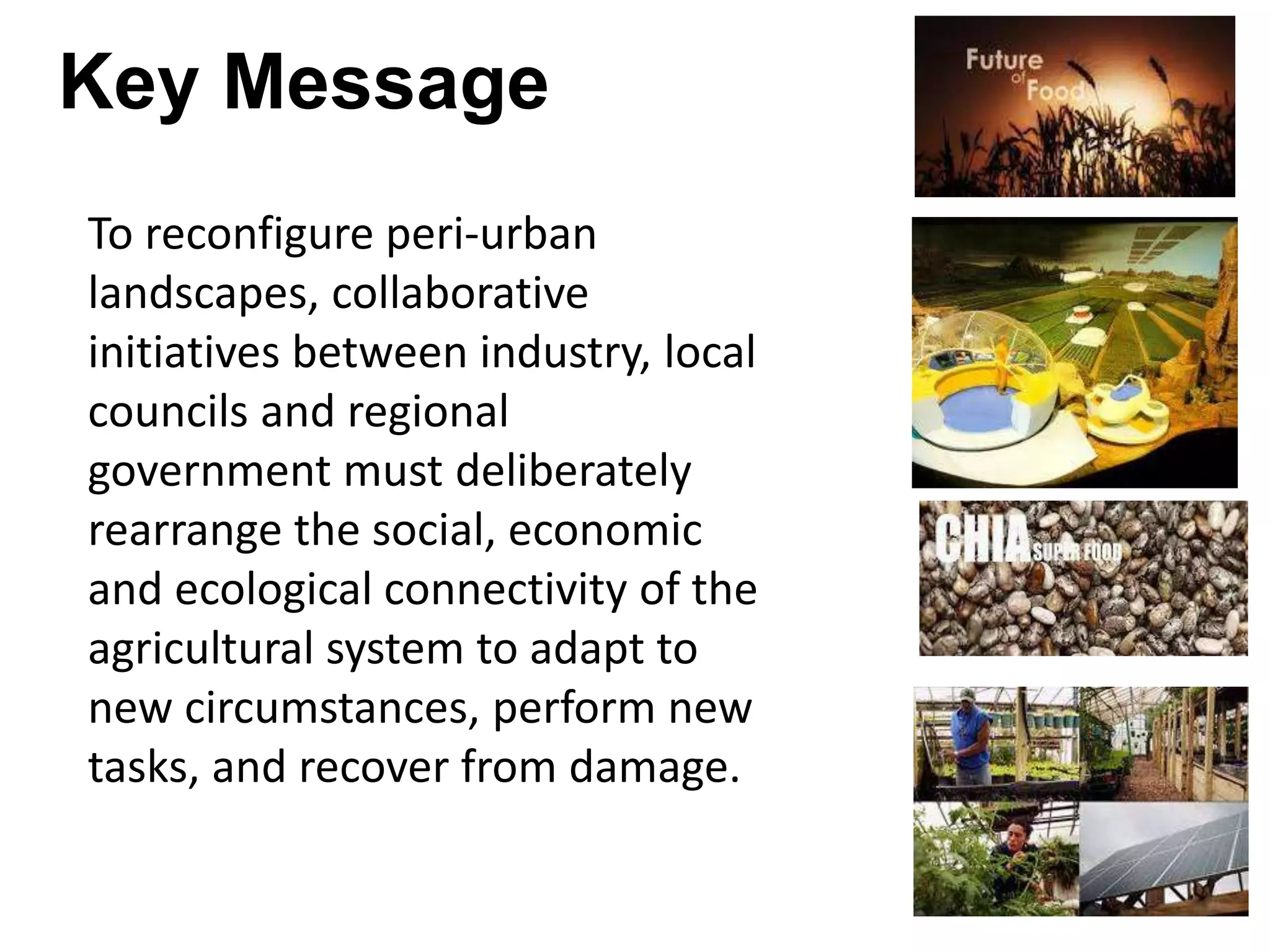
Key Message
To reconfigure peri-urban
landscapes, collaborative
initiatives between industry, local
councils and regional
government must deliberately
rearrange the social, economic
and ecological connectivity of the
agricultural system to adapt to
new circumstances, perform new
tasks, and recover from damage.
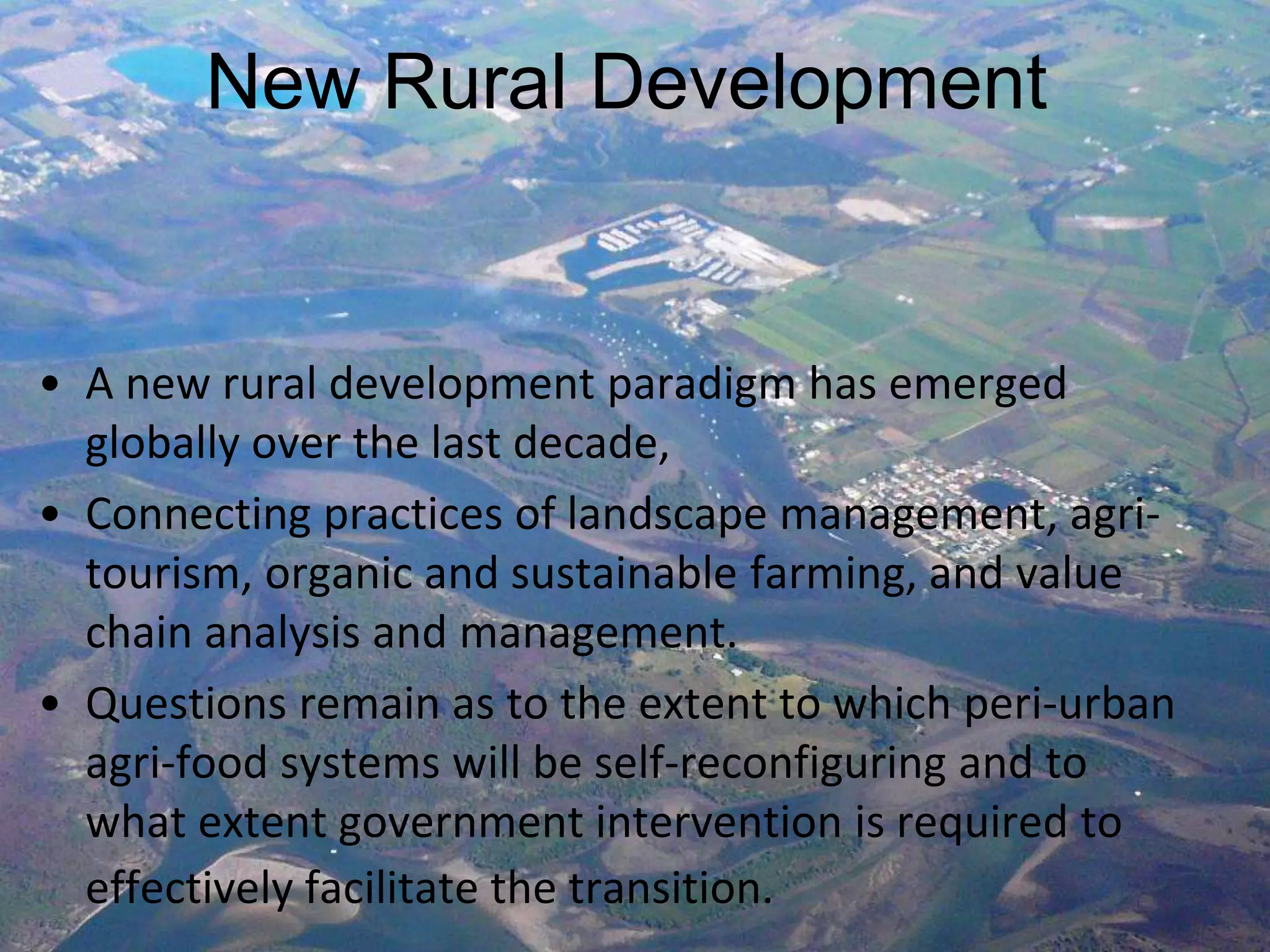
New Rural Development

• A new rural development paradigm has emerged
globally over the last decade,
• Connecting practices of landscape management, agritourism, organic and sustainable farming, and value
chain analysis and management.
• Questions remain as to the extent to which peri-urban
agri-food systems will be self-reconfiguring and to
what extent government intervention is required to
effectively facilitate the transition.
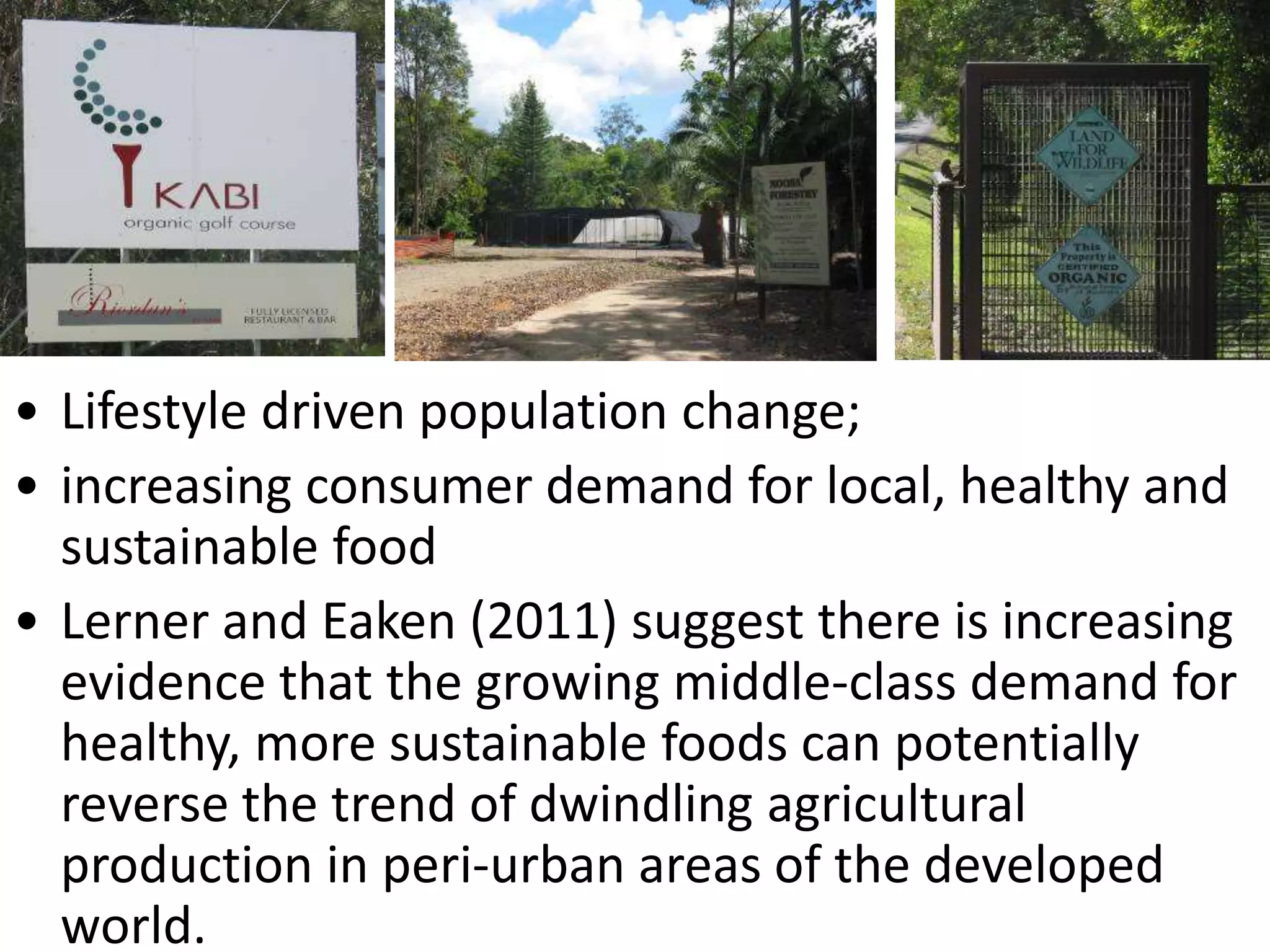
• Lifestyle driven population change;
• increasing consumer demand for local, healthy and
sustainable food
• Lerner and Eaken (2011) suggest there is increasing
evidence that the growing middle-class demand for
healthy, more sustainable foods can potentially
reverse the trend of dwindling agricultural
production in peri-urban areas of the developed
world.
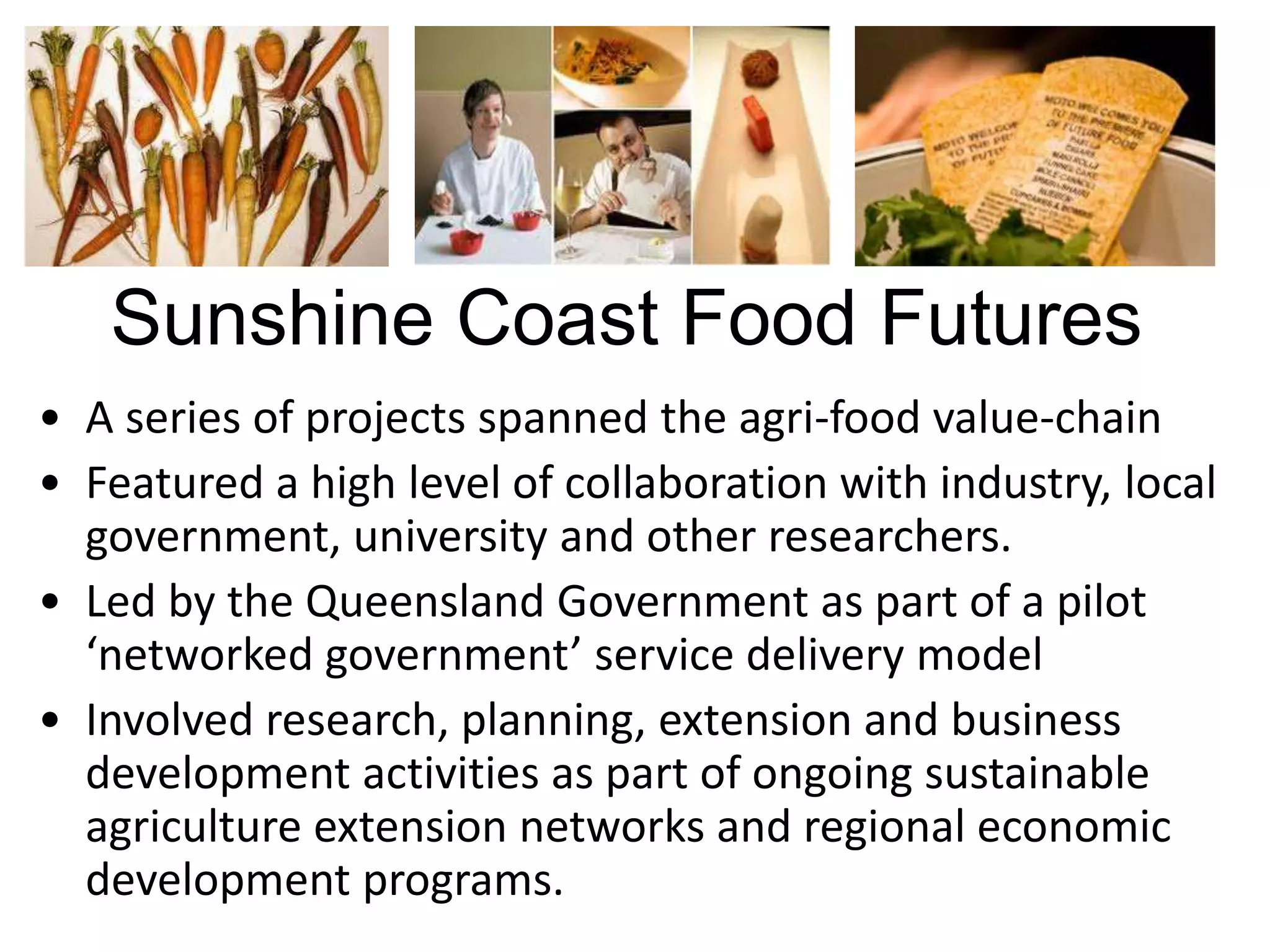
Sunshine Coast Food Futures
• A series of projects spanned the agri-food value-chain
• Featured a high level of collaboration with industry, local
government, university and other researchers.
• Led by the Queensland Government as part of a pilot
‘networked government’ service delivery model
• Involved research, planning, extension and business
development activities as part of ongoing sustainable
agriculture extension networks and regional economic
development programs.
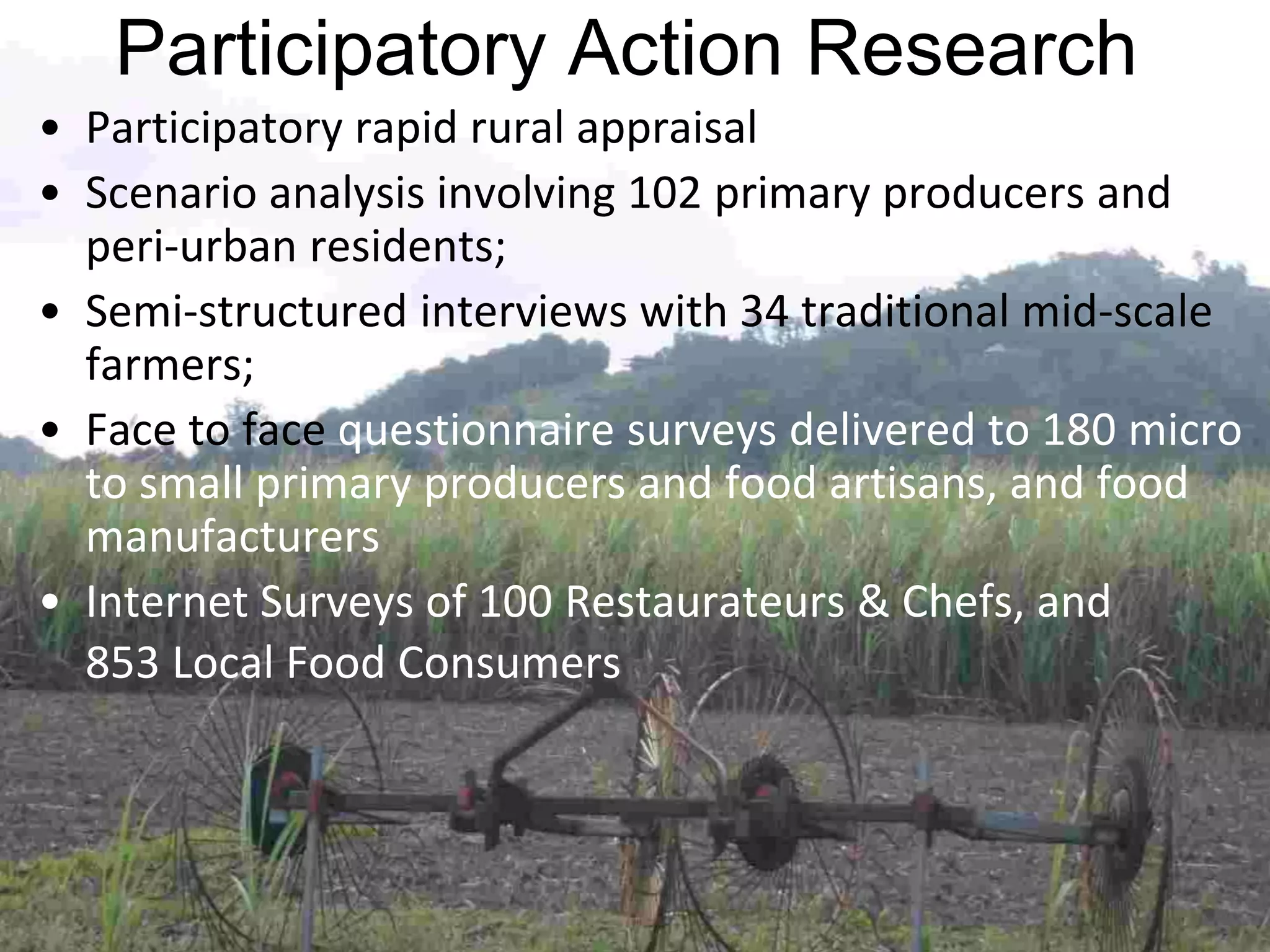
Participatory Action Research
• Participatory rapid rural appraisal
• Scenario analysis involving 102 primary producers and
peri-urban residents;
• Semi-structured interviews with 34 traditional mid-scale
farmers;
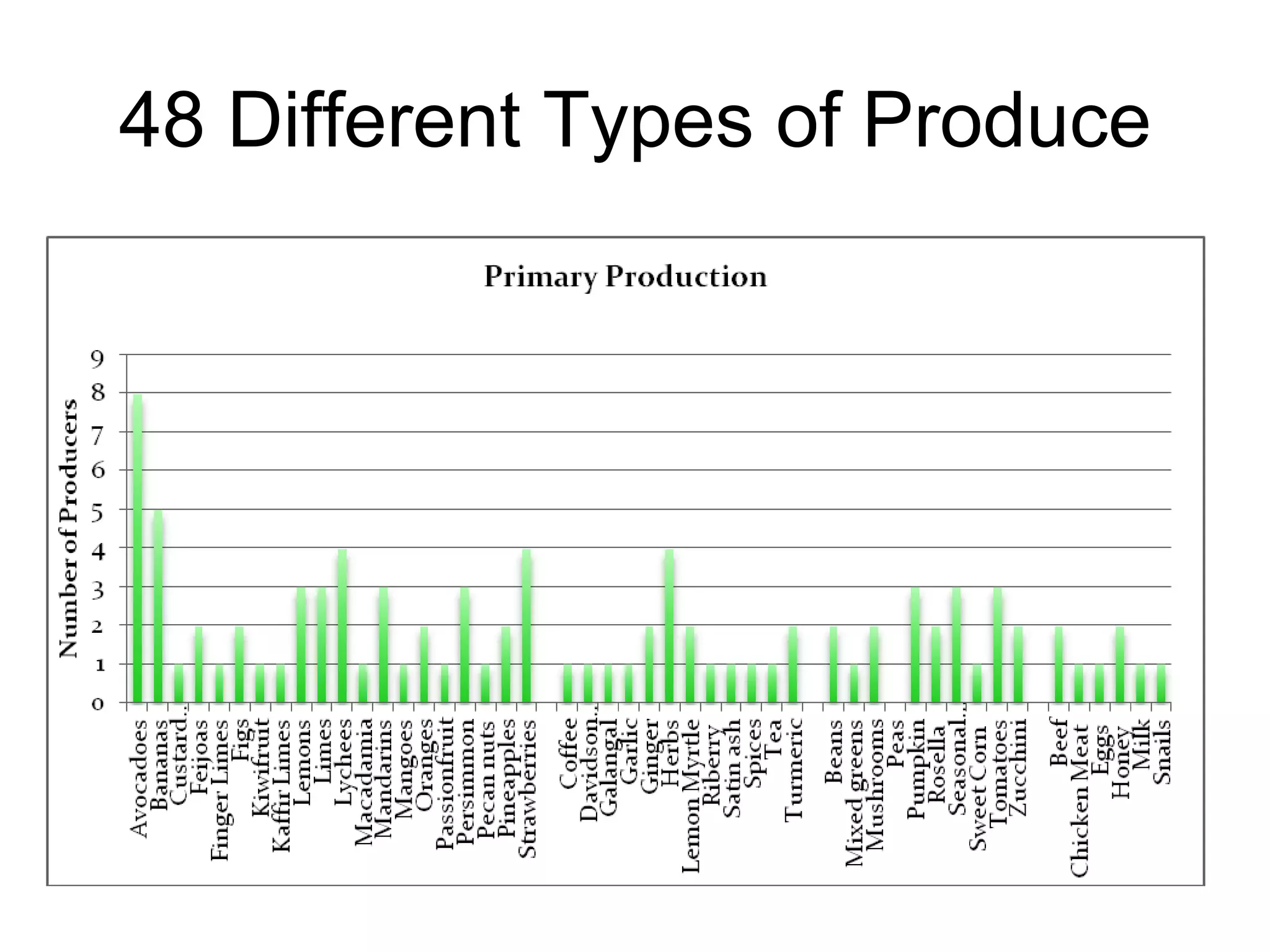
• Face to face questionnaire surveys delivered to 180 micro
to small primary producers and food artisans, and food
manufacturers
• Internet Surveys of 100 Restaurateurs & Chefs, and
853 Local Food Consumers
A collaborative service delivery model that involved:
• the state government allocating business development
officers and agricultural extension officers to support
farmers and food artisans;
• contracting specialist presenters to lead targeted training
workshops, followed by one-on-one mentoring;
• local government program support to create and market a
collective regional brand (Seasons of the Sun).
• Research projects were embedded within service delivery
projects and distributed between academics, local food
social enterprises and local food champions with results
rapidly communicated to stakeholders.
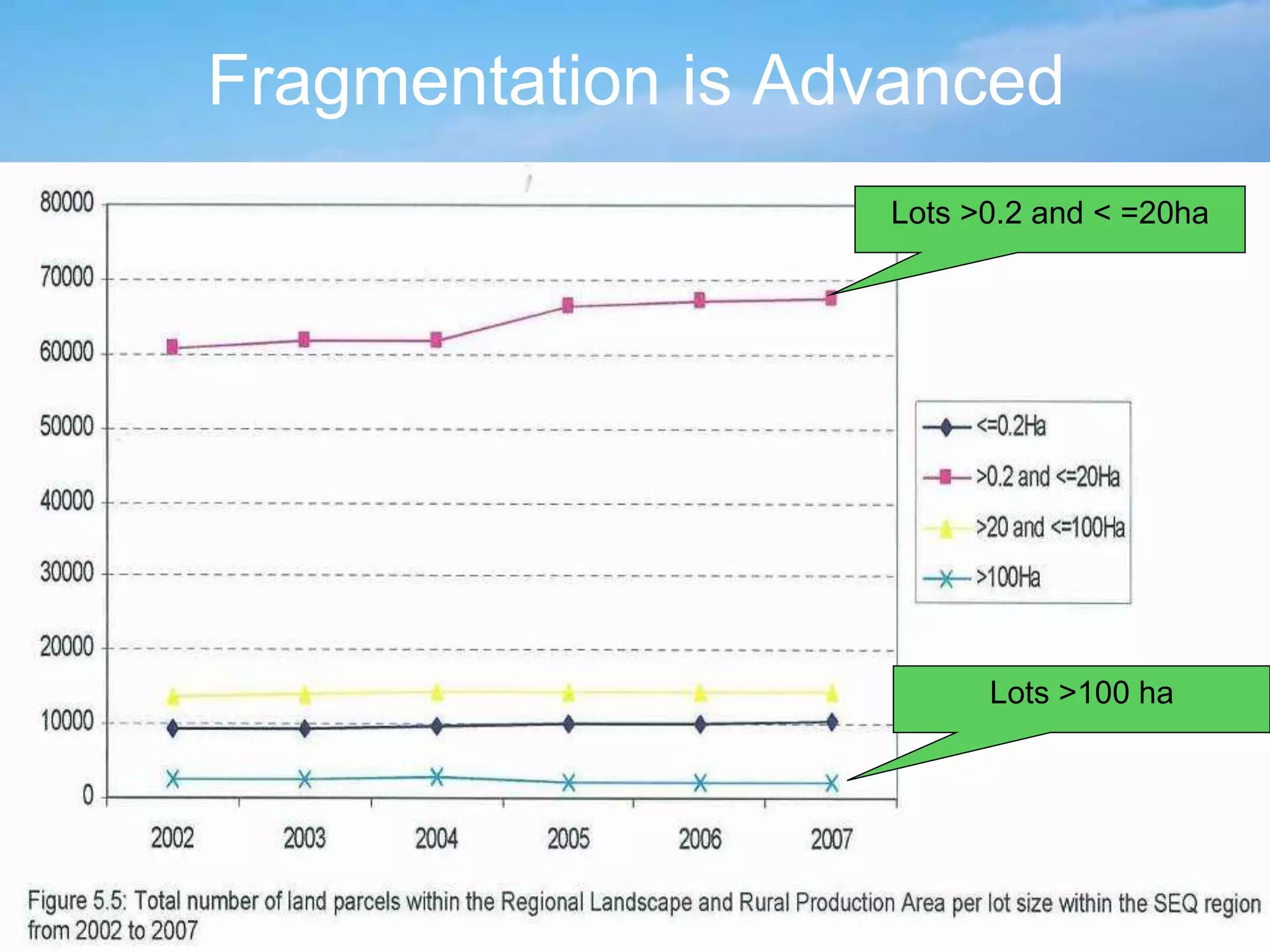
Fragmentation is Advanced
Lots >0.2 and < =20ha

Lots >100 ha
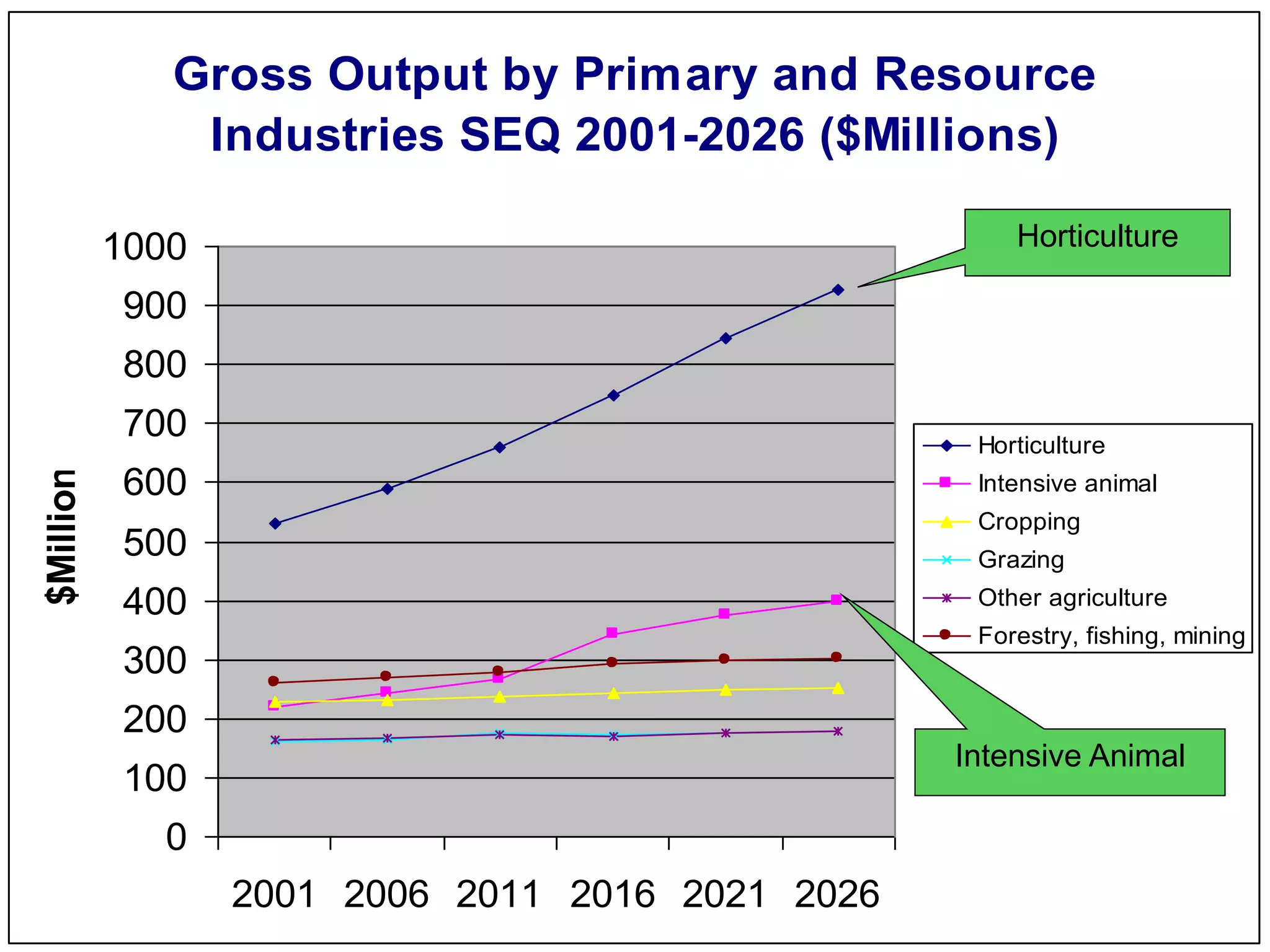
Gross Output by Primary and Resource
Industries SEQ 2001-2026 ($Millions)
Horticulture

1000
900
800

$Million

700

Horticulture

600

Intensive animal
Cropping

500

Grazing

400

Other agriculture
Forestry, fishing, mining

300
200

Intensive Animal

100
0
2001 2006 2011 2016 2021 2026
48 Different Types of Produce
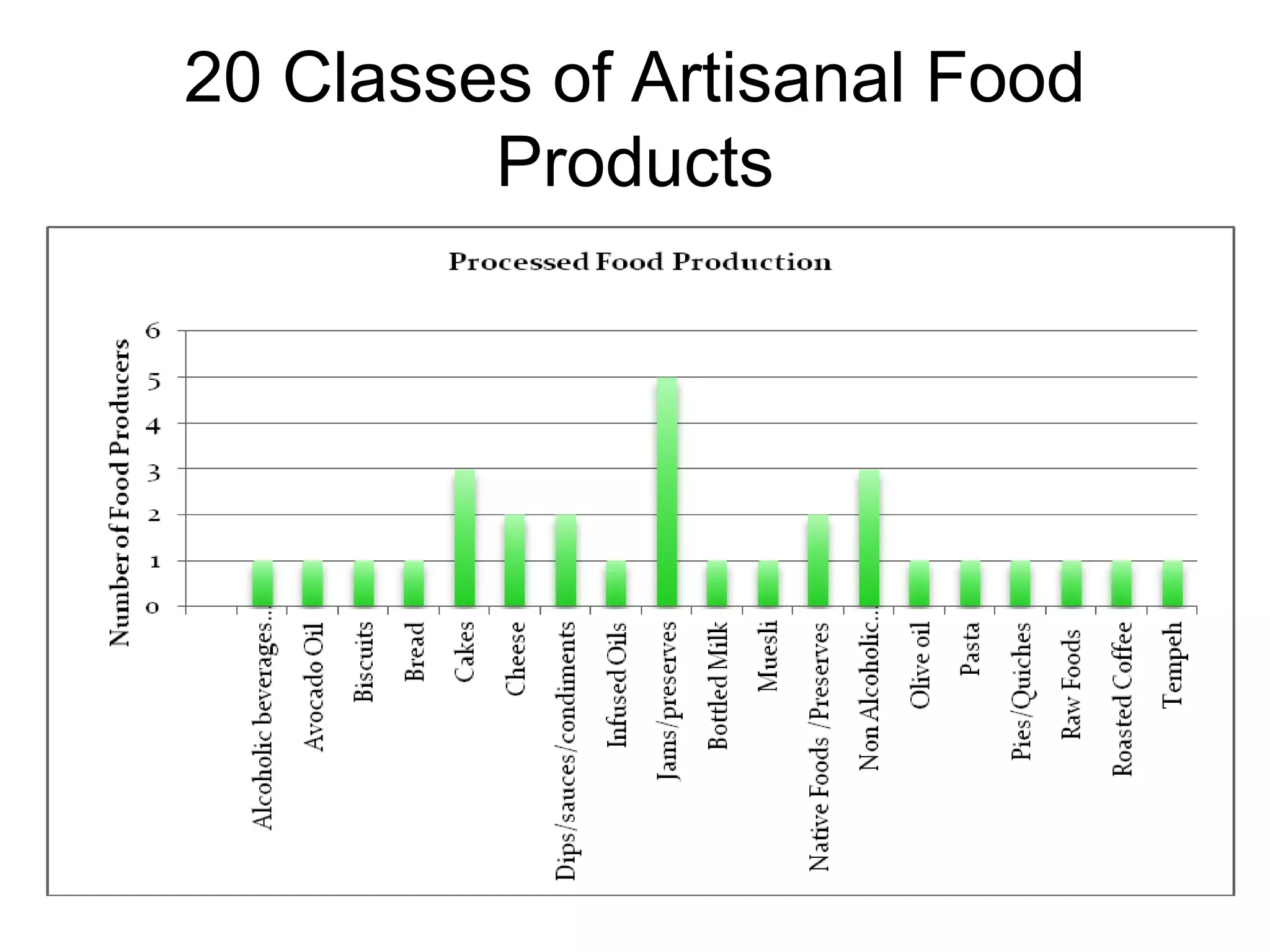
20 Classes of Artisanal Food
Products
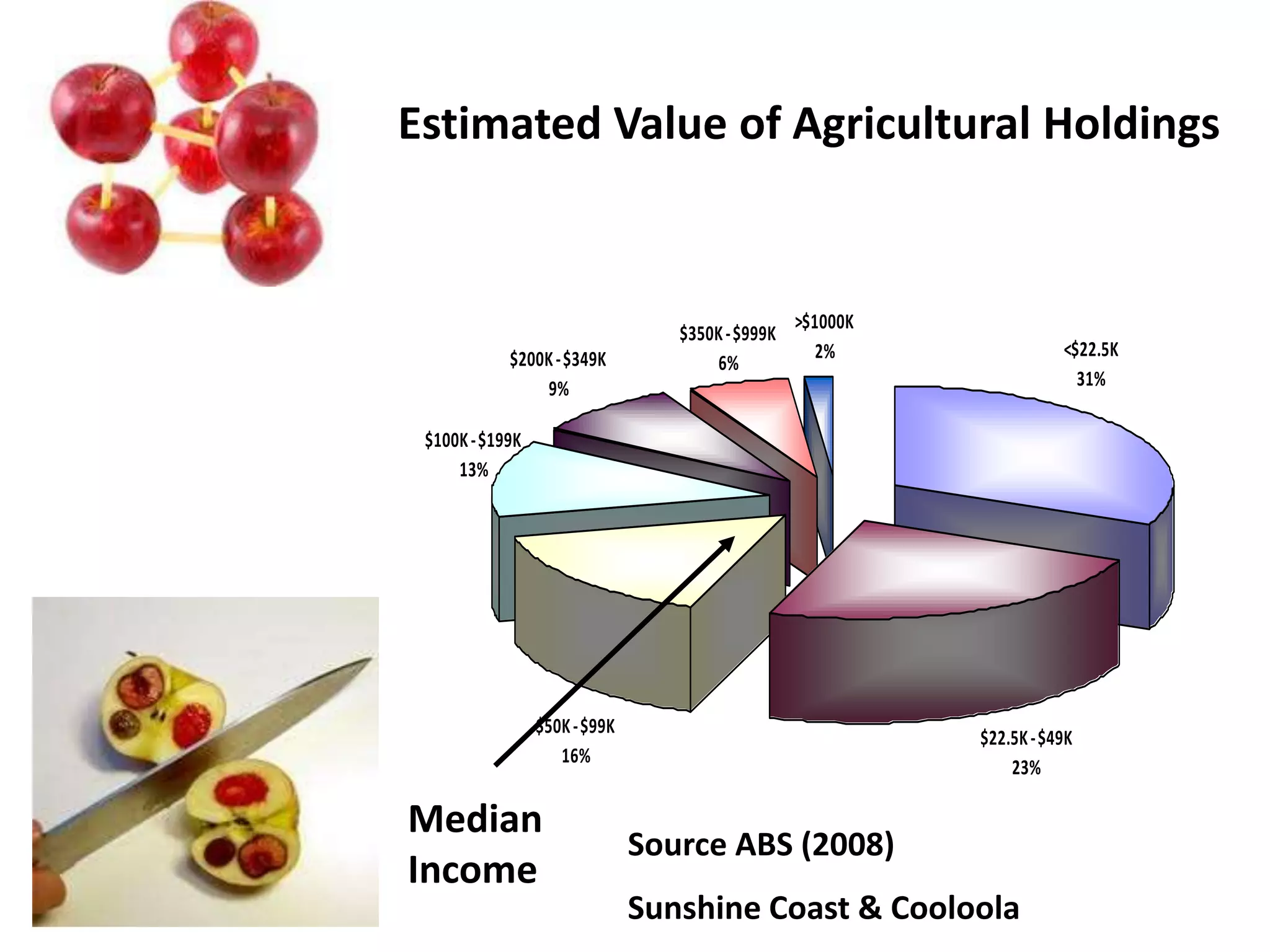
Estimated Value of Agricultural Holdings

•
$200K - $349K
9%

$350K - $999K
6%

>$1000K
2%

<$22.5K
31%

$100K - $199K
13%

$50K - $99K
16%

Median
Income

$22.5K - $49K
23%

Source ABS (2008)

Sunshine Coast & Cooloola
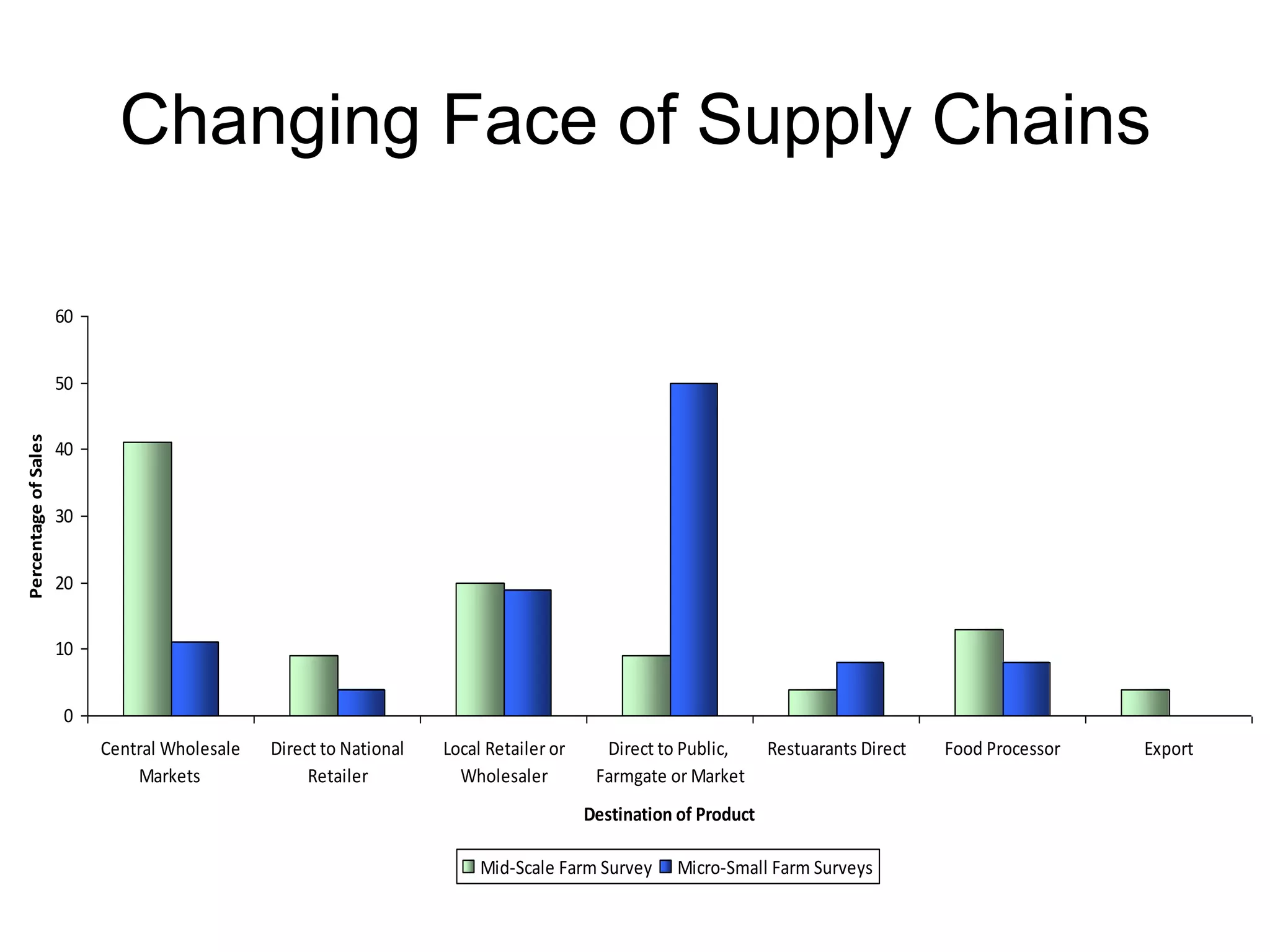
Changing Face of Supply Chains
60

Percentage of Sales

50
40
30
20
10
0
Central Wholesale
Markets

Direct to National
Retailer

Local Retailer or
Wholesaler

Direct to Public,
Farmgate or Market

Restuarants Direct

Destination of Product
Mid-Scale Farm Survey

Micro-Small Farm Surveys

Food Processor

Export
Photo mosaic : Iris Bohnet CSIRO
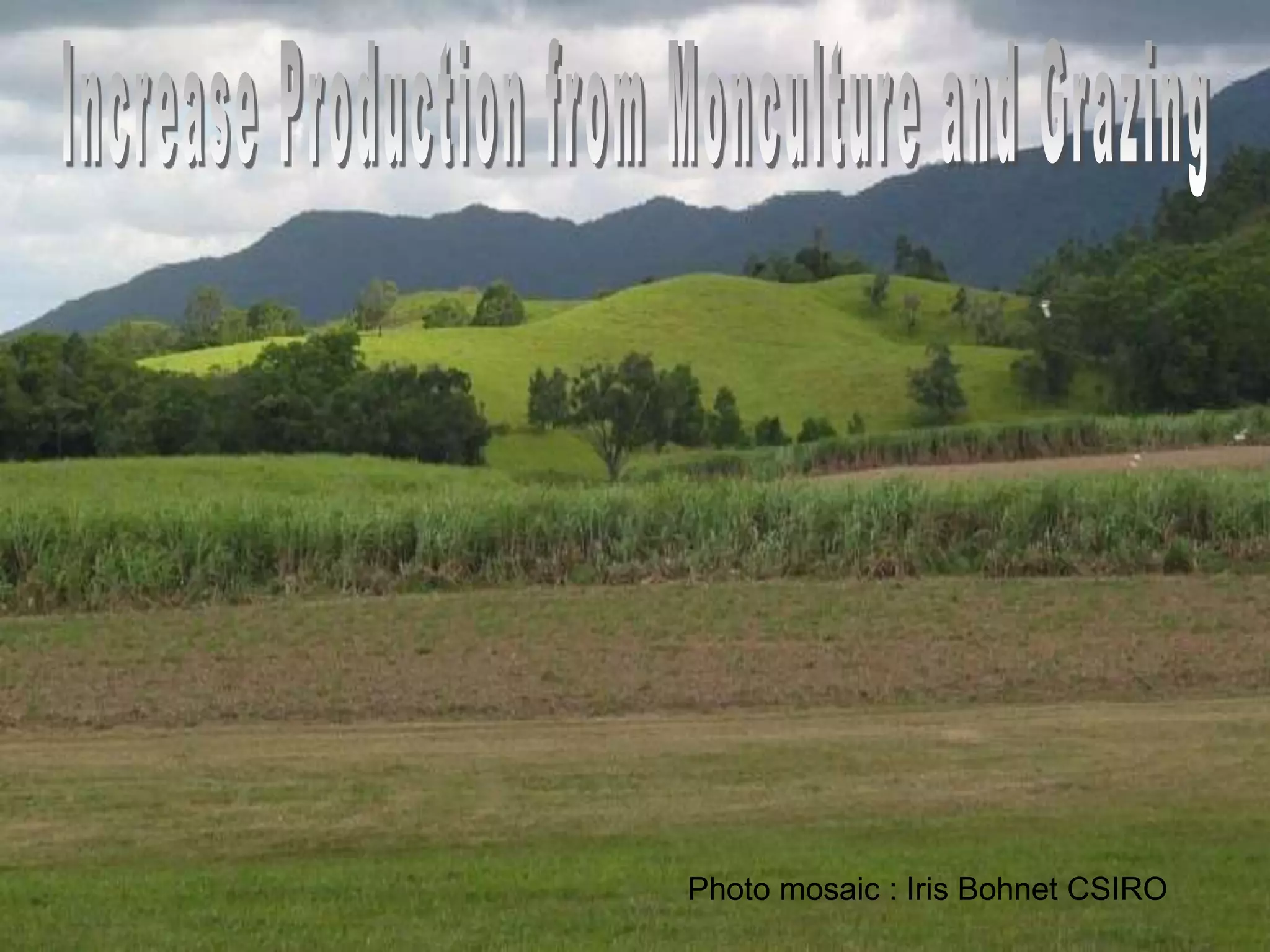
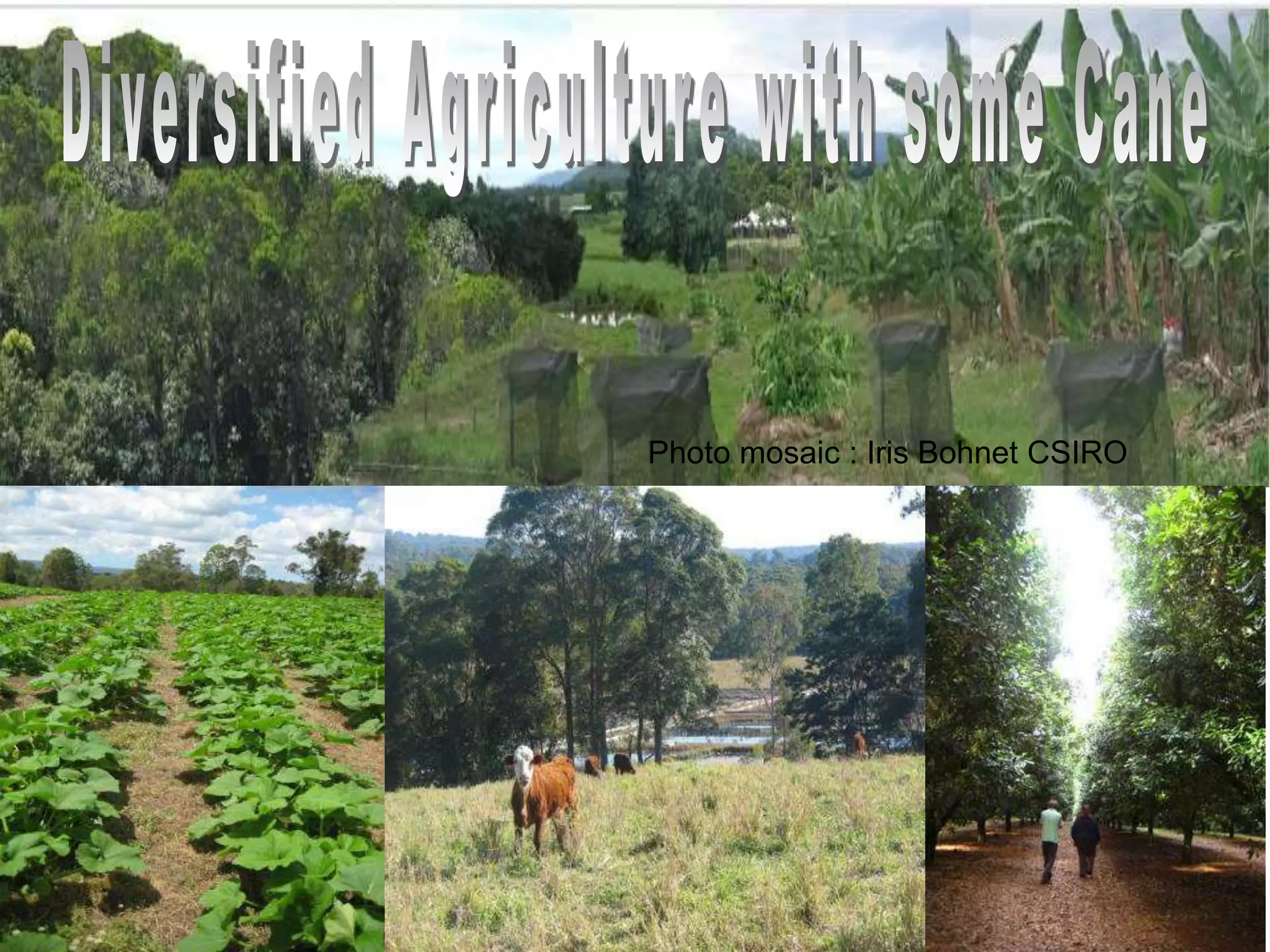
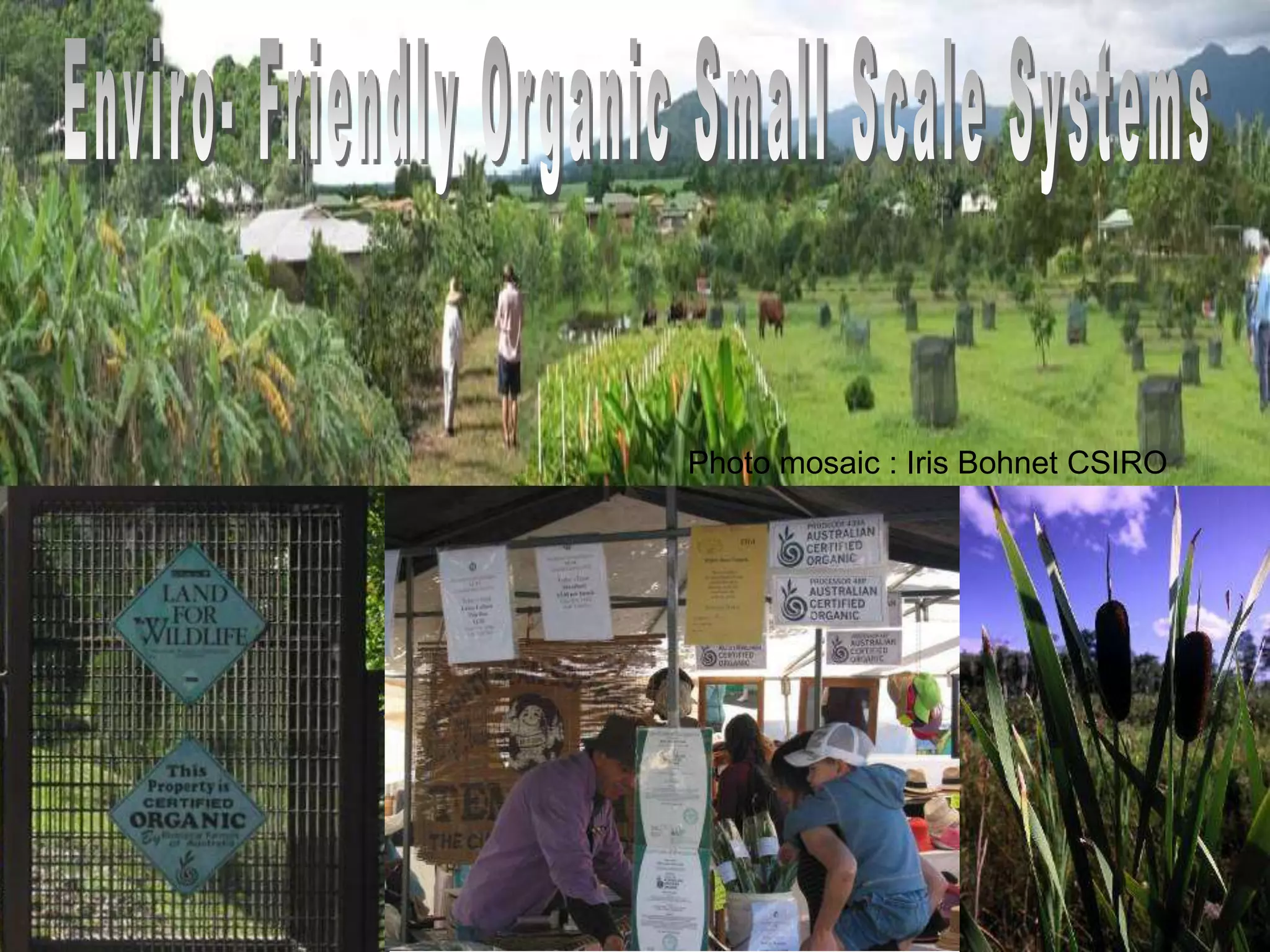
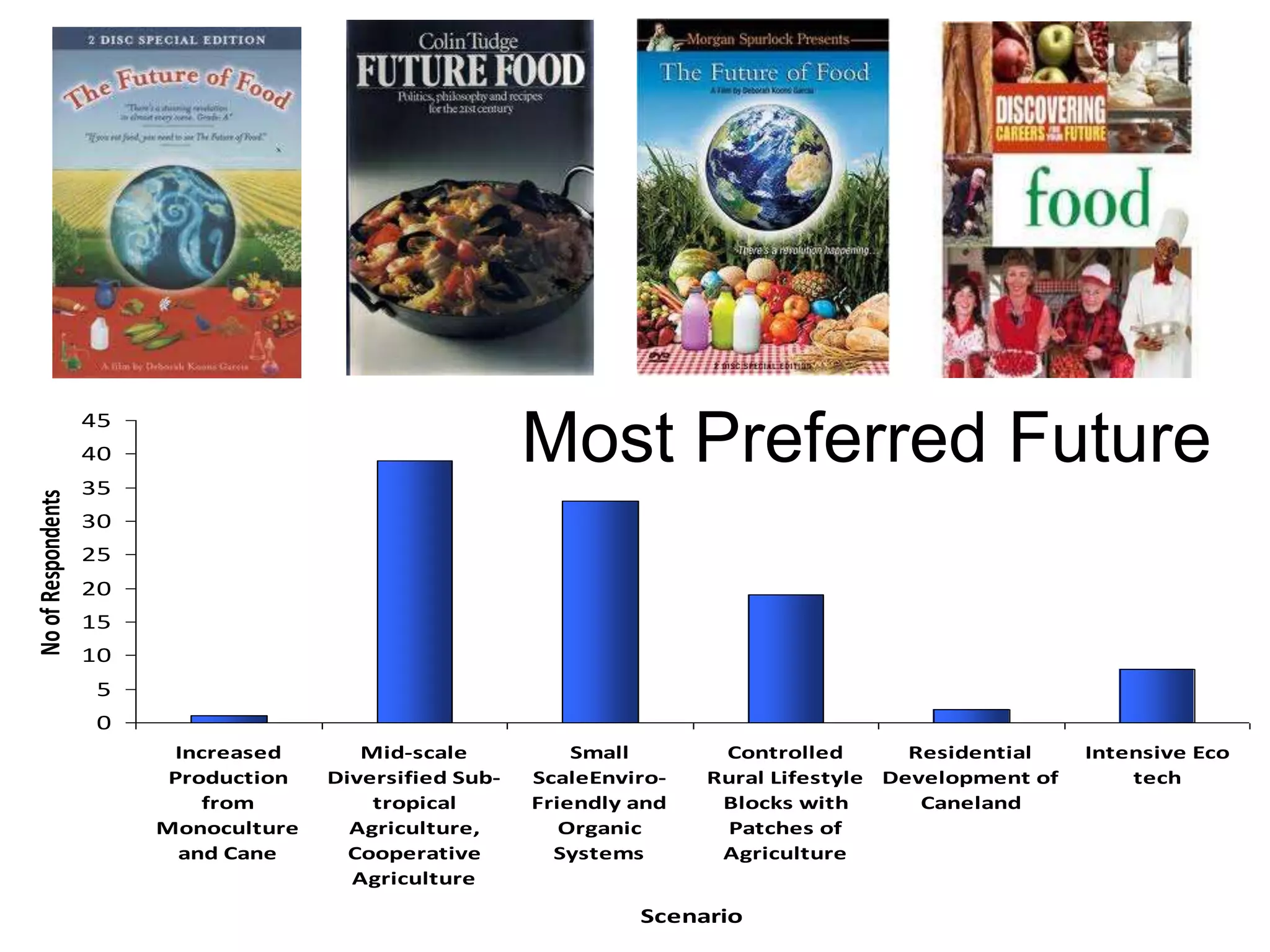
Most Preferred Future

45

No of Respondents

40
35
30
25
20
15
10
5
0
Increased
Production
from
Monoculture
and Cane

Mid-scale
Diversified Subtropical
Agriculture,
Cooperative
Agriculture

Small
ScaleEnviroFriendly and
Organic
Systems

Controlled
Residential
Rural Lifestyle Development of
Blocks with
Caneland
Patches of
Agriculture

Scenario

Intensive Eco
tech
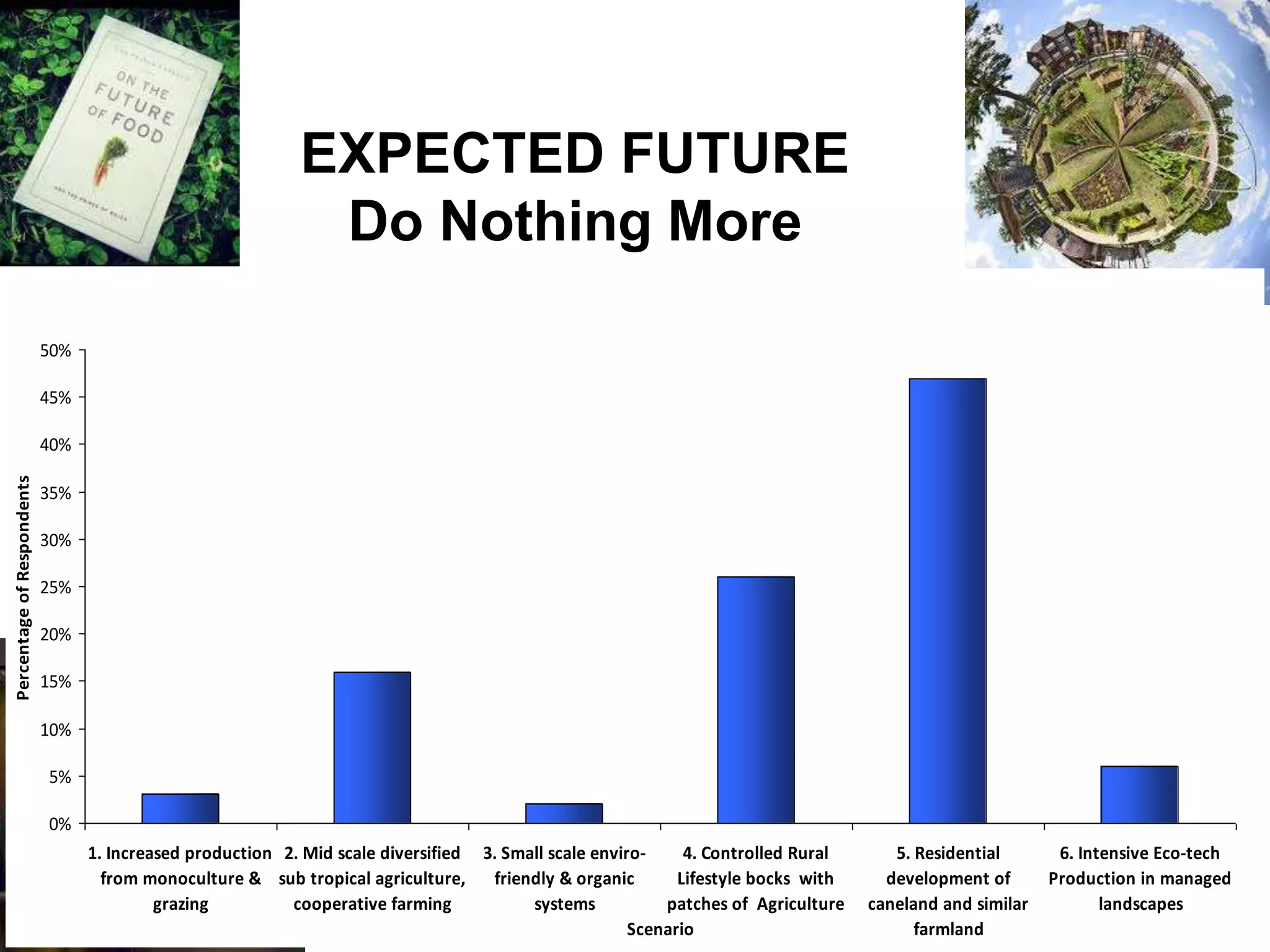
EXPECTED FUTURE
Do Nothing More
50%
45%

Percentage of Respondents

40%
35%
30%
25%
20%
15%
10%
5%
0%
1. Increased production 2. Mid scale diversified 3. Small scale enviro4. Controlled Rural
from monoculture & sub tropical agriculture,
friendly & organic
Lifestyle bocks with
grazing
cooperative farming
systems
patches of Agriculture
Scenario

5. Residential
development of
caneland and similar
farmland

6. Intensive Eco-tech
Production in managed
landscapes
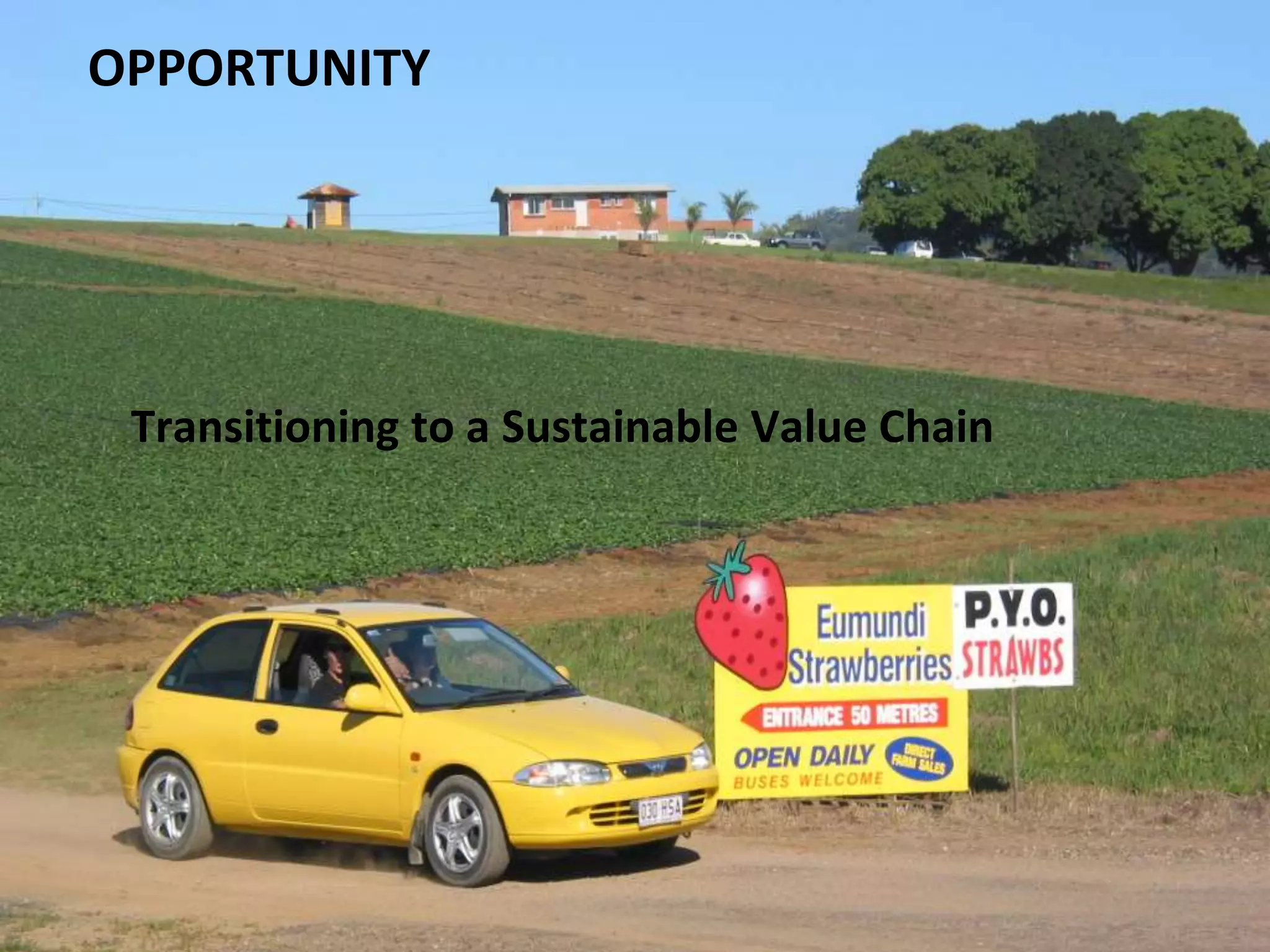
OPPORTUNITY

Transitioning to a Sustainable Value Chain
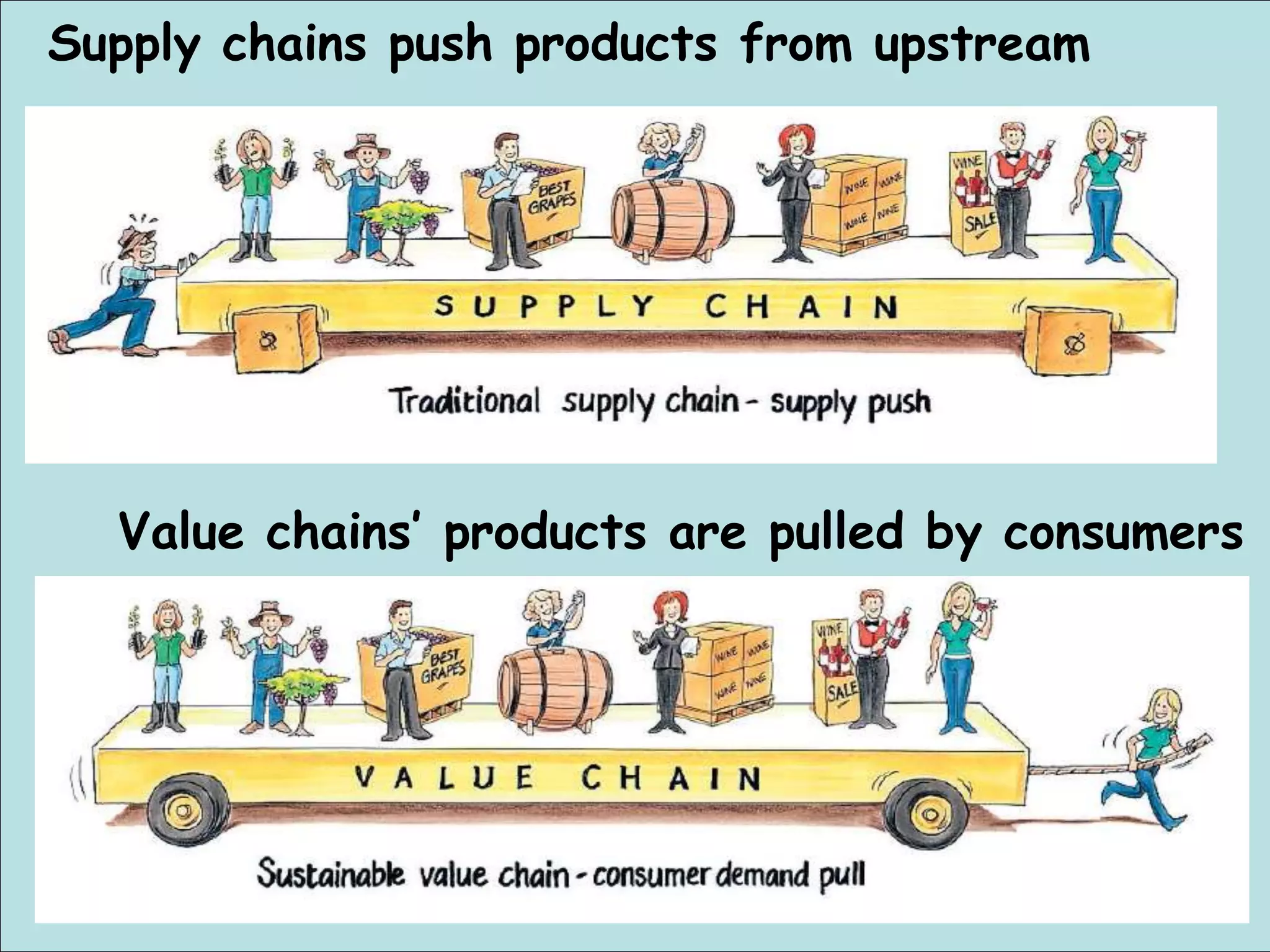
Supply chains push products from upstream

Value chains’ products are pulled by consumers
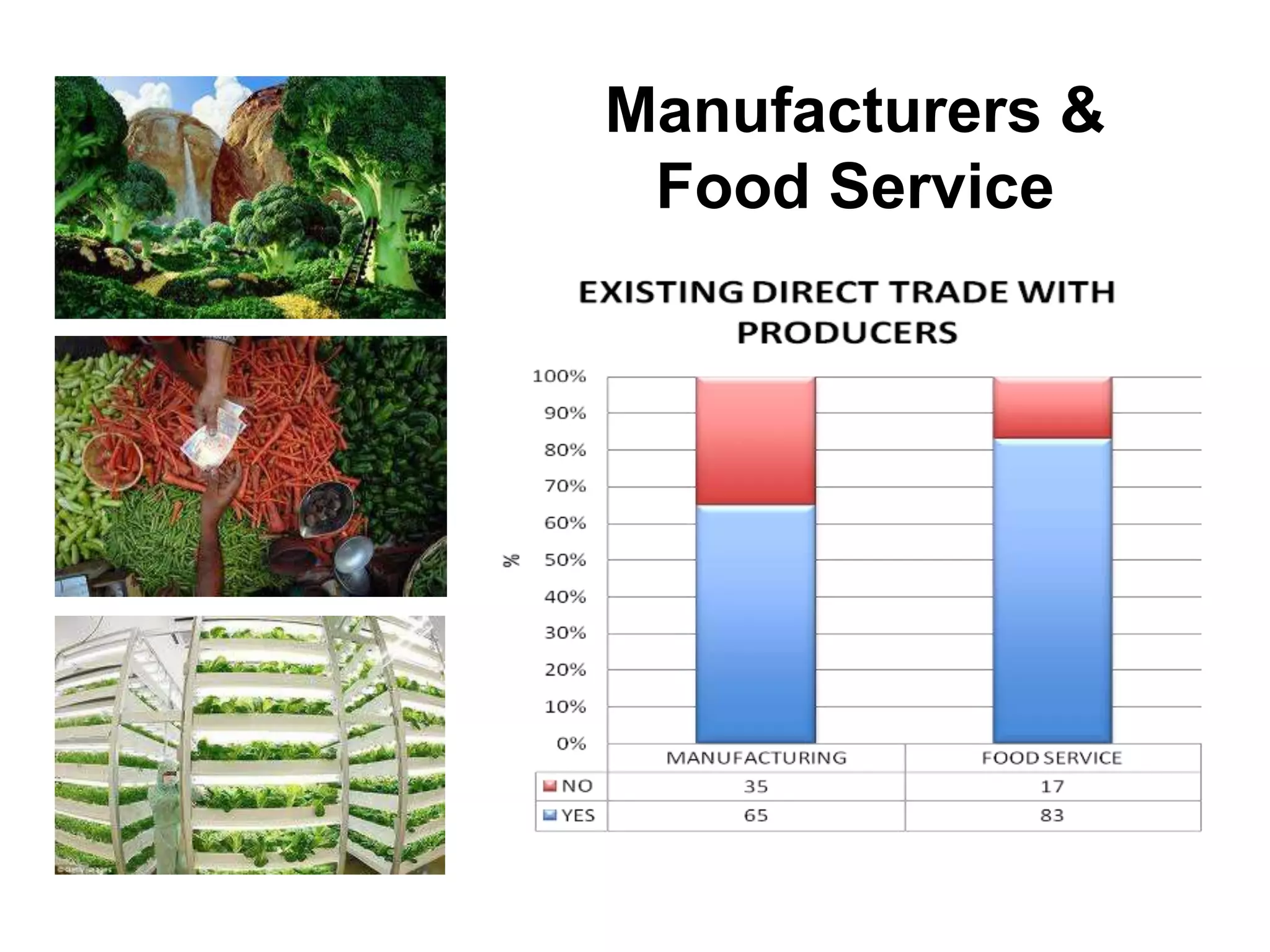
Manufacturers &
Food Service
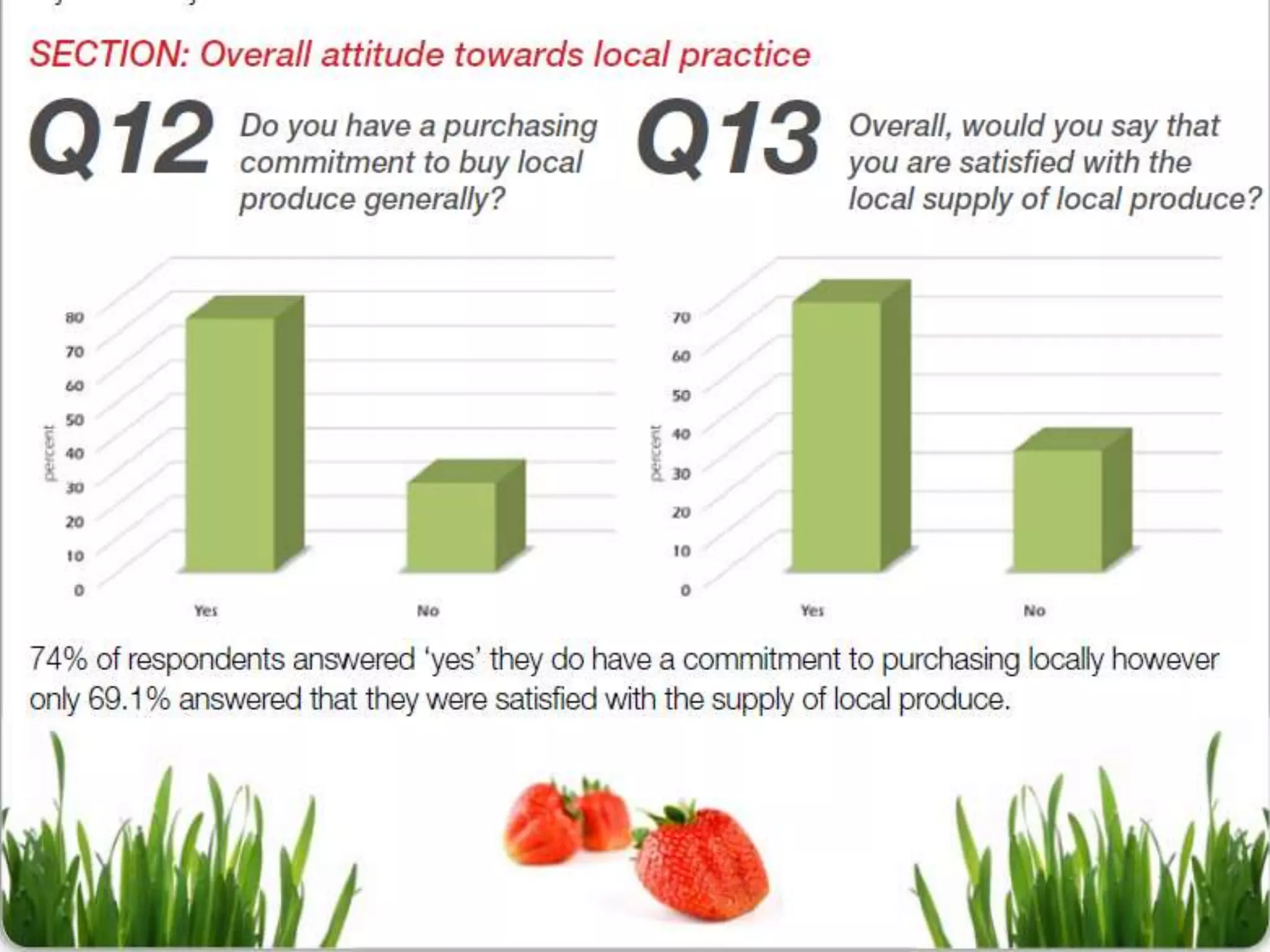
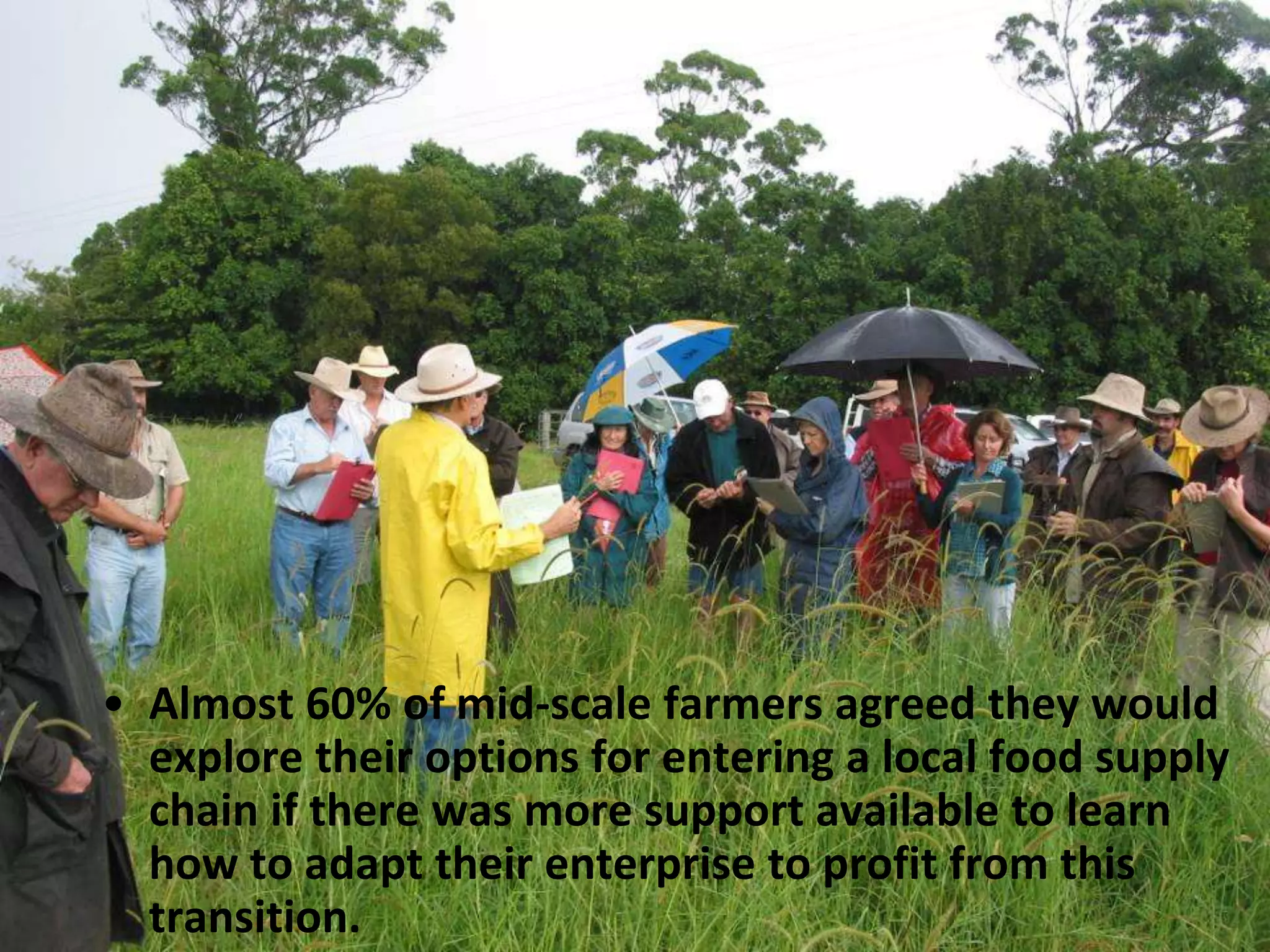
• Almost 60% of mid-scale farmers agreed they would
explore their options for entering a local food supply
chain if there was more support available to learn
how to adapt their enterprise to profit from this
transition.
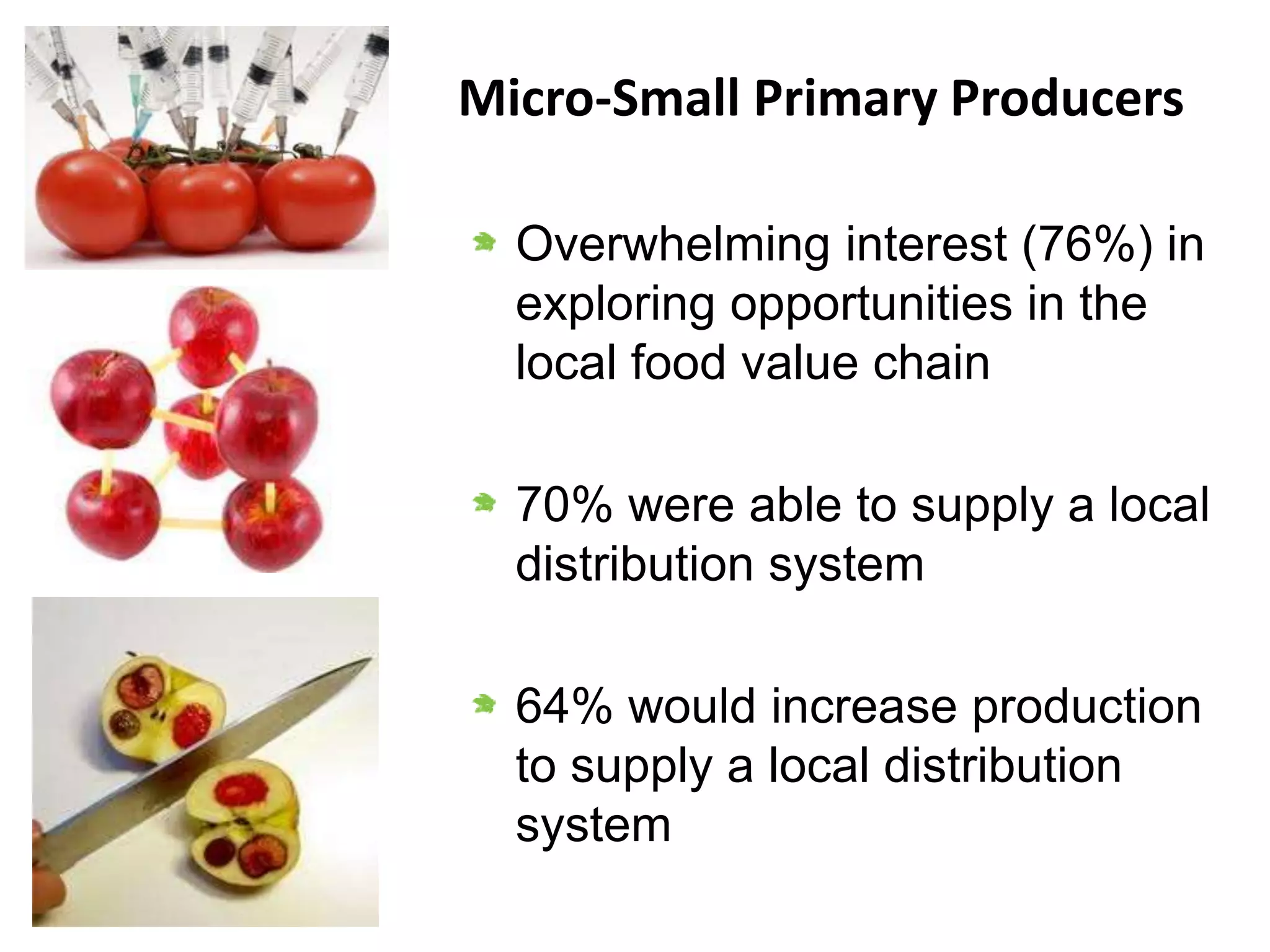
Micro-Small Primary Producers
Overwhelming interest (76%) in
exploring opportunities in the
local food value chain
70% were able to supply a local
distribution system
64% would increase production
to supply a local distribution
system
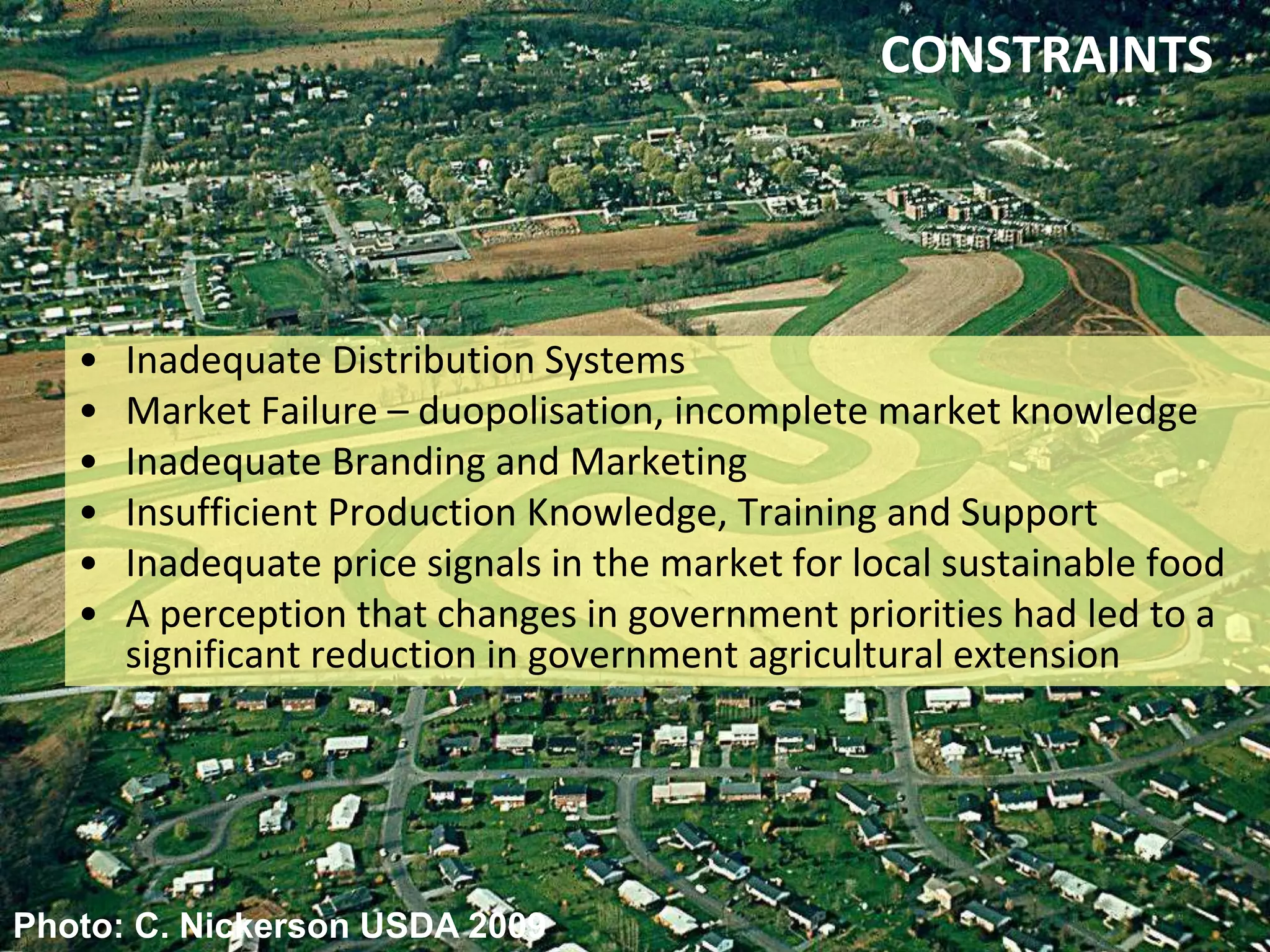
CONSTRAINTS

•
•
•
•
•
•

Inadequate Distribution Systems
Market Failure – duopolisation, incomplete market knowledge
Inadequate Branding and Marketing
Insufficient Production Knowledge, Training and Support
Inadequate price signals in the market for local sustainable food
A perception that changes in government priorities had led to a
significant reduction in government agricultural extension

Photo: C. Nickerson USDA 2009
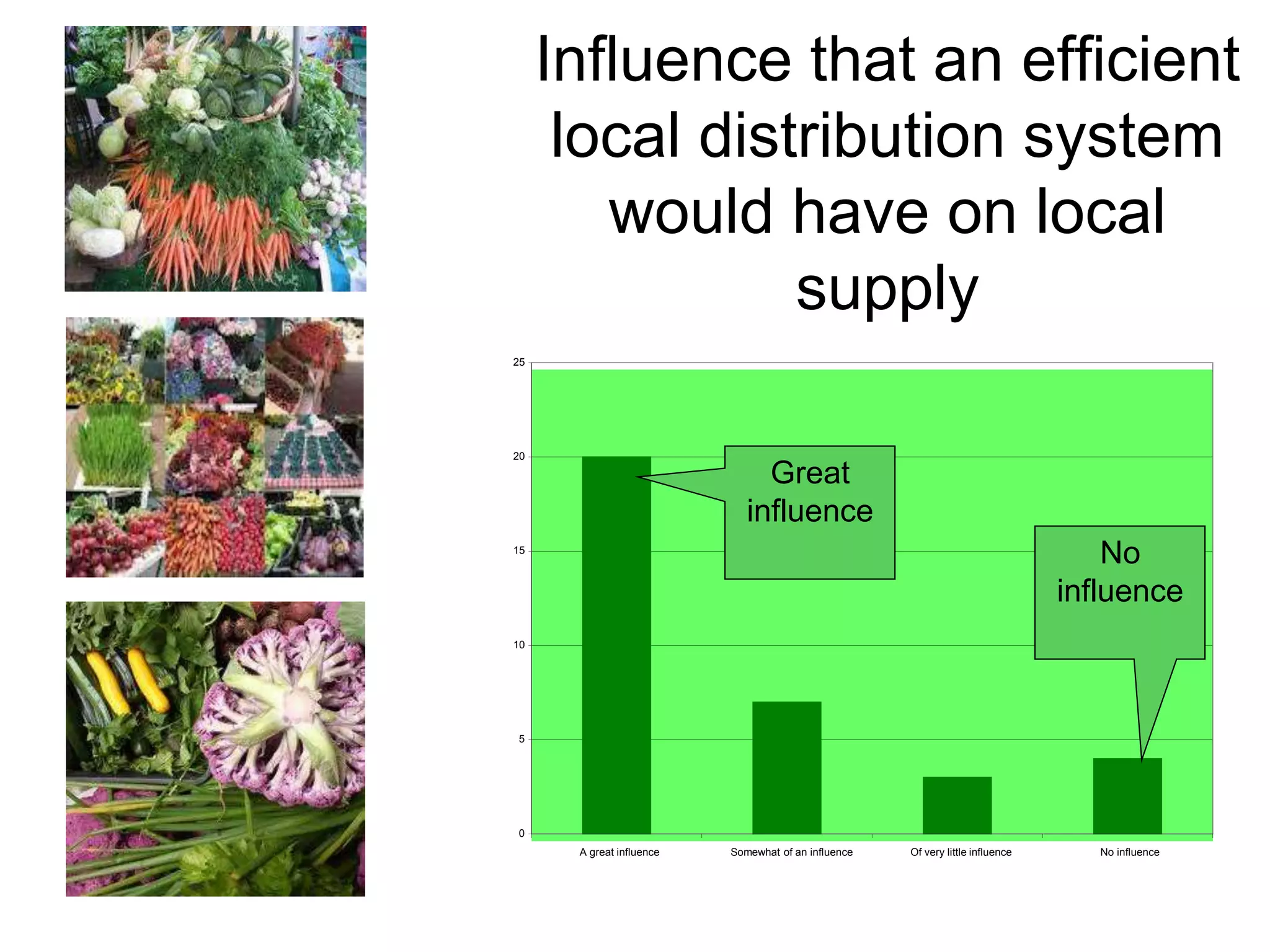
Influence that an efficient
local distribution system
would have on local
supply
25

20

Great
influence
No
influence

15

10

5

0
A great influence

Somewhat of an influence

Of very little influence

No influence
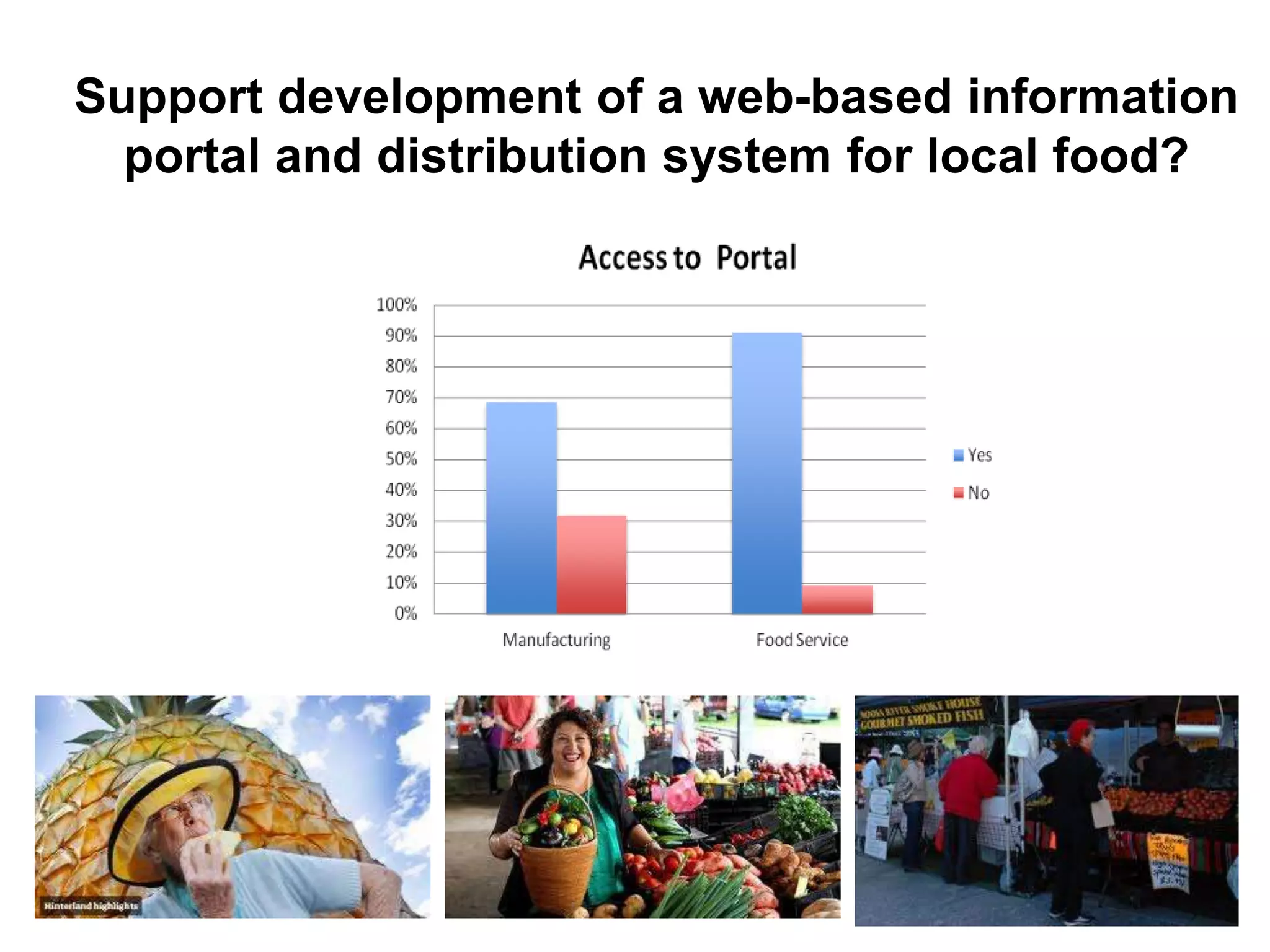
Support development of a web-based information
portal and distribution system for local food?
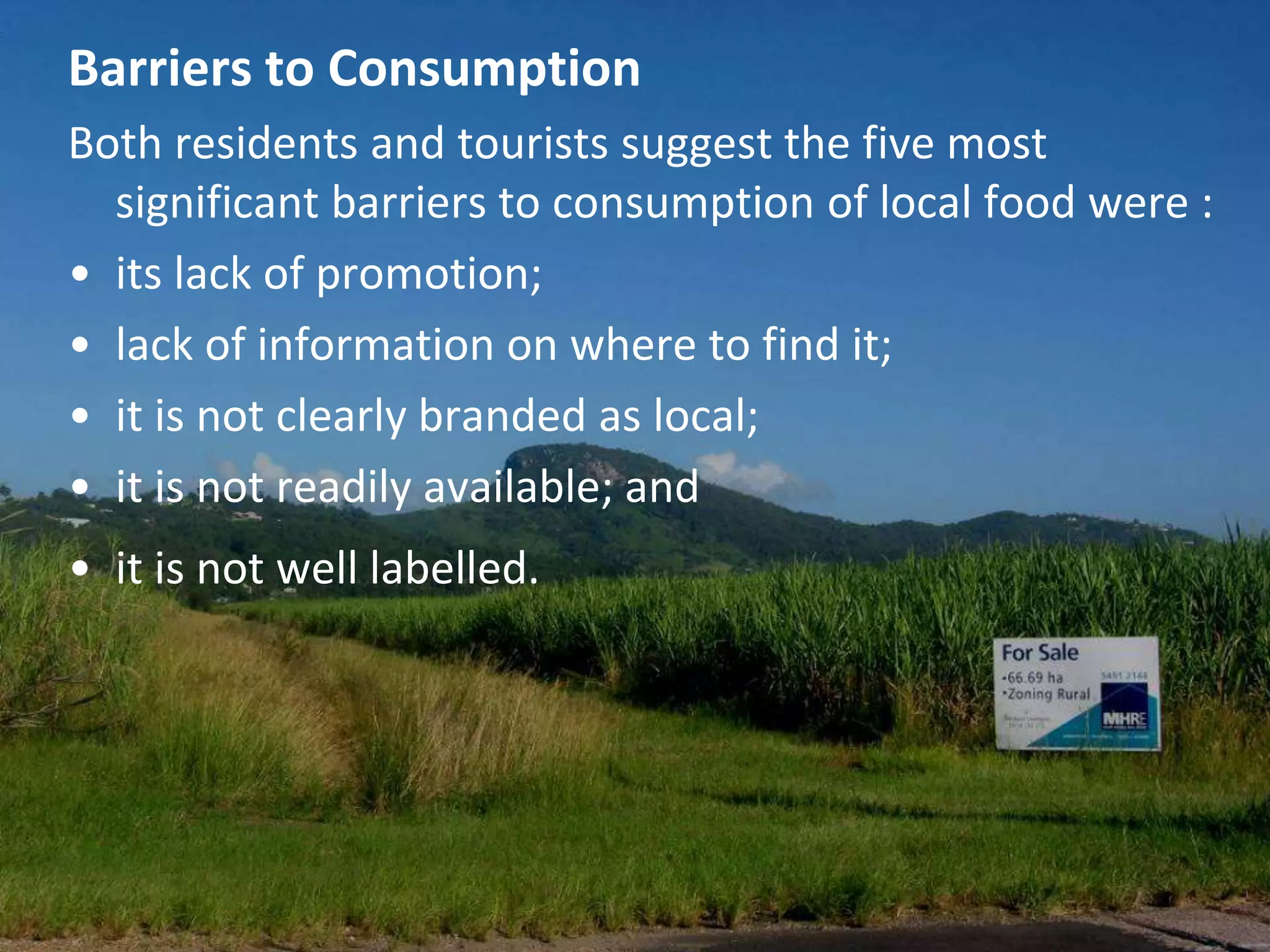
Barriers to Consumption
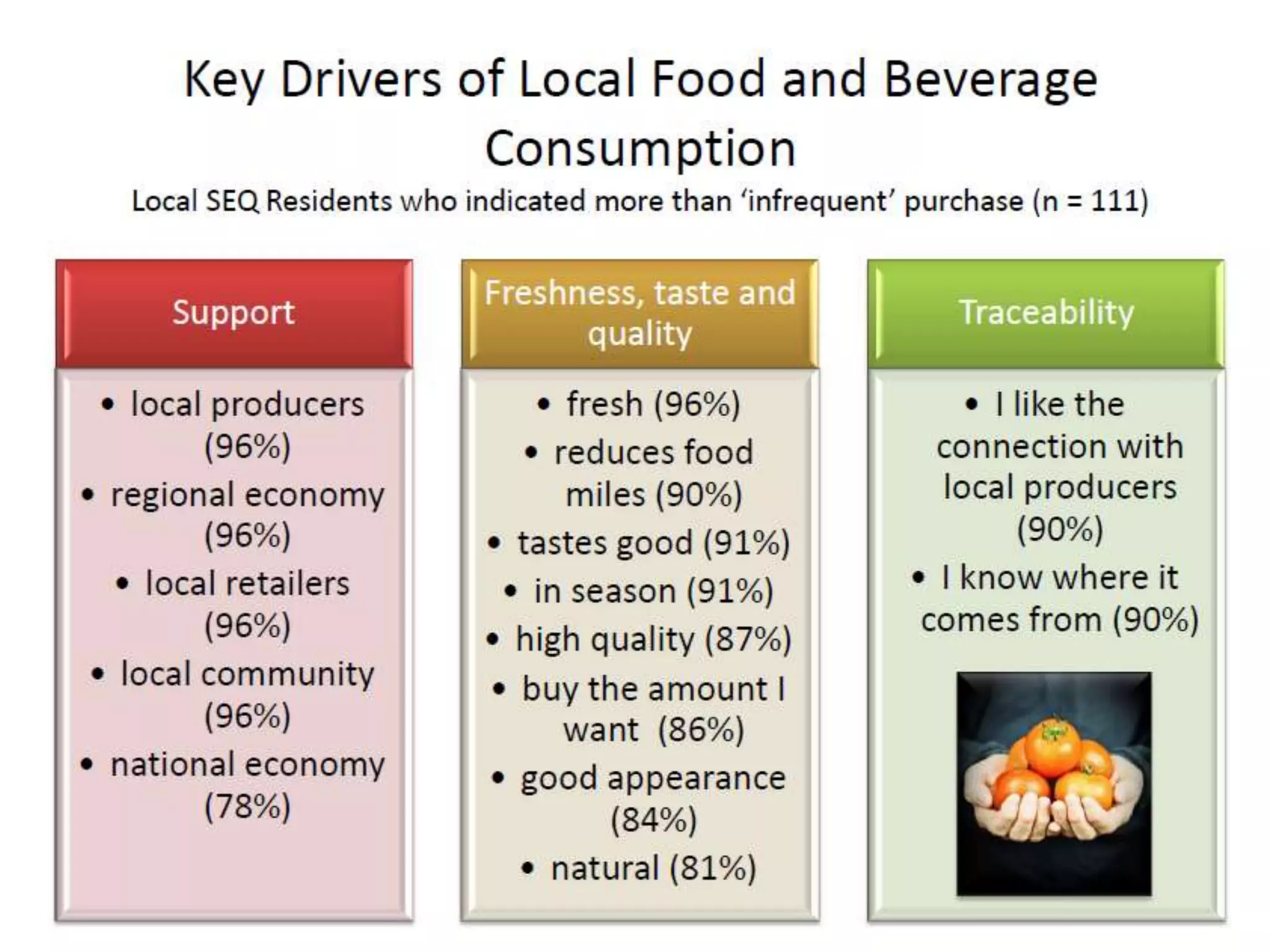
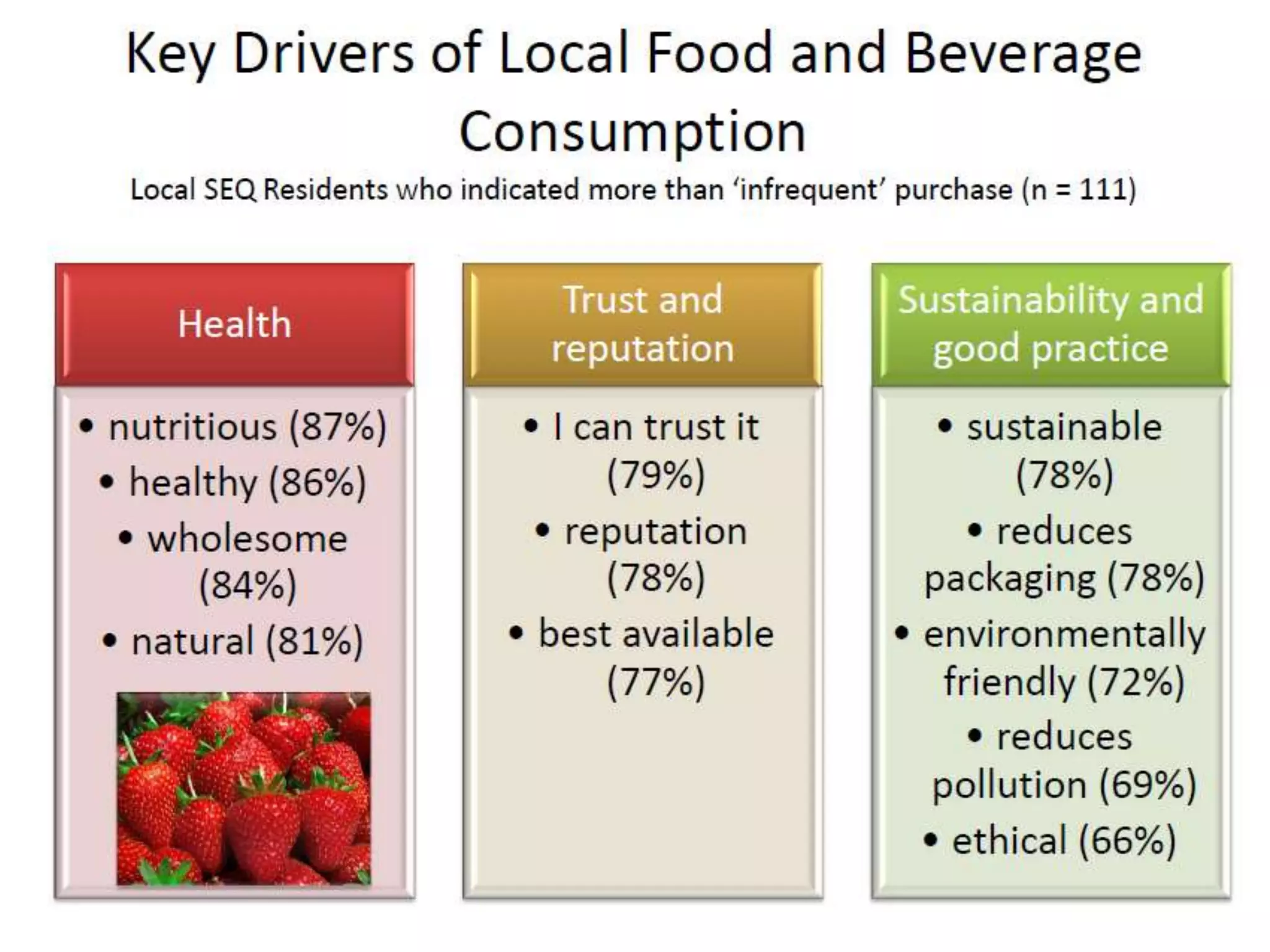
Both residents and tourists suggest the five most
significant barriers to consumption of local food were :
• its lack of promotion;
• lack of information on where to find it;
• it is not clearly branded as local;
• it is not readily available; and

• it is not well labelled.
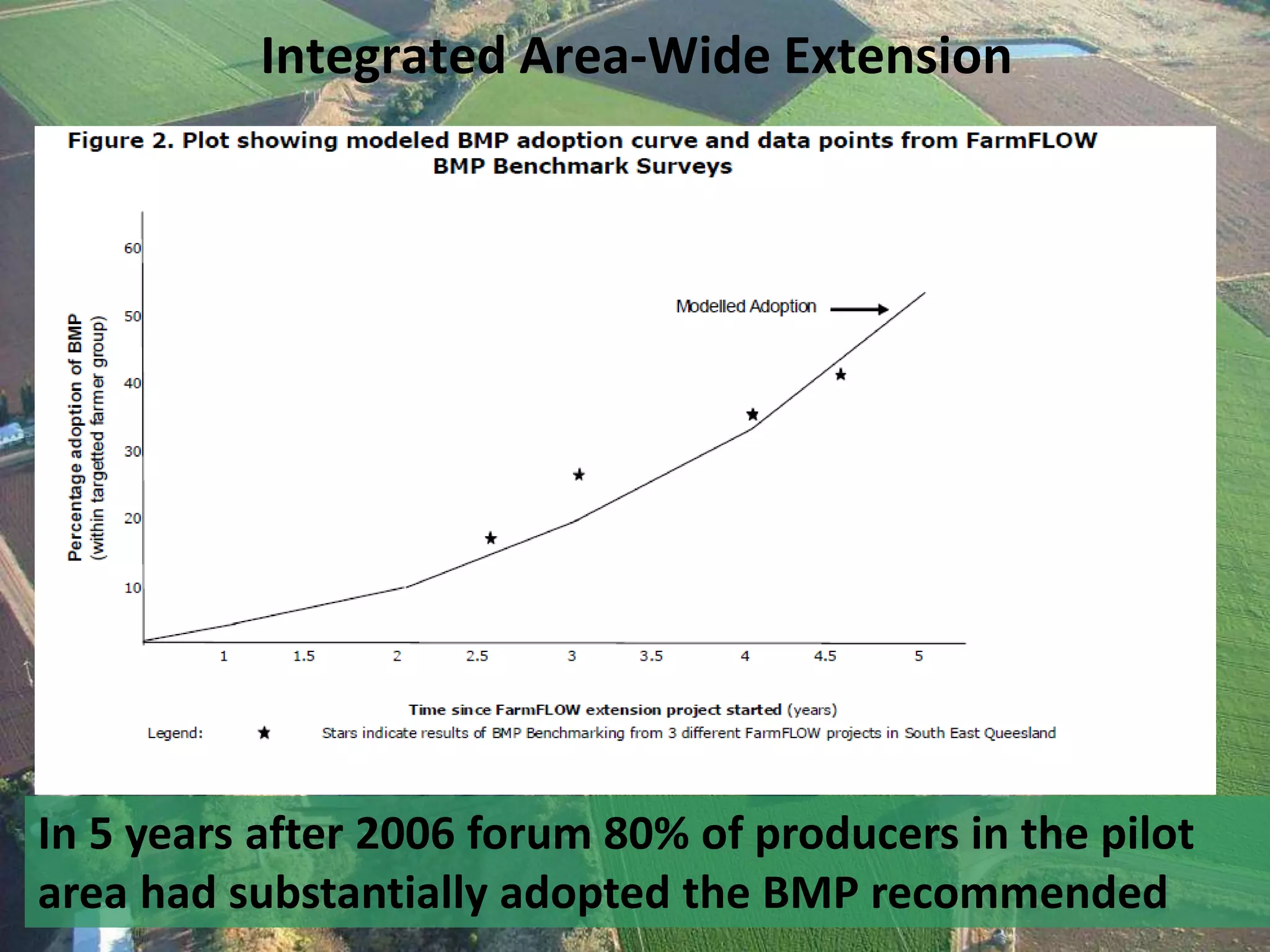
Integrated Area-Wide Extension

In 5 years after 2006 forum 80% of producers in the pilot
area had substantially adopted the BMP recommended
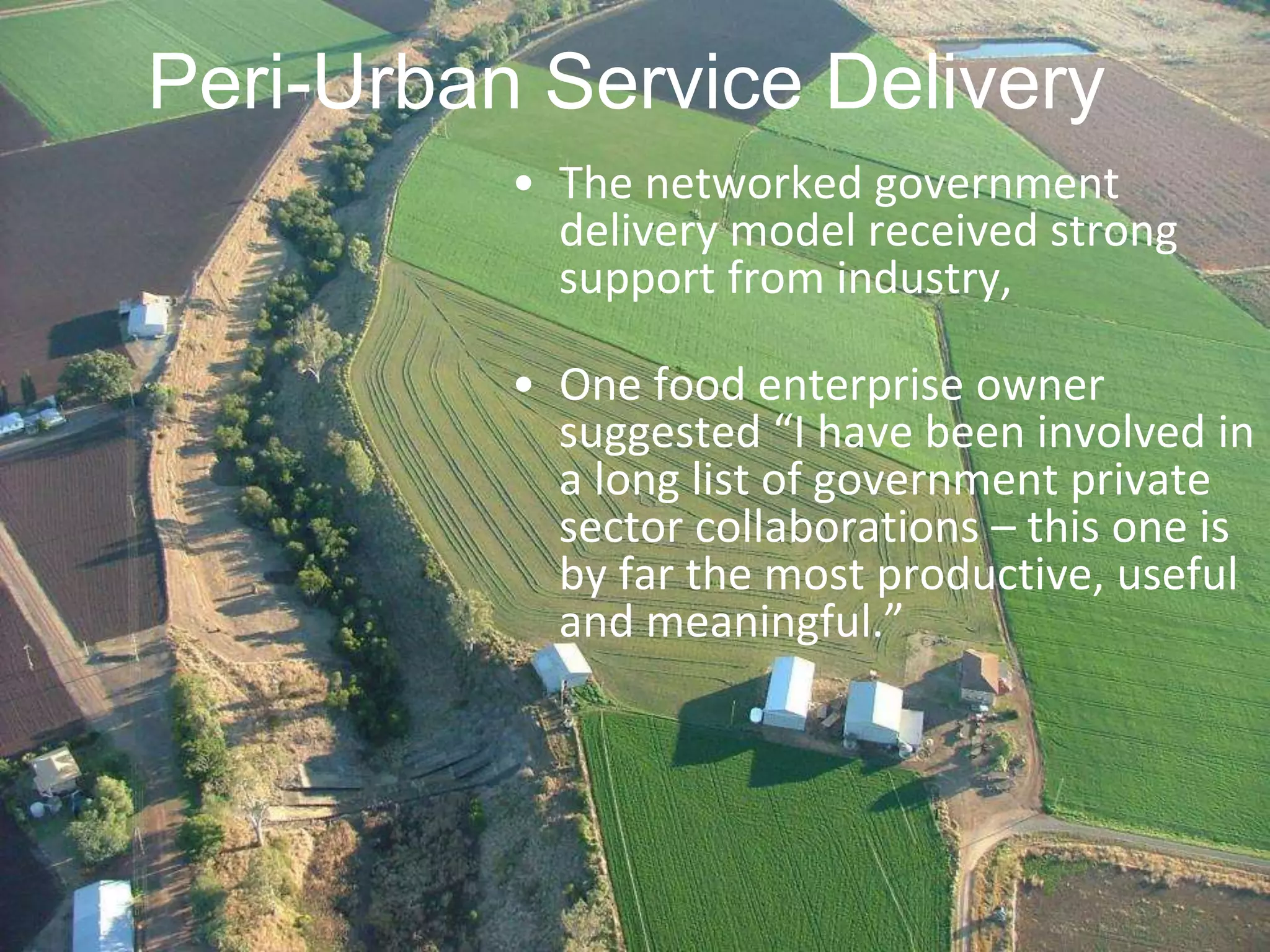
Peri-Urban Service Delivery
• The networked government
delivery model received strong
support from industry,

• One food enterprise owner
suggested “I have been involved in
a long list of government private
sector collaborations – this one is
by far the most productive, useful
and meaningful.”
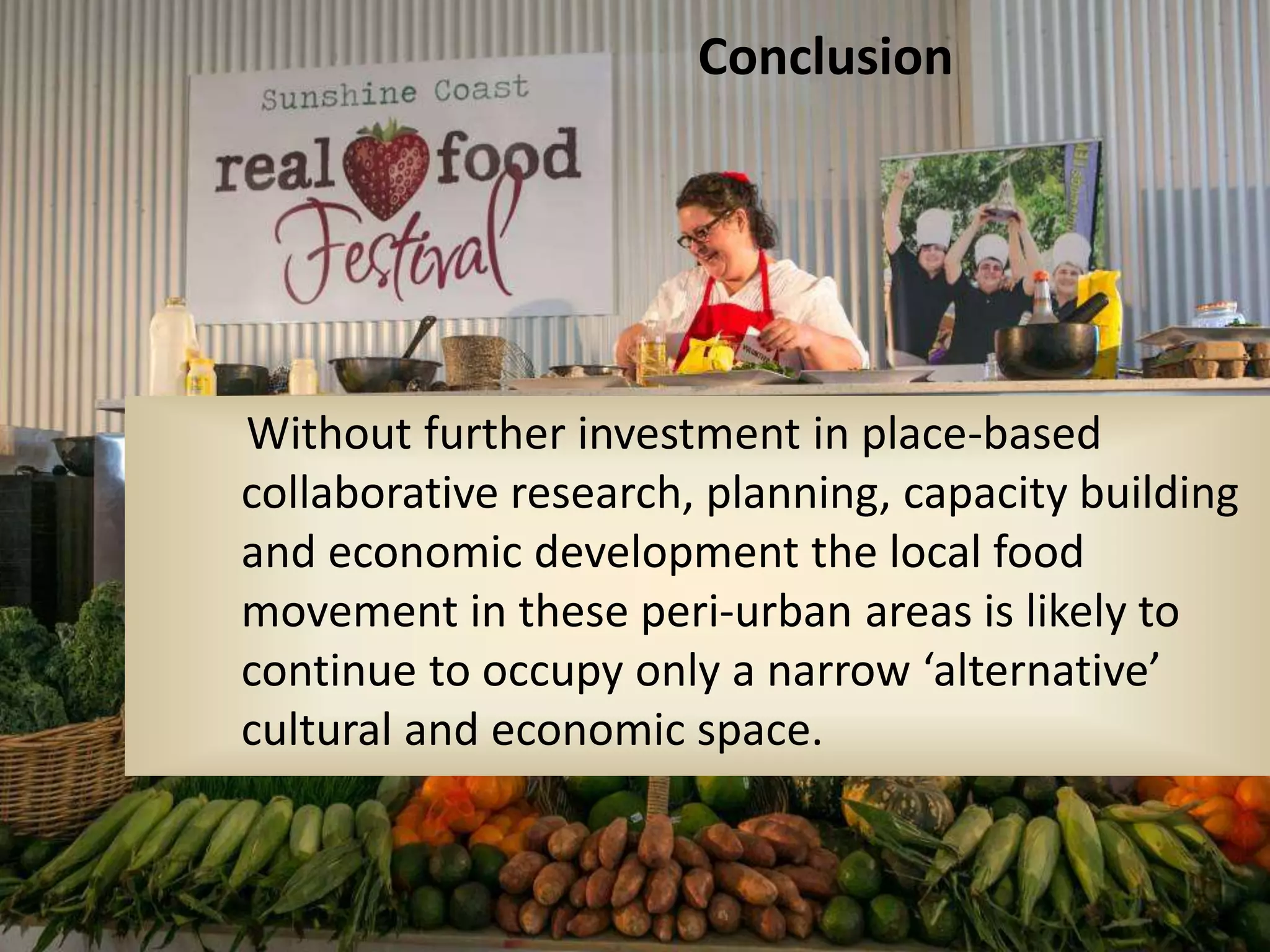
Conclusion

Without further investment in place-based
collaborative research, planning, capacity building
and economic development the local food
movement in these peri-urban areas is likely to
continue to occupy only a narrow ‘alternative’
cultural and economic space.

Stockwell_B_Peri-Urban food futures

  • 3.
    How can fragmentedperi-urban agricultural systems which currently adversely influence the health of catchments and receiving waters be reconfigured to achieve integrated social, economic and environmental outcomes in coastal catchments?
  • 4.
    In 2006, 54%of midscale producers, natural resource managers and scientists participating in a best management practice forum thought there was less than 15% likelihood that adopting a ‘business as usual’ approach would achieve sustainable co-existence between agricultural, the community and downstream fisheries in the region
  • 5.
    However, 83% ofthose participants considered that there was a greater than 60% chance of achieving a sustainable future for farmers and fisherman in a scenario involving an integrated area-wide sustainable agriculture extension program was delivered in conjunction with incentives for the adoption of the best management practices that all those present had agreed to at the forum.
  • 6.
    Seventy-three percent ofthe mid-scale farming enterprises interviewed in 2010 stated that they feared farming, as it stood in the region, did not have a viable future. “ It is not the strongest species that survive, nor the most intelligent, but the ones most responsive to change. ” Charles Darwin
  • 7.
  • 8.
    Key Message To reconfigureperi-urban landscapes, collaborative initiatives between industry, local councils and regional government must deliberately rearrange the social, economic and ecological connectivity of the agricultural system to adapt to new circumstances, perform new tasks, and recover from damage.
  • 9.
    New Rural Development •A new rural development paradigm has emerged globally over the last decade, • Connecting practices of landscape management, agritourism, organic and sustainable farming, and value chain analysis and management. • Questions remain as to the extent to which peri-urban agri-food systems will be self-reconfiguring and to what extent government intervention is required to effectively facilitate the transition.
  • 10.
    • Lifestyle drivenpopulation change; • increasing consumer demand for local, healthy and sustainable food • Lerner and Eaken (2011) suggest there is increasing evidence that the growing middle-class demand for healthy, more sustainable foods can potentially reverse the trend of dwindling agricultural production in peri-urban areas of the developed world.
  • 11.
    Sunshine Coast FoodFutures • A series of projects spanned the agri-food value-chain • Featured a high level of collaboration with industry, local government, university and other researchers. • Led by the Queensland Government as part of a pilot ‘networked government’ service delivery model • Involved research, planning, extension and business development activities as part of ongoing sustainable agriculture extension networks and regional economic development programs.
  • 12.
    Participatory Action Research •Participatory rapid rural appraisal • Scenario analysis involving 102 primary producers and peri-urban residents; • Semi-structured interviews with 34 traditional mid-scale farmers; • Face to face questionnaire surveys delivered to 180 micro to small primary producers and food artisans, and food manufacturers • Internet Surveys of 100 Restaurateurs & Chefs, and 853 Local Food Consumers
  • 13.
    A collaborative servicedelivery model that involved: • the state government allocating business development officers and agricultural extension officers to support farmers and food artisans; • contracting specialist presenters to lead targeted training workshops, followed by one-on-one mentoring; • local government program support to create and market a collective regional brand (Seasons of the Sun). • Research projects were embedded within service delivery projects and distributed between academics, local food social enterprises and local food champions with results rapidly communicated to stakeholders.
  • 14.
    Fragmentation is Advanced Lots>0.2 and < =20ha Lots >100 ha
  • 15.
    Gross Output byPrimary and Resource Industries SEQ 2001-2026 ($Millions) Horticulture 1000 900 800 $Million 700 Horticulture 600 Intensive animal Cropping 500 Grazing 400 Other agriculture Forestry, fishing, mining 300 200 Intensive Animal 100 0 2001 2006 2011 2016 2021 2026
  • 17.
  • 18.
    20 Classes ofArtisanal Food Products
  • 19.
    Estimated Value ofAgricultural Holdings • $200K - $349K 9% $350K - $999K 6% >$1000K 2% <$22.5K 31% $100K - $199K 13% $50K - $99K 16% Median Income $22.5K - $49K 23% Source ABS (2008) Sunshine Coast & Cooloola
  • 20.
    Changing Face ofSupply Chains 60 Percentage of Sales 50 40 30 20 10 0 Central Wholesale Markets Direct to National Retailer Local Retailer or Wholesaler Direct to Public, Farmgate or Market Restuarants Direct Destination of Product Mid-Scale Farm Survey Micro-Small Farm Surveys Food Processor Export
  • 22.
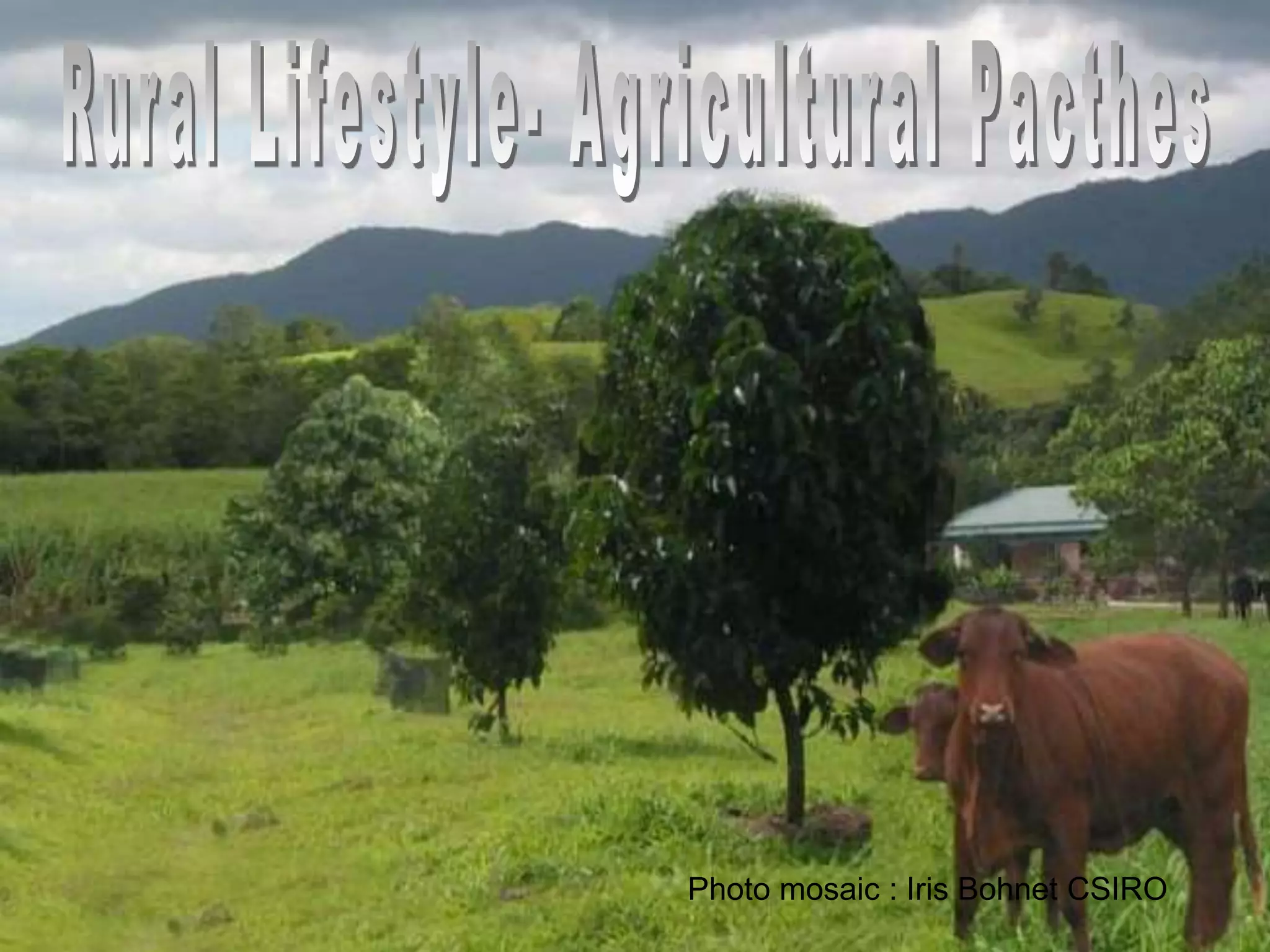
    Photo mosaic :Iris Bohnet CSIRO
  • 23.
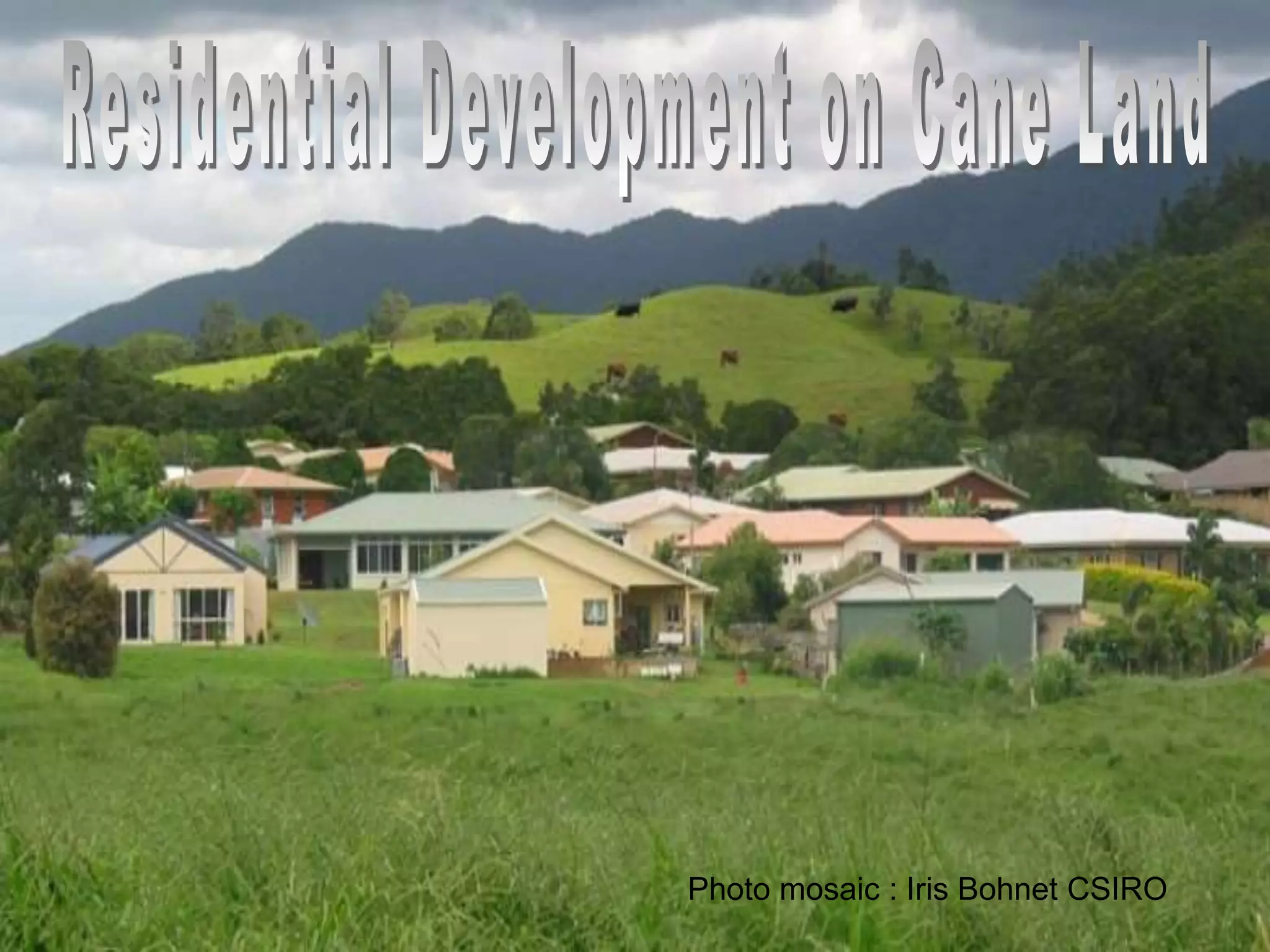
    Photo mosaic :Iris Bohnet CSIRO
  • 24.
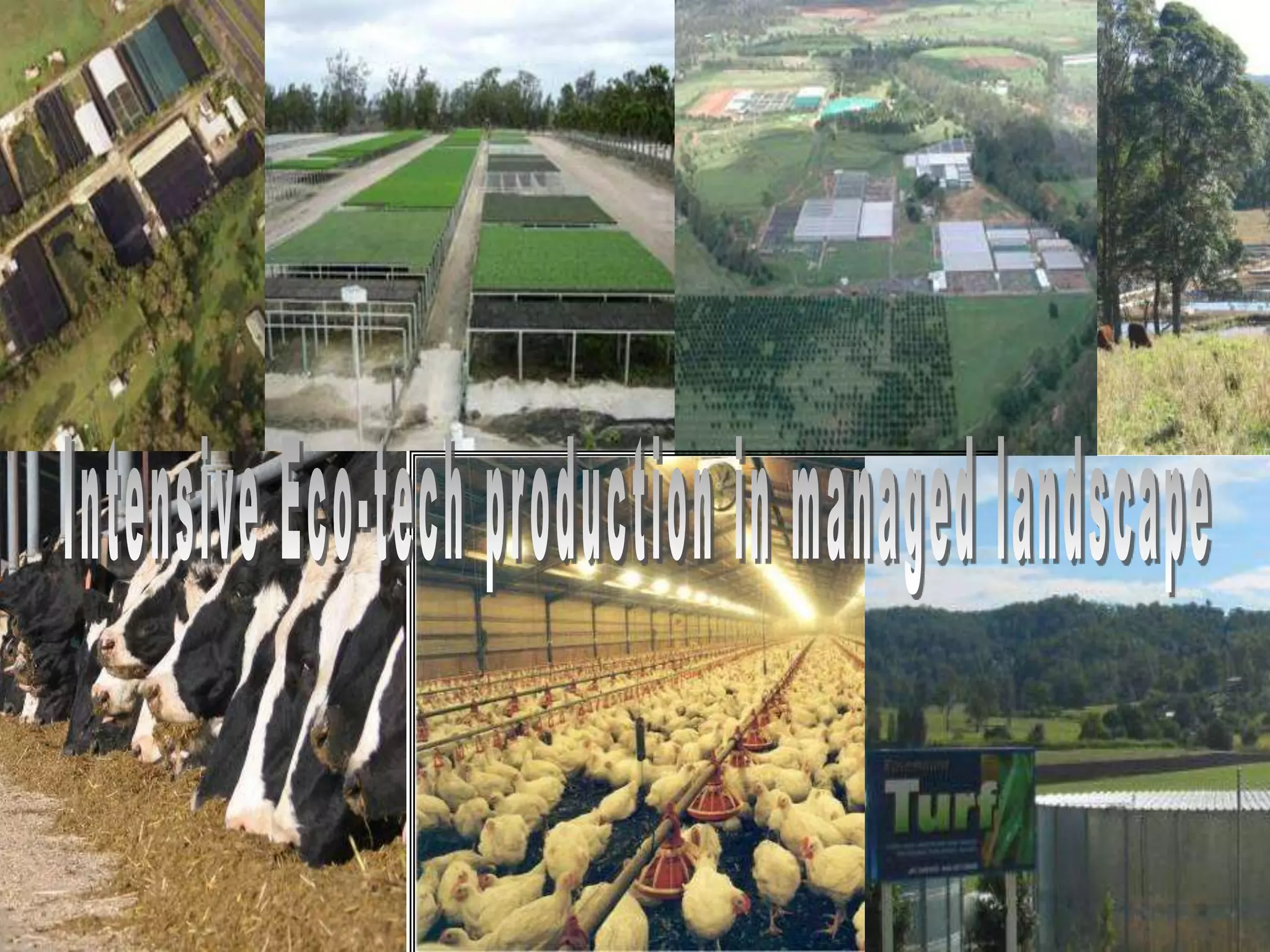
    Photo mosaic :Iris Bohnet CSIRO
  • 25.
    Photo mosaic :Iris Bohnet CSIRO
  • 26.
    Photo mosaic :Iris Bohnet CSIRO
  • 28.
    Most Preferred Future 45 Noof Respondents 40 35 30 25 20 15 10 5 0 Increased Production from Monoculture and Cane Mid-scale Diversified Subtropical Agriculture, Cooperative Agriculture Small ScaleEnviroFriendly and Organic Systems Controlled Residential Rural Lifestyle Development of Blocks with Caneland Patches of Agriculture Scenario Intensive Eco tech
  • 29.
    EXPECTED FUTURE Do NothingMore 50% 45% Percentage of Respondents 40% 35% 30% 25% 20% 15% 10% 5% 0% 1. Increased production 2. Mid scale diversified 3. Small scale enviro4. Controlled Rural from monoculture & sub tropical agriculture, friendly & organic Lifestyle bocks with grazing cooperative farming systems patches of Agriculture Scenario 5. Residential development of caneland and similar farmland 6. Intensive Eco-tech Production in managed landscapes
  • 30.
    OPPORTUNITY Transitioning to aSustainable Value Chain
  • 31.
    Supply chains pushproducts from upstream Value chains’ products are pulled by consumers
  • 36.
  • 37.
    • Almost 60%of mid-scale farmers agreed they would explore their options for entering a local food supply chain if there was more support available to learn how to adapt their enterprise to profit from this transition.
  • 38.
    Micro-Small Primary Producers Overwhelminginterest (76%) in exploring opportunities in the local food value chain 70% were able to supply a local distribution system 64% would increase production to supply a local distribution system
  • 39.
    CONSTRAINTS • • • • • • Inadequate Distribution Systems MarketFailure – duopolisation, incomplete market knowledge Inadequate Branding and Marketing Insufficient Production Knowledge, Training and Support Inadequate price signals in the market for local sustainable food A perception that changes in government priorities had led to a significant reduction in government agricultural extension Photo: C. Nickerson USDA 2009
  • 40.
    Influence that anefficient local distribution system would have on local supply 25 20 Great influence No influence 15 10 5 0 A great influence Somewhat of an influence Of very little influence No influence
  • 42.
    Support development ofa web-based information portal and distribution system for local food?
  • 43.
    Barriers to Consumption Bothresidents and tourists suggest the five most significant barriers to consumption of local food were : • its lack of promotion; • lack of information on where to find it; • it is not clearly branded as local; • it is not readily available; and • it is not well labelled.
  • 44.
    Integrated Area-Wide Extension In5 years after 2006 forum 80% of producers in the pilot area had substantially adopted the BMP recommended
  • 45.
    Peri-Urban Service Delivery •The networked government delivery model received strong support from industry, • One food enterprise owner suggested “I have been involved in a long list of government private sector collaborations – this one is by far the most productive, useful and meaningful.”
  • 46.
    Conclusion Without further investmentin place-based collaborative research, planning, capacity building and economic development the local food movement in these peri-urban areas is likely to continue to occupy only a narrow ‘alternative’ cultural and economic space.