Future Proofing Peri-urban Agriculture:
Methods to Quantify and Value Ecosystem Services

Dr Harpinder Sandhu
School of the Environment, Flinders University of South Australia
Harpinder.Sandhu@flinders.edu.au

Beyond the Edge: Australia's First Peri-Urban Conference, October 1, 2013
Key global issues
• Population increasing
• Food demand will double by 2050
• Loss of biodiversity and ecosystem services

• Climatic variability and change
Ecosystem Services
• Nature’s services –
Gretchen Daily, 1997
• Nature article by
Costanza et al. (1997)
US $ 33,000,000,000,000 p.a.
Gross global production:
US $ 18,000,000,000,000 p.a.
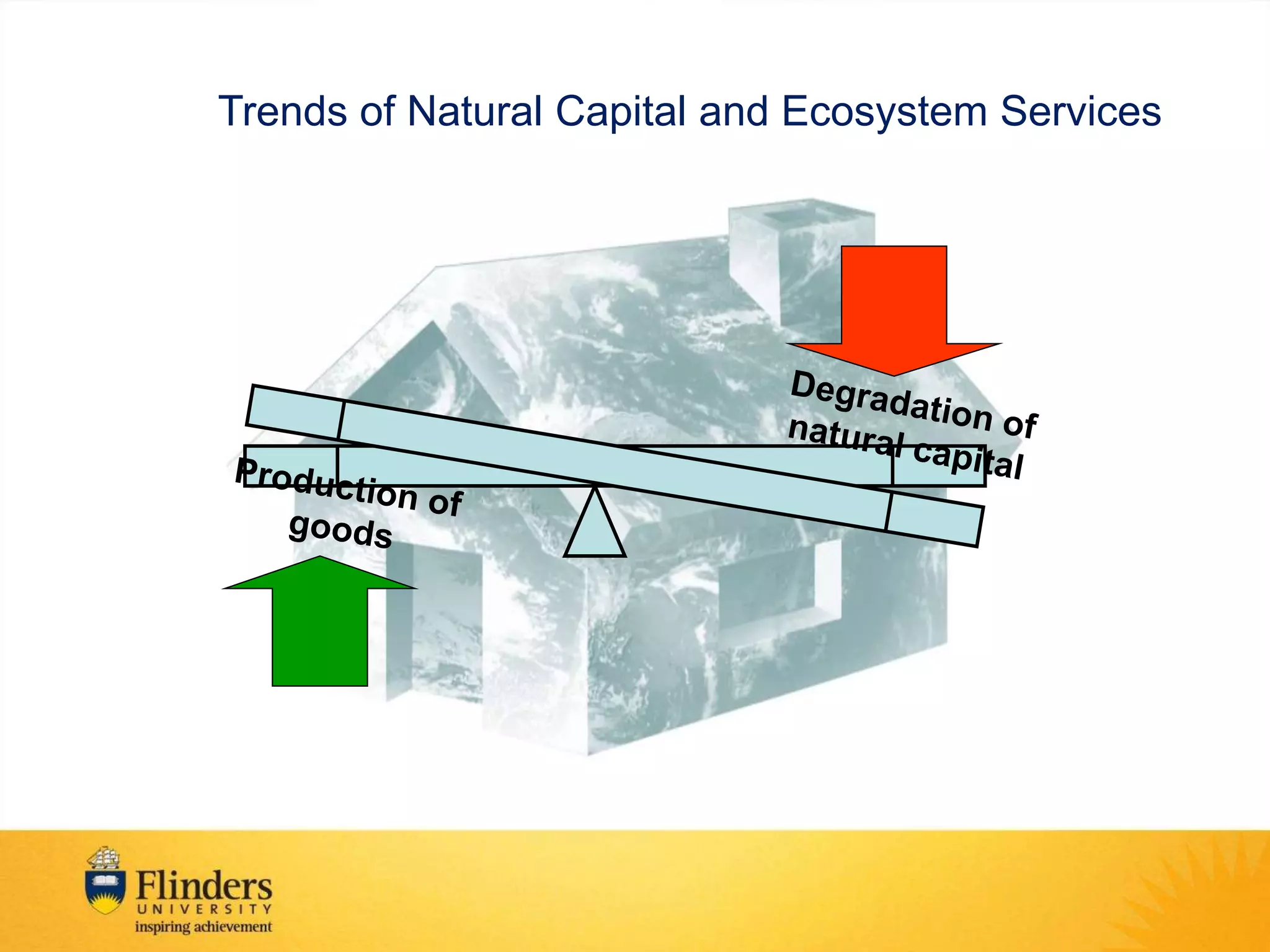
Trends of Natural Capital and Ecosystem Services
Agriculture poses risks to Ecosystems
1.89
1.66
Drivers of Ecosystem Change

236

1.5

135
10.1

0.74
87

0.5

6.55

20
3.75
3
1900

1950

2000

2020

2050
• 3-4% to the national GDP
• 60% of total area
• 65% of natural resources
• Need to incorporate ES into decision making

The largest industry on the planet
1.3 billion people, $4 trillion in global GDP (6 %)
How do we turn things around?
Ecosystem Services in Agricultural Landscapes

Sandhu et al. 2010 Env Sc Policy, Sandhu et al. 2012 Ecol. Econ., Sandhu et al. 2013
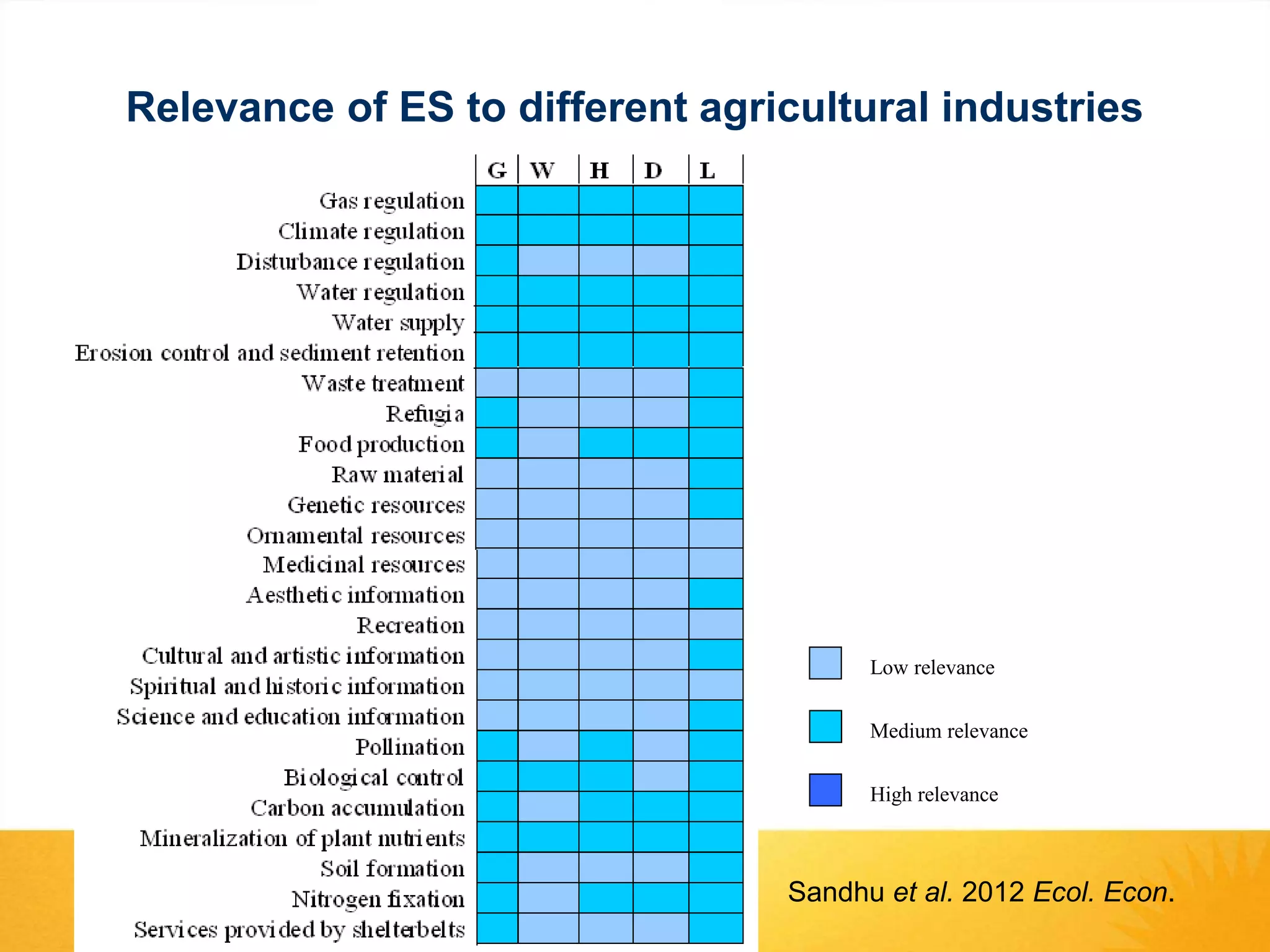
Relevance of ES to different agricultural industries

Low relevance
Medium relevance
High relevance

August 2010

Sandhu et al. 2012 Ecol. Econ.
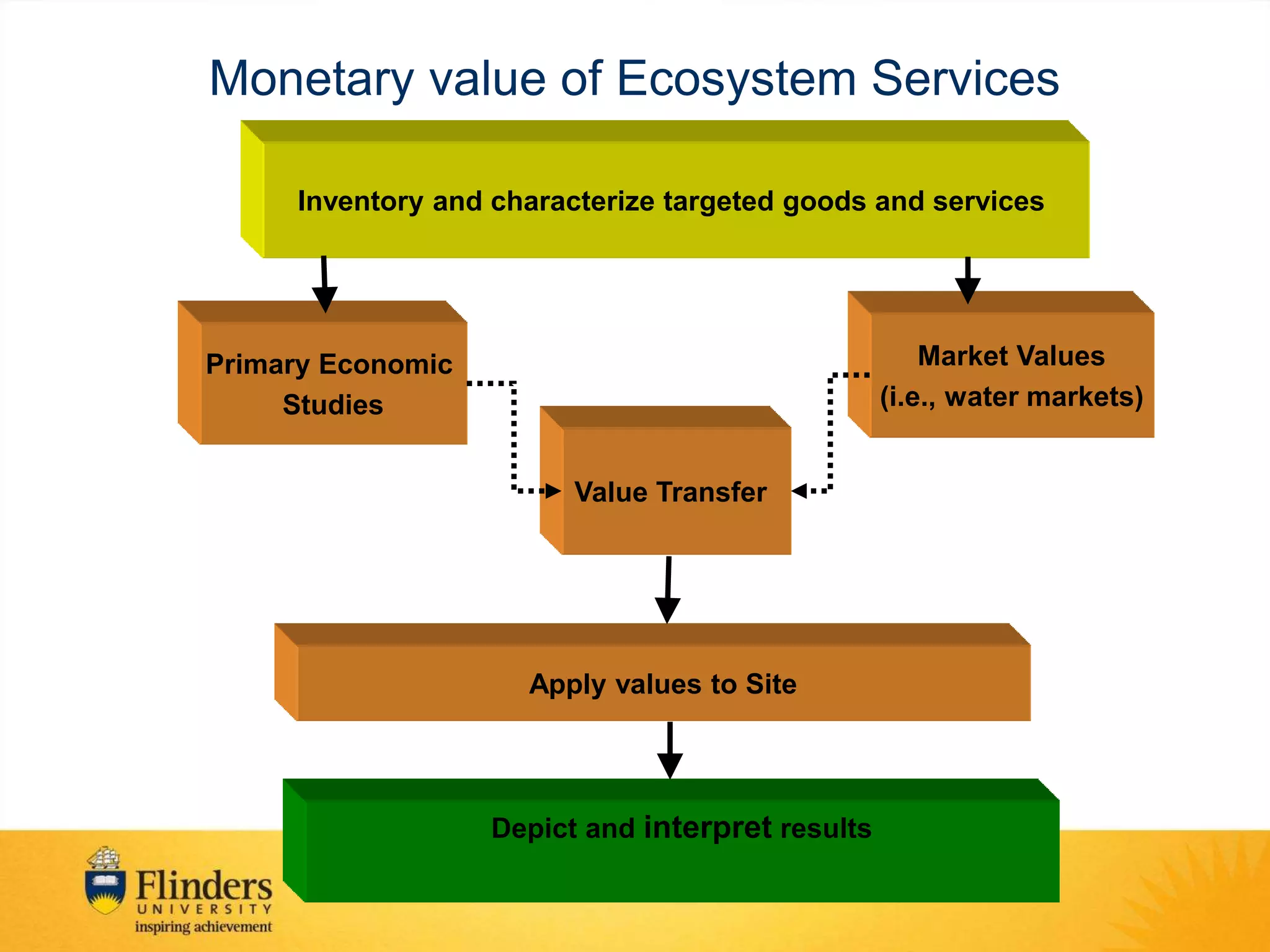
Monetary value of Ecosystem Services
Inventory and characterize targeted goods and services

Market Values
(i.e., water markets)

Primary Economic
Studies
Value Transfer

Apply values to Site

Depict and interpret results
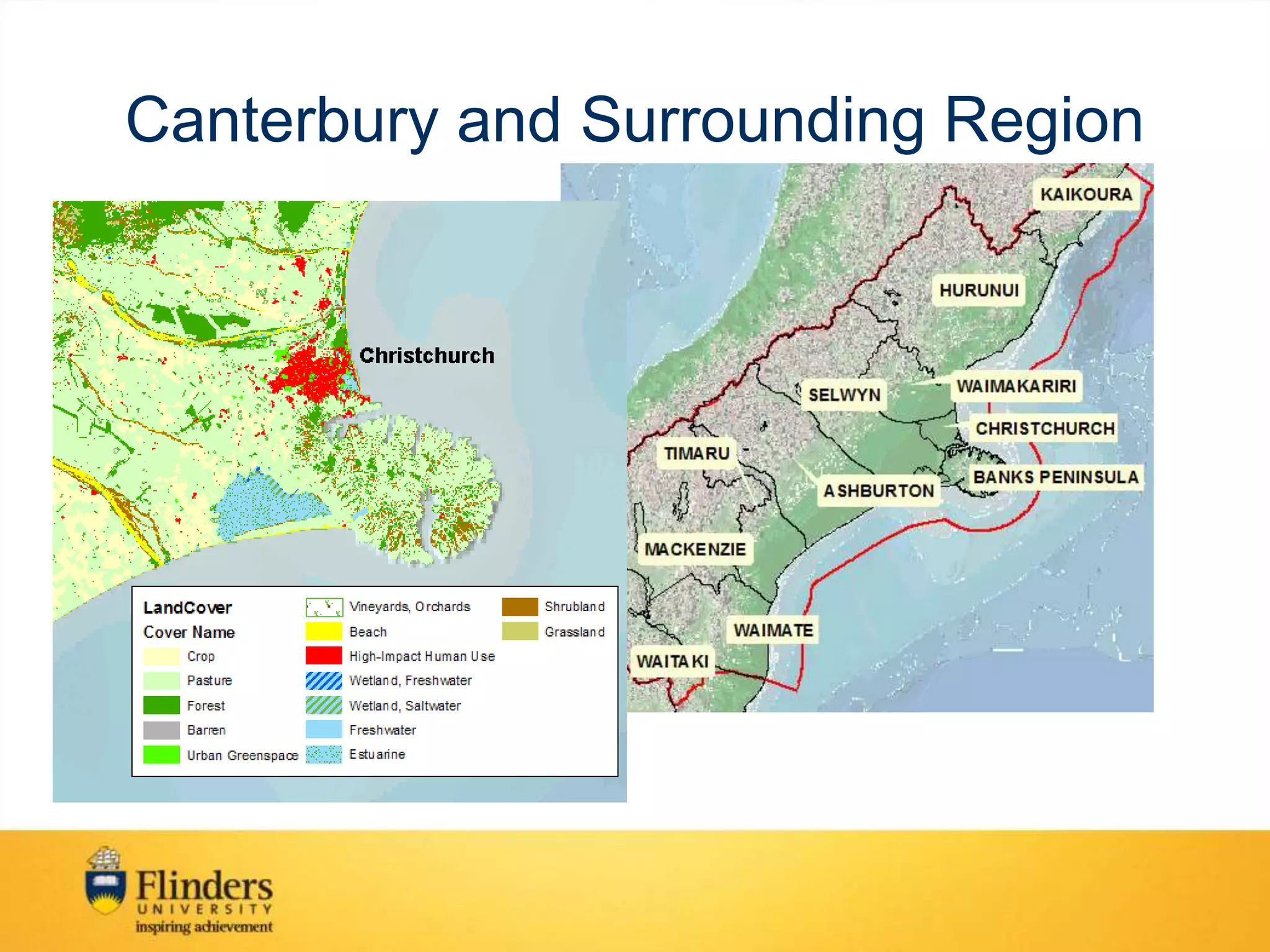
Canterbury and Surrounding Region
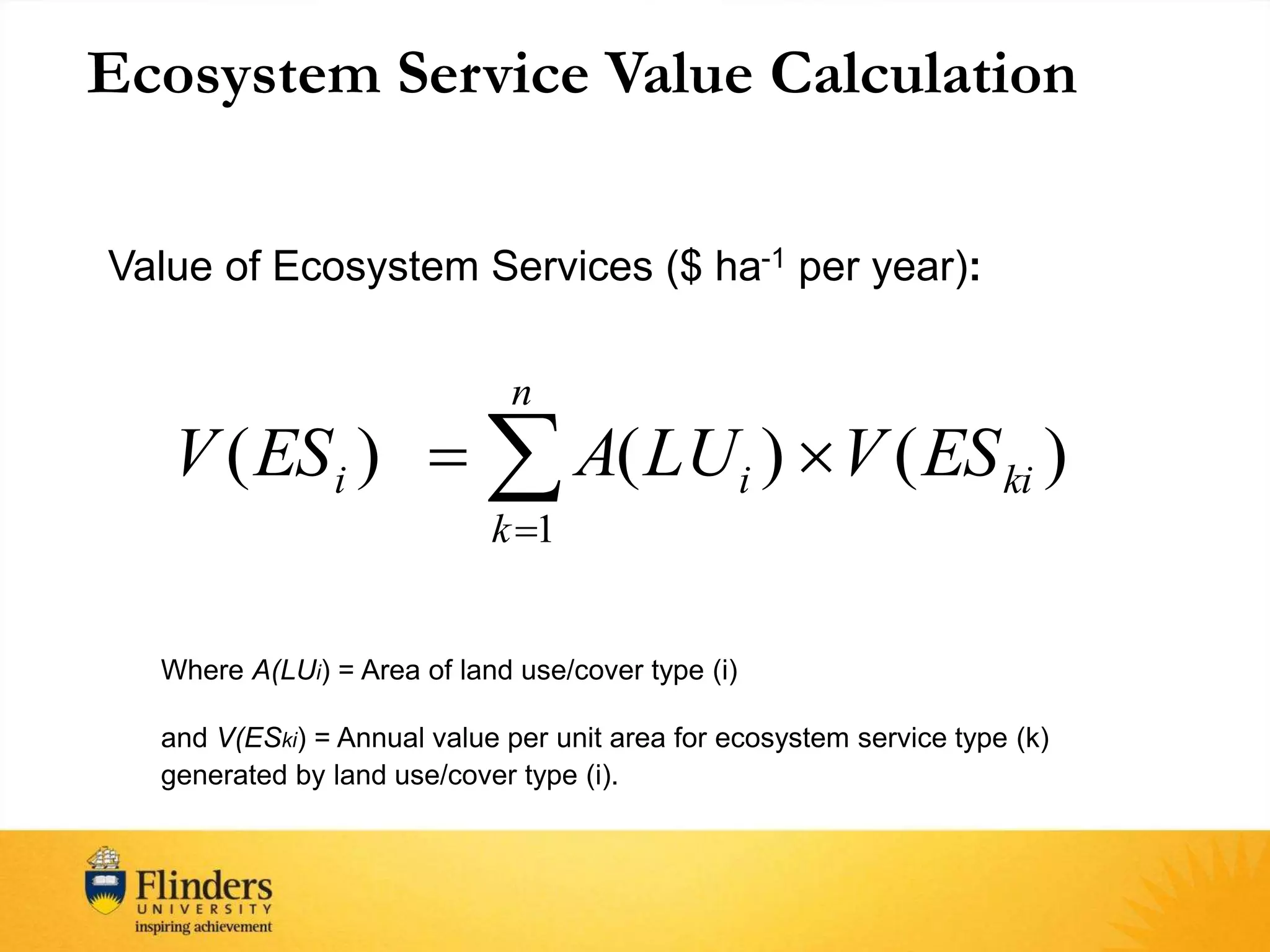
Ecosystem Service Value Calculation
Value of Ecosystem Services ($ ha-1 per year):
n

V ( ES i )   A( LUi )  V ( ES ki )
k 1

Where A(LUi) = Area of land use/cover type (i)
and V(ESki) = Annual value per unit area for ecosystem service type (k)
generated by land use/cover type (i).
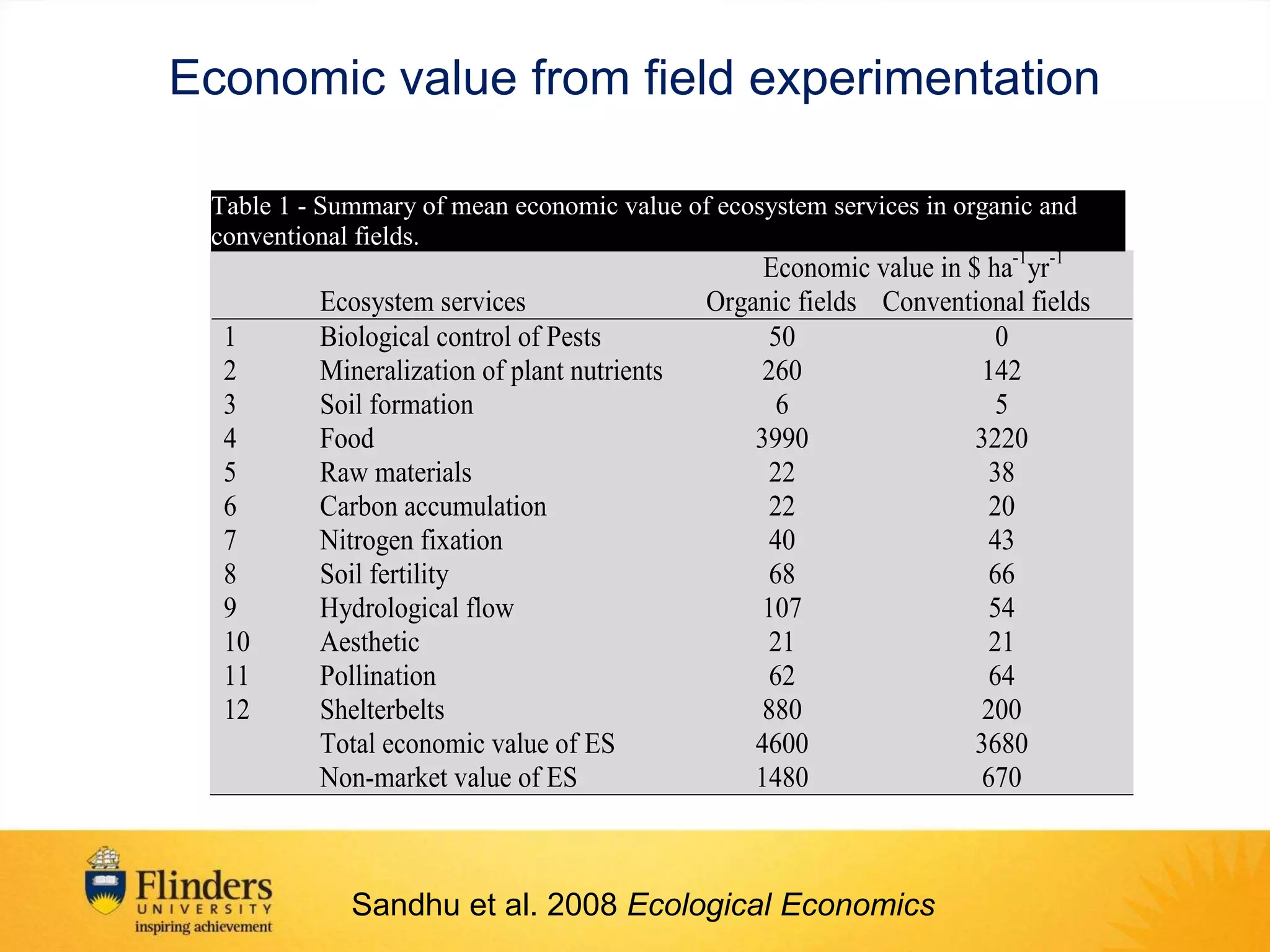
Economic value from field experimentation
Table 1 - Summary of mean economic value of ecosystem services in organic and
conventional fields.

1
2
3
4
5
6
7
8
9
10
11
12

Ecosystem services
Biological control of Pests
Mineralization of plant nutrients
Soil formation
Food
Raw materials
Carbon accumulation
Nitrogen fixation
Soil fertility
Hydrological flow
Aesthetic
Pollination
Shelterbelts
Total economic value of ES
Non-market value of ES

Economic value in $ ha-1yr-1
Organic fields Conventional fields
50
0
260
142
6
5
3990
3220
22
38
22
20
40
43
68
66
107
54
21
21
62
64
880
200
4600
3680
1480
670

Sandhu et al. 2008 Ecological Economics
Example Results: GIS Mapping by Parcel
Putting it all together
Server

Project Website
and
Economic Analysis

User

ArcIMS®
System

Valuation
Database

Project Team
Sharepoint
Collaboration

Data Input
Web-based Map Server: Farm Parcels and Field
Research

http://ecovalue.uvm.edu/evp/modules/nz
GIS map showing total economic value of ES for arable
land in Canterbury based on conventional farming

Legend
Conventional agriculture
Non-market ES ($US)
0
1 - 100,000
100,001 - 200,000
200,001 - 400,000
400,001 - 600,000
600,001 - 800,000
800,001 - 1,000,000
1,000,001 - 2,000,000
2,000,001 - 3,000,000
3,000,001 - 4,200,000

Sandhu et al. 2008 Ecological Economics
Application of ES concept in
peri-urban areas
• To generate better social, environmental and economic
outcomes from peri-urban areas
(integrate land–use planning and NRM planning)
• To guide decision support system
(incorporate ES into planning and decision-making relating
to resource allocation in peri-urban development)
Decision making in peri-urban areas

Direct drivers of
ecosystem change

Natural

Biological

Land use
change

Decision Making
Policy Options
Management
Options

Indirect drivers of
ecosystem change

Economic

Social

Political

Cultural

Ecosystem Services






Provisioning services
(food, water, wine )
Regulating services
(clean air, water)
Cultural services
(recreation, aesthetics)
Supporting services
(nutrient cycling, soil
health, pollination)

Urban and Peri-Urban Areas

impacts

dependenc
e










Habitat
Personal safety
Social cohesion
Freedom of choice
Health
Education
Governance
Economic opportunities
Sandhu_H_Future proofing peri-urban agriculture

Sandhu_H_Future proofing peri-urban agriculture

  • 1.
    Future Proofing Peri-urbanAgriculture: Methods to Quantify and Value Ecosystem Services Dr Harpinder Sandhu School of the Environment, Flinders University of South Australia Harpinder.Sandhu@flinders.edu.au Beyond the Edge: Australia's First Peri-Urban Conference, October 1, 2013
  • 2.
    Key global issues •Population increasing • Food demand will double by 2050 • Loss of biodiversity and ecosystem services • Climatic variability and change
  • 3.
    Ecosystem Services • Nature’sservices – Gretchen Daily, 1997 • Nature article by Costanza et al. (1997) US $ 33,000,000,000,000 p.a. Gross global production: US $ 18,000,000,000,000 p.a.
  • 4.
    Trends of NaturalCapital and Ecosystem Services
  • 5.
    Agriculture poses risksto Ecosystems 1.89 1.66 Drivers of Ecosystem Change 236 1.5 135 10.1 0.74 87 0.5 6.55 20 3.75 3 1900 1950 2000 2020 2050
  • 6.
    • 3-4% tothe national GDP • 60% of total area • 65% of natural resources • Need to incorporate ES into decision making The largest industry on the planet 1.3 billion people, $4 trillion in global GDP (6 %)
  • 7.
    How do weturn things around?
  • 8.
    Ecosystem Services inAgricultural Landscapes Sandhu et al. 2010 Env Sc Policy, Sandhu et al. 2012 Ecol. Econ., Sandhu et al. 2013
  • 9.
    Relevance of ESto different agricultural industries Low relevance Medium relevance High relevance August 2010 Sandhu et al. 2012 Ecol. Econ.
  • 10.
    Monetary value ofEcosystem Services Inventory and characterize targeted goods and services Market Values (i.e., water markets) Primary Economic Studies Value Transfer Apply values to Site Depict and interpret results
  • 11.
  • 12.
    Ecosystem Service ValueCalculation Value of Ecosystem Services ($ ha-1 per year): n V ( ES i )   A( LUi )  V ( ES ki ) k 1 Where A(LUi) = Area of land use/cover type (i) and V(ESki) = Annual value per unit area for ecosystem service type (k) generated by land use/cover type (i).
  • 13.
    Economic value fromfield experimentation Table 1 - Summary of mean economic value of ecosystem services in organic and conventional fields. 1 2 3 4 5 6 7 8 9 10 11 12 Ecosystem services Biological control of Pests Mineralization of plant nutrients Soil formation Food Raw materials Carbon accumulation Nitrogen fixation Soil fertility Hydrological flow Aesthetic Pollination Shelterbelts Total economic value of ES Non-market value of ES Economic value in $ ha-1yr-1 Organic fields Conventional fields 50 0 260 142 6 5 3990 3220 22 38 22 20 40 43 68 66 107 54 21 21 62 64 880 200 4600 3680 1480 670 Sandhu et al. 2008 Ecological Economics
  • 14.
    Example Results: GISMapping by Parcel
  • 15.
    Putting it alltogether Server Project Website and Economic Analysis User ArcIMS® System Valuation Database Project Team Sharepoint Collaboration Data Input
  • 16.
    Web-based Map Server:Farm Parcels and Field Research http://ecovalue.uvm.edu/evp/modules/nz
  • 17.
    GIS map showingtotal economic value of ES for arable land in Canterbury based on conventional farming Legend Conventional agriculture Non-market ES ($US) 0 1 - 100,000 100,001 - 200,000 200,001 - 400,000 400,001 - 600,000 600,001 - 800,000 800,001 - 1,000,000 1,000,001 - 2,000,000 2,000,001 - 3,000,000 3,000,001 - 4,200,000 Sandhu et al. 2008 Ecological Economics
  • 18.
    Application of ESconcept in peri-urban areas • To generate better social, environmental and economic outcomes from peri-urban areas (integrate land–use planning and NRM planning) • To guide decision support system (incorporate ES into planning and decision-making relating to resource allocation in peri-urban development)
  • 19.
    Decision making inperi-urban areas Direct drivers of ecosystem change  Natural  Biological  Land use change Decision Making Policy Options Management Options Indirect drivers of ecosystem change  Economic  Social  Political  Cultural Ecosystem Services     Provisioning services (food, water, wine ) Regulating services (clean air, water) Cultural services (recreation, aesthetics) Supporting services (nutrient cycling, soil health, pollination) Urban and Peri-Urban Areas impacts dependenc e         Habitat Personal safety Social cohesion Freedom of choice Health Education Governance Economic opportunities