Stimuli in Musical
Composition
What you need to know for the CSEC Music Examination
Objectives
▪ Explain musical stimuli, without assistance
▪ Differentiate between various types of Stimuli
▪ Use stimuli in short compositions
What is Stimuli
Material that is presented to a composer, that they can use as the starting
point for musical compositions. For example, a composer may be provided
with a 4-bar rhythmic phrase which they can then use to compose a larger
piece of music.
Types of Stimuli in Music
Stimuli usually falls into 2 main Categories:
• Musical
• Extra-Musical
Musical Stimuli
Musical Stimuli are musical elements that are used as the basis for creating
musical compositions. Musical Stimuli can take the form of: Rhythmic and
Melodic Motives and Harmonic Progressions.
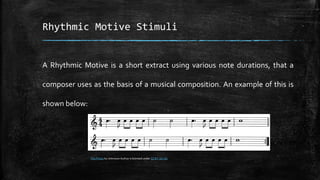
Rhythmic Motive Stimuli
A Rhythmic Motive is a short extract using various note durations, that a
composer uses as the basis of a musical composition. An example of this is
shown below:
This Photo by Unknown Author is licensed under CC BY-SA-NC
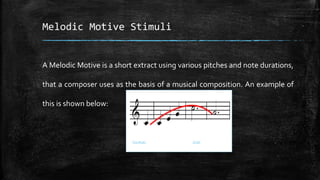
Melodic Motive Stimuli
A Melodic Motive is a short extract using various pitches and note durations,
that a composer uses as the basis of a musical composition. An example of
this is shown below:
This Photo by Unknown Author is licensed under CC BY
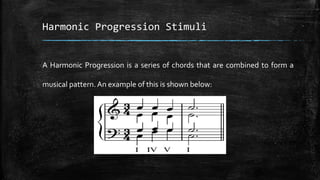
Harmonic Progression Stimuli
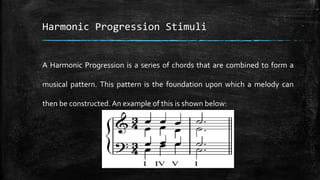
A Harmonic Progression is a series of chords that are combined to form a
musical pattern. An example of this is shown below:
Harmonic Progression Stimuli
A Harmonic Progression is a series of chords that are combined to form a
musical pattern. This pattern is the foundation upon which a melody can
then be constructed. An example of this is shown below:
Extra-Musical Stimuli
This Photo by Unknown Author is licensed under CC BY-SA-NC
Extra-Musical Stimuli
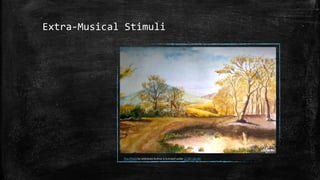
Extra-Musical Stimuli are sources of inspiration that are external to music.
This includes: visual arts, literary works, nature scenes. For instance, a
composer can use the lyrics of a poem of a painting as the basis of
composing a new piece.
Activities
Teacher can create activities and assessments for this tutorial

Stimuli in musical composition

  • 1.
    Stimuli in Musical Composition Whatyou need to know for the CSEC Music Examination
  • 2.
    Objectives ▪ Explain musicalstimuli, without assistance ▪ Differentiate between various types of Stimuli ▪ Use stimuli in short compositions
  • 3.
    What is Stimuli Materialthat is presented to a composer, that they can use as the starting point for musical compositions. For example, a composer may be provided with a 4-bar rhythmic phrase which they can then use to compose a larger piece of music.
  • 4.
    Types of Stimuliin Music Stimuli usually falls into 2 main Categories: • Musical • Extra-Musical
  • 5.
    Musical Stimuli Musical Stimuliare musical elements that are used as the basis for creating musical compositions. Musical Stimuli can take the form of: Rhythmic and Melodic Motives and Harmonic Progressions.
  • 6.
    Rhythmic Motive Stimuli ARhythmic Motive is a short extract using various note durations, that a composer uses as the basis of a musical composition. An example of this is shown below: This Photo by Unknown Author is licensed under CC BY-SA-NC
  • 7.
    Melodic Motive Stimuli AMelodic Motive is a short extract using various pitches and note durations, that a composer uses as the basis of a musical composition. An example of this is shown below: This Photo by Unknown Author is licensed under CC BY
  • 8.
    Harmonic Progression Stimuli AHarmonic Progression is a series of chords that are combined to form a musical pattern. An example of this is shown below:
  • 9.
    Harmonic Progression Stimuli AHarmonic Progression is a series of chords that are combined to form a musical pattern. This pattern is the foundation upon which a melody can then be constructed. An example of this is shown below:
  • 10.
    Extra-Musical Stimuli This Photoby Unknown Author is licensed under CC BY-SA-NC
  • 11.
    Extra-Musical Stimuli Extra-Musical Stimuliare sources of inspiration that are external to music. This includes: visual arts, literary works, nature scenes. For instance, a composer can use the lyrics of a poem of a painting as the basis of composing a new piece.
  • 12.
    Activities Teacher can createactivities and assessments for this tutorial