Stigma
Victoria Betton
Me


@VictoriaBetton

Digital mental health

 csvcnb@leeds.ac.uk
 www.digitalmentalhealth.co.uk
Stigma
‘Stigma is the situation of the individual who is
    disqualified from full social acceptance…
  The stigmatized individual is reduced in our
   minds from a whole and usual person to a
            tainted, discounted one’

               (Goffman, 1963)
What is mental health?
‘Mental health is not just the absence of mental
disorder. It is defined as a state of well-being in
which every individual realizes his or her own
potential, can cope with the normal stresses of
life, can work productively and fruitfully, and is
able to make a contribution to her or his
community’

World Health Organisation
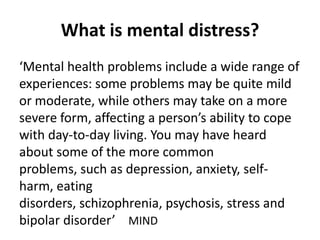
What is mental distress?
‘Mental health problems include a wide range of
experiences: some problems may be quite mild
or moderate, while others may take on a more
severe form, affecting a person’s ability to cope
with day-to-day living. You may have heard
about some of the more common
problems, such as depression, anxiety, self-
harm, eating
disorders, schizophrenia, psychosis, stress and
bipolar disorder’ MIND
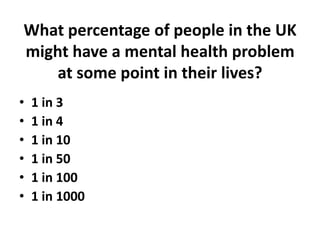
What percentage of people in the UK
might have a mental health problem
    at some point in their lives?
•   1 in 3
•   1 in 4
•   1 in 10
•   1 in 50
•   1 in 100
•   1 in 1000
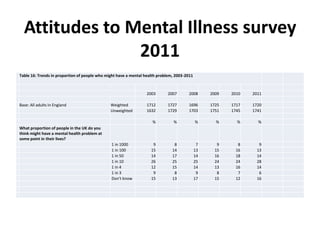
Attitudes to Mental Illness survey
                2011
Table 16: Trends in proportion of people who might have a mental health problem, 2003-2011


                                                                  2003      2007       2008       2009   2010   2011

Base: All adults in England                    Weighted           1712      1727       1696       1725   1717   1720
                                               Unweighted         1632      1729       1703       1751   1745   1741

                                                                     %          %            %      %      %      %
What proportion of people in the UK do you
think might have a mental health problem at
some point in their lives?
                                               1 in 1000             9          8             7     9      8      9
                                               1 in 100             15         14            13    15     16     13
                                               1 in 50              14         17            14    16     18     14
                                               1 in 10              26         25            25    24     24     28
                                               1 in 4               12         15            14    13     16     14
                                               1 in 3                9          8             9     8      7      6
                                               Don't know           15         13            17    15     12     16
Attitudes to Mental Illness survey
                 2011
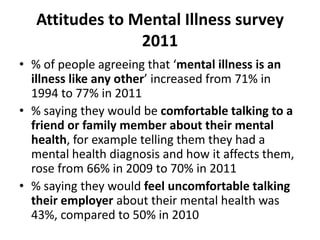
• % of people agreeing that ‘mental illness is an
  illness like any other’ increased from 71% in
  1994 to 77% in 2011
• % saying they would be comfortable talking to a
  friend or family member about their mental
  health, for example telling them they had a
  mental health diagnosis and how it affects them,
  rose from 66% in 2009 to 70% in 2011
• % saying they would feel uncomfortable talking
  their employer about their mental health was
  43%, compared to 50% in 2010
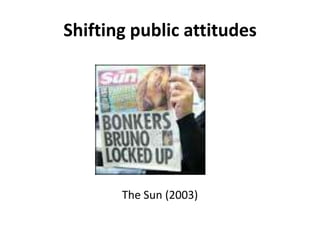
Shifting public attitudes


       The Sun (2003)
National Attitudes to Mental Illness
             survey 2011
• 85% respondents in 2011 said that people
  with mental illness experience stigma and
  discrimination
• (50%) said they experience a lot of
  discrimination
• 35% said that they experience a little
  discrimination
• No significant change in responses 2010/ 2011
Goffman – Stigma (1963)
•   Social interaction
•   ‘normals’ and the ‘stigmatised’
•   Social norms and expectations
•   Subjective experience – self stigma
•   Public stigma – withdrawal and exclusion
•   Labelling – identity and dependence
•   Media – influence and information
Functions of stigma
• Exploitation/domination – keeping people
  down
• Enforcment of social norms – keeping people
  in
• Avoidance of disease – keeping people away

               (Phelan et al, 2008)
What are
    everyday
words and beliefs
 associated with
 mental illness?
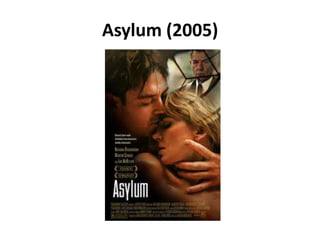
Asylum (2005)
Four components of stigma
(i) people distinguish between and label
      personal characteristics
(ii) labels are linked to undesirable
      characteristics which results in stereotyping
(iii) labelled persons are seen as part of an out
      group
(iv) labelled people experience status loss and
      discrimination.
                (Link & Phelan, 2004)
Three approaches to challenging
             stigma

• Protest – stigma as moral injustice
• Education – facts and figures
• Contact – interpersonal contact


               (Corrigan et al, 2006)
What challenges stigma?
•   Direct contact on equal terms
•   Recovery orientated messages
•   ‘See the whole person’
•   Biomedical - ‘ pitying’
•   Social context - ‘understanding’

                   (Corrigan, 2000)
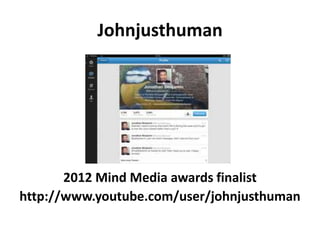
Johnjusthuman


       2012 Mind Media awards finalist
http://www.youtube.com/user/johnjusthuman
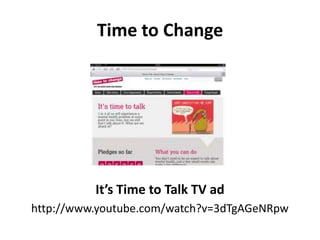
Time to Change


          It’s Time to Talk TV ad
http://www.youtube.com/watch?v=3dTgAGeNRpw
Your challenging stigma campaign
Design key features of your campaign:

•   Audience
•   Key messages
•   Delivery
•   Measurement
Thank you

  @VictoriaBetton
csvcnb@leeds.ac.uk

Stigma - MA student session

  • 1.
  • 2.
    Me @VictoriaBetton Digital mental health csvcnb@leeds.ac.uk www.digitalmentalhealth.co.uk
  • 3.
    Stigma ‘Stigma is thesituation of the individual who is disqualified from full social acceptance… The stigmatized individual is reduced in our minds from a whole and usual person to a tainted, discounted one’ (Goffman, 1963)
  • 4.
    What is mentalhealth? ‘Mental health is not just the absence of mental disorder. It is defined as a state of well-being in which every individual realizes his or her own potential, can cope with the normal stresses of life, can work productively and fruitfully, and is able to make a contribution to her or his community’ World Health Organisation
  • 5.
    What is mentaldistress? ‘Mental health problems include a wide range of experiences: some problems may be quite mild or moderate, while others may take on a more severe form, affecting a person’s ability to cope with day-to-day living. You may have heard about some of the more common problems, such as depression, anxiety, self- harm, eating disorders, schizophrenia, psychosis, stress and bipolar disorder’ MIND
  • 6.
    What percentage ofpeople in the UK might have a mental health problem at some point in their lives? • 1 in 3 • 1 in 4 • 1 in 10 • 1 in 50 • 1 in 100 • 1 in 1000
  • 7.
    Attitudes to MentalIllness survey 2011 Table 16: Trends in proportion of people who might have a mental health problem, 2003-2011 2003 2007 2008 2009 2010 2011 Base: All adults in England Weighted 1712 1727 1696 1725 1717 1720 Unweighted 1632 1729 1703 1751 1745 1741 % % % % % % What proportion of people in the UK do you think might have a mental health problem at some point in their lives? 1 in 1000 9 8 7 9 8 9 1 in 100 15 14 13 15 16 13 1 in 50 14 17 14 16 18 14 1 in 10 26 25 25 24 24 28 1 in 4 12 15 14 13 16 14 1 in 3 9 8 9 8 7 6 Don't know 15 13 17 15 12 16
  • 8.
    Attitudes to MentalIllness survey 2011 • % of people agreeing that ‘mental illness is an illness like any other’ increased from 71% in 1994 to 77% in 2011 • % saying they would be comfortable talking to a friend or family member about their mental health, for example telling them they had a mental health diagnosis and how it affects them, rose from 66% in 2009 to 70% in 2011 • % saying they would feel uncomfortable talking their employer about their mental health was 43%, compared to 50% in 2010
  • 9.
  • 10.
    National Attitudes toMental Illness survey 2011 • 85% respondents in 2011 said that people with mental illness experience stigma and discrimination • (50%) said they experience a lot of discrimination • 35% said that they experience a little discrimination • No significant change in responses 2010/ 2011
  • 11.
    Goffman – Stigma(1963) • Social interaction • ‘normals’ and the ‘stigmatised’ • Social norms and expectations • Subjective experience – self stigma • Public stigma – withdrawal and exclusion • Labelling – identity and dependence • Media – influence and information
  • 12.
    Functions of stigma •Exploitation/domination – keeping people down • Enforcment of social norms – keeping people in • Avoidance of disease – keeping people away (Phelan et al, 2008)
  • 13.
    What are everyday words and beliefs associated with mental illness?
  • 14.
  • 15.
    Four components ofstigma (i) people distinguish between and label personal characteristics (ii) labels are linked to undesirable characteristics which results in stereotyping (iii) labelled persons are seen as part of an out group (iv) labelled people experience status loss and discrimination. (Link & Phelan, 2004)
  • 16.
    Three approaches tochallenging stigma • Protest – stigma as moral injustice • Education – facts and figures • Contact – interpersonal contact (Corrigan et al, 2006)
  • 17.
    What challenges stigma? • Direct contact on equal terms • Recovery orientated messages • ‘See the whole person’ • Biomedical - ‘ pitying’ • Social context - ‘understanding’ (Corrigan, 2000)
  • 18.
    Johnjusthuman 2012 Mind Media awards finalist http://www.youtube.com/user/johnjusthuman
  • 19.
    Time to Change It’s Time to Talk TV ad http://www.youtube.com/watch?v=3dTgAGeNRpw
  • 20.
    Your challenging stigmacampaign Design key features of your campaign: • Audience • Key messages • Delivery • Measurement
  • 21.
    Thank you @VictoriaBetton csvcnb@leeds.ac.uk