Stigma
What is Stigma?
Stigma surrounding HIV: the negative beliefs,
feelings, and attitudes towards people living with
HIV, groups associated with people living with HIV,
and other key populations at higher risk of HIV
infection
Discrimination surrounding HIV: the unfair and unjust
treatment of an individual based on his or her real or
perceived HIV status
History
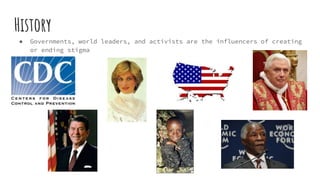
● Governments, world leaders, and activists are the influencers of creating
or ending stigma
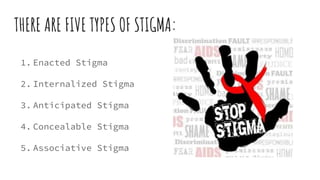
THERE ARE FIVE TYPES OF STIGMA:
1. Enacted Stigma
2. Internalized Stigma
3. Anticipated Stigma
4. Concealable Stigma
5. Associative Stigma
Enacted stigma
Negative reactions to stigma especially in a social setting
Internalized stigma
Self Directed Stigma that comes from society’s prejudices on
an individual
Anticipated stigma
The degree to which people expect others to stigmatize them
Concealable stigma
A stigma that can be kept hidden from others but that carries
an internal weight
Associative stigma
Stigma that comes from being associated with someone who
carries an undetectable stigmatized identity
VIdeo
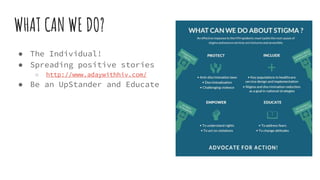
WHAT CAN WE DO?
● The Individual!
● Spreading positive stories
○ http://www.adaywithhiv.com/
● Be an UpStander and Educate
Interesting VIDEOS AND ARTICLES TO CHECK OUT!
● Enacted Stigma
○ https://www.avert.org/living-with-hiv/stories/Karta
● Internalized Stigma
○ https://www.avert.org/living-with-hiv/stories/ricardo
● Anticipated Stigma
○ https://www.avert.org/living-with-hiv/stories/carrie
● Associative Stigma
○ https://milwaukee.citymomsblog.com/sponsored-posts/raising-a-child-
with-hiv-a-mothers-story/
● More on Reagan administration and HIV:
○ https://www.vox.com/2015/12/1/9828348/ronald-reagan-hiv-aids
● HIV Timeline:
○ https://timeline.avert.org/

Stigma

  • 1.
  • 2.
    What is Stigma? Stigmasurrounding HIV: the negative beliefs, feelings, and attitudes towards people living with HIV, groups associated with people living with HIV, and other key populations at higher risk of HIV infection Discrimination surrounding HIV: the unfair and unjust treatment of an individual based on his or her real or perceived HIV status
  • 3.
    History ● Governments, worldleaders, and activists are the influencers of creating or ending stigma
  • 4.
    THERE ARE FIVETYPES OF STIGMA: 1. Enacted Stigma 2. Internalized Stigma 3. Anticipated Stigma 4. Concealable Stigma 5. Associative Stigma
  • 5.
    Enacted stigma Negative reactionsto stigma especially in a social setting
  • 6.
    Internalized stigma Self DirectedStigma that comes from society’s prejudices on an individual
  • 7.
    Anticipated stigma The degreeto which people expect others to stigmatize them
  • 8.
    Concealable stigma A stigmathat can be kept hidden from others but that carries an internal weight
  • 9.
    Associative stigma Stigma thatcomes from being associated with someone who carries an undetectable stigmatized identity
  • 10.
  • 11.
    WHAT CAN WEDO? ● The Individual! ● Spreading positive stories ○ http://www.adaywithhiv.com/ ● Be an UpStander and Educate
  • 12.
    Interesting VIDEOS ANDARTICLES TO CHECK OUT! ● Enacted Stigma ○ https://www.avert.org/living-with-hiv/stories/Karta ● Internalized Stigma ○ https://www.avert.org/living-with-hiv/stories/ricardo ● Anticipated Stigma ○ https://www.avert.org/living-with-hiv/stories/carrie ● Associative Stigma ○ https://milwaukee.citymomsblog.com/sponsored-posts/raising-a-child- with-hiv-a-mothers-story/ ● More on Reagan administration and HIV: ○ https://www.vox.com/2015/12/1/9828348/ronald-reagan-hiv-aids ● HIV Timeline: ○ https://timeline.avert.org/

Editor's Notes

  • #3 Suicide rates are higher in patients living with HIV than the general public, BUT after antiretroviral therapy was introduced in 1996, suicides among individuals living with HIV have decreased by 50%, so now it is obvious that the primary reason that individuals living with HIV would be committing suicide is because of the effects of stigma Stigma is the disease, HIV is the virus.
  • #4 CDC: 1982 - coined the term AIDS, along with first perinatal transmission, took focus away from LGBTQ community with disease (stigma inducing terms: GRID, gay cancer, etc); 1983: 4-Hs; list of at-risk groups: homosexuals, haemophiliacs, heroin addicts and Haitians; increased stigma Reagan: 1985, sympathetic to people scared of sending kids to school with kids living with HIV - touching play clip “chilling video” - inappropriate comments and bad image; increased stigma Diana: 1987, shows people living with HIV are normal decreased stigma Nkosi Johnson: 1999, child activist living with HIV who was denied admission to school because of status; “We are normal” decreased stigma USA travel ban from 1992 to 2010 for people living with HIV from coming into the country; increased stigma Thabo Mbeki (2000): South African President; Denialism that HIV and AIDS are not related/no medical evidence of treatment; increased stigma Pope Benedict XVI (2009): states condoms “aggravates the problem” of HIV - problematic; increased stigma Indication of societal effects of stigma/discrimination surrounding HIV Societal Effects of Stigma on Those Living with/Affected by HIV Undermines efforts of progress Barriers to HIV prevention, treatment, care and support Contributes to the expansion of the global HIV epidemic
  • #5 Suicide rates are higher in patients living with HIV than the general public, BUT after antiretroviral therapy was introduced in 1996, suicides among individuals living with HIV have decreased by 50%, so now it is obvious that the primary reason that individuals living with HIV would be committing suicide is because of the effects of stigma
  • #12 Relate back to world leaders, personal stories, etc - stigma is not a large presence looming that we can’t fix, it starts with the individual, us; if we can stop stigma on campus, we can contribute through these events and spread awareness; if we can educate one individual, we are one step closer to ending stigma