Welcome You
MAHATMA PHULE KRISHI VIDYAPEETH , RAHURI
COLLEGE OF AGRICULTURE, LONI
2020-2021
Under the Department
Of Agricultural Botany
SRP-EL BOT- 408
By
Shinde Amruta Balasaheb
(AGL/53/2018)
Module In charge
Prof. G.B. Labade
College of Agriculture, Loni
Sterilization Techniques & Handling of
Equipments
Defination of Sterilization :
Sterilization is a process of
destruction of all forms of living microorganisms from a
substance.
METHODS OF STERILIZATION
• THREE METHOD:-
Chemical
Mechanical
Physical
PHYSICAL METHOD
1)Sunlight
2)Drying
3)Heat:- a) Dry heat
b) Moist heat
4)Radiation
1) Sunlight –
 It is responsible for spontaneous sterilization in
natural conditions .
By killing bacteria suspended in water , sunlight
provides natural method of disinfection of tanks &
lakes.
2) Drying –
Moisture is essential for growth of bacteria .
Drying in air has dangerous effect on many
bacteria .
However, Viruses & spores are unaffected.
a) Dry Heat :
 In dry heat sterilization, dry heat used for sterilizing
different materials.
 The temp. required is 160 c for 1 hour.
⁰
 It is suitable method for sterilization of substances
destroyed by moisture.
3) Heat sterilization: -
Its has two types
b) Moist Heat :
 In moist heat sterilization, Heating process
in autoclave .
 The recommendation temp. in autoclave is
121 c for 15 min.
⁰
Advantages of Physical Sterilization:-
1) Effective method of sterilization.
2) Articles remain dry after sterilization.
Disadvantages :-
3) Drenching & wetting articles may occurs.
4) Takes longer time compared to autoclave.
Chemical Methods
1 ) Gaseous sterilization:-
a) Ethylene oxide
b) Formaldehyde gas
2 ) Liquid sterilization :-
a) Alcohol
b) Phenol
1. Gaseous sterilization:-
a ) Ethylene oxide :-
 Easily dissolved in water & organic solvent.
Effective against all types of microorganisms including
viruses & spores .
The gas used is safe & non-inflammable.
B. Formaldehyde gas:-
It is a simple chemical compound made up of
hydrogen, oxygen and carbon.
High level disinfectant.
For better effect it needs relative humidity of 60-
80% and temperature of 37⁰c .
2. Liquid sterilization
a. Alcohols
Alcohols are effective disinfectants for many reasons.
They evaporate quickly, without leaving a residue.
They are used mainly to disinfect external surfaces of
equipments.
b. Phenols
Phenol is one of the oldest antiseptic agents.
It acts by damaging cell membrane.
Phenols are used for decontamination of laboratory
surface nono critical medical items.
Advantages of Chemical Sterilization
1 . Technically easier.
2 . Suitable for equipments damaged by heat sterilization.
Disadvantages
1 . Act only on exposed surfaces.
2 . Some chemicals react with metals.
3.FILTRATION (MECHANICAL) METHOD:-
 Filtration sterilization used for heat sensitive
materials to sterilize.
 Filtration process does not destroy but remove the
microorganisms.
 Sterilization test must be done.
Advantages of Mechanical
Sterilization:-
1. Filtration is quite rapid.
2. Bacteria are removed by sieving.
Disadvantages:-
3. Chemically less resistance.
4. Soluble in certain organic solvents.
Instruments Used:-
1 ) Hot air oven
2) Autoclave
3) Laminar air flow
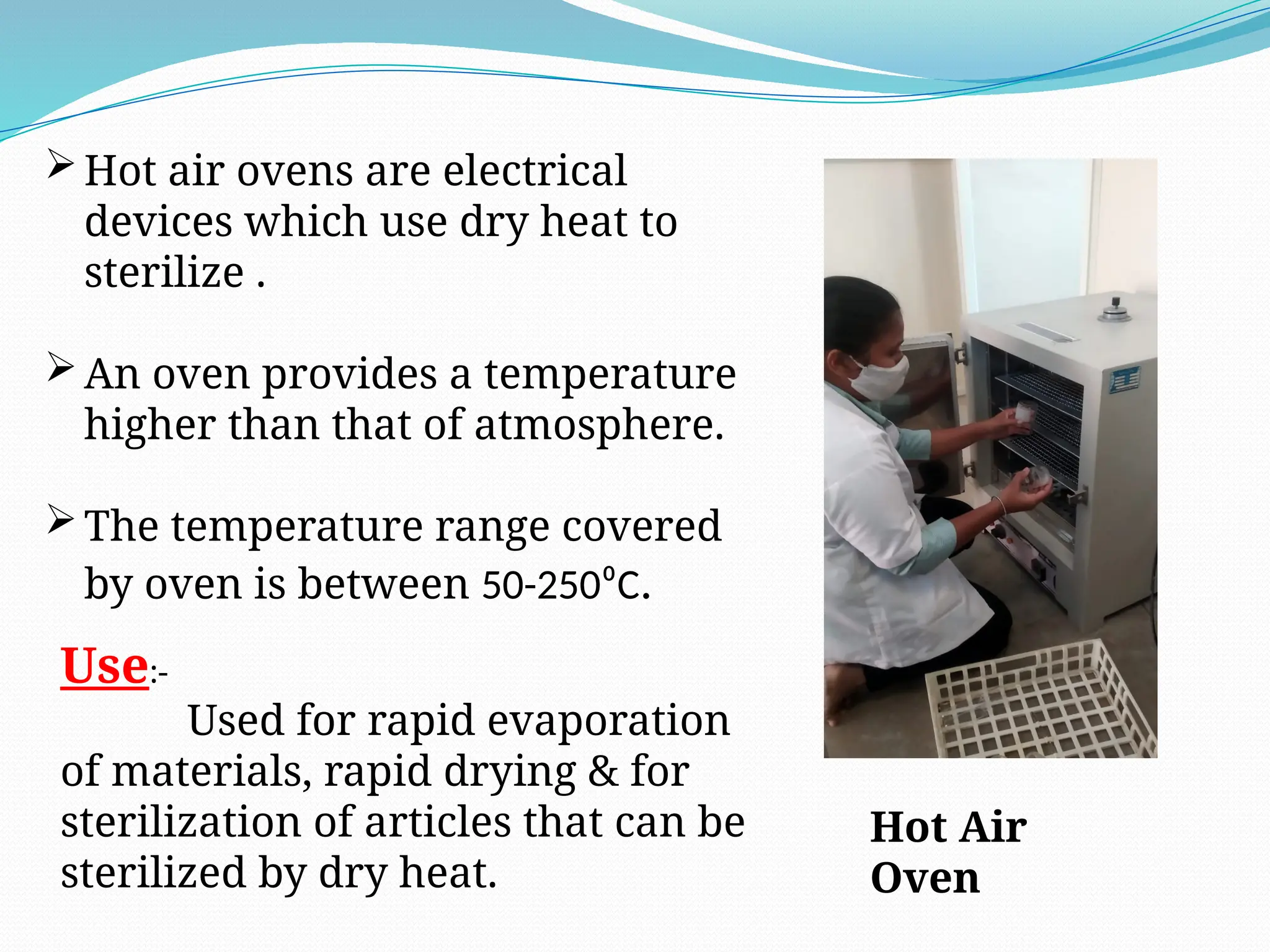
Hot Air
Oven
Hot air ovens are electrical
devices which use dry heat to
sterilize .
An oven provides a temperature
higher than that of atmosphere.
The temperature range covered
by oven is between 50-250⁰C.
Use:-
Used for rapid evaporation
of materials, rapid drying & for
sterilization of articles that can be
sterilized by dry heat.
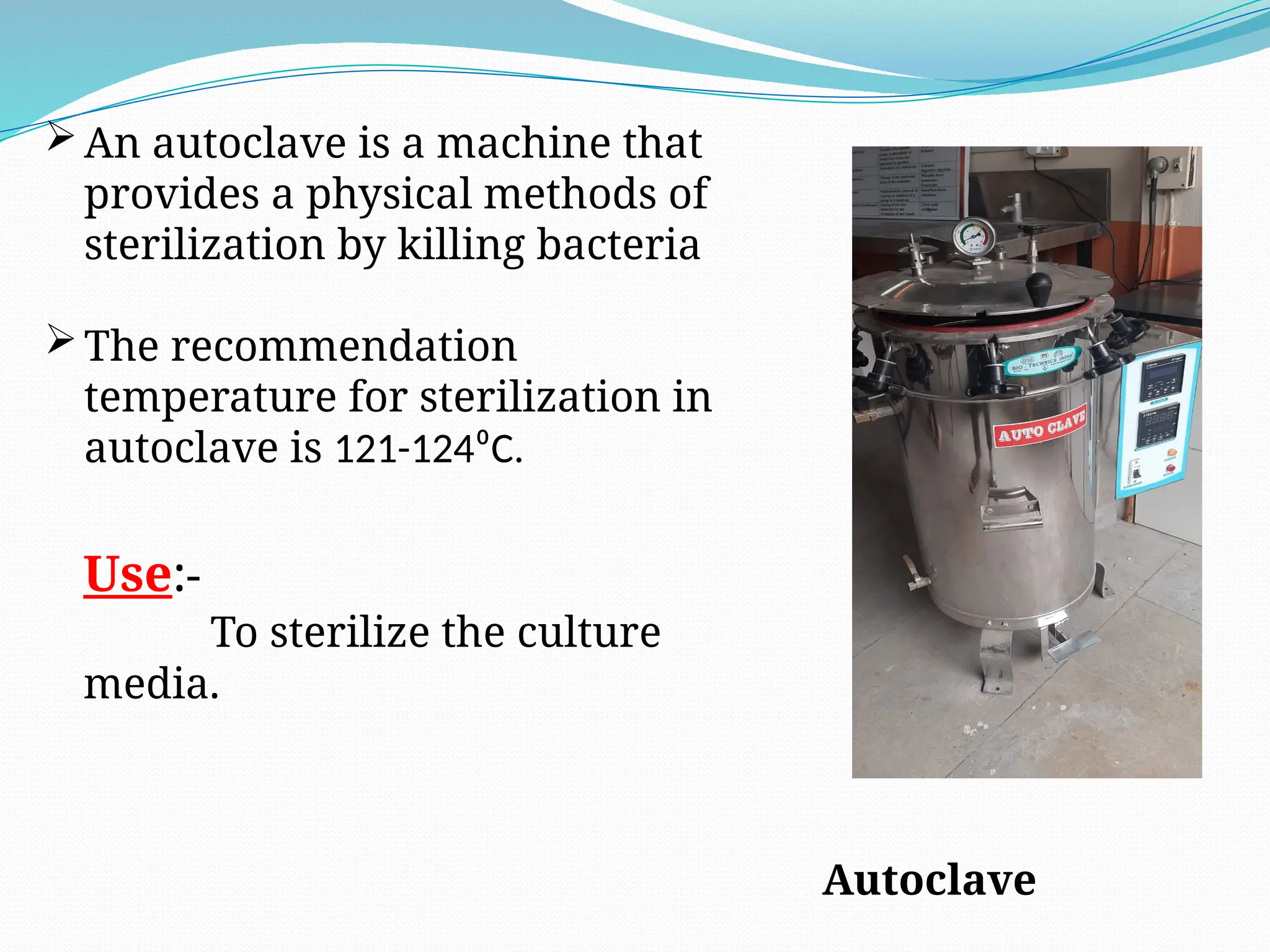
Autoclave
An autoclave is a machine that
provides a physical methods of
sterilization by killing bacteria
The recommendation
temperature for sterilization in
autoclave is 121-124⁰C.
Use:-
To sterilize the culture
media.
Laminar Air
Flow
Definition:-
Laminar air flow is an
enclosed bench designed to prevent
contaminations like biologicals
particles or any particle sensitive
device.
Use:-
Laminar Air Flow provides
a work area with aseptic
conditions for the tissue culture.
THANK YOU

Sterilization Techniques....pptx in plant tissue culture

  • 1.
  • 2.
    MAHATMA PHULE KRISHIVIDYAPEETH , RAHURI COLLEGE OF AGRICULTURE, LONI 2020-2021 Under the Department Of Agricultural Botany SRP-EL BOT- 408 By Shinde Amruta Balasaheb (AGL/53/2018) Module In charge Prof. G.B. Labade College of Agriculture, Loni Sterilization Techniques & Handling of Equipments
  • 3.
    Defination of Sterilization: Sterilization is a process of destruction of all forms of living microorganisms from a substance.
  • 4.
    METHODS OF STERILIZATION •THREE METHOD:- Chemical Mechanical Physical
  • 5.
    PHYSICAL METHOD 1)Sunlight 2)Drying 3)Heat:- a)Dry heat b) Moist heat 4)Radiation
  • 6.
    1) Sunlight – It is responsible for spontaneous sterilization in natural conditions . By killing bacteria suspended in water , sunlight provides natural method of disinfection of tanks & lakes. 2) Drying – Moisture is essential for growth of bacteria . Drying in air has dangerous effect on many bacteria . However, Viruses & spores are unaffected.
  • 7.
    a) Dry Heat:  In dry heat sterilization, dry heat used for sterilizing different materials.  The temp. required is 160 c for 1 hour. ⁰  It is suitable method for sterilization of substances destroyed by moisture. 3) Heat sterilization: - Its has two types b) Moist Heat :  In moist heat sterilization, Heating process in autoclave .  The recommendation temp. in autoclave is 121 c for 15 min. ⁰
  • 8.
    Advantages of PhysicalSterilization:- 1) Effective method of sterilization. 2) Articles remain dry after sterilization. Disadvantages :- 3) Drenching & wetting articles may occurs. 4) Takes longer time compared to autoclave.
  • 9.
    Chemical Methods 1 )Gaseous sterilization:- a) Ethylene oxide b) Formaldehyde gas 2 ) Liquid sterilization :- a) Alcohol b) Phenol
  • 10.
    1. Gaseous sterilization:- a) Ethylene oxide :-  Easily dissolved in water & organic solvent. Effective against all types of microorganisms including viruses & spores . The gas used is safe & non-inflammable.
  • 11.
    B. Formaldehyde gas:- Itis a simple chemical compound made up of hydrogen, oxygen and carbon. High level disinfectant. For better effect it needs relative humidity of 60- 80% and temperature of 37⁰c .
  • 12.
    2. Liquid sterilization a.Alcohols Alcohols are effective disinfectants for many reasons. They evaporate quickly, without leaving a residue. They are used mainly to disinfect external surfaces of equipments. b. Phenols Phenol is one of the oldest antiseptic agents. It acts by damaging cell membrane. Phenols are used for decontamination of laboratory surface nono critical medical items.
  • 13.
    Advantages of ChemicalSterilization 1 . Technically easier. 2 . Suitable for equipments damaged by heat sterilization. Disadvantages 1 . Act only on exposed surfaces. 2 . Some chemicals react with metals.
  • 14.
    3.FILTRATION (MECHANICAL) METHOD:- Filtration sterilization used for heat sensitive materials to sterilize.  Filtration process does not destroy but remove the microorganisms.  Sterilization test must be done.
  • 15.
    Advantages of Mechanical Sterilization:- 1.Filtration is quite rapid. 2. Bacteria are removed by sieving. Disadvantages:- 3. Chemically less resistance. 4. Soluble in certain organic solvents.
  • 16.
    Instruments Used:- 1 )Hot air oven 2) Autoclave 3) Laminar air flow
  • 17.
    Hot Air Oven Hot airovens are electrical devices which use dry heat to sterilize . An oven provides a temperature higher than that of atmosphere. The temperature range covered by oven is between 50-250⁰C. Use:- Used for rapid evaporation of materials, rapid drying & for sterilization of articles that can be sterilized by dry heat.
  • 18.
    Autoclave An autoclave isa machine that provides a physical methods of sterilization by killing bacteria The recommendation temperature for sterilization in autoclave is 121-124⁰C. Use:- To sterilize the culture media.
  • 19.
    Laminar Air Flow Definition:- Laminar airflow is an enclosed bench designed to prevent contaminations like biologicals particles or any particle sensitive device. Use:- Laminar Air Flow provides a work area with aseptic conditions for the tissue culture.
  • 20.