C O L L E G E -
G O V T C O L L E G E O F
N U R S I N G G R M C
G WA L I O R M P
Submitted to-
• Respected Ashu dadoria ma’am
Submitted by-
• Renuka Rathour
• Class- BSC Nsg. 2nd year
P R E S E N TAT I O N TO P I C – S T D
OUTLINE –
• Introduction
• Definition
• Causes
• Host
• Mode of transmission
• Incubation period
• Sign and symptoms
• Risk factors
• Diagnostic evaluation
• Complications
• Treatment
• Prevention
I N T R O D U C T I O N
• STD are infection that are spread from person to
person through sexual contact.
• Std are dangerous because they are easily spread and
it is hard to tell just by looking who has an std.
• 1 in 4 teenagers has and std.
S E X U A L LY T R A N S M I T T E D
D I S E A S E
Definition-
. “ Sexually transmitted disease are the infection that
are spread primary through person to person by sexual contact. ”
Example- Chlamydia, gonorrhea, syphilis, Genital herpes,
Hepatitis
CAUSES OF STD
There are three major causes –
1. Bacterial
2. Viral
3. Parasites/protozoa
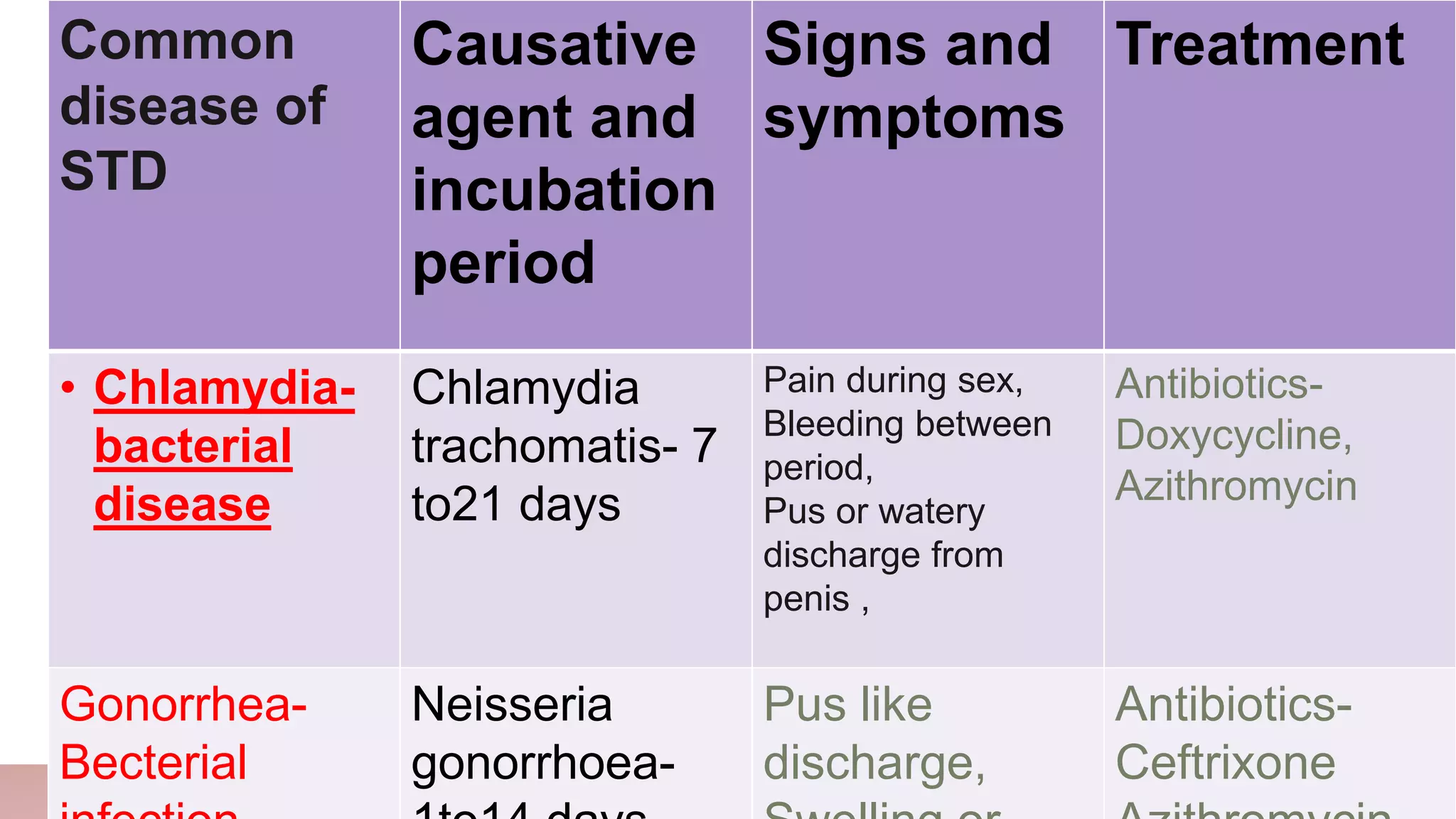
Common
disease of
STD
Causative
agent and
incubation
period
Signs and
symptoms
Treatment
• Chlamydia-
bacterial
disease
Chlamydia
trachomatis- 7
to21 days
Pain during sex,
Bleeding between
period,
Pus or watery
discharge from
penis ,
Antibiotics-
Doxycycline,
Azithromycin
Gonorrhea-
Becterial
Neisseria
gonorrhoea-
Pus like
discharge,
Antibiotics-
Ceftrixone
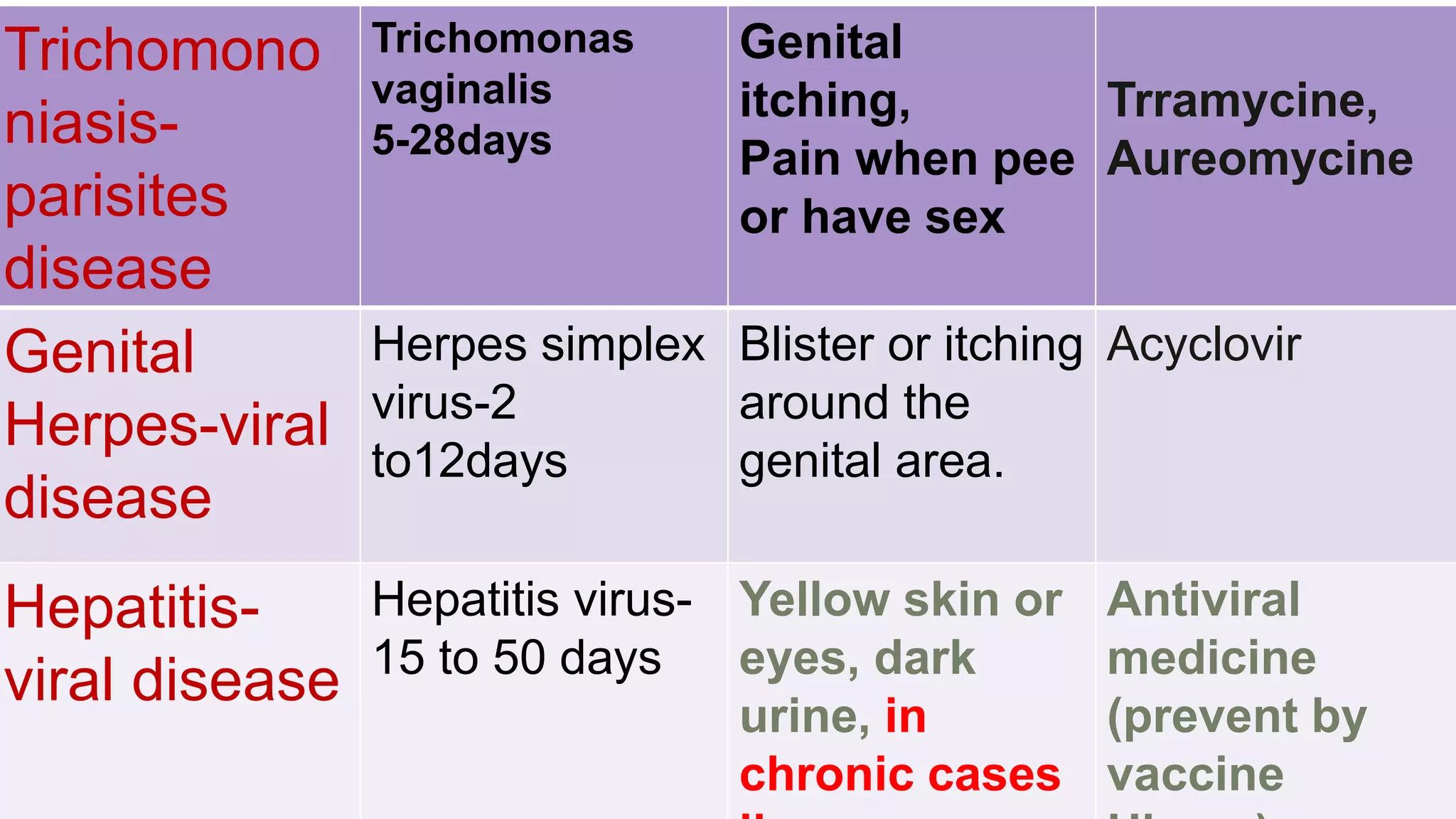
Trichomono
niasis-
parisites
disease
Trichomonas
vaginalis
5-28days
Genital
itching,
Pain when pee
or have sex
Trramycine,
Aureomycine
Genital
Herpes-viral
disease
Herpes simplex
virus-2
to12days
Blister or itching
around the
genital area.
Acyclovir
Hepatitis-
viral disease
Hepatitis virus-
15 to 50 days
Yellow skin or
eyes, dark
urine, in
chronic cases
Antiviral
medicine
(prevent by
vaccine
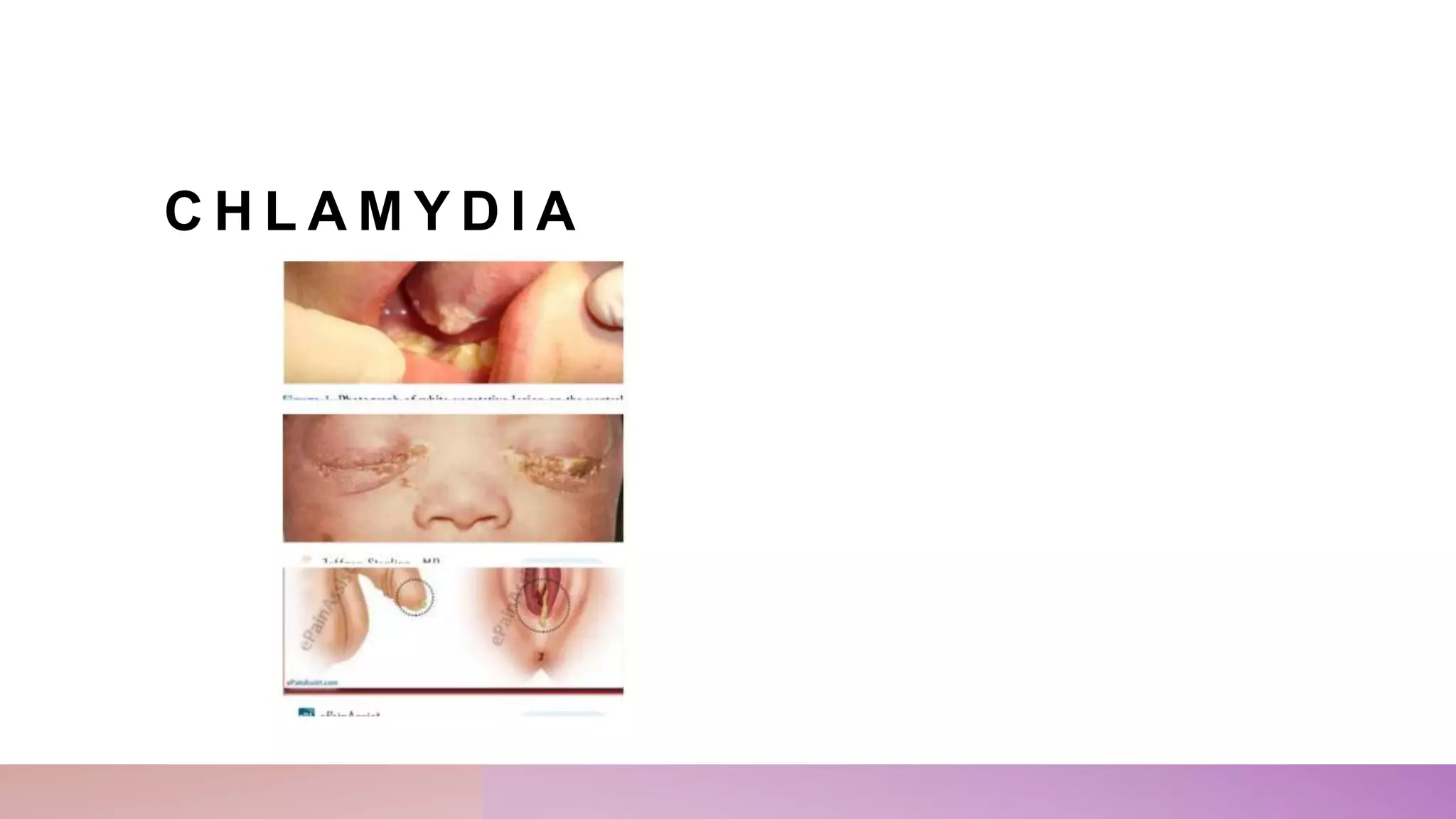
C H L A M Y D I A
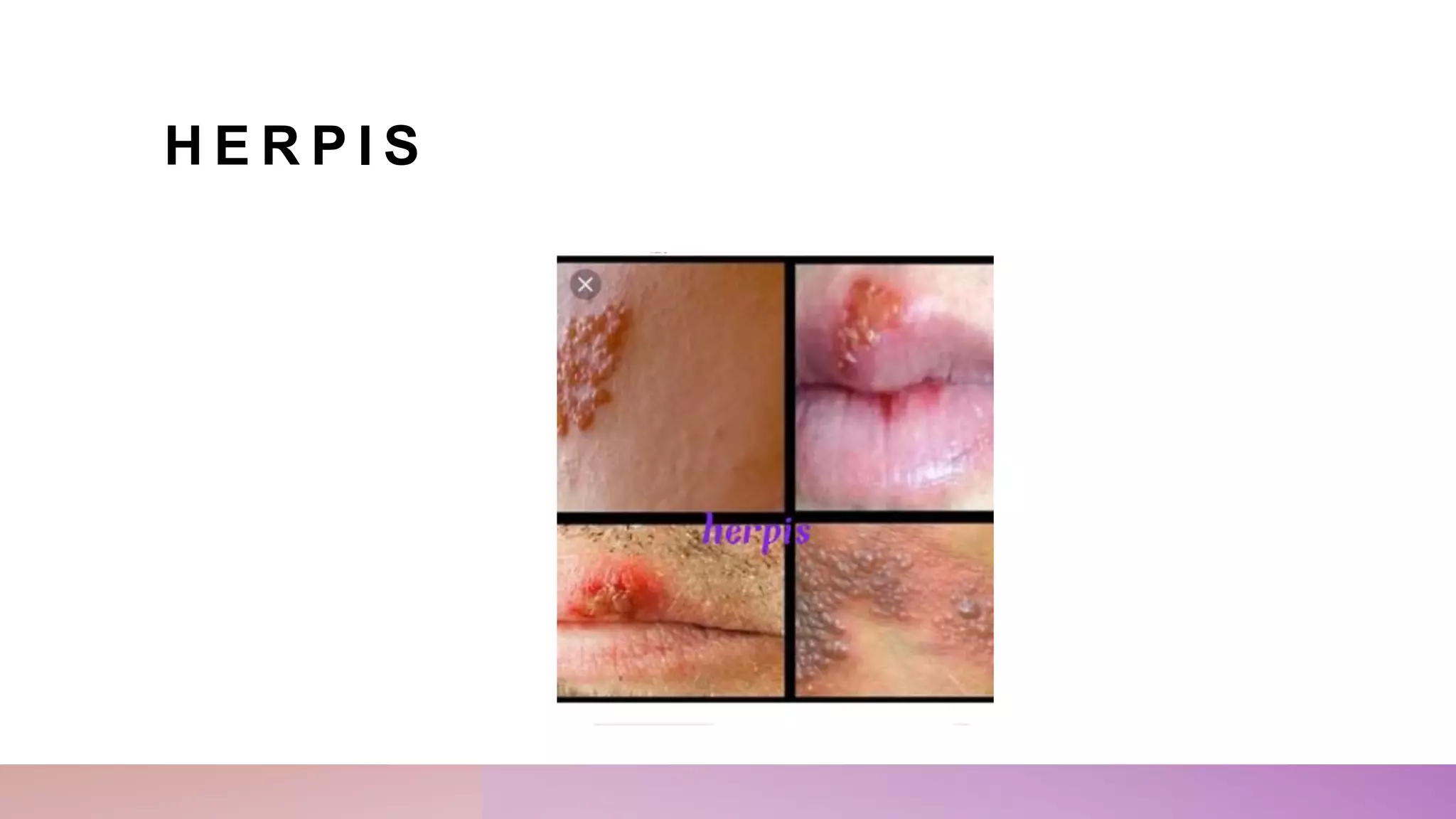
H E R P I S
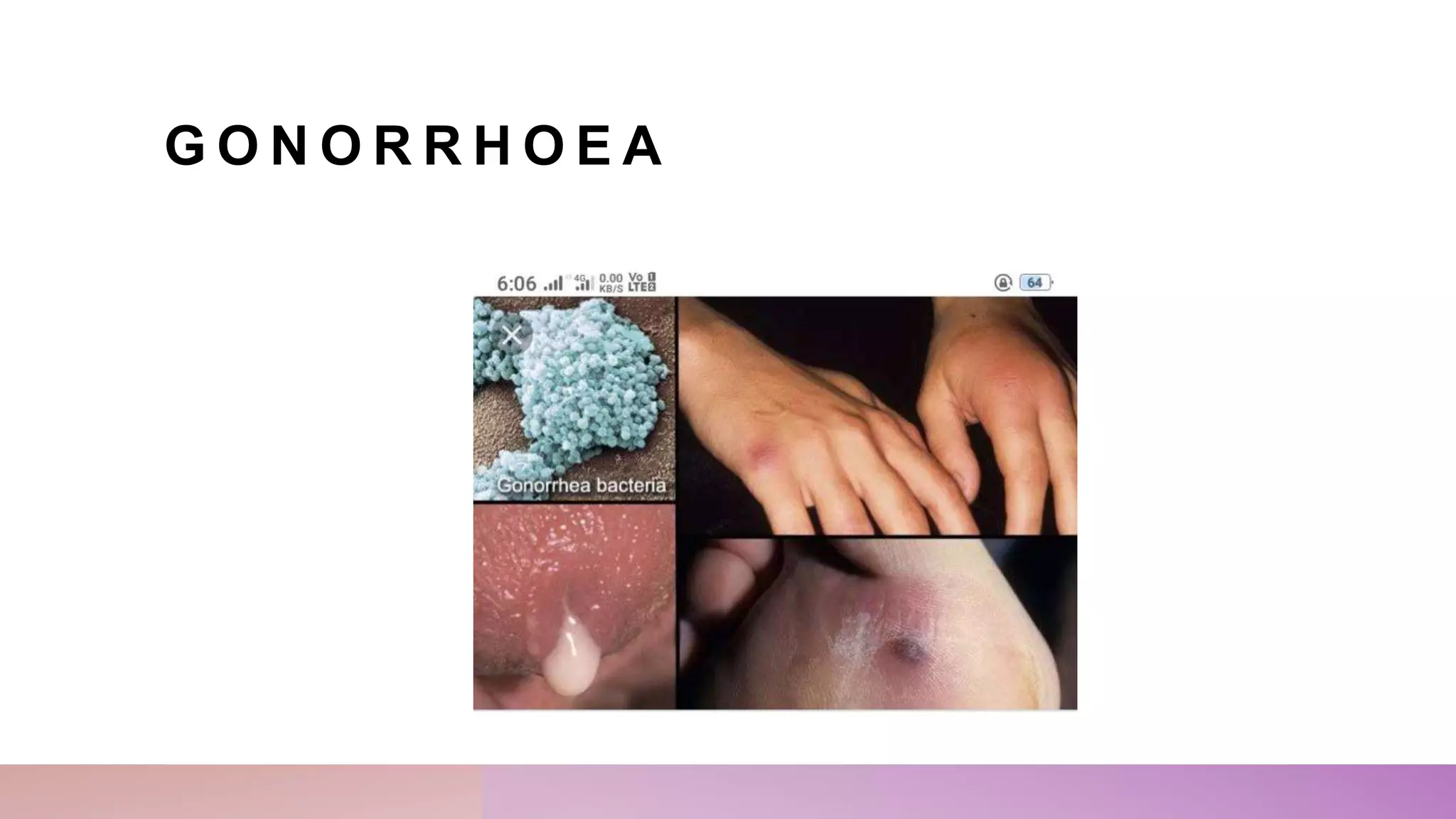
G O N O R R H O E A
S Y P H I L I S
H O S T-
1. Biological factor-age , sex, immunity
Age - younger females are more prone for std.
sex- famales are more prone for std.
Immunity- low immunity person are more prone for
std.
Biological factors- skin piercing, blood transfusion
M O D E O F T R A N S M I S S I O N -
1. Sharing needles
2. As. Well as most spread by Direct sexual
contact with infected person
3. Oral, anus, and kissing contact
4. It spread through veginal fluid, body fluids and
semen
5. Tansmissition from mother to child during
pregnancy or delivery.
S I G N A N D S Y M P T O M S -
1. Unusal discharge from the vegina, penis, anus
2. Pain when peeing
3. Lumps and Rashes Around the genital area or anus
4. Blister and sores around the genital area or anus
5. Usual veginal bleeding
6. Itching and burning genital or anus
R I S K FA C T O R S -
1. High risk sexual activity
2. Poverty/lower socioeconomic status
3. Poor nutrition
4. Poor hygiene
5. Abortion
6. Inner city resisdance
D I A G N O S T I C E VA L U AT I O N -
1. History collection
2. Physical examination
3. Blood test - it helps to show if any disease that
infect blood.
4. Urine test- it helps to show if any bacteria in the
urine from std.
C O M P L I C AT I O N S -
1. Pelvic pain
2. Pregnancy complications
3. Eye inflammatory disease
4. Cervical and rectal cancer
P R E V E N T I O N -
• Abstain (avoid sexual intercourse)
• Use condoms and dantal dams consistently and carrectly.
• Consider male cercumcision.(it is the process in which the
remove of the foreskin from the penis).
• Stay with one partner
• Wait and test
• Get vaccination
• Avoid sharing towels , under clothing and toothbrush .
• Get tested for HIV
N U R S I N G M A N A G E M E N T-
1. Personal hygiene
2. Avoid alcohol intake during treatment
3. Intercourse should be avoided until the swab is nagative
4. Partner should be treated
5. Take universal precautions during producer
6. To give ‘health promotion education’
7. To give psychological support
8. Counseling
9. Encourage test and treat the man who are partner
• Health promotion – “safe sex ” teaching patient with STD,
sreeing cervical cancer and STD cases finding , Community
education.
• Acute care –psychological support, explain about STD,
teaching about hygiene, abstinence from sex.
.
T H A N K Y O U 🙏

STD presentation

  • 1.
    C O LL E G E - G O V T C O L L E G E O F N U R S I N G G R M C G WA L I O R M P
  • 2.
    Submitted to- • RespectedAshu dadoria ma’am Submitted by- • Renuka Rathour • Class- BSC Nsg. 2nd year P R E S E N TAT I O N TO P I C – S T D
  • 3.
    OUTLINE – • Introduction •Definition • Causes • Host • Mode of transmission • Incubation period • Sign and symptoms • Risk factors • Diagnostic evaluation • Complications • Treatment • Prevention
  • 4.
    I N TR O D U C T I O N • STD are infection that are spread from person to person through sexual contact. • Std are dangerous because they are easily spread and it is hard to tell just by looking who has an std. • 1 in 4 teenagers has and std.
  • 5.
    S E XU A L LY T R A N S M I T T E D D I S E A S E Definition- . “ Sexually transmitted disease are the infection that are spread primary through person to person by sexual contact. ” Example- Chlamydia, gonorrhea, syphilis, Genital herpes, Hepatitis
  • 6.
    CAUSES OF STD Thereare three major causes – 1. Bacterial 2. Viral 3. Parasites/protozoa
  • 7.
    Common disease of STD Causative agent and incubation period Signsand symptoms Treatment • Chlamydia- bacterial disease Chlamydia trachomatis- 7 to21 days Pain during sex, Bleeding between period, Pus or watery discharge from penis , Antibiotics- Doxycycline, Azithromycin Gonorrhea- Becterial Neisseria gonorrhoea- Pus like discharge, Antibiotics- Ceftrixone
  • 8.
    Trichomono niasis- parisites disease Trichomonas vaginalis 5-28days Genital itching, Pain when pee orhave sex Trramycine, Aureomycine Genital Herpes-viral disease Herpes simplex virus-2 to12days Blister or itching around the genital area. Acyclovir Hepatitis- viral disease Hepatitis virus- 15 to 50 days Yellow skin or eyes, dark urine, in chronic cases Antiviral medicine (prevent by vaccine
  • 9.
    C H LA M Y D I A
  • 10.
    H E RP I S
  • 11.
    G O NO R R H O E A
  • 12.
    S Y PH I L I S
  • 13.
    H O ST- 1. Biological factor-age , sex, immunity Age - younger females are more prone for std. sex- famales are more prone for std. Immunity- low immunity person are more prone for std. Biological factors- skin piercing, blood transfusion
  • 14.
    M O DE O F T R A N S M I S S I O N - 1. Sharing needles 2. As. Well as most spread by Direct sexual contact with infected person 3. Oral, anus, and kissing contact 4. It spread through veginal fluid, body fluids and semen 5. Tansmissition from mother to child during pregnancy or delivery.
  • 15.
    S I GN A N D S Y M P T O M S - 1. Unusal discharge from the vegina, penis, anus 2. Pain when peeing 3. Lumps and Rashes Around the genital area or anus 4. Blister and sores around the genital area or anus 5. Usual veginal bleeding 6. Itching and burning genital or anus
  • 16.
    R I SK FA C T O R S - 1. High risk sexual activity 2. Poverty/lower socioeconomic status 3. Poor nutrition 4. Poor hygiene 5. Abortion 6. Inner city resisdance
  • 17.
    D I AG N O S T I C E VA L U AT I O N - 1. History collection 2. Physical examination 3. Blood test - it helps to show if any disease that infect blood. 4. Urine test- it helps to show if any bacteria in the urine from std.
  • 18.
    C O MP L I C AT I O N S - 1. Pelvic pain 2. Pregnancy complications 3. Eye inflammatory disease 4. Cervical and rectal cancer
  • 19.
    P R EV E N T I O N - • Abstain (avoid sexual intercourse) • Use condoms and dantal dams consistently and carrectly. • Consider male cercumcision.(it is the process in which the remove of the foreskin from the penis). • Stay with one partner • Wait and test • Get vaccination
  • 20.
    • Avoid sharingtowels , under clothing and toothbrush . • Get tested for HIV
  • 21.
    N U RS I N G M A N A G E M E N T- 1. Personal hygiene 2. Avoid alcohol intake during treatment 3. Intercourse should be avoided until the swab is nagative 4. Partner should be treated 5. Take universal precautions during producer 6. To give ‘health promotion education’ 7. To give psychological support 8. Counseling 9. Encourage test and treat the man who are partner
  • 22.
    • Health promotion– “safe sex ” teaching patient with STD, sreeing cervical cancer and STD cases finding , Community education. • Acute care –psychological support, explain about STD, teaching about hygiene, abstinence from sex. .
  • 23.
    T H AN K Y O U 🙏