
STAPLER
AMAN NAZAR
SANKEERTH ABY THOMAS
MIDHUN M NAIR
EAPPEN JOHNS
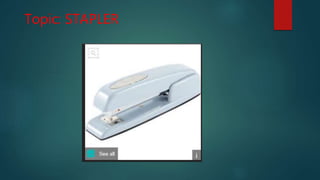
Topic: STAPLER
Introduction
A stapler is a mechanical device that joins pages
of paper or similar materials by driving a thin
metal staple through the sheets and folding the
end’s. Staplers’ are widely used in business,
office, school..
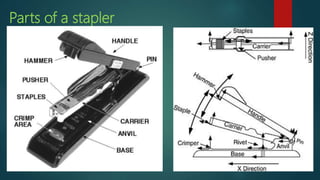
Parts of a stapler
Raw Materials
 A stapler comprises many components, most of which are metal stampings and spring
type parts.
 Main components of a typical home or office stapler include the base; the anvil; the
metal head and the hanger.
 Rivets are used to keep the parts together, and a pin is the hinge point for the top and
bottom half.
 There are also rubber and plastic materials used both in enhancing the product and in
making the stapler cosmetically appealing.
 The springs in a stapler typically perform two separate jobs: they keep the row of
lined up in the track and ready to be used, and they return the plunger blade to its
original up position.
 The most recent staplers are being made almost entirely of plastic.
Working
 The body is opened which causes the spring to move
with the body. Then the staples are loaded.
 The thing you want to staple is placed on the metal
plate called the anvil. When pressure is applied to the
top of the stapler the magazine is pushed down on the
paper
 The two points of the front staple are forced through
the paper and contact the anvil. The ends of the staple
are forced into a groove on the anvil. Pressure forces
the staple to bend and locks the pages together.
Types of stapler
 Types and styles of staplers.
 Electric Staplers.
 Grouped Staplers.
 Heavy-Duty Staplers.
 Personal Hand Held Staplers.
 Saddle Staplers.
 Stitchers.
 Stapler Supplies and Accessories.
Design for x
X stapler
material Steel, Plastic, thermo plastic
reliability medium low
quality Functionality good , high
strength
Functionality medium, low
strength,
safety medium High, no hard corners
manufacturing Medium, forging, bending Easy, injection molding
aesthetics good good
ergonomics good good
assembly easy easy
maintenance difficult Not possible
handling Easy to use & reload Easy to use
Recycling/re-engineering difficult Easy,
The Manufacturing Process
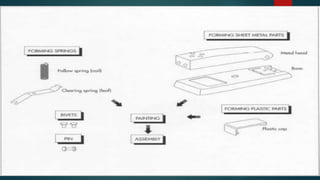
 chief components (springs, stampings, rivets, moldings, and pins),
 Forming the springs
 1 Two types of springs are used in the basic stapler: the coil and the leaf. A coil spring is
made from metal that has the ability to withstand a constant pressure and release and
still maintain its shape. The coil spring material is wound around an appropriately
 Leaf spring are made either by bending ,rolling……
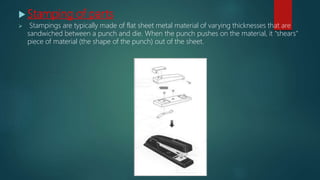
 Stamping of parts
 Stampings are typically made of flat sheet metal material of varying thicknesses that are
sandwiched between a punch and die. When the punch pushes on the material, it "shears"
piece of material (the shape of the punch) out of the sheet.
SUB PARTS
Rivets
 A rivet is usually made of a fairly strong steel material, but it must also have some elasticity. A
rivet is designed to hold parts in place just like a screw and nut, except that the rivet is one
and cannot be easily disassembled
 Making the pin
 The pin is little more than a piece of bar stock, cut off to a certain length either with a saw or
a machining center. Because the pin is used as a hinge point for the top and bottom half of the
stapler, it is usually made from a strong, heat-treatable metal.
 Creating plastic moldings
 Plastic parts of staplers are made by injection molding, in which
liquefied plastic is injected into a die. The liquid flows into the
open void and is then cooled. As the die cools, the plastic
and takes on the shape of the die. The die is opened and the
is removed.
Assembly
 The pins, stampings, and springs are sub assembled in stages and then assembled
with the upper and lower halves of the stapler frame.
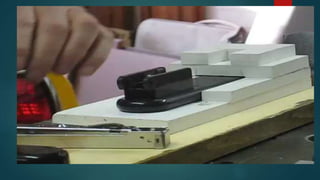
 For the bottom subassembly, consisting of the base, hanger, anvil, and clearing spring, the
parts are placed in an assembly jig that holds them in position to allow the rivets to be
placed in the correct holes.
 The top and bottom halves come together in another jig, and the pin that connects the
is riveted into place. Finally, the finishing touches such as the feet (anti-skid rubber pads)
the plastic cap are then snapped on.
Advantage
 Easy to join light materials
 Easy to use
 Easy to reload
 Easy to carry
Disadvantage
 Injures the user while using carelessly
 Sometimes the hammer gets stucked to the magizine
Future modification
 If made with high strength material, stapler can be used for joining metal
sheets
 End
Thank you

Stapler

  • 1.
    STAPLER AMAN NAZAR SANKEERTH ABYTHOMAS MIDHUN M NAIR EAPPEN JOHNS
  • 2.
  • 3.
    Introduction A stapler isa mechanical device that joins pages of paper or similar materials by driving a thin metal staple through the sheets and folding the end’s. Staplers’ are widely used in business, office, school..
  • 4.
    Parts of astapler
  • 5.
    Raw Materials  Astapler comprises many components, most of which are metal stampings and spring type parts.  Main components of a typical home or office stapler include the base; the anvil; the metal head and the hanger.  Rivets are used to keep the parts together, and a pin is the hinge point for the top and bottom half.  There are also rubber and plastic materials used both in enhancing the product and in making the stapler cosmetically appealing.  The springs in a stapler typically perform two separate jobs: they keep the row of lined up in the track and ready to be used, and they return the plunger blade to its original up position.  The most recent staplers are being made almost entirely of plastic.
  • 6.
    Working  The bodyis opened which causes the spring to move with the body. Then the staples are loaded.  The thing you want to staple is placed on the metal plate called the anvil. When pressure is applied to the top of the stapler the magazine is pushed down on the paper  The two points of the front staple are forced through the paper and contact the anvil. The ends of the staple are forced into a groove on the anvil. Pressure forces the staple to bend and locks the pages together.
  • 7.
    Types of stapler Types and styles of staplers.  Electric Staplers.  Grouped Staplers.  Heavy-Duty Staplers.  Personal Hand Held Staplers.  Saddle Staplers.  Stitchers.  Stapler Supplies and Accessories.
  • 8.
    Design for x Xstapler material Steel, Plastic, thermo plastic reliability medium low quality Functionality good , high strength Functionality medium, low strength, safety medium High, no hard corners manufacturing Medium, forging, bending Easy, injection molding aesthetics good good ergonomics good good assembly easy easy maintenance difficult Not possible handling Easy to use & reload Easy to use Recycling/re-engineering difficult Easy,
  • 9.
    The Manufacturing Process chief components (springs, stampings, rivets, moldings, and pins),  Forming the springs  1 Two types of springs are used in the basic stapler: the coil and the leaf. A coil spring is made from metal that has the ability to withstand a constant pressure and release and still maintain its shape. The coil spring material is wound around an appropriately  Leaf spring are made either by bending ,rolling……
  • 11.
     Stamping ofparts  Stampings are typically made of flat sheet metal material of varying thicknesses that are sandwiched between a punch and die. When the punch pushes on the material, it "shears" piece of material (the shape of the punch) out of the sheet.
  • 12.
    SUB PARTS Rivets  Arivet is usually made of a fairly strong steel material, but it must also have some elasticity. A rivet is designed to hold parts in place just like a screw and nut, except that the rivet is one and cannot be easily disassembled  Making the pin  The pin is little more than a piece of bar stock, cut off to a certain length either with a saw or a machining center. Because the pin is used as a hinge point for the top and bottom half of the stapler, it is usually made from a strong, heat-treatable metal.
  • 13.
     Creating plasticmoldings  Plastic parts of staplers are made by injection molding, in which liquefied plastic is injected into a die. The liquid flows into the open void and is then cooled. As the die cools, the plastic and takes on the shape of the die. The die is opened and the is removed.
  • 14.
    Assembly  The pins,stampings, and springs are sub assembled in stages and then assembled with the upper and lower halves of the stapler frame.  For the bottom subassembly, consisting of the base, hanger, anvil, and clearing spring, the parts are placed in an assembly jig that holds them in position to allow the rivets to be placed in the correct holes.  The top and bottom halves come together in another jig, and the pin that connects the is riveted into place. Finally, the finishing touches such as the feet (anti-skid rubber pads) the plastic cap are then snapped on.
  • 16.
    Advantage  Easy tojoin light materials  Easy to use  Easy to reload  Easy to carry Disadvantage  Injures the user while using carelessly  Sometimes the hammer gets stucked to the magizine
  • 17.
    Future modification  Ifmade with high strength material, stapler can be used for joining metal sheets
  • 18.