Stakeholder Engagement The Game Changer For Program Management Baugh
Stakeholder Engagement The Game Changer For Program Management Baugh
Stakeholder Engagement The Game Changer For Program Management Baugh
Stakeholder Engagement The Game Changer For Program Management Baugh
Stakeholder Engagement The Game Changer For Program Management Baugh
1.
Stakeholder Engagement TheGame Changer For
Program Management Baugh download
https://ebookbell.com/product/stakeholder-engagement-the-game-
changer-for-program-management-baugh-4977254
Explore and download more ebooks at ebookbell.com
2.
Here are somerecommended products that we believe you will be
interested in. You can click the link to download.
Oecd Due Diligence Guidance For Meaningful Stakeholder Engagement In
The Extractive Sector Oecd
https://ebookbell.com/product/oecd-due-diligence-guidance-for-
meaningful-stakeholder-engagement-in-the-extractive-sector-
oecd-6685644
Energy Transition In The Baltic Sea Region Understanding Stakeholder
Engagement And Community Acceptance Edited By Farid Karimi And Michael
Rodi
https://ebookbell.com/product/energy-transition-in-the-baltic-sea-
region-understanding-stakeholder-engagement-and-community-acceptance-
edited-by-farid-karimi-and-michael-rodi-37271222
The Politics Of Authentic Engagement Tools For Engaging Stakeholders
In Ensuring Student Success Kathy Leslie Judy Taccogna
https://ebookbell.com/product/the-politics-of-authentic-engagement-
tools-for-engaging-stakeholders-in-ensuring-student-success-kathy-
leslie-judy-taccogna-51445996
The Cambridge Handbook Of Shareholder Engagement And Voting 1st
Edition Harpreet Kaur
https://ebookbell.com/product/the-cambridge-handbook-of-shareholder-
engagement-and-voting-1st-edition-harpreet-kaur-54244034
3.
Stakeholder Engagement InA Sustainable Circular Economy Theoretical
And Practical Perspectives Johanna Kujala
https://ebookbell.com/product/stakeholder-engagement-in-a-sustainable-
circular-economy-theoretical-and-practical-perspectives-johanna-
kujala-50621450
Stakeholder Engagement 1st Ed Aimee L Franklin
https://ebookbell.com/product/stakeholder-engagement-1st-ed-aimee-l-
franklin-22505520
Stakeholder Engagement And Sustainability Smriad Shams Demetris
Vrontis
https://ebookbell.com/product/stakeholder-engagement-and-
sustainability-smriad-shams-demetris-vrontis-33607820
Stakeholder Engagement Freeman R Edward Kujala Johanna Sachs
https://ebookbell.com/product/stakeholder-engagement-freeman-r-edward-
kujala-johanna-sachs-6753088
Stakeholder Engagement For Inclusive Water Governance Oecd
https://ebookbell.com/product/stakeholder-engagement-for-inclusive-
water-governance-oecd-6768538
Best Practices andAdvances
in Program Management Series
Series Editor
Ginger Levin
RECENTLY PUBLISHED TITLES
Stakeholder Engagement: The Game Changer for Program Management
Amy Baugh
Agile for Project Managers
Denise Canty
Project Planning and Project Success: The 25% Solution
Pedro Serrador
Project Health Assessment
Paul S. Royer, PMP
Portfolio Management: A Strategic Approach
Ginger Levin and John Wyzalek
Program Governance
Muhammad Ehsan Khan
Project Management for Research and Development:
Guiding Innovation for Positive R&D Outcomes
Lory Mitchell Wingate
The Influential Project Manager:
Winning Over Team Members and Stakeholders
Alfonso Bucero
PfMP® Exam Practice Tests and Study Guide
Ginger Levin
Program Management Leadership: Creating Successful Team Dynamics
Mark C. Bojeun
Successful Program Management: Complexity Theory, Communication,
and Leadership
Wanda Curlee and Robert Lee Gordon
From Projects to Programs: A Project Manager’s Journey
Samir Penkar
Sustainable Program Management
Gregory T. Haugan
First and foremost,to my husband, Charlie, for his
love and support throughout this process. Also, a
heartfelt thank you to two special people:
Ginger Levin, for her guidance on this journey and the countless
hours spent reviewing my drafts; and Stephanie Gambro, for being
a constant sounding board (and for contributing the case study
to this book). I could not have done this without all of you.
13.
vii
Contents
Introduction xiii
Part IEngaging Stakeholders and Set ting
Expectations during Program Definition
Chap ter 1 Stakeholder Alig nment: Goals and
Objectives 3
1.1 Understanding Strategic Fit 4
1.1.1 Initiative Selection through a Steering
Committee 6
1.1.2 Initiative Selection When There Is No
Steering Committee 7
1.1.3 Gathering Information—Interviewing Key
Stakeholders 7
1.1.4 Pulling It All Together 8
1.2 Providing Input to Stakeholders: Know When and
How to Push 9
1.2.1 Creating a Business Case 11
1.2.2 Estimating Cost Information 11
1.2.3 Documenting Assumptions 13
1.2.4 Presenting Cost Estimates: Stakeholder
Conversations 15
1.2.5 Presenting the Business Case: Governance 16
1.3 Related Program Methodology 16
1.4 Summary 16
14.
viii Contents
Chap ter2 Making Governance Work for You 19
2.1 Preparing for Governance 20
2.1.1 Governance Pre-Meetings 21
2.1.2 Organizational Research—Meet with Other
Program Managers 21
2.1.3 Stakeholder Pre-Meetings 22
2.1.4 Meeting with “The Interrogator” 24
2.2 Governance Survival 25
2.2.1 Setting the Tone 25
2.2.2 Getting through Approvals 25
2.2.3 Optimize Governance to Your Advantage 26
2.2.4 Using Soft Skills to Manage Conflict 28
2.3 Related Program Methodology 30
2.4 Summary: A Step-by-Step Guide to Maximize
Governance 30
Chap ter 3 Identif ying Stakeholders: The “Hidden”
Org aniz ation Chart 33
3.1 Building Your Program “House” 34
3.2 Finding Power Influencers 35
3.2.1 Tapping into the Organization—Coffee
Chats 36
3.2.2 More Coffee—Identifying the Next Layer of
Stakeholders 38
3.2.3 Social Network Tools 40
3.2.4 Organizational Network Analysis 41
3.2.5 Creating an Organizational Network
Analysis 43
3.3 Additional Tools for Synthesizing Stakeholder Data 46
3.3.1 The Power Map 47
3.3.2 Creating a Responsibility Matrix 49
3.4 Related Methodology 50
3.5 Summary 50
Chap ter 4 It Is a Mat ter of Trust: Building
Strong Business Rel ationships with Key
Stakeholders 53
4.1 Setting Expectations with Key Stakeholders 53
4.2 Five Principles of Building Strong Business
Relationships 56
4.2.1 Do What You Say You Are Going to Do 56
4.2.2 Try to Make Sure There Are No Surprises 58
4.2.3 Create a Mutually Beneficial Business
Relationship 59
4.2.4 Remember That Executives and Customers
Are People, Too 61
4.2.5 Always Show Respect 62
4.3 Summary 63
15.
ix
Contents
Chap ter 5 Lever ag ing Stakeholders to Prepare
Your Org aniz ation for Chang e 65
5.1 Change Management Theory—High-Level View 68
5.2 ADAPT—A Simplified Change Management
Model for Program Managers 70
5.3 Applying the ADAPT Change Model to
Stakeholder Quadrants 73
5.3.1 Power Players 74
5.3.2 Danger Zone 75
5.3.3 Informants 76
5.3.4 Sleepers 78
Chap ter 6 Enhancing Stakeholder Eng ag ement
throug h Effective Communication 81
6.1 The Difference between Program Management and
Project Management Communications 82
6.2 Communication Methods “Menu” 83
6.3 Creating a Communications Strategy and a
Communications Plan 85
6.4 Targeted Communication Methods by Stakeholder
Quadrant 89
6.4.1 Communicating with Power Players
Quadrant (High Interest, High Influence) 89
6.4.2 Communication with the Danger Zone
Quadrant (Low Interest, High Influence) 92
6.4.3 Communicating with the Informants
Quadrant (High Interest, Low Influence) 93
6.4.4 Communicating with the Sleepers Quadrant
(Low Interest, Low Influence) 95
Part II Re ady, Set, Execute: Driving
Program Benefits Delivery
through Active Stakeholder
Engagement
Chap ter 7 Demystif ying Me trics: Me asuring What
Mat ters Most 99
7.1 Measuring Program Performance: Key Performance
Indicators 99
7.2 Measuring Performance: Metrics 101
7.2.1 Examples of Metrics 102
7.2.2 Metrics for Measuring Project Components
of Your Program 102
7.2.3 Presenting Metrics to Your Stakeholders 103
7.2.4 Metrics: How Much Is Too Much? 104
7.3 Defining Key Performance Indicators for Your
Program 105
16.
x Contents
7.3.1 SMARTKey Performance Indicators 105
7.3.2 KPIs: A SMART Example 106
7.4 Driving Stakeholder Engagement through
Performance Management 107
7.5 Summary 107
Chap ter 8 Making Mee tings Count: Driving
Stakeholder Eng ag ement throug h
Disciplined Mee ting Manag ement 109
8.1 How to Run Effective Meetings 110
8.1.1 Top Five Rules for Running Effective
Meetings 110
8.1.1.1 Rule 1: Always Pre-Send an
Agenda, with Times and Owners
Associated with Each Topic 110
8.1.1.2 Rule 2: Stick to the Agenda 111
8.1.1.3 Rule 3: Establish and Share
Ground Rules (Then Enforce
Them) 112
8.1.1.4 Rule 4: Assign a Scribe to
Document All Key Decisions and
Action Items, with Owners and
Due Dates 113
8.1.1.5 Rule 5: Send Meeting Notes with
Key Decisions and Action Items,
Then Monitor to Follow-Up on
Due Dates 114
8.1.2 Tips to Create a Positive Meeting
Environment 114
8.1.3 Meeting Variations 115
8.1.3.1 Large Group Virtual Meetings 115
8.1.3.2 Small Group or One-on-One
Meetings 118
8.2 Types of Meetings, When to Have Them, and Who
Should Attend 119
8.2.1 Meeting Type: Planning Meetings 119
8.2.2 Meeting Type: Program Status Meetings 121
8.2.3 Meeting Type: Governance Meetings 121
8.2.4 One-on-One Meetings 123
8.3 Common Pitfalls of Ineffective Meetings 124
8.4 Summary 125
Chap ter 9 Where the Re al Work Ge ts Done: Issue
Resolution throug h Informal Governance 127
9.1 Monthly Program Status Updates 128
9.2 Weekly Program Status Updates 130
9.3 Using Project Health Stoplights Effectively 132
17.
xi
Contents
9.4 Caution: YellowLight—Four Steps to Effectively
Manage Risks and Issues 135
9.4.1 Step 1: Identify the Issue or Risk 135
9.4.2 Step 2: Assess the Issue or Risk 136
9.4.3 Step 3: Present Options for Issue/Risk
Resolution 137
9.4.4 Step 4: Take Action 137
9.5 Practicing the Four-Step Issue Resolution: An
Example 138
9.5.1 Step 1: Identify the Issue 138
9.5.2 Step 2: Assess the Issue 139
9.5.3 Step 3: Present the Options 139
9.5.4 Step 4: Take Action 140
9.6 Summary 140
Chap ter 10 Office Politics: From Surviving to
Thriving 141
10.1 Managing Up and Managing Down 142
10.2 Your Informal Network and Influence on Office
Politics 143
10.3 Addressing Whispering Campaigns 146
10.4 Handling Cross-Departmental Negotiations 147
10.5 Summary 151
Part III Keeping Stakeholders Engaged:
Program Closure
Chap ter 11 Making a Strong Finish: Stakeholder
Eng ag ement throug h Prog r am Closure 155
11.1 People 156
11.2 Process 159
11.3 Technology 161
11.4 Culture 162
11.5 Preparing for the Operational Readiness Meeting 163
11.6 Summary 164
Chap ter 12 Post-Launch: Every End Is a New
Beginning 167
12.1 Post-Launch Review 167
12.2 Lessons Learned 169
12.2.1 Characteristics of a Lessons Learned
Meeting 169
12.2.2 How to Run a Lessons Learned Meeting 170
12.2.3 Documentation and Repository 173
12.3 Celebrate Success 173
12.4 Summary 175
References 177
18.
xii Contents
Appendix A:Case Study and Study Questions 179
Appendix B: Glossary 195
Appendix C: Acronym List 199
19.
xiii
Introduction
There are twotypes of program managers. First, there are those
who focus on the “science” of program management, spending vast
amounts of effort on tasks, charts, and metrics. While this approach
has some positive aspects to it, and structure is necessary to be suc-
cessful, this type of program manager often falls short when it comes
to program delivery. The other type of program manager takes a dif-
ferent approach, emphasizing activities around relationship building
and driving stakeholder engagement. This type of program manager
practices the “art” of program management. While it is necessary to
have structure and a defined process, the best program managers ele-
vate their performance by pushing boundaries while not breaking the
rules, and leveraging their stakeholders to drive results. The program
managers who take this approach are “changing the game” by finding
a way to leverage their skills to adapt to the ever-changing environ-
ment and the needs of their stakeholders. Status quo just simply is not
good enough anymore.
Strong stakeholder engagement is perhaps the most critical factor
for achieving effective delivery of program benefits in our fast-paced
world. Your ability as a program manager to adequately engage your
stakeholders in the right way, and keep them engaged throughout the
course of your program is paramount to your success, as well as to your
organization’s success. Stakeholder engagement is most certainly not
20.
xiv Introduction
a onceand done activity; it is pervasive throughout the full program
life cycle and requires consistent and persistent activity on your part.
The stakeholder engagement approach to program management
is not an easy thing to teach. Being successful with this approach
requires tapping into a bevy of soft skills, most notably leadership,
negotiation, facilitation, communication, and conflict resolution. If
you are used to a more structured approach, you may find some of
these things way outside your comfort zone. I find that the people
who have the most difficulty in the program manager role get stuck
because they do not know how to use and flex these skills.
The other success factor that supports these required skills is gen-
eral flexibility and adaptability. Every day as a program manager,
you face negotiation and conflict resolution, whether large or small;
knowing how to read a situation and adapt on the fly is an absolute
must. Rigidity simply does not breed strong business relationships,
and it certainly does not encourage stakeholder engagement.
This book focuses not on what stakeholder engagement and expec-
tations management is, but rather on how to effectively go about
enabling and executing stakeholder engagement tactics to drive pro-
gram success. The book loosely ties into the five domains of program
management as established by the Project Management Institute
(PMI®), The Standard for Program Management, Third Edition (PMI
2013), with a heavy emphasis on program stakeholder engagement.
The chapters are grouped together to logically follow the program life
cycle as detailed below:
Part I: Engaging Stakeholders and Setting Expectations during
Program Definition
• Chapter 1: Stakeholder Alignment: Goals and Objectives
• Chapter 2: Making Governance Work for You
• Chapter 3: Identifying Stakeholders: The “Hidden”
Organization Chart
• Chapter 4: It Is a Matter of Trust: Building Strong
Business Relationships with Key Stakeholders
• Chapter 5: Leveraging Stakeholders to Prepare Your
Organization for Change
• Chapter 6: Enhancing Stakeholder Engagement through
Effective Communication
21.
x v
Introduction
Part II:Ready, Set, Execute: Driving Program Benefits Delivery
through Active Stakeholder Engagement
• Chapter 7: Demystifying Metrics: Measuring What
Matters Most
• Chapter 8: Making Meetings Count: Driving Stakeholder
Engagement through Disciplined Meeting Management
• Chapter 9: Where the Real Work Gets Done: Issue
Resolution through Informal Governance
• Chapter 10: Office Politics: From Surviving to Thriving
Part III: Keeping Stakeholders Engaged: Program Closure
• Chapter 11: Making a Strong Finish: Stakeholder
Engagement through Program Closure
• Chapter 12: Post-Launch: Every End Is a New Beginning
The chapters in this book may be read in order or individually as ref-
erence on a particular topic. Additionally, specific actions, practical
tips, and tools are provided for use throughout the course of your
program to help you maintain your focus on stakeholder engagement
and managing stakeholder expectations. As a supplement to the book
content is a case study, found in Appendix A. The case study provides
a brief background on a fictitious company and set of circumstances,
and provides discussion questions by chapter so you may apply your
knowledge and own experiences to the topics at hand.
My intent is to provide valuable strategies based on practical experi-
ence to my fellow program management practitioners as well as others
who find themselves leading major change initiatives. The approach
presented in this book may be different than the approach you have
used in the past. It is my hope that you find the concepts and tools
provided helpful, and after reading this book you may begin to apply
these concepts to elevate your skillsets and effectively engage stake-
holders throughout the full program life cycle to “change the game”
at your organization.
3
1
Stakeholder Alignment
Goals andObjectives
There is a common idiom that says to follow your true north; that is,
know your guiding principles, and as you come to decision points,
keep those principles in mind and make decisions based on those
principles. True north is different from magnetic north, which is the
north you read on a compass that in actuality is constantly changing.
In simplistic terms, true north is the north on a map—it does not
change. The advice to follow true north may be applied to running a
program; the true north in program management is corporate strat-
egy. As a program manager, you need to understand how the program
ties to corporate strategy—the why it is being pursued. As challenges
come up through the course of the program, you will be able to refer
back to this link to strategy, and use these organizational guiding
principles to drive decision making and stakeholder alignment. Given
this challenge, on your first day assigned to a program or a potential
program, the first order of business should be to understand why the
program is being pursued and how it benefits the organization; this
will be your program’s true north, which may then be used to set and
manage stakeholder expectations. You must take the necessary time
to really understand purpose. It is easy to skip right past this step
and jump into program-specific goals and objectives; do not fall into
this trap. Again, how the program ties to corporate strategy, why it is
being pursued, is your true north and will be the driver behind every
major decision throughout the duration of your assignment.
As a program manager, you will become involved in a program at
various points; if you are lucky, you will be involved from the begin-
ning. More often, you will be brought in after an initiative has already
been defined, at least at the highest level. From your first conver-
sation, you should be managing stakeholder expectations; when you
26.
4 Stakeholder Engagement
starton a program, whether at conception or after launch, having a
level set on what the program intends to accomplish is crucial. A mis-
step here will result in unhappy customers at the end; the more diver-
gent your understanding of program goals from the viewpoint of your
key stakeholders, the larger the gap will be between realized goals
and stakeholder expectations. Only with meticulous expectations will
management be able to close the gap between expected results (which
really define program success) and delivered results (Baugh in Levin
2013) (Figure 1.1).
1.1 Understanding Strategic Fit
Regardless of when you become involved in a program, your first
responsibility is to understand and be able to clearly articulate the
goals and objectives of the program, along with a correlation to orga-
nizational strategy, as this will be the foundation for all program com-
ponents. Your initial focus should be on ensuring key stakeholders are
aligned with what the program intends to accomplish. As you begin
talking with stakeholders, your hope is to receive at least direction-
ally similar answers to your questions about why the program is being
pursued; you will more likely find that there are differing viewpoints,
each focusing on the pieces that most directly affect each individual
Expected Value
Expectation
Gap
Communication and
Stakeholder Mgmt
$
EVM
Time
Delivered Value
Figure 1.1 Closing the Expectations Gap
27.
5
Stakeholder Alignment
stakeholder. Itis your job to steer the conversation to drive under-
standing and agreement on how the program ties to organizational
strategy, to further define the program goals and objectives, and to
gradually move toward the goals and objectives of the program com-
ponents. There should always be a direct link from the lowest level
of defined goals and objectives up through the organizational strat-
egy. That is, the whys of the individual program component should tie
directly into the strategic-level whys. Anywhere there is a mismatch,
there needs to be a verification of scope. Approved initiatives (and
the scope defined within those initiatives) should support the larger
organizational goals. Again, this is your guidepost—use this informa-
tion to drive conversations and create alignment from the top down,
through all phases of the program. Figure 1.2 illustrates the corre-
lation between organizational strategy, the organizational portfolio,
and the programs that make up the portfolio.
When considering strategic fit, keep Figure 1.2 in mind—if you
think about your particular program in relationship to the organiza-
tion’s strategy, is there a direct correlation? One good tool to use to
illustrate program goals and relationships to organizational strategy is
a one-page pictorial that is specific to your program that demonstrates
how organizational goals will be supported and achieved. Whenever
discussions start to veer off course, you may use this picture to guide
the conversation back to the program’s purpose. I have also found it
useful to use this type of illustration as a meeting starter, again using
corporate strategy as the guidepost for you, and for key stakeholders
as well, ensuring all are engaged and focused on the right things. An
example is shown in Figure 1.3.
Organizational Strategy
Vision
Mission
Portfolio Management: Executive Committee
Strategic Planning/Initiative Selection
Business
Case
Program
Mandate
Program Management
Program
Plan
Program
Roadmap
Figure 1.2 Program Relationship to Organizational Strategy
28.
6 Stakeholder Engagement
1.1.1Initiative Selection through a Steering Committee
The choice of initiatives that an organization will pursue is handled
differently depending on the organization; many organizations may
determine a strategic fit for a proposed initiative through a formal
selection process, for example through an executive steering commit-
tee. An executive steering committee is typically composed of senior
leaders, oftentimes at the C-level (e.g., chief executive officer, chief
information officer, chief financial officer, chief operations officer),
who are entrenched in company strategy. This committee controls
where resources are to be expended from an overarching operational
view, requiring a strong link to organizational strategy as a prerequi-
site for program selection and prioritization. This committee typically
wishes to remain informed of the program’s progress and helps resolve
escalated program issues that have a significant organizational impact.
If a steering committee is responsible for approving programs, and
your program has been approved, documentation should be available
about the decision to proceed. It is essential to review this material
when you revisit why a program is going to be done over and over
again, and you use this information to help keep sharp focus and con-
trol over scope. You should ask to see the business case, cost-benefit
analysis, meeting notes or presentations specific to the program, and
any other pertinent documentation. This information is used as a tool
Become the industry market leader
Increase market share in 2015 by
10% through simplified order process
Simplify Order Entry Process for Clients:
• Implement user-friendly self-service
system
• Streamlined order entry process
• Improve user adoption — implement
feedback mechanism
Organizational
Strategy
Program
Objectives
Figure 1.3 Program Tie-In to Organizational Strategy
29.
7
Stakeholder Alignment
in manykey stakeholder conversations; it is helpful to pull this infor-
mation together and create a one-page summary highlighting the
guiding principles of the program. This may then be used as a meet-
ing starter to remind stakeholders of program purpose.
1.1.2 Initiative Selection When There Is No Steering Committee
In less mature organizations, an executive steering committee process
may not exist. In these cases, you may be asked to get involved earlier
to help illustrate a potential program value as part of the initial selec-
tion process. You may be presented with a business problem and asked
for options on how to solve the problem and/or to help develop the
business case. This is where you put on a strategy-and-planning hat.
Start by considering how the business problem relates to company
strategy. If you do not see a clear connection, ask. It is your job as
program manager to ask questions and to understand why a program
is being pursued. If it does not make sense to you, it likely would not
make sense to others and lead to misunderstanding and confusion.
1.1.3 Gathering Information—Interviewing Key Stakeholders
To get a handle on strategic fit, begin with the person (usually a senior
leader) who seems to be driving the issue and has emerged as the
potential program sponsor, and then talk to other key stakeholders.
You should not be working from an exhaustive list of every possible
stakeholder at this point; at the conceptual stage you generally focus
on a shorter list of those who have both high interest and high influ-
ence level. If you are new to an organization and are unsure of who
should be included in this short list, ask your program sponsor for a
list of who should be interviewed up front.
Review the stakeholder power grid presented in Figure 1.4. In
Chapter 3, there is a detailed discussion of the stakeholder quadrants
that comprise the stakeholder power grid, but generally this group
consists of senior-level leaders. You should begin with a brief conver-
sation with each key stakeholder highlighting a few key questions:
• What do you see as Program XYZ’s key goals and objectives?
• Why is this program being considered?
30.
8 Stakeholder Engagement
•From your point of view, how do these goals fit in with the
organizational strategy?
• Do you have any presentations or other documentation that
I might review that will help me understand the goals of
this initiative?
• Who else should I talk to in order to get a better understand-
ing of the program goals and organizational strategy?
1.1.4 Pulling It All Together
Once you have gathered program documentation and stakeholder
input, look for conflicts, inconsistencies, or gaps. If there is no obvi-
ous or logical fit with organizational strategy, carefully push back. As
a program manager, you are an expert with valuable business insight.
This is one area where you should act as a strategic partner rather
than a tactical expediter. Does the program address specific business
problems tied to organizational strategy? If there is no official organi-
zational strategy, what are the major benefits the organization should
expect to receive? For example, does the program drive revenue gener-
ation, provide cost savings, or meet regulatory requirements? If there
are no obvious significant tangible benefits (benefits that are quanti-
fiable and easy to measure), it is your job to question again why the
program is being pursued.
There may very well be programs that are pursued that do not
tie directly to strategy and that are considered for other purposes.
Low Interest,
High
Influence
Power Players:
High Interest,
High Influence
Low Interest,
Low Influence
High Interest,
Low Influence
High Interest
High
Influence
Figure 1.4 Stakeholder Power Grid
31.
9
Stakeholder Alignment
For example,a program around boosting employee morale does not
directly tie to revenue generation or cost savings, but the intangible
benefits (“soft” benefits that are not easily quantifiable and may be
more difficult to measure) may impact these areas; therefore, the pro-
gram may still be considered strategic. The point is to make sure you
can pass the red-face test: Do you understand the business benefits
coming from the program, and are you able to defend the program?
One quick way to check yourself on this is to ask how you would feel
about spending money on the program if it were your money and your
company. Is there a clear business case? If there is not a clear business
case for the program, it is difficult to have the level of support and
sponsorship required for a successful implementation.
1.2 Providing Input to Stakeholders: Know When and How to Push
There may be times when you are strictly given a directive from the
top to go run XYZ program, either through a steering committee
process or through a particular executive-level program sponsor with-
out having the opportunity for input. This is a bit of a gray area; it is
still OK to ask questions and push a little, but watch for both direct
and indirect messages and body language and be ready to alter your
approach and level of push based on your leader’s openness and appe-
tite for dialogue.
This is where the art of program management begins to come
in—knowing when to push, how to ask questions, and when to pull
back. There are several cues to look for to help you know when to
back off or adjust your approach. Watch your stakeholder for these
types of responses:
• Avoiding eye contact
• Shifting uncomfortably
• Having a defensive tone of voice
• Turning red and raising his or her tone of voice
• Giving vague responses
If you are noticing these things, you may be pushing too hard or
being too abrasive. I have often witnessed program managers doing
the right thing by asking questions but pushing too hard, resulting in
driving the stakeholder away. In some cases, the stakeholder responds
32.
10 Stakeholder Engagement
topushy questioning by viewing a program manager as a roadblock,
and chooses to work around the program manager, which results in
a completely inefficient operating model and almost guaranteed fail-
ure. It is essential to have a cooperative relationship with the program
sponsor; you need to be able to have an open dialogue without being
seen as an adversary. Here are a few suggestions as to how you can
push back and ask questions in a non-offensive way. Try using this
type of language when introducing questioning:
• “I am having a difficult time connecting this program with
the organization’s strategy; can you help me better under-
stand how the two are linked? This will help me drive the
appropriate messages from leadership as I meet with others
on this program.”
• “I am new to Company XYZ and do not have my arms around
how everything is connected just yet. Would you mind taking
a few minutes to walk me through how you see this program
fitting in with other key initiatives? What are the key drivers
behind this program that I need to be aware of as I proceed?”
• “I reviewed the information you gave me on the organiza-
tion’s strategy and the business brief on this program, but I
still have some questions. The expected benefits are listed as
XYZ. In my experience with similar programs at other com-
panies, I have not seen these types of results. Can you help me
understand the background and what sets this program apart
to suggest these results may realistically be expected? What
gives you confidence in these projections?”
In general, people want to be helpful. You are part of a larger team
working toward the same end goals. By phrasing questions in such a
way that highlights and acknowledges your experience and expertise,
you can get more information which can in turn drive success. You
also start building a trusting give-and-take relationship with your
stakeholder. The more you can be in a situation where you are having
a dialogue instead of taking directives, the more successful you will be
at the end of the program. Ask questions, and sprinkle in information
about your past experience to help build stakeholder confidence in
your experience and abilities. Over time, you will become an advisor
to the stakeholder and not just an order taker.
33.
11
Stakeholder Alignment
1.2.1 Creatinga Business Case
After productive conversations with your stakeholder to understand
and confirm strategic fit, you may be asked to create a business case
if one does not already exist. The format and level of detail will vary
depending on the organization culture. Some organizations handle
the business case as a high-level summary document, while others
include volumes of detail. You should seek out past well-done exam-
ples at your organization to use as a guide. Regardless of the format,
at a minimum the business case should document the business prob-
lems, goals and objectives (value proposition), alternative solutions,
key assumptions and constraints (e.g., resources or timeline), and pro-
vide a cost-benefit analysis.
1.2.2 Estimating Cost Information
As a program manager, you may be asked to give estimated cost infor-
mation as an input into the business case. This can be quite difficult
to determine with any degree of accuracy, as at the conception stage
requirements are only very loosely defined. As always, start by ask-
ing if any estimate templates exist at your organization and look at
similar actuals spent on completed programs whenever possible. One
approach I have found that works well is to make a list of all the process
areas impacted by the program and then estimate the total spending
needed by rolling those dollars up for a total estimate. For example, in
a program to consider an acquisition, you might include estimates for
systems, manufacturing, purchasing, engineering, human resources
(HR)/organization, and sales/marketing. Within each of these major
areas, it is best to work with a subject matter expert and go down
a level of detail estimating work for processes within each of these
groupings. I tend to err on the side of caution and provide slightly
inflated numbers, as requirements and scope almost always grow as
the program becomes more defined.
There are a couple of ways to put together estimates. One good
way is to estimate hours and use a blended hourly rate to come up
with rough totals. To add cushion, you can either adjust hours up, or
you can multiply the total by a percentage, depending on your level
of confidence in the level of detail available around the requirements.
34.
12 Stakeholder Engagement
Forexample, in a systems implementation you may be asked to
prepare estimates for implementation of multiple modules of an appli-
cation suite; the program team will likely consist of a large program
team composed of various resource types: business analysts, technical
analysts, a group of developers, perhaps some testers or quality control
resources, project managers, and other subject matter experts (com-
monly referred to as SMEs). Some of these resources may be internal
and therefore have a known/fixed cost, while others may be contrac-
tors, which will result in a variable cost. (Different contractors have
different rates and typically bill by the hour.) Because many of these
details are unknown at the estimate stage, you should look at what
you think the resource mix will likely be, based on internal resource
availability and skillsets, and from there determine what a reasonable,
blended hourly rate would be. As is often the case, you can use data
from past programs to understand typical rates and resource blend at
your organization and then draw from these data points to come up
with your blended rate. For instance, if you believe you will have 50%
of contractors who bill between $100 and $140 per hour, and 50%
of internal resources whose internal time bills will be about $60 to
$100 per hour, $100 per hour would be a reasonable number to use for
estimates. You may now extrapolate an estimate by gathering hours
(or days) of the estimated effort for the various deliverables from your
subject matter experts and then applying the blended rate.
Oftentimes there are so many unknowns, it may be wise to add an
additional buffer to the initial estimate. It is always better to come in a
little under your estimate later than to go over your estimate. This con-
cept applies across industries, whether in a corporation or in a small
service-type business. For example, I recently received quotes to have
some work done in my home. The initial estimate provided was given
as a range and was somewhat higher than I anticipated. Although a
little disappointed with the initial figure, I moved forward with them
based on research and referrals. It turned out that once I provided
more detailed requirements, the estimate was refined and in the end
was in line with my expectations. If the contractor had given me the
lower number to start with to get me to sign, and the actuals were
much higher, I would have been a dissatisfied stakeholder. Instead,
I planned based on the higher number and was pleasantly surprised
when actuals were a little bit lower. It is much better to be up front
35.
13
Stakeholder Alignment
about costsand disappoint on the front end. Doing it this way, you are
setting stakeholder expectations rather than having a stakeholder be
disappointed and missing expectations in the end.
As a program manager, I personally choose to add around 30%
to most estimates. In some cases where requirements are incredibly
vague, or in an organization where history has shown actuals consis-
tently far above initial estimates, I have even added 50% (and ended
up right on target in the end). Use your best judgment here based
on the specific environment and the unique set of circumstances at
your organization.
1.2.3 Documenting Assumptions
It is of utmost importance to clearly document the assumptions that
go into your estimate, especially those concerning scope and cost. All
too often, a leader hears a figure, and that is the figure that sticks in
his or her head for the remainder of the program. Always clearly state
both verbally and through follow-up written documentation what your
estimate is based on, and be up front that initial figures are high-level
estimates based on limited information and are subject to change. If
this message does not get across, you may have an extremely suc-
cessful implementation from a functionality standpoint but at a much
higher cost, and the implementation would be considered a failure.
Expectations about cost are already being set at this early stage, so I
reiterate the importance of qualifying any initial estimates—commu-
nicate this early and often to ensure stakeholders understand and their
expectations remain realistic.
A common pitfall is to have a preconceived number in your head
and force fit estimates to match that number; oftentimes a stakeholder
may have a particular budget in mind and may have shared that infor-
mation with you. The stakeholder may have a spoken or even an unspo-
ken expectation that you will make the budget fit within that figure.
Do not fall into this trap. Put together estimates based upon the best
data you have available. Your numbers may sound awful, but as long
as you can provide rationale, that is OK. It is much better to be honest
up front, and be completely transparent about scope and cost. If cost
is the main driver, you may want to have alternative solutions with a
smaller scope to present as a possibility. You should always remember
36.
14 Stakeholder Engagement
thetriple constraint of time, cost, and scope/quality in addition to the
impact on program benefits as you present alternatives (Figure 1.5).
If there are limitations in any of these areas, something has to give
in one of the other areas. If the cost is constrained, you may have to
reduce scope; if time is the constraint, you may have to throw extra
resources in, thereby driving up cost. By presenting options, you may
provide one option that shows the best estimate of cost and time hit-
ting all required scope (that is almost always a larger number than
the stakeholder has in mind); another option (or options) that ties to
the stakeholders’ desired budget, illustrating the pieces of the reduced
requested scope that can be achieved within that budget; and perhaps
another option that shows keeping stakeholders’ budget and scope in
place but using a phased option that spans over a longer time period.
Again, you must be able to defend your numbers. You want to add
some cushion, as stated earlier, but at the same time you do not want
to be laughed out of the office. This is a time to use your go-to net-
work of subject matter experts. Bounce your numbers off of a trusted
few and confirm your key assumptions. This expert input is invaluable
in putting together defensible numbers. It is even better if there are
similar programs or examples you can cite to explain your rationale
to stakeholders when they react to the numbers. This builds confi-
dence in your expertise and approach. Invariably, the estimates are
higher than what stakeholders hope for or expect—this is the next
spot where it is crucial to level set-on expectations up front to avoid
disappointment later.
Time Cost
Scope/Quality
Figure 1.5 Triple Constraint
37.
15
Stakeholder Alignment
1.2.4 PresentingCost Estimates: Stakeholder Conversations
When presenting a business case or cost estimate, always do so in per-
son if possible (videoconference or conference call if necessary because
of location constraints). Never send cost estimates in an e-mail with-
out having a conversation first. By having a conversation, you can
judge reactions (once again, refer to body language signs, especially
noting the tone of voice). In addition, you can answer questions,
explain or elaborate on constraints and assumptions, describe your
estimating process, and discuss alternatives. After you have had this
critical conversation with your key stakeholders, follow up in writing,
providing the numbers (again, including assumptions and constraints)
and also addressing any concerns the stakeholders discussed. Here is a
text sample for an e-mail:
John,
In a follow-up to our conversation today regarding Program XYZ, I
have attached the cost estimates we reviewed. These estimates are based
on the limited information we have today, and they reflect the follow-
ing assumptions:
• We will use internal resources, including specific subject mat-
ter experts.
• We will be able to leverage existing systems and processes.
If these assumptions do not hold true, the cost estimates may change.
In addition, any increase to scope will lead to increased cost and time.
The numbers provided today are a high-level estimate and are subject to
change as we more precisely define the program.
I understand your concern about the availability of key resources.
I will meet with the appropriate leaders to reiterate prioritization and
gain formal commitment around timing and use of the required team
members. As discussed, I will ask you to be part of any discussions if I
hit any roadblocks. Other than that, we are ready to proceed to gover-
nance for review. If you have any further questions or concerns in the
meantime, please let me know.
Thanks,
Amy
38.
16 Stakeholder Engagement
1.2.5Presenting the Business Case: Governance
In companies with a more mature operating model, you would
most likely present these numbers formally in a governance meet-
ing. Chapter 2 goes into more detail concerning governance, but for
now, the important practice to note is that you should never present
program numbers for the first time in a governance meeting. Always
talk to your key stakeholders and work out major disconnections and
questions ahead of time, adjusting your message prior to presenting
in a formal governance setting. There are a number of reasons for this
approach, not the least of which is that you never want to put your
stakeholders in an unexpected awkward position. If there is bad news,
they need to know ahead of time so you may put up a united front.
Remember, you are a team with the same goals, from a program level
as well as at an organizational level. Going through everything with
your stakeholder initially before a public setting will reinforce this
partnership and help strengthen your business relationship.
1.3 Related Program Methodology
The Project Management Institute (PMI®), The Standard for Program
Management, Third Edition (2013b) covers the area of program strat-
egy alignment as one of the five program management domains. This
area is directly linked to the other four domain areas of program gov-
ernance, program life cycle management, program benefits manage-
ment, and program stakeholder engagement (PMI 2013b). All the
domains are interrelated, and you will constantly be performing activ-
ities in support of all of these domains throughout your program. This
approach is evident just in this chapter highlighting program strategy
alignment, as all domains are discussed at some level.
1.4 Summary
In summary, effective stakeholder engagement begins with the
first conversation; the more clearly program objectives are defined
and understood, the smaller the gap between delivered results and
expected results. To drive a successful program, you need to be able
to gather and synthesize both hard data and conversational data. You
39.
17
Stakeholder Alignment
should beable to articulate and communicate goals and objectives as
they fit into an organizational strategy, all the way down to program
component goals and objectives. To come to an agreement on pro-
gram expectations, you may need to have difficult, critical conversa-
tions with key stakeholders about scope and cost, including initial
estimates and alternative solutions. In order to get and keep stake-
holders engaged, you need to practice the art of program management
as you work through these conversations. These initial conversations
strengthen your business relationships, establish your expertise, and
set the stage for a true partnership between you and your key stake-
holders. To help you through setting this foundation for a successful
program, key tips include the following:
• If you are ever in doubt, ask questions. If it does not make
sense to you, it will not make sense to others. It is always bet-
ter to ask a question rather than make an assumption.
• When considering financials, think about it from the per-
spective of spending your own money. Is there an appropriate
balance between risk and reward?
• Always make people feel valued. Acknowledge expertise
and knowledge—build a partnership with your stakeholders.
Even if you are a consultant and brought in for your expertise,
there is a lot to be learned from people who are familiar with
an organization, its quirks, its politics, and its processes, and
you cannot succeed without their help.
• Never present numbers for the first time in a large, formal meet-
ing. Validate numbers and be able to rationalize them; review
them with key stakeholders ahead of any key decision-making
meetings to work out any disconnects in a private setting.
Following these tips ensures the strong start you need to drive a suc-
cessful program. Now that you have established relationships with
key stakeholders and have gathered and processed relevant organiza-
tional and program information, it is time to formalize the program
through governance approval.
41.
19
2
Making Governance
Work forYou
With initial approval of your program, you are on your way—that is,
until program governance. For major programs, governance cannot
be avoided. There are two ways to deal with it. One option is to use
it purely as a means to get through the required red tape. The other
option is to use it as a platform to gain support for your program
and work through related organizational conflict to ensure continued
forward momentum. Using the second approach is one of the key
differentiators between good program managers and great program
managers. A successful program manager takes every opportunity to
build relationships and move his or her program forward. This is one
of the few times you have a captive audience of executive-level stake-
holders, and it should be fully exploited to assist in moving your pro-
gram forward in a positive and effective manner. Figure 2.1 depicts
the different layers of what may be achieved in a governance meeting.
A good program manager focuses on the bottom layers, checking off
the box and getting all required approvals. This is not good enough.
A strong program manager leverages governance reviews to achieve
much more. Figure 2.1 illustrates the many layers of what may be
achieved through governance. The bottom layer is the absolute mini-
mum, with an outcome of required approvals. The other layers build
on top of what is minimally required, with a desired outcome of open
dialogue to resolve issues and address rumors, and ultimately achieve
management commitments to move your program forward. This
chapter dives into how to achieve more than the base layer to turn
governance into a useful tool to drive program success.
42.
20 Stakeholder Engagement
2.1Preparing for Governance
There is often a lot of formality and bureaucracy around program
governance, which can be cumbersome and sometimes turn into a
roadblock. This chapter touches on the formalities of governance,
including some discussion of roles, but it primarily focuses on how to
turn governance around from a burden to a benefit; in other words,
make governance work for you.
I have clear memories of past governance meetings that went some-
thing like this: a large group of executive-level interested parties (or in
some cases, not so interested) sit around a big table in a fancy conference
room. The governance board members all have their arms crossed with
sour looks on their faces, some leaning back in their chairs, attempting
to look introspective. You walk in as the next program manager on the
agenda, and a dozen or more sets of eyes stare you down. These are
the same people you have just laughed with in the hallway or cafeteria
an hour or two before, but this is different; this is governance after
all. You proceed with presenting whatever documents are required for
whichever particular “gate” you are on for your program, inexplica-
bly nervous and hoping the gathering sweat is not showing. After you
present your information, there is that one person who always has a
question; it could be an obvious question with an obvious answer, or
it could be some obscure question around a minute detail. The rest of
the participants may or may not have read your pre-filed documents,
so you may not get too many questions. Depending on your answer to
the question or questions from the designated interrogator, there is a
vote, and you either get approval or you get a list of additional informa-
tion to gather, resulting in a follow-up governance meeting. The silence
resumes while the eyeballs follow you out the door. I can assure you,
this is not the most effective way to deal with governance, and this
Layer 4 • Gain Management Commitments
Layer 3 • Open Dialogue/Address Rumors
Layer 2 • Reconfirm Program Goals and
Discuss/Resolve Escalated Issues
Layer 1 • Gain Required Phase-Gate Approvals
Figure 2.1 Maximizing Program Governance Sessions
43.
21
Making Governance Workfor You
type of governance is not doing anything to really enhance forward
momentum of your program. So what should you do differently?
2.1.1 Governance Pre-Meetings
I am not a big fan of unnecessary meetings (see Chapter 8 on running
effective meetings). The most offensive unnecessary meeting is the
meeting about a meeting—what a waste of time! The one exception to
this is when it comes to preparing for governance. You should go into
governance confident you will get approval. You should not be sur-
prised by any of the questions, and you should have answers prepared.
With proper preparation, you may quickly take care of the red tape
piece of the governance meeting, and use the time and captive audi-
ence in a more effective way, turning the governance agenda into your
own personal agenda to accomplish what you need to keep driving
your program forward. These pre-meetings provide valuable informa-
tion necessary to ensure a successful governance meeting outcome,
including understanding organizational context, uncovering potential
roadblocks, and confirming positioning.
2.1.2 Organizational Research—Meet with Other Program Managers
The first pre-meeting should focus on understanding how governance
works at your organization. Once again, it is beneficial to talk to other
program and project managers who have been through the governance
process at your company. The following are some key questions to ask
when you talk to them:
• Describe the governance process.
• What are the review/approval points (ask for process doc-
umentation if it exists)?
• Who typically participates?
• Is there a particular person (or people) who tends to ask
questions? What types of questions are typical?
• What is the level of detail expected?
• What is the environment like? (For example, is it a board-
room scenario like the one described above, or is it more
laid back?)
44.
22 Stakeholder Engagement
•What is the governance culture? Does everything pretty
much get approved? What is the level of scrutiny?
• Is there anything I need to know from a political stand-
point? What are the roles of those involved, and who are
the real decision makers?
• Ask for examples where a program or project was not approved
at a phase gate review, and gather information on why there
was a denial.
• Ask for examples where a program received approval. Gather
sample documentation for those successful examples.
Once you have an idea of what to expect, you may prepare the appro-
priate documents at the right level of detail to ensure approval.
2.1.3 Stakeholder Pre-Meetings
The next step is to meet with your key stakeholders. It makes sense to
have a meeting ahead of the actual governance meeting. Frequently,
you are asked to present budget numbers at these meetings; you may
also be asked to provide documentation such as business requirements
and a high-level program roadmap or even component project plans.
Depending on your organization’s requirements, you should have all
of these documents prepared and reviewed with your program spon-
sor ahead of time.
One of the mantras I repeat over and over again is “no surprises.”
You should never surprise your program sponsor in a formal gover-
nance meeting. The program sponsor needs to know what you are
going to present and at what level of detail. The program sponsor
should understand and support the information to be presented before
you ever step foot into that boardroom. Your program sponsor is your
biggest advocate; you should treat each other as partners, supporting
one another through the process. If you surprise your sponsor, he or
she is put on the spot, and it is usually quite obvious. You then appear
unprepared, and your sponsor looks unprepared and loses face as well.
This does irreparable damage to your business relationship with the
program sponsor as well as other participating executives, undermin-
ing respect for your knowledge and capabilities.
45.
23
Making Governance Workfor You
You should base your pre-meeting with your program sponsor on
the data points required for approval. You should know what these
data points are from your previous peer-level discussions, as outlined
earlier. In general, depending on what phase of the program you are in,
you should cover at a minimum the scope, budget, timeline, resources,
and key assumptions/constraints. In addition, use this opportunity to
review program benefits, particularly in how they align with organi-
zational objectives. It is a good idea to pre-file your draft governance
documents with your sponsor and highlight any areas in which there
may be dissenting opinions. You should let your sponsor know where
you need support (e.g., there is often an issue with resource constraints).
If there is a particular resource set you believe is required to hit aggres-
sive timelines, let your sponsor know that, and provide the rationale. If
you are unable to garner the support to get the resources you need on
your own, the program sponsor may be able to influence the outcome
using political clout. The sponsor wants to see the program be success-
ful too, as he or she has a major stake in the success or failure of the
program. This is why it is important to make sure your sponsor knows
what is needed, why it is needed, and how he or she can help. Armed
with this information, the sponsor is best equipped to negotiate and
can help you get what you need to drive a successful program.
In a situation where you have a limitation that needs to be acknowl-
edged or resolved, you may choose to show two timelines: one that
goes farther out keeping the constraint as is, and another that shows
the timeline if the constraint is addressed. Following the example
above where you do not have a commitment for the required resource
set, you may choose to show one timeline that goes farther out, using
a broader set of resources, and one that is more aggressive but uses
key subject matter experts. The committee can then discuss priori-
tization of resources organizationally and understand the impact on
individual programs.
It is important not to be pressured into agreeing to tighter time-
lines without constraints being resolved. In the example above, the
worst thing you could do is present the tighter timeline without hav-
ing key resources committed—the resources are likely to get allocated
to another high-profile program, and now you are in trouble. The idea
here is to use the governance pre-work time to highlight potential
46.
24 Stakeholder Engagement
issues,discuss options, and determine and agree upon an approach.
Your sponsor may be fine with the longer timeline, or he or she may
agree to push for organizational support to prioritize your program
and gain resource commitments. By acting as a team, you are able
to drive decision points and key agreements at governance meetings.
Making promises that cannot be kept may get you out of hot water
in one particular meeting but always leads to failure and disappointed
stakeholders in the end. These types of discussions are tough, but they
are necessary. As a program manager, it is your job to facilitate these
discussions and negotiate through constraint options until an agree-
ment is reached.
2.1.4 Meeting with “The Interrogator”
In addition to meeting with your program sponsor ahead of gover-
nance, you should have a brief discussion with the person (or persons)
who typically ask(s) the most questions at governance—this role I
refer to as “the Interrogator.” A few days after you have pre-filed gov-
ernance documentation (but at least a couple of days before the actual
governance meeting), you should have a quick call or meeting with
this person, perhaps over coffee if you have the opportunity to do so.
(In my experience, a more casual environment tends to lend itself to
more open conversation.) Simply ask these interrogators if they had a
chance to review the paperwork (the person who fills this role typi-
cally does read the paperwork, and in great detail), and if they have
any concerns or if anything stood out to them. Then, let them talk.
You may be able to answer some of their questions on the spot, while
others may require a little research. By knowing if there are concerns,
allows you to do any needed research or gather extra details to be able
to handle questions when you get into the formal governance meeting.
You have met with your program sponsor, received agreement/
understanding on key points (scope, timeline, cost, resources, and
assumptions/constraints), completed your recon meeting with the
interrogator, and have the data you need to answer anticipated ques-
tions. You have pre-filed final drafts of governance documentation
per your organization’s requirements (meeting the “red tape” require-
ment), and have a hard copy in front of you in case there are any tech-
nology issues. You are now ready to enter the room.
47.
25
Making Governance Workfor You
2.2 Governance Survival
2.2.1 Setting the Tone
When you go in, if you are faced with a somber or semi-hostile envi-
ronment, the first thing you should do is attempt to lighten the mood.
You should be a little careful in how you do this; you do not want to
seem flippant or seem as though you are not taking governance seri-
ously. I have at times actually told a room to “lighten up” (with a smile
of course), but this was in a case where I knew everyone and had a
good-standing relationship with them. If you are new to a company or
are a consultant going to your first governance meeting, I would not
recommend opening with a comment like “lighten up.” Follow your
gut as to what level of casualness is tolerable, based on the organiza-
tion and the audience. A non-offensive comment that I have used to
fill dead silence before starting is the standard, “How about those
Cubbies?” (Fill in your favorite local sports team.) That usually gets
a few smiles or at least a comment or two. If you know about par-
ticular interests the group has, talk about those things—a little light
conversation helps ease tension and is a good reminder that both the
presenter and those being presented to are indeed human.
2.2.2 Getting through Approvals
In the meeting, there is typically a set agenda to get through the
required approvals. You should start with a walk through the required
documents, providing further details where needed. To figure out
where more explanation is needed, watch body language. People may
be nodding (hopefully nodding “yes” not nodding off; I have seen
both!), or they may be sitting back making a “thinking” face. If you
see the thinking face, call that person out, in a non-threatening way.
Say something like, “Mike, you look like you may have a question or
concern; what is on your mind?” A few other signals to look for: They
may be turning red (anger sign), or tapping their pen, or making some
other “I am unhappy” signal. In this case, you could say something
like, “Joe, it seems like you may not be in agreement on this; what
are your concerns?” The idea here is to not just be a presenter but to
engage the group in conversation; make them a part of the plan and
contributors to the program approach. Again, this is an opportunity
48.
26 Stakeholder Engagement
toengage your stakeholders to garner support as well as to uncover,
discuss, and resolve constraints.
In general, your tone should be friendly, and you should speak with
confidence. Because you have done all of your pre-work, this should
not be a problem, as you should be quite confident in your knowledge,
data, approach, and support from your program sponsor. If there is
dissention, avoid being harsh or confrontational—again, make it a
dialogue. Listen to concerns, repeat them back, and then provide an
appropriate response addressing the stated concerns. If you need sup-
port, ask your program sponsor directly to participate. (Ideally, your
stakeholder will do this without prompting.) If you do not have the
answer to a question, be honest about it. You should never make up
an answer to a question; state that you need to follow up on the ques-
tion, and commit to a date and method of follow-up. For example, you
could say, “Unfortunately I do not have the detailed subject matter
expertise myself to answer that question, but I can talk to the team
and get you the information you need. I will call you by the end of the
week with the answer to your question.”
2.2.3 Optimize Governance to Your Advantage
Once you make it through the official “agenda” and either receive
approval or a request for follow-up with a scheduled future review, use
the remaining time to discuss any other issues that have been identified
by you or your team. The governance board members may not ask ques-
tions, but you should ask questions yourself. Ask the group, “What else
can I share?” or “What other questions or concerns are out there?” If you
are met with silence, lob a discussion point out there. If you have heard
questions or comments through the grapevine, throw the topic(s) out
there on the table and address concerns point blank, without pointing
fingers or stating names. As a program manager you frequently gather
information from various people who “hear things”—this may be a
good forum to address those types of issues immediately. For example,
there may be outcomes from high-level strategy meetings that have a
direct impact on your program. These decisions may be shared with
people who participate in the new initiative, but commonly, these deci-
sions are not immediately shared across the organization. Any time
a new initiative is introduced or there is a reprioritization, there may
49.
27
Making Governance Workfor You
be a significant impact on existing programs. Unfortunately, executive
stakeholders may not be aware of these impacts when making deci-
sions about what they may see as unrelated programs. In this scenario,
governance meetings are a good opportunity to discuss at a high level
what this new program is and understand any constraints or conflicts
the new initiative may put on your program. As another example, there
are frequently certain subject matter experts who are sought out for
involvement with strategic initiatives. If your deadlines are based on
the use of those subject matter experts, and they are now going to be
pulled in another direction, there needs to be a discussion and agree-
ment around prioritization. If the new initiative is deemed the priority,
that impacts your program, and a new baseline should be created. All
the key stakeholders must understand and agree to the new timeline.
In my experience, one of the top reasons that programs fail is a reluc-
tance to tell senior leadership that timelines are going to change. A
clear picture must be painted of the ramifications of certain business
decisions, or the expectation is that the program will stay on the same
scope/cost/time path with no impact.
In another example, I once ran a program with a “rogue” program
sponsor. We had agreed on deliverables and time frames and had
resources committed and a plan to execute. The team was working at
full capacity to meet aggressive goals. In the meantime, the program
sponsor participated in various meetings with executive board mem-
bers, who had some new goals in mind that included increased scope to
my program. Unfortunately, the program sponsor committed to those
goals without discussion or reprioritization of existing work. This may
sound familiar to you—a high-level executive making decisions with-
out all of the necessary data points, which does not usually have a good
outcome. I heard about these additional promised deliverables from a
team member who heard it through the grapevine (a prime example of
using social networks to gain important information—more on social
networks in Chapter 3). I was fairly confident that this was a deci-
sion made solely by this particular program sponsor, and that the other
governance board members were not aware of these commitments. In
this case, I first had a discussion with the program sponsor. I voiced
my concerns and let him know I wished to discuss the concerns as a
group so that all the stakeholders would understand the impacts, and
that I would bring the concerns up as a discussion point in governance.
50.
28 Stakeholder Engagement
Byhaving this discussion first, I avoided surprising my program spon-
sor, improving the chances of a productive session rather than having
a surprised sponsor feeling like he was on the defensive. Once in the
governance meeting, after the run-through of the agenda, I plainly
stated, “I have recently learned about some new potential program
deliverables; I would like to discuss the requested change in scope,
prioritization, and how it impacts other deliverables.” That then led to
an open dialogue of what was promised and why, followed by discus-
sion of feasibility. The result was an agreement to complete high-level
time and cost estimates for the increased scope and present options at
a following meeting. In the end, the program sponsor had to go back
to the executive board members and explain that the deliverables he
requested could not be completed in his desired time frame because
of preceding required deliverables. That was a pretty tough conversa-
tion for the program sponsor, again underscoring the importance of
working together as a team. After this situation, I made an adjustment
to how I managed this particular stakeholder. I learned that I needed
to stay in daily contact with him, and also relied heavily on my social
network to let me know if anyone heard of anything going off track. By
using this approach, I could proactively course correct, thereby avoid-
ing disappointing executive board members. This example underscores
the importance of having tight business relationships, as well as having
a substantial informal network of co-workers.
2.2.4 Using Soft Skills to Manage Conflict
In a situation like the one discussed above, things sometimes get con-
tentious. As a program manager, it is important to be able to dissolve
conflict. When things get heated, remind the group that everyone in
the room essentially has the same goals. (If this is not true, there is
a larger issue—a misalignment on strategic goals, back to Chapter
1.) If needed, pull up your illustration showing program goals and
relationship to organizational strategy. With the entire board present,
this is an appropriate time to remind the group of program goals and
reconfirm the agreement if necessary. With an agreement around the
goals, it is easier to drive a focused discussion around possible solu-
tions where there is conflict.
51.
29
Making Governance Workfor You
You must have open, direct communication with your stakehold-
ers, and in the case where scope, cost, time, or benefits may change,
it is best to have all the key stakeholders together to make sure they
all agree or at least understand why there are changes. It is critical
for the program manager to continually manage stakeholder expecta-
tions; rather than being a hindrance, governance is a vehicle to allow
you to do this.
In addition to answering board members’ questions to pass gover-
nance, and dealing with rumors head on, the governance meeting is
an opportunity to get any other escalated items addressed. Following
the earlier example, if your resource pool changes because of compet-
ing initiatives, this is an opportunity to address that concern. You
may need an agreement from this group to get additional resources,
potentially resulting in an increase to program cost. Alternatively, you
may need reconfirmation from the team on resource prioritization,
and a commitment from the governance board to address and correct
the resource shift to keep your resource pool intact. Again, this is an
opportunity for dialogue and a great venue to get a quick resolution
to escalated issues.
It is easy to see from just a couple of example scenarios that gov-
ernance is treacherous and requires a lot of negotiation skills just to
get through the approvals. This is a prime example of where the “soft
skills” of program management come into play. Being able to fill out
a program plan and manage tasks is not what makes a program man-
ager great; it is being able to act as a conductor and make all of the
pieces work together, constantly making any needed adjustments. The
program manager must employ many of these skills throughout the
program, but especially through the governance process. These skills
include facilitation, negotiation, political savvy, conflict resolution,
and leveraging business relationships (Figure 2.2).
As a program manager, you need to “read the crowd” and make
adjustments as the governance meeting moves along, using the skills
outlined above. By being completely transparent in your communi-
cation, operating with a “no surprises” philosophy, and leading the
group in open, non-confrontational dialogue, you optimize the time
spent in governance while simultaneously gaining respect from gover-
nance board members, and strengthening business relationships.
52.
30 Stakeholder Engagement
2.3Related Program Methodology
From a program methodology standpoint, the Project Management
Institute’s (PMI) The Standard for Program Management, Third
Edition (2013b) covers the area of program governance as one of the
five program management domains. This area is directly linked to
the other four domain areas of program strategy alignment, program
life cycle management, program benefits management, and program
stakeholder engagement (PMI 2013b). Governance, along with the
other program management domains, occurs throughout the life of
the program. In high-level terms, “Program Governance covers the
systems and methods by which a program and its strategy are defined,
authorized, monitored, and supported by its sponsoring organization”
(PMI 2013b, p. 51). The Standard for Program Management dedicates
an entire chapter to defining this domain, with a detailed description
of roles, responsibilities, and typical processes, and is a good reference
to gain basic knowledge of this domain.
2.4 Summary: A Step-by-Step Guide to Maximize Governance
In summary, to maximize the effectiveness of governance sessions to
best move your program forward (that is, make governance work for
you), follow this step-by-step approach:
Program
Manager
Negotiation
Conflict
Resolution
Political Savvy
Facilitation
Leveraging
Business
Relationships
Figure 2.2 Program Management Soft Skills for Successful Governance Outcomes
53.
31
Making Governance Workfor You
• Step 1: Prepare—Know what you need to get through gover-
nance meeting approvals, as well as what you want to get out
of the meeting yourself. Be sure to discuss these points with
your program sponsor in advance of the meeting.
• Step 2: Relax—Go in with a smile, make conversation to ease
up any tension in the room.
• Step 3: Have an open dialogue—Be transparent in your
answers to stakeholder questions, and address rumors directly
in a non-confrontational manner.
• Step 4: Reconfirm the agreement on the goals if there are
divergent opinions.
• Step 5: Ask for help where you need management support,
and obtain any needed commitments.
• Step 6: Thank the board for their time, go home, and relax,
knowing you made great progress on the program and in
strengthening business relationships.
[52] This andthe following letters written by Schumann at
Endenich were first published by Edward Hanslick in the Neue
Freie Presse of October 27 and 29, 1896, and afterwards
republished in Hanslick's 'Am Ende des Jahrhunderts' (Robert
Schumann in Endenich).
[53] See footnote on p. 131.
[54] The introduction by diminution of Clara Wieck's theme
mentioned on p. 160.
[55] In manuscript: Ballades for Pianoforte, Op. 10.
[56] The doppio movimento marked in the manuscript of the first
ballade was changed before publication to allegro ma non troppo,
no doubt in deference to Schumann's suggestion.
[57] Concert-allegro with Introduction for Pianoforte and
Orchestra, Op. 134.
[58] Fantasia for Violin and Orchestra, Op. 131, dedicated to
Joachim.
[59] Fräulein Bertha Bölling, a young lady who was resident for
some years in the Schumanns' house as domestic help to Frau
Schumann, to whom she was greatly attached, and in whose
confidence she stood high. During the first few days of
Schumann's illness, before his removal to Endenich, she was
allowed by the doctors to go in and out of the sick-room, and her
presence had a tranquillizing effect on the patient.
[60] Joachim's compositions.
[61] 'Gesammelte Aufsätze über Musik.'
[62] 'Aus meinem Leben.'
[63] Die Musik, first May number, 1903.
[64] In the author's possession.
[65] In the possession of Professor Julius Spengel.
[66] In the library of the Gesellschaft der Musikfreunde, Vienna.
[67] In the possession of Fräulein Marie Grimm.
[68] 'Aus meinem Leben.'
57.
[69] Grove's 'Dictionaryof Music and Musicians.'
[70] Chiefly taken from the account written at the time for the
Neue Zeitschrift, by Ferdinand Hiller.
[71] 'Aus Johannes Brahms' Jugendtagen,' by Carl, Freiherr von
Meysenbug (Neues Wiener Tagblatt, April 3 and 4, 1902).
[72] 'Johannes Brahms,' p. 297.
[73] In the possession of Fräulein Marie Grimm.
[74] 'Brahms in Hamburg,' by Professor Walter Hübbe.
[75] The few sketches Brahms allowed to survive him are
preserved in the library of the Gesellschaft der Musikfreunde at
Vienna.
[76] Dr. Georg Fischer's 'Opera und Concerte im Hoftheater zu
Hannover bis 1866.'
[77] The concerto opens with a long-continued roll of drums.
[78] From a letter first published in Max Kalbeck's 'Johannes
Brahms,' vol. i., p. 356.
[79] 'Musikalisches und Literarisches': 'Neuer Brahms Katalog.'
[80] Moser's 'Life of Joachim.'
[81] Brahms' Trio in B major.
[82] First published in Reimann's 'Johannes Brahms.' One of the
Princess Friederike's Christmas presents to Brahms whilst he was
her teacher consisted of the five volumes (1851-1855 inclusive) of
the Leipzig Society's edition of Bach's works issued before he
became a subscriber, and it would appear from the opening of the
above-quoted letter that she made herself responsible for his
subscription during the consecutive seasons of his visits to
Detmold. It is interesting to read the traces of his movements
furnished by the subscription list placed at the commencement of
each volume. In 1856 his name appears as belonging to
Düsseldorf; 1857-1864 inclusive, to Hamburg; and from 1865
onwards, to Vienna.
[83] 'Aus Johannes Brahms' Jugendtagen,' by Hermann Freiherr
von Meysenbug (Neues Wiener Tagblatt, May, 1901).
58.
[84] First published,with an account of the Ladies' Choir, in
Hübbe's 'Brahms in Hamburg.'
[85] Hübbe.
[86] 'Aus Brahms' Jugendtagen.' See footnote on p. 205.
[87] 'Joseph Joachim,' p. 154.
[88] Reprint of Wagner's pamphlet 'Das Judenthum in der Musik.'
[89] The rules, first published by Professor Walter Hübbe in his
'Brahms in Hamburg,' are given entire in the original German in
Appendix No. III.
[90] This pleasant description is given entire, as containing a
substantially accurate account of Brahms' artistic progress,
though Dietrich, writing after the lapse of many years, has
overlooked the fact that the works referred to had already been
performed in public from the manuscripts.
[91] A revised edition of the second serenade was published by
Simrock in 1875.
[92] Max Kalbeck, p. 458.
[93] First published in Hübbe's 'Brahms in Hamburg,' pp. 42-44.
[94] Dietrich.
[95] The Variations are dated 1866 in the published catalogue.
[96] Max Kalbeck, p. 497. The reader must be reminded that at
this period German bank-notes frequently represented but small
sums.
[97] 'Music may accompany action, but can never become its
substitute.'
'In the case even of the best and most ideal examples [of
Programme-music] it always happened that I so completely lost
the thread that no effort enabled me to recover it,' etc.
Wagner, at a certain period of his career, professed himself a
partial convert to Programme-music—i.e., as it is exemplified in
the works of Liszt; but it is scarcely possible to read his remarks
at this point without feeling that they were wrested from him by
his conception of the obligations of friendship, and the
59.
circumstances of thetime. Confessing that he finds it extremely
difficult to explain himself, he says that he leaves to others the
task of developing his meaning, and returns repeatedly to the
expression of his general dislike of Programme-music.
[98] From 'Brahms in Hamburg,' by Walter Hübbe. See p. 255 of
this narrative.
60.
Transcriber's Note
Apparent printer'serrors have been retained, unless
stated below.
Missing page numbers are attributed to blank or
unnumbered pages in the original text.
Punctuation, capitalization, accents and formatting
markup have been made consistent.
Illustrations have been moved to be closer to their
discussion in the text.
Bold and italicised text appeared in the original in
fraktur. In these instances, images of the original
fraktur appear directly before the occurrence in the
text.
Page 71, muscial changed to musical. (The boy's
musical services would be at his command in
return.)
Page 98, Anzeige changed to Anzeiger. (The
concert was advertised in the Lüneburger Anzeiger
of May 7, the twentieth birthday anniversary of our
Johannes:)
Page 145, Den chagned to Dem. ('Dem Fräulein
Japha, zum Andenken an das Weihnachtsfest, 1853,
als Vorbote des eigentlichen Gebers. R. Schumann')
Page 182, cirsumstances changed to
circumstances. (In spite of the melancholy
circumstances that kept them at Düsseldorf—and
61.
anxiety about Schumannwas again increasing—the
time was a happy one to the two young men, who
passed many hours of the day in each other's
society.)
In the midi representation of the first excerpt on
Page 219, the first measure has been adjusted to
ensure there are two beats in the bar by changing
the sixteenth (semiquaver) rest into an eighth
(quaver) rest.
In the midi representation of the second excerpt on
Page 219, the fourth note in the second measure is
played as an A ♭ as in the music. Please note that
some publications of this piece use an A♮ instead.
Footnote [6] originally referred to Chapter X. in Vol.
II. However, as there is no Chapter X. in Vol. II., this
has been updated to read Chapter XXI., which
makes reference to the subject.
62.
*** END OFTHE PROJECT GUTENBERG EBOOK THE LIFE OF
JOHANNES BRAHMS (VOL 1 OF 2) ***
Updated editions will replace the previous one—the old editions
will be renamed.
Creating the works from print editions not protected by U.S.
copyright law means that no one owns a United States
copyright in these works, so the Foundation (and you!) can copy
and distribute it in the United States without permission and
without paying copyright royalties. Special rules, set forth in the
General Terms of Use part of this license, apply to copying and
distributing Project Gutenberg™ electronic works to protect the
PROJECT GUTENBERG™ concept and trademark. Project
Gutenberg is a registered trademark, and may not be used if
you charge for an eBook, except by following the terms of the
trademark license, including paying royalties for use of the
Project Gutenberg trademark. If you do not charge anything for
copies of this eBook, complying with the trademark license is
very easy. You may use this eBook for nearly any purpose such
as creation of derivative works, reports, performances and
research. Project Gutenberg eBooks may be modified and
printed and given away—you may do practically ANYTHING in
the United States with eBooks not protected by U.S. copyright
law. Redistribution is subject to the trademark license, especially
commercial redistribution.
START: FULL LICENSE
PLEASE READ THISBEFORE YOU DISTRIBUTE OR USE THIS WORK
To protect the Project Gutenberg™ mission of promoting the
free distribution of electronic works, by using or distributing this
work (or any other work associated in any way with the phrase
“Project Gutenberg”), you agree to comply with all the terms of
the Full Project Gutenberg™ License available with this file or
online at www.gutenberg.org/license.
Section 1. General Terms of Use and
Redistributing Project Gutenberg™
electronic works
1.A. By reading or using any part of this Project Gutenberg™
electronic work, you indicate that you have read, understand,
agree to and accept all the terms of this license and intellectual
property (trademark/copyright) agreement. If you do not agree
to abide by all the terms of this agreement, you must cease
using and return or destroy all copies of Project Gutenberg™
electronic works in your possession. If you paid a fee for
obtaining a copy of or access to a Project Gutenberg™
electronic work and you do not agree to be bound by the terms
of this agreement, you may obtain a refund from the person or
entity to whom you paid the fee as set forth in paragraph 1.E.8.
1.B. “Project Gutenberg” is a registered trademark. It may only
be used on or associated in any way with an electronic work by
people who agree to be bound by the terms of this agreement.
There are a few things that you can do with most Project
Gutenberg™ electronic works even without complying with the
full terms of this agreement. See paragraph 1.C below. There
are a lot of things you can do with Project Gutenberg™
electronic works if you follow the terms of this agreement and
help preserve free future access to Project Gutenberg™
electronic works. See paragraph 1.E below.
65.
1.C. The ProjectGutenberg Literary Archive Foundation (“the
Foundation” or PGLAF), owns a compilation copyright in the
collection of Project Gutenberg™ electronic works. Nearly all the
individual works in the collection are in the public domain in the
United States. If an individual work is unprotected by copyright
law in the United States and you are located in the United
States, we do not claim a right to prevent you from copying,
distributing, performing, displaying or creating derivative works
based on the work as long as all references to Project
Gutenberg are removed. Of course, we hope that you will
support the Project Gutenberg™ mission of promoting free
access to electronic works by freely sharing Project Gutenberg™
works in compliance with the terms of this agreement for
keeping the Project Gutenberg™ name associated with the
work. You can easily comply with the terms of this agreement
by keeping this work in the same format with its attached full
Project Gutenberg™ License when you share it without charge
with others.
1.D. The copyright laws of the place where you are located also
govern what you can do with this work. Copyright laws in most
countries are in a constant state of change. If you are outside
the United States, check the laws of your country in addition to
the terms of this agreement before downloading, copying,
displaying, performing, distributing or creating derivative works
based on this work or any other Project Gutenberg™ work. The
Foundation makes no representations concerning the copyright
status of any work in any country other than the United States.
1.E. Unless you have removed all references to Project
Gutenberg:
1.E.1. The following sentence, with active links to, or other
immediate access to, the full Project Gutenberg™ License must
appear prominently whenever any copy of a Project
Gutenberg™ work (any work on which the phrase “Project
66.
Gutenberg” appears, orwith which the phrase “Project
Gutenberg” is associated) is accessed, displayed, performed,
viewed, copied or distributed:
This eBook is for the use of anyone anywhere in the United
States and most other parts of the world at no cost and
with almost no restrictions whatsoever. You may copy it,
give it away or re-use it under the terms of the Project
Gutenberg License included with this eBook or online at
www.gutenberg.org. If you are not located in the United
States, you will have to check the laws of the country
where you are located before using this eBook.
1.E.2. If an individual Project Gutenberg™ electronic work is
derived from texts not protected by U.S. copyright law (does not
contain a notice indicating that it is posted with permission of
the copyright holder), the work can be copied and distributed to
anyone in the United States without paying any fees or charges.
If you are redistributing or providing access to a work with the
phrase “Project Gutenberg” associated with or appearing on the
work, you must comply either with the requirements of
paragraphs 1.E.1 through 1.E.7 or obtain permission for the use
of the work and the Project Gutenberg™ trademark as set forth
in paragraphs 1.E.8 or 1.E.9.
1.E.3. If an individual Project Gutenberg™ electronic work is
posted with the permission of the copyright holder, your use and
distribution must comply with both paragraphs 1.E.1 through
1.E.7 and any additional terms imposed by the copyright holder.
Additional terms will be linked to the Project Gutenberg™
License for all works posted with the permission of the copyright
holder found at the beginning of this work.
1.E.4. Do not unlink or detach or remove the full Project
Gutenberg™ License terms from this work, or any files
67.
containing a partof this work or any other work associated with
Project Gutenberg™.
1.E.5. Do not copy, display, perform, distribute or redistribute
this electronic work, or any part of this electronic work, without
prominently displaying the sentence set forth in paragraph 1.E.1
with active links or immediate access to the full terms of the
Project Gutenberg™ License.
1.E.6. You may convert to and distribute this work in any binary,
compressed, marked up, nonproprietary or proprietary form,
including any word processing or hypertext form. However, if
you provide access to or distribute copies of a Project
Gutenberg™ work in a format other than “Plain Vanilla ASCII” or
other format used in the official version posted on the official
Project Gutenberg™ website (www.gutenberg.org), you must,
at no additional cost, fee or expense to the user, provide a copy,
a means of exporting a copy, or a means of obtaining a copy
upon request, of the work in its original “Plain Vanilla ASCII” or
other form. Any alternate format must include the full Project
Gutenberg™ License as specified in paragraph 1.E.1.
1.E.7. Do not charge a fee for access to, viewing, displaying,
performing, copying or distributing any Project Gutenberg™
works unless you comply with paragraph 1.E.8 or 1.E.9.
1.E.8. You may charge a reasonable fee for copies of or
providing access to or distributing Project Gutenberg™
electronic works provided that:
• You pay a royalty fee of 20% of the gross profits you derive
from the use of Project Gutenberg™ works calculated using the
method you already use to calculate your applicable taxes. The
fee is owed to the owner of the Project Gutenberg™ trademark,
but he has agreed to donate royalties under this paragraph to
the Project Gutenberg Literary Archive Foundation. Royalty
68.
payments must bepaid within 60 days following each date on
which you prepare (or are legally required to prepare) your
periodic tax returns. Royalty payments should be clearly marked
as such and sent to the Project Gutenberg Literary Archive
Foundation at the address specified in Section 4, “Information
about donations to the Project Gutenberg Literary Archive
Foundation.”
• You provide a full refund of any money paid by a user who
notifies you in writing (or by e-mail) within 30 days of receipt
that s/he does not agree to the terms of the full Project
Gutenberg™ License. You must require such a user to return or
destroy all copies of the works possessed in a physical medium
and discontinue all use of and all access to other copies of
Project Gutenberg™ works.
• You provide, in accordance with paragraph 1.F.3, a full refund of
any money paid for a work or a replacement copy, if a defect in
the electronic work is discovered and reported to you within 90
days of receipt of the work.
• You comply with all other terms of this agreement for free
distribution of Project Gutenberg™ works.
1.E.9. If you wish to charge a fee or distribute a Project
Gutenberg™ electronic work or group of works on different
terms than are set forth in this agreement, you must obtain
permission in writing from the Project Gutenberg Literary
Archive Foundation, the manager of the Project Gutenberg™
trademark. Contact the Foundation as set forth in Section 3
below.
1.F.
1.F.1. Project Gutenberg volunteers and employees expend
considerable effort to identify, do copyright research on,
transcribe and proofread works not protected by U.S. copyright
69.
law in creatingthe Project Gutenberg™ collection. Despite these
efforts, Project Gutenberg™ electronic works, and the medium
on which they may be stored, may contain “Defects,” such as,
but not limited to, incomplete, inaccurate or corrupt data,
transcription errors, a copyright or other intellectual property
infringement, a defective or damaged disk or other medium, a
computer virus, or computer codes that damage or cannot be
read by your equipment.
1.F.2. LIMITED WARRANTY, DISCLAIMER OF DAMAGES - Except
for the “Right of Replacement or Refund” described in
paragraph 1.F.3, the Project Gutenberg Literary Archive
Foundation, the owner of the Project Gutenberg™ trademark,
and any other party distributing a Project Gutenberg™ electronic
work under this agreement, disclaim all liability to you for
damages, costs and expenses, including legal fees. YOU AGREE
THAT YOU HAVE NO REMEDIES FOR NEGLIGENCE, STRICT
LIABILITY, BREACH OF WARRANTY OR BREACH OF CONTRACT
EXCEPT THOSE PROVIDED IN PARAGRAPH 1.F.3. YOU AGREE
THAT THE FOUNDATION, THE TRADEMARK OWNER, AND ANY
DISTRIBUTOR UNDER THIS AGREEMENT WILL NOT BE LIABLE
TO YOU FOR ACTUAL, DIRECT, INDIRECT, CONSEQUENTIAL,
PUNITIVE OR INCIDENTAL DAMAGES EVEN IF YOU GIVE
NOTICE OF THE POSSIBILITY OF SUCH DAMAGE.
1.F.3. LIMITED RIGHT OF REPLACEMENT OR REFUND - If you
discover a defect in this electronic work within 90 days of
receiving it, you can receive a refund of the money (if any) you
paid for it by sending a written explanation to the person you
received the work from. If you received the work on a physical
medium, you must return the medium with your written
explanation. The person or entity that provided you with the
defective work may elect to provide a replacement copy in lieu
of a refund. If you received the work electronically, the person
or entity providing it to you may choose to give you a second
opportunity to receive the work electronically in lieu of a refund.
70.
If the secondcopy is also defective, you may demand a refund
in writing without further opportunities to fix the problem.
1.F.4. Except for the limited right of replacement or refund set
forth in paragraph 1.F.3, this work is provided to you ‘AS-IS’,
WITH NO OTHER WARRANTIES OF ANY KIND, EXPRESS OR
IMPLIED, INCLUDING BUT NOT LIMITED TO WARRANTIES OF
MERCHANTABILITY OR FITNESS FOR ANY PURPOSE.
1.F.5. Some states do not allow disclaimers of certain implied
warranties or the exclusion or limitation of certain types of
damages. If any disclaimer or limitation set forth in this
agreement violates the law of the state applicable to this
agreement, the agreement shall be interpreted to make the
maximum disclaimer or limitation permitted by the applicable
state law. The invalidity or unenforceability of any provision of
this agreement shall not void the remaining provisions.
1.F.6. INDEMNITY - You agree to indemnify and hold the
Foundation, the trademark owner, any agent or employee of the
Foundation, anyone providing copies of Project Gutenberg™
electronic works in accordance with this agreement, and any
volunteers associated with the production, promotion and
distribution of Project Gutenberg™ electronic works, harmless
from all liability, costs and expenses, including legal fees, that
arise directly or indirectly from any of the following which you
do or cause to occur: (a) distribution of this or any Project
Gutenberg™ work, (b) alteration, modification, or additions or
deletions to any Project Gutenberg™ work, and (c) any Defect
you cause.
Section 2. Information about the Mission
of Project Gutenberg™
71.
Project Gutenberg™ issynonymous with the free distribution of
electronic works in formats readable by the widest variety of
computers including obsolete, old, middle-aged and new
computers. It exists because of the efforts of hundreds of
volunteers and donations from people in all walks of life.
Volunteers and financial support to provide volunteers with the
assistance they need are critical to reaching Project
Gutenberg™’s goals and ensuring that the Project Gutenberg™
collection will remain freely available for generations to come. In
2001, the Project Gutenberg Literary Archive Foundation was
created to provide a secure and permanent future for Project
Gutenberg™ and future generations. To learn more about the
Project Gutenberg Literary Archive Foundation and how your
efforts and donations can help, see Sections 3 and 4 and the
Foundation information page at www.gutenberg.org.
Section 3. Information about the Project
Gutenberg Literary Archive Foundation
The Project Gutenberg Literary Archive Foundation is a non-
profit 501(c)(3) educational corporation organized under the
laws of the state of Mississippi and granted tax exempt status
by the Internal Revenue Service. The Foundation’s EIN or
federal tax identification number is 64-6221541. Contributions
to the Project Gutenberg Literary Archive Foundation are tax
deductible to the full extent permitted by U.S. federal laws and
your state’s laws.
The Foundation’s business office is located at 809 North 1500
West, Salt Lake City, UT 84116, (801) 596-1887. Email contact
links and up to date contact information can be found at the
Foundation’s website and official page at
www.gutenberg.org/contact
72.
Section 4. Informationabout Donations to
the Project Gutenberg Literary Archive
Foundation
Project Gutenberg™ depends upon and cannot survive without
widespread public support and donations to carry out its mission
of increasing the number of public domain and licensed works
that can be freely distributed in machine-readable form
accessible by the widest array of equipment including outdated
equipment. Many small donations ($1 to $5,000) are particularly
important to maintaining tax exempt status with the IRS.
The Foundation is committed to complying with the laws
regulating charities and charitable donations in all 50 states of
the United States. Compliance requirements are not uniform
and it takes a considerable effort, much paperwork and many
fees to meet and keep up with these requirements. We do not
solicit donations in locations where we have not received written
confirmation of compliance. To SEND DONATIONS or determine
the status of compliance for any particular state visit
www.gutenberg.org/donate.
While we cannot and do not solicit contributions from states
where we have not met the solicitation requirements, we know
of no prohibition against accepting unsolicited donations from
donors in such states who approach us with offers to donate.
International donations are gratefully accepted, but we cannot
make any statements concerning tax treatment of donations
received from outside the United States. U.S. laws alone swamp
our small staff.
Please check the Project Gutenberg web pages for current
donation methods and addresses. Donations are accepted in a
number of other ways including checks, online payments and
73.
credit card donations.To donate, please visit:
www.gutenberg.org/donate.
Section 5. General Information About
Project Gutenberg™ electronic works
Professor Michael S. Hart was the originator of the Project
Gutenberg™ concept of a library of electronic works that could
be freely shared with anyone. For forty years, he produced and
distributed Project Gutenberg™ eBooks with only a loose
network of volunteer support.
Project Gutenberg™ eBooks are often created from several
printed editions, all of which are confirmed as not protected by
copyright in the U.S. unless a copyright notice is included. Thus,
we do not necessarily keep eBooks in compliance with any
particular paper edition.
Most people start at our website which has the main PG search
facility: www.gutenberg.org.
This website includes information about Project Gutenberg™,
including how to make donations to the Project Gutenberg
Literary Archive Foundation, how to help produce our new
eBooks, and how to subscribe to our email newsletter to hear
about new eBooks.
Welcome to ourwebsite – the perfect destination for book lovers and
knowledge seekers. We believe that every book holds a new world,
offering opportunities for learning, discovery, and personal growth.
That’s why we are dedicated to bringing you a diverse collection of
books, ranging from classic literature and specialized publications to
self-development guides and children's books.
More than just a book-buying platform, we strive to be a bridge
connecting you with timeless cultural and intellectual values. With an
elegant, user-friendly interface and a smart search system, you can
quickly find the books that best suit your interests. Additionally,
our special promotions and home delivery services help you save time
and fully enjoy the joy of reading.
Join us on a journey of knowledge exploration, passion nurturing, and
personal growth every day!
ebookbell.com















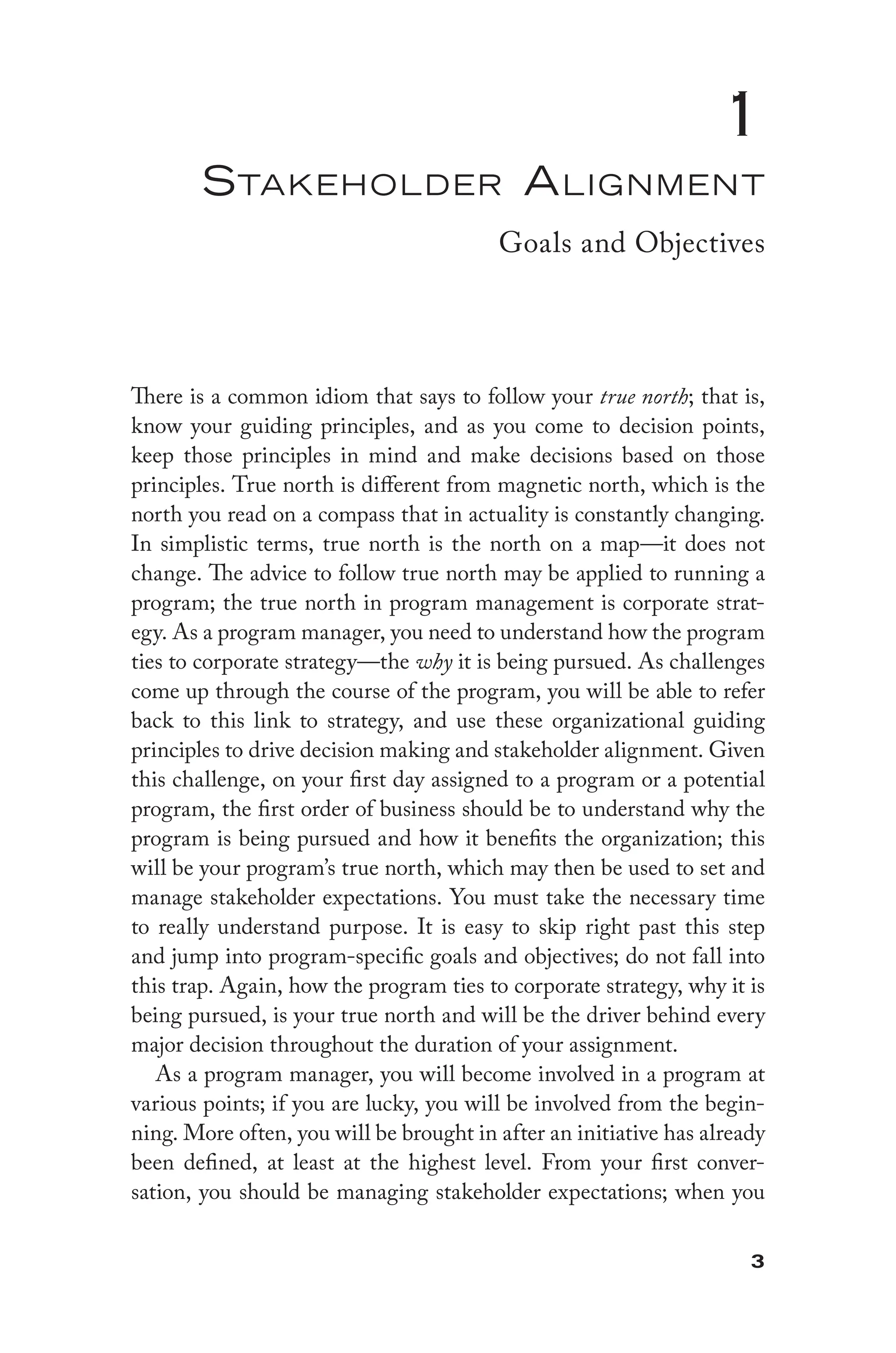

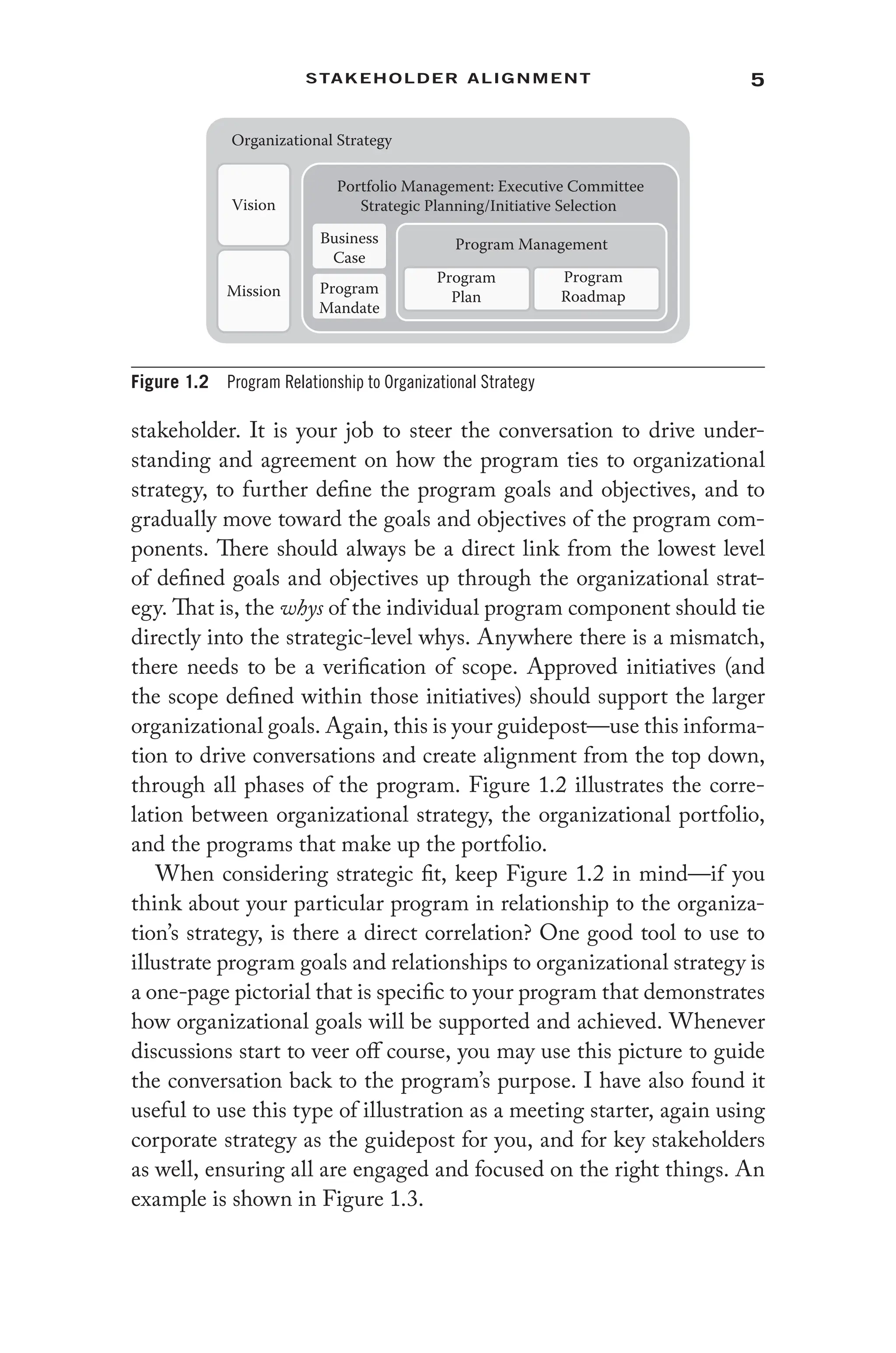
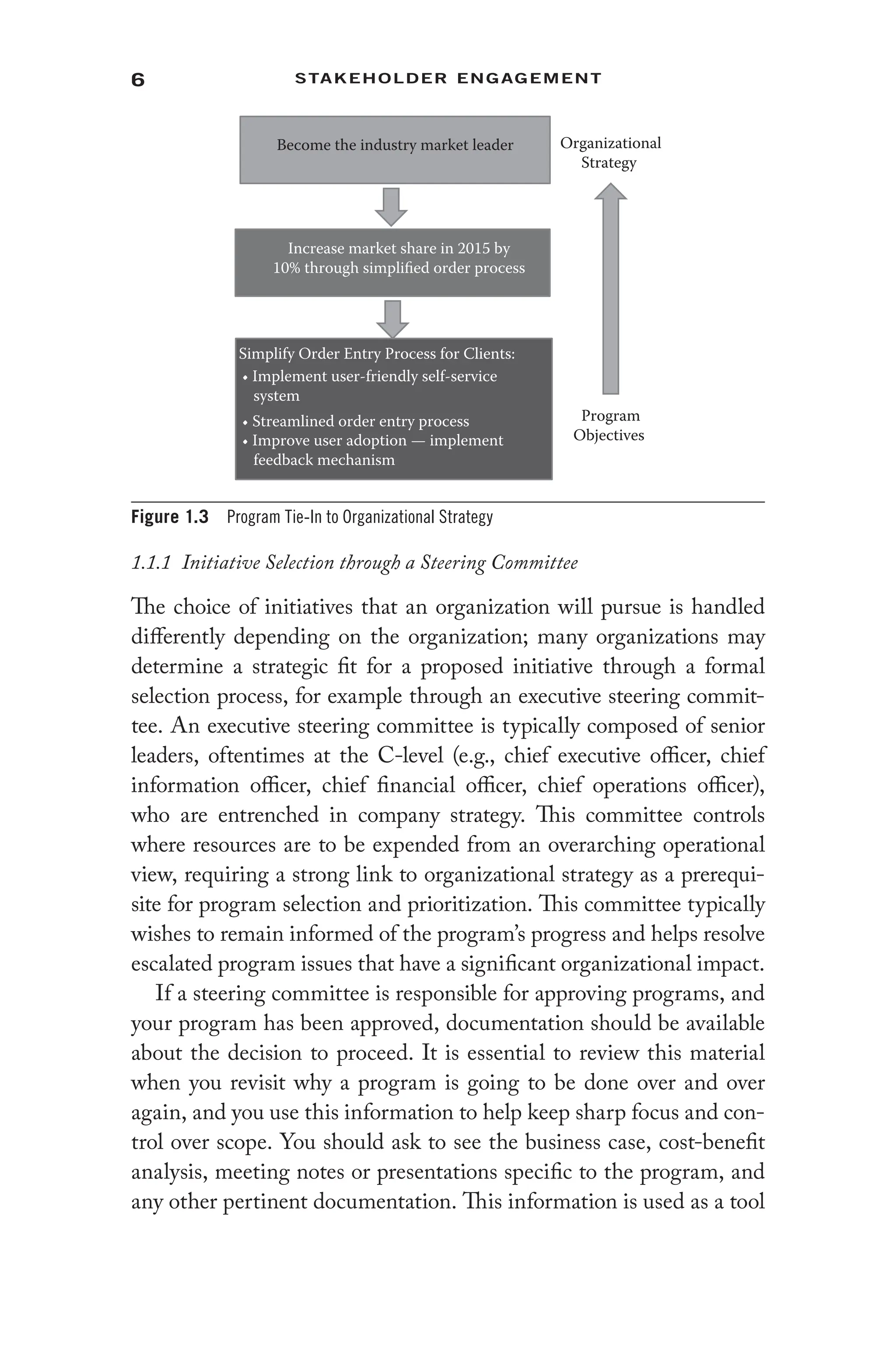



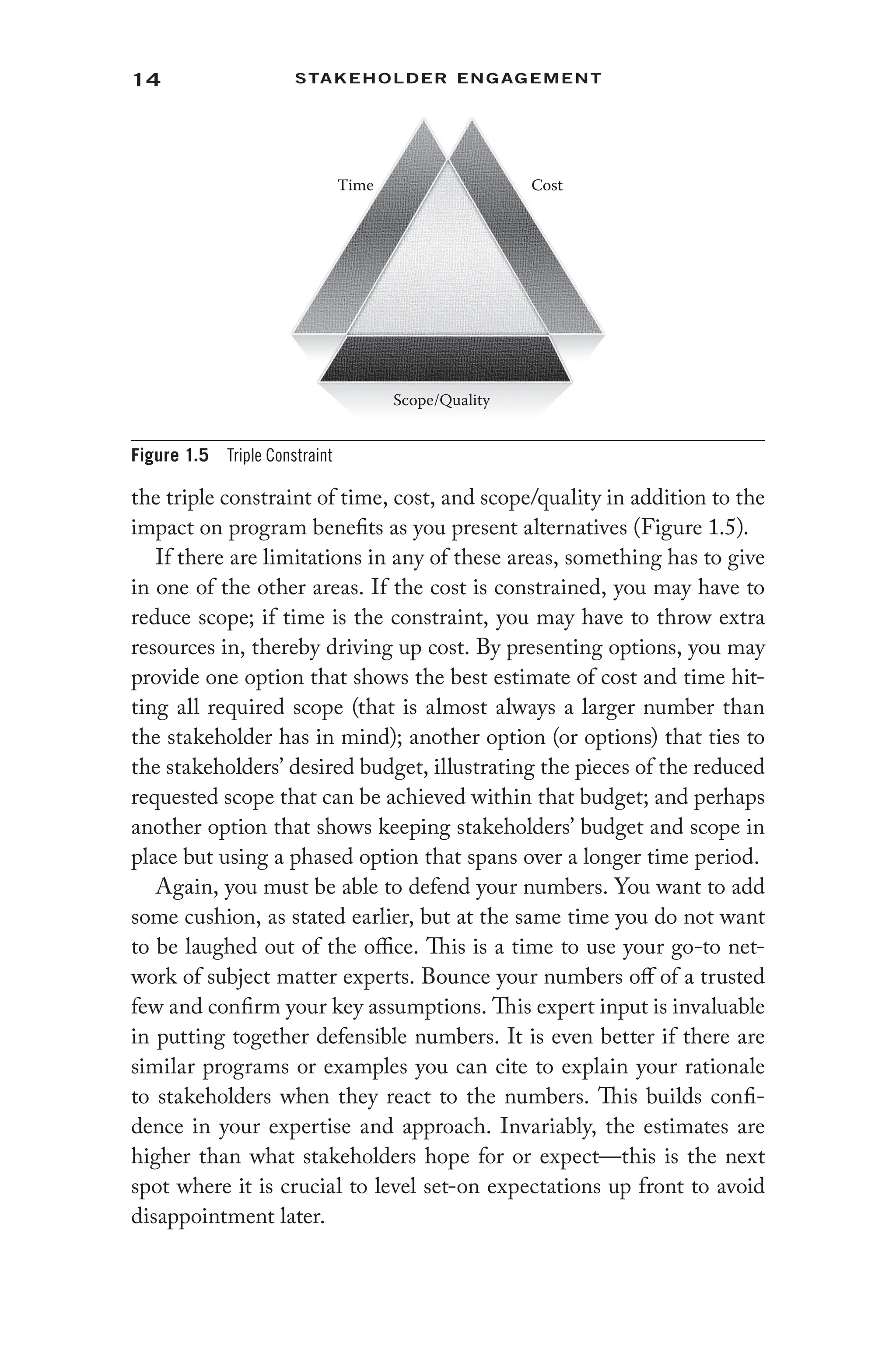


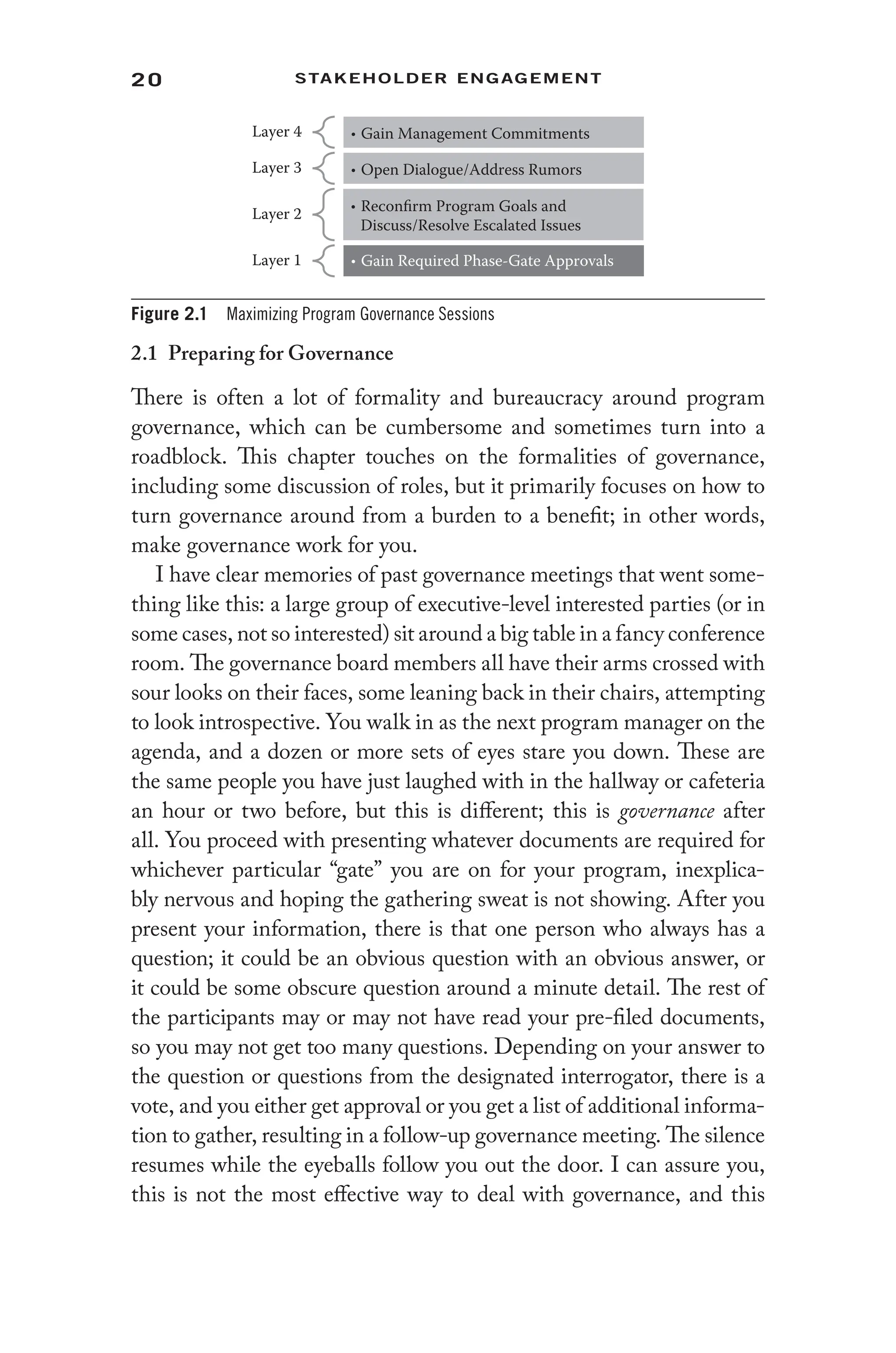






![[52] This and the following letters written by Schumann at
Endenich were first published by Edward Hanslick in the Neue
Freie Presse of October 27 and 29, 1896, and afterwards
republished in Hanslick's 'Am Ende des Jahrhunderts' (Robert
Schumann in Endenich).
[53] See footnote on p. 131.
[54] The introduction by diminution of Clara Wieck's theme
mentioned on p. 160.
[55] In manuscript: Ballades for Pianoforte, Op. 10.
[56] The doppio movimento marked in the manuscript of the first
ballade was changed before publication to allegro ma non troppo,
no doubt in deference to Schumann's suggestion.
[57] Concert-allegro with Introduction for Pianoforte and
Orchestra, Op. 134.
[58] Fantasia for Violin and Orchestra, Op. 131, dedicated to
Joachim.
[59] Fräulein Bertha Bölling, a young lady who was resident for
some years in the Schumanns' house as domestic help to Frau
Schumann, to whom she was greatly attached, and in whose
confidence she stood high. During the first few days of
Schumann's illness, before his removal to Endenich, she was
allowed by the doctors to go in and out of the sick-room, and her
presence had a tranquillizing effect on the patient.
[60] Joachim's compositions.
[61] 'Gesammelte Aufsätze über Musik.'
[62] 'Aus meinem Leben.'
[63] Die Musik, first May number, 1903.
[64] In the author's possession.
[65] In the possession of Professor Julius Spengel.
[66] In the library of the Gesellschaft der Musikfreunde, Vienna.
[67] In the possession of Fräulein Marie Grimm.
[68] 'Aus meinem Leben.'](https://image.slidesharecdn.com/2488627-250624075749-16da97f6/75/Stakeholder-Engagement-The-Game-Changer-For-Program-Management-Baugh-56-2048.jpg)
![[69] Grove's 'Dictionary of Music and Musicians.'
[70] Chiefly taken from the account written at the time for the
Neue Zeitschrift, by Ferdinand Hiller.
[71] 'Aus Johannes Brahms' Jugendtagen,' by Carl, Freiherr von
Meysenbug (Neues Wiener Tagblatt, April 3 and 4, 1902).
[72] 'Johannes Brahms,' p. 297.
[73] In the possession of Fräulein Marie Grimm.
[74] 'Brahms in Hamburg,' by Professor Walter Hübbe.
[75] The few sketches Brahms allowed to survive him are
preserved in the library of the Gesellschaft der Musikfreunde at
Vienna.
[76] Dr. Georg Fischer's 'Opera und Concerte im Hoftheater zu
Hannover bis 1866.'
[77] The concerto opens with a long-continued roll of drums.
[78] From a letter first published in Max Kalbeck's 'Johannes
Brahms,' vol. i., p. 356.
[79] 'Musikalisches und Literarisches': 'Neuer Brahms Katalog.'
[80] Moser's 'Life of Joachim.'
[81] Brahms' Trio in B major.
[82] First published in Reimann's 'Johannes Brahms.' One of the
Princess Friederike's Christmas presents to Brahms whilst he was
her teacher consisted of the five volumes (1851-1855 inclusive) of
the Leipzig Society's edition of Bach's works issued before he
became a subscriber, and it would appear from the opening of the
above-quoted letter that she made herself responsible for his
subscription during the consecutive seasons of his visits to
Detmold. It is interesting to read the traces of his movements
furnished by the subscription list placed at the commencement of
each volume. In 1856 his name appears as belonging to
Düsseldorf; 1857-1864 inclusive, to Hamburg; and from 1865
onwards, to Vienna.
[83] 'Aus Johannes Brahms' Jugendtagen,' by Hermann Freiherr
von Meysenbug (Neues Wiener Tagblatt, May, 1901).](https://image.slidesharecdn.com/2488627-250624075749-16da97f6/75/Stakeholder-Engagement-The-Game-Changer-For-Program-Management-Baugh-57-2048.jpg)
![[84] First published, with an account of the Ladies' Choir, in
Hübbe's 'Brahms in Hamburg.'
[85] Hübbe.
[86] 'Aus Brahms' Jugendtagen.' See footnote on p. 205.
[87] 'Joseph Joachim,' p. 154.
[88] Reprint of Wagner's pamphlet 'Das Judenthum in der Musik.'
[89] The rules, first published by Professor Walter Hübbe in his
'Brahms in Hamburg,' are given entire in the original German in
Appendix No. III.
[90] This pleasant description is given entire, as containing a
substantially accurate account of Brahms' artistic progress,
though Dietrich, writing after the lapse of many years, has
overlooked the fact that the works referred to had already been
performed in public from the manuscripts.
[91] A revised edition of the second serenade was published by
Simrock in 1875.
[92] Max Kalbeck, p. 458.
[93] First published in Hübbe's 'Brahms in Hamburg,' pp. 42-44.
[94] Dietrich.
[95] The Variations are dated 1866 in the published catalogue.
[96] Max Kalbeck, p. 497. The reader must be reminded that at
this period German bank-notes frequently represented but small
sums.
[97] 'Music may accompany action, but can never become its
substitute.'
'In the case even of the best and most ideal examples [of
Programme-music] it always happened that I so completely lost
the thread that no effort enabled me to recover it,' etc.
Wagner, at a certain period of his career, professed himself a
partial convert to Programme-music—i.e., as it is exemplified in
the works of Liszt; but it is scarcely possible to read his remarks
at this point without feeling that they were wrested from him by
his conception of the obligations of friendship, and the](https://image.slidesharecdn.com/2488627-250624075749-16da97f6/75/Stakeholder-Engagement-The-Game-Changer-For-Program-Management-Baugh-58-2048.jpg)
![circumstances of the time. Confessing that he finds it extremely
difficult to explain himself, he says that he leaves to others the
task of developing his meaning, and returns repeatedly to the
expression of his general dislike of Programme-music.
[98] From 'Brahms in Hamburg,' by Walter Hübbe. See p. 255 of
this narrative.](https://image.slidesharecdn.com/2488627-250624075749-16da97f6/75/Stakeholder-Engagement-The-Game-Changer-For-Program-Management-Baugh-59-2048.jpg)
![anxiety about Schumann was again increasing—the
time was a happy one to the two young men, who
passed many hours of the day in each other's
society.)
In the midi representation of the first excerpt on
Page 219, the first measure has been adjusted to
ensure there are two beats in the bar by changing
the sixteenth (semiquaver) rest into an eighth
(quaver) rest.
In the midi representation of the second excerpt on
Page 219, the fourth note in the second measure is
played as an A ♭ as in the music. Please note that
some publications of this piece use an A♮ instead.
Footnote [6] originally referred to Chapter X. in Vol.
II. However, as there is no Chapter X. in Vol. II., this
has been updated to read Chapter XXI., which
makes reference to the subject.](https://image.slidesharecdn.com/2488627-250624075749-16da97f6/75/Stakeholder-Engagement-The-Game-Changer-For-Program-Management-Baugh-61-2048.jpg)