Stages
of
Writing
Process
Aliyan Shahid (FA23-BCS-199)
Maizen Abrash (FA23-BCS-187
Anas Azhar (FA23-BCS-452
Overview
• Writing is the process of using symbols (letters, words, and
punctuation) to communicate thoughts, ideas, and information.
• The writing process consists of multiple stages that help writers
create well-structured and polished pieces.
• Understanding each stage can improve the quality of your writing
and make the process more manageable.
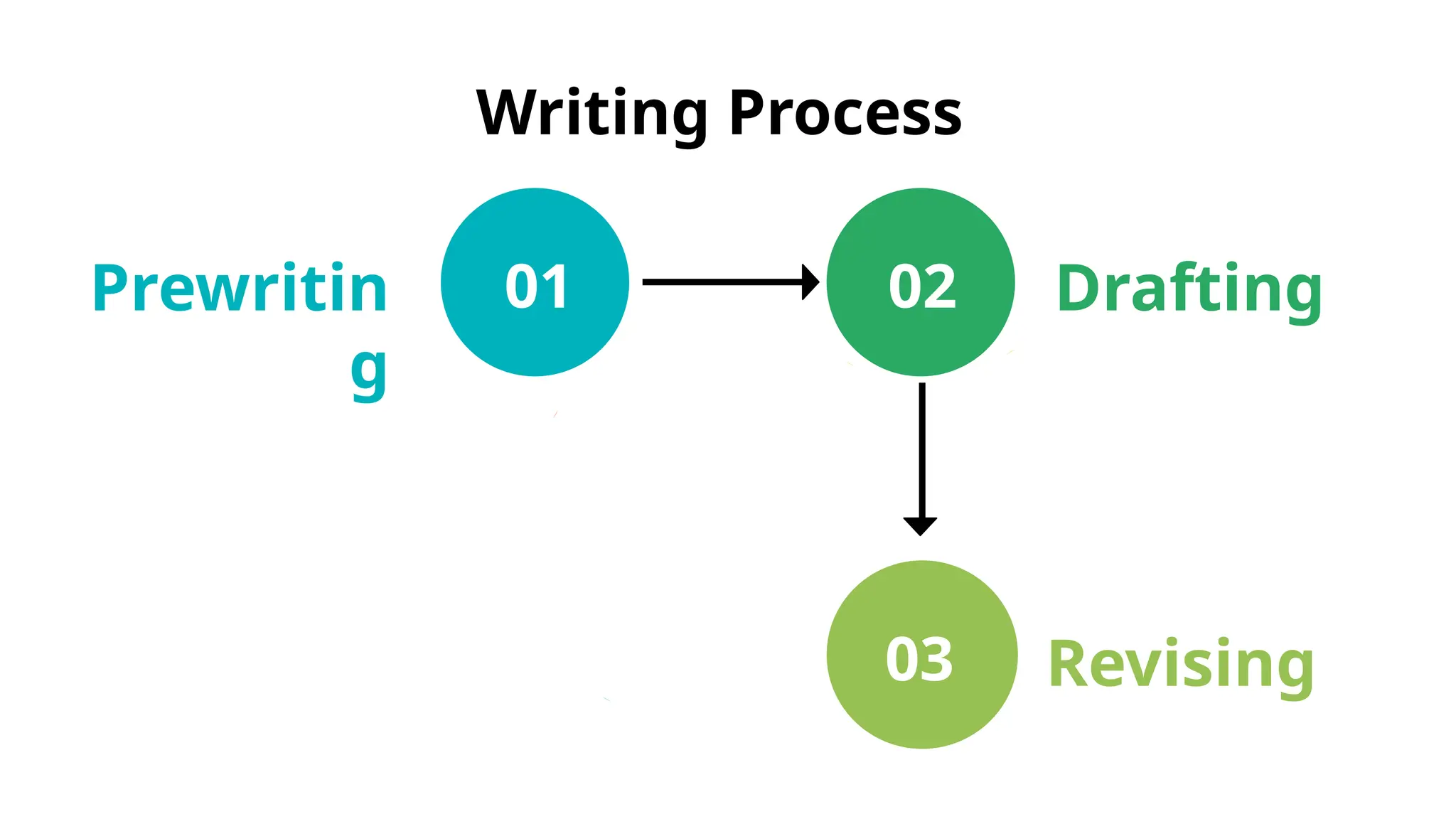
Writing Process
Prewritin
g
01 Drafting
02
Revising
03
1. Pre writing
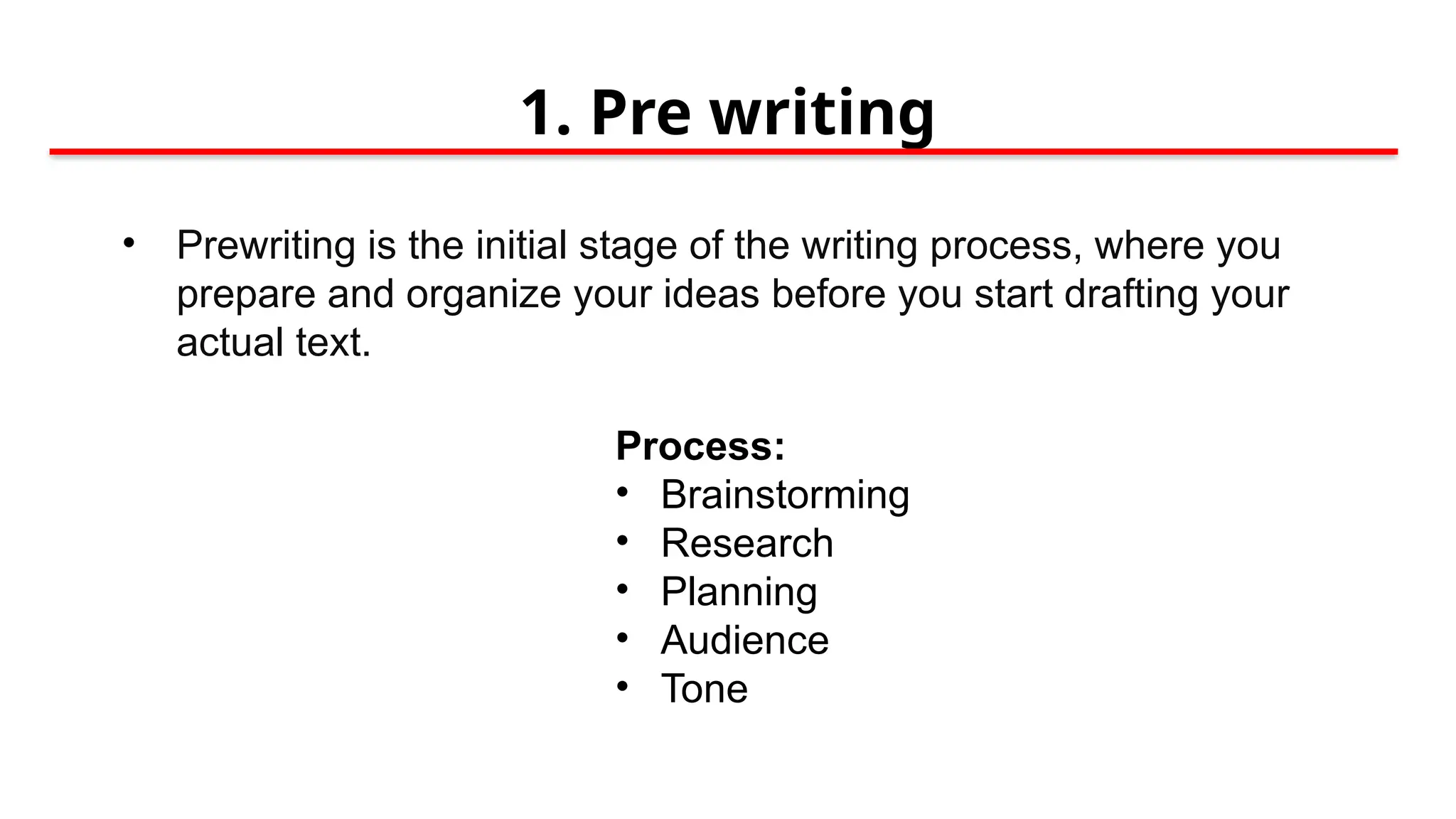
• Prewriting is the initial stage of the writing process, where you
prepare and organize your ideas before you start drafting your
actual text.
Process:
• Brainstorming
• Research
• Planning
• Audience
• Tone
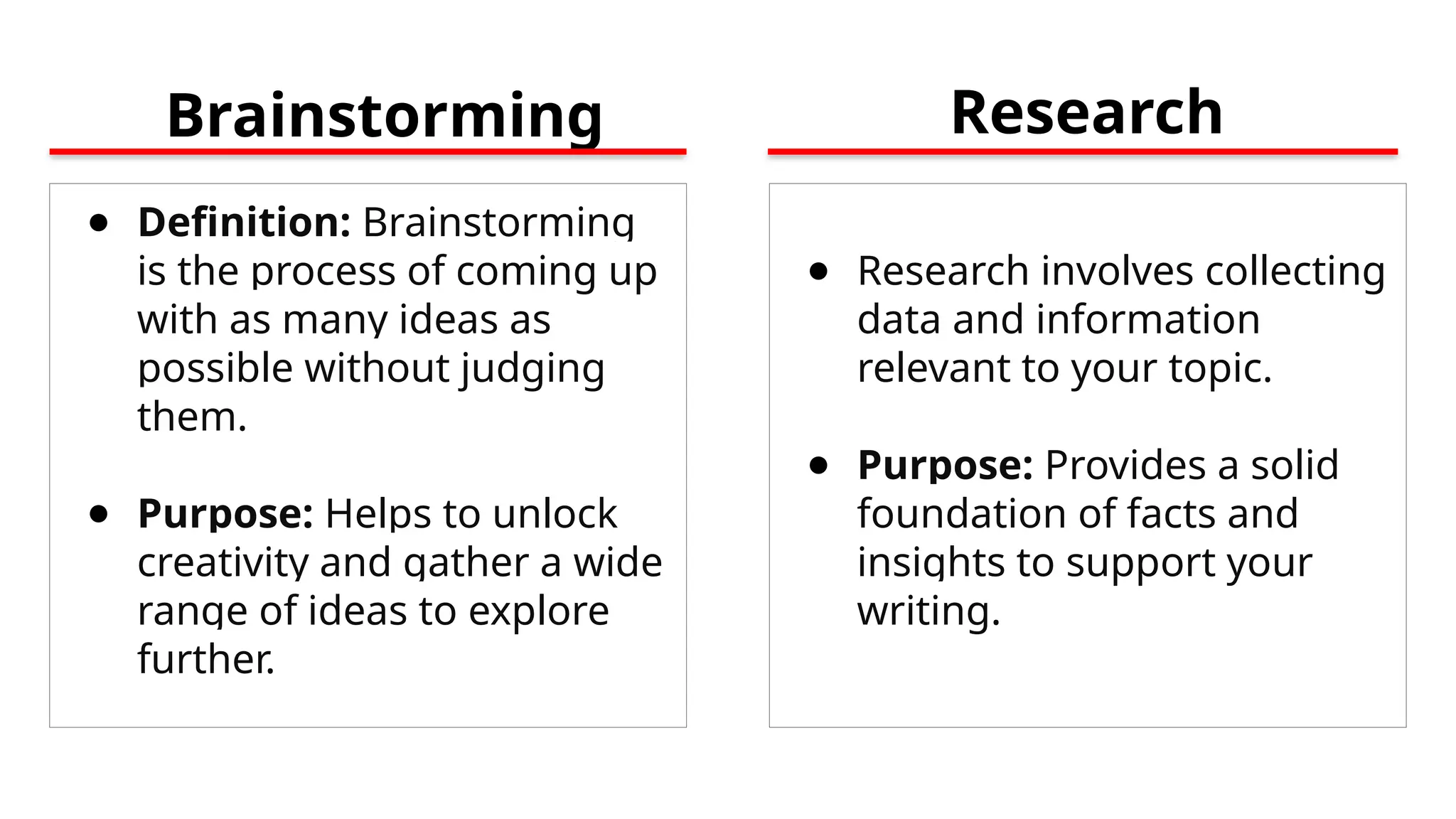
Brainstorming
● Definition: Brainstorming
is the process of coming up
with as many ideas as
possible without judging
them.
● Purpose: Helps to unlock
creativity and gather a wide
range of ideas to explore
further.
● Research involves collecting
data and information
relevant to your topic.
● Purpose: Provides a solid
foundation of facts and
insights to support your
writing.
Research
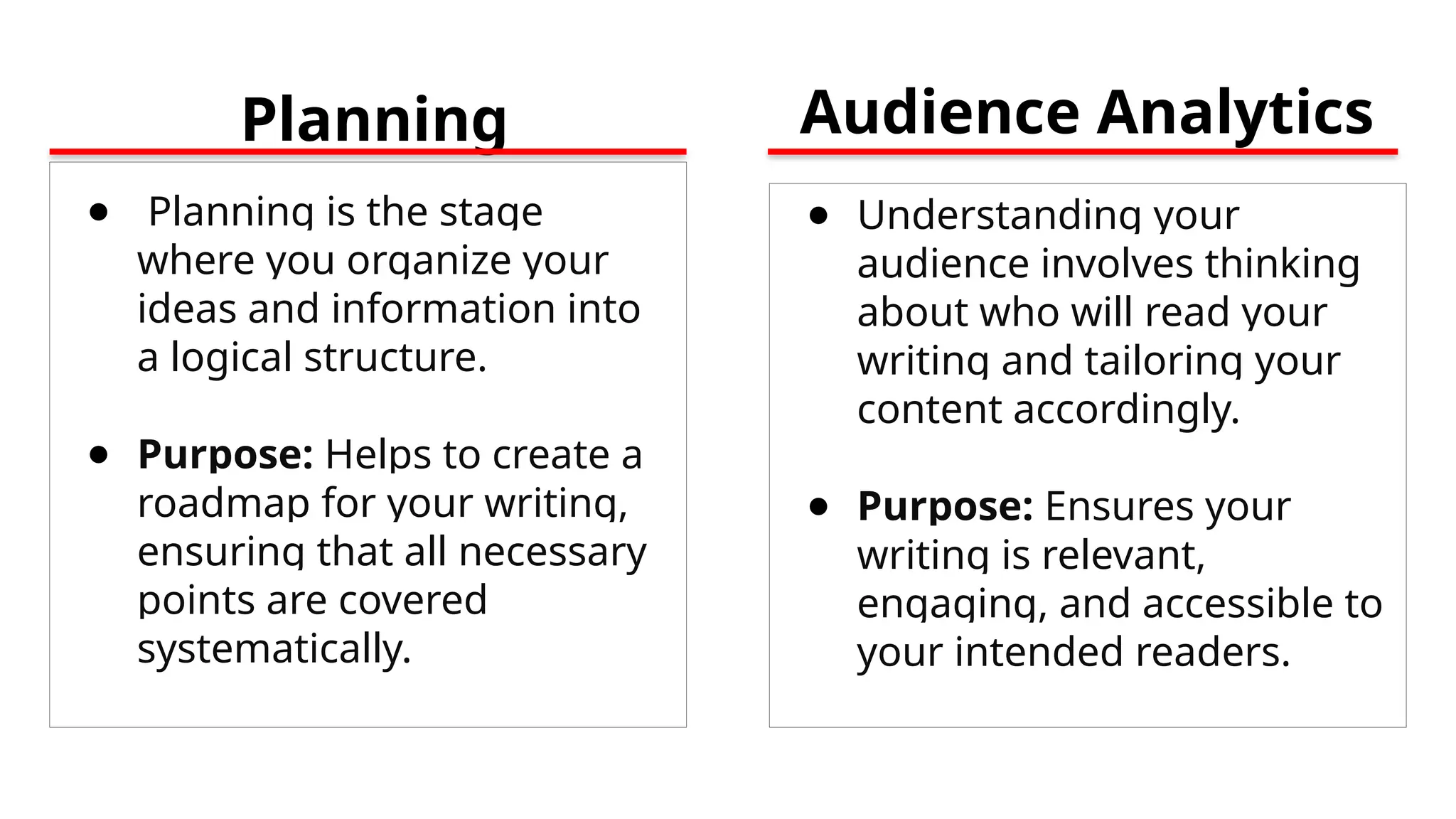
Planning
● Planning is the stage
where you organize your
ideas and information into
a logical structure.
● Purpose: Helps to create a
roadmap for your writing,
ensuring that all necessary
points are covered
systematically.
● Understanding your
audience involves thinking
about who will read your
writing and tailoring your
content accordingly.
● Purpose: Ensures your
writing is relevant,
engaging, and accessible to
your intended readers.
Audience Analytics
2. Drafting and Revisng
• Drafting is the stage in the writing process where you begin
to put your ideas down on paper or a digital document. It
involves writing the initial version of your work, focusing on
capturing your thoughts and ideas without worrying about
making it perfect.
• Purpose: The main goal of drafting is to start translating your
prewriting notes and ideas into a structured format. It allows
you to explore and expand on your concepts, providing a
foundation for further refinement.
2.1. Characteristics and Techniques of Drafting
● Focus on Content: Emphasize getting your ideas and
arguments down.
● Flexibility: Understand that the draft is a work in progress and
will undergo changes.
● Imperfection: Accept that the initial draft will have errors and
areas for improvement.
Techniques:
1. Free Writing
2. Focused Writing
3. Using an Outline
2.2. Benifits
• Idea Development: Allows you to explore your ideas more fully.
• Foundation for Revision: Provides a starting point that you can
improve upon during the revising and editing stages.
• Progress Tracking: Helps you see the progress of your writing
project and stay motivated.
2.3. Revising Checklist
 Review: Check for content and clarity.
 Enhance: Improve the structure and flow.
 Details: Add more information where needed.
 Feedback: Consider input from others.
3. Finishing: Post Writing
• Post-writing is the final stage of the writing process that
occurs after you have completed your initial draft and
revisions. It involves polishing your work, ensuring accuracy
and clarity, and preparing it for submission or publication.
This stage includes tasks such as:
1. Editing
2. Creating Document
3.1. Editing
Definition: Refining your draft to improve style, clarity, and
coherence.
Activities:
1.Grammar and Punctuation: Correcting grammatical
errors and punctuation mistakes.
2.Word Choice: Ensuring appropriate and precise word
usage.
3.Sentence Structure: Enhancing variety and flow within
sentences.
3.3. Creating Document
• This step requires editing and printing of the last document.
• Also include formatting:
1. Layout: Adjusting margins, font size, spacing, and headings.
2.Citation Style: It can be APA , or any other but proper.
• This step takes time and energy cause the writer have to
careful about the grammar, sentences etc.
• It sometimes cause frustration because in case if any
problem occurs.
THE END

Stages of writing process in Technical and Business Writing.pptx

  • 1.
    Stages of Writing Process Aliyan Shahid (FA23-BCS-199) MaizenAbrash (FA23-BCS-187 Anas Azhar (FA23-BCS-452
  • 2.
    Overview • Writing isthe process of using symbols (letters, words, and punctuation) to communicate thoughts, ideas, and information. • The writing process consists of multiple stages that help writers create well-structured and polished pieces. • Understanding each stage can improve the quality of your writing and make the process more manageable.
  • 3.
  • 4.
    1. Pre writing •Prewriting is the initial stage of the writing process, where you prepare and organize your ideas before you start drafting your actual text. Process: • Brainstorming • Research • Planning • Audience • Tone
  • 5.
    Brainstorming ● Definition: Brainstorming isthe process of coming up with as many ideas as possible without judging them. ● Purpose: Helps to unlock creativity and gather a wide range of ideas to explore further. ● Research involves collecting data and information relevant to your topic. ● Purpose: Provides a solid foundation of facts and insights to support your writing. Research
  • 6.
    Planning ● Planning isthe stage where you organize your ideas and information into a logical structure. ● Purpose: Helps to create a roadmap for your writing, ensuring that all necessary points are covered systematically. ● Understanding your audience involves thinking about who will read your writing and tailoring your content accordingly. ● Purpose: Ensures your writing is relevant, engaging, and accessible to your intended readers. Audience Analytics
  • 7.
    2. Drafting andRevisng • Drafting is the stage in the writing process where you begin to put your ideas down on paper or a digital document. It involves writing the initial version of your work, focusing on capturing your thoughts and ideas without worrying about making it perfect. • Purpose: The main goal of drafting is to start translating your prewriting notes and ideas into a structured format. It allows you to explore and expand on your concepts, providing a foundation for further refinement.
  • 8.
    2.1. Characteristics andTechniques of Drafting ● Focus on Content: Emphasize getting your ideas and arguments down. ● Flexibility: Understand that the draft is a work in progress and will undergo changes. ● Imperfection: Accept that the initial draft will have errors and areas for improvement. Techniques: 1. Free Writing 2. Focused Writing 3. Using an Outline
  • 9.
    2.2. Benifits • IdeaDevelopment: Allows you to explore your ideas more fully. • Foundation for Revision: Provides a starting point that you can improve upon during the revising and editing stages. • Progress Tracking: Helps you see the progress of your writing project and stay motivated.
  • 10.
    2.3. Revising Checklist Review: Check for content and clarity.  Enhance: Improve the structure and flow.  Details: Add more information where needed.  Feedback: Consider input from others.
  • 11.
    3. Finishing: PostWriting • Post-writing is the final stage of the writing process that occurs after you have completed your initial draft and revisions. It involves polishing your work, ensuring accuracy and clarity, and preparing it for submission or publication. This stage includes tasks such as: 1. Editing 2. Creating Document
  • 12.
    3.1. Editing Definition: Refiningyour draft to improve style, clarity, and coherence. Activities: 1.Grammar and Punctuation: Correcting grammatical errors and punctuation mistakes. 2.Word Choice: Ensuring appropriate and precise word usage. 3.Sentence Structure: Enhancing variety and flow within sentences.
  • 13.
    3.3. Creating Document •This step requires editing and printing of the last document. • Also include formatting: 1. Layout: Adjusting margins, font size, spacing, and headings. 2.Citation Style: It can be APA , or any other but proper. • This step takes time and energy cause the writer have to careful about the grammar, sentences etc. • It sometimes cause frustration because in case if any problem occurs.
  • 14.