SOCIAL STUDIES PROJECTMr. Diego VillamizarStu: Laura Angelica Castillo, Maria Fernanda Arevalo y Liz Martinez
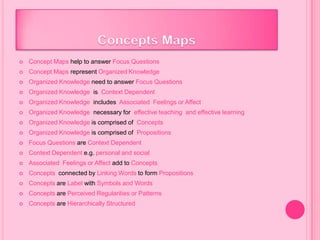
Concept Maps help to answer Focus QuestionsConcept Maps represent Organized Knowledge Organized Knowledge need to answer Focus QuestionsOrganized Knowledge  is  Context Dependent Organized Knowledge  includes  Associated  Feelings or AffectOrganized Knowledge  necessary for  effective teaching  and effective learningOrganized Knowledge is comprised of  ConceptsOrganized Knowledge is comprised of  PropositionsFocus Questions are Context DependentContext Dependent e.g. personal and socialAssociated  Feelings or Affect add to ConceptsConcepts  connected by Linking Words to form PropositionsConcepts are Label with Symbols and WordsConcepts are Perceived Regularities or Patterns Concepts are Hierarchically Structured ConceptsMaps
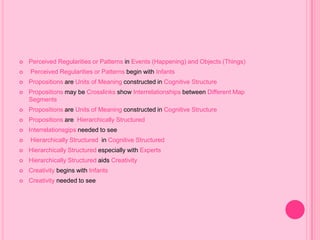
Perceived Regularities or Patterns in Events (Happening) andObjects (Things)  Perceived Regularities or Patterns begin with InfantsPropositionsare Units of Meaningconstructed inCognitiveStructurePropositionsmaybeCrosslinks show InterrelationshipsbetweenDifferentMapSegmentsPropositionsareUnits of Meaningconstructed inCognitiveStructurePropositionsare Hierarchically Structured Interrelationsgipsneeded to see Hierarchically Structured  in Cognitive StructuredHierarchically Structured especially with Experts Hierarchically Structured aids CreativityCreativity begins with Infants Creativity needed to see
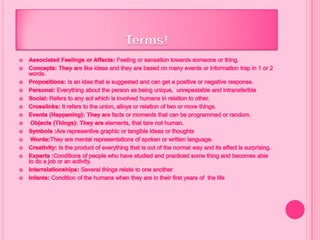
Terms!AssociatedFeelingsorAffects: Feeling or sensation towards someone or thing.Concepts: Theyare like ideas and they arebasedonmanyeventsorinformationtrap in 1 or 2 words.Propositions: Is an idea that is suggested and can get a positive or negative response.Personal: Everything about the person as being unique,  unrepeatable and intransferibleSocial: Refers to any act which is involved humans in relation to other.Crosslinks: It refers to the union, alloys or relation of two or more things.Events (Happening): They are facts or moments that can be programmed or random.Objects (Things): They areelements, thattare nothuman.Symbols :Are representive graphic or tangible ideas or thoughtsWords:They are mental representations of spoken or written language.Creativity: Is the product of everything that is out of the normal way and its effect is surprising.Experts :Conditions of people who have studied and practiced some thing and becomes able to do a job or an activity.Interrelationships:Several things relate to one anotherInfants: Condition of thehumanswhenthey are in theirfirstyears of  thelife
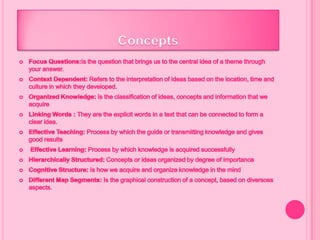
ConceptsFocusQuestions:Is the question that brings us to the central idea of a theme through your answer.ContextDependent: Refers to the interpretation of ideas based on the location, time and culture in which they developed.OrganizedKnowledge: Is the classification of ideas, concepts and information that we acquireLinkingWords : They are the explicit words in a text that can be connected to form a clear idea.EffectiveTeaching: Process by which the guide or transmitting knowledge and gives good resultsEffectiveLearning: Process by which knowledge is acquired successfullyHierarchicallyStructured: Concepts or ideas organized by degree of importanceCognitiveStructure: Is how we acquire and organize knowledge in the mindDifferentMapSegments: Is the graphical construction of a concept, based on diversoss aspects.

Ss Castillo Baby L Done (2)

  • 1.
    SOCIAL STUDIES PROJECTMr.Diego VillamizarStu: Laura Angelica Castillo, Maria Fernanda Arevalo y Liz Martinez
  • 2.
    Concept Maps helpto answer Focus QuestionsConcept Maps represent Organized Knowledge Organized Knowledge need to answer Focus QuestionsOrganized Knowledge is Context Dependent Organized Knowledge includes Associated Feelings or AffectOrganized Knowledge necessary for effective teaching and effective learningOrganized Knowledge is comprised of ConceptsOrganized Knowledge is comprised of PropositionsFocus Questions are Context DependentContext Dependent e.g. personal and socialAssociated Feelings or Affect add to ConceptsConcepts connected by Linking Words to form PropositionsConcepts are Label with Symbols and WordsConcepts are Perceived Regularities or Patterns Concepts are Hierarchically Structured ConceptsMaps
  • 3.
    Perceived Regularities orPatterns in Events (Happening) andObjects (Things) Perceived Regularities or Patterns begin with InfantsPropositionsare Units of Meaningconstructed inCognitiveStructurePropositionsmaybeCrosslinks show InterrelationshipsbetweenDifferentMapSegmentsPropositionsareUnits of Meaningconstructed inCognitiveStructurePropositionsare Hierarchically Structured Interrelationsgipsneeded to see Hierarchically Structured in Cognitive StructuredHierarchically Structured especially with Experts Hierarchically Structured aids CreativityCreativity begins with Infants Creativity needed to see
  • 4.
    Terms!AssociatedFeelingsorAffects: Feeling orsensation towards someone or thing.Concepts: Theyare like ideas and they arebasedonmanyeventsorinformationtrap in 1 or 2 words.Propositions: Is an idea that is suggested and can get a positive or negative response.Personal: Everything about the person as being unique, unrepeatable and intransferibleSocial: Refers to any act which is involved humans in relation to other.Crosslinks: It refers to the union, alloys or relation of two or more things.Events (Happening): They are facts or moments that can be programmed or random.Objects (Things): They areelements, thattare nothuman.Symbols :Are representive graphic or tangible ideas or thoughtsWords:They are mental representations of spoken or written language.Creativity: Is the product of everything that is out of the normal way and its effect is surprising.Experts :Conditions of people who have studied and practiced some thing and becomes able to do a job or an activity.Interrelationships:Several things relate to one anotherInfants: Condition of thehumanswhenthey are in theirfirstyears of thelife
  • 5.
    ConceptsFocusQuestions:Is the questionthat brings us to the central idea of a theme through your answer.ContextDependent: Refers to the interpretation of ideas based on the location, time and culture in which they developed.OrganizedKnowledge: Is the classification of ideas, concepts and information that we acquireLinkingWords : They are the explicit words in a text that can be connected to form a clear idea.EffectiveTeaching: Process by which the guide or transmitting knowledge and gives good resultsEffectiveLearning: Process by which knowledge is acquired successfullyHierarchicallyStructured: Concepts or ideas organized by degree of importanceCognitiveStructure: Is how we acquire and organize knowledge in the mindDifferentMapSegments: Is the graphical construction of a concept, based on diversoss aspects.