1
2
タイトル TITLE
3
タイトル TITLE
4
タイトル TITLE
5
6
 
 
7
8
9
10
11
12
• 
• 
13
タイトル TITLE
14
15
16
• 
• 
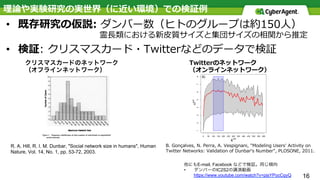
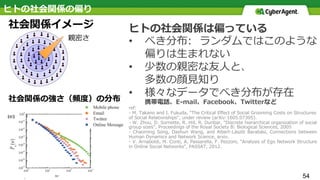
R. A. Hill, R. I. M. Dunbar, "Social network size in humans", Human
Nature, Vol. 14, No. 1, pp. 53-72, 2003.
他にもE-mail, Facebook などで検証。同じ傾向
•  ダンバーのIC2S2の講演動画
https://www.youtube.com/watch?v=pjsYPocCqyQ
クリスマスカードのネットワーク
(オフラインネットワーク)
17
18
• 
• 
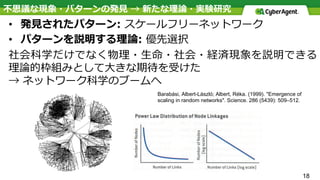
Barabási, Albert-László; Albert, Réka. (1999). "Emergence of
scaling in random networks". Science. 286 (5439): 509–512.
19
20
• 
• 
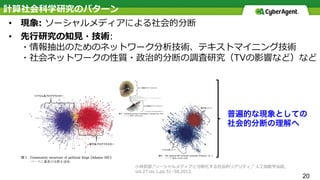
普遍的な現象としての
社会的分断の理解へ
21
• 
• 
• 
22


23


24
Masanori Takano, Kazuya Wada, and Ichiro Fukuda, "Lightweight Interactions for Reciprocal Cooperation in a Social Network Game", SocInfo, 2016
Masanori Takano, Kazuya Wada, and Ichiro Fukuda, "Environmentally Driven Migration in a Social Network Game", Scientific Reports, 5, 12481; doi: 10.1038/srep12481 (2015).
Masanori Takano, Kazuya Wada, and Ichiro Fukuda, "Reciprocal Altruism-based Cooperation in a Social Network Game", New Generation Computing, Vol. 34, No. 3,
pp. 257-271, 2016.
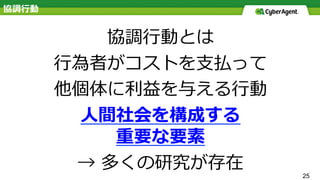
25
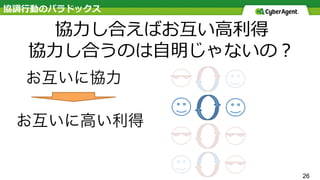
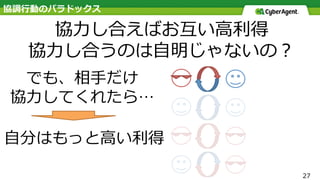
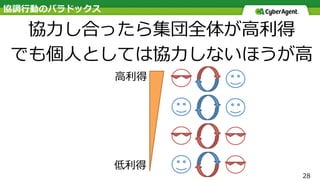
26
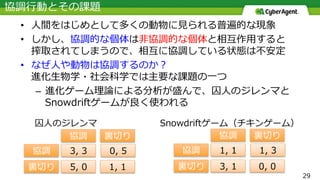
お互いに協力	
お互いに高い利得
• 
• 
• 
– 
30
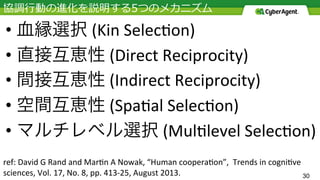
• 血縁選択	(Kin	Selec*on)	
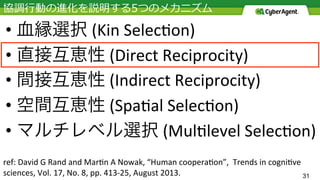
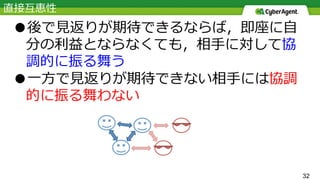
• 直接互恵性	(Direct	Reciprocity)	
• 間接互恵性	(Indirect	Reciprocity)	
• 空間互恵性	(Spa*al	Selec*on)	
• マルチレベル選択	(Mul*level	Selec*on)	
ref:	David	G	Rand	and	Mar*n	A	Nowak,	“Human	coopera*on”,		Trends	in	cogni*ve	
sciences,	Vol.	17,	No.	8,	pp.	413-25,	August	2013.
31
• 血縁選択	(Kin	Selec*on)	
• 直接互恵性	(Direct	Reciprocity)	
• 間接互恵性	(Indirect	Reciprocity)	
• 空間互恵性	(Spa*al	Selec*on)	
• マルチレベル選択	(Mul*level	Selec*on)	
ref:	David	G	Rand	and	Mar*n	A	Nowak,	“Human	coopera*on”,		Trends	in	cogni*ve	
sciences,	Vol.	17,	No.	8,	pp.	413-25,	August	2013.
32
 
 
33
́ et. al. [2012],
  Wang et. al. [2012], Peysakhovich and Rand [2013]
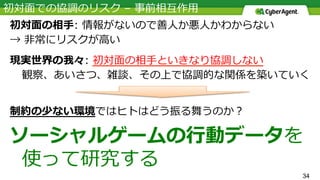
34
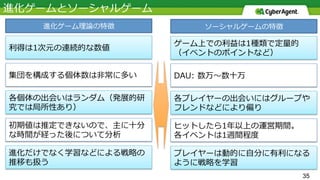
35
36
URL:	hTp://vcard.ameba.jp	
期間:	2013/3/25∼2013/4/8	
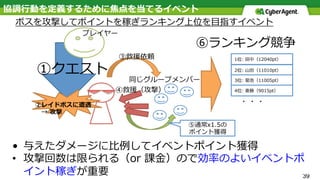
イベント:	たすけて!マイヒーロー	–	お花見編	–	(レイドタイプのイベント)	
対象:	期間中、一度でもイベントに参加(攻撃)した	&	5人以上のアクティブメンバーが所属するギルドに所属する
プレイヤー
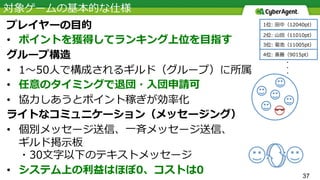
37
• 
• 
• 
• 
• 
• 
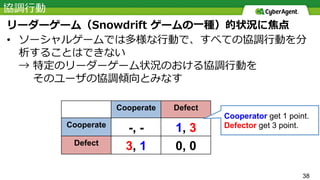
38
• 
Cooperate Defect
Cooperate
-, - 1, 3
Defect
3, 1 0, 0
Cooperator get 1 point.
Defector get 3 point.
39
 
• 
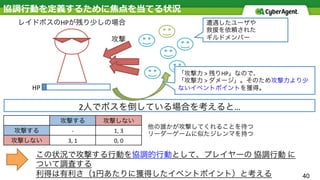
40
攻撃する	 攻撃しない	
攻撃する	 -	 1,	3	
攻撃しない	 3,	1	 0,	0	
2人でボスを倒している場合を考えると…	
他の誰かが攻撃してくれることを待つ	
リーダーゲームに似たジレンマを持つ	
この状況で攻撃する行動を協調的行動として、プレイヤーの	協調行動	に
ついて調査する	
利得は有利さ(1円あたりに獲得したイベントポイント)と考える	
レイドボスのHPが残り少しの場合	
攻撃	
HP	
遭遇したユーザや	
救援を依頼された	
ギルドメンバー	
「攻撃力	>	残りHP」なので、	
「攻撃力	>	ダメージ」。そのため攻撃力より少
ないイベントポイントを獲得。
41
• 
• 
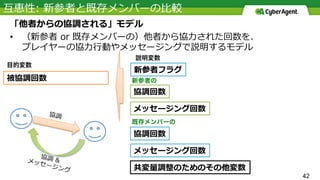
42
• 
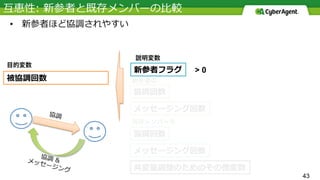
目的変数
説明変数
新参者の
既存メンバーの
43
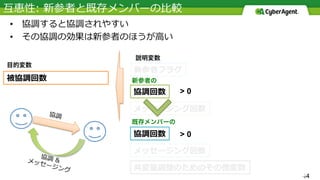
目的変数
説明変数
新参者の
既存メンバーの
• 
> 0
44
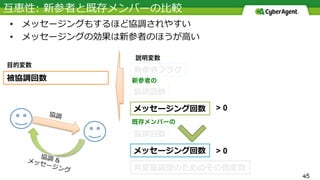
目的変数
既存メンバーの
• 
• 
説明変数
新参者の
> 0
> 0
45
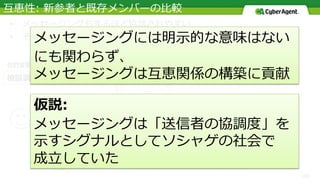
目的変数
説明変数
新参者の
既存メンバーの
• 
• 
> 0
> 0
46
目的変数
説明変数
新参者の
既存メンバーの
• 
• 
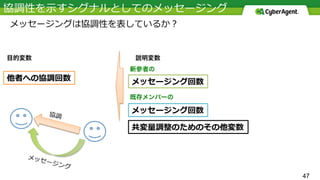
47
目的変数 説明変数
新参者の
既存メンバーの
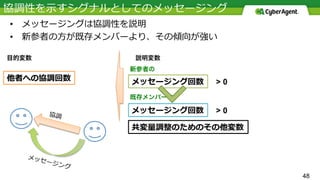
48
• 
• 
目的変数 説明変数
新参者の
既存メンバーの
> 0
> 0
49
• 
• 
• 
• 
• 
• 
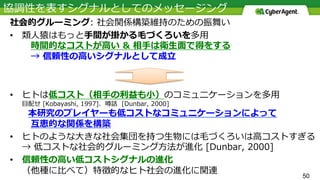
50
• 
• 
• 
• 
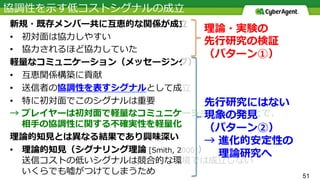
51
• 
• 
• 
• 
• 
• 
52
Masanori Takano and Ichiro Fukuda, "The critical effect of social grooming costs on structures of social relationships", under review.
 arxiv: https://arxiv.org/abs/1605.07305
高野雅典, 一ノ瀬元喜, "社会関係の強さに基づく社会的グルーミング戦略の適応性", 第13回ネットワーク生態学シンポジウム, 3, 2016.
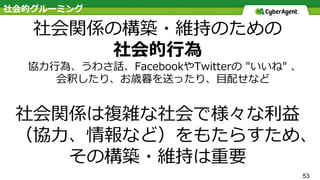
53
タイトル TITLE• 
• 
• 
54
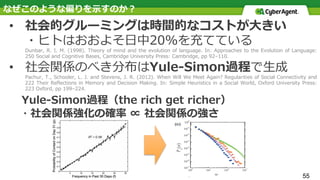
タイトル TITLE• 
• 
55
タイトル TITLE• 
• 
56
• 
• 
• 
• 
• 
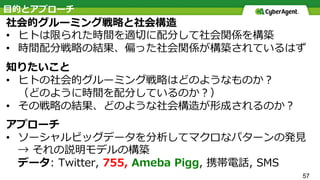
57
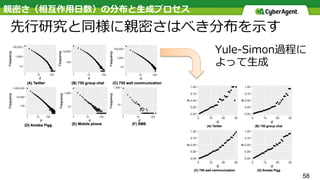
58
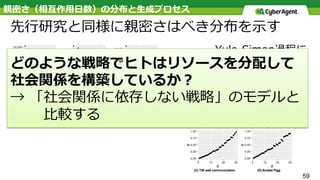
59
• 
• 
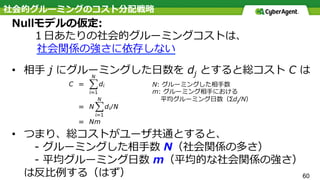
60
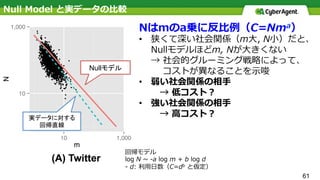
61
• 
• 
• 
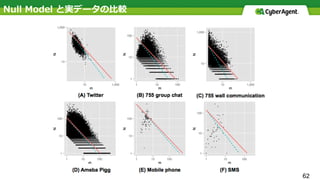
Null
62
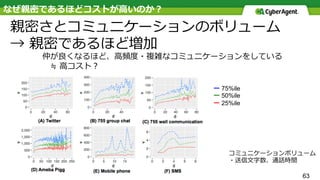
63
ー 75%ile
ー 50%ile
ー 25%ile
• 
• 
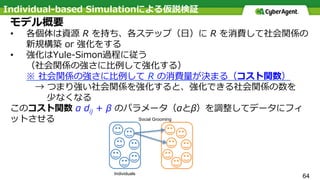
64Individuals
Social Grooming
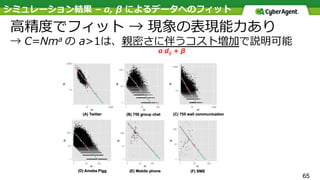
65
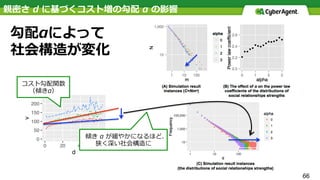
66
0
50
100
150
200
0 20 40 60
d
v
• 
• 
• 
• 
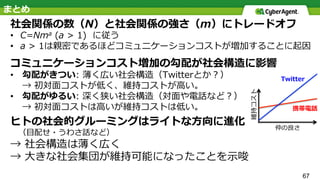
67
• 
• 
• 
• 
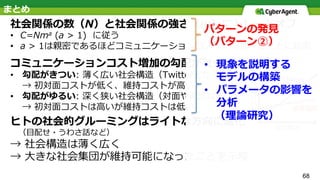
68
• 
• 
69
70
• 
• 
71
72
• 
• 
73


ヒトと社会を理解するための計算社会科学(社会情報システム学シンポジウム 基調講演資料)