کتاب دکتر فتانه علیساده هشکانی شامل مطالب متعدد در زمینه تاریخ و مفاهیم مرتبط با آن است، با توجه به فهرست مطالب و صفحات ارائه شده. این اثر به بررسی جزئیات مختلف تاریخی و نظرات متفاوت پرداخته و شامل ارجاعات به منابع معتبر میباشد.
دکتر فتانه ػلیسادههشکانی کتاب جاهغ هذیریت تازاریاتی
صفحو 72 اس 239
ٵ اَ ىٔي بَ ٦ٕق ډي زَٔٔ بٕهز، ٹبثچ زٕ ي ىاو٘
ٜٗاتغ
(1)- President Fellows of Harvard College, : "The Product Development challenge Competing through Speed,Quality and Creativity",A Harvard Business Review book,Edited With an introduction by Kim. B.Clark Steven C.Wheelwright, 1995
(2)- Milton D.Rosenau, Jr."Successful Prod- uct Development, Speeding from Oppor- tunity to Profit", John Wiley Sons, Inc,. 2000
(3)- Robert G.cooper Scott J.Edgett, "Overcomming the Current Crunch in NPD Resources", Working Paper No.17, Product. Development Institute Inc, 2003
(4)-. Miguel Pina e Cunha and Jorge F.S Gomes,"Order and Disorder in Product Innovation Models",Journal of Creativity and Innovation Management,Volume 12. Number 3, 2003
(5)- Sihem Ben Mahmoud-Jouini, Christophe. Midler Gilles Garel,"Time-to-market VS time-to-delivery Managing speed-in En- gineering, Procurement and Construction Projects", International Journal of project. Management, No.22, 2004
(6)- Robert G.campbell Edward S.Roth, "Integrated product Design and Manufac- turing Using Geometric Dimensioning and. Tolerancican", Marced Dekker, Inc, 2003
(7)- American Productivity Quality Center APQC),"Process Classification Frame- ). Work (PCF)", Version 4.O,2005
(8)- اهجب ،ٍْډل هٖ،"ډٮ ٵَ اڅڂ بًَ س ٮًٕ ډلٞ ڃً ػي ئ"، مٕ ىٕب ىي ٽب ٍٙىب ا ٍٙي،ډ ٽَ سلٞ لٕار سپم چٕ ياكي س اَُن ػى ةً، 1385.
دکتر فتانه ػلیسادههشکانی کتاب جاهغ هذیریت تازاریاتی
صفحو 136 اس 239
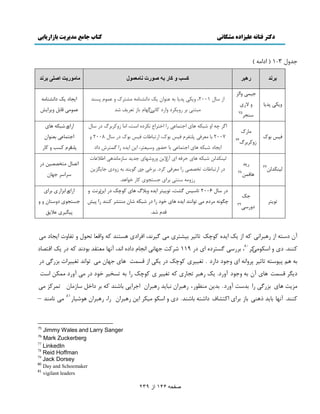
تاصاسياتي 3 . 0 : لٗ ٢ٞ تاصاسياتي ٝ تاصاسياتي لٗ ٢ٞ يٗ
ث و ىِ ټٔ ډيڃ 3i ث ٙمب ډٮىب ػي ئ ثب اُ بٍٔث 3 . 0 اٍ وٚبن ڇ ى يَ. ى وٍٺ ٦ ايع، ثب اُ بٍٔث ،ٓ ڈَا ىَڀ ثب ډٶ ڇًُ زًَٔ، او ؼٖبڇ ي سٞ ه اً يَث ىً. ډٮىب ثب اُ بٍٔث ٭جب رٍ ا زًَٔ ډىلٞ ث ٵ ىَ ي يٍٙى ٽ ثب او ؼٖبڇ ډٮشج آو اَ ػ زُ بٕهز ټٔ سٞ ٹ سٺ زًٔ ډ ٽىي.
ثب اُ بٍٔث 3 ، . 0 ث ٭ى اًن ثب اُ بٍٔث ډٶ ډًُ ،ٓ ى ډبډ زًٍٔ بَ، ؿٚڈ انىا بَُ ي ا بَ ٙ ٽَز ػب بٕ ډ ٙ ىً . ثب
سٮ ٴَٔ ثب اُ بٍٔث ى ا هٔ ٙ ډب سمب ڄٔ ىا ڈٍٔ ٽ ي ١ٮ زٕ ثب اُ بٍٔث اٍ ث ٭ى اًن ټٔ ثب ڂُٔ ډ ڈُ ى ٥ اَك ا شٕ اَر آ ىٔي ٙ ٽَز ثبلا ثج ڈَٔ. وجب ئ ثب اُ بٍٔث ٵٺ ٤ ث ٭ى اًن ٵ يَ ،ٗ ي بٔ اث اِ ث اَ ا ؼٔبى سٺب ١ب ى و٪ ځ ٵَش ٙ ىً . ى فاڃ
كب ١ ثب اُ بٍٔث ثب ئ اډ يٕ اٝچ ٙ ٽَز ث اَ ثب ځ ىَاوين ا٭شمبى ډٞ ٳَ ٽىىي ثبٙي.
NOTES
1. Neil Borden mentioned the term ―marketing mix‖ in 1953 in his American Marketing Association presidential address. The four Ps were later introduced in Jerome McCarthy‘s Basic Marketing: A Managerial Approach (1st edition) (Homewood, IL: Irwin, 1960).
2. Public opinion and political power were added by Kotler in 1984; people, process, and physical evidence were added by Boom and Bitner in 1981.
3. Eric Beinhocker, Ian Davis, and Lenny Mendonca, ―The Ten Trends You Have to Watch,‖ Harvard Business Review, July–August 2009.
4. ―Personal Recommendations and Consumer Opinions Posted Online Are the Most Trusted Forms of Advertising Globally,‖ press release (New York: The Nielsen Company, July 7, 2009). 5. Art Kleiner, Who Really Matters: The Core Group Theory of Power, Privilege, and Success (New York: The Doubleday Broadway Publishing Group, 2003).
6. C. K. Prahalad and M. S. Krishnan, The New Age of Innovation: Driving Co-created Value through Global Networks (New York: McGraw-Hill, 2008).
7. Seth Godin, Tribes: We Need You to Lead Us (New York: Portfolio, 2008). 8. Susan Fournier and Lara Lee, ―Getting Brand Communities Right,‖ Harvard Business Review, April 2009.
9. James H. Gilmore and B. Joseph Pine II, Authenticity: What Consumers Really Want (Boston: Harvard Business School Press, 2007).
10. Stephen R. Covey, The 8th Habit: From Effectiveness to Greatness (New York: Free Press, 2004).
11. Al Ries and Jack Trout, Positioning: The Battle for Your Mind (New York: McGraw-Hill, 1981).
12. For further reading, see Bernd H. Schmitt, Experiential Marketing: How to Get Customers to Sense, Think, Act, Relate to Your Company and Brands (New York: Free Press, 1999); Marc Gob´e, Emotional Branding: The New Paradigm for Connecting Brands to People (New York: Allworth Press, 2001); Kevin Roberts, Lovemarks: The Future Beyond Brands (New York: Powerhouse Books, 2004).
137.
دکتر فتانه ػلیسادههشکانی کتاب جاهغ هذیریت تازاریاتی
صفحو 137 اس 239
13. The original Brand-Positioning-Differentiation Triangle can be found in Philip Kotler, Hermawan Kartajaya, Hooi Den Huan, and Sandra Liu, Rethinking Marketing: Sustainable Marketing Enterprise in Asia (Singapore: Pearson Education Asia, 2002).
14. C. K. Prahalad, The ف چٌٌٌ at the Bottom of the Pyramid: Eradicating Poverty through Profits (Philadelphia: Wharton School Publishing, 2005).
15. James Austin, Herman B. Leonard, and James W. Quinn, ― تيى بزنند : Commerce and Justice,‖ Harvard Business School Case, revised December 21, 2004. 16. Marc Benioff and Karen Southwick, Compassionate Capitalism: How Corporations Can Make Doing Good an Integral Part of Doing Well (Franklin Lakes, New Jersey: The Career Press Inc. , 2004).
17. Paul Dolan and Thom Elkjer, True to Our Roots: Fermenting a Business Revolution (New York: Bloomberg Press, 2003).
18. Peter F. Drucker, ―What Business Can Learn from Nonprofits,‖ Classic Drucker (Boston: Harvard Business School Press, 2006).
19. Charles Handy, ―Finding Sense in Uncertainty‖ in Rowan Gibson, Rethinking the Future: Rethinking Business, Principles, Competition, Control and Complexity, Leadership, Markets, and the World (London: Nicholas Brealey Publishing, 1997).
20. Reggie Van Lee, Lisa Fabish, and Nancy McGaw, ―The Value of Corporate Values,‖ strategy+business, Issue 39.
دکتر فتانه ػلیسادههشکانی کتاب جاهغ هذیریت تازاریاتی
صفحو 153 اس 239
NOTES
1. Anne B. Fisher, ―Coke‘s Brand-Loyalty Lesson,‖ ف چٌٌٌ , August 5, 1985.
2. Lisa Abend, ―The Font War: IKEA Fans Fume over Verdana,‖ BusinessWeek, August 28, 2009.
3. Jack Welch and Suzy Welch, ―State Your Business: Too Many Mission Statements Are Loaded with Fatheaded Jargon. Play it Straight,‖ BusinessWeek, January 14, 2008.
4. Paul B. Brown, ―Stating Your Mission in No Uncertain Terms,‖ New York Times, September 1, 2009.
5. George S. Day and Paul J. H. Schoemaker, ―Are You a ‗Vigilant Leader‘?‖ MIT Sloan Management Review, Spring 2008, Vol. 49 No. 3.
6. Michael Maccoby, Narcissistic Leaders: Who Succeeds and Who Fails (Boston: Harvard Business School Press, 2007).
7. Peter F. Drucker, ―What Business Can Learn from Nonprofits,‖ Classic Drucker (Boston: Harvard Business School Press, 2006).
8. Saul Hansell, ―A Surprise from Amazon: Its First Profit,‖ New York Times, January 23, 2002.
9. Rafe Needleman, ―Twitter Still Has No Business Model, and That‘s OK,‖ CNET News, March 27, 2009.
10. Laura Locke, ―The Future of Facebook,‖ Time, July 7, 2007.
11. B. Joseph Pine II and James H. Gilmore, The Experience Economy: Work Is Theater and Every Business a Stage (Boston: Harvard Business Press, 1999).
12. Noel Tichy, Leadership Engine: How Winning Companies Build Leaders at Every Level (New York: HarperCollins, 2002). 13. Steven Prokesch, ―How جنزال انکتزيک Teaches Teams to Lead Change,‖ Harvard Business Review, January 2009.
14. ―Storytelling that Moves People: A Conversation with Screenwriting Coach Robert McKee,‖ Harvard Business Review, June 2003.
15. Douglas B. Holt, How Brands Become Icons: The Principles of Cultural Branding (Boston: Harvard Business School Press,
2004).
16. Chip Heath and Dan Heath, Made to Stick: Why Some Ideas Surviveand Others Die (New Yok: Random House, 2007).
دکتر فتانه ػلیسادههشکانی کتاب جاهغ هذیریت تازاریاتی
صفحو 168 اس 239
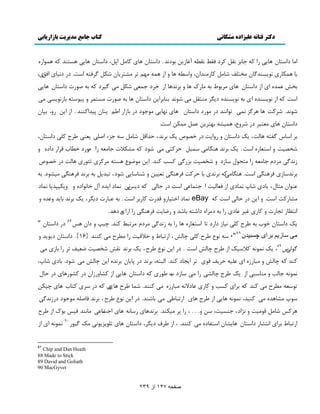
ا هٔ ډ اً ىٍ ٙ ٽَز بَ ث ٦ ٵ اِ ىٔي سجي ڄٔ ث ػ اًډ ٬ ډ ٙ وًي. ى ا هٔ ػ اًډ ٬، سٞم ڈٕ بَ ثب ڈَ ځ ٵَش ډ يوٗي سب ډىبٵ ٬
ډٚش ٻَ ا٭ ٢ب سبډ هٕ ٙ ىً.
NOTES
1. Gina McColl, ―Business Lacks Respect,‖ BRW, Vol. 31, Issue 25, June 25, 2009.
2. Bethany McLean and Peter Elkind, The Smartest Guys in the Room: The Amazing Rise and Scandalous Fall of Enron (New York: Portfolio, 2003).
3. Sarah F. Gold, Emily Chenoweth, and Jeff Zaleski, ―The Smartest Guys in the Room: The Amazing Rise and Scandalous Fall of Enron,‖ Publishers Weekly, Vol. 250, Issue 41, October13, 2003.
4. Alaina Love, ―Flawed Leadership Values: The AIG Lesson,‖ BusinessWeek, April 3, 2009. 5. Jake DeSantis, ―Dear AIG, I Quit!‖ New York Times, March 25, 2009.
6. Neeli Bendapudi and Venkat Bendapudi, ―How to Use Language that Employees Get,‖ Harvard Business Review, September 2009.
7. Patrick M. Lencioni, ―Make Your Values Mean Something,‖ Harvard Business Review, July 2002.
8. Information is gathered from multiple sources, mainly the companies‘ web sites as well as
ف چٌٌٌ and Fast Company magazines.
9. Leonard L. Berry and Kent D. Seltman, Management Lessons from Mayo Clinic: Inside One of the World’s Most Admired Service Organizations (New York: McGraw-Hill, 2008).
10. Elizabeth G. Chambers, Mark Foulon, Helen Handfield-Jones, Steve M. Hankin, and Edward G. Michaels III, ―The War for Talent,‖ The McKinsey Quarterly, Number 3, 1998.
11. David Dorsey, ―The New Spirit of Work,‖ Fast Company, July 1998.
12. Douglas A. Ready, Linda A. Hill, and Jay A. Conger, ―Winning the Race for Talent in Emerging Markets,‖ Harvard Business Review, November 2008.
13. Brian R. Stanfield, ―Walking the Talk: The Questions for All Corporate Ethics and Values Is: How Do They Play Out in Real Life?‖ Edges Magazine, 2002.
14. Social and Environmental Assessment 2007, accessed online at www.benjerry.com/company/sear/2007/index.cfm, Ben &Jerry‘s, 2008.
15. ―The Body Beautiful—Ethical Business,‖ The Economist, March 26, 2006.
169.
دکتر فتانه ػلیسادههشکانی کتاب جاهغ هذیریت تازاریاتی
صفحو 169 اس 239
16. William B. Werther, Jr. and David Chandler, Strategic Corporate Social Responsibility: Stakeholders in a Global Environment (Thousand Oaks, CA: Sage Publications, 2006).
17. Michael E. Porter and Mark R. Kramer, ―Strategy & Society: The Link between Competitive Advantage and Corporate Social Responsibility,‖ Harvard Business Review, December 2006.
18. Nicholas Ind, Living the Brand: How to Transform Every Member of Your Organization into a Brand Champion (London: Kogan Page, 2007).
19. Rosabeth Moss Kanter, ―Transforming Giants,‖ Harvard Business Review, January 2008.
20. Brian O‘Reilly, ―The Rent-a-Car Jocks Who Made Enterprise #1,‖ ف چٌٌٌ , October 26, 1996.
21. Jim Collins, ―Align Action and Values,‖ Leadership Excellence, January 2009.
22. Chris Murphy, ―S.C. Johnson Does More than Talk,‖ Information Week, 19 September 2005.
23. Robert Levering, ―The March of Flextime Transatlantic Trends,‖ Financial Times, April 28, 2005.
24. Tamara J. Erickson and Lynda Gratton, ―What It Means to Work Here,‖ Harvard Business Review, March 2007.
25. Charles Fishman, ―The War for Talent,‖ Fast Company, December 18, 2007.
26. Greg Hills and Adeeb Mahmud, ―Volunteering for Impact: Best Practices in International Corporate Volunteering,‖ FSG Social Impact Advisor, September 2007.
27. Rosabeth Moss Kanter, SuperCorp: How Vanguard Companies Create Innovation, Profits, Growth, and Social Good (New York: Random House, 2009).
دکتر فتانه ػلیسادههشکانی کتاب جاهغ هذیریت تازاریاتی
صفحو 192 اس 239
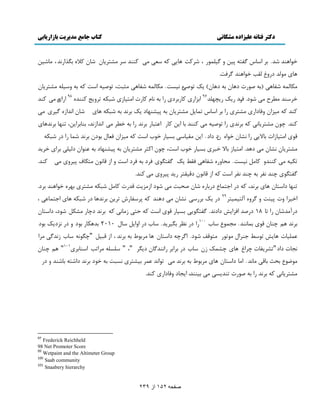
ى ثٍب "ا ؾَٕ ك إًو ث اَ آ ډُب ا شٕٶبى وم ٙ ىً "ٙ ٽَز ثب ا شٕىبى ث ث وَي ه ىً ٽ ٙىبهش ٙي ا زٕ س ٤ًٕ
ډٞ ٳَ ٽىىيځبن ث ٭ى اًن ومبى ٽ ى ا هٔ ٙ ٽَز ا ؾَٕ ك إًو ث اَ آ ډُب ا شٕٶبى وم ٙ ىً. اى٭ب يٍ وُبډ وڂب ث اَ ٝيډ ىُن ث ى شٍٕ ثبى ٙبح e ٙپ زٖ ه ىًٍ.
ډي أَن اػ اَ ډ ىاوىي ٽ ٙ بَ دب ئا ث اَ ٙ رَُ ٙ ٽَز ه ةً شَٖىي. سلٺ ٸٕ ٽئ نً ى بٕڃ 2008 ځ اِ ىاى ٽ ى كييى 84 ى ٍٝي ا ك ٵَ ا بَ ډ اًٵٸ ث ىًوي ثب ا ىٔپ ډ يًٖڅ زٕ بٕ ډُبو ډ زِٔ ٙ رَُ ث ٦ ٵ اِ ىٔي ا ٍٟي ا زٕ اډب ډٶ ڇًُ ٙ رَُ ٙ ٽَز وبډچم ا زٕ . ي ثىبث اَ هٔ ثٮ ٢ ايٹبر ث اَ بُٕډيا اٍن وٕز ا زٕ ٽ آو اَ
ثذ ؤٌَي. ه ًٙجوشبو سٮياى بُٔى ثىڂب بَ ډٚبي ا ډبوىي ا ىٔش ث وَي ي ث وَي ٵب ىٔى هيډبس اٍ ا اٍ ډ ى ىَي سب ا٭شجب ي ىا اٍ وبڇ سؼب ٙ ٽَز اٍ ا بٍُٔث ٽىىي. اويا ځ ىا اٍ ث وَي ډ س اًوي ثٞ رًٍ ډبڅ سٶ ٙ ىً ي ثىبث اَ هٔ ث ٕٚش ډ ثَ ٣ً ث بُٕډيا اٍن ا زٕ. ا ىٔش ث وَي ث اَ وم وً ډلب جٕ 25 ى ٍٝي اٵ اِ ى ا ث وَي ػى اَڃ اڅپش ټَٔ اٍ ث ٭ى اًن
وش ؼٕ ا ا "سو ڄٕ ډل ٤ٕ زُٖٔ جَٕ 178 " ه ىً ى ى شٕ ٽب ٹ اَ ىاى ٽ اثشپب ا ػُى اَڃ اڅپش ٻَْ ث ىً سب اٍ كچ بُ ث اَ ډٚپلار زُٖٔ ډل ٦ٕ ٵ اَ ڈَ ٽىي . ا هٔ بٔٵش وٚبن ډ ى يَ ٽ سٮ يُ ث دب ئا ډ س اًوي سبط ٹبثڄ س ػً ث يٍ ا٭شجب ي وبڇ سؼب ٙ ٽَز ىاٙش ثبٙي.
NOTES
1. Yalman Onaran and Christopher Scinta, ―Lehman Files Biggest Bankruptcy Case as Suitors Balk,‖ Bloomberg, September 15, 2008.
2. John H. Cochrane and Luigi Zingales, ―Lehman and the Financial Crisis,‖ Wall Street Journal, September 15, 2009.
3. Jim Collins, How the Mighty Fall and Why Some Companies Never Give In (New York: HarperBusiness, 2009).
4. ―Overcoming Short-termism: A Call for a More Responsible Approach to Investment and Business Management.‖ The Aspen Institute, 2009.
5. ―Shareholder Rights and Wrongs,‖ The Economist, August 8, 2009.
6. Alfred Rappaport, ―10 Ways to Create Shareholder Value,‖ Harvard Business Review, September 2006.
7. Philip Kotler, Hermawan Kartajaya, David Young, Attracting Investors: A Marketing Approach to Finding Funds for Your Business (Hoboken, NJ: John Wiley & Sons, 2004).
8. Jim C. Collins and Jerry I. Porras, ―Organizational Vision and Visionary Organization,‖ California Management Review, Fall 1991.
9. ―Forging a Link between Shareholder Value and Social Good,‖ Knowledge@Wharton, May 19, 2003.
10. ―The Disappearing Mid-Market,‖ The Economist, May 18, 2006.
178 ecoimagination‖
193.
دکتر فتانه ػلیسادههشکانی کتاب جاهغ هذیریت تازاریاتی
صفحو 193 اس 239
11. Trond Riiber Knudsen, Andreas Randel, and Jorgen Rughølm, ―The Vanishing Middle Market,‖ The McKinsey Quarterly, Number 4, 2004.
12. C.K. Prahalad, The ف چٌٌٌ at the Bottom of the Pyramid: Eradicating Poverty through Profits (Philadelphia: Wharton School Publishing, 2005); Stuart L. Hart, Capitalism at the Crossroads: The Unlimited Business Opportunities in Solving the World’s Most Difficult Problems (Philadelphia: Wharton School Publishing, 2005).
13. Clayton M. Christensen, The Innovator’s Dilemma: When New Technologies Cause Great Firms to Fail (New York: HarperBusiness, 2000).
14. Philip Kotler and Nancy R. Lee, Up and Out of Poverty: The Social Marketing Solution (Philadelphia: Wharton School Publishing, 2009).
15. Muhammad Yunus, Banker to the Poor: Micro-Lending and the Battle against World Poverty (New York: PublicAffairs, 2007).
16. Arphita Khare, ―Global Brands Making Foray in Rural India,‖ Regent Global Business Review, April 2008.
17. Lynelle Preston, ―Sustainability at Hewlett-Packard: From Theory to Practice,‖ California Management Review, Spring 2001.
18. Marc Gunther, ―The Green Machine,‖ ف چٌٌٌ , July 31, 2006.
19. Al Gore and David Blood, ―We Need Sustainable Capitalism,‖ Wall Street Journal, November 5, 2008.
20. Marc Gunther, ―Money and Morals at GE,‖ ف چٌٌٌ , November 15, 2004.
21. Daniel Mahler, ―Green Winners: The Performance of Sustainability-focused Companies in the Financial Crisis,‖ A.T. Kearney, February 9, 2009.
22. ―Doing Good: Business and the Sustainability Challenge,‖ Economist Intelligence Unit, 2008.
23. KLD Broad Market Social Index Fact Sheet, KLD Research & Analytics, 2009.
24. FTSE4Good Index Series Inclusion Criteria, FTSE International Limited, 2006.
25. Dow Jones Sustainability World Index Guide Book Version 11.1, Dow Jones, September 2009.
26. ―Introducing GS Sustain,‖ Goldman Sach Investment Research, June 22, 2007.
27. Lenny T. Mendonca and Jeremy Oppenheim, ―Investing in Sustainability: An Interview with Al Gore and David Blood,‖ The McKinsey Quarterly, May 2007.
28. Bob Willard, The Next Sustainability Wave: Building Boardroom Buy-in (British Columbia: New Society Publishers, 2005).
29. ―Valuing Corporate Social Responsibility,‖ The McKinsey Quarterly, February 2009.
30. Lutz Kaufmann, Felix Reimann, Matthias Ehrgott, and Johan Rauer, ―Sustainable Success: For Companies Operating in Developing Countries, It Pays to Commit to Improving Social and
Environmental Conditions,‖ Wall Street Journal, June 22, 2009.
31. Carol Stephenson, ―Boosting the Triple Bottom Line,‖ Ivey Business Journal, January/February 2008.
32. 2009 Cone Consumer Environmental Survey, Cone, 2009. 33. Sally Cohen, ―Making the Case for Environmentally and Socially Responsible Consumer Products,‖ Forrester, 2009.
34. Mary Jo Hatch and Majken Schultz, ―Are the Stars Aligned for Your Corporate Brand?,‖ Harvard Business Review, February 2001.
35. BSR/Cone 2008 Corporate Sustainability in a New World Survey, Cone, 2008.
36. Jez Frampton, ―Acting Like a Leader: The Art of Sustainable Sustainability,‖ Interbrand, 2009.
دکتر فتانه ػلیسادههشکانی کتاب جاهغ هذیریت تازاریاتی
صفحو 206 اس 239
ييڃ ٵ ىً s ي يػمى ث ٭ى اًن ډظبڃ ٹٍجب اٝچ شَٖىي. اډب آو بُ ثب پٔي ڂٔ ٹٍ تٕ ٱ ڃً د پٕ وَي ٽ ياڃ-ډب رٍ اٍ سل ټَٔ ث ٥ ٵَيا ا وُيځ بٕڅڈ ډ ٽىىي. ا هٔ ٙ ٽَز بَ ى ا ؼٔبى سل ڃً ى ػبډٮ ثب پٔي ڂٔ مَپب ډ ٽىىي.
NOTES
1. B. Joseph Pine II and James H. Gilmore, The Experience Economy: Work Is Theater and Every Business a Stage (Boston: Harvard Business Press, 1999).
2. The 2008 Cone Cause Evolution Study, Cone, 2008.
3. Richard Stengel, ―Doing Well by Doing Good,‖ Time, September 10, 2009.
4. Liza Ramrayka, ―The Rise and Rise of the Ethical Consumer,‖ Guardian, November 6, 2006.
5. Ryan Nakashima, ―Disney to Purchase Marvel Comics for $4B,‖ Time, August 31, 2009.
6. David E. Bell and Laura Winig, ―Disney Consumer Products: Marketing Nutrition to Children,‖ Harvard Business School Case, 2007.
7. Based on the 2007 and 2008 figures, The Walt Disney Fact Book, 2008.
8. Matthew Boyle, ―The Wegmans Way,‖ Fortune, January 24, 2005.
9. Mark Tatge, ―As a Grocer, Wal-Mart is No Category Killer,‖ Forbes, June 30, 2003.
10. ―The State of Corporate Philanthropy: A McKinsey Global Survey,‖ The McKinsey Quarterly, January 2008.
11. Survey by Merrill Lynch and Capgemini, cited in Shu-Ching Jean Chen, ―When Asia‘s Millionaires Splurge, They Go Big,‖ Fortune, 2007.
12. Gallup Poll, December 19, 2008. 13. Emily Bryson York, ―Quaker Kicks Off Brand Campaign in Times Square,‖ Advertising Age, March 9, 2009.
14. Karen Egolf, ―Haagen-Dazs Extends Its Honey-Bee Efforts,‖ Advertising Age, August 4, 2009.
15. ―Shoppers Determine Grocers‘ Charitable Giving,‖ RetailWire, September 5, 2008.
16. Ron Irwin, ―Can Branding Save the World?‖ Brandchannel, April 8, 2002.
17. ―Motorola Foundation Grants $5 Million to Programs that Engage Budding Innovators,‖ press release, Motorola, June 25, 2009.
18. Survey by Edelman, Edelman press release, November 15, 2007, cited in Ryan McConnell, ―Edelman: Consumers Will Pay Up to Support Socially Conscious Marketers,‖ Advertising Age,
November 16, 2007.
19. Debby Bielak, Sheila M.J. Bonini, and Jeremy M. Oppenheim, ―CEOs on Strategy and Social Issues,‖ The McKinsey Quarterly, October 2007.
20. Brendan C. Buescher and Paul D. Ma انج نًيب , ―Innovation in Health Care: An Interview with the CEO of the Cleveland Clinic,‖ The McKinsey Quarterly, March 2008.
21. Michael Mandel, ―The Real Cost of Offshoring,‖ BusinessWeek, June 18, 2007.
22. Lew McCreary, ―What Was Privacy,‖ Harvard Business Review, October 2008.
23. Lisa Johnson and Andrea Learned, Don’t Think Pink: What Really Makes Women Buy—and How to Increase Your Share of This Crucial Market (New York: AMACOM, 2004).
24. Michael J. Silverstein and Kate Sayre, ―The Female Economy,‖ Harvard Business Review, September 2009
25. Sylvia Ann Hewlett, Laura Sherbin, and Karen Sumberg, ―How Gen Y & Boomers Will Reshape Your Agenda,‖ Harvard Business Review, July–August 2009.
26. Ian Rowley and Hiroko Tashiro, ―Japan: Design for the Elderly,‖ BusinessWeek, May 6, 2008.
207.
دکتر فتانه ػلیسادههشکانی کتاب جاهغ هذیریت تازاریاتی
صفحو 207 اس 239
27. ―Burgeoning Bourgeoisie,‖ The Economist, February 12, 2009. 28. Sheila Bonini, Jieh Greeney, and Lenny Mendonca, ―Assessing the Impact of Societal Issues: A McKinsey Global Survey,‖ The
McKinsey Quarterly, November 2007.
29. Tim Sanders, ―Social Responsibility Is Dead,‖ Advertising Age, September 17, 2009.
30. Human-Centered Design: An Introduction, IDEO, 2009.
دکتر فتانه ػلیسادههشکانی کتاب جاهغ هذیریت تازاریاتی
صفحو 219 اس 239
هيډبر اٍ ىا وٍي. ډبو لٕا ياسَ 226 ثب ث ځ ا ٝ رًٍ ك بٖة ػمٮ اډپبن د ىَاهز ث ډ ٹً ٬ اٍ ٵ اَ ڈَ آي ىٍ . مٕٕپ دبس مَٔ وًًٕ 227 ث وَبډ بٕهشمبو ٽڈ ىَِٔ ه ىً اٍ ا ٥ ٸَٔ ډٮچمبن ي جٍَ اَن ٽچ بٕٖ ث اَ ثي زٕ آي ىٍن ه ئَا اٍن
ث ٕٚش اوؼبڇ ىاى.
NOTES
1. Press release: Nobel Peace Prize 2006, Oslo, October 13, 2006.
2. Ethan B. Kapstein, Economic Justice: Towards a Level Playing Field in an Unfair World (Princeton: Princeton University Press, 2006).
3. C.K. Prahalad, The Fortune at the Bottom of the Pyramid: Eradicating Poverty through Profits (Philadelphia: Wharton School Publishing, 2005).
4. Fareed Zakaria, Post-American World (New York: W.W. Norton &Co., 2008).
5. Eric D. Beinhocker, Diana Farrell, and Adil S. Zainulbhai, ―Tracking the Growth of India‘s Middle Class,‖ The McKinsey Quarterly, August 2007.
6. Jeffrey D. Sachs, The End of Poverty: Economic Possibilities for Our Time (New York: Penguin Press, 2005).
7. U.N. Millennium Project 2005, Investing in Development: A Practical Plan to Achieve the Millennium Development Goals:
Overview, United Nations Development Program, 2005. 8. From ITC‘s web site, www.itcportal.com/rural-development/echoupal.htm.
9. Ruma Paul, ―Bangladesh Grameenphone Eyes Rural Users with New Plan,‖ Reuters, December 1, 2008.
10. Luis Alberto Moreno, ―Extending Financial Services to Latin America‘s Poor,‖ The McKinsey Quarterly, March 2007.
11. From Unilever‘s web site, www.unilever.com/sustainability/.12. ―Dell Eyes $1 Billion Market in India,‖ The Financial Express, August 13, 2008.
13. ―China to Increase Investment in Rural Areas by over 100 Billion Yuan,‖ People’ Daily, January 31, 2008.
14. Patrick Barta and Krishna Pokharel, ―Megacities Threaten toChoke India,‖ Wall Street Journal, May 13, 2009.
15. Stuart L. Hart, Capitalism at the Crossroads: The Unlimited Business Opportunities in Solving the World’s Most Difficult Problems (Philadelphia: Wharton School Publishing, 2005).
16. Clayton M. Christensen, The Innovator’s Dilemma: When New Technologies Cause Great Firms to Fail (New York: HarperBusiness, 2000).
17. Garry Emmons, ―The Business of Global Poverty: Interview with Michael Chu,‖ Harvard Business School Working Knowledge, April 4, 2007.
18. Sheridan Prasso, ―Saving the World with a Cup of Yogurt,‖ Fortune, March 15, 2007.
19. Press release—Danone, ―Launching of Danone Foods Social Business Enterprise,‖ March 16, 2006.
226 Manila Water
227 Cemex‘s Patrimonio
220.
دکتر فتانه ػلیسادههشکانی کتاب جاهغ هذیریت تازاریاتی
صفحو 220 اس 239
20. Muhammad Yunus, ―Social Business Entrepreneurs Arethe Solution,‖ www.grameen- info.org/bank/socialbusiness entrepreneurs.htm.(last modified August 20, 2005, last accessed May 2, 2007).
21. Don Johnston, Jr. and Jonathan Morduch, ―The Unbanked: Evidence from Indonesia,‖ The World Bank Economic Review, 2008.
22. Michael Chu, ―Commercial Returns and Social Value: The Case of Microfinance,‖ Harvard Business School Conference on Global Poverty, December 2, 2005.
23. From Unilever‘s web site: www.unilever.com/sustainability/casestudies/health-nutrition- hygiene/globalpartnershipwith unicef.aspx.
24. From Holcim‘s web site www.holcim.com/CORP/EN/id/ 1610640158/mod/7 2 5 0/page/ case study.html.
25. Steve Hamm, ―The Face of the $100 Laptop,‖ BusinessWeek, March 1, 2007.
26. Farhad Riahi, ―Pharma‘s Emerging Opportunity,‖ The McKinsey Quarterly, September 2004.
27. Nicholas P. Sullivan, You Can Hear Me Now: How Microloans and Cell Phones Are Connecting the World’s Poor to the Global Economy (San Francisco, Jossey-Bass, 2007).
28. ―Marketing to Rural India: Making the Ends Meet,‖ India Knowledge@ Wharton, March 8, 2007.
29. Kunal Sinha, John Goodman, Ajay S. Moorkerjee, and John A. Quelch, ―Marketing Programs to Reach India‘s Underserved,‖ in V. Kasturi Rangan, John A. Quelch, Gustavo Herrero, and Brooke Barton (editors), Business Solutions for the Global Poor: Creating Social and Economic Value (San Francisco: Jossey- Bass, 2007).
30. VALS is the system that identifies current and future opportunities by segmenting the consumer marketplace on the basis of the personality traits that drive consumer behavior. See www. sric- bi.com/VALS/ for more detailed description of the segmentation.
31. Douglas B. Holt, How Brands Become Icons: The Principles of Cultural Branding (Boston: Harvard Business School Press, 2004).
32. C´ecile Churet & Amanda Oliver, Business for Development, World Business Council for Sustainable Development, 2005.
33. From the Co-operative Group‘s web site: www.cooperative. coop/.
34. Guillermo D‘Andrea and Gustavo Herrero, ―Understanding Consumers and Retailers at the Base of the Pyramid in Latin America,‖ Harvard Business School Conference on Global Poverty, December 2, 2005.
35. Christopher P. Beshouri, ―A Grassroots Approach to Emerging Market Consumers,‖ The McKinsey Quarterly, 2006, Number 4.