SQL Procedures & Functions
Procedures
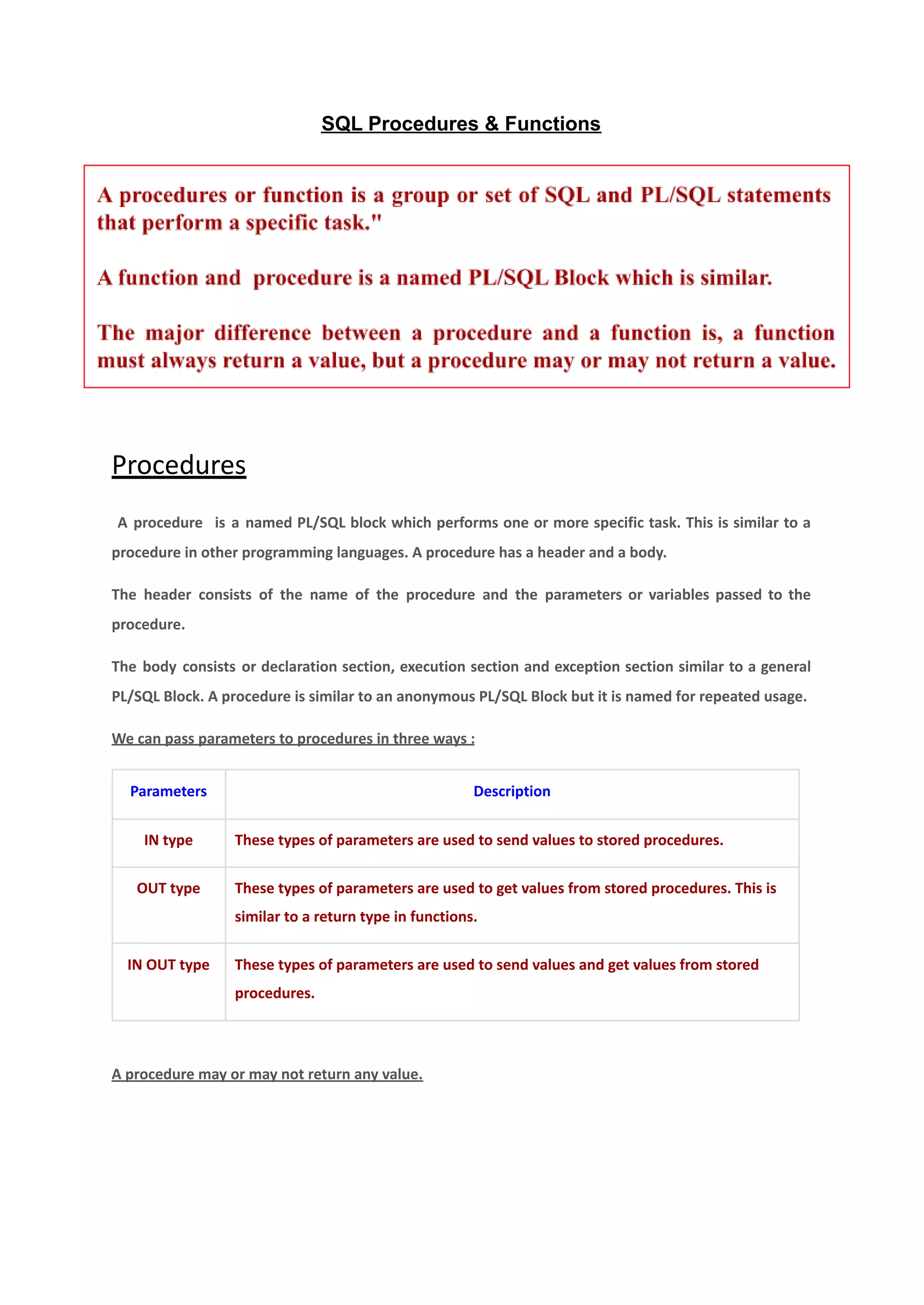
A procedure is a named PL/SQL block which performs one or more specific task. This is similar to a
procedure in other programming languages. A procedure has a header and a body.
The header consists of the name of the procedure and the parameters or variables passed to the
procedure.
The body consists or declaration section, execution section and exception section similar to a general
PL/SQL Block. A procedure is similar to an anonymous PL/SQL Block but it is named for repeated usage.
We can pass parameters to procedures in three ways :
Parameters Description
IN type These types of parameters are used to send values to stored procedures.
OUT type These types of parameters are used to get values from stored procedures. This is
similar to a return type in functions.
IN OUT type These types of parameters are used to send values and get values from stored
procedures.
A procedure may or may not return any value.
Syntax:
CREATE [OR REPLACE] PROCEDURE procedure_name (<Argument> {IN, OUT, IN
OUT}<Datatype>,…)
IS
Declaration section<variable, constant> ;
BEGIN
Execution section
EXCEPTION
Exception section
END
IS - marks the beginning of the body of the procedure and is similar to DECLARE in anonymous PL/SQL
Blocks. The code between IS and BEGIN forms the Declaration section.
The syntax within the brackets [ ] indicate they are optional. By using CREATE OR REPLACE together the
procedure is created if no other procedure with the same name exists or the existing procedure is
replaced with the current code.
How to execute a Procedure?
There are two ways to execute a procedure :
● From the SQL prompt : EXECUTE [or EXEC] procedure_name;
● Within another procedure – simply use the procedure name : procedure_name;
Example:
create table named emp have two column id and salary with number datatype.
CREATE OR REPLACE PROCEDURE p1(id IN NUMBER, sal IN NUMBER)
AS
BEGIN
INSERT INTO emp VALUES(id, sal);
DBMD_OUTPUT.PUT_LINE('VALUE INSERTED.');
END;
/
Output:
Functions:
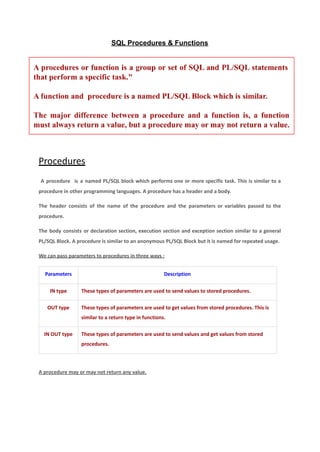
A function is a named PL/SQL Block which is similar to a procedure. The major difference between a
procedure and a function is, a function must always return a value, but a procedure may or may not
return a value.
Syntax:
CREATE [OR REPLACE] FUNCTION function_name [parameters]
RETURN return_datatype; {IS, AS}
Declaration_section <variable,constant> ;
BEGIN
Execution_section
Return return_variable;
EXCEPTION
exception section
Return return_variable;
END;
RETURN TYPE: The header section defines the return type of the function. The return datatype can be any
of the oracle datatype like varchar, number etc.
The execution and exception section both should return a value which is of the datatype defined in the
header section.
How to execute a Function?
A function can be executed in the following ways.
● As a part of a SELECT statement : SELECT emp_details_func FROM dual;
● In a PL/SQL Statements like, : dbms_output.put_line(emp_details_func);
This line displays the value returned by the function .
Example:
create or replace function getsal (no IN number) return number
is
sal number(5);
begin
select salary into sal from emp where id=no;
return sal;
end;
/
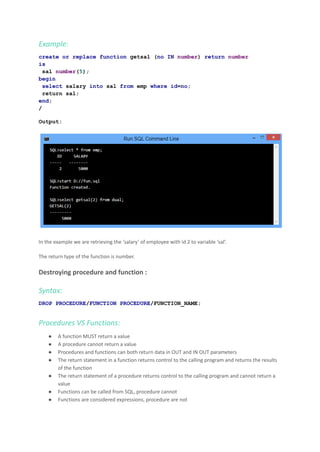
Output:
In the example we are retrieving the ‘salary’ of employee with id 2 to variable ‘sal’.
The return type of the function is number.
Destroying procedure and function :
Syntax:
DROP PROCEDURE/FUNCTION PROCEDURE/FUNCTION_NAME;
Procedures VS Functions:
● A function MUST return a value
● A procedure cannot return a value
● Procedures and functions can both return data in OUT and IN OUT parameters
● The return statement in a function returns control to the calling program and returns the results
of the function
● The return statement of a procedure returns control to the calling program and cannot return a
value
● Functions can be called from SQL, procedure cannot
● Functions are considered expressions, procedure are not

SQL Procedures & Functions

  • 1.
    SQL Procedures &Functions Procedures A procedure is a named PL/SQL block which performs one or more specific task. This is similar to a procedure in other programming languages. A procedure has a header and a body. The header consists of the name of the procedure and the parameters or variables passed to the procedure. The body consists or declaration section, execution section and exception section similar to a general PL/SQL Block. A procedure is similar to an anonymous PL/SQL Block but it is named for repeated usage. We can pass parameters to procedures in three ways : Parameters Description IN type These types of parameters are used to send values to stored procedures. OUT type These types of parameters are used to get values from stored procedures. This is similar to a return type in functions. IN OUT type These types of parameters are used to send values and get values from stored procedures. A procedure may or may not return any value.
  • 2.
    Syntax: CREATE [OR REPLACE]PROCEDURE procedure_name (<Argument> {IN, OUT, IN OUT}<Datatype>,…) IS Declaration section<variable, constant> ; BEGIN Execution section EXCEPTION Exception section END IS - marks the beginning of the body of the procedure and is similar to DECLARE in anonymous PL/SQL Blocks. The code between IS and BEGIN forms the Declaration section. The syntax within the brackets [ ] indicate they are optional. By using CREATE OR REPLACE together the procedure is created if no other procedure with the same name exists or the existing procedure is replaced with the current code. How to execute a Procedure? There are two ways to execute a procedure : ● From the SQL prompt : EXECUTE [or EXEC] procedure_name; ● Within another procedure – simply use the procedure name : procedure_name; Example: create table named emp have two column id and salary with number datatype. CREATE OR REPLACE PROCEDURE p1(id IN NUMBER, sal IN NUMBER) AS BEGIN INSERT INTO emp VALUES(id, sal); DBMD_OUTPUT.PUT_LINE('VALUE INSERTED.'); END; / Output:
  • 3.
    Functions: A function isa named PL/SQL Block which is similar to a procedure. The major difference between a procedure and a function is, a function must always return a value, but a procedure may or may not return a value. Syntax: CREATE [OR REPLACE] FUNCTION function_name [parameters] RETURN return_datatype; {IS, AS} Declaration_section <variable,constant> ; BEGIN Execution_section Return return_variable; EXCEPTION exception section Return return_variable; END; RETURN TYPE: The header section defines the return type of the function. The return datatype can be any of the oracle datatype like varchar, number etc. The execution and exception section both should return a value which is of the datatype defined in the header section. How to execute a Function? A function can be executed in the following ways. ● As a part of a SELECT statement : SELECT emp_details_func FROM dual; ● In a PL/SQL Statements like, : dbms_output.put_line(emp_details_func); This line displays the value returned by the function .
  • 4.
    Example: create or replacefunction getsal (no IN number) return number is sal number(5); begin select salary into sal from emp where id=no; return sal; end; / Output: In the example we are retrieving the ‘salary’ of employee with id 2 to variable ‘sal’. The return type of the function is number. Destroying procedure and function : Syntax: DROP PROCEDURE/FUNCTION PROCEDURE/FUNCTION_NAME; Procedures VS Functions: ● A function MUST return a value ● A procedure cannot return a value ● Procedures and functions can both return data in OUT and IN OUT parameters ● The return statement in a function returns control to the calling program and returns the results of the function ● The return statement of a procedure returns control to the calling program and cannot return a value ● Functions can be called from SQL, procedure cannot ● Functions are considered expressions, procedure are not