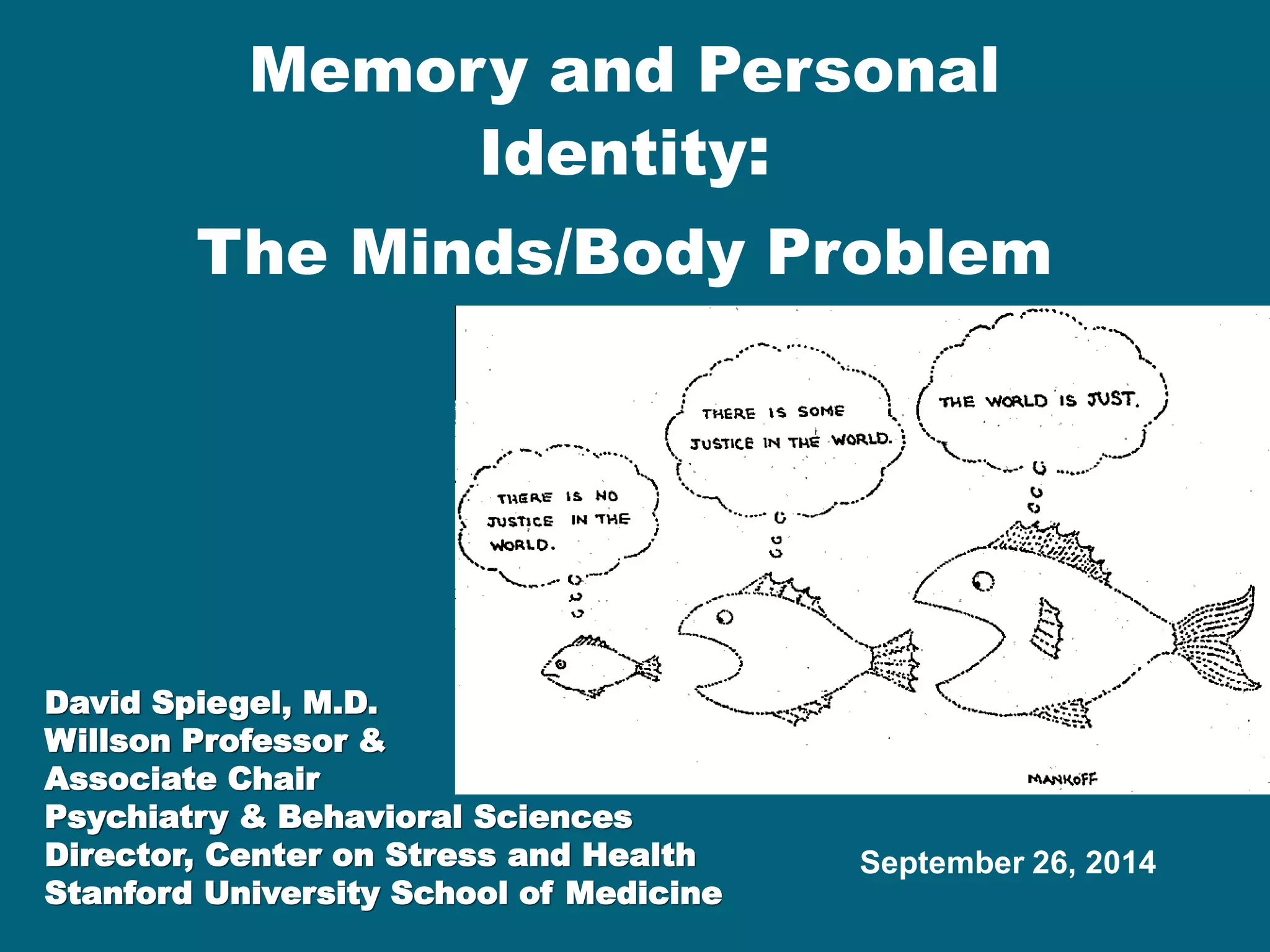
Memory and Personal Identity: The Minds/Body Problem 
David Spiegel, M.D. 
Willson Professor & 
Associate Chair 
Psychiatry & Behavioral Sciences 
Director, Center on Stress and Health 
Stanford University School of Medicine 
September 26, 2014
Memory and Personal Identity: The Minds/Body Problem 
Outline 
1.Memory 
2.Identity 
3.Trauma and Dissociation 
4.Integrating Trauma and Stress 
5.Reconstructing Personal Identity
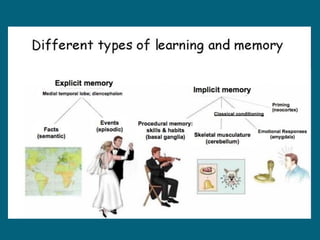
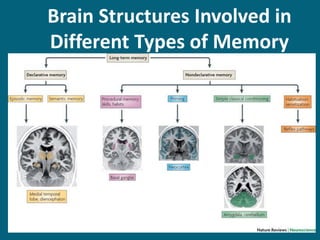
Brain Structures Involved in Different Types of Memory
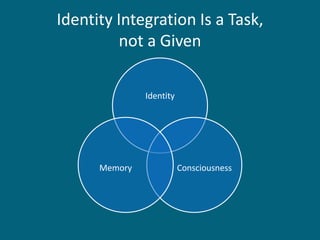
Identity Integration Is a Task, not a Given 
Identity 
Consciousness 
Memory
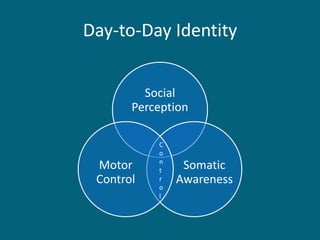
Day-to-Day Identity 
Social Perception 
Somatic Awareness 
Motor Control 
Control
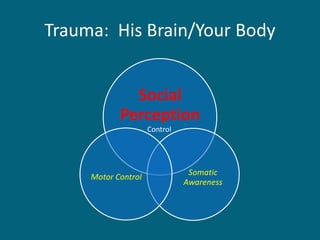
Trauma: His Brain/Your Body 
Social Perception 
Somatic Awareness 
Motor Control 
Control
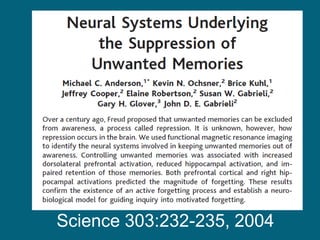
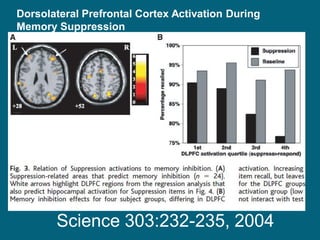
Science 303:232-235, 2004
Science 303:232-235, 2004 
Dorsolateral Prefrontal Cortex Activation During 
Memory Suppression
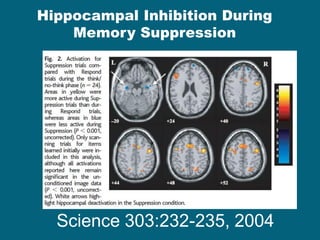
Science 303:232-235, 2004 
Hippocampal Inhibition During Memory Suppression
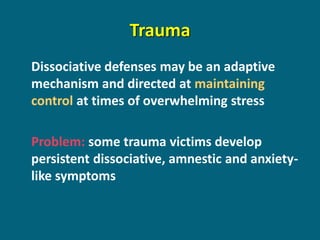
Trauma 
Dissociative defenses may be an adaptive mechanism and directed at maintaining control at times of overwhelming stress 
Problem: some trauma victims develop persistent dissociative, amnestic and anxiety- like symptoms
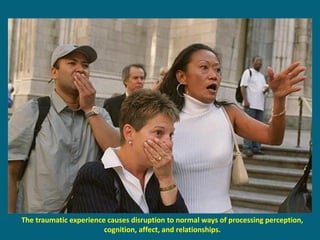
The traumatic experience causes disruption to normal ways of processing perception, cognition, affect, and relationships.
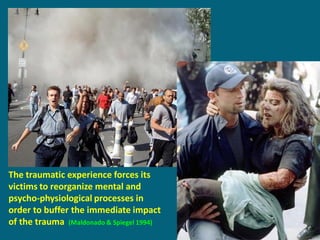
The traumatic experience forces its victims to reorganize mental and psycho-physiological processes in order to buffer the immediate impact of the trauma (Maldonado & Spiegel 1994)
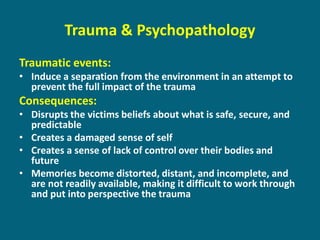
Traumatic events: 
•Induce a separation from the environment in an attempt to prevent the full impact of the trauma 
Consequences: 
•Disrupts the victims beliefs about what is safe, secure, and predictable 
•Creates a damaged sense of self 
•Creates a sense of lack of control over their bodies and future 
•Memories become distorted, distant, and incomplete, and are not readily available, making it difficult to work through and put into perspective the trauma 
Trauma & Psychopathology
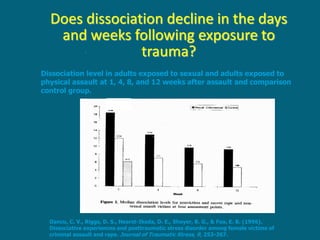
Dancu, C. V., Riggs, D. S., Hearst-Ikeda, D. E., Shoyer, B. G., & Foa, E. B. (1996). Dissociative experiences and posttraumatic stress disorder among female victims of criminal assault and rape. Journal of Traumatic Stress, 9, 253-267. 
. 
. 
Does dissociation decline in the days and weeks following exposure to trauma? 
Dissociation level in adults exposed to sexual and adults exposed to 
physical assault at 1, 4, 8, and 12 weeks after assault and comparison control group.
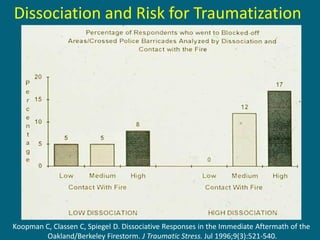
Dissociation and Risk for Traumatization 
Koopman C, Classen C, Spiegel D. Dissociative Responses in the Immediate Aftermath of the Oakland/Berkeley Firestorm. J Traumatic Stress. Jul 1996;9(3):521-540.
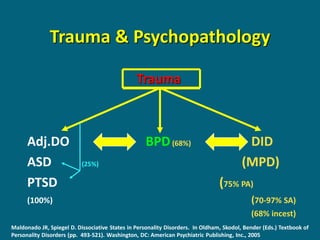
Adj.DO BPD (68%) DID 
ASD (25%) (MPD) 
PTSD (75% PA) 
(100%) (70-97% SA) 
(68% incest) 
Trauma & Psychopathology 
Trauma 
Maldonado JR, Spiegel D. Dissociative States in Personality Disorders. In Oldham, Skodol, Bender (Eds.) Textbook of Personality Disorders (pp. 493-521). Washington, DC: American Psychiatric Publishing, Inc., 2005
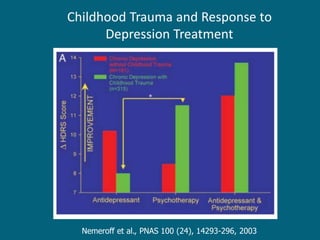
Childhood Trauma and Response to Depression Treatment 
Nemeroff et al., PNAS 100 (24), 14293-296, 2003
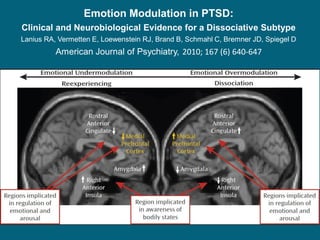
Emotion Modulation in PTSD: 
Clinical and Neurobiological Evidence for a Dissociative Subtype 
Lanius RA, Vermetten E, Loewenstein RJ, Brand B, Schmahl C, Bremner JD, Spiegel D 
American Journal of Psychiatry, 2010; 167 (6) 640-647
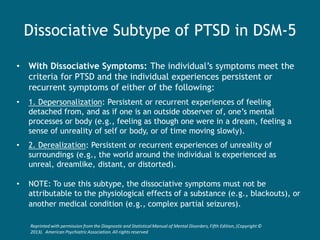
Dissociative Subtype of PTSD in DSM-5 
•With Dissociative Symptoms: The individual’s symptoms meet the criteria for PTSD and the individual experiences persistent or recurrent symptoms of either of the following: 
•1. Depersonalization: Persistent or recurrent experiences of feeling detached from, and as if one is an outside observer of, one’s mental processes or body (e.g., feeling as though one were in a dream, feeling a sense of unreality of self or body, or of time moving slowly). 
•2. Derealization: Persistent or recurrent experiences of unreality of surroundings (e.g., the world around the individual is experienced as unreal, dreamlike, distant, or distorted). 
•NOTE: To use this subtype, the dissociative symptoms must not be attributable to the physiological effects of a substance (e.g., blackouts), or another medical condition (e.g., complex partial seizures). 
Reprinted with permission from the Diagnostic and Statistical Manual of Mental Disorders, Fifth Edition, (Copyright © 2013). American Psychiatric Association. All rights reserved
Stein, D. J., K. C. Koenen, et al. (2013). "Dissociation in posttraumatic stress disorder: evidence from the world mental health surveys." Biol Psychiatry 73(4): 302-312. 
•METHODS: Interviews were administered to 25,018 respondents in 16 countries in the World Health Organization World Mental Health Surveys. The Composite International Diagnostic Interview was used to assess 12-month DSM-IV PTSD and other common DSM-IV disorders. Items from a checklist of past-month nonspecific psychological distress were used to assess dissociative symptoms of depersonalization and derealization. Differences between PTSD with and without these dissociative symptoms were examined across a variety of domains.
Stein, D. J., K. C. Koenen, et al. (2013). "Dissociation in posttraumatic stress disorder: evidence from the world mental health surveys." Biol Psychiatry 73(4): 302-312. 
•RESULTS: Dissociative symptoms were present in 14.4% of respondents with 12-month DSM-IV/Composite International Diagnostic Interview PTSD and did not differ between high and low/middle income countries. Symptoms of dissociation in PTSD were associated with high counts of re-experiencing symptoms and net of these symptom counts with male sex, childhood onset of PTSD, high exposure to prior (to the onset of PTSD) traumatic events and childhood adversities, prior histories of separation anxiety disorder and specific phobia, severe role impairment, and suicidality.
Stein, D. J., K. C. Koenen, et al. (2013). "Dissociation in posttraumatic stress disorder: evidence from the world mental health surveys." Biol Psychiatry 73(4): 302-312. 
•CONCLUSION: These results provide community epidemiologic data documenting the value of the dissociative subtype in distinguishing a meaningful proportion of severe and impairing cases of PTSD that have distinct correlates across a diverse set of countries.
IOM Report: Psychotherapies 
•Evidence is sufficient to conclude the efficacy of exposure therapies in the treatment of PTSD 
•So you must revisit the trauma – reoccupy the territory as your own to overcome dissociative and other trauma-related symptoms 
•Evidence is inadequate to determine the efficacy of: 
–EMDR 
–Cognitive restructuring 
–Coping skills training 
–Therapy delivered in group formats
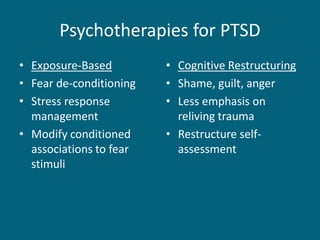
Psychotherapies for PTSD 
•Exposure-Based 
•Fear de-conditioning 
•Stress response management 
•Modify conditioned associations to fear stimuli 
•Cognitive Restructuring 
•Shame, guilt, anger 
•Less emphasis on reliving trauma 
•Restructure self- assessment
Components of Cognitive Therapies for PTSD 
1.Psychoeducation 
2.Distress management 
3.Exposure 
4.Cognitive restructuring
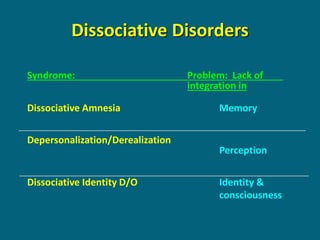
Dissociative disorders can be understood as the pathological separation of aspects of mental functioning, including perception, memory, identity, and consciousness, which would normally be processed together. 
Dissociative Disorders
Pierre Janet: Dissociation as “Mental Disconnection” 
“Desagregation mentale” 
• Janet, P., L'automatisme psychologique. 1889, Paris: Felix Alcan. 
• Janet, P., The Major Symptoms of Hysteria: Fifteen Lectures Given in the Medical School of Harvard University. 1907, New York: Macmillan.
DSM-5 Definition of Dissociation 
•Pathological dissociation is an involuntary response with a subjective loss of integration of information or control over mental processes that, under normal circumstances, are available to conscious awareness or control. Dissociative symptoms can manifest in every area of psychological functioning. Dissociative symptoms are characterized by (a) unbidden and unpleasant intrusions into awareness and behavior, with an accompanying loss of continuity in subjective experience: i.e., “positive” dissociative symptoms; and/or (b) an inability to access information or control mental functions that are normally amenable to such access or control: i.e., ” negative” dissociative symptoms.
Dissociative Disorders 
Syndrome: Problem: Lack of integration in 
Dissociative Amnesia Memory 
Depersonalization/Derealization Perception 
Dissociative Identity D/O Identity & 
consciousness
Dissociative Amnesia (Psychogenic Amnesia) 
•Hallmark: inability to recall important personal information (too extensive) 
•The most common of all dissociative disorders 
•Amnesia is a disorder & a symptom found in a number of other dissociative and anxiety disorders (ASD, PTSD, somatization disorder, dissociative amnesia, and dissociative identity disorder) 
•Dissociative fugue is a subtype of DA
Dissociative Amnesia (Psychogenic Amnesia) 
•Amnesic patients are: 
–usually aware of their memory loss 
–capable of learning new information 
–have intact cognition 
•Memory deficits: usually reversible as the amnesia causes difficulties in retrieval rather than encoding or storage
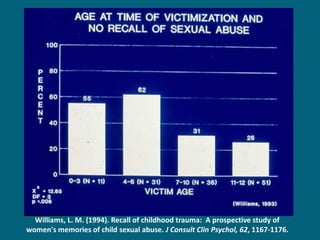
Williams, L. M. (1994). Recall of childhood trauma: A prospective study of women's memories of child sexual abuse. J Consult Clin Psychol, 62, 1167-1176.
Depersonalization/Derealization Disorder 
•Hallmark: persistent or recurrent episodes of feelings of detachment or estrangement from one's self 
•Reality testing is intact 
•Incidence and prevalence is unknown 
•Has even be transiently experienced by people with no psychiatric condition at all
Depersonalization/Derealization Disorder 
•The symptom of depersonalization has been described as being the third most common psychiatric symptom 
•Under severe stress up to 50% of all adults have experienced at least one single brief episode of depersonalization 
•Sex distribution: unknown 
•Incidence: women 2-4:1 men 
•Population prevalence 1.5-2%
Dissociative Identity Disorder (Multiple Personality Disorder) 
•Presence of 2 or > distinct identities or personality states that recurrently take control of the subject’s behavior 
•May involve an experience of ‘possession’ in some cultures 
•Problem: failure to integrate various aspects of identity, memory and consciousness 
•Memory gaps in personal history with asymmetric & selective amnesia
Dissociative Identity Disorder (Multiple Personality Disorder) 
•Symptoms: memory deficits, including for everyday events, thought intrusion, moodiness, erratic and unpredictable behavior, depression, self-mutilation, suicidal ideation or attempts, or the overt manifestation of an alternate personality 
•Transition is usually sudden and is commonly triggered by environmental factors
Dissociative Identity Disorder (Multiple Personality Disorder) 
•Demographics: 
–Female to male ratio: 
•5:4 for children & adolescents 
•9:1 for adults respectively 
–Females present more personalities (average of 15) than men (average of 8) 
–High incidence of first-degree relatives who have the disorder 
–Average time from the appearance of symptoms to an accurate diagnosis is 6 years
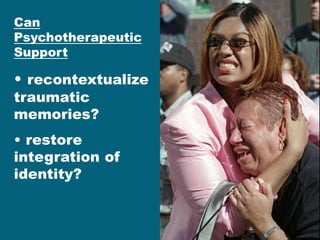
Can Psychotherapeutic Support 
• recontextualize traumatic memories? 
• restore integration of identity?
Dissociative Identity Disorder Treatment of Choice 
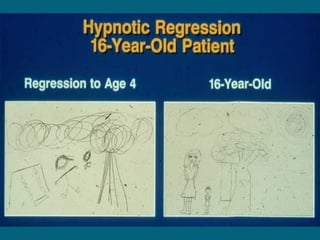
•Hypnosis as a treatment tool: 
Allows for the recovery and reprocessing of recovered memories at a pace the patient can tolerate 
Properly done, hypnosis facilitates symbolic restructuring of the traumatic experience 
There are no systematic studies regarding its efficacy
Effects of Trauma on Components of Memory 
•Encoding - Absorption 
•Storage - Dissociation 
•Retrieval - Suggestibility
•Hypnosis as a treatment tool: 
It allows for the recovery and reprocessing of recovered memories at a pace the patient can tolerate (Pacing). 
Facilitates symbolic restructuring of the traumatic experience. 
May teach patients about the amount of control they have over these states of mind which they experience as automatic, uncontrollable and unpredictable. 
Trauma-Related Disorders Treatment Techniques Using Hypnosis
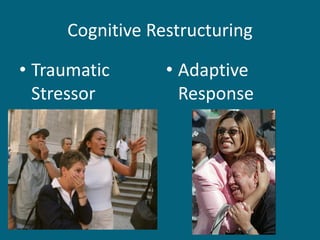
Cognitive Restructuring 
•Traumatic Stressor 
•Adaptive Response
•The Condensed Hypnotic Approach: 
–Make conscious repressed memories 
–Develop congruence between memories & self 
–Confrontation of fears, trauma, reality 
–Condensation of memories (symbolic image) 
–Control over memories/behavior 
–Development of mature defenses 
–Practice mastery of new behavior/reality 
Trauma-Related Disorders Treatment Techniques Using Hypnosis
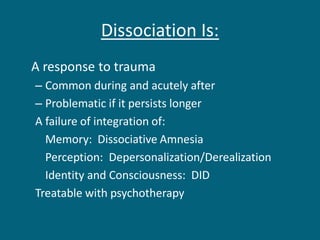
Dissociation Is: 
A response to trauma 
–Common during and acutely after 
–Problematic if it persists longer 
A failure of integration of: 
Memory: Dissociative Amnesia 
Perception: Depersonalization/Derealization 
Identity and Consciousness: DID 
Treatable with psychotherapy
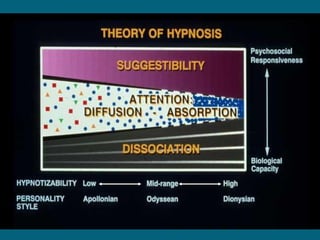
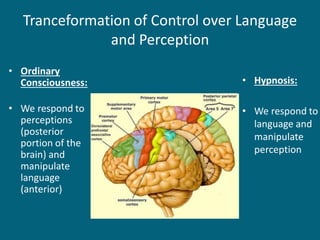
Tranceformation of Control over Language and Perception 
•Ordinary Consciousness: 
•We respond to perceptions (posterior portion of the brain) and manipulate language (anterior) 
•Hypnosis: 
•We respond to language and manipulate perception
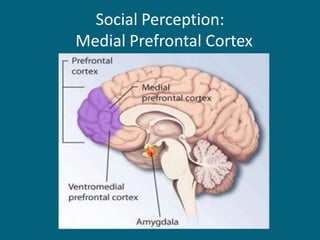
Social Perception: Medial Prefrontal Cortex
Shakespeare on Commiserating 
“When we our betters see bearing our woes, 
We scarcely think our miseries our foes 
…the mind much sufferance doth overskip 
When grief hath mates and bearing fellowship” 
Edgar, King Lear
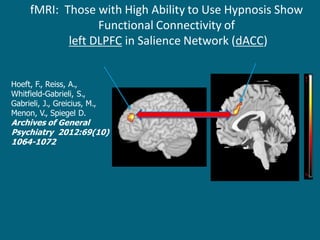
fMRI: Those with High Ability to Use Hypnosis Show Functional Connectivity of left DLPFC in Salience Network (dACC) 
Hoeft, F., Reiss, A., Whitfield-Gabrieli, S., Gabrieli, J., Greicius, M., Menon, V., Spiegel D. Archives of General Psychiatry 2012:69(10) 1064-1072
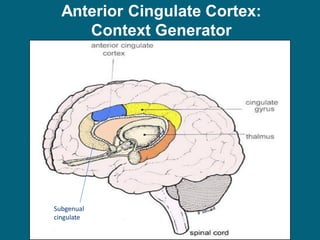
Anterior Cingulate Cortex: Context Generator 
Subgenual cingulate
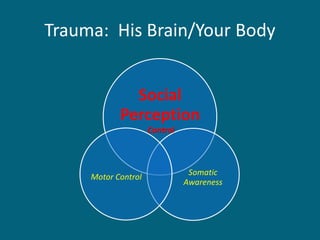
Trauma: His Brain/Your Body 
Social Perception 
Somatic Awareness 
Motor Control 
Control
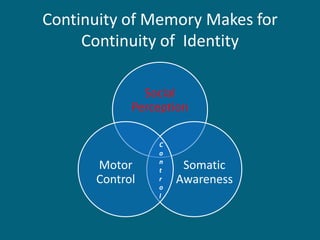
Continuity of Memory Makes for Continuity of Identity 
Social Perception 
Somatic Awareness 
Motor Control 
Control
Treatment of DID
Stanford Center on Stress and Health 
Research Funded By: 
National Institute on Aging 
PO1 5P01AG018784 
on Stress, the HPA, and Health in Aging 
National Cancer Institute 
RO1CA118567 Sleep and Breast Cancer 
National Center for Complementary and Alternative Medicine 
P30 AT005886 Treating Sleep Disorders in Cancer 
RC1 AT0005733 Neuroimaging of Hypnosis 
National Institute of Mental Health 
RO1 MH47226 Group Therapy and Cancer Survival 
California Breast Cancer Research Program 
Charles A. Dana Foundation 
John D. and Catherine T. MacArthur Foundation
“My feeling is that while we should have the deepest respect for reality, we should not let it control our lives.”

Memory and Personal Identity: The Minds/Body Problem by David Spiegel, MD

  • 1.
    Memory and PersonalIdentity: The Minds/Body Problem David Spiegel, M.D. Willson Professor & Associate Chair Psychiatry & Behavioral Sciences Director, Center on Stress and Health Stanford University School of Medicine September 26, 2014
  • 2.
    Memory and PersonalIdentity: The Minds/Body Problem Outline 1.Memory 2.Identity 3.Trauma and Dissociation 4.Integrating Trauma and Stress 5.Reconstructing Personal Identity
  • 4.
    Brain Structures Involvedin Different Types of Memory
  • 5.
    Identity Integration Isa Task, not a Given Identity Consciousness Memory
  • 6.
    Day-to-Day Identity SocialPerception Somatic Awareness Motor Control Control
  • 7.
    Trauma: His Brain/YourBody Social Perception Somatic Awareness Motor Control Control
  • 11.
  • 12.
    Science 303:232-235, 2004 Dorsolateral Prefrontal Cortex Activation During Memory Suppression
  • 13.
    Science 303:232-235, 2004 Hippocampal Inhibition During Memory Suppression
  • 14.
    Trauma Dissociative defensesmay be an adaptive mechanism and directed at maintaining control at times of overwhelming stress Problem: some trauma victims develop persistent dissociative, amnestic and anxiety- like symptoms
  • 15.
    The traumatic experiencecauses disruption to normal ways of processing perception, cognition, affect, and relationships.
  • 16.
    The traumatic experienceforces its victims to reorganize mental and psycho-physiological processes in order to buffer the immediate impact of the trauma (Maldonado & Spiegel 1994)
  • 17.
    Traumatic events: •Inducea separation from the environment in an attempt to prevent the full impact of the trauma Consequences: •Disrupts the victims beliefs about what is safe, secure, and predictable •Creates a damaged sense of self •Creates a sense of lack of control over their bodies and future •Memories become distorted, distant, and incomplete, and are not readily available, making it difficult to work through and put into perspective the trauma Trauma & Psychopathology
  • 18.
    Dancu, C. V.,Riggs, D. S., Hearst-Ikeda, D. E., Shoyer, B. G., & Foa, E. B. (1996). Dissociative experiences and posttraumatic stress disorder among female victims of criminal assault and rape. Journal of Traumatic Stress, 9, 253-267. . . Does dissociation decline in the days and weeks following exposure to trauma? Dissociation level in adults exposed to sexual and adults exposed to physical assault at 1, 4, 8, and 12 weeks after assault and comparison control group.
  • 19.
    Dissociation and Riskfor Traumatization Koopman C, Classen C, Spiegel D. Dissociative Responses in the Immediate Aftermath of the Oakland/Berkeley Firestorm. J Traumatic Stress. Jul 1996;9(3):521-540.
  • 20.
    Adj.DO BPD (68%)DID ASD (25%) (MPD) PTSD (75% PA) (100%) (70-97% SA) (68% incest) Trauma & Psychopathology Trauma Maldonado JR, Spiegel D. Dissociative States in Personality Disorders. In Oldham, Skodol, Bender (Eds.) Textbook of Personality Disorders (pp. 493-521). Washington, DC: American Psychiatric Publishing, Inc., 2005
  • 21.
    Childhood Trauma andResponse to Depression Treatment Nemeroff et al., PNAS 100 (24), 14293-296, 2003
  • 22.
    Emotion Modulation inPTSD: Clinical and Neurobiological Evidence for a Dissociative Subtype Lanius RA, Vermetten E, Loewenstein RJ, Brand B, Schmahl C, Bremner JD, Spiegel D American Journal of Psychiatry, 2010; 167 (6) 640-647
  • 23.
    Dissociative Subtype ofPTSD in DSM-5 •With Dissociative Symptoms: The individual’s symptoms meet the criteria for PTSD and the individual experiences persistent or recurrent symptoms of either of the following: •1. Depersonalization: Persistent or recurrent experiences of feeling detached from, and as if one is an outside observer of, one’s mental processes or body (e.g., feeling as though one were in a dream, feeling a sense of unreality of self or body, or of time moving slowly). •2. Derealization: Persistent or recurrent experiences of unreality of surroundings (e.g., the world around the individual is experienced as unreal, dreamlike, distant, or distorted). •NOTE: To use this subtype, the dissociative symptoms must not be attributable to the physiological effects of a substance (e.g., blackouts), or another medical condition (e.g., complex partial seizures). Reprinted with permission from the Diagnostic and Statistical Manual of Mental Disorders, Fifth Edition, (Copyright © 2013). American Psychiatric Association. All rights reserved
  • 24.
    Stein, D. J.,K. C. Koenen, et al. (2013). "Dissociation in posttraumatic stress disorder: evidence from the world mental health surveys." Biol Psychiatry 73(4): 302-312. •METHODS: Interviews were administered to 25,018 respondents in 16 countries in the World Health Organization World Mental Health Surveys. The Composite International Diagnostic Interview was used to assess 12-month DSM-IV PTSD and other common DSM-IV disorders. Items from a checklist of past-month nonspecific psychological distress were used to assess dissociative symptoms of depersonalization and derealization. Differences between PTSD with and without these dissociative symptoms were examined across a variety of domains.
  • 25.
    Stein, D. J.,K. C. Koenen, et al. (2013). "Dissociation in posttraumatic stress disorder: evidence from the world mental health surveys." Biol Psychiatry 73(4): 302-312. •RESULTS: Dissociative symptoms were present in 14.4% of respondents with 12-month DSM-IV/Composite International Diagnostic Interview PTSD and did not differ between high and low/middle income countries. Symptoms of dissociation in PTSD were associated with high counts of re-experiencing symptoms and net of these symptom counts with male sex, childhood onset of PTSD, high exposure to prior (to the onset of PTSD) traumatic events and childhood adversities, prior histories of separation anxiety disorder and specific phobia, severe role impairment, and suicidality.
  • 26.
    Stein, D. J.,K. C. Koenen, et al. (2013). "Dissociation in posttraumatic stress disorder: evidence from the world mental health surveys." Biol Psychiatry 73(4): 302-312. •CONCLUSION: These results provide community epidemiologic data documenting the value of the dissociative subtype in distinguishing a meaningful proportion of severe and impairing cases of PTSD that have distinct correlates across a diverse set of countries.
  • 27.
    IOM Report: Psychotherapies •Evidence is sufficient to conclude the efficacy of exposure therapies in the treatment of PTSD •So you must revisit the trauma – reoccupy the territory as your own to overcome dissociative and other trauma-related symptoms •Evidence is inadequate to determine the efficacy of: –EMDR –Cognitive restructuring –Coping skills training –Therapy delivered in group formats
  • 28.
    Psychotherapies for PTSD •Exposure-Based •Fear de-conditioning •Stress response management •Modify conditioned associations to fear stimuli •Cognitive Restructuring •Shame, guilt, anger •Less emphasis on reliving trauma •Restructure self- assessment
  • 29.
    Components of CognitiveTherapies for PTSD 1.Psychoeducation 2.Distress management 3.Exposure 4.Cognitive restructuring
  • 30.
    Dissociative disorders canbe understood as the pathological separation of aspects of mental functioning, including perception, memory, identity, and consciousness, which would normally be processed together. Dissociative Disorders
  • 31.
    Pierre Janet: Dissociationas “Mental Disconnection” “Desagregation mentale” • Janet, P., L'automatisme psychologique. 1889, Paris: Felix Alcan. • Janet, P., The Major Symptoms of Hysteria: Fifteen Lectures Given in the Medical School of Harvard University. 1907, New York: Macmillan.
  • 32.
    DSM-5 Definition ofDissociation •Pathological dissociation is an involuntary response with a subjective loss of integration of information or control over mental processes that, under normal circumstances, are available to conscious awareness or control. Dissociative symptoms can manifest in every area of psychological functioning. Dissociative symptoms are characterized by (a) unbidden and unpleasant intrusions into awareness and behavior, with an accompanying loss of continuity in subjective experience: i.e., “positive” dissociative symptoms; and/or (b) an inability to access information or control mental functions that are normally amenable to such access or control: i.e., ” negative” dissociative symptoms.
  • 33.
    Dissociative Disorders Syndrome:Problem: Lack of integration in Dissociative Amnesia Memory Depersonalization/Derealization Perception Dissociative Identity D/O Identity & consciousness
  • 34.
    Dissociative Amnesia (PsychogenicAmnesia) •Hallmark: inability to recall important personal information (too extensive) •The most common of all dissociative disorders •Amnesia is a disorder & a symptom found in a number of other dissociative and anxiety disorders (ASD, PTSD, somatization disorder, dissociative amnesia, and dissociative identity disorder) •Dissociative fugue is a subtype of DA
  • 35.
    Dissociative Amnesia (PsychogenicAmnesia) •Amnesic patients are: –usually aware of their memory loss –capable of learning new information –have intact cognition •Memory deficits: usually reversible as the amnesia causes difficulties in retrieval rather than encoding or storage
  • 36.
    Williams, L. M.(1994). Recall of childhood trauma: A prospective study of women's memories of child sexual abuse. J Consult Clin Psychol, 62, 1167-1176.
  • 37.
    Depersonalization/Derealization Disorder •Hallmark:persistent or recurrent episodes of feelings of detachment or estrangement from one's self •Reality testing is intact •Incidence and prevalence is unknown •Has even be transiently experienced by people with no psychiatric condition at all
  • 38.
    Depersonalization/Derealization Disorder •Thesymptom of depersonalization has been described as being the third most common psychiatric symptom •Under severe stress up to 50% of all adults have experienced at least one single brief episode of depersonalization •Sex distribution: unknown •Incidence: women 2-4:1 men •Population prevalence 1.5-2%
  • 39.
    Dissociative Identity Disorder(Multiple Personality Disorder) •Presence of 2 or > distinct identities or personality states that recurrently take control of the subject’s behavior •May involve an experience of ‘possession’ in some cultures •Problem: failure to integrate various aspects of identity, memory and consciousness •Memory gaps in personal history with asymmetric & selective amnesia
  • 40.
    Dissociative Identity Disorder(Multiple Personality Disorder) •Symptoms: memory deficits, including for everyday events, thought intrusion, moodiness, erratic and unpredictable behavior, depression, self-mutilation, suicidal ideation or attempts, or the overt manifestation of an alternate personality •Transition is usually sudden and is commonly triggered by environmental factors
  • 41.
    Dissociative Identity Disorder(Multiple Personality Disorder) •Demographics: –Female to male ratio: •5:4 for children & adolescents •9:1 for adults respectively –Females present more personalities (average of 15) than men (average of 8) –High incidence of first-degree relatives who have the disorder –Average time from the appearance of symptoms to an accurate diagnosis is 6 years
  • 44.
    Can Psychotherapeutic Support • recontextualize traumatic memories? • restore integration of identity?
  • 45.
    Dissociative Identity DisorderTreatment of Choice •Hypnosis as a treatment tool: Allows for the recovery and reprocessing of recovered memories at a pace the patient can tolerate Properly done, hypnosis facilitates symbolic restructuring of the traumatic experience There are no systematic studies regarding its efficacy
  • 47.
    Effects of Traumaon Components of Memory •Encoding - Absorption •Storage - Dissociation •Retrieval - Suggestibility
  • 49.
    •Hypnosis as atreatment tool: It allows for the recovery and reprocessing of recovered memories at a pace the patient can tolerate (Pacing). Facilitates symbolic restructuring of the traumatic experience. May teach patients about the amount of control they have over these states of mind which they experience as automatic, uncontrollable and unpredictable. Trauma-Related Disorders Treatment Techniques Using Hypnosis
  • 50.
    Cognitive Restructuring •TraumaticStressor •Adaptive Response
  • 51.
    •The Condensed HypnoticApproach: –Make conscious repressed memories –Develop congruence between memories & self –Confrontation of fears, trauma, reality –Condensation of memories (symbolic image) –Control over memories/behavior –Development of mature defenses –Practice mastery of new behavior/reality Trauma-Related Disorders Treatment Techniques Using Hypnosis
  • 52.
    Dissociation Is: Aresponse to trauma –Common during and acutely after –Problematic if it persists longer A failure of integration of: Memory: Dissociative Amnesia Perception: Depersonalization/Derealization Identity and Consciousness: DID Treatable with psychotherapy
  • 53.
    Tranceformation of Controlover Language and Perception •Ordinary Consciousness: •We respond to perceptions (posterior portion of the brain) and manipulate language (anterior) •Hypnosis: •We respond to language and manipulate perception
  • 54.
    Social Perception: MedialPrefrontal Cortex
  • 55.
    Shakespeare on Commiserating “When we our betters see bearing our woes, We scarcely think our miseries our foes …the mind much sufferance doth overskip When grief hath mates and bearing fellowship” Edgar, King Lear
  • 56.
    fMRI: Those withHigh Ability to Use Hypnosis Show Functional Connectivity of left DLPFC in Salience Network (dACC) Hoeft, F., Reiss, A., Whitfield-Gabrieli, S., Gabrieli, J., Greicius, M., Menon, V., Spiegel D. Archives of General Psychiatry 2012:69(10) 1064-1072
  • 57.
    Anterior Cingulate Cortex:Context Generator Subgenual cingulate
  • 58.
    Trauma: His Brain/YourBody Social Perception Somatic Awareness Motor Control Control
  • 60.
    Continuity of MemoryMakes for Continuity of Identity Social Perception Somatic Awareness Motor Control Control
  • 61.
  • 62.
    Stanford Center onStress and Health Research Funded By: National Institute on Aging PO1 5P01AG018784 on Stress, the HPA, and Health in Aging National Cancer Institute RO1CA118567 Sleep and Breast Cancer National Center for Complementary and Alternative Medicine P30 AT005886 Treating Sleep Disorders in Cancer RC1 AT0005733 Neuroimaging of Hypnosis National Institute of Mental Health RO1 MH47226 Group Therapy and Cancer Survival California Breast Cancer Research Program Charles A. Dana Foundation John D. and Catherine T. MacArthur Foundation
  • 63.
    “My feeling isthat while we should have the deepest respect for reality, we should not let it control our lives.”