SPEED VS VELOCITY
GENERAL PHYSICS 1
SPEED
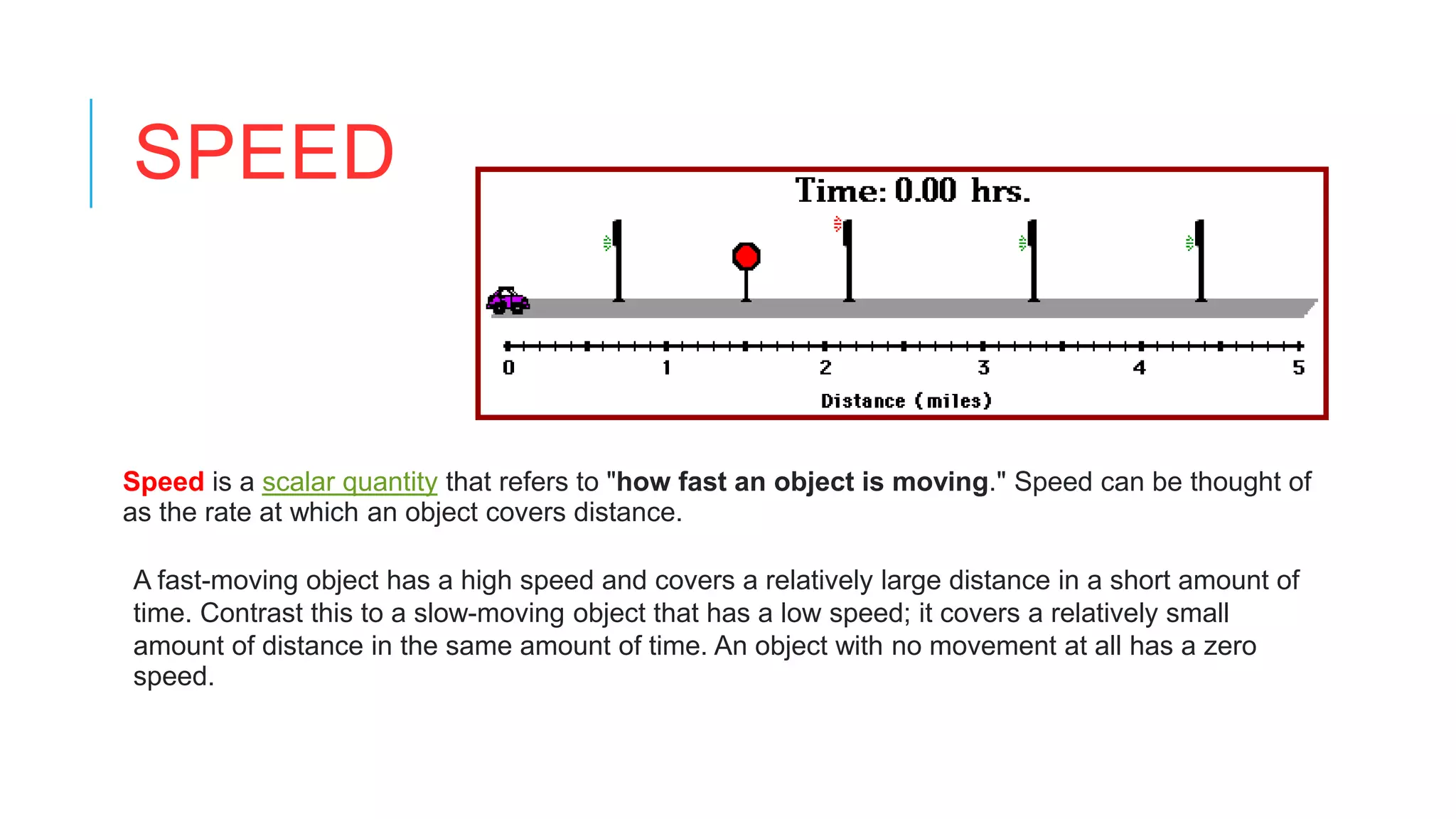
Speed is a scalar quantity that refers to "how fast an object is moving." Speed can be thought of
as the rate at which an object covers distance.
A fast-moving object has a high speed and covers a relatively large distance in a short amount of
time. Contrast this to a slow-moving object that has a low speed; it covers a relatively small
amount of distance in the same amount of time. An object with no movement at all has a zero
speed.
VELOCITY
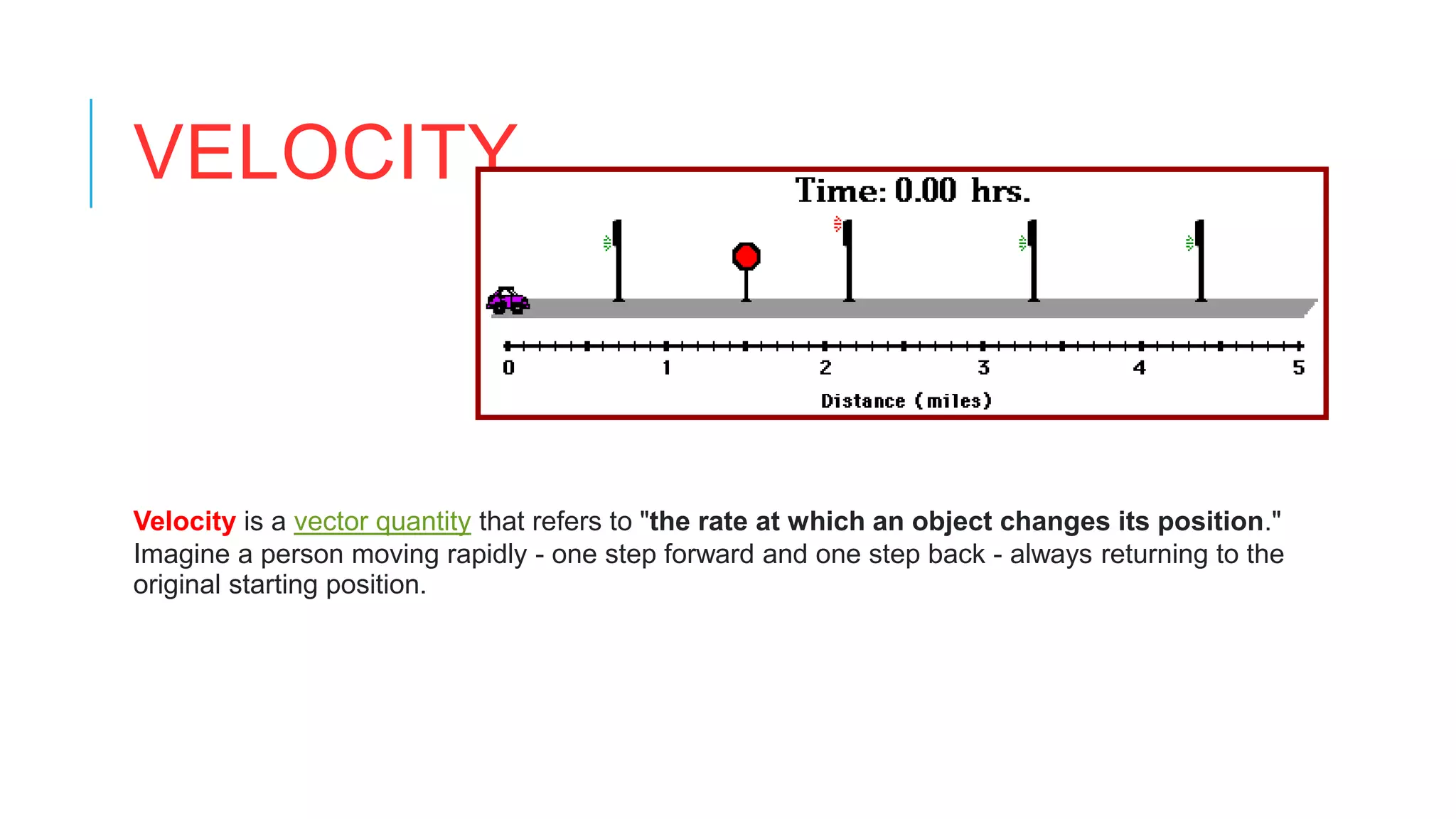
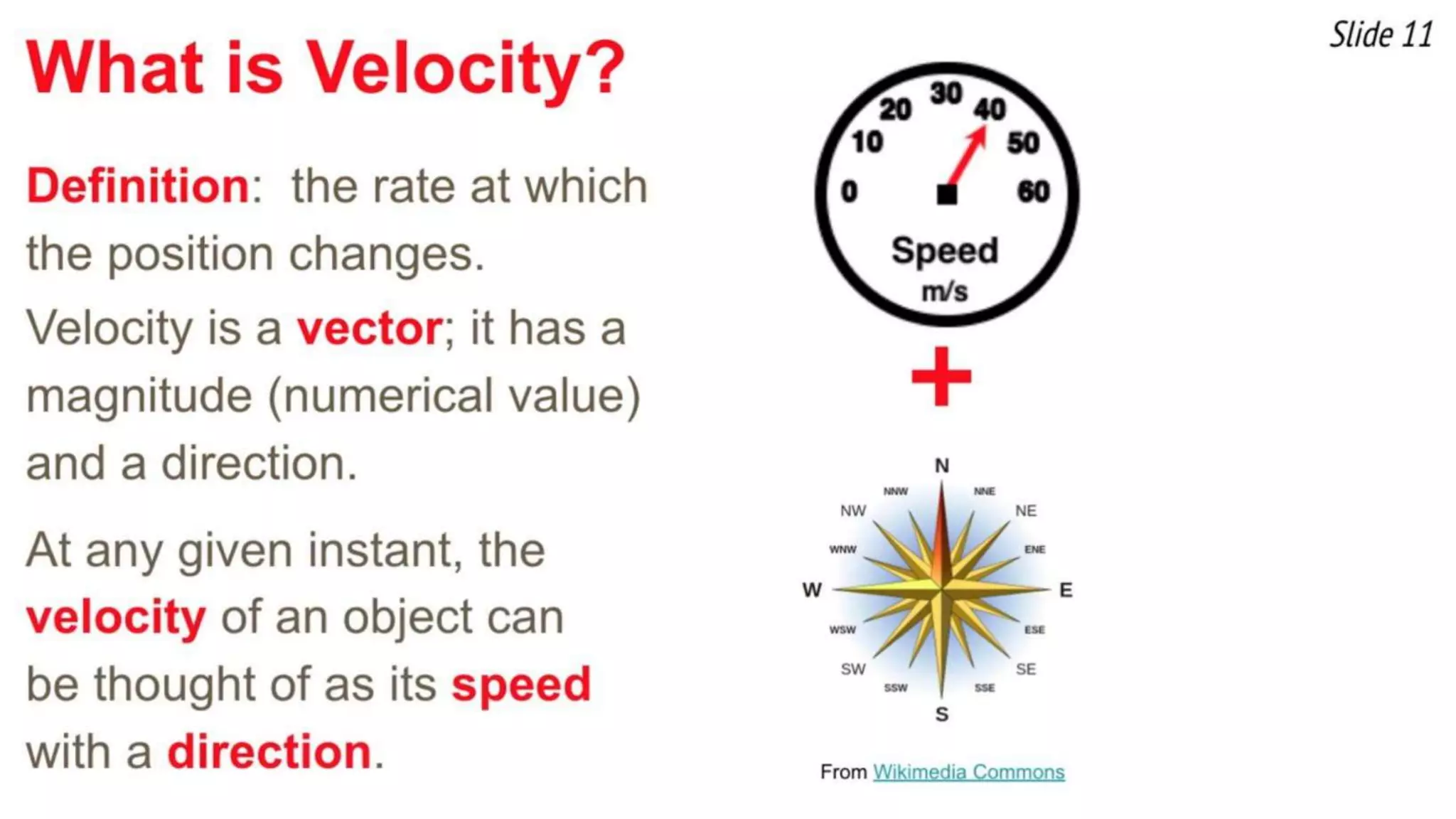
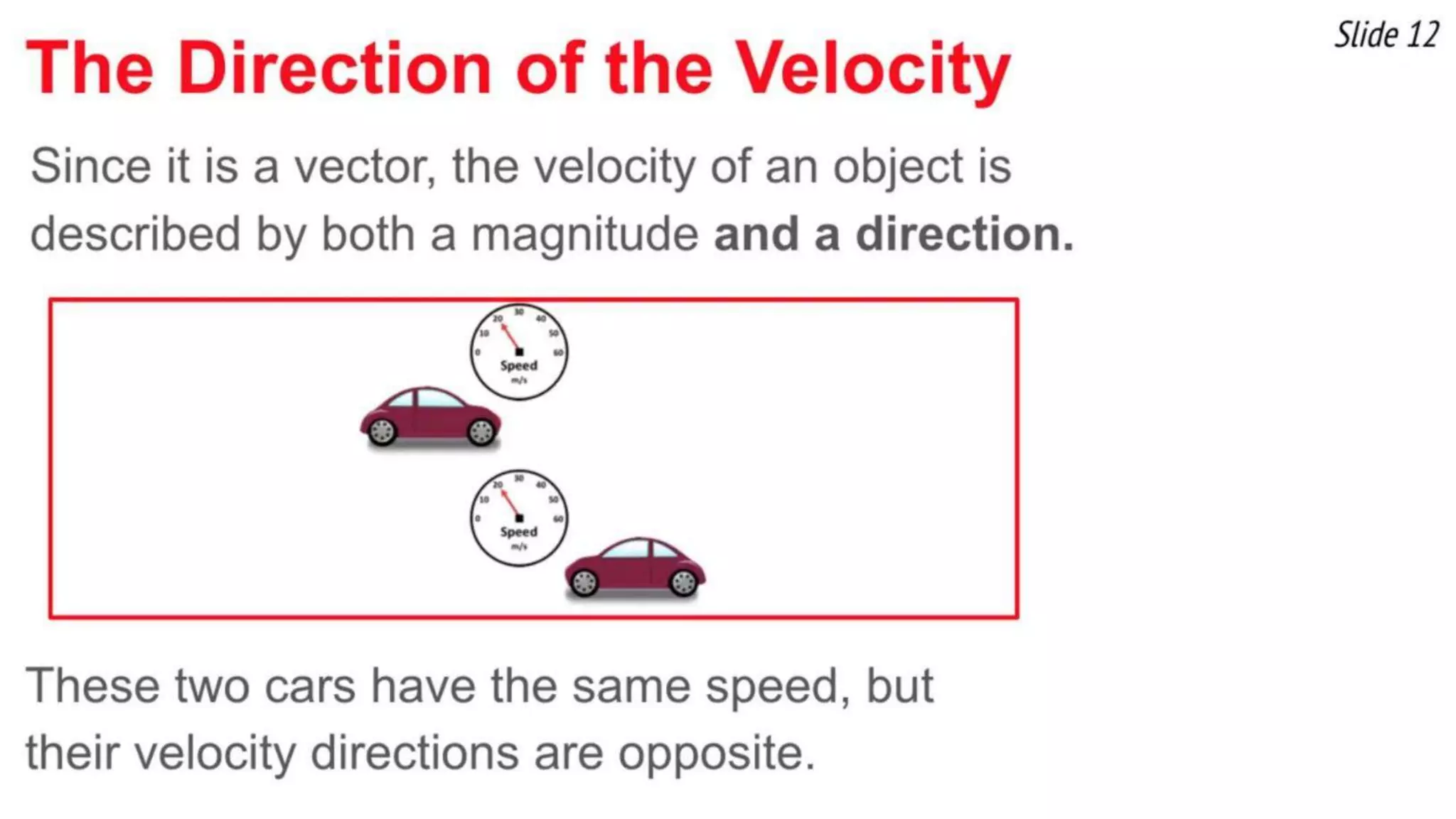
Velocity is a vector quantity that refers to "the rate at which an object changes its position."
Imagine a person moving rapidly - one step forward and one step back - always returning to the
original starting position.
CALCULATING AVERAGE
SPEED AND AVERAGE
VELOCITY
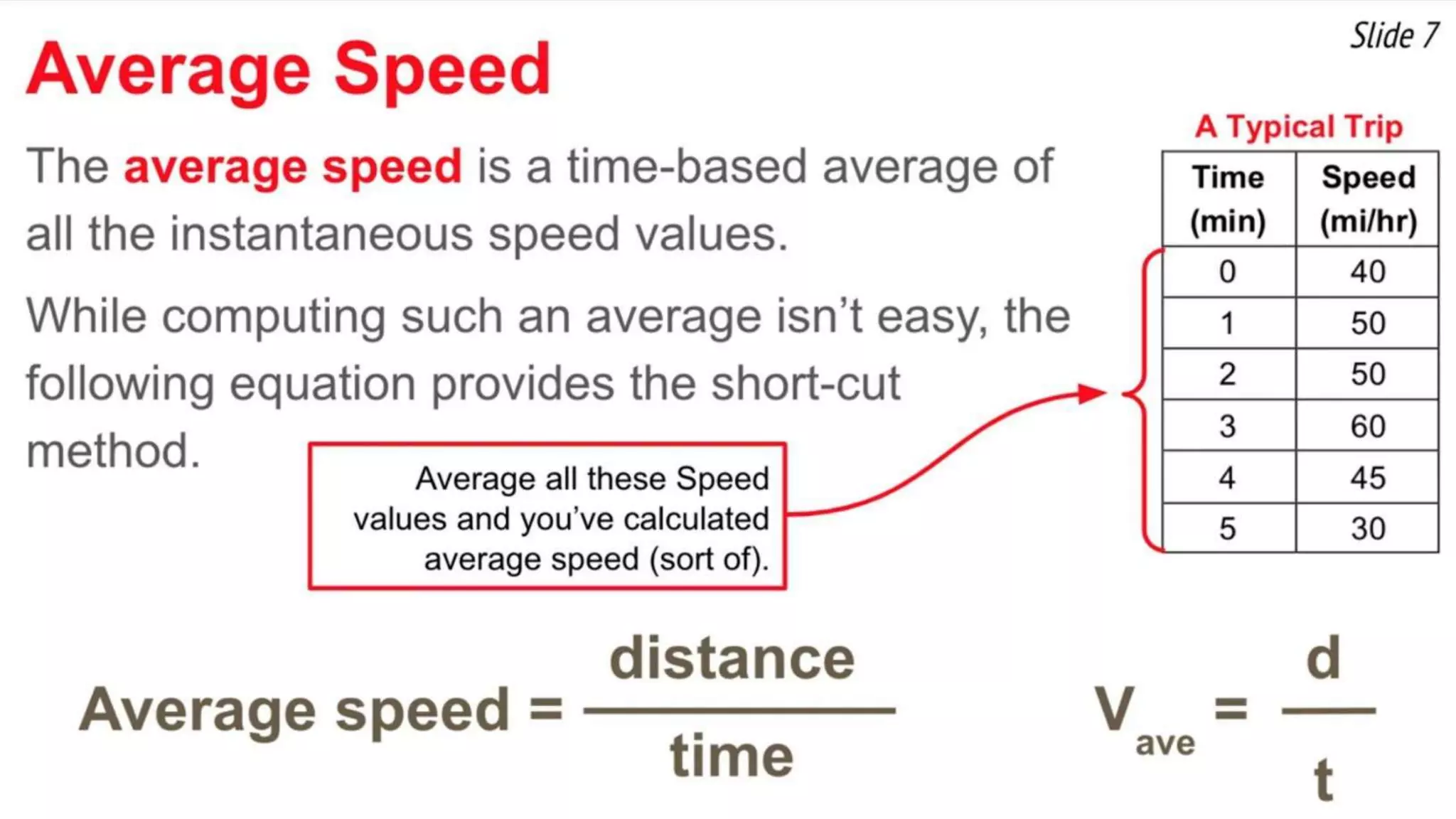
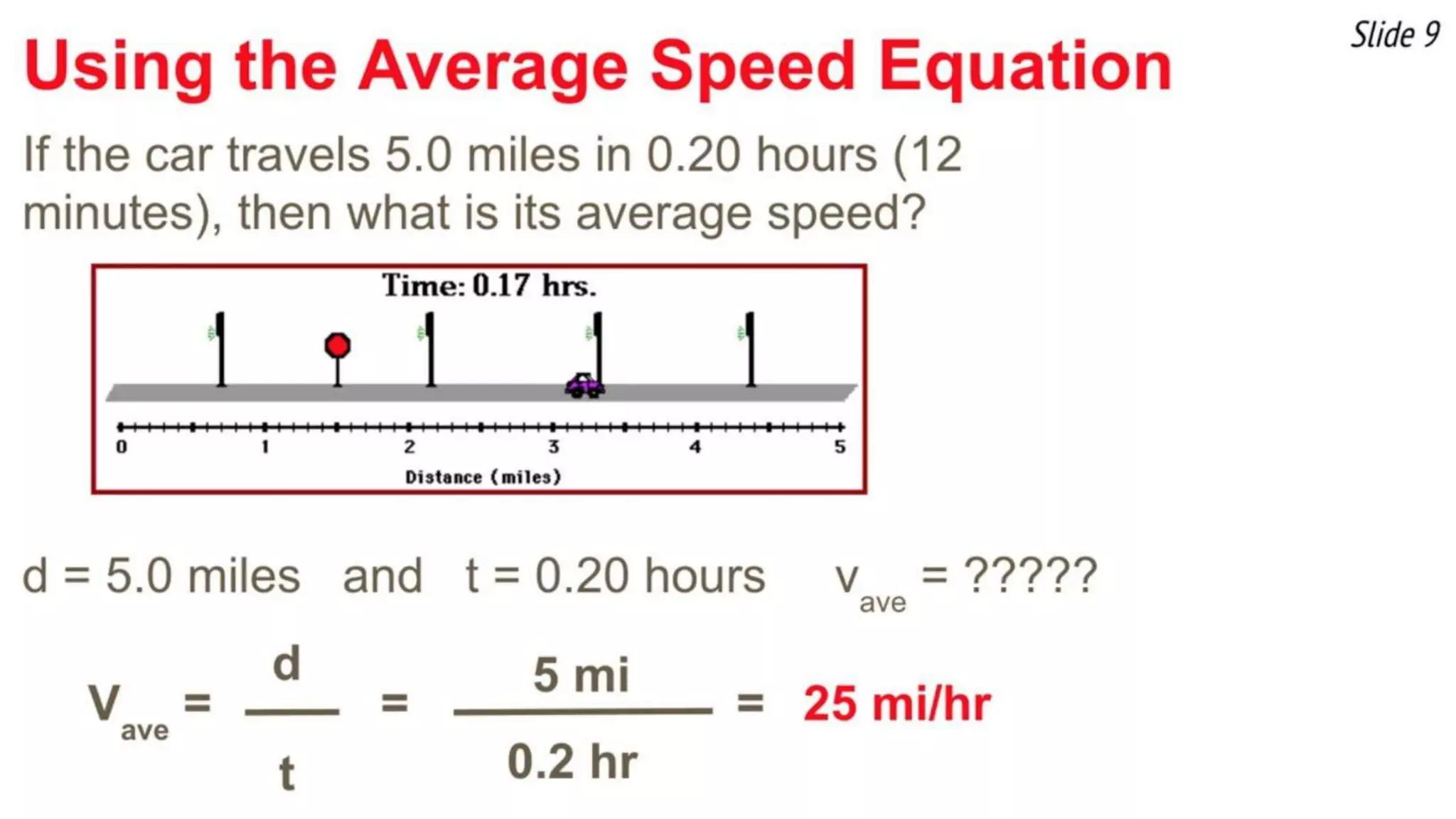
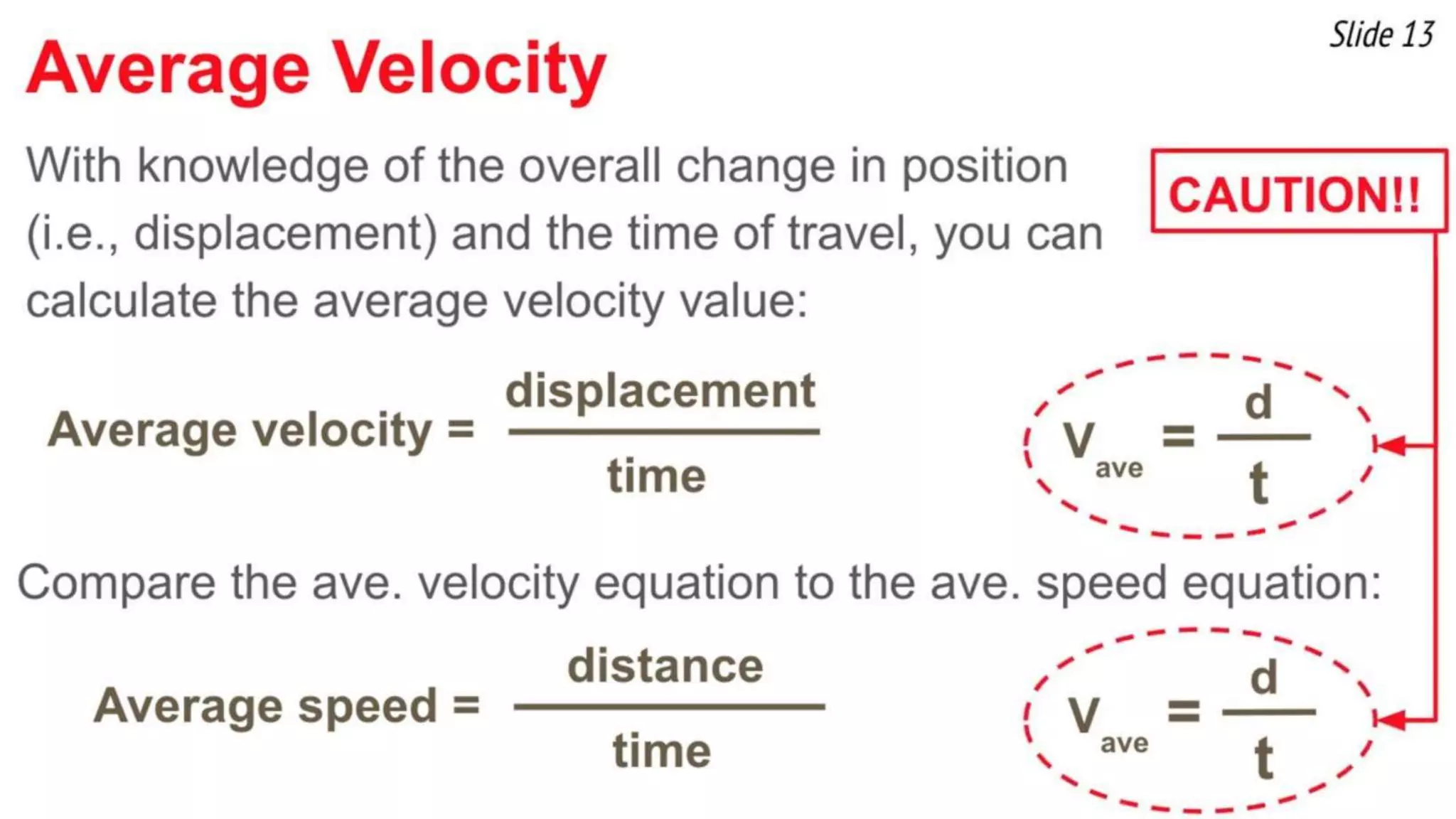
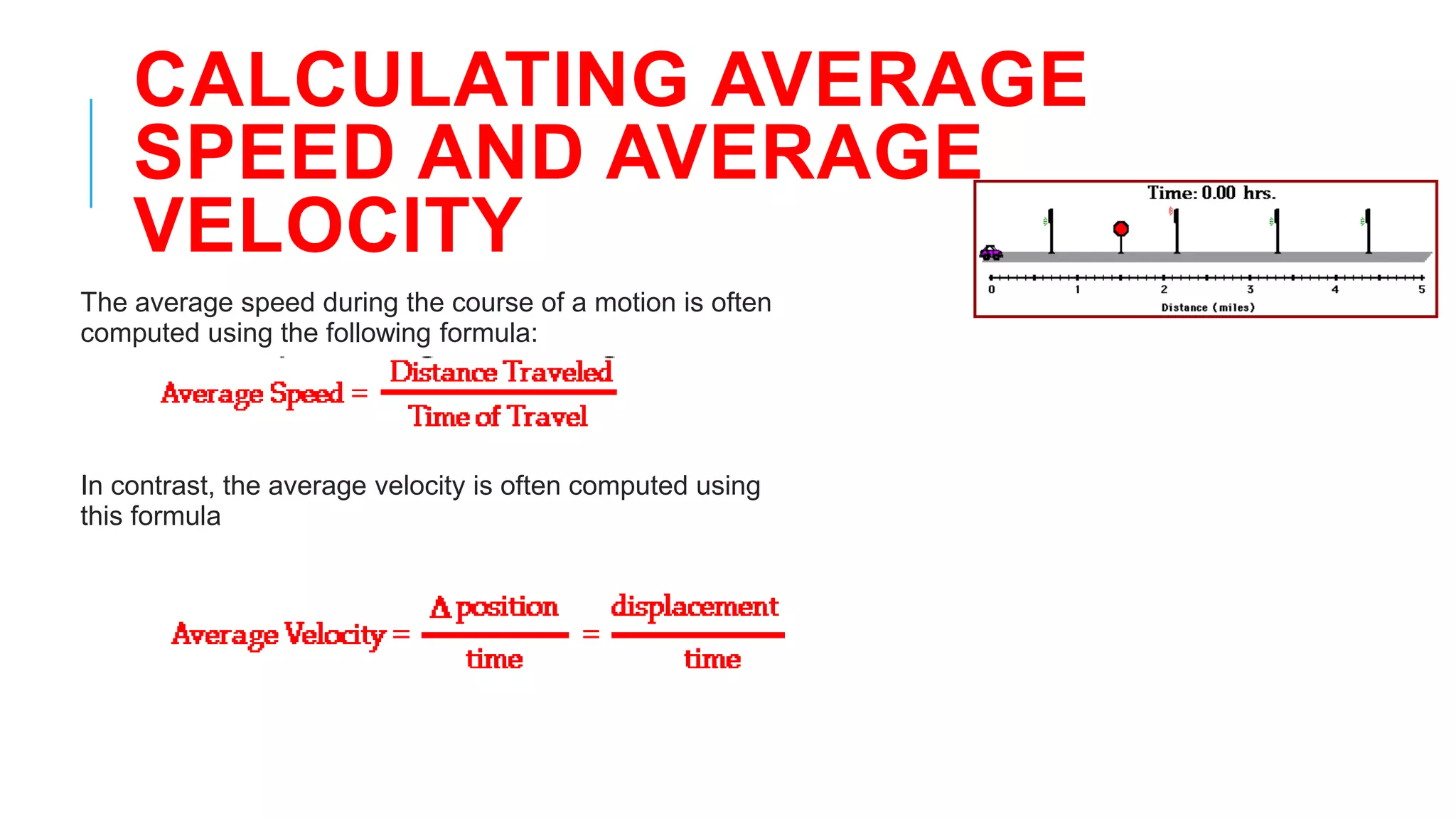
The average speed during the course of a motion is often
computed using the following formula:
In contrast, the average velocity is often computed using
this formula
EXAMPLE!
Now let's consider the motion of that physics teacher. The physics teacher walks 4 meters East, 2 meters
South, 4 meters West, and finally 2 meters North. The entire motion lasted for 24 seconds. Determine
the distance and displacement.
Distance: 12 meters
Displacement: 0 meters
Average Speed =
𝐷𝑖𝑠𝑡𝑎𝑛𝑐𝑒
𝑇𝑖𝑚𝑒
=
12 𝑚𝑒𝑡𝑒𝑟𝑠
24 𝑠𝑒𝑐𝑜𝑛𝑑𝑠
= 0.50
m/s
Average Velocity =
𝐷𝑖𝑠𝑝𝑙𝑎𝑐𝑒𝑚𝑒𝑛𝑡
𝑇𝑖𝑚𝑒
=
0 𝑚𝑒𝑡𝑒𝑟𝑠
24 𝑠𝑒𝑐𝑜𝑛𝑑𝑠
= 0 m/s
ANOTHER EXAMPLE!
The diagram below shows the position of a cross-country skier at various times. At each of the indicated
times, the skier turns around and reverses the direction of travel. In other words, the skier moves from A
to B to C to D.
As a last example, consider a football coach pacing back and forth along the sidelines. The diagram
below shows several of coach's positions at various times. At each marked position, the coach makes
a "U-turn" and moves in the opposite direction. In other words, the coach moves from position A to B
to C to D.
As a last example, consider a football coach pacing back and forth along the sidelines. The diagram
below shows several of coach's positions at various times. At each marked position, the coach makes
a "U-turn" and moves in the opposite direction. In other words, the coach moves from position A to B
to C to D.

SPEED-VS-VELOCITY.pptx

  • 1.
  • 3.
    SPEED Speed is ascalar quantity that refers to "how fast an object is moving." Speed can be thought of as the rate at which an object covers distance. A fast-moving object has a high speed and covers a relatively large distance in a short amount of time. Contrast this to a slow-moving object that has a low speed; it covers a relatively small amount of distance in the same amount of time. An object with no movement at all has a zero speed.
  • 10.
    VELOCITY Velocity is avector quantity that refers to "the rate at which an object changes its position." Imagine a person moving rapidly - one step forward and one step back - always returning to the original starting position.
  • 14.
    CALCULATING AVERAGE SPEED ANDAVERAGE VELOCITY The average speed during the course of a motion is often computed using the following formula: In contrast, the average velocity is often computed using this formula
  • 15.
    EXAMPLE! Now let's considerthe motion of that physics teacher. The physics teacher walks 4 meters East, 2 meters South, 4 meters West, and finally 2 meters North. The entire motion lasted for 24 seconds. Determine the distance and displacement. Distance: 12 meters Displacement: 0 meters Average Speed = 𝐷𝑖𝑠𝑡𝑎𝑛𝑐𝑒 𝑇𝑖𝑚𝑒 = 12 𝑚𝑒𝑡𝑒𝑟𝑠 24 𝑠𝑒𝑐𝑜𝑛𝑑𝑠 = 0.50 m/s Average Velocity = 𝐷𝑖𝑠𝑝𝑙𝑎𝑐𝑒𝑚𝑒𝑛𝑡 𝑇𝑖𝑚𝑒 = 0 𝑚𝑒𝑡𝑒𝑟𝑠 24 𝑠𝑒𝑐𝑜𝑛𝑑𝑠 = 0 m/s
  • 16.
    ANOTHER EXAMPLE! The diagrambelow shows the position of a cross-country skier at various times. At each of the indicated times, the skier turns around and reverses the direction of travel. In other words, the skier moves from A to B to C to D.
  • 18.
    As a lastexample, consider a football coach pacing back and forth along the sidelines. The diagram below shows several of coach's positions at various times. At each marked position, the coach makes a "U-turn" and moves in the opposite direction. In other words, the coach moves from position A to B to C to D.
  • 19.
    As a lastexample, consider a football coach pacing back and forth along the sidelines. The diagram below shows several of coach's positions at various times. At each marked position, the coach makes a "U-turn" and moves in the opposite direction. In other words, the coach moves from position A to B to C to D.