MINI PROJECT
SPEEDOMETER USING
HMI-INSTRUMENTATION CLUSTER
FIRST REVIEW|24/06/22
GROUP NO:16
JISS MATHEW(ADR19CS027)
BIBY VARGHESE(ADR19CS018)
JEEVAN AJI GEORGE(ADR19CS025)
JACOB TOM(ADR19CS024)
CONTENTS
• Introduction
• Existing System
• Proposed System
• Module Description
• Platforms Used
• Design
INTRODUCTION
• As smartphone-centric infotainment systems become essential for
discerning on-road experiences, vehicles need to connect with diverse
software products and services. At the same time, there is a need to create
driver-focused designs for automotive human-machine interfaces.
• The digital instrument cluster makes it possible to present a wide variety of
information to the driver that is adapted dynamically to suit the current
situation.
• The goals of these interfaces range from keeping the driver’s attention on
the road, to increasing vehicle safety and comfort, reducing distractions,
and offering options for personalization.
• The digital cluster is ideal for a wide range of possible application
scenarios, including conventional speedometer, tachometer displays,
function displays, route planning graphics.
EXISTING SYSTEM
• The most common gauges mounted in the instrument cluster
are: speedometer, tachometer, fuel level, water temperature, and
oil pressure.
• There are two main types of speedometers based on their
mechanism.
• Analog or mechanical speedometer.
• Digital or electronic speedometer.
• Speedometers using HMI are already introduced
• The clusters made using HMI has a wide usability. Even from a bicycles to
cockpit of an aeroplanes
DISADVANTAGES OF EXISTING
SYSYTEM
• Analog circuits are usually more susceptible to noise, with “noise”
being any small, undesired variations in voltage. Small changes in the
voltage level of an analog signal can produce significant errors when
being processed. However, the biggest disadvantage in an analogue
gauge is the parallax error, which happens due to the viewing angle of
the one who sees the meter.
• A major disadvantage with digital displays is the refresh rate.
Compared to an analogue dial that has physically moving parts and a
mechanical connection, digital displays have to deal with what is
called a refresh rate which is measured in Hertz (Hz).
PROPOSED SYSTEM
• The driver is able to get the real-time speed of the vehicle
• Offer the driver a driver-focused design
• Interaction is more responsive to human interactions.
• Many features such as tachometer displays, function displays,
route planning graphics can be implemented when needed
MODULE DESCRIPTION
• Speed should be displayed as per the value read by sensors
• The speed of the vehicle is taken in as input from the sensor
• Input is taken from various sensors
• Sensor that are able to take speed value are used
• The input data is processed from sensors
• Value taken in are converted.
• Graphics engine module
• GUI is created takes the value from the sensor and renders the value .
• OpenGL
• Display
• The Display show is the output of value that are rendered in the Graphic
engine.
WORKING
• To keep driver informed with speed , distance , fuel.
• To show the feedback of the machine to the user
• The collected data from the sensors are executed from MCU
and rendered in realtime using help of OpenGL(API) and
rendered to a graphical user interface
PLATFORMS USED
• Windows 7 or higher(except windows 11)/Linux ubuntu(any
version) which supports amd64 architecture
• Visual studio code
• DOCKER
• OpenGL(API)
DESIGN
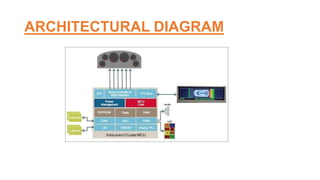
ARCHITECTURAL DIAGRAM
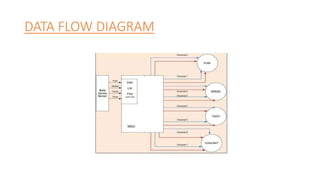
DATA FLOW DIAGRAM
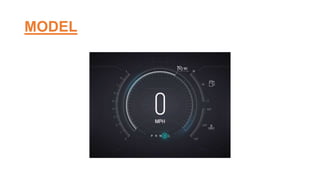
MODEL
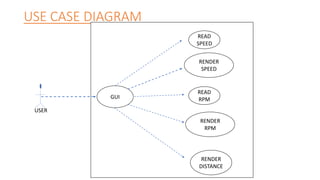
USE CASE DIAGRAM
GUI
READ
SPEED
RENDER
SPEED
READ
RPM
RENDER
RPM
RENDER
DISTANCE
USER
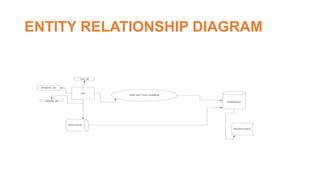
ENTITY RELATIONSHIP DIAGRAM
THANK YOU!

speedometer using hmi cluster.pptx

  • 1.
    MINI PROJECT SPEEDOMETER USING HMI-INSTRUMENTATIONCLUSTER FIRST REVIEW|24/06/22 GROUP NO:16 JISS MATHEW(ADR19CS027) BIBY VARGHESE(ADR19CS018) JEEVAN AJI GEORGE(ADR19CS025) JACOB TOM(ADR19CS024)
  • 2.
    CONTENTS • Introduction • ExistingSystem • Proposed System • Module Description • Platforms Used • Design
  • 3.
    INTRODUCTION • As smartphone-centricinfotainment systems become essential for discerning on-road experiences, vehicles need to connect with diverse software products and services. At the same time, there is a need to create driver-focused designs for automotive human-machine interfaces. • The digital instrument cluster makes it possible to present a wide variety of information to the driver that is adapted dynamically to suit the current situation. • The goals of these interfaces range from keeping the driver’s attention on the road, to increasing vehicle safety and comfort, reducing distractions, and offering options for personalization. • The digital cluster is ideal for a wide range of possible application scenarios, including conventional speedometer, tachometer displays, function displays, route planning graphics.
  • 4.
    EXISTING SYSTEM • Themost common gauges mounted in the instrument cluster are: speedometer, tachometer, fuel level, water temperature, and oil pressure. • There are two main types of speedometers based on their mechanism. • Analog or mechanical speedometer. • Digital or electronic speedometer. • Speedometers using HMI are already introduced • The clusters made using HMI has a wide usability. Even from a bicycles to cockpit of an aeroplanes
  • 5.
    DISADVANTAGES OF EXISTING SYSYTEM •Analog circuits are usually more susceptible to noise, with “noise” being any small, undesired variations in voltage. Small changes in the voltage level of an analog signal can produce significant errors when being processed. However, the biggest disadvantage in an analogue gauge is the parallax error, which happens due to the viewing angle of the one who sees the meter. • A major disadvantage with digital displays is the refresh rate. Compared to an analogue dial that has physically moving parts and a mechanical connection, digital displays have to deal with what is called a refresh rate which is measured in Hertz (Hz).
  • 6.
    PROPOSED SYSTEM • Thedriver is able to get the real-time speed of the vehicle • Offer the driver a driver-focused design • Interaction is more responsive to human interactions. • Many features such as tachometer displays, function displays, route planning graphics can be implemented when needed
  • 7.
    MODULE DESCRIPTION • Speedshould be displayed as per the value read by sensors • The speed of the vehicle is taken in as input from the sensor • Input is taken from various sensors • Sensor that are able to take speed value are used • The input data is processed from sensors • Value taken in are converted. • Graphics engine module • GUI is created takes the value from the sensor and renders the value . • OpenGL • Display • The Display show is the output of value that are rendered in the Graphic engine.
  • 8.
    WORKING • To keepdriver informed with speed , distance , fuel. • To show the feedback of the machine to the user • The collected data from the sensors are executed from MCU and rendered in realtime using help of OpenGL(API) and rendered to a graphical user interface
  • 9.
    PLATFORMS USED • Windows7 or higher(except windows 11)/Linux ubuntu(any version) which supports amd64 architecture • Visual studio code • DOCKER • OpenGL(API)
  • 10.
  • 11.
  • 12.
  • 13.
  • 14.
  • 15.
  • 16.