Katherine Wichmann Zacharias
Certified CoveredCA Insurance Agent
Tax Free Retirement Specialist
(619) 208-7717
For Families & Friends who care for a loved one with
a disability, the thought of not being there someday
can be overwhelming.
• You are not alone
• The best time to plan is NOW.
• The longer you delay, the more difficult
planning may become.
Questions that Parents have:
• What financial support will my loved one need when I am no longer here?
• Will my loved one be able to enjoy the same quality of life that they have
now?
• Who will administer the trust and ensure that the funds are managed and
used for the benefits of my loved ones?
• How can I ensure that needed SSI and Medicaid benefits will not be
jeopardized?
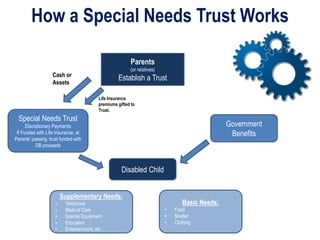
How a Special Needs Trust Works
Parents
(or relatives)
Establish a Trust
Government
Benefits
Special Needs Trust
Discretionary Payments
If Funded with Life Insurance, at
Parents’ passing, trust funded with
DB proceeds
Disabled Child
Supplementary Needs:
• Telephone
• Medical Care
• Special Equipment
• Education
• Entertainment, etc…
Basic Needs:
• Food
• Shelter
• Clothing
Cash or
Assets
Life Insurance
premiums gifted to
Trust.
Items to Consider:
• Parents can Act as the Trustees.
• Trust should be separate from the Family Trust.
• The trust may be revocable or irrevocable.
• Final beneficiaries should be named to receive the trust assets after the
disabled child dies.
• Family members should discuss the future management of the trust and
how it will be funded.
This is a highly specialized
document and should be drafted
by an attorney who is
experienced in the areas of
disability, government benefits
and estate planning.
How is a special needs trust
typically funded?
• Cash
• Investments (e.g. stocks, bonds)
• Retirement plan benefits (pensions,
401(k), IRA)
• Personal & Real Property
• Proceeds from a personal injury
settlement (applies to self settled trusts)
• …and Life Insurance
Why Life Insurance?
• Provides the leverage of
assets to fund trust.
• Permanent Insurance
• Survivorship
• The sooner established, the
lower the cost.
• Lock in parent’s insurability
What else should you consider?
• Selecting a Trustee
– A trustee is a person or institution selected to administer a
trust and manage its assets.
– Adheres to the terms of the terms of the trust & fulfills your
objectives.
– May name yourself or another family members or attorney,
bank or professional trustee.
• Pros & Cons for each…consult attorney
• Providing a Letter of Intent
– Draft a letter that outlines how you want your child cared
for after you’ve gone.
– Not legal document, but can provide guidance for others
involved as to your wishes.
– The letter may address such issues as your child’s
medical needs, daily routine, interests, likes, dislikes,
religious practices, living arrangements, social activities
and degree of self-sufficiency.
– Ensures your child’s transition goes as smooth as
possible.
Informing Family Members
Siblings & other family members
Explain Trust
Explain now to avoid family
conflicts later.
What else should you consider?
Other Special Needs
• What about a child with drug/alcohol addiction problems?
• What could the implications be for a child with addictions to inherited
large sums of money?
• Talk to your Estate Planning Attorney on how to address these issues.
Katherine Wichmann Zacharias
Certified CoveredCA Insurance Agent
Tax Free Retirement Specialist
(619) 208-7717

Special needs trust revamped

  • 1.
    Katherine Wichmann Zacharias CertifiedCoveredCA Insurance Agent Tax Free Retirement Specialist (619) 208-7717
  • 2.
    For Families &Friends who care for a loved one with a disability, the thought of not being there someday can be overwhelming. • You are not alone • The best time to plan is NOW. • The longer you delay, the more difficult planning may become.
  • 3.
    Questions that Parentshave: • What financial support will my loved one need when I am no longer here? • Will my loved one be able to enjoy the same quality of life that they have now? • Who will administer the trust and ensure that the funds are managed and used for the benefits of my loved ones? • How can I ensure that needed SSI and Medicaid benefits will not be jeopardized?
  • 4.
    How a SpecialNeeds Trust Works Parents (or relatives) Establish a Trust Government Benefits Special Needs Trust Discretionary Payments If Funded with Life Insurance, at Parents’ passing, trust funded with DB proceeds Disabled Child Supplementary Needs: • Telephone • Medical Care • Special Equipment • Education • Entertainment, etc… Basic Needs: • Food • Shelter • Clothing Cash or Assets Life Insurance premiums gifted to Trust.
  • 5.
    Items to Consider: •Parents can Act as the Trustees. • Trust should be separate from the Family Trust. • The trust may be revocable or irrevocable. • Final beneficiaries should be named to receive the trust assets after the disabled child dies. • Family members should discuss the future management of the trust and how it will be funded.
  • 6.
    This is ahighly specialized document and should be drafted by an attorney who is experienced in the areas of disability, government benefits and estate planning.
  • 7.
    How is aspecial needs trust typically funded? • Cash • Investments (e.g. stocks, bonds) • Retirement plan benefits (pensions, 401(k), IRA) • Personal & Real Property • Proceeds from a personal injury settlement (applies to self settled trusts) • …and Life Insurance
  • 8.
    Why Life Insurance? •Provides the leverage of assets to fund trust. • Permanent Insurance • Survivorship • The sooner established, the lower the cost. • Lock in parent’s insurability
  • 9.
    What else shouldyou consider? • Selecting a Trustee – A trustee is a person or institution selected to administer a trust and manage its assets. – Adheres to the terms of the terms of the trust & fulfills your objectives. – May name yourself or another family members or attorney, bank or professional trustee. • Pros & Cons for each…consult attorney • Providing a Letter of Intent – Draft a letter that outlines how you want your child cared for after you’ve gone. – Not legal document, but can provide guidance for others involved as to your wishes. – The letter may address such issues as your child’s medical needs, daily routine, interests, likes, dislikes, religious practices, living arrangements, social activities and degree of self-sufficiency. – Ensures your child’s transition goes as smooth as possible.
  • 10.
    Informing Family Members Siblings& other family members Explain Trust Explain now to avoid family conflicts later. What else should you consider?
  • 11.
    Other Special Needs •What about a child with drug/alcohol addiction problems? • What could the implications be for a child with addictions to inherited large sums of money? • Talk to your Estate Planning Attorney on how to address these issues.
  • 12.
    Katherine Wichmann Zacharias CertifiedCoveredCA Insurance Agent Tax Free Retirement Specialist (619) 208-7717