SPAIN
Cultural Presentation by:
Stephanie Regalado
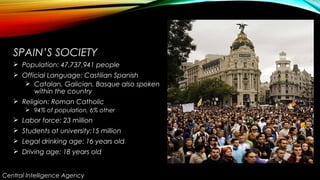
SPAIN’S SOCIETY
 Population: 47,737,941 people
 Official Language: Castilian Spanish
 Catalan, Galician, Basque also spoken
within the country
 Religion: Roman Catholic
 94% of population, 6% other
 Labor force: 23 million
 Students at university:15 million
 Legal drinking age: 16 years old
 Driving age: 18 years old
Central Intelligence Agency
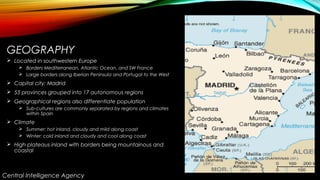
GEOGRAPHY
 Located in southwestern Europe
 Borders Mediterranean, Atlantic Ocean, and SW France
 Large borders along Iberian Peninsula and Portugal to the West
 Capital city: Madrid
 55 provinces grouped into 17 autonomous regions
 Geographical regions also differentiate population
 Sub-cultures are commonly separated by regions and climates
within Spain
 Climate
 Summer: hot inland, cloudy and mild along coast
 Winter: cold inland and cloudy and cool along coast
 High plateaus inland with borders being mountainous and
coastal
Central Intelligence Agency
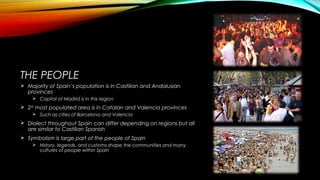
THE PEOPLE
 Majority of Spain’s population is in Castilian and Andalusian
provinces
 Capital of Madrid is in this region
 2ND
most populated area is in Catalan and Valencia provinces
 Such as cities of Barcelona and Valencia
 Dialect throughout Spain can differ depending on regions but all
are similar to Castilian Spanish
 Symbolism is large part of the people of Spain
 History, legends, and customs shape the communities and many
cultures of people within Spain
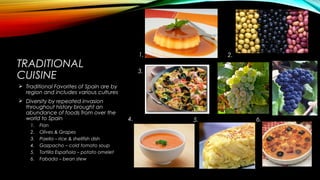
TRADITIONAL
CUISINE
 Traditional Favorites of Spain are by
region and includes various cultures
 Diversity by repeated invasion
throughout history brought an
abundance of foods from over the
world to Spain
1. Flan
2. Olives & Grapes
3. Paella – rice & shellfish dish
4. Gazpacho – cold tomato soup
5. Tortilla Española – potato omelet
6. Fabada – bean stew
1. 2.
3.
4. 5. 6.
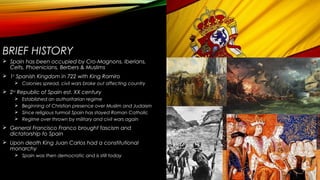
BRIEF HISTORY
 Spain has been occupied by Cro-Magnons, Iberians,
Celts, Phoenicians, Berbers & Muslims
 1st
Spanish Kingdom in 722 with King Ramiro
 Colonies spread, civil wars broke out affecting country
 2nd
Republic of Spain est. XX century
 Established an authoritarian regime
 Beginning of Christian presence over Muslim and Judaism
 Since religious turmoil Spain has stayed Roman Catholic
 Regime over thrown by military and civil wars again
 General Francisco Franco brought fascism and
dictatorship to Spain
 Upon death King Juan Carlos had a constitutional
monarchy
 Spain was then democratic and is still today
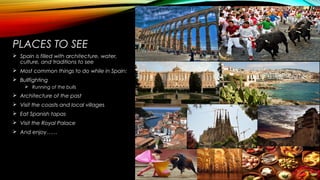
PLACES TO SEE
 Spain is filled with architecture, water,
culture, and traditions to see
 Most common things to do while in Spain:
 Bullfighting
 Running of the bulls
 Architecture of the past
 Visit the coasts and local villages
 Eat Spanish tapas
 Visit the Royal Palace
 And enjoy……
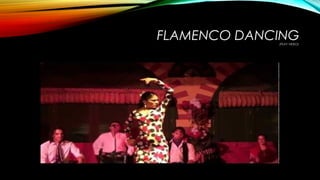
FLAMENCO DANCING(PLAY VIDEO)
WORKS CITED
• http://marbellamarbella.es/2013-02-27/whats-wrong-with-spain/
• http://spain.europemaps.info/
• https://www.cia.gov/library/publications/the-world-factbook/geos/sp.html
• columbus-day.holidayscentral.com
• www.adclinic.com
• www.discover-nerja.com
• culinarywineandfoodmatching.blogspot.com
• www.agriculturesource.com
• www.theguardian.com
• runningofthebulls.travel
• www.spanish-food.org
• http://www.eyeonspain.com/blogs/bestofspain/10238/Top-10-Tourist-Attractions-in-Spain-2012.aspx

Spain.stephanie.regalado

  • 1.
  • 2.
    SPAIN’S SOCIETY  Population:47,737,941 people  Official Language: Castilian Spanish  Catalan, Galician, Basque also spoken within the country  Religion: Roman Catholic  94% of population, 6% other  Labor force: 23 million  Students at university:15 million  Legal drinking age: 16 years old  Driving age: 18 years old Central Intelligence Agency
  • 3.
    GEOGRAPHY  Located insouthwestern Europe  Borders Mediterranean, Atlantic Ocean, and SW France  Large borders along Iberian Peninsula and Portugal to the West  Capital city: Madrid  55 provinces grouped into 17 autonomous regions  Geographical regions also differentiate population  Sub-cultures are commonly separated by regions and climates within Spain  Climate  Summer: hot inland, cloudy and mild along coast  Winter: cold inland and cloudy and cool along coast  High plateaus inland with borders being mountainous and coastal Central Intelligence Agency
  • 5.
    THE PEOPLE  Majorityof Spain’s population is in Castilian and Andalusian provinces  Capital of Madrid is in this region  2ND most populated area is in Catalan and Valencia provinces  Such as cities of Barcelona and Valencia  Dialect throughout Spain can differ depending on regions but all are similar to Castilian Spanish  Symbolism is large part of the people of Spain  History, legends, and customs shape the communities and many cultures of people within Spain
  • 6.
    TRADITIONAL CUISINE  Traditional Favoritesof Spain are by region and includes various cultures  Diversity by repeated invasion throughout history brought an abundance of foods from over the world to Spain 1. Flan 2. Olives & Grapes 3. Paella – rice & shellfish dish 4. Gazpacho – cold tomato soup 5. Tortilla Española – potato omelet 6. Fabada – bean stew 1. 2. 3. 4. 5. 6.
  • 7.
    BRIEF HISTORY  Spainhas been occupied by Cro-Magnons, Iberians, Celts, Phoenicians, Berbers & Muslims  1st Spanish Kingdom in 722 with King Ramiro  Colonies spread, civil wars broke out affecting country  2nd Republic of Spain est. XX century  Established an authoritarian regime  Beginning of Christian presence over Muslim and Judaism  Since religious turmoil Spain has stayed Roman Catholic  Regime over thrown by military and civil wars again  General Francisco Franco brought fascism and dictatorship to Spain  Upon death King Juan Carlos had a constitutional monarchy  Spain was then democratic and is still today
  • 8.
    PLACES TO SEE Spain is filled with architecture, water, culture, and traditions to see  Most common things to do while in Spain:  Bullfighting  Running of the bulls  Architecture of the past  Visit the coasts and local villages  Eat Spanish tapas  Visit the Royal Palace  And enjoy……
  • 9.
  • 10.
    WORKS CITED • http://marbellamarbella.es/2013-02-27/whats-wrong-with-spain/ •http://spain.europemaps.info/ • https://www.cia.gov/library/publications/the-world-factbook/geos/sp.html • columbus-day.holidayscentral.com • www.adclinic.com • www.discover-nerja.com • culinarywineandfoodmatching.blogspot.com • www.agriculturesource.com • www.theguardian.com • runningofthebulls.travel • www.spanish-food.org • http://www.eyeonspain.com/blogs/bestofspain/10238/Top-10-Tourist-Attractions-in-Spain-2012.aspx