Southern Gothic Literature William Faulkner &
Flannery O’Connor
http://xchanges.org/xchanges_archive/xchanges/1.2/wilson.html
Southern Gothic Literature: Themes
Taken from the Natalie Wilson online article
Southern Gothic Literature: Setting
“An awareness of the past and its influence on the present” (Wilson)
• One event that seems to loom in the setting of Faulkner and
O’Connor’s literature is the South’s defeat in the Civil War, marking
the end of the South’s Antebellum lifestyle
• Mansions (representing the Antebellum South) are shown in decay
• Characters either believe they are living in the past (often alluding to
people who are dead) or identify themselves with the past and the
Antebellum tradition
Southern Gothic Literature: Central Conflict
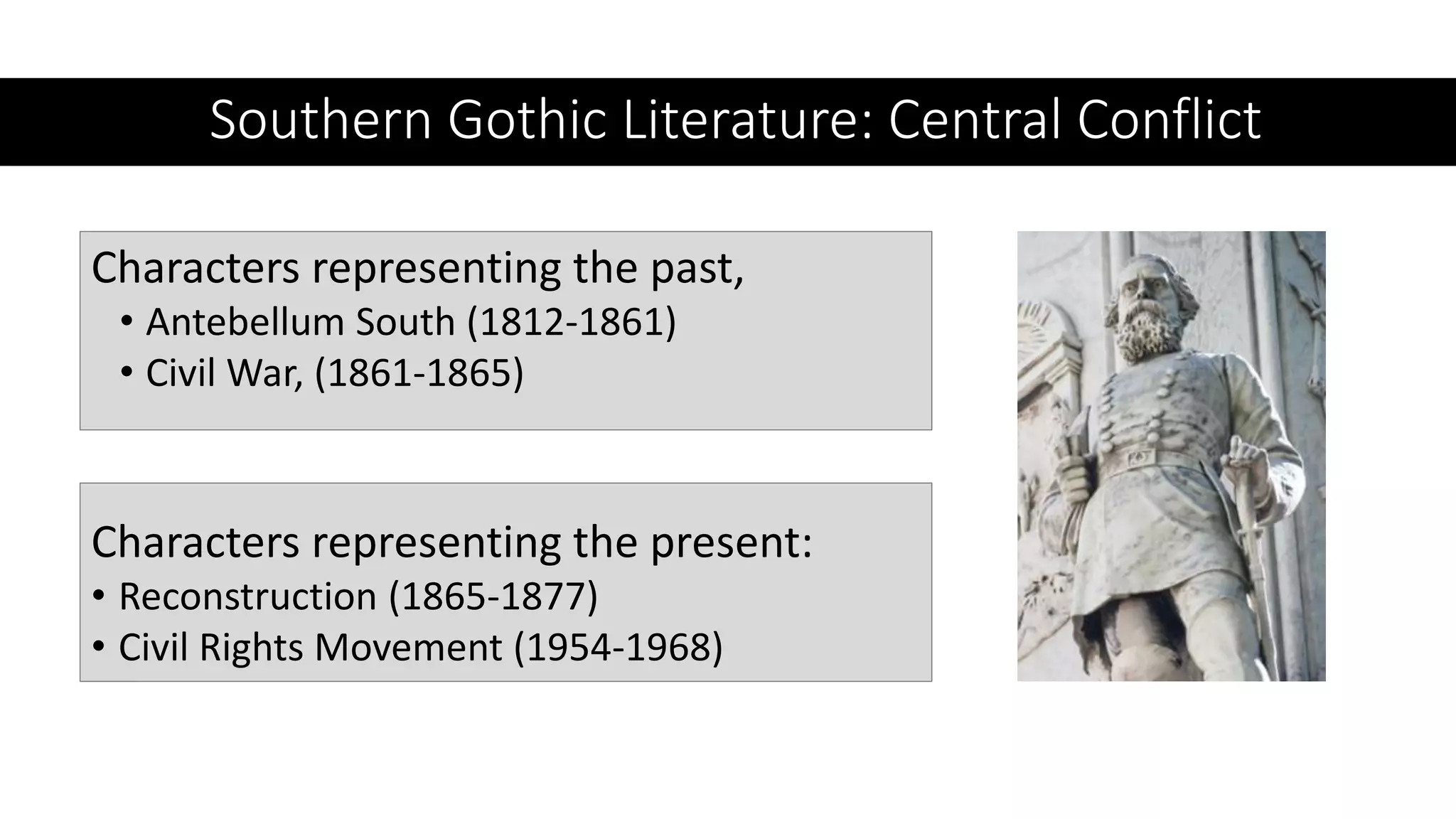
Characters representing the past,
• Antebellum South (1812-1861)
• Civil War, (1861-1865)
Characters representing the present:
• Reconstruction (1865-1877)
• Civil Rights Movement (1954-1968)
Southern Gothic Literature: Characters
Taken from the Natalie Wilson online article
Southern Gothic Literature: Societal Misfit
• Historically, the Antebellum South relied on
the socio-economic structure of plantations
and the Southern aristocracy
• The social hierarchy of the Southern
aristocracy is reflected in what Natalie Wilson
terms “societal misfits”
Southern Aristocracy
• The Southern aristocracy was the group of families who
controlled power in the South = social, economic, and political
privileges
• To be part of the Southern aristocracy, an individual needed to
be:
• From a family established as Southern aristocrat, either through birth or
through marriage
• Therefore, marriage of children was closely guarded and scrutinized
• Preferably, a child of the aristocracy would marry another member (who
was wealthier)
Southern Aristocracy: Expectations for Women
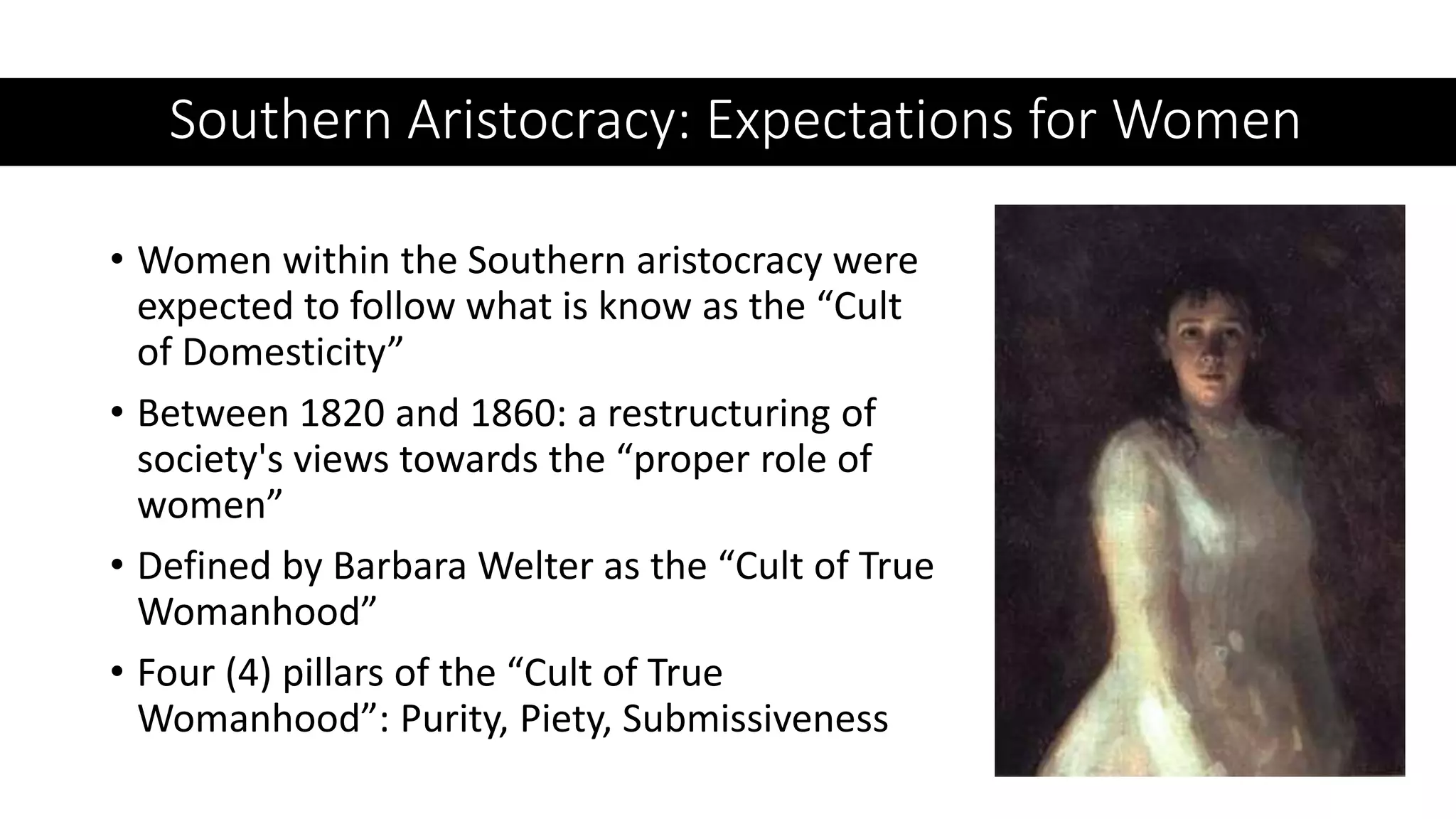
• Women within the Southern aristocracy were
expected to follow what is know as the “Cult
of Domesticity”
• Between 1820 and 1860: a restructuring of
society's views towards the “proper role of
women”
• Defined by Barbara Welter as the “Cult of True
Womanhood”
• Four (4) pillars of the “Cult of True
Womanhood”: Purity, Piety, Submissiveness
“The Cult of True Womanhood”
• Piety: Being devout, fidelity to natural
obligations such as to parents, dutifulness in
religion
• Purity: Chastity, being modest in dress and
manner, virginal qualities
• Submissiveness: Yielding authority to others,
men held power over women, who often
could not make decisions for themselves
• Domesticity: Relegated to the house to fulfill
obligations of wife/ mother
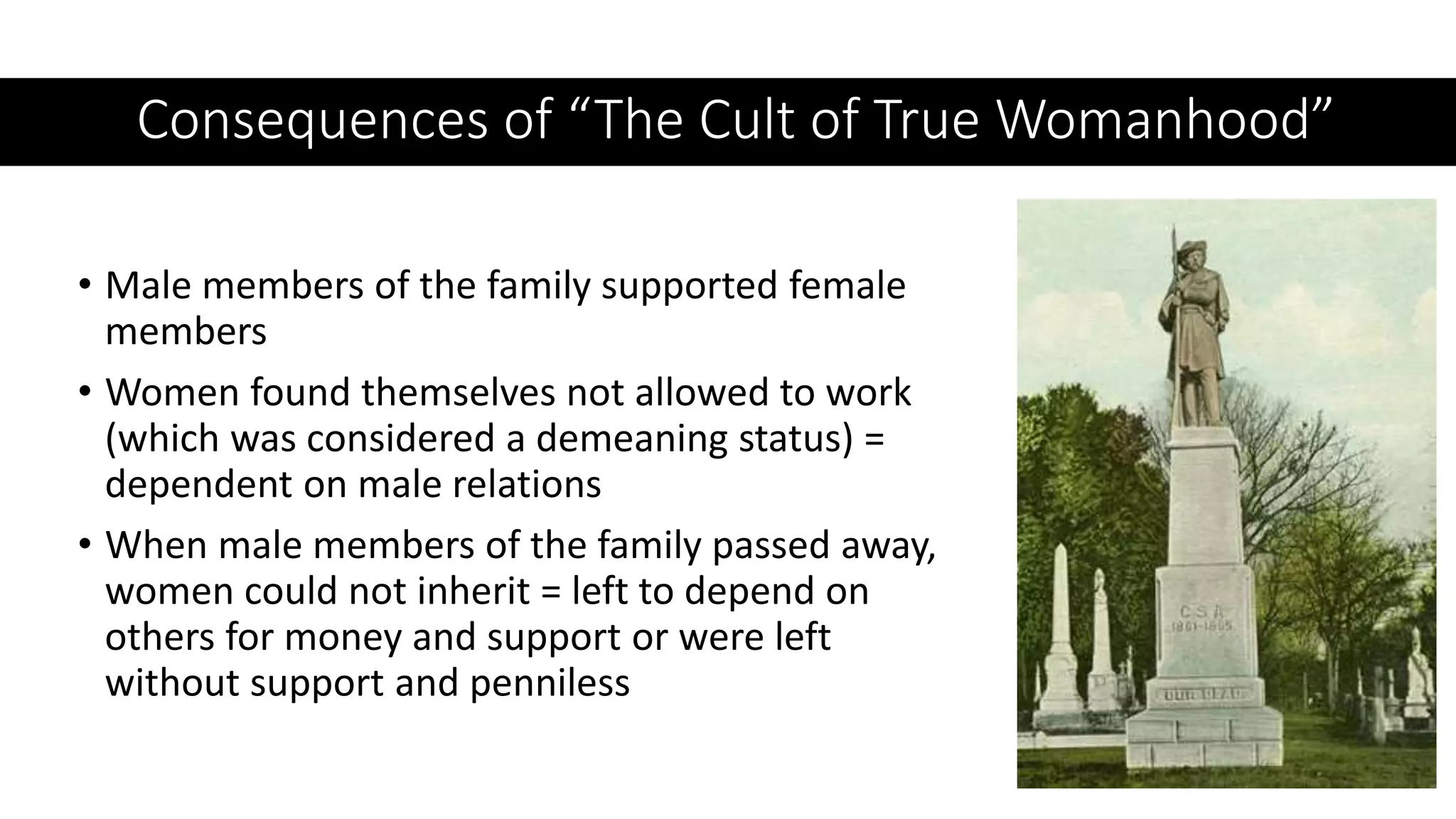
Consequences of “The Cult of True Womanhood”
• Male members of the family supported female
members
• Women found themselves not allowed to work
(which was considered a demeaning status) =
dependent on male relations
• When male members of the family passed away,
women could not inherit = left to depend on
others for money and support or were left
without support and penniless
Gothic Portraits of the Southern Aristocracy
“Societal misfit characters”
• Although members of the Southern aristocracy lost their wealth
during or after the Civil War, many clung to their titles that
retained power and privilege
• The irony of many Southern Gothic “misfit characters” is that
they want to enjoy the privileges and status of their ancestors
although they live in a different historical period in the South (no
longer the Antebellum South with its social traditions)
Female Societal Misfit Characters
• Look for female characters who are aligning
themselves with the past by displaying
characteristics of the “Cult of Domesticity”
• For William Faulkner’s “A Rose for Emily,” Emily
Grierson seems to be trapped by the traditions of
the Antebellum South as the last Southern belle of
Jefferson, Mississippi
• For Flannery O’Connor’s “A Good Man Is Hard to
Find,” the author seems to mock the “Cult of
Domesticity” with the exaggerations found in the
grandmother’s character

Southern Gothic Literature

  • 1.
    Southern Gothic LiteratureWilliam Faulkner & Flannery O’Connor
  • 2.
  • 3.
    Southern Gothic Literature:Themes Taken from the Natalie Wilson online article
  • 4.
    Southern Gothic Literature:Setting “An awareness of the past and its influence on the present” (Wilson) • One event that seems to loom in the setting of Faulkner and O’Connor’s literature is the South’s defeat in the Civil War, marking the end of the South’s Antebellum lifestyle • Mansions (representing the Antebellum South) are shown in decay • Characters either believe they are living in the past (often alluding to people who are dead) or identify themselves with the past and the Antebellum tradition
  • 6.
    Southern Gothic Literature:Central Conflict Characters representing the past, • Antebellum South (1812-1861) • Civil War, (1861-1865) Characters representing the present: • Reconstruction (1865-1877) • Civil Rights Movement (1954-1968)
  • 7.
    Southern Gothic Literature:Characters Taken from the Natalie Wilson online article
  • 8.
    Southern Gothic Literature:Societal Misfit • Historically, the Antebellum South relied on the socio-economic structure of plantations and the Southern aristocracy • The social hierarchy of the Southern aristocracy is reflected in what Natalie Wilson terms “societal misfits”
  • 9.
    Southern Aristocracy • TheSouthern aristocracy was the group of families who controlled power in the South = social, economic, and political privileges • To be part of the Southern aristocracy, an individual needed to be: • From a family established as Southern aristocrat, either through birth or through marriage • Therefore, marriage of children was closely guarded and scrutinized • Preferably, a child of the aristocracy would marry another member (who was wealthier)
  • 10.
    Southern Aristocracy: Expectationsfor Women • Women within the Southern aristocracy were expected to follow what is know as the “Cult of Domesticity” • Between 1820 and 1860: a restructuring of society's views towards the “proper role of women” • Defined by Barbara Welter as the “Cult of True Womanhood” • Four (4) pillars of the “Cult of True Womanhood”: Purity, Piety, Submissiveness
  • 11.
    “The Cult ofTrue Womanhood” • Piety: Being devout, fidelity to natural obligations such as to parents, dutifulness in religion • Purity: Chastity, being modest in dress and manner, virginal qualities • Submissiveness: Yielding authority to others, men held power over women, who often could not make decisions for themselves • Domesticity: Relegated to the house to fulfill obligations of wife/ mother
  • 12.
    Consequences of “TheCult of True Womanhood” • Male members of the family supported female members • Women found themselves not allowed to work (which was considered a demeaning status) = dependent on male relations • When male members of the family passed away, women could not inherit = left to depend on others for money and support or were left without support and penniless
  • 13.
    Gothic Portraits ofthe Southern Aristocracy “Societal misfit characters” • Although members of the Southern aristocracy lost their wealth during or after the Civil War, many clung to their titles that retained power and privilege • The irony of many Southern Gothic “misfit characters” is that they want to enjoy the privileges and status of their ancestors although they live in a different historical period in the South (no longer the Antebellum South with its social traditions)
  • 14.
    Female Societal MisfitCharacters • Look for female characters who are aligning themselves with the past by displaying characteristics of the “Cult of Domesticity” • For William Faulkner’s “A Rose for Emily,” Emily Grierson seems to be trapped by the traditions of the Antebellum South as the last Southern belle of Jefferson, Mississippi • For Flannery O’Connor’s “A Good Man Is Hard to Find,” the author seems to mock the “Cult of Domesticity” with the exaggerations found in the grandmother’s character