In today's digital landscape, compliance with regulations and industry
standards is crucial for the success and security of any software
application. A code audit, also known as a source code review, plays a
vital role in ensuring that an application meets these compliance
requirements. This blog post will guide you through the process of
conducting a code audit and provide essential tips to ensure compliance
for your application.
What is a Source Code Audit?
A source code audit involves a thorough examination of an application's
source code to assess its quality, security, and compliance with
regulations and standards. It aims to identify any vulnerabilities, coding
errors, or deviations from best practices that could compromise the
application's security or violate compliance requirements.
During a source code audit, experienced software developers or security
professionals review the codebase line by line, analyzing its structure,
logic, and implementation.
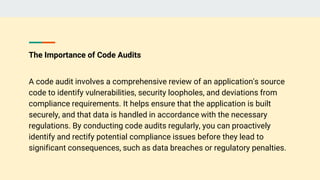
The Importance of Code Audits
A code audit involves a comprehensive review of an application's source
code to identify vulnerabilities, security loopholes, and deviations from
compliance requirements. It helps ensure that the application is built
securely, and that data is handled in accordance with the necessary
regulations. By conducting code audits regularly, you can proactively
identify and rectify potential compliance issues before they lead to
significant consequences, such as data breaches or regulatory penalties.
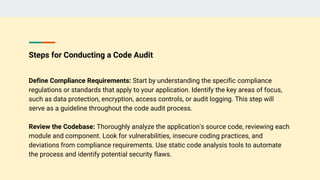
Steps for Conducting a Code Audit
Define Compliance Requirements: Start by understanding the specific compliance
regulations or standards that apply to your application. Identify the key areas of focus,
such as data protection, encryption, access controls, or audit logging. This step will
serve as a guideline throughout the code audit process.
Review the Codebase: Thoroughly analyze the application's source code, reviewing each
module and component. Look for vulnerabilities, insecure coding practices, and
deviations from compliance requirements. Use static code analysis tools to automate
the process and identify potential security flaws.
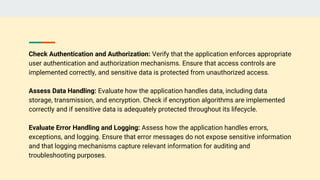
Check Authentication and Authorization: Verify that the application enforces appropriate
user authentication and authorization mechanisms. Ensure that access controls are
implemented correctly, and sensitive data is protected from unauthorized access.
Assess Data Handling: Evaluate how the application handles data, including data
storage, transmission, and encryption. Check if encryption algorithms are implemented
correctly and if sensitive data is adequately protected throughout its lifecycle.
Evaluate Error Handling and Logging: Assess how the application handles errors,
exceptions, and logging. Ensure that error messages do not expose sensitive information
and that logging mechanisms capture relevant information for auditing and
troubleshooting purposes.
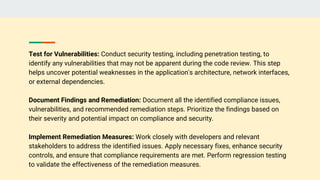
Test for Vulnerabilities: Conduct security testing, including penetration testing, to
identify any vulnerabilities that may not be apparent during the code review. This step
helps uncover potential weaknesses in the application's architecture, network interfaces,
or external dependencies.
Document Findings and Remediation: Document all the identified compliance issues,
vulnerabilities, and recommended remediation steps. Prioritize the findings based on
their severity and potential impact on compliance and security.
Implement Remediation Measures: Work closely with developers and relevant
stakeholders to address the identified issues. Apply necessary fixes, enhance security
controls, and ensure that compliance requirements are met. Perform regression testing
to validate the effectiveness of the remediation measures.
Conclusion
A code audit is a critical process to ensure compliance with regulations and industry
standards for your application. By conducting regular code audits, you can identify and
address potential compliance issues before they escalate into significant problems.
Remember to keep up with evolving regulations and industry best practices to ensure
ongoing compliance. Implementing a robust code audit process will not only protect your
application and sensitive data but also instill trust in your users and stakeholders.

Source Code Audit in Application Development.pptx

  • 2.
    In today's digitallandscape, compliance with regulations and industry standards is crucial for the success and security of any software application. A code audit, also known as a source code review, plays a vital role in ensuring that an application meets these compliance requirements. This blog post will guide you through the process of conducting a code audit and provide essential tips to ensure compliance for your application.
  • 3.
    What is aSource Code Audit? A source code audit involves a thorough examination of an application's source code to assess its quality, security, and compliance with regulations and standards. It aims to identify any vulnerabilities, coding errors, or deviations from best practices that could compromise the application's security or violate compliance requirements. During a source code audit, experienced software developers or security professionals review the codebase line by line, analyzing its structure, logic, and implementation.
  • 4.
    The Importance ofCode Audits A code audit involves a comprehensive review of an application's source code to identify vulnerabilities, security loopholes, and deviations from compliance requirements. It helps ensure that the application is built securely, and that data is handled in accordance with the necessary regulations. By conducting code audits regularly, you can proactively identify and rectify potential compliance issues before they lead to significant consequences, such as data breaches or regulatory penalties.
  • 5.
    Steps for Conductinga Code Audit Define Compliance Requirements: Start by understanding the specific compliance regulations or standards that apply to your application. Identify the key areas of focus, such as data protection, encryption, access controls, or audit logging. This step will serve as a guideline throughout the code audit process. Review the Codebase: Thoroughly analyze the application's source code, reviewing each module and component. Look for vulnerabilities, insecure coding practices, and deviations from compliance requirements. Use static code analysis tools to automate the process and identify potential security flaws.
  • 6.
    Check Authentication andAuthorization: Verify that the application enforces appropriate user authentication and authorization mechanisms. Ensure that access controls are implemented correctly, and sensitive data is protected from unauthorized access. Assess Data Handling: Evaluate how the application handles data, including data storage, transmission, and encryption. Check if encryption algorithms are implemented correctly and if sensitive data is adequately protected throughout its lifecycle. Evaluate Error Handling and Logging: Assess how the application handles errors, exceptions, and logging. Ensure that error messages do not expose sensitive information and that logging mechanisms capture relevant information for auditing and troubleshooting purposes.
  • 7.
    Test for Vulnerabilities:Conduct security testing, including penetration testing, to identify any vulnerabilities that may not be apparent during the code review. This step helps uncover potential weaknesses in the application's architecture, network interfaces, or external dependencies. Document Findings and Remediation: Document all the identified compliance issues, vulnerabilities, and recommended remediation steps. Prioritize the findings based on their severity and potential impact on compliance and security. Implement Remediation Measures: Work closely with developers and relevant stakeholders to address the identified issues. Apply necessary fixes, enhance security controls, and ensure that compliance requirements are met. Perform regression testing to validate the effectiveness of the remediation measures.
  • 8.
    Conclusion A code auditis a critical process to ensure compliance with regulations and industry standards for your application. By conducting regular code audits, you can identify and address potential compliance issues before they escalate into significant problems. Remember to keep up with evolving regulations and industry best practices to ensure ongoing compliance. Implementing a robust code audit process will not only protect your application and sensitive data but also instill trust in your users and stakeholders.